
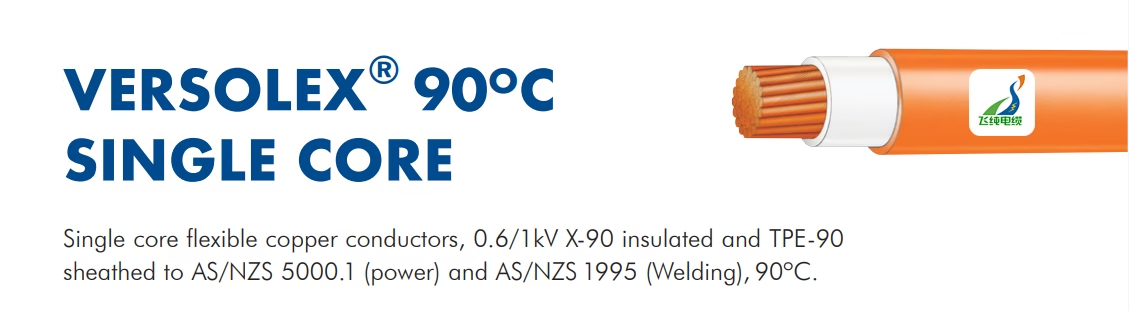
What is VERSOLEX® 90OC Single Core Cable?
Complete technical guide to single core flexible copper conductors, 0.6/1kV X-90 insulated and TPE-90 sheathed cables designed for power distribution and welding applications in demanding industrial environments.
1. Product Overview & Purpose
The VERSOLEX® 90OC Single Core cable represents a premium-grade flexible power cable engineered specifically for demanding industrial applications where exceptional flexibility, thermal endurance, and electrical performance are critical requirements. This specialized cable features single core flexible copper conductors rated at 0.6/1kV, utilizing X-90 (XLPE) insulation combined with TPE-90 (Thermoplastic Elastomer) sheathing to achieve superior performance characteristics across a broad range of operating conditions.
Primary Design Purpose: VERSOLEX® 90OC cables are purpose-built for applications requiring frequent movement, tight bending radii, and sustained operation at elevated temperatures up to 90°C. The cable serves dual compliance with AS/NZS 5000.1 for power applications and AS/NZS 1995 for welding applications, providing versatility across multiple industrial sectors.
According to industry standards, these cables are designed for use in electrical installations at working voltages up to and including 0.6/1kV. The AS/NZS 5000.1 standard specifically addresses polymeric insulated cables, ensuring that the VERSOLEX® 90OC meets stringent Australian and New Zealand requirements for construction, dimensions, and testing protocols. (Source: Amplexmining.com.au – Cable Selection Guide)
The cable’s multipurpose design enables deployment across commercial building installations, original equipment manufacturer (OEM) applications, and heavy industrial environments. Its submersible rating and excellent chemical resistance make it particularly suitable for environments where conventional PVC cables would fail to perform adequately.
2. Key Characteristics & Performance Parameters
High Temperature Rating
Continuous operation at 90°C maximum conductor temperature with emergency overload capability.
XLPE Insulation (X-90)
Cross-linked polyethylene providing superior dielectric strength and thermal stability.
TPE-90 Sheath
Thermoplastic elastomer offering enhanced flexibility and physical toughness versus PVC alternatives.
Flexible Copper Conductors
Fine-stranded annealed copper conforming to AS/NZS 1125 for optimal conductivity and flexibility.
Submersible Rating
Suitable for submersible applications with low moisture absorption characteristics.
Chemical Resistance
High resistance to oils, solvents, and industrial chemicals commonly encountered in manufacturing.
Electrical Performance Parameters
Voltage Ratings
Thermal Parameters
Insulation Properties
The XLPE insulation material demonstrates superior thermal endurance compared to PVC alternatives, with cross-linked molecular structure providing enhanced resistance to thermal deformation under load conditions. (Reference: PVC vs. XLPE Cable Insulation Explained)
3. Material Structure & Construction
The VERSOLEX® 90OC Single Core cable employs a carefully engineered multi-layer construction designed to optimize both electrical performance and mechanical durability. Each component is selected to contribute specific properties essential for reliable operation in demanding industrial environments.
Construction Layers (Inside to Outside)
| Layer | Material | Function | Standard Reference |
|---|---|---|---|
| 1. Conductor | Flexible stranded annealed copper | Primary current-carrying element with optimal conductivity | AS/NZS 1125 Class 5 |
| 2. Conductor Screen | Semiconductive compound (optional) | Uniform electric field distribution at conductor interface | AS/NZS 5000.1 |
| 3. Insulation | X-90 Cross-linked Polyethylene (XLPE) | Electrical insulation with high thermal rating | AS/NZS 5000.1 |
| 4. Outer Sheath | TPE-90 Thermoplastic Elastomer | Mechanical protection, flexibility, chemical resistance | AS/NZS 5000.1 |
Conductor Construction Details
The conductor system utilizes annealed copper in accordance with AS/NZS 1125 standards, providing the optimal balance between electrical conductivity and mechanical flexibility. The fine-stranded construction (Class 5 flexible) enables repeated bending without conductor fatigue, essential for applications involving cable reeling or dynamic movement.
Key Construction Advantage: The combination of XLPE insulation with TPE sheathing delivers enhanced flexibility and physical toughness compared to conventional PVC alternatives. This construction allows tighter bending radii while maintaining electrical integrity, making it ideal for confined installation spaces and mobile equipment applications. (Source: Reeling Cable Engineering)
The TPE-90 outer sheath represents a significant advancement over traditional PVC sheaths, offering superior resistance to oils, chemicals, and UV radiation while maintaining flexibility across a wide temperature range. This material selection aligns with industry best practices for cables deployed in harsh environmental conditions.
4. Technical Specifications & Dimensions
The following tables present complete dimensional and physical specifications for the VERSOLEX® 90OC Single Core cable range. Specifications are provided for conductor sizes from 10 mm² through 630 mm² to accommodate diverse current-carrying requirements.
Single Core Cable Specifications
| Conductor Area (mm²) | Max. Wire Diameter (mm) | Nominal Overall Diameter (mm) | Approx. Mass (kg/100m) | Product Code | Availability |
|---|---|---|---|---|---|
| 10 | 0.21 | 8.5 | 14 | BDSX01AA001 | Stock |
| 16 | 0.21 | 9.8 | 20 | BDSX02AA001 | Stock |
| 25 | 0.21 | 11.3 | 28 | BDSX03AA001 | Stock |
| 35 | 0.21 | 12.5 | 37 | BDSX04AA001 | Stock |
| 50 | 0.31 | 14.3 | 51 | BDSX05AA001 | Stock |
| 70 | 0.31 | 16.2 | 71 | BDSX06AA001 | Stock |
| 95 | 0.31 | 18.1 | 92 | BDSX07AA001 | Stock |
| 120 | 0.51 | 20.6 | 108 | BDSE87AA001 | Stock |
| 150 | 0.51 | 22.5 | 144 | BDSE88AA001 | Stock |
| 185 | 0.51 | 24.6 | 175 | BDSE89AA001 | Stock |
| 240 | 0.51 | 27.7 | 228 | BDSE90AA001 | Stock |
| 300 | 0.51 | 31.0 | 282 | BDSE91AA001 | Stock |
| 400 | 0.51 | 35.4 | 369 | BDSE92AA001 | Stock |
| 500 | 0.51 | 40.0 | 466 | BDSE93AA001 | Stock |
| 630 | 0.51 | 44.6 | 618 | BDSE94AA001 | Made to Order |
Multicore Cable Specifications (AS/NZS 3191 & AS/NZS 5000.1)
For applications requiring multiple conductors with earth, multicore variants are available with the following specifications:
| Configuration | Conductor Area (mm²) | Insulation Thickness (mm) | Sheath Thickness (mm) | Overall Diameter (mm) | Mass (kg/100m) | Product Code |
|---|---|---|---|---|---|---|
| 2C+E | 1.5 | 0.7 | 1.8 | 10.3 | 14 | PTFR04AA002 |
| 2C+E | 2.5 | 0.7 | 1.8 | 11.3 | 18 | PTFR05AA002 |
| 2C+E | 4 | 0.7 | 1.8 | 11.9 | 21 | PTFR06AA002 |
| 2C+E | 6 | 0.7 | 1.8 | 12.8 | 26 | PTFR07AA002 |
Dimensional Comparison: Wire Strand Diameter vs. Conductor Size
The relationship between conductor cross-sectional area and maximum individual wire diameter demonstrates the engineering approach to achieving optimal flexibility:
Small Conductors (10-35 mm²)
Medium Conductors (50-95 mm²)
Large Conductors (120-630 mm²)
5. Standards Compliance & Certifications
The VERSOLEX® 90OC Single Core cable maintains full compliance with multiple Australian and New Zealand standards, ensuring suitability for regulated applications across both power distribution and welding sectors.
Primary Standards Compliance
| Standard | Title | Application | Key Requirements |
|---|---|---|---|
| AS/NZS 5000.1 | Electric cables – Polymeric insulated | Power distribution | Construction, dimensions, tests for cables up to 0.6/1kV |
| AS/NZS 1995 | Welding cables | Arc welding equipment | Construction, current rating, duty cycle specifications |
| AS/NZS 3191 | Electric flexible cords | Multicore variants | Requirements for flexible cords in appliances |
| AS/NZS 1125 | Conductors in insulated electric cables | Conductor construction | Copper conductor specifications, stranding requirements |
AS/NZS 5000.1 Compliance: This standard specifies construction, dimensions and tests for single- and multicore cables insulated with polymeric materials intended for use in electrical installations at working voltages up to and including 0.6/1 (1.2) kV. The standard ensures cables meet Australian and New Zealand safety and performance requirements for residential, commercial, and industrial environments. (Reference: AS/NZS Standards in Port Applications)
AS/NZS 1995 Compliance: This standard specifies the construction, tests, current rating, and duty cycle of welding cables using copper conductors. It applies to flexible cables for use with arc welding equipment rated in accordance with AS 1966. Current ratings are assigned for a range of operating duty cycles for each cable size, enabling proper selection based on anticipated operational requirements. (Reference: SAI Global Standards)
Testing Requirements per AS/NZS 5000.1
Cables complying with AS/NZS 5000.1 undergo rigorous testing protocols including:
Voltage Withstand Testing
Verifies cable integrity at voltages exceeding rated operational levels.
Insulation Resistance
Confirms insulation integrity and prevents current leakage.
Flame Retardancy
Tests per EN/IEC 60332-1-2 for single cable flame propagation.
Mechanical Properties
Tensile strength, elongation, and abrasion resistance verification.
6. Safety Thresholds & Ratings
Understanding and adhering to safety thresholds is critical for ensuring reliable cable performance and preventing electrical hazards. The following parameters define the operational boundaries for VERSOLEX® 90OC cables.
Temperature Ratings & Thresholds
| Parameter | Value | Condition | Notes |
|---|---|---|---|
| Maximum Conductor Temperature | 90°C | Continuous operation | Normal service conditions |
| Emergency Overload Temperature | 130°C | Short duration | Limited cumulative hours per cable lifetime |
| Short Circuit Temperature | 250°C | ≤5 seconds | XLPE insulation limit |
| Minimum Installation Temperature | -20°C | During installation | Without pre-heating |
| Ambient Temperature Range (Fixed) | -40°C to +80°C | Fixed installation | With appropriate derating |
| Ambient Temperature Range (Flexible) | -20°C to +60°C | Dynamic/flexible use | Reeling applications |
⚠ Critical Safety Note: Operating cables continuously at maximum conductor temperature (90°C) reduces energy efficiency and may shorten cable service life. For systems intended to operate continuously at maximum temperature, proper thermal management and regular inspection protocols should be implemented. Design margins of 10-15°C below maximum rating are recommended for optimal longevity.
Voltage Safety Parameters
AC Voltage Ratings
Safety Factors
Minimum Bending Radius Requirements
Exceeding minimum bending radius can cause permanent damage to conductors or insulation. The following guidelines apply:
| Application Type | Minimum Bend Radius | Calculation Basis |
|---|---|---|
| Fixed Installation | 4 × cable O.D. | Single bend, no repeated flexing |
| Flexible/Reeling Application | 6 × cable O.D. | Repeated bending cycles |
| During Installation (pulling) | 8 × cable O.D. | Under tension conditions |
Proper bend radius management is critical for cable longevity in dynamic applications. Mining and industrial cables experience significant mechanical stress during reeling operations, making adherence to bend radius specifications essential. (Source: Mining Cable Chile – Installation Guidelines)
7. Applications & Use Cases
The VERSOLEX® 90OC Single Core cable’s combination of flexibility, thermal rating, and chemical resistance makes it suitable for a diverse range of industrial and commercial applications where conventional cables would not perform adequately.
Primary Application Areas
Mains/Submains Power Distribution
Residential and commercial buildings where flexibility facilitates installation in confined spaces and around obstacles.
Welding Equipment Connections
Arc welding power supplies compliant with AS 1966, supporting various duty cycles from intermittent to continuous operation.
Switchgear & Control Panels
Internal wiring of electrical switchboards and control cabinets where heat dissipation requires high-temperature ratings.
OEM Industrial Equipment
Machine tool connections, industrial automation systems, and manufacturing equipment requiring flexible power feeds.
Submersible Applications
Pump installations, water treatment facilities, and other wet environments leveraging the cable’s moisture resistance.
Mining & Heavy Industry
Trailing cable applications for mobile equipment where chemical resistance and mechanical durability are essential.
Industry-Specific Applications
The cable’s compliance with both power and welding standards enables deployment across multiple industry sectors:
| Industry Sector | Typical Applications | Key Requirements Met |
|---|---|---|
| Construction | Temporary power, welding operations, portable equipment | Flexibility, abrasion resistance, UV stability |
| Manufacturing | Robot cells, CNC machines, conveyor systems | High temperature, oil resistance, repeated flexing |
| Mining | Mobile equipment, draglines, underground machinery | Mechanical durability, chemical resistance |
| Marine/Port | Crane systems, container handling, ship-to-shore | Moisture resistance, dynamic loading |
| Agriculture | Irrigation systems, grain handling, mobile equipment | UV resistance, chemical compatibility |
Related Industry Resources
8. Installation Precautions & Guidelines
Proper installation practices are essential for achieving optimal cable performance and maximizing service life. The following guidelines address critical considerations for VERSOLEX® 90OC cable installation.
Pre-Installation Requirements
Temperature Considerations: Installation should be performed when ambient temperature is within the specified range (-20°C to +60°C). In cold weather conditions below 0°C, cables may require pre-warming or conditioning before handling to prevent insulation cracking. Store cable drums in temperature-controlled environments when possible.
Installation Best Practices
Bend Radius Compliance
Never exceed minimum bending radius specifications. Use appropriate cable guides, sheaves, and support systems sized for cable diameter.
Pulling Tension Limits
Maximum pulling tension should not exceed conductor tensile strength limits. Use swivel pulling eyes to prevent torsional stress.
Support & Securing
Provide adequate support at regular intervals. Avoid point loading and ensure cable weight is distributed across support systems.
Termination Quality
Use appropriate lugs and connectors rated for conductor size. Ensure proper crimping or mechanical connection per manufacturer specifications.
Environmental Considerations
| Environment | Precaution Required | Recommended Action |
|---|---|---|
| High UV Exposure | Potential sheath degradation | Use UV-rated variants or protective conduit |
| Chemical Exposure | Verify compatibility | Consult chemical resistance charts; consider additional protection |
| High Humidity/Submersion | Moisture ingress at terminations | Use sealed glands and waterproof connectors |
| Mechanical Hazard Areas | Physical damage risk | Install protective covers, conduit, or cable trays |
| High Temperature Zones | Derating required | Apply derating factors per AS/NZS 3008.1 |
⛔ Safety Warning: Always de-energize circuits before performing installation or maintenance work. Verify isolation using appropriate test equipment. Follow all applicable electrical safety codes and workplace safety regulations. Only qualified electrical personnel should install, maintain, or terminate power cables.
Reeling Application Guidelines
For dynamic reeling applications (welding, mobile equipment), additional considerations apply:
Cable Drum Sizing
Operating Parameters
9. Frequently Asked Questions
X-90 refers to cross-linked polyethylene (XLPE) insulation rated for 90°C continuous operation, while V-90 refers to PVC insulation with the same temperature rating. XLPE (X-90) offers superior thermal stability, lower dielectric losses, higher short-circuit temperature tolerance (250°C vs. 160°C), and better resistance to thermal deformation. XLPE is preferred for high-performance applications, while PVC offers cost advantages for less demanding installations.
While the TPE-90 sheath provides excellent moisture resistance, direct burial is generally not recommended for unarmoured flexible cables without additional mechanical protection. For direct burial applications, use protective conduit or specify armoured cable variants. The cable is suitable for installation in cable ducts and underground conduit systems where mechanical protection is provided.
Conductor size selection should be based on AS/NZS 3008.1 (Electrical installations – Selection of cables), considering factors including: maximum current demand, installation method, ambient temperature, grouping with other cables, and voltage drop requirements. For welding applications, reference AS/NZS 1995 duty cycle tables to match conductor size with anticipated operational duty cycle (100%, 60%, 35%, or 20%).
Under normal operating conditions (within specified temperature, voltage, and mechanical parameters), XLPE-insulated cables typically achieve 30+ years service life in fixed installations. For dynamic/reeling applications, service life depends on flexing cycles, operating conditions, and maintenance practices. Regular inspection and replacement scheduling based on observed wear is recommended for critical applications.
For VFD applications, additional considerations apply due to voltage spikes and harmonic content. While VERSOLEX® 90OC provides adequate insulation for standard VFD installations, screened/shielded variants may be required to minimize electromagnetic interference and bearing currents. Consult VFD manufacturer recommendations and consider symmetrical cable configurations for motor connections.
Standard sheath colour is orange for high visibility in industrial environments. Active conductors in multicore variants follow AS/NZS 3000 colour coding requirements. Custom colours may be available for specific applications subject to minimum order quantities. Contact technical sales for colour availability and lead times.
Request Technical Consultation or Quotation
Our technical team is available to assist with cable selection, custom specifications, and application engineering support for your specific requirements.


