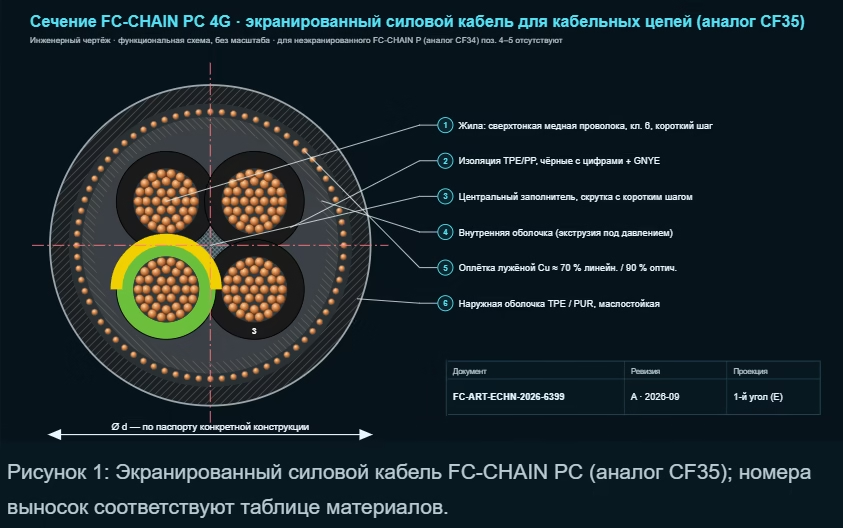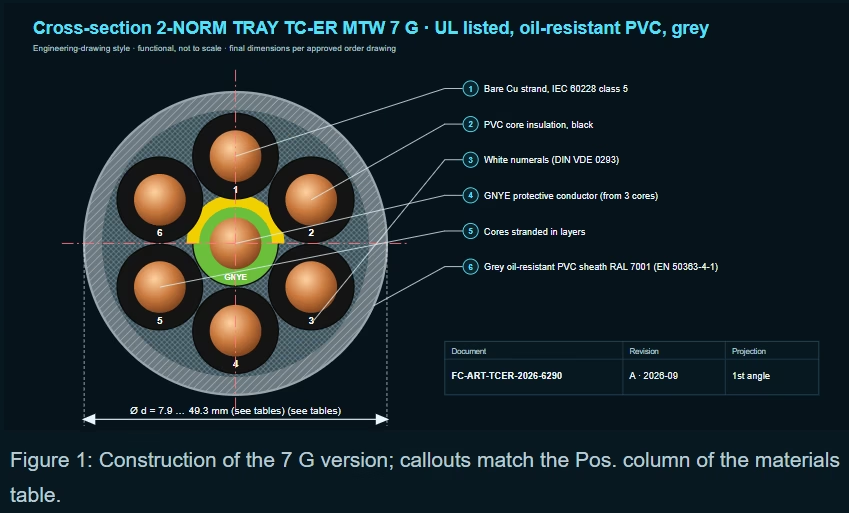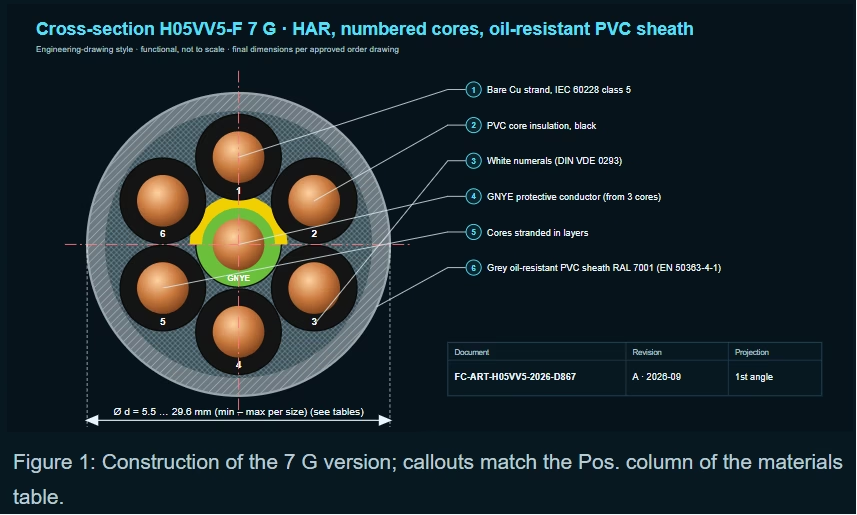
Drag Chain Cable

SWA 是 Steel Wire Armoured 的缩写,表示电缆内衬与外护套之间具有一层钢丝铠装。钢丝层主要提供抗冲击、抗压、安装机械防护和可计算的金属故障电流通路;它不决定绝缘材料、额定电压、低烟性能或耐火等级,也不代表电缆适合连续弯曲。

SWA Cable 钢丝铠装电缆:从结构、标准到接地与港口矿山应用的完整工程指南

SWA 是 Steel Wire Armoured 的缩写,表示电缆内衬与外护套之间具有一层钢丝铠装。钢丝层主要提供抗冲击、抗压、安装机械防护和可计算的金属故障电流通路;它不决定绝缘材料、额定电压、低烟性能或耐火等级,也不代表电缆适合连续弯曲。
BS 6708 TYPE FS4 是一种用于 overhead catenary systems 架空悬挂系统及类似用途的 640/1100 V 扁平橡套供电电缆。它采用 IEC 60228 Class 5 镀锡细绞铜导体、EPR 绝缘、彩色纺织带芯线识别、镀锡铜编织屏蔽和重型氯丁橡胶外护套。 TYPE FS4 与 TYPE 14、TYPE 16 这类圆形矿用拖曳电缆最大的不同在于:All cores are laid parallel in flat configuration without contacting each other. 也就是说,它采用扁平并列结构,所有芯线平行排列,并且芯线之间不直接接触。该结构更适合悬挂、吊挂、架空移动供电和类似需要扁平柔性布置的场景

什么是 BS 6708 TYPE FS4:架空悬挂系统用 640/1100 V 扁平矿用橡套电缆

BS 6708 TYPE FS4 是一种用于 overhead catenary systems 架空悬挂系统及类似用途的 640/1100 V 扁平橡套供电电缆。它采用 IEC 60228 Class 5 镀锡细绞铜导体、EPR 绝缘、彩色纺织带芯线识别、镀锡铜编织屏蔽和重型氯丁橡胶外护套。 TYPE FS4 与 TYPE 14、TYPE 16 这类圆形矿用拖曳电缆最大的不同在于:All cores are laid parallel in flat configuration without contacting each other. 也就是说,它采用扁平并列结构,所有芯线平行排列,并且芯线之间不直接接触。该结构更适合悬挂、吊挂、架空移动供电和类似需要扁平柔性布置的场景
CORDAFLEX® (SMK)-V 是面向垂直升降系统(spreader reeling application)的极限工况电缆。与卧式(水平)卷筒工况不同,垂直卷筒在 240 m/min 超高速下同时承受悬垂重力与长期拉力,电缆易受导缆轮与排缆器的极限摩擦,因此设计核心为三点: ① 中心阿拉米德支撑 取代或强化传统纺织承力束,用高模量芳香族聚酰胺纤维(阿拉米德)构成中心支撑元件,承载能力比常规电缆提升 40~60%,许用拉力达 6000 N(对比 NSHTOEU 控制缆 3600 N)。 ② 反扭聚酯编织 + PROTOFIRM 护套 加强型聚酯编织硫化粘合于两层黄色 PCP 基护套之间,形成一体化反扭结构,应对 ±50 °/m 扭转与 20×D S 弯折无损伤。 ③ 屏蔽与数据集成 镀锡铜编织屏蔽(≥80% 覆盖率)在 30 MHz 传输性能优化,直接支持 Profibus-DP、CAN 2.0、ASI-Bus、Industrial Ethernet 等实时总线,或集成单/多模光纤实现光电混合供电与通信一体化。

CORDAFLEX® (SMK)-V (N)SHTOEU-J/-O0.6/1 kV 垂直卷筒高性能电缆

CORDAFLEX® (SMK)-V 是面向垂直升降系统(spreader reeling application)的极限工况电缆。与卧式(水平)卷筒工况不同,垂直卷筒在 240 m/min 超高速下同时承受悬垂重力与长期拉力,电缆易受导缆轮与排缆器的极限摩擦,因此设计核心为三点: ① 中心阿拉米德支撑 取代或强化传统纺织承力束,用高模量芳香族聚酰胺纤维(阿拉米德)构成中心支撑元件,承载能力比常规电缆提升 40~60%,许用拉力达 6000 N(对比 NSHTOEU 控制缆 3600 N)。 ② 反扭聚酯编织 + PROTOFIRM 护套 加强型聚酯编织硫化粘合于两层黄色 PCP 基护套之间,形成一体化反扭结构,应对 ±50 °/m 扭转与 20×D S 弯折无损伤。 ③ 屏蔽与数据集成 镀锡铜编织屏蔽(≥80% 覆盖率)在 30 MHz 传输性能优化,直接支持 Profibus-DP、CAN 2.0、ASI-Bus、Industrial Ethernet 等实时总线,或集成单/多模光纤实现光电混合供电与通信一体化。
Type MP-GC 25kV 三芯矿山超高压配电电缆是飞纯 MP-GC 系列的最高等级产品,采用 6.4 mm 超厚 EPR 绝缘。本产品为固定式配电电缆,用于矿山配电单元间的连接(地沟、管道、架空、直埋)。与 SHD-GC 25kV 移动式设备电缆形成互补,共同支撑矿山超高压供电系统

Type MP-GC Three-Conductor Mine Power Feeder Cable, CPE Jacket 25kV

Type MP-GC 25kV 三芯矿山超高压配电电缆是飞纯 MP-GC 系列的最高等级产品,采用 6.4 mm 超厚 EPR 绝缘。本产品为固定式配电电缆,用于矿山配电单元间的连接(地沟、管道、架空、直埋)。与 SHD-GC 25kV 移动式设备电缆形成互补,共同支撑矿山超高压供电系统
Portable Arc-Welding Cable 600V 是飞纯特种电缆为现代电弧焊系统开发的柔性焊接引线。该电缆专为电弧焊机次级电路的焊枪和焊钳之间的灵活连接而设计,采用 Class K/M 绞合退火铜导体和重型 EPR 护套,能在 SMAW、GMAW、FCAW、GTAW 等多种焊接工艺中提供可靠的电流传输

什么是 Portable Arc-Welding Cable 600V

Portable Arc-Welding Cable 600V 是飞纯特种电缆为现代电弧焊系统开发的柔性焊接引线。该电缆专为电弧焊机次级电路的焊枪和焊钳之间的灵活连接而设计,采用 Class K/M 绞合退火铜导体和重型 EPR 护套,能在 SMAW、GMAW、FCAW、GTAW 等多种焊接工艺中提供可靠的电流传输
Type SHD-GC 25kV 三芯圆形屏蔽接地地检重载移动动力电缆是飞纯特种电缆为超深矿井、大型露天矿、水力采矿和重型工程机械专属开发的高压便携式动力电缆系统。该电缆集成 25kV 高压绝缘、导体屏蔽、绝缘屏蔽、接地保护、地检监测和加强型 CPE 外护套于一体,为 longwall shearers、continuous miners、hydraulic shovels、dredges 和大型钻探设备提供可靠的移动动力供电

Type SHD-GC Three-Conductor Round Portable Power Cable, CPE Jacket 25kV

Type SHD-GC 25kV 三芯圆形屏蔽接地地检重载移动动力电缆是飞纯特种电缆为超深矿井、大型露天矿、水力采矿和重型工程机械专属开发的高压便携式动力电缆系统。该电缆集成 25kV 高压绝缘、导体屏蔽、绝缘屏蔽、接地保护、地检监测和加强型 CPE 外护套于一体,为 longwall shearers、continuous miners、hydraulic shovels、dredges 和大型钻探设备提供可靠的移动动力供电
Type SHD-GC Three-Conductor Round Portable Power Cable, TPU Jacket 5kV 是一种用于重型移动设备和动力馈电系统的三芯圆形屏蔽型便携式动力电缆。 它面向 drag lines、shovels、dredges、drills 以及 power feeders, 集成三相 5kV 动力传输、导体屏蔽 conducting layer、EPR 乙丙橡胶绝缘、镀锡铜/纺织编织绝缘屏蔽、镀锡铜接地导体、黄色聚丙烯绝缘地检导体和黑色 TPU 热塑性聚氨酯护套。 与 2kV TPU 版本相比,5kV TPU 版本的核心升级是加入导体屏蔽并提高绝缘厚度;与 5kV CPE 版本相比,它的核心差异是外护套材料改为 TPU,更强调重载移动设备中的护套耐磨、抗撕裂和动态机械保护

Type SHD-GC Three-Conductor Round Portable Power Cable, TPU Jacket 5kV

Type SHD-GC Three-Conductor Round Portable Power Cable, TPU Jacket 5kV 是一种用于重型移动设备和动力馈电系统的三芯圆形屏蔽型便携式动力电缆。 它面向 drag lines、shovels、dredges、drills 以及 power feeders, 集成三相 5kV 动力传输、导体屏蔽 conducting layer、EPR 乙丙橡胶绝缘、镀锡铜/纺织编织绝缘屏蔽、镀锡铜接地导体、黄色聚丙烯绝缘地检导体和黑色 TPU 热塑性聚氨酯护套。 与 2kV TPU 版本相比,5kV TPU 版本的核心升级是加入导体屏蔽并提高绝缘厚度;与 5kV CPE 版本相比,它的核心差异是外护套材料改为 TPU,更强调重载移动设备中的护套耐磨、抗撕裂和动态机械保护
Type SHD-PCG Three-Conductor Round Portable Power Cable 2kV 是一种专为 longwall shearers 长壁采煤机/采煤机滚筒设备设计的重载圆形便携式矿山动力电缆。它同时集成三根屏蔽动力导体、三根非屏蔽控制导体和一根中心接地导体,采用镀锡退火铜束绞动力导体、EPR 乙丙橡胶绝缘、镀锡铜/纺织编织绝缘屏蔽、三芯控制线组、中心镀锡铜接地导体和增强型超重载 CPE 黑色护套。与普通 Type SHD 相比,它增加了控制线组;与 Type G-GC 相比,它的核心不是地检导体,而是屏蔽动力 + 控制信号 + 中心接地的复合结构,适用于长壁采煤机这种既需要高功率牵引/截割供电、又需要控制信号传输的动态采矿设备

什么是 Type SHD-PCG Three-Conductor Round Portable Power Cable 2kV

Type SHD-PCG Three-Conductor Round Portable Power Cable 2kV 是一种专为 longwall shearers 长壁采煤机/采煤机滚筒设备设计的重载圆形便携式矿山动力电缆。它同时集成三根屏蔽动力导体、三根非屏蔽控制导体和一根中心接地导体,采用镀锡退火铜束绞动力导体、EPR 乙丙橡胶绝缘、镀锡铜/纺织编织绝缘屏蔽、三芯控制线组、中心镀锡铜接地导体和增强型超重载 CPE 黑色护套。与普通 Type SHD 相比,它增加了控制线组;与 Type G-GC 相比,它的核心不是地检导体,而是屏蔽动力 + 控制信号 + 中心接地的复合结构,适用于长壁采煤机这种既需要高功率牵引/截割供电、又需要控制信号传输的动态采矿设备
Type G-GC(含接地导体 + 接地检查导体)家族里的三芯圆形(Three-Conductor Round)2 kV 规格,与上一篇 G-GC 三芯扁平是一对"同保护等级、不同形态"的孪生款。它同样在 Type G"内置接地导体"之上,再增加一根接地检查(地检)导体(Ground Check Conductor,黄色聚丙烯绝缘),用于实时监测接地路径的完整性——接地一断,立即报警或切断电源。差别在于它是圆形截面:三动力+接地+地检共五根导体对称绞合、整体挤包增强型 CPE 护套,具备三维任意弯曲能力,适用于移动采矿设备——连续采煤机、钻机、截割机、装载机、交流梭车与水泵。本权威版从产品定位、"圆形相对扁平的工程取舍"、地检导体监测接地完整性的工作原理、标准体系、材料科学层面的逐层结构、接地导体与地检导体的配置依据、外径超 2.0 英寸强制超重载护套的规则,到 3×8 至 3×500 的全规格外径、重量与载流量表与降容算例,再到"G-GC 圆形 vs 扁平""G-GC vs G""保护等级谱系"等横向对比与完整选型框架,建立一把读得懂、对得上、立得住的工程标尺

什么是 Type G-GC Three-Conductor Round Portable Power Cable 2kV

Type G-GC(含接地导体 + 接地检查导体)家族里的三芯圆形(Three-Conductor Round)2 kV 规格,与上一篇 G-GC 三芯扁平是一对”同保护等级、不同形态”的孪生款。它同样在 Type G”内置接地导体”之上,再增加一根接地检查(地检)导体(Ground Check Conductor,黄色聚丙烯绝缘),用于实时监测接地路径的完整性——接地一断,立即报警或切断电源。差别在于它是圆形截面:三动力+接地+地检共五根导体对称绞合、整体挤包增强型 CPE 护套,具备三维任意弯曲能力,适用于移动采矿设备——连续采煤机、钻机、截割机、装载机、交流梭车与水泵。本权威版从产品定位、”圆形相对扁平的工程取舍”、地检导体监测接地完整性的工作原理、标准体系、材料科学层面的逐层结构、接地导体与地检导体的配置依据、外径超 2.0 英寸强制超重载护套的规则,到 3×8 至 3×500 的全规格外径、重量与载流量表与降容算例,再到”G-GC 圆形 vs 扁平””G-GC vs G””保护等级谱系”等横向对比与完整选型框架,建立一把读得懂、对得上、立得住的工程标尺
Type G-GC(含接地导体 + 接地检查导体)三芯扁平(Three-Conductor Flat)2 kV。它在 Type G"内置接地导体"的基础上,再增加一根接地检查(地检)导体(Ground Check Conductor,黄色绝缘),用于实时监测接地路径的完整性——这是 G-GC 区别于 G 的核心,也是全文的主角。它把三根动力导体、一根接地导体、一根地检导体并行排列、整体挤包成扁平截面,配合合成纤维编织加强层,专门用于交流采矿设备(AC mining equipment)——交流梭车(A.C. shuttle cars)、钻机、截割与装载机。本权威版从产品定位、保护等级的跃升逻辑、地检导体监测接地完整性的工作原理与监测回路机理、标准体系、材料科学层面的逐层结构、接地导体与地检导体的配置依据,到 3×6 至 3×4/0 的全规格高×宽、重量与载流量表与降容算例,再到"G-GC vs G""扁平 vs 圆形""保护等级谱系"等横向对比与完整选型框架,建立一把读得懂、对得上、立得住的工程标尺

什么是 Type G-GC Three-Conductor Flat Portable Power Cable 2kV

便携式动力电缆保护等级里更高的一级——Type G-GC(含接地导体 + 接地检查导体)三芯扁平(Three-Conductor Flat)2 kV。它在 Type G”内置接地导体”的基础上,再增加一根接地检查(地检)导体(Ground Check Conductor,黄色绝缘),用于实时监测接地路径的完整性——这是 G-GC 区别于 G 的核心,也是全文的主角。它把三根动力导体、一根接地导体、一根地检导体并行排列、整体挤包成扁平截面,配合合成纤维编织加强层,专门用于交流采矿设备(AC mining equipment)——交流梭车(A.C. shuttle cars)、钻机、截割与装载机。本权威版从产品定位、保护等级的跃升逻辑、地检导体监测接地完整性的工作原理与监测回路机理、标准体系、材料科学层面的逐层结构、接地导体与地检导体的配置依据,到 3×6 至 3×4/0 的全规格高×宽、重量与载流量表与降容算例,再到”G-GC vs G””扁平 vs 圆形””保护等级谱系”等横向对比与完整选型框架,建立一把读得懂、对得上、立得住的工程标尺
Type W 便携式重型动力电缆家族里最"通用"的成员之一——双芯圆形(Two-Conductor Round)2 kV 规格。它把两根动力导体同心成缆、整体挤包成圆形截面,专为无需裸接地导体(bare grounding conductors not required or desired)的通用便携式动力供电场合设计。本文从应用定位、四大标准、三层结构(镀锡退火铜导体 + EPR 乙丙橡胶绝缘 + 增强型重载/超重载 CPE 护套)、圆形双芯成缆几何的工程逻辑,到 8 AWG 至 250 kcmil 的全规格外径、重量与载流量参数表,再到"圆形 vs 扁平""增强型护套 vs 独立加强层""双芯无地芯接地方案"等横向对比与选型框架,建立一把读得懂、对得上的工程标尺。

什么是 Type W Two-Conductor Round Portable Power Cable 2kV

Type W 便携式重型动力电缆家族里最”通用”的成员之一——双芯圆形(Two-Conductor Round)2 kV 规格。它把两根动力导体同心成缆、整体挤包成圆形截面,专为无需裸接地导体(bare grounding conductors not required or desired)的通用便携式动力供电场合设计。本文从应用定位、四大标准、三层结构(镀锡退火铜导体 + EPR 乙丙橡胶绝缘 + 增强型重载/超重载 CPE 护套)、圆形双芯成缆几何的工程逻辑,到 8 AWG 至 250 kcmil 的全规格外径、重量与载流量参数表,再到”圆形 vs 扁平””增强型护套 vs 独立加强层””双芯无地芯接地方案”等横向对比与选型框架,建立一把读得懂、对得上的工程标尺
UNE 22511 — formally titled "Cables flexibles para minería subterránea con tensiones de 1,8/3 kV con aislamiento de caucho, sin armadura" (Flexible cables for underground mining, 1.8/3 kV, rubber-insulated, unarmoured) — is the definitive Spanish standard for heavy-duty power cables connecting underground mobile mining equipment to fixed electrical distribution networks. Published and maintained by AENOR (Asociación Española de Normalización y Certificación), it operates as a specialized overlay on IEC 60502-1, extending that base standard's electrical requirements with the stringent mechanical, safety, and flame-retardancy requirements specific to enclosed underground environments. Despite its Spanish origin, UNE 22511 enjoys a geographic reach far exceeding Iberia. The standard has been adopted — formally or by reference — across the major Spanish-speaking mining economies: Chile, Peru, Colombia, Bolivia, and Mexico, where AENOR-certified cables are accepted by national mining safety regulators as the primary qualification pathway for underground mobile equipment power supply cables. In Chile alone, UNE 22511 cables are installed across dozens of operations including major copper and coal mines. The standard's engineering DNA can be described in a single imperative: extreme dynamic flexibility combined with superior resistance to combined torsional and bending fatigue. This is not merely a performance aspiration — it is a structural requirement that shapes every material choice and geometric decision in the cable's construction. The logic proceeds as follows: Underground mobile equipment (continuous miners, shearers, shuttle cars) moves continuously and repeatedly during operation, dragging its power cable behind it or winding and unwinding it from a cable reel. This motion imposes cyclic bending, axial tension, and torsional loads on the cable simultaneously — a multi-axis fatigue regime of a severity not encountered in any other industrial cable application. Standard fixed-installation cables, even those classified as "flexible," are not designed for this loading regime and will fail in fatigue within weeks to months when installed in drag duty. Therefore, every structural element of a UNE 22511 cable — conductor wire diameter, insulation compound, earth core geometry, armour exclusion, sheath specification — is selected to maximize multi-axis fatigue endurance, not any single performance parameter. ⛏ The Founding Engineering Principle UNE 22511 is an unarmoured drag cable standard. The deliberate absence of any metallic armour — which might superficially seem to reduce robustness — is in fact the defining engineering choice that makes the standard viable. Steel wire or tape armour in a continuously torsionally-loaded cable acts as a progressive-failure torsional spring: each twist cycle accumulates irreversible plastic strain in the armour wires, leading to wire fractures within 10,000–30,000 cycles. For a shuttle car cable experiencing 80,000+ torsional cycles per year, armour represents not additional protection but a built-in scheduled failure mechanism. The UNE 22511 design eliminates this failure mode at source.

(N)TSCGEWÖEU / (N)TSKCGEWÖEU / MCPTJ (N)TSCGECWOEU

飞纯特种电缆系列十四篇深度工程解析的总枢纽。从 PUR 聚氨酯护套的基础耐磨、控制、拖链、机器人、伺服、数据、充电、北美认证、螺旋弹簧,到 5GM5 重载橡胶的矿用、中高压卷筒拖拽、扁平拖令——一张矩阵按材质 × 命名体系 × 电压 × 形态 × 工况多维交叉,帮你快速定位需要的型号
飞纯 Type 412 是依据 AS/NZS 2802:2000 标准体系设计的 1.1/1.1KV 矿用柔性铠装馈电电缆。 产品采用绿黄接地芯和可弯曲钢丝铠装, 主要用于存在较高机械损伤风险的矿山供电场景。 当电缆在砂矿作业区受到石块、机械设备、车辆、 拖拉、挤压或其他外部因素影响时,电缆损伤可能导致供电中断。 Type 412 设置可弯曲镀锌低碳钢丝铠装, 目的在于增强机械保护并减少因电缆损坏造成的高成本停机。 根据产品应用说明,Type 412 特别适合安装为 砂矿开采作业中的馈电电缆。 其结构兼顾柔性导体、电气绝缘、接地保护和金属铠装机械保护。

什么是 5GM5 重载橡胶电缆

5GM5 并不是聚氨酯(PUR)材质。在德国 VDE 0207-21 护套料标准体系中,PUR 的代码是 11Y(热塑性聚氨酯弹性体),而 5GM5 代表”特种重载合成橡胶/弹性体护套材料”,通常是高级特种氯丁橡胶(PCP/CR)或高性能氯化聚乙烯(CPE)的改性配方。二者材质不同,却常被放在一起对比——因为它们都是各自领域里抗撕裂、耐磨损、防油性最顶级的”硬核”存在。区别在于主场:PUR 统治高动态、高柔性、轻量场合;而 5GM5 统治大规格、中高压、极端重工业,如矿山、港口吊机、大吨位卷筒
飞纯 Type 245 是基于 AS/NZS 1802:2003 卷筒与拖曳电缆 标准体系设计的矿用非常柔性长壁采煤机电缆,电压范围覆盖 1.1 至 6.6KV。根据产品资料,该电缆主要用作长壁采煤机电缆,也可用于连续采煤机和长壁外围电缆。 Type 245 的关键结构特征是 三根中央可伸长 Pilot / 控制芯线。这三根中央 Pilot 芯线可用于 接地连续性监测 和 控制回路。对于长壁采煤机来说,电缆不仅要传输动力电能,还要承担设备控制、保护联锁、接地连续性确认和移动工况下的安全监测任务。

什么是 NGMH11YÖ(≈ H07BQ-F):PUR 聚氨酯护套耐磨柔性电缆

NGMH11YÖ 是一个德国旧标准命名法(VDE 物料代号体系)下的型号,常出现在老式欧洲进口设备的图纸与备件清单里。随着欧洲标准协调(CENELEC harmonization)的推进,它在工程实践中目前基本等同于协调型号 H07BQ-F——一种额定 450/750 V、采用第 5 类细绞铜导体、EPR 乙丙橡胶绝缘、PUR(聚氨酯)护套的柔性连接电缆。其核心标签只有一个:PUR 护套带来的极强耐磨、抗撕、耐油与无卤特性,使它成为工地、移动设备、码头与重载工业现场里”拖得动、磨不坏”的那一类电缆。
飞纯 Type 209 是飞纯电缆基于 AS/NZS 1802:2003 卷筒与拖曳电缆 体系设计的矿用柔性馈电与拖曳电缆系列,电压范围覆盖 1.1 至 11KV。根据产品资料,Type 209 系列电缆主要作为矿山机械柔性馈电电缆使用,更适合作为拖曳电缆而不是高频卷筒电缆。较小规格适用于钻机、手持工具和移动设备。 这一定义是理解 Type 209 的关键。Type 209 不是普通工业橡套软电缆,也不只是单纯的矿山供电线。它的核心定位是 矿山机械柔性馈电电缆,也就是为矿山机械提供可移动、可拖曳、可适应复杂作业路径的供电系统。同时,它更适合作为 拖曳电缆,即跟随设备移动的电缆,而不是长期高频卷绕使用的卷筒电缆。

什么是 NSSHÖU …/3E + ST 0.6/1kV 重型柔性矿用电缆

NSSHÖU …/3E + ST 0.6/1kV 是一款为承受极高机械负荷的移动设备与机械供电而设计的重型橡套柔性电缆。它采用第5类镀锡软铜导体、EPR 3GI3 耐热绝缘、3E 螺旋分布式接地(或 KON 同心接地结构)、置于间隙中的 ST 控制芯、GM1b 橡胶内护套与 5GM5 氯化橡胶耐磨外护套。其核心定位是:在干燥与潮湿区域、户外以及防爆危险区域中——尤其是采矿、工业、采石场与建筑工地——为持续移动、拖拽、弯折与受冲击的设备提供既能传输动力、又能集成控制信号、且具备耐磨耐油阻燃能力的单一柔性电缆解决方案。
飞纯 Type 209 是飞纯电缆基于 AS/NZS 1802:2003 卷筒与拖曳电缆 体系设计的矿用柔性馈电与拖曳电缆系列,电压范围覆盖 1.1 至 11KV。根据产品资料,Type 209 系列电缆主要作为矿山机械柔性馈电电缆使用,更适合作为拖曳电缆而不是高频卷筒电缆。较小规格适用于钻机、手持工具和移动设备。 这一定义是理解 Type 209 的关键。Type 209 不是普通工业橡套软电缆,也不只是单纯的矿山供电线。它的核心定位是 矿山机械柔性馈电电缆,也就是为矿山机械提供可移动、可拖曳、可适应复杂作业路径的供电系统。同时,它更适合作为 拖曳电缆,即跟随设备移动的电缆,而不是长期高频卷绕使用的卷筒电缆。

什么是 (N)SSHOEU 0.6/1kV Heavy Duty Flexible Cable

(N)SSHOEU 0.6/1kV Heavy Duty Flexible Cable 是 Feichun 面向矿山、采石场、建筑工地、户外、干燥与潮湿区域以及爆炸危险区域移动设备开发的重载柔性橡套电缆。资料说明,该电缆用于连接承受非常高机械负载的移动设备和机器,尤其适用于 mining、quarries 和 building sites。其典型结构包括 Class 5 柔性铜导体、3GI3 橡胶绝缘、可选 pilot cores、镀锡铜丝螺旋接地导体、GM1b 橡胶内护套和 5GM5 橡胶外护套。
飞纯 Type 245 是基于 AS/NZS 1802:2003 卷筒与拖曳电缆 标准体系设计的矿用非常柔性长壁采煤机电缆,电压范围覆盖 1.1 至 6.6KV。根据产品资料,该电缆主要用作长壁采煤机电缆,也可用于连续采煤机和长壁外围电缆。 Type 245 的关键结构特征是 三根中央可伸长 Pilot / 控制芯线。这三根中央 Pilot 芯线可用于 接地连续性监测 和 控制回路。对于长壁采煤机来说,电缆不仅要传输动力电能,还要承担设备控制、保护联锁、接地连续性确认和移动工况下的安全监测任务。

什么是 H07RN-F/A07RN-F 450/750V Harmonized Rubber Cables

Feichun 高柔性抗拉抗磨损矿山专用橡套电缆工程解析 H07RN-F/A07RN-F 450/750V Harmonized Rubber Cables 是一类面向移动设备、工业工具、建筑现场、农业机械、潮湿区域、户外环境以及存在较高机械磨耗工况的重型柔性橡套电缆。Feichun 在该类电缆的工程开发中,重点围绕三类现场失效模式进行设计:反复弯曲导致的导体疲劳、拖拽与移动敷设导致的护套磨损、潮湿与油污环境导致的绝缘与外护套老化。其核心不是简单增加护套厚度,而是通过 Class 5 多股铜导体、EI4 橡胶绝缘、EM2/EM3 内外护套、CR/PCP 外护套材料与合理成缆结构的组合,使电缆在 450/750V 低压动力系统中兼顾柔性、抗拉、耐磨、耐候和现场安装便利性
AS/NZS 1802 电缆型号

AS/NZS 1802/2802 矿用卷筒/拖曳电缆选型计算器:载流量、电压降、短路热稳定一页算清

面向电气工程师的 AS/NZS 1802/2802 电缆工具箱:从负载电流、卷筒降额到功率因数补偿和年损耗,快速形成选型依据
Marine & Port Drag Cable — High-Flexibility Saltwater-Resistant System A comprehensive engineering dissection of heavy-duty marine drag cables for port equipment, container terminals, and offshore platforms — from conductor architecture and EPR insulation to steel wire armour (M2) design rationale, galvanic corrosion protection mechanisms, environmental compliance, and validated performance benchmarking against Nexans Eproneo Port and Prysmian marine systems.

什么是 PANZERFLEX-L 0,6/1 kV:矿山高柔性抗扭卷筒与拖令动力电缆技术解析

PANZERFLEX-L 0,6/1 kV 是一种面向矿山、散料搬运、移动机床、卷筒系统与拖令系统的高柔性动力电缆。它通过 Class 5 镀锡铜导体、抗压 HEPR 绝缘、≤7,5D 短节距成缆、氯丁橡胶内外护套以及牢固粘结的合成纱抗扭增强层,应对高机械应力、频繁弯曲与扭转、快速移动和强加速度工况。
FLEXIFESTOON® SOOW EPDM/CPE Marine-Grade: Salt-Fog Resistant Heavy-Duty Rubber Port Cable for STS Cranes, RTG/RMG Gantries, and Ship-to-Shore Power Systems Feichun's FLEXIFESTOON® SOOW EPDM/CPE Marine-Grade represents a chemistry-driven upgrade of the proven UL/CSA SOOW platform, specifically re-engineered for the corrosive salt-fog, hydrocarbon-spray, and ozone-rich microclimate of modern container terminals and quayside cargo handling. The cable consolidates four engineering imperatives into a single rubber-jacketed architecture: a marine-grade EPDM ethylene-propylene-diene insulation system providing exceptional dielectric stability under prolonged moisture immersion; a chlorinated polyethylene (CPE) outer sheath whose chlorine backbone delivers inherent halide-resistance, hydrolysis stability, and ozone immunity surpassing standard thermoplastic compounds; finely-stranded Class K bunched red copper conductors per ASTM B-174 enabling 4×D minimum bending radius and >2 million flex-cycle service in dynamic festoon and reeling applications; and full multi-jurisdictional certification including UL Standard 62, CSA 22.2 No. 49, NEC Article 400, NEC 501.140 Class I Division 1 and 2, FT2 vertical flame propagation, and MSHA P-7K-123456 mining approval — supporting global port deployment from the Port of Long Beach to Jebel Ali, Rotterdam Maasvlakte II, and Yangshan Phase IV automated terminals.

三类核心应用:Mining、Tunnelling 与 Bulk Material Handling

Feichun 高柔性抗拉耐磨矿山专用电缆,是面向露天矿、井下采矿、TBM 隧道掘进、机械化岩石开挖、堆取料机、皮带转运系统、装船机、卸船机、破碎机与筛分设备等连续重载场景开发的移动供电与可选数据传输电缆方案。它的核心不是单一材料指标,而是把高柔性导体、抗拉承载结构、耐磨外护套、抗扭转几何、阻燃与环境适应性、电压等级匹配以及卷筒/拖曳路径管理整合为一个可工程验证的系统。
UNE 22511 — formally titled "Cables flexibles para minería subterránea con tensiones de 1,8/3 kV con aislamiento de caucho, sin armadura" (Flexible cables for underground mining, 1.8/3 kV, rubber-insulated, unarmoured) — is the definitive Spanish standard for heavy-duty power cables connecting underground mobile mining equipment to fixed electrical distribution networks. Published and maintained by AENOR (Asociación Española de Normalización y Certificación), it operates as a specialized overlay on IEC 60502-1, extending that base standard's electrical requirements with the stringent mechanical, safety, and flame-retardancy requirements specific to enclosed underground environments. Despite its Spanish origin, UNE 22511 enjoys a geographic reach far exceeding Iberia. The standard has been adopted — formally or by reference — across the major Spanish-speaking mining economies: Chile, Peru, Colombia, Bolivia, and Mexico, where AENOR-certified cables are accepted by national mining safety regulators as the primary qualification pathway for underground mobile equipment power supply cables. In Chile alone, UNE 22511 cables are installed across dozens of operations including major copper and coal mines. The standard's engineering DNA can be described in a single imperative: extreme dynamic flexibility combined with superior resistance to combined torsional and bending fatigue. This is not merely a performance aspiration — it is a structural requirement that shapes every material choice and geometric decision in the cable's construction. The logic proceeds as follows: Underground mobile equipment (continuous miners, shearers, shuttle cars) moves continuously and repeatedly during operation, dragging its power cable behind it or winding and unwinding it from a cable reel. This motion imposes cyclic bending, axial tension, and torsional loads on the cable simultaneously — a multi-axis fatigue regime of a severity not encountered in any other industrial cable application. Standard fixed-installation cables, even those classified as "flexible," are not designed for this loading regime and will fail in fatigue within weeks to months when installed in drag duty. Therefore, every structural element of a UNE 22511 cable — conductor wire diameter, insulation compound, earth core geometry, armour exclusion, sheath specification — is selected to maximize multi-axis fatigue endurance, not any single performance parameter. ⛏ The Founding Engineering Principle UNE 22511 is an unarmoured drag cable standard. The deliberate absence of any metallic armour — which might superficially seem to reduce robustness — is in fact the defining engineering choice that makes the standard viable. Steel wire or tape armour in a continuously torsionally-loaded cable acts as a progressive-failure torsional spring: each twist cycle accumulates irreversible plastic strain in the armour wires, leading to wire fractures within 10,000–30,000 cycles. For a shuttle car cable experiencing 80,000+ torsional cycles per year, armour represents not additional protection but a built-in scheduled failure mechanism. The UNE 22511 design eliminates this failure mode at source.

Гибкие шахтные, карьерные и тяжёлые резиновые кабели для trailing, reeling, drag chain, festoon, вертикальных стволов, насосов и подземных работ

Данная серия включает специальные гибкие кабели для тяжёлых условий эксплуатации: шахтные trailing cables, reeling cables, drag chain cables, festoon cables, водостойкие кабели для насосов, кабели для вертикальных стволов, туннельных и дноуглубительных работ, а также силовые, контрольные и коммуникационные конструкции. В линейке представлены решения с силовыми жилами, защитно-заземляющими проводниками, ground check, контрольными элементами, fiber optic module, экранами, полупроводящими слоями, полиамидным армированием и особо прочными оболочками из CR, CPE, TPU и специальных термореактивных компаундов.
UNE 22511 — formally titled "Cables flexibles para minería subterránea con tensiones de 1,8/3 kV con aislamiento de caucho, sin armadura" (Flexible cables for underground mining, 1.8/3 kV, rubber-insulated, unarmoured) — is the definitive Spanish standard for heavy-duty power cables connecting underground mobile mining equipment to fixed electrical distribution networks. Published and maintained by AENOR (Asociación Española de Normalización y Certificación), it operates as a specialized overlay on IEC 60502-1, extending that base standard's electrical requirements with the stringent mechanical, safety, and flame-retardancy requirements specific to enclosed underground environments. Despite its Spanish origin, UNE 22511 enjoys a geographic reach far exceeding Iberia. The standard has been adopted — formally or by reference — across the major Spanish-speaking mining economies: Chile, Peru, Colombia, Bolivia, and Mexico, where AENOR-certified cables are accepted by national mining safety regulators as the primary qualification pathway for underground mobile equipment power supply cables. In Chile alone, UNE 22511 cables are installed across dozens of operations including major copper and coal mines. The standard's engineering DNA can be described in a single imperative: extreme dynamic flexibility combined with superior resistance to combined torsional and bending fatigue. This is not merely a performance aspiration — it is a structural requirement that shapes every material choice and geometric decision in the cable's construction. The logic proceeds as follows: Underground mobile equipment (continuous miners, shearers, shuttle cars) moves continuously and repeatedly during operation, dragging its power cable behind it or winding and unwinding it from a cable reel. This motion imposes cyclic bending, axial tension, and torsional loads on the cable simultaneously — a multi-axis fatigue regime of a severity not encountered in any other industrial cable application. Standard fixed-installation cables, even those classified as "flexible," are not designed for this loading regime and will fail in fatigue within weeks to months when installed in drag duty. Therefore, every structural element of a UNE 22511 cable — conductor wire diameter, insulation compound, earth core geometry, armour exclusion, sheath specification — is selected to maximize multi-axis fatigue endurance, not any single performance parameter. ⛏ The Founding Engineering Principle UNE 22511 is an unarmoured drag cable standard. The deliberate absence of any metallic armour — which might superficially seem to reduce robustness — is in fact the defining engineering choice that makes the standard viable. Steel wire or tape armour in a continuously torsionally-loaded cable acts as a progressive-failure torsional spring: each twist cycle accumulates irreversible plastic strain in the armour wires, leading to wire fractures within 10,000–30,000 cycles. For a shuttle car cable experiencing 80,000+ torsional cycles per year, armour represents not additional protection but a built-in scheduled failure mechanism. The UNE 22511 design eliminates this failure mode at source.

PROTOMONT、PROTOLON、TENAX、CORDAFLEX、NSSHOEU、TUNNELFLEX、MINEMASTER、SHD-GC、G-GC、MT 818 与光纤电缆工程指南

在矿山、隧道和散料输送行业,mining cable 并不是一种单一产品,而是一张工程地图:卷筒电缆、拖曳电缆、馈电电缆、固定敷设电缆、隧道电缆、疏浚与潜水泵电缆、ground-check 电缆、光纤通信电缆以及 OEM 定制电缆系统都属于其中。一个矿山项目可能同时使用 LHD 低压 0.6/1 kV 卷筒电缆、露天挖掘机中压拖曳电缆、TBM 6/10 至 18/30 kV 中压卷筒电缆、隧道固定馈电电缆和矿山自动化光纤网络。因此,正确选型不是先问品牌名称,而是先问应用:电缆如何运动、如何弯曲、如何接地、承担什么电压、适用哪个区域标准、护套会受到什么环境攻击。
Marine & Port Drag Cable — High-Flexibility Saltwater-Resistant System A comprehensive engineering dissection of heavy-duty marine drag cables for port equipment, container terminals, and offshore platforms — from conductor architecture and EPR insulation to steel wire armour (M2) design rationale, galvanic corrosion protection mechanisms, environmental compliance, and validated performance benchmarking against Nexans Eproneo Port and Prysmian marine systems.

Mining Cable Families at a Glance: An Engineering Guide to PROTOMONT, PROTOLON, TENAX, CORDAFLEX, NSSHOEU, TUNNELFLEX, MINEMASTER, SHD-GC, G-GC, MT 818 and Fibre Optic Cables

In mining, tunnelling and bulk material handling, the term mining cable does not describe one universal product. It describes an engineering map: reeling cables, trailing cables, feeder cables, fixed installation cables, tunnel cables, dredger and submersible pump cables, ground-check cables, fibre optic cables and custom OEM cable systems. A single mine may use low-voltage 0.6/1 kV reeling cables for LHD machines, medium-voltage trailing cables for excavators, TBM reeling cables from 6/10 to 18/30 kV, fixed feeder cables in tunnels and optical fibre networks for monitoring and automation. The correct selection starts not with a brand name, but with the application: how the cable moves, how it bends, how it is grounded, what voltage it carries, what regional standard applies and how the surrounding mine environment attacks the sheath.
Marine & Port Drag Cable — High-Flexibility Saltwater-Resistant System A comprehensive engineering dissection of heavy-duty marine drag cables for port equipment, container terminals, and offshore platforms — from conductor architecture and EPR insulation to steel wire armour (M2) design rationale, galvanic corrosion protection mechanisms, environmental compliance, and validated performance benchmarking against Nexans Eproneo Port and Prysmian marine systems.

Горные кабельные семейства at a glance: инженерный обзор PROTOMONT, PROTOLON, TENAX, CORDAFLEX, NSSHOEU, TUNNELFLEX, MINEMASTER, SHD-GC, G-GC, MT 818 и Fibre Optic

В горнодобывающей промышленности термин mining cable не означает один универсальный кабель. Это целая карта семейств: reeling cables, trailing cables, feeder cables, fixed installation cables, tunnel cables, dredger and submersible pump cables, ground-check cables, fibre optic cables and custom OEM solutions. В одном проекте могут одновременно работать низковольтные 0,6/1 kV кабели для LHD, средневольтные trailing cables для экскаваторов, TBM reeling cables 6/10–18/30 kV, фиксированные feeder cables в тоннеле и оптическая сеть для мониторинга. Поэтому инженерный выбор начинается не с названия бренда, а с приложения: где кабель движется, как он изгибается, чем питается машина, какая среда вокруг и какой стандарт применим в регионе.
UNE 22511 — formally titled "Cables flexibles para minería subterránea con tensiones de 1,8/3 kV con aislamiento de caucho, sin armadura" (Flexible cables for underground mining, 1.8/3 kV, rubber-insulated, unarmoured) — is the definitive Spanish standard for heavy-duty power cables connecting underground mobile mining equipment to fixed electrical distribution networks. Published and maintained by AENOR (Asociación Española de Normalización y Certificación), it operates as a specialized overlay on IEC 60502-1, extending that base standard's electrical requirements with the stringent mechanical, safety, and flame-retardancy requirements specific to enclosed underground environments. Despite its Spanish origin, UNE 22511 enjoys a geographic reach far exceeding Iberia. The standard has been adopted — formally or by reference — across the major Spanish-speaking mining economies: Chile, Peru, Colombia, Bolivia, and Mexico, where AENOR-certified cables are accepted by national mining safety regulators as the primary qualification pathway for underground mobile equipment power supply cables. In Chile alone, UNE 22511 cables are installed across dozens of operations including major copper and coal mines. The standard's engineering DNA can be described in a single imperative: extreme dynamic flexibility combined with superior resistance to combined torsional and bending fatigue. This is not merely a performance aspiration — it is a structural requirement that shapes every material choice and geometric decision in the cable's construction. The logic proceeds as follows: Underground mobile equipment (continuous miners, shearers, shuttle cars) moves continuously and repeatedly during operation, dragging its power cable behind it or winding and unwinding it from a cable reel. This motion imposes cyclic bending, axial tension, and torsional loads on the cable simultaneously — a multi-axis fatigue regime of a severity not encountered in any other industrial cable application. Standard fixed-installation cables, even those classified as "flexible," are not designed for this loading regime and will fail in fatigue within weeks to months when installed in drag duty. Therefore, every structural element of a UNE 22511 cable — conductor wire diameter, insulation compound, earth core geometry, armour exclusion, sheath specification — is selected to maximize multi-axis fatigue endurance, not any single performance parameter. ⛏ The Founding Engineering Principle UNE 22511 is an unarmoured drag cable standard. The deliberate absence of any metallic armour — which might superficially seem to reduce robustness — is in fact the defining engineering choice that makes the standard viable. Steel wire or tape armour in a continuously torsionally-loaded cable acts as a progressive-failure torsional spring: each twist cycle accumulates irreversible plastic strain in the armour wires, leading to wire fractures within 10,000–30,000 cycles. For a shuttle car cable experiencing 80,000+ torsional cycles per year, armour represents not additional protection but a built-in scheduled failure mechanism. The UNE 22511 design eliminates this failure mode at source.

Cáp Cuộn (Reeling)Sổ tay Kỹ thuật

Tuổi thọ của cáp di động loại cuộn (reeling), treo (festoon) và giỏ (basket) phụ thuộc phần lớn vào việc lắp đặt và thiết kế hệ thống quấn cáp. Sổ tay này trình bày bán kính uốn cong, bộ dẫn hướng, bảo vệ lực căng, neo giữ, lựa chọn tang cuộn và xử lý xoắn, cùng với các phương pháp điện về khả năng tải dòng, hệ số chiết giảm, sụt áp và ngắn mạch.
(N)GRDGÖU-J Nomenclature (VDE 0250 part 813): (N) = Nominal voltage prefix (0.6/1 kV implicit in designation) G = Gummiert (rubber-insulated) R = Rubber outer sheath D = Dynamisch (dynamic/flexing application) G = Gummiert inner sheath (intermediate layer) Ö = German standard designation (ö indicates European origin) U = Unarmoured (no metal sheath) J = Jacked (multi-sheath design: intermediate + outer) Full meaning: Rubber-insulated, rubber-sheathed, dynamic-rated, multi-sheath construction, unarmoured festoon cable VDE 0250 part 813 scope: Published by: VDE (Verband der Elektrotechnik, German standards body) Applies to: Flexible cables for crane installations (particularly festoon systems) Coverage: Voltage, temperature, mechanical properties, installation methods Festoon-specific requirements: - High bending flexibility (4×D minimum typical) - Fast rewind capability (240+ m/min rated speed) - Sustained torsion tolerance (±25°/1m continuous) - Extended temperature range (−50 to +80°C) - UV/ozone/moisture resistance (outdoor exposure) Alternate designations (similar cables): IEC 60811-1-1: International equivalent (less specific) DIN VDE 0298 part 3: German mechanical property standard DIN VDE 0482-265-2-1: German flame test standard EN 50265-2-1: European flame test equivalent GRDGÖU-J advantage: Combines all standards into single VDE designation Procurement simplified for European buyers

Reeling CableTechnical Manual

The service life of reeling, festoon and basket-type mobile cables depends, to a large extent, on the installation and the design of the winding system. This manual covers bending radii, guides, tension protection, anchoring, reel selection and twist removal, together with the electrical methods for current rating, derating, voltage drop and short-circuit.
FLEXIFESTOON® NE-FLAT CY (N)GFLCGÖU: Advanced Screened EMI-Protected Flat Cable for Industrial Automation, Festoon Systems, and Electromagnetic Noise Immunity Applications 0.6/1 kV Screened Control Cable | Tinned Copper Braid EMI/RFI Shielding | EPR Rubber Insulation | Parallel Core Stranding | 180 m/min Festoon Deployment | High-Flexibility Architecture

PROTOMONT (V) NSSHCGEOEU NEW 0.6/1kV:用于地下采矿采煤机链式运行的同心监视导体电缆深度解析

PROTOMONT (V) NSSHCGEOEU NEW 0.6/1kV 是一款 coal cutter cables for chain operation with concentric monitoring conductor。 它用于地下采矿移动设备和机器的电源连接,典型应用包括 coal cutting machines。 资料明确说明,(V) coal cutter cables 专为 cable protection chains, 即 cable handler 应用设计;这些链系统拖在机器后方,并吸收运行过程中产生的拉伸力
GAALFLEX® VFD EMV-FC 3GSEGCY: 3.6/6 kV and 6/10 kV Medium Voltage Frequency Converter Motor Power Supply Cable with EPR Rubber Insulation, Dual Red Copper Tape + Concentric Copper Screen Architecture, Semi-Conductive Layers, Class 2 Red Copper Conductors, Red PVC ST2 Jacket, EMC-Optimized RFI Shielding, Exceptional +250°C Short-Circuit Tolerance, 35–240 mm² Industrial Motor, 10×D Bending Radius, DIN VDE 0482/EN 50265/IEC 60332 Compliance, Explosion Hazard & Underground Burial Certified | European Medium Voltage Frequency Converter Motor Cable European standard 3.6/6 kV and 6/10 kV dual-voltage medium voltage VFD motor power supply cable combining EPR (ethylene propylene rubber) insulation with professional medium voltage engineering, semi-conductive layers, dual red copper tape + concentric copper screen shielding, EMC-optimized RFI protection, Class 2 stranded red copper conductors, and comprehensive hazardous-environment integration—addressing frequency converter controlled AC industrial motor drives (large motors 35–240 mm²), medium voltage electrical systems (3.6/6 kV and 6/10 kV grids), explosion hazard area installation (ATEX), underground direct burial capability, exceptional short-circuit fault tolerance (+250°C), EMC-optimized frequency converter compatibility, and complete European medium voltage industrial automation infrastructure simultaneously.

Кабель для Буровых Установок Sandvik и Epiroc: Подбор Гибких Аналогов по Стандартам ТР ТС

Sandvik — шведская компания, мировой лидер в оборудовании для горнодобычи и строительства. Производит буровые установки, конвейерные системы и множество электротехнических компонентов, включая буровые кабели специального назначения. Epiroc (отдельная компания после выделения из Atlas Copco в 2018 году) — также шведская компания, специализирующаяся на буровом и горнодобывающем оборудовании. Epiroc кабели используются в экстремальных условиях подземных шахт. Их роль на рынке: Sandvik и Epiroc — это не просто производители оборудования, это системные поставщики. Их кабели разработаны специально для их буровых установок, что означает, что клиенты часто “привязаны” к их экосистеме. Проблема для клиентов: Эта привязка означает высокие цены, долгие сроки доставки и отсутствие конкуренции на рынке запасных частей.
FLEXIDRUM® R 902 Optical Fiber Hybrid Cable: Integrated Power-Plus-Fiber-Optics Multi-Core Cable for Mining Excavators and Real-Time Data Transmission Revolutionary hybrid power-and-optical-fiber cable engineered for mining excavators and outdoor industrial equipment, FLEXIDRUM® R 902 integrates 6-fiber optics (multimode 62.5/125µm) with Class 5 flexible red copper power conductors (up to 3×300 mm²), advanced EPR insulation, semi-conductive protective layers, and specialized UV/ozone/moisture-resistant PUR sheath. Rated for 3.6/6 kV to 12/20 kV deployment, featuring 120 m/min speed capability with reduced weight and diameter—enabling real-time data communication from excavators, loaders, and remote mining equipment while maintaining full electrical power distribution in one unified integrated cable system.

Ищете Nexans PANZERFLEX? FEICHUINFLEX — Полный 100% Аналог

**Nexans PANZERFLEX** — это **премиум-класс портового и採矿 кабеля**, разработанный французской компанией Nexans в конце 1990х годов. “PANZERFLEX” буквально переводится с немецкого как “бронированный гибкий” — что отражает главную особенность: кабель имеет **защитную броню** (обычно медные или стальные спирали вокруг сердечника), которая обеспечивает экстраординарную прочность и защиту от механических повреждений. **История развития**: Nexans (штаб-квартира в Париже, Франция) в 1998 году запустила проект разработки **премиум-класса** портового кабеля, который бы превосходил существующие стандарты по надежности, долговечности и производительности. Результат был **PANZERFLEX** — кабель, который стал **стандартом для портов мира** в течение следующих 20+ лет. **Почему “премиум”?** PANZERFLEX — это не просто надежный кабель; это **инженерный шедевр**, разработанный для: — Экстремальной механической прочности (броня защищает от раздавливания) — Долгого срока службы (до 15–20 лет в портовых условиях) — Нулевых отказов (Nexans гарантирует, что кабель не сломается в портовой операции) — Глобальной совместимости (PANZERFLEX установлен в портах от Шанхая до Роттердама) **Текущее доминирование**: По состоянию на 2026 год, PANZERFLEX установлен примерно в **80% новых портовых проектов** и операций обновления оборудования в мире. Это включает мегапорты Шанхая, Дубая, Роттердама, Сингапура, и практически все крупные операции採矿 в России, Африке и Австралии.
GAALFLEX® CONTROL 1000 SC CY: Radiation-Hardened Single-Core Shielded Control Cable for Nuclear Power Plants and Medical Linear Accelerator Facilities (0.6/1 kV Nominal Voltage, 4 kV Test Voltage per DIN VDE 0281, 80 Mrad Cumulative Radiation Tolerance per Industry Standards Enabling Integration into Extreme Radiation Environments Including Nuclear Reactor Containment, Medical Linear Accelerator Beam-Shaping Rooms, and Gamma Sterilization Facilities, Class 5 Flexible Red Bare Copper per IEC 60228, PVC Type TI2 Insulation, Tinned-Copper-Braid Overall Screen Achieving ≥80 dB EMI Shielding, Black (RAL 9005) PVC Type TM2 Outer Sheath, Dual Color Options: Black Conductor or Green-Yellow Earth Protection Conductor, Chemical and UV Resistance Enabling Deployment in Outdoor Facility Perimeters and Industrial Processing Environments, Oil Resistance per DIN VDE 0473 and IEC 60811-2-1, Flame-Retardant and Self-Extinguishing per DIN VDE 0482, Temperature Range −40 to +80°C Fixed Installation / −5 to +80°C Flexible Deployment, 10×D Minimum Bending Radius, Maximum Short-Circuit Temperature +250°C, Standardized Cross-Section Portfolio Spanning 6 mm² Through 240 mm² per Single Core Enabling Complete Radiation-Hardened Electrical Integration from Small Control Circuits Through Large Power Distribution, RoHS and CE Certified, Engineered for Nuclear Facility Electrical Integration, Medical Linear Accelerator Control Systems, Gamma Sterilization Industrial Facilities, Extreme Radiation-Environment Signal and Power Distribution, and Mission-Critical Installations Where Cumulative Radiation Hardness and Shielded Single-Core Integrity Are Non-Negotiable Requirements)

Переход с VDE 0250 на ГОСТ: Полная Таблица Соответствия и Техническое Руководство

Всеобъемлющее техническое руководство по переходу с немецких стандартов DIN VDE 0250-813 на российские ГОСТ стандарты — полная таблица соответствия NSSHÖU ↔ КГЭШ/КГН, техническая эквивалентность, параметры сравнения, процесс переквалификации, стоимость-выигрыш анализ, Feichun двойная сертификация стратегия для импорта замены в России.
FLEXIDRUM® NSHTÖU (V): High-Flexibility Salt-Spray-Resistant Festoon Cable for Dynamic Port Terminal Applications Engineered for continuous rapid-deployment and high-cycling harbour equipment, FLEXIDRUM® NSHTÖU (V) combines tinned Class 5 flexible copper conductor, Kevlar central reinforcement, fire-resistant EPR insulation, and oil-resistant rubber outer sheath to deliver unmatched reliability in extreme salt-spray marine environments. Rated for 180 m/min maximum deployment speed, −25 to +90°C temperature stability, and 0.6/1 kV nominal specifications across 3–44 core configurations (0.5–10 mm² cross-section range), this advanced festoon solution provides comprehensive protection against corrosion, thermal cycling, mechanical flex-fatigue, and rapid-reeling stress for harbour cranes, container-handling spreader systems, dock-automation equipment, and specialized port terminal infrastructure.

How to Choose Between PUR and PCP Outer Sheaths for Mobile Mining Equipment

Polyurethane (PUR) is a synthetic polymer created by reacting isocyanates with polyols. The resulting material is elastomeric (rubber-like) but chemically distinct from traditional natural or synthetic rubbers. PUR’s unique chemistry confers exceptional performance characteristics that have made it the material of choice for premium industrial cables over the past two decades. The key distinguishing feature of polyurethane is its resistance to oil, fuel, and ozone. When exposed to diesel fuel, mineral oil, or synthetic hydraulic fluids, PUR remains stable — it does not swell, soften, or lose mechanical properties. This makes PUR ideal for cables operating near machinery that leaks or splashes fuel and hydraulic fluids, a common condition in mobile mining equipment operating in open-pit environments. Polyurethane also offers superior temperature stability. Modern mining-grade PUR is specified for continuous operation at 70–80°C (with short-term excursions to 90°C possible) and maintains acceptable mechanical properties down to -40°C (whereas PCP becomes brittle at such low temperatures). This wide temperature range is particularly valuable for open-pit mining operations in extreme climates: high-altitude copper mines in the Andes (where nighttime temperatures plunge to -20°C and daytime temperatures exceed 80°C) and arid desert mines where ground temperatures exceed 60°C. The historical development of PUR cables in the mining industry reflects a gradual transition from PCP-dominated specifications (1960s–1990s) toward PUR adoption (2000s onward) as mining operations became more mechanized and equipment became more temperature-sensitive. Modern variable frequency drives (VFDs) and sophisticated control systems tolerate less cable degradation than older mechanical equipment, making the superior temperature stability of PUR increasingly valuable.
AS/NZS 1802 (Australian/New Zealand Standard 1802) establishes the technical requirements for flexible mining cables used in underground and open-pit mining operations across Australia, New Zealand, and the broader Pacific region. Type 241 within this standard designates unarmoured flexible power cables rated at 0.6/1 kV with a Class 5 copper conductor, suitable for mobile mining equipment and drag cable applications. The standard was initially published in 1993 and has been progressively updated (most recently 2019) to incorporate advances in materials science and safety requirements. AS/NZS 1802 Type 241 employs a single-core earth architecture: the cable contains one dedicated protective earth conductor of specified cross-section, positioned at a fixed location within the cable cross-section (typically at the "6 o'clock" position relative to the three phase conductors at 12, 4, and 8 o'clock). This single-core design reflects a pragmatic engineering philosophy: the earth conductor is sized to carry fault currents, provide equipotential grounding for equipment frames, and enable protective relay operation in the event of phase-to-frame faults.

AS/NZS 1802 Type 241 vs. VDE 0250: Complete Earthing Differences Guide

AS/NZS 1802 (Australian/New Zealand Standard 1802) establishes the technical requirements for flexible mining cables used in underground and open-pit mining operations across Australia, New Zealand, and the broader Pacific region. Type 241 within this standard designates unarmoured flexible power cables rated at 0.6/1 kV with a Class 5 copper conductor, suitable for mobile mining equipment and drag cable applications. The standard was initially published in 1993 and has been progressively updated (most recently 2019) to incorporate advances in materials science and safety requirements. AS/NZS 1802 Type 241 employs a single-core earth architecture: the cable contains one dedicated protective earth conductor of specified cross-section, positioned at a fixed location within the cable cross-section (typically at the “6 o’clock” position relative to the three phase conductors at 12, 4, and 8 o’clock). This single-core design reflects a pragmatic engineering philosophy: the earth conductor is sized to carry fault currents, provide equipotential grounding for equipment frames, and enable protective relay operation in the event of phase-to-frame faults.