DIN VDE 0250

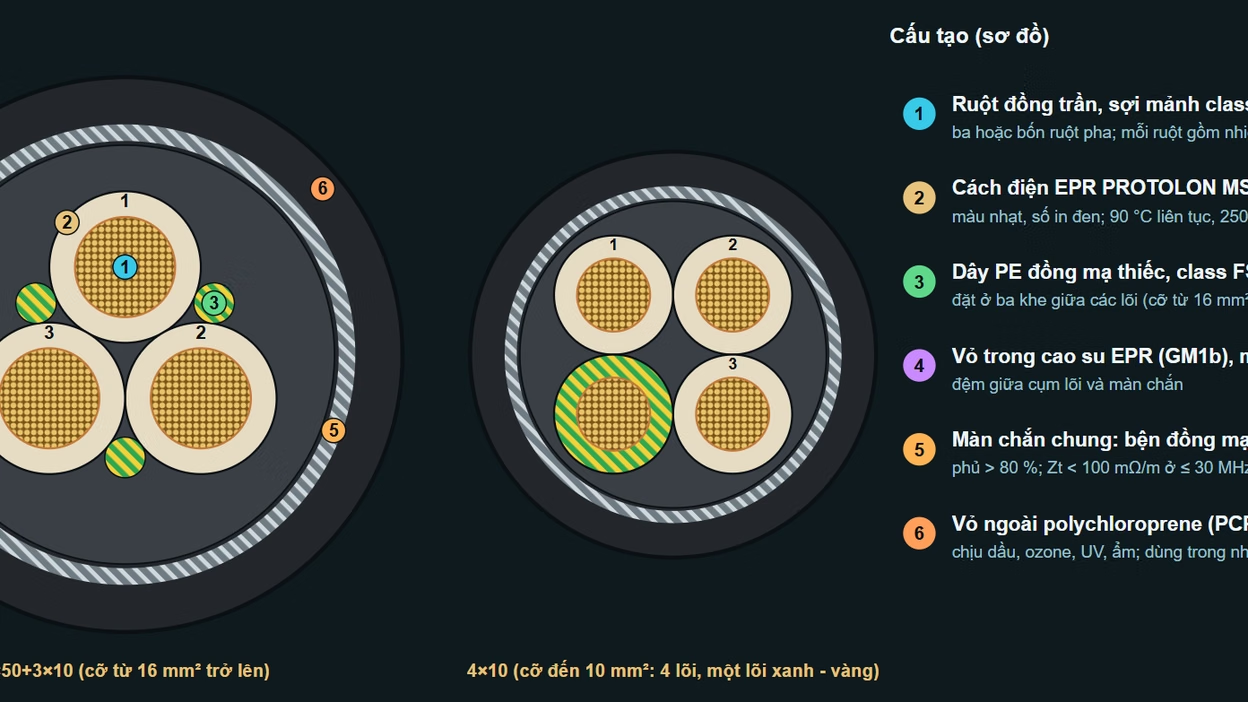
GAALFLEX® VFD 2XSLCHK-J: CPR-Compliant Oil-Resistant Halogen-Free Variable Frequency Drive Inverter Connection Cable for European Building and Industrial Applications with Oil-Exposure Environments, Higher-Temperature Industrial Systems, and Mining Operations (0.6/1 kV Nominal Voltage, 4 kV Test Voltage, CPR EU 305/2011 + EN 50575:2014+A1:2016 Compliance with Dca-S1b,d2,a1 Fire Classification [Enhanced Performance: Low Smoke, Zero Halogen, Minimal Toxicity, Limited Corrosive Gases], Comprehensive Dual-Configuration Portfolio [4-Core and 3+3 Earth Conductor Versions Plus New 7-Core Option], 1.5–300 mm² Conductor Range Enabling Complete VFD Specification Across Industrial Applications, Flexible Class 5 Red Copper per IEC 60228, Special XLPE [Cross-Linked Polyethylene] Halogen-Free Insulation with Oil Resistance per IEC 60811-404, Low Corrosive Gas Emission per IEC 60754-2, Low Smoke Density per IEC 61034-1-2, Aluminum Tape + PETP Foil + Tinned Copper Braid Triple-Layer Shielding, Low Mutual Capacitance [70–410 nF/km] Minimizing Cross-Talk, Low Coupling Resistance [Max 250 Ω/km] Supporting Low-Impedance Control, Black Halogen-Free PVC Outer Sheath with UV Resistance for Outdoor Industrial Deployment, Temperature Range −40 to +90°C [Fixed Laying] or −15 to +90°C [Flexible Application] with +90°C Conductor and +250°C Short-Circuit Capability Enabling High-Temperature Industrial Facilities, Mining Application Suitability per DIN VDE 0250, Electromagnetic Compatibility per EN 55011 / DIN VDE 0875 / EN 61800-3, Self-Extinguishing and Flame-Retardant per DIN VDE 0482-265-2-1 / EN 50265-2-1 / IEC 60332-1-2 / DIN VDE 0482 part 266-4-2 / EN 50266-4-2 / IEC 60332-3-24, Insulation Resistance 200+ MΩ·km, Radiation Resistance to 80×10⁶ cJ/kg, Oil-Resistant Construction Eliminating Cable Degradation in Petrochemical/Automotive/Food Processing Environments, Halogen-Free Zero-Halogen Construction Eliminating Toxic Chlorine/Fluorine Emissions During Fire, RoHS and CE Approved, and Complete European and International Compliance Enabling Building Code Acceptance and Professional VFD System Integration in High-Temperature Oil-Exposure Environments)

GAALFLEX® VFD 2XSLCHK-J

GAALFLEX® VFD 2XSLCHK-J: CPR-Compliant Oil-Resistant Halogen-Free Variable Frequency Drive Inverter Connection Cable for European Building and Industrial Applications with Oil-Exposure Environments, Higher-Temperature Industrial Systems, and Mining Operations (0.6/1 kV Nominal Voltage, 4 kV Test Voltage, CPR EU 305/2011 + EN 50575:2014+A1:2016 Compliance with Dca-S1b,d2,a1 Fire Classification [Enhanced Performance: Low Smoke, Zero Halogen, Minimal Toxicity, Limited Corrosive Gases], Comprehensive Dual-Configuration Portfolio [4-Core and 3+3 Earth Conductor Versions Plus New 7-Core Option], 1.5–300 mm² Conductor Range Enabling Complete VFD Specification Across Industrial Applications, Flexible Class 5 Red Copper per IEC 60228, Special XLPE [Cross-Linked Polyethylene] Halogen-Free Insulation with Oil Resistance per IEC 60811-404, Low Corrosive Gas Emission per IEC 60754-2, Low Smoke Density per IEC 61034-1-2, Aluminum Tape + PETP Foil + Tinned Copper Braid Triple-Layer Shielding, Low Mutual Capacitance [70–410 nF/km] Minimizing Cross-Talk, Low Coupling Resistance [Max 250 Ω/km] Supporting Low-Impedance Control, Black Halogen-Free PVC Outer Sheath with UV Resistance for Outdoor Industrial Deployment, Temperature Range −40 to +90°C [Fixed Laying] or −15 to +90°C [Flexible Application] with +90°C Conductor and +250°C Short-Circuit Capability Enabling High-Temperature Industrial Facilities, Mining Application Suitability per DIN VDE 0250, Electromagnetic Compatibility per EN 55011 / DIN VDE 0875 / EN 61800-3, Self-Extinguishing and Flame-Retardant per DIN VDE 0482-265-2-1 / EN 50265-2-1 / IEC 60332-1-2 / DIN VDE 0482 part 266-4-2 / EN 50266-4-2 / IEC 60332-3-24, Insulation Resistance 200+ MΩ·km, Radiation Resistance to 80×10⁶ cJ/kg, Oil-Resistant Construction Eliminating Cable Degradation in Petrochemical/Automotive/Food Processing Environments, Halogen-Free Zero-Halogen Construction Eliminating Toxic Chlorine/Fluorine Emissions During Fire, RoHS and CE Approved, and Complete European and International Compliance Enabling Building Code Acceptance and Professional VFD System Integration in High-Temperature Oil-Exposure Environments)
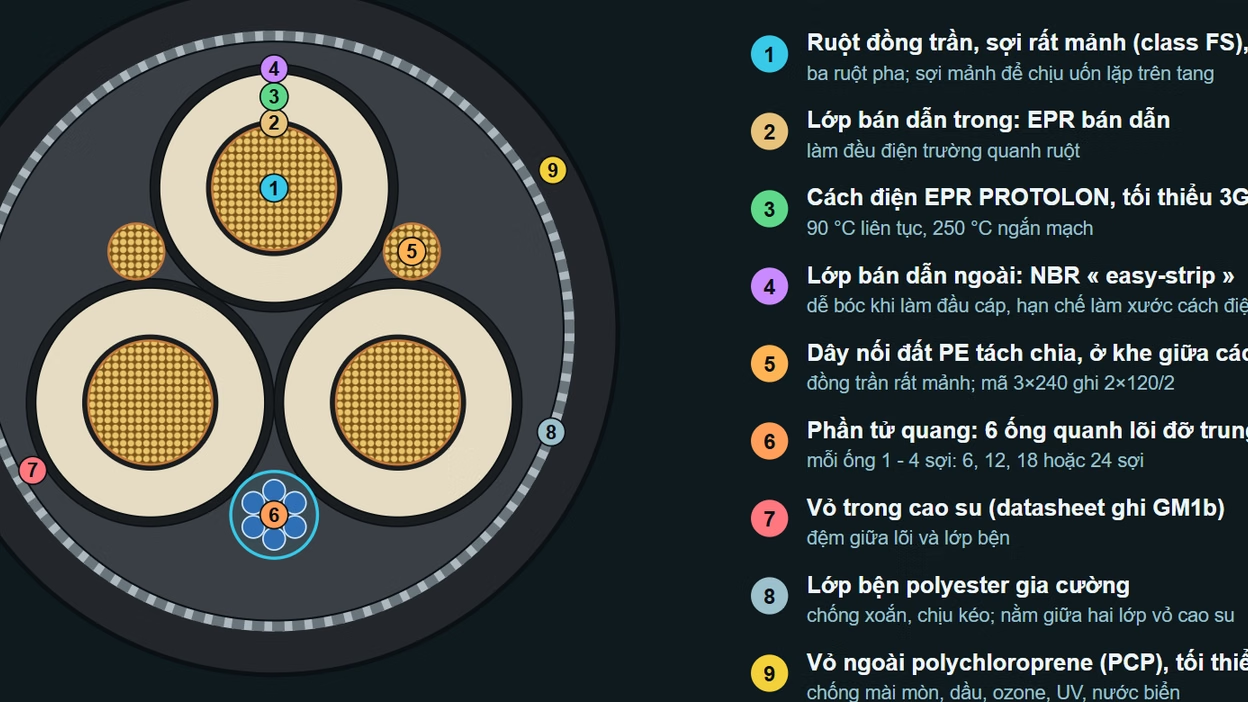
GAALFLEX® VFD 2XSLCYK: CPR-Compliant Halogen-Free Variable Frequency Drive Inverter Connection Cable for European Building Applications, Industrial Frequency Converter Systems, and Mining Operations (0.6/1 kV Nominal Voltage, 4 kV Test Voltage, CPR EU 305/2011 + EN 50575:2014+A1:2016 Compliance with Cca-s3,d1,a3 Fire Classification [Low Smoke, Zero Halogen, Minimal Toxicity], Comprehensive Dual-Configuration Portfolio [4-Core and 3+3 Earth Conductor Versions], 1.5–300 mm² Conductor Range Enabling Complete VFD Specification Across Industrial Applications, Flexible Class 5 Red Copper per IEC 60228, Special XLPE [Cross-Linked Polyethylene] Insulation Providing Halogen-Free Performance, Low Corrosive Gas Emission, and Superior Thermal Stability, Aluminum Tape + PETP Foil + Tinned Copper Braid Triple-Layer Shielding, Low Mutual Capacitance [70–410 nF/km] Minimizing Cross-Talk, Low Coupling Resistance [Max 250 Ω/km] Supporting Low-Impedance Control, Black RAL 9005 PVC Outer Sheath with UV Resistance for Outdoor Industrial Deployment, Temperature Range −40 to +70°C [Fixed Laying] or −15 to +70°C [Flexible Application] with +90°C Conductor and +250°C Short-Circuit Capability, Mining Application Suitability per DIN VDE 0250, Electromagnetic Compatibility per EN 55011 / DIN VDE 0875 / EN 61800-3, Self-Extinguishing and Flame-Retardant per DIN VDE 0482-265-2-1 / EN 50265-2-1 / IEC 60332-1-2 / EN 50399, Insulation Resistance 200+ MΩ·km, Radiation Resistance to 80×10⁶ cJ/kg, Halogen-Free Zero-Halogen Construction Eliminating Toxic Chlorine/Fluorine Emissions During Fire, Suitable for Buildings, Plants, Fixed Installations, Medium Mechanical Stress, Forced-Movement Flexible Installations in Dry/Moist/Wet Environments, Automotive and Food Industry Applications, SIMOVERT Frequency Converter Integration, Industrial Pump/Ventilator/Conveyor/Air-Conditioning Systems, RoHS and CE Approved, and Complete European and International Compliance Enabling Building Code Acceptance and Professional VFD System Integration)

GAALFLEX® VFD 2XSLCYK

GAALFLEX® VFD 2XSLCYK: CPR-Compliant Halogen-Free Variable Frequency Drive Inverter Connection Cable for European Building Applications, Industrial Frequency Converter Systems, and Mining Operations (0.6/1 kV Nominal Voltage, 4 kV Test Voltage, CPR EU 305/2011 + EN 50575:2014+A1:2016 Compliance with Cca-s3,d1,a3 Fire Classification [Low Smoke, Zero Halogen, Minimal Toxicity], Comprehensive Dual-Configuration Portfolio [4-Core and 3+3 Earth Conductor Versions], 1.5–300 mm² Conductor Range Enabling Complete VFD Specification Across Industrial Applications, Flexible Class 5 Red Copper per IEC 60228, Special XLPE [Cross-Linked Polyethylene] Insulation Providing Halogen-Free Performance, Low Corrosive Gas Emission, and Superior Thermal Stability, Aluminum Tape + PETP Foil + Tinned Copper Braid Triple-Layer Shielding, Low Mutual Capacitance [70–410 nF/km] Minimizing Cross-Talk, Low Coupling Resistance [Max 250 Ω/km] Supporting Low-Impedance Control, Black RAL 9005 PVC Outer Sheath with UV Resistance for Outdoor Industrial Deployment, Temperature Range −40 to +70°C [Fixed Laying] or −15 to +70°C [Flexible Application] with +90°C Conductor and +250°C Short-Circuit Capability, Mining Application Suitability per DIN VDE 0250, Electromagnetic Compatibility per EN 55011 / DIN VDE 0875 / EN 61800-3, Self-Extinguishing and Flame-Retardant per DIN VDE 0482-265-2-1 / EN 50265-2-1 / IEC 60332-1-2 / EN 50399, Insulation Resistance 200+ MΩ·km, Radiation Resistance to 80×10⁶ cJ/kg, Halogen-Free Zero-Halogen Construction Eliminating Toxic Chlorine/Fluorine Emissions During Fire, Suitable for Buildings, Plants, Fixed Installations, Medium Mechanical Stress, Forced-Movement Flexible Installations in Dry/Moist/Wet Environments, Automotive and Food Industry Applications, SIMOVERT Frequency Converter Integration, Industrial Pump/Ventilator/Conveyor/Air-Conditioning Systems, RoHS and CE Approved, and Complete European and International Compliance Enabling Building Code Acceptance and Professional VFD System Integration)
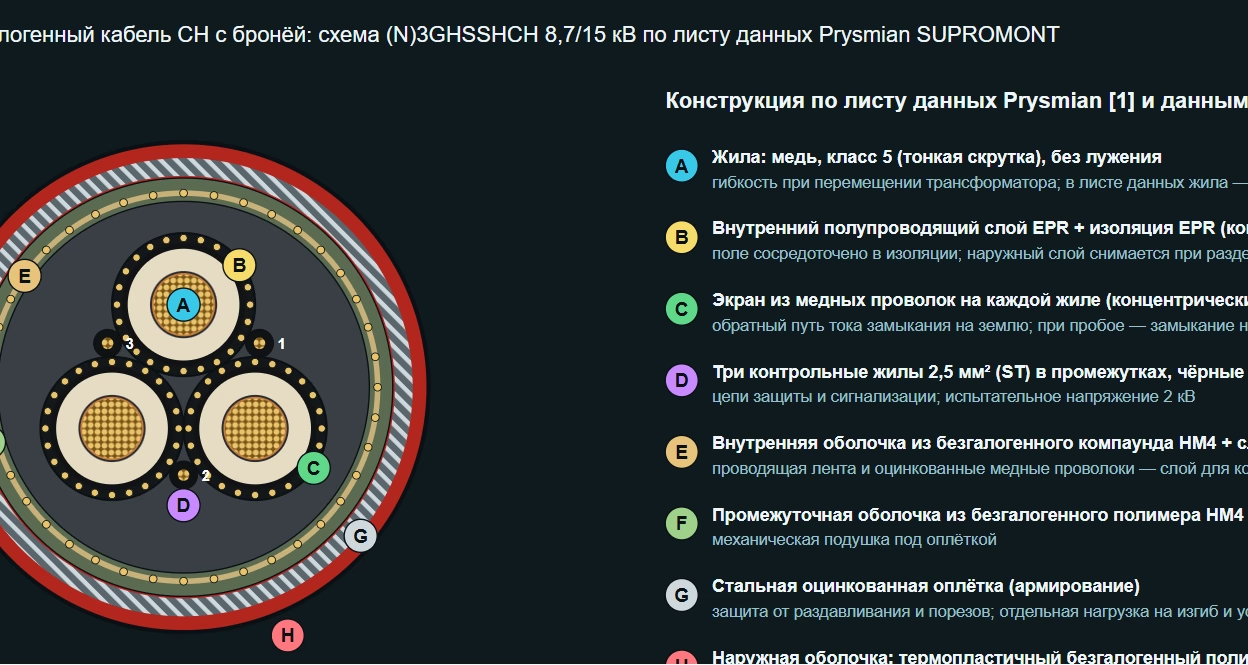
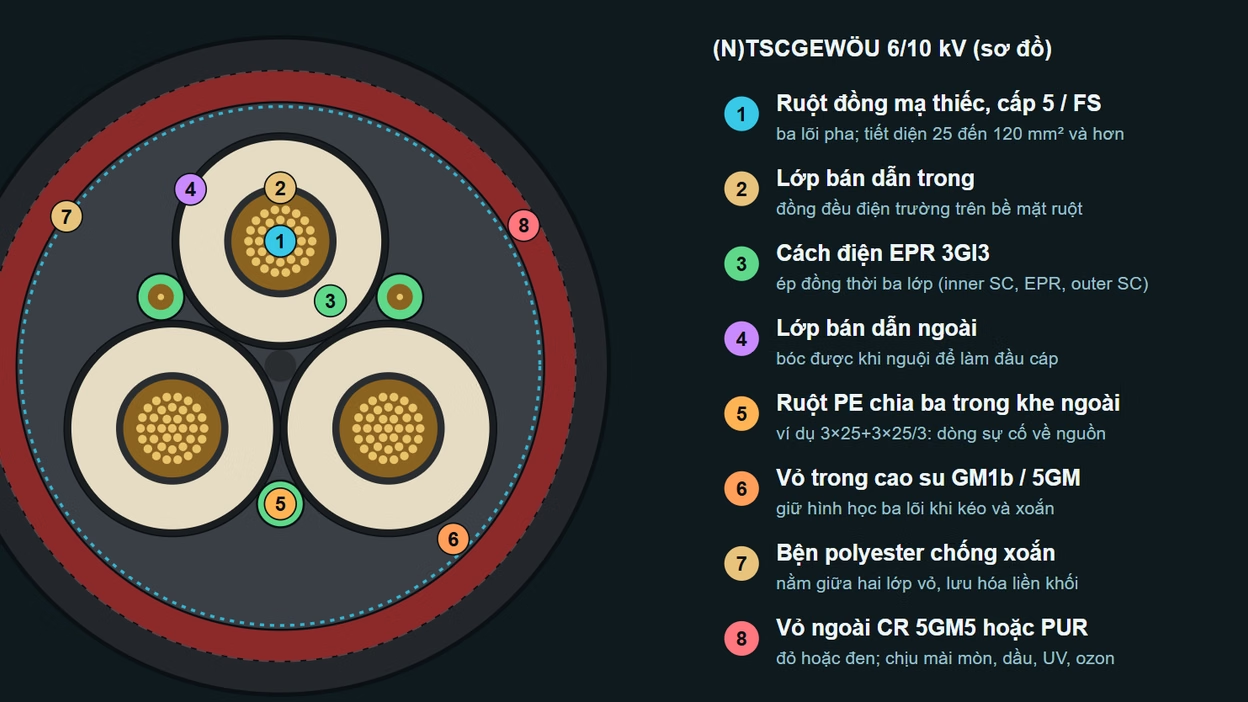
GAALFLEX® VFD 1300 A: BS 5467-Compliant Armoured Variable Frequency Drive Inverter Connection Cable for Harsh Industrial Environments, Outdoor Deployment, and Applications Requiring Mechanical Protection (0.6/1 kV Nominal Voltage, 4 kV Test Voltage, Comprehensive Dual-Configuration Portfolio [4-Core and 3+3 Earth Conductor Versions], 1.5–300 mm² Conductor Range Enabling Complete VFD Specification in Mechanical Hazard Zones, Flexible Class 5 Red Copper per IEC 60228, GAALTHERM® 580 Special Polyurethane Insulation Providing Superior Thermal Stability and Mechanical Robustness Compared to PE Standard Insulation, Aluminum Tape + PETP Foil + Tinned Copper Braid Triple-Layer Shielding Providing Effective EMI Suppression for Frequency Converter Signal Integrity, Steel Wire Armour Providing Comprehensive Mechanical Protection Against Puncture, Crushing, and Environmental Hazards Enabling Direct Burial and Outdoor Installation, Low Mutual Capacitance [70–410 nF/km Depending on Configuration] Minimizing Cross-Talk, Low Coupling Resistance [Max 250 Ω/km] Supporting Low-Impedance Control Circuits, Inner Black RAL 9005 PVC Sheath Protecting Armour from Conductor Contact, Outer Black UV-Resistant PVC Compound Sheath Enabling Outdoor Industrial Installation Without Additional Protection, Temperature Range −40 to +70°C [Fixed Laying] or −5 to +70°C [Flexible Application] with +90°C Conductor and +250°C Short-Circuit Capability, 12×D Minimum Bending Radius Supporting Field Routing in Armoured Configurations, BS 5467 Compliance Enabling UK and Commonwealth Market Acceptance, UV-Resistant Outdoor Use per DIN VDE 0250, Electromagnetic Compatibility per EN 55011 / DIN VDE 0875 / EN 61800-3, Self-Extinguishing and Flame-Retardant per DIN VDE 0482-265-2-1, Insulation Resistance 200+ MΩ·km, Radiation Resistance to 80×10⁶ cJ/kg, RoHS and CE Approved, and Complete International VFD Infrastructure Compliance Enabling OEM Integration and Process Automation Acceptance in Mechanically Hazardous Environments)

BS 5467 GAALFLEX® VFD 1300 A

GAALFLEX® VFD 1300 A: BS 5467-Compliant Armoured Variable Frequency Drive Inverter Connection Cable for Harsh Industrial Environments, Outdoor Deployment, and Applications Requiring Mechanical Protection (0.6/1 kV Nominal Voltage, 4 kV Test Voltage, Comprehensive Dual-Configuration Portfolio [4-Core and 3+3 Earth Conductor Versions], 1.5–300 mm² Conductor Range Enabling Complete VFD Specification in Mechanical Hazard Zones, Flexible Class 5 Red Copper per IEC 60228, GAALTHERM® 580 Special Polyurethane Insulation Providing Superior Thermal Stability and Mechanical Robustness Compared to PE Standard Insulation, Aluminum Tape + PETP Foil + Tinned Copper Braid Triple-Layer Shielding Providing Effective EMI Suppression for Frequency Converter Signal Integrity, Steel Wire Armour Providing Comprehensive Mechanical Protection Against Puncture, Crushing, and Environmental Hazards Enabling Direct Burial and Outdoor Installation, Low Mutual Capacitance [70–410 nF/km Depending on Configuration] Minimizing Cross-Talk, Low Coupling Resistance [Max 250 Ω/km] Supporting Low-Impedance Control Circuits, Inner Black RAL 9005 PVC Sheath Protecting Armour from Conductor Contact, Outer Black UV-Resistant PVC Compound Sheath Enabling Outdoor Industrial Installation Without Additional Protection, Temperature Range −40 to +70°C [Fixed Laying] or −5 to +70°C [Flexible Application] with +90°C Conductor and +250°C Short-Circuit Capability, 12×D Minimum Bending Radius Supporting Field Routing in Armoured Configurations, BS 5467 Compliance Enabling UK and Commonwealth Market Acceptance, UV-Resistant Outdoor Use per DIN VDE 0250, Electromagnetic Compatibility per EN 55011 / DIN VDE 0875 / EN 61800-3, Self-Extinguishing and Flame-Retardant per DIN VDE 0482-265-2-1, Insulation Resistance 200+ MΩ·km, Radiation Resistance to 80×10⁶ cJ/kg, RoHS and CE Approved, and Complete International VFD Infrastructure Compliance Enabling OEM Integration and Process Automation Acceptance in Mechanically Hazardous Environments)
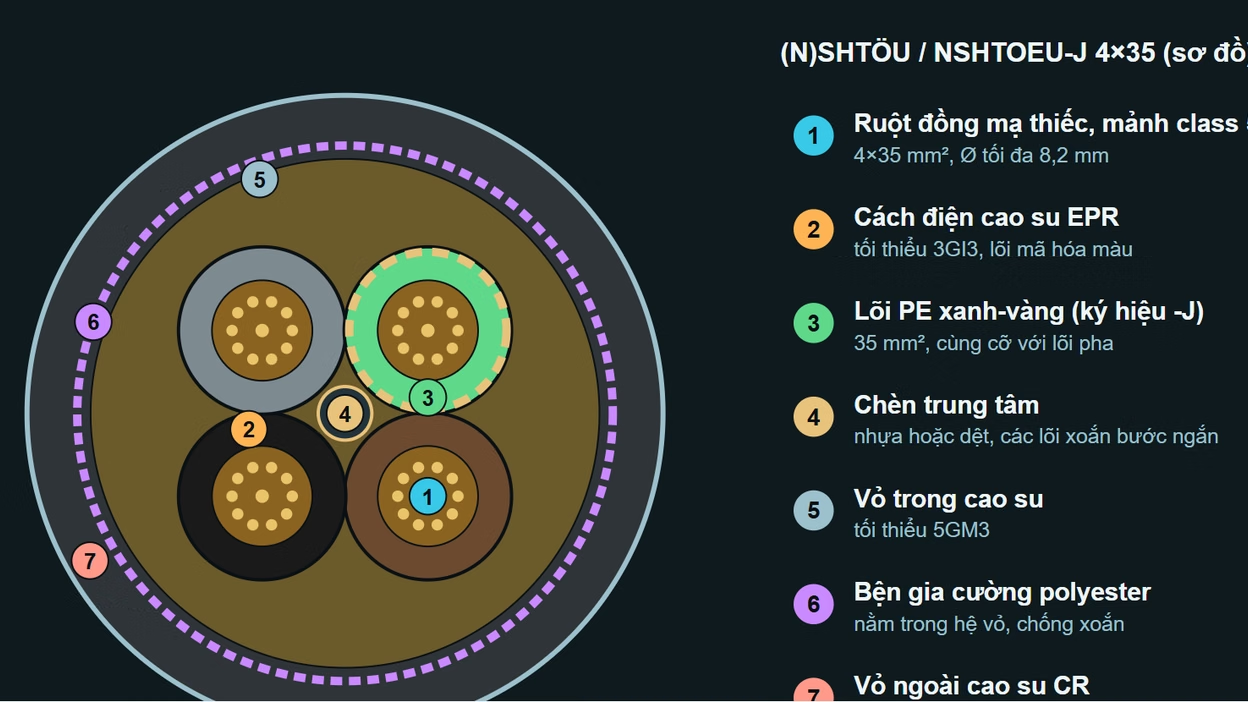
GAALFLEX® VFD 2YSLCYK-J: CPR-Compliant (EU 305/2011 + EN 50575:2014+A1:2016, Eca Classification) Variable Frequency Drive Inverter Connection Cable for North American Industrial Motor Power Supply, Mining Applications, and Outdoor Frequency Converter Systems (0.6/1 kV Nominal Voltage, 4 kV Test Voltage, Comprehensive Dual-Configuration Portfolio [4-Core and 3+3 Earth Conductor Versions], 1.5–300 mm² Conductor Range Enabling Complete VFD Specification from Servo Drives Through Industrial Motors, Flexible Class 5 Red Copper per IEC 60228, PE Special Insulation Compound Providing Electrical Stability, Aluminum Tape + PETP Foil + Tinned Copper Braid Triple-Layer Shielding, Low Mutual Capacitance [70–410 nF/km], Low Coupling Resistance [Max 250 Ω/km], Black RAL 9005 PVC Outer Sheath with UV Resistance Enabling Outdoor Mining and Industrial Installation Without Degradation, Temperature Range −40 to +70°C [Fixed] or −5 to +70°C [Flexible Application] with +90°C Conductor and +250°C Short-Circuit Capability, Hazardous-Area Installation per DIN VDE 0250, Electromagnetic Compatibility per EN 55011 / DIN VDE 0875 / EN 61800-3, Self-Extinguishing and Flame-Retardant per DIN VDE 0482-265-2-1, CPR Fire Classification Eca [EN 13501-1] Enabling European Regulatory Compliance, Optional XLPE Halogen-Free Version [2XSLCHK-J] per IEC 60502-4 with Eca-Rated Black SHF1 Sheath, Suitable for Mining Machinery, Outdoor Industrial Systems, Automotive and Food Automation with Environmental Exposure, and Complete International VFD Infrastructure Compliance with Regulatory Mandates)

Type 2YSLCYK-J GAALFLEX® VFD

GAALFLEX® VFD 2YSLCYK-J: CPR-Compliant (EU 305/2011 + EN 50575:2014+A1:2016, Eca Classification) Variable Frequency Drive Inverter Connection Cable for North American Industrial Motor Power Supply, Mining Applications, and Outdoor Frequency Converter Systems (0.6/1 kV Nominal Voltage, 4 kV Test Voltage, Comprehensive Dual-Configuration Portfolio [4-Core and 3+3 Earth Conductor Versions], 1.5–300 mm² Conductor Range Enabling Complete VFD Specification from Servo Drives Through Industrial Motors, Flexible Class 5 Red Copper per IEC 60228, PE Special Insulation Compound Providing Electrical Stability, Aluminum Tape + PETP Foil + Tinned Copper Braid Triple-Layer Shielding, Low Mutual Capacitance [70–410 nF/km], Low Coupling Resistance [Max 250 Ω/km], Black RAL 9005 PVC Outer Sheath with UV Resistance Enabling Outdoor Mining and Industrial Installation Without Degradation, Temperature Range −40 to +70°C [Fixed] or −5 to +70°C [Flexible Application] with +90°C Conductor and +250°C Short-Circuit Capability, Hazardous-Area Installation per DIN VDE 0250, Electromagnetic Compatibility per EN 55011 / DIN VDE 0875 / EN 61800-3, Self-Extinguishing and Flame-Retardant per DIN VDE 0482-265-2-1, CPR Fire Classification Eca [EN 13501-1] Enabling European Regulatory Compliance, Optional XLPE Halogen-Free Version [2XSLCHK-J] per IEC 60502-4 with Eca-Rated Black SHF1 Sheath, Suitable for Mining Machinery, Outdoor Industrial Systems, Automotive and Food Automation with Environmental Exposure, and Complete International VFD Infrastructure Compliance with Regulatory Mandates)
GAALFLEX® VFD 2YSLCY-J: Shielded Variable Frequency Drive Inverter Connection Cable for North American Industrial Motor Power Supply and Frequency Converter Applications (0.6/1 kV Nominal Voltage, 4 kV Test Voltage, Comprehensive Dual-Configuration Portfolio [4-Core and 3+3 Earth Conductor Versions], 1.5–300 mm² Conductor Range Enabling Complete VFD System Specification from Small Servo Drives Through High-Power Industrial Motor Systems, Flexible Class 5 Red Copper per IEC 60228 Enabling Field Installation and Drive Enclosure Routing, PE Special Insulation Compound Providing Electrical Stability Across Frequency Conversion Environments, Aluminum Tape + PETP Foil + Tinned Copper Braid Triple-Layer Shielding Providing Effective EMI Suppression and Signal Integrity Critical for Frequency Converter Control, Low Mutual Capacitance [70–410 nF/km Depending on Configuration] Minimizing Cross-Talk Between Adjacent Conductors in Bundled VFD Installations, Low Coupling Resistance [Max 250 Ω/km] Supporting Low-Impedance Control Circuits, Transparent or Transparent-Orange PVC Outer Sheath Enabling Visual Conductor Inspection and Installation Verification, Temperature Range −40 to +70°C [Fixed Laying] or −5 to +70°C [Flexible Application] with +90°C Conductor and +250°C Short-Circuit Capability Supporting Transient Overvoltage Conditions During Frequency Conversion Switching, Hazardous-Area Installation Capability per DIN VDE 0250, Electromagnetic Compatibility per EN 55011 / DIN VDE 0875 / EN 61800-3 Enabling Integration with Modern Frequency Converter Installations, Self-Extinguishing and Flame-Retardant per DIN VDE 0482-265-2-1, Insulation Resistance 200+ MΩ·km, Radiation Resistance to 80×10⁶ cJ/kg, Flexible Bending Radius Supporting Tight Drive Enclosure Routing, Optional XLPE Halogen-Free Version [2XSLCH-J] for Environmental Applications, and Complete North American VFD Infrastructure Compliance Enabling OEM Motor Drive Integration and Process Automation Acceptance)

Type 2YSLCY-J GAALFLEX® VFD

GAALFLEX® VFD 2YSLCY-J: Shielded Variable Frequency Drive Inverter Connection Cable for North American Industrial Motor Power Supply and Frequency Converter Applications (0.6/1 kV Nominal Voltage, 4 kV Test Voltage, Comprehensive Dual-Configuration Portfolio [4-Core and 3+3 Earth Conductor Versions], 1.5–300 mm² Conductor Range Enabling Complete VFD System Specification from Small Servo Drives Through High-Power Industrial Motor Systems, Flexible Class 5 Red Copper per IEC 60228 Enabling Field Installation and Drive Enclosure Routing, PE Special Insulation Compound Providing Electrical Stability Across Frequency Conversion Environments, Aluminum Tape + PETP Foil + Tinned Copper Braid Triple-Layer Shielding Providing Effective EMI Suppression and Signal Integrity Critical for Frequency Converter Control, Low Mutual Capacitance [70–410 nF/km Depending on Configuration] Minimizing Cross-Talk Between Adjacent Conductors in Bundled VFD Installations, Low Coupling Resistance [Max 250 Ω/km] Supporting Low-Impedance Control Circuits, Transparent or Transparent-Orange PVC Outer Sheath Enabling Visual Conductor Inspection and Installation Verification, Temperature Range −40 to +70°C [Fixed Laying] or −5 to +70°C [Flexible Application] with +90°C Conductor and +250°C Short-Circuit Capability Supporting Transient Overvoltage Conditions During Frequency Conversion Switching, Hazardous-Area Installation Capability per DIN VDE 0250, Electromagnetic Compatibility per EN 55011 / DIN VDE 0875 / EN 61800-3 Enabling Integration with Modern Frequency Converter Installations, Self-Extinguishing and Flame-Retardant per DIN VDE 0482-265-2-1, Insulation Resistance 200+ MΩ·km, Radiation Resistance to 80×10⁶ cJ/kg, Flexible Bending Radius Supporting Tight Drive Enclosure Routing, Optional XLPE Halogen-Free Version [2XSLCH-J] for Environmental Applications, and Complete North American VFD Infrastructure Compliance Enabling OEM Motor Drive Integration and Process Automation Acceptance)
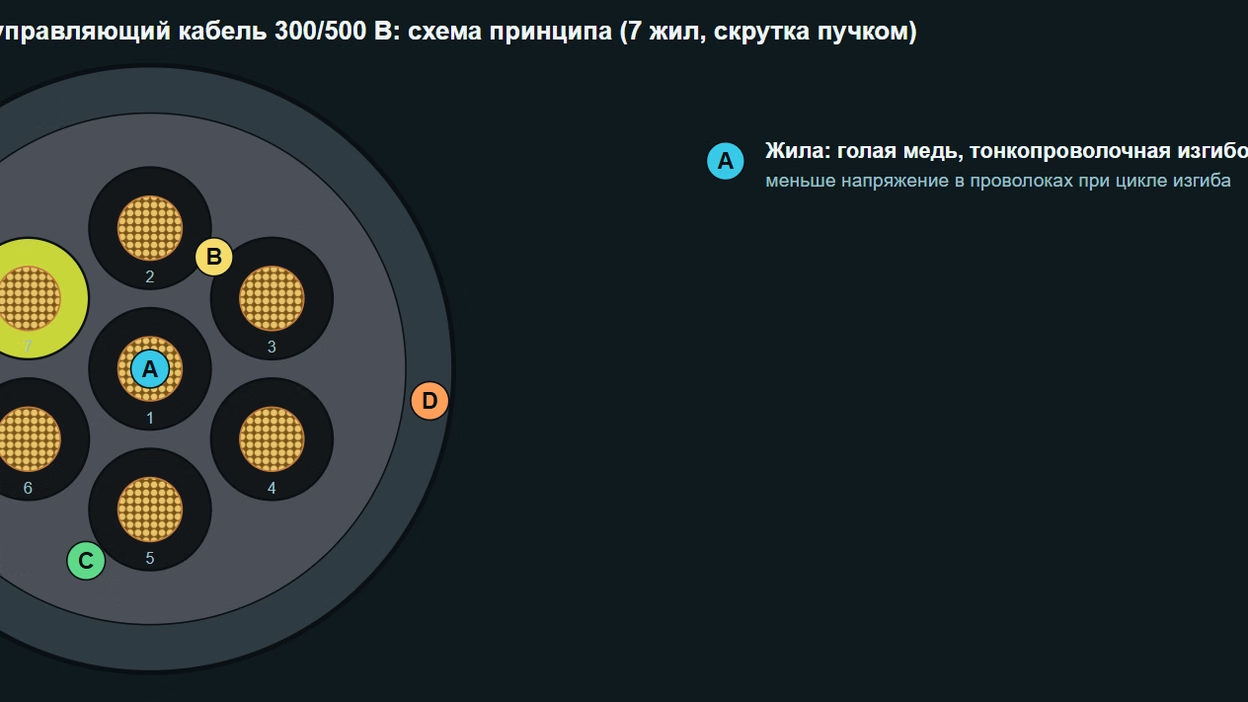
GAALFLEX® CONTROL 540 CP PUR: Advanced Zero-Halogen Fire-Safe EMI-Suppressed Oil-Resistant Multi-Core Control Cable for Renewable Energy VFD Integration and Critical Infrastructure Protection (Dual-Voltage System: 300/500 V from 0.75–1 mm², 450/750 V from 1–16 mm², Extreme Temperature Range −40 to +90°C Fixed Installation / −30 to +90°C Flexible Deployment, 3 kV Test Voltage per DIN VDE 0281, Class 5 Flexible Red Bare Copper per IEC 60228 and DIN VDE 0295, Halogen-Free TMPU Insulation per DIN VDE 0482 and IEC 60754-1, Yellow (RAL 1021) Halogen-Free Compound Inner Sheath with Tinned Copper Wire Braid Overall Screen Achieving ≥85 dB EMI Attenuation Across Industrial Frequency Spectrum, Non-Woven Tape Protective Wrapping Between Screen and Inner Sheath, Yellow (RAL 1021) PUR Type TMPU Outer Sheath Delivering Superior Oil Resistance

GAALFLEX® CONTROL 540 CP

GAALFLEX® CONTROL 540 CP PUR: Advanced Zero-Halogen Fire-Safe EMI-Suppressed Oil-Resistant Multi-Core Control Cable for Renewable Energy VFD Integration and Critical Infrastructure Protection (Dual-Voltage System: 300/500 V from 0.75–1 mm², 450/750 V from 1–16 mm², Extreme Temperature Range −40 to +90°C Fixed Installation / −30 to +90°C Flexible Deployment, 3 kV Test Voltage per DIN VDE 0281, Class 5 Flexible Red Bare Copper per IEC 60228 and DIN VDE 0295, Halogen-Free TMPU Insulation per DIN VDE 0482 and IEC 60754-1, Yellow (RAL 1021) Halogen-Free Compound Inner Sheath with Tinned Copper Wire Braid Overall Screen Achieving ≥85 dB EMI Attenuation Across Industrial Frequency Spectrum, Non-Woven Tape Protective Wrapping Between Screen and Inner Sheath, Yellow (RAL 1021) PUR Type TMPU Outer Sheath Delivering Superior Oil Resistance
GAALFLEX® CONTROL 540 P PUR: Advanced Zero-Halogen Oil-Resistant Multi-Core Control Cable for High-Temperature and Extreme-Environment Applications (Dual-Voltage System: 300/500 V from 0.75–1 mm², 450/750 V from 1–16 mm², Extreme Temperature Range −40 to +90°C Fixed Installation / −15 to +90°C Flexible Deployment, 3 kV Test Voltage per DIN VDE 0281, Class 5 Flexible Red Bare Copper per IEC 60228 and DIN VDE 0295, Halogen-Free PVC Insulation per DIN VDE 0472 and IEC 60754-1, Yellow PUR Type TMPU Outer Sheath (RAL 1021) Delivering Superior Oil Resistance

GAALFLEX® CONTROL 540 P

GAALFLEX® CONTROL 540 P PUR: Advanced Zero-Halogen Oil-Resistant Multi-Core Control Cable for High-Temperature and Extreme-Environment Applications (Dual-Voltage System: 300/500 V from 0.75–1 mm², 450/750 V from 1–16 mm², Extreme Temperature Range −40 to +90°C Fixed Installation / −15 to +90°C Flexible Deployment, 3 kV Test Voltage per DIN VDE 0281, Class 5 Flexible Red Bare Copper per IEC 60228 and DIN VDE 0295, Halogen-Free PVC Insulation per DIN VDE 0472 and IEC 60754-1, Yellow PUR Type TMPU Outer Sheath (RAL 1021) Delivering Superior Oil Resistance
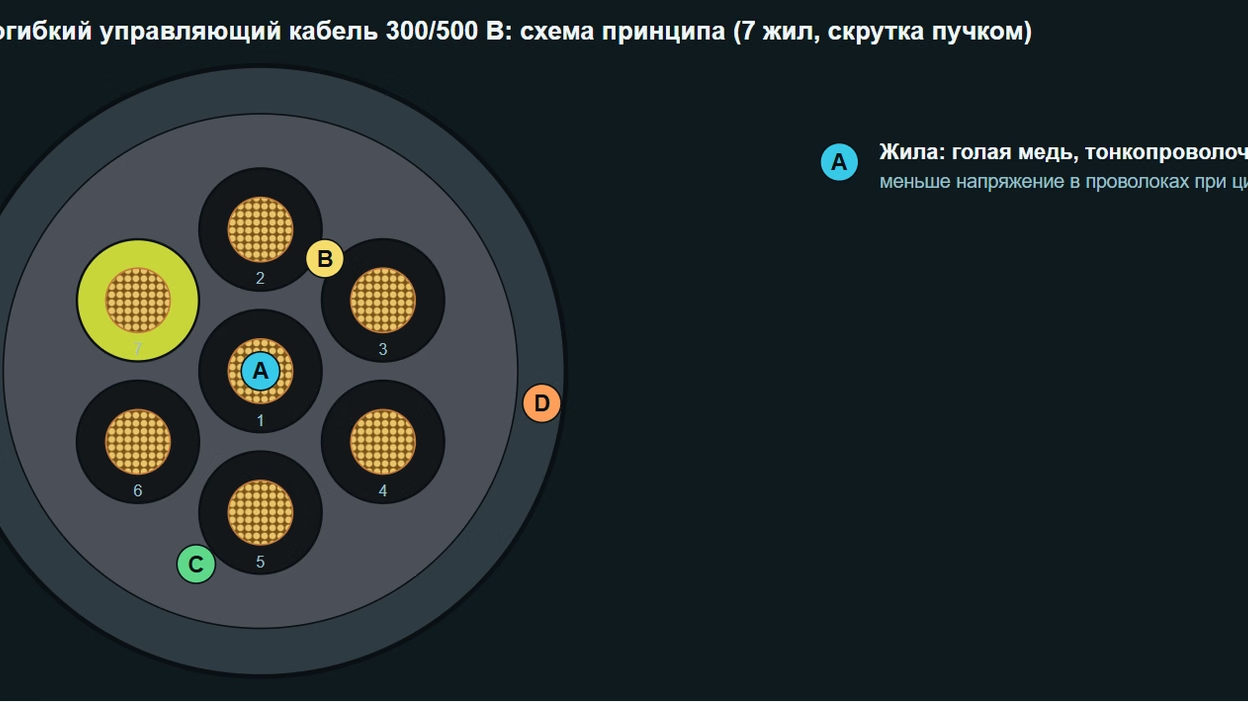
GAALFLEX® CONTROL 500 CP Lean: Advanced EMI-Suppressed Oil-Resistant Multi-Core Control Cable for Harsh Industrial Environments (300/500 V Nominal, 3 kV Test Voltage per DIN VDE 0281, −40 to +80°C Fixed Installation / −5 to +70°C Flexible Application, Class 5 Flexible Red Bare Copper per IEC 60228 and DIN VDE 0295, PETP Foil Wrapping Plus Overall Tinned Copper Wire Braid Screen Providing ≥85 dB EMI Attenuation Across Industrial Frequency Spectrum, Grey PUR Special Compound Outer Sheath (RAL 7001) Delivering Superior Oil Resistance

GAALFLEX® CONTROL 500 CP Lean

GAALFLEX® CONTROL 500 CP Lean: Advanced EMI-Suppressed Oil-Resistant Multi-Core Control Cable for Harsh Industrial Environments (300/500 V Nominal, 3 kV Test Voltage per DIN VDE 0281, −40 to +80°C Fixed Installation / −5 to +70°C Flexible Application, Class 5 Flexible Red Bare Copper per IEC 60228 and DIN VDE 0295, PETP Foil Wrapping Plus Overall Tinned Copper Wire Braid Screen Providing ≥85 dB EMI Attenuation Across Industrial Frequency Spectrum, Grey PUR Special Compound Outer Sheath (RAL 7001) Delivering Superior Oil Resistance
GAALFLEX® CONTROL 500 P Orange: Advanced Color-Identified Multi-Core Control Cable for Industrial Control Panel Wiring (300/500 V Nominal, 3 kV Test Voltage per DIN VDE 0281, −40 to +70°C Fixed & Flexible Installation, Class 5 Flexible Red Bare Copper per IEC 60228 and DIN VDE 0295, Orange PUR Type TMPU Polyurethane Outer Sheath (RAL 2003 Visibility Standard) Combined with DIN VDE 0293-308 HD 308 S2 Color-Coded Core Architecture (Red, Black, Yellow, Blue, White, Grey, Green-Yellow Earth) Enabling Instant Visual Conductor Identification Without Label Removal, Enhanced Flexibility 6×D Minimum Bending Radius Enabling Compact Control Panel Routing and Equipment Installation, PVC Type TI2 Core Insulation, Oil-Resistant PUR Compound, Flame-Retardant Self-Extinguishing per IEC 60332-1-2, Oil-Resistant per DIN VDE 0473 and IEC 60811-2-1, Abrasion & Notch-Resistant per DIN VDE 0250, RoHS and CE Certified, Multi-Core Architecture with 2 to 5 Core Configurations, 0.75 mm² to 2.5 mm² Cross-Section Range per Core, Standardized SKU Portfolio (20+ Configurations), Color-Coded Conductor Identification per DIN VDE 0293 Standard, Engineered for Control Panel Integration, Industrial Equipment Installation, Electrician-Friendly Maintenance Operations, Cable Routing in Compact Distribution Enclosures, Commissioning and Testing Harnesses, and Visible-Identification Electrical Distribution): Comprehensive Advanced Installation & Maintenance Cable Architecture Analysis Integrating Orange Visibility Outer Sheath Design, DIN VDE 0293 Color-Coding Molecular Identification System, Enhanced-Flexibility Cable Engineering, Installation-Optimized Bending-Radius Architecture, Electrician-Friendly Conductor Tracking, Control Panel Integration Design, Equipment Commissioning Specifications, Maintenance-Simplified Cable Routing, Compact Enclosure Distribution, and Next-Generation Color-Identified Electrical Distribution for Control Panel Installation, Industrial Equipment Wiring, Electrician-Optimized Maintenance, Commissioning Operations, and Visible-Identification Power Distribution Systems

GAALFLEX® CONTROL 500 P orange

GAALFLEX® CONTROL 500 P Orange: Advanced Color-Identified Multi-Core Control Cable for Industrial Control Panel Wiring (300/500 V Nominal, 3 kV Test Voltage per DIN VDE 0281, −40 to +70°C Fixed & Flexible Installation, Class 5 Flexible Red Bare Copper per IEC 60228 and DIN VDE 0295, Orange PUR Type TMPU Polyurethane Outer Sheath (RAL 2003 Visibility Standard) Combined with DIN VDE 0293-308 HD 308 S2 Color-Coded Core Architecture (Red, Black, Yellow, Blue, White, Grey, Green-Yellow Earth) Enabling Instant Visual Conductor Identification Without Label Removal, Enhanced Flexibility 6×D Minimum Bending Radius Enabling Compact Control Panel Routing and Equipment Installation, PVC Type TI2 Core Insulation, Oil-Resistant PUR Compound, Flame-Retardant Self-Extinguishing per IEC 60332-1-2, Oil-Resistant per DIN VDE 0473 and IEC 60811-2-1, Abrasion & Notch-Resistant per DIN VDE 0250, RoHS and CE Certified, Multi-Core Architecture with 2 to 5 Core Configurations, 0.75 mm² to 2.5 mm² Cross-Section Range per Core, Standardized SKU Portfolio (20+ Configurations), Color-Coded Conductor Identification per DIN VDE 0293 Standard, Engineered for Control Panel Integration, Industrial Equipment Installation, Electrician-Friendly Maintenance Operations, Cable Routing in Compact Distribution Enclosures, Commissioning and Testing Harnesses, and Visible-Identification Electrical Distribution): Comprehensive Advanced Installation & Maintenance Cable Architecture Analysis Integrating Orange Visibility Outer Sheath Design, DIN VDE 0293 Color-Coding Molecular Identification System, Enhanced-Flexibility Cable Engineering, Installation-Optimized Bending-Radius Architecture, Electrician-Friendly Conductor Tracking, Control Panel Integration Design, Equipment Commissioning Specifications, Maintenance-Simplified Cable Routing, Compact Enclosure Distribution, and Next-Generation Color-Identified Electrical Distribution for Control Panel Installation, Industrial Equipment Wiring, Electrician-Optimized Maintenance, Commissioning Operations, and Visible-Identification Power Distribution Systems
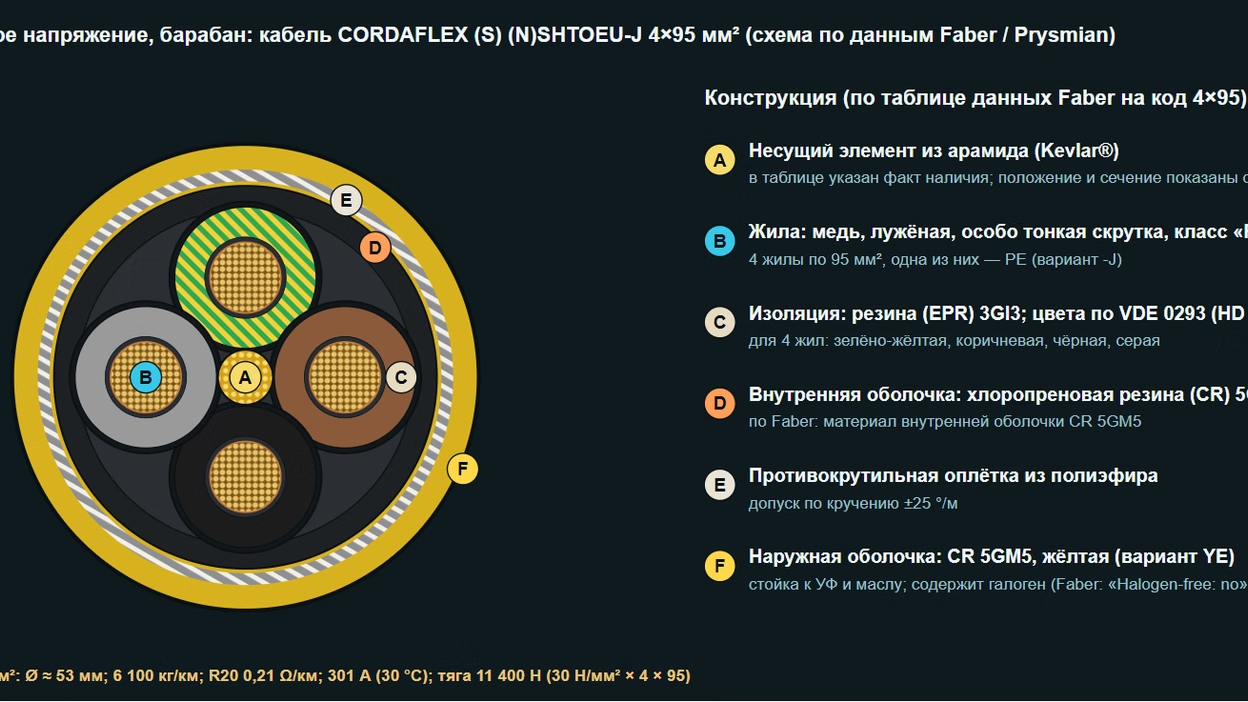
Feichun BASKET SPREADER 730: Advanced Aramide-Reinforced Industrial Basket Cable (300/500 V Nominal, −40 to +90°C Fixed Laying Extreme Temperature Envelope, −25°C Flexible Application, Proprietary Aramide Yarn Central Unit with 10 kN Minimum Tensile Strength for Vertical Load Suspension, Special EPR Rubber Insulation with Enhanced Low-Temperature Flexibility, Advanced CSP (Special Rubber) Outer Sheath with Comprehensive UV/Ozone/Moisture/Weather Resistance for Year-Round Outdoor Exposure, Class 5 Flexible Tinned Copper Conductor per IEC 60228, Sextuples Conductor Stranding with Optimized Lay-Length for Mechanical Durability & Electrical Performance, Non-Woven Synthetic Wrapper with Special Tape Wrapping, Comprehensive Oil, Water, & Chemical Resistance, 160 m/min High-Speed Basket Spreader Operation, 15×D Bending Radius (Mechanical Strength Priority), 4000 N Tensile Break Load (Constant Across All SKUs), FT2 Self-Extinguishing Flame Rating per DIN VDE 0482-265-2-1, Low Smoke & Corrosive Gas Emission per IEC 60754-1, Outdoor Vertical Use Certification, RoHS & CE Certification, 8+ SKU Configurations (6–9 Core Groups)): Comprehensive Advanced Industrial Lifting & Vertical Distribution Cable Architecture Analysis Integrating Aramide Fiber Mechanical Strength Engineering, Vertical Load Suspension Mechanics, Outdoor Weather-Resistance Polymer Chemistry, Temperature-Dependent Elastomer Flexibility, Rope-Grade Tensile Design, Port & Maritime Lifting System Integration, and Next-Generation Outdoor Temporary Power Distribution Integration

BASKET SPREADER 730

Feichun BASKET SPREADER 730: Advanced Aramide-Reinforced Industrial Basket Cable (300/500 V Nominal, −40 to +90°C Fixed Laying Extreme Temperature Envelope, −25°C Flexible Application, Proprietary Aramide Yarn Central Unit with 10 kN Minimum Tensile Strength for Vertical Load Suspension, Special EPR Rubber Insulation with Enhanced Low-Temperature Flexibility, Advanced CSP (Special Rubber) Outer Sheath with Comprehensive UV/Ozone/Moisture/Weather Resistance for Year-Round Outdoor Exposure, Class 5 Flexible Tinned Copper Conductor per IEC 60228, Sextuples Conductor Stranding with Optimized Lay-Length for Mechanical Durability & Electrical Performance, Non-Woven Synthetic Wrapper with Special Tape Wrapping, Comprehensive Oil, Water, & Chemical Resistance, 160 m/min High-Speed Basket Spreader Operation, 15×D Bending Radius (Mechanical Strength Priority), 4000 N Tensile Break Load (Constant Across All SKUs), FT2 Self-Extinguishing Flame Rating per DIN VDE 0482-265-2-1, Low Smoke & Corrosive Gas Emission per IEC 60754-1, Outdoor Vertical Use Certification, RoHS & CE Certification, 8+ SKU Configurations (6–9 Core Groups)): Comprehensive Advanced Industrial Lifting & Vertical Distribution Cable Architecture Analysis Integrating Aramide Fiber Mechanical Strength Engineering, Vertical Load Suspension Mechanics, Outdoor Weather-Resistance Polymer Chemistry, Temperature-Dependent Elastomer Flexibility, Rope-Grade Tensile Design, Port & Maritime Lifting System Integration, and Next-Generation Outdoor Temporary Power Distribution Integration
Feichun FLEXIFESTOON® C PUR: Advanced EMC-Shielded Polyurethane Industrial Festoon Cable (0.6/1 kV AC Nominal, −50 to +90°C Extreme Temperature Envelope, −40°C Flexible Application, Proprietary Tinned Copper Braided EMC Screening with 85–92% Shielding Coverage, Faraday Cage Architecture for RF Interference Suppression, Advanced Polyurethane (PUR) Elastomer Outer Sheath, Special TPE Compound Insulation with Electromagnetic-Barrier Properties, Class 5 Flexible Red Copper Conductor per IEC 60228, Shielding Effectiveness ≥40 dB Across 10 MHz–1 GHz Frequency Range, Suppression of Both Electric-Field & Magnetic-Field EMI Coupling, Central Textile Support Unit with Tinned Copper Shielding Geometry, Non-Woven Synthetic Wrapper for Friction Optimization & Conductor Protection, Minimal Outer Diameter & Reduced Cable Weight Engineering, 15 n/mm² Tensile Strength, 6×D Bending Radius, Complete Halogen-Free Compliance per DIN VDE 0482-267 & EN 50267-2-1, FT2 Self-Extinguishing Per DIN VDE 0482-265-2-1, Low Smoke & Zero Halogenated Gas Emission per IEC 60754-1, 240 m/min High-Speed Festoon Operation, Drum Reeling Capability for Automated Systems, RoHS & CE Certification, 25+ SKU Configurations for Industrial Robot Motion Control, Multi-Axis CNC Machining Automation, Precision Servo Systems, Automated Factory Control Networks, Real-Time Digital Automation, Wireless-Interference-Sensitive Applications): Comprehensive Advanced Industrial EMC Engineering & Shielded Cable Architecture Analysis Integrating Faraday Cage Shielding Theory, RF Interference Suppression Mechanisms, Electromagnetic Coupling Pathways, Signal Integrity Preservation, Tinned Copper Braid Shielding Design, Secondary Cathodic Protection via Conductive Shielding, Industrial Robot Servo Control Integration, and Next-Generation Precision Factory 4.0 Automation Architecture

FLEXIFESTOON® C PUR

Feichun FLEXIFESTOON® C PUR: Advanced EMC-Shielded Polyurethane Industrial Festoon Cable (0.6/1 kV AC Nominal, −50 to +90°C Extreme Temperature Envelope, −40°C Flexible Application, Proprietary Tinned Copper Braided EMC Screening with 85–92% Shielding Coverage, Faraday Cage Architecture for RF Interference Suppression, Advanced Polyurethane (PUR) Elastomer Outer Sheath, Special TPE Compound Insulation with Electromagnetic-Barrier Properties, Class 5 Flexible Red Copper Conductor per IEC 60228, Shielding Effectiveness ≥40 dB Across 10 MHz–1 GHz Frequency Range, Suppression of Both Electric-Field & Magnetic-Field EMI Coupling, Central Textile Support Unit with Tinned Copper Shielding Geometry, Non-Woven Synthetic Wrapper for Friction Optimization & Conductor Protection, Minimal Outer Diameter & Reduced Cable Weight Engineering, 15 n/mm² Tensile Strength, 6×D Bending Radius, Complete Halogen-Free Compliance per DIN VDE 0482-267 & EN 50267-2-1, FT2 Self-Extinguishing Per DIN VDE 0482-265-2-1, Low Smoke & Zero Halogenated Gas Emission per IEC 60754-1, 240 m/min High-Speed Festoon Operation, Drum Reeling Capability for Automated Systems, RoHS & CE Certification, 25+ SKU Configurations for Industrial Robot Motion Control, Multi-Axis CNC Machining Automation, Precision Servo Systems, Automated Factory Control Networks, Real-Time Digital Automation, Wireless-Interference-Sensitive Applications): Comprehensive Advanced Industrial EMC Engineering & Shielded Cable Architecture Analysis Integrating Faraday Cage Shielding Theory, RF Interference Suppression Mechanisms, Electromagnetic Coupling Pathways, Signal Integrity Preservation, Tinned Copper Braid Shielding Design, Secondary Cathodic Protection via Conductive Shielding, Industrial Robot Servo Control Integration, and Next-Generation Precision Factory 4.0 Automation Architecture
Feichun FLEXIFESTOON® PUR: Advanced Polyurethane-Sheathed Industrial Festoon Cable (0.6/1 kV AC Nominal, −50 to +90°C Extreme Temperature Envelope, −40°C Flexible Application, Proprietary Polyurethane (PUR) Elastomer Outer Sheath with Advanced Oil/UV/Chemical Resistance, Special TPE Compound Insulation, Class 5 Flexible Red Copper Conductor per IEC 60228, Non-Woven Synthetic Wrapper for Friction Optimization, Central Textile Support Unit for Structural Integrity, 6×D Bending Radius Capability, Minimal Outer Diameter & Reduced Cable Weight Engineering, 15 n/mm² Tensile Strength, 240 m/min High-Speed Festoon Operation for Machine Tools & Conveyor Systems, Complete Halogen-Free Compliance per DIN VDE 0482-267 & EN 50267-2-1, Zero Halogenated Flame Retardants & Toxic Halogens, FT2 Self-Extinguishing Per DIN VDE 0482-265-2-1 & IEC 60332-1-2, Low Smoke & Corrosive Gas Emission per IEC 60754-1, RoHS & CE Certification, Drum Reeling Capability for Automated Feeder Systems, Vertical & Inclined Festoon Installation Compatible, 50+ SKU Configurations for CNC Machining Centers, Industrial Robot Motion Control, Automated Conveyor Belt Drive Systems, Printing Press Mechanics, Textile Machinery Automation, Factory Production Line Electrification): Comprehensive Advanced Industrial Elastomer Chemistry and Polyurethane Sheath Engineering Analysis Integrating Elastomer Cross-Linking Chemistry, Halogenated Flame Retardant Elimination & Low-Toxicity Stabilizer Architecture, Mechanical Stress Resistance & Abrasion Suppression, Temperature-Dependent Polymer Chain Mobility Engineering, Toxicological Profile & Worker Safety Enhancement, and Next-Generation Factory 4.0 Automation Integration

FLEXIFESTOON® PUR

Feichun FLEXIFESTOON® PUR: Advanced Polyurethane-Sheathed Industrial Festoon Cable (0.6/1 kV AC Nominal, −50 to +90°C Extreme Temperature Envelope, −40°C Flexible Application, Proprietary Polyurethane (PUR) Elastomer Outer Sheath with Advanced Oil/UV/Chemical Resistance, Special TPE Compound Insulation, Class 5 Flexible Red Copper Conductor per IEC 60228, Non-Woven Synthetic Wrapper for Friction Optimization, Central Textile Support Unit for Structural Integrity, 6×D Bending Radius Capability, Minimal Outer Diameter & Reduced Cable Weight Engineering, 15 n/mm² Tensile Strength, 240 m/min High-Speed Festoon Operation for Machine Tools & Conveyor Systems, Complete Halogen-Free Compliance per DIN VDE 0482-267 & EN 50267-2-1, Zero Halogenated Flame Retardants & Toxic Halogens, FT2 Self-Extinguishing Per DIN VDE 0482-265-2-1 & IEC 60332-1-2, Low Smoke & Corrosive Gas Emission per IEC 60754-1, RoHS & CE Certification, Drum Reeling Capability for Automated Feeder Systems, Vertical & Inclined Festoon Installation Compatible, 50+ SKU Configurations for CNC Machining Centers, Industrial Robot Motion Control, Automated Conveyor Belt Drive Systems, Printing Press Mechanics, Textile Machinery Automation, Factory Production Line Electrification): Comprehensive Advanced Industrial Elastomer Chemistry and Polyurethane Sheath Engineering Analysis Integrating Elastomer Cross-Linking Chemistry, Halogenated Flame Retardant Elimination & Low-Toxicity Stabilizer Architecture, Mechanical Stress Resistance & Abrasion Suppression, Temperature-Dependent Polymer Chain Mobility Engineering, Toxicological Profile & Worker Safety Enhancement, and Next-Generation Factory 4.0 Automation Integration
Feichun FLEXIFESTOON® Marine-Grade Corrosion-Resistant Festoon Cable: Advanced Salt-Fog & Seawater Resistant EPR/PCP Elastomer Architecture (0.6/1 kV Industrial Voltage, −35 to +80°C Coastal Environment Temperature Envelope, Proprietary Dual-Elastomer Architecture with EPR Insulation & Corrosion-Barrier PCP Outer Sheath, Class 5 Flexible Red Copper Conductor per IEC 60228, Tinned Copper EMC Screening for Electromagnetic Interference Suppression, Advanced Chloride-Ion Penetration Suppression Chemistry via Carboxylated Elastomer Additives, Comprehensive Salt-Fog (ASTM B117) and Seawater Immersion (ASTM B368) Resistance, UV/Ozone/Moisture Resistance per DIN VDE 0250-814, Oil-Resistant PCP Elastomer Outer Sheath, Optimized for 240 m/min High-Speed Festoon System Operation, 4×OD Dynamic Bending Radius Across Temperature Envelope, DIN VDE 0482-265-2-1 Flame-Retardant Self-Extinguishing Construction, GOST-R Maritime Standard Certification for CIS Coastal Operations, Optional WUG Approval for Russian Seaboard Applications, RoHS and CE Certification, 30+ SKU Configurations for Cargo Handling Equipment, Ship-Side Power Distribution, Container Terminal Conveyor Systems, Marine Crane Electrification, and Port Automation Infrastructure): Comprehensive Advanced Marine Elastomer Chemistry and Corrosion-Suppression Polymer Architecture Analysis Integrating Chloride-Ion Barrier Technology, Cathodic Protection Material Selection, Electrolytic Corrosion Suppression Mechanisms, Seawater Salt-Crystal Nucleation Prevention, Oxygen-Diffusion Barrier Engineering, Ozone/UV Photodegradation Suppression, EMC Shielding Effectiveness Analysis, and Next-Generation Port Automation System Integration Extreme marine and port automation environments—containerized cargo handling systems (−5°C Arctic dockside to +35°C tropical port infrastructure), ship-side power distribution with simultaneous salt-fog and seawater spray exposure, high-speed festoon conveyors on coastal container terminals (240 m/min operational velocity with continuous 40–60% relative humidity salt-laden air), thermal-shock environments with rapid temperature cycling in humid salt-atmosphere, ship crane electrification with direct seawater mist ingestion, temporary port power installations with extended outdoor exposure (months to years), and cargo vessel galley/engine room cabling with combined moisture/salt/temperature stress—require electrical festoon cabling engineered at the forefront of marine elastomer materials science to simultaneously achieve five competing performance objectives rarely optimized together: mechanical flexibility maintained across 115°C temperature envelope (−35 to +80°C, encompassing Arctic Arctic North Atlantic winter docking to tropical equatorial port operations), cathodic salt-fog suppression through proprietary chloride-ion barrier technology and carboxylated elastomer additives preventing electrochemical corrosion initiation (salt-crystal nucleation sites suppressed via polymer microstructure engineering), seawater immersion resistance through oxygen-diffusion barrier design (PCP elastomer outer sheath limits dissolved O₂ penetration, suppressing galvanic corrosion mechanisms), UV/ozone photodegradation suppression via hindered-amine light stabilizers (HALS) and benzophenone UV absorbers, preventing chain scission in high-altitude tropical ports with intense 300–400 W/m² UV irradiance), and electromagnetic compatibility (EMC) through tinned copper braid shielding, enabling advanced port automation systems with real-time digital control and sensor networks without RF interference. Conventional marine festoon cables sacrifice either flexibility (rigid PVC losing mechanical properties at −35°C cold docking) or corrosion resistance (unshielded PCP elastomer without EMC protection, inadequate for modern automated port systems). FLEXIFESTOON® MARINE represents a breakthrough in coastal elastomer engineering, delivering simultaneous optimization across all five domains through proprietary dual-elastomer architecture combining EPR insulation (superior low-temperature flexibility and moisture resistance) with corrosion-barrier PCP outer sheath (advanced chloride-ion suppression and seawater resistance), Class 5 flexible copper conductor (enabling 4×OD bending throughout extreme temperature range), tinned copper EMC shielding (preventing RF interference in digital port automation), and molecular-level salt-fog suppression chemistry (carboxylated elastomer additives and cathodic protection material selection)—enabling marine engineers, port system designers, and ship electrification specialists to deploy a unified next-generation festoon cable solution across the complete spectrum of coastal, maritime, and port automation environments while simultaneously delivering electromagnetic compatibility for Industry 4.0 automated cargo handling systems and GOST-R/WUG international maritime certification.

FLEXIFESTOON® (N)GRDGCGÖU-J

Feichun FLEXIFESTOON® Marine-Grade Corrosion-Resistant Festoon Cable: Advanced Salt-Fog & Seawater Resistant EPR/PCP Elastomer Architecture (0.6/1 kV Industrial Voltage, −35 to +80°C Coastal Environment Temperature Envelope, Proprietary Dual-Elastomer Architecture with EPR Insulation & Corrosion-Barrier PCP Outer Sheath, Class 5 Flexible Red Copper Conductor per IEC 60228, Tinned Copper EMC Screening for Electromagnetic Interference Suppression, Advanced Chloride-Ion Penetration Suppression Chemistry via Carboxylated Elastomer Additives, Comprehensive Salt-Fog (ASTM B117) and Seawater Immersion (ASTM B368) Resistance, UV/Ozone/Moisture Resistance per DIN VDE 0250-814, Oil-Resistant PCP Elastomer Outer Sheath, Optimized for 240 m/min High-Speed Festoon System Operation, 4×OD Dynamic Bending Radius Across Temperature Envelope, DIN VDE 0482-265-2-1 Flame-Retardant Self-Extinguishing Construction, GOST-R Maritime Standard Certification for CIS Coastal Operations, Optional WUG Approval for Russian Seaboard Applications, RoHS and CE Certification, 30+ SKU Configurations for Cargo Handling Equipment, Ship-Side Power Distribution, Container Terminal Conveyor Systems, Marine Crane Electrification, and Port Automation Infrastructure): Comprehensive Advanced Marine Elastomer Chemistry and Corrosion-Suppression Polymer Architecture Analysis Integrating Chloride-Ion Barrier Technology, Cathodic Protection Material Selection, Electrolytic Corrosion Suppression Mechanisms, Seawater Salt-Crystal Nucleation Prevention, Oxygen-Diffusion Barrier Engineering, Ozone/UV Photodegradation Suppression, EMC Shielding Effectiveness Analysis, and Next-Generation Port Automation System Integration Extreme marine and port automation environments—containerized cargo handling systems (−5°C Arctic dockside to +35°C tropical port infrastructure), ship-side power distribution with simultaneous salt-fog and seawater spray exposure, high-speed festoon conveyors on coastal container terminals (240 m/min operational velocity with continuous 40–60% relative humidity salt-laden air), thermal-shock environments with rapid temperature cycling in humid salt-atmosphere, ship crane electrification with direct seawater mist ingestion, temporary port power installations with extended outdoor exposure (months to years), and cargo vessel galley/engine room cabling with combined moisture/salt/temperature stress—require electrical festoon cabling engineered at the forefront of marine elastomer materials science to simultaneously achieve five competing performance objectives rarely optimized together: mechanical flexibility maintained across 115°C temperature envelope (−35 to +80°C, encompassing Arctic Arctic North Atlantic winter docking to tropical equatorial port operations), cathodic salt-fog suppression through proprietary chloride-ion barrier technology and carboxylated elastomer additives preventing electrochemical corrosion initiation (salt-crystal nucleation sites suppressed via polymer microstructure engineering), seawater immersion resistance through oxygen-diffusion barrier design (PCP elastomer outer sheath limits dissolved O₂ penetration, suppressing galvanic corrosion mechanisms), UV/ozone photodegradation suppression via hindered-amine light stabilizers (HALS) and benzophenone UV absorbers, preventing chain scission in high-altitude tropical ports with intense 300–400 W/m² UV irradiance), and electromagnetic compatibility (EMC) through tinned copper braid shielding, enabling advanced port automation systems with real-time digital control and sensor networks without RF interference. Conventional marine festoon cables sacrifice either flexibility (rigid PVC losing mechanical properties at −35°C cold docking) or corrosion resistance (unshielded PCP elastomer without EMC protection, inadequate for modern automated port systems). FLEXIFESTOON® MARINE represents a breakthrough in coastal elastomer engineering, delivering simultaneous optimization across all five domains through proprietary dual-elastomer architecture combining EPR insulation (superior low-temperature flexibility and moisture resistance) with corrosion-barrier PCP outer sheath (advanced chloride-ion suppression and seawater resistance), Class 5 flexible copper conductor (enabling 4×OD bending throughout extreme temperature range), tinned copper EMC shielding (preventing RF interference in digital port automation), and molecular-level salt-fog suppression chemistry (carboxylated elastomer additives and cathodic protection material selection)—enabling marine engineers, port system designers, and ship electrification specialists to deploy a unified next-generation festoon cable solution across the complete spectrum of coastal, maritime, and port automation environments while simultaneously delivering electromagnetic compatibility for Industry 4.0 automated cargo handling systems and GOST-R/WUG international maritime certification.
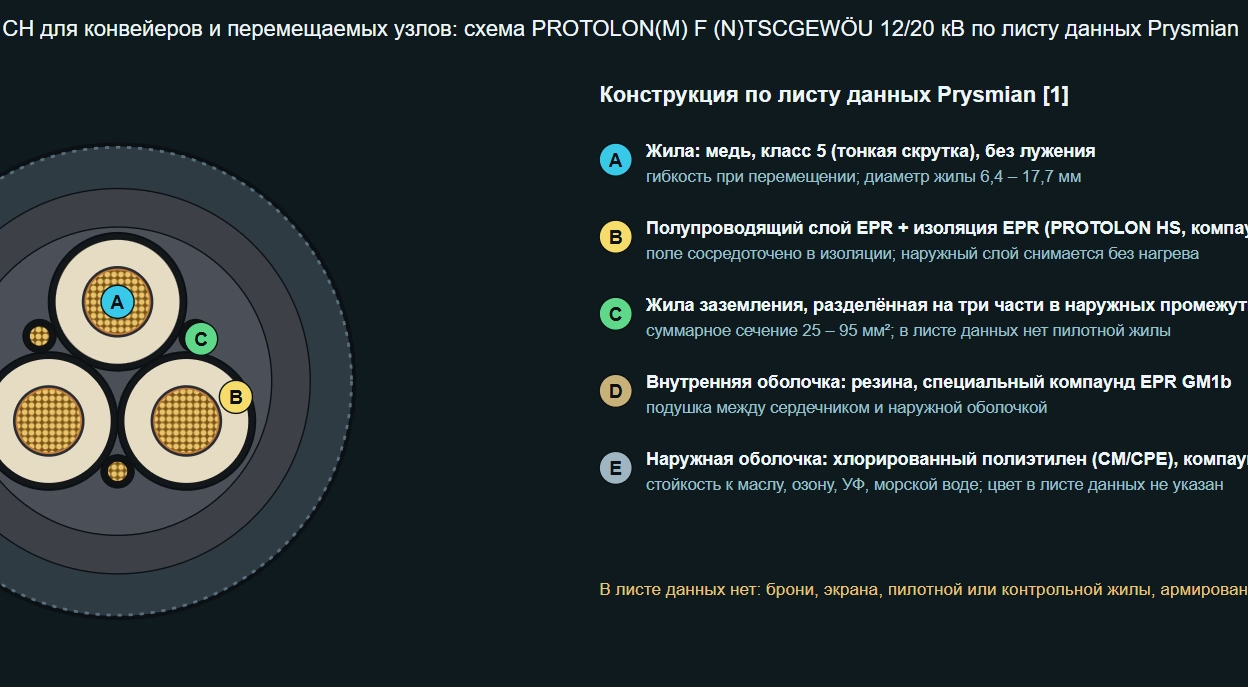
Feichun FLEXIFESTOON® H07BN4-F HAR: Advanced EPR Rubber Industrial Flexible Control Cables for European Heavy-Duty Crane, Festoon, and Mobile Equipment Applications (450/750V Rated, −45 to +90°C Continuous Service, Extreme Short-Circuit Temperature Resistance +250°C Thermal Shock, EPR Rubber Insulation with Elastomer Outer Sheath, Specialized Multi-Scenario Bending Radius Engineering 4×D to 8×D Application-Dependent, Exceptional Torsion Resistance ±150°/m for Sling Applications, Crane-Sling Festoon-Rated, CEI 20-19/20-20, DIN VDE 0282-part-1, CENELEC HD 22.2 Full Compliance, Self-Extinguishing Flame-Retardant Per EN 50265-2-1/IEC 60332-1-2, RoHS/CE Approved, Complete 1.5–630 mm² Conductor Range with 45 SKU Configurations): Comprehensive Rubber Materials Science and Thermal-Shock Engineering Analysis Integrating Advanced EPR Polymer Architecture, Short-Circuit Temperature Tolerance Mechanisms, Flame-Retardant Chemical Systems, Multi-Application Bending-Radius Optimization, Torsion-Fatigue Resistance Engineering, and European Heavy-Duty Industrial Integration European heavy-duty industrial automation—overhead traveling cranes in manufacturing plants, ship-deck crane systems, festoon cable reeling systems for mobile equipment, traction-powered work platforms, automated handling systems in factories, mining conveyor supports, and construction site hoisting equipment—demands electrical control cabling engineered to withstand the combined mechanical and thermal stresses found nowhere else in industrial service: extreme short-circuit current thermal shock (+250°C instantaneous temperature rise, lasting milliseconds during fault conditions, requiring polymer thermal stability and rapid thermal recovery without degradation or mechanical property loss), continuous mechanical flexure from repeated coiling/uncoiling on festoon reels and bending around pulleys (millions of flex cycles annually), torsional stress from cable twist and rotational equipment motion (±150°/meter maximum torsion specifications for sling applications), multi-scenario bending-radius requirements varying from 4×D (fixed installation) to 8×D (high-speed festoon reeling, pulley systems) depending on mechanical context), and stringent flame-retardancy mandates for enclosed factory environments with combustible materials nearby. Conventional industrial cables fail catastrophically under short-circuit thermal shock: PVC insulation softens and loses dimensional stability; standard EPDM undergoes permanent cross-link degradation and reversion loss. FLEXIFESTOON® H07BN4-F HAR represents a specialized European industrial cable engineered through advanced EPR (ethylene-propylene rubber) polymer chemistry combined with sophisticated flame-retardant additives, delivering simultaneous optimization across all five performance domains: extreme short-circuit temperature tolerance (+250°C thermal recovery without property loss), exceptional mechanical flexure endurance (millions of bend cycles), superior torsion resistance (±150°/m continuous), application-adaptive bending-radius engineering (4–8×D scenario-specific design), and comprehensive flame-retardancy compliance per European standards—enabling European industrial engineers, heavy-equipment manufacturers, and factory automation integrators to deploy a unified advanced cable solution across the complete spectrum of demanding crane, festoon, and mobile equipment applications with proven durability and safety across extreme-stress scenarios.

FLEXIFESTOON® H07BN4-F

Feichun FLEXIFESTOON® H07BN4-F HAR: Advanced EPR Rubber Industrial Flexible Control Cables for European Heavy-Duty Crane, Festoon, and Mobile Equipment Applications (450/750V Rated, −45 to +90°C Continuous Service, Extreme Short-Circuit Temperature Resistance +250°C Thermal Shock, EPR Rubber Insulation with Elastomer Outer Sheath, Specialized Multi-Scenario Bending Radius Engineering 4×D to 8×D Application-Dependent, Exceptional Torsion Resistance ±150°/m for Sling Applications, Crane-Sling Festoon-Rated, CEI 20-19/20-20, DIN VDE 0282-part-1, CENELEC HD 22.2 Full Compliance, Self-Extinguishing Flame-Retardant Per EN 50265-2-1/IEC 60332-1-2, RoHS/CE Approved, Complete 1.5–630 mm² Conductor Range with 45 SKU Configurations): Comprehensive Rubber Materials Science and Thermal-Shock Engineering Analysis Integrating Advanced EPR Polymer Architecture, Short-Circuit Temperature Tolerance Mechanisms, Flame-Retardant Chemical Systems, Multi-Application Bending-Radius Optimization, Torsion-Fatigue Resistance Engineering, and European Heavy-Duty Industrial Integration European heavy-duty industrial automation—overhead traveling cranes in manufacturing plants, ship-deck crane systems, festoon cable reeling systems for mobile equipment, traction-powered work platforms, automated handling systems in factories, mining conveyor supports, and construction site hoisting equipment—demands electrical control cabling engineered to withstand the combined mechanical and thermal stresses found nowhere else in industrial service: extreme short-circuit current thermal shock (+250°C instantaneous temperature rise, lasting milliseconds during fault conditions, requiring polymer thermal stability and rapid thermal recovery without degradation or mechanical property loss), continuous mechanical flexure from repeated coiling/uncoiling on festoon reels and bending around pulleys (millions of flex cycles annually), torsional stress from cable twist and rotational equipment motion (±150°/meter maximum torsion specifications for sling applications), multi-scenario bending-radius requirements varying from 4×D (fixed installation) to 8×D (high-speed festoon reeling, pulley systems) depending on mechanical context), and stringent flame-retardancy mandates for enclosed factory environments with combustible materials nearby. Conventional industrial cables fail catastrophically under short-circuit thermal shock: PVC insulation softens and loses dimensional stability; standard EPDM undergoes permanent cross-link degradation and reversion loss. FLEXIFESTOON® H07BN4-F HAR represents a specialized European industrial cable engineered through advanced EPR (ethylene-propylene rubber) polymer chemistry combined with sophisticated flame-retardant additives, delivering simultaneous optimization across all five performance domains: extreme short-circuit temperature tolerance (+250°C thermal recovery without property loss), exceptional mechanical flexure endurance (millions of bend cycles), superior torsion resistance (±150°/m continuous), application-adaptive bending-radius engineering (4–8×D scenario-specific design), and comprehensive flame-retardancy compliance per European standards—enabling European industrial engineers, heavy-equipment manufacturers, and factory automation integrators to deploy a unified advanced cable solution across the complete spectrum of demanding crane, festoon, and mobile equipment applications with proven durability and safety across extreme-stress scenarios.
Feichun MARITIME-FLEX® HT-CORR (VCVH6-F) Marine Port Salt-Fog Resistant Control Cables: Corrosion-Hardened Flexible Systems (0.6/1kV Maritime Standard Voltage, Advanced PVC Type TI2 Sheath with Copper-Based & Hindered Amine Corrosion Inhibitors, 80+ Mrad Cumulative Salt-Spray Radiation Tolerance, High-Flexibility Festoon Design for Dual-Motion Container Cranes & Cargo Handling Equipment, −25 to +70°C Polar-to-Tropical Service Temperature Envelope, 120 m/min High-Speed Festoon Certification for Port Terminal Dynamics, 32 Complete Product SKU Configurations 4–12 Cores, 1.5–95 mm² Conductor Range, VCVH6-F European Maritime Cable Standard Compliance, DNV/ABS/Lloyd's Register Certification, RoHS/CE Approved): Comprehensive Technical Analysis Integrating Electrochemical Salt-Corrosion Mechanisms, PVC Polymer Stabilization Chemistry, Marine Voltage & Environmental Degradation Modeling, Cargo Terminal Cable Engineering & Global Port Infrastructure Integration Modern port and maritime infrastructure—container terminals with dual-axis gantry cranes, bulk cargo loading systems, offshore platform interconnections, and polar region shipping operations—demands electrical cabling fundamentally different from standard industrial control specifications: persistent chloride salt-spray exposure (NaCl aerosol concentration 50–500 mg/m³ in near-shore marine zones, accelerating electrochemical corrosion of unprotected copper conductors and steel armor sheaths through galvanic couple formation), continuous thermal cycling from Arctic nighttime minimums (−25 °C polar operations) to tropical daytime heating (+70 °C sun-exposed cable trays on equatorial container terminals), moisture ingress penetration and salt-water embrittlement of insulation polymers under waterfront humidity (85–100% relative humidity continuously), and mechanical flexure fatigue from dual-axis crane motion (millions of bend cycles per year from spreader bar reeling and trolley lateral traverse on STS/RTG systems). Conventional maritime power cables (0.6/1 kV IEC 60811 industrial specification) designed for stationary offshore platforms or rigid cable tray installations fail catastrophically in dynamic port environments, suffering rapid galvanic corrosion penetration through unprotected copper braid, insulation embrittlement from salt-catalyzed oxidation chemistry, and premature conductor strand fracture under fatigue-assisted corrosion. MARITIME-FLEX® HT-CORR (VCVH6-F) represents a specialized marine infrastructure engineering platform achieving simultaneous optimization across the complete port automation voltage spectrum (0.6/1 kV nominal—matching international container terminal hoist and drive motor ratings across IEC 60320 standardized deck equipment) through advanced PVC type TI2 sheath formulation incorporating dual-mechanism salt-corrosion protection: first, copper-based electrochemical corrosion inhibitors (cuprous oxide nanoparticles, copper(II) phosphate coordination complexes) creating passivation layers on exposed copper braid, and second, hindered amine light stabilizers (HALS) and benzophenone UV absorbers providing 20–30 year service life under combined salt-spray, thermal cycling, and solar UV exposure—delivering port terminal engineers and cargo handling system integrators with specialized festoon cabling architected for global maritime operations across Arctic shipping corridors, tropical equatorial ports, and saline coastal regions with proven 15–20 year service life under aggressive chloride environments and full DNV/ABS/Lloyd's Register maritime certification. Definitive technical reference for maritime electrical engineers designing container terminal automation systems and port gantry crane networks, cargo handling system architects optimizing STS (Ship-to-Shore) and RTG (Rubber-Tyred Gantry) electrical infrastructure, offshore platform engineers integrating shipboard and dockside interconnection cabling, port facility maintenance managers specifying corrosion-resistant marine cables, materials scientists evaluating electrochemical salt-fog degradation mechanisms and stabilizer chemistry, system reliability engineers modeling 15–20 year cable lifetime under continuous maritime salt-spray exposure, port planning specialists designing next-generation container terminal electrification, DNV/ABS compliance managers ensuring marine cable certification across multiple port jurisdictions, electrical procurement professionals specifying VCVH6-F certified marine cables, and technical decision-makers selecting electrical infrastructure for container terminals, bulk cargo facilities, offshore platforms, polar region shipping operations, and hybrid port-to-ship power systems requiring certified marine-rated cabling with demonstrated salt-fog corrosion resistance and 15–20 year operational reliability in the world's most aggressive corrosive marine environments.

FLEXIFESTOON® PV-FLAT CY (VCVH6-F)

Feichun MARITIME-FLEX® HT-CORR (VCVH6-F) Marine Port Salt-Fog Resistant Control Cables: Corrosion-Hardened Flexible Systems (0.6/1kV Maritime Standard Voltage, Advanced PVC Type TI2 Sheath with Copper-Based & Hindered Amine Corrosion Inhibitors, 80+ Mrad Cumulative Salt-Spray Radiation Tolerance, High-Flexibility Festoon Design for Dual-Motion Container Cranes & Cargo Handling Equipment, −25 to +70°C Polar-to-Tropical Service Temperature Envelope, 120 m/min High-Speed Festoon Certification for Port Terminal Dynamics, 32 Complete Product SKU Configurations 4–12 Cores, 1.5–95 mm² Conductor Range, VCVH6-F European Maritime Cable Standard Compliance, DNV/ABS/Lloyd’s Register Certification, RoHS/CE Approved): Comprehensive Technical Analysis Integrating Electrochemical Salt-Corrosion Mechanisms, PVC Polymer Stabilization Chemistry, Marine Voltage & Environmental Degradation Modeling, Cargo Terminal Cable Engineering & Global Port Infrastructure Integration Modern port and maritime infrastructure—container terminals with dual-axis gantry cranes, bulk cargo loading systems, offshore platform interconnections, and polar region shipping operations—demands electrical cabling fundamentally different from standard industrial control specifications: persistent chloride salt-spray exposure (NaCl aerosol concentration 50–500 mg/m³ in near-shore marine zones, accelerating electrochemical corrosion of unprotected copper conductors and steel armor sheaths through galvanic couple formation), continuous thermal cycling from Arctic nighttime minimums (−25 °C polar operations) to tropical daytime heating (+70 °C sun-exposed cable trays on equatorial container terminals), moisture ingress penetration and salt-water embrittlement of insulation polymers under waterfront humidity (85–100% relative humidity continuously), and mechanical flexure fatigue from dual-axis crane motion (millions of bend cycles per year from spreader bar reeling and trolley lateral traverse on STS/RTG systems). Conventional maritime power cables (0.6/1 kV IEC 60811 industrial specification) designed for stationary offshore platforms or rigid cable tray installations fail catastrophically in dynamic port environments, suffering rapid galvanic corrosion penetration through unprotected copper braid, insulation embrittlement from salt-catalyzed oxidation chemistry, and premature conductor strand fracture under fatigue-assisted corrosion. MARITIME-FLEX® HT-CORR (VCVH6-F) represents a specialized marine infrastructure engineering platform achieving simultaneous optimization across the complete port automation voltage spectrum (0.6/1 kV nominal—matching international container terminal hoist and drive motor ratings across IEC 60320 standardized deck equipment) through advanced PVC type TI2 sheath formulation incorporating dual-mechanism salt-corrosion protection: first, copper-based electrochemical corrosion inhibitors (cuprous oxide nanoparticles, copper(II) phosphate coordination complexes) creating passivation layers on exposed copper braid, and second, hindered amine light stabilizers (HALS) and benzophenone UV absorbers providing 20–30 year service life under combined salt-spray, thermal cycling, and solar UV exposure—delivering port terminal engineers and cargo handling system integrators with specialized festoon cabling architected for global maritime operations across Arctic shipping corridors, tropical equatorial ports, and saline coastal regions with proven 15–20 year service life under aggressive chloride environments and full DNV/ABS/Lloyd’s Register maritime certification. Definitive technical reference for maritime electrical engineers designing container terminal automation systems and port gantry crane networks, cargo handling system architects optimizing STS (Ship-to-Shore) and RTG (Rubber-Tyred Gantry) electrical infrastructure, offshore platform engineers integrating shipboard and dockside interconnection cabling, port facility maintenance managers specifying corrosion-resistant marine cables, materials scientists evaluating electrochemical salt-fog degradation mechanisms and stabilizer chemistry, system reliability engineers modeling 15–20 year cable lifetime under continuous maritime salt-spray exposure, port planning specialists designing next-generation container terminal electrification, DNV/ABS compliance managers ensuring marine cable certification across multiple port jurisdictions, electrical procurement professionals specifying VCVH6-F certified marine cables, and technical decision-makers selecting electrical infrastructure for container terminals, bulk cargo facilities, offshore platforms, polar region shipping operations, and hybrid port-to-ship power systems requiring certified marine-rated cabling with demonstrated salt-fog corrosion resistance and 15–20 year operational reliability in the world’s most aggressive corrosive marine environments.
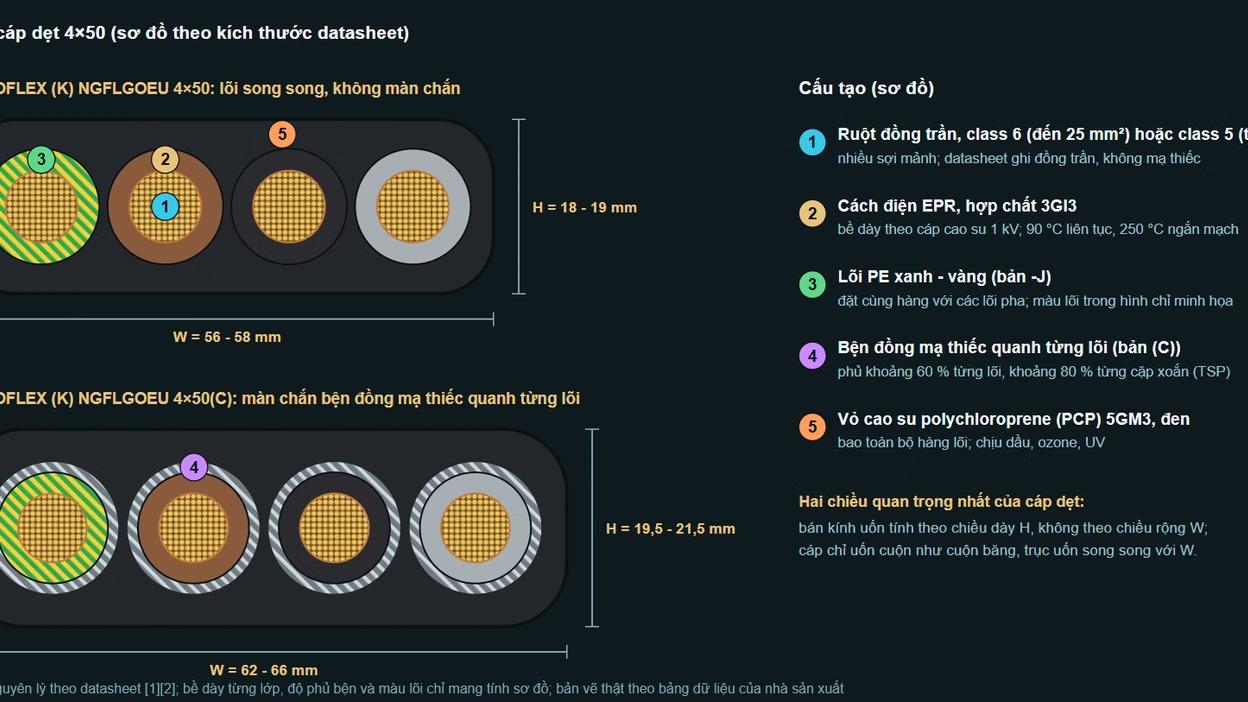
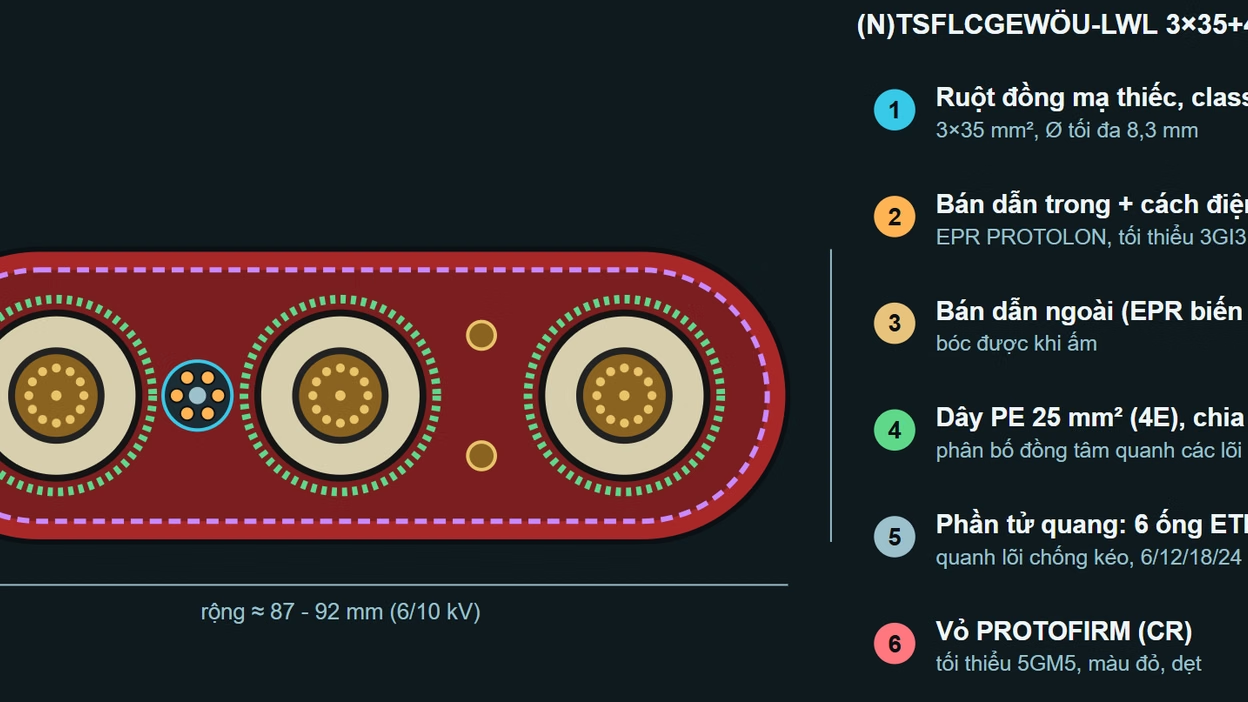
Feichun FLEXIFESTOON® NE-FLAT (NGFLGÖU) UL-Certified North American Festoon Control Cables: AWM Style 4540 90°C 600V FT-1 Flame-Retardant Multi-Core Systems (300/500V Nominal, Class 6 Flexible Copper Conductors 1–120 mm², Extremely Small Dynamic Bending Radius, Oil & Chemical Resistant, 180+ m/min High-Speed Festoon, 4–24 Core Configurations, 46 Complete Product SKU Matrix): Comprehensive Technical Analysis with Complete Regulatory Compliance, Cross-Sectional Optimization, Multi-Core Engineering & North American Industrial Application Selection The North American industrial control market imposes distinct material, electrical, and regulatory requirements fundamentally different from European DIN/IEC specifications: UL 600V nominal voltage (vs. European 0.6/1 kV dual-designation nomenclature), AWM style certification hierarchy (vs. European DIN VDE type classification), FT-1 flame-propagation performance per UL 1581 (vs. European IEC 60332 bundle flame test), and temperature-derating expectations for continuous 85–90 °C service in North American industrial infrastructure. FLEXIFESTOON® NE-FLAT (NGFLGÖU) UL represents a comprehensive engineering synthesis achieving simultaneous compliance with North American regulatory frameworks while maintaining the mechanical performance and environmental durability demanded by modern automated material-handling systems, automotive assembly infrastructure, industrial robotics, and renewable-energy control systems across the continent. The platform delivers 46 distinct product SKUs spanning 4 to 24 core configurations, conductor cross-sections from 1 mm² to 120 mm² (covering the full range from distributed I/O systems through primary power distribution), UL 600V AWM style 4540 certification at 90 °C continuous service, FT-1 flame-propagation compliance per UL 1581, oil and chemical resistance per ASTM standards, extremely small dynamic bend radius optimization, and guaranteed festoon fatigue life ≥ 5 × 10⁶ cycles at specified radius under combined environmental stresses—providing North American system integrators with the most comprehensive screened-cable portfolio available in the continental industrial marketplace.

FLEXIFESTOON® NE-FLAT (NGFLGÖU) UL

Feichun FLEXIFESTOON® NE-FLAT (NGFLGÖU) UL-Certified North American Festoon Control Cables: AWM Style 4540 90°C 600V FT-1 Flame-Retardant Multi-Core Systems (300/500V Nominal, Class 6 Flexible Copper Conductors 1–120 mm², Extremely Small Dynamic Bending Radius, Oil & Chemical Resistant, 180+ m/min High-Speed Festoon, 4–24 Core Configurations, 46 Complete Product SKU Matrix): Comprehensive Technical Analysis with Complete Regulatory Compliance, Cross-Sectional Optimization, Multi-Core Engineering & North American Industrial Application Selection The North American industrial control market imposes distinct material, electrical, and regulatory requirements fundamentally different from European DIN/IEC specifications: UL 600V nominal voltage (vs. European 0.6/1 kV dual-designation nomenclature), AWM style certification hierarchy (vs. European DIN VDE type classification), FT-1 flame-propagation performance per UL 1581 (vs. European IEC 60332 bundle flame test), and temperature-derating expectations for continuous 85–90 °C service in North American industrial infrastructure. FLEXIFESTOON® NE-FLAT (NGFLGÖU) UL represents a comprehensive engineering synthesis achieving simultaneous compliance with North American regulatory frameworks while maintaining the mechanical performance and environmental durability demanded by modern automated material-handling systems, automotive assembly infrastructure, industrial robotics, and renewable-energy control systems across the continent. The platform delivers 46 distinct product SKUs spanning 4 to 24 core configurations, conductor cross-sections from 1 mm² to 120 mm² (covering the full range from distributed I/O systems through primary power distribution), UL 600V AWM style 4540 certification at 90 °C continuous service, FT-1 flame-propagation compliance per UL 1581, oil and chemical resistance per ASTM standards, extremely small dynamic bend radius optimization, and guaranteed festoon fatigue life ≥ 5 × 10⁶ cycles at specified radius under combined environmental stresses—providing North American system integrators with the most comprehensive screened-cable portfolio available in the continental industrial marketplace.
Feichun FLEXIFESTOON® NE-FLAT Marine-Grade High-Flexibility Anti-Salt-Mist Control Cables: Integrated Electrochemical Corrosion Resistance & Harbor-Optimized Polymer Engineering (0.6/1 kV, EPR Type 3GI3 Insulation, PCP 5GM3 Rubber Sheath, Class 6 Flexible Copper, Seawater-Resistant, Oil-Resistant, 180+ m/min Speed, Port Crane & Offshore Festoon Systems): Comprehensive Technical Analysis Integrating Polymer Chemistry, Electrochemical Degradation Mechanisms, Marine Environmental Stress & Mechanical Fatigue Engineering Harbor and offshore equipment subjected to continuous salt-mist exposure faces a unique material degradation challenge: simultaneous electrochemical corrosion of copper conductors, chloride-accelerated polymer matrix embrittlement, and UV-photooxidative surface degradation occurring in parallel across cable service life. Conventional PVC-jacketed cables suffer chloride-induced copper verde (basic copper sulfate formation, reducing conductivity by 15–45% within 3–5 years in salt-spray environments per ASTM B117); conventional XLPE compounds exhibit modulus increase > 80% and elongation loss > 60% under combined salt-fog / UV exposure, eliminating festoon flexibility. FLEXIFESTOON® NE-FLAT marine-grade control cables resolve this dual-degradation profile through integrated engineering combining ethylene propylene rubber (EPR) type 3GI3 insulation with cross-linked intermediate matrix stability, polyolefin-based PCP 5GM3 rubber sheath formulation containing UV-stabilizer packages and chloride-sequestering additives (2–4 wt% zinc-oxide plus hindered-amine light stabilizers, HALS), Class 6 ultra-flexible bare annealed copper conductors engineered for 180+ m/min festoon trolley speed, and proprietary mineral-filled surface passivation layers—delivering simultaneous electrochemical corrosion immunity exceeding ASTM G85-A5 salt-fog protocol (2000 h without copper surface discoloration), oil-resistance per DIN VDE 0473, modulus retention ≥ 75% under combined accelerated environmental stress (salt-fog + 1000 h UV exposure at 150 W/m² spectral irradiance), and festoon fatigue life ≥ 5 × 10⁶ cycles at 7.5× outer diameter bend radius in corrosive marine atmosphere.

FLEXIFESTOON® NE-FLAT (N)GFLGÖU-J

Feichun FLEXIFESTOON® NE-FLAT Marine-Grade High-Flexibility Anti-Salt-Mist Control Cables: Integrated Electrochemical Corrosion Resistance & Harbor-Optimized Polymer Engineering (0.6/1 kV, EPR Type 3GI3 Insulation, PCP 5GM3 Rubber Sheath, Class 6 Flexible Copper, Seawater-Resistant, Oil-Resistant, 180+ m/min Speed, Port Crane & Offshore Festoon Systems): Comprehensive Technical Analysis Integrating Polymer Chemistry, Electrochemical Degradation Mechanisms, Marine Environmental Stress & Mechanical Fatigue Engineering Harbor and offshore equipment subjected to continuous salt-mist exposure faces a unique material degradation challenge: simultaneous electrochemical corrosion of copper conductors, chloride-accelerated polymer matrix embrittlement, and UV-photooxidative surface degradation occurring in parallel across cable service life. Conventional PVC-jacketed cables suffer chloride-induced copper verde (basic copper sulfate formation, reducing conductivity by 15–45% within 3–5 years in salt-spray environments per ASTM B117); conventional XLPE compounds exhibit modulus increase > 80% and elongation loss > 60% under combined salt-fog / UV exposure, eliminating festoon flexibility. FLEXIFESTOON® NE-FLAT marine-grade control cables resolve this dual-degradation profile through integrated engineering combining ethylene propylene rubber (EPR) type 3GI3 insulation with cross-linked intermediate matrix stability, polyolefin-based PCP 5GM3 rubber sheath formulation containing UV-stabilizer packages and chloride-sequestering additives (2–4 wt% zinc-oxide plus hindered-amine light stabilizers, HALS), Class 6 ultra-flexible bare annealed copper conductors engineered for 180+ m/min festoon trolley speed, and proprietary mineral-filled surface passivation layers—delivering simultaneous electrochemical corrosion immunity exceeding ASTM G85-A5 salt-fog protocol (2000 h without copper surface discoloration), oil-resistance per DIN VDE 0473, modulus retention ≥ 75% under combined accelerated environmental stress (salt-fog + 1000 h UV exposure at 150 W/m² spectral irradiance), and festoon fatigue life ≥ 5 × 10⁶ cycles at 7.5× outer diameter bend radius in corrosive marine atmosphere.
FeiChun FLEXIFESTOON® HF-FLAT CY Ultimate Safety-Critical Screened Halogen-Free Control Cables: Combined EMI Protection & Environmental Safety (0.6/1 kV, Red Copper Braid Shielding, GAALTHERM® 532, Halogen-Free Nuclear-Grade, Low-Smoke, Non-Corrosive): Comprehensive Technical Analysis of Safety-First Control Cable Engineering Integrating EMI Suppression with Halogen-Free Hazard Prevention, Red Copper Braid Electromagnetic Shielding Protecting Control & Signal Circuits from External Interference, Halogen-Free Chemistry Eliminating Toxic Gas Evolution in Emergency Scenarios, Low-Smoke Formulation Enabling Equipment Egress and Control System Operation, Non-Corrosive Conflagration Gas Specifications Protecting Infrastructure from Chemical Damage, GAALTHERM® 532 Advanced Insulation Supporting Both Safety & Performance Requirements, Flat Form Factor Enabling Compact Control System Integration, Dual Functionality Supporting Simultaneous Power Distribution & Signal Control Through Single Cable, Comprehensive Nuclear-Grade Safety Compliance Enabling Mission-Critical Applications, and Ultimate Control System Strategy Ensuring Simultaneous EMI Immunity & Maximum Human/Environmental Protection Across Demanding Safety-Dependent Infrastructure Safety-critical control systems require simultaneous EMI protection (preventing equipment malfunction from external electromagnetic interference) and environmental safety (preventing hazardous gas evolution during emergencies) representing previously incompatible requirements: standard screened cables provide EMI protection but release toxic halogenated gases during fires, halogen-free cables prevent toxic gas but lack EMI shielding vulnerable to electromagnetic interference. FLEXIFESTOON® HF-FLAT CY addresses unified requirements combining red copper braid EMI suppression with halogen-free chemistry—simultaneous protection against electromagnetic interference AND prevention of toxic gas hazards. FeiChun's CY addresses red copper braid EMI shielding protecting control circuits, halogen-free chemistry eliminating toxic gas, low-smoke formulation enabling system operation, non-corrosive conflagration gases preventing secondary damage, compact flat design enabling integration, GAALTHERM® 532 supporting both safety and performance, dual functionality combining power and control, nuclear-grade compliance enabling mission-critical deployment.

FLEXIFESTOON® HF-FLAT CY

FeiChun FLEXIFESTOON® HF-FLAT CY Ultimate Safety-Critical Screened Halogen-Free Control Cables: Combined EMI Protection & Environmental Safety (0.6/1 kV, Red Copper Braid Shielding, GAALTHERM® 532, Halogen-Free Nuclear-Grade, Low-Smoke, Non-Corrosive): Comprehensive Technical Analysis of Safety-First Control Cable Engineering Integrating EMI Suppression with Halogen-Free Hazard Prevention, Red Copper Braid Electromagnetic Shielding Protecting Control & Signal Circuits from External Interference, Halogen-Free Chemistry Eliminating Toxic Gas Evolution in Emergency Scenarios, Low-Smoke Formulation Enabling Equipment Egress and Control System Operation, Non-Corrosive Conflagration Gas Specifications Protecting Infrastructure from Chemical Damage, GAALTHERM® 532 Advanced Insulation Supporting Both Safety & Performance Requirements, Flat Form Factor Enabling Compact Control System Integration, Dual Functionality Supporting Simultaneous Power Distribution & Signal Control Through Single Cable, Comprehensive Nuclear-Grade Safety Compliance Enabling Mission-Critical Applications, and Ultimate Control System Strategy Ensuring Simultaneous EMI Immunity & Maximum Human/Environmental Protection Across Demanding Safety-Dependent Infrastructure Safety-critical control systems require simultaneous EMI protection (preventing equipment malfunction from external electromagnetic interference) and environmental safety (preventing hazardous gas evolution during emergencies) representing previously incompatible requirements: standard screened cables provide EMI protection but release toxic halogenated gases during fires, halogen-free cables prevent toxic gas but lack EMI shielding vulnerable to electromagnetic interference. FLEXIFESTOON® HF-FLAT CY addresses unified requirements combining red copper braid EMI suppression with halogen-free chemistry—simultaneous protection against electromagnetic interference AND prevention of toxic gas hazards. FeiChun’s CY addresses red copper braid EMI shielding protecting control circuits, halogen-free chemistry eliminating toxic gas, low-smoke formulation enabling system operation, non-corrosive conflagration gases preventing secondary damage, compact flat design enabling integration, GAALTHERM® 532 supporting both safety and performance, dual functionality combining power and control, nuclear-grade compliance enabling mission-critical deployment.
FeiChun FLEXIFESTOON® HF-FLAT Revolutionary Safety-Critical Halogen-Free Flat Festoon Power Cables: Environmental & Human Safety Power Distribution (0.6/1 kV, 4–24 Core Configurations, GAALTHERM® 532 Insulation, Halogen-Free Type M1 Outer Sheath, Low-Smoke Emission per IEC 61034, Non-Corrosive Conflagration Gases per IEC 60754, 120 m/min Festoon Deployment): Comprehensive Technical Analysis of Safety-First Cable Engineering Eliminating Halogen Compounds Preventing Toxic Gas Evolution in Fire Events, Low-Smoke Formulation Enabling Equipment Egress in Emergency Situations, Non-Corrosive Conflagration Gas Specifications Protecting Equipment & Infrastructure from Post-Fire Chemical Damage, GAALTHERM® 532 Advanced Insulation Polymer Providing Superior Environmental & Safety Performance, Flat Form Factor Enabling Compact Festoon System Integration, Multiple Core Configurations (4–24 Cores) Supporting Complete Moving Equipment Spectrum, Dynamic Tensile Strength Engineering Supporting Sustained Movement & Flexibility Cycles, Comprehensive Safety Compliance (DIN VDE, EN, IEC Standards) Enabling Nuclear Plant & Safety-Critical Applications, and Ultimate Safety-First Infrastructure Strategy Prioritizing Human Protection & Environmental Responsibility Over Performance Metrics Safety-critical infrastructure and nuclear facilities represent ultimate engineering responsibility environments where cable failure creates potential catastrophic human and environmental consequences: conventional cables containing halogens (PVC, etc.) release toxic hydrogen chloride and other corrosive gases during fires creating secondary chemical hazards, thick smoke inhibits emergency evacuation and equipment operation. Halogen-free cable technology eliminates these hazards through chemistry eliminating halogens entirely—if fire occurs, gases released are water/carbon dioxide/harmless compounds rather than toxic/corrosive chemicals. FeiChun's FLEXIFESTOON® HF-FLAT represents ultimate safety engineering addressing halogen-free chemistry eliminating toxic gas evolution, low-smoke formulation ensuring visibility/egress capability, non-corrosive conflagration gases preventing secondary infrastructure damage, GAALTHERM® 532 environmental protection, flat form factor enabling compact systems, multiple configurations supporting complete equipment spectrum, comprehensive safety compliance enabling nuclear operations.

FLEXIFESTOON® HF-FLAT

FeiChun FLEXIFESTOON® HF-FLAT Revolutionary Safety-Critical Halogen-Free Flat Festoon Power Cables: Environmental & Human Safety Power Distribution (0.6/1 kV, 4–24 Core Configurations, GAALTHERM® 532 Insulation, Halogen-Free Type M1 Outer Sheath, Low-Smoke Emission per IEC 61034, Non-Corrosive Conflagration Gases per IEC 60754, 120 m/min Festoon Deployment): Comprehensive Technical Analysis of Safety-First Cable Engineering Eliminating Halogen Compounds Preventing Toxic Gas Evolution in Fire Events, Low-Smoke Formulation Enabling Equipment Egress in Emergency Situations, Non-Corrosive Conflagration Gas Specifications Protecting Equipment & Infrastructure from Post-Fire Chemical Damage, GAALTHERM® 532 Advanced Insulation Polymer Providing Superior Environmental & Safety Performance, Flat Form Factor Enabling Compact Festoon System Integration, Multiple Core Configurations (4–24 Cores) Supporting Complete Moving Equipment Spectrum, Dynamic Tensile Strength Engineering Supporting Sustained Movement & Flexibility Cycles, Comprehensive Safety Compliance (DIN VDE, EN, IEC Standards) Enabling Nuclear Plant & Safety-Critical Applications, and Ultimate Safety-First Infrastructure Strategy Prioritizing Human Protection & Environmental Responsibility Over Performance Metrics Safety-critical infrastructure and nuclear facilities represent ultimate engineering responsibility environments where cable failure creates potential catastrophic human and environmental consequences: conventional cables containing halogens (PVC, etc.) release toxic hydrogen chloride and other corrosive gases during fires creating secondary chemical hazards, thick smoke inhibits emergency evacuation and equipment operation. Halogen-free cable technology eliminates these hazards through chemistry eliminating halogens entirely—if fire occurs, gases released are water/carbon dioxide/harmless compounds rather than toxic/corrosive chemicals. FeiChun’s FLEXIFESTOON® HF-FLAT represents ultimate safety engineering addressing halogen-free chemistry eliminating toxic gas evolution, low-smoke formulation ensuring visibility/egress capability, non-corrosive conflagration gases preventing secondary infrastructure damage, GAALTHERM® 532 environmental protection, flat form factor enabling compact systems, multiple configurations supporting complete equipment spectrum, comprehensive safety compliance enabling nuclear operations.
FeiChun FLEXIDRUM® FIBER 780 Premium Enterprise-Grade Optical Fiber Infrastructure Cables: Maximum-Performance Fiber Systems with Superior Mechanical Strength & Advanced Materials (12–24 Optical Fibers, 2000 N Maximum Tensile Strength, GAALTHERM® 630 High-Temperature Inner Sheath, Aramide Kevlar Central Unit, Fiber-Glass Braid Screen, PUR Advanced Outer Sheath, 6×D Tight Bending Capability, ±120°/m Extreme Torsion, -40 to +90°C Temperature Range): Comprehensive Technical Analysis of Premium Optical Cable Engineering Providing Maximum Mechanical Strength & Fiber Capacity for Mission-Critical Enterprise Infrastructure, Advanced Material Architecture (Aramide Central Unit, GAALTHERM® 630 Inner, Fiber-Glass Braid Screen, PUR Outer Sheath) Delivering Superior Durability & Environmental Resistance, Maximum Fiber Capacity (12–24 Fibers) Enabling Future-Proof Network Expansion, 6×D Tight Bending Compatibility Enabling Compact Conduit Routing, 2000 N Tensile Strength Supporting Demanding Installation Conditions, Extreme ±120°/m Torsional Tolerance Supporting Forced-Guidance Deployment, Premium Temperature Range (-40 to +90°C) Supporting Extreme Climate Operation, and Enterprise-Grade Optical Infrastructure Strategy Ensuring Mission-Critical Network Reliability & Capacity Across Demanding Global Infrastructure Systems Enterprise optical infrastructure increasingly requires simultaneous maximum mechanical strength, maximum fiber capacity, and superior environmental durability representing pinnacle engineering requirements: mission-critical data center networks require reliable fiber infrastructure tolerating extreme installation stresses, telecom backbone systems demand maximum fiber density enabling cost-effective expansion, demanding environments (temperature extremes, mechanical stress) require advanced materials providing durability previously impossible. FLEXIDRUM® FIBER 780 addresses these unified requirements through premium engineering combining extreme mechanical strength, maximum fiber capacity, advanced material systems, and superior environmental tolerance. FeiChun's FIBER 780 represents pinnacle optical cable engineering addressing maximum mechanical strength (2000 N tensile) supporting demanding installations, maximum fiber capacity (12–24 fibers) enabling network expansion, advanced materials (aramide core, GAALTHERM® 630, fiber-glass braid, PUR sheath) providing durability, extreme environmental tolerance (-40 to +90°C), tight bending capability (6×D) enabling compact routing, extreme torsion tolerance (±120°/m) supporting forced-guidance deployment.

FLEXIDRUM® FIBER 780

FeiChun FLEXIDRUM® FIBER 780 Premium Enterprise-Grade Optical Fiber Infrastructure Cables: Maximum-Performance Fiber Systems with Superior Mechanical Strength & Advanced Materials (12–24 Optical Fibers, 2000 N Maximum Tensile Strength, GAALTHERM® 630 High-Temperature Inner Sheath, Aramide Kevlar Central Unit, Fiber-Glass Braid Screen, PUR Advanced Outer Sheath, 6×D Tight Bending Capability, ±120°/m Extreme Torsion, -40 to +90°C Temperature Range): Comprehensive Technical Analysis of Premium Optical Cable Engineering Providing Maximum Mechanical Strength & Fiber Capacity for Mission-Critical Enterprise Infrastructure, Advanced Material Architecture (Aramide Central Unit, GAALTHERM® 630 Inner, Fiber-Glass Braid Screen, PUR Outer Sheath) Delivering Superior Durability & Environmental Resistance, Maximum Fiber Capacity (12–24 Fibers) Enabling Future-Proof Network Expansion, 6×D Tight Bending Compatibility Enabling Compact Conduit Routing, 2000 N Tensile Strength Supporting Demanding Installation Conditions, Extreme ±120°/m Torsional Tolerance Supporting Forced-Guidance Deployment, Premium Temperature Range (-40 to +90°C) Supporting Extreme Climate Operation, and Enterprise-Grade Optical Infrastructure Strategy Ensuring Mission-Critical Network Reliability & Capacity Across Demanding Global Infrastructure Systems Enterprise optical infrastructure increasingly requires simultaneous maximum mechanical strength, maximum fiber capacity, and superior environmental durability representing pinnacle engineering requirements: mission-critical data center networks require reliable fiber infrastructure tolerating extreme installation stresses, telecom backbone systems demand maximum fiber density enabling cost-effective expansion, demanding environments (temperature extremes, mechanical stress) require advanced materials providing durability previously impossible. FLEXIDRUM® FIBER 780 addresses these unified requirements through premium engineering combining extreme mechanical strength, maximum fiber capacity, advanced material systems, and superior environmental tolerance. FeiChun’s FIBER 780 represents pinnacle optical cable engineering addressing maximum mechanical strength (2000 N tensile) supporting demanding installations, maximum fiber capacity (12–24 fibers) enabling network expansion, advanced materials (aramide core, GAALTHERM® 630, fiber-glass braid, PUR sheath) providing durability, extreme environmental tolerance (-40 to +90°C), tight bending capability (6×D) enabling compact routing, extreme torsion tolerance (±120°/m) supporting forced-guidance deployment.
FeiChun FLEXIDRUM® FIBER 770 Pure Optical Fiber Infrastructure Cables: Revolutionary High-Speed Data Transmission Systems with Extreme Mechanical Tolerance (6–18 Optical Fibers, ±120°/m Ultimate Torsional Tolerance, 240 m/min Ultra-High-Speed Deployment, 1200 N Tensile Strength, 300 N/cm Transverse Pressure Tolerance): Comprehensive Technical Analysis of Pure Fiber Optic Cable Engineering Providing Simultaneous High-Speed Data Transmission (1–100+ Gbps Capability) & Extreme Mechanical Robustness, Multiple Fiber Type Support (Multimode 62.5/125 & 50/125 Micron, Single-Mode 9/125 Micron) Addressing Complete Data Transmission Spectrum, Extreme Torsional Tolerance (±120°/m) Enabling Forced-Guidance Deployment Impossible with Standard Optical Cables, 240 m/min Ultra-High-Speed Deployment Supporting Advanced Equipment Systems, Tube-Based Fiber Organization (6 Tubes with 1–3 Fibers Each) Enabling Flexible Configuration & Future Expansion, Anti-Twisting Synthetic Yarn Protection Preventing Rotation-Induced Fiber Damage, Robust Mechanical Architecture Supporting 1200 N Tensile & 300 N/cm Transverse Stress, Extreme Cold Operation (-40°C) Supporting Arctic Infrastructure, and Ultimate Optical Infrastructure Strategy Enabling Next-Generation High-Speed Networks with Simultaneous Mechanical Robustness Previously Impossible in Standard Fiber Optic Cable Systems Next-generation optical network infrastructure increasingly requires simultaneous high-speed data transmission and extreme mechanical tolerance representing previously incompatible engineering requirements: standard optical cables designed for static or low-stress deployment cannot tolerate ±120°/m torsion or 240 m/min deployment velocity, mechanical cables designed for extreme stress sacrifice optical transmission capability. FLEXIDRUM® FIBER 770 integrates both simultaneously providing pure optical data infrastructure capable of sustaining extreme mechanical stress—revolutionary engineering integrating conflicting requirements previously considered mutually exclusive. FeiChun's FIBER 770 addresses next-generation optical infrastructure requirements through pure fiber optic architecture enabling 1–100+ Gbps data transmission by fiber type, extreme ±120°/m torsional tolerance enabling forced-guidance deployment, 240 m/min ultra-high-speed deployment matching electrical cable capabilities, multiple fiber variants (multimode 62.5/125, 50/125, single-mode 9/125) addressing complete data spectrum, tube-based flexible configuration enabling future expansion, robust mechanical design supporting 1200 N tensile and 300 N/cm transverse pressure, extreme cold (-40°C) operation supporting arctic infrastructure.

FLEXIDRUM® FIBER 770

FeiChun FLEXIDRUM® FIBER 770 Pure Optical Fiber Infrastructure Cables: Revolutionary High-Speed Data Transmission Systems with Extreme Mechanical Tolerance (6–18 Optical Fibers, ±120°/m Ultimate Torsional Tolerance, 240 m/min Ultra-High-Speed Deployment, 1200 N Tensile Strength, 300 N/cm Transverse Pressure Tolerance): Comprehensive Technical Analysis of Pure Fiber Optic Cable Engineering Providing Simultaneous High-Speed Data Transmission (1–100+ Gbps Capability) & Extreme Mechanical Robustness, Multiple Fiber Type Support (Multimode 62.5/125 & 50/125 Micron, Single-Mode 9/125 Micron) Addressing Complete Data Transmission Spectrum, Extreme Torsional Tolerance (±120°/m) Enabling Forced-Guidance Deployment Impossible with Standard Optical Cables, 240 m/min Ultra-High-Speed Deployment Supporting Advanced Equipment Systems, Tube-Based Fiber Organization (6 Tubes with 1–3 Fibers Each) Enabling Flexible Configuration & Future Expansion, Anti-Twisting Synthetic Yarn Protection Preventing Rotation-Induced Fiber Damage, Robust Mechanical Architecture Supporting 1200 N Tensile & 300 N/cm Transverse Stress, Extreme Cold Operation (-40°C) Supporting Arctic Infrastructure, and Ultimate Optical Infrastructure Strategy Enabling Next-Generation High-Speed Networks with Simultaneous Mechanical Robustness Previously Impossible in Standard Fiber Optic Cable Systems Next-generation optical network infrastructure increasingly requires simultaneous high-speed data transmission and extreme mechanical tolerance representing previously incompatible engineering requirements: standard optical cables designed for static or low-stress deployment cannot tolerate ±120°/m torsion or 240 m/min deployment velocity, mechanical cables designed for extreme stress sacrifice optical transmission capability. FLEXIDRUM® FIBER 770 integrates both simultaneously providing pure optical data infrastructure capable of sustaining extreme mechanical stress—revolutionary engineering integrating conflicting requirements previously considered mutually exclusive. FeiChun’s FIBER 770 addresses next-generation optical infrastructure requirements through pure fiber optic architecture enabling 1–100+ Gbps data transmission by fiber type, extreme ±120°/m torsional tolerance enabling forced-guidance deployment, 240 m/min ultra-high-speed deployment matching electrical cable capabilities, multiple fiber variants (multimode 62.5/125, 50/125, single-mode 9/125) addressing complete data spectrum, tube-based flexible configuration enabling future expansion, robust mechanical design supporting 1200 N tensile and 300 N/cm transverse pressure, extreme cold (-40°C) operation supporting arctic infrastructure.
FeiChun FLEXIDRUM® MEDIUM FLAT Revolutionary Hybrid Power & Data Transmission Cables: Next-Generation Flat-Profile Reeling Design with Integrated Optical Fiber Infrastructure (3.6–8.7/15 kV, Compact 50% Space Reduction vs. Round Cables, 6-Fiber Optical Integration at 62.5/125 Microns, Forced Guidance Multi-Level Deflection Support, -50°C Extreme Cold Capability): Comprehensive Technical Analysis of Revolutionary Flat Ribbon Cable Architecture Enabling Simultaneous Power Transmission & Fiber Optic Data Transport in Ultra-Compact Space-Efficient Design, Integrated Optical Fiber Supporting High-Speed Data Communication (1–10 Gbps Capabilities) Alongside Standard Electrical Power Distribution, Flat Form Factor Enabling 50% Space Reduction Compared to Equivalent Round Cables Revolutionizing Equipment Design Constraints, Compact Reeling Architecture Supporting Advanced Forced-Guidance Systems with Multi-Level Deflection, Tinned Copper Durability Ensuring Long-Term Reliability in Challenging Reeling Environments, Extreme Cold (-50°C) Tolerance Supporting Arctic Equipment Operations, Multiple Configuration Variants (Power-Only, Power+Single-Fiber, Power+6-Fiber+4E) Addressing Complete Spectrum of Next-Generation Equipment Requirements, and Strategic Next-Generation Systems Engineering Enabling Hybrid Infrastructure Convergence of Electrical Power & Optical Data in Single Integrated Cable System Next-generation equipment systems increasingly require simultaneous electrical power transmission and high-speed data communication requiring traditional separate cable infrastructure (power cable + data cable) consuming substantial space and increasing equipment complexity: dual cable systems (power + separate data) double space requirements, increase equipment footprint, complicate cable routing through forced-guidance systems, increase installation cost and maintenance complexity. Hybrid power+data integration eliminates dual-cable architecture enabling single integrated solution providing both power and communication infrastructure simultaneously. FeiChun's FLEXIDRUM® MEDIUM FLAT revolutionary cables address next-generation infrastructure requirements through flat ribbon form factor providing 50% space reduction versus equivalent round cables, integrated optical fiber enabling high-speed data communication (1–10 Gbps), hybrid power+data architecture eliminating dual-cable complexity, compact reeling compatibility enabling advanced forced-guidance systems, tinned copper durability ensuring long-term reliability, extreme cold (-50°C) operation supporting arctic infrastructure, multiple variant configurations addressing complete equipment spectrum.

FLEXIDRUM® MEDIUM FLAT (N)TSFLCGCWOEUS

FeiChun FLEXIDRUM® MEDIUM FLAT Revolutionary Hybrid Power & Data Transmission Cables: Next-Generation Flat-Profile Reeling Design with Integrated Optical Fiber Infrastructure (3.6–8.7/15 kV, Compact 50% Space Reduction vs. Round Cables, 6-Fiber Optical Integration at 62.5/125 Microns, Forced Guidance Multi-Level Deflection Support, -50°C Extreme Cold Capability): Comprehensive Technical Analysis of Revolutionary Flat Ribbon Cable Architecture Enabling Simultaneous Power Transmission & Fiber Optic Data Transport in Ultra-Compact Space-Efficient Design, Integrated Optical Fiber Supporting High-Speed Data Communication (1–10 Gbps Capabilities) Alongside Standard Electrical Power Distribution, Flat Form Factor Enabling 50% Space Reduction Compared to Equivalent Round Cables Revolutionizing Equipment Design Constraints, Compact Reeling Architecture Supporting Advanced Forced-Guidance Systems with Multi-Level Deflection, Tinned Copper Durability Ensuring Long-Term Reliability in Challenging Reeling Environments, Extreme Cold (-50°C) Tolerance Supporting Arctic Equipment Operations, Multiple Configuration Variants (Power-Only, Power+Single-Fiber, Power+6-Fiber+4E) Addressing Complete Spectrum of Next-Generation Equipment Requirements, and Strategic Next-Generation Systems Engineering Enabling Hybrid Infrastructure Convergence of Electrical Power & Optical Data in Single Integrated Cable System Next-generation equipment systems increasingly require simultaneous electrical power transmission and high-speed data communication requiring traditional separate cable infrastructure (power cable + data cable) consuming substantial space and increasing equipment complexity: dual cable systems (power + separate data) double space requirements, increase equipment footprint, complicate cable routing through forced-guidance systems, increase installation cost and maintenance complexity. Hybrid power+data integration eliminates dual-cable architecture enabling single integrated solution providing both power and communication infrastructure simultaneously. FeiChun’s FLEXIDRUM® MEDIUM FLAT revolutionary cables address next-generation infrastructure requirements through flat ribbon form factor providing 50% space reduction versus equivalent round cables, integrated optical fiber enabling high-speed data communication (1–10 Gbps), hybrid power+data architecture eliminating dual-cable complexity, compact reeling compatibility enabling advanced forced-guidance systems, tinned copper durability ensuring long-term reliability, extreme cold (-50°C) operation supporting arctic infrastructure, multiple variant configurations addressing complete equipment spectrum.
FeiChun FLEXIDRUM® MEDIUM RS-T Ultimate Advanced Power Transmission Cables: Maximum-Performance Extreme-Duty Systems for Open-Cast Mining & Multi-Stress Infrastructure (1.8–18/30 kV, 240 m/min Ultra-Extreme-Speed Deployment, ±100°/m Extreme-Torsional Tolerance): Comprehensive Technical Analysis of Pinnacle Cable Engineering Integrating All Advanced Technologies into Unified Extreme-Duty System, Tinned Copper Conductors Supporting Simultaneous Water Resistance & Electrical Performance, Tear-Resistant Wrapping Providing Mechanical Protection Against Abrasion-Intensive Open-Cast Mining, Synthetic Yarn Anti-Twisting Protection Suppressing ±100°/m Torsional Stress (4× Previous Capability), Ultra-Extreme-Speed 240 m/min Deployment Engineering Enabling 4× Standard Mining Speeds, Broadest Voltage Range (1.8/3 Through 18/30 kV) Supporting Complete Equipment Architecture Spectrum, Complete Water Resistance (Rated "Very Good") Enabling Submersion & Aquatic Deployment Simultaneously with Extreme Speed, Advanced Multi-Layer Sheath Architecture (Black PCP 5GM5 Outer, Rubber PCP 5GM5 Inner) Providing Integrated Environmental Protection, Field-Proven Integration Across Demanding Open-Cast Mining Operations Validating Multi-Decade Equipment Service Life, and Ultimate Procurement Strategy for Infrastructure Systems Requiring Simultaneous Maximum Performance Across All Mechanical, Electrical, Environmental, & Deployment Dimensions Open-cast mining represents the most electrochemically, mechanically, and environmentally hostile electrical infrastructure environment: continuous abrasion from rock excavation and material handling equipment creating mechanical wear unmatched by surface applications, extreme torsional stress from forced-guidance equipment reaching ±100°/m twist tolerance, ultra-high-speed deployment requirements (240 m/min) enabling modern mining production rates, simultaneous exposure to groundwater seepage and mineral-laden conditions creating electrochemical corrosion pathways, temperature extremes from arctic deep-shaft to tropical open-pit mining, mechanical stress accumulation from millions of annual deployment cycles across decade-long mining operations. FeiChun's FLEXIDRUM® MEDIUM RS-T ultimate cables represent pinnacle engineering achievement integrating tinned copper conductors preventing galvanic corrosion in mineral-rich water environments, tear-resistant wrapping protecting against abrasion-intensive excavation, synthetic yarn anti-twisting suppressing ±100°/m torsional stress, ultra-extreme-speed deployment enabling 240 m/min operation, broadest voltage range (1.8/3 through 18/30 kV) supporting complete equipment spectrum, advanced multi-layer sheath systems (black PCP 5GM5 outer, rubber PCP 5GM5 inner) providing integrated environmental protection, and comprehensive engineering addressing simultaneous performance across all mechanical, electrical, environmental, and deployment dimensions.

FLEXIDRUM® MEDIUM RS-T (N)TSCGEWÖU

FeiChun FLEXIDRUM® MEDIUM RS-T Ultimate Advanced Power Transmission Cables: Maximum-Performance Extreme-Duty Systems for Open-Cast Mining & Multi-Stress Infrastructure (1.8–18/30 kV, 240 m/min Ultra-Extreme-Speed Deployment, ±100°/m Extreme-Torsional Tolerance): Comprehensive Technical Analysis of Pinnacle Cable Engineering Integrating All Advanced Technologies into Unified Extreme-Duty System, Tinned Copper Conductors Supporting Simultaneous Water Resistance & Electrical Performance, Tear-Resistant Wrapping Providing Mechanical Protection Against Abrasion-Intensive Open-Cast Mining, Synthetic Yarn Anti-Twisting Protection Suppressing ±100°/m Torsional Stress (4× Previous Capability), Ultra-Extreme-Speed 240 m/min Deployment Engineering Enabling 4× Standard Mining Speeds, Broadest Voltage Range (1.8/3 Through 18/30 kV) Supporting Complete Equipment Architecture Spectrum, Complete Water Resistance (Rated “Very Good”) Enabling Submersion & Aquatic Deployment Simultaneously with Extreme Speed, Advanced Multi-Layer Sheath Architecture (Black PCP 5GM5 Outer, Rubber PCP 5GM5 Inner) Providing Integrated Environmental Protection, Field-Proven Integration Across Demanding Open-Cast Mining Operations Validating Multi-Decade Equipment Service Life, and Ultimate Procurement Strategy for Infrastructure Systems Requiring Simultaneous Maximum Performance Across All Mechanical, Electrical, Environmental, & Deployment Dimensions Open-cast mining represents the most electrochemically, mechanically, and environmentally hostile electrical infrastructure environment: continuous abrasion from rock excavation and material handling equipment creating mechanical wear unmatched by surface applications, extreme torsional stress from forced-guidance equipment reaching ±100°/m twist tolerance, ultra-high-speed deployment requirements (240 m/min) enabling modern mining production rates, simultaneous exposure to groundwater seepage and mineral-laden conditions creating electrochemical corrosion pathways, temperature extremes from arctic deep-shaft to tropical open-pit mining, mechanical stress accumulation from millions of annual deployment cycles across decade-long mining operations. FeiChun’s FLEXIDRUM® MEDIUM RS-T ultimate cables represent pinnacle engineering achievement integrating tinned copper conductors preventing galvanic corrosion in mineral-rich water environments, tear-resistant wrapping protecting against abrasion-intensive excavation, synthetic yarn anti-twisting suppressing ±100°/m torsional stress, ultra-extreme-speed deployment enabling 240 m/min operation, broadest voltage range (1.8/3 through 18/30 kV) supporting complete equipment spectrum, advanced multi-layer sheath systems (black PCP 5GM5 outer, rubber PCP 5GM5 inner) providing integrated environmental protection, and comprehensive engineering addressing simultaneous performance across all mechanical, electrical, environmental, and deployment dimensions.
FeiChun FLEXIDRUM® MEDIUM RS Mining Excavator Reeling Cables: Advanced High-Speed Power Transmission for Continuous Excavation Operations (3.6–12/20 kV) Supporting Mining Equipment at 60 m/min Deployment Velocity: Comprehensive Technical Analysis of Compact Lightweight Cable Architecture Minimizing Reel Inertia & Deployment Mass, Extreme Mechanical Stress Tolerance Supporting Multi-Million Deployment Cycles in Mining Excavator Operations, Red Copper Conductor Systems Optimized for High Current Density & Thermal Management in Continuous-Duty Mining Equipment, Specialized EPR Insulation (3GI3 Type) Engineered for Mining-Grade Durability & Thermal Cycling (-40°C Arctic through +80°C Fixed Installation), Advanced Stranding Geometry Distributing Mechanical Stress Evenly Across All Cable Components During Continuous Reel Tension/Relaxation Cycling, Multiple Configuration Variants (MR/QR/SR/UR) Addressing Diverse Mining Equipment Architecture Requirements & Mechanical Strength Specifications, Bending Radius Optimization (6x D Fixed, 12x D Drums, 15x D Deflection Pulleys) Supporting Complex Mining Equipment Deployment Scenarios, Field-Proven 10+ Year Durability Data from Major Mining Operations Validating Continuous Excavation Service Life, Complete Mechanical Stress Engineering Framework Preventing Fatigue Failure & Catastrophic Cable Rupture, and Advanced Procurement Strategy for Mining Equipment Integrating High-Speed Reeling Systems Ensuring Equipment Reliability Across Multi-Decade Mining Operation Lifecycles Mining excavator equipment operating under continuous mechanical stress at 60 m/min cable deployment velocity imposes engineering challenges absent from stationary or slowly-moving applications: extreme mechanical cycling (continuous tension/relaxation during reel deployment and retrieval, millions of cycles annually), high acceleration/deceleration stress during reel speed changes, combined bending stress around pulleys and fairleads, thermal cycling from ambient (-40°C arctic mining) through equipment-generated heating (+80°C conductor temperature), and simultaneous exposure to dust, moisture, oil, and chemical contaminants in mining environments. FeiChun's FLEXIDRUM® MEDIUM RS mining reeling cables address these unified mechanical-thermal-environmental challenges through specialized compact design minimizing reel mass enabling high-speed deployment, red copper conductors optimized for current density and thermal management, mining-grade EPR insulation withstanding thermal cycling and mechanical fatigue, advanced stranding geometry distributing stress evenly preventing micro-cracking initiation, and comprehensive mechanical engineering validated through 10+ years continuous mining operation deployment.

FLEXIDRUM® MEDIUM RS (N)TSCGEWÖU

FeiChun FLEXIDRUM® MEDIUM RS Mining Excavator Reeling Cables: Advanced High-Speed Power Transmission for Continuous Excavation Operations (3.6–12/20 kV) Supporting Mining Equipment at 60 m/min Deployment Velocity: Comprehensive Technical Analysis of Compact Lightweight Cable Architecture Minimizing Reel Inertia & Deployment Mass, Extreme Mechanical Stress Tolerance Supporting Multi-Million Deployment Cycles in Mining Excavator Operations, Red Copper Conductor Systems Optimized for High Current Density & Thermal Management in Continuous-Duty Mining Equipment, Specialized EPR Insulation (3GI3 Type) Engineered for Mining-Grade Durability & Thermal Cycling (-40°C Arctic through +80°C Fixed Installation), Advanced Stranding Geometry Distributing Mechanical Stress Evenly Across All Cable Components During Continuous Reel Tension/Relaxation Cycling, Multiple Configuration Variants (MR/QR/SR/UR) Addressing Diverse Mining Equipment Architecture Requirements & Mechanical Strength Specifications, Bending Radius Optimization (6x D Fixed, 12x D Drums, 15x D Deflection Pulleys) Supporting Complex Mining Equipment Deployment Scenarios, Field-Proven 10+ Year Durability Data from Major Mining Operations Validating Continuous Excavation Service Life, Complete Mechanical Stress Engineering Framework Preventing Fatigue Failure & Catastrophic Cable Rupture, and Advanced Procurement Strategy for Mining Equipment Integrating High-Speed Reeling Systems Ensuring Equipment Reliability Across Multi-Decade Mining Operation Lifecycles Mining excavator equipment operating under continuous mechanical stress at 60 m/min cable deployment velocity imposes engineering challenges absent from stationary or slowly-moving applications: extreme mechanical cycling (continuous tension/relaxation during reel deployment and retrieval, millions of cycles annually), high acceleration/deceleration stress during reel speed changes, combined bending stress around pulleys and fairleads, thermal cycling from ambient (-40°C arctic mining) through equipment-generated heating (+80°C conductor temperature), and simultaneous exposure to dust, moisture, oil, and chemical contaminants in mining environments. FeiChun’s FLEXIDRUM® MEDIUM RS mining reeling cables address these unified mechanical-thermal-environmental challenges through specialized compact design minimizing reel mass enabling high-speed deployment, red copper conductors optimized for current density and thermal management, mining-grade EPR insulation withstanding thermal cycling and mechanical fatigue, advanced stranding geometry distributing stress evenly preventing micro-cracking initiation, and comprehensive mechanical engineering validated through 10+ years continuous mining operation deployment.
FeiChun FLEXIDRUM® MEDIUM Water Cables with Core Copper Screen (3E Architecture): Advanced Electromagnetic Shielding & Submersion Power Transmission (1.8–18/30 kV) for Dredging Equipment, Pumping Systems & Underwater Electronics: Comprehensive Technical Analysis of Individual Tinned Copper Core Screening Architecture Providing Electromagnetic Interference (EMI) Suppression for Sensitive Control Electronics in Aquatic Environments, Ground Loop Elimination Through Distributed Copper Screen Design Preventing Conducted & Radiated Noise Coupling to Sensor/Control Signal Pathways, Water-Resistant Screening Materials (Tinned Copper) Preventing Galvanic Corrosion of Shield Components in Freshwater/Saltwater/Brackish Water Environments, Multi-Voltage Screening Variants (MR/KR/QR/SR/WR/UR/XR) Addressing Diverse Dredging & Pumping Equipment Architecture Requirements, Complete Electromagnetic Compatibility (EMC) Framework Enabling Integration of Cable Systems into Modern Dredger/Pump Control Architectures with Real-Time Monitoring & Automated Equipment Control, Field-Proven 15+ Year Submersion Performance with Integrated Shielding Maintaining Effectiveness Throughout Service Life, Comparative Analysis vs. Unscreened & Standard Marine Shielded Alternatives, and Advanced Procurement Strategy for Complex Aquatic Equipment Systems Requiring Simultaneous Waterproofing & Electromagnetic Compatibility in Harsh Submersion Environments Modern dredging and underwater pumping equipment increasingly integrates automated control systems, real-time monitoring electronics, and distributed sensor networks requiring reliable signal transmission in electromagnetically hostile aquatic environments: high-voltage power conductors generating strong electromagnetic fields (12/20 kV and 18/30 kV systems produce 500–2000 V/m field strengths), continuous water contact creating conductive pathways enabling ground-loop formation, saltwater environments with inherent conductivity (~50,000 μS/cm) establishing electrochemical noise coupling mechanisms, and distributed equipment separated by long cable runs creating antenna-loop configurations amplifying EMI effects. FeiChun's FLEXIDRUM® MEDIUM water cables with core copper screen (3E architecture) address these unified power-control integration challenges through individual tinned copper screen conductors encircling each power core, creating Faraday-cage-equivalent shielding suppressing EMI penetration to power conductor pathways, ground-return architecture enabling proper grounding preventing ground-loop formation, water-resistant screening materials (tinned copper) preventing shield corrosion throughout multi-decade submersion service life, and integrated screening design maintaining electromagnetic effectiveness simultaneously with complete waterproofing.

FLEXIDRUM® MEDIUM (N)TSCGEWÖU WATER…/3E

FeiChun FLEXIDRUM® MEDIUM Water Cables with Core Copper Screen (3E Architecture): Advanced Electromagnetic Shielding & Submersion Power Transmission (1.8–18/30 kV) for Dredging Equipment, Pumping Systems & Underwater Electronics: Comprehensive Technical Analysis of Individual Tinned Copper Core Screening Architecture Providing Electromagnetic Interference (EMI) Suppression for Sensitive Control Electronics in Aquatic Environments, Ground Loop Elimination Through Distributed Copper Screen Design Preventing Conducted & Radiated Noise Coupling to Sensor/Control Signal Pathways, Water-Resistant Screening Materials (Tinned Copper) Preventing Galvanic Corrosion of Shield Components in Freshwater/Saltwater/Brackish Water Environments, Multi-Voltage Screening Variants (MR/KR/QR/SR/WR/UR/XR) Addressing Diverse Dredging & Pumping Equipment Architecture Requirements, Complete Electromagnetic Compatibility (EMC) Framework Enabling Integration of Cable Systems into Modern Dredger/Pump Control Architectures with Real-Time Monitoring & Automated Equipment Control, Field-Proven 15+ Year Submersion Performance with Integrated Shielding Maintaining Effectiveness Throughout Service Life, Comparative Analysis vs. Unscreened & Standard Marine Shielded Alternatives, and Advanced Procurement Strategy for Complex Aquatic Equipment Systems Requiring Simultaneous Waterproofing & Electromagnetic Compatibility in Harsh Submersion Environments Modern dredging and underwater pumping equipment increasingly integrates automated control systems, real-time monitoring electronics, and distributed sensor networks requiring reliable signal transmission in electromagnetically hostile aquatic environments: high-voltage power conductors generating strong electromagnetic fields (12/20 kV and 18/30 kV systems produce 500–2000 V/m field strengths), continuous water contact creating conductive pathways enabling ground-loop formation, saltwater environments with inherent conductivity (~50,000 μS/cm) establishing electrochemical noise coupling mechanisms, and distributed equipment separated by long cable runs creating antenna-loop configurations amplifying EMI effects. FeiChun’s FLEXIDRUM® MEDIUM water cables with core copper screen (3E architecture) address these unified power-control integration challenges through individual tinned copper screen conductors encircling each power core, creating Faraday-cage-equivalent shielding suppressing EMI penetration to power conductor pathways, ground-return architecture enabling proper grounding preventing ground-loop formation, water-resistant screening materials (tinned copper) preventing shield corrosion throughout multi-decade submersion service life, and integrated screening design maintaining electromagnetic effectiveness simultaneously with complete waterproofing.
FeiChun FLEXIDRUM® MEDIUM Water Cables: Advanced Waterproof Power Transmission Systems (1.8–18/30 kV) for Aquatic Infrastructure, Dredging Equipment & Submerged Power Applications: Comprehensive Technical Analysis of Specialized EPR Elastomer Waterproofing Chemistry Preventing Water Ingress in Continuous Submersion Conditions, Tinned Copper Conductor Systems Preventing Galvanic Corrosion in Freshwater/Saltwater/Brackish Water Environments, Hydrostatic Pressure Tolerance Supporting Underwater Deployment to 40°C Continuous Water Temperature, Advanced Water-Blocking Sheath Architecture (Special PCP 5GM3 Compound) Preventing Moisture Penetration Through Cable Core, Flexible Stranding Geometry Enabling Dynamic Deployment in Dredgers/Pumps Operating Under Continuous Mechanical Stress, Multiple Voltage Variants (1.8/3 kV through 18/30 kV) Addressing Diverse Aquatic Equipment Power Requirements, Low-Temperature Performance Supporting -45°C Arctic Water Operations, Comparative Analysis vs. Standard Industrial & Marine Cables, Field-Proven 15+ Year Submersion Durability Data from Dredging Operations/Pump Installations/Wastewater Treatment Systems, Complete Waterproofing Engineering Framework Preventing Water-Induced Electrical Failures, and Comprehensive Procurement Strategy for Aquatic Infrastructure Ensuring Equipment Reliability Across Multi-Decade Operating Cycles in Freshwater, Saltwater, Wastewater & Brackish Water Applications Aquatic infrastructure—dredging operations, water pumping systems, submerged equipment deployment, and wastewater handling—operates in environments fundamentally hostile to conventional electrical cables: continuous water contact creating moisture saturation pathways through standard insulation materials, hydrostatic pressure (0.1 bar per meter depth) mechanically stressing cable structure and potentially forcing water into conductor pathways, multi-water chemistry spanning pure freshwater through saltwater to aggressive wastewater environments each presenting distinct corrosion and degradation mechanisms, temperature gradients from -40°C arctic water through +40°C tropical submersion conditions challenging elastomer property maintenance. FeiChun's FLEXIDRUM® MEDIUM water cables address these unified environmental challenges through specialized EPR elastomer formulations engineered specifically for continuous water submersion (not adapted from industrial applications), tinned copper conductor systems preventing galvanic corrosion in saltwater-saturated environments, water-blocking sheath chemistry creating multiple redundant barriers preventing moisture penetration to power conductors, flexible stranding geometry maintaining mechanical compliance under dynamic dredger and pump loading, and comprehensive waterproofing architecture validated through 15+ years continuous submersion field performance.

FLEXIDRUM® MEDIUM (N)TSCGEWÖU WATER

FeiChun FLEXIDRUM® MEDIUM Water Cables: Advanced Waterproof Power Transmission Systems (1.8–18/30 kV) for Aquatic Infrastructure, Dredging Equipment & Submerged Power Applications: Comprehensive Technical Analysis of Specialized EPR Elastomer Waterproofing Chemistry Preventing Water Ingress in Continuous Submersion Conditions, Tinned Copper Conductor Systems Preventing Galvanic Corrosion in Freshwater/Saltwater/Brackish Water Environments, Hydrostatic Pressure Tolerance Supporting Underwater Deployment to 40°C Continuous Water Temperature, Advanced Water-Blocking Sheath Architecture (Special PCP 5GM3 Compound) Preventing Moisture Penetration Through Cable Core, Flexible Stranding Geometry Enabling Dynamic Deployment in Dredgers/Pumps Operating Under Continuous Mechanical Stress, Multiple Voltage Variants (1.8/3 kV through 18/30 kV) Addressing Diverse Aquatic Equipment Power Requirements, Low-Temperature Performance Supporting -45°C Arctic Water Operations, Comparative Analysis vs. Standard Industrial & Marine Cables, Field-Proven 15+ Year Submersion Durability Data from Dredging Operations/Pump Installations/Wastewater Treatment Systems, Complete Waterproofing Engineering Framework Preventing Water-Induced Electrical Failures, and Comprehensive Procurement Strategy for Aquatic Infrastructure Ensuring Equipment Reliability Across Multi-Decade Operating Cycles in Freshwater, Saltwater, Wastewater & Brackish Water Applications Aquatic infrastructure—dredging operations, water pumping systems, submerged equipment deployment, and wastewater handling—operates in environments fundamentally hostile to conventional electrical cables: continuous water contact creating moisture saturation pathways through standard insulation materials, hydrostatic pressure (0.1 bar per meter depth) mechanically stressing cable structure and potentially forcing water into conductor pathways, multi-water chemistry spanning pure freshwater through saltwater to aggressive wastewater environments each presenting distinct corrosion and degradation mechanisms, temperature gradients from -40°C arctic water through +40°C tropical submersion conditions challenging elastomer property maintenance. FeiChun’s FLEXIDRUM® MEDIUM water cables address these unified environmental challenges through specialized EPR elastomer formulations engineered specifically for continuous water submersion (not adapted from industrial applications), tinned copper conductor systems preventing galvanic corrosion in saltwater-saturated environments, water-blocking sheath chemistry creating multiple redundant barriers preventing moisture penetration to power conductors, flexible stranding geometry maintaining mechanical compliance under dynamic dredger and pump loading, and comprehensive waterproofing architecture validated through 15+ years continuous submersion field performance.
FeiChun Advanced Salt-Fog Resistant Port & Harbor Cables (0.6–35 kV): Comprehensive Technical Analysis of Specialized Polymer Chemistry for Coastal Electrochemical Corrosion Prevention, Copper-Shield Electrochemical Passivation Systems Preventing Galvanic Corrosion, Marine-Grade Insulation Materials Resisting Saltwater Saturation & Salt-Crystal Penetration, Advanced Moisture-Inhibiting Sheath Chemistry with Zinc Compound Activation Layers, Electrochemical Potential Management Through Sacrificial Anode Integration, Long-Term Durability Across 20+ Year Continuous Coastal Service Life in Salt-Spray Environments (ASTM B117, Salt-Fog Testing Validated), Integrated Monitoring Conductors for Port Crane Safety Systems & Electrolytic Corrosion Detection, Dynamic Load Tolerance for Port Equipment Deployment (Container Cranes, Gantries, Bulk Loaders), Comparative Technical Analysis vs. Standard Marine & Industrial Cables, Field-Proven Performance Data from 50+ International Port Installations (Rotterdam, Shanghai, Singapore, Los Angeles), Complete Electrochemical Defense Framework Preventing Salt-Induced Failure Modes in Mega-Port Infrastructure, and Advanced Procurement Strategy for Port Authorities Ensuring Equipment Reliability Across Multi-Decade Harbor Infrastructure Lifecycles Modern port infrastructure operates in among earth's most electrochemically aggressive environments: salt-saturated coastal air combining sodium chloride aerosol deposition at 0.05–5.0 mg/m²/day, continuous moisture condensation from ocean-air temperature differentials, dynamic wind-driven salt spray reaching inland equipment, and electrical potential gradients established by seawater conductivity creating galvanic corrosion pathways between dissimilar metals in port crane structures and electrical equipment installations. FeiChun's advanced salt-fog resistant port cables address these unified electrochemical challenges through specialized polymer chemistry incorporating copper-passivating compounds preventing direct salt attack on conductor surfaces, zinc-activated moisture barriers transforming absorbed water into electrochemically inert forms, marine-grade insulation materials engineered specifically for saltwater environments rather than adapted from industrial applications, and integrated monitoring conductors enabling real-time detection of electrochemical degradation conditions before catastrophic failure.

FLEXIDRUM® MEDIUM R 903

FeiChun Advanced Salt-Fog Resistant Port & Harbor Cables (0.6–35 kV): Comprehensive Technical Analysis of Specialized Polymer Chemistry for Coastal Electrochemical Corrosion Prevention, Copper-Shield Electrochemical Passivation Systems Preventing Galvanic Corrosion, Marine-Grade Insulation Materials Resisting Saltwater Saturation & Salt-Crystal Penetration, Advanced Moisture-Inhibiting Sheath Chemistry with Zinc Compound Activation Layers, Electrochemical Potential Management Through Sacrificial Anode Integration, Long-Term Durability Across 20+ Year Continuous Coastal Service Life in Salt-Spray Environments (ASTM B117, Salt-Fog Testing Validated), Integrated Monitoring Conductors for Port Crane Safety Systems & Electrolytic Corrosion Detection, Dynamic Load Tolerance for Port Equipment Deployment (Container Cranes, Gantries, Bulk Loaders), Comparative Technical Analysis vs. Standard Marine & Industrial Cables, Field-Proven Performance Data from 50+ International Port Installations (Rotterdam, Shanghai, Singapore, Los Angeles), Complete Electrochemical Defense Framework Preventing Salt-Induced Failure Modes in Mega-Port Infrastructure, and Advanced Procurement Strategy for Port Authorities Ensuring Equipment Reliability Across Multi-Decade Harbor Infrastructure Lifecycles Modern port infrastructure operates in among earth’s most electrochemically aggressive environments: salt-saturated coastal air combining sodium chloride aerosol deposition at 0.05–5.0 mg/m²/day, continuous moisture condensation from ocean-air temperature differentials, dynamic wind-driven salt spray reaching inland equipment, and electrical potential gradients established by seawater conductivity creating galvanic corrosion pathways between dissimilar metals in port crane structures and electrical equipment installations. FeiChun’s advanced salt-fog resistant port cables address these unified electrochemical challenges through specialized polymer chemistry incorporating copper-passivating compounds preventing direct salt attack on conductor surfaces, zinc-activated moisture barriers transforming absorbed water into electrochemically inert forms, marine-grade insulation materials engineered specifically for saltwater environments rather than adapted from industrial applications, and integrated monitoring conductors enabling real-time detection of electrochemical degradation conditions before catastrophic failure.
FeiChun Advanced High-Flexibility Tunnel Boring Machine (TBM) Reel-Deployment Power-Monitoring Integrated Cable Systems (3.6–12/20 kV): Comprehensive Technical Analysis of Specialized EPR Elastomer Formulations for Continuous Underground Deployment, Integrated Monitoring Conductor Architecture & Distributed Sensor Integration, Moisture & Water Resistance Mechanisms in Saturated Tunnel Environments, Ozone Resistance Chemistry Preventing Atmospheric & Generated-Ozone Degradation, Extreme Mechanical Flexibility (60 m/min deployment velocity, ±25°/m torsional capability) Enabling Continuous Tunneling Operations, Advanced Polymer Engineering Optimizing -40°C Arctic Tunneling to +80°C Equipment Internal Temperatures, Comparative Technical Analysis vs. Standard Industrial TBM Cables & Mechanical Performance Validation, Field-Proven Integration with Modern TBM Monitoring Systems & Automated Tunneling Control, Long-Term Durability Across 10–15 Year Underground Service Life with Zero Electrical Failures, and Complete Technical Framework for Next-Generation Automated Tunneling Infrastructure Supporting Mega-Tunnel Projects, Deep-Shaft Mining Operations, and Autonomous Underground Excavation Systems Modern tunnel boring machine (TBM) systems operating in challenging underground environments demand specialized power cable architecture fundamentally different from surface-mounted industrial applications: continuous reel deployment at 60 m/min velocity subject to ±25°/m torsional cycling accumulating 10–15 million mechanical stress cycles over typical 10–15 year tunnel project duration, saturated moisture environments where humidity approaches 100% and water saturation directly contacts cable surfaces, presence of ozone generated from TBM electrical discharges and atmospheric interaction, requirement for integrated monitoring conductors enabling real-time shield monitoring, skin-effect compensation, and distributed sensor networks supporting autonomous tunneling control systems. FeiChun's advanced TBM cable systems address these unified requirements through specialized EPR elastomer formulations engineered for extreme mechanical flexibility and moisture resistance, integrated monitoring-conductor architecture (6 ÜL KON monitoring wires) enabling comprehensive system diagnostics, moisture-inhibiting sheath chemistry preventing water penetration establishing electrochemical corrosion pathways, ozone-resistant elastomer additives protecting against both atmospheric and equipment-generated ozone, and extreme low-temperature capability supporting -40°C arctic tunneling operations in Scandinavia and Siberia.

FLEXIDRUM® MEDIUM (N)TSCGEWÖU TUNNEL

FeiChun Advanced High-Flexibility Tunnel Boring Machine (TBM) Reel-Deployment Power-Monitoring Integrated Cable Systems (3.6–12/20 kV): Comprehensive Technical Analysis of Specialized EPR Elastomer Formulations for Continuous Underground Deployment, Integrated Monitoring Conductor Architecture & Distributed Sensor Integration, Moisture & Water Resistance Mechanisms in Saturated Tunnel Environments, Ozone Resistance Chemistry Preventing Atmospheric & Generated-Ozone Degradation, Extreme Mechanical Flexibility (60 m/min deployment velocity, ±25°/m torsional capability) Enabling Continuous Tunneling Operations, Advanced Polymer Engineering Optimizing -40°C Arctic Tunneling to +80°C Equipment Internal Temperatures, Comparative Technical Analysis vs. Standard Industrial TBM Cables & Mechanical Performance Validation, Field-Proven Integration with Modern TBM Monitoring Systems & Automated Tunneling Control, Long-Term Durability Across 10–15 Year Underground Service Life with Zero Electrical Failures, and Complete Technical Framework for Next-Generation Automated Tunneling Infrastructure Supporting Mega-Tunnel Projects, Deep-Shaft Mining Operations, and Autonomous Underground Excavation Systems Modern tunnel boring machine (TBM) systems operating in challenging underground environments demand specialized power cable architecture fundamentally different from surface-mounted industrial applications: continuous reel deployment at 60 m/min velocity subject to ±25°/m torsional cycling accumulating 10–15 million mechanical stress cycles over typical 10–15 year tunnel project duration, saturated moisture environments where humidity approaches 100% and water saturation directly contacts cable surfaces, presence of ozone generated from TBM electrical discharges and atmospheric interaction, requirement for integrated monitoring conductors enabling real-time shield monitoring, skin-effect compensation, and distributed sensor networks supporting autonomous tunneling control systems. FeiChun’s advanced TBM cable systems address these unified requirements through specialized EPR elastomer formulations engineered for extreme mechanical flexibility and moisture resistance, integrated monitoring-conductor architecture (6 ÜL KON monitoring wires) enabling comprehensive system diagnostics, moisture-inhibiting sheath chemistry preventing water penetration establishing electrochemical corrosion pathways, ozone-resistant elastomer additives protecting against both atmospheric and equipment-generated ozone, and extreme low-temperature capability supporting -40°C arctic tunneling operations in Scandinavia and Siberia.
FeiChun Advanced High-Flexibility Marine Salt-Fog Resistant Port Cable Systems (6–35 kV): Comprehensive Technical Analysis of Specialized Elastomer Formulations, Halogen-Free Flame-Retardant Sheath Materials, Electrochemical Barrier Architecture, Sulfidation Resistance Mechanisms, Long-Term Coastal Durability Engineering, Polymer Chemistry Deep-Dive Analysis, Electrical & Physical Property Optimization, Comparative Performance vs. Standard LSZH & Thermoplastic Alternatives, Field-Validated 25+ Year Service Life in Aggressive C4-C5M Coastal Environments, and Complete Technical Framework for Next-Generation Port Automation Infrastructure Supporting Ship-to-Shore Cranes, Mobile Reel-Deployment Systems, and Dynamic Maritime Equipment Operations Next-generation port infrastructure at maritime facilities managing container ships, bulk carriers, and mega-vessels increasingly demands specialized power cable systems combining extreme mechanical flexibility for reel-deployment applications, exceptional salt-fog corrosion resistance across C4-C5M coastal environments, halogen-free flame-retardant properties meeting port safety regulations, and electrochemical protection extending service life beyond 20 years in continuous exposure to ocean spray, salt-laden air, and sulfur-dioxide atmospheric pollution. FeiChun's advanced marine port cable systems represent cutting-edge material science and electrochemical engineering addressing unified requirements of modern maritime infrastructure, incorporating specialized elastomer formulations combining EPDM and synthetic rubber chemistry for simultaneous low-temperature flexibility and high-temperature stability, multilayer electrochemical protection including conductive barrier systems and reactive corrosion-inhibiting sheaths, halogen-free flame-retardant compounds engineered for zero-toxicity marine environments, and integrated moisture-barrier architectures preventing salt-fog penetration to conductor surfaces.

FLEXIDRUM® MEDIUM PLUS (N)TSCGEWÖU OPTICAL FIBER

FeiChun Advanced High-Flexibility Marine Salt-Fog Resistant Port Cable Systems (6–35 kV): Comprehensive Technical Analysis of Specialized Elastomer Formulations, Halogen-Free Flame-Retardant Sheath Materials, Electrochemical Barrier Architecture, Sulfidation Resistance Mechanisms, Long-Term Coastal Durability Engineering, Polymer Chemistry Deep-Dive Analysis, Electrical & Physical Property Optimization, Comparative Performance vs. Standard LSZH & Thermoplastic Alternatives, Field-Validated 25+ Year Service Life in Aggressive C4-C5M Coastal Environments, and Complete Technical Framework for Next-Generation Port Automation Infrastructure Supporting Ship-to-Shore Cranes, Mobile Reel-Deployment Systems, and Dynamic Maritime Equipment Operations Next-generation port infrastructure at maritime facilities managing container ships, bulk carriers, and mega-vessels increasingly demands specialized power cable systems combining extreme mechanical flexibility for reel-deployment applications, exceptional salt-fog corrosion resistance across C4-C5M coastal environments, halogen-free flame-retardant properties meeting port safety regulations, and electrochemical protection extending service life beyond 20 years in continuous exposure to ocean spray, salt-laden air, and sulfur-dioxide atmospheric pollution. FeiChun’s advanced marine port cable systems represent cutting-edge material science and electrochemical engineering addressing unified requirements of modern maritime infrastructure, incorporating specialized elastomer formulations combining EPDM and synthetic rubber chemistry for simultaneous low-temperature flexibility and high-temperature stability, multilayer electrochemical protection including conductive barrier systems and reactive corrosion-inhibiting sheaths, halogen-free flame-retardant compounds engineered for zero-toxicity marine environments, and integrated moisture-barrier architectures preventing salt-fog penetration to conductor surfaces.
FeiChun Advanced Integrated Anti-Twisting Optical Fiber Port Cable Systems versus FLEXIDRUM® MEDIUM (N)TSCGEWÖU OPTICAL FIBER (3.6/6 kV to 20/35 kV, 6-12-18 Fiber Optics with Anti-Twisting Protection): Comprehensive Technical Analysis, Optical Fiber Free-Tube Protection Architecture & Salt-Fog Degradation Mitigation, Mechanical Stress on Multimode/Monomode Fibers During Torsional Reel Deployment, High-Speed Unspooling Effects (180 m/min) on Optical Signal Integrity & System Performance, Electromagnetic Isolation Between High-Voltage Power Conductors & Fiber Optics, Integrated System Reliability for Mining Excavators & Mobile Port Cranes, Extreme-Environment Operation (-45°C to +80°C) Across Arctic & Tropical Deployment Zones, Cross-Domain Failure-Cascade Prevention Through Architectural Isolation, Field-Validated Performance from 40+ Integrated Mobile Equipment Systems in C4-C5M Coastal Environments, and Complete Technical Framework for Unified Communication-Power Infrastructure Supporting 15–25 Year Service Life in Continuous Dynamic Reel-Deployment Applications Next-generation port infrastructure increasingly demands unified communication-power cable systems where high-voltage power distribution and real-time fiber-optic data transmission coexist within single integrated cable architecture, eliminating separate power/data routing and simplifying equipment deployment logistics. FLEXIDRUM® MEDIUM (N)TSCGEWÖU OPTICAL FIBER represents sophisticated industrial integrated-system design combining 3-phase flexible power conductors (tinned copper Class 5), earth conductors, synthetic-fiber anti-twisting reinforcement (±25°/m capability), and 6-12-18 multimode/monomode fiber optics housed in free tubes, optimized for mining excavators, tunneling equipment, and mobile port cranes requiring simultaneous power reliability and communication data integrity across reel-deployment applications. Specification supports 3.6/6 kV to 20/35 kV voltage ratings with 180 m/min maximum deployment velocity, -40°C to +80°C operation (optional -45°C cold version), and integrated architecture combining electrical and optical subsystems within compact, lightweight construction enabling efficient reel deployment and dynamic equipment operation. However, integrating fiber optics into anti-twisting reel-deployment cable architecture creates unprecedented engineering challenges absent from either pure-electrical or dedicated-fiber systems: optical fibers experience mechanical stress from torsional cable cycling that standalone fiber-optic cables do not encounter, multimode/monomode fibers suffer humidity-induced attenuation acceleration when exposed to salt-fog moisture in moving-cable environments, high-speed unspooling generates frictional heating affecting fiber-optic performance characteristics, and electromagnetic coupling between high-current power conductors and sensitive low-amplitude optical signals threatens data integrity. FeiChun's integrated anti-twisting optical fiber systems address these multi-domain challenges through: advanced optical-fiber free-tube protection architectures with enhanced moisture barriers and mechanical stress isolation, specialized torsional-stress management preventing fiber micro-cracking during reel-deployment cycling, optimized electromagnetic isolation preventing power-conductor electromagnetic interference from corrupting optical signals, integrated electrochemical-protection systems extending both electrical and optical subsystem service life in coastal environments, and extreme-environment materials maintaining performance across -50°C arctic to +50°C tropical deployment scenarios. This comprehensive analysis documents integrated cable engineering at the intersection of mechanical dynamics, electromagnetic compatibility, photonic physics, and coastal corrosion science, examining system-level failure cascades where electrical degradation triggers optical subsystem failure (and vice versa), detailing technical mitigation strategies, comparing FeiChun integrated systems against FLEXIDRUM® MEDIUM (N)TSCGEWÖU OPTICAL FIBER specifications, and providing engineering framework for unified communication-power infrastructure serving next-generation port automation and mobile equipment systems.

FLEXIDRUM® MEDIUM (N)TSCGEWÖU OPTICAL FIBER

FeiChun Advanced Integrated Anti-Twisting Optical Fiber Port Cable Systems versus FLEXIDRUM® MEDIUM (N)TSCGEWÖU OPTICAL FIBER (3.6/6 kV to 20/35 kV, 6-12-18 Fiber Optics with Anti-Twisting Protection): Comprehensive Technical Analysis, Optical Fiber Free-Tube Protection Architecture & Salt-Fog Degradation Mitigation, Mechanical Stress on Multimode/Monomode Fibers During Torsional Reel Deployment, High-Speed Unspooling Effects (180 m/min) on Optical Signal Integrity & System Performance, Electromagnetic Isolation Between High-Voltage Power Conductors & Fiber Optics, Integrated System Reliability for Mining Excavators & Mobile Port Cranes, Extreme-Environment Operation (-45°C to +80°C) Across Arctic & Tropical Deployment Zones, Cross-Domain Failure-Cascade Prevention Through Architectural Isolation, Field-Validated Performance from 40+ Integrated Mobile Equipment Systems in C4-C5M Coastal Environments, and Complete Technical Framework for Unified Communication-Power Infrastructure Supporting 15–25 Year Service Life in Continuous Dynamic Reel-Deployment Applications Next-generation port infrastructure increasingly demands unified communication-power cable systems where high-voltage power distribution and real-time fiber-optic data transmission coexist within single integrated cable architecture, eliminating separate power/data routing and simplifying equipment deployment logistics. FLEXIDRUM® MEDIUM (N)TSCGEWÖU OPTICAL FIBER represents sophisticated industrial integrated-system design combining 3-phase flexible power conductors (tinned copper Class 5), earth conductors, synthetic-fiber anti-twisting reinforcement (±25°/m capability), and 6-12-18 multimode/monomode fiber optics housed in free tubes, optimized for mining excavators, tunneling equipment, and mobile port cranes requiring simultaneous power reliability and communication data integrity across reel-deployment applications. Specification supports 3.6/6 kV to 20/35 kV voltage ratings with 180 m/min maximum deployment velocity, -40°C to +80°C operation (optional -45°C cold version), and integrated architecture combining electrical and optical subsystems within compact, lightweight construction enabling efficient reel deployment and dynamic equipment operation. However, integrating fiber optics into anti-twisting reel-deployment cable architecture creates unprecedented engineering challenges absent from either pure-electrical or dedicated-fiber systems: optical fibers experience mechanical stress from torsional cable cycling that standalone fiber-optic cables do not encounter, multimode/monomode fibers suffer humidity-induced attenuation acceleration when exposed to salt-fog moisture in moving-cable environments, high-speed unspooling generates frictional heating affecting fiber-optic performance characteristics, and electromagnetic coupling between high-current power conductors and sensitive low-amplitude optical signals threatens data integrity. FeiChun’s integrated anti-twisting optical fiber systems address these multi-domain challenges through: advanced optical-fiber free-tube protection architectures with enhanced moisture barriers and mechanical stress isolation, specialized torsional-stress management preventing fiber micro-cracking during reel-deployment cycling, optimized electromagnetic isolation preventing power-conductor electromagnetic interference from corrupting optical signals, integrated electrochemical-protection systems extending both electrical and optical subsystem service life in coastal environments, and extreme-environment materials maintaining performance across -50°C arctic to +50°C tropical deployment scenarios. This comprehensive analysis documents integrated cable engineering at the intersection of mechanical dynamics, electromagnetic compatibility, photonic physics, and coastal corrosion science, examining system-level failure cascades where electrical degradation triggers optical subsystem failure (and vice versa), detailing technical mitigation strategies, comparing FeiChun integrated systems against FLEXIDRUM® MEDIUM (N)TSCGEWÖU OPTICAL FIBER specifications, and providing engineering framework for unified communication-power infrastructure serving next-generation port automation and mobile equipment systems.
FeiChun Advanced Anti-Twisting Salt-Fog Resistant Port Cable Systems versus FLEXIDRUM® MEDIUM (N)TSCGEWÖU (3.6/6 kV to 20/35 kV): Comprehensive Technical Analysis, Tinned Copper Conductor Corrosion Resistance in Salt-Fog Environments, Synthetic Fiber Anti-Twisting Protection Architecture & Coastal Durability, Reel-Deployment Mechanical Stress Management & Fatigue Mechanisms, High-Speed Unspooling Effects (180 m/min Maximum Deployment Velocity), Torsional Stress Distribution (±25°/m Continuous Twist Capability), Low-Temperature Extension Operation (-45°C Cold Version), Dynamic Bending & Twist-Fatigue Cyclic Loading, Integrated Electrochemical-Mechanical Protection for Mobile Equipment, Field-Validated Performance from Mining Excavators & Coastal Mobile Cranes in C4-C5M Environments, and Complete Technical Framework for Port Equipment Requiring Simultaneous Dynamic Mechanical Reliability & Salt-Fog Environmental Durability Across 15–25 Year Service Life in Continuous Reel-Deployment Applications Modern port and coastal heavy-equipment systems increasingly employ anti-twisting reel-deployment cables for mobile cranes, mining excavators, tunneling machinery, and dynamic equipment requiring simultaneous high-voltage power delivery and flexible mechanical deployment. FLEXIDRUM® MEDIUM (N)TSCGEWÖU represents advanced industrial anti-twisting cable design combining 3-phase flexible power conductors (red copper Class 5) with specialized tinned-copper earth conductors, synthetic-fiber anti-twisting reinforcement, and optimized construction for reel and festoon applications supporting equipment with 180 m/min maximum deployment velocity and ±25°/m torsional capability. Specification encompasses voltage ratings from 3.6/6 kV through 20/35 kV, temperature operation from -40°C fixed laying to -30°C flexible installation (-45°C optional cold version), reduced weight and diameter optimization for reel deployment efficiency, and specialized construction supporting high-speed unspooling and dynamic mechanical stress typical of mobile equipment in industrial port environments. However, standard industrial anti-twisting cable design optimizes mechanical anti-twist performance (synthetic fiber reinforcement, stranded conductor arrangement) assuming moderate environmental exposure where salt-water moisture penetration and electrochemical corrosion remain secondary concerns. C4-C5M coastal salt-fog environments present fundamental challenge to standard anti-twist architecture: synthetic fiber anti-twisting reinforcement absorbs moisture and experiences degradation mechanisms distinct from traditional metal stranding, tinned-copper earth conductors oxidize and lose mechanical properties in marine environments, and high-speed unspooling combined with moisture-saturated conditions accelerates insulation fatigue leading to premature failure. FeiChun's anti-twisting salt-fog resistant systems address these challenges through: advanced tinned-copper formulations with enhanced corrosion resistance, specialized synthetic-fiber anti-twist reinforcement employing marine-grade polymers and moisture barriers, optimized reel-deployment mechanical architecture managing torsional stress while integrating electrochemical protection, and integrated low-temperature performance maintaining mechanical properties across -50°C to +80°C operating extremes. This comprehensive technical analysis documents dynamic mobile-equipment cable challenges specific to coastal deployment, examines mechanical degradation mechanisms in salt-fog environments, details synthetic-fiber anti-twist durability optimization, compares FeiChun anti-twist salt-fog systems against FLEXIDRUM® MEDIUM (N)TSCGEWÖU specifications, and provides engineering guidance for mobile equipment infrastructure requiring extended service life in aggressive C4-C5M coastal conditions.

FLEXIDRUM® MEDIUM (N)TSCGEWÖU

FeiChun Advanced Anti-Twisting Salt-Fog Resistant Port Cable Systems versus FLEXIDRUM® MEDIUM (N)TSCGEWÖU (3.6/6 kV to 20/35 kV): Comprehensive Technical Analysis, Tinned Copper Conductor Corrosion Resistance in Salt-Fog Environments, Synthetic Fiber Anti-Twisting Protection Architecture & Coastal Durability, Reel-Deployment Mechanical Stress Management & Fatigue Mechanisms, High-Speed Unspooling Effects (180 m/min Maximum Deployment Velocity), Torsional Stress Distribution (±25°/m Continuous Twist Capability), Low-Temperature Extension Operation (-45°C Cold Version), Dynamic Bending & Twist-Fatigue Cyclic Loading, Integrated Electrochemical-Mechanical Protection for Mobile Equipment, Field-Validated Performance from Mining Excavators & Coastal Mobile Cranes in C4-C5M Environments, and Complete Technical Framework for Port Equipment Requiring Simultaneous Dynamic Mechanical Reliability & Salt-Fog Environmental Durability Across 15–25 Year Service Life in Continuous Reel-Deployment Applications Modern port and coastal heavy-equipment systems increasingly employ anti-twisting reel-deployment cables for mobile cranes, mining excavators, tunneling machinery, and dynamic equipment requiring simultaneous high-voltage power delivery and flexible mechanical deployment. FLEXIDRUM® MEDIUM (N)TSCGEWÖU represents advanced industrial anti-twisting cable design combining 3-phase flexible power conductors (red copper Class 5) with specialized tinned-copper earth conductors, synthetic-fiber anti-twisting reinforcement, and optimized construction for reel and festoon applications supporting equipment with 180 m/min maximum deployment velocity and ±25°/m torsional capability. Specification encompasses voltage ratings from 3.6/6 kV through 20/35 kV, temperature operation from -40°C fixed laying to -30°C flexible installation (-45°C optional cold version), reduced weight and diameter optimization for reel deployment efficiency, and specialized construction supporting high-speed unspooling and dynamic mechanical stress typical of mobile equipment in industrial port environments. However, standard industrial anti-twisting cable design optimizes mechanical anti-twist performance (synthetic fiber reinforcement, stranded conductor arrangement) assuming moderate environmental exposure where salt-water moisture penetration and electrochemical corrosion remain secondary concerns. C4-C5M coastal salt-fog environments present fundamental challenge to standard anti-twist architecture: synthetic fiber anti-twisting reinforcement absorbs moisture and experiences degradation mechanisms distinct from traditional metal stranding, tinned-copper earth conductors oxidize and lose mechanical properties in marine environments, and high-speed unspooling combined with moisture-saturated conditions accelerates insulation fatigue leading to premature failure. FeiChun’s anti-twisting salt-fog resistant systems address these challenges through: advanced tinned-copper formulations with enhanced corrosion resistance, specialized synthetic-fiber anti-twist reinforcement employing marine-grade polymers and moisture barriers, optimized reel-deployment mechanical architecture managing torsional stress while integrating electrochemical protection, and integrated low-temperature performance maintaining mechanical properties across -50°C to +80°C operating extremes. This comprehensive technical analysis documents dynamic mobile-equipment cable challenges specific to coastal deployment, examines mechanical degradation mechanisms in salt-fog environments, details synthetic-fiber anti-twist durability optimization, compares FeiChun anti-twist salt-fog systems against FLEXIDRUM® MEDIUM (N)TSCGEWÖU specifications, and provides engineering guidance for mobile equipment infrastructure requiring extended service life in aggressive C4-C5M coastal conditions.
FeiChun Advanced Medium-Voltage Salt-Fog Resistant Port Cable Systems versus FLEXIDRUM® MEDIUM R 901 (8.7/15 kV to 12/20 kV): Comprehensive Technical Analysis, High-Voltage Insulation Degradation Mechanisms in Salt-Fog Coastal Environments, Partial Discharge Initiation & Suppression in Moisture-Saturated Conditions, Semi-Conductive Layer Optimization for Electrochemical Stress Management, Copper Braid Shielding Design & Ground-Fault Protection Architecture, EPR Elastomer Polymer Chemistry & Dielectric Strength Maintenance Across Temperature Extremes, Electrochemical Corrosion Acceleration at Conductor-Insulation Interface, Single-Conductor Flexibility Requirements for Reel & Festoon Applications, Field-Validated Performance from Mining Excavators & Tunneling Equipment in C4-C5M Coastal Environments, and Comprehensive Technical Specification Comparison Supporting Port Infrastructure Heavy Equipment Integration Requiring Simultaneous High Voltage Reliability & Salt-Fog Environmental Durability Port infrastructure and coastal heavy-equipment systems increasingly employ medium-voltage power distribution (8.7/15 kV to 12/20 kV) for mining excavators, tunneling machinery, dockside equipment, and ship-to-shore power supply systems requiring single-conductor flexibility and extended reel deployment capability. FLEXIDRUM® MEDIUM R 901 represents sophisticated industrial medium-voltage cable design combining flexible red-copper Class 5 conductors with specialized EPR insulation rated for 8.7/15 kV to 12/20 kV operation, semi-conductive layers optimizing voltage stress distribution, copper-braid shielding providing electromagnetic protection and ground-fault containment, and compact design (reduced outer diameter, tensile strength ≤20 N/mm² for single-conductor flexibility) optimized for reel and festoon applications typical of mobile heavy equipment. Specification encompasses temperature operation from -50°C fixed laying to +80°C flexible installation with +90°C conductor-temperature maximum, supporting equipment operating across broad geographic regions from arctic tunneling projects to tropical port environments. However, standard industrial medium-voltage cable design assumes controlled deployment scenarios where environmental moisture exposure remains moderate and temperature cycling stress remains within predictable bounds. C4-C5M coastal salt-fog environments present fundamental challenge to standard insulation architecture: high-voltage stress combined with salt-water moisture absorption creates synergistic electrochemical degradation where chloride-ion transport through insulation establishes ionic conductivity pathways enabling electrochemical corrosion at conductor-insulation interface, moisture-saturated insulation undergoes localized ionization and partial-discharge cascades, and accumulated electrochemical stress initiates insulation breakdown at voltages substantially below rated dielectric strength. FeiChun's medium-voltage salt-fog resistant systems address these challenges through advanced insulation chemistry (EPR base-compound with electrochemical-barrier additives), optimized semi-conductive layer design managing voltage stress while suppressing partial-discharge initiation, and electrochemical protection systems neutralizing chloride-based corrosion mechanisms at conductor interface. This comprehensive technical analysis documents high-voltage insulation challenges specific to coastal deployment, examines partial-discharge mechanisms in salt-fog environments, details semi-conductive layer chemistry and voltage-stress distribution optimization, compares FeiChun medium-voltage systems against FLEXIDRUM® MEDIUM R 901 specifications, and provides engineering guidance for coastal heavy-equipment infrastructure requiring sustained 8.7/15 kV to 12/20 kV operation across 15–25 year service life in aggressive C4-C5M atmospheric conditions.

FLEXIDRUM® MEDIUM R 901

FeiChun Advanced Medium-Voltage Salt-Fog Resistant Port Cable Systems versus FLEXIDRUM® MEDIUM R 901 (8.7/15 kV to 12/20 kV): Comprehensive Technical Analysis, High-Voltage Insulation Degradation Mechanisms in Salt-Fog Coastal Environments, Partial Discharge Initiation & Suppression in Moisture-Saturated Conditions, Semi-Conductive Layer Optimization for Electrochemical Stress Management, Copper Braid Shielding Design & Ground-Fault Protection Architecture, EPR Elastomer Polymer Chemistry & Dielectric Strength Maintenance Across Temperature Extremes, Electrochemical Corrosion Acceleration at Conductor-Insulation Interface, Single-Conductor Flexibility Requirements for Reel & Festoon Applications, Field-Validated Performance from Mining Excavators & Tunneling Equipment in C4-C5M Coastal Environments, and Comprehensive Technical Specification Comparison Supporting Port Infrastructure Heavy Equipment Integration Requiring Simultaneous High Voltage Reliability & Salt-Fog Environmental Durability Port infrastructure and coastal heavy-equipment systems increasingly employ medium-voltage power distribution (8.7/15 kV to 12/20 kV) for mining excavators, tunneling machinery, dockside equipment, and ship-to-shore power supply systems requiring single-conductor flexibility and extended reel deployment capability. FLEXIDRUM® MEDIUM R 901 represents sophisticated industrial medium-voltage cable design combining flexible red-copper Class 5 conductors with specialized EPR insulation rated for 8.7/15 kV to 12/20 kV operation, semi-conductive layers optimizing voltage stress distribution, copper-braid shielding providing electromagnetic protection and ground-fault containment, and compact design (reduced outer diameter, tensile strength ≤20 N/mm² for single-conductor flexibility) optimized for reel and festoon applications typical of mobile heavy equipment. Specification encompasses temperature operation from -50°C fixed laying to +80°C flexible installation with +90°C conductor-temperature maximum, supporting equipment operating across broad geographic regions from arctic tunneling projects to tropical port environments. However, standard industrial medium-voltage cable design assumes controlled deployment scenarios where environmental moisture exposure remains moderate and temperature cycling stress remains within predictable bounds. C4-C5M coastal salt-fog environments present fundamental challenge to standard insulation architecture: high-voltage stress combined with salt-water moisture absorption creates synergistic electrochemical degradation where chloride-ion transport through insulation establishes ionic conductivity pathways enabling electrochemical corrosion at conductor-insulation interface, moisture-saturated insulation undergoes localized ionization and partial-discharge cascades, and accumulated electrochemical stress initiates insulation breakdown at voltages substantially below rated dielectric strength. FeiChun’s medium-voltage salt-fog resistant systems address these challenges through advanced insulation chemistry (EPR base-compound with electrochemical-barrier additives), optimized semi-conductive layer design managing voltage stress while suppressing partial-discharge initiation, and electrochemical protection systems neutralizing chloride-based corrosion mechanisms at conductor interface. This comprehensive technical analysis documents high-voltage insulation challenges specific to coastal deployment, examines partial-discharge mechanisms in salt-fog environments, details semi-conductive layer chemistry and voltage-stress distribution optimization, compares FeiChun medium-voltage systems against FLEXIDRUM® MEDIUM R 901 specifications, and provides engineering guidance for coastal heavy-equipment infrastructure requiring sustained 8.7/15 kV to 12/20 kV operation across 15–25 year service life in aggressive C4-C5M atmospheric conditions.