ICEA S-75-381

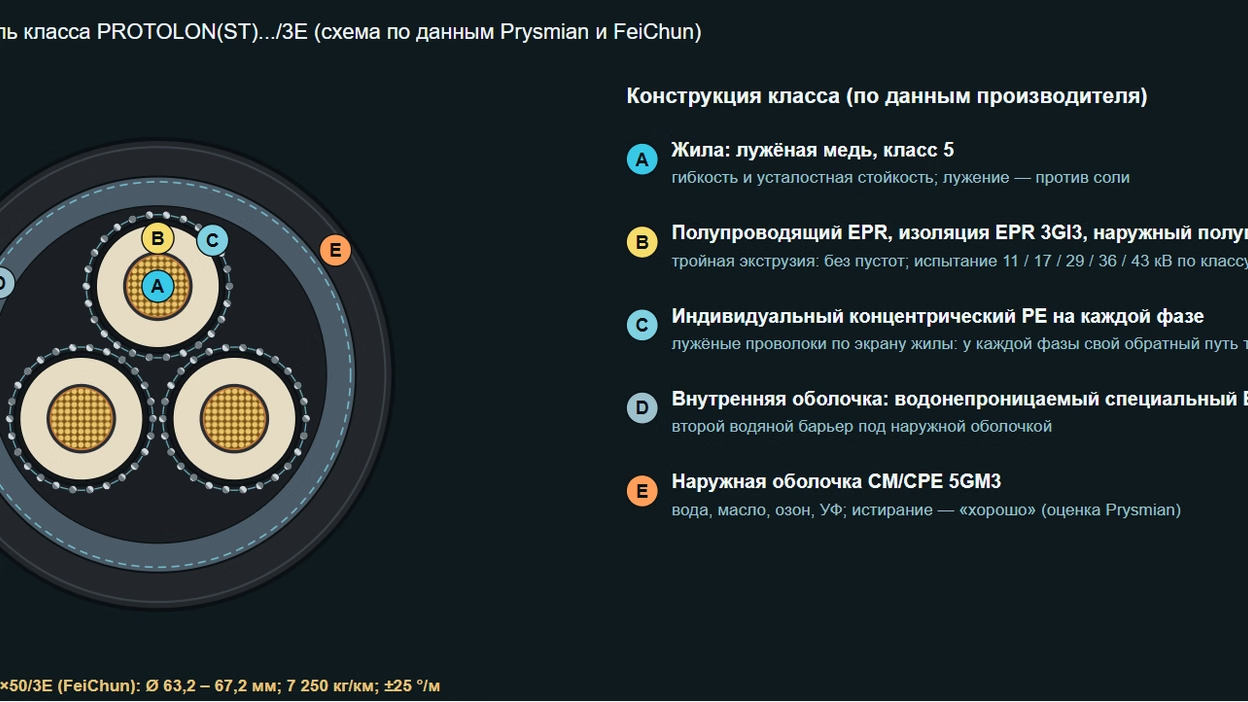
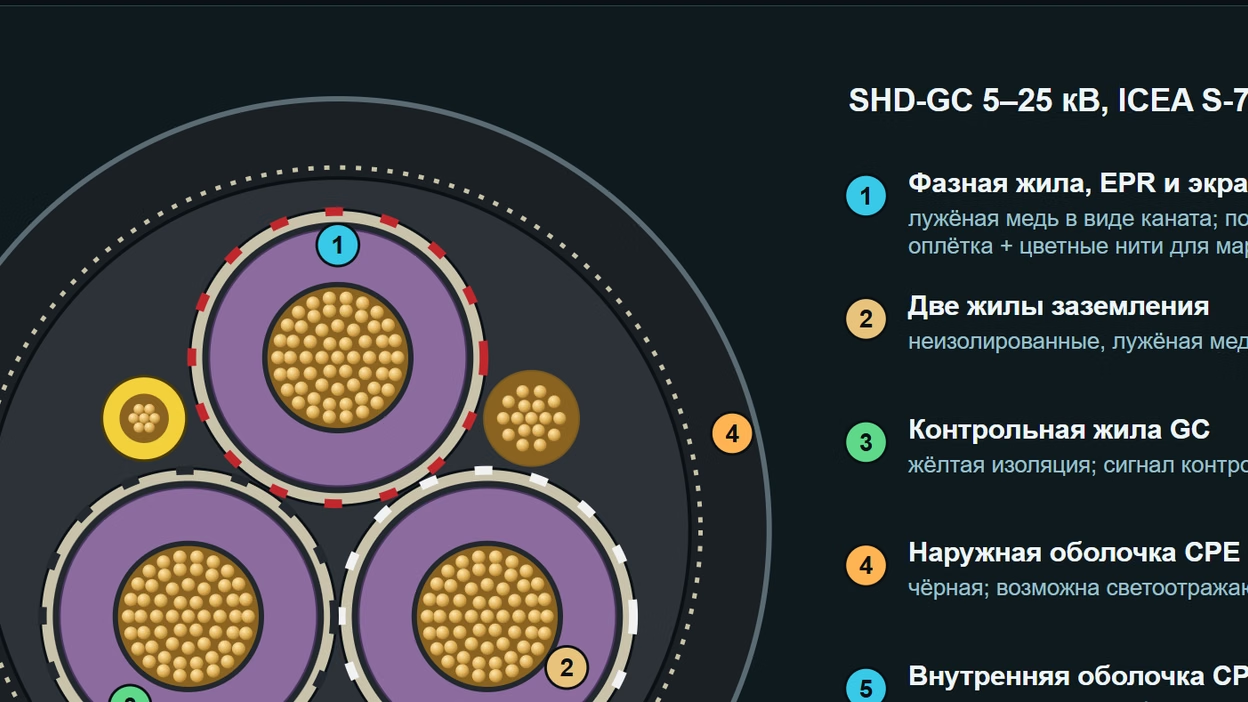
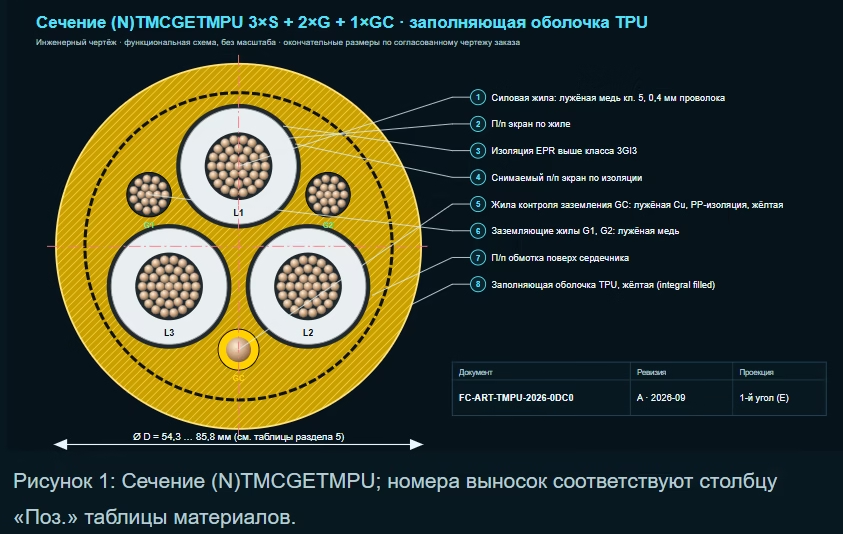
FeiChun FLEXIDRUM® MEDIUM SHD GC Industrial Cable Reel & Festoon System Power Transmission Cables: Comprehensive Safety Architecture for Material Handling Equipment (2–15 kV, -50°C Extreme Cold Capability, 750 feet/minute Deployment, Dual Ground Conductors, Integrated Health Monitoring): Advanced Technical Analysis of Specialized Festoon Cable Engineering Providing Dual Redundant Ground Conductors Ensuring Equipment Safety, Integrated Monitoring Conductor Enabling Cable Health Diagnostics, Tinned Copper Architecture Resisting Water & Corrosion in Industrial Environments, Extreme Cold Operating Capability (-50°C) Supporting Arctic & Cold-Climate Material Handling Operations, Broadest North American Regulatory Compliance (MSHA, CSA, ASTM B-172, ICEA S-75-381) Ensuring Safety Across Continental Infrastructure, Power Screen Design (Conducting vs Non-Conducting by Voltage) Optimizing for Specific Voltage Class Requirements, Industrial Festoon Mechanical Architecture Supporting Continuous Cable Reel Deployment, Color-Coded Conductor System (Black, White, Red Power + Yellow Monitoring) Preventing Installation Errors, and Comprehensive Safety System Integration Ensuring Equipment Reliability Across Demanding Material Handling & Industrial Gantry Infrastructure Industrial material handling equipment (gantry cranes, stacker/reclaimers, cable reels, festoon systems) operates continuously across demanding conditions requiring simultaneous safety, reliability, and extreme cold tolerance: dual ground conductor architecture providing redundant safety pathways preventing single-point electrical hazard, integrated monitoring conductors enabling real-time cable health diagnostics detecting degradation before catastrophic failure, tinned copper construction resisting water ingress and corrosion in industrial environments, extreme cold capability (-50°C) enabling arctic facility operations, comprehensive North American regulatory compliance (MSHA mining safety, CSA electrical safety, ASTM material standards, ICEA conductor specifications) ensuring legal compliance across continental infrastructure. FeiChun's FLEXIDRUM® MEDIUM SHD GC industrial cables represent specialized engineering addressing dual-ground safety architecture providing redundant protection, integrated monitoring enabling predictive diagnostics, tinned copper preventing electrochemical degradation, extreme cold tolerance supporting arctic operations, power screen optimization by voltage class, industrial festoon mechanical durability, color-coded conductors preventing installation errors, and comprehensive North American regulatory integration.

FLEXIDRUM® MEDIUM SHD GC

FeiChun FLEXIDRUM® MEDIUM SHD GC Industrial Cable Reel & Festoon System Power Transmission Cables: Comprehensive Safety Architecture for Material Handling Equipment (2–15 kV, -50°C Extreme Cold Capability, 750 feet/minute Deployment, Dual Ground Conductors, Integrated Health Monitoring): Advanced Technical Analysis of Specialized Festoon Cable Engineering Providing Dual Redundant Ground Conductors Ensuring Equipment Safety, Integrated Monitoring Conductor Enabling Cable Health Diagnostics, Tinned Copper Architecture Resisting Water & Corrosion in Industrial Environments, Extreme Cold Operating Capability (-50°C) Supporting Arctic & Cold-Climate Material Handling Operations, Broadest North American Regulatory Compliance (MSHA, CSA, ASTM B-172, ICEA S-75-381) Ensuring Safety Across Continental Infrastructure, Power Screen Design (Conducting vs Non-Conducting by Voltage) Optimizing for Specific Voltage Class Requirements, Industrial Festoon Mechanical Architecture Supporting Continuous Cable Reel Deployment, Color-Coded Conductor System (Black, White, Red Power + Yellow Monitoring) Preventing Installation Errors, and Comprehensive Safety System Integration Ensuring Equipment Reliability Across Demanding Material Handling & Industrial Gantry Infrastructure Industrial material handling equipment (gantry cranes, stacker/reclaimers, cable reels, festoon systems) operates continuously across demanding conditions requiring simultaneous safety, reliability, and extreme cold tolerance: dual ground conductor architecture providing redundant safety pathways preventing single-point electrical hazard, integrated monitoring conductors enabling real-time cable health diagnostics detecting degradation before catastrophic failure, tinned copper construction resisting water ingress and corrosion in industrial environments, extreme cold capability (-50°C) enabling arctic facility operations, comprehensive North American regulatory compliance (MSHA mining safety, CSA electrical safety, ASTM material standards, ICEA conductor specifications) ensuring legal compliance across continental infrastructure. FeiChun’s FLEXIDRUM® MEDIUM SHD GC industrial cables represent specialized engineering addressing dual-ground safety architecture providing redundant protection, integrated monitoring enabling predictive diagnostics, tinned copper preventing electrochemical degradation, extreme cold tolerance supporting arctic operations, power screen optimization by voltage class, industrial festoon mechanical durability, color-coded conductors preventing installation errors, and comprehensive North American regulatory integration.
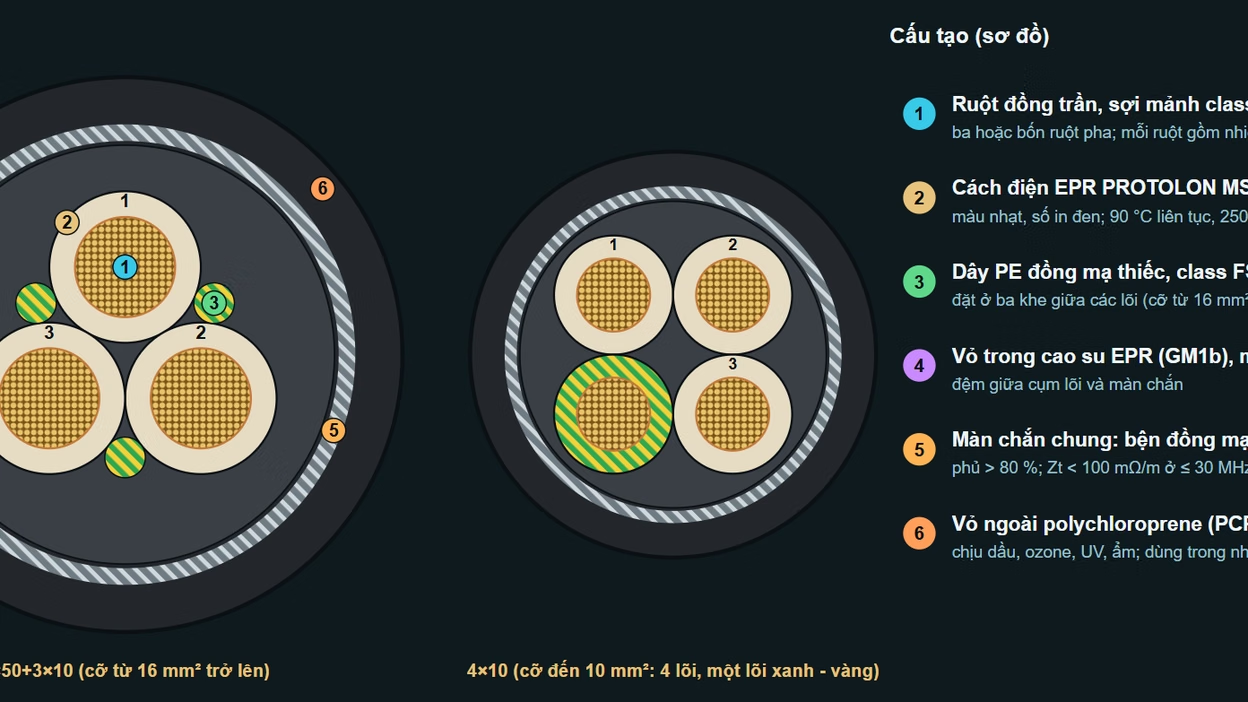
Permítame comenzar esta guía con una observación que ayudará a ubicar todo lo que sigue en el contexto adecuado. Si usted observa la evolución de la minería industrial en las últimas cuatro décadas, notará que un patrón consistente atraviesa toda la historia: los equipos se han vuelto progresivamente más grandes, con potencias específicas cada vez mayores, operando a profundidades crecientes o distancias más extensas desde las fuentes de alimentación. Una pala eléctrica clase P&H 4100XPC o Caterpillar 7495, con su motor principal de 3,000 a 5,000 caballos de fuerza, no es simplemente una versión grande de las palas de los años setenta; es una máquina que sería imposible alimentar con cables de baja tensión sin incurrir en pérdidas y caídas de voltaje económicamente prohibitivas. La minería moderna, particularmente la gran minería del cobre chileno, del hierro brasileño o del carbón colombiano, es económicamente viable precisamente porque existe infraestructura eléctrica de media y alta tensión que permite transmitir potencia sustancial a distancias considerables sin pérdidas intolerables. El cable apantallado tipo SHD-GC es la pieza específica de esta infraestructura que hace posible la conexión final entre las subestaciones móviles y los equipos de producción. Su nombre técnico —Shielded Heavy Duty with Ground Check— describe su construcción: cable apantallado ("Shielded"), de servicio pesado para minería ("Heavy Duty"), con conductor de verificación de tierra ("Ground Check"). Cada uno de estos tres atributos refleja decisiones de ingeniería que discutiremos en detalle, pero conviene adelantar que ninguno es decorativo. El apantallamiento es lo que permite operación segura a voltajes elevados. El servicio pesado es lo que permite operación en las condiciones físicas brutales de una mina. El conductor de verificación de tierra es lo que permite detectar fallas en el circuito de protección antes de que se conviertan en incidentes. Una pregunta que vale la pena hacerse antes de continuar es por qué existen los cables apantallados como categoría distinta. La respuesta corta, que desarrollaremos extensamente en secciones posteriores, es que a voltajes superiores a aproximadamente 2 kV fase-a-fase, los campos eléctricos dentro del aislamiento del cable alcanzan intensidades donde las imperfecciones microscópicas del material se vuelven eléctricamente significativas. Pequeños huecos de aire en el aislamiento, irregularidades en las interfaces entre conductor y aislamiento, contaminación superficial del conductor durante fabricación —cosas que a 600 V son invisibles desde el punto de vista eléctrico— a 5 kV, 8 kV, 15 kV o 25 kV generan fenómenos destructivos llamados descargas parciales que, sostenidos en el tiempo, degradan el aislamiento hasta la falla. El apantallamiento, correctamente diseñado, modifica la distribución del campo eléctrico de manera que estos fenómenos se suprimen o se llevan a regiones del cable donde no pueden causar daño.

Cables Mineros SHD-GC de Media y Alta Tensión: Guía Técnica Integral sobre Diseño, Aplicación, Instalación, Operación y Mantenimiento de Cables Apantallados 5 kV, 8 kV, 15 kV y 25 kV para Palas Eléctricas, Shovels Mineros, Continuous Miners, Subestaciones Móviles, Chancadoras, Molinos SAG y Equipos de Alta Potencia

Permítame comenzar esta guía con una observación que ayudará a ubicar todo lo que sigue en el contexto adecuado. Si usted observa la evolución de la minería industrial en las últimas cuatro décadas, notará que un patrón consistente atraviesa toda la historia: los equipos se han vuelto progresivamente más grandes, con potencias específicas cada vez mayores, operando a profundidades crecientes o distancias más extensas desde las fuentes de alimentación. Una pala eléctrica clase P&H 4100XPC o Caterpillar 7495, con su motor principal de 3,000 a 5,000 caballos de fuerza, no es simplemente una versión grande de las palas de los años setenta; es una máquina que sería imposible alimentar con cables de baja tensión sin incurrir en pérdidas y caídas de voltaje económicamente prohibitivas. La minería moderna, particularmente la gran minería del cobre chileno, del hierro brasileño o del carbón colombiano, es económicamente viable precisamente porque existe infraestructura eléctrica de media y alta tensión que permite transmitir potencia sustancial a distancias considerables sin pérdidas intolerables. El cable apantallado tipo SHD-GC es la pieza específica de esta infraestructura que hace posible la conexión final entre las subestaciones móviles y los equipos de producción. Su nombre técnico —Shielded Heavy Duty with Ground Check— describe su construcción: cable apantallado (“Shielded”), de servicio pesado para minería (“Heavy Duty”), con conductor de verificación de tierra (“Ground Check”). Cada uno de estos tres atributos refleja decisiones de ingeniería que discutiremos en detalle, pero conviene adelantar que ninguno es decorativo. El apantallamiento es lo que permite operación segura a voltajes elevados. El servicio pesado es lo que permite operación en las condiciones físicas brutales de una mina. El conductor de verificación de tierra es lo que permite detectar fallas en el circuito de protección antes de que se conviertan en incidentes. Una pregunta que vale la pena hacerse antes de continuar es por qué existen los cables apantallados como categoría distinta. La respuesta corta, que desarrollaremos extensamente en secciones posteriores, es que a voltajes superiores a aproximadamente 2 kV fase-a-fase, los campos eléctricos dentro del aislamiento del cable alcanzan intensidades donde las imperfecciones microscópicas del material se vuelven eléctricamente significativas. Pequeños huecos de aire en el aislamiento, irregularidades en las interfaces entre conductor y aislamiento, contaminación superficial del conductor durante fabricación —cosas que a 600 V son invisibles desde el punto de vista eléctrico— a 5 kV, 8 kV, 15 kV o 25 kV generan fenómenos destructivos llamados descargas parciales que, sostenidos en el tiempo, degradan el aislamiento hasta la falla. El apantallamiento, correctamente diseñado, modifica la distribución del campo eléctrico de manera que estos fenómenos se suprimen o se llevan a regiones del cable donde no pueden causar daño.
Permítame comenzar este documento con una reflexión que, aunque pueda parecer obvia al leerla, frecuentemente se pasa por alto en la gestión diaria de las operaciones mineras. El cable minero portátil es, probablemente, el componente eléctrico que más fácilmente puede iniciar un accidente serio en una operación minera, y al mismo tiempo, es el componente al que menos atención formal de ingeniería suele dedicársele durante el diseño de procedimientos operacionales. Esta asimetría entre el potencial de daño y la atención recibida es precisamente la brecha que este documento busca ayudar a cerrar. Piense un momento en los otros elementos del sistema eléctrico minero. Las subestaciones tienen diseño formal, protocolos de acceso restringido, planes de mantenimiento programado, personal especializado para intervenirlas y procedimientos de bloqueo estrictos. Los transformadores tienen placas de características visibles, procedimientos de muestreo de aceite, pruebas dieléctricas periódicas con frecuencia definida. Los interruptores de potencia tienen curvas de coordinación, pruebas de inyección de corriente secundaria, registros cronológicos de maniobras. Sin embargo, cuando llegamos al cable portátil —el elemento que el personal literalmente toca con las manos, que se arrastra por el piso de la mina, que se enrolla y desenrolla miles de veces, que es atropellado accidentalmente por equipos móviles— encontramos frecuentemente una ausencia notable de rigor sistemático comparable al que se aplica a los otros elementos.

Cable Minero Seguro: Prácticas Integrales de Seguridad, Manejo, Almacenamiento, Despliegue, Empalme y Mantenimiento de Cables Mineros de Potencia en Operaciones de Superficie y Subterráneas

Permítame comenzar este documento con una reflexión que, aunque pueda parecer obvia al leerla, frecuentemente se pasa por alto en la gestión diaria de las operaciones mineras. El cable minero portátil es, probablemente, el componente eléctrico que más fácilmente puede iniciar un accidente serio en una operación minera, y al mismo tiempo, es el componente al que menos atención formal de ingeniería suele dedicársele durante el diseño de procedimientos operacionales. Esta asimetría entre el potencial de daño y la atención recibida es precisamente la brecha que este documento busca ayudar a cerrar. Piense un momento en los otros elementos del sistema eléctrico minero. Las subestaciones tienen diseño formal, protocolos de acceso restringido, planes de mantenimiento programado, personal especializado para intervenirlas y procedimientos de bloqueo estrictos. Los transformadores tienen placas de características visibles, procedimientos de muestreo de aceite, pruebas dieléctricas periódicas con frecuencia definida. Los interruptores de potencia tienen curvas de coordinación, pruebas de inyección de corriente secundaria, registros cronológicos de maniobras. Sin embargo, cuando llegamos al cable portátil —el elemento que el personal literalmente toca con las manos, que se arrastra por el piso de la mina, que se enrolla y desenrolla miles de veces, que es atropellado accidentalmente por equipos móviles— encontramos frecuentemente una ausencia notable de rigor sistemático comparable al que se aplica a los otros elementos.
Los cables alimentadores MP-GC de Feichun han establecido el estándar de la industria durante décadas con sus cubiertas CPE (polietileno clorado) reforzadas. El CPE proporciona excelente balance de costo, rendimiento térmico, y flexibilidad. Sin embargo, en operaciones mineras someteridas a ambientes químicamente agresivos — donde presencia de ácido sulfúrico de drenajes mineros, óxidos nitrosos de explosivos subterráneos, o radiación UV extrema en tajos abiertos de altitud — el CPE experimenta degradación acelerada después de 12–15 años de exposición continua. La familia 36-621/622/624-LED introduce cubierta de policloruro de vinilo (PVC) de nueva generación, material que ha demostrado en aplicaciones ferroviarias, marinas, y de extracción minera pesada una vida útil 50% mayor que CPE en ambientes químicamente severos. El PVC combina: Resistencia química superior: Resistencia demostrada a ácidos, sulfatos, nitratos, y sales disueltas presentes en ambientes mineros subterráneos. Estabilidad UV mejorada: Formulación con absorvedores UV especializados para tajos abiertos a gran altitud (3,000–4,500 msnm) donde radiación solar es 30–40% más intensa. Resistencia a ozono: Excelente comportamiento en ambientes con presencia de ozono (sistemas de ventilación minera, zonas de alta altitud). Vida útil extendida proyectada: 30–40 años en instalación fija típica, comparado con 25–35 años para CPE en mismo ambiente. El trade-off es una ligera rigidez incrementada (el PVC es menos flexible que CPE a bajas temperaturas), lo que es aceptable porque estos son cables de instalación fija — no se reposicionan frecuentemente. Para aplicaciones que requieren reposicionamiento frecuente, los cables con cubierta CPE o TPU siguen siendo preferibles; pero para alimentadores de distribución que permanecen instalados durante 20–40 años en ambientes agresivos, el PVC es la opción técnicamente superior.

Cables 36-621/622/624-LED TIPO MP-GC — Alimentadores Mineros de Distribución Fija con Cubierta de PVC Resistente y Autoiluminación LED

Los cables alimentadores MP-GC de Feichun han establecido el estándar de la industria durante décadas con sus cubiertas CPE (polietileno clorado) reforzadas. El CPE proporciona excelente balance de costo, rendimiento térmico, y flexibilidad. Sin embargo, en operaciones mineras someteridas a ambientes químicamente agresivos — donde presencia de ácido sulfúrico de drenajes mineros, óxidos nitrosos de explosivos subterráneos, o radiación UV extrema en tajos abiertos de altitud — el CPE experimenta degradación acelerada después de 12–15 años de exposición continua. La familia 36-621/622/624-LED introduce cubierta de policloruro de vinilo (PVC) de nueva generación, material que ha demostrado en aplicaciones ferroviarias, marinas, y de extracción minera pesada una vida útil 50% mayor que CPE en ambientes químicamente severos. El PVC combina: Resistencia química superior: Resistencia demostrada a ácidos, sulfatos, nitratos, y sales disueltas presentes en ambientes mineros subterráneos. Estabilidad UV mejorada: Formulación con absorvedores UV especializados para tajos abiertos a gran altitud (3,000–4,500 msnm) donde radiación solar es 30–40% más intensa. Resistencia a ozono: Excelente comportamiento en ambientes con presencia de ozono (sistemas de ventilación minera, zonas de alta altitud). Vida útil extendida proyectada: 30–40 años en instalación fija típica, comparado con 25–35 años para CPE en mismo ambiente. El trade-off es una ligera rigidez incrementada (el PVC es menos flexible que CPE a bajas temperaturas), lo que es aceptable porque estos son cables de instalación fija — no se reposicionan frecuentemente. Para aplicaciones que requieren reposicionamiento frecuente, los cables con cubierta CPE o TPU siguen siendo preferibles; pero para alimentadores de distribución que permanecen instalados durante 20–40 años en ambientes agresivos, el PVC es la opción técnicamente superior.
Si los cables portátiles (36-432-LED de 2 kV, 36-517-LED de 8 kV) son los "nervios periféricos" de la infraestructura eléctrica minera, conectando equipos individuales a fuentes de poder, los cables alimentadores como el 36-601-LED de 5 kV son la columna vertebral central de toda la red de distribución de energía. Estos cables no se desconectan tras cada turno de trabajo: permanecen instalados, frecuentemente durante décadas, canalizando potencias de megavatios a través de sistemas de distribución que alimentan cientos de equipos simultáneamente. La distinción entre cables portátiles y cables alimentadores es fundamental tanto en ingeniería como en operación. Un cable portátil está diseñado para flexionarse constantemente, ser reposicionado, someterse a manipulación física durante operación intensiva. Un cable alimentador está diseñado para permanecer en posición fija, mantener integridad dieléctrica durante 20+ años, soportar ambientes que incluyen humedad, vibración estructural, temperatura variable, todo ello mientras transmite potencia continuamente sin interrupción. El cable 36-601-LED de 5 kV representa una categoría intermedia: es un alimentador semifijo, diseñado para instalación relativamente permanente en ductos, sobre escalerillas en tajos abiertos, enterrado en sistemas de drenaje minero, o montado en estructuras, pero con la flexibilidad y el tamaño manejable que permite instalación e inspección práctica por equipos de minería. A diferencia de cables de muy alta tensión (25 kV, 69 kV) que son verdaderamente fijos una vez instalados, el cable de 5 kV puede reconfigurase si la geometría operacional cambia, puede ser inspeccionado sin equipamiento especializado, puede ser empalm­ado en campo por personal técnico calificado. La adición del sistema LED autoiluminante al cable 36-601-LED introduce una capacidad operacional nueva: indicación visual distribuida del estado energético a lo largo de toda la longitud del alimentador. En un sistema tradicional, la confirmación de que un alimentador está energizado requiere: (1) acceso a instrumentación de control remoto, (2) pruebas eléctricas con equipamiento especializado, o (3) observación de indicadores en equipos alimentados por el cable (que a su vez pueden estar distantes o obscurecidos). Con el cable 36-601-LED, simplemente recorrer visualmente el cable proporciona confirmación inmediata de estado energético en cada punto: los LEDs brillando indican energía presente, los LEDs apagados indican des-energización.

Cables 36-601/602/604-LED TIPO MP-GC — Guía Técnica Completa de Alimentadores Mineros de Distribución Fija con Autoiluminación LED por Inducción Electromagnética

Si los cables portátiles (36-432-LED de 2 kV, 36-517-LED de 8 kV) son los “nervios periféricos” de la infraestructura eléctrica minera, conectando equipos individuales a fuentes de poder, los cables alimentadores como el 36-601-LED de 5 kV son la columna vertebral central de toda la red de distribución de energía. Estos cables no se desconectan tras cada turno de trabajo: permanecen instalados, frecuentemente durante décadas, canalizando potencias de megavatios a través de sistemas de distribución que alimentan cientos de equipos simultáneamente. La distinción entre cables portátiles y cables alimentadores es fundamental tanto en ingeniería como en operación. Un cable portátil está diseñado para flexionarse constantemente, ser reposicionado, someterse a manipulación física durante operación intensiva. Un cable alimentador está diseñado para permanecer en posición fija, mantener integridad dieléctrica durante 20+ años, soportar ambientes que incluyen humedad, vibración estructural, temperatura variable, todo ello mientras transmite potencia continuamente sin interrupción. El cable 36-601-LED de 5 kV representa una categoría intermedia: es un alimentador semifijo, diseñado para instalación relativamente permanente en ductos, sobre escalerillas en tajos abiertos, enterrado en sistemas de drenaje minero, o montado en estructuras, pero con la flexibilidad y el tamaño manejable que permite instalación e inspección práctica por equipos de minería. A diferencia de cables de muy alta tensión (25 kV, 69 kV) que son verdaderamente fijos una vez instalados, el cable de 5 kV puede reconfigurase si la geometría operacional cambia, puede ser inspeccionado sin equipamiento especializado, puede ser empalm­ado en campo por personal técnico calificado. La adición del sistema LED autoiluminante al cable 36-601-LED introduce una capacidad operacional nueva: indicación visual distribuida del estado energético a lo largo de toda la longitud del alimentador. En un sistema tradicional, la confirmación de que un alimentador está energizado requiere: (1) acceso a instrumentación de control remoto, (2) pruebas eléctricas con equipamiento especializado, o (3) observación de indicadores en equipos alimentados por el cable (que a su vez pueden estar distantes o obscurecidos). Con el cable 36-601-LED, simplemente recorrer visualmente el cable proporciona confirmación inmediata de estado energético en cada punto: los LEDs brillando indican energía presente, los LEDs apagados indican des-energización.
La minería moderna sudamericana opera en una escala que habría sido impensable hace apenas dos décadas. En Chile, la mina Escondida mueve diariamente más de un millón de toneladas de material; en Perú, Cerro Verde y Antamina procesan caudales similares; en Colombia, las operaciones de carbón de El Cerrejón despachan trenes continuos hacia puertos de exportación. Esta escala masiva requiere equipos eléctricos de potencias que frecuentemente superan los 2,000 voltios nominales del cable portátil tradicional, entrando al dominio de la media tensión de 5,000 voltios. El cable 36-515 TIPO SHD-GC 3/C, diseñado específicamente para este rango de voltaje, es el estándar industrial para alimentación de equipo longwall, palas eléctricas de gran porte, continuous miners de alta potencia y perforadoras de producción en operaciones de clase mundial. La versión especial 36-515-LED de Feichun lleva esta solución consolidada al siguiente nivel tecnológico mediante la incorporación del sistema patentado de autoiluminación LED por inducción electromagnética—la misma tecnología innovadora demostrada en el cable de 2,000 voltios pero, como veremos en secciones posteriores, significativamente más eficaz a 5 kV debido a los campos electromagnéticos más intensos generados por operaciones de mayor potencia. Esta correspondencia natural entre mayor voltaje operacional y mayor disponibilidad energética para el sistema LED es uno de los descubrimientos más interesantes del desarrollo de esta tecnología: el cable de mayor criticidad operacional es también aquel donde la autoiluminación funciona con mayor robustez y luminosidad. Para entender por qué esta mejora importa tanto, consideremos el contexto operacional. Un cable portátil de 5 kV alimentando una pala eléctrica de 2 megavatios transporta corrientes de 200 a 350 amperios durante turnos operacionales continuos. Un daño a este cable, una falla eléctrica no detectada, o simplemente la confusión operacional sobre qué cable está energizado no son meras inconveniencias—son incidentes que pueden costar cientos de miles de dólares por hora de inactividad en pozo mina, además de los riesgos evidentes de seguridad personal. Según datos publicados por el Servicio Nacional de Geología y Minería de Chile (SERNAGEOMIN), más del 22% de los incidentes eléctricos graves en operaciones mineras de media tensión entre 2019 y 2024 involucraron procedimientos donde la verificación visual del estado energético del cable habría sido determinante para prevenir el evento. El cable 36-515-LED aborda directamente esta problemática. Adicionalmente al sistema LED, el cable 36-515-LED mantiene todas las características premium del cable SHD-GC tradicional de media tensión: blindaje semiconductor individual por fase para control del campo eléctrico (crítico a 5 kV), núcleo encintado armado para integridad mecánica bajo estrés operacional continuo, aislamiento EPR reforzado de 110 a 120 mils, cubierta reforzada curada en molde disponible en CPE translúcido estándar o TPU para ambientes extremadamente abrasivos, y opciones Tiger Stripe con franjas reflectivas para visibilidad complementaria. La conformidad con certificaciones MSHA P-184, ICEA S-75-381/NEMA WC-58, CSA Archivo 82346 (incluyendo validación a −50°C) y RETIE (Reglamento Técnico de Instalaciones Eléctricas de Colombia) proporciona aceptación regulatoria en todas las principales jurisdicciones mineras sudamericanas.

Cable 36-515-LED TIPO SHD-GC® de 5000 Voltios con Sistema Patentado de Autoiluminación LED por Inducción Electromagnética

La minería moderna sudamericana opera en una escala que habría sido impensable hace apenas dos décadas. En Chile, la mina Escondida mueve diariamente más de un millón de toneladas de material; en Perú, Cerro Verde y Antamina procesan caudales similares; en Colombia, las operaciones de carbón de El Cerrejón despachan trenes continuos hacia puertos de exportación. Esta escala masiva requiere equipos eléctricos de potencias que frecuentemente superan los 2,000 voltios nominales del cable portátil tradicional, entrando al dominio de la media tensión de 5,000 voltios. El cable 36-515 TIPO SHD-GC 3/C, diseñado específicamente para este rango de voltaje, es el estándar industrial para alimentación de equipo longwall, palas eléctricas de gran porte, continuous miners de alta potencia y perforadoras de producción en operaciones de clase mundial. La versión especial 36-515-LED de Feichun lleva esta solución consolidada al siguiente nivel tecnológico mediante la incorporación del sistema patentado de autoiluminación LED por inducción electromagnética—la misma tecnología innovadora demostrada en el cable de 2,000 voltios pero, como veremos en secciones posteriores, significativamente más eficaz a 5 kV debido a los campos electromagnéticos más intensos generados por operaciones de mayor potencia. Esta correspondencia natural entre mayor voltaje operacional y mayor disponibilidad energética para el sistema LED es uno de los descubrimientos más interesantes del desarrollo de esta tecnología: el cable de mayor criticidad operacional es también aquel donde la autoiluminación funciona con mayor robustez y luminosidad. Para entender por qué esta mejora importa tanto, consideremos el contexto operacional. Un cable portátil de 5 kV alimentando una pala eléctrica de 2 megavatios transporta corrientes de 200 a 350 amperios durante turnos operacionales continuos. Un daño a este cable, una falla eléctrica no detectada, o simplemente la confusión operacional sobre qué cable está energizado no son meras inconveniencias—son incidentes que pueden costar cientos de miles de dólares por hora de inactividad en pozo mina, además de los riesgos evidentes de seguridad personal. Según datos publicados por el Servicio Nacional de Geología y Minería de Chile (SERNAGEOMIN), más del 22% de los incidentes eléctricos graves en operaciones mineras de media tensión entre 2019 y 2024 involucraron procedimientos donde la verificación visual del estado energético del cable habría sido determinante para prevenir el evento. El cable 36-515-LED aborda directamente esta problemática. Adicionalmente al sistema LED, el cable 36-515-LED mantiene todas las características premium del cable SHD-GC tradicional de media tensión: blindaje semiconductor individual por fase para control del campo eléctrico (crítico a 5 kV), núcleo encintado armado para integridad mecánica bajo estrés operacional continuo, aislamiento EPR reforzado de 110 a 120 mils, cubierta reforzada curada en molde disponible en CPE translúcido estándar o TPU para ambientes extremadamente abrasivos, y opciones Tiger Stripe con franjas reflectivas para visibilidad complementaria. La conformidad con certificaciones MSHA P-184, ICEA S-75-381/NEMA WC-58, CSA Archivo 82346 (incluyendo validación a −50°C) y RETIE (Reglamento Técnico de Instalaciones Eléctricas de Colombia) proporciona aceptación regulatoria en todas las principales jurisdicciones mineras sudamericanas.
La industria minera sudamericana enfrenta un desafío persistente que ha resistido décadas de avance tecnológico: la verificación visual en tiempo real del estado energizado de cables portátiles de media tensión en ambientes subterráneos de baja iluminación. Según datos del Servicio Nacional de Geología y Minería de Chile (SERNAGEOMIN), más del 18% de los incidentes eléctricos documentados en minería subterránea entre 2018 y 2024 involucraron confusión operacional sobre el estado energético de cables portátiles, resultando en contactos accidentales, daños a equipos y, en casos graves, electrocuciones fatales. El cable 36-503-LED TIPO SHD-GC de Feichun representa una evolución radical en esta problemática mediante la incorporación de un sistema de autoiluminación LED alimentado exclusivamente por inducción electromagnética del propio cable en operación, sin requerir baterías, alimentación externa o cableado adicional. A diferencia de soluciones convencionales que dependen de indicadores luminosos discretos en tableros o señalización externa de advertencia, el cable 36-503-LED integra una matriz distribuida de micro-LEDs de alta luminosidad empotrados dentro de la cubierta CPE translúcida reforzada, espaciados cada 1.2 a 2.0 metros a lo largo de toda la longitud del cable. Cuando el cable transporta corriente operacional, el campo magnético generado por los conductores induce corriente en bobinas toroidales miniaturizadas integradas estratégicamente en la arquitectura del cable, proporcionando energía suficiente para alimentar la matriz LED de forma continua, sostenida y sin intervención humana. Esta innovación, protegida por múltiples patentes de Feichun, transforma el cable de un componente pasivo a un indicador visual activo de estado operacional. La base de este cable especial es el robusto modelo 36-503 TIPO SHD-GC 3/C de 2,000 voltios, reconocido en la industria minera mundial como estándar de oro para aplicaciones portátiles de media tensión: continuous miners, equipo longwall, bombas de drenaje, taladros de perforación y cargadores frontales. La versión LED mantiene íntegramente las especificaciones eléctricas, mecánicas y ambientales del cable original—incluyendo la certificación MSHA P-184, conformidad con normas ICEA S-75-381/NEMA WC-58, aislamiento EPR de 90°C, cubierta CPE reforzada y conductores de cobre estañado flexible—mientras añade la capa tecnológica de autoiluminación como una extensión funcional integrada, no sustitutiva.

Cable 36-503-LED TIPO SHD-GC® con Tecnología de Autoiluminación por Inducción Electromagnética

La industria minera sudamericana enfrenta un desafío persistente que ha resistido décadas de avance tecnológico: la verificación visual en tiempo real del estado energizado de cables portátiles de media tensión en ambientes subterráneos de baja iluminación. Según datos del Servicio Nacional de Geología y Minería de Chile (SERNAGEOMIN), más del 18% de los incidentes eléctricos documentados en minería subterránea entre 2018 y 2024 involucraron confusión operacional sobre el estado energético de cables portátiles, resultando en contactos accidentales, daños a equipos y, en casos graves, electrocuciones fatales. El cable 36-503-LED TIPO SHD-GC de Feichun representa una evolución radical en esta problemática mediante la incorporación de un sistema de autoiluminación LED alimentado exclusivamente por inducción electromagnética del propio cable en operación, sin requerir baterías, alimentación externa o cableado adicional. A diferencia de soluciones convencionales que dependen de indicadores luminosos discretos en tableros o señalización externa de advertencia, el cable 36-503-LED integra una matriz distribuida de micro-LEDs de alta luminosidad empotrados dentro de la cubierta CPE translúcida reforzada, espaciados cada 1.2 a 2.0 metros a lo largo de toda la longitud del cable. Cuando el cable transporta corriente operacional, el campo magnético generado por los conductores induce corriente en bobinas toroidales miniaturizadas integradas estratégicamente en la arquitectura del cable, proporcionando energía suficiente para alimentar la matriz LED de forma continua, sostenida y sin intervención humana. Esta innovación, protegida por múltiples patentes de Feichun, transforma el cable de un componente pasivo a un indicador visual activo de estado operacional. La base de este cable especial es el robusto modelo 36-503 TIPO SHD-GC 3/C de 2,000 voltios, reconocido en la industria minera mundial como estándar de oro para aplicaciones portátiles de media tensión: continuous miners, equipo longwall, bombas de drenaje, taladros de perforación y cargadores frontales. La versión LED mantiene íntegramente las especificaciones eléctricas, mecánicas y ambientales del cable original—incluyendo la certificación MSHA P-184, conformidad con normas ICEA S-75-381/NEMA WC-58, aislamiento EPR de 90°C, cubierta CPE reforzada y conductores de cobre estañado flexible—mientras añade la capa tecnológica de autoiluminación como una extensión funcional integrada, no sustitutiva.
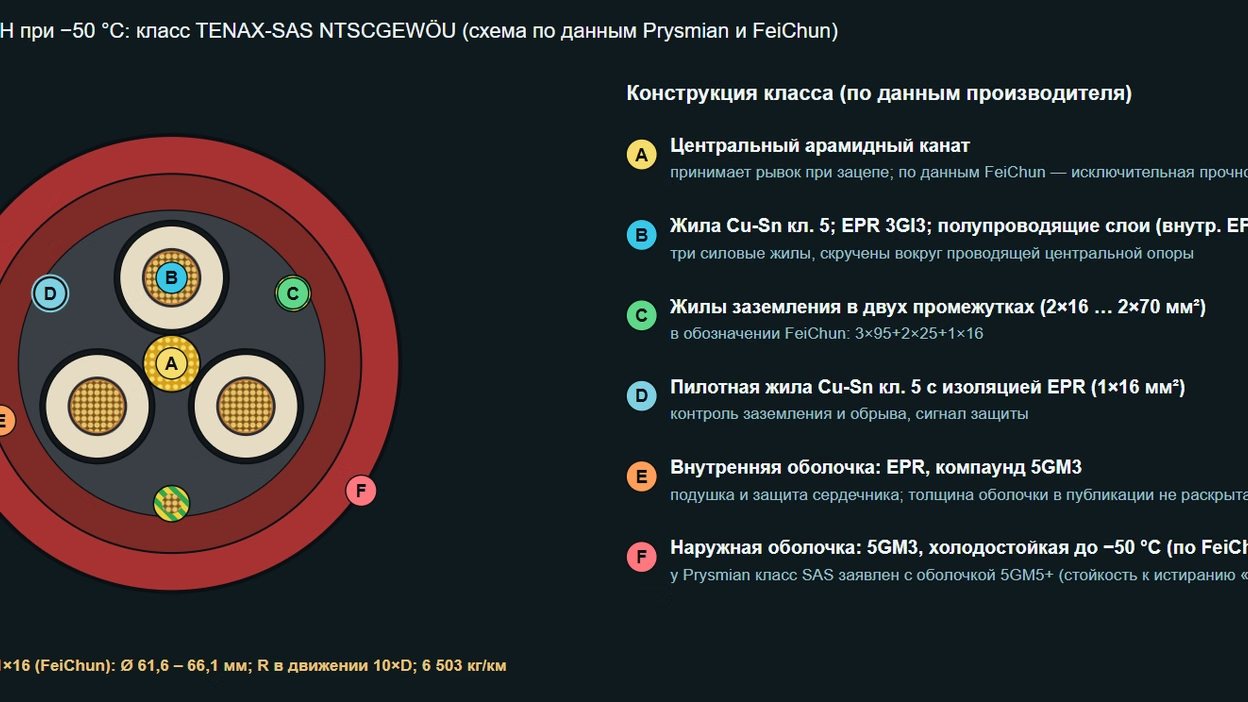
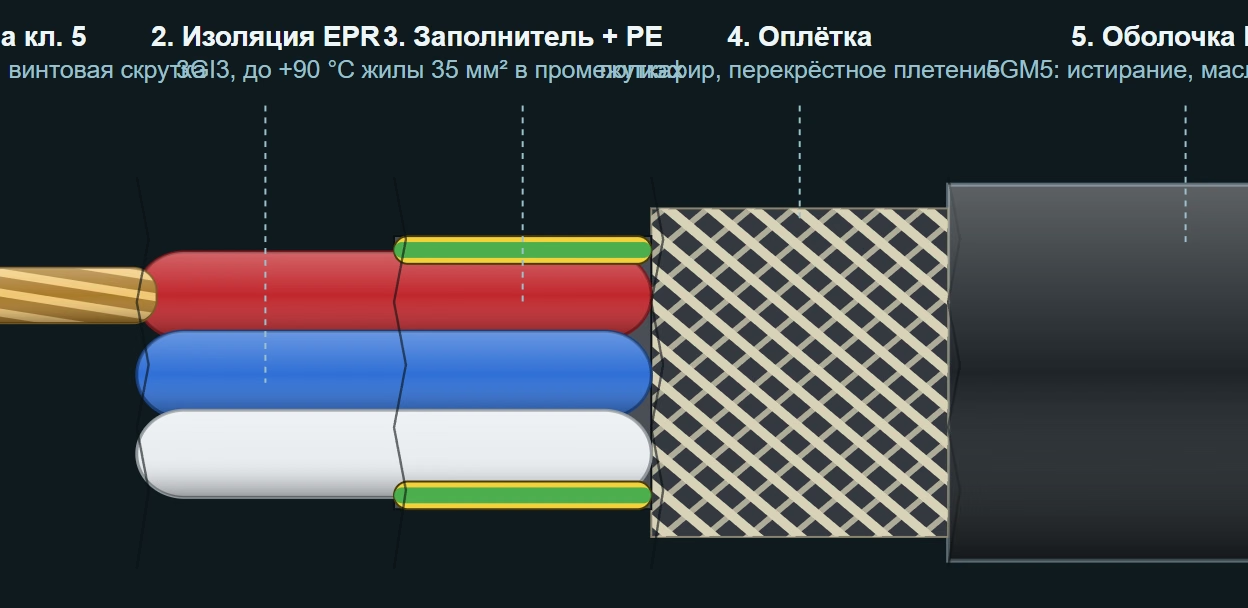
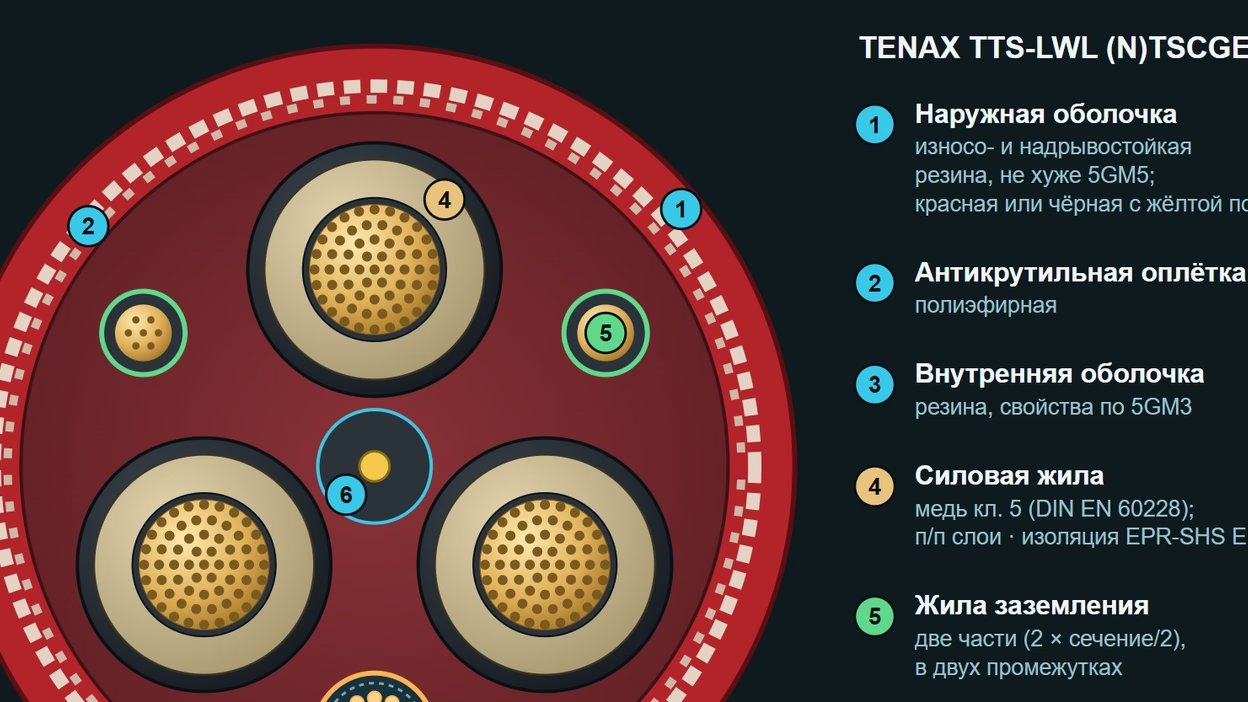
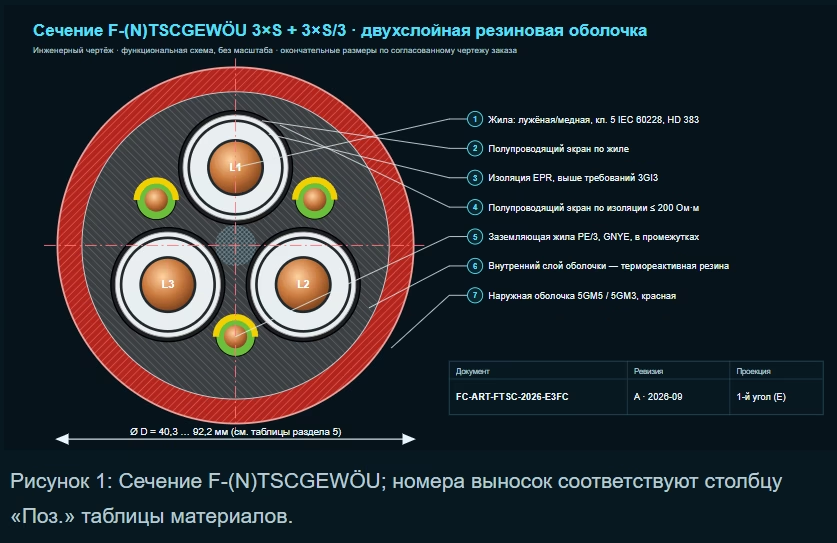
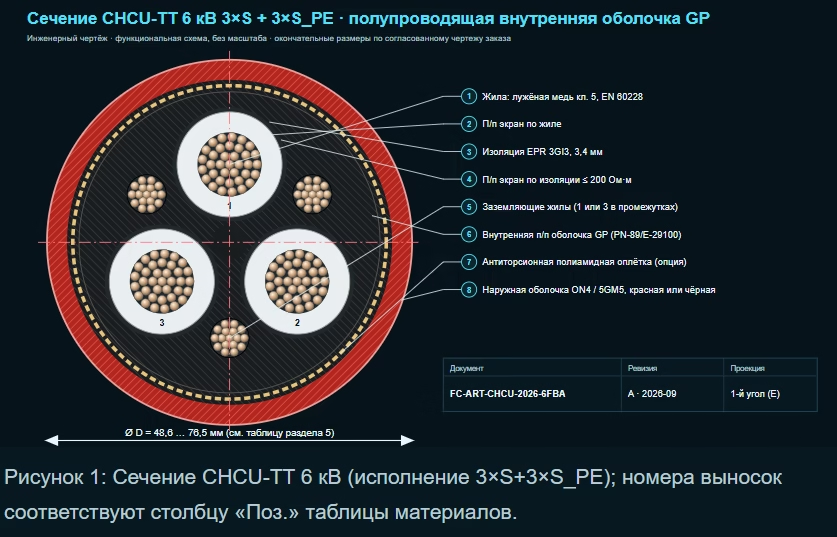
Reelkab MSFO® (N)TSCGEWOEU представляет собой революционное решение для портовых контейнерных кранов, стейкеров и аналогичного высокотехнологичного переносного оборудования, которое требует одновременной подачи электроэнергии среднего напряжения, передачи управляющих сигналов и надежной высокоскоростной передачи данных в реальном времени. В отличие от традиционного подхода, при котором используются отдельные силовые кабели, кабели управления и оптические волокна, кабель Reelkab MSFO объединяет все необходимые элементы — трехфазное питание, управление и оптическую коммуникацию — в одной гибкой конструкции, специально оптимизированной для портовой среды. Аббревиатура MSFO расшифровывается как "Multi-Strand Fiber-Optic" (многопроводный с оптическим волокном), что указывает на комбинированную архитектуру, которая объединяет электромагнитные проводники с оптической передачей данных. TSCGEWOEU обозначает общую конструкцию типа для гибких кабелей среднего напряжения: "Trennung, Schirm, Control, Erdung, Werkstoffe, Öl-Resistenz, Universell" (разделение, экранирование, управление, заземление, материалы, устойчивость к маслам, универсальность). Эта конструкция разработана для работы при максимальных скоростях развертывания до 240 метров в минуту при полной рабочей нагрузке, что обеспечивает оптимальную производительность контейнерных терминалов. Встроенная система оптических волокон (до 24 жил) обеспечивает полностью независимый канал передачи данных, полностью невосприимчивый к электромагнитным помехам, характерным для портовой среды с интенсивным использованием электрооборудования, высокомощных приводов переменной частоты и радиопередатчиков. Это позволяет портальному оборудованию передавать критические данные о нагрузке, позиции, диагностике и безопасности без каких-либо помех, обеспечивая надежное автоматизированное управление контейнерными операциями.

Reelkab MSFO® (N)TSCGEWOEU

Reelkab MSFO® (N)TSCGEWOEU представляет собой революционное решение для портовых контейнерных кранов, стейкеров и аналогичного высокотехнологичного переносного оборудования, которое требует одновременной подачи электроэнергии среднего напряжения, передачи управляющих сигналов и надежной высокоскоростной передачи данных в реальном времени. В отличие от традиционного подхода, при котором используются отдельные силовые кабели, кабели управления и оптические волокна, кабель Reelkab MSFO объединяет все необходимые элементы — трехфазное питание, управление и оптическую коммуникацию — в одной гибкой конструкции, специально оптимизированной для портовой среды. Аббревиатура MSFO расшифровывается как “Multi-Strand Fiber-Optic” (многопроводный с оптическим волокном), что указывает на комбинированную архитектуру, которая объединяет электромагнитные проводники с оптической передачей данных. TSCGEWOEU обозначает общую конструкцию типа для гибких кабелей среднего напряжения: “Trennung, Schirm, Control, Erdung, Werkstoffe, Öl-Resistenz, Universell” (разделение, экранирование, управление, заземление, материалы, устойчивость к маслам, универсальность). Эта конструкция разработана для работы при максимальных скоростях развертывания до 240 метров в минуту при полной рабочей нагрузке, что обеспечивает оптимальную производительность контейнерных терминалов. Встроенная система оптических волокон (до 24 жил) обеспечивает полностью независимый канал передачи данных, полностью невосприимчивый к электромагнитным помехам, характерным для портовой среды с интенсивным использованием электрооборудования, высокомощных приводов переменной частоты и радиопередатчиков. Это позволяет портальному оборудованию передавать критические данные о нагрузке, позиции, диагностике и безопасности без каких-либо помех, обеспечивая надежное автоматизированное управление контейнерными операциями.
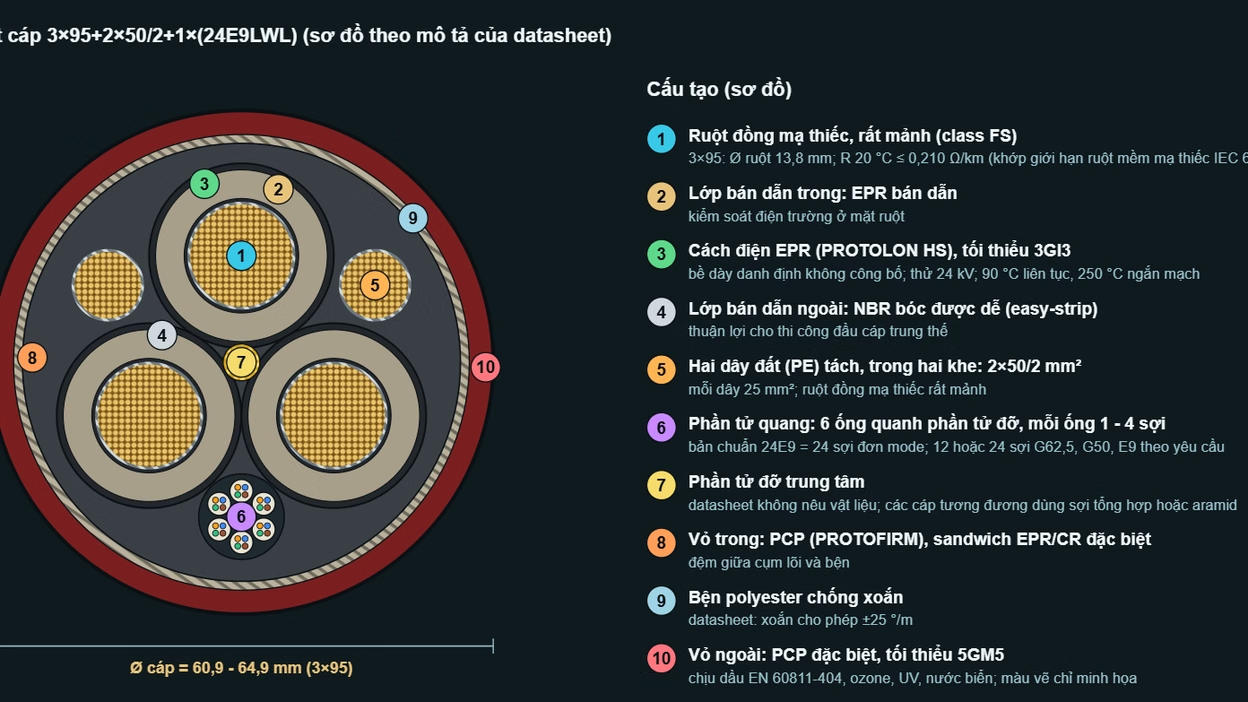
FLEXIDRUM® MEDIUM R 902 OPTICAL FIBER представляет собой революционный подход к проектированию кабельных систем, который преодолевает традиционное разделение между силовыми кабелями и кабелями телекоммуникаций. На протяжении десятилетий энергетические компании прокладывали две отдельные системы: мощные кабели для передачи электроэнергии и отдельные оптические кабели для систем управления, мониторинга и связи. Это требовало вдвое большего количества кабельных каналов, увеличивало затраты на монтаж и создавало техническую сложность при необходимости синхронизации и координации двух независимых систем. FLEXIDRUM MEDIUM R 902 OPTICAL FIBER решает эту проблему, интегрируя оптический элемент, содержащий 6 волокон, прямо внутри конструкции высоковольтного кабеля. Это означает, что инженеры теперь могут спроектировать и установить одну унифицированную систему, которая одновременно передает электроэнергию и обеспечивает высокоскоростную оптическую связь для систем управления, мониторинга и телеметрии. Оптоволокна защищены всеми теми же механическими и электрическими защитными слоями, что и электрические проводники, обеспечивая им одинаковый уровень надежности и долговечности. Эта интеграция отражает понимание того, что современные энергосистемы становятся все более интеллектуальными. Системы SCADA (Supervisory Control and Data Acquisition — диспетчерское управление и сбор данных) требуют надежного канала связи для передачи информации о состоянии оборудования, измерений напряжения и тока, температуры и других параметров. Встроенные оптические волокна обеспечивают этот канал связи с полной гальванической развязкой от электрической системы, что является критически важным для безопасности и надежности.

FLEXIDRUM® MEDIUM R 902 OPTICAL FIBER

FLEXIDRUM® MEDIUM R 902 OPTICAL FIBER представляет собой революционный подход к проектированию кабельных систем, который преодолевает традиционное разделение между силовыми кабелями и кабелями телекоммуникаций. На протяжении десятилетий энергетические компании прокладывали две отдельные системы: мощные кабели для передачи электроэнергии и отдельные оптические кабели для систем управления, мониторинга и связи. Это требовало вдвое большего количества кабельных каналов, увеличивало затраты на монтаж и создавало техническую сложность при необходимости синхронизации и координации двух независимых систем. FLEXIDRUM MEDIUM R 902 OPTICAL FIBER решает эту проблему, интегрируя оптический элемент, содержащий 6 волокон, прямо внутри конструкции высоковольтного кабеля. Это означает, что инженеры теперь могут спроектировать и установить одну унифицированную систему, которая одновременно передает электроэнергию и обеспечивает высокоскоростную оптическую связь для систем управления, мониторинга и телеметрии. Оптоволокна защищены всеми теми же механическими и электрическими защитными слоями, что и электрические проводники, обеспечивая им одинаковый уровень надежности и долговечности. Эта интеграция отражает понимание того, что современные энергосистемы становятся все более интеллектуальными. Системы SCADA (Supervisory Control and Data Acquisition — диспетчерское управление и сбор данных) требуют надежного канала связи для передачи информации о состоянии оборудования, измерений напряжения и тока, температуры и других параметров. Встроенные оптические волокна обеспечивают этот канал связи с полной гальванической развязкой от электрической системы, что является критически важным для безопасности и надежности.
FLEXIDRUM® R 702 представляет собой значительный технический скачок в истории разработки кабелей FLEXIDRUM, потому что это первый кабель в этой линейке, который использует Kevlar в качестве центрального структурного элемента. Kevlar — это материал с научно-фантастическими свойствами, впервые разработанный компанией DuPont в 1965 году, и сегодня известный как материал, используемый в бронежилетах и шлемах. Его исключительная прочность при растяжении, низкая плотность и стабильность при высоких температурах делают его идеальным материалом для структурной поддержки электрического кабеля, когда цель состоит в минимизации диаметра и веса кабеля, но максимизации его прочности. Когда вы сравниваете спецификации R 702 с предыдущим FLEXIDRUM R 700, вы заметите, что R 702 часто имеет меньший наружный диаметр для того же или даже большего количества проводников. Например, конфигурация 49G1 (49 жилы по 1 мм²) имеет наружный диаметр всего 25 мм. Это является явным результатом использования Kevlar в качестве центрального элемента, который обеспечивает структурную поддержку более эффективно, чем традиционный текстиль, позволяя проводникам быть упакованными плотнее без их просадки под их собственным весом или механическим напряжением. R 702 является особенно ценным для применений, где пространство критично. В современных зданиях, кораблях и промышленных установках, электрические каналы и пути кабелей часто переполнены. Способность использовать один кабель меньшего диаметра, который доставляет то же количество проводников, что и традиционный кабель большего диаметра, может означать разницу между возможностью прокладки кабеля в доступный путь и необходимостью переделки инфраструктуры для размещения кабеля большего размера.

FLEXIDRUM® R 702

FLEXIDRUM® R 702 представляет собой значительный технический скачок в истории разработки кабелей FLEXIDRUM, потому что это первый кабель в этой линейке, который использует Kevlar в качестве центрального структурного элемента. Kevlar — это материал с научно-фантастическими свойствами, впервые разработанный компанией DuPont в 1965 году, и сегодня известный как материал, используемый в бронежилетах и шлемах. Его исключительная прочность при растяжении, низкая плотность и стабильность при высоких температурах делают его идеальным материалом для структурной поддержки электрического кабеля, когда цель состоит в минимизации диаметра и веса кабеля, но максимизации его прочности. Когда вы сравниваете спецификации R 702 с предыдущим FLEXIDRUM R 700, вы заметите, что R 702 часто имеет меньший наружный диаметр для того же или даже большего количества проводников. Например, конфигурация 49G1 (49 жилы по 1 мм²) имеет наружный диаметр всего 25 мм. Это является явным результатом использования Kevlar в качестве центрального элемента, который обеспечивает структурную поддержку более эффективно, чем традиционный текстиль, позволяя проводникам быть упакованными плотнее без их просадки под их собственным весом или механическим напряжением. R 702 является особенно ценным для применений, где пространство критично. В современных зданиях, кораблях и промышленных установках, электрические каналы и пути кабелей часто переполнены. Способность использовать один кабель меньшего диаметра, который доставляет то же количество проводников, что и традиционный кабель большего диаметра, может означать разницу между возможностью прокладки кабеля в доступный путь и необходимостью переделки инфраструктуры для размещения кабеля большего размера.
H01N2-D/-E® is the professional-grade welding cable engineered specifically for the extreme mechanical and thermal demands of portable welding equipment: MIG/MAG (metal inert gas) welders delivering hundreds of amperes in a compact handheld torch, TIG (tungsten inert gas) systems requiring ultraprecise current control, stick (arc) welders generating intense heat at the electrode, and plasma cutting equipment operating at extreme power levels. Unlike general-purpose industrial cables, the H01N2-D/-E features ultra-flexible bare copper conductors enabling unlimited coiling without fatigue, EM5 oil-resistant rubber sheath tolerating workshop fluids and solvents, and comprehensive duty-cycle current derating enabling proper sizing for periodic welding operations where cables are not continuously carrying rated current.

H01N2-D/-E® Welding Cable

H01N2-D/-E® is the professional-grade welding cable engineered specifically for the extreme mechanical and thermal demands of portable welding equipment: MIG/MAG (metal inert gas) welders delivering hundreds of amperes in a compact handheld torch, TIG (tungsten inert gas) systems requiring ultraprecise current control, stick (arc) welders generating intense heat at the electrode, and plasma cutting equipment operating at extreme power levels. Unlike general-purpose industrial cables, the H01N2-D/-E features ultra-flexible bare copper conductors enabling unlimited coiling without fatigue, EM5 oil-resistant rubber sheath tolerating workshop fluids and solvents, and comprehensive duty-cycle current derating enabling proper sizing for periodic welding operations where cables are not continuously carrying rated current.
H07ZZ-F® is the premium safety-critical flexible cable engineered specifically for applications where fire risk mitigation and occupant protection are non-negotiable priorities: data centres with mission-critical servers and power distribution infrastructure, hospitals and healthcare facilities where patient safety depends on reliable systems, schools and universities with dense occupancy, hospitality venues with premium safety requirements, and all building installations where minimizing fire risk and toxic gas exposure is mandated by building codes and regulatory authorities. Unlike standard cables that release deadly toxic halogenated gases when exposed to fire, the H07ZZ-F features halogen-free FRNC insulation and sheath, minimal smoke production, and EI8 heat-resistant rubber construction designed to limit fire spread, minimize smoke evacuation hazards, and provide maximum time for occupant escape in fire emergencies

H07ZZ-F® Premium Flexible Cable

H07ZZ-F® is the premium safety-critical flexible cable engineered specifically for applications where fire risk mitigation and occupant protection are non-negotiable priorities: data centres with mission-critical servers and power distribution infrastructure, hospitals and healthcare facilities where patient safety depends on reliable systems, schools and universities with dense occupancy, hospitality venues with premium safety requirements, and all building installations where minimizing fire risk and toxic gas exposure is mandated by building codes and regulatory authorities. Unlike standard cables that release deadly toxic halogenated gases when exposed to fire, the H07ZZ-F features halogen-free FRNC insulation and sheath, minimal smoke production, and EI8 heat-resistant rubber construction designed to limit fire spread, minimize smoke evacuation hazards, and provide maximum time for occupant escape in fire emergencies
H07BN4-F® is the heavy-duty industrial rubber cable engineered specifically for power distribution in the harshest real-world environments: wind turbine installations at exposed high-altitude and coastal sites, temporary construction power systems on job sites, outdoor industrial machinery exposed to sun and weather, renewable energy systems requiring rugged reliability, and portable equipment power circuits subject to continuous flexing and mechanical stress. Unlike standard commercial cables that degrade or fail within months under industrial abuse, the H07BN4-F features EI7 heat-resistant rubber insulation, EM7 oil-resistant rubber sheath, and Class 5 very flexible bare copper conductors designed to deliver uninterrupted power through decades of real-world industrial operations.

H07BN4-F® Industrial Cable

H07BN4-F® is the heavy-duty industrial rubber cable engineered specifically for power distribution in the harshest real-world environments: wind turbine installations at exposed high-altitude and coastal sites, temporary construction power systems on job sites, outdoor industrial machinery exposed to sun and weather, renewable energy systems requiring rugged reliability, and portable equipment power circuits subject to continuous flexing and mechanical stress. Unlike standard commercial cables that degrade or fail within months under industrial abuse, the H07BN4-F features EI7 heat-resistant rubber insulation, EM7 oil-resistant rubber sheath, and Class 5 very flexible bare copper conductors designed to deliver uninterrupted power through decades of real-world industrial operations.
FABER® A05RN-F roller blind cable is the specialized control cable engineered specifically for motorized roller blind drives, Venetian blind automation systems, jalousie window controls, and building facade shade management. Unlike general-purpose motor control cables that degrade when exposed to continuous UV sunlight and ozone in outdoor environments, the A05RN-F features UV and ozone-resistant rubber sheathing, EPR thermoset insulation, and flame-retardant construction that maintains electrical and mechanical integrity through decades of permanent outdoor exposure.

FABER® A05RN-F Roller Blind Cable

FABER® A05RN-F roller blind cable is the specialized control cable engineered specifically for motorized roller blind drives, Venetian blind automation systems, jalousie window controls, and building facade shade management. Unlike general-purpose motor control cables that degrade when exposed to continuous UV sunlight and ozone in outdoor environments, the A05RN-F features UV and ozone-resistant rubber sheathing, EPR thermoset insulation, and flame-retardant construction that maintains electrical and mechanical integrity through decades of permanent outdoor exposure.
The H07RN-F cable represents the pinnacle of industrial-grade rubber insulated cable design, engineered for demanding applications where extreme flexibility, superior environmental resistance, and uncompromising reliability are non-negotiable. Developed per DIN EN 50525-2-21 (VDE 0285-525-2-21), the H07RN-F combines advanced vulcanization technology with chloroprene (CR) EM2 elastomer sheath composition to deliver exceptional performance across construction sites, industrial machinery, marine installations, and professional electrical systems.

TRIFLEX Plus H07RN-F®

The H07RN-F cable represents the pinnacle of industrial-grade rubber insulated cable design, engineered for demanding applications where extreme flexibility, superior environmental resistance, and uncompromising reliability are non-negotiable. Developed per DIN EN 50525-2-21 (VDE 0285-525-2-21), the H07RN-F combines advanced vulcanization technology with chloroprene (CR) EM2 elastomer sheath composition to deliver exceptional performance across construction sites, industrial machinery, marine installations, and professional electrical systems.
The H07RN-F cable represents the pinnacle of DIN EN 50525-2-21 industrial cable performance—engineered specifically for applications where household cables fail. Unlike H05-series cables limited to 60°C conductor temperature and 500V operating voltage, the H07RN-F operates at 85°C continuous conductor temperature and 750V nominal voltage, with complete environmental resistance to UV radiation, oils, and ozone degradation.

H07RN-F®

The H07RN-F cable represents the pinnacle of DIN EN 50525-2-21 industrial cable performance—engineered specifically for applications where household cables fail. Unlike H05-series cables limited to 60°C conductor temperature and 500V operating voltage, the H07RN-F operates at 85°C continuous conductor temperature and 750V nominal voltage, with complete environmental resistance to UV radiation, oils, and ozone degradation.
Premium Rubber Insulated Flexible Cable with Advanced Vulcanization Technology, EPR Cross-Linked Insulation, CR Sheath, Class 5 Tongling Copper Conductors, and Superior Oil & Corrosion Resistance — The Proven Standard for Household Appliances, Kitchen Equipment, and Office Electrical Systems

H05RN-F DIN EN 50525-2-21 Rubber Insulated Cable: Class 5 Flexible Copper, EPR Insulation, Advanced Vulcanization, Oil & Corrosion Resistant, -25°C to +60°C | FeiChun Cable

Premium Rubber Insulated Flexible Cable with Advanced Vulcanization Technology, EPR Cross-Linked Insulation, CR Sheath, Class 5 Tongling Copper Conductors, and Superior Oil & Corrosion Resistance — The Proven Standard for Household Appliances, Kitchen Equipment, and Office Electrical Systems
(N)TSCGEWOEU-LED is a 3.6/6 (7.2) kV illuminated MV trailing cable for shovels and draglines, based on DIN VDE 0250-813, with GOST-R certification, Class 5 tinned copper conductors, EPR insulation, FC-EMH™ self-powered LED harvesting, FC-ASB™ stress-relief braid, and a translucent FR-TPU FC-TPU™ X-Series sheath formulated for flexibility down to −50 °C.

(N)TSCGEWOEU-LED 3.6/6 kV: A Self-Powered Illuminated Trailing Cable for Shovels, Draglines, and Extreme-Cold Open-Pit Mining Operations

(N)TSCGEWOEU-LED is a 3.6/6 (7.2) kV illuminated MV trailing cable for shovels and draglines, based on DIN VDE 0250-813, with GOST-R certification, Class 5 tinned copper conductors, EPR insulation, FC-EMH™ self-powered LED harvesting, FC-ASB™ stress-relief braid, and a translucent FR-TPU FC-TPU™ X-Series sheath formulated for flexibility down to −50 °C.
Trailing Cable for Mining For Sale | Choose Feichun Cables

Trailing Cable for Mining For Sale | Choose Feichun Cables

This is probably our strongest competitive advantage, and it’s one that most procurement teams don’t fully appreciate until they need it. Imagine you’re managing cable procurement for a gold mine in Mongolia that runs Sandvik continuous miners (requiring AS/NZS 1802 Type 241 cables) alongside Russian-designed EKG excavators (requiring GOST 31945 КГЭ-ХЛ cables). Traditionally, you’d source from an Australian manufacturer for the Type 241 and a Russian manufacturer for the КГЭ-ХЛ. Two suppliers, two negotiations, two quality verification processes, two shipping arrangements. With Feichun, you issue one purchase order. One set of commercial terms. One consolidated shipment. One quality documentation package. The savings from consolidated procurement alone — reduced freight, simplified logistics, single-point accountability — typically run 10 to 15 percent on top of our already lower unit pricing.
Prysmian CORDAFLEX (SMK), Lapp ÖLFLEX CRANE NSHTÖU, Nexans RHEYFLAT-N, TKD TROMMELFLEX PUR-HF, Draka BUFLEX XTREME, and Aristoncavi PANZERLITE spreader cables — with honest engineering analysis and practical selection guidance.

NGFLGÖU-J,(N)TSCGEWÖU,(N)SSHÖU 3×95+3×16/3,(N)TSCGEWÖU,Prysmian CORDAFLEX (SMK),Lapp ÖLFLEX CRANE NSHTÖU,Nexans RHEYFLAT-N,TKD TROMMELFLEX PUR-HF,Draka BUFLEX XTREME, Reeling cable, Mining cable – Guide (2026)

Prysmian CORDAFLEX (SMK), Lapp ÖLFLEX CRANE NSHTÖU, Nexans RHEYFLAT-N, TKD TROMMELFLEX PUR-HF, Draka BUFLEX XTREME, and Aristoncavi PANZERLITE spreader cables — with honest engineering analysis and practical selection guidance.
The fundamental difference between mold-cured and continuous vulcanization processes lies in the physical pressure and thermal constraints applied to the rubber jacket during the cross-linking (vulcanization) phase. In continuous vulcanization, the extruded cable jacket enters a pressurized tube where steam or nitrogen provides only ambient fluid pressure (typically 20 to 100 psi), allowing microscopic air voids to persist within the rubber matrix—a manufacturing-efficient but mechanically compromising approach. In contrast, Nexans AmerCable's proprietary lead-mold curing process encloses the entire extruded cable within a continuous solid lead sheath that subjects the expanding rubber to extreme physical confinement pressure (1,000 to 3,000 psi or higher), forcing virtually all microscopic air voids out of the rubber and enabling optimal cross-linking of polymer chains. The resulting mold-cured jacket exhibits tensile strength 15 to 25 percent higher, tear resistance 20 to 40 percent superior, and abrasion resistance 25 to 50 percent greater than equivalent continuous vulcanization designs—advantages that justify the Tiger Brand's premium positioning and explain its dominant market share in high-altitude Chilean and Peruvian copper mining where cables endure continuous abrasion on jagged rocks, mechanical crushing from heavy loads, and environmental stress from sulfide ore compounds.

Mold-Cured Jacket: AmerCable Tiger Brand vs. Continuous Vulcanization – Why Is Mold-Cured Considered Tougher?

The fundamental difference between mold-cured and continuous vulcanization processes lies in the physical pressure and thermal constraints applied to the rubber jacket during the cross-linking (vulcanization) phase. In continuous vulcanization, the extruded cable jacket enters a pressurized tube where steam or nitrogen provides only ambient fluid pressure (typically 20 to 100 psi), allowing microscopic air voids to persist within the rubber matrix—a manufacturing-efficient but mechanically compromising approach. In contrast, Nexans AmerCable’s proprietary lead-mold curing process encloses the entire extruded cable within a continuous solid lead sheath that subjects the expanding rubber to extreme physical confinement pressure (1,000 to 3,000 psi or higher), forcing virtually all microscopic air voids out of the rubber and enabling optimal cross-linking of polymer chains. The resulting mold-cured jacket exhibits tensile strength 15 to 25 percent higher, tear resistance 20 to 40 percent superior, and abrasion resistance 25 to 50 percent greater than equivalent continuous vulcanization designs—advantages that justify the Tiger Brand’s premium positioning and explain its dominant market share in high-altitude Chilean and Peruvian copper mining where cables endure continuous abrasion on jagged rocks, mechanical crushing from heavy loads, and environmental stress from sulfide ore compounds.
RHEYFIRM® is Nexans' premium line of flexible medium-voltage reeling cables specifically engineered for the extreme mechanical and environmental stresses of port machinery (STS cranes, automated stacker-reclaimers) and mining equipment (continuous dragline cables, mobile crusher power systems). Unlike fixed installation cables that remain stationary throughout their service life, reeling cables experience constant dynamic stress—deploying and retracting hundreds to thousands of times over their operational life. This continuous reeling duty subjects the cable to millions of bending cycles, sustained tensile loads, electromagnetic stress, salt spray corrosion, intense ultraviolet radiation, and temperature extremes far exceeding what conventional industrial cables are designed to tolerate. The physical diameter of a reeling cable is not simply a matter of aesthetics or standardization—it directly affects how much cable can fit on a physical drum of fixed dimensions. Consider a stacker-reclaimer with an existing cable drum that has a fixed flange width (say, 1,200 millimeters) and a fixed core diameter (say, 400 millimeters). The amount of cable that can be wound onto this drum depends on how tightly the cable packs around the core. A cable with a 59-millimeter outer diameter will create a larger spiral as it is wound layer by layer, limiting the total cable length to perhaps 600 meters. That same physical drum, if fitted with a 55.8-millimeter diameter cable, creates a tighter spiral and accommodates perhaps 750 meters of cable—a 25 percent increase in usable length with zero change to the physical equipment. For equipment where travel distance requirements have increased due to terminal expansion or operational upgrades, this diameter optimization can mean the difference between being able to extend operations and being forced into an expensive drum replacement project costing hundreds of thousands of dollars.

RHEYFIRM® (RS) vs. RHEYFIRM® (RTS): When to Choose the “Reduced Diameter” Version for Space-Constrained Reels

RHEYFIRM® is Nexans’ premium line of flexible medium-voltage reeling cables specifically engineered for the extreme mechanical and environmental stresses of port machinery (STS cranes, automated stacker-reclaimers) and mining equipment (continuous dragline cables, mobile crusher power systems). Unlike fixed installation cables that remain stationary throughout their service life, reeling cables experience constant dynamic stress—deploying and retracting hundreds to thousands of times over their operational life. This continuous reeling duty subjects the cable to millions of bending cycles, sustained tensile loads, electromagnetic stress, salt spray corrosion, intense ultraviolet radiation, and temperature extremes far exceeding what conventional industrial cables are designed to tolerate. The physical diameter of a reeling cable is not simply a matter of aesthetics or standardization—it directly affects how much cable can fit on a physical drum of fixed dimensions. Consider a stacker-reclaimer with an existing cable drum that has a fixed flange width (say, 1,200 millimeters) and a fixed core diameter (say, 400 millimeters). The amount of cable that can be wound onto this drum depends on how tightly the cable packs around the core. A cable with a 59-millimeter outer diameter will create a larger spiral as it is wound layer by layer, limiting the total cable length to perhaps 600 meters. That same physical drum, if fitted with a 55.8-millimeter diameter cable, creates a tighter spiral and accommodates perhaps 750 meters of cable—a 25 percent increase in usable length with zero change to the physical equipment. For equipment where travel distance requirements have increased due to terminal expansion or operational upgrades, this diameter optimization can mean the difference between being able to extend operations and being forced into an expensive drum replacement project costing hundreds of thousands of dollars.
Type SHD-GC 3/C 250 MCM 25kV trailing cable is rated for 400 amperes in controlled free-air environments and 320 amperes under typical mining duty cycles, with an outer diameter of 104 to 110 millimeters and total weight of approximately 10,500 to 11,500 kilograms per kilometer. The cable features three 250 MCM (approximately 127 mm²) phase conductors plus dedicated ground-check and grounding conductors, EPR insulation rated for 90°C continuous operation, and an outer sheath formulation in either heavy-duty CPE (chlorinated polyethylene) or upgraded TPU (polyurethane) designed for abrasion and tear resistance. However, the direct engineering answer to whether this cable can "handle" continuous granite dragging without supplementary protection is not a simple affirmation. Sharp granite and quartzite surfaces act as natural cutting tools under the sustained dragging loads of 3,000 to 8,000 newtons that are typical in dragline and shovel mining operations, and will progressively abrade even the most robust elastomer sheath formulations. Even cables featuring premium TPU jackets offering five times the abrasion resistance of standard CPE will experience significantly accelerated wear rates when dragged continuously across sharp granite compared to smoother surfaces. Therefore, the realistic answer requires an important qualification: the Type SHD-GC 3/C 250 MCM 25kV cable can indeed survive granite dragging operations, but only when supplemented with active protective strategies including cable handlers that minimize ground contact, polyurethane guard sleeves in high-wear sections, operational derating to reduce thermal stress that compounds mechanical wear, and proper cable routing that avoids the sharpest rock concentrations. Without these supplementary measures, the cable's service life in granite mining environments is reduced from the 5 to 10 years typical in moderate operating conditions to perhaps 2 to 3 years of intensive dragging. With proper protection strategies implemented from the outset, service life can be extended to 4 to 7 years—representing a substantial return on the modest investment in protective equipment and engineering attention.

Draglines & Shovels: Can Type SHD-GC 3/C 250 MCM 25kV Handle Continuous Dragging on Sharp Granite Rocks?

Type SHD-GC 3/C 250 MCM 25kV trailing cable is rated for 400 amperes in controlled free-air environments and 320 amperes under typical mining duty cycles, with an outer diameter of 104 to 110 millimeters and total weight of approximately 10,500 to 11,500 kilograms per kilometer. The cable features three 250 MCM (approximately 127 mm²) phase conductors plus dedicated ground-check and grounding conductors, EPR insulation rated for 90°C continuous operation, and an outer sheath formulation in either heavy-duty CPE (chlorinated polyethylene) or upgraded TPU (polyurethane) designed for abrasion and tear resistance. However, the direct engineering answer to whether this cable can “handle” continuous granite dragging without supplementary protection is not a simple affirmation. Sharp granite and quartzite surfaces act as natural cutting tools under the sustained dragging loads of 3,000 to 8,000 newtons that are typical in dragline and shovel mining operations, and will progressively abrade even the most robust elastomer sheath formulations. Even cables featuring premium TPU jackets offering five times the abrasion resistance of standard CPE will experience significantly accelerated wear rates when dragged continuously across sharp granite compared to smoother surfaces. Therefore, the realistic answer requires an important qualification: the Type SHD-GC 3/C 250 MCM 25kV cable can indeed survive granite dragging operations, but only when supplemented with active protective strategies including cable handlers that minimize ground contact, polyurethane guard sleeves in high-wear sections, operational derating to reduce thermal stress that compounds mechanical wear, and proper cable routing that avoids the sharpest rock concentrations. Without these supplementary measures, the cable’s service life in granite mining environments is reduced from the 5 to 10 years typical in moderate operating conditions to perhaps 2 to 3 years of intensive dragging. With proper protection strategies implemented from the outset, service life can be extended to 4 to 7 years—representing a substantial return on the modest investment in protective equipment and engineering attention.
Type SHD-GC 3/C 4/0 AWG 8kV trailing cable, rated for 321 to 327 amperes continuous current at sea level (0 meters) assuming typical mining conditions with natural air cooling, experiences substantial reduction in current-carrying capacity when deployed at 4,000 meters elevation in the Andes Mountains. At 4,000 meters, the atmospheric pressure is only approximately 60 percent of sea-level pressure, and air density is reduced proportionally. This thin-air environment reduces the cable's cooling efficiency dramatically, resulting in derated ampacity of approximately 185 to 210 amperes—a reduction of 40 to 45 percent compared to sea-level capacity. This derating is not optional or conservative—it is physically necessary to prevent the cable conductor from exceeding the maximum allowable operating temperature of 90°C under continuous load. If a cable rated at 321A at sea level were operated at full sea-level ampacity while installed at 4,000 meters elevation, the conductor temperature would rise to approximately 120°C to 140°C or higher, severely accelerating insulation degradation and risking catastrophic failure within months. The derating magnitude is driven by fundamental thermodynamic principles: as altitude increases and air density decreases, the convective heat transfer coefficient that governs how efficiently the cable surface transfers heat to the surrounding air decreases proportionally. The relationship between air density and cooling efficiency is not linear—it follows approximately the 0.6 power relationship, meaning that reducing air density to 60 percent of sea-level value reduces cooling efficiency to approximately 70 percent. Additionally, in high-altitude Andes mining regions where ambient temperatures reach 25°C to 35°C in tropical regions or 40°C to 50°C in equipment enclosures, the combined effect of altitude derating plus temperature derating can reduce ampacity to values as low as 150 to 160 amperes—less than half the sea-level rating. Understanding and properly accounting for altitude derating in equipment selection, protection device settings, and operational procedures is essential for safe and reliable operation of power distribution systems at high-altitude mining facilities.

High-Altitude Ampacity Derating: How Does Operating at 4,000m in the Andes Mountains Affect Type SHD-GC 3/C 4/0 AWG 8kV Cable Current Capacity?

Type SHD-GC 3/C 4/0 AWG 8kV trailing cable, rated for 321 to 327 amperes continuous current at sea level (0 meters) assuming typical mining conditions with natural air cooling, experiences substantial reduction in current-carrying capacity when deployed at 4,000 meters elevation in the Andes Mountains. At 4,000 meters, the atmospheric pressure is only approximately 60 percent of sea-level pressure, and air density is reduced proportionally. This thin-air environment reduces the cable’s cooling efficiency dramatically, resulting in derated ampacity of approximately 185 to 210 amperes—a reduction of 40 to 45 percent compared to sea-level capacity. This derating is not optional or conservative—it is physically necessary to prevent the cable conductor from exceeding the maximum allowable operating temperature of 90°C under continuous load. If a cable rated at 321A at sea level were operated at full sea-level ampacity while installed at 4,000 meters elevation, the conductor temperature would rise to approximately 120°C to 140°C or higher, severely accelerating insulation degradation and risking catastrophic failure within months. The derating magnitude is driven by fundamental thermodynamic principles: as altitude increases and air density decreases, the convective heat transfer coefficient that governs how efficiently the cable surface transfers heat to the surrounding air decreases proportionally. The relationship between air density and cooling efficiency is not linear—it follows approximately the 0.6 power relationship, meaning that reducing air density to 60 percent of sea-level value reduces cooling efficiency to approximately 70 percent. Additionally, in high-altitude Andes mining regions where ambient temperatures reach 25°C to 35°C in tropical regions or 40°C to 50°C in equipment enclosures, the combined effect of altitude derating plus temperature derating can reduce ampacity to values as low as 150 to 160 amperes—less than half the sea-level rating. Understanding and properly accounting for altitude derating in equipment selection, protection device settings, and operational procedures is essential for safe and reliable operation of power distribution systems at high-altitude mining facilities.
The Type W 4/C 2/0 AWG 2000V portable power cable features a heavy-duty CPE (chlorinated polyethylene) outer jacket that demonstrates exceptional resistance to both ozone and ultraviolet radiation across the typical operating life of outdoor industrial equipment. The cable meets MSHA requirements and passes ASTM D1149 ozone resistance testing, demonstrating no cracking or surface crazing when exposed to 50 parts-per-hundred-million (pphm) of ozone concentration for extended periods. The cable's UV resistance performance, when evaluated according to ASTM G154 accelerated UV aging procedures using UVA-340 lamps at 60°C for 1,000 hours of exposure, results in retention of approximately 80–90% of original tensile strength and maintains mechanical flexibility adequate for normal cable handling and deployment. This performance level, combined with the inherent flame retardant properties of the CPE compound formulation, means that Type W cable can remain in outdoor service for extended periods—typically 5 to 10 years of continuous or frequent outdoor exposure—without experiencing the surface cracking, brittleness, or loss of mechanical properties that would render the cable unsafe or unsuitable for reeling operations. The black color of the CPE formulation, while primarily selected for aesthetic reasons in industrial equipment, also serves a secondary protective function by absorbing and dissipating ultraviolet radiation rather than transmitting it to the inner EPR insulation layers. Understanding how the CPE jacket maintains its protective properties under outdoor exposure requires appreciation for both the chemistry of weathering processes and the engineering of additive packages that extend the cable's useful service life far beyond what conventional rubber compounds could achieve.

Ozone and UV Resistance: Weathering Parameters for Outer Sheath of Type W 4/C 2/0 AWG 2000V Cable

The Type W 4/C 2/0 AWG 2000V portable power cable features a heavy-duty CPE (chlorinated polyethylene) outer jacket that demonstrates exceptional resistance to both ozone and ultraviolet radiation across the typical operating life of outdoor industrial equipment. The cable meets MSHA requirements and passes ASTM D1149 ozone resistance testing, demonstrating no cracking or surface crazing when exposed to 50 parts-per-hundred-million (pphm) of ozone concentration for extended periods. The cable’s UV resistance performance, when evaluated according to ASTM G154 accelerated UV aging procedures using UVA-340 lamps at 60°C for 1,000 hours of exposure, results in retention of approximately 80–90% of original tensile strength and maintains mechanical flexibility adequate for normal cable handling and deployment. This performance level, combined with the inherent flame retardant properties of the CPE compound formulation, means that Type W cable can remain in outdoor service for extended periods—typically 5 to 10 years of continuous or frequent outdoor exposure—without experiencing the surface cracking, brittleness, or loss of mechanical properties that would render the cable unsafe or unsuitable for reeling operations. The black color of the CPE formulation, while primarily selected for aesthetic reasons in industrial equipment, also serves a secondary protective function by absorbing and dissipating ultraviolet radiation rather than transmitting it to the inner EPR insulation layers. Understanding how the CPE jacket maintains its protective properties under outdoor exposure requires appreciation for both the chemistry of weathering processes and the engineering of additive packages that extend the cable’s useful service life far beyond what conventional rubber compounds could achieve.
KGE-HL (КГЭ-ХЛ) 3x35+1x10 6kV Siberian mining cable, which represents a three-conductor power cable with a 1×10 mm² uninsulated grounding conductor, achieves a maximum static operating temperature of -60°C (−76°F) and undergoes dynamic cold bend testing at -40°C (−40°F) according to GOST 24334-80 specifications. This testing temperature of -40°C represents a critical threshold: at this temperature, the synthetic rubber jacketing remains flexible enough to withstand the mechanical stress of being wound on cable drums, reeled and unreeled by excavator equipment, and subjected to dynamic bending without developing cracks or permanent deformation. The designation "HL" (ХЛ in Cyrillic) stands for "Kholodostoyky" or "Cold-Resistant," indicating that the cable has been specifically engineered and tested to maintain electrical integrity and mechanical durability in the extreme Arctic and sub-Arctic conditions found in Siberian mining operations. The cable's maximum allowable continuous operating temperature is +50°C (122°F) under normal installation conditions, with the three copper power conductors rated for a maximum continuous conductor temperature of +75°C (167°F). These temperature ratings define the envelope within which the cable can operate safely over its service life without degradation of the insulation, jacketing, or shielding materials. The 3×35 mm² designation refers to the three power conductors, each with a cross-sectional area of 35 square millimeters, providing substantial current-carrying capacity suitable for powering large excavation equipment. The 1×10 mm² component designates an uninsulated grounding conductor that runs directly in contact with the cable's semiconductive shielding layer, enabling rapid grounding and fault protection. Understanding how this cable maintains mechanical flexibility at temperatures where conventional industrial cables become dangerously brittle is essential for mining engineers, equipment operators, and safety managers evaluating cable selection for Arctic operations.

Cold Bend Testing (-40°C): Minimum Operating Temperature for KGE-HL 3×35+1×10 6kV Siberian Mining Cable

KGE-HL (КГЭ-ХЛ) 3×35+1×10 6kV Siberian mining cable, which represents a three-conductor power cable with a 1×10 mm² uninsulated grounding conductor, achieves a maximum static operating temperature of -60°C (−76°F) and undergoes dynamic cold bend testing at -40°C (−40°F) according to GOST 24334-80 specifications. This testing temperature of -40°C represents a critical threshold: at this temperature, the synthetic rubber jacketing remains flexible enough to withstand the mechanical stress of being wound on cable drums, reeled and unreeled by excavator equipment, and subjected to dynamic bending without developing cracks or permanent deformation. The designation “HL” (ХЛ in Cyrillic) stands for “Kholodostoyky” or “Cold-Resistant,” indicating that the cable has been specifically engineered and tested to maintain electrical integrity and mechanical durability in the extreme Arctic and sub-Arctic conditions found in Siberian mining operations. The cable’s maximum allowable continuous operating temperature is +50°C (122°F) under normal installation conditions, with the three copper power conductors rated for a maximum continuous conductor temperature of +75°C (167°F). These temperature ratings define the envelope within which the cable can operate safely over its service life without degradation of the insulation, jacketing, or shielding materials. The 3×35 mm² designation refers to the three power conductors, each with a cross-sectional area of 35 square millimeters, providing substantial current-carrying capacity suitable for powering large excavation equipment. The 1×10 mm² component designates an uninsulated grounding conductor that runs directly in contact with the cable’s semiconductive shielding layer, enabling rapid grounding and fault protection. Understanding how this cable maintains mechanical flexibility at temperatures where conventional industrial cables become dangerously brittle is essential for mining engineers, equipment operators, and safety managers evaluating cable selection for Arctic operations.
Type SHD-GC 3/C #1 AWG 8kV trailing cable has a DC resistance of approximately 0.161 ohms per kilometer measured at the reference temperature of 20°C (68°F). This DC resistance value represents the pure ohmic resistance of the copper conductor when direct current flows through it—a condition that occurs in short-circuit analysis and DC testing procedures. However, when this same cable carries the alternating current typical of mining equipment operations (at the standard operating temperature of 90°C), the AC resistance increases to approximately 0.363 ohms per kilometer due to the combined effects of temperature rise and skin effect phenomena. The substantial difference between 0.161 Ω/km (DC, 20°C) and 0.363 Ω/km (AC, 90°C)—more than a 2.25 times increase—demonstrates a critical principle that engineers must account for in real-world voltage drop calculations: laboratory DC resistance values are not directly applicable to field voltage drop analysis. The cable features three 107.2 mm² (1 AWG equivalent) phase conductors of Class 5 tinned copper, with an additional ground-check conductor for continuous monitoring of cable integrity during operation, an outer diameter of approximately 53–58 mm, and a total weight of approximately 6,200–6,800 kg/km. Understanding both the DC baseline resistance and the elevated AC resistance at operating temperature is essential for accurately predicting voltage drop over long cable runs in open-pit mining operations where power distribution distances frequently exceed 500 meters.

Voltage Drop Calculation: Resistance (Ohms/km) for Type SHD-GC 3/C #1 AWG 8kV Trailing Cable

Type SHD-GC 3/C #1 AWG 8kV trailing cable has a DC resistance of approximately 0.161 ohms per kilometer measured at the reference temperature of 20°C (68°F). This DC resistance value represents the pure ohmic resistance of the copper conductor when direct current flows through it—a condition that occurs in short-circuit analysis and DC testing procedures. However, when this same cable carries the alternating current typical of mining equipment operations (at the standard operating temperature of 90°C), the AC resistance increases to approximately 0.363 ohms per kilometer due to the combined effects of temperature rise and skin effect phenomena. The substantial difference between 0.161 Ω/km (DC, 20°C) and 0.363 Ω/km (AC, 90°C)—more than a 2.25 times increase—demonstrates a critical principle that engineers must account for in real-world voltage drop calculations: laboratory DC resistance values are not directly applicable to field voltage drop analysis. The cable features three 107.2 mm² (1 AWG equivalent) phase conductors of Class 5 tinned copper, with an additional ground-check conductor for continuous monitoring of cable integrity during operation, an outer diameter of approximately 53–58 mm, and a total weight of approximately 6,200–6,800 kg/km. Understanding both the DC baseline resistance and the elevated AC resistance at operating temperature is essential for accurately predicting voltage drop over long cable runs in open-pit mining operations where power distribution distances frequently exceed 500 meters.
Type G-GC 3/C #2 AWG cable is a three-conductor power cable with an integrated pilot ground-check conductor designed specifically for underground mine power distribution and earth fault monitoring applications. The three main conductors each measure 33.3 mm² (2 AWG) cross-sectional area and carry three-phase power distribution. The pilot ground-check conductor measures 4 mm² (12 AWG equivalent) and serves as an independent monitoring channel for earth fault detection. The overall cable outer diameter (OD) is typically 18.5 mm to 20.0 mm (0.73 to 0.79 inches) depending on the specific insulation system. The overall weight is approximately 850 kg/km (570 lbs/1000ft). The cable outer sheath is typically XLPE (cross-linked polyethylene) rated for 600 volts continuous service with a safety protocol compliant with DIN VDE 0482-335-2 and IEEE 1202 standards for mine cables. The pilot conductor resistance is approximately 5.2 ohms per kilometer, which establishes the baseline sensitivity for ground fault detection circuits. The capacitance between main conductors and the pilot conductor is typically 120–140 pF/m, a critical parameter that determines the transient response characteristics of the earth fault detection relay.

Earth Fault Monitoring: How does the pilot ground-check conductor in Type G-GC 3/C #2 AWG integrate with mine safety relays? Understanding dual-channel earth fault detection and safety-critical relay logic

Type G-GC 3/C #2 AWG cable is a three-conductor power cable with an integrated pilot ground-check conductor designed specifically for underground mine power distribution and earth fault monitoring applications. The three main conductors each measure 33.3 mm² (2 AWG) cross-sectional area and carry three-phase power distribution. The pilot ground-check conductor measures 4 mm² (12 AWG equivalent) and serves as an independent monitoring channel for earth fault detection. The overall cable outer diameter (OD) is typically 18.5 mm to 20.0 mm (0.73 to 0.79 inches) depending on the specific insulation system. The overall weight is approximately 850 kg/km (570 lbs/1000ft). The cable outer sheath is typically XLPE (cross-linked polyethylene) rated for 600 volts continuous service with a safety protocol compliant with DIN VDE 0482-335-2 and IEEE 1202 standards for mine cables. The pilot conductor resistance is approximately 5.2 ohms per kilometer, which establishes the baseline sensitivity for ground fault detection circuits. The capacitance between main conductors and the pilot conductor is typically 120–140 pF/m, a critical parameter that determines the transient response characteristics of the earth fault detection relay.
(N)TSKCGEWÖU 3x150+3x25/3 3.6/6kV cable with split three-part earth conductor is approximately 65 mm (2.56 inches), with a standard tolerance window of ±3.0 mm producing a permissible range of 62.0–68.0 mm. The inner jacket (the intermediate protective layer between the insulation and outer sheath) typically has a nominal thickness of approximately 0.8–1.0 mm, contributing to overall diameter build-up but not typically measured as a separate "inner diameter" in engineering specifications because the inner jacket is not a defined outer boundary—it is a layer embedded within the cable structure. The outer jacket (the final thermosetting rubber compound layer) has a nominal thickness of approximately 2.5–3.0 mm, providing the cable's mechanical interface with the environment. The approximate total weight of this cable is 8,200 kg/km (5,510 lbs/1000 ft), with copper content approximately 4,560 kg/km. It features three 150 mm² Class 5 tinned copper main phase conductors, three strategically distributed 25/3 mm² split earth conductors for electromagnetic symmetry, a 3GI3 high-dielectric EPR insulation system rated for continuous 90°C operation, an anti-torsion braid reinforcement layer, and a 5GM5 thermosetting halogen-free outer sheath providing extreme abrasion and tear resistance.

What is the Inner and Outer Jacket Diameter of (N)TSKCGEWÖU 3×150+3×25/3 3.6/6kV Splittable Earth Cable?

(N)TSKCGEWÖU 3×150+3×25/3 3.6/6kV cable with split three-part earth conductor is approximately 65 mm (2.56 inches), with a standard tolerance window of ±3.0 mm producing a permissible range of 62.0–68.0 mm. The inner jacket (the intermediate protective layer between the insulation and outer sheath) typically has a nominal thickness of approximately 0.8–1.0 mm, contributing to overall diameter build-up but not typically measured as a separate “inner diameter” in engineering specifications because the inner jacket is not a defined outer boundary—it is a layer embedded within the cable structure. The outer jacket (the final thermosetting rubber compound layer) has a nominal thickness of approximately 2.5–3.0 mm, providing the cable’s mechanical interface with the environment. The approximate total weight of this cable is 8,200 kg/km (5,510 lbs/1000 ft), with copper content approximately 4,560 kg/km. It features three 150 mm² Class 5 tinned copper main phase conductors, three strategically distributed 25/3 mm² split earth conductors for electromagnetic symmetry, a 3GI3 high-dielectric EPR insulation system rated for continuous 90°C operation, an anti-torsion braid reinforcement layer, and a 5GM5 thermosetting halogen-free outer sheath providing extreme abrasion and tear resistance.
The nominal outer diameter of a Type SHD-GC 3/C 350 MCM 15kV flexible mining trailing cable is approximately 73 mm (2.87 inches), with a maximum permissible outer diameter of approximately 74.9 mm (2.95 inches) per ICEA S-75-381 and NEMA WC-58 standards. The approximate weight of this specific cable geometry is 10,900 kg/km (7,300 lbs/1000 ft). It features three 350 MCM (177 mm² equivalent) main power conductors rated for 435 amperes continuous operation, supplemented by two 2/0 AWG earth conductors and one 6 AWG ground-check monitoring conductor for enhanced mining safety systems. The distinction between nominal (design target) and maximum (allowable limit) outer diameter is critical for mining operations because reel systems, conduit systems, and terminal connectors are engineered based on these dimensional constraints. A cable that exceeds the maximum outer diameter will not fit into equipment designed for the nominal specification, creating logistics delays and operational disruptions that cost far more than any cable savings.

What is the Maximum Outer Diameter of Type SHD-GC 3/C 350 MCM 15kV Mining Cable?

The nominal outer diameter of a Type SHD-GC 3/C 350 MCM 15kV flexible mining trailing cable is approximately 73 mm (2.87 inches), with a maximum permissible outer diameter of approximately 74.9 mm (2.95 inches) per ICEA S-75-381 and NEMA WC-58 standards. The approximate weight of this specific cable geometry is 10,900 kg/km (7,300 lbs/1000 ft). It features three 350 MCM (177 mm² equivalent) main power conductors rated for 435 amperes continuous operation, supplemented by two 2/0 AWG earth conductors and one 6 AWG ground-check monitoring conductor for enhanced mining safety systems. The distinction between nominal (design target) and maximum (allowable limit) outer diameter is critical for mining operations because reel systems, conduit systems, and terminal connectors are engineered based on these dimensional constraints. A cable that exceeds the maximum outer diameter will not fit into equipment designed for the nominal specification, creating logistics delays and operational disruptions that cost far more than any cable savings.
Type W 4/C 2/0 AWG 2000V portable power cables represent the heavy-duty backbone of North American mining operations, temporary power distribution systems, and construction equipment supply chains. These cables deliver 237 amperes continuously while withstanding the mechanical abuse, thermal cycling, oil exposure, and moisture ingress endemic to underground mining, drilling rig operations, and industrial emergency power applications. The designation "Type W" codifies a specific engineering philosophy: maximum flexibility through extreme copper stranding (259 to 342 fine wires per conductor), robust outer sheathing rated for tractor drag and ground abrasion, and flame-retardant chemistry meeting the rigorous MSHA standards that govern underground coal mining environments.

Sourcing Type W 4/C 2/0 AWG 2000V: Generic Equivalents Meeting MSHA Standards

Type W 4/C 2/0 AWG 2000V portable power cables represent the heavy-duty backbone of North American mining operations, temporary power distribution systems, and construction equipment supply chains. These cables deliver 237 amperes continuously while withstanding the mechanical abuse, thermal cycling, oil exposure, and moisture ingress endemic to underground mining, drilling rig operations, and industrial emergency power applications. The designation “Type W” codifies a specific engineering philosophy: maximum flexibility through extreme copper stranding (259 to 342 fine wires per conductor), robust outer sheathing rated for tractor drag and ground abrasion, and flame-retardant chemistry meeting the rigorous MSHA standards that govern underground coal mining environments.
Prysmian PROTOLON (SM) 3x150+3x25/3 6/10kV is a specialized high-voltage reeling cable engineered for environments where mechanical stress, torsional loading, and cable flexibility are as critical as electrical performance. Unlike standard medium-voltage power cables, PROTOLON cables are designed for continuous reeling and unreeling—the cable must bend, twist, and flex thousands of times over their service life without insulation cracking, conductor breakage, or protective conductor separation.

Cross-Reference Guide: Exact Equivalents for Prysmian PROTOLON (SM) 3×150+3×25/3 6/10kV

Prysmian PROTOLON (SM) 3×150+3×25/3 6/10kV is a specialized high-voltage reeling cable engineered for environments where mechanical stress, torsional loading, and cable flexibility are as critical as electrical performance. Unlike standard medium-voltage power cables, PROTOLON cables are designed for continuous reeling and unreeling—the cable must bend, twist, and flex thousands of times over their service life without insulation cracking, conductor breakage, or protective conductor separation.