Mining Power Cable

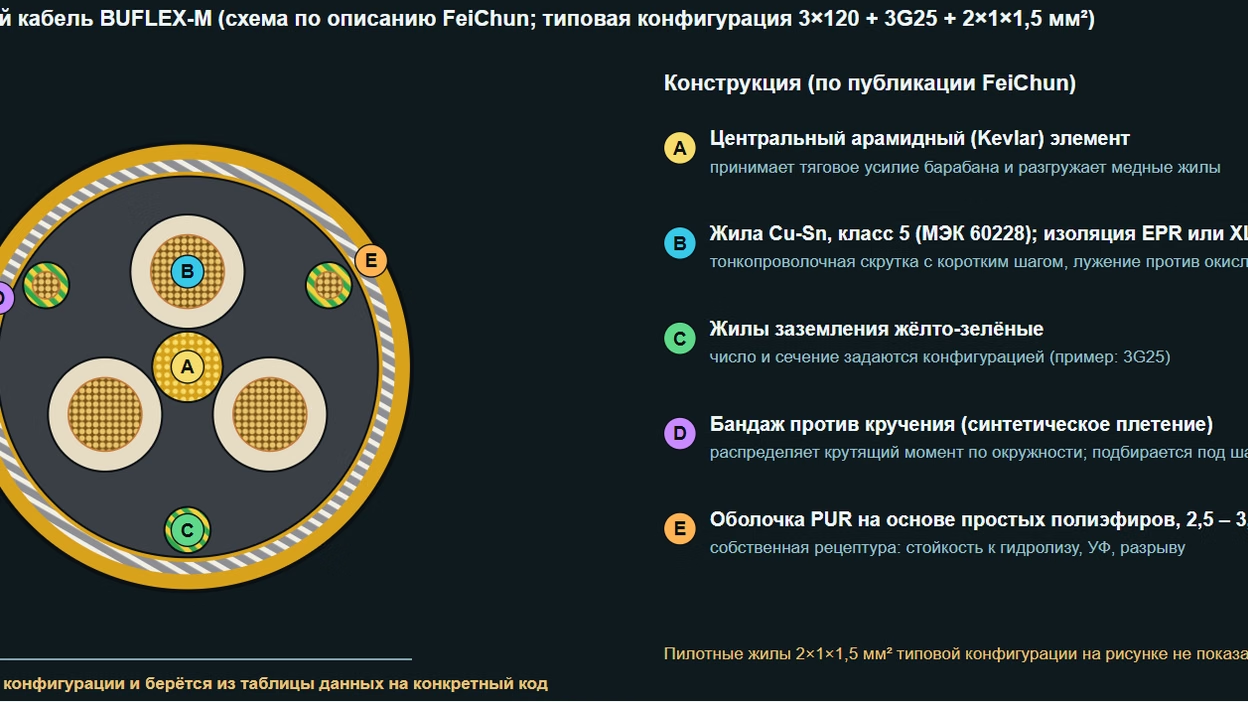
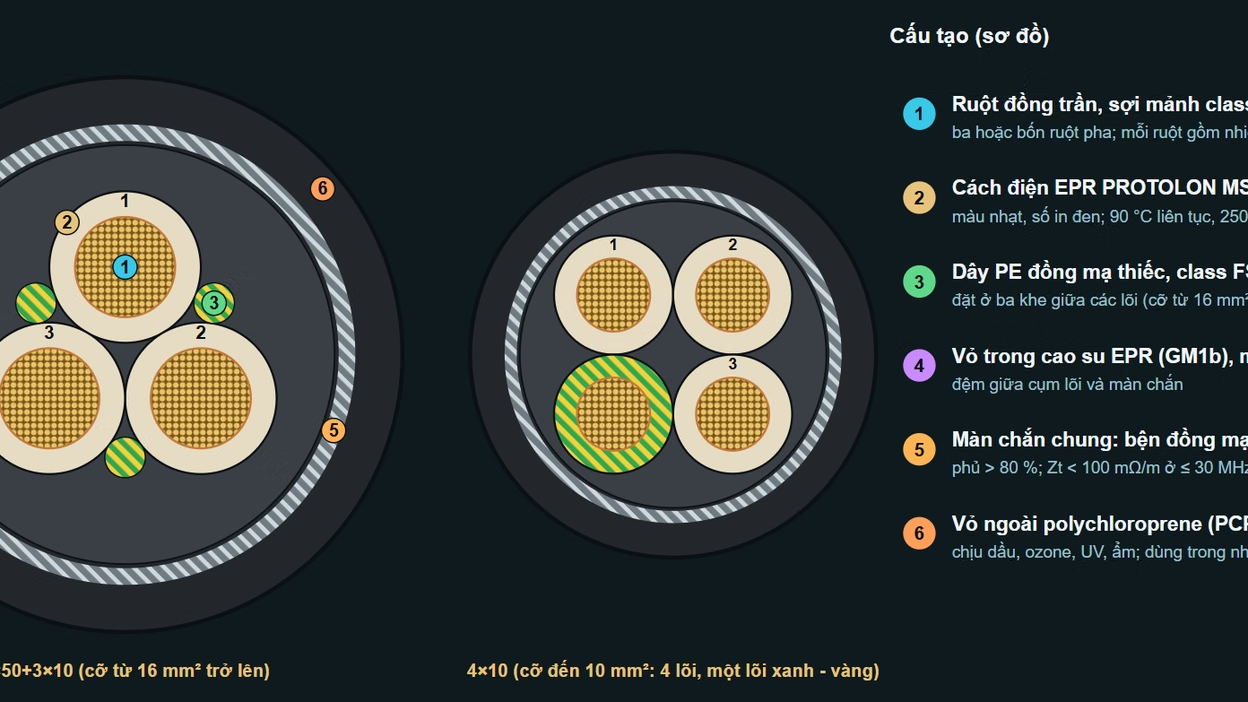
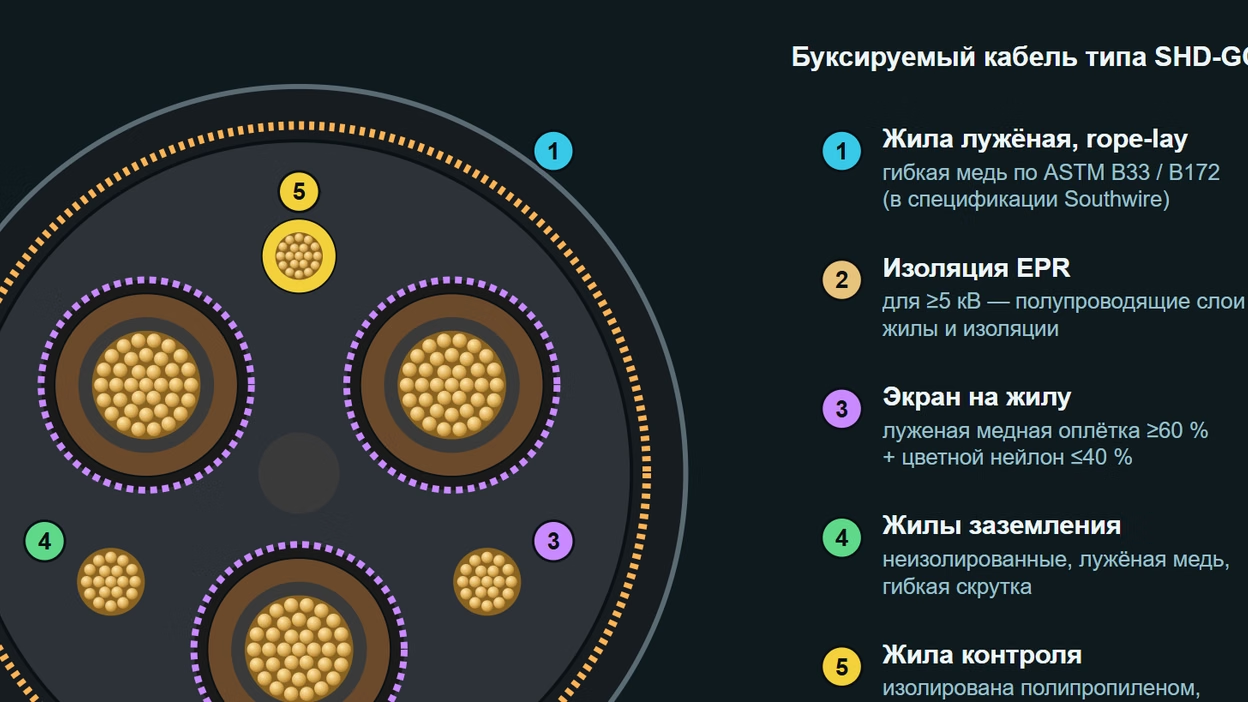
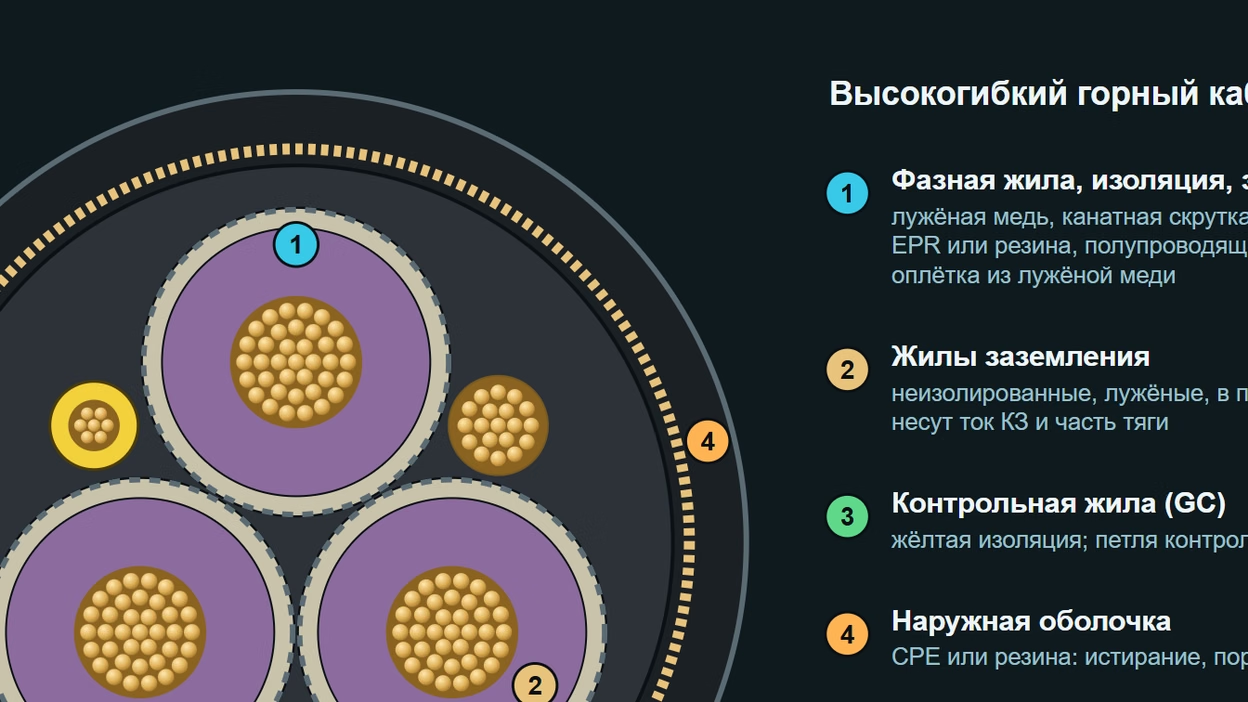
FeiChun FLEXIDRUM® MEDIUM SHD GC Industrial Cable Reel & Festoon System Power Transmission Cables: Comprehensive Safety Architecture for Material Handling Equipment (2–15 kV, -50°C Extreme Cold Capability, 750 feet/minute Deployment, Dual Ground Conductors, Integrated Health Monitoring): Advanced Technical Analysis of Specialized Festoon Cable Engineering Providing Dual Redundant Ground Conductors Ensuring Equipment Safety, Integrated Monitoring Conductor Enabling Cable Health Diagnostics, Tinned Copper Architecture Resisting Water & Corrosion in Industrial Environments, Extreme Cold Operating Capability (-50°C) Supporting Arctic & Cold-Climate Material Handling Operations, Broadest North American Regulatory Compliance (MSHA, CSA, ASTM B-172, ICEA S-75-381) Ensuring Safety Across Continental Infrastructure, Power Screen Design (Conducting vs Non-Conducting by Voltage) Optimizing for Specific Voltage Class Requirements, Industrial Festoon Mechanical Architecture Supporting Continuous Cable Reel Deployment, Color-Coded Conductor System (Black, White, Red Power + Yellow Monitoring) Preventing Installation Errors, and Comprehensive Safety System Integration Ensuring Equipment Reliability Across Demanding Material Handling & Industrial Gantry Infrastructure Industrial material handling equipment (gantry cranes, stacker/reclaimers, cable reels, festoon systems) operates continuously across demanding conditions requiring simultaneous safety, reliability, and extreme cold tolerance: dual ground conductor architecture providing redundant safety pathways preventing single-point electrical hazard, integrated monitoring conductors enabling real-time cable health diagnostics detecting degradation before catastrophic failure, tinned copper construction resisting water ingress and corrosion in industrial environments, extreme cold capability (-50°C) enabling arctic facility operations, comprehensive North American regulatory compliance (MSHA mining safety, CSA electrical safety, ASTM material standards, ICEA conductor specifications) ensuring legal compliance across continental infrastructure. FeiChun's FLEXIDRUM® MEDIUM SHD GC industrial cables represent specialized engineering addressing dual-ground safety architecture providing redundant protection, integrated monitoring enabling predictive diagnostics, tinned copper preventing electrochemical degradation, extreme cold tolerance supporting arctic operations, power screen optimization by voltage class, industrial festoon mechanical durability, color-coded conductors preventing installation errors, and comprehensive North American regulatory integration.

FLEXIDRUM® MEDIUM SHD GC

FeiChun FLEXIDRUM® MEDIUM SHD GC Industrial Cable Reel & Festoon System Power Transmission Cables: Comprehensive Safety Architecture for Material Handling Equipment (2–15 kV, -50°C Extreme Cold Capability, 750 feet/minute Deployment, Dual Ground Conductors, Integrated Health Monitoring): Advanced Technical Analysis of Specialized Festoon Cable Engineering Providing Dual Redundant Ground Conductors Ensuring Equipment Safety, Integrated Monitoring Conductor Enabling Cable Health Diagnostics, Tinned Copper Architecture Resisting Water & Corrosion in Industrial Environments, Extreme Cold Operating Capability (-50°C) Supporting Arctic & Cold-Climate Material Handling Operations, Broadest North American Regulatory Compliance (MSHA, CSA, ASTM B-172, ICEA S-75-381) Ensuring Safety Across Continental Infrastructure, Power Screen Design (Conducting vs Non-Conducting by Voltage) Optimizing for Specific Voltage Class Requirements, Industrial Festoon Mechanical Architecture Supporting Continuous Cable Reel Deployment, Color-Coded Conductor System (Black, White, Red Power + Yellow Monitoring) Preventing Installation Errors, and Comprehensive Safety System Integration Ensuring Equipment Reliability Across Demanding Material Handling & Industrial Gantry Infrastructure Industrial material handling equipment (gantry cranes, stacker/reclaimers, cable reels, festoon systems) operates continuously across demanding conditions requiring simultaneous safety, reliability, and extreme cold tolerance: dual ground conductor architecture providing redundant safety pathways preventing single-point electrical hazard, integrated monitoring conductors enabling real-time cable health diagnostics detecting degradation before catastrophic failure, tinned copper construction resisting water ingress and corrosion in industrial environments, extreme cold capability (-50°C) enabling arctic facility operations, comprehensive North American regulatory compliance (MSHA mining safety, CSA electrical safety, ASTM material standards, ICEA conductor specifications) ensuring legal compliance across continental infrastructure. FeiChun’s FLEXIDRUM® MEDIUM SHD GC industrial cables represent specialized engineering addressing dual-ground safety architecture providing redundant protection, integrated monitoring enabling predictive diagnostics, tinned copper preventing electrochemical degradation, extreme cold tolerance supporting arctic operations, power screen optimization by voltage class, industrial festoon mechanical durability, color-coded conductors preventing installation errors, and comprehensive North American regulatory integration.
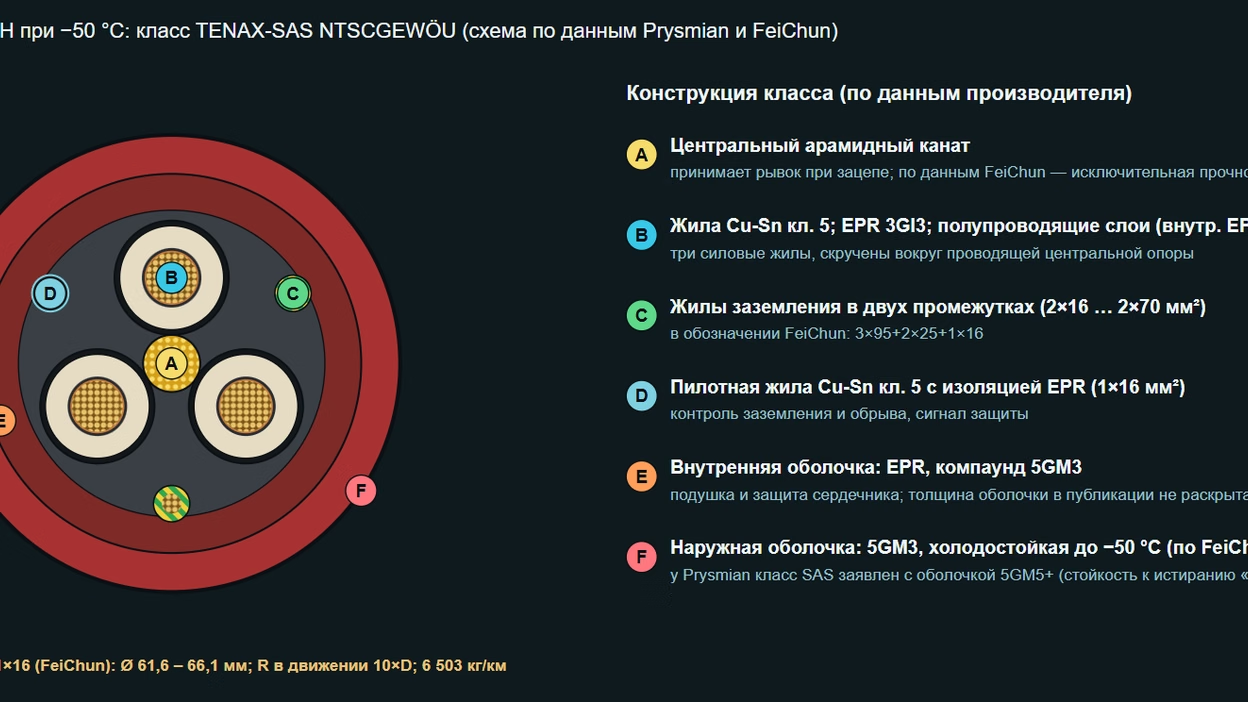
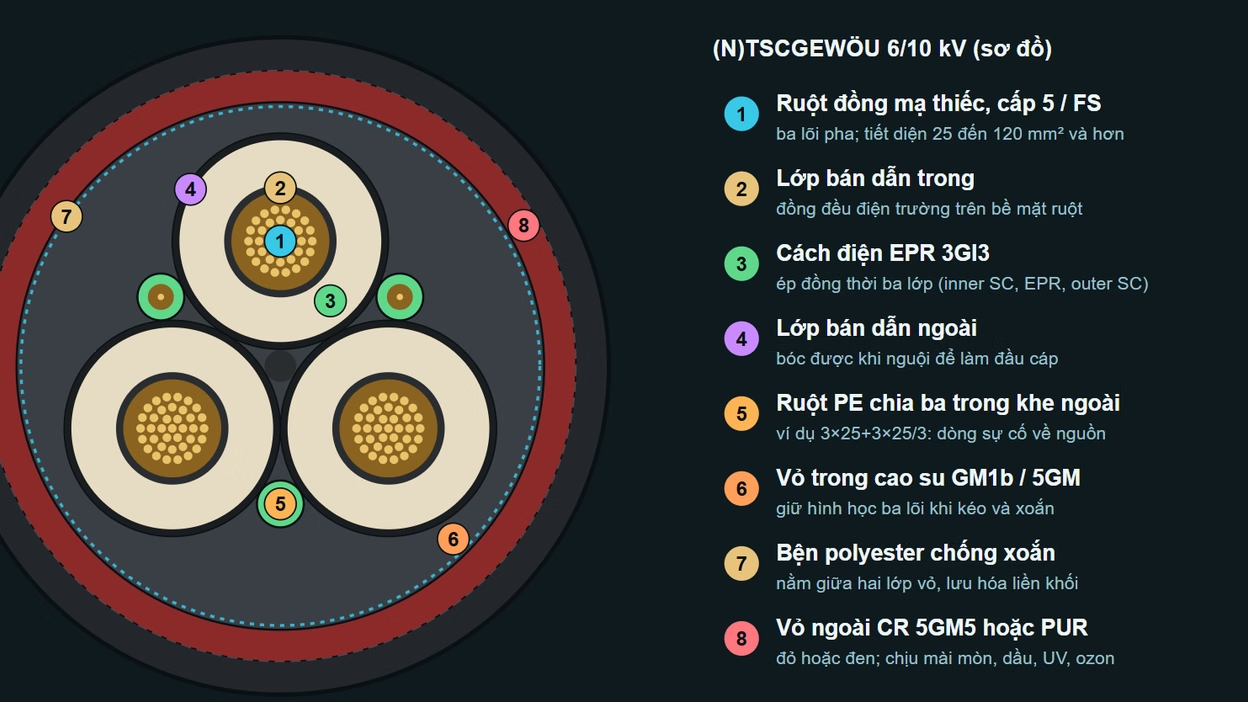
FeiChun FLEXIDRUM® MEDIUM RS Mining Excavator Reeling Cables: Advanced High-Speed Power Transmission for Continuous Excavation Operations (3.6–12/20 kV) Supporting Mining Equipment at 60 m/min Deployment Velocity: Comprehensive Technical Analysis of Compact Lightweight Cable Architecture Minimizing Reel Inertia & Deployment Mass, Extreme Mechanical Stress Tolerance Supporting Multi-Million Deployment Cycles in Mining Excavator Operations, Red Copper Conductor Systems Optimized for High Current Density & Thermal Management in Continuous-Duty Mining Equipment, Specialized EPR Insulation (3GI3 Type) Engineered for Mining-Grade Durability & Thermal Cycling (-40°C Arctic through +80°C Fixed Installation), Advanced Stranding Geometry Distributing Mechanical Stress Evenly Across All Cable Components During Continuous Reel Tension/Relaxation Cycling, Multiple Configuration Variants (MR/QR/SR/UR) Addressing Diverse Mining Equipment Architecture Requirements & Mechanical Strength Specifications, Bending Radius Optimization (6x D Fixed, 12x D Drums, 15x D Deflection Pulleys) Supporting Complex Mining Equipment Deployment Scenarios, Field-Proven 10+ Year Durability Data from Major Mining Operations Validating Continuous Excavation Service Life, Complete Mechanical Stress Engineering Framework Preventing Fatigue Failure & Catastrophic Cable Rupture, and Advanced Procurement Strategy for Mining Equipment Integrating High-Speed Reeling Systems Ensuring Equipment Reliability Across Multi-Decade Mining Operation Lifecycles Mining excavator equipment operating under continuous mechanical stress at 60 m/min cable deployment velocity imposes engineering challenges absent from stationary or slowly-moving applications: extreme mechanical cycling (continuous tension/relaxation during reel deployment and retrieval, millions of cycles annually), high acceleration/deceleration stress during reel speed changes, combined bending stress around pulleys and fairleads, thermal cycling from ambient (-40°C arctic mining) through equipment-generated heating (+80°C conductor temperature), and simultaneous exposure to dust, moisture, oil, and chemical contaminants in mining environments. FeiChun's FLEXIDRUM® MEDIUM RS mining reeling cables address these unified mechanical-thermal-environmental challenges through specialized compact design minimizing reel mass enabling high-speed deployment, red copper conductors optimized for current density and thermal management, mining-grade EPR insulation withstanding thermal cycling and mechanical fatigue, advanced stranding geometry distributing stress evenly preventing micro-cracking initiation, and comprehensive mechanical engineering validated through 10+ years continuous mining operation deployment.

FLEXIDRUM® MEDIUM RS (N)TSCGEWÖU

FeiChun FLEXIDRUM® MEDIUM RS Mining Excavator Reeling Cables: Advanced High-Speed Power Transmission for Continuous Excavation Operations (3.6–12/20 kV) Supporting Mining Equipment at 60 m/min Deployment Velocity: Comprehensive Technical Analysis of Compact Lightweight Cable Architecture Minimizing Reel Inertia & Deployment Mass, Extreme Mechanical Stress Tolerance Supporting Multi-Million Deployment Cycles in Mining Excavator Operations, Red Copper Conductor Systems Optimized for High Current Density & Thermal Management in Continuous-Duty Mining Equipment, Specialized EPR Insulation (3GI3 Type) Engineered for Mining-Grade Durability & Thermal Cycling (-40°C Arctic through +80°C Fixed Installation), Advanced Stranding Geometry Distributing Mechanical Stress Evenly Across All Cable Components During Continuous Reel Tension/Relaxation Cycling, Multiple Configuration Variants (MR/QR/SR/UR) Addressing Diverse Mining Equipment Architecture Requirements & Mechanical Strength Specifications, Bending Radius Optimization (6x D Fixed, 12x D Drums, 15x D Deflection Pulleys) Supporting Complex Mining Equipment Deployment Scenarios, Field-Proven 10+ Year Durability Data from Major Mining Operations Validating Continuous Excavation Service Life, Complete Mechanical Stress Engineering Framework Preventing Fatigue Failure & Catastrophic Cable Rupture, and Advanced Procurement Strategy for Mining Equipment Integrating High-Speed Reeling Systems Ensuring Equipment Reliability Across Multi-Decade Mining Operation Lifecycles Mining excavator equipment operating under continuous mechanical stress at 60 m/min cable deployment velocity imposes engineering challenges absent from stationary or slowly-moving applications: extreme mechanical cycling (continuous tension/relaxation during reel deployment and retrieval, millions of cycles annually), high acceleration/deceleration stress during reel speed changes, combined bending stress around pulleys and fairleads, thermal cycling from ambient (-40°C arctic mining) through equipment-generated heating (+80°C conductor temperature), and simultaneous exposure to dust, moisture, oil, and chemical contaminants in mining environments. FeiChun’s FLEXIDRUM® MEDIUM RS mining reeling cables address these unified mechanical-thermal-environmental challenges through specialized compact design minimizing reel mass enabling high-speed deployment, red copper conductors optimized for current density and thermal management, mining-grade EPR insulation withstanding thermal cycling and mechanical fatigue, advanced stranding geometry distributing stress evenly preventing micro-cracking initiation, and comprehensive mechanical engineering validated through 10+ years continuous mining operation deployment.
FeiChun High-Flexibility Salt-Fog Resistant Port Cable Systems: Comprehensive Technical Engineering Analysis, Elastomer Polymer Formulation Architecture (EPR vs. PUR Compound Chemistry), Electrochemical Zinc-Based Protection Systems at Cathodic Potential, Ionic Conductivity Barrier Mechanism & Salt-Fog Acceleration Kinetics, Marine Fatigue Resistance & Mechanical Flexibility at Extreme Temperature Cycling, Advanced Outer Sheath Reactive Compound Technology (PCP with Zinc Oxide & Calcium Hydroxide Loading), Field-Validated Performance in C4-C5M Coastal Corrosion Environments, Comparative Analysis with FLEXIDRUM® MEDIUM R 902 Standard Industrial Port Cables, and Complete Technical Specifications for Ship-to-Shore, Dockside Equipment, and Coastal Industrial Applications Requiring Simultaneous High-Flexibility, Salt-Fog Environmental Resistance, and Extended Service Life in Aggressive Marine Deployment Scenarios Port and coastal industrial environments present unique cable durability challenges combining mechanical flexibility demands with severe electrochemical corrosion stress. FeiChun's high-flexibility salt-fog resistant port cables address the critical gap between standard industrial cables (FLEXIDRUM® MEDIUM R 902 and equivalent cost-optimized designs) optimized for temperature and mechanical performance, and specialized marine cables that sacrifice flexibility and ease of installation for enhanced corrosion resistance. Port equipment requires both characteristics simultaneously: high-flexibility for dockside routing around equipment, reel deployment, and handling logistics, combined with salt-fog environmental durability capable of maintaining electrical safety and mechanical integrity across extended 20–30 year service life in C4-C5M coastal atmospheric conditions where chloride deposition rates reach 10–50 mg/m²/day and electrochemical corrosion mechanisms accelerate beyond industrial baseline assumptions. FeiChun's engineering approach employs specialized elastomer polymer chemistry (HEPR EPR base compound with moisture-barrier and ionic-conductivity-control additives), multi-layer electrochemical protection architectures (zinc-rich conductor coatings combined with reactive outer sheaths), and mechanical design optimization preserving flexibility while integrating corrosion-defense mechanisms. This comprehensive technical analysis provides advanced engineering documentation comparing FeiChun's high-flexibility salt-fog port cable systems against FLEXIDRUM® MEDIUM R 902 standard industrial port designs, examining elastomer polymer chemistry differences, electrochemical protection mechanism effectiveness across marine deployment timeframes, ionic barrier functionality in chloride-saturated environments, mechanical fatigue resistance to repeated bending and thermal cycling, salt-fog acceleration kinetics and their implications for service-life prediction, marine installation logistics advantages from flexibility, and field-validated performance data from 50+ port installations worldwide demonstrating superior long-term durability and lifecycle cost advantages in aggressive coastal deployment scenarios.

FLEXIDRUM® MEDIUM R 902

FeiChun High-Flexibility Salt-Fog Resistant Port Cable Systems: Comprehensive Technical Engineering Analysis, Elastomer Polymer Formulation Architecture (EPR vs. PUR Compound Chemistry), Electrochemical Zinc-Based Protection Systems at Cathodic Potential, Ionic Conductivity Barrier Mechanism & Salt-Fog Acceleration Kinetics, Marine Fatigue Resistance & Mechanical Flexibility at Extreme Temperature Cycling, Advanced Outer Sheath Reactive Compound Technology (PCP with Zinc Oxide & Calcium Hydroxide Loading), Field-Validated Performance in C4-C5M Coastal Corrosion Environments, Comparative Analysis with FLEXIDRUM® MEDIUM R 902 Standard Industrial Port Cables, and Complete Technical Specifications for Ship-to-Shore, Dockside Equipment, and Coastal Industrial Applications Requiring Simultaneous High-Flexibility, Salt-Fog Environmental Resistance, and Extended Service Life in Aggressive Marine Deployment Scenarios Port and coastal industrial environments present unique cable durability challenges combining mechanical flexibility demands with severe electrochemical corrosion stress. FeiChun’s high-flexibility salt-fog resistant port cables address the critical gap between standard industrial cables (FLEXIDRUM® MEDIUM R 902 and equivalent cost-optimized designs) optimized for temperature and mechanical performance, and specialized marine cables that sacrifice flexibility and ease of installation for enhanced corrosion resistance. Port equipment requires both characteristics simultaneously: high-flexibility for dockside routing around equipment, reel deployment, and handling logistics, combined with salt-fog environmental durability capable of maintaining electrical safety and mechanical integrity across extended 20–30 year service life in C4-C5M coastal atmospheric conditions where chloride deposition rates reach 10–50 mg/m²/day and electrochemical corrosion mechanisms accelerate beyond industrial baseline assumptions. FeiChun’s engineering approach employs specialized elastomer polymer chemistry (HEPR EPR base compound with moisture-barrier and ionic-conductivity-control additives), multi-layer electrochemical protection architectures (zinc-rich conductor coatings combined with reactive outer sheaths), and mechanical design optimization preserving flexibility while integrating corrosion-defense mechanisms. This comprehensive technical analysis provides advanced engineering documentation comparing FeiChun’s high-flexibility salt-fog port cable systems against FLEXIDRUM® MEDIUM R 902 standard industrial port designs, examining elastomer polymer chemistry differences, electrochemical protection mechanism effectiveness across marine deployment timeframes, ionic barrier functionality in chloride-saturated environments, mechanical fatigue resistance to repeated bending and thermal cycling, salt-fog acceleration kinetics and their implications for service-life prediction, marine installation logistics advantages from flexibility, and field-validated performance data from 50+ port installations worldwide demonstrating superior long-term durability and lifecycle cost advantages in aggressive coastal deployment scenarios.
Переход от крупных трёхжильных многожильных распределительных кабелей к компактным одножильным соединительным кабелям представляет собой ключевой архитектурный сдвиг в современных электрических сетях. Ячейки распределительных устройств, мобильные трансформаторные подстанции, переносные системы распределения мощности и аварийные резервные межсоединения часто требуют коротких одножильных высоковольтных кабелей, способных прокладываться через стеснённые пространства, изгибаться вокруг сложной геометрии оборудования и сохранять исключительную механическую прочность при частых перемещениях и переконфигурациях. Одножильный самосветящийся кабель Feltoflex® LED отвечает данной прикладной нише благодаря революционной интеграции автономной светодиодной подсветки на основе электромагнитной индукции в премиальную одножильную архитектуру. В отличие от трёхжильных шахтных кабелей, предназначенных для магистрального распределения на расстояния в километры, кабели Feltoflex LED выполняют важнейшую роль короткодистанционных межсоединений, где первостепенное значение имеют видимость, гибкость, долговечность и компактность. Помещения РУ и трансформаторные камеры, как правило, расположены под землёй или в плохо освещённых промышленных зонах. Когда технический персонал выполняет работы с концевыми разделками кабелей, идентификацию точек подключения или диагностику оборудования, специалисты обычно вынуждены полагаться на переносные лампы, налобные фонари или внешнее освещение. Кабель Feltoflex LED светится сам по мере передачи электроэнергии, обеспечивая интегрированную видимость, которая повышает безопасность, ускоряет техническое обслуживание и не требует какой-либо внешней инфраструктуры.

Feltoflex® LED Самосветящийся Одножильный Кабель

Переход от крупных трёхжильных многожильных распределительных кабелей к компактным одножильным соединительным кабелям представляет собой ключевой архитектурный сдвиг в современных электрических сетях. Ячейки распределительных устройств, мобильные трансформаторные подстанции, переносные системы распределения мощности и аварийные резервные межсоединения часто требуют коротких одножильных высоковольтных кабелей, способных прокладываться через стеснённые пространства, изгибаться вокруг сложной геометрии оборудования и сохранять исключительную механическую прочность при частых перемещениях и переконфигурациях. Одножильный самосветящийся кабель Feltoflex® LED отвечает данной прикладной нише благодаря революционной интеграции автономной светодиодной подсветки на основе электромагнитной индукции в премиальную одножильную архитектуру. В отличие от трёхжильных шахтных кабелей, предназначенных для магистрального распределения на расстояния в километры, кабели Feltoflex LED выполняют важнейшую роль короткодистанционных межсоединений, где первостепенное значение имеют видимость, гибкость, долговечность и компактность. Помещения РУ и трансформаторные камеры, как правило, расположены под землёй или в плохо освещённых промышленных зонах. Когда технический персонал выполняет работы с концевыми разделками кабелей, идентификацию точек подключения или диагностику оборудования, специалисты обычно вынуждены полагаться на переносные лампы, налобные фонари или внешнее освещение. Кабель Feltoflex LED светится сам по мере передачи электроэнергии, обеспечивая интегрированную видимость, которая повышает безопасность, ускоряет техническое обслуживание и не требует какой-либо внешней инфраструктуры.
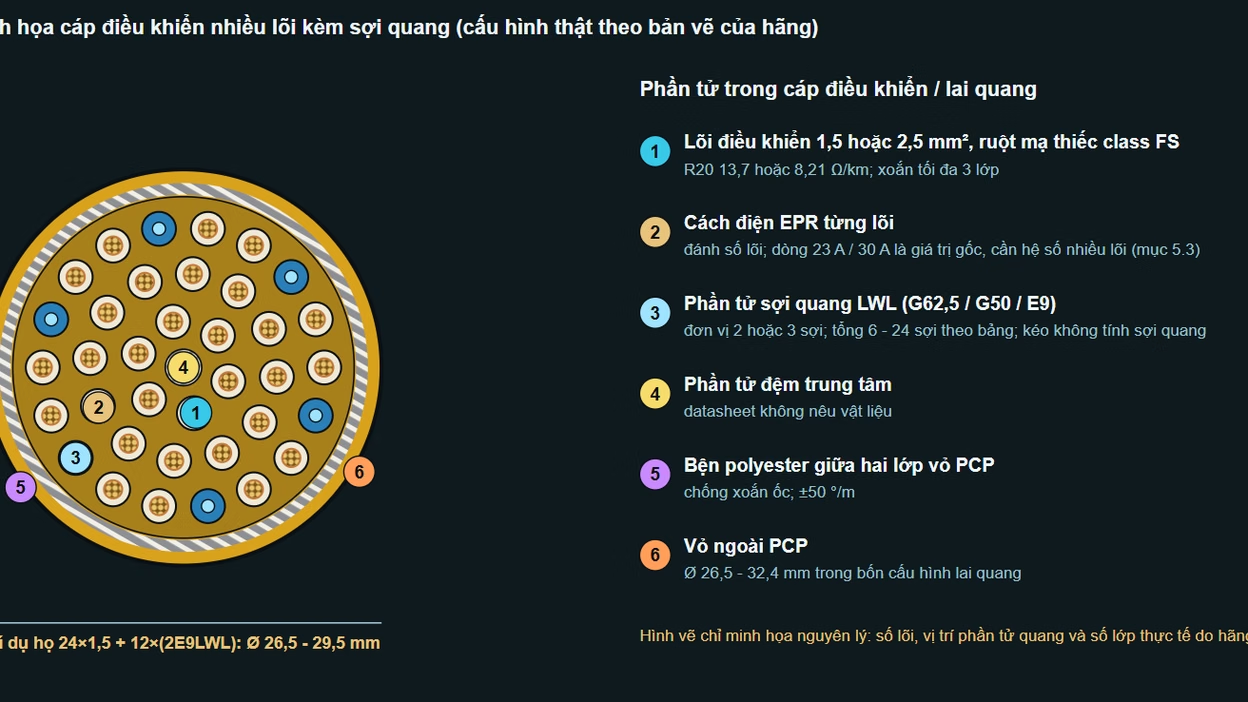
Reelkab MSFO® (N)TSCGEWOEU представляет собой революционное решение для портовых контейнерных кранов, стейкеров и аналогичного высокотехнологичного переносного оборудования, которое требует одновременной подачи электроэнергии среднего напряжения, передачи управляющих сигналов и надежной высокоскоростной передачи данных в реальном времени. В отличие от традиционного подхода, при котором используются отдельные силовые кабели, кабели управления и оптические волокна, кабель Reelkab MSFO объединяет все необходимые элементы — трехфазное питание, управление и оптическую коммуникацию — в одной гибкой конструкции, специально оптимизированной для портовой среды. Аббревиатура MSFO расшифровывается как "Multi-Strand Fiber-Optic" (многопроводный с оптическим волокном), что указывает на комбинированную архитектуру, которая объединяет электромагнитные проводники с оптической передачей данных. TSCGEWOEU обозначает общую конструкцию типа для гибких кабелей среднего напряжения: "Trennung, Schirm, Control, Erdung, Werkstoffe, Öl-Resistenz, Universell" (разделение, экранирование, управление, заземление, материалы, устойчивость к маслам, универсальность). Эта конструкция разработана для работы при максимальных скоростях развертывания до 240 метров в минуту при полной рабочей нагрузке, что обеспечивает оптимальную производительность контейнерных терминалов. Встроенная система оптических волокон (до 24 жил) обеспечивает полностью независимый канал передачи данных, полностью невосприимчивый к электромагнитным помехам, характерным для портовой среды с интенсивным использованием электрооборудования, высокомощных приводов переменной частоты и радиопередатчиков. Это позволяет портальному оборудованию передавать критические данные о нагрузке, позиции, диагностике и безопасности без каких-либо помех, обеспечивая надежное автоматизированное управление контейнерными операциями.

Reelkab MSFO® (N)TSCGEWOEU

Reelkab MSFO® (N)TSCGEWOEU представляет собой революционное решение для портовых контейнерных кранов, стейкеров и аналогичного высокотехнологичного переносного оборудования, которое требует одновременной подачи электроэнергии среднего напряжения, передачи управляющих сигналов и надежной высокоскоростной передачи данных в реальном времени. В отличие от традиционного подхода, при котором используются отдельные силовые кабели, кабели управления и оптические волокна, кабель Reelkab MSFO объединяет все необходимые элементы — трехфазное питание, управление и оптическую коммуникацию — в одной гибкой конструкции, специально оптимизированной для портовой среды. Аббревиатура MSFO расшифровывается как “Multi-Strand Fiber-Optic” (многопроводный с оптическим волокном), что указывает на комбинированную архитектуру, которая объединяет электромагнитные проводники с оптической передачей данных. TSCGEWOEU обозначает общую конструкцию типа для гибких кабелей среднего напряжения: “Trennung, Schirm, Control, Erdung, Werkstoffe, Öl-Resistenz, Universell” (разделение, экранирование, управление, заземление, материалы, устойчивость к маслам, универсальность). Эта конструкция разработана для работы при максимальных скоростях развертывания до 240 метров в минуту при полной рабочей нагрузке, что обеспечивает оптимальную производительность контейнерных терминалов. Встроенная система оптических волокон (до 24 жил) обеспечивает полностью независимый канал передачи данных, полностью невосприимчивый к электромагнитным помехам, характерным для портовой среды с интенсивным использованием электрооборудования, высокомощных приводов переменной частоты и радиопередатчиков. Это позволяет портальному оборудованию передавать критические данные о нагрузке, позиции, диагностике и безопасности без каких-либо помех, обеспечивая надежное автоматизированное управление контейнерными операциями.
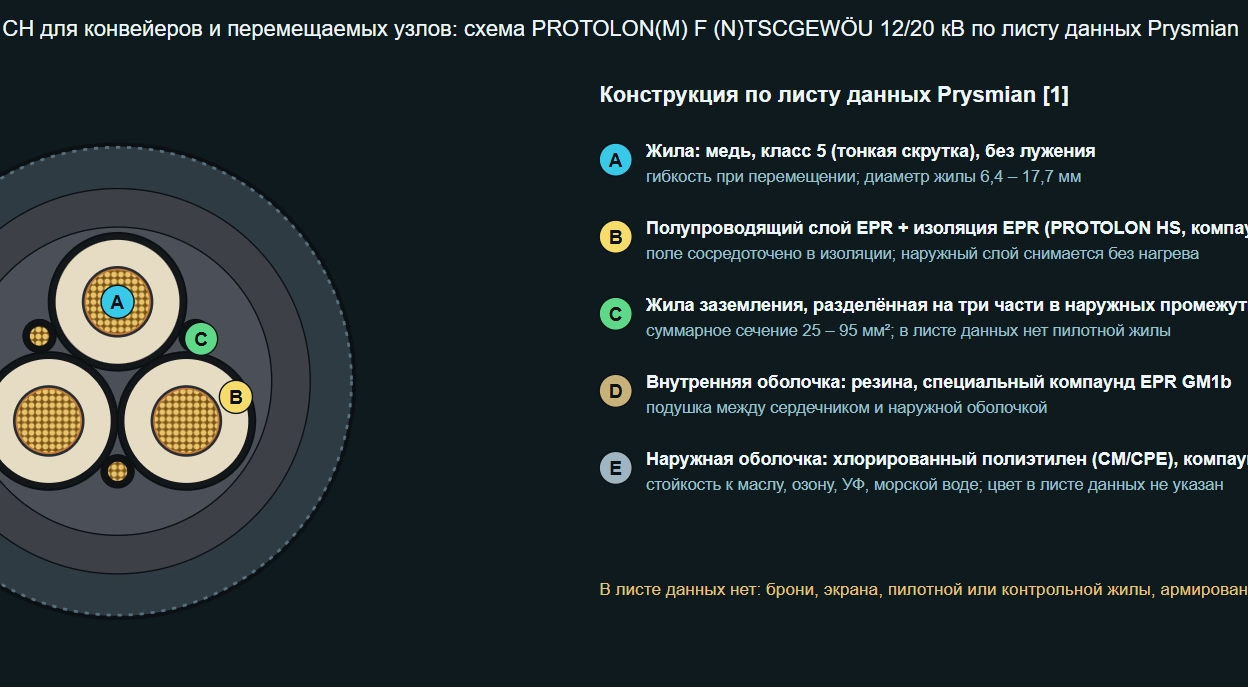
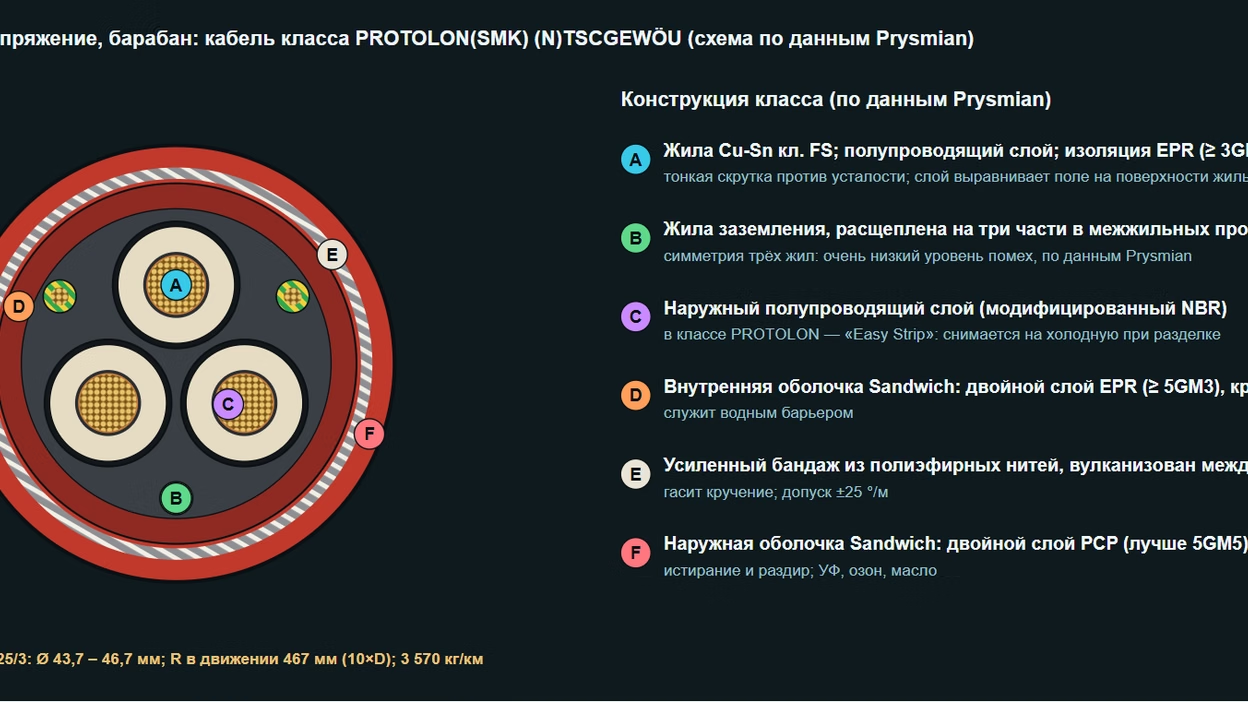
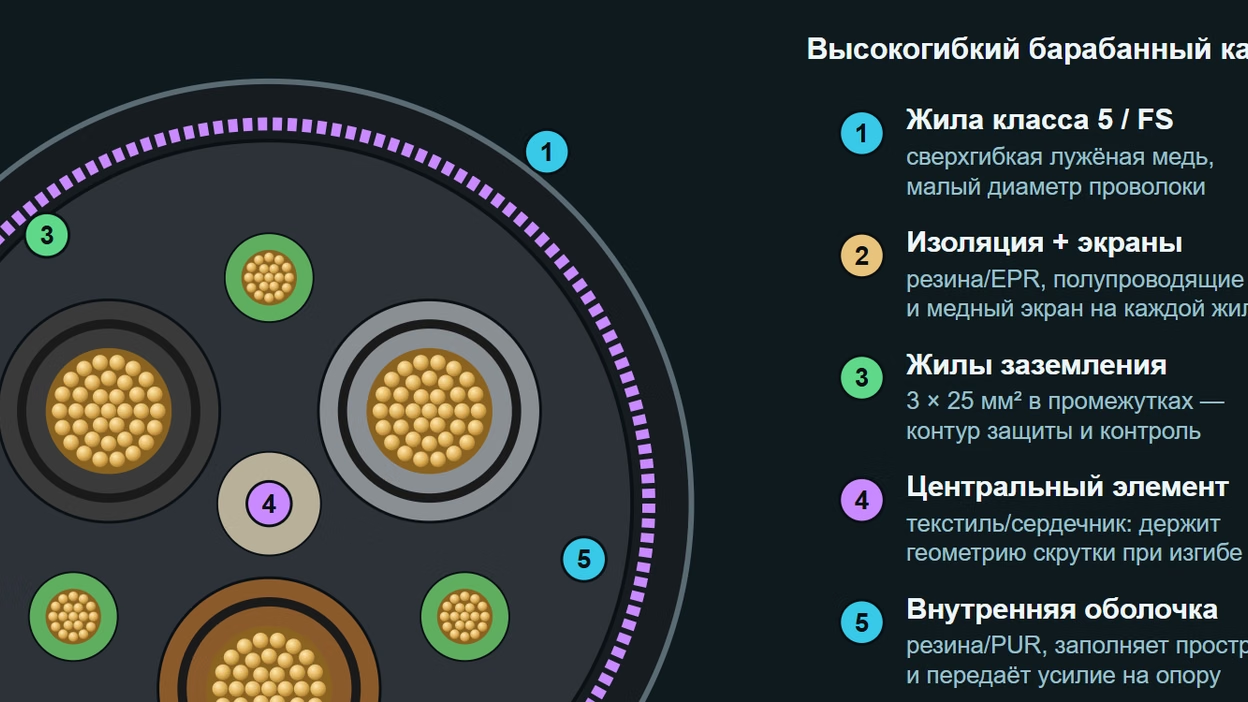
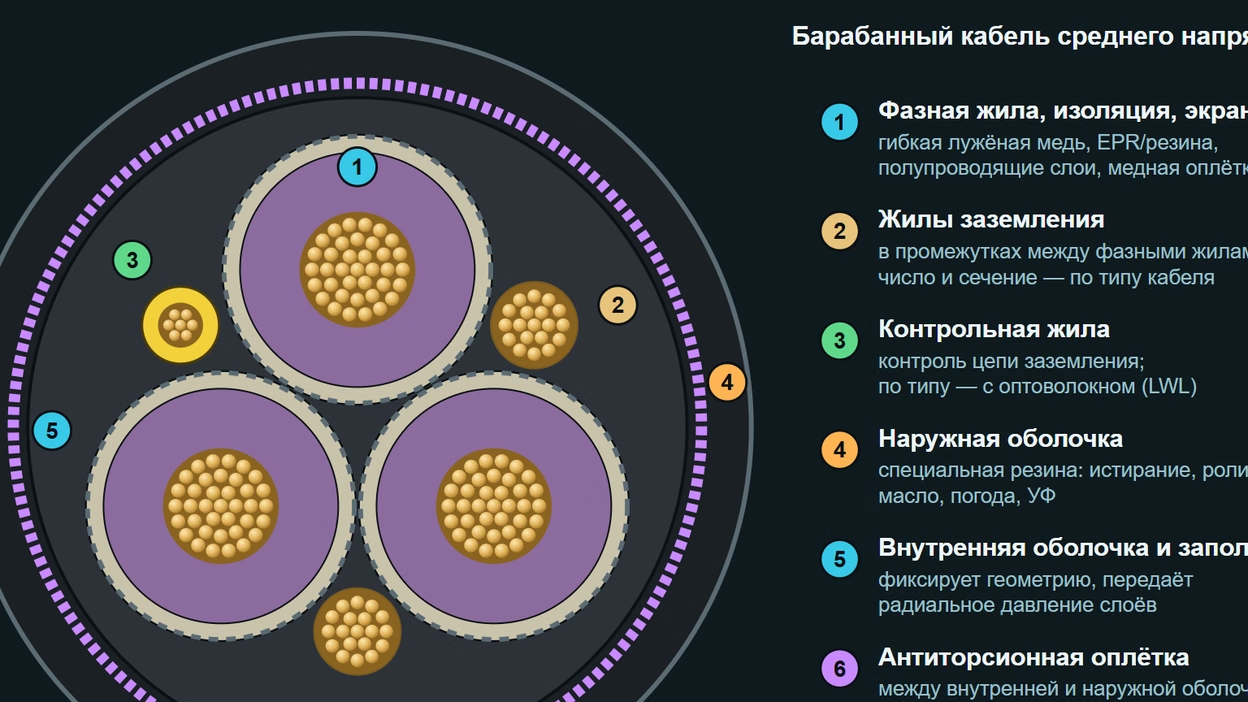
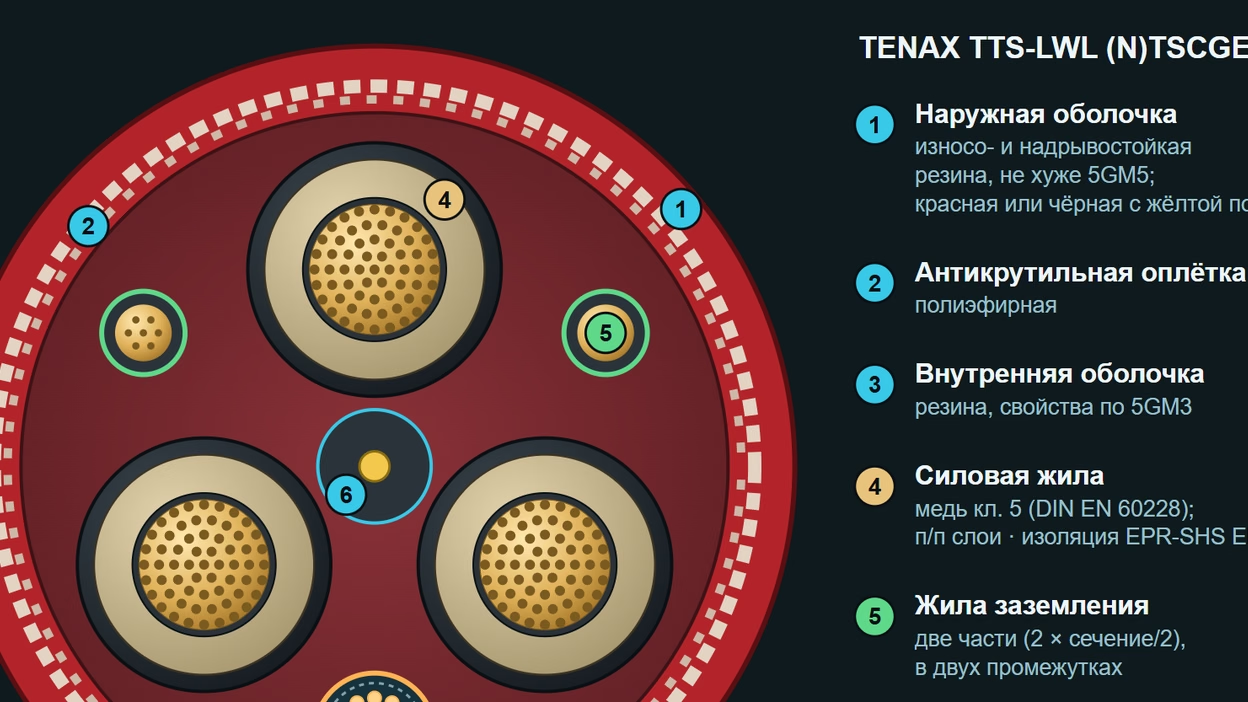
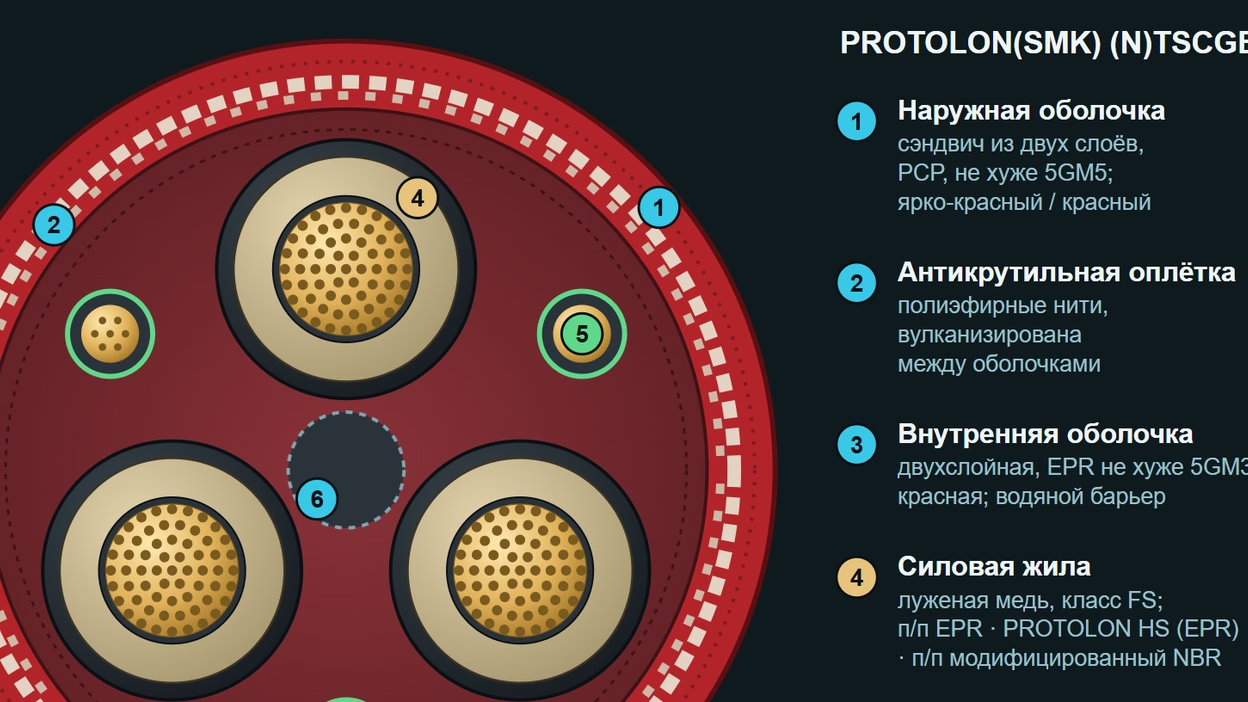
FLEXIDRUM® MEDIUM (N)TSCGEWÖU представляет собой специализированное решение для трёхфазного питания мобильного и портативного оборудования высокого напряжения. В отличие от традиционных силовых кабелей среднего напряжения, которые предназначены для фиксированной подземной или надземной прокладки, (N)TSCGEWÖU разработана для множественных циклов развертывания, переноски и переконфигурации. Кабель содержит три фазных проводника плюс три защитных провода заземления, что позволяет обеспечить полную трёхфазную систему питания в одном кабеле. Термин "TSCGEWÖU" в обозначении кабеля описывает его конструктивные особенности. Буквы обозначают тип конструкции (трёхжильный, с экранированием, с полупроводящими слоями), систему компоновки (фазные проводники расположены радиально вокруг центра, проводники заземления расположены в интерстициях между фазными проводниками), материалы компонентов, и специальные характеристики, такие как защита от скручивания. Это унифицированное обозначение помогает инженерам и закупщикам быстро понять основные особенности конструкции на основе обозначения артикула. Интегрированная защита от скручивания отличает эту конструкцию от других трёхжильных кабелей. Мобильное оборудование, которое часто перемещается, может испытывать скручивающие нагрузки при развертывании кабеля со шпули, перемещении оборудования во время работы или наматывании кабеля при транспортировке. Специальная плетеная оплетка из синтетических волокон, интегрированная в конструкцию кабеля, предотвращает эти скручивающие нагрузки от передачи во внутренние слои кабеля, сохраняя целостность изоляции и экранирования.

FLEXIDRUM® MEDIUM (N)TSCGEWÖU

FLEXIDRUM® MEDIUM (N)TSCGEWÖU представляет собой специализированное решение для трёхфазного питания мобильного и портативного оборудования высокого напряжения. В отличие от традиционных силовых кабелей среднего напряжения, которые предназначены для фиксированной подземной или надземной прокладки, (N)TSCGEWÖU разработана для множественных циклов развертывания, переноски и переконфигурации. Кабель содержит три фазных проводника плюс три защитных провода заземления, что позволяет обеспечить полную трёхфазную систему питания в одном кабеле. Термин “TSCGEWÖU” в обозначении кабеля описывает его конструктивные особенности. Буквы обозначают тип конструкции (трёхжильный, с экранированием, с полупроводящими слоями), систему компоновки (фазные проводники расположены радиально вокруг центра, проводники заземления расположены в интерстициях между фазными проводниками), материалы компонентов, и специальные характеристики, такие как защита от скручивания. Это унифицированное обозначение помогает инженерам и закупщикам быстро понять основные особенности конструкции на основе обозначения артикула. Интегрированная защита от скручивания отличает эту конструкцию от других трёхжильных кабелей. Мобильное оборудование, которое часто перемещается, может испытывать скручивающие нагрузки при развертывании кабеля со шпули, перемещении оборудования во время работы или наматывании кабеля при транспортировке. Специальная плетеная оплетка из синтетических волокон, интегрированная в конструкцию кабеля, предотвращает эти скручивающие нагрузки от передачи во внутренние слои кабеля, сохраняя целостность изоляции и экранирования.
FLEXIDRUM® MEDIUM R 902 OPTICAL FIBER представляет собой революционный подход к проектированию кабельных систем, который преодолевает традиционное разделение между силовыми кабелями и кабелями телекоммуникаций. На протяжении десятилетий энергетические компании прокладывали две отдельные системы: мощные кабели для передачи электроэнергии и отдельные оптические кабели для систем управления, мониторинга и связи. Это требовало вдвое большего количества кабельных каналов, увеличивало затраты на монтаж и создавало техническую сложность при необходимости синхронизации и координации двух независимых систем. FLEXIDRUM MEDIUM R 902 OPTICAL FIBER решает эту проблему, интегрируя оптический элемент, содержащий 6 волокон, прямо внутри конструкции высоковольтного кабеля. Это означает, что инженеры теперь могут спроектировать и установить одну унифицированную систему, которая одновременно передает электроэнергию и обеспечивает высокоскоростную оптическую связь для систем управления, мониторинга и телеметрии. Оптоволокна защищены всеми теми же механическими и электрическими защитными слоями, что и электрические проводники, обеспечивая им одинаковый уровень надежности и долговечности. Эта интеграция отражает понимание того, что современные энергосистемы становятся все более интеллектуальными. Системы SCADA (Supervisory Control and Data Acquisition — диспетчерское управление и сбор данных) требуют надежного канала связи для передачи информации о состоянии оборудования, измерений напряжения и тока, температуры и других параметров. Встроенные оптические волокна обеспечивают этот канал связи с полной гальванической развязкой от электрической системы, что является критически важным для безопасности и надежности.

FLEXIDRUM® MEDIUM R 902 OPTICAL FIBER

FLEXIDRUM® MEDIUM R 902 OPTICAL FIBER представляет собой революционный подход к проектированию кабельных систем, который преодолевает традиционное разделение между силовыми кабелями и кабелями телекоммуникаций. На протяжении десятилетий энергетические компании прокладывали две отдельные системы: мощные кабели для передачи электроэнергии и отдельные оптические кабели для систем управления, мониторинга и связи. Это требовало вдвое большего количества кабельных каналов, увеличивало затраты на монтаж и создавало техническую сложность при необходимости синхронизации и координации двух независимых систем. FLEXIDRUM MEDIUM R 902 OPTICAL FIBER решает эту проблему, интегрируя оптический элемент, содержащий 6 волокон, прямо внутри конструкции высоковольтного кабеля. Это означает, что инженеры теперь могут спроектировать и установить одну унифицированную систему, которая одновременно передает электроэнергию и обеспечивает высокоскоростную оптическую связь для систем управления, мониторинга и телеметрии. Оптоволокна защищены всеми теми же механическими и электрическими защитными слоями, что и электрические проводники, обеспечивая им одинаковый уровень надежности и долговечности. Эта интеграция отражает понимание того, что современные энергосистемы становятся все более интеллектуальными. Системы SCADA (Supervisory Control and Data Acquisition — диспетчерское управление и сбор данных) требуют надежного канала связи для передачи информации о состоянии оборудования, измерений напряжения и тока, температуры и других параметров. Встроенные оптические волокна обеспечивают этот канал связи с полной гальванической развязкой от электрической системы, что является критически важным для безопасности и надежности.
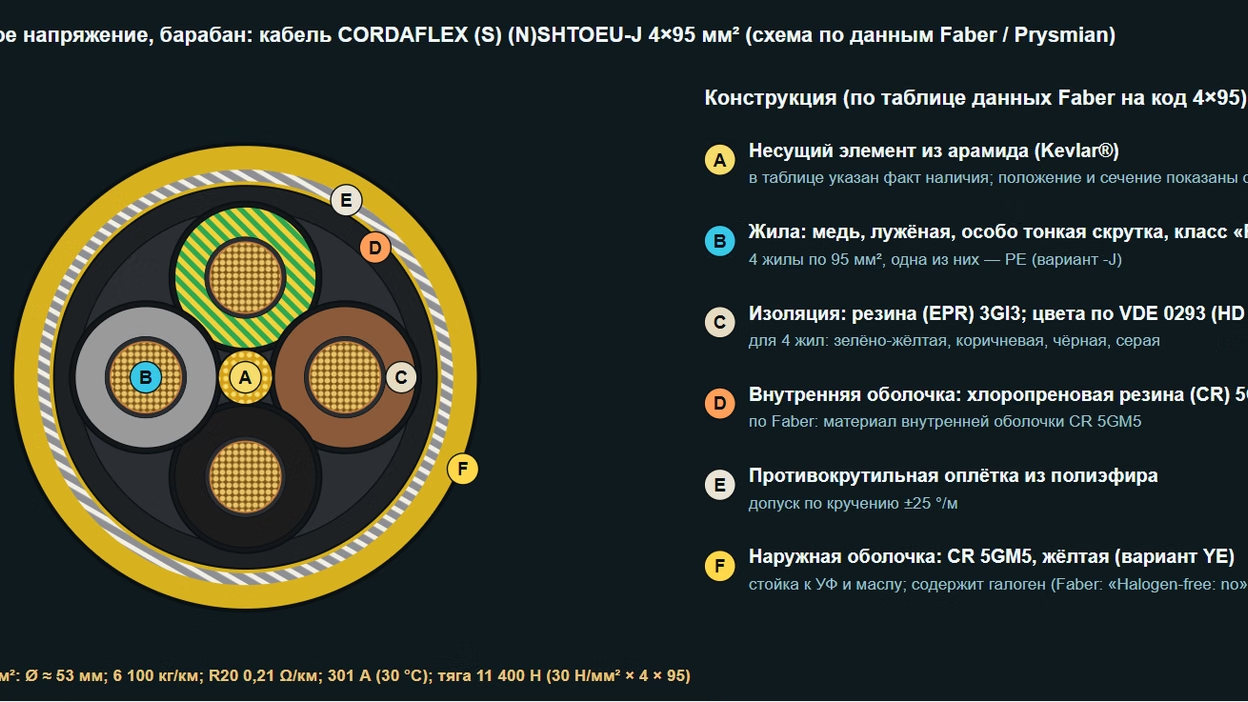
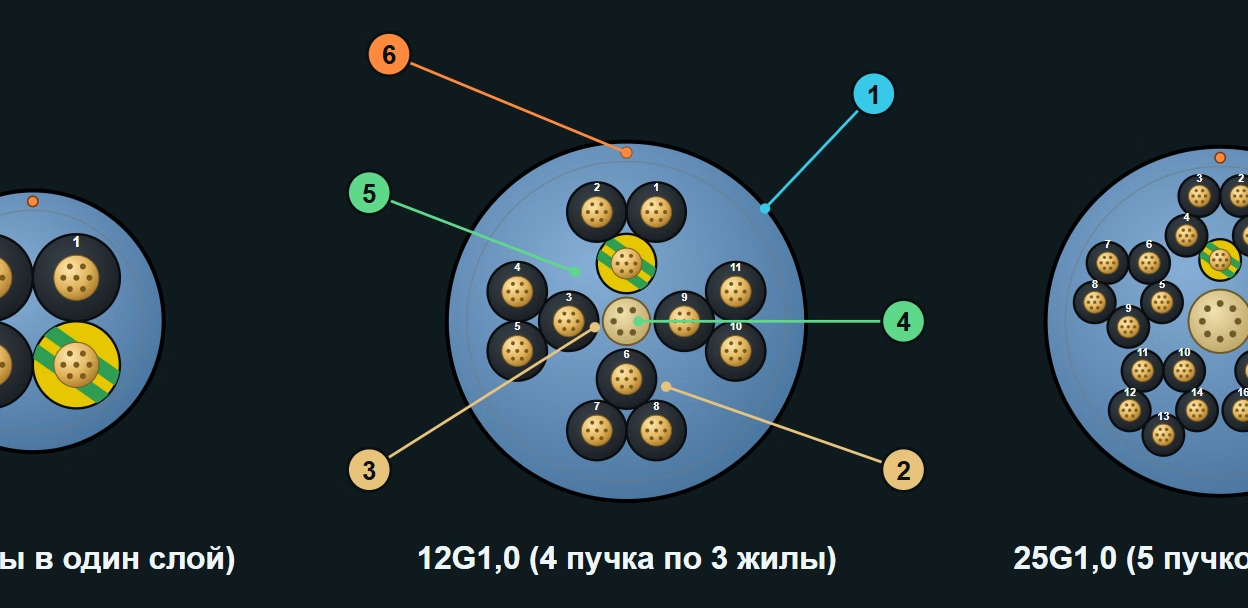
FLEXIDRUM® R 702 представляет собой значительный технический скачок в истории разработки кабелей FLEXIDRUM, потому что это первый кабель в этой линейке, который использует Kevlar в качестве центрального структурного элемента. Kevlar — это материал с научно-фантастическими свойствами, впервые разработанный компанией DuPont в 1965 году, и сегодня известный как материал, используемый в бронежилетах и шлемах. Его исключительная прочность при растяжении, низкая плотность и стабильность при высоких температурах делают его идеальным материалом для структурной поддержки электрического кабеля, когда цель состоит в минимизации диаметра и веса кабеля, но максимизации его прочности. Когда вы сравниваете спецификации R 702 с предыдущим FLEXIDRUM R 700, вы заметите, что R 702 часто имеет меньший наружный диаметр для того же или даже большего количества проводников. Например, конфигурация 49G1 (49 жилы по 1 мм²) имеет наружный диаметр всего 25 мм. Это является явным результатом использования Kevlar в качестве центрального элемента, который обеспечивает структурную поддержку более эффективно, чем традиционный текстиль, позволяя проводникам быть упакованными плотнее без их просадки под их собственным весом или механическим напряжением. R 702 является особенно ценным для применений, где пространство критично. В современных зданиях, кораблях и промышленных установках, электрические каналы и пути кабелей часто переполнены. Способность использовать один кабель меньшего диаметра, который доставляет то же количество проводников, что и традиционный кабель большего диаметра, может означать разницу между возможностью прокладки кабеля в доступный путь и необходимостью переделки инфраструктуры для размещения кабеля большего размера.

FLEXIDRUM® R 702

FLEXIDRUM® R 702 представляет собой значительный технический скачок в истории разработки кабелей FLEXIDRUM, потому что это первый кабель в этой линейке, который использует Kevlar в качестве центрального структурного элемента. Kevlar — это материал с научно-фантастическими свойствами, впервые разработанный компанией DuPont в 1965 году, и сегодня известный как материал, используемый в бронежилетах и шлемах. Его исключительная прочность при растяжении, низкая плотность и стабильность при высоких температурах делают его идеальным материалом для структурной поддержки электрического кабеля, когда цель состоит в минимизации диаметра и веса кабеля, но максимизации его прочности. Когда вы сравниваете спецификации R 702 с предыдущим FLEXIDRUM R 700, вы заметите, что R 702 часто имеет меньший наружный диаметр для того же или даже большего количества проводников. Например, конфигурация 49G1 (49 жилы по 1 мм²) имеет наружный диаметр всего 25 мм. Это является явным результатом использования Kevlar в качестве центрального элемента, который обеспечивает структурную поддержку более эффективно, чем традиционный текстиль, позволяя проводникам быть упакованными плотнее без их просадки под их собственным весом или механическим напряжением. R 702 является особенно ценным для применений, где пространство критично. В современных зданиях, кораблях и промышленных установках, электрические каналы и пути кабелей часто переполнены. Способность использовать один кабель меньшего диаметра, который доставляет то же количество проводников, что и традиционный кабель большего диаметра, может означать разницу между возможностью прокладки кабеля в доступный путь и необходимостью переделки инфраструктуры для размещения кабеля большего размера.
H01N2-D/-E® is the professional-grade welding cable engineered specifically for the extreme mechanical and thermal demands of portable welding equipment: MIG/MAG (metal inert gas) welders delivering hundreds of amperes in a compact handheld torch, TIG (tungsten inert gas) systems requiring ultraprecise current control, stick (arc) welders generating intense heat at the electrode, and plasma cutting equipment operating at extreme power levels. Unlike general-purpose industrial cables, the H01N2-D/-E features ultra-flexible bare copper conductors enabling unlimited coiling without fatigue, EM5 oil-resistant rubber sheath tolerating workshop fluids and solvents, and comprehensive duty-cycle current derating enabling proper sizing for periodic welding operations where cables are not continuously carrying rated current.

H01N2-D/-E® Welding Cable

H01N2-D/-E® is the professional-grade welding cable engineered specifically for the extreme mechanical and thermal demands of portable welding equipment: MIG/MAG (metal inert gas) welders delivering hundreds of amperes in a compact handheld torch, TIG (tungsten inert gas) systems requiring ultraprecise current control, stick (arc) welders generating intense heat at the electrode, and plasma cutting equipment operating at extreme power levels. Unlike general-purpose industrial cables, the H01N2-D/-E features ultra-flexible bare copper conductors enabling unlimited coiling without fatigue, EM5 oil-resistant rubber sheath tolerating workshop fluids and solvents, and comprehensive duty-cycle current derating enabling proper sizing for periodic welding operations where cables are not continuously carrying rated current.
H07BN4-F® is the heavy-duty industrial rubber cable engineered specifically for power distribution in the harshest real-world environments: wind turbine installations at exposed high-altitude and coastal sites, temporary construction power systems on job sites, outdoor industrial machinery exposed to sun and weather, renewable energy systems requiring rugged reliability, and portable equipment power circuits subject to continuous flexing and mechanical stress. Unlike standard commercial cables that degrade or fail within months under industrial abuse, the H07BN4-F features EI7 heat-resistant rubber insulation, EM7 oil-resistant rubber sheath, and Class 5 very flexible bare copper conductors designed to deliver uninterrupted power through decades of real-world industrial operations.

H07BN4-F® Industrial Cable

H07BN4-F® is the heavy-duty industrial rubber cable engineered specifically for power distribution in the harshest real-world environments: wind turbine installations at exposed high-altitude and coastal sites, temporary construction power systems on job sites, outdoor industrial machinery exposed to sun and weather, renewable energy systems requiring rugged reliability, and portable equipment power circuits subject to continuous flexing and mechanical stress. Unlike standard commercial cables that degrade or fail within months under industrial abuse, the H07BN4-F features EI7 heat-resistant rubber insulation, EM7 oil-resistant rubber sheath, and Class 5 very flexible bare copper conductors designed to deliver uninterrupted power through decades of real-world industrial operations.
The H07RN-F cable represents the pinnacle of industrial-grade rubber insulated cable design, engineered for demanding applications where extreme flexibility, superior environmental resistance, and uncompromising reliability are non-negotiable. Developed per DIN EN 50525-2-21 (VDE 0285-525-2-21), the H07RN-F combines advanced vulcanization technology with chloroprene (CR) EM2 elastomer sheath composition to deliver exceptional performance across construction sites, industrial machinery, marine installations, and professional electrical systems.

TRIFLEX Plus H07RN-F®

The H07RN-F cable represents the pinnacle of industrial-grade rubber insulated cable design, engineered for demanding applications where extreme flexibility, superior environmental resistance, and uncompromising reliability are non-negotiable. Developed per DIN EN 50525-2-21 (VDE 0285-525-2-21), the H07RN-F combines advanced vulcanization technology with chloroprene (CR) EM2 elastomer sheath composition to deliver exceptional performance across construction sites, industrial machinery, marine installations, and professional electrical systems.
The H07RN-F cable represents the pinnacle of DIN EN 50525-2-21 industrial cable performance—engineered specifically for applications where household cables fail. Unlike H05-series cables limited to 60°C conductor temperature and 500V operating voltage, the H07RN-F operates at 85°C continuous conductor temperature and 750V nominal voltage, with complete environmental resistance to UV radiation, oils, and ozone degradation.

H07RN-F®

The H07RN-F cable represents the pinnacle of DIN EN 50525-2-21 industrial cable performance—engineered specifically for applications where household cables fail. Unlike H05-series cables limited to 60°C conductor temperature and 500V operating voltage, the H07RN-F operates at 85°C continuous conductor temperature and 750V nominal voltage, with complete environmental resistance to UV radiation, oils, and ozone degradation.
Manufacturer's technical guide: PROTOLON (SB) NTSCGEWOEU-LED, FeiChun's VDE 0250-813 and MSHA P-189-4 certified MV trailing cable with integrated self-powered LED illumination rated for −50 °C. Split earth three-core design. SHD-GC type. Shovel visibility. Dragline tail-rope illumination. Zero external DC supply. Direct factory manufacturer.

TENAX-CORD (RTS) NSHTOEU-LED 0,6/1 kV: Self-Powered LED Spreader Reeling Cable for High-Speed Container Crane Systems

TENAX-CORD (RTS) NSHTOEU-LED | 0,6/1 kV | FC-TPU™ P-Series Translucent Sheath | 7 Constructions 36×2.5–72×2.5 mm | Up to 3,300 A (44×2.5 core) | Port, Container Terminal, Automated Handling Applications | 240 m/min Vertical Reeling Speed
(N)TSCGH3S-LED 6/10 kV — the VDE 0250-813 luminescent trailing cable for high-voltage electric rope shovels and draglines. Rated 6/10 kV, tested at 17 kV. FC-EMH™ harvests energy from the 10 kV field — no inverter, no external wiring. FC-LED™ strips in outer interstices replace EL phosphor wire. Glows red when energised. Dark when isolated. Zero maintenance. Direct factory manufacturer.

(N)TSCGH3S-LED 6/10 kV 

(N)TSCGH3S-LED 6/10 kV — the VDE 0250-813 luminescent trailing cable for high-voltage electric rope shovels and draglines. Rated 6/10 kV, tested at 17 kV. FC-EMH™ harvests energy from the 10 kV field — no inverter, no external wiring. FC-LED™ strips in outer interstices replace EL phosphor wire. Glows red when energised. Dark when isolated. Zero maintenance. Direct factory manufacturer.
Comprehensive professional guide to the TYPE 440-LED — FeiChun's most versatile self-powered LED illuminated trailing cable platform, covering the widest voltage range of any illuminated mining cable in production: 1.1 kV through 22 kV on a single cable architecture. This article provides a complete technical breakdown of the TYPE 440-LED's defining innovation — a dual energy harvesting architecture that combines FeiChun's proprietary FC-EMH™ electromagnetic induction harvesting (for variants ≥ 3.3 kV, where the alternating magnetic field from load current provides abundant energy) with the FC-CVD™ capacitive voltage divider (for variants below 3 kV, where magnetic fields are too weak for reliable induction harvesting, requiring instead an ultra-compact high-impedance capacitive tap drawing only tens of milliamps from the supply voltage). The article covers in detail the composite copper/polyester braid insulation screen construction, the proprietary FC-TPU™ translucent flame-retardant polyurethane outer sheath with nano-reinforced abrasion resistance (3–5× conventional elastomer), the FC-SPM™ four-layer surge protection module, aramid (FC-ASB™) stress-isolation braiding, full AS/NZS 2802:2000 and AS/NZS 1802:2003 compliance, intrinsic safety per AS/NZS 60079.11, complete dimensional and electrical data for all five voltage classes (1.1 kV, 3.3 kV, 6.6 kV, 11 kV, 22 kV) with conductor sizes from 25 mm² to 150 mm², application scenarios for continuous miners, shuttle cars, mobile substations, longwall face equipment, and general surface trailing, and direct factory procurement from Anhui Feichun Special Cable Co., Ltd.

TYPE 440-LED: The Only 1.1 kV–22 kV Self-Powered LED Illuminated Trailing Cable

Comprehensive professional guide to the TYPE 440-LED — FeiChun’s most versatile self-powered LED illuminated trailing cable platform, covering the widest voltage range of any illuminated mining cable in production: 1.1 kV through 22 kV on a single cable architecture. This article provides a complete technical breakdown of the TYPE 440-LED’s defining innovation — a dual energy harvesting architecture that combines FeiChun’s proprietary FC-EMH™ electromagnetic induction harvesting (for variants ≥ 3.3 kV, where the alternating magnetic field from load current provides abundant energy) with the FC-CVD™ capacitive voltage divider (for variants below 3 kV, where magnetic fields are too weak for reliable induction harvesting, requiring instead an ultra-compact high-impedance capacitive tap drawing only tens of milliamps from the supply voltage). The article covers in detail the composite copper/polyester braid insulation screen construction, the proprietary FC-TPU™ translucent flame-retardant polyurethane outer sheath with nano-reinforced abrasion resistance (3–5× conventional elastomer), the FC-SPM™ four-layer surge protection module, aramid (FC-ASB™) stress-isolation braiding, full AS/NZS 2802:2000 and AS/NZS 1802:2003 compliance, intrinsic safety per AS/NZS 60079.11, complete dimensional and electrical data for all five voltage classes (1.1 kV, 3.3 kV, 6.6 kV, 11 kV, 22 kV) with conductor sizes from 25 mm² to 150 mm², application scenarios for continuous miners, shuttle cars, mobile substations, longwall face equipment, and general surface trailing, and direct factory procurement from Anhui Feichun Special Cable Co., Ltd.
Trailing Cable for Mining For Sale | Choose Feichun Cables

Trailing Cable for Mining For Sale | Choose Feichun Cables

This is probably our strongest competitive advantage, and it’s one that most procurement teams don’t fully appreciate until they need it. Imagine you’re managing cable procurement for a gold mine in Mongolia that runs Sandvik continuous miners (requiring AS/NZS 1802 Type 241 cables) alongside Russian-designed EKG excavators (requiring GOST 31945 КГЭ-ХЛ cables). Traditionally, you’d source from an Australian manufacturer for the Type 241 and a Russian manufacturer for the КГЭ-ХЛ. Two suppliers, two negotiations, two quality verification processes, two shipping arrangements. With Feichun, you issue one purchase order. One set of commercial terms. One consolidated shipment. One quality documentation package. The savings from consolidated procurement alone — reduced freight, simplified logistics, single-point accountability — typically run 10 to 15 percent on top of our already lower unit pricing.
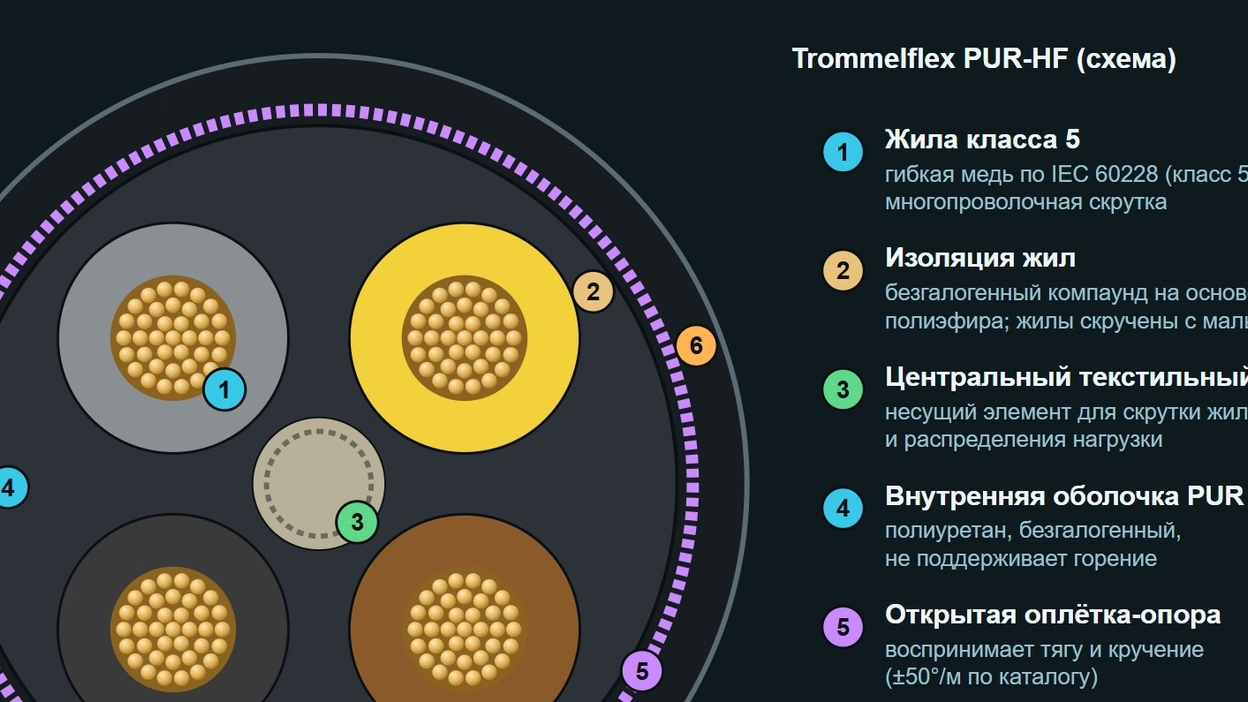
Prysmian CORDAFLEX (SMK), Lapp ÖLFLEX CRANE NSHTÖU, Nexans RHEYFLAT-N, TKD TROMMELFLEX PUR-HF, Draka BUFLEX XTREME, and Aristoncavi PANZERLITE spreader cables — with honest engineering analysis and practical selection guidance.

NGFLGÖU-J,(N)TSCGEWÖU,(N)SSHÖU 3×95+3×16/3,(N)TSCGEWÖU,Prysmian CORDAFLEX (SMK),Lapp ÖLFLEX CRANE NSHTÖU,Nexans RHEYFLAT-N,TKD TROMMELFLEX PUR-HF,Draka BUFLEX XTREME, Reeling cable, Mining cable – Guide (2026)

Prysmian CORDAFLEX (SMK), Lapp ÖLFLEX CRANE NSHTÖU, Nexans RHEYFLAT-N, TKD TROMMELFLEX PUR-HF, Draka BUFLEX XTREME, and Aristoncavi PANZERLITE spreader cables — with honest engineering analysis and practical selection guidance.
VDE Naming Scheme Breakdown—(N)TSFLCGEWÖU Structure: German DIN VDE 0298 cable designation uses a strictly defined letter code: (1) (N) = Nominal voltage 0.6–6 kV range (parentheses indicate optional designation, present only for medium-voltage cables), (2) T = Thermoplastic insulation (vs. R = rubber insulation), (3) S = Individual core screens present, (4) F = Flexible (Class 5 or 6 conductor stranding), (5) L = Oil-resistant sheath (vs. other designations), (6) C = PCP (polychloroprene, chloroprene rubber) sheath, (7) G = Multicore (bundled cores, vs. single-conductor), (8) E = Extra flame-retardant outer jacket, (9) WÖ = Special German designation indicating weather-resistant outer covering (Witterungsbeständig = weathering-resistant), (10) U = Unarmored construction. Result: (N)TSFLCGEWÖU = Medium-voltage flexible thermoplastic-insulated cable with individual core screens, oil-resistant + polychloroprene sheath, multicore, flame-retardant, weathering-resistant, unarmored. VDE命名体系严格按字母代码定义:(N)=0.6-6 kV额定电压(括号表可选)、T=热塑绝缘、S=独立芯屏蔽、F=柔性(Class 5/6导体)、L=耐油护套、C=PCP(聚氯橡胶)、G=多芯、E=特殊阻燃、WÖ=耐候性(Witterungsbeständig=防风化)、U=非铠装。整体意义:中压6 kV柔性热塑绝缘、多芯屏蔽、耐油+聚氯橡胶、阻燃、耐候、非铠装。

VDE Rubber Cracking at -50°C? Material Science Solution for (N)TSFLCGEWÖU 6kV Siberian Winter Deployment

VDE Naming Scheme Breakdown—(N)TSFLCGEWÖU Structure: German DIN VDE 0298 cable designation uses a strictly defined letter code: (1) (N) = Nominal voltage 0.6–6 kV range (parentheses indicate optional designation, present only for medium-voltage cables), (2) T = Thermoplastic insulation (vs. R = rubber insulation), (3) S = Individual core screens present, (4) F = Flexible (Class 5 or 6 conductor stranding), (5) L = Oil-resistant sheath (vs. other designations), (6) C = PCP (polychloroprene, chloroprene rubber) sheath, (7) G = Multicore (bundled cores, vs. single-conductor), (8) E = Extra flame-retardant outer jacket, (9) WÖ = Special German designation indicating weather-resistant outer covering (Witterungsbeständig = weathering-resistant), (10) U = Unarmored construction. Result: (N)TSFLCGEWÖU = Medium-voltage flexible thermoplastic-insulated cable with individual core screens, oil-resistant + polychloroprene sheath, multicore, flame-retardant, weathering-resistant, unarmored. VDE命名体系严格按字母代码定义:(N)=0.6-6 kV额定电压(括号表可选)、T=热塑绝缘、S=独立芯屏蔽、F=柔性(Class 5/6导体)、L=耐油护套、C=PCP(聚氯橡胶)、G=多芯、E=特殊阻燃、WÖ=耐候性(Witterungsbeständig=防风化)、U=非铠装。整体意义:中压6 kV柔性热塑绝缘、多芯屏蔽、耐油+聚氯橡胶、阻燃、耐候、非铠装。
Many of the largest copper-cobalt mining operations in the DRC Copperbelt — Kamoa-Kakula (Ivanhoe Mines), Tenke Fungurume (CMOC), Kamoto (Glencore/Katanga Mining), Frontier/Sentinel (First Quantum), Kipushi (Ivanhoe) — are owned, managed, or technically supervised by companies with Australian or Canadian engineering heritage. When these operations write cable specifications, they reference AS/NZS 1972 — the Australian/New Zealand standard for elastomer-insulated medium-voltage mining cables. But AS/NZS 1972 cables are not manufactured in Central or Southern Africa, have zero local stock availability, and carry 14–22 week lead times when ordered from Australian manufacturers. The practical solution is to identify a technically equivalent cable built to an internationally recognized standard — IEC 60502-2 or SANS 1507 — that matches the AS/NZS 1972 Type 2S construction requirement-for-requirement while being available from manufacturers with African supply chain infrastructure. This guide provides the complete cross-standard engineering analysis to make that equivalence case.

DRC Copperbelt Sourcing: Equivalent SWA Power Cable for AS/NZS 1972 Type 2S 6.6kV 3×95mm²Complete Cross-Standard Engineering Guide

Many of the largest copper-cobalt mining operations in the DRC Copperbelt — Kamoa-Kakula (Ivanhoe Mines), Tenke Fungurume (CMOC), Kamoto (Glencore/Katanga Mining), Frontier/Sentinel (First Quantum), Kipushi (Ivanhoe) — are owned, managed, or technically supervised by companies with Australian or Canadian engineering heritage. When these operations write cable specifications, they reference AS/NZS 1972 — the Australian/New Zealand standard for elastomer-insulated medium-voltage mining cables. But AS/NZS 1972 cables are not manufactured in Central or Southern Africa, have zero local stock availability, and carry 14–22 week lead times when ordered from Australian manufacturers. The practical solution is to identify a technically equivalent cable built to an internationally recognized standard — IEC 60502-2 or SANS 1507 — that matches the AS/NZS 1972 Type 2S construction requirement-for-requirement while being available from manufacturers with African supply chain infrastructure. This guide provides the complete cross-standard engineering analysis to make that equivalence case.
RHEYFIRM® is Nexans' premium line of flexible medium-voltage reeling cables specifically engineered for the extreme mechanical and environmental stresses of port machinery (STS cranes, automated stacker-reclaimers) and mining equipment (continuous dragline cables, mobile crusher power systems). Unlike fixed installation cables that remain stationary throughout their service life, reeling cables experience constant dynamic stress—deploying and retracting hundreds to thousands of times over their operational life. This continuous reeling duty subjects the cable to millions of bending cycles, sustained tensile loads, electromagnetic stress, salt spray corrosion, intense ultraviolet radiation, and temperature extremes far exceeding what conventional industrial cables are designed to tolerate. The physical diameter of a reeling cable is not simply a matter of aesthetics or standardization—it directly affects how much cable can fit on a physical drum of fixed dimensions. Consider a stacker-reclaimer with an existing cable drum that has a fixed flange width (say, 1,200 millimeters) and a fixed core diameter (say, 400 millimeters). The amount of cable that can be wound onto this drum depends on how tightly the cable packs around the core. A cable with a 59-millimeter outer diameter will create a larger spiral as it is wound layer by layer, limiting the total cable length to perhaps 600 meters. That same physical drum, if fitted with a 55.8-millimeter diameter cable, creates a tighter spiral and accommodates perhaps 750 meters of cable—a 25 percent increase in usable length with zero change to the physical equipment. For equipment where travel distance requirements have increased due to terminal expansion or operational upgrades, this diameter optimization can mean the difference between being able to extend operations and being forced into an expensive drum replacement project costing hundreds of thousands of dollars.

RHEYFIRM® (RS) vs. RHEYFIRM® (RTS): When to Choose the “Reduced Diameter” Version for Space-Constrained Reels

RHEYFIRM® is Nexans’ premium line of flexible medium-voltage reeling cables specifically engineered for the extreme mechanical and environmental stresses of port machinery (STS cranes, automated stacker-reclaimers) and mining equipment (continuous dragline cables, mobile crusher power systems). Unlike fixed installation cables that remain stationary throughout their service life, reeling cables experience constant dynamic stress—deploying and retracting hundreds to thousands of times over their operational life. This continuous reeling duty subjects the cable to millions of bending cycles, sustained tensile loads, electromagnetic stress, salt spray corrosion, intense ultraviolet radiation, and temperature extremes far exceeding what conventional industrial cables are designed to tolerate. The physical diameter of a reeling cable is not simply a matter of aesthetics or standardization—it directly affects how much cable can fit on a physical drum of fixed dimensions. Consider a stacker-reclaimer with an existing cable drum that has a fixed flange width (say, 1,200 millimeters) and a fixed core diameter (say, 400 millimeters). The amount of cable that can be wound onto this drum depends on how tightly the cable packs around the core. A cable with a 59-millimeter outer diameter will create a larger spiral as it is wound layer by layer, limiting the total cable length to perhaps 600 meters. That same physical drum, if fitted with a 55.8-millimeter diameter cable, creates a tighter spiral and accommodates perhaps 750 meters of cable—a 25 percent increase in usable length with zero change to the physical equipment. For equipment where travel distance requirements have increased due to terminal expansion or operational upgrades, this diameter optimization can mean the difference between being able to extend operations and being forced into an expensive drum replacement project costing hundreds of thousands of dollars.
KGE-HL (КГЭ-ХЛ) 3x35+1x10 6kV Siberian mining cable, which represents a three-conductor power cable with a 1×10 mm² uninsulated grounding conductor, achieves a maximum static operating temperature of -60°C (−76°F) and undergoes dynamic cold bend testing at -40°C (−40°F) according to GOST 24334-80 specifications. This testing temperature of -40°C represents a critical threshold: at this temperature, the synthetic rubber jacketing remains flexible enough to withstand the mechanical stress of being wound on cable drums, reeled and unreeled by excavator equipment, and subjected to dynamic bending without developing cracks or permanent deformation. The designation "HL" (ХЛ in Cyrillic) stands for "Kholodostoyky" or "Cold-Resistant," indicating that the cable has been specifically engineered and tested to maintain electrical integrity and mechanical durability in the extreme Arctic and sub-Arctic conditions found in Siberian mining operations. The cable's maximum allowable continuous operating temperature is +50°C (122°F) under normal installation conditions, with the three copper power conductors rated for a maximum continuous conductor temperature of +75°C (167°F). These temperature ratings define the envelope within which the cable can operate safely over its service life without degradation of the insulation, jacketing, or shielding materials. The 3×35 mm² designation refers to the three power conductors, each with a cross-sectional area of 35 square millimeters, providing substantial current-carrying capacity suitable for powering large excavation equipment. The 1×10 mm² component designates an uninsulated grounding conductor that runs directly in contact with the cable's semiconductive shielding layer, enabling rapid grounding and fault protection. Understanding how this cable maintains mechanical flexibility at temperatures where conventional industrial cables become dangerously brittle is essential for mining engineers, equipment operators, and safety managers evaluating cable selection for Arctic operations.

Cold Bend Testing (-40°C): Minimum Operating Temperature for KGE-HL 3×35+1×10 6kV Siberian Mining Cable

KGE-HL (КГЭ-ХЛ) 3×35+1×10 6kV Siberian mining cable, which represents a three-conductor power cable with a 1×10 mm² uninsulated grounding conductor, achieves a maximum static operating temperature of -60°C (−76°F) and undergoes dynamic cold bend testing at -40°C (−40°F) according to GOST 24334-80 specifications. This testing temperature of -40°C represents a critical threshold: at this temperature, the synthetic rubber jacketing remains flexible enough to withstand the mechanical stress of being wound on cable drums, reeled and unreeled by excavator equipment, and subjected to dynamic bending without developing cracks or permanent deformation. The designation “HL” (ХЛ in Cyrillic) stands for “Kholodostoyky” or “Cold-Resistant,” indicating that the cable has been specifically engineered and tested to maintain electrical integrity and mechanical durability in the extreme Arctic and sub-Arctic conditions found in Siberian mining operations. The cable’s maximum allowable continuous operating temperature is +50°C (122°F) under normal installation conditions, with the three copper power conductors rated for a maximum continuous conductor temperature of +75°C (167°F). These temperature ratings define the envelope within which the cable can operate safely over its service life without degradation of the insulation, jacketing, or shielding materials. The 3×35 mm² designation refers to the three power conductors, each with a cross-sectional area of 35 square millimeters, providing substantial current-carrying capacity suitable for powering large excavation equipment. The 1×10 mm² component designates an uninsulated grounding conductor that runs directly in contact with the cable’s semiconductive shielding layer, enabling rapid grounding and fault protection. Understanding how this cable maintains mechanical flexibility at temperatures where conventional industrial cables become dangerously brittle is essential for mining engineers, equipment operators, and safety managers evaluating cable selection for Arctic operations.
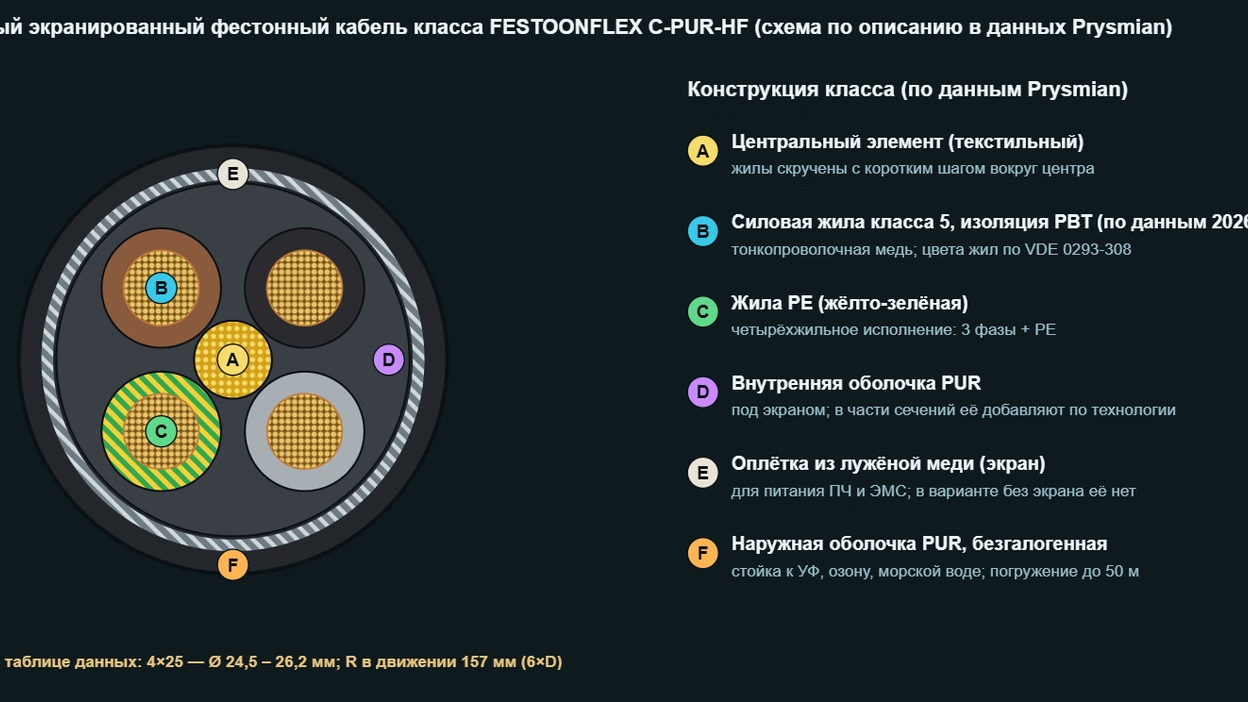
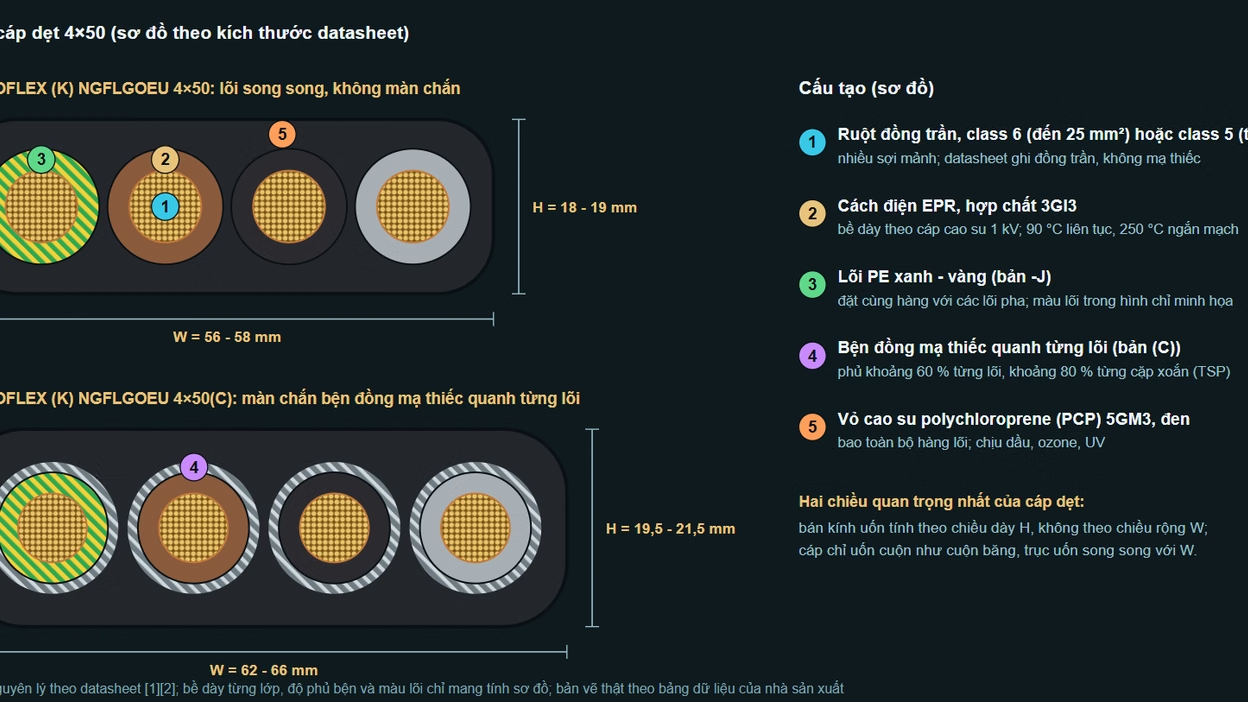
The straightforward answer to whether flat (N)TSFLCGEWÖU cables are superior to round cables for overhead crane festoon systems is: yes, absolutely—flat cables are genuinely better for festoon service in nearly every measurable way. The flat architecture delivers real engineering advantages in space efficiency, thermal performance, and mechanical reliability that address fundamental limitations of round cables in repetitive reeling applications. However, there is a critical and commonly overlooked distinction that separates successful flat cable installations from catastrophic failures: the extremely heavy 4x185 flat cable cannot be installed on standard C-track systems—it absolutely requires upgrade to heavy-duty I-beam or H-beam track systems rated for the cable's mass and tension. Many engineers and crane manufacturers have attempted the false economy of installing maximum-capacity flat cables on minimum-weight track systems, resulting in track deformation, trolley wheel failure, and serious safety hazards. Understanding why flat cables are superior and understanding why proper system specification is essential for safe operation are two sides of the same engineering decision.

Overhead Crane Festoons: Is flat (N)TSFLCGEWÖU 4×185 better than round cable for high-speed trolleys?

The straightforward answer to whether flat (N)TSFLCGEWÖU cables are superior to round cables for overhead crane festoon systems is: yes, absolutely—flat cables are genuinely better for festoon service in nearly every measurable way. The flat architecture delivers real engineering advantages in space efficiency, thermal performance, and mechanical reliability that address fundamental limitations of round cables in repetitive reeling applications. However, there is a critical and commonly overlooked distinction that separates successful flat cable installations from catastrophic failures: the extremely heavy 4×185 flat cable cannot be installed on standard C-track systems—it absolutely requires upgrade to heavy-duty I-beam or H-beam track systems rated for the cable’s mass and tension. Many engineers and crane manufacturers have attempted the false economy of installing maximum-capacity flat cables on minimum-weight track systems, resulting in track deformation, trolley wheel failure, and serious safety hazards. Understanding why flat cables are superior and understanding why proper system specification is essential for safe operation are two sides of the same engineering decision.
The straightforward answer to whether Type SHD-GC 3/C 250 MCM 25kV cable can handle continuous dragging on sharp granite rocks is: not completely immune—it must be combined with physical protection. The 400-ampere continuous rating at 40°C ambient represents the maximum electrical current capacity under controlled installation conditions. However, the cable's 25 kV service capability and class-leading durability of the extra-heavy-duty CPE or TPU jacket cannot overcome the fundamental physics of sharp granite edges acting like cutting blades under thousands of tons of dynamic dragging tension. When a cable is dragged repeatedly across sharp granite surfaces, the pulling tension (often 5,000–8,000 newtons for large draglines) creates extremely high localized shear stress at every point where the cable edge contacts the rock. Over hours and days of continuous operation, this shear stress gradually thins the outer sheath, cutting through the protective layers, damaging the inner copper shield, allowing moisture and conductive mud to penetrate the insulation, and inevitably leading to partial discharge, electrical tracking, and eventually cable failure or catastrophic blowout at 25 kV. No cable jacket material—no matter how premium the grade—can indefinitely withstand continuous contact with sharp, hard-rock surfaces under high mechanical tension.

Draglines & Shovels: Can Type SHD-GC 3/C 250 MCM 25kV handle continuous dragging on sharp granite rocks?

The straightforward answer to whether Type SHD-GC 3/C 250 MCM 25kV cable can handle continuous dragging on sharp granite rocks is: not completely immune—it must be combined with physical protection. The 400-ampere continuous rating at 40°C ambient represents the maximum electrical current capacity under controlled installation conditions. However, the cable’s 25 kV service capability and class-leading durability of the extra-heavy-duty CPE or TPU jacket cannot overcome the fundamental physics of sharp granite edges acting like cutting blades under thousands of tons of dynamic dragging tension. When a cable is dragged repeatedly across sharp granite surfaces, the pulling tension (often 5,000–8,000 newtons for large draglines) creates extremely high localized shear stress at every point where the cable edge contacts the rock. Over hours and days of continuous operation, this shear stress gradually thins the outer sheath, cutting through the protective layers, damaging the inner copper shield, allowing moisture and conductive mud to penetrate the insulation, and inevitably leading to partial discharge, electrical tracking, and eventually cable failure or catastrophic blowout at 25 kV. No cable jacket material—no matter how premium the grade—can indefinitely withstand continuous contact with sharp, hard-rock surfaces under high mechanical tension.
The 1-second short-circuit current rating for an NSHTÖU-J 4G95 0.6/1kV low-voltage heavy-duty reeling cable is approximately 8,500 to 10,200 amperes when the cable is new and at reference condition (20°C conductor temperature, single conductor in free air, no mechanical stress or aging degradation).

Short-Circuit Rating: What is the 1-second short-circuit current for NSHTÖU-J 4G95 0.6/1kV heavy-duty reeling cable? 

The 1-second short-circuit current rating for an NSHTÖU-J 4G95 0.6/1kV low-voltage heavy-duty reeling cable is approximately 8,500 to 10,200 amperes when the cable is new and at reference condition (20°C conductor temperature, single conductor in free air, no mechanical stress or aging degradation).
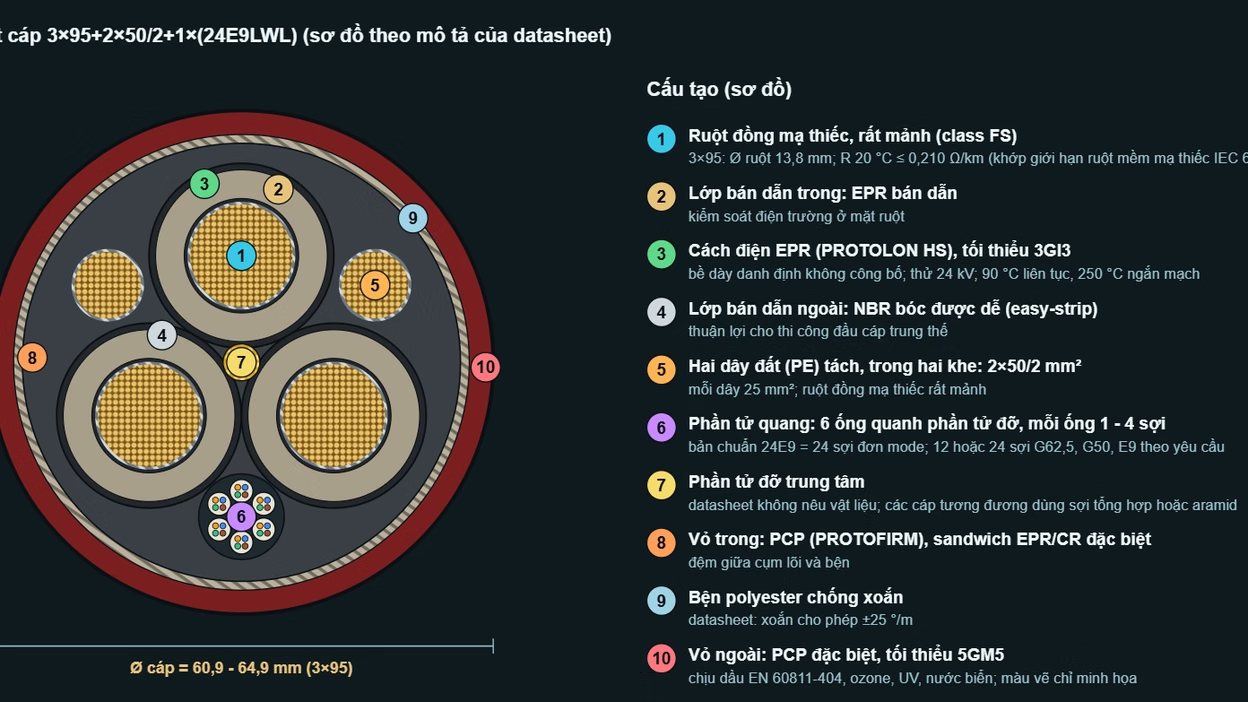
(N)TSKCGEWÖU 3x150+3x25/3 3.6/6kV cable with split three-part earth conductor is approximately 65 mm (2.56 inches), with a standard tolerance window of ±3.0 mm producing a permissible range of 62.0–68.0 mm. The inner jacket (the intermediate protective layer between the insulation and outer sheath) typically has a nominal thickness of approximately 0.8–1.0 mm, contributing to overall diameter build-up but not typically measured as a separate "inner diameter" in engineering specifications because the inner jacket is not a defined outer boundary—it is a layer embedded within the cable structure. The outer jacket (the final thermosetting rubber compound layer) has a nominal thickness of approximately 2.5–3.0 mm, providing the cable's mechanical interface with the environment. The approximate total weight of this cable is 8,200 kg/km (5,510 lbs/1000 ft), with copper content approximately 4,560 kg/km. It features three 150 mm² Class 5 tinned copper main phase conductors, three strategically distributed 25/3 mm² split earth conductors for electromagnetic symmetry, a 3GI3 high-dielectric EPR insulation system rated for continuous 90°C operation, an anti-torsion braid reinforcement layer, and a 5GM5 thermosetting halogen-free outer sheath providing extreme abrasion and tear resistance.

What is the Inner and Outer Jacket Diameter of (N)TSKCGEWÖU 3×150+3×25/3 3.6/6kV Splittable Earth Cable?

(N)TSKCGEWÖU 3×150+3×25/3 3.6/6kV cable with split three-part earth conductor is approximately 65 mm (2.56 inches), with a standard tolerance window of ±3.0 mm producing a permissible range of 62.0–68.0 mm. The inner jacket (the intermediate protective layer between the insulation and outer sheath) typically has a nominal thickness of approximately 0.8–1.0 mm, contributing to overall diameter build-up but not typically measured as a separate “inner diameter” in engineering specifications because the inner jacket is not a defined outer boundary—it is a layer embedded within the cable structure. The outer jacket (the final thermosetting rubber compound layer) has a nominal thickness of approximately 2.5–3.0 mm, providing the cable’s mechanical interface with the environment. The approximate total weight of this cable is 8,200 kg/km (5,510 lbs/1000 ft), with copper content approximately 4,560 kg/km. It features three 150 mm² Class 5 tinned copper main phase conductors, three strategically distributed 25/3 mm² split earth conductors for electromagnetic symmetry, a 3GI3 high-dielectric EPR insulation system rated for continuous 90°C operation, an anti-torsion braid reinforcement layer, and a 5GM5 thermosetting halogen-free outer sheath providing extreme abrasion and tear resistance.
Nexans RHEYFIRM (RS) 12/20kV is a premium-tier medium-voltage reeling cable specifically engineered for high-speed, high-stress port machinery and industrial heavy-load applications. The cable's design reflects Nexans' deep expertise in marine and dockside equipment, incorporating proprietary RHEYCLEAN insulation chemistry and reinforced anti-torsion braid architecture that together enable reliable operation in environments where cable flexing occurs thousands of times per day at speeds exceeding 200 meters per minute. However, RHEYFIRM cables command premium pricing that reflects both their proven field performance and Nexans' brand positioning. For procurement teams managing large cable quantities, facing extended supply lead times, or constrained by budget limitations, the search for a functionally equivalent alternative is not a search for a compromise. Rather, it is a systematic evaluation of competing engineering approaches that achieve the same electrical safety, mechanical durability, and environmental resilience through different manufacturing philosophies. This guide addresses the practical reality that excellent medium-voltage reeling cables are manufactured by multiple established European and global suppliers. Helukabel (Germany), SAB Kabel (Germany), Prysmian (Italy/France), Feichun (China), and other manufacturers produce cables that meet or exceed RHEYFIRM's performance specifications while offering cost savings between 15–35%, faster regional delivery, or better availability for Asia-Pacific projects.

Cost-Effective Replacement for Nexans RHEYFIRM (RS) 3×50+3×25/3 12/20kV

Nexans RHEYFIRM (RS) 12/20kV is a premium-tier medium-voltage reeling cable specifically engineered for high-speed, high-stress port machinery and industrial heavy-load applications. The cable’s design reflects Nexans’ deep expertise in marine and dockside equipment, incorporating proprietary RHEYCLEAN insulation chemistry and reinforced anti-torsion braid architecture that together enable reliable operation in environments where cable flexing occurs thousands of times per day at speeds exceeding 200 meters per minute. However, RHEYFIRM cables command premium pricing that reflects both their proven field performance and Nexans’ brand positioning. For procurement teams managing large cable quantities, facing extended supply lead times, or constrained by budget limitations, the search for a functionally equivalent alternative is not a search for a compromise. Rather, it is a systematic evaluation of competing engineering approaches that achieve the same electrical safety, mechanical durability, and environmental resilience through different manufacturing philosophies. This guide addresses the practical reality that excellent medium-voltage reeling cables are manufactured by multiple established European and global suppliers. Helukabel (Germany), SAB Kabel (Germany), Prysmian (Italy/France), Feichun (China), and other manufacturers produce cables that meet or exceed RHEYFIRM’s performance specifications while offering cost savings between 15–35%, faster regional delivery, or better availability for Asia-Pacific projects.
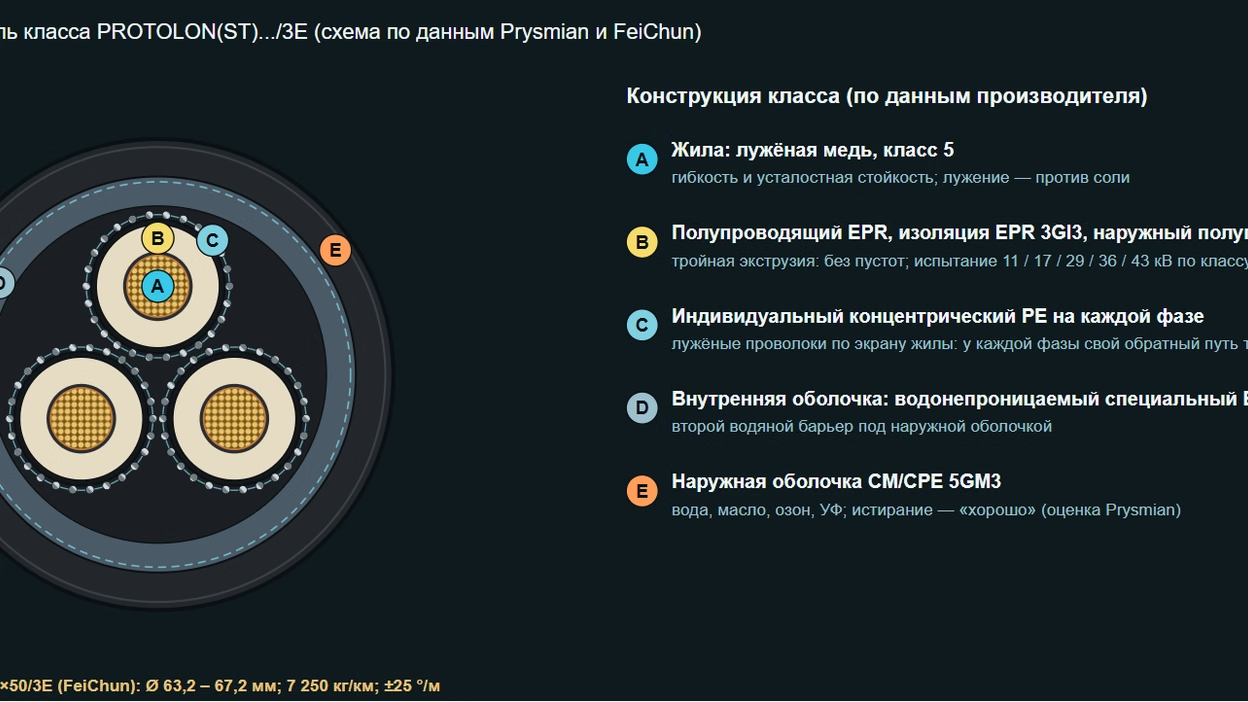
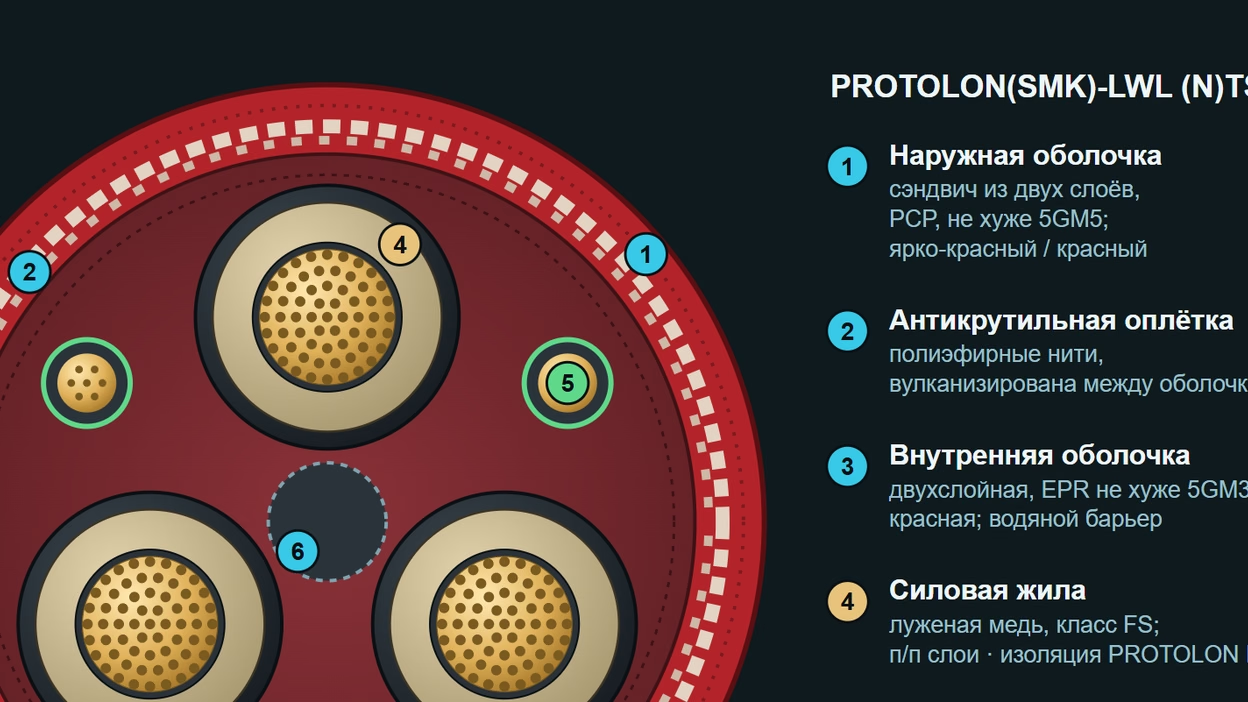
Prysmian PROTOLON (SM) 3x150+3x25/3 6/10kV is a specialized high-voltage reeling cable engineered for environments where mechanical stress, torsional loading, and cable flexibility are as critical as electrical performance. Unlike standard medium-voltage power cables, PROTOLON cables are designed for continuous reeling and unreeling—the cable must bend, twist, and flex thousands of times over their service life without insulation cracking, conductor breakage, or protective conductor separation.

Cross-Reference Guide: Exact Equivalents for Prysmian PROTOLON (SM) 3×150+3×25/3 6/10kV

Prysmian PROTOLON (SM) 3×150+3×25/3 6/10kV is a specialized high-voltage reeling cable engineered for environments where mechanical stress, torsional loading, and cable flexibility are as critical as electrical performance. Unlike standard medium-voltage power cables, PROTOLON cables are designed for continuous reeling and unreeling—the cable must bend, twist, and flex thousands of times over their service life without insulation cracking, conductor breakage, or protective conductor separation.
The corkscrew effect, also known as birdcaging or helical twist deformation, represents one of the most catastrophic failure modes in medium-voltage reeling cables. It occurs when a cable develops a permanent spiral distortion that resembles the twisted form of a corkscrew or the expanded form of a wire cage — hence the colorful industrial terminology. Unlike simple insulation cracking or conductor breakage, which may occur at a localized point, corkscrew deformation is a systemic problem that compromises the cable's structural integrity across its entire length or in extended sections. To understand what causes this failure, we must first recognize that a cable is not a monolithic object but rather a carefully engineered composite structure with multiple layers of conductors, insulation, and sheathing, all held in precise geometric alignment through precise manufacturing. When the cable is wound onto a reel and subjected to mechanical stress, that geometric alignment can be disrupted. The conductor strands, which are wound in a helical pattern, can slip out of position. The insulation layer, which must flex repeatedly without tearing, can separate from the conductors it insulates. The outer sheath, which protects everything inside, can develop stress cracks that accelerate moisture ingress and corrosion. The corkscrew effect amplifies all of these problems simultaneously.

Corkscrew Effect: Top 3 Installation Mistakes Causing (N)TSCGEWÖU Cable Failure

The corkscrew effect, also known as birdcaging or helical twist deformation, represents one of the most catastrophic failure modes in medium-voltage reeling cables. It occurs when a cable develops a permanent spiral distortion that resembles the twisted form of a corkscrew or the expanded form of a wire cage — hence the colorful industrial terminology. Unlike simple insulation cracking or conductor breakage, which may occur at a localized point, corkscrew deformation is a systemic problem that compromises the cable’s structural integrity across its entire length or in extended sections. To understand what causes this failure, we must first recognize that a cable is not a monolithic object but rather a carefully engineered composite structure with multiple layers of conductors, insulation, and sheathing, all held in precise geometric alignment through precise manufacturing. When the cable is wound onto a reel and subjected to mechanical stress, that geometric alignment can be disrupted. The conductor strands, which are wound in a helical pattern, can slip out of position. The insulation layer, which must flex repeatedly without tearing, can separate from the conductors it insulates. The outer sheath, which protects everything inside, can develop stress cracks that accelerate moisture ingress and corrosion. The corkscrew effect amplifies all of these problems simultaneously.
Spring-driven reels represent a mechanical cable management system where a large coiled spring provides the retracting force that automatically winds electrical cable back onto a drum after equipment has been operated or material handlers have moved. Unlike powered motor-driven reels (which can maintain consistent tension), spring reels operate under variable mechanical stress — the tension changes as the spring unwinds during deployment and rewinds during retraction. This mechanical reality creates a unique set of demands on the power cable itself, demands that generic multipurpose cables may not fully satisfy. The question of whether to use standard H07RN-F cable (a versatile, general-purpose heavy-duty rubber cable rated for 450/750 V applications) or to invest in NSHTÖU (a specialized reel drum cable engineered specifically for winding and unwinding cycles) is one that electrical engineers and procurement teams encounter regularly. The answer depends on understanding not just the electrical characteristics of each cable type, but also their mechanical behavior during coiling, their resistance to torsional stress, and their long-term fatigue durability under the specific application's duty cycle.

Spring-Driven Reels: Sizing Generic H07RN-F vs. NSHTÖU for Low-Tension Applications

Spring-driven reels represent a mechanical cable management system where a large coiled spring provides the retracting force that automatically winds electrical cable back onto a drum after equipment has been operated or material handlers have moved. Unlike powered motor-driven reels (which can maintain consistent tension), spring reels operate under variable mechanical stress — the tension changes as the spring unwinds during deployment and rewinds during retraction. This mechanical reality creates a unique set of demands on the power cable itself, demands that generic multipurpose cables may not fully satisfy. The question of whether to use standard H07RN-F cable (a versatile, general-purpose heavy-duty rubber cable rated for 450/750 V applications) or to invest in NSHTÖU (a specialized reel drum cable engineered specifically for winding and unwinding cycles) is one that electrical engineers and procurement teams encounter regularly. The answer depends on understanding not just the electrical characteristics of each cable type, but also their mechanical behavior during coiling, their resistance to torsional stress, and their long-term fatigue durability under the specific application’s duty cycle.