submersible power cable

The Type W 4/C 2/0 AWG 2000V portable power cable features a heavy-duty CPE (chlorinated polyethylene) outer jacket that demonstrates exceptional resistance to both ozone and ultraviolet radiation across the typical operating life of outdoor industrial equipment. The cable meets MSHA requirements and passes ASTM D1149 ozone resistance testing, demonstrating no cracking or surface crazing when exposed to 50 parts-per-hundred-million (pphm) of ozone concentration for extended periods. The cable's UV resistance performance, when evaluated according to ASTM G154 accelerated UV aging procedures using UVA-340 lamps at 60°C for 1,000 hours of exposure, results in retention of approximately 80–90% of original tensile strength and maintains mechanical flexibility adequate for normal cable handling and deployment. This performance level, combined with the inherent flame retardant properties of the CPE compound formulation, means that Type W cable can remain in outdoor service for extended periods—typically 5 to 10 years of continuous or frequent outdoor exposure—without experiencing the surface cracking, brittleness, or loss of mechanical properties that would render the cable unsafe or unsuitable for reeling operations. The black color of the CPE formulation, while primarily selected for aesthetic reasons in industrial equipment, also serves a secondary protective function by absorbing and dissipating ultraviolet radiation rather than transmitting it to the inner EPR insulation layers. Understanding how the CPE jacket maintains its protective properties under outdoor exposure requires appreciation for both the chemistry of weathering processes and the engineering of additive packages that extend the cable's useful service life far beyond what conventional rubber compounds could achieve.

Ozone and UV Resistance: Weathering Parameters for Outer Sheath of Type W 4/C 2/0 AWG 2000V Cable

The Type W 4/C 2/0 AWG 2000V portable power cable features a heavy-duty CPE (chlorinated polyethylene) outer jacket that demonstrates exceptional resistance to both ozone and ultraviolet radiation across the typical operating life of outdoor industrial equipment. The cable meets MSHA requirements and passes ASTM D1149 ozone resistance testing, demonstrating no cracking or surface crazing when exposed to 50 parts-per-hundred-million (pphm) of ozone concentration for extended periods. The cable’s UV resistance performance, when evaluated according to ASTM G154 accelerated UV aging procedures using UVA-340 lamps at 60°C for 1,000 hours of exposure, results in retention of approximately 80–90% of original tensile strength and maintains mechanical flexibility adequate for normal cable handling and deployment. This performance level, combined with the inherent flame retardant properties of the CPE compound formulation, means that Type W cable can remain in outdoor service for extended periods—typically 5 to 10 years of continuous or frequent outdoor exposure—without experiencing the surface cracking, brittleness, or loss of mechanical properties that would render the cable unsafe or unsuitable for reeling operations. The black color of the CPE formulation, while primarily selected for aesthetic reasons in industrial equipment, also serves a secondary protective function by absorbing and dissipating ultraviolet radiation rather than transmitting it to the inner EPR insulation layers. Understanding how the CPE jacket maintains its protective properties under outdoor exposure requires appreciation for both the chemistry of weathering processes and the engineering of additive packages that extend the cable’s useful service life far beyond what conventional rubber compounds could achieve.
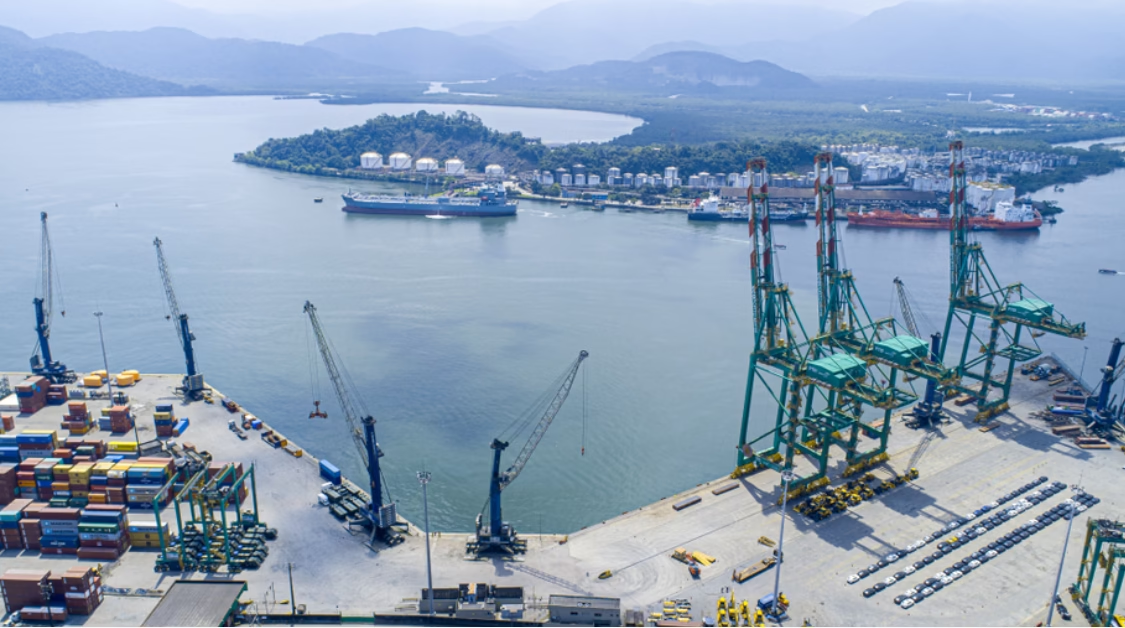
(N)TSCGEWÖU cable type represents a specialized category of medium-voltage power cables designed for demanding applications in mining, tunneling, harbor cranes, and heavy-duty industrial environments. These cables feature 3GI3 grade Ethylene-Propylene Rubber (EPR) insulation, which must maintain dielectric integrity under extreme mechanical stress, moisture exposure, and electrical field conditions. Understanding the aging behavior of the dielectric loss factor (tan delta, tan δ) is critical for predictive maintenance and ensuring operational safety in these mission-critical applications.

Tan Delta Aging: How does the dielectric loss factor (Tan Delta) of 3GI3 insulation in (N)TSCGEWÖU cables change with long-term aging?

(N)TSCGEWÖU cable type represents a specialized category of medium-voltage power cables designed for demanding applications in mining, tunneling, harbor cranes, and heavy-duty industrial environments. These cables feature 3GI3 grade Ethylene-Propylene Rubber (EPR) insulation, which must maintain dielectric integrity under extreme mechanical stress, moisture exposure, and electrical field conditions. Understanding the aging behavior of the dielectric loss factor (tan delta, tan δ) is critical for predictive maintenance and ensuring operational safety in these mission-critical applications.
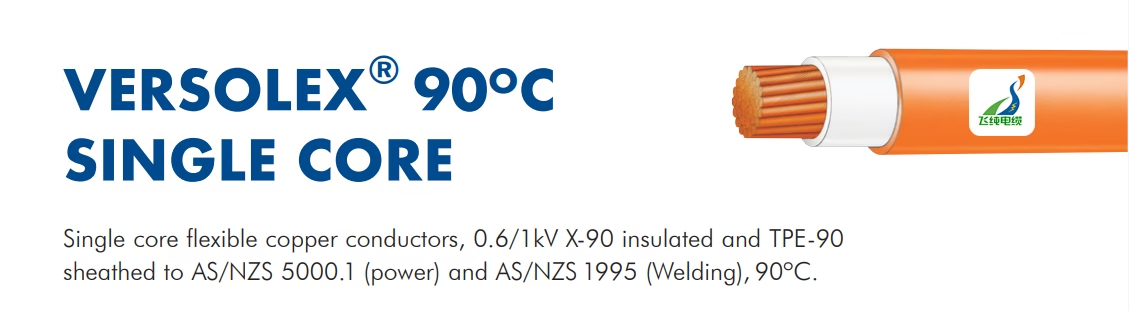
VERSOLEX 90OC, single core flexible cable, AS/NZS 5000.1, AS/NZS 1995, X-90 insulation, TPE-90 sheath, welding cable, 0.6/1kV cable, industrial power cable, flexible copper conductor, 90°C rated cable

What is VERSOLEX® 90°C Single Core Cable?

The VERSOLEX® 90OC Single Core cable represents a premium-grade flexible power cable engineered specifically for demanding industrial applications where exceptional flexibility, thermal endurance, and electrical performance are critical requirements. This specialized cable features single core flexible copper conductors rated at 0.6/1kV, utilizing X-90 (XLPE) insulation combined with TPE-90 (Thermoplastic Elastomer) sheathing to achieve superior performance characteristics across a broad range of operating conditions.
PROTOLON(ST) NTSCGEWOEU 3 kV – 30 kV

What is Medium Voltage Flexible Cables for Use in Water with Copper Core Shield PROTOLON(ST) NTSCGEWOEU 3 kV – 30 kV?

PROTOLON(ST) NTSCGEWOEU represents a specialized category of medium-voltage flexible power cables engineered specifically for submersible and underwater applications. Originally developed by Prysmian Group, a global leader in cable technology, this cable series addresses the unique challenges of power distribution in aquatic environments where conventional cables would fail due to water ingress, pressure, and corrosive conditions. Anhui Feichun Special Cable Co., Ltd manufactures cables based on this proven technology, bringing advanced underwater cable solutions to mining, dredging, and marine industries worldwide.