industrial power cable

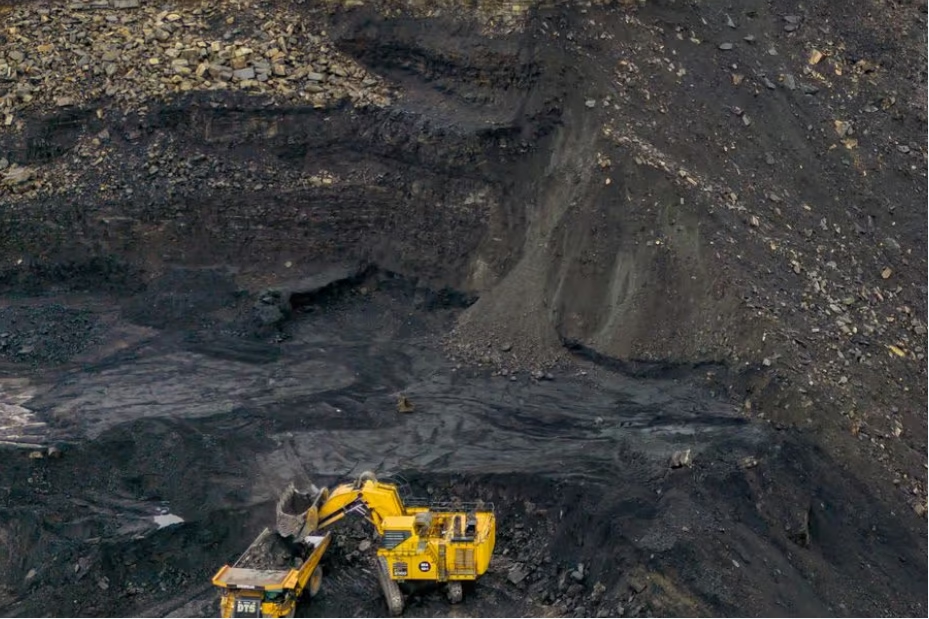
Иерархия электроэнергии в подземной угольной шахте — почему 6/10кВ магистраль необходима: Типичная архитектура: (1) Наземная главная подстанция (ГПП): базирующейся на поверхности шахты, обычно 35 кВ или 110 кВ питание от региональной электросети. ГПП содержит мощный трансформатор 35/6 кВ (трансформация высокого напряжения в среднее), главный выключатель, защитные реле. (2) Магистральный кабель 6/10 кВ (TENAX-V NSSHCGEOEU-V или КГЭЖ 6/10кВ): спускается вертикально (или наклонно) из ГПП на поверхности вниз через ствол шахты на глубину 200–1,500 метров (в зависимости от глубины выработок). Длина магистрали: 500–3,000 м типичная. Магистраль прокладывается в защитной трубе или канале (каналы "кабелепровод" железобетонные с зазорами для вентиляции). Магистраль питает несколько подземных трансформаторных подстанций. (3) Подземные трансформаторные подстанции (ТП): расположены на разных уровнях выработок (каждый уровень добычи может иметь свою ТП). Трансформатор 6/0.66 кВ (или реже 6/0.4 кВ) понижает напряжение. ТП обычно содержит: входной масляный выключатель 6 кВ, трансформатор с естественным охлаждением масло-воздух (Power rating 250–630 кВА, зависит от количества комбайнов), выходные выключатели 0.66 кВ, система защиты (реле расстояния, дифференциальные реле). (4) Локальные распределительные кабели 0.6/1.0 кВ: от ТП идут отдельные кабели (низковольтные КГЭШм 1.14кВ, как обсуждалось в предыдущей статье) к комбайнам, лебёдкам, конвейерам. Следствие: магистраль 6/10 кВ являет "хребтом" подземного электроснабжения. Потеря или отказ магистрали = полное отключение всех устройств низкого напряжения в той зоне выработок, что она питает. Поэтому надёжность магистрального кабеля критична. Замена магистрали требует полной остановки шахты на несколько дней, стоимость простоя: миллионы в сутки. Это объясняет, почему локализация магистрального TENAX-V имеет стратегическое значение для русских операторов.

TENAX-V NSSHCGEOEU-V 6/10кВ: немецкий магистральный кабель и КГЭЖ 6/10кВ русский эквивалент для подземного электроснабжения

Иерархия электроэнергии в подземной угольной шахте — почему 6/10кВ магистраль необходима: Типичная архитектура: (1) Наземная главная подстанция (ГПП): базирующейся на поверхности шахты, обычно 35 кВ или 110 кВ питание от региональной электросети. ГПП содержит мощный трансформатор 35/6 кВ (трансформация высокого напряжения в среднее), главный выключатель, защитные реле. (2) Магистральный кабель 6/10 кВ (TENAX-V NSSHCGEOEU-V или КГЭЖ 6/10кВ): спускается вертикально (или наклонно) из ГПП на поверхности вниз через ствол шахты на глубину 200–1,500 метров (в зависимости от глубины выработок). Длина магистрали: 500–3,000 м типичная. Магистраль прокладывается в защитной трубе или канале (каналы “кабелепровод” железобетонные с зазорами для вентиляции). Магистраль питает несколько подземных трансформаторных подстанций. (3) Подземные трансформаторные подстанции (ТП): расположены на разных уровнях выработок (каждый уровень добычи может иметь свою ТП). Трансформатор 6/0.66 кВ (или реже 6/0.4 кВ) понижает напряжение. ТП обычно содержит: входной масляный выключатель 6 кВ, трансформатор с естественным охлаждением масло-воздух (Power rating 250–630 кВА, зависит от количества комбайнов), выходные выключатели 0.66 кВ, система защиты (реле расстояния, дифференциальные реле). (4) Локальные распределительные кабели 0.6/1.0 кВ: от ТП идут отдельные кабели (низковольтные КГЭШм 1.14кВ, как обсуждалось в предыдущей статье) к комбайнам, лебёдкам, конвейерам. Следствие: магистраль 6/10 кВ являет “хребтом” подземного электроснабжения. Потеря или отказ магистрали = полное отключение всех устройств низкого напряжения в той зоне выработок, что она питает. Поэтому надёжность магистрального кабеля критична. Замена магистрали требует полной остановки шахты на несколько дней, стоимость простоя: миллионы в сутки. Это объясняет, почему локализация магистрального TENAX-V имеет стратегическое значение для русских операторов.
The (N)SSHÖU designation represents a family of European rubber-insulated cables designed and manufactured to German VDE standards, specifically VDE 0250-812. The designation encodes the cable's fundamental characteristics: flexible power transmission cable suitable for mining and industrial applications. The baseline European design is optimized for 0.6/1kV operation, representing the standard voltage rating for TN earthing systems prevalent throughout Europe and North America. (N)SSHÖU代表一系列欧洲橡胶绝缘电缆,按照德国VDE标准(特别是VDE 0250-812)设计和制造。该名称编码了电缆的基本特征:适合采矿和工业应用的灵活电力传输电缆。欧洲基线设计针对0.6/1kV运行进行了优化,代表了欧洲和北美普遍存在的TN接地系统的标准电压额定值。

Insulation Thickness Differences: How AS/NZS 1.1/1.1kV Modifies (N)SSHÖU Cable Structure

The (N)SSHÖU designation represents a family of European rubber-insulated cables designed and manufactured to German VDE standards, specifically VDE 0250-812. The designation encodes the cable’s fundamental characteristics: flexible power transmission cable suitable for mining and industrial applications. The baseline European design is optimized for 0.6/1kV operation, representing the standard voltage rating for TN earthing systems prevalent throughout Europe and North America. (N)SSHÖU代表一系列欧洲橡胶绝缘电缆,按照德国VDE标准(特别是VDE 0250-812)设计和制造。该名称编码了电缆的基本特征:适合采矿和工业应用的灵活电力传输电缆。欧洲基线设计针对0.6/1kV运行进行了优化,代表了欧洲和北美普遍存在的TN接地系统的标准电压额定值。
The ÖLFLEX CLASSIC 115 CY 4G1.5 cable represents a precision-engineered control cable where every dimensional and electrical specification has been optimized through extensive testing and field validation across diverse industrial applications. The 8.2-millimeter outer diameter establishes the space requirements for cable routing in panel layouts, cable trays, and conduit systems. To understand this specification in practical terms, consider that 8.2 millimeters is approximately the width of a standard pencil—this compact size enables routing through narrow spaces between equipment, through small penetrations in enclosure walls, and through dense cable bundles where space is precious. The 4G1.5 designation specifies that the cable contains four conductors, each with a 1.5 square millimeter cross-sectional area, meaning each conductor is composed of fine copper wire strands twisted together in a flexible Class 5 stranding pattern. One of these four conductors is the distinctive green-yellow (dual-color) protective earth/ground conductor, while the other three are typically color-coded according to VDE 0293-308 standards (often black, brown, and grey for three-phase applications, or black, brown, and blue for single-phase applications). The current carrying capacity is approximately 18 amperes under standard conditions (30°C ambient air temperature, cables routed in free air rather than enclosed in conduit or cable trays), establishing the maximum safe electrical load for any single conductor. The voltage rating of 300/500V classifies this as a control-voltage cable rather than a high-voltage power cable, appropriate for control circuits, instrumentation systems, and signaling applications rather than main power distribution.

VDE Cross-Reference: Drop-in Alternative for ÖLFLEX CLASSIC 115 CY 4G1.5 VDE 0250

The ÖLFLEX CLASSIC 115 CY 4G1.5 cable represents a precision-engineered control cable where every dimensional and electrical specification has been optimized through extensive testing and field validation across diverse industrial applications. The 8.2-millimeter outer diameter establishes the space requirements for cable routing in panel layouts, cable trays, and conduit systems. To understand this specification in practical terms, consider that 8.2 millimeters is approximately the width of a standard pencil—this compact size enables routing through narrow spaces between equipment, through small penetrations in enclosure walls, and through dense cable bundles where space is precious. The 4G1.5 designation specifies that the cable contains four conductors, each with a 1.5 square millimeter cross-sectional area, meaning each conductor is composed of fine copper wire strands twisted together in a flexible Class 5 stranding pattern. One of these four conductors is the distinctive green-yellow (dual-color) protective earth/ground conductor, while the other three are typically color-coded according to VDE 0293-308 standards (often black, brown, and grey for three-phase applications, or black, brown, and blue for single-phase applications). The current carrying capacity is approximately 18 amperes under standard conditions (30°C ambient air temperature, cables routed in free air rather than enclosed in conduit or cable trays), establishing the maximum safe electrical load for any single conductor. The voltage rating of 300/500V classifies this as a control-voltage cable rather than a high-voltage power cable, appropriate for control circuits, instrumentation systems, and signaling applications rather than main power distribution.
The NSSHÖU-J 4G95 0.6/1kV industrial mining cable is technically rated for temporary water immersion and is commonly used in open-pit and underground mining environments, but it is not specifically qualified for permanent submersion in acidic mine water and using it in this application is classified as beyond its design envelope. While the cable's EPR insulation (3GI3) and CPE outer sheath (5GM5) provide adequate resistance to neutral water and brief acidic exposure, permanent submersion in acidic mine water with pH values of 2.0 to 4.0—typical of copper and gold mining operations—accelerates material degradation to the point where service life drops to approximately 18 to 36 months compared to 8 to 10 years in neutral water applications. The fundamental issue is not that the cable fails immediately when deployed in acidic water (it does not), but rather that the aggressive acidic environment causes progressive swelling of the jacket, penetration of H⁺ ions into the insulation layer, electrochemical corrosion of the tinned copper conductor, and cumulative electrical property loss that eventually results in insulation breakdown. This distinction between "survives temporary exposure" and "safe for permanent submersion" is critically important to understand: a cable can physically remain intact for months or even a year or more in acidic water, but the electrical properties are degrading silently, and catastrophic failure can occur suddenly when the insulation resistance drops below critical thresholds. For submersible pump applications in acidic mine water, engineers should specify cables explicitly designed for this service, such as H07RN8-F submersible pump cables with specialized halogen-free formulations, or upgrade to acidic-resistant variants of marine-grade cables rated for chemical exposure. The standard NSSHÖU-J cable can be used in acidic mine water applications only if the operational requirement is for temporary or seasonal service (less than 6 months per year), coupled with rigorous monitoring protocols and planned replacement intervals of 12 to 18 months rather than the standard 5 to 7 year intervals appropriate for neutral water service.

Submersible Pump Cable Safety: Can NSSHÖU-J 4G95 0.6/1kV Withstand Permanent Submersion in Acidic Mine Water?

The NSSHÖU-J 4G95 0.6/1kV industrial mining cable is technically rated for temporary water immersion and is commonly used in open-pit and underground mining environments, but it is not specifically qualified for permanent submersion in acidic mine water and using it in this application is classified as beyond its design envelope. While the cable’s EPR insulation (3GI3) and CPE outer sheath (5GM5) provide adequate resistance to neutral water and brief acidic exposure, permanent submersion in acidic mine water with pH values of 2.0 to 4.0—typical of copper and gold mining operations—accelerates material degradation to the point where service life drops to approximately 18 to 36 months compared to 8 to 10 years in neutral water applications. The fundamental issue is not that the cable fails immediately when deployed in acidic water (it does not), but rather that the aggressive acidic environment causes progressive swelling of the jacket, penetration of H⁺ ions into the insulation layer, electrochemical corrosion of the tinned copper conductor, and cumulative electrical property loss that eventually results in insulation breakdown. This distinction between “survives temporary exposure” and “safe for permanent submersion” is critically important to understand: a cable can physically remain intact for months or even a year or more in acidic water, but the electrical properties are degrading silently, and catastrophic failure can occur suddenly when the insulation resistance drops below critical thresholds. For submersible pump applications in acidic mine water, engineers should specify cables explicitly designed for this service, such as H07RN8-F submersible pump cables with specialized halogen-free formulations, or upgrade to acidic-resistant variants of marine-grade cables rated for chemical exposure. The standard NSSHÖU-J cable can be used in acidic mine water applications only if the operational requirement is for temporary or seasonal service (less than 6 months per year), coupled with rigorous monitoring protocols and planned replacement intervals of 12 to 18 months rather than the standard 5 to 7 year intervals appropriate for neutral water service.
The Type W 4/C 2/0 AWG 2000V portable power cable features a heavy-duty CPE (chlorinated polyethylene) outer jacket that demonstrates exceptional resistance to both ozone and ultraviolet radiation across the typical operating life of outdoor industrial equipment. The cable meets MSHA requirements and passes ASTM D1149 ozone resistance testing, demonstrating no cracking or surface crazing when exposed to 50 parts-per-hundred-million (pphm) of ozone concentration for extended periods. The cable's UV resistance performance, when evaluated according to ASTM G154 accelerated UV aging procedures using UVA-340 lamps at 60°C for 1,000 hours of exposure, results in retention of approximately 80–90% of original tensile strength and maintains mechanical flexibility adequate for normal cable handling and deployment. This performance level, combined with the inherent flame retardant properties of the CPE compound formulation, means that Type W cable can remain in outdoor service for extended periods—typically 5 to 10 years of continuous or frequent outdoor exposure—without experiencing the surface cracking, brittleness, or loss of mechanical properties that would render the cable unsafe or unsuitable for reeling operations. The black color of the CPE formulation, while primarily selected for aesthetic reasons in industrial equipment, also serves a secondary protective function by absorbing and dissipating ultraviolet radiation rather than transmitting it to the inner EPR insulation layers. Understanding how the CPE jacket maintains its protective properties under outdoor exposure requires appreciation for both the chemistry of weathering processes and the engineering of additive packages that extend the cable's useful service life far beyond what conventional rubber compounds could achieve.

Ozone and UV Resistance: Weathering Parameters for Outer Sheath of Type W 4/C 2/0 AWG 2000V Cable

The Type W 4/C 2/0 AWG 2000V portable power cable features a heavy-duty CPE (chlorinated polyethylene) outer jacket that demonstrates exceptional resistance to both ozone and ultraviolet radiation across the typical operating life of outdoor industrial equipment. The cable meets MSHA requirements and passes ASTM D1149 ozone resistance testing, demonstrating no cracking or surface crazing when exposed to 50 parts-per-hundred-million (pphm) of ozone concentration for extended periods. The cable’s UV resistance performance, when evaluated according to ASTM G154 accelerated UV aging procedures using UVA-340 lamps at 60°C for 1,000 hours of exposure, results in retention of approximately 80–90% of original tensile strength and maintains mechanical flexibility adequate for normal cable handling and deployment. This performance level, combined with the inherent flame retardant properties of the CPE compound formulation, means that Type W cable can remain in outdoor service for extended periods—typically 5 to 10 years of continuous or frequent outdoor exposure—without experiencing the surface cracking, brittleness, or loss of mechanical properties that would render the cable unsafe or unsuitable for reeling operations. The black color of the CPE formulation, while primarily selected for aesthetic reasons in industrial equipment, also serves a secondary protective function by absorbing and dissipating ultraviolet radiation rather than transmitting it to the inner EPR insulation layers. Understanding how the CPE jacket maintains its protective properties under outdoor exposure requires appreciation for both the chemistry of weathering processes and the engineering of additive packages that extend the cable’s useful service life far beyond what conventional rubber compounds could achieve.
(N)TSCGEWÖU 3x240+3x120/3 6/10kV ultra-large medium-voltage reeling cable weighs approximately 12,100 kg per kilometer (approximately 8,100 lbs per 1,000 feet), with the copper conductor content comprising approximately 8,064 kg/km of this total weight. The remaining approximately 4,036 kg/km (approximately 33.4% of total weight) consists of insulation materials (EPR), protective layers (bedding material, anti-torsion braid reinforcement), inner protective jacket, and the outer rubber sheath material. This extreme weight—roughly equivalent to a fully-loaded large truck per kilometer of cable—represents the cumulative consequence of the cable's enormous conductor cross-sections: three main phase conductors of 240 mm² each (totaling 720 mm² of copper for power carrying) plus three split earth conductors of 120 mm² each (totaling 360 mm² additional copper for grounding and load distribution). The 12,100 kg/km specification establishes the cable as one of the world's heaviest industrial power cables, comparable in weight only to cables serving ultra-massive applications such as deep-water offshore drilling umbilicals, gigantic bucket-wheel excavators, or electrified super-heavy mining draglines. Understanding this weight is not an academic exercise but rather a critical factor for project managers, procurement engineers, and logistics specialists, because the extreme weight directly determines shipping container capacity, handling equipment requirements at origin and destination ports, reel design specifications, and the total cost of ownership including transportation costs that can exceed 20–30% of the cable's material cost.

How Much Does (N)TSCGEWÖU 3×240+3×120/3 6/10kV Flexible Cable Weigh Per Kilometer?

(N)TSCGEWÖU 3×240+3×120/3 6/10kV ultra-large medium-voltage reeling cable weighs approximately 12,100 kg per kilometer (approximately 8,100 lbs per 1,000 feet), with the copper conductor content comprising approximately 8,064 kg/km of this total weight. The remaining approximately 4,036 kg/km (approximately 33.4% of total weight) consists of insulation materials (EPR), protective layers (bedding material, anti-torsion braid reinforcement), inner protective jacket, and the outer rubber sheath material. This extreme weight—roughly equivalent to a fully-loaded large truck per kilometer of cable—represents the cumulative consequence of the cable’s enormous conductor cross-sections: three main phase conductors of 240 mm² each (totaling 720 mm² of copper for power carrying) plus three split earth conductors of 120 mm² each (totaling 360 mm² additional copper for grounding and load distribution). The 12,100 kg/km specification establishes the cable as one of the world’s heaviest industrial power cables, comparable in weight only to cables serving ultra-massive applications such as deep-water offshore drilling umbilicals, gigantic bucket-wheel excavators, or electrified super-heavy mining draglines. Understanding this weight is not an academic exercise but rather a critical factor for project managers, procurement engineers, and logistics specialists, because the extreme weight directly determines shipping container capacity, handling equipment requirements at origin and destination ports, reel design specifications, and the total cost of ownership including transportation costs that can exceed 20–30% of the cable’s material cost.
The nominal width of a (N)TSFLCGEWÖU 4x120 0.6/1kV shielded flat trailing cable is approximately 91 mm (3.58 inches), with a tolerance window of ±3.5 mm producing a permissible range of 87.5–94.5 mm. The nominal thickness is approximately 27.5 mm (1.08 inches), with a tolerance window of ±1.5 mm producing a permissible range of 26.0–29.0 mm. The approximate total weight of this cable is 8,200 kg/km (5,500 lbs/1000 ft), with copper weight approximately 5,250 kg/km. It features four 120 mm² main power conductors rated for 321 amperes continuous operation at 30°C ambient, supplemented by individual copper braid shielding on each conductor for electromagnetic compatibility (EMC) with variable-frequency drives and other sensitive equipment. The distinction between width and thickness for flat cables differs fundamentally from round cable specifications because flat cables do not have a single outer diameter. Instead, engineers must manage two dimensions simultaneously, and these dimensions directly determine whether the cable will fit into festoon track systems, contact shoe assemblies, and guidance rail configurations commonly deployed in overhead crane systems and automated material handling equipment.

What is the Width and Thickness of (N)TSFLCGEWÖU 4×120 0.6/1kV Shielded Flat Cable?

The nominal width of a (N)TSFLCGEWÖU 4×120 0.6/1kV shielded flat trailing cable is approximately 91 mm (3.58 inches), with a tolerance window of ±3.5 mm producing a permissible range of 87.5–94.5 mm. The nominal thickness is approximately 27.5 mm (1.08 inches), with a tolerance window of ±1.5 mm producing a permissible range of 26.0–29.0 mm. The approximate total weight of this cable is 8,200 kg/km (5,500 lbs/1000 ft), with copper weight approximately 5,250 kg/km. It features four 120 mm² main power conductors rated for 321 amperes continuous operation at 30°C ambient, supplemented by individual copper braid shielding on each conductor for electromagnetic compatibility (EMC) with variable-frequency drives and other sensitive equipment. The distinction between width and thickness for flat cables differs fundamentally from round cable specifications because flat cables do not have a single outer diameter. Instead, engineers must manage two dimensions simultaneously, and these dimensions directly determine whether the cable will fit into festoon track systems, contact shoe assemblies, and guidance rail configurations commonly deployed in overhead crane systems and automated material handling equipment.
The GEXOL 37-102 cable family, manufactured by Nexans AmerCable (由Nexans AmerCable制造), represents a sophisticated engineering solution that bridges North American marine cable standards with international protection requirements for hazardous location installations. Understanding the specific engineering principles that govern the "Armored & Sheathed (BS)" configuration is essential for electrical engineers and procurement specialists tasked with specifying cables for Zone 1 explosion-proof environments (防爆 1 区环境), particularly in offshore drilling platforms, subsea installations, and petrochemical facilities.

GEXOL 37-102 Armored & Sheathed (BS): Installation Guide for Explosion Proof Zone 1 

The GEXOL 37-102 cable family, manufactured by Nexans AmerCable (由Nexans AmerCable制造), represents a sophisticated engineering solution that bridges North American marine cable standards with international protection requirements for hazardous location installations. Understanding the specific engineering principles that govern the “Armored & Sheathed (BS)” configuration is essential for electrical engineers and procurement specialists tasked with specifying cables for Zone 1 explosion-proof environments (防爆 1 区环境), particularly in offshore drilling platforms, subsea installations, and petrochemical facilities.
The cable selection debate between premium branded products like Nexans Olex Versolex and generic alternatives such as Type 441 cables represents a critical decision point for electrical contractors, mining operators, and industrial facility managers. This technical analysis examines whether the higher initial investment in Versolex flexible cables delivers measurable value through extended service life, reduced maintenance costs, and superior operational reliability. Both cable types serve different primary markets—Versolex targets commercial and industrial flexible power applications compliant with AS/NZS 5000.1, while Type 441 cables are specifically engineered for harsh mining environments under AS/NZS 2802 standards. 在Nexans Olex Versolex等高端品牌产品与Type 441等通用电缆之间的选择,对电气承包商、矿业运营商和工业设施管理人员来说是一个关键决策点。本技术分析探讨了对Versolex柔性电缆的更高初始投资是否通过延长使用寿命、降低维护成本和卓越的运行可靠性提供可衡量的价值。两种电缆类型服务于不同的主要市场——Versolex针对符合AS/NZS 5000.1标准的商业和工业柔性电力应用,而Type 441电缆专门为AS/NZS 2802标准下的恶劣矿业环境设计。

Nexans Olex Versolex vs. Generic Type 441: Is the Premium Price Justified by Longer Service Life?

The cable selection debate between premium branded products like Nexans Olex Versolex and generic alternatives such as Type 441 cables represents a critical decision point for electrical contractors, mining operators, and industrial facility managers. This technical analysis examines whether the higher initial investment in Versolex flexible cables delivers measurable value through extended service life, reduced maintenance costs, and superior operational reliability. Both cable types serve different primary markets—Versolex targets commercial and industrial flexible power applications compliant with AS/NZS 5000.1, while Type 441 cables are specifically engineered for harsh mining environments under AS/NZS 2802 standards. 在Nexans Olex Versolex等高端品牌产品与Type 441等通用电缆之间的选择,对电气承包商、矿业运营商和工业设施管理人员来说是一个关键决策点。本技术分析探讨了对Versolex柔性电缆的更高初始投资是否通过延长使用寿命、降低维护成本和卓越的运行可靠性提供可衡量的价值。两种电缆类型服务于不同的主要市场——Versolex针对符合AS/NZS 5000.1标准的商业和工业柔性电力应用,而Type 441电缆专门为AS/NZS 2802标准下的恶劣矿业环境设计。
Overland conveyor systems represent critical infrastructure for bulk material handling across mining, quarrying, and heavy industrial operations. When these systems extend beyond 5 kilometers, the selection of appropriate power distribution cables becomes a paramount engineering decision that directly impacts operational reliability, maintenance costs, and system longevity. According to industry standards published by the International Electrotechnical Commission, power cables for such applications must meet rigorous mechanical and electrical performance criteria to withstand the demanding operational environment. This technical analysis examines two primary cable architectures utilized in extended overland conveyor applications: armoured cables and flexible cables. Each design philosophy addresses specific operational requirements, with armoured configurations prioritizing mechanical protection for fixed installations, while flexible designs accommodate dynamic loading and continuous motion requirements. The selection between these cable types fundamentally depends on installation methodology, environmental conditions, mechanical stress profiles, and long-term operational economics.

Overland Conveyor Systems: Armoured vs. Flexible Cables for 5km+ Power Distribution

Overland conveyor systems represent critical infrastructure for bulk material handling across mining, quarrying, and heavy industrial operations. When these systems extend beyond 5 kilometers, the selection of appropriate power distribution cables becomes a paramount engineering decision that directly impacts operational reliability, maintenance costs, and system longevity. According to industry standards published by the International Electrotechnical Commission, power cables for such applications must meet rigorous mechanical and electrical performance criteria to withstand the demanding operational environment. This technical analysis examines two primary cable architectures utilized in extended overland conveyor applications: armoured cables and flexible cables. Each design philosophy addresses specific operational requirements, with armoured configurations prioritizing mechanical protection for fixed installations, while flexible designs accommodate dynamic loading and continuous motion requirements. The selection between these cable types fundamentally depends on installation methodology, environmental conditions, mechanical stress profiles, and long-term operational economics.
The Australian and New Zealand electrical cable markets have been historically dominated by two major premium brands that established strong reputations over decades of operation. Olex Versolex, manufactured by Nexans Australia (formerly Olex Cables), represents a flagship line of flexible single-core and multicore power cables that comply fully with AS/NZS 5000.1 standards. These cables feature Class 5 flexible copper conductors, X-90 XLPE (Cross-Linked Polyethylene) insulation rated for 90 degrees Celsius continuous operation, and TPE-90 or PVC sheathing suitable for a wide range of commercial, industrial, and mining applications. The Versolex range has earned recognition for its robustness, durability, and suitability for submersible applications up to 500 meters depth, making it a preferred choice for demanding installations where reliability is paramount. 澳大利亚和新西兰电缆市场历来由两个在数十年运营中建立了强大声誉的主要高端品牌主导。由Nexans澳大利亚(前身为Olex电缆)制造的Olex Versolex代表了一系列旗舰柔性单芯和多芯电力电缆,完全符合AS/NZS 5000.1标准。这些电缆采用5类柔性铜导体、额定90摄氏度连续运行的X-90 XLPE(交联聚乙烯)绝缘以及适用于各种商业、工业和采矿应用的TPE-90或PVC护套。

Cost-Effective Generic Alternatives to Olex Versolex and Prysmian Cables

The Australian and New Zealand electrical cable markets have been historically dominated by two major premium brands that established strong reputations over decades of operation. Olex Versolex, manufactured by Nexans Australia (formerly Olex Cables), represents a flagship line of flexible single-core and multicore power cables that comply fully with AS/NZS 5000.1 standards. These cables feature Class 5 flexible copper conductors, X-90 XLPE (Cross-Linked Polyethylene) insulation rated for 90 degrees Celsius continuous operation, and TPE-90 or PVC sheathing suitable for a wide range of commercial, industrial, and mining applications. The Versolex range has earned recognition for its robustness, durability, and suitability for submersible applications up to 500 meters depth, making it a preferred choice for demanding installations where reliability is paramount. 澳大利亚和新西兰电缆市场历来由两个在数十年运营中建立了强大声誉的主要高端品牌主导。由Nexans澳大利亚(前身为Olex电缆)制造的Olex Versolex代表了一系列旗舰柔性单芯和多芯电力电缆,完全符合AS/NZS 5000.1标准。这些电缆采用5类柔性铜导体、额定90摄氏度连续运行的X-90 XLPE(交联聚乙烯)绝缘以及适用于各种商业、工业和采矿应用的TPE-90或PVC护套。
Type 455 cable, Type 455 mining cable, Type 455 reeling cable, Type 455 trailing cable, Type 455 22kV cable, Type 455 33kV cable, Type 455 11kV cable, Type 455 6.6kV cable, Type 455 3.3kV cable, AS/NZS 1802 cable, AS/NZS 2802 cable, Type 450 cable, stacker-reclaimer cable, Type 409 cable, Type 440 cable, Type 441 cable

Type 455 22kV Reeling Cable Production Lead Time

Type 455 cable, Type 455 mining cable, Type 455 reeling cable, Type 455 trailing cable, Type 455 22kV cable, Type 455 33kV cable, Type 455 11kV cable, Type 455 6.6kV cable, Type 455 3.3kV cable, AS/NZS 1802 cable, AS/NZS 2802 cable, Type 450 cable, stacker-reclaimer cable, Type 409 cable, Type 440 cable, Type 441 cable
Type 441 cables represent a critical category of mining power cables designed for demanding applications in surface and underground mining environments. These cables are specifically engineered to withstand extreme mechanical stress, including trailing, reeling, crushing forces, and environmental hazards encountered in heavy-duty industrial operations. The sheath hardness specification is a fundamental parameter that directly affects the cable's mechanical performance, durability, and service life under harsh operational conditions. 441型电缆是专为地表和地下采矿环境中的苛刻应用而设计的关键矿用电力电缆类别。这些电缆经过专门设计,能够承受极端的机械应力,包括拖拽、卷筒、挤压力以及在重型工业作业中遇到的环境危害。护套硬度规范是直接影响电缆在苛刻操作条件下的机械性能、耐久性和使用寿命的基本参数。

Type 441 Cable Sheath Hardness Standards

Type 441 cables represent a critical category of mining power cables designed for demanding applications in surface and underground mining environments. These cables are specifically engineered to withstand extreme mechanical stress, including trailing, reeling, crushing forces, and environmental hazards encountered in heavy-duty industrial operations. The sheath hardness specification is a fundamental parameter that directly affects the cable’s mechanical performance, durability, and service life under harsh operational conditions. 441型电缆是专为地表和地下采矿环境中的苛刻应用而设计的关键矿用电力电缆类别。这些电缆经过专门设计,能够承受极端的机械应力,包括拖拽、卷筒、挤压力以及在重型工业作业中遇到的环境危害。护套硬度规范是直接影响电缆在苛刻操作条件下的机械性能、耐久性和使用寿命的基本参数。Type 441 cables represent a critical category of mining power cables designed for demanding applications in surface and underground mining environments. These cables are specifically engineered to withstand extreme mechanical stress, including trailing, reeling, crushing forces, and environmental hazards encountered in heavy-duty industrial operations. The sheath hardness specification is a fundamental parameter that directly affects the cable’s mechanical performance, durability, and service life under harsh operational conditions. 441型电缆是专为地表和地下采矿环境中的苛刻应用而设计的关键矿用电力电缆类别。这些电缆经过专门设计,能够承受极端的机械应力,包括拖拽、卷筒、挤压力以及在重型工业作业中遇到的环境危害。护套硬度规范是直接影响电缆在苛刻操作条件下的机械性能、耐久性和使用寿命的基本参数。
The question of whether a Type 450 33kV cable requires a bending radius of twelve times or fifteen times its overall diameter when installed on a monospiral reel is not merely an academic exercise but a critical consideration that directly impacts cable longevity, system reliability, and operational safety in medium-voltage power distribution networks. Understanding the correct specification requires examining the interplay between international standards, cable construction characteristics, and the specific mechanical conditions imposed by monospiral reel systems. Type 450 33kV电缆在单螺旋卷筒上安装时,其弯曲半径是需要12倍还是15倍外径,这不仅仅是一个学术问题,而是直接影响电缆寿命、系统可靠性和中压配电网络运行安全的关键考虑因素。理解正确的规范需要研究国际标准、电缆结构特性以及单螺旋卷筒系统施加的特定机械条件之间的相互作用。

Bending Radius for Type 450 33kV Cables on Monospiral Reels: 12xOD or 15xOD?

The question of whether a Type 450 33kV cable requires a bending radius of twelve times or fifteen times its overall diameter when installed on a monospiral reel is not merely an academic exercise but a critical consideration that directly impacts cable longevity, system reliability, and operational safety in medium-voltage power distribution networks. Understanding the correct specification requires examining the interplay between international standards, cable construction characteristics, and the specific mechanical conditions imposed by monospiral reel systems. Type 450 33kV电缆在单螺旋卷筒上安装时,其弯曲半径是需要12倍还是15倍外径,这不仅仅是一个学术问题,而是直接影响电缆寿命、系统可靠性和中压配电网络运行安全的关键考虑因素。理解正确的规范需要研究国际标准、电缆结构特性以及单螺旋卷筒系统施加的特定机械条件之间的相互作用。
Proper cable gland selection for Type W mining cables requires precise understanding of outer diameter tolerances and dimensional specifications. The outer diameter of a cable is subject to manufacturing variations that must be accounted for when selecting cable glands to ensure proper sealing, strain relief, and mechanical protection. For Type W 4/0 AWG cables, which are commonly used in mining and heavy industrial applications, understanding these tolerances is critical for reliable installation and long-term performance. Type W矿用电缆的正确电缆接头选型需要精确了解外径公差和尺寸规格。电缆的外径受制造变化的影响,在选择电缆接头时必须考虑这些因素,以确保正确的密封、应变释放和机械保护。对于Type W 4/0 AWG电缆(通常用于采矿和重工业应用),了解这些公差对于可靠安装和长期性能至关重要。

Type W 4/0 AWG Cable: Diameter Tolerance & Gland Selection Technical Guide

Proper cable gland selection for Type W mining cables requires precise understanding of outer diameter tolerances and dimensional specifications. The outer diameter of a cable is subject to manufacturing variations that must be accounted for when selecting cable glands to ensure proper sealing, strain relief, and mechanical protection. For Type W 4/0 AWG cables, which are commonly used in mining and heavy industrial applications, understanding these tolerances is critical for reliable installation and long-term performance. Type W矿用电缆的正确电缆接头选型需要精确了解外径公差和尺寸规格。电缆的外径受制造变化的影响,在选择电缆接头时必须考虑这些因素,以确保正确的密封、应变释放和机械保护。对于Type W 4/0 AWG电缆(通常用于采矿和重工业应用),了解这些公差对于可靠安装和长期性能至关重要。
(N)TSKCGEWÖU specifications. This protective layer serves multiple critical functions within the cable assembly, with mechanical stress redistribution being among its most important roles. According to research published by Sibelco, the bedding compound is defined as the material applied around insulated conductors to maintain their position and provide bedding for protective armoring.[1] This layer functions as an intermediary component positioned between the laid-up cores and the metallic armor, creating what cable engineers describe as a separation sheath that fundamentally alters how mechanical forces are distributed throughout the cable structure.

Inner Sheath Function: Mechanical Stress Redistribution in (N)TSKCGEWÖU Cables

(N)TSKCGEWÖU specifications. This protective layer serves multiple critical functions within the cable assembly, with mechanical stress redistribution being among its most important roles. According to research published by Sibelco, the bedding compound is defined as the material applied around insulated conductors to maintain their position and provide bedding for protective armoring.[1] This layer functions as an intermediary component positioned between the laid-up cores and the metallic armor, creating what cable engineers describe as a separation sheath that fundamentally alters how mechanical forces are distributed throughout the cable structure.
The international nature of power infrastructure means that MV cables are specified using various national nomenclatures and standards. While the German DIN VDE nomenclature (such as N2XSY, NA2XSH) has become widely recognized across Europe, British Standards (BS6622, BS7835, BS7870), French (NF C 33-226), Spanish (RHZ1), Portuguese (XHIOE, LXHIOV), and other national specifications remain essential for projects in their respective regions.

What is Medium Voltage Cable?

(N)TSCGEWÖU cable, (N)TMCGEWÖU cable, (N)TSCGECECWÖU cable, (N)3GHSSHCH cable, (N)3GHSSYCY cable, N2XSY cable, N2XSH cable, NA2XSY cable, NA2XSH cable, N2XS2Y cable, N2XS(F)2Y cable, N2XS(FL)2Y cable, NA2XS2Y cable, NA2XS(F)2Y cable, NA2XS(FL)2Y cable, N2XSEY cable, NA2XSEY cable, N2XS(F)H cable, N2XS(FL)H cable, NA2XS(F)H cable, NA2XS(FL)H cable
PE cable, polyethylene cable, XLPE cable, medium voltage cable, N2XS2Y, NA2XS2Y, N2XS(F)2Y, N2XS(FL)2Y, BS 6622 cable, MDPE cable, HDPE cable, 6/10kV cable, 12/20kV cable, 18/30kV cable, underground cable, direct burial cable, duct grade cable, IEC 60502, VDE 0276, copper conductor cable, aluminium cable, waterblock cable, UV resistant cable, Cat 6 PE cable, Cat 5E external cable, oil resistant cable, industrial power cable, railway cable, mining cable, petrochemical cable, 聚乙烯电缆, 中压电缆, PE電纜, cable de polietileno, cable XLPE, outdoor power cable, MV cable manufacturer, Anhui Feichun cable, 安徽飞纯电缆, special cable manufacturer China

What is PE Cable?

N2XS2Y cable, NA2XS2Y cable, N2XS(F)2Y cable, N2XS(FL)2Y cable, NA2XS(F)2Y cable, NA2XS(FL)2Y cable, NY2Y cable, NAY2Y cable, BS 6622 cable, A2XS(F)2Y cable, A2XS(FL)2Y cable, PE cable, polyethylenMDPE cable, HDPE cable, XLPE insulated cable, PE sheathed cable, polyethylene insulation cable, cross-linked polyethylene cable, thermoplastic cable sheathe cable, XLPE cable, medium voltage cable, power cable, outdoor cable, underground cable, MV cable specifications
SANS 1507 standard, published by the South African Bureau of Standards (SABS), specifies requirements for electrical cables with extruded solid dielectric insulation designed for fixed installation. This comprehensive standard covers cables with voltage ratings from 300/500V to 1.9/3.3kV, encompassing wiring cables, distribution cables, and service cables used throughout South Africa and many other African nations.

What is SANS 1507 Cable?

南非标准电缆, 南非標準電纜, SANS电缆, SANS電纜, 配电电缆, 配電電纜, 钢丝铠装电缆, 鋼絲鎧裝電纜, 交联聚乙烯电缆, 交聯聚乙烯電纜, 矿用电缆, 礦用電纜, mining cable, industrial distribution cable, commercial building cable, power utility cable, substation cable, switchgear cable, infrastructure cable, SANS 1507, SANS 1507-3, SANS 1507-4, SANS Type 41, SANS Type 61a, 640/1100V cable, 1kV distribution cable, XLPE insulation, PVC insulation, steel wire armour, SWA cable, SABS cable, South African standard, direct burial cable, mining cable, industrial cable, copper conductor, aluminium conductor, armoured distribution cable, XLPE-SWA-PVC, PVC-SWA-PVC, IEC 60502-1, IEC 60228, African power cable, underground cable, service cable, Class 2 conductor, 90°C cable, halogen-free cable, SANS 1520, Eskom, cable manufacturer China, 南非標準電纜, 配電電纜, 鋼絲鎧裝, cable de distribución, cable blindado
NF C32-322 is a French national standard (Norme Française) that specifies requirements for armoured low voltage power cables. These cables, commonly designated as U-1000 RVFV (copper conductor) and U-1000 ARVFV (aluminium conductor), are widely used rigid industrial cables designed for installations requiring mechanical protection. They represent the armoured equivalent of the NF C32-321 unarmoured cables.

What is NF C32-322 Cable?

NF C32-322, U-1000 RVFV, U-1000 ARVFV, U-1000 XAV, NF C32 322, RVFV cable, ARVFV cable, French standard armoured cable, 0.6/1kV cable, 1kV armoured cable, 600/1000V cable, low voltage armoured cable, LV power cable, 1000V industrial cable, NF C32-322 standard, NF C32-070 C2, IEC 60502-1, IEC 60228, IEC 60332-1-2, French cable standard, Norme Française cable, AFNOR cable standard, flame retardant cable,低压电缆, 低壓電纜, 铠装电缆, 鎧裝電纜, 交联聚乙烯电缆, 交聯聚乙烯電纜, 钢带铠装, 鋼帶鎧裝, 法国标准电缆, 法國標準電纜, 工业电缆, 工業電纜, 直埋电缆, 直埋電纜
The NF C 33-226 standard cables, designated as FR-N20XA8E (12/20kV) and FR-N30XA8E (18/30kV), represent the French reference specification for medium voltage (MV) power distribution cables. These cables are commonly referred to as "HTA cables" (Haute Tension A) in France and are engineered for critical power infrastructure applications requiring exceptional reliability and performance.

What is NF C 33-226 Cables FR-N20XA8E & FR-N30XA8E -R/AR?

NF C 33-226, FR-N20XA8E, FR-N30XA8E, FR-N20XA8E-R, FR-N20XA8E-AR, FR-N30XA8E-R, FR-N30XA8E-AR, 12/20kV cable, 18/30kV cable, IEC 60502-2, medium voltage cable, XLPE insulation cable, MV cable, HTA cable, copper conductor cable, aluminium conductor cable, direct burial cable, underground power cable, French standard cable, NF C 33-226 cable specification, XLPE medium voltage cable, Class 2 stranded conductor, semi-conductive screen, water blocking tape, MDPE sheath, primary distribution cable, secondary distribution cable, power cable China manufacturer, 中压电缆, 中壓電纜, cable media tensión, cable de distribución, NF C33-226, 24kV cable, 36kV cable, industrial power cable, substation cable, ring main unit cable, trefoil cable, triplex cable, single core MV cable, cable current rating, cable ampacity, halogen free cable, AD7 water resistant, European MV cable, utility power cable, renewable energy cable, XLPE 90°C rating, cable datasheet, MV cable price, special cable manufacturer
DIN VDE 0276 is the widely used German standard for cables with extruded insulation used in power distribution systems. Developed by the VDE (Verband der Elektrotechnik, Elektronik und Informationstechnik e.V.), this comprehensive standard covers a significant percentage of power cables used across the European continent, establishing construction requirements, dimensional specifications, and test methods for both low voltage (0.6/1 kV) and medium voltage (up to 18/30 kV) power cables.

What is DIN VDE 0276 Cable?

VDE 0276 電纜的技術規格對於正確選擇和安裝至關重要。XLPE 絕緣電纜允許的連續工作溫度高達 90°C,短路溫度可達 250°C,優於 PVC 絕緣電纜的 70°C 和 160°C。導體採用符合 IEC 60228 第 2 類標準的絞合壓縮圓形銅或鋁導體。導體屏蔽層為擠出的半導電材料,最小厚度 0.3mm,在 90°C 時體積電阻率不超過 500 Ω·m。彎曲半徑要求根據電纜類型不同而變化:無金屬護套電纜為 15 倍外徑,帶鋁護套電纜為 30 倍外徑。
El aislamiento XLPE proporciona propiedades dieléctricas excepcionales, mayor resistencia mecánica y estabilidad térmica en comparación con el PVC convencional. Además, este producto es LIBRE DE PLOMO, cumpliendo con las normativas ambientales más estrictas.

¿Qué es CONTROL XHHW-2 XLPE?

El CONTROL XHHW-2 es un conductor monofilar de alto rendimiento con aislamiento de polietileno reticulado (XLPE), diseñado para aplicaciones de distribución de energía en edificios comerciales, industriales y residenciales. Este cable está certificado según UL 44 para cables y alambres aislados con materiales termoestables, ofreciendo un rendimiento superior en temperaturas de hasta 90°C tanto en ubicaciones secas como húmedas.
BS6622 is the British Standard specification for single-core and multicore cables with extruded cross-linked polyethylene (XLPE) insulation for rated voltages from 6.35/11kV up to 19/33kV. These medium voltage (MV) cables are specifically designed for power distribution networks, underground installations, and cable ducting applications. The standard ensures consistent quality, safety, and performance across all compliant products.

What is BS6622 Cable?

BS6622 cable specification, BS6622 cable datasheet, BS6622 cable price, BS6622 cable manufacturer, BS6622 cable supplier China, 19/33kV XLPE cable, 33kV armoured cable, medium voltage cable for underground, BS6622 three core cable, BS6622 single core cable, XLPE/PVC/SWA/PVC cable, BS6622 cable dimensions, BS6622 cable weight per meter, BS6622 cable current carrying capacity,BS6622電纜, 中壓電纜, 交聯聚乙烯電纜, XLPE電纜, 鎧裝電纜, 鋼絲鎧裝電纜, 鋁絲鎧裝電纜, 地下電纜, 直埋電纜, 配電電纜, 11kV電纜, 33kV電纜, 中壓配電電纜, 特種電纜, 電力電纜
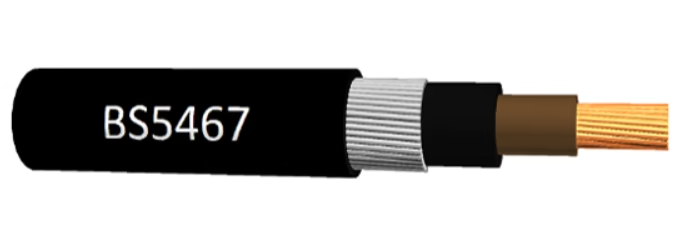
British Standard BS5467 specifies the requirements for low voltage armoured cables with thermosetting insulation rated at 600/1000V for fixed installations. These cables feature galvanised steel wire armour (SWA) for multi-core configurations and non-magnetic aluminium wire armour (AWA) for single-core applications. The standard encompasses cables with 1 to 48 cores, utilizing either plain annealed stranded copper (Class 2) or solid aluminium (Class 1) conductors per BS 6360/IEC 60228. The cross-linked polyethylene (XLPE) insulation ensures stable operation at maximum conductor temperatures of 90°C continuous and 250°C during short-circuit conditions.

What is BS5467 Cable?

BS5467 cable, BS5467 armoured cable, BS5467 SWA cable, SWA power cable, XLPE armoured cable, 0.6/1kV cable, low voltage armoured cable, steel wire armoured cable, AWA cable, underground burial cable, direct burial power cable, industrial power cable, British Standard cable, IEC 60502-1, BASEC approved, thermosetting insulation cable, PVC sheathed cable, UV resistant cable, mechanical protection cable, mains distribution cable, 3 core armoured cable, 4 core armoured cable, multi-core power cable, copper conductor cable, BS5467 cable specifications, BS5467 current rating, cable for mining, construction site cable, infrastructure cable, outdoor installation cable, BS5467電纜, 鋼絲鎧裝電纜, XLPE電纜, 低壓電力電纜, 直埋電纜, 工業電纜, 安徽飛純電纜, 特種電纜
DLO TORSIONFLEX RHH/RHW-2 represents an advanced category of portable power cables specifically engineered for demanding industrial applications, including wind turbine installations where torsional flexibility and multi-environment performance are critical requirements. This cable type combines the proven durability of Diesel Locomotive (DLO) construction with enhanced torsion resistance, making it uniquely suited for wind energy systems where cables must accommodate continuous nacelle rotation while maintaining electrical integrity.

What is DLO TORSIONFLEX RHH/RHW-2 2000V Wind Turbine Cable?

DLO TORSIONFLEX RHH/RHW-2 represents an advanced category of portable power cables specifically engineered for demanding industrial applications, including wind turbine installations where torsional flexibility and multi-environment performance are critical requirements. This cable type combines the proven durability of Diesel Locomotive (DLO) construction with enhanced torsion resistance, making it uniquely suited for wind energy systems where cables must accommodate continuous nacelle rotation while maintaining electrical integrity.
SINGLE CORE represents an advanced low smoke zero halogen (LSZH) power cable engineered by Anhui Feichun Special Cable Co., Ltd. for demanding industrial applications where fire safety, thermal performance, and electrical reliability are paramount. This cable series is manufactured in full compliance with Australian and New Zealand standards

What is ENVIROLEX® 110°C  SINGLE CORE?

SINGLE CORE cable is specifically engineered for applications requiring enhanced thermal performance and superior fire safety characteristics. The 110°C continuous operating temperature rating provides a significant thermal margin compared to standard 90°C rated cables, allowing for higher current density and more compact installations.
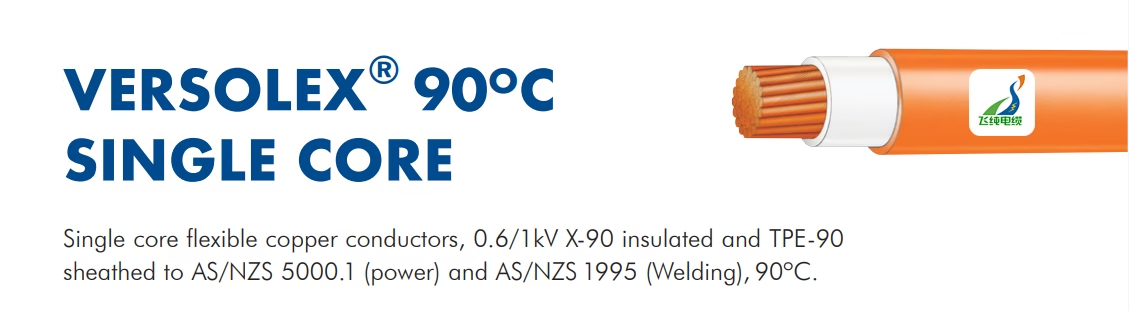
VERSOLEX 90OC, single core flexible cable, AS/NZS 5000.1, AS/NZS 1995, X-90 insulation, TPE-90 sheath, welding cable, 0.6/1kV cable, industrial power cable, flexible copper conductor, 90°C rated cable

What is VERSOLEX® 90°C Single Core Cable?

The VERSOLEX® 90OC Single Core cable represents a premium-grade flexible power cable engineered specifically for demanding industrial applications where exceptional flexibility, thermal endurance, and electrical performance are critical requirements. This specialized cable features single core flexible copper conductors rated at 0.6/1kV, utilizing X-90 (XLPE) insulation combined with TPE-90 (Thermoplastic Elastomer) sheathing to achieve superior performance characteristics across a broad range of operating conditions.
BS 6622 cable, XLPE insulation, AWA armour, SWA cable, medium voltage cable, 11kV cable, 33kV power cable, underground cable, direct burial cable

What is BS 7870-4.10 TRIPLEX Cable?

BS 7870-4.10 TRIPLEX cable represents a specialized category of medium voltage power distribution cables designed specifically for utility and industrial applications. According to the British Standards Institution, BS 7870-4.10 specifies requirements for distribution cables with extruded insulation rated from 11 kV to 33 kV. The TRIPLEX formation consists of three single-core cables laid together, providing a more efficient installation solution compared to individually pulled single-core cables.