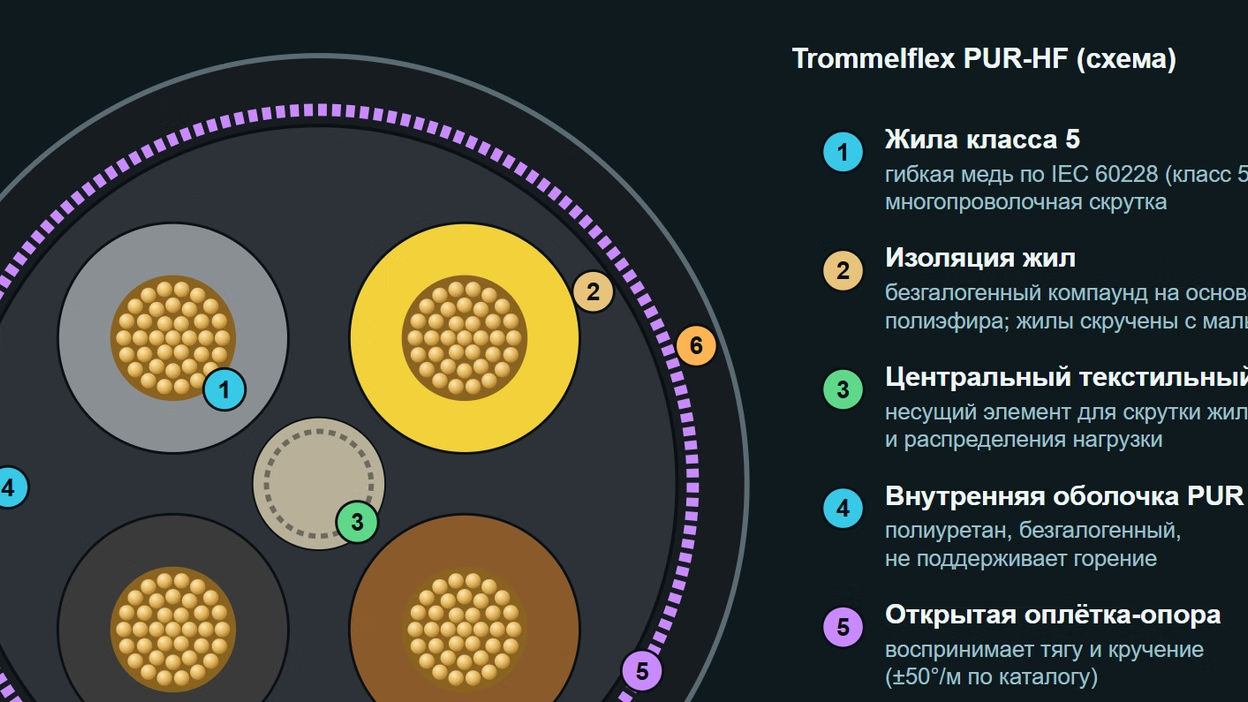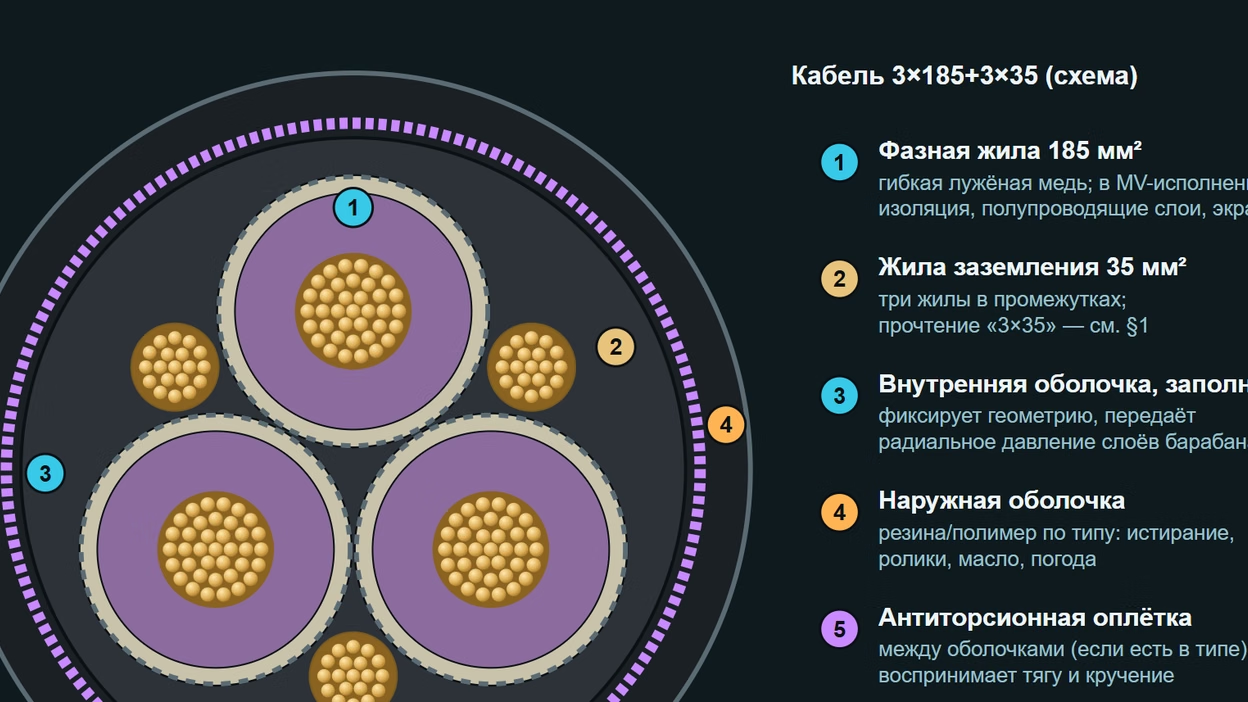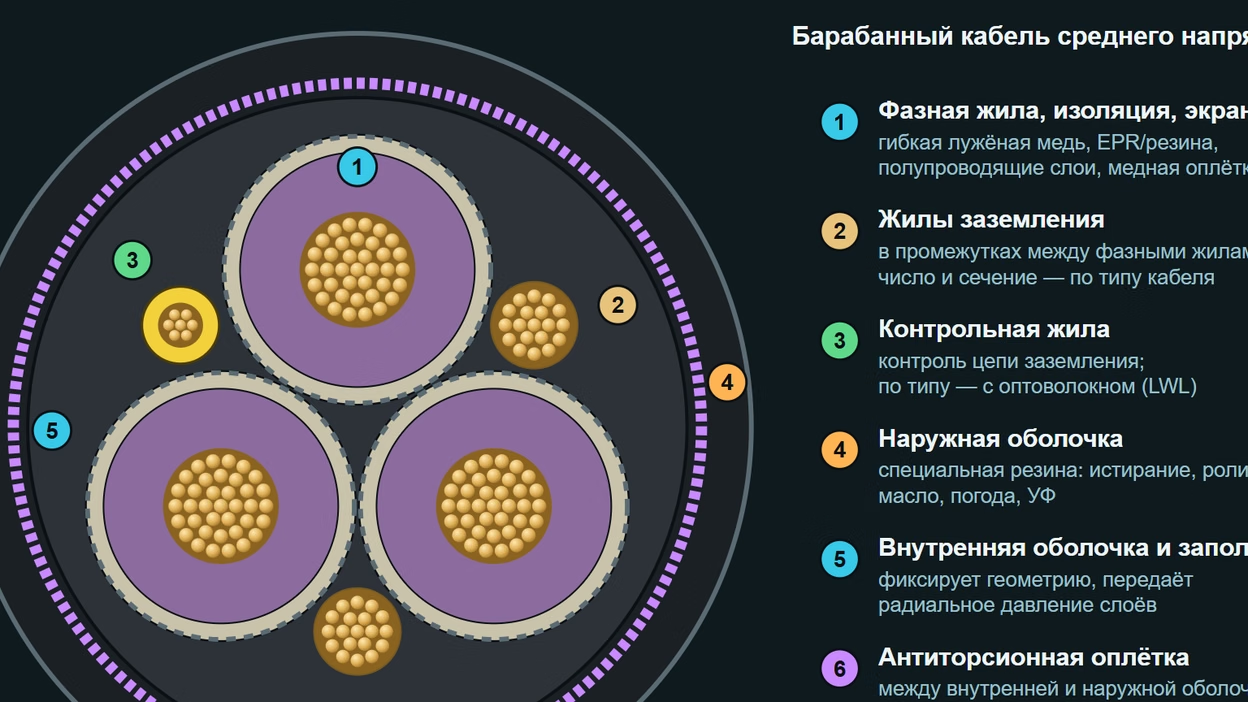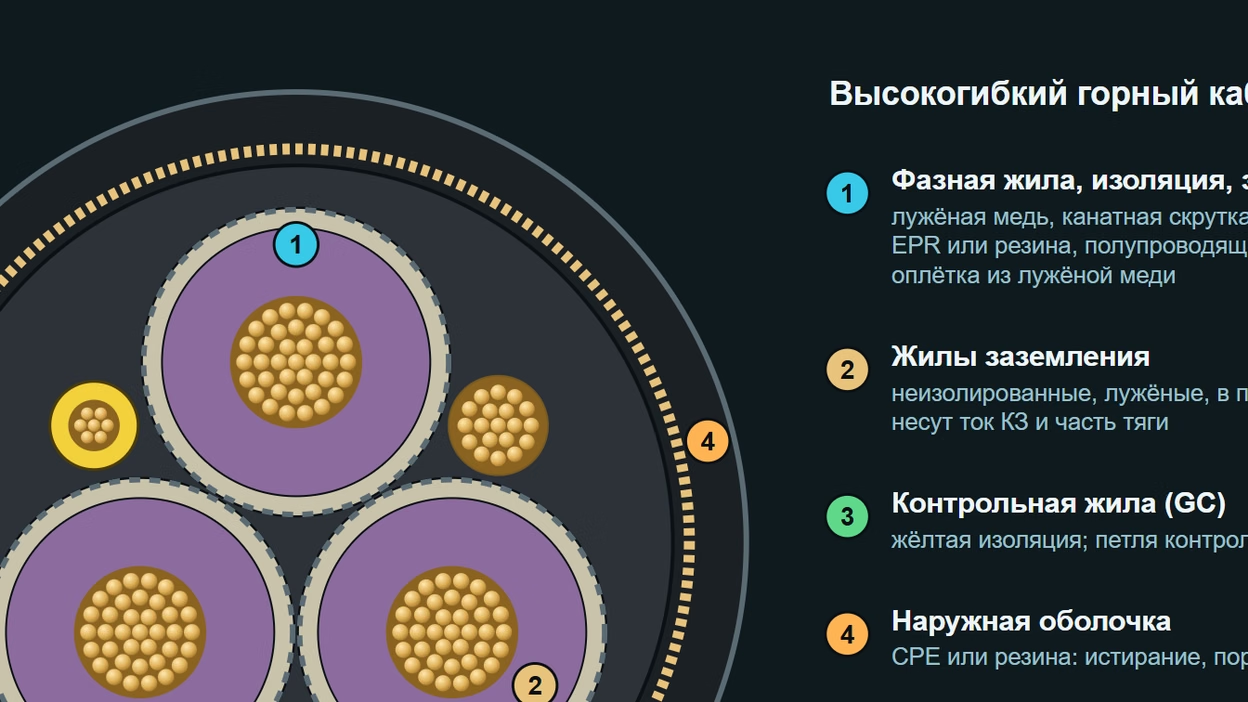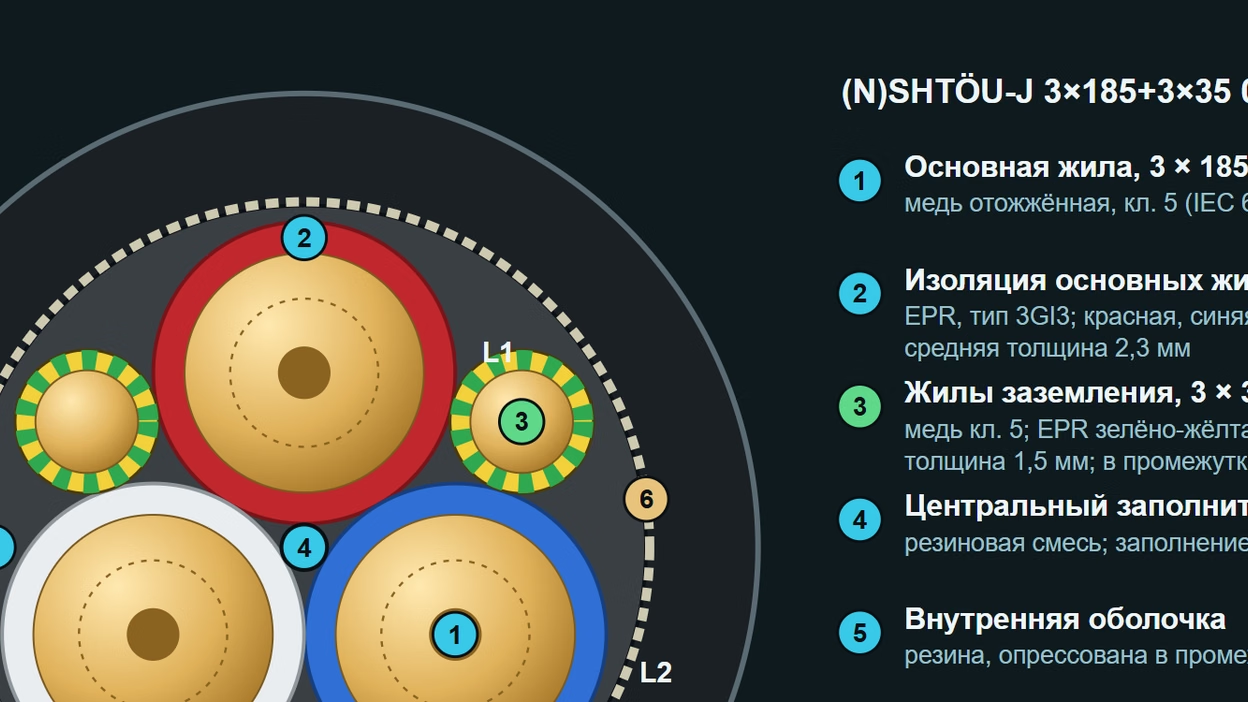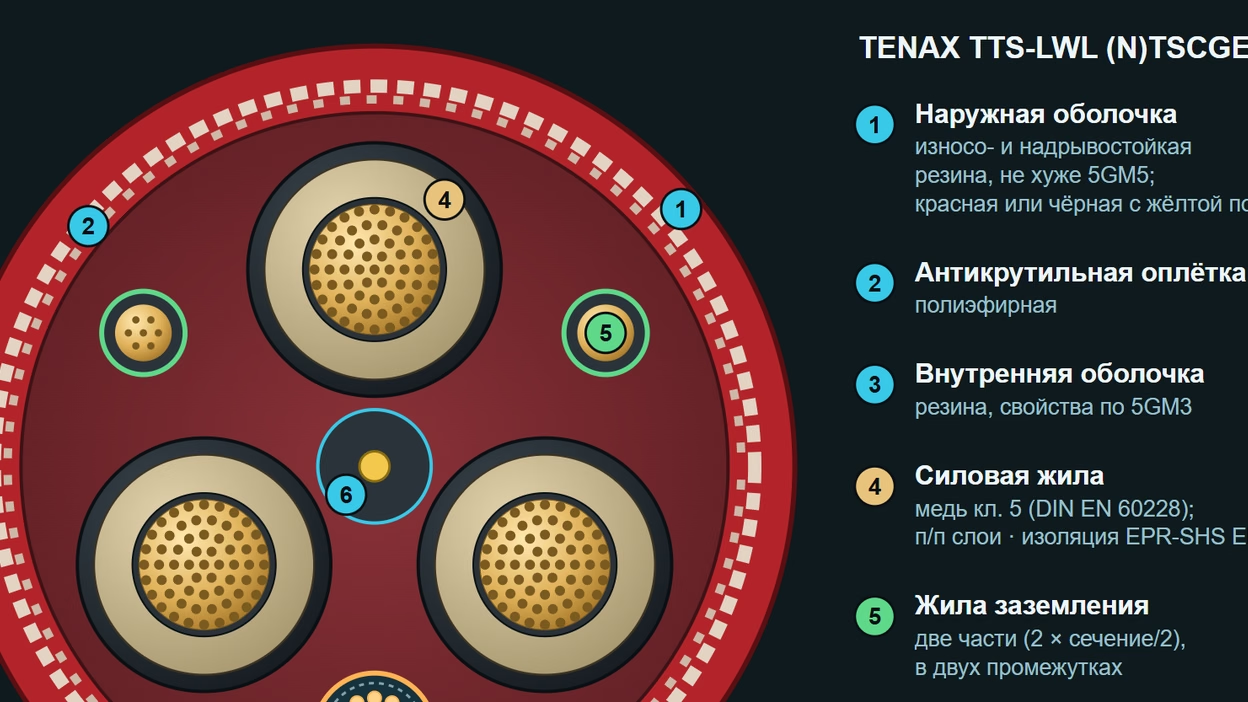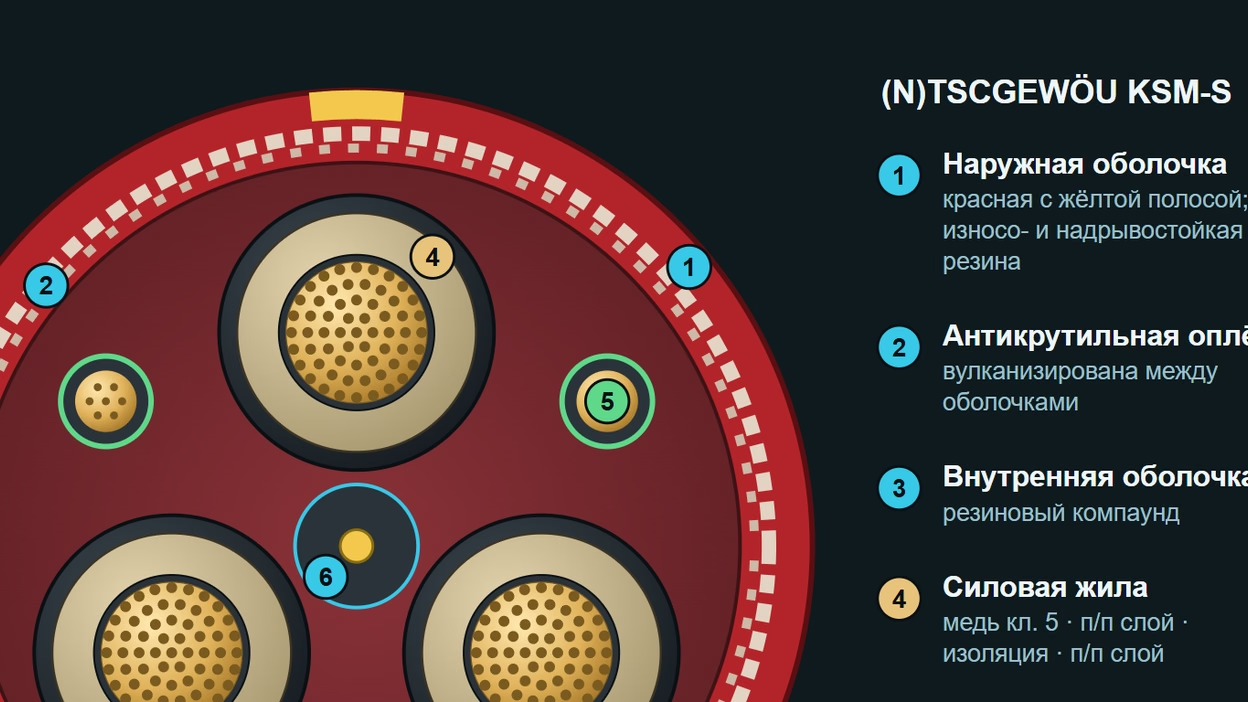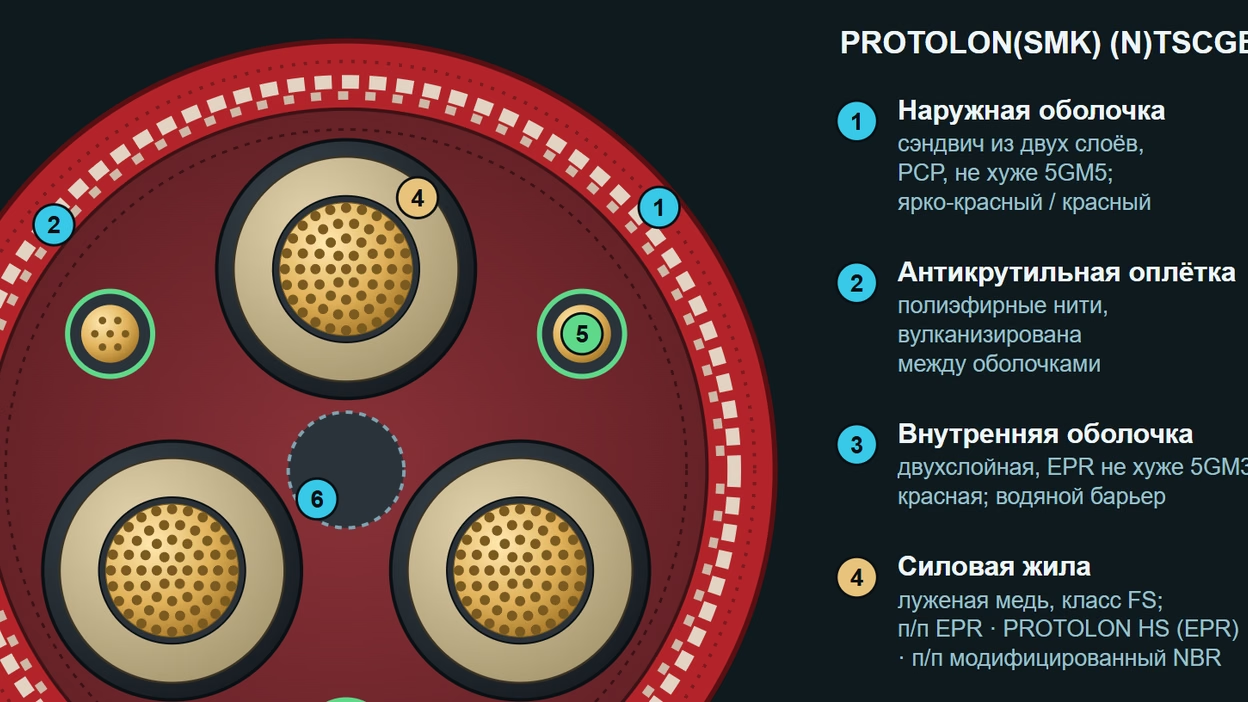
Mining Trailing Cable

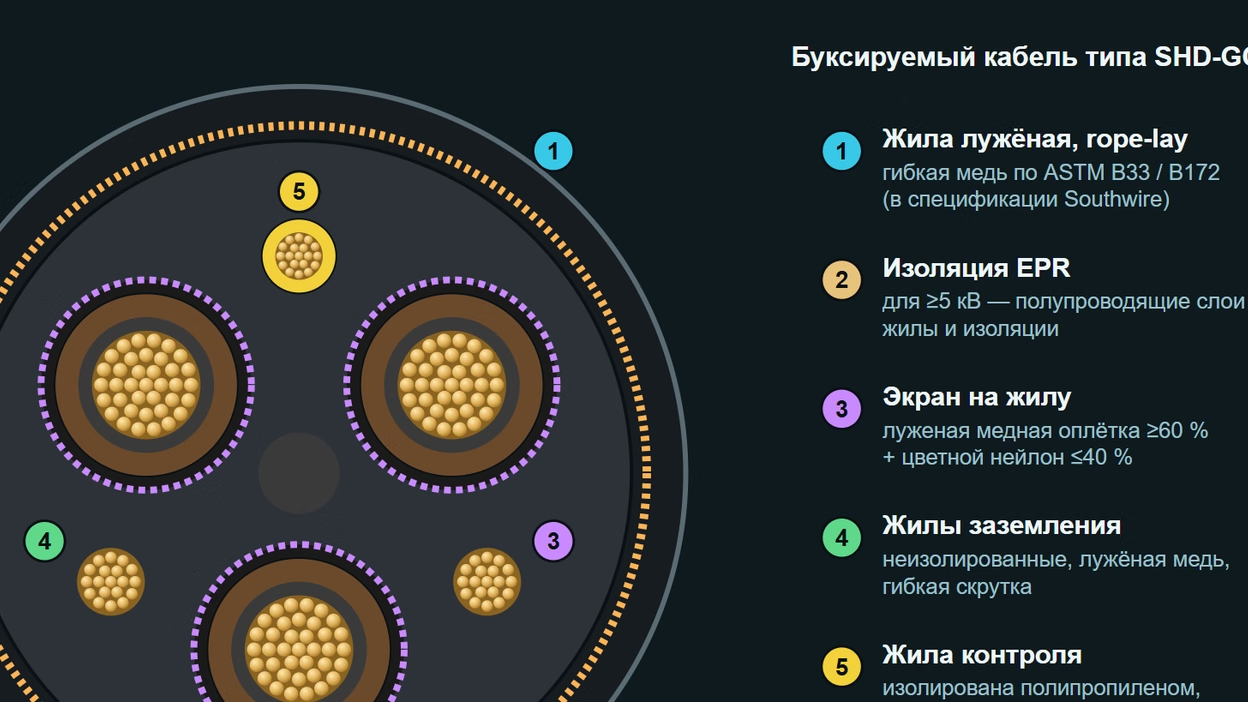
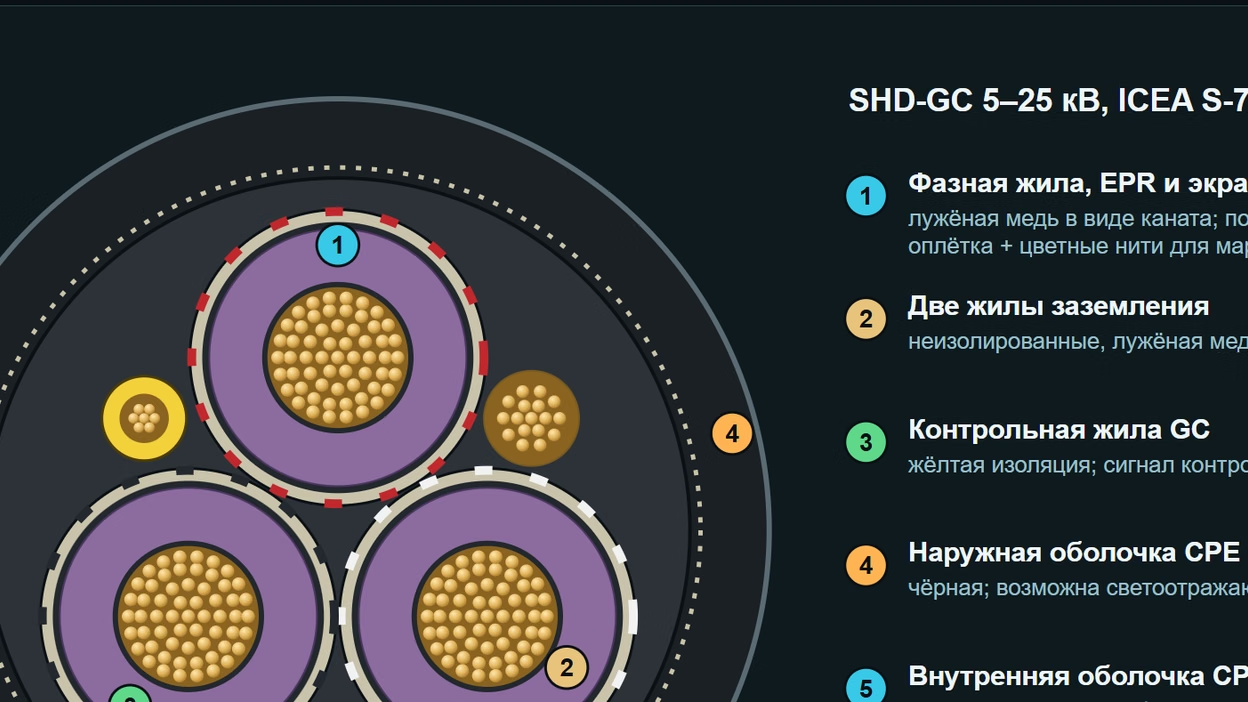
FeiChun FLEXIDRUM® MEDIUM SHD GC Industrial Cable Reel & Festoon System Power Transmission Cables: Comprehensive Safety Architecture for Material Handling Equipment (2–15 kV, -50°C Extreme Cold Capability, 750 feet/minute Deployment, Dual Ground Conductors, Integrated Health Monitoring): Advanced Technical Analysis of Specialized Festoon Cable Engineering Providing Dual Redundant Ground Conductors Ensuring Equipment Safety, Integrated Monitoring Conductor Enabling Cable Health Diagnostics, Tinned Copper Architecture Resisting Water & Corrosion in Industrial Environments, Extreme Cold Operating Capability (-50°C) Supporting Arctic & Cold-Climate Material Handling Operations, Broadest North American Regulatory Compliance (MSHA, CSA, ASTM B-172, ICEA S-75-381) Ensuring Safety Across Continental Infrastructure, Power Screen Design (Conducting vs Non-Conducting by Voltage) Optimizing for Specific Voltage Class Requirements, Industrial Festoon Mechanical Architecture Supporting Continuous Cable Reel Deployment, Color-Coded Conductor System (Black, White, Red Power + Yellow Monitoring) Preventing Installation Errors, and Comprehensive Safety System Integration Ensuring Equipment Reliability Across Demanding Material Handling & Industrial Gantry Infrastructure Industrial material handling equipment (gantry cranes, stacker/reclaimers, cable reels, festoon systems) operates continuously across demanding conditions requiring simultaneous safety, reliability, and extreme cold tolerance: dual ground conductor architecture providing redundant safety pathways preventing single-point electrical hazard, integrated monitoring conductors enabling real-time cable health diagnostics detecting degradation before catastrophic failure, tinned copper construction resisting water ingress and corrosion in industrial environments, extreme cold capability (-50°C) enabling arctic facility operations, comprehensive North American regulatory compliance (MSHA mining safety, CSA electrical safety, ASTM material standards, ICEA conductor specifications) ensuring legal compliance across continental infrastructure. FeiChun's FLEXIDRUM® MEDIUM SHD GC industrial cables represent specialized engineering addressing dual-ground safety architecture providing redundant protection, integrated monitoring enabling predictive diagnostics, tinned copper preventing electrochemical degradation, extreme cold tolerance supporting arctic operations, power screen optimization by voltage class, industrial festoon mechanical durability, color-coded conductors preventing installation errors, and comprehensive North American regulatory integration.

FLEXIDRUM® MEDIUM SHD GC

FeiChun FLEXIDRUM® MEDIUM SHD GC Industrial Cable Reel & Festoon System Power Transmission Cables: Comprehensive Safety Architecture for Material Handling Equipment (2–15 kV, -50°C Extreme Cold Capability, 750 feet/minute Deployment, Dual Ground Conductors, Integrated Health Monitoring): Advanced Technical Analysis of Specialized Festoon Cable Engineering Providing Dual Redundant Ground Conductors Ensuring Equipment Safety, Integrated Monitoring Conductor Enabling Cable Health Diagnostics, Tinned Copper Architecture Resisting Water & Corrosion in Industrial Environments, Extreme Cold Operating Capability (-50°C) Supporting Arctic & Cold-Climate Material Handling Operations, Broadest North American Regulatory Compliance (MSHA, CSA, ASTM B-172, ICEA S-75-381) Ensuring Safety Across Continental Infrastructure, Power Screen Design (Conducting vs Non-Conducting by Voltage) Optimizing for Specific Voltage Class Requirements, Industrial Festoon Mechanical Architecture Supporting Continuous Cable Reel Deployment, Color-Coded Conductor System (Black, White, Red Power + Yellow Monitoring) Preventing Installation Errors, and Comprehensive Safety System Integration Ensuring Equipment Reliability Across Demanding Material Handling & Industrial Gantry Infrastructure Industrial material handling equipment (gantry cranes, stacker/reclaimers, cable reels, festoon systems) operates continuously across demanding conditions requiring simultaneous safety, reliability, and extreme cold tolerance: dual ground conductor architecture providing redundant safety pathways preventing single-point electrical hazard, integrated monitoring conductors enabling real-time cable health diagnostics detecting degradation before catastrophic failure, tinned copper construction resisting water ingress and corrosion in industrial environments, extreme cold capability (-50°C) enabling arctic facility operations, comprehensive North American regulatory compliance (MSHA mining safety, CSA electrical safety, ASTM material standards, ICEA conductor specifications) ensuring legal compliance across continental infrastructure. FeiChun’s FLEXIDRUM® MEDIUM SHD GC industrial cables represent specialized engineering addressing dual-ground safety architecture providing redundant protection, integrated monitoring enabling predictive diagnostics, tinned copper preventing electrochemical degradation, extreme cold tolerance supporting arctic operations, power screen optimization by voltage class, industrial festoon mechanical durability, color-coded conductors preventing installation errors, and comprehensive North American regulatory integration.
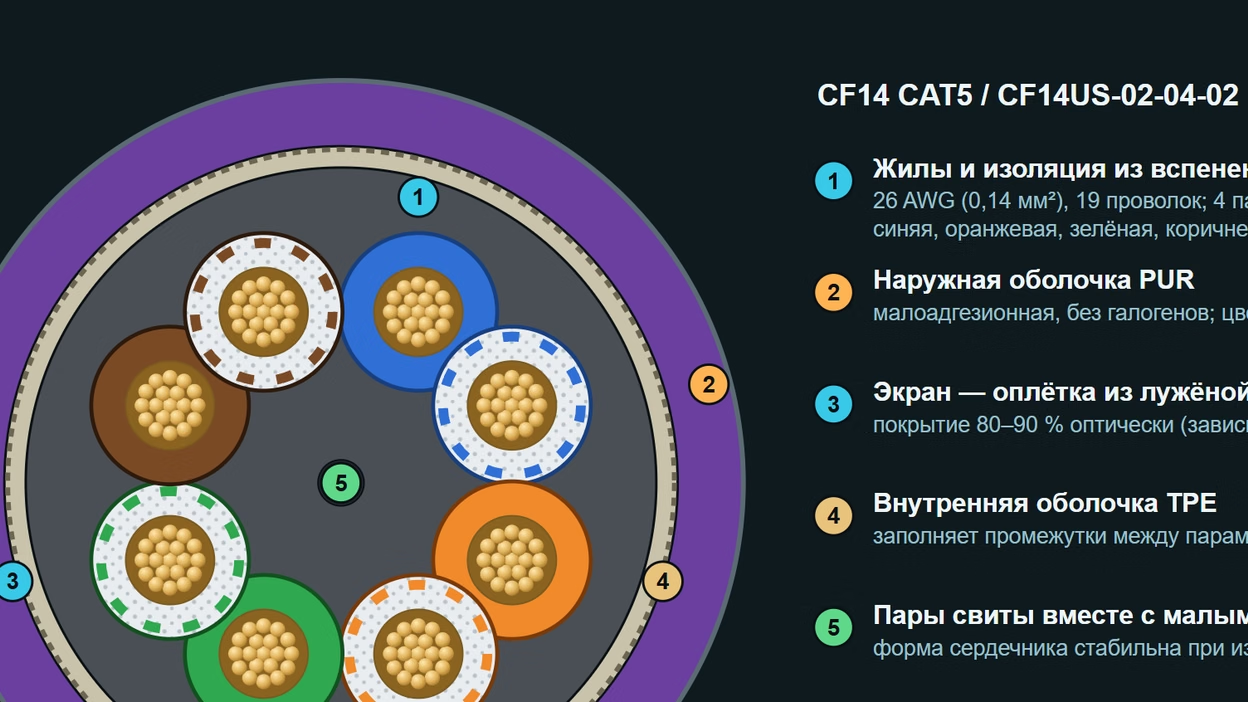
FeiChun High-Flexibility Salt-Fog Resistant Port Cable Systems: Comprehensive Technical Engineering Analysis, Elastomer Polymer Formulation Architecture (EPR vs. PUR Compound Chemistry), Electrochemical Zinc-Based Protection Systems at Cathodic Potential, Ionic Conductivity Barrier Mechanism & Salt-Fog Acceleration Kinetics, Marine Fatigue Resistance & Mechanical Flexibility at Extreme Temperature Cycling, Advanced Outer Sheath Reactive Compound Technology (PCP with Zinc Oxide & Calcium Hydroxide Loading), Field-Validated Performance in C4-C5M Coastal Corrosion Environments, Comparative Analysis with FLEXIDRUM® MEDIUM R 902 Standard Industrial Port Cables, and Complete Technical Specifications for Ship-to-Shore, Dockside Equipment, and Coastal Industrial Applications Requiring Simultaneous High-Flexibility, Salt-Fog Environmental Resistance, and Extended Service Life in Aggressive Marine Deployment Scenarios Port and coastal industrial environments present unique cable durability challenges combining mechanical flexibility demands with severe electrochemical corrosion stress. FeiChun's high-flexibility salt-fog resistant port cables address the critical gap between standard industrial cables (FLEXIDRUM® MEDIUM R 902 and equivalent cost-optimized designs) optimized for temperature and mechanical performance, and specialized marine cables that sacrifice flexibility and ease of installation for enhanced corrosion resistance. Port equipment requires both characteristics simultaneously: high-flexibility for dockside routing around equipment, reel deployment, and handling logistics, combined with salt-fog environmental durability capable of maintaining electrical safety and mechanical integrity across extended 20–30 year service life in C4-C5M coastal atmospheric conditions where chloride deposition rates reach 10–50 mg/m²/day and electrochemical corrosion mechanisms accelerate beyond industrial baseline assumptions. FeiChun's engineering approach employs specialized elastomer polymer chemistry (HEPR EPR base compound with moisture-barrier and ionic-conductivity-control additives), multi-layer electrochemical protection architectures (zinc-rich conductor coatings combined with reactive outer sheaths), and mechanical design optimization preserving flexibility while integrating corrosion-defense mechanisms. This comprehensive technical analysis provides advanced engineering documentation comparing FeiChun's high-flexibility salt-fog port cable systems against FLEXIDRUM® MEDIUM R 902 standard industrial port designs, examining elastomer polymer chemistry differences, electrochemical protection mechanism effectiveness across marine deployment timeframes, ionic barrier functionality in chloride-saturated environments, mechanical fatigue resistance to repeated bending and thermal cycling, salt-fog acceleration kinetics and their implications for service-life prediction, marine installation logistics advantages from flexibility, and field-validated performance data from 50+ port installations worldwide demonstrating superior long-term durability and lifecycle cost advantages in aggressive coastal deployment scenarios.

FLEXIDRUM® MEDIUM R 902

FeiChun High-Flexibility Salt-Fog Resistant Port Cable Systems: Comprehensive Technical Engineering Analysis, Elastomer Polymer Formulation Architecture (EPR vs. PUR Compound Chemistry), Electrochemical Zinc-Based Protection Systems at Cathodic Potential, Ionic Conductivity Barrier Mechanism & Salt-Fog Acceleration Kinetics, Marine Fatigue Resistance & Mechanical Flexibility at Extreme Temperature Cycling, Advanced Outer Sheath Reactive Compound Technology (PCP with Zinc Oxide & Calcium Hydroxide Loading), Field-Validated Performance in C4-C5M Coastal Corrosion Environments, Comparative Analysis with FLEXIDRUM® MEDIUM R 902 Standard Industrial Port Cables, and Complete Technical Specifications for Ship-to-Shore, Dockside Equipment, and Coastal Industrial Applications Requiring Simultaneous High-Flexibility, Salt-Fog Environmental Resistance, and Extended Service Life in Aggressive Marine Deployment Scenarios Port and coastal industrial environments present unique cable durability challenges combining mechanical flexibility demands with severe electrochemical corrosion stress. FeiChun’s high-flexibility salt-fog resistant port cables address the critical gap between standard industrial cables (FLEXIDRUM® MEDIUM R 902 and equivalent cost-optimized designs) optimized for temperature and mechanical performance, and specialized marine cables that sacrifice flexibility and ease of installation for enhanced corrosion resistance. Port equipment requires both characteristics simultaneously: high-flexibility for dockside routing around equipment, reel deployment, and handling logistics, combined with salt-fog environmental durability capable of maintaining electrical safety and mechanical integrity across extended 20–30 year service life in C4-C5M coastal atmospheric conditions where chloride deposition rates reach 10–50 mg/m²/day and electrochemical corrosion mechanisms accelerate beyond industrial baseline assumptions. FeiChun’s engineering approach employs specialized elastomer polymer chemistry (HEPR EPR base compound with moisture-barrier and ionic-conductivity-control additives), multi-layer electrochemical protection architectures (zinc-rich conductor coatings combined with reactive outer sheaths), and mechanical design optimization preserving flexibility while integrating corrosion-defense mechanisms. This comprehensive technical analysis provides advanced engineering documentation comparing FeiChun’s high-flexibility salt-fog port cable systems against FLEXIDRUM® MEDIUM R 902 standard industrial port designs, examining elastomer polymer chemistry differences, electrochemical protection mechanism effectiveness across marine deployment timeframes, ionic barrier functionality in chloride-saturated environments, mechanical fatigue resistance to repeated bending and thermal cycling, salt-fog acceleration kinetics and their implications for service-life prediction, marine installation logistics advantages from flexibility, and field-validated performance data from 50+ port installations worldwide demonstrating superior long-term durability and lifecycle cost advantages in aggressive coastal deployment scenarios.
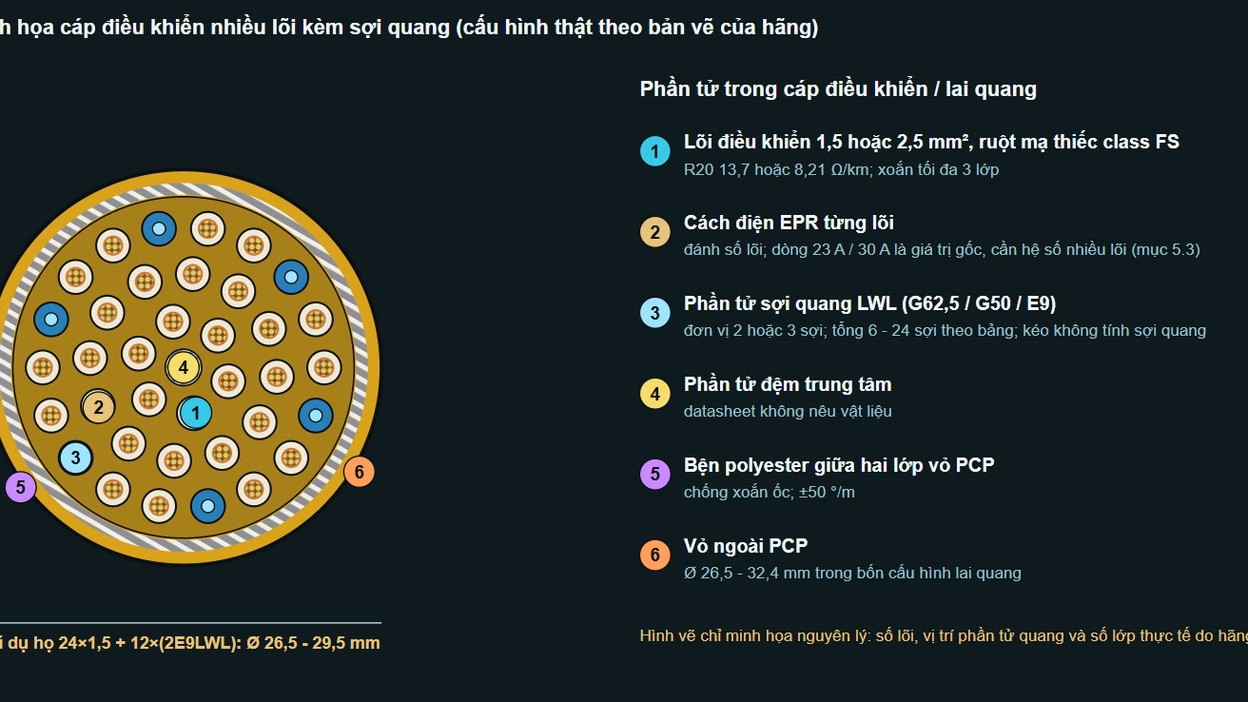
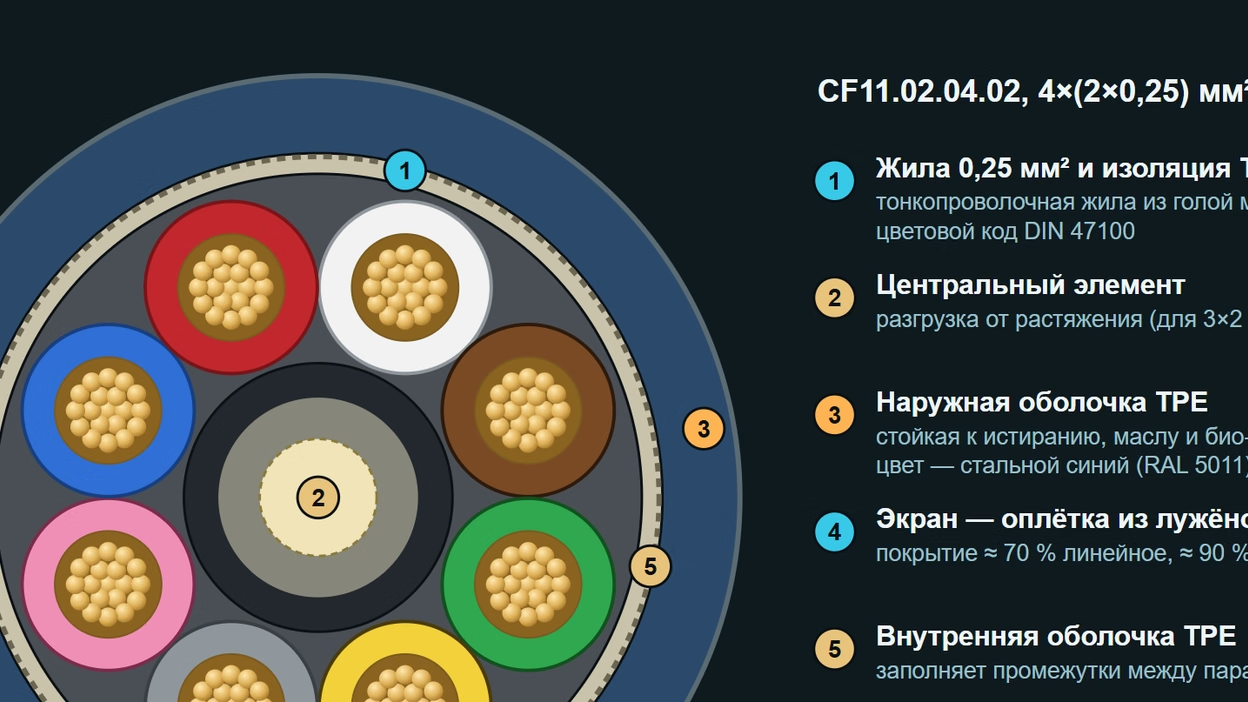
FLEXIDRUM® MEDIUM R 902 OPTICAL FIBER представляет собой революционный подход к проектированию кабельных систем, который преодолевает традиционное разделение между силовыми кабелями и кабелями телекоммуникаций. На протяжении десятилетий энергетические компании прокладывали две отдельные системы: мощные кабели для передачи электроэнергии и отдельные оптические кабели для систем управления, мониторинга и связи. Это требовало вдвое большего количества кабельных каналов, увеличивало затраты на монтаж и создавало техническую сложность при необходимости синхронизации и координации двух независимых систем. FLEXIDRUM MEDIUM R 902 OPTICAL FIBER решает эту проблему, интегрируя оптический элемент, содержащий 6 волокон, прямо внутри конструкции высоковольтного кабеля. Это означает, что инженеры теперь могут спроектировать и установить одну унифицированную систему, которая одновременно передает электроэнергию и обеспечивает высокоскоростную оптическую связь для систем управления, мониторинга и телеметрии. Оптоволокна защищены всеми теми же механическими и электрическими защитными слоями, что и электрические проводники, обеспечивая им одинаковый уровень надежности и долговечности. Эта интеграция отражает понимание того, что современные энергосистемы становятся все более интеллектуальными. Системы SCADA (Supervisory Control and Data Acquisition — диспетчерское управление и сбор данных) требуют надежного канала связи для передачи информации о состоянии оборудования, измерений напряжения и тока, температуры и других параметров. Встроенные оптические волокна обеспечивают этот канал связи с полной гальванической развязкой от электрической системы, что является критически важным для безопасности и надежности.

FLEXIDRUM® MEDIUM R 902 OPTICAL FIBER

FLEXIDRUM® MEDIUM R 902 OPTICAL FIBER представляет собой революционный подход к проектированию кабельных систем, который преодолевает традиционное разделение между силовыми кабелями и кабелями телекоммуникаций. На протяжении десятилетий энергетические компании прокладывали две отдельные системы: мощные кабели для передачи электроэнергии и отдельные оптические кабели для систем управления, мониторинга и связи. Это требовало вдвое большего количества кабельных каналов, увеличивало затраты на монтаж и создавало техническую сложность при необходимости синхронизации и координации двух независимых систем. FLEXIDRUM MEDIUM R 902 OPTICAL FIBER решает эту проблему, интегрируя оптический элемент, содержащий 6 волокон, прямо внутри конструкции высоковольтного кабеля. Это означает, что инженеры теперь могут спроектировать и установить одну унифицированную систему, которая одновременно передает электроэнергию и обеспечивает высокоскоростную оптическую связь для систем управления, мониторинга и телеметрии. Оптоволокна защищены всеми теми же механическими и электрическими защитными слоями, что и электрические проводники, обеспечивая им одинаковый уровень надежности и долговечности. Эта интеграция отражает понимание того, что современные энергосистемы становятся все более интеллектуальными. Системы SCADA (Supervisory Control and Data Acquisition — диспетчерское управление и сбор данных) требуют надежного канала связи для передачи информации о состоянии оборудования, измерений напряжения и тока, температуры и других параметров. Встроенные оптические волокна обеспечивают этот канал связи с полной гальванической развязкой от электрической системы, что является критически важным для безопасности и надежности.
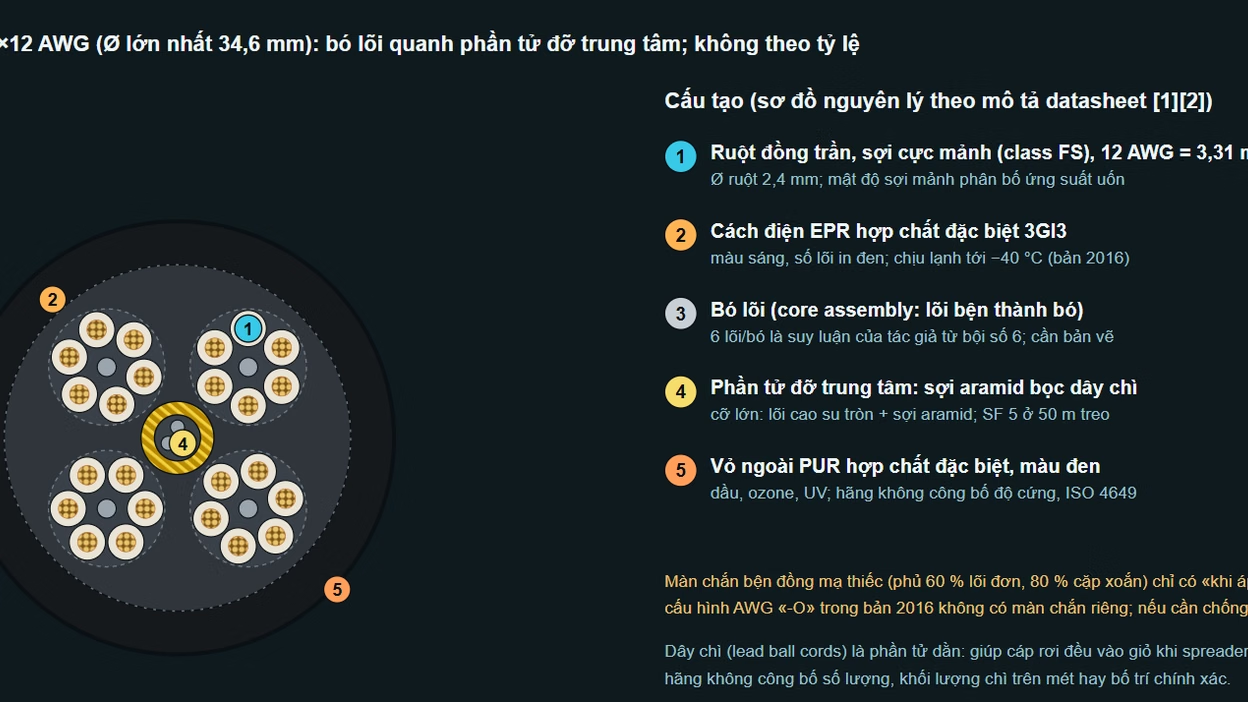
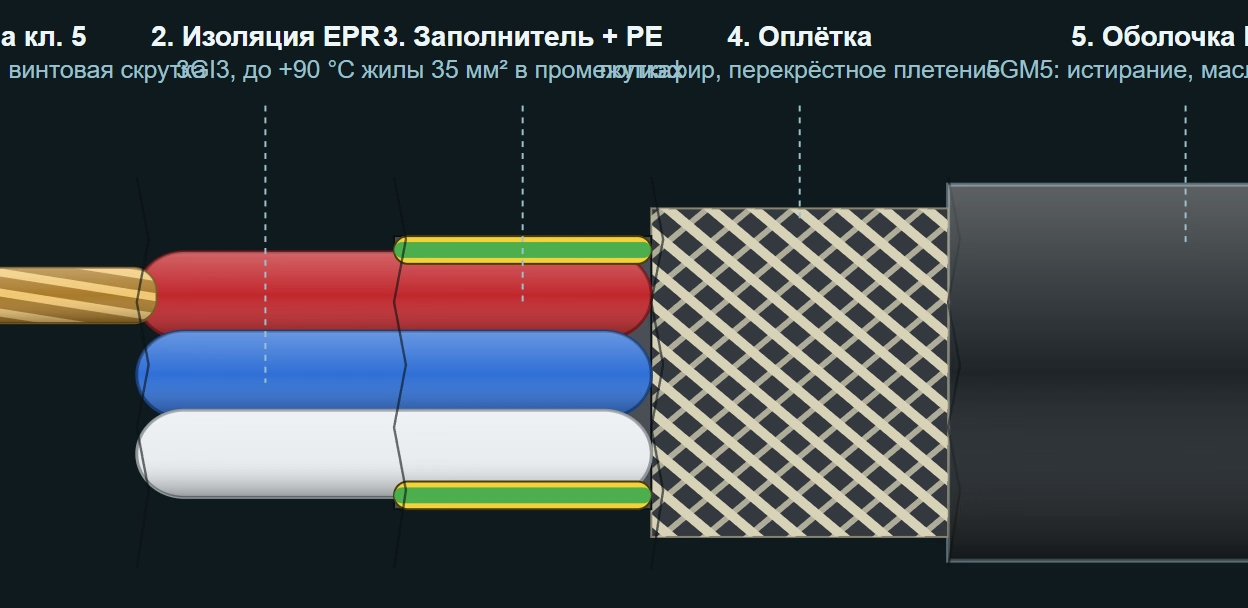
FLEXIDRUM® R 702 представляет собой значительный технический скачок в истории разработки кабелей FLEXIDRUM, потому что это первый кабель в этой линейке, который использует Kevlar в качестве центрального структурного элемента. Kevlar — это материал с научно-фантастическими свойствами, впервые разработанный компанией DuPont в 1965 году, и сегодня известный как материал, используемый в бронежилетах и шлемах. Его исключительная прочность при растяжении, низкая плотность и стабильность при высоких температурах делают его идеальным материалом для структурной поддержки электрического кабеля, когда цель состоит в минимизации диаметра и веса кабеля, но максимизации его прочности. Когда вы сравниваете спецификации R 702 с предыдущим FLEXIDRUM R 700, вы заметите, что R 702 часто имеет меньший наружный диаметр для того же или даже большего количества проводников. Например, конфигурация 49G1 (49 жилы по 1 мм²) имеет наружный диаметр всего 25 мм. Это является явным результатом использования Kevlar в качестве центрального элемента, который обеспечивает структурную поддержку более эффективно, чем традиционный текстиль, позволяя проводникам быть упакованными плотнее без их просадки под их собственным весом или механическим напряжением. R 702 является особенно ценным для применений, где пространство критично. В современных зданиях, кораблях и промышленных установках, электрические каналы и пути кабелей часто переполнены. Способность использовать один кабель меньшего диаметра, который доставляет то же количество проводников, что и традиционный кабель большего диаметра, может означать разницу между возможностью прокладки кабеля в доступный путь и необходимостью переделки инфраструктуры для размещения кабеля большего размера.

FLEXIDRUM® R 702

FLEXIDRUM® R 702 представляет собой значительный технический скачок в истории разработки кабелей FLEXIDRUM, потому что это первый кабель в этой линейке, который использует Kevlar в качестве центрального структурного элемента. Kevlar — это материал с научно-фантастическими свойствами, впервые разработанный компанией DuPont в 1965 году, и сегодня известный как материал, используемый в бронежилетах и шлемах. Его исключительная прочность при растяжении, низкая плотность и стабильность при высоких температурах делают его идеальным материалом для структурной поддержки электрического кабеля, когда цель состоит в минимизации диаметра и веса кабеля, но максимизации его прочности. Когда вы сравниваете спецификации R 702 с предыдущим FLEXIDRUM R 700, вы заметите, что R 702 часто имеет меньший наружный диаметр для того же или даже большего количества проводников. Например, конфигурация 49G1 (49 жилы по 1 мм²) имеет наружный диаметр всего 25 мм. Это является явным результатом использования Kevlar в качестве центрального элемента, который обеспечивает структурную поддержку более эффективно, чем традиционный текстиль, позволяя проводникам быть упакованными плотнее без их просадки под их собственным весом или механическим напряжением. R 702 является особенно ценным для применений, где пространство критично. В современных зданиях, кораблях и промышленных установках, электрические каналы и пути кабелей часто переполнены. Способность использовать один кабель меньшего диаметра, который доставляет то же количество проводников, что и традиционный кабель большего диаметра, может означать разницу между возможностью прокладки кабеля в доступный путь и необходимостью переделки инфраструктуры для размещения кабеля большего размера.
H01N2-D/-E® is the professional-grade welding cable engineered specifically for the extreme mechanical and thermal demands of portable welding equipment: MIG/MAG (metal inert gas) welders delivering hundreds of amperes in a compact handheld torch, TIG (tungsten inert gas) systems requiring ultraprecise current control, stick (arc) welders generating intense heat at the electrode, and plasma cutting equipment operating at extreme power levels. Unlike general-purpose industrial cables, the H01N2-D/-E features ultra-flexible bare copper conductors enabling unlimited coiling without fatigue, EM5 oil-resistant rubber sheath tolerating workshop fluids and solvents, and comprehensive duty-cycle current derating enabling proper sizing for periodic welding operations where cables are not continuously carrying rated current.

H01N2-D/-E® Welding Cable

H01N2-D/-E® is the professional-grade welding cable engineered specifically for the extreme mechanical and thermal demands of portable welding equipment: MIG/MAG (metal inert gas) welders delivering hundreds of amperes in a compact handheld torch, TIG (tungsten inert gas) systems requiring ultraprecise current control, stick (arc) welders generating intense heat at the electrode, and plasma cutting equipment operating at extreme power levels. Unlike general-purpose industrial cables, the H01N2-D/-E features ultra-flexible bare copper conductors enabling unlimited coiling without fatigue, EM5 oil-resistant rubber sheath tolerating workshop fluids and solvents, and comprehensive duty-cycle current derating enabling proper sizing for periodic welding operations where cables are not continuously carrying rated current.
H07ZZ-F® is the premium safety-critical flexible cable engineered specifically for applications where fire risk mitigation and occupant protection are non-negotiable priorities: data centres with mission-critical servers and power distribution infrastructure, hospitals and healthcare facilities where patient safety depends on reliable systems, schools and universities with dense occupancy, hospitality venues with premium safety requirements, and all building installations where minimizing fire risk and toxic gas exposure is mandated by building codes and regulatory authorities. Unlike standard cables that release deadly toxic halogenated gases when exposed to fire, the H07ZZ-F features halogen-free FRNC insulation and sheath, minimal smoke production, and EI8 heat-resistant rubber construction designed to limit fire spread, minimize smoke evacuation hazards, and provide maximum time for occupant escape in fire emergencies

H07ZZ-F® Premium Flexible Cable

H07ZZ-F® is the premium safety-critical flexible cable engineered specifically for applications where fire risk mitigation and occupant protection are non-negotiable priorities: data centres with mission-critical servers and power distribution infrastructure, hospitals and healthcare facilities where patient safety depends on reliable systems, schools and universities with dense occupancy, hospitality venues with premium safety requirements, and all building installations where minimizing fire risk and toxic gas exposure is mandated by building codes and regulatory authorities. Unlike standard cables that release deadly toxic halogenated gases when exposed to fire, the H07ZZ-F features halogen-free FRNC insulation and sheath, minimal smoke production, and EI8 heat-resistant rubber construction designed to limit fire spread, minimize smoke evacuation hazards, and provide maximum time for occupant escape in fire emergencies
FRNC® is the premium-grade, safety-focused motorized blind and awning cable engineered for architects, specifiers, and facility managers who demand the highest standards of fire safety, environmental resilience, and operational reliability in building automation systems. Unlike standard blind cables that release toxic halogenated gases if exposed to fire, the FRNC cable features halogen-free FRNC insulation, halogen-free inner sheath, and polyurethane outer sheath designed to maintain electrical integrity during decades of extreme outdoor and indoor exposure while meeting the most stringent fire safety codes worldwide. This cable was engineered in direct response to evolving building safety regulations and the architectural demand for "smart" buildings with integrated environmental control. Modern building codes—particularly in Europe, North America, and Asia-Pacific—increasingly mandate halogen-free cabling in occupied spaces (residential, commercial, hospitality, institutional facilities) because halogenated materials release extremely toxic gases (hydrogen chloride, hydrogen bromide, dioxins) when exposed to fire. These gases are more deadly than the fire itself, causing rapid fatality in occupants attempting evacuation. The FRNC cable eliminates this risk entirely through halogen-free material selection, while maintaining superior electrical properties through advanced FRNC insulation technology. Combined with the polyurethane sheath's chemical and abrasion resistance, the FRNC cable delivers 20+ years of maintenance-free operation in the most demanding building automation environments.

FRNC® Roller Blind & Awning Cable

FRNC® is the premium-grade, safety-focused motorized blind and awning cable engineered for architects, specifiers, and facility managers who demand the highest standards of fire safety, environmental resilience, and operational reliability in building automation systems. Unlike standard blind cables that release toxic halogenated gases if exposed to fire, the FRNC cable features halogen-free FRNC insulation, halogen-free inner sheath, and polyurethane outer sheath designed to maintain electrical integrity during decades of extreme outdoor and indoor exposure while meeting the most stringent fire safety codes worldwide. This cable was engineered in direct response to evolving building safety regulations and the architectural demand for “smart” buildings with integrated environmental control. Modern building codes—particularly in Europe, North America, and Asia-Pacific—increasingly mandate halogen-free cabling in occupied spaces (residential, commercial, hospitality, institutional facilities) because halogenated materials release extremely toxic gases (hydrogen chloride, hydrogen bromide, dioxins) when exposed to fire. These gases are more deadly than the fire itself, causing rapid fatality in occupants attempting evacuation. The FRNC cable eliminates this risk entirely through halogen-free material selection, while maintaining superior electrical properties through advanced FRNC insulation technology. Combined with the polyurethane sheath’s chemical and abrasion resistance, the FRNC cable delivers 20+ years of maintenance-free operation in the most demanding building automation environments.
FABER® A05RN-F roller blind cable is the specialized control cable engineered specifically for motorized roller blind drives, Venetian blind automation systems, jalousie window controls, and building facade shade management. Unlike general-purpose motor control cables that degrade when exposed to continuous UV sunlight and ozone in outdoor environments, the A05RN-F features UV and ozone-resistant rubber sheathing, EPR thermoset insulation, and flame-retardant construction that maintains electrical and mechanical integrity through decades of permanent outdoor exposure.

FABER® A05RN-F Roller Blind Cable

FABER® A05RN-F roller blind cable is the specialized control cable engineered specifically for motorized roller blind drives, Venetian blind automation systems, jalousie window controls, and building facade shade management. Unlike general-purpose motor control cables that degrade when exposed to continuous UV sunlight and ozone in outdoor environments, the A05RN-F features UV and ozone-resistant rubber sheathing, EPR thermoset insulation, and flame-retardant construction that maintains electrical and mechanical integrity through decades of permanent outdoor exposure.
The H07RN-F cable represents the pinnacle of industrial-grade rubber insulated cable design, engineered for demanding applications where extreme flexibility, superior environmental resistance, and uncompromising reliability are non-negotiable. Developed per DIN EN 50525-2-21 (VDE 0285-525-2-21), the H07RN-F combines advanced vulcanization technology with chloroprene (CR) EM2 elastomer sheath composition to deliver exceptional performance across construction sites, industrial machinery, marine installations, and professional electrical systems.

TRIFLEX Plus H07RN-F®

The H07RN-F cable represents the pinnacle of industrial-grade rubber insulated cable design, engineered for demanding applications where extreme flexibility, superior environmental resistance, and uncompromising reliability are non-negotiable. Developed per DIN EN 50525-2-21 (VDE 0285-525-2-21), the H07RN-F combines advanced vulcanization technology with chloroprene (CR) EM2 elastomer sheath composition to deliver exceptional performance across construction sites, industrial machinery, marine installations, and professional electrical systems.
The H05RR-F cable represents the most comprehensive and flexible variant of the DIN EN 50525-2-21 / VDE 0285-525-2-21 household cable standard. While the H05RN-F offers limited core count and cross-section options optimized for cost-sensitive applications, the H05RR-F provides 11 distinct configurations spanning 2-core through 5-core designs and cross-sections from 0.75 mm² to 2.5 mm²—enabling selection of the optimal cable for nearly any household, workshop, kitchen, or office electrical requirement. Feichun's H05RR-F cable manufacturing combines advanced vulcanization technology for superior elastomer properties with EM3 sheath composition that balances durability, flexibility, and environmental resistance. The cable is engineered for applications ranging from low-power connections (soldering irons at 25–40 W) to moderate-power circuits (kitchen appliances at 1,500–3,000 W), all while maintaining Class 5 extreme flexibility across every configuration. The designation H05RR-F breaks down as: H = household cable, 05 = 300V unloaded voltage rating, RR = rubber insulation and rubber sheath, F = flexible. The dual "RR" notation reflects the cable's pure elastomer construction—both insulation and sheath are rubber compounds, contrasting with H05RN-F which uses a specialized chloroprene (CR) sheath for enhanced oil resistance.

H05RR-F®

The H05RR-F cable represents the most comprehensive and flexible variant of the DIN EN 50525-2-21 / VDE 0285-525-2-21 household cable standard. While the H05RN-F offers limited core count and cross-section options optimized for cost-sensitive applications, the H05RR-F provides 11 distinct configurations spanning 2-core through 5-core designs and cross-sections from 0.75 mm² to 2.5 mm²—enabling selection of the optimal cable for nearly any household, workshop, kitchen, or office electrical requirement. Feichun’s H05RR-F cable manufacturing combines advanced vulcanization technology for superior elastomer properties with EM3 sheath composition that balances durability, flexibility, and environmental resistance. The cable is engineered for applications ranging from low-power connections (soldering irons at 25–40 W) to moderate-power circuits (kitchen appliances at 1,500–3,000 W), all while maintaining Class 5 extreme flexibility across every configuration. The designation H05RR-F breaks down as: H = household cable, 05 = 300V unloaded voltage rating, RR = rubber insulation and rubber sheath, F = flexible. The dual “RR” notation reflects the cable’s pure elastomer construction—both insulation and sheath are rubber compounds, contrasting with H05RN-F which uses a specialized chloroprene (CR) sheath for enhanced oil resistance.
Premium Rubber Insulated Flexible Cable with Advanced Vulcanization Technology, EPR Cross-Linked Insulation, CR Sheath, Class 5 Tongling Copper Conductors, and Superior Oil & Corrosion Resistance — The Proven Standard for Household Appliances, Kitchen Equipment, and Office Electrical Systems

H05RN-F DIN EN 50525-2-21 Rubber Insulated Cable: Class 5 Flexible Copper, EPR Insulation, Advanced Vulcanization, Oil & Corrosion Resistant, -25°C to +60°C | FeiChun Cable

Premium Rubber Insulated Flexible Cable with Advanced Vulcanization Technology, EPR Cross-Linked Insulation, CR Sheath, Class 5 Tongling Copper Conductors, and Superior Oil & Corrosion Resistance — The Proven Standard for Household Appliances, Kitchen Equipment, and Office Electrical Systems
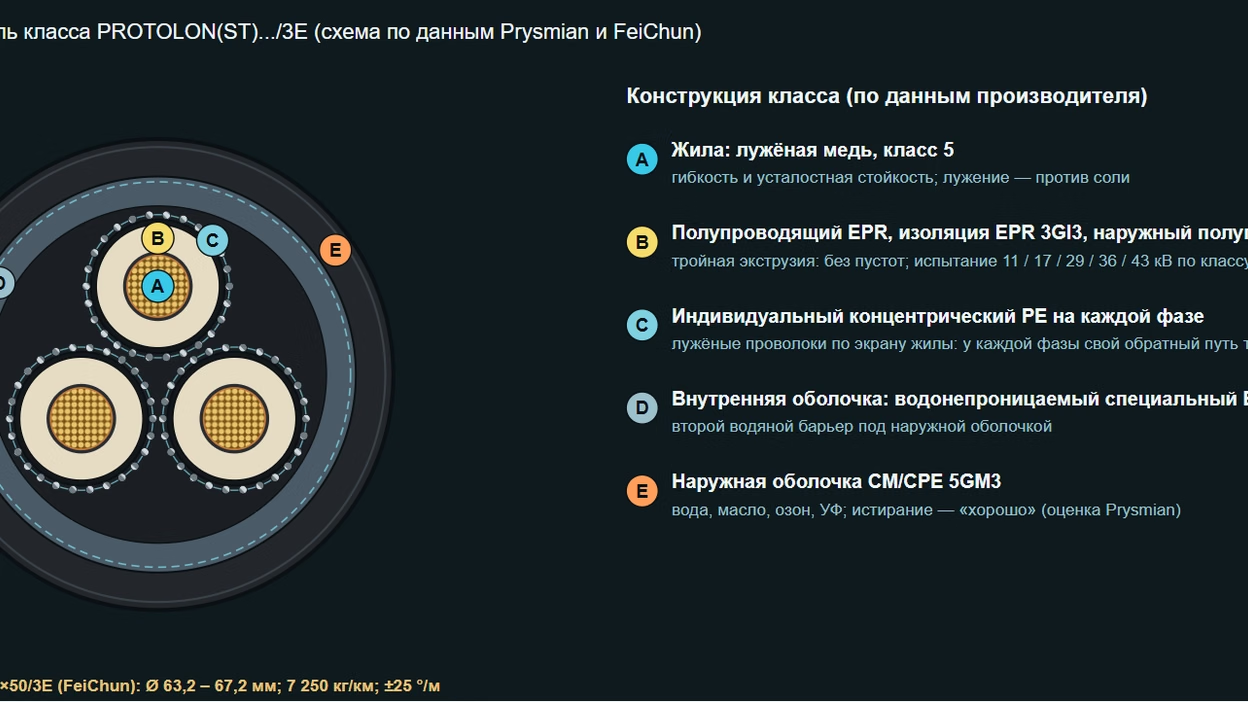
A comprehensive technical guide to the engineering, mechanical properties, material science, and real-world deployment of Feichun's industrial-grade RHEYFIRM® flexible reeling cable system across the 3–30 kV voltage spectrum.

RHEYFIRM® (RTS) (N)TSCGEWTOEUS Reeling Cables 3–30 kV: Premium Flexible Energy Supply for Industrial Container Cranes and Heavy Mobile Equipment

A comprehensive technical guide to the engineering, mechanical properties, material science, and real-world deployment of Feichun’s industrial-grade RHEYFIRM® flexible reeling cable system across the 3–30 kV voltage spectrum.
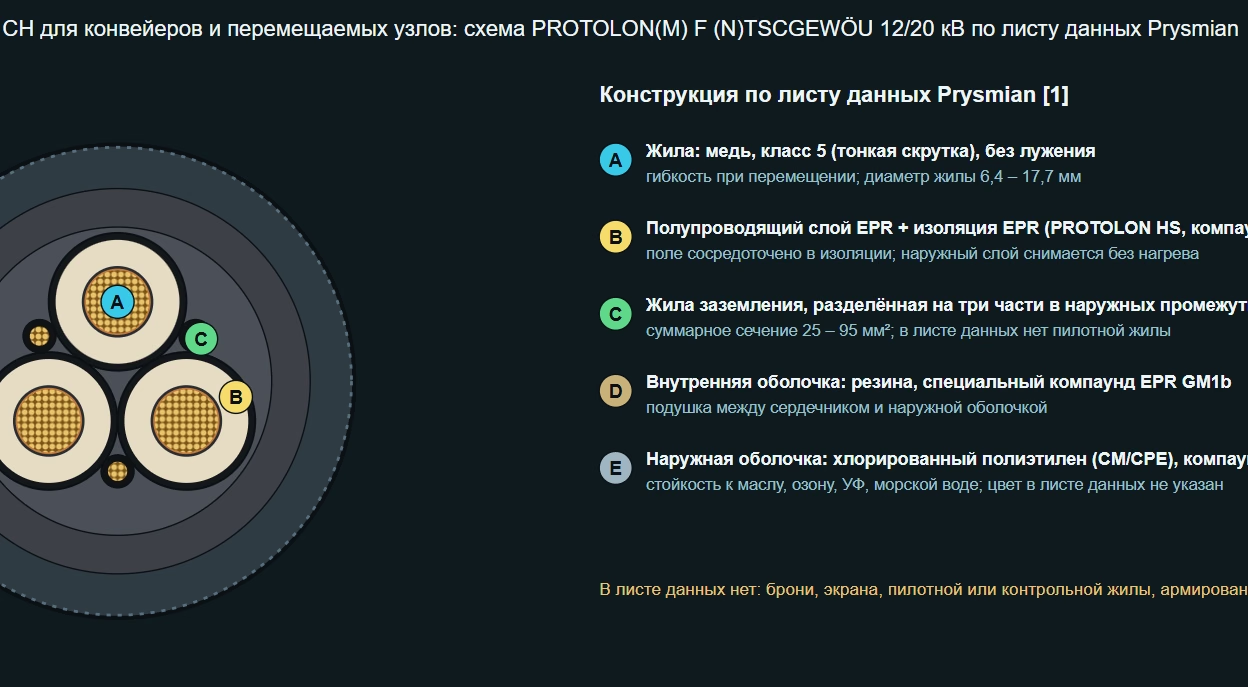
Manufacturer's technical guide: PROTOLON (SB) NTSCGEWOEU-LED, FeiChun's VDE 0250-813 and MSHA P-189-4 certified MV trailing cable with integrated self-powered LED illumination rated for −50 °C. Split earth three-core design. SHD-GC type. Shovel visibility. Dragline tail-rope illumination. Zero external DC supply. Direct factory manufacturer.

TENAX-CORD (RTS) NSHTOEU-LED 0,6/1 kV: Self-Powered LED Spreader Reeling Cable for High-Speed Container Crane Systems

TENAX-CORD (RTS) NSHTOEU-LED | 0,6/1 kV | FC-TPU™ P-Series Translucent Sheath | 7 Constructions 36×2.5–72×2.5 mm | Up to 3,300 A (44×2.5 core) | Port, Container Terminal, Automated Handling Applications | 240 m/min Vertical Reeling Speed
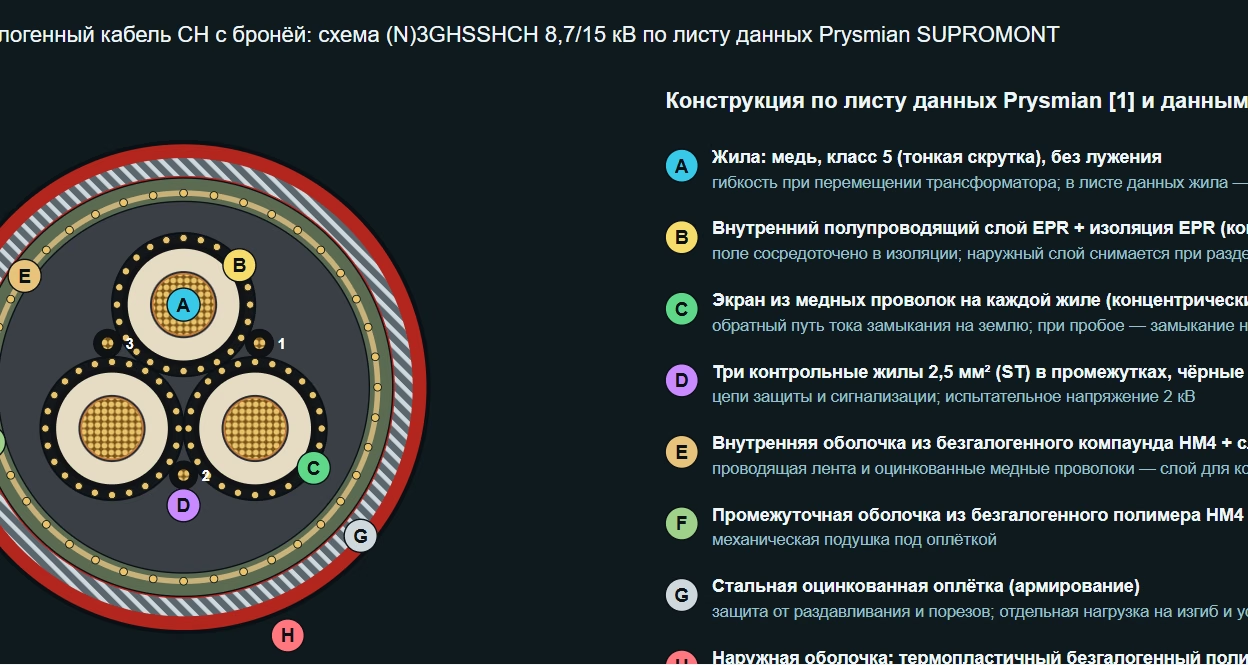
(N)TSCGH3S-LED 6/10 kV — the VDE 0250-813 luminescent trailing cable for high-voltage electric rope shovels and draglines. Rated 6/10 kV, tested at 17 kV. FC-EMH™ harvests energy from the 10 kV field — no inverter, no external wiring. FC-LED™ strips in outer interstices replace EL phosphor wire. Glows red when energised. Dark when isolated. Zero maintenance. Direct factory manufacturer.

(N)TSCGH3S-LED 6/10 kV 

(N)TSCGH3S-LED 6/10 kV — the VDE 0250-813 luminescent trailing cable for high-voltage electric rope shovels and draglines. Rated 6/10 kV, tested at 17 kV. FC-EMH™ harvests energy from the 10 kV field — no inverter, no external wiring. FC-LED™ strips in outer interstices replace EL phosphor wire. Glows red when energised. Dark when isolated. Zero maintenance. Direct factory manufacturer.
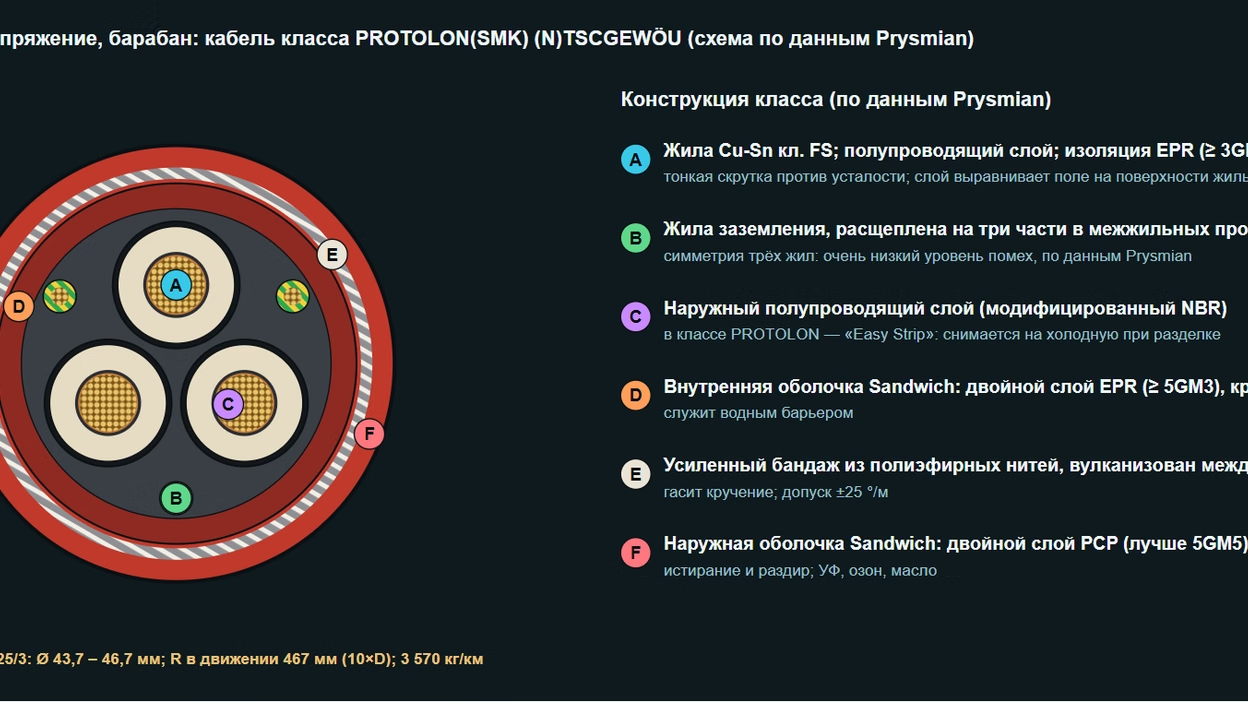
(N)TSCGEWOEU-LED is a 3.6/6 (7.2) kV illuminated MV trailing cable for shovels and draglines, based on DIN VDE 0250-813, with GOST-R certification, Class 5 tinned copper conductors, EPR insulation, FC-EMH™ self-powered LED harvesting, FC-ASB™ stress-relief braid, and a translucent FR-TPU FC-TPU™ X-Series sheath formulated for flexibility down to −50 °C.

(N)TSCGEWOEU-LED 3.6/6 kV: A Self-Powered Illuminated Trailing Cable for Shovels, Draglines, and Extreme-Cold Open-Pit Mining Operations

(N)TSCGEWOEU-LED is a 3.6/6 (7.2) kV illuminated MV trailing cable for shovels and draglines, based on DIN VDE 0250-813, with GOST-R certification, Class 5 tinned copper conductors, EPR insulation, FC-EMH™ self-powered LED harvesting, FC-ASB™ stress-relief braid, and a translucent FR-TPU FC-TPU™ X-Series sheath formulated for flexibility down to −50 °C.
Trailing Cable for Mining For Sale | Choose Feichun Cables

Trailing Cable for Mining For Sale | Choose Feichun Cables

This is probably our strongest competitive advantage, and it’s one that most procurement teams don’t fully appreciate until they need it. Imagine you’re managing cable procurement for a gold mine in Mongolia that runs Sandvik continuous miners (requiring AS/NZS 1802 Type 241 cables) alongside Russian-designed EKG excavators (requiring GOST 31945 КГЭ-ХЛ cables). Traditionally, you’d source from an Australian manufacturer for the Type 241 and a Russian manufacturer for the КГЭ-ХЛ. Two suppliers, two negotiations, two quality verification processes, two shipping arrangements. With Feichun, you issue one purchase order. One set of commercial terms. One consolidated shipment. One quality documentation package. The savings from consolidated procurement alone — reduced freight, simplified logistics, single-point accountability — typically run 10 to 15 percent on top of our already lower unit pricing.
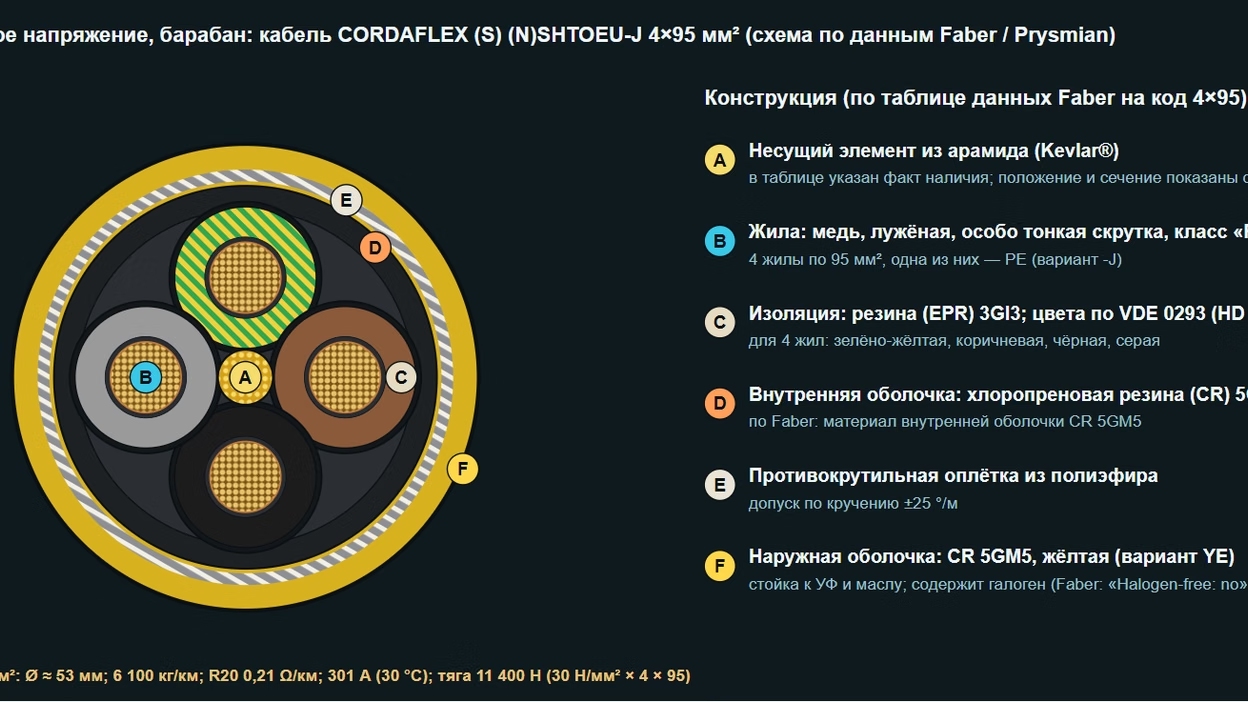
Prysmian CORDAFLEX (SMK), Lapp ÖLFLEX CRANE NSHTÖU, Nexans RHEYFLAT-N, TKD TROMMELFLEX PUR-HF, Draka BUFLEX XTREME, and Aristoncavi PANZERLITE spreader cables — with honest engineering analysis and practical selection guidance.

NGFLGÖU-J,(N)TSCGEWÖU,(N)SSHÖU 3×95+3×16/3,(N)TSCGEWÖU,Prysmian CORDAFLEX (SMK),Lapp ÖLFLEX CRANE NSHTÖU,Nexans RHEYFLAT-N,TKD TROMMELFLEX PUR-HF,Draka BUFLEX XTREME, Reeling cable, Mining cable – Guide (2026)

Prysmian CORDAFLEX (SMK), Lapp ÖLFLEX CRANE NSHTÖU, Nexans RHEYFLAT-N, TKD TROMMELFLEX PUR-HF, Draka BUFLEX XTREME, and Aristoncavi PANZERLITE spreader cables — with honest engineering analysis and practical selection guidance.
The AS/NZS 1802 (trailing cables up to 3.3kV) and AS/NZS 1972 (reeling and trailing cables from 6.6kV to 22kV) standards were originally engineered for the extreme conditions of the Australian outback — the Pilbara iron ore fields, the Bowen Basin coal mines, the Kalgoorlie-Boulder gold province — where 50°C ground surface temperatures, relentless UV radiation, abrasive red earth, and remoteness from supply chains demanded trailing cables built to survive conditions no other industrial cable was designed for. But these standards did not stay in Australia. They followed the Australian mining engineers, the Australian contract miners, and the Australian-headquartered mining companies as they expanded across the globe — and today, AS/NZS 1802 and AS/NZS 1972 are the de facto safety benchmarks for mining trailing cables worldwide.

Pilbara Iron Ore: Sourcing Heavy-Duty Type 280B 22/22kV 3×150mm² for BHP Shovel ExcavatorsComplete Trailing Cable Procurement & Engineering Guide

The AS/NZS 1802 (trailing cables up to 3.3kV) and AS/NZS 1972 (reeling and trailing cables from 6.6kV to 22kV) standards were originally engineered for the extreme conditions of the Australian outback — the Pilbara iron ore fields, the Bowen Basin coal mines, the Kalgoorlie-Boulder gold province — where 50°C ground surface temperatures, relentless UV radiation, abrasive red earth, and remoteness from supply chains demanded trailing cables built to survive conditions no other industrial cable was designed for. But these standards did not stay in Australia. They followed the Australian mining engineers, the Australian contract miners, and the Australian-headquartered mining companies as they expanded across the globe — and today, AS/NZS 1802 and AS/NZS 1972 are the de facto safety benchmarks for mining trailing cables worldwide.
Type 7S cables are specifically engineered for mining applications where equipment must operate in wet, chemically hostile, and mechanically demanding underground environments. The designation "7S" indicates a cable designed for high mechanical stress combined with submersion protection—the perfect specification for permanent dewatering pump installations in deep mine shafts. Type 7S电缆专门为必须在潮湿、化学腐蚀性和机械要求苛刻的地下环境中运行的采矿应用而设计。术语"7S"表示一种为高机械应力结合浸没保护而设计的电缆——是深矿井永久降水泵安装的完美规范。

Dewatering Pumps: Is Type 7S 1.1kV 3x50mm² Suitable for Permanent Submerged Connections?

Type 7S cables are specifically engineered for mining applications where equipment must operate in wet, chemically hostile, and mechanically demanding underground environments. The designation “7S” indicates a cable designed for high mechanical stress combined with submersion protection—the perfect specification for permanent dewatering pump installations in deep mine shafts. Type 7S电缆专门为必须在潮湿、化学腐蚀性和机械要求苛刻的地下环境中运行的采矿应用而设计。术语”7S”表示一种为高机械应力结合浸没保护而设计的电缆——是深矿井永久降水泵安装的完美规范。
Deep well dewatering represents a critical infrastructure operation across Australian mining, civil construction, and agriculture. Whether managing groundwater in coal mining operations, controlling water in tunnel boring, or extracting water from agricultural boreholes, submersible pump systems must operate reliably in extreme conditions: complete water immersion, elevated hydrostatic pressures (depths of 50–200 meters), temperature variations, and potential contamination with minerals or abrasive particulates. 深井降水代表澳洲采矿、土木施工和农业的关键基础设施运营。无论是管理煤矿地下水、隧道掘进中的水控制,还是从农业水井中提取水,潜水泵系统必须在极端条件下可靠运行:完全浸水、升高的静水压力(50-200米深度)、温度变化和矿物或磨料污染的可能性。 Submersible Pump Power Demand: Modern submersible pumps for dewatering typically operate at 380–400V three-phase systems (standard Australian industrial voltage) with power ratings of 5–100 kW for typical deep well applications. The pump motor, submerged at depth, requires continuous reliable power delivered through an electrical cable that must withstand constant water contact, hydraulic pressure, and mechanical stress from pump vibration. Cable Deployment Challenge: The cable is lowered into the well and left in place—sometimes for years during extended dewatering operations. The cable cannot be easily inspected or replaced during operation, requiring specification at extreme safety margins for both electrical and mechanical properties. Cable failure mid-operation creates immediate emergency because the pump cannot be operated without power.

Submersible Pumps in AU: Specifying H07RN-F (Upgraded to 1.1/1.1kV) for Deep Well Dewatering

Deep well dewatering represents a critical infrastructure operation across Australian mining, civil construction, and agriculture. Whether managing groundwater in coal mining operations, controlling water in tunnel boring, or extracting water from agricultural boreholes, submersible pump systems must operate reliably in extreme conditions: complete water immersion, elevated hydrostatic pressures (depths of 50–200 meters), temperature variations, and potential contamination with minerals or abrasive particulates. 深井降水代表澳洲采矿、土木施工和农业的关键基础设施运营。无论是管理煤矿地下水、隧道掘进中的水控制,还是从农业水井中提取水,潜水泵系统必须在极端条件下可靠运行:完全浸水、升高的静水压力(50-200米深度)、温度变化和矿物或磨料污染的可能性。 Submersible Pump Power Demand: Modern submersible pumps for dewatering typically operate at 380–400V three-phase systems (standard Australian industrial voltage) with power ratings of 5–100 kW for typical deep well applications. The pump motor, submerged at depth, requires continuous reliable power delivered through an electrical cable that must withstand constant water contact, hydraulic pressure, and mechanical stress from pump vibration. Cable Deployment Challenge: The cable is lowered into the well and left in place—sometimes for years during extended dewatering operations. The cable cannot be easily inspected or replaced during operation, requiring specification at extreme safety margins for both electrical and mechanical properties. Cable failure mid-operation creates immediate emergency because the pump cannot be operated without power.
When international project managers or equipment procurement teams inquire whether they can use standard European VDE 6/10kV medium-voltage cables in Australian tunnel, underground mining, or infrastructure projects, the regulatory answer is typically no—unless the project secures a formal engineering dispensation from the relevant Australian safety authority. This is not a preference for local products or protectionist regulation. It is a reflection of fundamental differences in how Australian underground infrastructure projects approach electrical safety, earthing philosophy, and protective system design. 当国际项目经理或设备采购团队询问他们是否可以在澳洲隧道、地下采矿或基础设施项目中使用标准欧洲VDE 6/10kV中压电缆时,监管答案通常是否定的——除非项目从相关澳洲安全部门获得正式的工程豁免。这不是本地产品偏好或保护主义监管。这反映了澳洲地下基础设施项目在电气安全、接地哲学和保护系统设计方面的根本差异。

6.6/6.6kV vs 6/10kV: Can I Use VDE Standard Medium Voltage Cables in Australian Tunnels?

When international project managers or equipment procurement teams inquire whether they can use standard European VDE 6/10kV medium-voltage cables in Australian tunnel, underground mining, or infrastructure projects, the regulatory answer is typically no—unless the project secures a formal engineering dispensation from the relevant Australian safety authority. This is not a preference for local products or protectionist regulation. It is a reflection of fundamental differences in how Australian underground infrastructure projects approach electrical safety, earthing philosophy, and protective system design. 当国际项目经理或设备采购团队询问他们是否可以在澳洲隧道、地下采矿或基础设施项目中使用标准欧洲VDE 6/10kV中压电缆时,监管答案通常是否定的——除非项目从相关澳洲安全部门获得正式的工程豁免。这不是本地产品偏好或保护主义监管。这反映了澳洲地下基础设施项目在电气安全、接地哲学和保护系统设计方面的根本差异。
To understand tensile strength and why it matters for industrial crane cables, imagine the experience of hanging from a rope. Your body weight creates a downward pulling force—tension—that the rope must support without breaking. If the rope is strong enough, it successfully supports your weight. If the rope is too weak or has internal flaws, it snaps under the load. This pulling force is tensile stress, and it creates mechanical stress fundamentally different from bending stress. When a cable bends, as in drag chain applications, the stress is distributed through the cable's cross-section with the outer surface experiencing tension and the inner surface experiencing compression. Tensile stress, by contrast, is uniform throughout the entire cable cross-section—every fiber of every conductor, every layer of insulation, and every section of the outer sheath must collectively resist the pulling force. Now imagine a cable that has never been designed for sustained vertical loading. A standard flexible control cable like many ÖLFLEX variants is engineered for signal transmission and moderate power delivery in fixed or gently bending installations where the cable's weight and the connected equipment weight are supported by external structures (mounting points, cable trays, junction boxes). Such a cable experiences minimal tensile stress because the infrastructure—not the cable itself—supports the load. However, when that same cable is attached to a crane hook or reeling drum, the situation changes dramatically. The cable must now support the weight of equipment hanging below it, the weight of the cable itself accumulating as the cable extends downward, and dynamic shock loads when equipment is suddenly engaged or when the cable experiences jerking motions from crane acceleration. The cable is subjected to sustained tension for hours during a working day, and it experiences repeated tension cycles as equipment is lifted, held at elevated height, and lowered. This sustained and repetitive tensile loading creates stress states that standard flexible cables cannot safely tolerate. The ÖLFLEX CRANE 4G2.5 is specifically engineered to handle this sustained tensile loading through a special central supporting element (strain relief core), optimized rubber compound formulation, and carefully engineered conductor geometry that will be the focus of this technical guide.

Rubber Reeling Specs: Equivalent Tensile Strength for ÖLFLEX CRANE 4G2.5 0.5kV

To understand tensile strength and why it matters for industrial crane cables, imagine the experience of hanging from a rope. Your body weight creates a downward pulling force—tension—that the rope must support without breaking. If the rope is strong enough, it successfully supports your weight. If the rope is too weak or has internal flaws, it snaps under the load. This pulling force is tensile stress, and it creates mechanical stress fundamentally different from bending stress. When a cable bends, as in drag chain applications, the stress is distributed through the cable’s cross-section with the outer surface experiencing tension and the inner surface experiencing compression. Tensile stress, by contrast, is uniform throughout the entire cable cross-section—every fiber of every conductor, every layer of insulation, and every section of the outer sheath must collectively resist the pulling force. Now imagine a cable that has never been designed for sustained vertical loading. A standard flexible control cable like many ÖLFLEX variants is engineered for signal transmission and moderate power delivery in fixed or gently bending installations where the cable’s weight and the connected equipment weight are supported by external structures (mounting points, cable trays, junction boxes). Such a cable experiences minimal tensile stress because the infrastructure—not the cable itself—supports the load. However, when that same cable is attached to a crane hook or reeling drum, the situation changes dramatically. The cable must now support the weight of equipment hanging below it, the weight of the cable itself accumulating as the cable extends downward, and dynamic shock loads when equipment is suddenly engaged or when the cable experiences jerking motions from crane acceleration. The cable is subjected to sustained tension for hours during a working day, and it experiences repeated tension cycles as equipment is lifted, held at elevated height, and lowered. This sustained and repetitive tensile loading creates stress states that standard flexible cables cannot safely tolerate. The ÖLFLEX CRANE 4G2.5 is specifically engineered to handle this sustained tensile loading through a special central supporting element (strain relief core), optimized rubber compound formulation, and carefully engineered conductor geometry that will be the focus of this technical guide.
RHEYFIRM® (S) series reeling cables with 3+3 core distributed earth design exhibit outer diameters ranging from approximately 40.0 mm (for 3×25+3×25/34 mm² configurations at 6/10 kV) to 76.0 mm or larger (for heavy-duty 3×185+3×95/35 mm² configurations at 12/20 kV). The nominal outer diameter depends on the specific conductor cross-section, voltage rating, and insulation thickness selected. For a typical medium-voltage marine and industrial application, a RHEYFIRM® (S) cable rated 3×70+3×35/32 mm² at 6/10 kV exhibits an outer diameter between 52.0 mm and 56.0 mm with approximate total cable weight of 4,300 kg/km (2,890 lbs/1000ft), while the corresponding 12/20 kV variant reaches 62.0 to 67.0 mm outer diameter with weights near 6,800 kg/km (4,570 lbs/1000ft).

RHEYFIRM® (S) 3+3 Core Design: Why Does Nexans Use Distributed Earth in the (S) Series and How Does It Affect EMC?

RHEYFIRM® (S) series reeling cables with 3+3 core distributed earth design exhibit outer diameters ranging from approximately 40.0 mm (for 3×25+3×25/34 mm² configurations at 6/10 kV) to 76.0 mm or larger (for heavy-duty 3×185+3×95/35 mm² configurations at 12/20 kV). The nominal outer diameter depends on the specific conductor cross-section, voltage rating, and insulation thickness selected. For a typical medium-voltage marine and industrial application, a RHEYFIRM® (S) cable rated 3×70+3×35/32 mm² at 6/10 kV exhibits an outer diameter between 52.0 mm and 56.0 mm with approximate total cable weight of 4,300 kg/km (2,890 lbs/1000ft), while the corresponding 12/20 kV variant reaches 62.0 to 67.0 mm outer diameter with weights near 6,800 kg/km (4,570 lbs/1000ft).
RHEYFIRM® is Nexans' premium line of flexible medium-voltage reeling cables specifically engineered for the extreme mechanical and environmental stresses of port machinery (STS cranes, automated stacker-reclaimers) and mining equipment (continuous dragline cables, mobile crusher power systems). Unlike fixed installation cables that remain stationary throughout their service life, reeling cables experience constant dynamic stress—deploying and retracting hundreds to thousands of times over their operational life. This continuous reeling duty subjects the cable to millions of bending cycles, sustained tensile loads, electromagnetic stress, salt spray corrosion, intense ultraviolet radiation, and temperature extremes far exceeding what conventional industrial cables are designed to tolerate. The physical diameter of a reeling cable is not simply a matter of aesthetics or standardization—it directly affects how much cable can fit on a physical drum of fixed dimensions. Consider a stacker-reclaimer with an existing cable drum that has a fixed flange width (say, 1,200 millimeters) and a fixed core diameter (say, 400 millimeters). The amount of cable that can be wound onto this drum depends on how tightly the cable packs around the core. A cable with a 59-millimeter outer diameter will create a larger spiral as it is wound layer by layer, limiting the total cable length to perhaps 600 meters. That same physical drum, if fitted with a 55.8-millimeter diameter cable, creates a tighter spiral and accommodates perhaps 750 meters of cable—a 25 percent increase in usable length with zero change to the physical equipment. For equipment where travel distance requirements have increased due to terminal expansion or operational upgrades, this diameter optimization can mean the difference between being able to extend operations and being forced into an expensive drum replacement project costing hundreds of thousands of dollars.

RHEYFIRM® (RS) vs. RHEYFIRM® (RTS): When to Choose the “Reduced Diameter” Version for Space-Constrained Reels

RHEYFIRM® is Nexans’ premium line of flexible medium-voltage reeling cables specifically engineered for the extreme mechanical and environmental stresses of port machinery (STS cranes, automated stacker-reclaimers) and mining equipment (continuous dragline cables, mobile crusher power systems). Unlike fixed installation cables that remain stationary throughout their service life, reeling cables experience constant dynamic stress—deploying and retracting hundreds to thousands of times over their operational life. This continuous reeling duty subjects the cable to millions of bending cycles, sustained tensile loads, electromagnetic stress, salt spray corrosion, intense ultraviolet radiation, and temperature extremes far exceeding what conventional industrial cables are designed to tolerate. The physical diameter of a reeling cable is not simply a matter of aesthetics or standardization—it directly affects how much cable can fit on a physical drum of fixed dimensions. Consider a stacker-reclaimer with an existing cable drum that has a fixed flange width (say, 1,200 millimeters) and a fixed core diameter (say, 400 millimeters). The amount of cable that can be wound onto this drum depends on how tightly the cable packs around the core. A cable with a 59-millimeter outer diameter will create a larger spiral as it is wound layer by layer, limiting the total cable length to perhaps 600 meters. That same physical drum, if fitted with a 55.8-millimeter diameter cable, creates a tighter spiral and accommodates perhaps 750 meters of cable—a 25 percent increase in usable length with zero change to the physical equipment. For equipment where travel distance requirements have increased due to terminal expansion or operational upgrades, this diameter optimization can mean the difference between being able to extend operations and being forced into an expensive drum replacement project costing hundreds of thousands of dollars.
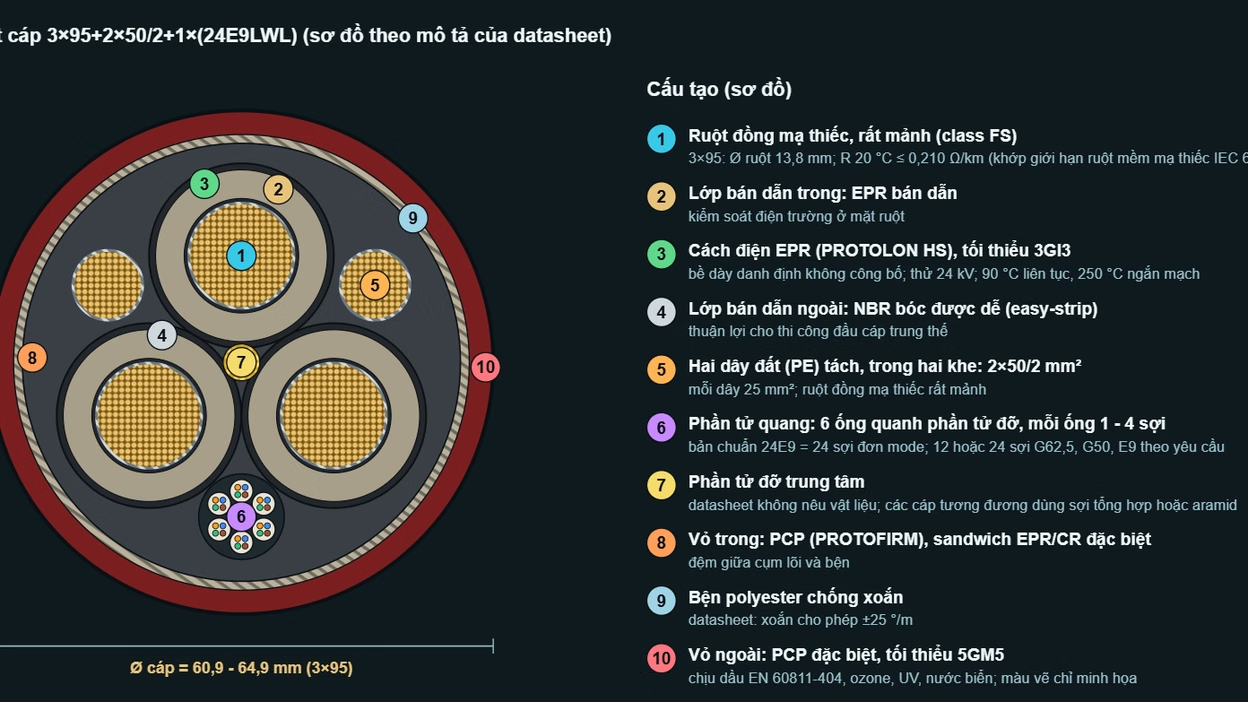
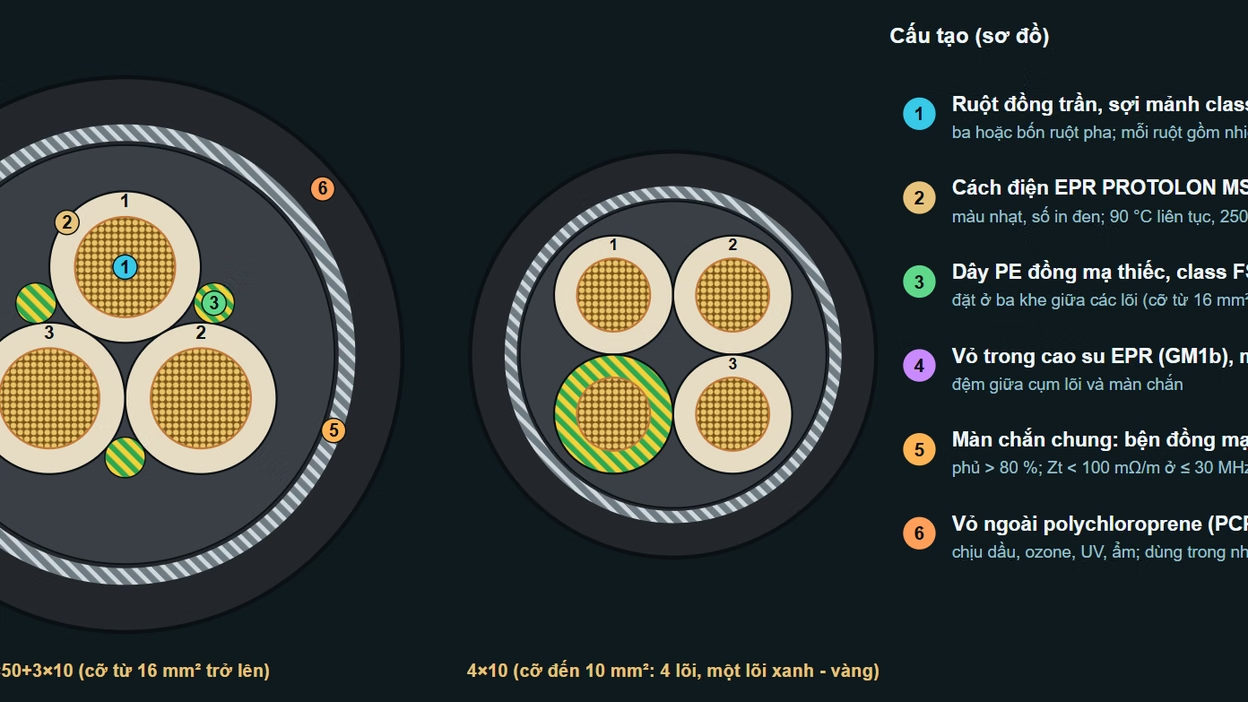
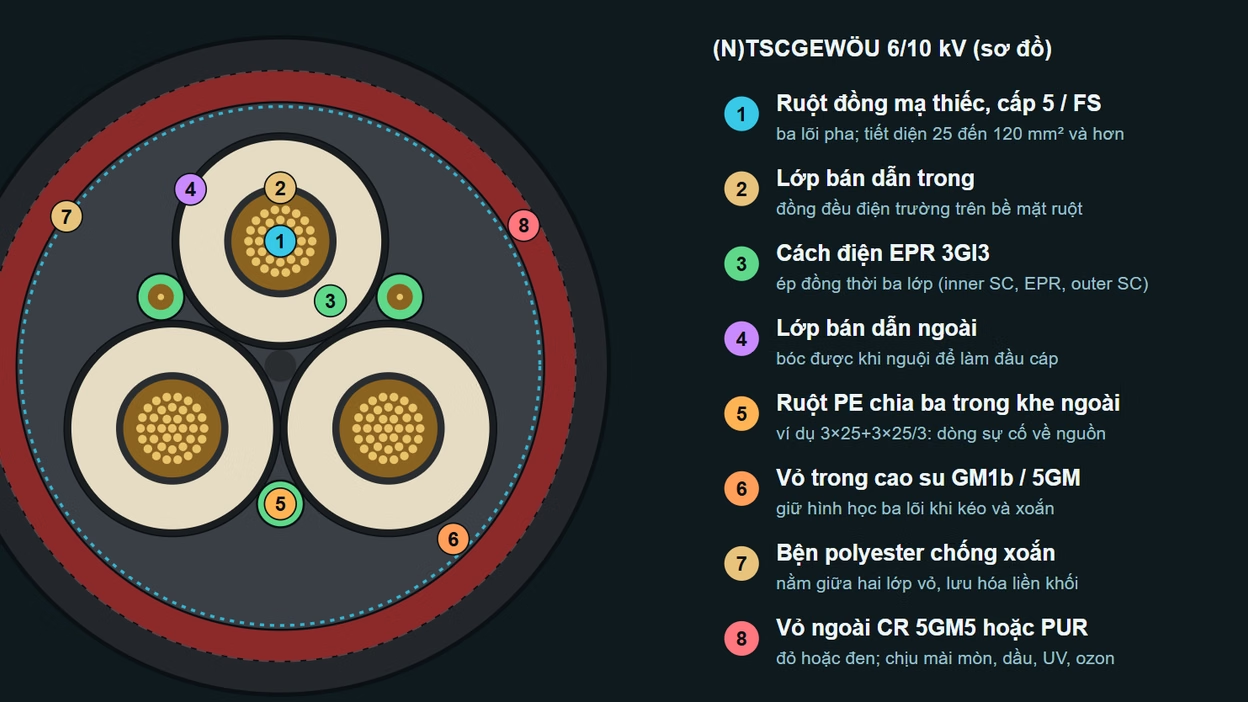
(N)TSCGEWÖU 3x120+3x70/3 12/20kV cable is the correct choice for most tunnel boring machine main cutterhead power supplies operating at medium voltage with cutterhead thrust loads in the range of 8,000 to 12,000 kilonewtons, featuring three 120 mm² phase conductors providing approximately 350 to 380 amperes current capacity in free-air installation at 30°C ambient and 90°C conductor operating temperature. The cable's nominal outer diameter is 73 to 81 millimeters, with total weight of approximately 9,800 to 10,500 kilograms per kilometer, making it manageable for most standard cable spools while still providing sufficient conductor cross-section to limit voltage drop to acceptable levels over tunnel distances extending several kilometers. The cable features Class 5 tinned copper conductors engineered for fatigue resistance in continuously flexing applications, EPR insulation maintaining exceptional thermal stability even when subjected to the 90°C conductor temperature that results from high-current excavation duty, semi-conductive shielding layers that uniformly distribute electric stress and prevent partial discharge initiation in the high-voltage environment, and a heavy-duty CPE jacket providing abrasion resistance in the confined underground spaces where the cable is routed. However, the critical distinction between simply selecting a cable model and properly sizing a cable for your specific tunnel boring installation lies in understanding the difference between the cable's theoretical free-air current capacity and its actual safe operating current when coiled on a cable drum—a difference that can reduce safe current by 30 to 50 percent depending on the spooling configuration. For tunnel boring machines operating in continental European or Asian tunneling projects with tunnel lengths of 5 to 15 kilometers and cutterhead thrust loads in the moderate to high range, the 3x120+3x70/3 12/20kV cable provides excellent balance between current capacity, voltage drop performance, mechanical durability, and cost. However, for shorter tunnels where voltage drop is not a concern, smaller conductor sizes (such as 3x95 mm²) may provide adequate performance at lower material cost, while for exceptionally long tunnels or extremely high thrust conditions, larger sizes (such as 3x150 mm² or 3x185 mm²) become necessary to maintain safe operating currents and acceptable voltage drop. Proper cable sizing requires engineering analysis specific to your tunnel length, expected cutterhead current demand, acceptable voltage drop limits, available cable drum diameters, and operational duty cycle.

Tunnel Boring Machines (TBM): Sizing (N)TSCGEWÖU 3×120+3×70/3 12/20kV for the Main Cutterhead Power Supply

(N)TSCGEWÖU 3×120+3×70/3 12/20kV cable is the correct choice for most tunnel boring machine main cutterhead power supplies operating at medium voltage with cutterhead thrust loads in the range of 8,000 to 12,000 kilonewtons, featuring three 120 mm² phase conductors providing approximately 350 to 380 amperes current capacity in free-air installation at 30°C ambient and 90°C conductor operating temperature. The cable’s nominal outer diameter is 73 to 81 millimeters, with total weight of approximately 9,800 to 10,500 kilograms per kilometer, making it manageable for most standard cable spools while still providing sufficient conductor cross-section to limit voltage drop to acceptable levels over tunnel distances extending several kilometers. The cable features Class 5 tinned copper conductors engineered for fatigue resistance in continuously flexing applications, EPR insulation maintaining exceptional thermal stability even when subjected to the 90°C conductor temperature that results from high-current excavation duty, semi-conductive shielding layers that uniformly distribute electric stress and prevent partial discharge initiation in the high-voltage environment, and a heavy-duty CPE jacket providing abrasion resistance in the confined underground spaces where the cable is routed. However, the critical distinction between simply selecting a cable model and properly sizing a cable for your specific tunnel boring installation lies in understanding the difference between the cable’s theoretical free-air current capacity and its actual safe operating current when coiled on a cable drum—a difference that can reduce safe current by 30 to 50 percent depending on the spooling configuration. For tunnel boring machines operating in continental European or Asian tunneling projects with tunnel lengths of 5 to 15 kilometers and cutterhead thrust loads in the moderate to high range, the 3×120+3×70/3 12/20kV cable provides excellent balance between current capacity, voltage drop performance, mechanical durability, and cost. However, for shorter tunnels where voltage drop is not a concern, smaller conductor sizes (such as 3×95 mm²) may provide adequate performance at lower material cost, while for exceptionally long tunnels or extremely high thrust conditions, larger sizes (such as 3×150 mm² or 3×185 mm²) become necessary to maintain safe operating currents and acceptable voltage drop. Proper cable sizing requires engineering analysis specific to your tunnel length, expected cutterhead current demand, acceptable voltage drop limits, available cable drum diameters, and operational duty cycle.
KGE-HL (КГЭ-ХЛ) 3x35+1x10 6kV Siberian mining cable, which represents a three-conductor power cable with a 1×10 mm² uninsulated grounding conductor, achieves a maximum static operating temperature of -60°C (−76°F) and undergoes dynamic cold bend testing at -40°C (−40°F) according to GOST 24334-80 specifications. This testing temperature of -40°C represents a critical threshold: at this temperature, the synthetic rubber jacketing remains flexible enough to withstand the mechanical stress of being wound on cable drums, reeled and unreeled by excavator equipment, and subjected to dynamic bending without developing cracks or permanent deformation. The designation "HL" (ХЛ in Cyrillic) stands for "Kholodostoyky" or "Cold-Resistant," indicating that the cable has been specifically engineered and tested to maintain electrical integrity and mechanical durability in the extreme Arctic and sub-Arctic conditions found in Siberian mining operations. The cable's maximum allowable continuous operating temperature is +50°C (122°F) under normal installation conditions, with the three copper power conductors rated for a maximum continuous conductor temperature of +75°C (167°F). These temperature ratings define the envelope within which the cable can operate safely over its service life without degradation of the insulation, jacketing, or shielding materials. The 3×35 mm² designation refers to the three power conductors, each with a cross-sectional area of 35 square millimeters, providing substantial current-carrying capacity suitable for powering large excavation equipment. The 1×10 mm² component designates an uninsulated grounding conductor that runs directly in contact with the cable's semiconductive shielding layer, enabling rapid grounding and fault protection. Understanding how this cable maintains mechanical flexibility at temperatures where conventional industrial cables become dangerously brittle is essential for mining engineers, equipment operators, and safety managers evaluating cable selection for Arctic operations.

Cold Bend Testing (-40°C): Minimum Operating Temperature for KGE-HL 3×35+1×10 6kV Siberian Mining Cable

KGE-HL (КГЭ-ХЛ) 3×35+1×10 6kV Siberian mining cable, which represents a three-conductor power cable with a 1×10 mm² uninsulated grounding conductor, achieves a maximum static operating temperature of -60°C (−76°F) and undergoes dynamic cold bend testing at -40°C (−40°F) according to GOST 24334-80 specifications. This testing temperature of -40°C represents a critical threshold: at this temperature, the synthetic rubber jacketing remains flexible enough to withstand the mechanical stress of being wound on cable drums, reeled and unreeled by excavator equipment, and subjected to dynamic bending without developing cracks or permanent deformation. The designation “HL” (ХЛ in Cyrillic) stands for “Kholodostoyky” or “Cold-Resistant,” indicating that the cable has been specifically engineered and tested to maintain electrical integrity and mechanical durability in the extreme Arctic and sub-Arctic conditions found in Siberian mining operations. The cable’s maximum allowable continuous operating temperature is +50°C (122°F) under normal installation conditions, with the three copper power conductors rated for a maximum continuous conductor temperature of +75°C (167°F). These temperature ratings define the envelope within which the cable can operate safely over its service life without degradation of the insulation, jacketing, or shielding materials. The 3×35 mm² designation refers to the three power conductors, each with a cross-sectional area of 35 square millimeters, providing substantial current-carrying capacity suitable for powering large excavation equipment. The 1×10 mm² component designates an uninsulated grounding conductor that runs directly in contact with the cable’s semiconductive shielding layer, enabling rapid grounding and fault protection. Understanding how this cable maintains mechanical flexibility at temperatures where conventional industrial cables become dangerously brittle is essential for mining engineers, equipment operators, and safety managers evaluating cable selection for Arctic operations.
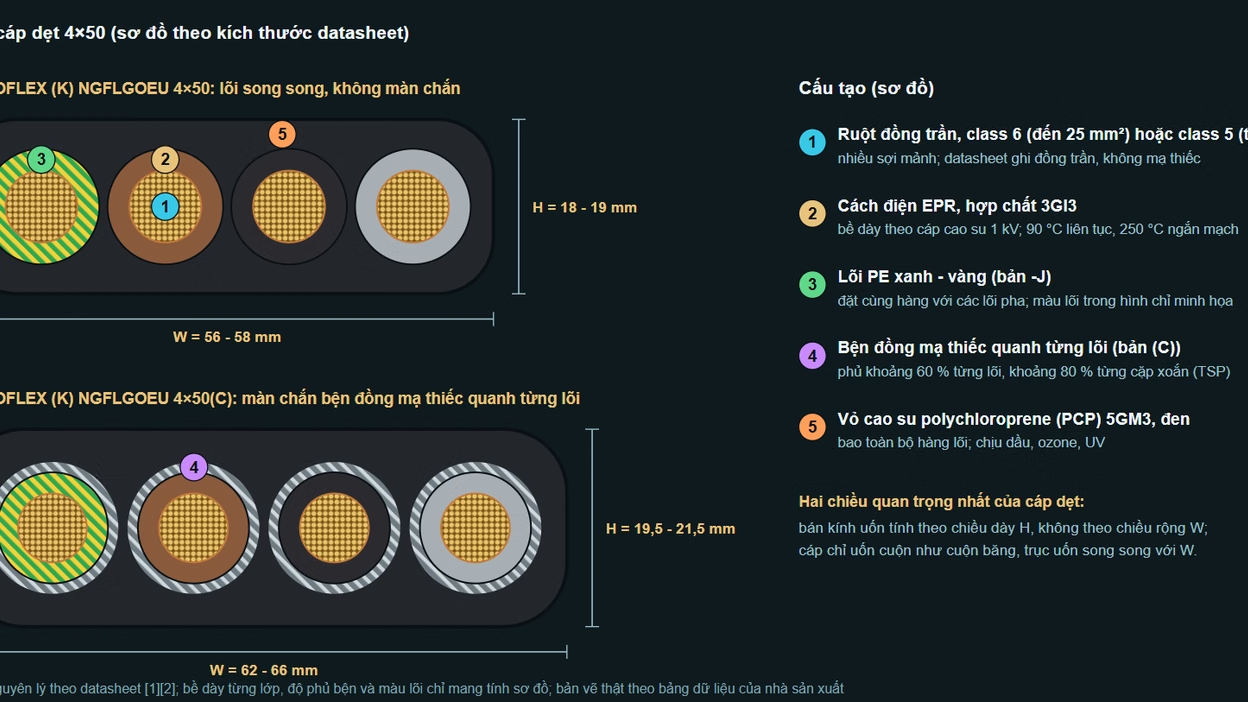
The straightforward answer to whether flat (N)TSFLCGEWÖU cables are superior to round cables for overhead crane festoon systems is: yes, absolutely—flat cables are genuinely better for festoon service in nearly every measurable way. The flat architecture delivers real engineering advantages in space efficiency, thermal performance, and mechanical reliability that address fundamental limitations of round cables in repetitive reeling applications. However, there is a critical and commonly overlooked distinction that separates successful flat cable installations from catastrophic failures: the extremely heavy 4x185 flat cable cannot be installed on standard C-track systems—it absolutely requires upgrade to heavy-duty I-beam or H-beam track systems rated for the cable's mass and tension. Many engineers and crane manufacturers have attempted the false economy of installing maximum-capacity flat cables on minimum-weight track systems, resulting in track deformation, trolley wheel failure, and serious safety hazards. Understanding why flat cables are superior and understanding why proper system specification is essential for safe operation are two sides of the same engineering decision.

Overhead Crane Festoons: Is flat (N)TSFLCGEWÖU 4×185 better than round cable for high-speed trolleys?

The straightforward answer to whether flat (N)TSFLCGEWÖU cables are superior to round cables for overhead crane festoon systems is: yes, absolutely—flat cables are genuinely better for festoon service in nearly every measurable way. The flat architecture delivers real engineering advantages in space efficiency, thermal performance, and mechanical reliability that address fundamental limitations of round cables in repetitive reeling applications. However, there is a critical and commonly overlooked distinction that separates successful flat cable installations from catastrophic failures: the extremely heavy 4×185 flat cable cannot be installed on standard C-track systems—it absolutely requires upgrade to heavy-duty I-beam or H-beam track systems rated for the cable’s mass and tension. Many engineers and crane manufacturers have attempted the false economy of installing maximum-capacity flat cables on minimum-weight track systems, resulting in track deformation, trolley wheel failure, and serious safety hazards. Understanding why flat cables are superior and understanding why proper system specification is essential for safe operation are two sides of the same engineering decision.
The straightforward answer to whether quality generic (N)TMCGEWÖU 3x70+3x35/3 cables can safely replace expensive Sandvik OEM cables on underground LHD loaders is: yes, absolutely—provided that proper specification, compatibility verification, and installation procedures are carefully implemented. The continuous ampacity rating of 246 amperes at 30°C ambient temperature represents the maximum electrical current capacity for the cable under controlled installation conditions. In realistic underground mining duty cycles where the cable is subjected to frequent reeling stress, confined-space temperature conditions, and vibration from underground machinery, the effective design ampacity reduces through cumulative derating to approximately 195–215 amperes depending on specific mine conditions. These ratings demonstrate that a quality generic cable engineered to VDE 0250-813 and DIN VDE 0298-4 standards provides equivalent electrical performance to expensive OEM cables, often at 40–60% lower acquisition cost. The key distinction between OEM cables and quality generic cables is not electrical performance—it is supply chain, brand markup, and proprietary connector systems. A well-engineered generic cable provides the same copper conductors, similar insulation quality, and equivalent current-carrying capacity as the OEM equivalent. The cost savings from generic cable selection are real and substantial, but they must be paired with careful attention to mechanical compatibility, proper termination procedures, and quality field installation to realize the full cost advantage without reliability penalties.

Underground LHD Loaders: Can you reliably replace OEM Sandvik cables with quality generic (N)TMCGEWÖU 3×70+3×35/3 cables? 

The straightforward answer to whether quality generic (N)TMCGEWÖU 3×70+3×35/3 cables can safely replace expensive Sandvik OEM cables on underground LHD loaders is: yes, absolutely—provided that proper specification, compatibility verification, and installation procedures are carefully implemented. The continuous ampacity rating of 246 amperes at 30°C ambient temperature represents the maximum electrical current capacity for the cable under controlled installation conditions. In realistic underground mining duty cycles where the cable is subjected to frequent reeling stress, confined-space temperature conditions, and vibration from underground machinery, the effective design ampacity reduces through cumulative derating to approximately 195–215 amperes depending on specific mine conditions. These ratings demonstrate that a quality generic cable engineered to VDE 0250-813 and DIN VDE 0298-4 standards provides equivalent electrical performance to expensive OEM cables, often at 40–60% lower acquisition cost. The key distinction between OEM cables and quality generic cables is not electrical performance—it is supply chain, brand markup, and proprietary connector systems. A well-engineered generic cable provides the same copper conductors, similar insulation quality, and equivalent current-carrying capacity as the OEM equivalent. The cost savings from generic cable selection are real and substantial, but they must be paired with careful attention to mechanical compatibility, proper termination procedures, and quality field installation to realize the full cost advantage without reliability penalties.