
Critical Technical Analysis: Why Type 2S (Individually Screened) Cable is Mandatory for 11kV Underground Coal Mine Power Distribution. AS/NZS 1972 Compliance, Phase-to-Earth Fault Protection Logic, Arc Energy Prevention, Earth Leakage Relay Integration, Catastrophic Failure Scenarios.
关键技术分析:为什么Type 2S(分相屏蔽)电缆对11kV地下煤矿电力分配是强制性的。AS/NZS 1972合规性、相地故障保护逻辑、电弧能量防止、接地漏电继电器集成、灾难性故障场景。
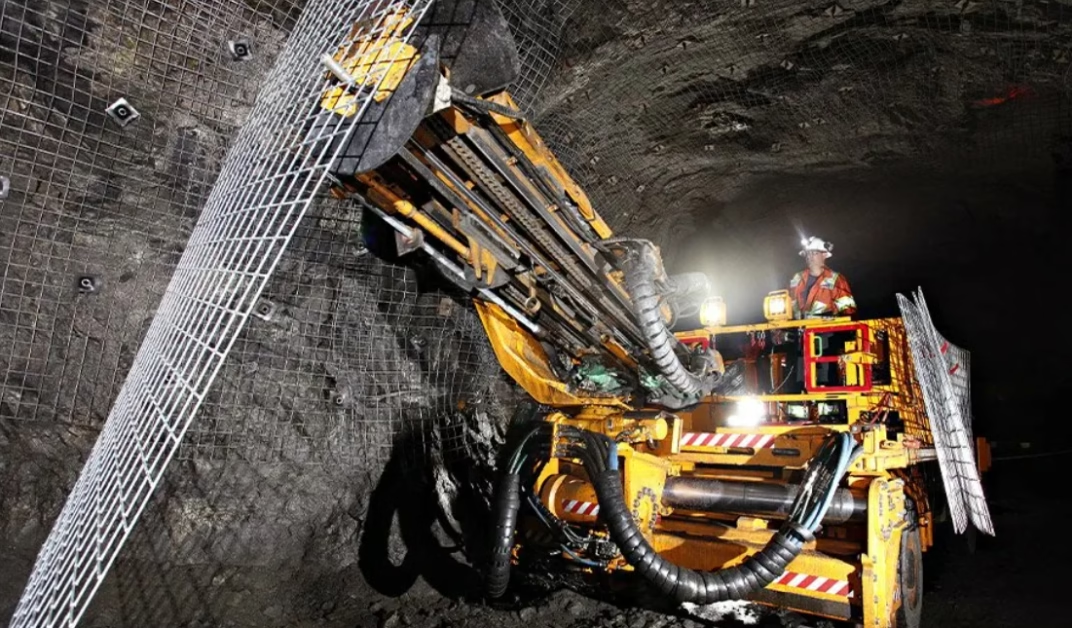
Type 2 vs Type 2S: Why the “S” (Individual Screen) is Mandatory for 11kV Underground Coal Mines
Critical Technical Analysis: Why Type 2S (Individually Screened) Cable is Mandatory for 11kV Underground Coal Mine Power Distribution. AS/NZS 1972 Compliance, Phase-to-Earth Fault Protection Logic, Arc Energy Prevention, Earth Leakage Relay Integration, Catastrophic Failure Scenarios.
关键技术分析:为什么Type 2S(分相屏蔽)电缆对11kV地下煤矿电力分配是强制性的。AS/NZS 1972合规性、相地故障保护逻辑、电弧能量防止、接地漏电继电器集成、灾难性故障场景。
1. Type 2 vs Type 2S: The Critical Difference That Prevents Explosions
The Single Most Important Cable Design Decision in Underground Coal Mining: Whether the cable employs collective screening (Type 2) or individual phase screening (Type 2S). This single engineering choice directly determines whether a mechanical cable failure will result in a phase-to-earth fault (detected and stopped in milliseconds) or a phase-to-phase fault with thousands of amperes of arc current (igniting methane explosions).
地下煤矿最关键的单一电缆设计决定:电缆是采用集体屏蔽(Type 2)还是分相屏蔽(Type 2S)。这一项工程选择直接决定了机械电缆故障是会导致相地故障(在毫秒内检测并制止)还是相间短路,伴随数千安培的电弧电流(点燃瓦斯爆炸)。
The Stakes: Type 2 cables have caused catastrophic explosions in coal mines worldwide. Type 2S cables, paired with earth leakage relay protection, have prevented explosions for decades. Australian law (AS/NZS 1972) mandates Type 2S for 11kV underground systems. The difference is literally a matter of life and death.
2. Understanding Cable Screen Architecture: Collective vs Individual
To understand why Type 2S is mandatory, we must first understand the physical difference in cable construction.
Type 2 Architecture (Collective Screening): Three insulated power conductors are bundled together with earth core(s) in the center. The entire bundle is surrounded by a single metallic shield (usually copper tape or braid) and then armoured with galvanized steel wire (SWA). All three phase conductors are electromagnetically protected by this single common shield.
Type 2S Architecture (Individual Screening): Each of the three power conductors has its own dedicated metallic screen (copper tape or braid) applied directly over the conductor’s insulation. Each individual phase screen is then grounded (connected to earth). The three individually-screened phase conductors are then bundled together and collectively armoured with galvanized steel wire (SWA).
Consequence of This Design Difference: In Type 2, all three phases are electromagnetically coupled through a single field. In Type 2S, each phase has its own isolated electromagnetic field managed by its individual screen, completely decoupling the phases electrically.
3. Type 2 (Non-Individually Screened): The Fatal Hazard
Mechanical Failure Scenario: A mine rockfall or heavy equipment impact damages a Type 2 cable. The external SWA armor is breached. The mechanical impact crushes the cable, causing insulation of two adjacent phase conductors (say Phase A and Phase B) to puncture simultaneously or near-simultaneously.
Electrical Consequence—Phase-to-Phase Short Circuit: With only collective screening protection, the two damaged phases are now directly shorted together. The fault impedance is extremely low—just the resistance of the conductor cross-section (microscopically small). The fault current magnitude is determined by the total system impedance and can be calculated:
Energy Release—Arc Formation: This enormous current creates an electrical arc between the two phase conductors. The arc temperature reaches thousands of degrees Celsius (comparable to the surface of the sun). The cable insulation and sheath are immediately ignited. The arc energy burns through the cable jacket, exposing the copper conductors to the mine atmosphere.
Explosion Trigger: In a coal mine atmosphere containing methane (CH₄) and coal dust, an arc temperature of 1000°C+ is more than sufficient to ignite both gases. A methane-air mixture ignites at 595°C. Coal dust ignites at approximately 600°C. The arc immediately ignites the surrounding atmosphere, causing gas explosion with pressure waves exceeding the structural integrity of underground mine workings.
4. Type 2S (Individually Screened): The Safety-Critical Design
Same Mechanical Failure Scenario with Type 2S: The same rockfall or equipment impact damages a Type 2S cable. The external SWA armor is breached. The mechanical impact crushes the cable.
Electrical Consequence—Phase-to-Earth Fault (NOT Phase-to-Phase): Because Phase A has its own individual copper screen connected to earth, the mechanical damage to Phase A insulation is immediately shorted to the individual screen (and then to earth) BEFORE any other phase conductor can be contacted. The fault becomes a phase-to-earth fault (single phase to ground), not a phase-to-phase fault.
Fault Current Magnitude Control: The fault current is now limited not by the system impedance, but by the neutral earthing resistor (NER) at the transformer. In Australian coal mines, this is typically set to 5A, 10A, or 50A depending on system design. This is a 100–1000× reduction in fault current compared to phase-to-phase fault:
Arc Energy Reduction: The fault current of 5A cannot sustain a high-temperature arc. The arc energy is microscopic compared to the 10,000+ A phase-to-phase fault. No ignition source is created. The cable may be damaged but no explosion is triggered.
Rapid Fault Detection: The earth leakage relay at the substation detects this phase-to-earth fault within 50–100 milliseconds and opens the main contactor, removing power from the cable. The fault is cleared before any meaningful energy release occurs.
5. Fault Control Logic: Phase-to-Phase vs Phase-to-Earth
This is the fundamental engineering principle that makes Type 2S mandatory for underground coal mining.
Phase-to-Phase Fault Logic (Type 2 risk): Large fault current → High arc energy → Insulation ignition → Atmospheric ignition (explosion).
Phase-to-Earth Fault Logic (Type 2S design): Controlled fault current (via NER) → Low arc energy → No ignition → Rapid protective relay clearing → Safety maintained.
The Safety Principle: By forcing all mechanical faults to convert to phase-to-earth (not phase-to-phase), the Type 2S cable architecture guarantees that fault energy is insufficient to create ignition sources in explosive atmospheres. This is not a passive feature—it is an active design decision that eliminates the explosion hazard entirely.
6. Arc Energy Analysis: Why Phase-to-Phase Faults Ignite Methane
To understand the explosion risk quantitatively:
Phase-to-Phase Arc Energy (Type 2 worst case): With 15,000 A fault current and a fault duration of 100 milliseconds (time for main protection to clear), the arc energy is approximately:
This energy, released as heat in microseconds during arc formation, creates temperatures exceeding 3,000°C and produces an electromagnetic shock wave. This is more than sufficient to ignite methane (ignition temp 595°C) and coal dust (ignition temp ~600°C).
Phase-to-Earth Arc Energy (Type 2S normal case): With 5 A fault current (NER limited) and a fault duration of 50 milliseconds (ECM relay response), the arc energy is approximately:
This energy is insufficient to sustain an arc in air. The arc self-extinguishes, and no ignition source is created.
7. Earth Leakage Relay Integration: How Type 2S Stops Explosions
Type 2S cables are engineered specifically to integrate with earth leakage relay (ELR) protection systems used in Australian coal mines.
System Integration: (1) Mine transformer has neutral grounded through NER (typically 5–50A), (2) earth leakage relay connected to monitor current through NER, (3) Type 2S cable deployed with all individual screens grounded, (4) if any phase insulation fails, current flows through individual screen to earth, through NER, where ELR detects it, (5) ELR opens main contactor within 50–100ms.
Detection Sensitivity: ELR is designed to trip on very low earth currents (often 0.5–5 A). This is feasible because the NER limits maximum fault current to a predictable level. The relay can trip quickly and reliably, before any meaningful arc energy accumulates.
Type 2 Incompatibility: Type 2 cables lack individual screens, so a phase-to-earth fault cannot develop in controlled manner. Mechanical damage tends to involve multiple phases simultaneously, creating the high-energy phase-to-phase fault that the ELR cannot prevent (by the time the main protection clears, explosive energy has already been released).
8. AS/NZS 1972 Specification: Mandatory Type 2S for 11kV Systems
AS/NZS 1972 “Fixed electric cables—General purpose cables for underground mining” explicitly mandates individual screening for high-voltage underground systems.
Standard Language: For systems operating at 6 kV and above, individually screened (Type 2S) cable is mandatory. Non-individually screened cables (Type 2) are explicitly prohibited for underground installations where explosion hazard is present.
Regulatory Consequence: Australian mining operations using Type 2 cables on 11kV systems violate AS/NZS 1972 and are in breach of mining electrical safety regulations. WorkSafe Victoria, NSW Resources Regulator, and Queensland Department of Resources can impose significant penalties.
9. Complete Technical Specification: Type 2S 6.35/11kV Cable
| No. Cores × Cross-Sec (mm²) | AWG Equiv. | Outer Ø (mm) | Cu Weight (kg/km) | Total Weight (kg/km) | Ampacity (A) |
|---|---|---|---|---|---|
| 3 × 35 | 2 | 53–56 | 1,008 | 4,600 | 145 |
| 3 × 50 | 1/0 | 56–59 | 1,440 | 5,300 | 170 |
| 3 × 70 | 2/0 | 60–63 | 2,016 | 6,500 | 215 |
| 3 × 95 | 3/0 | 64–68 | 2,736 | 7,700 | 260 |
| 3 × 120 | 4/0 | 68–72 | 3,456 | 8,900 | 295 |
| 3 × 150 | 300 MCM | 72–76 | 4,320 | 10,200 | 335 |
| 3 × 185 | 350 MCM | 76–80 | 5,328 | 11,800 | 385 |
| 3 × 240 | 500 MCM | 82–87 | 6,912 | 14,300 | 445 |
Notes: Ampacity based on air installation, 40°C ambient, 90°C conductor temperature. Underground installation requires additional derating per AS/NZS 3008.1.1 based on cable grouping and thermal environment.
10. Mechanical and Environmental Requirements
Individual Screen Material: Copper tape (typical) or copper wire braid, connected to earth via the overall SWA armor. Screen continuity is critical—any break in the individual screen defeats the protection mechanism.
SWA Armor (Steel Wire Armour): Galvanized steel wires wound over the insulation, providing mechanical protection and serving as the common earth return path. Typical armor thickness 2.0–3.0 mm depending on conductor size.
PVC Sheath: Outer protective layer over the armor. Must be flame-retardant (IEC 60332-1-2) for underground coal mine compliance.
Bending Radius Requirements: Minimum bending radius typically 15–20× outer diameter for fixed installation (cables do not move once installed in underground mines).
11. Real-World Failure Scenarios: What Happens Without Type 2S
Historical Accident Scenario (Based on documented coal mine disasters): A Type 2 cable is installed on an 11kV feeder in an Australian underground coal mine. A roof fall occurs, dropping approximately 50 kg of coal rock onto the cable. The external SWA armor is penetrated. The impact crushes the cable, damaging insulation of Phase A and Phase B conductors simultaneously.
Timeline of Catastrophe: (1) T=0: Mechanical impact, Phase A-B insulation rupture, (2) T=5 milliseconds: Phase A-B short circuit initiated, fault current rises to ~12,000 A, (3) T=10 ms: Arc energy ignites cable insulation and sheath, temperature exceeds 2,500°C, (4) T=15 ms: Cable jacket rupture, copper conductors exposed to coal mine atmosphere containing methane and coal dust, (5) T=20 ms: Methane-air mixture in vicinity of arc reaches ignition temperature, explosion initiated, (6) T=100 ms: Main protection at substation clears the fault—but the explosion has already propagated beyond the cable location, causing shock waves throughout the mine, (7) Result: Death and injury to personnel in the vicinity, potential secondary explosions from dust ignition, mine shutdown.
With Type 2S Cable—Alternative Outcome: Same mechanical impact occurs, but individual screen on Phase A catches the fault current and shunts it to ground before Phase B insulation can be reached. Fault current is limited to 5 A by the neutral earthing resistor. Earth leakage relay detects the 5 A earth current within 50 ms and opens the main contactor. Fault is cleared. No arc, no ignition, no explosion. Cable is damaged but the mine remains safe.
12. Conclusion: Type 2S is Non-Negotiable for Underground Coal Mining
Summary: The “S” in Type 2S stands for individually screened—meaning each phase conductor has its own metallic shield grounded to earth. This single design feature transforms phase-to-phase faults (which release explosion-causing arc energy) into phase-to-earth faults (which are controlled and rapidly detected).
Regulatory Requirement: AS/NZS 1972 mandates Type 2S for 11kV underground coal mining systems. This is not a recommendation—it is a legal requirement in Australia and New Zealand.
Safety Principle: Type 2S cables, integrated with earth leakage relay protection and neutral earthing resistor current limiting, provide a complete safety system that prevents explosions. Type 2 cables, lacking individual screening, cannot guarantee this protection.
Feichun Special Cable manufactures AS/NZS 1972 Type 2S cables engineered for all underground coal mining applications. Our technical team ensures that all individual screens are properly designed, earthing is maintained throughout the cable length, and compliance with Australian mining regulations is absolute.
References & Sources
- AS/NZS 1972:2012, “Fixed electric cables—General purpose cables for underground mining,” Standards New Zealand and Standards Australia.
- AS/NZS 3008.1.1:2017, “Electrical installations—Selection of cables,” Standards New Zealand and Standards Australia.
- WorkSafe Victoria, “Electrical Safety in Mining,” Mining Industry Code of Practice, 2023.
- Feichun Special Cable Research & Development Team, “Type 2 vs Type 2S: Individual Screen Design and Explosion Prevention Logic,” Technical Report, 2024.


