mining cable ampacity

Казахстанские открытые медные рудники (особенно Bozshakol с глубокими карьерами и Aktogay в степной зоне) испытывают зимние температуры −35…−45°C регулярно. Снег и лёд покрывают оборудование и кабельные линии. Электросварочные экскаваторы (Shovel) и буровые установки продолжают работать 24/7, потому что остановка добычи неприемлема. Это означает, что кабели подвергаются динамической нагрузке (вытягивание и наматывание на барабан) при температурах, при которых их оболочка находится в хрупком состоянии. Опасность в том, что отказ не виден визуально до того, как произойдёт электрический пробой. Микротрещины образуются в первые часы эксплуатации, но вода и электрический ток попадают в них только через 12–48 часов. Затем наступает внезапный отказ: слышен треск электрической дуги, видна вспышка, оборудование отключается, и вся подстанция теряет питание.

Glass Transition Trap: Why Standard VDE 0250 Cables Shatter at −40°C in Kazakhstan Copper MinesArctic-Grade (N)TSCGEWÖU Polymer Engineering Deep Dive

Казахстанские открытые медные рудники (особенно Bozshakol с глубокими карьерами и Aktogay в степной зоне) испытывают зимние температуры −35…−45°C регулярно. Снег и лёд покрывают оборудование и кабельные линии. Электросварочные экскаваторы (Shovel) и буровые установки продолжают работать 24/7, потому что остановка добычи неприемлема. Это означает, что кабели подвергаются динамической нагрузке (вытягивание и наматывание на барабан) при температурах, при которых их оболочка находится в хрупком состоянии. Опасность в том, что отказ не виден визуально до того, как произойдёт электрический пробой. Микротрещины образуются в первые часы эксплуатации, но вода и электрический ток попадают в них только через 12–48 часов. Затем наступает внезапный отказ: слышен треск электрической дуги, видна вспышка, оборудование отключается, и вся подстанция теряет питание.
Before diving into technical details, the answer to your question is unambiguous: you cannot use German VDE standard N2XSEYFGbY cables to replace AS/NZS 1972 Type 2S in Australian underground coal mines. This is not a judgment call. This is not a performance trade-off. This is a regulatory violation that will result in immediate equipment rejection by site electrical inspectors, failure of compliance audits, and potential liability if an electrical incident occurs. 在深入技术细节之前,对您问题的回答是明确的:您不能用德国VDE标准的N2XSEYFGbY电缆替代澳洲地下煤矿的AS/NZS 1972 Type 2S。这不是判断问题。这不是性能权衡。这是一个监管违规行为,会导致现场电气检查人员立即拒收设备、合规审计失败,以及在发生电气事件时的潜在法律责任。 Why This Matters: The Australian earth fault protection philosophy creates a unique electrical system architecture that does not exist in German industrial standards. In coal mines, the system is designed around the principle of mandatory immediate fault detection and power interruption. German industrial systems, by contrast, prioritize continuous operation and allow longer fault detection windows. These two philosophies are fundamentally incompatible, and no amount of post-installation modification will bridge the gap.

VDE vs AS/NZS 1972: Can German N2XSEYFGbY Replace Type 2S in Australian Coal Mines?

Before diving into technical details, the answer to your question is unambiguous: you cannot use German VDE standard N2XSEYFGbY cables to replace AS/NZS 1972 Type 2S in Australian underground coal mines. This is not a judgment call. This is not a performance trade-off. This is a regulatory violation that will result in immediate equipment rejection by site electrical inspectors, failure of compliance audits, and potential liability if an electrical incident occurs. 在深入技术细节之前,对您问题的回答是明确的:您不能用德国VDE标准的N2XSEYFGbY电缆替代澳洲地下煤矿的AS/NZS 1972 Type 2S。这不是判断问题。这不是性能权衡。这是一个监管违规行为,会导致现场电气检查人员立即拒收设备、合规审计失败,以及在发生电气事件时的潜在法律责任。 Why This Matters: The Australian earth fault protection philosophy creates a unique electrical system architecture that does not exist in German industrial standards. In coal mines, the system is designed around the principle of mandatory immediate fault detection and power interruption. German industrial systems, by contrast, prioritize continuous operation and allow longer fault detection windows. These two philosophies are fundamentally incompatible, and no amount of post-installation modification will bridge the gap.
In underground coal mining across Australia and New Zealand, selecting between AS/NZS 1802 and AS/NZS 1972 is not a matter of personal preference or cost optimization—it is a matter of electrical safety compliance and regulatory requirement. The decision tree, however, is surprisingly straightforward once you understand the single fundamental principle that separates these two standards: whether your equipment moves while energized. 在澳大利亚和新西兰的地下煤矿电气设计中,在AS/NZS 1802和AS/NZS 1972之间选择不是个人偏好或成本优化的问题——这是电气安全合规性和监管要求的问题。然而,一旦您理解分离这两个标准的单一基本原则,决策树就会变得出奇地直接:您的设备在通电时是否移动。

AS/NZS 1802 vs AS/NZS 1972: Which Australian Standard Applies to Your Underground Mining Equipment?

In underground coal mining across Australia and New Zealand, selecting between AS/NZS 1802 and AS/NZS 1972 is not a matter of personal preference or cost optimization—it is a matter of electrical safety compliance and regulatory requirement. The decision tree, however, is surprisingly straightforward once you understand the single fundamental principle that separates these two standards: whether your equipment moves while energized. 在澳大利亚和新西兰的地下煤矿电气设计中,在AS/NZS 1802和AS/NZS 1972之间选择不是个人偏好或成本优化的问题——这是电气安全合规性和监管要求的问题。然而,一旦您理解分离这两个标准的单一基本原则,决策树就会变得出奇地直接:您的设备在通电时是否移动。
Type 7S is a single-core, flexible mining machine cable designed for direct connection to motor terminals and equipment in high-vibration underground environments. When a specification calls for "Type 7S 3.3kV 3x70mm²," it refers to three separate, individual single-core cables (each one being 1x70mm² in cross-section), which are installed in trefoil formation (arranged in a triangular pattern) to create a complete three-phase power system for a conveyor drive motor. Each single core has its own 360-degree copper screening layer, Class 5 extra-flexible stranded conductors, and a signature glass fiber braid reinforcement layer that provides superior vibration and thermal resistance. This combination makes Type 7S the preferred cable choice for main conveyor systems in underground coal mines, where the motor is subject to continuous high-frequency vibration, the terminal space is confined, and flexibility is essential for reliable long-term operation.

Conveyor Belt Power: Specifying Type 7S 3.3kV 3x70mm² for Underground Coal Conveyors

Type 7S is a single-core, flexible mining machine cable designed for direct connection to motor terminals and equipment in high-vibration underground environments. When a specification calls for “Type 7S 3.3kV 3x70mm²,” it refers to three separate, individual single-core cables (each one being 1x70mm² in cross-section), which are installed in trefoil formation (arranged in a triangular pattern) to create a complete three-phase power system for a conveyor drive motor. Each single core has its own 360-degree copper screening layer, Class 5 extra-flexible stranded conductors, and a signature glass fiber braid reinforcement layer that provides superior vibration and thermal resistance. This combination makes Type 7S the preferred cable choice for main conveyor systems in underground coal mines, where the motor is subject to continuous high-frequency vibration, the terminal space is confined, and flexibility is essential for reliable long-term operation.
Feichun AS/NZS 1972 Type 2S 3.3kV cables can serve as direct drop-in replacements for Olex Nexans Versolex Type 2S mining cables, provided that the specifications are matched cross-section for cross-section and that the installation environment confirms compliance with AS/NZS 1972 requirements. However, this replacement is not automatic or universal. It requires careful verification of your existing Olex cable specifications, comparison against Feichun's equivalent product line, validation of termination compatibility, and confirmation that your mining site's electrical protection systems (earth leakage relays, neutral earthing resistors, and protection settings) are appropriately configured for the replacement cable's impedance characteristics.

Drop-in SWA Replacement for Olex Versolex Type 2S 3.3kV Underground Power Cable

Feichun AS/NZS 1972 Type 2S 3.3kV cables can serve as direct drop-in replacements for Olex Nexans Versolex Type 2S mining cables, provided that the specifications are matched cross-section for cross-section and that the installation environment confirms compliance with AS/NZS 1972 requirements. However, this replacement is not automatic or universal. It requires careful verification of your existing Olex cable specifications, comparison against Feichun’s equivalent product line, validation of termination compatibility, and confirmation that your mining site’s electrical protection systems (earth leakage relays, neutral earthing resistors, and protection settings) are appropriately configured for the replacement cable’s impedance characteristics.
The Single Most Important Cable Design Decision in Underground Coal Mining: Whether the cable employs collective screening (Type 2) or individual phase screening (Type 2S). This single engineering choice directly determines whether a mechanical cable failure will result in a phase-to-earth fault (detected and stopped in milliseconds) or a phase-to-phase fault with thousands of amperes of arc current (igniting methane explosions).

Type 2 vs Type 2S: Why the “S” (Individual Screen) is Mandatory for 11kV Underground Coal Mines

The Single Most Important Cable Design Decision in Underground Coal Mining: Whether the cable employs collective screening (Type 2) or individual phase screening (Type 2S). This single engineering choice directly determines whether a mechanical cable failure will result in a phase-to-earth fault (detected and stopped in milliseconds) or a phase-to-phase fault with thousands of amperes of arc current (igniting methane explosions).
Direct Answer: Standard (N)TSCGEWÖU cables based on DIN VDE 0250-813 are not compliant with AS/NZS 1802 underground coal mining standards. The non-compliance is not merely a matter of standard jurisdiction—it reflects fundamental physical and electrical differences in cable structure, particularly regarding pilot core design and semiconductive cradle technology. 直接答案:基于DIN VDE 0250-813的标准(N)TSCGEWÖU电缆不符合AS/NZS 1802井下煤矿标准。非合规性不仅仅是标准管辖权的问题——它反映了电缆结构的根本物理和电气差异,特别是关于导引线设计和半导体支架技术。 Consequence: Using (N)TSCGEWÖU cables on Australian or New Zealand underground coal mining equipment violates workplace safety regulations and mining electrical codes. It also renders the equipment's earth fault detection system non-functional, eliminating critical protection against explosion and electrical hazards.

Is (N)TSCGEWÖU Compliant with AS/NZS 1802 Coal Mining Standards? Understanding the Pilot Core Issue

Direct Answer: Standard (N)TSCGEWÖU cables based on DIN VDE 0250-813 are not compliant with AS/NZS 1802 underground coal mining standards. The non-compliance is not merely a matter of standard jurisdiction—it reflects fundamental physical and electrical differences in cable structure, particularly regarding pilot core design and semiconductive cradle technology. 直接答案:基于DIN VDE 0250-813的标准(N)TSCGEWÖU电缆不符合AS/NZS 1802井下煤矿标准。非合规性不仅仅是标准管辖权的问题——它反映了电缆结构的根本物理和电气差异,特别是关于导引线设计和半导体支架技术。 Consequence: Using (N)TSCGEWÖU cables on Australian or New Zealand underground coal mining equipment violates workplace safety regulations and mining electrical codes. It also renders the equipment’s earth fault detection system non-functional, eliminating critical protection against explosion and electrical hazards.
RHEYFIRM® (XT) "Extreme" is a specialized arctic-grade flexible reeling cable engineered specifically for continuous dynamic operation in permafrost mining zones and open-pit operations where temperatures fall to -50°C (-58°F), whereas RHEYFIRM® (RS) standard versions are designed for conventional industrial and port environments operating down to approximately -25°C to -35°C maximum. The XT extreme variant differs from the RS standard version through four fundamental structural and chemical modifications. First, the outer jacket compound transitions from standard chlorinated rubber (5GM5 formulation) to an ultra-low-temperature advanced elastomer or specialized cold-resistant polyurethane (PUR) blend that remains flexible and resistant to crystallization and embrittlement even when exposed to -50°C arctic blasts. Second, the internal structure incorporates enhanced cold-adapted synthetic anti-torsion braids fabricated from Kevlar and Aramid fibers instead of conventional braid materials, which maintain their reinforcement properties at extreme temperatures where standard materials would lose rigidity. Third, the insulation material evolves from standard EPR (ethylene propylene rubber) to an optimized cold-flexible EPR formulation that prevents micro-cracking around copper conductors under severe thermal stress. Fourth, the cable incorporates specialized core lubrication systems and internal slip-layers designed to reduce friction between conductor wires at sub-zero temperatures, where natural friction increases dramatically and would otherwise cause internal conductor fatigue and snapping. The result is a cable system that remains mechanically robust and electrically reliable for continuous high-speed reeling (up to 190 meters per minute) on frozen ground and ice-covered surfaces in the harshest mining environments on Earth. The electrical specifications remain identical to RS standard cables (same voltage ratings, same current capacity), but the physical behavior and mechanical reliability at extreme cold are fundamentally different. You should specify RHEYFIRM® (XT) when your mining operation is located in permafrost regions, when winter operations regularly experience temperatures below -40°C, when continuous reeling stress is combined with sub-zero conditions, and when cable failure could result in equipment shutdown in a remote arctic location where emergency replacement is logistically impossible.

RHEYFIRM® (XT): How Does the “Extreme” Version Differ from Standard (RS) for Operations in -50°C Arctic Mines?

RHEYFIRM® (XT) “Extreme” is a specialized arctic-grade flexible reeling cable engineered specifically for continuous dynamic operation in permafrost mining zones and open-pit operations where temperatures fall to -50°C (-58°F), whereas RHEYFIRM® (RS) standard versions are designed for conventional industrial and port environments operating down to approximately -25°C to -35°C maximum. The XT extreme variant differs from the RS standard version through four fundamental structural and chemical modifications. First, the outer jacket compound transitions from standard chlorinated rubber (5GM5 formulation) to an ultra-low-temperature advanced elastomer or specialized cold-resistant polyurethane (PUR) blend that remains flexible and resistant to crystallization and embrittlement even when exposed to -50°C arctic blasts. Second, the internal structure incorporates enhanced cold-adapted synthetic anti-torsion braids fabricated from Kevlar and Aramid fibers instead of conventional braid materials, which maintain their reinforcement properties at extreme temperatures where standard materials would lose rigidity. Third, the insulation material evolves from standard EPR (ethylene propylene rubber) to an optimized cold-flexible EPR formulation that prevents micro-cracking around copper conductors under severe thermal stress. Fourth, the cable incorporates specialized core lubrication systems and internal slip-layers designed to reduce friction between conductor wires at sub-zero temperatures, where natural friction increases dramatically and would otherwise cause internal conductor fatigue and snapping. The result is a cable system that remains mechanically robust and electrically reliable for continuous high-speed reeling (up to 190 meters per minute) on frozen ground and ice-covered surfaces in the harshest mining environments on Earth. The electrical specifications remain identical to RS standard cables (same voltage ratings, same current capacity), but the physical behavior and mechanical reliability at extreme cold are fundamentally different. You should specify RHEYFIRM® (XT) when your mining operation is located in permafrost regions, when winter operations regularly experience temperatures below -40°C, when continuous reeling stress is combined with sub-zero conditions, and when cable failure could result in equipment shutdown in a remote arctic location where emergency replacement is logistically impossible.
A stacker-reclaimer at a Newcastle coal export facility began experiencing intermittent loss of load cell signals, causing the control system to alarm and sometimes force the equipment into manual operation. Initial inspection found no obvious cable damage, and preliminary multimeter continuity tests showed the pilot conductors intact. However, when the equipment was operated at full speed during testing, the pilot conductor resistance measurement jumped from approximately 8 ohms to 45 ohms, demonstrating clear intermittency. A TDR test located the fault at approximately 450 meters along a 600-meter cable run. Detailed microscopic analysis of a cable section removed from the fault location revealed fatigue-induced microfractures in multiple copper strands within the pilot core. The root cause was identified as excessive vibration from poorly lubricated reeling drum bearings. The cable was successfully spliced at the fault location using a mid-cable connector kit, and bearing maintenance was performed to address the underlying vibration problem. The repaired cable has since operated successfully for over three years without additional pilot core failures.

AS/NZS 1802 Type 440: Troubleshooting Pilot Core Continuity Failures on Long-Travel Stacker-Reclaimer Reeling Drums

A stacker-reclaimer at a Newcastle coal export facility began experiencing intermittent loss of load cell signals, causing the control system to alarm and sometimes force the equipment into manual operation. Initial inspection found no obvious cable damage, and preliminary multimeter continuity tests showed the pilot conductors intact. However, when the equipment was operated at full speed during testing, the pilot conductor resistance measurement jumped from approximately 8 ohms to 45 ohms, demonstrating clear intermittency. A TDR test located the fault at approximately 450 meters along a 600-meter cable run. Detailed microscopic analysis of a cable section removed from the fault location revealed fatigue-induced microfractures in multiple copper strands within the pilot core. The root cause was identified as excessive vibration from poorly lubricated reeling drum bearings. The cable was successfully spliced at the fault location using a mid-cable connector kit, and bearing maintenance was performed to address the underlying vibration problem. The repaired cable has since operated successfully for over three years without additional pilot core failures.
The selection of appropriate trailing cables for surface mining draglines represents a critical engineering decision that directly impacts operational efficiency, safety, and total cost of ownership. Dragline excavators, among the largest mobile land machines in operation, require specialized heavy-duty trailing cables capable of delivering high-voltage power (typically 2 kV to 35 kV) while withstanding extreme mechanical stresses including constant flexing, crushing forces, abrasion, and environmental exposure to ultraviolet radiation, temperature extremes, and moisture. This technical analysis examines the comparative merits of Nexans AmerCable's Tiger Brand premium mold-cured cables versus generic Type SHD-GC alternatives, focusing specifically on the critical importance of jacket construction technology in determining long-term performance and reliability in surface mining dragline applications.

Nexans AmerCable Tiger Brand vs. Type SHD-GC: Finding a Compatible Mold-Cured Jacket Cable for Surface Mining Draglines

The selection of appropriate trailing cables for surface mining draglines represents a critical engineering decision that directly impacts operational efficiency, safety, and total cost of ownership. Dragline excavators, among the largest mobile land machines in operation, require specialized heavy-duty trailing cables capable of delivering high-voltage power (typically 2 kV to 35 kV) while withstanding extreme mechanical stresses including constant flexing, crushing forces, abrasion, and environmental exposure to ultraviolet radiation, temperature extremes, and moisture. This technical analysis examines the comparative merits of Nexans AmerCable’s Tiger Brand premium mold-cured cables versus generic Type SHD-GC alternatives, focusing specifically on the critical importance of jacket construction technology in determining long-term performance and reliability in surface mining dragline applications.
TYPE 240 1.1 to 11kV AS/NZS 1802:2003, AS/NZS 2802:2000 Australia Mining Cable

What is Type 240 Mining Cable ?

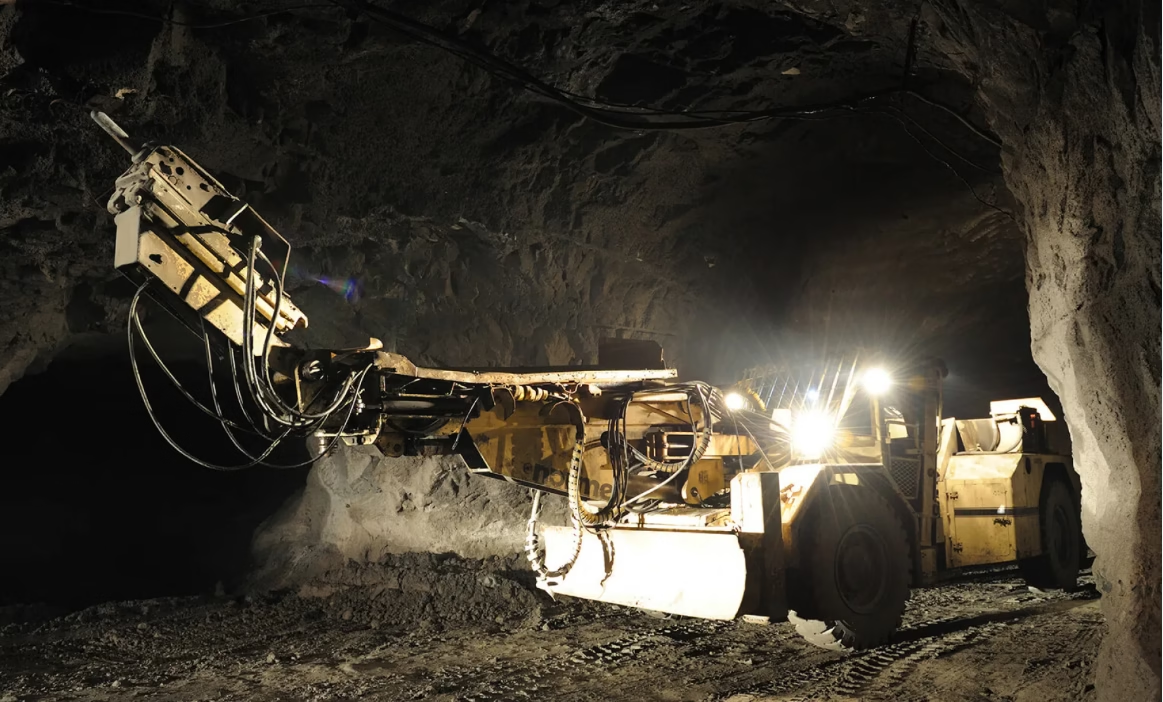
TYPE 240 cables serve as essential power supply conductors for critical mining equipment in underground coal mining operations. The cable’s robust construction and electrical characteristics make it particularly suitable for powering continuous miners, longwall shearer systems, hydraulic pump stations, shuttle cars, and various mobile mining machinery that operate in challenging underground environments.
MSHA Mining Cable: Comprehensive Technical Guide Professional Mining Power Cables Complying with US Mine Safety & Health Administration Standards

MSHA Mining Cable: Comprehensive Technical Guide

MSHA mining cables represent a specialized category of industrial power cables specifically designed, tested, and approved for use in mining operations under regulations established by the United States Mine Safety and Health Administration (MSHA). These cables serve critical functions in both underground and surface mining environments, delivering electrical power to mobile equipment, continuous miners, draglines, shuttle cars, and various other mining machinery while maintaining the highest standards of safety in potentially hazardous atmospheres.