Olex mining cable

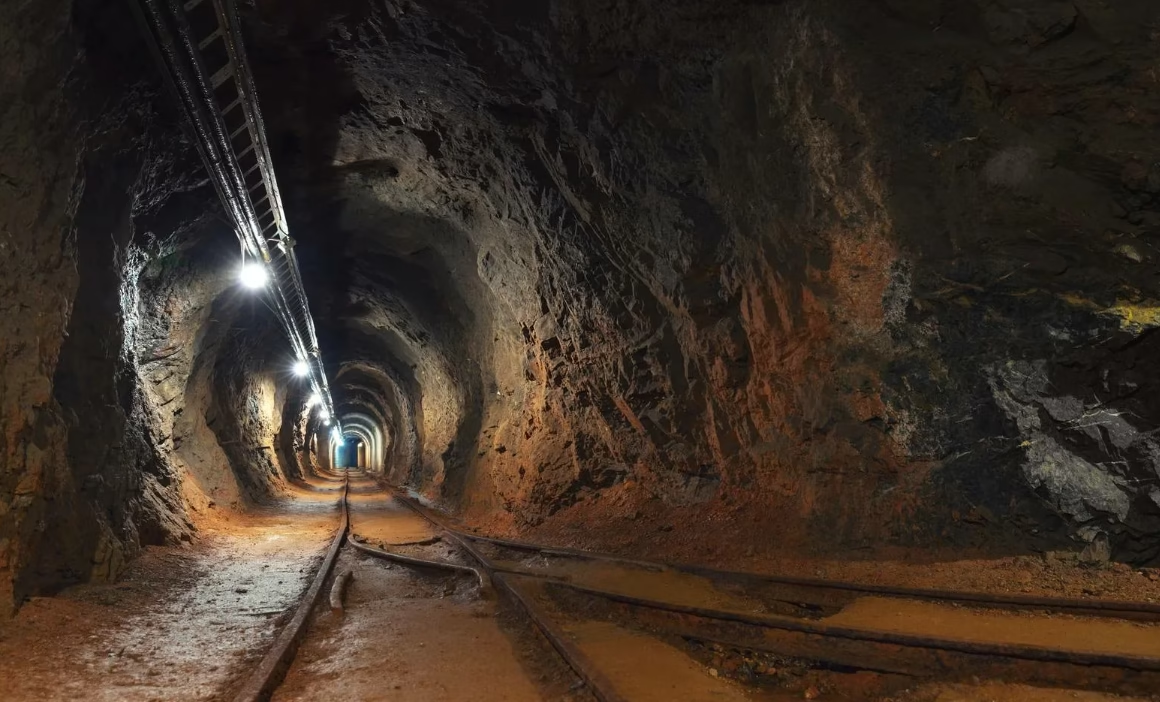
The Grasberg copper-gold mine in Indonesia, operated by PT Freeport Indonesia, is one of the world's largest and most technically complex hard rock mining operations. In recent years, the operation has transitioned to block cave mining (caving by gravity) to achieve depth-efficient extraction of ore from depths exceeding 1,000 meters. This transition creates unprecedented electrical infrastructure demands. 印尼自由港公司(PT Freeport Indonesia)运营的格拉斯伯格铜金矿是全球最大、技术最复杂的硬岩矿山之一。近年来,该矿区已过渡到自然崩落法(通过重力采矿),以实现深度超过1000米的矿石的深度高效开采。这一转变对电气基础设施提出了前所未有的要求。 Operational Context: Block cave mining requires large mobile substations, underground primary crushers, and heavy-duty drilling equipment (drill jumbos) to be positioned and repositioned continuously throughout the deep mine workings. Each of these installations demands flexible high-voltage power distribution cables capable of surviving: (1) Acidic sulfide-rich groundwater exposure, (2) Extreme mechanical abrasion from sharp porphyry rock fragments, (3) Continuous flexing and reeling during equipment repositioning, (4) High-voltage electrical stress at 11kV.

Grasberg Block Cave: Sourcing AS/NZS 1802 Type 241 11/11kV 3x95mm² for Indonesia Copper Mines

The Grasberg copper-gold mine in Indonesia, operated by PT Freeport Indonesia, is one of the world’s largest and most technically complex hard rock mining operations. In recent years, the operation has transitioned to block cave mining (caving by gravity) to achieve depth-efficient extraction of ore from depths exceeding 1,000 meters. This transition creates unprecedented electrical infrastructure demands. 印尼自由港公司(PT Freeport Indonesia)运营的格拉斯伯格铜金矿是全球最大、技术最复杂的硬岩矿山之一。近年来,该矿区已过渡到自然崩落法(通过重力采矿),以实现深度超过1000米的矿石的深度高效开采。这一转变对电气基础设施提出了前所未有的要求。 Operational Context: Block cave mining requires large mobile substations, underground primary crushers, and heavy-duty drilling equipment (drill jumbos) to be positioned and repositioned continuously throughout the deep mine workings. Each of these installations demands flexible high-voltage power distribution cables capable of surviving: (1) Acidic sulfide-rich groundwater exposure, (2) Extreme mechanical abrasion from sharp porphyry rock fragments, (3) Continuous flexing and reeling during equipment repositioning, (4) High-voltage electrical stress at 11kV.
In underground coal mining across Australia and New Zealand, selecting between AS/NZS 1802 and AS/NZS 1972 is not a matter of personal preference or cost optimization—it is a matter of electrical safety compliance and regulatory requirement. The decision tree, however, is surprisingly straightforward once you understand the single fundamental principle that separates these two standards: whether your equipment moves while energized. 在澳大利亚和新西兰的地下煤矿电气设计中,在AS/NZS 1802和AS/NZS 1972之间选择不是个人偏好或成本优化的问题——这是电气安全合规性和监管要求的问题。然而,一旦您理解分离这两个标准的单一基本原则,决策树就会变得出奇地直接:您的设备在通电时是否移动。

AS/NZS 1802 vs AS/NZS 1972: Which Australian Standard Applies to Your Underground Mining Equipment?

In underground coal mining across Australia and New Zealand, selecting between AS/NZS 1802 and AS/NZS 1972 is not a matter of personal preference or cost optimization—it is a matter of electrical safety compliance and regulatory requirement. The decision tree, however, is surprisingly straightforward once you understand the single fundamental principle that separates these two standards: whether your equipment moves while energized. 在澳大利亚和新西兰的地下煤矿电气设计中,在AS/NZS 1802和AS/NZS 1972之间选择不是个人偏好或成本优化的问题——这是电气安全合规性和监管要求的问题。然而,一旦您理解分离这两个标准的单一基本原则,决策树就会变得出奇地直接:您的设备在通电时是否移动。
The Type 2S 11kV 3x95mm² cable has a base ampacity of 285 amperes when installed in free air at 40°C ambient temperature. However, in a typical underground mine substation where three or more feeder cables are installed side-by-side on a cable ladder, the practical usable current is reduced to approximately 228 amperes through application of temperature and grouping derating factors. This 228 A figure is the number that should govern your design calculations and equipment sizing for the substation feeder. Type 2S 11kV 3x95mm² 电缆在 40°C 环境温度的自由空气中安装时,其基础载流量为 285 安培。但在地下矿山变电站中,三根或更多馈电电缆并排安装在电缆桥架上的典型情况下,通过应用温度和编组降额系数,实际可用电流减少至约 228 安培。这个 228 A 的数字应该管理您的设计计算和变电站馈电的设备选型。

Ampacity Derating: Sizing Type 2S 11kV 3x95mm² for Underground Mine Substations (Ambient 40°C)

The Type 2S 11kV 3x95mm² cable has a base ampacity of 285 amperes when installed in free air at 40°C ambient temperature. However, in a typical underground mine substation where three or more feeder cables are installed side-by-side on a cable ladder, the practical usable current is reduced to approximately 228 amperes through application of temperature and grouping derating factors. This 228 A figure is the number that should govern your design calculations and equipment sizing for the substation feeder. Type 2S 11kV 3x95mm² 电缆在 40°C 环境温度的自由空气中安装时,其基础载流量为 285 安培。但在地下矿山变电站中,三根或更多馈电电缆并排安装在电缆桥架上的典型情况下,通过应用温度和编组降额系数,实际可用电流减少至约 228 安培。这个 228 A 的数字应该管理您的设计计算和变电站馈电的设备选型。
Feichun AS/NZS 1972 Type 2S 3.3kV cables can serve as direct drop-in replacements for Olex Nexans Versolex Type 2S mining cables, provided that the specifications are matched cross-section for cross-section and that the installation environment confirms compliance with AS/NZS 1972 requirements. However, this replacement is not automatic or universal. It requires careful verification of your existing Olex cable specifications, comparison against Feichun's equivalent product line, validation of termination compatibility, and confirmation that your mining site's electrical protection systems (earth leakage relays, neutral earthing resistors, and protection settings) are appropriately configured for the replacement cable's impedance characteristics.

Drop-in SWA Replacement for Olex Versolex Type 2S 3.3kV Underground Power Cable

Feichun AS/NZS 1972 Type 2S 3.3kV cables can serve as direct drop-in replacements for Olex Nexans Versolex Type 2S mining cables, provided that the specifications are matched cross-section for cross-section and that the installation environment confirms compliance with AS/NZS 1972 requirements. However, this replacement is not automatic or universal. It requires careful verification of your existing Olex cable specifications, comparison against Feichun’s equivalent product line, validation of termination compatibility, and confirmation that your mining site’s electrical protection systems (earth leakage relays, neutral earthing resistors, and protection settings) are appropriately configured for the replacement cable’s impedance characteristics.
The nominal weight of a Type 3S 3.3kV 3x240mm² steel wire armoured cable is approximately 13,200 to 13,800 kilograms per kilometer (kg/km), or roughly 13.2 to 13.8 kilograms per linear meter. For practical planning purposes, engineers working with Feichun's Type 3S 3x240mm² product should design logistics and installation equipment assuming 13.5 kg/m as the midpoint value. This is not a lightweight cable—a single 1,000-meter feeder run will weigh 13,500 kilograms (13.5 tonnes), demanding heavy-duty mechanical handling equipment and careful transport planning from the moment the cable leaves the manufacturing facility. Type 3S 3.3kV 3x240mm² 钢丝铠装电缆的标称重量约为 13,200 至 13,800 千克/公里 (kg/km),或粗略计算每线性米约 13.2 至 13.8 公斤。 为了实际规划目的,与 Feichun 的 Type 3S 3x240mm² 产品合作的工程师应该以 13.5 kg/m 作为中点值来设计物流和安装设备。这不是一根轻型电缆——单个 1,000 米的馈电敷设将重达 13,500 公斤(13.5 吨),从电缆离开制造厂的那一刻起就需要重型机械处理设备和仔细的运输规划。

Weight & Logistics: Calculating kg/km for Heavy-Duty Type 3S 3.3kV 3x240mm² Steel Wire Armoured Cables

The nominal weight of a Type 3S 3.3kV 3x240mm² steel wire armoured cable is approximately 13,200 to 13,800 kilograms per kilometer (kg/km), or roughly 13.2 to 13.8 kilograms per linear meter. For practical planning purposes, engineers working with Feichun’s Type 3S 3x240mm² product should design logistics and installation equipment assuming 13.5 kg/m as the midpoint value. This is not a lightweight cable—a single 1,000-meter feeder run will weigh 13,500 kilograms (13.5 tonnes), demanding heavy-duty mechanical handling equipment and careful transport planning from the moment the cable leaves the manufacturing facility. Type 3S 3.3kV 3x240mm² 钢丝铠装电缆的标称重量约为 13,200 至 13,800 千克/公里 (kg/km),或粗略计算每线性米约 13.2 至 13.8 公斤。 为了实际规划目的,与 Feichun 的 Type 3S 3x240mm² 产品合作的工程师应该以 13.5 kg/m 作为中点值来设计物流和安装设备。这不是一根轻型电缆——单个 1,000 米的馈电敷设将重达 13,500 公斤(13.5 吨),从电缆离开制造厂的那一刻起就需要重型机械处理设备和仔细的运输规划。
The nominal outer diameter (OD) of an AS/NZS 1972 Type 2S 11kV 3x185mm² feeder cable is 76.0 to 80.0 millimeters (3.0 to 3.15 inches). The typical design center for Feichun's Type 2S 3x185mm² product is approximately 78.6 mm. This measurement is taken across the outermost surface of the flame-retardant PVC sheath, which forms the final protective layer after the galvanized steel wire armour (SWA) and inner insulation geometry. 澳标 AS/NZS 1972 Type 2S 11kV 3x185mm² 馈电电缆的标称外径为 76.0 至 80.0 毫米(3.0 至 3.15 英寸)。 Feichun Type 2S 3x185mm² 产品的典型设计中心约为 78.6 mm。该测量是在钢丝铠装 (SWA) 和内层绝缘几何结构之后,在阻燃 PVC 外护套的最外表面进行的。 This 76–80 mm range is not arbitrary—it represents the accumulated thicknesses of multiple cable components layered concentrically around the three power conductors. To understand where this dimension comes from, an electrical engineer planning a mine installation must understand the contribution of each layer.

Outer Diameter Specs: What is the Nominal OD for AS/NZS 1972 Type 2S 11kV 3x185mm² Feeder Cable?

The nominal outer diameter (OD) of an AS/NZS 1972 Type 2S 11kV 3x185mm² feeder cable is 76.0 to 80.0 millimeters (3.0 to 3.15 inches). The typical design center for Feichun’s Type 2S 3x185mm² product is approximately 78.6 mm. This measurement is taken across the outermost surface of the flame-retardant PVC sheath, which forms the final protective layer after the galvanized steel wire armour (SWA) and inner insulation geometry. 澳标 AS/NZS 1972 Type 2S 11kV 3x185mm² 馈电电缆的标称外径为 76.0 至 80.0 毫米(3.0 至 3.15 英寸)。 Feichun Type 2S 3x185mm² 产品的典型设计中心约为 78.6 mm。该测量是在钢丝铠装 (SWA) 和内层绝缘几何结构之后,在阻燃 PVC 外护套的最外表面进行的。 This 76–80 mm range is not arbitrary—it represents the accumulated thicknesses of multiple cable components layered concentrically around the three power conductors. To understand where this dimension comes from, an electrical engineer planning a mine installation must understand the contribution of each layer.
The Single Most Important Cable Design Decision in Underground Coal Mining: Whether the cable employs collective screening (Type 2) or individual phase screening (Type 2S). This single engineering choice directly determines whether a mechanical cable failure will result in a phase-to-earth fault (detected and stopped in milliseconds) or a phase-to-phase fault with thousands of amperes of arc current (igniting methane explosions).

Type 2 vs Type 2S: Why the “S” (Individual Screen) is Mandatory for 11kV Underground Coal Mines

The Single Most Important Cable Design Decision in Underground Coal Mining: Whether the cable employs collective screening (Type 2) or individual phase screening (Type 2S). This single engineering choice directly determines whether a mechanical cable failure will result in a phase-to-earth fault (detected and stopped in milliseconds) or a phase-to-phase fault with thousands of amperes of arc current (igniting methane explosions).