
Comprehensive Technical Guide to High-Visibility Mining Cables for Draglines and Shovels
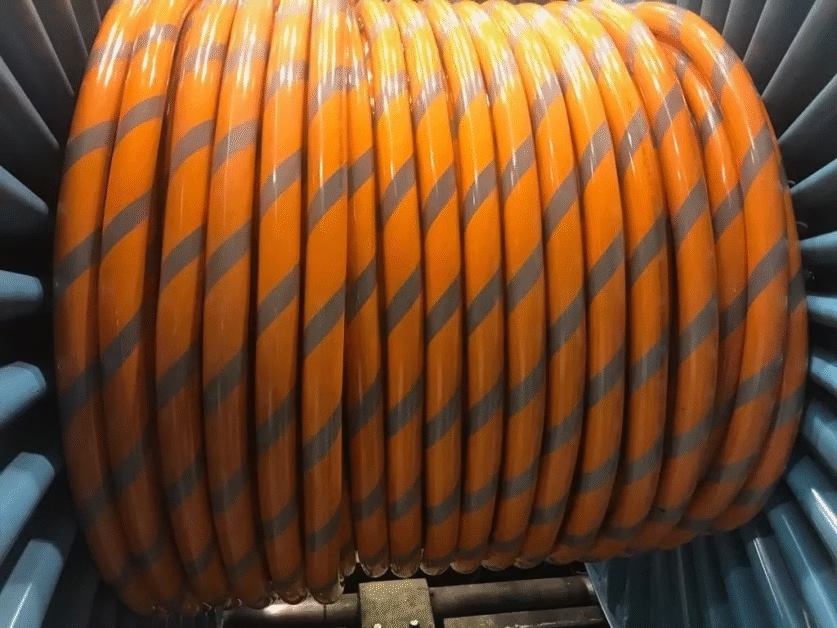
What is Luminescent Power Cable TENAX-LUMEN (N)TSCGEH3S 6 kV – 10 kV for Trailing Application?
Comprehensive Technical Guide to High-Visibility Mining Cables for Draglines and Shovels
Founded: 2006 | Location: Hefei, Anhui Province, China
Specialization: Professional R&D and production of wires and cables for special occasions
1. Introduction to TENAX-LUMEN Luminescent Cable Technology
The TENAX-LUMEN (N)TSCGEH3S represents a significant advancement in mining cable technology, combining robust electrical performance with innovative safety features. This medium-voltage trailing cable is specifically engineered for the demanding environments of open-pit mining operations, where large mobile equipment such as draglines and electric rope shovels require reliable power supply combined with enhanced visibility for personnel safety.
The integration of electroluminescent technology into mining cables addresses a critical safety concern in mining operations. According to industry research, cable visibility represents a significant factor in preventing equipment damage and ensuring personnel safety, particularly during night operations or in low-visibility conditions common in mining environments. The electroluminescent string embedded within the TENAX-LUMEN cable provides 360-degree illumination when energized, making the cable highly visible to equipment operators and ground personnel.
Key Innovation: Electroluminescent Technology
The TENAX-LUMEN cable incorporates a special electroluminescent string designed for high visibility and low power consumption. This technology operates at a maximum luminescent voltage of 125V AC with a frequency up to 2000 Hz, consuming approximately 15 A/km while generating no measurable heat. The luminescent light homogeneity exceeds 95%, ensuring consistent visibility along the entire cable length with complete 360-degree irradiation.
2. Primary Applications and Purpose
The TENAX-LUMEN cable is specifically designed as a trailing cable for power supply to large mobile equipment in mining operations. The primary applications include powering electric rope shovels, draglines, and other heavy material handling equipment in open-pit mining environments where cables are subject to extreme mechanical stresses, abrasion, and environmental challenges.
2.1 Target Equipment and Operations
Electric Rope Shovels
These colossal pieces of equipment are extensively used in open-pit mining for excavating and loading large quantities of overburden and ore. The TENAX-LUMEN provides reliable power delivery during continuous digging cycles while remaining visible to prevent cable damage from hauler traffic and other equipment movements.
Draglines
Dragline excavators require substantial electrical power for operation and frequently reposition within the mining area. The TENAX-LUMEN’s robust construction and flexible design accommodate the dynamic movements required in dragline operations while maintaining electrical integrity and visibility.
Mobile Material Handling Equipment
Various mobile mining equipment including mobile crushers, dumpers, and conveyor systems benefit from the TENAX-LUMEN’s combination of electrical performance, mechanical durability, and enhanced visibility features.
3. Technical Specifications and Design Features
3.1 Conductor Construction
| Component | Specification | Standard Reference |
|---|---|---|
| Main Conductor Material | Tinned copper, finely stranded (Class 5) | IEC 60228 / DIN VDE 0295 |
| PE-Conductor | Tinned copper, Class 5 with semi-conductive special rubber compound | IEC 60228 / DIN VDE 0295 |
| Pilot Conductor | Tinned copper, finely stranded (Class 5), EPR-Insulation | IEC 60228 / DIN VDE 0295 |
| Max. Tensile Load | 25 N/mm² | Mechanical specification |
The use of Class 5 finely stranded tinned copper conductors ensures optimal flexibility and mechanical performance. According to IEC 60228 standards, Class 5 conductors are specifically designed for applications requiring frequent flexing and movement, making them ideal for trailing cable applications in mining equipment. The tin coating provides enhanced corrosion resistance, which is critical in mining environments where exposure to moisture, chemicals, and abrasive materials is constant.
3.2 Insulation System
The TENAX-LUMEN employs a sophisticated multi-layer insulation system designed to provide superior electrical performance and mechanical protection. The insulation consists of Ethylene Propylene Rubber (EPR) compound type 3GI3, which offers excellent electrical properties combined with superior resistance to environmental factors.
Insulation Material: EPR type 3GI3 compound provides exceptional dielectric strength, thermal stability, and resistance to ozone, chemicals, and mechanical stress. This material selection aligns with DIN VDE 0207 specifications for high-quality elastomeric insulation compounds used in demanding industrial applications.
3.3 Electrical Field Control System
The cable incorporates a dual-layer semiconductive rubber compound system for electrical field control. This consists of inner and outer layers of semiconductive material, with the outer layer being cold-strippable for ease of termination. This design ensures uniform electric field distribution within the insulation, which is crucial for preventing partial discharge and extending cable service life in medium-voltage applications.
3.4 Core Configuration and Assembly
| Feature | Description |
|---|---|
| Core Arrangement | Cores laid up around semiconductive central filler with aramid yarns |
| Outer Sheath Material | Transparent PUR (Polyurethane) compound |
| Outer Sheath Color | Orange (high-visibility) |
| Illuminating Element | Special electroluminescent string for high visibility and low power consumption |
The use of aramid yarns in the central filler provides exceptional tensile strength and anti-torsion properties. Aramid fibers are known for their high strength-to-weight ratio and are commonly specified in cables subject to high mechanical stresses. The transparent orange PUR outer sheath serves multiple functions including providing mechanical protection, chemical resistance, and allowing the electroluminescent element to be clearly visible through the sheath material.
4. Electrical Parameters and Performance Characteristics
4.1 Voltage Ratings and Test Parameters
| Parameter | Value | Notes |
|---|---|---|
| Rated Voltage (U₀/U) | 3.6/6 kV | Standard operating voltage |
| Max. Permissible Operating Voltage AC | 4.2/7.2 kV | Maximum continuous AC voltage |
| Max. Permissible Operating Voltage DC | 5.4/10.8 kV | Maximum continuous DC voltage |
| AC Test Voltage (Main Cores) | 11 kV for 5 minutes | Quality assurance testing |
| Luminescent Voltage | Max. 125 V AC | Electroluminescent system |
| Luminescent Frequency | Max. 2000 Hz | Operating frequency for illumination |
| Luminescent Current Absorption | ~15 A/km | Low power consumption |
The voltage ratings of the TENAX-LUMEN cable align with standard medium-voltage distribution systems used in mining operations. The 3.6/6 kV rating (U₀/U) indicates the voltage between conductor and earth (U₀) and between conductors (U), which is a standard designation in European cable specifications. The higher permissible operating voltages provide operational margin for voltage variations that may occur during mining equipment operation.
4.2 Luminescent System Performance
Heat Development
None – The electroluminescent system generates no measurable heat during operation, which is a significant advantage over LED-based illumination systems that may generate heat and affect cable thermal performance.
Light Homogeneity
>95% – Exceptional uniformity ensures consistent visibility along the entire cable length without dark spots or intensity variations.
Irradiation Pattern
360° – Complete circumferential illumination ensures the cable remains visible from all angles, regardless of cable position or twist.
5. Material Structure and Construction
5.1 Layer-by-Layer Construction Analysis
The TENAX-LUMEN cable employs a sophisticated multi-layer construction designed to meet the demanding requirements of mining applications. Each layer serves specific functional purposes contributing to the overall performance, durability, and safety of the cable system.
| Layer | Material | Function |
|---|---|---|
| 1. Conductor | Tinned copper, Class 5 stranding | Current conduction with high flexibility |
| 2. Inner Semiconductive Layer | Semiconductive rubber compound | Electric field stress control |
| 3. Primary Insulation | EPR type 3GI3 | Main electrical insulation |
| 4. Outer Semiconductive Layer | Semiconductive rubber (cold-strippable) | Field grading and interface control |
| 5. Central Filler | Semiconductive material with aramid reinforcement | Structural support and tensile strength |
| 6. Electroluminescent Element | Special electroluminescent string | Cable visibility and safety |
| 7. Outer Sheath | Transparent orange PUR compound | Mechanical protection and chemical resistance |
5.2 Material Selection Rationale
The selection of Polyurethane (PUR) for the outer sheath represents a deliberate engineering decision based on the specific requirements of mining applications. PUR compounds offer several advantages over alternative materials such as CPE (Chlorinated Polyethylene) or rubber compounds. According to cable engineering research, PUR materials provide superior abrasion resistance, excellent low-temperature flexibility, and outstanding resistance to oils, greases, and chemicals commonly encountered in mining environments.
6. Standards Compliance and Certifications
6.1 Primary Design Standard
The TENAX-LUMEN (N)TSCGEH3S is designed based on DIN VDE 0250-813, which is the German national standard for cables, wires and flexible cords for power installation, specifically addressing trailing cable applications. This standard, originally published in May 1985, provides comprehensive specifications for cables used in demanding industrial and mining applications where cables are subject to frequent movement, mechanical stress, and harsh environmental conditions.
DIN VDE 0250-813 has gained global recognition as the ultimate standard for tough rubber-sheathed flexible reeling cables. Germany is notably the only country to have issued special design regulations specifically for flexible electrical cables covering cranes and material handling equipment, making this standard widely accepted and specified internationally for mining and industrial applications requiring robust cable performance.
6.2 Related Standards and Test Methods
| Standard | Application Area | Relevance to TENAX-LUMEN |
|---|---|---|
| IEC 60228 | Conductors of insulated cables | Defines Class 5 stranding requirements |
| DIN VDE 0295 | Conductor specifications | German implementation of IEC 60228 |
| EN 60332-1-2 | Fire performance testing | Single cable vertical flame test |
| IEC 60332-1-2 | Fire propagation resistance | International flame test standard |
| EN 60811-404 | Oil resistance testing | Mineral oil immersion test |
| IEC 60811-404 | Material testing methods | Validates sheath material performance |
| DIN VDE 0298 Part 3 | Installation requirements | Defines minimum bending radii |
6.3 Certification Status
According to the manufacturer’s specifications, certifications and approvals for the TENAX-LUMEN cable are currently in preparation. This is typical for innovative cable designs incorporating new technologies such as the integrated electroluminescent system. The base cable design follows established standards, while additional certifications specific to the luminescent feature may require specialized testing protocols.
7. Chemical and Environmental Performance
7.1 Fire Performance Characteristics
The TENAX-LUMEN cable is designed to meet rigorous fire performance standards as specified by EN 60332-1-2 and IEC 60332-1-2. These standards define the test method for vertical flame propagation for a single insulated wire or cable. Compliance with these standards indicates that the cable will not propagate flame under the test conditions, which is essential for maintaining safety in confined mining environments where fire represents a significant hazard.
7.2 Chemical Resistance
| Property | Standard | Performance |
|---|---|---|
| Resistance to Oil | EN 60811-404 / IEC 60811-404 | Tested and verified |
| Weather Resistance | Manufacturer specification | Unrestricted outdoor use, resistant to ozone and moisture |
| UV Resistance | Material specification | Orange PUR sheath provides UV protection |
The oil resistance testing per EN 60811-404 involves immersion of cable samples in mineral oil at elevated temperatures to simulate long-term exposure. Mining environments commonly involve exposure to hydraulic oils, lubricating oils, and diesel fuel, making oil resistance a critical performance parameter. The EPR insulation and PUR sheath materials used in TENAX-LUMEN are specifically selected for their superior resistance to oil degradation.
7.3 Weather and Environmental Durability
The cable is specified for unrestricted outdoor use with resistance to ozone and moisture. This is particularly important in open-pit mining operations where cables may be exposed to direct sunlight, rain, snow, and significant temperature variations. The materials used in the cable construction maintain their mechanical and electrical properties across a wide temperature range, ensuring reliable operation in diverse climatic conditions.
8. Thermal Performance Parameters
| Temperature Parameter | Value | Application Context |
|---|---|---|
| Max. Conductor Operating Temperature | 90°C | Continuous normal operation |
| Max. Short Circuit Temperature | 250°C | Maximum 5-second duration |
| Ambient Temperature (Fixed Installation) – Min | -50°C | Stationary cable installation |
| Ambient Temperature (Fixed Installation) – Max | +80°C | Stationary cable installation |
| Ambient Temperature (Fully Flexible Operation) – Min | -50°C | Dynamic cable movement |
| Ambient Temperature (Fully Flexible Operation) – Max | +60°C | Dynamic cable movement |
The thermal ratings of the TENAX-LUMEN cable reflect careful engineering to balance electrical capacity with mechanical durability. The 90°C maximum conductor operating temperature represents standard practice for EPR-insulated medium-voltage cables and aligns with IEC standards for this insulation type. This temperature rating allows for substantial current-carrying capacity while maintaining adequate thermal margin for safe operation.
Extreme Low-Temperature Performance
The cable’s ability to maintain fully flexible operation down to -50°C represents a significant technical achievement. At such low temperatures, many polymeric materials become brittle and lose flexibility. The specialized PUR compound used in the TENAX-LUMEN outer sheath maintains its mechanical properties and flexibility even at these extreme temperatures, which is essential for mining operations in regions such as northern Canada, Siberia, and high-altitude mining sites where winter temperatures regularly drop below -40°C.
8.1 Short Circuit Performance
The maximum short circuit temperature of 250°C for a duration of 5 seconds provides protection against catastrophic failure during fault conditions. This specification is calculated based on the adiabatic heating of the copper conductor and ensures that even during severe short circuit events, the insulation system maintains its integrity long enough for protective devices to clear the fault. According to cable design standards, the 250°C limit is established based on the thermal stability of the EPR insulation compound and represents the maximum temperature at which the insulation can briefly exist without permanent degradation.
9. Mechanical Performance and Installation Requirements
9.1 Mechanical Stress Limits
| Mechanical Parameter | Specification | Reference Standard |
|---|---|---|
| Max. Tensile Load on Conductor | 25 N/mm² | Design specification |
| Minimum Bending Radii | According to DIN VDE 0298 Part 3 | DIN VDE 0298 Part 3 |
| Min. Distance with S-type Directional Changes | 20 × cable diameter | Installation guideline |
The maximum tensile load of 25 N/mm² on the conductor represents a conservative design approach that ensures the cable can withstand the mechanical stresses encountered during installation and operation. In trailing cable applications, tensile forces arise from the weight of the cable itself when suspended or dragged, as well as from equipment movement. The aramid yarn reinforcement in the cable core provides the primary tensile strength, protecting the copper conductors from excessive mechanical stress that could lead to conductor breakage or work hardening.
9.2 Bending Radius Requirements
The bending radius specifications according to DIN VDE 0298 Part 3 are critical for maintaining cable integrity and service life. Excessive bending can cause stress concentration in the insulation system, potentially leading to premature failure. For trailing cable applications in mining, the cable typically experiences both static bending (permanent curvature) and dynamic bending (repeated flexing during operation). The minimum bending radius requirements account for both scenarios and vary depending on the cable diameter and construction.
9.3 Installation Best Practices
Proper installation of the TENAX-LUMEN cable is essential for achieving its design service life. The cable should be installed with attention to avoiding sharp edges or surfaces that could cause abrasion damage to the outer sheath. Cable support systems should be designed to minimize mechanical stress while allowing for the necessary cable movement during equipment operation. Regular inspection of the cable route for potential hazards such as sharp rocks, metal debris, or other objects that could cause mechanical damage is recommended.
10. Safety Features and Operational Advantages
10.1 Enhanced Visibility Safety System
The primary safety innovation of the TENAX-LUMEN cable is its integrated electroluminescent visibility system. This feature addresses a critical safety concern in mining operations where cable damage from equipment runover represents both a safety hazard and a significant operational cost. Industry data indicates that cable damage incidents can result in electrical hazards to personnel, equipment damage, and costly downtime.
Safety Benefits of Luminescent Cables
Research in mining safety indicates that enhanced cable visibility represents a significant factor in accident prevention. The luminescent feature allows equipment operators to easily identify energized cables, particularly during night operations or in dusty conditions where visibility is limited. When a trailing cable is energized and the equipment is actively operating, the cable illuminates, providing immediate visual indication of the cable’s presence and location. This visibility enhancement helps operators avoid driving over or damaging the cable, which could lead to electrical faults, fires, or electrocution hazards.
10.2 Operational Status Indication
The electroluminescent system provides an additional operational benefit by serving as a visual indicator of cable energization status. When the cable is energized, it glows, immediately informing personnel that the equipment is powered and potentially operational. This visual cue enhances safety by helping maintenance personnel and other workers identify energized equipment without requiring electrical testing equipment. The feature is particularly valuable during shift changes, maintenance activities, or emergency situations where rapid identification of equipment power status is critical.
10.3 Durability and Service Life Advantages
| Feature | Benefit | Impact on Operations |
|---|---|---|
| Extremely Robust PUR Outer Sheath | Superior abrasion and tear resistance | Extended service life, reduced replacement frequency |
| Low-Temperature Flexibility (-50°C) | Maintains flexibility in extreme cold | Year-round operation in cold climates without cable failure |
| Oil and Chemical Resistance | Withstands exposure to mining fluids | Reduced degradation from hydraulic oil, diesel, and chemicals |
| Weather Resistance | Unrestricted outdoor use | No special weather protection required |
11. Precautions for Use and Handling Guidelines
11.1 Installation Precautions
During installation, several critical precautions must be observed to ensure optimal cable performance and service life. The cable should not be subjected to pulling forces exceeding the specified maximum tensile load of 25 N/mm² on the conductor. Installation should be performed at temperatures above -5°C to prevent potential damage to the cable materials during handling. If installation at lower temperatures is necessary, the cable should be gradually warmed or handled with extra care to avoid imposing excessive bending stress on materials that may have reduced flexibility at low temperatures.
- Ensure all bending radii comply with DIN VDE 0298 Part 3 specifications during installation and operation
- Maintain minimum distance of 20× cable diameter between S-type directional changes
- Avoid dragging cable over sharp edges, rocks, or debris that could damage the outer sheath
- Use appropriate cable handling equipment; do not use hooks or sharp implements that could penetrate the sheath
- Ensure proper cable support to prevent excessive stress on any section of the cable
11.2 Operational Precautions
During operation, regular visual inspection of the cable condition is recommended, particularly in areas subject to high mechanical stress or abrasion. The transparent orange outer sheath allows for visual inspection of the internal components to some degree, enabling early detection of potential issues. Any visible damage to the outer sheath should be promptly assessed and repaired if necessary to prevent moisture ingress or further mechanical damage to internal components.
11.3 Maintenance and Inspection Guidelines
| Inspection Item | Frequency | Action Required |
|---|---|---|
| Visual inspection of outer sheath | Daily (during operation) | Check for cuts, abrasions, or visible damage |
| Mechanical connections and terminations | Weekly | Verify tightness and integrity of connections |
| Electroluminescent system function | Daily (when in use) | Verify illumination is uniform and complete |
| Detailed cable inspection | Monthly | Thorough examination of full cable length |
| Electrical testing (insulation resistance) | Quarterly or per site requirements | Perform insulation resistance testing per standards |
11.4 Storage Recommendations
When not in use, the cable should be stored in a manner that prevents mechanical damage and exposure to extreme environmental conditions. The cable should be coiled with appropriate bend radius, avoiding tight coiling that could cause permanent deformation or stress concentration. Storage areas should provide protection from direct sunlight for extended periods, although the UV-resistant PUR sheath provides good protection for typical outdoor exposure durations. The storage temperature range should ideally be between -20°C and +50°C to minimize thermal stress on the materials.
12. Common Problems and Troubleshooting
12.1 Mechanical Damage Issues
Problem: Outer Sheath Abrasion
Symptoms: Visible wear or thinning of the orange PUR outer sheath, particularly in areas of high mechanical stress or where the cable drags across rough surfaces.
Solution: Assess the severity of abrasion. Minor surface abrasion may not require immediate action if the sheath thickness remains adequate. For significant abrasion exposing underlying layers, the damaged section should be replaced or the cable route modified to reduce abrasion. Consider using cable protection systems in high-wear areas.
Problem: Cable Cuts or Penetrations
Symptoms: Visible cuts or holes in the outer sheath that may penetrate to inner cable layers.
Solution: Any penetration of the outer sheath should be treated as a serious issue requiring immediate attention. Minor superficial cuts that do not penetrate beyond the outer sheath may be temporarily sealed with appropriate cable repair tape. Deep cuts or penetrations exposing insulated conductors require cable replacement or professional repair involving splice joints.
Problem: Excessive Cable Twist
Symptoms: Cable exhibits visible twisting or spiraling, potentially causing internal stress on conductors and insulation.
Solution: Cable twist typically results from improper installation or equipment movement patterns. The cable should be de-energized and manually untwisted. Investigate the cause of twisting and modify the cable support system or equipment movement patterns to prevent recurrence. Extreme or repeated twisting may cause internal damage requiring cable replacement.
12.2 Electrical Performance Issues
Reduced Insulation Resistance
Symptoms: Insulation resistance testing shows values below acceptable thresholds, indicating potential moisture ingress or insulation degradation.
Diagnosis: Perform systematic insulation resistance testing along the cable length to localize the problem area. Inspect for visible damage, particularly cuts or cracks in the outer sheath that could allow moisture penetration.
Solution: If moisture ingress is detected, the affected cable section should be replaced. Ensure proper sealing of all terminations and joints. In some cases, cable drying procedures may temporarily restore insulation resistance, but replacement is generally the more reliable long-term solution.
12.3 Luminescent System Issues
| Problem | Possible Causes | Resolution |
|---|---|---|
| No illumination when cable is energized | Damage to electroluminescent element; insufficient voltage to luminescent system; connection failure | Verify voltage supply to luminescent system (should be max. 125V AC at max. 2000 Hz); inspect for mechanical damage to cable; check system connections |
| Intermittent or flickering illumination | Loose connections; damaged electroluminescent element; voltage fluctuations | Check and tighten all connections; monitor supply voltage stability; inspect for mechanical damage along cable length |
| Non-uniform illumination (dark sections) | Localized damage to electroluminescent string | Identify damaged section through visual inspection; consider cable replacement if damage is extensive or in critical areas |
12.4 Termination and Connection Issues
Proper termination of medium-voltage cables requires specialized skills and equipment. Common termination problems include inadequate stress control, improper preparation of the semiconductive layers, and insufficient creepage distance. All terminations should be performed by qualified personnel following manufacturer guidelines and relevant standards. Regular inspection of terminations for signs of tracking, overheating, or mechanical looseness is essential for maintaining system reliability.
13. Comparison with Alternative Mining Cable Technologies
Understanding how the TENAX-LUMEN compares to other mining cable technologies helps in making informed decisions for specific applications. Several alternative approaches exist for enhancing cable visibility and durability in mining environments.
13.1 LED-Lighted Trailing Cables
An alternative visibility enhancement technology involves integrating LED lighting strings into the cable construction. LED-based systems typically provide bright, discrete points of light along the cable length. However, LED systems generate heat during operation, which must be managed within the cable thermal design. The TENAX-LUMEN electroluminescent approach offers the advantage of zero heat generation, which simplifies thermal management and potentially allows for higher current-carrying capacity in the same cable diameter. Additionally, electroluminescent systems typically provide more uniform illumination without discrete bright spots, potentially offering better visibility in dusty conditions where LED point sources may create glare.
13.2 Standard High-Visibility Cables
Traditional high-visibility cables rely solely on bright outer sheath colors (typically orange or yellow) without integrated lighting. While less expensive than luminescent cables, standard colored cables offer reduced visibility in low-light conditions, during night operations, or when covered with dust or mud. The active illumination provided by TENAX-LUMEN offers superior visibility under these challenging conditions, potentially justifying the higher initial investment through reduced cable damage incidents and improved safety.
| Feature | TENAX-LUMEN | LED-Lighted Cables | Standard Colored Cables |
|---|---|---|---|
| Visibility in Dark | Excellent (360° illumination) | Very Good (discrete points) | Poor (passive color only) |
| Heat Generation | None | Moderate (LED heat) | None |
| Power Consumption | ~15 A/km (very low) | Higher (LED power requirements) | None (no lighting system) |
| Maintenance Complexity | Low | Moderate (LED replacement) | Low |
| Initial Cost | Premium | Premium | Standard |
14. Industry Applications and Case Studies
14.1 Open-Pit Mining Operations
Open-pit mining represents the primary application environment for TENAX-LUMEN cables. These operations typically involve large electric rope shovels with bucket capacities ranging from 10 to over 100 cubic yards, operating continuously in harsh conditions. The cables must withstand extreme mechanical abuse from being dragged across rough terrain, exposure to mining dust and debris, and temperature extremes ranging from below -40°C in northern mining operations to over +40°C in tropical or desert mining environments.
In typical open-pit coal mining operations, electric rope shovels can consume 4-7 megawatts of power during active digging cycles. The TENAX-LUMEN cable’s robust design and high current-carrying capacity make it suitable for supplying this substantial power demand while maintaining the flexibility needed for the shovel’s frequent repositioning movements. According to mining industry sources, trailing cable solutions for mining equipment must balance electrical capacity, mechanical durability, and operational flexibility to meet the demanding requirements of modern mining equipment.
14.2 Dragline Excavator Applications
Dragline excavators represent some of the largest mobile land-based machines ever constructed, with operating weights exceeding 10,000 tons for the largest models. These massive machines require substantial electrical power for their various motor systems controlling the drag, hoist, swing, and propel functions. The trailing cables supplying power to draglines must accommodate the machine’s walking movements, which involve lifting and repositioning the entire machine structure.
The flexibility and mechanical strength of the TENAX-LUMEN cable make it suitable for dragline applications where the cable experiences complex mechanical stresses during machine movement. Industry experience with heavy-duty crane and dragline power cables demonstrates the importance of proper cable design in achieving reliable operation and acceptable service life in these demanding applications.
14.3 Safety Performance in Mining Environments
Mining operations around the world have reported significant benefits from implementing luminescent cable technology. The enhanced visibility provided by illuminated cables has been shown to reduce cable damage incidents, particularly those resulting from haul trucks or other mobile equipment inadvertently driving over or contacting energized cables. According to industry research from companies specializing in mining cable solutions, the visibility enhancement can help prevent accidents that might otherwise result in equipment damage, production interruptions, and potential safety hazards to personnel.
15. Future Developments and Industry Trends
The mining cable industry continues to evolve in response to changing operational requirements, environmental regulations, and technological advances. Several trends are shaping the future development of mining cables, including the TENAX-LUMEN and similar products.
15.1 Integration of Monitoring Technologies
Future generations of mining cables may incorporate integrated condition monitoring systems capable of detecting cable health parameters such as conductor temperature, insulation condition, and mechanical stress levels. Such systems could provide real-time data to mining operations, enabling predictive maintenance strategies that reduce unexpected cable failures and optimize replacement schedules.
15.2 Enhanced Materials Development
Ongoing materials research is focused on developing improved compounds for cable insulation and sheathing that offer enhanced performance characteristics. Areas of development include materials with superior low-temperature flexibility, enhanced abrasion resistance, and improved resistance to specific chemicals encountered in mining environments. Companies such as Anhui Feichun Special Cable Co., Ltd continue to invest in research and development to advance cable technology for demanding industrial applications.
15.3 Sustainability Considerations
The mining industry increasingly emphasizes sustainability and environmental responsibility. Cable manufacturers are responding by developing products with improved environmental profiles, including materials that are more readily recyclable, reduced use of halogenated compounds, and manufacturing processes with lower environmental impact. The long service life achievable with robust cables like the TENAX-LUMEN contributes to sustainability by reducing the frequency of cable replacement and associated material consumption.
Contact Information
Anhui Feichun Special Cable Co., Ltd (安徽飞纯特种电缆有限公司)
Email: [email protected]
+86 13855 123218
www.feichuncable.com
Factory Address: No. 3 Factory Building in the First Park of Private Science and Technology Park, Hefei Economic and Technological Development Zone, Anhui Province, China
References and Additional Resources
Industry Standards and Technical References:
- DIN VDE 0250-813: Cables, wires and flexible cords for power installation; Trailing cable (1985)
- IEC 60228: Conductors of insulated cables (International Electrotechnical Commission)
- EN 60332-1-2 / IEC 60332-1-2: Tests on electric and optical fibre cables under fire conditions
- DIN VDE 0298 Part 3: Use of cables and flexible cords with rated voltages up to and including 450/750 V
- Prysmian Group. (2024). “Cable Solutions for Mining Industry.” Retrieved from Prysmian website. [This source provides context on mining cable requirements and TENAX LUMEN technology]
- Eland Cables. “DIN VDE 0250 Standard Cable.” Technical information on VDE standards. [Background on DIN VDE 0250 standard applications]
- Reeling Cable Technology Solutions – Comprehensive resource for mining reeling and trailing cable applications
- Amplex Mining – Mining equipment and cable solutions for Australian mining operations
- Mining Cable Chile – Specialized mining cable solutions for Latin American markets
- Crane Cable Solutions – Heavy-duty cable systems for cranes and material handling equipment
Additional Technical Information:
- Coal Age Magazine. (2019). “LED-Lighted Trailing Cables for Surface Mines.” [Industry perspective on luminescent cable benefits]
- AmerCable. “Underground Mining Cable Solutions.” [Reference for mining cable applications and requirements]


