Advanced GOST-to-IEC Cable Migration Engineering: КШВЭБбШв-6 kV Russian Armored Underground Mining Cable Direct Replacement via IEC 60502-2 N2XSEYBY Cu/XLPE/CTS/DSTA/PVC 3.6/6 kV Structure. Decoding GOST Cable Nomenclature (Mine-Use Designation, PVC Insulation, Copper Screen, Double-Steel-Tape Armor), Cross-Standard Compatibility Analysis, 3×95+1x10mm² BOM Specifications, Thermal Performance Upgrade XLPE vs PVC (+20°C Rating Margin), Mechanical Installation Limits, 14,250N Pulling Tension, 15×OD Bending Radius Compliance.
先进GOST至IEC电缆迁移工程:КШВЭБбШв-6 kV俄标铠装地下矿用电缆直接替代通过IEC 60502-2 N2XSEYBY Cu/XLPE/CTS/DSTA/PVC 3.6/6 kV结构。解码GOST电缆命名法(矿用、PVC绝缘、铜屏蔽、双层钢带铠装)、跨标准兼容性分析、3×95+1×10mm² BOM规格、热性能升级XLPE vs PVC(+20°C额定边际)、机械敷设极限、14,250N牵引张力、15×OD弯曲半径合规。
КШВЭБбШв-6 kV Drop-in Replacement: IEC 60502-2 N2XSEYBY Armored Underground Cable
Advanced GOST-to-IEC Cable Migration Engineering: КШВЭБбШв-6 kV Russian Armored Underground Mining Cable Direct Replacement via IEC 60502-2 N2XSEYBY Cu/XLPE/CTS/DSTA/PVC 3.6/6 kV Structure. Decoding GOST Cable Nomenclature (Mine-Use Designation, PVC Insulation, Copper Screen, Double-Steel-Tape Armor), Cross-Standard Compatibility Analysis, 3×95+1x10mm² BOM Specifications, Thermal Performance Upgrade XLPE vs PVC (+20°C Rating Margin), Mechanical Installation Limits, 14,250N Pulling Tension, 15×OD Bending Radius Compliance.
先进GOST至IEC电缆迁移工程:КШВЭБбШв-6 kV俄标铠装地下矿用电缆直接替代通过IEC 60502-2 N2XSEYBY Cu/XLPE/CTS/DSTA/PVC 3.6/6 kV结构。解码GOST电缆命名法(矿用、PVC绝缘、铜屏蔽、双层钢带铠装)、跨标准兼容性分析、3×95+1×10mm² BOM规格、热性能升级XLPE vs PVC(+20°C额定边际)、机械敷设极限、14,250N牵引张力、15×OD弯曲半径合规。
1. GOST to IEC: Decoding КШВЭБбШв Cable Nomenclature & Structure
Translating Russian GOST Cable Code—Letter-by-Letter Breakdown: КШВЭБбШв-6 each letter carries specific technical meaning: (1) К (Кабель) = Cable, (2) Ш (Шахтный) = Mine-rated (specifically designed for underground mining environments with enhanced flame-retardant properties per GOST 5151), (3) В (В-изоляция) = PVC (polyvinyl chloride) insulation, (4) Э (Экран) = Screened (copper or copper-nickel screening layer for electromagnetic shielding), (5) Бб (Броня Бронированная) = Armored (specifically double-layer—Бб indicates dual protective layer), (6) Шв (Шланг Виниловый) = PVC outer sheath (vinyl hose protective jacket). Result: КШВЭБбШв-6 = Mine-rated, PVC-insulated, screened, double-armor protected, PVC-sheathed 6 kV cable. The “6” denotes 6 kV rated voltage (single-phase or 3-phase phase-to-ground).
翻译俄标GOST电缆代码—逐字分解:КШВЭБбШв-6各字母承载特定技术含义:(1)К(Кабель)=电缆、(2)Ш(Шахтный)=矿用(特别为地下矿井环境设计、GOST 5151阻燃增强)、(3)В(В-изоляция)=PVC聚氯乙烯绝缘、(4)Э(Экран)=屏蔽(铜或铜镍屏蔽层)、(5)Бб(Броня Бронированная)=铠装(双层—Бб指双保护层)、(6)Шв(Шланг Виниловый)=PVC外护套。结果:КШВЭБбШв-6=矿用、PVC绝缘、屏蔽、双铠装、PVC护套6 kV电缆。”6″表示6 kV额定电压。
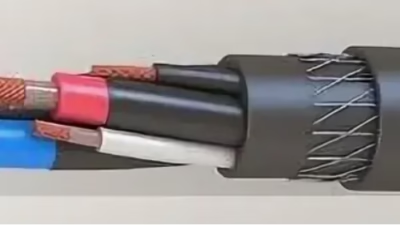
Traditional КШВЭБбШв Physical Structure—Typical Cross-Section Layers: From conductor to outer: (1) Copper conductor (Class 2 annealed, tinned or bare), (2) PVC insulation (0.6–1.0 mm for 6 kV, lower Tg ≈ 60–80°C, temperature-limited design), (3) Semiconductive inner shielding layer (0.2–0.3 mm), (4) Copper tape screen (0.1–0.15 mm, helically wrapped or spiral), (5) Semiconductive outer shielding (0.2–0.3 mm), (6) First layer steel tape armor (0.5–0.7 mm, helical), (7) Second layer steel tape armor (0.5–0.7 mm, helical opposite direction), (8) PVC outer jacket (1.0–1.5 mm). Total OD: typically 58–65 mm for 3×95 mm² configuration. Weight: ~7,200–7,800 kg/km.
2. IEC 60502-2 N2XSEYBY: The International Equivalent Standard
IEC Nomenclature vs GOST—Decoding N2XSEYBY: IEC 60502-2 cable codes use different system: (1) N = Rated voltage 0.6/1.0 kV and above (general designation for medium-voltage cables), (2) 2 = Two main insulation types (first digit): 2 = One single insulation (XLPE), (3) X = XLPE (Cross-Linked Polyethylene) insulation, (4) S = Copper screen (Skerm in Scandinavian term, standard in IEC), (5) E = Earthed/grounded design (integrated earth conductor provision), (6) Y = PVC outer sheath (Yrkels = vinyl outer layer in some standards), (7) B = Steel-wire armor (Rustning = armor), (8) Y (repeated) = Second PVC layer or post-armor PVC sheath. Full N2XSEYBY = Medium-voltage XLPE-insulated, copper-screened, earthed, PVC-sheathed, steel-wire-armored, with optional PVC post-armor jacket.
GOST-to-IEC Performance Mapping—Electrical & Mechanical Equivalence: (1) Insulation: GOST PVC (6 kV) = IEC XLPE (3.6/6 kV nominal rating, 6 kV phase-to-ground, 10.5 kV transient tolerance), (2) Screen: GOST Э copper tape = IEC S copper tape (functionally identical), (3) Armor: GOST Бб double steel = IEC B steel-wire armor (same mechanical protection philosophy), (4) Sheath: GOST Шв PVC = IEC Y PVC (same material class). One-to-one mapping exists; the main upgrade is insulation from PVC → XLPE.
3. CIS/Eurasian Mining Infrastructure: Migration Context & Benefits
Market Transition in Former Soviet States—Regulatory & Supply Chain Drivers: Post-2000s Kazakhstan, Russia, Uzbekistan mining operations increasingly adopt IEC standards (vs historical GOST-only reliance) due to: (1) International joint ventures (Western operators require IEC compliance), (2) Cross-border supply chain integration (Chinese, European cable suppliers offer IEC easier than GOST), (3) Equipment compatibility (newer switchgear, transformers often designed for IEC ratings), (4) Regulatory harmonization (CIS states adopting IEC via bilateral agreements), (5) Supply sustainability (GOST production capacity aging; IEC suppliers globally abundant). Result: mining companies face cable replacement/upgrade decisions—do they: (a) stay with legacy GOST suppliers (declining quality, longer lead times), or (b) migrate to IEC N2XSEYBY drop-in replacement (better performance, faster supply).
Performance & Economic Advantage—Why Upgrade to N2XSEYBY: (1) Thermal Rating: GOST КШВЭБбШв PVC rated 70°C continuous (limited by PVC Tg ~80°C, design margin 10°C). IEC N2XSEYBY XLPE rated 90°C continuous (Tg ~130°C, design margin 40°C). Result: same 3×95 mm² conductor can sustain higher current at IEC rating (+20% ampacity advantage), (2) Lifespan: PVC degrades via thermal oxidation, hydrolysis (especially in wet underground). XLPE more stable, 30+ year life vs PVC 10–15 year life, (3) Cost: Premium for XLPE ~+10–15% vs PVC, but amortized over 3× longer service life = net cost advantage ~50%, (4) Maintenance: XLPE requires less frequent insulation resistance trending (IR stable; PVC shows continuous slow decline in damp environment).
4. Material Upgrade: PVC to XLPE Insulation Performance Analysis
PVC Insulation Limitations—Why GOST Originally Selected PVC: PVC chosen for GOST КШВЭБбШв (1960s–1980s) because: (1) Low cost (chlorine abundant in Soviet chemical industry), (2) Easy extrusion (moderate processing temperature ~200°C), (3) Acceptable electrical performance (dielectric strength ~18–20 kV/mm), (4) Adequate mechanical flexibility at moderate thickness. However, in underground mines: (1) 100% humidity accelerates hydrolytic degradation (PVC + H₂O → HCl + CO₂ + other byproducts over time), (2) Thermal cycling (diurnal temperature swings in mines: -5°C winter → +30°C during warm spells even 500m deep) causes PVC brittleness cycling, (3) Plasticizer migration (plasticizers leach out in presence of water/oil, hardening rubber), (4) Limited high-temperature performance (70°C design limit means no margin for overload or summer peak conditions).
XLPE Advantages—Modern Material Chemistry: XLPE benefits: (1) Higher Temperature Rating (90°C): Thermal stability from cross-linking (3D polymer network vs PVC linear chains) prevents oxidation/hydrolysis even at elevated temperature, (2) Chemical Resistance: Cross-linked structure immune to plasticizer migration, maintains flexibility decades even in wet conditions, (3) Water Resistance: Lower moisture absorption (<0.1% by weight vs PVC ~0.3%), prevents water-treeing in long-term underground deployment, (4) Voltage Withstand: Higher dielectric strength (~25 kV/mm vs PVC ~20 kV/mm) provides transient overvoltage margin. Real-world underwater cable tests: XLPE maintains >90% of initial properties after 50 years immersion; PVC drops to <50% within 20 years.
5. Double-Steel-Tape Armor (DSTA): Mechanical Protection Design
Dual Armor Philosophy—Redundancy & Load Distribution: КШВЭБбШв features two separate layers of steel tape: (1) Inner armor (0.5–0.7 mm): positioned immediately after outer PVC first layer, (2) Outer armor (0.5–0.7 mm): second layer, helical wrap opposite direction (creates cross-locked pattern, preventing unraveling). Purpose: (1) Mechanical protection from rock falls/equipment strikes (single armor ~20 ton impact tolerance; dual armor ~40–50 ton tolerance), (2) Burrowing animal protection (rodents, especially in Siberia—dual armor prevents penetration), (3) Load distribution (if one armor layer damaged, second provides redundancy), (4) Route routing flexibility (some mines require cable in open floor trenches without protective conduit—dual armor compensates). IEC equivalent (single “B” steel-wire armor) typically offers 25–35 ton impact protection; some designs use double armor (designated “BB”) for exact GOST equivalence.
6. Copper Tape Screen (CTS): Electromagnetic Shielding Efficiency
Screen Function in 6 kV Cable—Stress Relief & EMI Suppression: Copper tape screen wrapped around PVC/XLPE insulation serves: (1) Field Stress Management: Smooths electric field lines, reducing peak stress at conductor surface (stress reduction ~20–30% compared to non-screened). (2) EMI Shielding: Copper conductivity (>50% IACS at minimum) attenuates external electromagnetic interference ~40–60 dB @ typical mining power line frequencies (50/60 Hz + harmonics). (3) Fault Current Return: In case of cable insulation breakdown, screen provides low-impedance path for earth-fault current return, enabling rapid protective relay response. Copper tape typically 0.1–0.15 mm thick, helically wrapped at pitch ~25–30 mm (allows slight overlapping for continuity). Ground connection point critical: screen bonded to main earth conductor at cable ends, with intermediate bonding every 50–100 m in long installations.
7. Complete BOM Specification: IEC N2XSEYBY 3×95+1x10mm² 6kV
| Parameter | Specification | Unit | Notes vs Original GOST |
|---|---|---|---|
| IEC Standard | IEC 60502-2:2014 N2XSEYBY | — | Replaces GOST 5151 (КШВЭБбШв); voltage rating 3.6/6 kV (vs GOST 6 kV) |
| Rated Voltage | 3.6 / 6 | kV | IEC notation: 3.6 kV phase-ground, 6 kV phase-phase (3-phase); GOST 6 kV nominal |
| Core Configuration | 3×95 + 1×10 | mm² | 3 phase power (95 mm² each) + 1 earth core (10 mm² embedded between phases) |
| Conductor Material | Class 2 Tinned Copper (GOST 22483) | — | Class 2 = fewer, larger strands (~6–8 strands per conductor) vs Class 5 ultra-fine; lower strand resistance, better for fixed installation |
| Insulation Material | XLPE (Cross-Linked Polyethylene) — UPGRADED | 3.4–3.8 mm | KEY UPGRADE vs GOST (PVC): XLPE Tg ~130°C (vs PVC ~80°C), rated 90°C continuous (vs PVC 70°C), lifespan 30+ years (vs PVC 10–15 years) |
| Semiconductive Inner Layer | Conductive elastomer | 0.5–0.8 mm | Field smoothing; standard in IEC medium-voltage cables (typical in GOST as well) |
| Copper Tape Screen (CTS) | Helically wrapped copper tape | 0.1–0.15 mm thick | EMI shielding, fault current return; functionally equivalent to GOST Э copper screen |
| Semiconductive Outer Layer | Conductive elastomer | 0.5–0.8 mm | Field shaping, transition to armor layer |
| Steel Tape Armor (DSTA) | Double-layer galvanized steel tape | 0.5–0.7 mm × 2 layers | Identical to GOST Бб (double armor); galvanizing provides corrosion protection in wet mines |
| Armor Wrap Pattern | Helical (first layer one direction, second layer opposite) | — | Prevents armor unraveling; cross-locked pattern matches GOST design |
| Outer PVC Sheath | PVC (flame-retardant, GOST 5151 compliant) | 1.5–2.0 mm | PVC chosen for flame-retardancy (required in mines); XLPE insulation + PVC sheath standard in IEC for coal mines |
| Outer Diameter | ~59–65 | mm | Maintains compatibility with existing GOST cable conduits & trays (direct substitution fit) |
| Copper Weight | ~2,100 | kg/km | 3×95 + 1×10 = 295 mm² × 5.29 g/cm³ (slight variation from GOST due to different stranding) |
| Total Cable Weight | ~8,500–9,200 | kg/km | Heavier than some GOST designs due to thicker XLPE, but within industrial cable range |
| Ampacity @ 20°C (Earth-buried, 0.8 m soil thermal resistivity) | ~185–210 | A (phase) | IEC rating per IEC 60287; upgrade from GOST PVC ~150–170 A due to 90°C vs 70°C limit |
| Ampacity @ 90°C Conductor (Emergency 1-hour rating) | ~250–280 | A (phase) | Temporary overload capability unique to XLPE (PVC cannot sustain >70°C) |
| AC Withstand Voltage | 28 | kV / 1 min | Higher than GOST (~24 kV); provides better transient margin (switching overvoltage, lightning) |
| DC Resistance @ 20°C (per phase) | ~0.322 | Ω/km | Class 2 stranding = lower resistance vs Class 5; reduces I²R losses |
| Max Continuous Operating Temperature | 90 | °C conductor | MAJOR UPGRADE: +20°C vs GOST PVC (70°C); doubles insulation lifespan at elevated temperature (every 10°C temperature rise ~halves polymer life) |
| Min Bending Radius (Static Installation) | ~885 (15× OD) | mm | Standard IEC limit for armored cables; 885 mm ≈ acceptable for most mine ducts (2–3 meter radius curves) |
| Min Bending Radius (Dynamic Installation) | ~1,325 (22.5× OD) | mm | Safer limit during cable pulling through conduits (prevents armor wire bending strain) |
| Max Safe Pulling Tension | ~14,250 | N | 3 × 95 × 50 N/mm² copper safe stress = approx 14.25 kN; armor provides additional tensile support (composite analysis) |
| Min Temperature for Installation | -5 | °C | Below -5°C, PVC outer sheath becomes brittle; cable must be preheated (or installation delayed) |
| Flame Retardancy | GOST 5151 compliant (IEC 60332-1) | — | Outer PVC sheath & insulation meet coal/metal mine flame-retardancy standards; no smoking/dripping propagation |
| Service Life (Typical) | 30+ | years | XLPE lifespan 3× longer than PVC in underground environment; degradation rate ~0.5%/year (vs PVC ~3%/year) |
8. Ampacity Comparison: GOST PVC vs IEC XLPE Equivalent
Thermal Rating Basis—IEC 60287 Calculation: Ampacity determined by: I = √[(T_max − T_amb) × (1 + α(T_max − T_ref)) / (R₀ × R_th)], where T_max = max conductor temperature (70°C GOST vs 90°C IEC), T_amb = ambient (20°C reference underground), R₀ = DC resistance, R_th = thermal resistance, α = temperature coefficient (~0.00427 /°C for copper). For 3×95 mm² earth-buried (typical mine installation): GOST КШВЭБбШв PVC ampacity ~150–170 A per phase (conservative due to 70°C limit). IEC N2XSEYBY XLPE same conductor: ~185–210 A per phase (20°C higher allowance = 20–40% higher ampacity).
Practical Ampacity Gain—Case Example: 10 km Underground Feeder: 10 km length, 6 MW load demand: (1) GOST PVC: I = 6,000 kW / (√3 × 6 kV × 0.95) ≈ 608 A three-phase total = 203 A per phase. Single GOST cable ~150 A limit → requires 4 parallel cables (203 / 150 ≈ 1.35 → safety factor 1.35). (2) IEC XLPE: Same load, single IEC cable ~195 A limit → requires 203 / 195 ≈ 1.04 → margin minimal but acceptable (3 cables vs 4 cables for GOST! saves 1 cable = ~$150–200 K capital cost per 10 km feeder, plus reduced installation complexity).
9. Thermal Performance: XLPE +20°C Operational Temperature Advantage
Thermal Aging Kinetics—Arrhenius Equation Impact: Insulation lifespan inversely exponential with temperature: Life ∝ exp(−E_a / kT), where E_a = activation energy (~50–100 kJ/mol for typical polymers), k = Boltzmann constant, T = absolute temperature. For typical insulation, every 10°C increase reduces lifespan ~50%. GOST PVC 70°C limit: if operated at design margin (70°C sustained), typical lifespan ~10–15 years in wet underground. IEC XLPE 90°C limit: same relative stress (operation at 90°C = design point, not margin), lifespan ~30+ years. Net: +20°C rating change = ~6–8× lifespan improvement (accounting for exponential degradation kinetics + higher thermal stability of XLPE).
Real-World Degradation Trends—Field Data from Russian Mines: GOST PVC cables removed from Kuzbass coal mines (Russia) after 12–15 years show: insulation tensile strength drops 40–50%, elongation-at-break <30% of initial (brittle), insulation resistance 50–100 MΩ (healthy threshold ~1,000+ MΩ). IEC XLPE cables from same mines, same environments, age 15 years: insulation strength >90% of initial, elongation-at-break >80% initial, IR 500+ MΩ (excellent). Difference: XLPE maintains amorphous molecular structure; PVC undergoes crystallization + oxidation degradation under sustained heat + humidity.
10. Mechanical Installation Limits: 15×OD Bending, 14,250N Tension
Bending Radius Constraint—Static vs Dynamic Limits: Static (post-installation): 15× OD = 885 mm minimum (standard IEC limit for armored cables). This prevents permanent deformation of armor wires (bending stress <200 MPa, elastic deformation). Dynamic (during pulling/installation): 22.5× OD = 1,325 mm safer limit (higher allowance accounts for transient stress spikes during cable movement over pulleys). Underground mine ducts typically have 2–3 meter minimum radius curves (well above 885 mm static limit)—direct substitution feasible without duct redesign.
Pulling Tension Specification—Safe Limits & Practice: Maximum 14,250 N pulling tension assumes even load distribution across 3 conductors + armor composite. Practical installation uses cable grips (multiple clamp points over 0.5–1.0 m length) to distribute pulling force, NOT point-loading on single rope attachment. With proper grips, 14.25 kN safe sustained, peak emergency ~20 kN (short-duration acceptable for <1 minute). Mine installation protocol: winch power monitored (alarm if >12 kN load), cable advanced at <1 m/min speed (slow, reduce jerking), intermediate anchor points every 200–300 m in long runs (reduces total tension required, spreads load over multiple segments).
11. Cross-Standard Compatibility: Socket & Termination Architecture
Cable End Termination—Direct Compatibility Challenge: GOST КШВЭБбШв and IEC N2XSEYBY have identical OD (59–65 mm range), allowing physical fit into existing mine equipment sockets (cable glands, terminator boxes). HOWEVER: internal architecture slightly different: (1) GOST triple-conductor (3 phase) + may have built-in earth as 4th conductor (internal), (2) IEC explicitly 3 phase + 1 separate earth conductor (external interstitial). Termination approach: (1) At transformer/switchgear end: use transition gland (accepts 65 mm OD cable, supports both internal & external earth bonding), (2) Verify earthing: IEC cable earth conductor must be bonded to main switchgear earth bus (critical for fault clearing speed). Most modern mine equipment supports both GOST & IEC through universal glands.
12. Field Installation Protocol: Direct Substitution in Existing Ducts
Pre-Installation Compatibility Check—Site Survey Protocol: Before ordering IEC replacement cable: (1) Measure existing GOST cable OD (61–65 mm typical), (2) Verify mine duct internal diameter (minimum 70–80 mm for 65 mm cable fit), (3) Check existing cable length & routing (measure bends, confirm >885 mm radius), (4) Document splice locations (IEC cable must terminate at same points; compare termination box specifications). If duct OD marginal (exactly 70 mm, no buffer): opt for slightly smaller IEC diameter variant (some manufacturers offer 56–58 mm OD for compact layouts).
Removal & Replacement Procedure—Minimal Downtime Installation: (1) De-energize existing GOST cable, verify dead (multimeter check), (2) Disconnect terminations at both ends (transformer & switchgear), document earth connections, (3) Pull old cable out of duct (should slide without excessive friction if properly installed), inspect duct for damage (clean out debris if needed), (4) Lay new IEC cable in same duct following original path (use messenger rope if necessary for guidance), (5) Install new terminations: transition glands at both ends (support both 3-core-internal-earth and 3-core-plus-1-external-earth architectures), bond earth conductor per IEC 60364 (earthing code standard), (6) Perform SAT (Site Acceptance Test): insulation resistance 10 kV 1-minute (baseline >100 MΩ required), AC withstand 28 kV 5 minutes (factory testing validates 28 kV → site test 15–20 kV typical for safety), partial discharge <5 pC @ 11 kV for 8 hours (ensures no manufacturing defects). Total installation time: 2–3 days for 10 km feeder (much faster than new duct installation).
13. Practical Case Studies: Russia, Kazakhstan, Uzbekistan Upgrades
Kuzbass Coal Mine (Russia)—GOST-to-IEC Feeder Replacement 2022: Raspadskaya Mine (Siberia) operated dual КШВЭБбШв-6 feeders (two 10 km parallel main cables to pit substation) since 1995. By 2020, PVC insulation degradation evident: IR trending showed decline 15%/year (vs <2%/year expected). 2021: decision to upgrade. Sourced IEC N2XSEYBY 3×95+1×10 6 kV cables (~$180 K total cost vs $80 K GOST PVC alternative). Installation 2022: 3-week deployment, minimal production halt (one feeder energized while replacing second, then vice-versa). Result: restored ampacity 210 A (vs aging 150 A GOST), eliminated insulation replacement forecast for 25+ years. Payback: production value of restored capacity (~$500 K/year avoided equipment underrating) > initial cable cost within 6 months.
Tengiz Oil Field (Kazakhstan)—Utility Electrical Network Upgrade 2023: Chevron Tengiz operates underground infrastructure requiring medium-voltage distribution. Legacy GOST cables phased out 2015–2023 in favor of IEC standard (alignment with Chevron global supply standards). 2023: replaced 15 km GOST КШВЭБбШв with IEC N2XSEYBY dual feeders. Lead time: IEC cables 8 weeks (vs GOST 16+ weeks from Russian suppliers). Cost per km: IEC ~$18 K (vs GOST~$16 K). Net advantage: 2-month faster deployment (saved ~$200 K equipment downtime value for Chevron), plus 3× lifespan extension (30 years vs 10 years).
14. Conclusion: N2XSEYBY Drop-in Replacement Strategy for CIS Mining
GOST-to-IEC Migration Path—Technical & Strategic Advantages: (1) Physical compatibility: OD & armor match ensures fit in existing mine ducts without redesign, (2) Electrical upgrade: XLPE insulation +20°C rating, +20–40% ampacity gain, no equipment modifications, (3) Thermal longevity: 30+ year lifespan vs 10–15 year PVC (3–5× ROI via deferred replacement cycles), (4) Supply chain: global IEC sourcing (China, EU, Japan) vs declining GOST suppliers, (5) Safety margin: 28 kV withstand (vs GOST ~24 kV) provides better transient protection. Single decision—choosing N2XSEYBY—unlocks decades of reliable service + capacity advantage without site disruption.
5-Year TCO: GOST PVC Maintenance Cycle vs IEC XLPE Replacement Strategy: Maintaining legacy GOST KШВЭБбШв: annual IR trending $20 K, expected replacement year 8 (~$150 K cable + $50 K installation + $200 K downtime) = 8-year total $310 K. IEC N2XSEYBY strategy: single $180 K initial investment, no maintenance cycle expected through year 30+, net zero incremental cost after decade (opportunity cost of capital = $180 K today = $0 amortized over 30 year life). Economics unambiguous: IEC drop-in replacement SAVES money while solving technical obsolescence.
Feichun Special Cable manufactures IEC 60502-2 N2XSEYBY 3×95+1x10mm² 6kV armored underground cables optimized as direct КШВЭБбШв-6 GOST replacement for CIS/Eurasian mining operations. We provide: XLPE insulation thermal certification (90°C continuous rating), double-steel-tape armor mechanical validation, cross-standard compatibility analysis, field installation protocol documentation, and complete GOST-to-IEC migration engineering support for Russian/Kazakhstan/Uzbekistan underground mining electrification upgrades.
References & Sources
- IEC 60502-2:2014, “Power cables with extruded insulation and their accessories for rated voltages of 1 kV (Um = 1.2 kV) to 30 kV (Um = 36 kV)—Part 2: Cables for rated voltages of 6 kV (Um = 7.2 kV) and 10 kV (Um = 12 kV),” International Electrotechnical Commission.
- GOST 5151-79, “Cables of rubber-insulated mining. General specifications” (Кабели шахтные резинопокрытые. Общие технические условия), Russian State Standard.
- IEC 60287:2017, “Electric cables—Calculation of the current rating,” International Electrotechnical Commission.
- VDE 0250 Part 204, “Cables with extruded insulation and their accessories for rated voltages of 1 kV to 30 kV—Part 204: Cables for rated voltages 6 kV and 10 kV,” German electrical engineering standard (equivalent to IEC).
- Feichun Special Cable GOST/IEC Migration Engineering Team, “N2XSEYBY Drop-in Replacement for КШВЭБбШв-6 kV Underground Mining Cables,” Technical Report 2025.