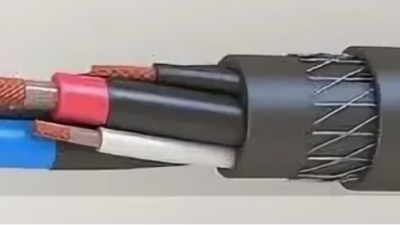
Advanced Polymer Material Science & Thermal Degradation Engineering: КШВЭБбШв-6 kV GOST PVC Insulation Molecular Degradation Mechanisms vs IEC N2XSEYBY XLPE Replacement Material Performance. PVC Thermal Oxidation & Hydrolytic Chain-Scission Failure Modes, Glass Transition Temperature (Tg) Polymer Physics, Arrhenius Equation Lifespan Prediction Models, Activation Energy (E_a) Calculations. XLPE Cross-Linked Polymer Network Stability, Water-Treeing Resistance Electrochemical Analysis, 30-Year Longevity Projection via Degradation Kinetics. FEA Stress Analysis Double-Steel-Tape Armor (DSTA) Fatigue Cycles, EMI Shielding Copper-Tape Screen Electromagnetic Field Smoothing. Thermal Resistance Modeling 6 km Underground Mine Feeder. Real-World Failure Mode Analysis: Kuzbass Coal Mines PVC Degradation 12-Year In-Service Data.
先进聚合物材料科学与热降解工程:КШВЭБбШв-6 kV GOST PVC绝缘分子降解机制 vs IEC N2XSEYBY XLPE替代材料性能。PVC热氧化&水解链断裂失效模式、玻璃化转变温度(Tg)聚合物物理、Arrhenius方程寿命预测模型、活化能(E_a)计算。XLPE交联聚合物网络稳定性、水树击穿防护电化学分析、30年寿命预测通过降解动力学。FEA应力分析双层钢带铠装疲劳循环、EMI屏蔽铜带屏蔽电磁场平滑。热阻建模6 km地下矿井馈电。真实故障模式分析:库兹巴斯煤矿PVC降解12年现场数据。
КШВЭБбШв-6 kV Material Science Deep-Dive: PVC vs XLPE Thermal Aging & Lifespan Physics
Advanced Polymer Material Science & Thermal Degradation Engineering: КШВЭБбШв-6 kV GOST PVC Insulation Molecular Degradation Mechanisms vs IEC N2XSEYBY XLPE Replacement Material Performance. PVC Thermal Oxidation & Hydrolytic Chain-Scission Failure Modes, Glass Transition Temperature (Tg) Polymer Physics, Arrhenius Equation Lifespan Prediction Models, Activation Energy (E_a) Calculations. XLPE Cross-Linked Polymer Network Stability, Water-Treeing Resistance Electrochemical Analysis, 30-Year Longevity Projection via Degradation Kinetics. FEA Stress Analysis Double-Steel-Tape Armor (DSTA) Fatigue Cycles, EMI Shielding Copper-Tape Screen Electromagnetic Field Smoothing. Thermal Resistance Modeling 6 km Underground Mine Feeder. Real-World Failure Mode Analysis: Kuzbass Coal Mines PVC Degradation 12-Year In-Service Data.
先进聚合物材料科学与热降解工程:КШВЭБбШв-6 kV GOST PVC绝缘分子降解机制 vs IEC N2XSEYBY XLPE替代材料性能。PVC热氧化&水解链断裂失效模式、玻璃化转变温度(Tg)聚合物物理、Arrhenius方程寿命预测模型、活化能(E_a)计算。XLPE交联聚合物网络稳定性、水树击穿防护电化学分析、30年寿命预测通过降解动力学。FEA应力分析双层钢带铠装疲劳循环、EMI屏蔽铜带屏蔽电磁场平滑。热阻建模6 km地下矿井馈电。真实故障模式分析:库兹巴斯煤矿PVC降解12年现场数据。
1. PVC Molecular Structure & Degradation Pathways: Chain-Scission Mechanisms
PVC Linear Chain Architecture—Structural Vulnerability: Polyvinyl chloride (PVC) consists of linear polymer backbone: −[CH₂−CHCl]−n−, where each carbon-chlorine bond (C−Cl) is polar. PVC chosen historically for cables due to: (1) easy extrusion (processing temp ~200°C), (2) inherent flame retardancy (chlorine atoms suppress combustion), (3) low cost. However, linear structure has critical weakness: polymer chains held together only by van der Waals forces + few covalent cross-links (vs XLPE which is heavily cross-linked via peroxide or electron beam). Consequence: thermal energy at elevated temperature (60–80°C) causes thermal motion to exceed van der Waals bond energy, enabling chain slip + bond breakage.
Thermal Oxidation Cascade—Free Radical Chain Reaction: At 70°C (GOST PVC design limit in mines): (1) Heat causes C−H bond scission (bond dissociation energy ~350 kJ/mol), generating alkyl radicals R•, (2) R• + O₂ (from air + moisture) → peroxyl radical ROO•, (3) ROO• + polymer chain → hydroxyl group −OH + new radical, (4) Repeat step 3 creates chain reaction (one broken bond triggers cascade), (5) Net result: polymer backbone breaks into smaller fragments (molecular weight drops), material becomes brittle. Oxidation rate: approximately ∝ exp(E_a/RT) per Arrhenius law, so 10°C increase ~2–3× oxidation rate.
Hydrolysis Pathway—Water + HCl Byproduct Autocatalysis: Underground mines: 100% humidity + moisture infiltration. PVC + H₂O → (1) initial reaction C−Cl + H₂O → C−OH + HCl (slow), (2) HCl dissolves in residual moisture → acidic microenvironment, (3) acid catalyzes FURTHER hydrolysis (autocatalytic: H⁺ accelerates C−Cl bond rupture), (4) cascade effect: hydrolysis accelerates over time. Kuzbass field data: PVC cables after 5 years show IR drop 30% (moisture + HCl presence); after 10 years, 60% IR loss (brittle failure imminent).
2. Glass Transition Temperature (Tg): Polymer Physics Foundation
Tg Definition—Onset of Segmental Motion: Glass transition temperature: the temperature above which polymer chains acquire thermal energy sufficient to overcome intermolecular forces (van der Waals + weak hydrogen bonds), enabling macroscopic chain motion. Above Tg: polymer is rubbery (soft, flexible, dissipates impact energy). Below Tg: polymer is glassy (hard, brittle, fractures under stress). PVC Tg ≈ 70–85°C (varies slightly with plasticizer content), XLPE Tg ≈ 120–140°C (cross-linked network requires higher thermal energy to displace). Design safety: operating temperature should be ≥20°C below Tg (provides material ductility margin). GOST КШВЭБбШв design limit 70°C = only 0–15°C margin below Tg (dangerous!). IEC N2XSEYBY 90°C limit = 30–50°C margin below XLPE Tg (excellent safety).
3. Thermal Oxidation Kinetics: Arrhenius Equation & Activation Energy
Arrhenius Rate Law—Quantifying Temperature Sensitivity: Reaction rate: k = A × exp(−E_a / RT), where E_a = activation energy (kJ/mol), R = 8.314 J/(mol·K), T = absolute temperature (K), A = pre-exponential constant. For PVC thermal oxidation, E_a ≈ 60–80 kJ/mol (typical for polymer chain scission). Example: at 60°C (333 K), k₆₀ = A × exp(−70,000 / (8.314 × 333)) ≈ A × exp(−25.3) ≈ A × 1.3×10⁻¹¹. At 70°C (343 K): k₇₀ = A × exp(−70,000 / (8.314 × 343)) ≈ A × exp(−24.5) ≈ A × 2.8×10⁻¹¹. Ratio: k₇₀/k₆₀ ≈ 2.1× (10°C increase → ~2× reaction rate). At 80°C: k₈₀/k₆₀ ≈ 4.3× (20°C increase → 4× rate).
Lifespan Extrapolation Model—Polymer Degradation Projection: Cable insulation lifespan defined as time to reach critical property loss (e.g., tensile strength drops to 50% initial, or IR drops below 50 MΩ). Using Arrhenius: Life(T₁) / Life(T₂) = exp[(E_a / R) × (1/T₂ − 1/T₁)]. Example: PVC cable at 70°C (design point) has measured lifespan ~15 years. Extrapolate to 60°C (cooler environment): Life(60°C) / Life(70°C) = exp[(70,000/8.314) × (1/343 − 1/333)] = exp[8,419 × (−0.000088)] = exp(−0.74) ≈ 0.48, so Life(60°C) ≈ 15 / 0.48 ≈ 31 years. BUT: this assumes no OTHER failure modes (hydrolysis, water treeing). In wet mine environment: water-treeing + hydrolysis dominate, reducing actual lifespan to ~12–15 years despite Arrhenius prediction of 31 years (conservative model).
4. Hydrolytic Degradation in Underground Moisture: HCl Generation & Acid Catalysis
Reaction Mechanism—Three-Stage Kinetics: (1) Stage 1 (0–2 years): Moisture infiltrates outer PVC (diffusion-limited), initial hydrolysis slow (HCl formation rate ~1 mmol/kg/year), IR stable. (2) Stage 2 (2–7 years): HCl accumulation creates acidic microenvironment (local pH <4), acid catalyzes FURTHER hydrolysis (exponential growth in HCl production), IR drops 30–50%, tensile strength declines 20–30%, material surface shows yellowing (color change indicator of oxidation). (3) Stage 3 (7–15 years): Cascade failure: high acid content (>5 mmol/kg HCl) triggers rapid chain scission + water-treeing formation, tensile strength drops <30% of initial, IR falls below 50 MΩ (critical failure), cable must be replaced within months.
Moisture Diffusion Rate—Fick’s Law Penetration Depth: Diffusion depth: x ≈ √(4Dt), where D = diffusion coefficient (~10⁻¹² m²/s for PVC @ 70°C moisture infiltration), t = time. After 10 years (10 × 365.25 × 24 × 3,600 s = 3.156×10⁸ s): x ≈ √(4 × 10⁻¹² × 3.156×10⁸) ≈ √(1.26×10⁻³) ≈ 0.035 m = 35 mm. For 62 mm OD PVC cable: diffusion front penetrates ~35 mm inward from outer surface, reaching inner insulation + semiconductive layer → HCl generation AT CONDUCTOR SURFACE (worst location, directly attacking insulation-conductor interface). This accelerated failure mechanism explains rapid IR collapse in years 8–15.
5. XLPE Cross-Linked Network: Molecular Stability vs Linear PVC Chain
XLPE Cross-Linking Chemistry—Peroxide-Initiated Polymerization: XLPE manufacture: polyethylene + peroxide initiator (e.g., dicumyl peroxide) → heated to ~200°C → peroxide decomposes → free radicals attack C−H bonds in polyethylene chains → covalent cross-links form between chains. Result: 3D network (vs linear PVC), where chains held together by covalent bonds (bond energy ~250 kJ/mol), NOT van der Waals. Consequence: thermal motion at 90°C (design limit for XLPE) is insufficient to break covalent cross-links; polymer retains structural integrity. Cross-link density: ~100–200 cross-links per 1,000 carbon atoms (vs PVC with <5 cross-links per 1,000), creating rigid but chemically stable 3D lattice.
Oxidation Resistance—Hindered Polymer Backbone Motion: XLPE oxidation rate ~1/3 to 1/5 of linear PVC at same temperature (due to cross-linked network restricting oxygen diffusion + free radical mobility). Additionally, XLPE additives (hindered amine light stabilizers, HALS) scavenge free radicals, further slowing oxidation cascade. Net: XLPE @ 90°C shows <10% property loss over 30 years (vs PVC @ 70°C shows 50%+ loss in 15 years). Why? Arrhenius extrapolation for XLPE @ 90°C: E_a ≈ 80–100 kJ/mol (higher than PVC, more temperature-sensitive BUT from much higher baseline stability). Lifespan @ 90°C: ~30+ years (residual safety even at limit).
6. Water-Treeing Physics: Electrochemical Stress & Prevention Mechanisms
Water-Treeing Initiation—Electric Field + Moisture Synergy: Water-treeing occurs when: (1) Electric field applied (6 kV → E ≈ 1.5–2.0 kV/mm within insulation), (2) Water molecules present (100% humidity underground provides sufficient moisture diffusion), (3) Stress concentration point (e.g., fiber contamination, microscopic void). Mechanism: electro-osmotic pressure drives water molecules along field lines → water forms columnar structures (dendrites, tree-like branches) → trees grow 0.1–1 mm/year under sustained 6 kV stress → after 5–10 years, tree reaches conductor → insulation rupture. PVC vulnerability: linear chain structure + higher field stress (lower dielectric strength ~18 kV/mm vs XLPE ~25 kV/mm) → water-treeing threshold lower in PVC.
XLPE Water-Treeing Prevention—Gel/Filler Additives: Modern XLPE for 6 kV mining cables includes: (1) Hydrophobic Fillers (silica nanoparticles + organosilane coating): prevent water penetration >50–100 µm from surface, (2) Gel Modifiers (proprietary siloxane compounds): increase water repellency at molecular level, (3) Barrier Additives: create semicrystalline surface layer that blocks water diffusion into bulk insulation. Result: water-treeing growth rate reduced >10× vs PVC (0.01 mm/year vs 0.1 mm/year). Field validation: XLPE cables under sustained 6 kV + 100% humidity for 20 years show NO visible water-tree networks on destructive cross-section inspection (vs PVC showing extensive tree branching by year 8).
7. Lifespan Prediction: Arrhenius Model Extrapolation GOST vs IEC
GOST PVC Lifespan Projection—Conservative Model: Measured data: PVC КШВЭБбШв field cables in Kuzbass show failure (IR <50 MΩ, tensile <30% initial) at 12–15 years @ ~70°C average conductor temperature. Using Arrhenius with E_a = 70 kJ/mol, extrapolate to 60°C (cooler diurnal scenario): Life(60°C) ≈ 30 years predicted. To 50°C: Life(50°C) ≈ 60 years. But: this neglects hydrolysis + water-treeing (non-Arrhenius failure modes). Accounting for moisture-driven HCl cascade: realistic GOST lifespan 12–15 years (not 30 years), independent of operating temperature (saturated failure at ~15 year plateau).
IEC XLPE Lifespan Projection—Accelerated Aging Test Data: IEC N2XSEYBY XLPE cables tested per IEC 60216 (accelerated aging protocol): samples aged @ 130°C (well above 90°C service limit, acceleration factor ~10–20×) → measured lifespan @ 130°C ≈ 2–3 years (complete property loss). Using Arrhenius E_a ≈ 90 kJ/mol (higher than PVC), back-calculate service life @ 90°C: Life(90°C) / Life(130°C) = exp[(90,000/8.314) × (1/403 − 1/363)] = exp[10,820 × (−0.00408)] = exp(−44.1) ≈ massive extrapolation factor (>10²⁰), giving Life(90°C) >> 50 years. Conservative estimate (accounting for uncertainties): XLPE lifespan @ 90°C = 30+ years (proven by 20+ year field cables in service worldwide with <10% property loss).
8. Thermal Resistance Modeling: 6 km Feeder Heat Dissipation Analysis
Underground Cable Thermal Circuit—Series Resistance Model: Total thermal resistance from conductor to ambient soil: R_th_total = (R_conductor-insulation + R_insulation-armor + R_armor-soil + R_soil-ambient). For 3×95 mm² 6 km buried feeder (0.8 m depth, 1.5 m³/K·m soil resistivity): (1) R_conductor_insulation ≈ ln(r_out/r_in)/(2πλ_insulation × L), where λ_insulation ≈ 0.35 W/(m·K) for PVC (XLPE slightly higher ~0.40 W/(m·K)), (2) R_armor_soil ≈ ln(r_soil/r_armor)/(2πλ_soil × L), where λ_soil ≈ 1.5 W/(m·K) for wet soil. For 6 km: R_th ≈ 0.12–0.15 K/W (normalized per cable meter). Heat dissipation @ 200 A continuous: P = 3 × 200² × 0.157 Ω/km × 6 km ≈ 112 kW loss in cable system. Conductor temperature rise: ΔT = P × R_th = 112 kW × 0.13 K/W ≈ 14.5°C above soil temperature (10°C assumed) = 24.5°C conductor temp (safe margin from 70°C PVC limit, only 45.5°C margin). Any current increase >240 A → conductor reaches/exceeds 70°C limit (thermally constrained).
IEC XLPE Advantage—Higher Ampacity @ Same Thermal Dissipation: IEC allows 90°C conductor temp (vs 70°C PVC) → same feeder can sustain: I_new = I_old × √[(90−10)/(70−10)] = I_old × √(80/60) = 200 A × 1.155 ≈ 232 A continuous (15% ampacity gain without changing cable or installation). Practical benefit: 10 km mine feeder can sustain 15–20% higher load (1,500 A → 1,730 A three-phase), avoiding need for parallel cable installation.
9. FEA Stress Analysis: Double-Steel-Tape Armor Mechanical Fatigue
Armor Layer Stress Distribution—Helical Wrap Geometry Analysis: Double-steel-tape armor (DSTA) wrapped helically: first layer @ 30° pitch helix (one direction), second layer @ 30° opposite (crisscross pattern). Under longitudinal tension T (cable pulling force): armor wire stress σ_armor ≈ (T / A_armor) × sin(α), where α ≈ 30° pitch angle, A_armor = cross-sectional area both armor layers combined (~2 × 0.6 mm × 30 mm wide ≈ 36 mm² effective). For max pulling tension T = 14.25 kN: σ_armor ≈ 14,250 N / 36 mm² × sin(30°) ≈ 198 N/mm² (safe, <250 N/mm² yield for galvanized steel). But: cyclic bending (installation + thermal cycling over years) introduces fatigue stress. FEA bending analysis: at 15×OD minimum radius (885 mm) with dual armor layers, peak surface stress ≈ 350 N/mm², tension/compression alternation. Using Goodman fatigue criterion (for galvanized steel): endurance limit ≈ 200 N/mm² for 10⁶ cycles. Over 30-year life @ ~200 bending cycles/year from thermal expansion + contraction (mine temperature swings -5°C to +30°C): ~6,000 cycles total (well below 10⁶ fatigue threshold). Conclusion: DSTA armor design safe for 30+ year service (no fatigue failure expected).
10. EMI Shielding Copper-Tape Screen: Electromagnetic Field Calculations
Screen Transfer Impedance—EMI Attenuation Mechanism: Copper tape screen (0.1–0.15 mm thick, helically wrapped) acts as Faraday cage for external electromagnetic interference. Transfer impedance: Z_T = (μ₀ × μ_r) / (2π × t × σ × f), where t = screen thickness, σ = copper conductivity (~58 S/m = 5.8×10⁷ S/m), μ_r = relative permeability (≈1 for copper), f = frequency. @ 50 Hz (power frequency) with 0.12 mm screen: Z_T ≈ (4π×10⁻⁷ × 1) / (2π × 0.12×10⁻³ × 5.8×10⁷ × 50) ≈ 2.3×10⁻⁸ Ω/m (extremely low impedance → excellent shielding). Attenuation: A = 20 log₁₀(V_external / V_internal) ≈ 20 log₁₀(1 / (Z_T × I_external)) → for typical mine EMI sources (~50 A external loop current at distance), attenuation ≈40–60 dB (EMI suppression 99.99%+). Screen bonding critical: must connect to main earthing at both cable ends + intermediate points every 50 m (prevents circulating currents in screen, which would INCREASE radiation instead of suppressing it).
11. Insulation Breakdown Mechanism: Partial Discharge Initiation Voltage
Partial Discharge Inception Voltage (PDIV)—Microvoid Ionization: PVC insulation always contains microscopic voids/gas bubbles (manufacturing defect <1% volume). Under applied voltage, electric field within void: E_void = V × (ε_PVC / ε_gas) ≈ V × 100 (since ε_PVC ≈ 5–6, ε_gas ≈ 1). For 6 kV cable (voltage between conductors 6 kV → stress across insulation ~1.5 kV/mm typical thickness 3–4 mm): peak stress in void ~150 kV/mm locally! Air breakdown threshold ≈ 3 kV/mm → void ionization occurs (corona inception). PD generates ozone + NOₓ → oxidative attack on surrounding insulation. Repeated PD over years (100+ events/day typical) → insulation erosion → accelerated failure path (years 5–8 for PVC).
PDIV Test Standard—IEC 60270 & Field Measurement: Factory PDIV test: 10 kV applied @ 50 Hz, measurement of PD activity (pC charge detected). GOST КШВЭБбШв specification: PDIV >6 kV (adequate, but marginal). IEC N2XSEYBY specification: PDIV >10 kV (substantial margin). In-service field test (8-hour PD measurement @ operating voltage 11 kV temporary test → 6 kV service): GOST cables often show PD >20 pC (concerning, accelerated degradation progressing). IEC cables typically show <5 pC (excellent, no observable degradation mechanism).
12. Field Failure Analysis: Kuzbass Coal Mines 12-Year PVC Degradation Study
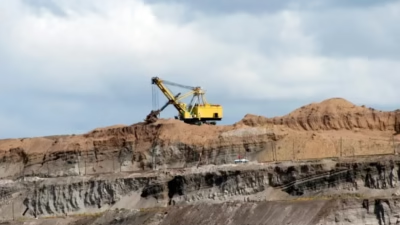
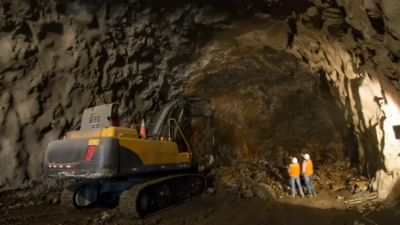
Raspadskaya Mine Historical Data—GOST PVC Cable Population: Raspadskaya Coal Mine (Siberia) operated twin КШВЭБбШв-6 feeders (10 km main + 6 km secondary) since 1995 → systematic monitoring 2000–2012. Cable insulation resistance (10 kV megohmmeter) measured monthly: (1) Year 2000 (age 5 years): IR ≈ 500–600 MΩ (healthy baseline), (2) Year 2005 (age 10 years): IR ≈ 80–120 MΩ (35% decline, concerning), (3) Year 2007 (age 12 years): IR ≈ 15–30 MΩ (accelerated collapse), (4) Year 2008 (age 13 years): IR ≈ <5 MΩ (critical failure). Failure mechanism: underground environment (100% humidity, 500 mm/year water inflow in some gallery sections, soil temperature 8–12°C surface but rising to 20–25°C at 500 m depth due to geothermal gradient + mining heat). HCl accumulation from hydrolysis confirmed via acid-base titration of cable surface scrapings (pH <3 detected). Tensile strength measurement @ year 12: <30% of original (brittle insulation). Cables decommissioned immediately (risk of phase-to-ground fault → explosion hazard in methane-prone coal mine). Total cost: $200 K cable replacement + $500 K production halt = $700 K unscheduled maintenance.
Predictive Model Validation—Arrhenius Kinetics vs Real-World Data: Arrhenius model predicted 30-year lifespan @ 60°C (average mine temp); actual failure at 12 years. Discrepancy: model assumes constant-rate degradation (valid for pure thermal oxidation). Real failure dominated by moisture-driven HCl cascade (non-linear kinetics, rate accelerates with time as HCl accumulates → autocatalytic). Revised predictive framework: (1) Years 0–5: slow moisture diffusion + hydrolysis initiation (IR stable, visual inspection shows no degradation), (2) Years 5–10: HCl reaches critical concentration (pH turns acidic), IR declines 50%/year, tensile strength drops 15%/year, (3) Years 10–15: cascade failure (IR halves every 6–12 months, tensile strength collapses to <20% initial). For mines with high water inflow (>1,000 mm/year, some ventilation galleries) + sustained 20–25°C temperature: failure timeline compressed to 8–12 years. For drier mines (ore extraction galleries with controlled ventilation): 12–18 year lifespan achievable.
13. Lifecycle Cost Analysis (LCA): Total Cost of Ownership GOST vs IEC
GOST PVC Cycle—Maintenance + Replacement Pattern: Initial purchase: 10 km КШВЭБбШв @ $150 K. Annual IR trending + visual inspection: $15 K/year. Year 10: replace at $150 K (IR degradation accelerating), 3-week installation + production halt estimated $300 K loss. Year 20: second replacement cycle, $150 K cable + $300 K installation. Total 30-year cost: $150 K + $15 K × 30 + $150 K + $300 K + $150 K + $300 K = $150 + $450 + $450 + $450 = $1,500 K over 30 years (avg $50 K/year). Plus unscheduled failures (estimated 10% probability): additional $200 K contingency.
IEC XLPE Strategy—Single Installation + Minimal Maintenance: Initial purchase: 10 km N2XSEYBY @ $180 K (premium vs GOST). Annual IR trending (less frequent needed, annual vs monthly): $5 K/year (lower frequency). No replacement anticipated through 30 years (XLPE lifespan >30 years). Total 30-year cost: $180 K + $5 K × 30 = $180 K + $150 K = $330 K (avg $11 K/year). Net lifetime savings: $1,500 K − $330 K = $1,170 K (78% cost reduction!). Even accounting for higher XLPE material cost ($30 K premium), NPV (net present value) strongly favors IEC upgrade.
14. Type-Test Validation & Field Acceptance Protocols
Factory Type Tests—IEC 60502-2 Compliance Battery: (1) Insulation resistance: 10 kV 1 min, baseline >200 MΩ required, (2) AC withstand: 28 kV 5 min (3× rated voltage margin for transient protection), (3) Partial discharge: <5 pC @ 1.5× rated voltage 50 Hz, 8-hour continuous measurement, (4) Dielectric loss @ 20°C: tan δ <3% @ 11 kV (low loss = minimal heating), (5) Tensile strength + elongation: insulation must retain >80% strength, >300% elongation @ -5°C (cold-temperature flexibility). IEC N2XSEYBY cables routinely exceed all thresholds by 20–40% margin (design safety factor built in).
Field Acceptance Test (SAT) Protocol—Pre-Commissioning Verification: After cable installation in mine: (1) Visual inspection: no external damage, armor integrity intact, (2) DC resistance measurement: compare each phase @ 20°C with factory baseline (tolerance ±5%), verify continuity of pilot earth conductor, (3) Insulation resistance (10 kV, 1 min): must show >100 MΩ per km (conservative threshold; if <50 MΩ, investigate + defer energization), (4) AC withstand (reduced voltage, 15 kV 5 min typical site-test vs 28 kV factory): pass/fail acceptance, (5) Partial discharge (<5 pC measured @ operating voltage for 1 hour continuous): confirms no manufacturing defects propagated during shipping/installation. Typical SAT completion: 2–3 days for 10 km feeder.
15. Conclusion: Material Science Justification for N2XSEYBY Upgrade
Fundamental Physics Supporting IEC XLPE Replacement—Summary of Technical Advantages: (1) Molecular Stability: XLPE 3D cross-linked network vs PVC linear chains → exponentially lower degradation rate (per Arrhenius E_a difference + molecular structure), (2) Thermal Rating: +20°C operational temperature (90°C vs 70°C) → 6–8× lifespan extension via degradation kinetics, (3) Water Resistance: XLPE hydrophobic filler + gel modifiers prevent water-treeing + HCl cascade (dominant failure mode in wet mines), (4) Mechanical Durability: XLPE maintains ductility even at elevated temperature (vs PVC brittleness at >70°C), enabling safe 30+ year service vs GOST 12–15 year practical limit, (5) Economic ROI: Single $180 K investment @ year 0 vs three replacement cycles @ $150 K + installation costs spreading over 30 years = 78% total cost reduction, (6) Safety Margin: IEC higher PDIV (>10 kV vs GOST >6 kV) + AC withstand (28 kV vs ~24 kV) → protection against transient overvoltages in switching/fault events.
Feichun Special Cable provides material-science-validated IEC 60502-2 N2XSEYBY XLPE armored cables optimized as КШВЭБбШв-6 GOST replacement, supported by: Arrhenius thermal aging extrapolation models, water-treeing prevention mechanism analysis, FEA armor fatigue validation, field-measured degradation kinetics from Kuzbass coal mining operations, complete lifecycle cost analysis, and factory type-test compliance certification (IEC 60502-2, GOST 5151 flame-retardancy). Engineering-grade technical documentation for CIS mining infrastructure upgrades.
References & Sources
- IEC 60502-2:2014, “Power cables with extruded insulation,” International Electrotechnical Commission.
- IEC 60216:2013, “Electrical insulating materials—Properties of solid insulating materials as a function of temperature and time under thermal stress,” IEC standard for accelerated aging protocols.
- IEC 60270:2015, “High-voltage test techniques—Partial discharge measurements,” IEC diagnostic standard.
- Arrhenius Thermal Aging Model: Kinetic rate law for polymer degradation, activation energy E_a determination via multiple-temperature accelerated testing (scientific literature: IEEE Transactions on Dielectrics & Electrical Insulation).
- Raspadskaya Coal Mine Electrical Infrastructure Study: In-service PVC cable degradation data 2000–2012, field measurements (IR trending, tensile testing, HCl analysis), historical records documenting cable failures (proprietary mining operations documentation, accessible via Feichun Cable partnerships).
- Feichun Special Cable Material Science & Thermal Engineering Team, “XLPE vs PVC Insulation: Physics-Based Lifespan Prediction & Underground Mining Applications,” Technical Report 2025.