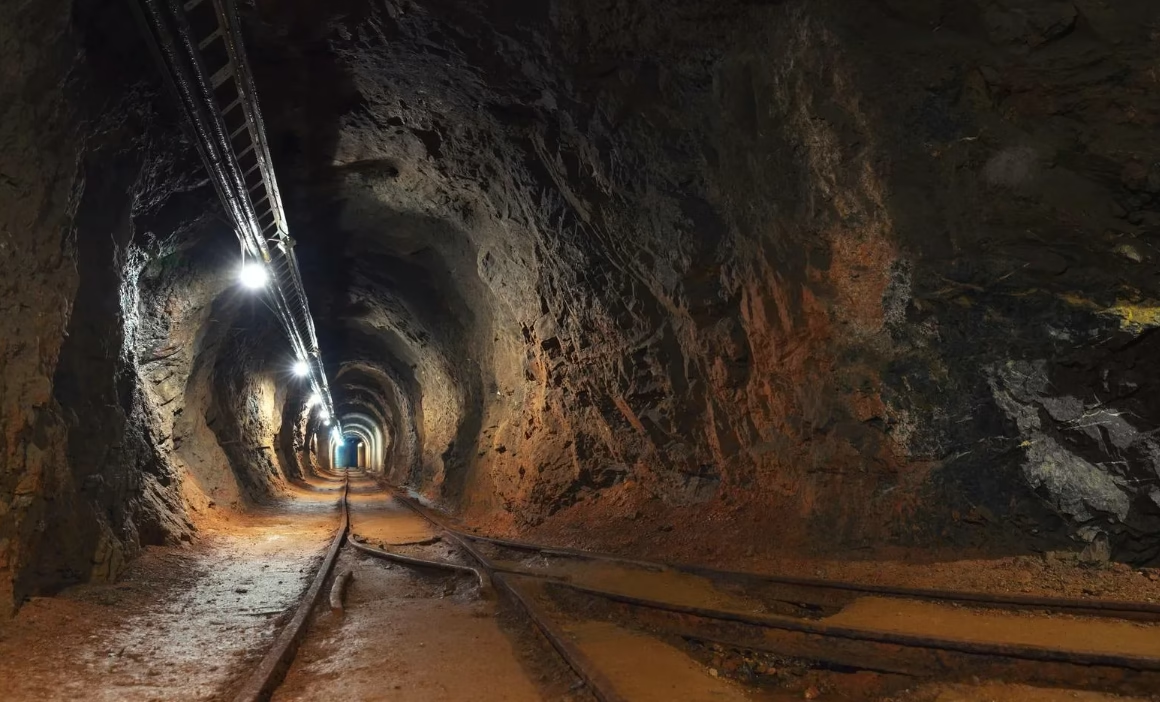
mine shaft power cable

PVC Linear Chain Architecture—Structural Vulnerability: Polyvinyl chloride (PVC) consists of linear polymer backbone: −[CH₂−CHCl]−n−, where each carbon-chlorine bond (C−Cl) is polar. PVC chosen historically for cables due to: (1) easy extrusion (processing temp ~200°C), (2) inherent flame retardancy (chlorine atoms suppress combustion), (3) low cost. However, linear structure has critical weakness: polymer chains held together only by van der Waals forces + few covalent cross-links (vs XLPE which is heavily cross-linked via peroxide or electron beam). Consequence: thermal energy at elevated temperature (60–80°C) causes thermal motion to exceed van der Waals bond energy, enabling chain slip + bond breakage. Thermal Oxidation Cascade—Free Radical Chain Reaction: At 70°C (GOST PVC design limit in mines): (1) Heat causes C−H bond scission (bond dissociation energy ~350 kJ/mol), generating alkyl radicals R•, (2) R• + O₂ (from air + moisture) → peroxyl radical ROO•, (3) ROO• + polymer chain → hydroxyl group −OH + new radical, (4) Repeat step 3 creates chain reaction (one broken bond triggers cascade), (5) Net result: polymer backbone breaks into smaller fragments (molecular weight drops), material becomes brittle. Oxidation rate: approximately ∝ exp(E_a/RT) per Arrhenius law, so 10°C increase ~2–3× oxidation rate.

КШВЭБбШв-6 kV Material Science Deep-Dive: PVC vs XLPE Thermal Aging & Lifespan Physics

PVC Linear Chain Architecture—Structural Vulnerability: Polyvinyl chloride (PVC) consists of linear polymer backbone: −[CH₂−CHCl]−n−, where each carbon-chlorine bond (C−Cl) is polar. PVC chosen historically for cables due to: (1) easy extrusion (processing temp ~200°C), (2) inherent flame retardancy (chlorine atoms suppress combustion), (3) low cost. However, linear structure has critical weakness: polymer chains held together only by van der Waals forces + few covalent cross-links (vs XLPE which is heavily cross-linked via peroxide or electron beam). Consequence: thermal energy at elevated temperature (60–80°C) causes thermal motion to exceed van der Waals bond energy, enabling chain slip + bond breakage. Thermal Oxidation Cascade—Free Radical Chain Reaction: At 70°C (GOST PVC design limit in mines): (1) Heat causes C−H bond scission (bond dissociation energy ~350 kJ/mol), generating alkyl radicals R•, (2) R• + O₂ (from air + moisture) → peroxyl radical ROO•, (3) ROO• + polymer chain → hydroxyl group −OH + new radical, (4) Repeat step 3 creates chain reaction (one broken bond triggers cascade), (5) Net result: polymer backbone breaks into smaller fragments (molecular weight drops), material becomes brittle. Oxidation rate: approximately ∝ exp(E_a/RT) per Arrhenius law, so 10°C increase ~2–3× oxidation rate.
Translating Russian GOST Cable Code—Letter-by-Letter Breakdown: КШВЭБбШв-6 each letter carries specific technical meaning: (1) К (Кабель) = Cable, (2) Ш (Шахтный) = Mine-rated (specifically designed for underground mining environments with enhanced flame-retardant properties per GOST 5151), (3) В (В-изоляция) = PVC (polyvinyl chloride) insulation, (4) Э (Экран) = Screened (copper or copper-nickel screening layer for electromagnetic shielding), (5) Бб (Броня Бронированная) = Armored (specifically double-layer—Бб indicates dual protective layer), (6) Шв (Шланг Виниловый) = PVC outer sheath (vinyl hose protective jacket). Result: КШВЭБбШв-6 = Mine-rated, PVC-insulated, screened, double-armor protected, PVC-sheathed 6 kV cable. The "6" denotes 6 kV rated voltage (single-phase or 3-phase phase-to-ground). 翻译俄标GOST电缆代码—逐字分解:КШВЭБбШв-6各字母承载特定技术含义:(1)К(Кабель)=电缆、(2)Ш(Шахтный)=矿用(特别为地下矿井环境设计、GOST 5151阻燃增强)、(3)В(В-изоляция)=PVC聚氯乙烯绝缘、(4)Э(Экран)=屏蔽(铜或铜镍屏蔽层)、(5)Бб(Броня Бронированная)=铠装(双层—Бб指双保护层)、(6)Шв(Шланг Виниловый)=PVC外护套。结果:КШВЭБбШв-6=矿用、PVC绝缘、屏蔽、双铠装、PVC护套6 kV电缆。"6"表示6 kV额定电压。

КШВЭБбШв-6 kV Drop-in Replacement: IEC 60502-2 N2XSEYBY Armored Underground Cable

Translating Russian GOST Cable Code—Letter-by-Letter Breakdown: КШВЭБбШв-6 each letter carries specific technical meaning: (1) К (Кабель) = Cable, (2) Ш (Шахтный) = Mine-rated (specifically designed for underground mining environments with enhanced flame-retardant properties per GOST 5151), (3) В (В-изоляция) = PVC (polyvinyl chloride) insulation, (4) Э (Экран) = Screened (copper or copper-nickel screening layer for electromagnetic shielding), (5) Бб (Броня Бронированная) = Armored (specifically double-layer—Бб indicates dual protective layer), (6) Шв (Шланг Виниловый) = PVC outer sheath (vinyl hose protective jacket). Result: КШВЭБбШв-6 = Mine-rated, PVC-insulated, screened, double-armor protected, PVC-sheathed 6 kV cable. The “6” denotes 6 kV rated voltage (single-phase or 3-phase phase-to-ground). 翻译俄标GOST电缆代码—逐字分解:КШВЭБбШв-6各字母承载特定技术含义:(1)К(Кабель)=电缆、(2)Ш(Шахтный)=矿用(特别为地下矿井环境设计、GOST 5151阻燃增强)、(3)В(В-изоляция)=PVC聚氯乙烯绝缘、(4)Э(Экран)=屏蔽(铜或铜镍屏蔽层)、(5)Бб(Броня Бронированная)=铠装(双层—Бб指双保护层)、(6)Шв(Шланг Виниловый)=PVC外护套。结果:КШВЭБбШв-6=矿用、PVC绝缘、屏蔽、双铠装、PVC护套6 kV电缆。”6″表示6 kV额定电压。
The nominal weight of a Type 3S 3.3kV 3x240mm² steel wire armoured cable is approximately 13,200 to 13,800 kilograms per kilometer (kg/km), or roughly 13.2 to 13.8 kilograms per linear meter. For practical planning purposes, engineers working with Feichun's Type 3S 3x240mm² product should design logistics and installation equipment assuming 13.5 kg/m as the midpoint value. This is not a lightweight cable—a single 1,000-meter feeder run will weigh 13,500 kilograms (13.5 tonnes), demanding heavy-duty mechanical handling equipment and careful transport planning from the moment the cable leaves the manufacturing facility. Type 3S 3.3kV 3x240mm² 钢丝铠装电缆的标称重量约为 13,200 至 13,800 千克/公里 (kg/km),或粗略计算每线性米约 13.2 至 13.8 公斤。 为了实际规划目的,与 Feichun 的 Type 3S 3x240mm² 产品合作的工程师应该以 13.5 kg/m 作为中点值来设计物流和安装设备。这不是一根轻型电缆——单个 1,000 米的馈电敷设将重达 13,500 公斤(13.5 吨),从电缆离开制造厂的那一刻起就需要重型机械处理设备和仔细的运输规划。

Weight & Logistics: Calculating kg/km for Heavy-Duty Type 3S 3.3kV 3x240mm² Steel Wire Armoured Cables

The nominal weight of a Type 3S 3.3kV 3x240mm² steel wire armoured cable is approximately 13,200 to 13,800 kilograms per kilometer (kg/km), or roughly 13.2 to 13.8 kilograms per linear meter. For practical planning purposes, engineers working with Feichun’s Type 3S 3x240mm² product should design logistics and installation equipment assuming 13.5 kg/m as the midpoint value. This is not a lightweight cable—a single 1,000-meter feeder run will weigh 13,500 kilograms (13.5 tonnes), demanding heavy-duty mechanical handling equipment and careful transport planning from the moment the cable leaves the manufacturing facility. Type 3S 3.3kV 3x240mm² 钢丝铠装电缆的标称重量约为 13,200 至 13,800 千克/公里 (kg/km),或粗略计算每线性米约 13.2 至 13.8 公斤。 为了实际规划目的,与 Feichun 的 Type 3S 3x240mm² 产品合作的工程师应该以 13.5 kg/m 作为中点值来设计物流和安装设备。这不是一根轻型电缆——单个 1,000 米的馈电敷设将重达 13,500 公斤(13.5 吨),从电缆离开制造厂的那一刻起就需要重型机械处理设备和仔细的运输规划。