IEC 60502-2

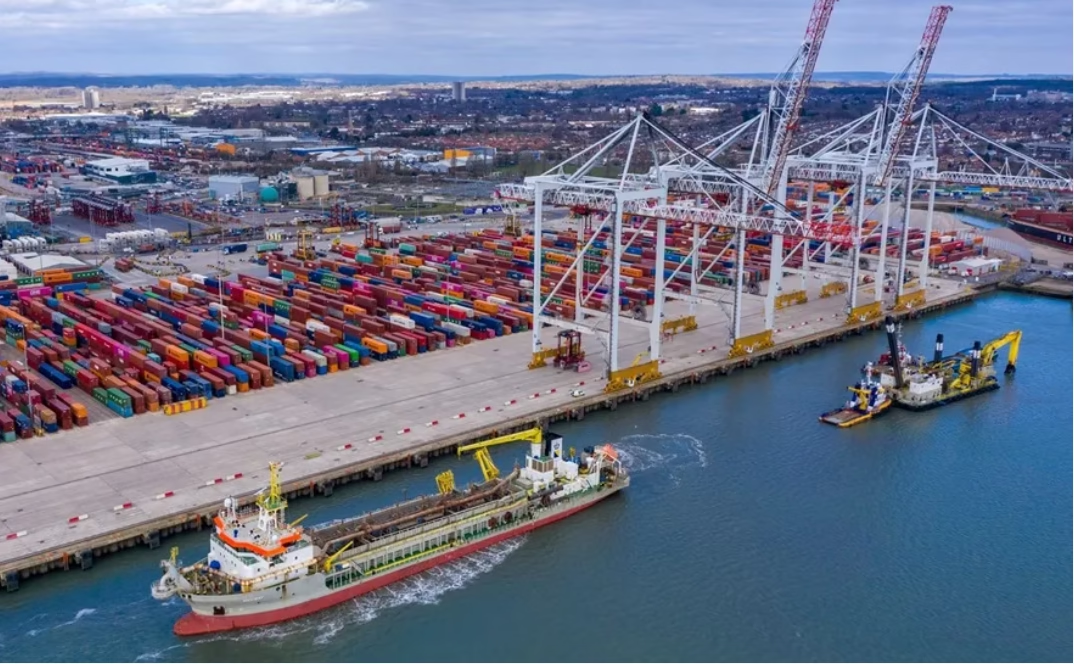
FLEXIDRUM® R 702: Advanced Salt-Spray Resistant Multi-Core Cable for Maritime Port Infrastructure and Container Handling Systems Engineered for extreme corrosive marine environments, the FLEXIDRUM® R 702 delivers proven salt-fog resistance combined with Class 5 flexible conductor technology, GAALTHERM® 630 thermoplastic insulation, and advanced anti-twisting textile reinforcement. Designed for automated container spreader bars, vertical lifting platforms, and offshore equipment exposed to continuous salt-spray cycles—meeting DIN VDE, EN, and IEC standards with reduced weight and diameter for enhanced installation flexibility in modern port automation infrastructure.

3GSEYQYMV Tunnel Power Cable: 18/30 kV средневольтный тоннельный силовой кабель с 3GI3 EPR изоляцией, медноленточным экраном и GSWB бронёй

3GSEYQYMV — это MV Tunnel Power Cable на 18/30 kV для шахт, подземных выработок и тоннельных применений. По предоставленным данным кабель имеет круглый многопроволочный отожжённый медный проводник class 2 по IEC 60228, 3GI3 type EPR Compound, внутренний и наружный полупроводящие слои управления электрическим полем, copper tapes over each main core, PVC filler, galvanized steel wire braid minimum 90% и красную flame retardant special PVC outer sheath.
FLEXIFESTOON® PV-FLAT UL: High-Flexibility Salt-Fog Resistant Flat Festoon Cable for Port Operations, Marine Equipment, and Harbor Automation Systems Feichun's FLEXIFESTOON® PV-FLAT UL establishes a new performance paradigm for port-duty electrical infrastructure by combining three critical engineering requirements into unified cable architecture: extreme mechanical flexibility enabling 5×D minimum bending radius and 120 m/min festoon deployment on container gantries and ship loaders; comprehensive salt-fog environmental resistance through specialized PVC compound formulation with enhanced corrosion inhibitors surviving ASTM B117 salt-spray testing protocols characteristic of extreme coastal and offshore environments; and verified 600V/2000V dual-voltage certification (UL 1581, CSA approved) supporting both power distribution and precision automation signal transmission across the world's most demanding port and maritime cargo-handling operations.

2XSEYQYMV Tunnel Power Cable: 6/10 kV средневольтный тоннельный силовой кабель с XLPE изоляцией, медноленточным экраном и GSWB бронёй

2XSEYQYMV — это MV Tunnel Power Cable на 6/10 kV для шахт, подземных выработок и тоннельных применений. По предоставленным данным кабель имеет круглый многопроволочный отожжённый медный проводник class 2 по IEC 60228, XLPE insulation, inner and outer semiconductive field control, copper tapes over each main core, PVC filler, galvanized steel wire braid minimum 90% и красную flame retardant special PVC outer sheath.
UNE 22511 — formally titled "Cables flexibles para minería subterránea con tensiones de 1,8/3 kV con aislamiento de caucho, sin armadura" (Flexible cables for underground mining, 1.8/3 kV, rubber-insulated, unarmoured) — is the definitive Spanish standard for heavy-duty power cables connecting underground mobile mining equipment to fixed electrical distribution networks. Published and maintained by AENOR (Asociación Española de Normalización y Certificación), it operates as a specialized overlay on IEC 60502-1, extending that base standard's electrical requirements with the stringent mechanical, safety, and flame-retardancy requirements specific to enclosed underground environments. Despite its Spanish origin, UNE 22511 enjoys a geographic reach far exceeding Iberia. The standard has been adopted — formally or by reference — across the major Spanish-speaking mining economies: Chile, Peru, Colombia, Bolivia, and Mexico, where AENOR-certified cables are accepted by national mining safety regulators as the primary qualification pathway for underground mobile equipment power supply cables. In Chile alone, UNE 22511 cables are installed across dozens of operations including major copper and coal mines. The standard's engineering DNA can be described in a single imperative: extreme dynamic flexibility combined with superior resistance to combined torsional and bending fatigue. This is not merely a performance aspiration — it is a structural requirement that shapes every material choice and geometric decision in the cable's construction. The logic proceeds as follows: Underground mobile equipment (continuous miners, shearers, shuttle cars) moves continuously and repeatedly during operation, dragging its power cable behind it or winding and unwinding it from a cable reel. This motion imposes cyclic bending, axial tension, and torsional loads on the cable simultaneously — a multi-axis fatigue regime of a severity not encountered in any other industrial cable application. Standard fixed-installation cables, even those classified as "flexible," are not designed for this loading regime and will fail in fatigue within weeks to months when installed in drag duty. Therefore, every structural element of a UNE 22511 cable — conductor wire diameter, insulation compound, earth core geometry, armour exclusion, sheath specification — is selected to maximize multi-axis fatigue endurance, not any single performance parameter. ⛏ The Founding Engineering Principle UNE 22511 is an unarmoured drag cable standard. The deliberate absence of any metallic armour — which might superficially seem to reduce robustness — is in fact the defining engineering choice that makes the standard viable. Steel wire or tape armour in a continuously torsionally-loaded cable acts as a progressive-failure torsional spring: each twist cycle accumulates irreversible plastic strain in the armour wires, leading to wire fractures within 10,000–30,000 cycles. For a shuttle car cable experiencing 80,000+ torsional cycles per year, armour represents not additional protection but a built-in scheduled failure mechanism. The UNE 22511 design eliminates this failure mode at source.

2XSEYQYMV Tunnel Power Cable: 6/10 kV средневольтный тоннельный силовой кабель с XLPE изоляцией, медноленточным экраном и GSWB бронёй

2XSEYQYMV — это MV Tunnel Power Cable на 6/10 kV для шахт, подземных выработок и тоннельных применений. По предоставленным данным кабель имеет круглый многопроволочный отожжённый медный проводник class 2 по IEC 60228, XLPE insulation, inner and outer semiconductive field control, copper tapes over each main core, PVC filler, galvanized steel wire braid minimum 90% и красную flame retardant special PVC outer sheath.
BASKET SPREADER 740 (YSLTOE) is engineered specifically for hoisting and control applications where mechanical flexibility and electrical reliability must coexist in marine environments. Unlike load-bearing structural cables (which prioritize tensile strength), control cables emphasize: Conductor flexibility – Repeated bending over pulleys without mechanical fatigue Insulation integrity – Voltage breakdown resistance under salt-fog corrosion Mechanical damping – Rope-like flexibility to drape naturally in spreader bar frames Environmental barrier – Outer sheath blocks salt, moisture, and UV penetration Core Design Elements: Component Material Specification Function Port Environment Benefit Conductor Flexible red copper Class 6 (IEC 60228) Carries 300/500V power; enables bending flexibility High purity copper resists galvanic corrosion Insulation PVC type YI2 (IEC 60811) Electrical isolation; voltage breakdown resistance (2 kV test) PVC with marine additives prevents salt-induced tracking Central Unit Aramide yarns (Kevlar™ equivalent) Mechanical load-bearing backup; structural integrity Aramide resists moisture & salt; absorbs vibration stress Outer Sheath PUR type 11YM1 (DIN 73377) Environmental barrier; UV/ozone/moisture protection Superior salt-fog resistance; 20+ year marine lifespan

(N)3GHSSHCH Flexible Power Cable: HFFR средневольтный кабель для mobile operating equipment, mines и hazardous underground environments

(N)3GHSSHCH — это гибкий средневольтный силовой кабель для подключения mobile operating equipments в шахтах и подземных выработках с hazardous environments. По предоставленным данным он также применяется в stationary operation, например для high-voltage transformers in mining and tunnelling. Главное отличие конструкции — использование special halogen free and flame retardant HFFR compound для внутренних и наружной оболочек, в сочетании с EPR-изоляцией 3GI3, pilot control cores, 3E protective conductors, ÜL monitoring conductor и galvanized steel wire braiding с покрытием минимум 75%.
GAALFLEX® CONTROL 500 CY: Advanced EMI-Protected Shielded Multi-Core Control Cable for Industrial Automation (450/750 V Nominal, 4 kV Test Voltage per CEI 20-22, −40 to +80°C Fixed Installation / −5 to +70°C Flexible Application, Class 5 Flexible Red Bare Copper per IEC 60228 and DIN VDE 0295, Overall Tinned Copper Braid Screen with PETP Foil Wrapping for Superior Electromagnetic Interference Suppression Across 10 Hz–10 GHz Frequency Range, PVC Type TI1 Core Insulation per CEI 20-11, Marine-Grade PVC Type TM2 Oil-Resistant Outer Sheath per CEI 20-11 and VDE 0207, Flame-Retardant and Self-Extinguishing per CEI 20-22/1, CEI 20-22/2, and Comparable to IEC 60332-3A, Oil-Resistant per CEI 20-34/2-1, Water-Resistant per IEC 60811-402 and EN 50396, 6×D Minimum Bending Radius Fixed / 20×D Flexible Installation, Multi-Core Architecture with 2 to 61 Core Configurations, 0.5 mm² to 6 mm² Cross-Section Range per Core, Standardized SKU Portfolio (60+ Configurations), Color-Numbered Cores per EN 50334, Engineered for Factory Automation Control Systems, Industrial Robot Harness Integration, CNC Machine Tool Wiring, PLC Communication Networks, Servo Motor and Motion-Control Distribution, Fieldbus Protocol Integration (CANopen, PROFINET, EtherCAT, IO-Link), High-Speed Digital Signal Distribution, and Electromagnetic-Compatibility-Mandated Industrial 4.0 Smart Manufacturing Environments): Comprehensive Advanced Industrial Automation Cable Architecture Analysis Integrating Shielding Effectiveness Measurement, Electromagnetic Interference Suppression Mechanics, Tinned Copper Braid Screen Design Optimization, PETP Foil Wrap Integration Strategy, Signal Integrity Engineering for High-Speed Fieldbus Protocols, Class 5 Ultra-Flexible Conductor Performance, Factory Automation and Robotics Integration Architecture, CNC Machine Tool Control Harness Design, Servo and Motion-Control Power Distribution, and Next-Generation EMI-Compliant Electrical Distribution for Industrial 4.0 Smart Manufacturing, Factory Automation, Robotics Integration, High-Speed Motion Control, and Fieldbused Distributed Automation Systems

Высоковольтный Кабель для Быстрых Намоток TENAX-CT 3×150+3×70/3 (6/10 кВ): Техническое Исследование и Характеристики для Портовых Высокомощных Систем

Всесторонний технический анализ серии TENAX-CT 3×150+3×70/3 мм² (6/10 кВ номинальное напряжение) с исключительной гибкостью R=4×D для высокомощных портовых лебёдок, морских электролебёдок и палубных систем управления грузами на боку судна. Трёхфазное питание мощностью 500–700 кВ·А (при напряжении 6–10 кВ и токе 50–70 А на фазу). Полиуретановая (PUR) изоляция повышенной прочности с диэлектрической прочностью 18–20 кВ/мм, морская сертификация C5-M с испытанием на солевой туман 720 часов, механический ресурс 25+ млн циклов при частоте вращения барабана 80–120 об/мин, холодостойкость класса ХЛ-50 (-50°C рабочий диапазон). Полная сертификация IEC 60811-2-2, IEC 60502-2, EAC, DNV и ABS. Экономия совокупной стоимости владения 25–40% при модернизации портовых систем
DM1N and 2M2N designations represent the apex of mining cable complexity — flexible armoured cables engineered for medium-voltage (1.8/3 kV, 3.6/6 kV) mobile equipment operating in the most mechanically extreme underground environments. These cables are specified for longwall coal shearers, hydraulic drill jumbos, and other continuous-operation mobile equipment that simultaneously demand ultra-high mechanical durability and medium-voltage electrical capability. The fundamental engineering challenge that defines DM1N/2M2N is this: medium-voltage cables require internal semi-conductive layers and sophisticated insulation architecture to prevent corona discharge (electrical breakdown at high voltage), but they must simultaneously maintain the extreme mechanical flexibility required for cable reel winding and equipment drag duty. This convergence is far more difficult than it might appear, because the semi-conductive layers and additional insulation walls that prevent corona also inherently reduce mechanical flexibility and increase cable stiffness.

DM1N/2M2N Flexible Armoured Mining Cable

DM1N and 2M2N designations represent the apex of mining cable complexity — flexible armoured cables engineered for medium-voltage (1.8/3 kV, 3.6/6 kV) mobile equipment operating in the most mechanically extreme underground environments. These cables are specified for longwall coal shearers, hydraulic drill jumbos, and other continuous-operation mobile equipment that simultaneously demand ultra-high mechanical durability and medium-voltage electrical capability. The fundamental engineering challenge that defines DM1N/2M2N is this: medium-voltage cables require internal semi-conductive layers and sophisticated insulation architecture to prevent corona discharge (electrical breakdown at high voltage), but they must simultaneously maintain the extreme mechanical flexibility required for cable reel winding and equipment drag duty. This convergence is far more difficult than it might appear, because the semi-conductive layers and additional insulation walls that prevent corona also inherently reduce mechanical flexibility and increase cable stiffness.
Marine & Port Drag Cable — High-Flexibility Saltwater-Resistant System A comprehensive engineering dissection of heavy-duty marine drag cables for port equipment, container terminals, and offshore platforms — from conductor architecture and EPR insulation to steel wire armour (M2) design rationale, galvanic corrosion protection mechanisms, environmental compliance, and validated performance benchmarking against Nexans Eproneo Port and Prysmian marine systems.

UNE 22512

Marine & Port Drag Cable — High-Flexibility Saltwater-Resistant System A comprehensive engineering dissection of heavy-duty marine drag cables for port equipment, container terminals, and offshore platforms — from conductor architecture and EPR insulation to steel wire armour (M2) design rationale, galvanic corrosion protection mechanisms, environmental compliance, and validated performance benchmarking against Nexans Eproneo Port and Prysmian marine systems.
Permítame comenzar esta guía con una observación que ayudará a ubicar todo lo que sigue en el contexto adecuado. Si usted observa la evolución de la minería industrial en las últimas cuatro décadas, notará que un patrón consistente atraviesa toda la historia: los equipos se han vuelto progresivamente más grandes, con potencias específicas cada vez mayores, operando a profundidades crecientes o distancias más extensas desde las fuentes de alimentación. Una pala eléctrica clase P&H 4100XPC o Caterpillar 7495, con su motor principal de 3,000 a 5,000 caballos de fuerza, no es simplemente una versión grande de las palas de los años setenta; es una máquina que sería imposible alimentar con cables de baja tensión sin incurrir en pérdidas y caídas de voltaje económicamente prohibitivas. La minería moderna, particularmente la gran minería del cobre chileno, del hierro brasileño o del carbón colombiano, es económicamente viable precisamente porque existe infraestructura eléctrica de media y alta tensión que permite transmitir potencia sustancial a distancias considerables sin pérdidas intolerables. El cable apantallado tipo SHD-GC es la pieza específica de esta infraestructura que hace posible la conexión final entre las subestaciones móviles y los equipos de producción. Su nombre técnico —Shielded Heavy Duty with Ground Check— describe su construcción: cable apantallado ("Shielded"), de servicio pesado para minería ("Heavy Duty"), con conductor de verificación de tierra ("Ground Check"). Cada uno de estos tres atributos refleja decisiones de ingeniería que discutiremos en detalle, pero conviene adelantar que ninguno es decorativo. El apantallamiento es lo que permite operación segura a voltajes elevados. El servicio pesado es lo que permite operación en las condiciones físicas brutales de una mina. El conductor de verificación de tierra es lo que permite detectar fallas en el circuito de protección antes de que se conviertan en incidentes. Una pregunta que vale la pena hacerse antes de continuar es por qué existen los cables apantallados como categoría distinta. La respuesta corta, que desarrollaremos extensamente en secciones posteriores, es que a voltajes superiores a aproximadamente 2 kV fase-a-fase, los campos eléctricos dentro del aislamiento del cable alcanzan intensidades donde las imperfecciones microscópicas del material se vuelven eléctricamente significativas. Pequeños huecos de aire en el aislamiento, irregularidades en las interfaces entre conductor y aislamiento, contaminación superficial del conductor durante fabricación —cosas que a 600 V son invisibles desde el punto de vista eléctrico— a 5 kV, 8 kV, 15 kV o 25 kV generan fenómenos destructivos llamados descargas parciales que, sostenidos en el tiempo, degradan el aislamiento hasta la falla. El apantallamiento, correctamente diseñado, modifica la distribución del campo eléctrico de manera que estos fenómenos se suprimen o se llevan a regiones del cable donde no pueden causar daño.

Cables Mineros SHD-GC de Media y Alta Tensión: Guía Técnica Integral sobre Diseño, Aplicación, Instalación, Operación y Mantenimiento de Cables Apantallados 5 kV, 8 kV, 15 kV y 25 kV para Palas Eléctricas, Shovels Mineros, Continuous Miners, Subestaciones Móviles, Chancadoras, Molinos SAG y Equipos de Alta Potencia

Permítame comenzar esta guía con una observación que ayudará a ubicar todo lo que sigue en el contexto adecuado. Si usted observa la evolución de la minería industrial en las últimas cuatro décadas, notará que un patrón consistente atraviesa toda la historia: los equipos se han vuelto progresivamente más grandes, con potencias específicas cada vez mayores, operando a profundidades crecientes o distancias más extensas desde las fuentes de alimentación. Una pala eléctrica clase P&H 4100XPC o Caterpillar 7495, con su motor principal de 3,000 a 5,000 caballos de fuerza, no es simplemente una versión grande de las palas de los años setenta; es una máquina que sería imposible alimentar con cables de baja tensión sin incurrir en pérdidas y caídas de voltaje económicamente prohibitivas. La minería moderna, particularmente la gran minería del cobre chileno, del hierro brasileño o del carbón colombiano, es económicamente viable precisamente porque existe infraestructura eléctrica de media y alta tensión que permite transmitir potencia sustancial a distancias considerables sin pérdidas intolerables. El cable apantallado tipo SHD-GC es la pieza específica de esta infraestructura que hace posible la conexión final entre las subestaciones móviles y los equipos de producción. Su nombre técnico —Shielded Heavy Duty with Ground Check— describe su construcción: cable apantallado (“Shielded”), de servicio pesado para minería (“Heavy Duty”), con conductor de verificación de tierra (“Ground Check”). Cada uno de estos tres atributos refleja decisiones de ingeniería que discutiremos en detalle, pero conviene adelantar que ninguno es decorativo. El apantallamiento es lo que permite operación segura a voltajes elevados. El servicio pesado es lo que permite operación en las condiciones físicas brutales de una mina. El conductor de verificación de tierra es lo que permite detectar fallas en el circuito de protección antes de que se conviertan en incidentes. Una pregunta que vale la pena hacerse antes de continuar es por qué existen los cables apantallados como categoría distinta. La respuesta corta, que desarrollaremos extensamente en secciones posteriores, es que a voltajes superiores a aproximadamente 2 kV fase-a-fase, los campos eléctricos dentro del aislamiento del cable alcanzan intensidades donde las imperfecciones microscópicas del material se vuelven eléctricamente significativas. Pequeños huecos de aire en el aislamiento, irregularidades en las interfaces entre conductor y aislamiento, contaminación superficial del conductor durante fabricación —cosas que a 600 V son invisibles desde el punto de vista eléctrico— a 5 kV, 8 kV, 15 kV o 25 kV generan fenómenos destructivos llamados descargas parciales que, sostenidos en el tiempo, degradan el aislamiento hasta la falla. El apantallamiento, correctamente diseñado, modifica la distribución del campo eléctrico de manera que estos fenómenos se suprimen o se llevan a regiones del cable donde no pueden causar daño.
PVC Linear Chain Architecture—Structural Vulnerability: Polyvinyl chloride (PVC) consists of linear polymer backbone: −[CH₂−CHCl]−n−, where each carbon-chlorine bond (C−Cl) is polar. PVC chosen historically for cables due to: (1) easy extrusion (processing temp ~200°C), (2) inherent flame retardancy (chlorine atoms suppress combustion), (3) low cost. However, linear structure has critical weakness: polymer chains held together only by van der Waals forces + few covalent cross-links (vs XLPE which is heavily cross-linked via peroxide or electron beam). Consequence: thermal energy at elevated temperature (60–80°C) causes thermal motion to exceed van der Waals bond energy, enabling chain slip + bond breakage. Thermal Oxidation Cascade—Free Radical Chain Reaction: At 70°C (GOST PVC design limit in mines): (1) Heat causes C−H bond scission (bond dissociation energy ~350 kJ/mol), generating alkyl radicals R•, (2) R• + O₂ (from air + moisture) → peroxyl radical ROO•, (3) ROO• + polymer chain → hydroxyl group −OH + new radical, (4) Repeat step 3 creates chain reaction (one broken bond triggers cascade), (5) Net result: polymer backbone breaks into smaller fragments (molecular weight drops), material becomes brittle. Oxidation rate: approximately ∝ exp(E_a/RT) per Arrhenius law, so 10°C increase ~2–3× oxidation rate.

КШВЭБбШв-6 kV Material Science Deep-Dive: PVC vs XLPE Thermal Aging & Lifespan Physics

PVC Linear Chain Architecture—Structural Vulnerability: Polyvinyl chloride (PVC) consists of linear polymer backbone: −[CH₂−CHCl]−n−, where each carbon-chlorine bond (C−Cl) is polar. PVC chosen historically for cables due to: (1) easy extrusion (processing temp ~200°C), (2) inherent flame retardancy (chlorine atoms suppress combustion), (3) low cost. However, linear structure has critical weakness: polymer chains held together only by van der Waals forces + few covalent cross-links (vs XLPE which is heavily cross-linked via peroxide or electron beam). Consequence: thermal energy at elevated temperature (60–80°C) causes thermal motion to exceed van der Waals bond energy, enabling chain slip + bond breakage. Thermal Oxidation Cascade—Free Radical Chain Reaction: At 70°C (GOST PVC design limit in mines): (1) Heat causes C−H bond scission (bond dissociation energy ~350 kJ/mol), generating alkyl radicals R•, (2) R• + O₂ (from air + moisture) → peroxyl radical ROO•, (3) ROO• + polymer chain → hydroxyl group −OH + new radical, (4) Repeat step 3 creates chain reaction (one broken bond triggers cascade), (5) Net result: polymer backbone breaks into smaller fragments (molecular weight drops), material becomes brittle. Oxidation rate: approximately ∝ exp(E_a/RT) per Arrhenius law, so 10°C increase ~2–3× oxidation rate.
Translating Russian GOST Cable Code—Letter-by-Letter Breakdown: КШВЭБбШв-6 each letter carries specific technical meaning: (1) К (Кабель) = Cable, (2) Ш (Шахтный) = Mine-rated (specifically designed for underground mining environments with enhanced flame-retardant properties per GOST 5151), (3) В (В-изоляция) = PVC (polyvinyl chloride) insulation, (4) Э (Экран) = Screened (copper or copper-nickel screening layer for electromagnetic shielding), (5) Бб (Броня Бронированная) = Armored (specifically double-layer—Бб indicates dual protective layer), (6) Шв (Шланг Виниловый) = PVC outer sheath (vinyl hose protective jacket). Result: КШВЭБбШв-6 = Mine-rated, PVC-insulated, screened, double-armor protected, PVC-sheathed 6 kV cable. The "6" denotes 6 kV rated voltage (single-phase or 3-phase phase-to-ground). 翻译俄标GOST电缆代码—逐字分解:КШВЭБбШв-6各字母承载特定技术含义:(1)К(Кабель)=电缆、(2)Ш(Шахтный)=矿用(特别为地下矿井环境设计、GOST 5151阻燃增强)、(3)В(В-изоляция)=PVC聚氯乙烯绝缘、(4)Э(Экран)=屏蔽(铜或铜镍屏蔽层)、(5)Бб(Броня Бронированная)=铠装(双层—Бб指双保护层)、(6)Шв(Шланг Виниловый)=PVC外护套。结果:КШВЭБбШв-6=矿用、PVC绝缘、屏蔽、双铠装、PVC护套6 kV电缆。"6"表示6 kV额定电压。

КШВЭБбШв-6 kV Drop-in Replacement: IEC 60502-2 N2XSEYBY Armored Underground Cable

Translating Russian GOST Cable Code—Letter-by-Letter Breakdown: КШВЭБбШв-6 each letter carries specific technical meaning: (1) К (Кабель) = Cable, (2) Ш (Шахтный) = Mine-rated (specifically designed for underground mining environments with enhanced flame-retardant properties per GOST 5151), (3) В (В-изоляция) = PVC (polyvinyl chloride) insulation, (4) Э (Экран) = Screened (copper or copper-nickel screening layer for electromagnetic shielding), (5) Бб (Броня Бронированная) = Armored (specifically double-layer—Бб indicates dual protective layer), (6) Шв (Шланг Виниловый) = PVC outer sheath (vinyl hose protective jacket). Result: КШВЭБбШв-6 = Mine-rated, PVC-insulated, screened, double-armor protected, PVC-sheathed 6 kV cable. The “6” denotes 6 kV rated voltage (single-phase or 3-phase phase-to-ground). 翻译俄标GOST电缆代码—逐字分解:КШВЭБбШв-6各字母承载特定技术含义:(1)К(Кабель)=电缆、(2)Ш(Шахтный)=矿用(特别为地下矿井环境设计、GOST 5151阻燃增强)、(3)В(В-изоляция)=PVC聚氯乙烯绝缘、(4)Э(Экран)=屏蔽(铜或铜镍屏蔽层)、(5)Бб(Броня Бронированная)=铠装(双层—Бб指双保护层)、(6)Шв(Шланг Виниловый)=PVC外护套。结果:КШВЭБбШв-6=矿用、PVC绝缘、屏蔽、双铠装、PVC护套6 kV电缆。”6″表示6 kV额定电压。
The RHEYFIRM® series represents Nexans' premium line of flexible high-voltage and medium-voltage reeling cables, engineered specifically for demanding industrial applications requiring exceptional mechanical stress resistance combined with reliable electrical performance. These cables are manufactured according to the stringent requirements of DIN VDE 0250 Part 813, which governs trailing cables with rated voltages from 0.6/1 kV up to 20/35 kV. RHEYFIRM®系列是耐克森公司的高端柔性高压和中压卷筒电缆产品线,专门针对需要卓越机械应力耐受性和可靠电气性能的苛刻工业应用而设计。这些电缆按照DIN VDE 0250第813部分的严格要求制造,该标准规定了额定电压从0.6/1 kV至20/35 kV的拖曳电缆技术规范。

Voltage Ratings: RHEYFIRM® 30kV — Can Generic (N)TSCGEWÖU Match Nexans’ 20/35kV Rating?

The RHEYFIRM® series represents Nexans’ premium line of flexible high-voltage and medium-voltage reeling cables, engineered specifically for demanding industrial applications requiring exceptional mechanical stress resistance combined with reliable electrical performance. These cables are manufactured according to the stringent requirements of DIN VDE 0250 Part 813, which governs trailing cables with rated voltages from 0.6/1 kV up to 20/35 kV. RHEYFIRM®系列是耐克森公司的高端柔性高压和中压卷筒电缆产品线,专门针对需要卓越机械应力耐受性和可靠电气性能的苛刻工业应用而设计。这些电缆按照DIN VDE 0250第813部分的严格要求制造,该标准规定了额定电压从0.6/1 kV至20/35 kV的拖曳电缆技术规范。
Single core cables are engineered for distribution of electrical power with nominal voltages ranging from 1.8/3kV to 36kV and beyond. From a design point of view, medium-voltage cables are of three types: single-core cable, three single-core cables laid-up, and three-core cable. This technical guide examines two prominent cable solutions for demanding industrial applications requiring high flexibility and electrical performance. 单芯电缆专为输配电系统设计,额定电压从1.8/3kV至36kV及以上。本技术指南对比分析两种适用于高柔性工业应用的电缆方案。

Single Core Cables: Nexans RHEYCLEAN® (MV) vs. (N)TSCGEWÖU Single Core

Single core cables are engineered for distribution of electrical power with nominal voltages ranging from 1.8/3kV to 36kV and beyond. From a design point of view, medium-voltage cables are of three types: single-core cable, three single-core cables laid-up, and three-core cable. This technical guide examines two prominent cable solutions for demanding industrial applications requiring high flexibility and electrical performance. 单芯电缆专为输配电系统设计,额定电压从1.8/3kV至36kV及以上。本技术指南对比分析两种适用于高柔性工业应用的电缆方案。
The question of whether a Type 450 33kV cable requires a bending radius of twelve times or fifteen times its overall diameter when installed on a monospiral reel is not merely an academic exercise but a critical consideration that directly impacts cable longevity, system reliability, and operational safety in medium-voltage power distribution networks. Understanding the correct specification requires examining the interplay between international standards, cable construction characteristics, and the specific mechanical conditions imposed by monospiral reel systems. Type 450 33kV电缆在单螺旋卷筒上安装时,其弯曲半径是需要12倍还是15倍外径,这不仅仅是一个学术问题,而是直接影响电缆寿命、系统可靠性和中压配电网络运行安全的关键考虑因素。理解正确的规范需要研究国际标准、电缆结构特性以及单螺旋卷筒系统施加的特定机械条件之间的相互作用。

Bending Radius for Type 450 33kV Cables on Monospiral Reels: 12xOD or 15xOD?

The question of whether a Type 450 33kV cable requires a bending radius of twelve times or fifteen times its overall diameter when installed on a monospiral reel is not merely an academic exercise but a critical consideration that directly impacts cable longevity, system reliability, and operational safety in medium-voltage power distribution networks. Understanding the correct specification requires examining the interplay between international standards, cable construction characteristics, and the specific mechanical conditions imposed by monospiral reel systems. Type 450 33kV电缆在单螺旋卷筒上安装时,其弯曲半径是需要12倍还是15倍外径,这不仅仅是一个学术问题,而是直接影响电缆寿命、系统可靠性和中压配电网络运行安全的关键考虑因素。理解正确的规范需要研究国际标准、电缆结构特性以及单螺旋卷筒系统施加的特定机械条件之间的相互作用。
In the global cable manufacturing industry, voltage ratings represent a fundamental specification that determines a cable's safe operating parameters and application suitability. When examining low-voltage mining cables, a notable discrepancy emerges between international standards and those used in Australia and New Zealand. While the International Electrotechnical Commission (IEC) designates low-voltage power cables with a rating of 0.6/1kV under IEC 60502-1, Australian mining standards specify a 1.1/1.1kV rating for equivalent applications. This distinction is not arbitrary but reflects careful consideration of mining-specific operational requirements, safety margins, and the unique characteristics of Australia's mining infrastructure. 在全球电缆制造行业中,电压等级是决定电缆安全运行参数和应用适用性的基本规格。在研究低压矿用电缆时,国际标准与澳大利亚和新西兰使用的标准之间存在明显差异。国际电工委员会(IEC)根据IEC 60502-1标准将低压电力电缆的额定值指定为0.6/1kV,而澳大利亚矿用标准对于同等应用规定了1.1/1.1kV的额定值。这种区别并非随意,而是反映了对矿山特定运行要求、安全裕度以及澳大利亚矿业基础设施独特特征的仔细考虑。

Voltage Rating: Why Australian Standards Use 1.1/1.1kV Rating for LV Mining Cables Instead of the IEC Standard 0.6/1kV?

In the global cable manufacturing industry, voltage ratings represent a fundamental specification that determines a cable’s safe operating parameters and application suitability. When examining low-voltage mining cables, a notable discrepancy emerges between international standards and those used in Australia and New Zealand. While the International Electrotechnical Commission (IEC) designates low-voltage power cables with a rating of 0.6/1kV under IEC 60502-1, Australian mining standards specify a 1.1/1.1kV rating for equivalent applications. This distinction is not arbitrary but reflects careful consideration of mining-specific operational requirements, safety margins, and the unique characteristics of Australia’s mining infrastructure. 在全球电缆制造行业中,电压等级是决定电缆安全运行参数和应用适用性的基本规格。在研究低压矿用电缆时,国际标准与澳大利亚和新西兰使用的标准之间存在明显差异。国际电工委员会(IEC)根据IEC 60502-1标准将低压电力电缆的额定值指定为0.6/1kV,而澳大利亚矿用标准对于同等应用规定了1.1/1.1kV的额定值。这种区别并非随意,而是反映了对矿山特定运行要求、安全裕度以及澳大利亚矿业基础设施独特特征的仔细考虑。
When you look at a cable from the outside, you see a smooth, round cylinder. This simple appearance conceals a complex engineering challenge. Inside that cylindrical exterior are multiple insulated conductors of various sizes arranged together. Without proper design, these internal components would naturally create an irregular, lumpy cross-section rather than the uniform circular shape we expect from a professional cable. This is where rubber fillers play their essential role, and understanding their function requires us to think about the geometric and mechanical realities of cable construction.

Rubber Filler Role: Understanding How Fillers Maintain Cylindrical Shape in NSSHÖU Cables Under Crushing Loads

When you look at a cable from the outside, you see a smooth, round cylinder. This simple appearance conceals a complex engineering challenge. Inside that cylindrical exterior are multiple insulated conductors of various sizes arranged together. Without proper design, these internal components would naturally create an irregular, lumpy cross-section rather than the uniform circular shape we expect from a professional cable. This is where rubber fillers play their essential role, and understanding their function requires us to think about the geometric and mechanical realities of cable construction.
(N)TSKCGEWÖU specifications. This protective layer serves multiple critical functions within the cable assembly, with mechanical stress redistribution being among its most important roles. According to research published by Sibelco, the bedding compound is defined as the material applied around insulated conductors to maintain their position and provide bedding for protective armoring.[1] This layer functions as an intermediary component positioned between the laid-up cores and the metallic armor, creating what cable engineers describe as a separation sheath that fundamentally alters how mechanical forces are distributed throughout the cable structure.

Inner Sheath Function: Mechanical Stress Redistribution in (N)TSKCGEWÖU Cables

(N)TSKCGEWÖU specifications. This protective layer serves multiple critical functions within the cable assembly, with mechanical stress redistribution being among its most important roles. According to research published by Sibelco, the bedding compound is defined as the material applied around insulated conductors to maintain their position and provide bedding for protective armoring.[1] This layer functions as an intermediary component positioned between the laid-up cores and the metallic armor, creating what cable engineers describe as a separation sheath that fundamentally alters how mechanical forces are distributed throughout the cable structure.
NTSCGEWÖU mining cables manufactured according to DIN VDE 0250-813 specifications and operating at medium voltages ranging from six kilovolts to twelve kilovolts phase-to-phase, partial discharge testing serves multiple critical functions throughout the cable lifecycle. During factory acceptance testing, partial discharge measurements verify that cable manufacturing processes have produced insulation systems free from voids, contamination, or workmanship defects that could lead to premature failure. During field commissioning after cable installation, partial discharge testing validates that termination and splicing work has been executed properly without introducing stress concentrations or gaps that would initiate discharge activity. Throughout service life, periodic partial discharge measurements enable condition-based maintenance programs that identify cables experiencing insulation deterioration before catastrophic failures occur, allowing planned replacements during scheduled outages rather than emergency repairs following unexpected breakdowns.

What are the acceptance criteria for Partial Discharge (PD) measurements on (N)TSCGEWÖU medium voltage cables (typically < 20 pC)?

NTSCGEWÖU mining cables manufactured according to DIN VDE 0250-813 specifications and operating at medium voltages ranging from six kilovolts to twelve kilovolts phase-to-phase, partial discharge testing serves multiple critical functions throughout the cable lifecycle. During factory acceptance testing, partial discharge measurements verify that cable manufacturing processes have produced insulation systems free from voids, contamination, or workmanship defects that could lead to premature failure. During field commissioning after cable installation, partial discharge testing validates that termination and splicing work has been executed properly without introducing stress concentrations or gaps that would initiate discharge activity. Throughout service life, periodic partial discharge measurements enable condition-based maintenance programs that identify cables experiencing insulation deterioration before catastrophic failures occur, allowing planned replacements during scheduled outages rather than emergency repairs following unexpected breakdowns.
NSSHKCGEOEU (Schräm-TENAX®-VE) — это специализированный кабель для угольных комбайнов с уникальной системой обнаружения повреждений от раздавливания. Кабель соответствует стандартам DIN VDE 0250, часть 812 и DIN VDE 0472, часть 818 («Поведение при сжимающей нагрузке»), что гарантирует обнаружение повреждений от раздавливания как замыканий на землю с максимальной надёжностью. Инновационная конструкция с центральным разделителем-корзиной из проводящей резины и распределённым заземляющим проводником обеспечивает превосходную защиту при экстремальных механических нагрузках, характерных для работы угольных комбайнов.

How do EMC-compliant VDE cables like (N)2XCCY differ structurally from standard screened mining cables like (N)TSCGEWÖU?

The distinction between EMC-compliant distribution cables such as the N2XCCY series manufactured according to DIN VDE 0276-620 standards and heavy-duty mining cables like the NTSCGEWÖU series designed per DIN VDE 0250-813 specifications reveals how cable construction must adapt to specific electromagnetic environments and mechanical demands. Understanding these structural differences provides essential insight for engineers specifying cables in installations where electromagnetic interference control is paramount alongside mechanical reliability.
When specifying medium-voltage mining cables for international projects, engineers frequently encounter seemingly incompatible voltage ratings between European VDE standards and Commonwealth AS/NZS standards. A common point of confusion arises when comparing the 3.6/6kV rating found in DIN VDE 0250-813 flexible mining cables with the 3.3/3.3kV rating specified for AS/NZS 2802 Type 441 cables used extensively in Australian, New Zealand, and South African mining operations. 在为国际项目指定中压矿用电缆时,工程师经常遇到欧洲VDE标准与英联邦AS/NZS标准之间看似不兼容的电压等级。一个常见的困惑点是比较DIN VDE 0250-813柔性矿用电缆中的3.6/6kV额定电压与澳大利亚、新西兰和南非采矿作业广泛使用的AS/NZS 2802 Type 441电缆规定的3.3/3.3kV额定电压。

Voltage Rating Comparison: How Does the 3.6/6kV Rating in VDE 0250 Standards Compare to the 3.3/3.3kV Rating Used for Type 441 Cables in Commonwealth Mining?

When specifying medium-voltage mining cables for international projects, engineers frequently encounter seemingly incompatible voltage ratings between European VDE standards and Commonwealth AS/NZS standards. A common point of confusion arises when comparing the 3.6/6kV rating found in DIN VDE 0250-813 flexible mining cables with the 3.3/3.3kV rating specified for AS/NZS 2802 Type 441 cables used extensively in Australian, New Zealand, and South African mining operations. 在为国际项目指定中压矿用电缆时,工程师经常遇到欧洲VDE标准与英联邦AS/NZS标准之间看似不兼容的电压等级。一个常见的困惑点是比较DIN VDE 0250-813柔性矿用电缆中的3.6/6kV额定电压与澳大利亚、新西兰和南非采矿作业广泛使用的AS/NZS 2802 Type 441电缆规定的3.3/3.3kV额定电压。
In industrial cable applications involving continuous reeling and unreeling operations, cable integrity under mechanical stress is paramount. One critical structural element that ensures operational reliability is the anti-torsion braid, also known as an embedded textile mesh, positioned within the cable sheath. This technical component plays a vital role in maintaining cable performance in demanding environments such as crane systems, hoists, conveyor belts, and mobile machinery. 在涉及连续收卷和放卷操作的工业电缆应用中,机械应力下的电缆完整性至关重要。确保操作可靠性的一个关键结构元件是反扭转编织层,也称为嵌入式纺织网,位于电缆护套内。该技术组件在起重机系统、提升机、传送带和移动机械等苛刻环境中维护电缆性能方面起着至关重要的作用。

How Does the Anti-Torsion Braid Prevent Cable Twisting During Reeling?

In industrial cable applications involving continuous reeling and unreeling operations, cable integrity under mechanical stress is paramount. One critical structural element that ensures operational reliability is the anti-torsion braid, also known as an embedded textile mesh, positioned within the cable sheath. This technical component plays a vital role in maintaining cable performance in demanding environments such as crane systems, hoists, conveyor belts, and mobile machinery. 在涉及连续收卷和放卷操作的工业电缆应用中,机械应力下的电缆完整性至关重要。确保操作可靠性的一个关键结构元件是反扭转编织层,也称为嵌入式纺织网,位于电缆护套内。该技术组件在起重机系统、提升机、传送带和移动机械等苛刻环境中维护电缆性能方面起着至关重要的作用。
Overheating and insulation damage are among the most dangerous problems facing underground mining cables, potentially leading to catastrophic fires, costly production interruptions, and serious worker injuries. According to U.S. Mine Safety and Health Administration (MSHA) statistics, electrical cable failures are a leading cause of fires in underground mines, with over 200 incidents annually related to cable overheating. Mining cables face harsh operating conditions including high ambient temperatures (40-50°C), high humidity (>90% RH), continuously varying loads, and mechanical stress from pulling and bending. Maintaining cable integrity requires an integrated system of monitoring and preventive maintenance according to IEC 60502, IEEE 400.2, and NETA MTS standards. The thermal degradation of EPR and XLPE insulation follows the Arrhenius equation, where every 10°C increase above rated temperature approximately halves the insulation's service life. Understanding the root causes of overheating and implementing systematic diagnostic procedures is essential for preventing failures and ensuring safe, reliable power distribution in underground mining operations.

كيف يمكنك استكشاف أعطال السخونة الزائدة وتلف العزل في كابلات التعدين تحت الأرض؟

mining cable overheating, insulation damage, cable troubleshooting, partial discharge test, insulation resistance, thermal imaging, VLF testing, IEEE 400.2, IEC 60270, MSHA cable, underground mining, fault diagnosis, preventive maintenance, hot spot detection, electrical treeing, كابلات التعدين, 礦用電纜故障, infrared thermography, megger test, polarization index
Серия TENAX® представляет собой семейство высокопроизводительных тяговых кабелей среднего напряжения, разработанных в соответствии со стандартом DIN VDE 0250, часть 813 для подключения крупного мобильного оборудования в условиях экстремальных механических нагрузок. Базовая конструкция TENAX-T является стандартным решением для барабанной намотки, на основе которой разработаны специализированные модификации для конкретных условий эксплуатации.

Что такое тяговые кабели серии TENAX® — T, TT, TZ, N (NTS…WOEU)?

Серия TENAX® представляет собой семейство высокопроизводительных тяговых кабелей среднего напряжения, разработанных в соответствии со стандартом DIN VDE 0250, часть 813 для подключения крупного мобильного оборудования в условиях экстремальных механических нагрузок. Базовая конструкция TENAX-T является стандартным решением для барабанной намотки, на основе которой разработаны специализированные модификации для конкретных условий эксплуатации.
N3GHSSYCY — это экранированный высоковольтный гибкий кабель промышленного класса, специально разработанный для подключения мобильного оборудования в шахтах и подземных выработках со взрывоопасной средой. Кабель соответствует международному стандарту DIN VDE 0250, часть 605 и выпускается в двух номинальных напряжениях: 3.6/6 кВ и 6/10 кВ. Особенностью конструкции является наличие фазоконцентрического заземляющего проводника и общего концентрического экрана мониторинга, которые в сочетании со схемой высоковольтной защиты позволяют контролировать кабель на наличие дефектов изоляции и повреждений от внешних воздействий.

Что такое тяговый кабель среднего напряжения (N)TS…WOEU?

(N)TSCGEWOEU — это высокопроизводительный гибкий тяговый кабель среднего напряжения, разработанный в соответствии со стандартом DIN VDE 0250, часть 813 для подключения крупного передвижного оборудования, работающего в условиях экстремальных механических нагрузок. Данный кабель представляет собой стандартную конструкцию серии TENAX-T, оптимизированную для применения в открытых горных разработках, на экскаваторах, самосвалах и дробилках.
The international nature of power infrastructure means that MV cables are specified using various national nomenclatures and standards. While the German DIN VDE nomenclature (such as N2XSY, NA2XSH) has become widely recognized across Europe, British Standards (BS6622, BS7835, BS7870), French (NF C 33-226), Spanish (RHZ1), Portuguese (XHIOE, LXHIOV), and other national specifications remain essential for projects in their respective regions.

What is Medium Voltage Cable?

(N)TSCGEWÖU cable, (N)TMCGEWÖU cable, (N)TSCGECECWÖU cable, (N)3GHSSHCH cable, (N)3GHSSYCY cable, N2XSY cable, N2XSH cable, NA2XSY cable, NA2XSH cable, N2XS2Y cable, N2XS(F)2Y cable, N2XS(FL)2Y cable, NA2XS2Y cable, NA2XS(F)2Y cable, NA2XS(FL)2Y cable, N2XSEY cable, NA2XSEY cable, N2XS(F)H cable, N2XS(FL)H cable, NA2XS(F)H cable, NA2XS(FL)H cable
Armoured cables, commonly referred to as SWA (Steel Wire Armoured) or AWA (Aluminium Wire Armoured) cables, are robust power cables designed with metallic armour protection for demanding installation environments. The armour provides mechanical protection where physical stress could damage the cable, such as direct burial underground, outdoor installations, or industrial environments. These cables are manufactured in accordance with British, European, and International standards including BS 5467, BS 6724, BS 6622, BS 7835, and IEC 60502.

What are Armoured Cables SWA & AWA?

SWA cable, AWA cable, armoured cable, steel wire armoured, aluminium wire armoured, BS 5467, BS 6724, BS 6622, BS 7835, IEC 60502, BASEC approved, XLPE cable, LSZH cable, underground cable, 0.6/1kV, 11kV cable, 33kV cable, N2XRY, NYFGBY, power cable, industrial cable, direct burial, 鎧裝電纜, 鋼絲鎧裝, cable blindado
The NF C 33-226 standard cables, designated as FR-N20XA8E (12/20kV) and FR-N30XA8E (18/30kV), represent the French reference specification for medium voltage (MV) power distribution cables. These cables are commonly referred to as "HTA cables" (Haute Tension A) in France and are engineered for critical power infrastructure applications requiring exceptional reliability and performance.

What is NF C 33-226 Cables FR-N20XA8E & FR-N30XA8E -R/AR?

NF C 33-226, FR-N20XA8E, FR-N30XA8E, FR-N20XA8E-R, FR-N20XA8E-AR, FR-N30XA8E-R, FR-N30XA8E-AR, 12/20kV cable, 18/30kV cable, IEC 60502-2, medium voltage cable, XLPE insulation cable, MV cable, HTA cable, copper conductor cable, aluminium conductor cable, direct burial cable, underground power cable, French standard cable, NF C 33-226 cable specification, XLPE medium voltage cable, Class 2 stranded conductor, semi-conductive screen, water blocking tape, MDPE sheath, primary distribution cable, secondary distribution cable, power cable China manufacturer, 中压电缆, 中壓電纜, cable media tensión, cable de distribución, NF C33-226, 24kV cable, 36kV cable, industrial power cable, substation cable, ring main unit cable, trefoil cable, triplex cable, single core MV cable, cable current rating, cable ampacity, halogen free cable, AD7 water resistant, European MV cable, utility power cable, renewable energy cable, XLPE 90°C rating, cable datasheet, MV cable price, special cable manufacturer
The 6/10kV voltage rating represents one of the most widely used medium voltage cable classifications for power distribution networks worldwide. These cables serve as the backbone of industrial power systems, connecting generation units to distribution networks and providing power to manufacturing plants, commercial buildings, and infrastructure projects. The 6/10kV designation indicates cables designed for systems where the phase-to-earth voltage (U₀) is 6kV and the phase-to-phase voltage (U) is 10kV, with a maximum system voltage (Um) of 12kV according to IEC 60502-2.

What is 6/10kV Cable?

(N)3GHSSHCH – 3.6/6kV and 6/10kV Cable (N)3GHSSYCY – 3.6/6kV and 6/10kV Cable (N)TMCGEWÖU – 3.6/6kV, 6/10kV, 8.7/15kV Cable (N)TSCGECECWÖU – 3.6/6kV and 6/10kV Cable (N)TSCGECECWÖU – 3.6/6kV and 6/10kV ZH Cable (N)TSCGECEWÖU – 3.6/6kV and 6/10kV Cable (N)TSCGECEWÖU – 3.6/6kV and 6/10kV ATB Cable (N)TSCGECEWÖU – 1.8/3kV, 3.6/6kV and 6/10kV ATB Cable (Ground Check Conductor) (N)TSCGECEWÖU – 3.6/6kV and 6/10kV Submersible Cable (N)TSCGEWÖU – 3.6/6kV, 6/10kV, 8.7/15kV, 12/20kV, 18/30kV Cable (N)TSCGEWÖU – 3.6/6kV and 6/10kV FO Cable R-(N)TSCGEWÖU + FO Cable 3.6/6kV to 12/20kV (N)TSCGEWÖU – 3.6/6kV and 6/10kV ATB Cable (N)TSCGEWÖU – 3.6/6kV and 6/10kV ZH Cable (N)TSCGEWÖU – 3.6/6kV and 6/10kV Submersible Cable (N)TSKCGEWÖU Cable