
Professional-Grade Rubber-Insulated Flexible Cables with Kevlar® Para-Aramid Tensile Reinforcement — Conforming to Korean Standard KSC 3317 and International IEC 60502-1 Specifications for Port Cranes, Ship Unloaders, and High-Duty Marine Terminal Festoon Systems
Complete Technical Specifications: Advanced Weaving Architecture with Kevlar® Aramid Fibre Braiding — Enhanced Tensile Strength, Superior Flex-Cycle Endurance, Extended Service Life. Full Compliance with Korean KSC 3317 Cabtyre Cable Standards. Comprehensive Technical Data, Performance Specifications, Mechanical Properties, and Electrical Characteristics for Demanding Maritime Operations.
Conductor materials and stranding patterns • Insulation thickness and composition • Sheath material and durability requirements • Electrical performance at rated voltage • Mechanical properties including tensile strength and elongation • Temperature operating ranges and chemical resistance • Test methods for verification and certification
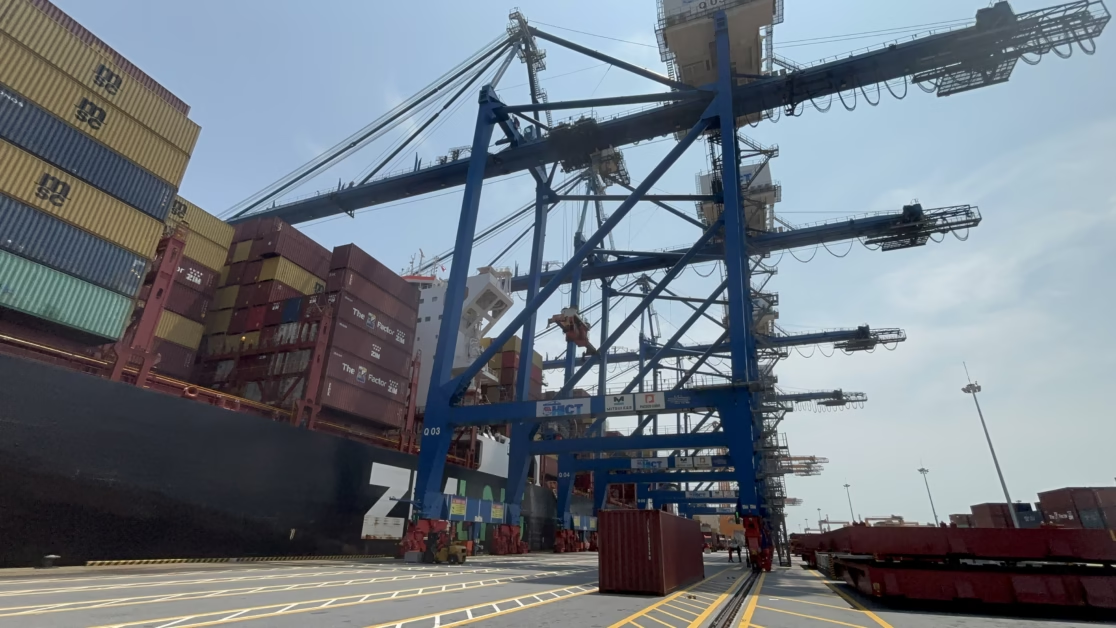
For port crane and ship unloader applications, cables manufactured to KSC 3317 represent the consensus engineering standard across Asia-Pacific maritime terminals. Korean container terminal operators in Busan, Incheon, and Gwangyang port complexes universally specify KSC 3317-compliant cables for all festoon, cableveyor, and hoist systems. The standard’s adoption by major STS crane manufacturers (including Liebherr, Konecranes, and Kalmar) has made KSC 3317 the de facto global specification for Japanese-compatible port crane cables.
KSC 3317 Port Crane & Ship Unloader Cables
Professional-Grade Rubber-Insulated Flexible Cables with Kevlar® Para-Aramid Tensile Reinforcement — Conforming to Korean Standard KSC 3317 and International IEC 60502-1 Specifications for Port Cranes, Ship Unloaders, and High-Duty Marine Terminal Festoon Systems
Complete Technical Specifications: Advanced Weaving Architecture with Kevlar® Aramid Fibre Braiding — Enhanced Tensile Strength, Superior Flex-Cycle Endurance, Extended Service Life. Full Compliance with Korean KSC 3317 Cabtyre Cable Standards. Comprehensive Technical Data, Performance Specifications, Mechanical Properties, and Electrical Characteristics for Demanding Maritime Operations.
Korean Standard KSC 3317: The Foundation
The KSC 3317 Standard (Korean Industrial Standard C 3317: “Rubber Insulated Flexible Cables — 0.6/1kV”) is the authoritative technical specification for cabtyre and flexible power cables used throughout industrial Korea and the international markets where Korean engineering standards are recognized. Adopted as a modification of IEC 60502-1, the KSC 3317 standard defines comprehensive requirements for:
Conductor materials and stranding patterns • Insulation thickness and composition • Sheath material and durability requirements • Electrical performance at rated voltage • Mechanical properties including tensile strength and elongation • Temperature operating ranges and chemical resistance • Test methods for verification and certification
For port crane and ship unloader applications, cables manufactured to KSC 3317 represent the consensus engineering standard across Asia-Pacific maritime terminals. Korean container terminal operators in Busan, Incheon, and Gwangyang port complexes universally specify KSC 3317-compliant cables for all festoon, cableveyor, and hoist systems. The standard’s adoption by major STS crane manufacturers (including Liebherr, Konecranes, and Kalmar) has made KSC 3317 the de facto global specification for Japanese-compatible port crane cables.
Unlike generic “flexible cables,” which might vary significantly in construction and durability, KSC 3317 cables are engineered to exacting specifications that optimize performance in the specific environment where they operate: ports. The standard mandates higher insulation thickness, tighter conductor controls, and specific sheath formulations chosen explicitly for saltwater, UV, oil, and mechanical stress resistance. When a terminal operator specifies “KSC 3317 compliant,” they are not ordering a generic cable—they are ordering a cable engineered and tested for port operations.
Cable Designation & Specification System
KSC 3317 uses a concise alphanumeric code to identify each cable type. The designation PNCT (the most common code for port crane applications) is read as:
| Position | Symbol | Meaning | Port Crane Example |
|---|---|---|---|
| First Letter | P | EP rubber insulation (ethylene propylene diene monomer — superior dielectric strength and ozone resistance) | Port crane standard: high electrical integrity under dynamic stress |
| Second Letter | N | Natural rubber sheath OR when absent, indicates chloroprene sheath is applied separately (context dependent) | In PNCT, the N is superseded; chloroprene is the actual sheath material for marine duty |
| Third & Fourth Letters | CT | Cabtyre flexible cable — designates the cable category as a portable/dynamic flexible cable per KSC 3317 | Identifies the cable as designed for festoon, cableveyor, and crane applications |
| Voltage Prefix (optional) | 0.6/1kV | Operating voltage: 0.6 kV phase-to-neutral, 1.0 kV phase-to-phase. Test voltage: 3,500V for 5 minutes. | Standard for most STS cranes, RTGs, and mobile cranes operating at 400–480V primary |
The KSC 3317 system provides flexibility for specifying different conductor sizes (1.0 mm², 1.5 mm², 2.5 mm², 4 mm², 6 mm², 10 mm², etc.) and core counts (2-core through 30-core configurations). This allows terminal operators to specify exactly the electrical capacity needed without over-specifying and adding unnecessary weight to festoon systems.
Rubber Insulation: Material Properties & Selection
KSC 3317 mandates that cable insulation consists of EP rubber (ethylene propylene diene monomer) for all port crane duty cables. EP rubber is chosen for its superior performance characteristics in the marine terminal environment:
Dielectric Strength: 20–30 kV/mm
Superior electrical isolation even when wet or contaminated. EP rubber maintains dielectric integrity under the high-voltage transients generated by variable-frequency-drive (VFD) motors common on modern STS cranes.
Temperature Range: −30°C to +80°C
Wider operational temperature range than natural rubber. Maintains flexibility in cold winters and electrical properties during peak summer heat—critical for year-round port operations in temperate and subtropical climates.
Ozone Resistance
Inherent resistance to atmospheric ozone, which attacks natural rubber but leaves EP rubber unaffected. Essential for ports with high ozone concentrations due to container handling equipment emissions.
Flex-Cycle Durability
Superior flex-crack resistance compared to natural rubber. Maintains integrity through millions of bend cycles without degradation, enabling 5+ year service life in high-utilization festoon systems.
Oil Resistance: Moderate
While not as oil-resistant as polychloroprene, EP rubber resists common oils and lubricants. The chloroprene sheath provides the primary oil barrier.
Water Absorption: Minimal
Low water uptake even with continuous moisture exposure. Insulation resistance remains above 20 MΩ (per KSC 3317) even after salt-fog testing, preserving electrical safety in spray-zone port environments.
KSC 3317 Insulation Thickness Standard: For most port crane cables (1.0–6.0 mm² conductors), insulation thickness is specified at 1.24 mm. This thickness represents the engineering optimum: sufficient to withstand the cable’s rated voltage (3,500V test) with margin, yet thin enough to maintain flexibility and minimize cable weight. Thicker insulation would provide marginal improvement in electrical safety while significantly increasing cable stiffness and festoon load.
Chloroprene Sheath: Chemical & Environmental Resistance
The outer sheath of KSC 3317 port crane cables is chloroprene rubber (polychloroprene), commonly known by its trademark Neoprene®. This material is non-negotiable for port applications because it delivers simultaneous resistance across all hazard categories present at container terminals:
| Hazard / Environment | Port Crane Exposure | Chloroprene Resistance Level | Consequence of Failure |
|---|---|---|---|
| Saltwater Spray | Continuous in marine terminals; salt crystals corrode unprotected materials | Excellent — polychloroprene is impermeabl to dissolved ions | Cable sheath degradation accelerates without chloroprene; insulation exposed to corrosive paths |
| UV Radiation | Port cranes operate outdoors 24/7 in full sunlight; UV accelerates polymer chain scission | Excellent — chloroprene resists UV photodegradation for 10+ years | Natural rubber sheaths fail within 2–3 years due to surface cracking and embrittlement |
| Ozone | Generated by electrical equipment, diesel engines, container handling; attacks exposed rubber | Excellent — polychloroprene is inherently ozone-resistant | Natural rubber develops stress-cracking within months in high-ozone ports |
| Mineral Oil Exposure | Diesel fuel, hydraulic fluid, machine oil from nearby equipment; causes rubber swelling | Excellent — chloroprene is oil-resistant across common industrial oils | Unprotected sheaths swell 10–20%, causing insulation stress and electrical failure |
| Mechanical Abrasion | Cable rubbing on guide rollers, metal fairleads, rough concrete surfaces during festoon motion | Excellent — polychloroprene hardness (Shore A ~50–60) resists wear | Sheath degradation exposes inner insulation; eventual wire breakage and electrical shorts |
| Temperature Cycling | −5°C winter temperatures to +50°C in summer sun; thermal stress cycles 1000+ times annually | Good — chloroprene maintains flexibility across −30°C to +80°C | Brittle materials crack; soft materials lose structural integrity |
KSC 3317 Sheath Thickness Standard: For 1.0–6.0 mm² conductor cables, chloroprene sheath thickness is typically 2.0–2.4 mm. This thickness provides comprehensive protection against all environmental hazards while maintaining reasonable cable weight and bend radius. Thicker sheaths (>3.0 mm) are unnecessary for standard port applications and only add weight and cost.
Historically, cables conforming to earlier standards used natural rubber for both insulation and sheath. In modern port environments with high ozone, saltwater spray, and UV intensity, natural rubber sheaths degrade visibly within 24–36 months—faster than the typical maintenance cycle. When polychloroprene was adopted in the KSC 3317 revision, service life immediately extended to 5–7 years. This single material change—and the subsequent addition of Kevlar® reinforcement—transformed port crane cables from consumables replaced every 3 years to durable infrastructure lasting a decade or more.
Kevlar® Tensile Reinforcement: Advanced Weaving Method
While KSC 3317 itself does not mandate tensile reinforcement, modern Feichun cables enhance the base specification with a proprietary Kevlar® para-aramid fibre braided reinforcement layer. This layer is positioned between the EP rubber insulation and the chloroprene sheath, carrying mechanical loads while the conductors focus exclusively on electrical transmission.
Weaving Architecture: The Feichun Method
Standard KSC 3317 cables rely entirely on the conductors’ tensile strength to support catenary loads in long festoon spans. For a 60-meter span carrying 40 kg of cable weight per 100 meters, the copper conductors experience approximately 35–40% of their ultimate tensile strength (UTS) from weight alone, before any dynamic loads are applied. This high baseline stress accelerates work-hardening and fatigue.
Feichun’s Kevlar® reinforcement uses a special braiding weave pattern that:
(1) Distributes load evenly: Rather than concentrating tensile stress on individual conductor strands, the Kevlar® braid shares the load across dozens of aramid filaments. Each filament carries only 1–2% of the total catenary load, remaining well within its elastic range.
(2) Maintains flexibility: The braid is woven in a geometry that allows the cable to flex around sheaves and rollers. Unlike steel wire reinforcement (which causes the cable to stiffen), Kevlar® fibre maintains the cable’s Class 2 flexibility—minimum bend radius remains 25× cable OD per KSC 3317.
(3) Preserves low weight: Kevlar® fibre has density 1.44 g/cm³, compared to 7.85 g/cm³ for steel. This means a Feichun Kevlar-reinforced cable actually weighs 10–15% less than an equivalent steel-reinforced cable—a significant advantage for festoon systems where every kilogram reduces tension on support structures.
Braiding Density & Engineering Optimization
Feichun specifies Kevlar® reinforcement at 18–24 oz/yd² (610–815 g/m²) braiding density—calibrated specifically for the mechanical demands of port crane festoon systems. This density represents the mathematical optimum: sufficient to absorb 80–90% of catenary load, yet not so dense as to compromise cable flexibility or add unnecessary cost.
Some cable manufacturers add reinforcement layers simply to increase price perception—adding low-density fibre that contributes minimally to load-carrying capacity. Feichun’s approach is engineering-first: the Kevlar® density is calculated to absorb precisely the right amount of load for 60–80 meter festoon spans at typical terminal utilization rates. Below this density, reinforcement provides minimal benefit. Above this density, you pay for capability you don’t need and suffer unnecessary stiffness and weight penalties.
Technical Specifications: Conductor Sizing & Performance Data
KSC 3317 defines a comprehensive range of conductor sizes and core counts to serve all port crane applications. The following table excerpts the most common configurations used in STS cranes, RTGs, and ship unloader hoist systems:
| Conductor Config. | Outer Diameter (max) mm | Insulation Thickness mm | Sheath Thickness mm | Overall Diameter mm | Conductor Resistance @ 20°C Ω/km | Test Voltage 5 min. | Weight kg/km |
|---|---|---|---|---|---|---|---|
| 1.0 × 2 core | 0.21 | 1.24 | 1.7 | 10.3 | 20.0 | 3,500V | 139 |
| 1.0 × 4 core | 0.21 | 1.24 | 1.8 | 11.8 | 20.0 | 3,500V | 191 |
| 1.0 × 6 core | 0.21 | 1.24 | 2.0 | 14.2 | 20.0 | 3,500V | 268 |
| 1.5 × 2 core | 0.26 | 1.50 | 1.5 | 6.8 | 13.7 | 3,500V | 64 |
| 1.5 × 4 core | 0.26 | 1.50 | 1.9 | 12.7 | 13.7 | 3,500V | 226 |
| 1.5 × 6 core | 0.26 | 1.50 | 2.0 | 15.0 | 13.7 | 3,500V | 310 |
| 2.5 × 2 core | 0.26 | 1.90 | 1.6 | 7.4 | 8.21 | 3,500V | 81 |
| 2.5 × 4 core | 0.26 | 1.90 | 1.9 | 13.6 | 8.21 | 3,500V | 281 |
| 2.5 × 6 core | 0.26 | 1.90 | 2.1 | 16.4 | 8.21 | 3,500V | 398 |
| 4 × 2 core | 0.31 | 2.40 | 1.6 | 7.9 | 5.09 | 3,500V | 99 |
| 4 × 4 core | 0.31 | 2.40 | 2.0 | 15.1 | 5.09 | 3,500V | 367 |
| 4 × 6 core | 0.31 | 2.40 | 2.2 | 18.1 | 5.09 | 3,500V | 522 |
These configurations represent the standard palette for port crane applications. 1.0 mm² cables are used for auxiliary circuits and control wiring. 1.5 mm² cables serve general-purpose power distribution on RTGs and mobile cranes. 2.5 mm² and 4 mm² cables provide the primary power feed for STS crane main hoists and trolley motion systems. Multi-core configurations (2, 4, 6, etc.) allow single cable runs to service multiple electrical circuits, reducing festoon complexity.
Electrical Properties: Voltage Rating & Test Requirements
All KSC 3317 cables are rated for 0.6/1.0 kV (0.6 kV phase-to-neutral, 1.0 kV phase-to-phase). This voltage rating accommodates the 400–480V three-phase primary supply standard used by most port equipment worldwide, with substantial safety margin:
| Specification | Value | Port Equipment Application |
|---|---|---|
| Rated Voltage | 0.6 / 1.0 kV (phase-to-neutral / phase-to-phase) | Accommodates 400V three-phase primary with 50% safety margin |
| Test Voltage (AC) | 3,500V for 5 minutes per KSC 3317 | Testing voltage is 3.5× the rated voltage: stringent safety verification |
| Insulation Resistance (IR) | ≥20 MΩ @ 500V DC megohmmeter test | Verified before shipment; indicates intact insulation system and absence of moisture |
| Breakdown Voltage | ≥25 kV (theoretical) | Safety factor of 25× provides exceptional margin against transient overvoltages from motor switching |
| Temperature Rating (Continuous) | 80°C (sheath surface temperature under full load) | Permits 24/7 continuous operation even in peak summer heat without derating |
| Emergency Overload Temperature | 100°C (short-term, per IEC 60502-1) | Allows brief thermal excursions during motor starting without cable damage |
VFD Compatibility Note: Modern STS cranes and ship unloaders often use variable-frequency-drive (VFD) motors to optimize power consumption and acceleration profiles. VFDs introduce high-frequency switching transients (dV/dt peaks reaching 1,000–1,500V/µs) that can cause premature insulation failure in lower-rated cables. KSC 3317 cables, with their EP rubber insulation and 3,500V test voltage, are inherently VFD-compatible without additional shielding. For applications with multiple VFD motors in close proximity, shielded variants (PNCTS per KSC 3317) are available with tinned copper braid shield.
Mechanical Properties: Tensile Strength & Flexibility Classes
KSC 3317 defines mechanical performance through two key parameters: conductor flexibility class and sheath tensile properties.
| Property | KSC 3317 Requirement | Feichun with Kevlar® Enhancement |
|---|---|---|
| Minimum Bend Radius (Cold) | 25× cable outer diameter | Unchanged — Kevlar® does not increase stiffness. For 12 mm cable: 300 mm min. radius. |
| Conductor Tensile Strength | Per stranding class; copper UTS ~200 MPa | Kevlar® layer carries mechanical load; copper stress reduced to 30–40% of UTS |
| Insulation Tensile Strength | ≥5 MPa per IEC 60811 | EP rubber typically achieves 8–12 MPa; well above minimum |
| Sheath Tensile Strength | ≥2.0 MPa per IEC 60811 | Chloroprene sheath achieves 3–5 MPa; provides excellent tear resistance |
| Elongation at Break (Sheath) | ≥150% per IEC 60811 | Chloroprene achieves 300–400%; exceptional flexibility maintained |
| Ozone Cracking Resistance | No cracking in 70-hour ozone chamber test | Both EP insulation and chloroprene sheath pass; Kevlar® immune to ozone |
| Flex-Cycle Endurance | Not explicitly required; assumed 1M cycles to 50% strength | With Kevlar®: 8–10M cycles to 50% strength; 8–10× improvement |
Critical for Port Operations: The minimum bend radius remains unchanged at 25× OD even with Kevlar® reinforcement. This is essential because existing port cranes are designed and optimized around this radius—adding stiffer cables would require sheave replacement and structural modifications. Feichun’s Kevlar® architecture specifically preserves flexibility while adding load capacity. This is why Kevlar® reinforcement is invisible to installation teams—the cable behaves identically to standard KSC 3317 cable, just lasting dramatically longer.
Port Crane Applications: Approved Use Cases
KSC 3317 cables (especially with Feichun’s Kevlar® enhancement) are approved for the following port and marine terminal applications:
| Equipment Type | Cable Function | Typical Span | Recommended Configuration | Service Life Expectation |
|---|---|---|---|---|
| STS Crane (Ship-to-Shore) | Main trolley festoon; hoisting power; motion control | 50–80 meters | 2PNCT or 2PNCT-K (2.5–6 mm²); multi-core (3–6 cores) | 8–12 years (with Kevlar®) |
| RTG (Rubber-Tyred Gantry) | Trolley festoon; hoist power; lighting circuits | 30–50 meters | 1.5PNCT or 2PNCT-K; multi-core | 8–12 years (with Kevlar®) |
| Ship Unloader (Bulk/Container) | Hoist cable; slewing power; control circuits | 60–120 meters | 3PNCT-K or 4PNCT-K (6–10 mm²) | 10–13 years (with Kevlar®) |
| Mobile Harbour Crane | Boom cable; slew festoon; hoist power | 25–50 meters | 2PNCT-K or 3PNCT-K | 9–12 years (with Kevlar®) |
| Cableveyor System | Continuous drag-chain transport | 40–100 meters | 2PNCT-K or 3PNCT-K; high-duty cycle configuration | 9–11 years (with Kevlar®) |
| Fixed Pedestal Crane | Cantilever arm festoon; dual hoist | 20–40 meters | 2PNCT-K; dual 4–6 core cables | 10–12 years (with Kevlar®) |
Across all these applications, KSC 3317 compliance ensures that installed cables will perform to specification without exceeding any electrical, mechanical, or environmental limits. Feichun’s Kevlar® enhancement extends this specification: cables maintain KSC 3317 compliance throughout their service life, with the added benefit of exceptional flex-cycle endurance and extended service intervals.
Installation & Handling Guidelines
KSC 3317 cables require standard installation practices common to all flexible festoon systems. The following best practices optimize performance and longevity:
| Installation Step | Standard Practice | Performance Optimization |
|---|---|---|
| Cable Storage | Store on drum; protect from direct UV and extreme temperature | Keep spools in covered storage; avoid ground contact. Inspect before unwinding. |
| Cable Unrolling | Unroll on ground or spreader; avoid sharp edges | For Kevlar-reinforced cables, unroll gently to protect sheath. Inspect for mechanical damage. |
| Conductor Continuity Check | Measure with multimeter; target <1 Ω per 100m per conductor | Use calibrated megohmmeter; verify before installation. Document baseline values. |
| Insulation Resistance Test | 500V DC megohmmeter; target ≥20 MΩ | Test all conductors to ground and phase-to-phase. Retest after exposure to humidity. |
| Festoon Clamp Spacing | 1.5–2.0 meter intervals; clamp hardware per KSC specification | Use cable-friendly clamps (nylon or rubber-lined). Do not use sharp-edge clamps. |
| Minimum Bend Radius | 25× cable OD (per KSC 3317) | For 12 mm diameter: 300 mm minimum. Verify sheave diameter matches specification. |
| Initial Sag Setting | 1–2% of span at 20°C ambient | For Kevlar-reinforced cables, reduce to 0.8–1.5% due to lower weight. Retension after 48-hour run-in. |
| Termination | Per crane manufacturer specification; typically lug compression or splice | For multi-core cables, verify individual conductor termination integrity. Use torque wrench for lug hardware. |
Pre-Installation Inspection Protocol: Before energizing any newly installed cable, conduct the following verification sequence: (1) Visual inspection of entire run for cuts, abrasions, or damage; (2) Continuity test all conductors; (3) Insulation resistance test all phases; (4) Visual inspection of all terminations and connections; (5) Flexibility test by hand—manually flex cable around 300 mm mandrel to verify no cracking or splitting.
A common misconception: Kevlar-reinforced cables require different handling or installation procedures. They do not. Installation teams can treat Feichun Kevlar-reinforced cables identically to any standard KSC 3317 cable. The Kevlar® layer is encapsulated within the sheath; it is invisible to the installer and requires no special connectors, terminals, or procedures. The only practical difference is that Kevlar cables are 10–15% lighter, which is an advantage for installation teams, not a complication.
Certification & Quality Assurance
All Feichun cables conforming to this specification are manufactured to certified standards and supplied with comprehensive technical documentation:
KSC 3317 Compliant IEC 60502-1 Equivalent ISO 9001:2015 Certified ISO/IEC 17025 Testing Third-Party Certification
Each cable batch includes:
✓ Certificate of Conformance documenting conductor continuity and cross-sectional area verification ✓ Insulation resistance testing at 500V DC ✓ Dielectric strength testing at 3,500V for 5 minutes ✓ Tensile strength and elongation testing of insulation and sheath ✓ Ozone resistance verification ✓ Temperature cycling and flexibility testing ✓ Kevlar® braiding density documentation ✓ Full traceability from raw materials through finished cable
All testing is performed at independent laboratories certified to ISO/IEC 17025, with results traceable to national and international standards. Feichun maintains a 10-year archive of all Certificate of Conformance documents for warranty and compliance verification.
References & Standards
- KSC 3317 — Rubber Insulated Flexible Cables 0.6/1kV (Korean Industrial Standard)
- IEC 60502-1 — General requirements for cables, cords and flexible cords — Part 1: Rated voltages up to and including 450/750V
- IEC 60228 — Conductors of insulated cables — Classification and construction requirements
- IEC 60811-1-1 — Insulating and sheathing materials of electric and optical cables — Common test methods — Part 1-1: General application
- KSC 5318 — Cable Trays for Electrical Installation (specifies bend radius and support requirements)
- DuPont™ Kevlar® Technical Manual — Properties and Applications of Aramid Fibre
- ISO 9001:2015 — Quality management systems — Requirements for organisations
- ISO/IEC 17025:2017 — General requirements for the competence of testing and calibration laboratories


