Ozone Resistant Cable

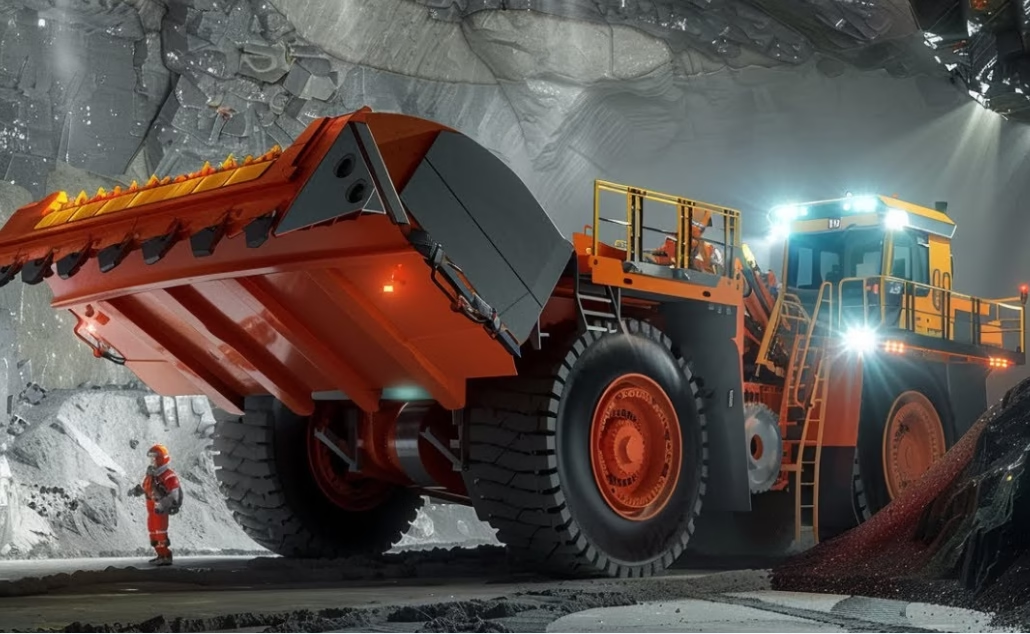
FeiChun Advanced High-Flexibility Tunnel Boring Machine (TBM) Reel-Deployment Power-Monitoring Integrated Cable Systems (3.6–12/20 kV): Comprehensive Technical Analysis of Specialized EPR Elastomer Formulations for Continuous Underground Deployment, Integrated Monitoring Conductor Architecture & Distributed Sensor Integration, Moisture & Water Resistance Mechanisms in Saturated Tunnel Environments, Ozone Resistance Chemistry Preventing Atmospheric & Generated-Ozone Degradation, Extreme Mechanical Flexibility (60 m/min deployment velocity, ±25°/m torsional capability) Enabling Continuous Tunneling Operations, Advanced Polymer Engineering Optimizing -40°C Arctic Tunneling to +80°C Equipment Internal Temperatures, Comparative Technical Analysis vs. Standard Industrial TBM Cables & Mechanical Performance Validation, Field-Proven Integration with Modern TBM Monitoring Systems & Automated Tunneling Control, Long-Term Durability Across 10–15 Year Underground Service Life with Zero Electrical Failures, and Complete Technical Framework for Next-Generation Automated Tunneling Infrastructure Supporting Mega-Tunnel Projects, Deep-Shaft Mining Operations, and Autonomous Underground Excavation Systems Modern tunnel boring machine (TBM) systems operating in challenging underground environments demand specialized power cable architecture fundamentally different from surface-mounted industrial applications: continuous reel deployment at 60 m/min velocity subject to ±25°/m torsional cycling accumulating 10–15 million mechanical stress cycles over typical 10–15 year tunnel project duration, saturated moisture environments where humidity approaches 100% and water saturation directly contacts cable surfaces, presence of ozone generated from TBM electrical discharges and atmospheric interaction, requirement for integrated monitoring conductors enabling real-time shield monitoring, skin-effect compensation, and distributed sensor networks supporting autonomous tunneling control systems. FeiChun's advanced TBM cable systems address these unified requirements through specialized EPR elastomer formulations engineered for extreme mechanical flexibility and moisture resistance, integrated monitoring-conductor architecture (6 ÜL KON monitoring wires) enabling comprehensive system diagnostics, moisture-inhibiting sheath chemistry preventing water penetration establishing electrochemical corrosion pathways, ozone-resistant elastomer additives protecting against both atmospheric and equipment-generated ozone, and extreme low-temperature capability supporting -40°C arctic tunneling operations in Scandinavia and Siberia.

FLEXIDRUM® MEDIUM (N)TSCGEWÖU TUNNEL

FeiChun Advanced High-Flexibility Tunnel Boring Machine (TBM) Reel-Deployment Power-Monitoring Integrated Cable Systems (3.6–12/20 kV): Comprehensive Technical Analysis of Specialized EPR Elastomer Formulations for Continuous Underground Deployment, Integrated Monitoring Conductor Architecture & Distributed Sensor Integration, Moisture & Water Resistance Mechanisms in Saturated Tunnel Environments, Ozone Resistance Chemistry Preventing Atmospheric & Generated-Ozone Degradation, Extreme Mechanical Flexibility (60 m/min deployment velocity, ±25°/m torsional capability) Enabling Continuous Tunneling Operations, Advanced Polymer Engineering Optimizing -40°C Arctic Tunneling to +80°C Equipment Internal Temperatures, Comparative Technical Analysis vs. Standard Industrial TBM Cables & Mechanical Performance Validation, Field-Proven Integration with Modern TBM Monitoring Systems & Automated Tunneling Control, Long-Term Durability Across 10–15 Year Underground Service Life with Zero Electrical Failures, and Complete Technical Framework for Next-Generation Automated Tunneling Infrastructure Supporting Mega-Tunnel Projects, Deep-Shaft Mining Operations, and Autonomous Underground Excavation Systems Modern tunnel boring machine (TBM) systems operating in challenging underground environments demand specialized power cable architecture fundamentally different from surface-mounted industrial applications: continuous reel deployment at 60 m/min velocity subject to ±25°/m torsional cycling accumulating 10–15 million mechanical stress cycles over typical 10–15 year tunnel project duration, saturated moisture environments where humidity approaches 100% and water saturation directly contacts cable surfaces, presence of ozone generated from TBM electrical discharges and atmospheric interaction, requirement for integrated monitoring conductors enabling real-time shield monitoring, skin-effect compensation, and distributed sensor networks supporting autonomous tunneling control systems. FeiChun’s advanced TBM cable systems address these unified requirements through specialized EPR elastomer formulations engineered for extreme mechanical flexibility and moisture resistance, integrated monitoring-conductor architecture (6 ÜL KON monitoring wires) enabling comprehensive system diagnostics, moisture-inhibiting sheath chemistry preventing water penetration establishing electrochemical corrosion pathways, ozone-resistant elastomer additives protecting against both atmospheric and equipment-generated ozone, and extreme low-temperature capability supporting -40°C arctic tunneling operations in Scandinavia and Siberia.
PANZERFLEX-S / ELX (N)TSCGEWÖU: Micro-Filtered HEPR Rubber Insulation Chemistry, Red Polychloroprene (PCP) 5GM5-Grade Salt-Fog Resistant Outer Sheath, Semiconductive Field-Control Architecture, High-Flexibility Design for Port Reeling & Festoon Systems, Split Protective Earth Cores, Anti-Torsion Textile Braid, 3.6/6 kV through 12/20 kV Voltage Classes (18/30 kV Available on Request), Thermal Stability (-30°C to +90°C Flexible Operation), Environmental Durability (Salt-Fog, UV, Oil, Moisture Resistance), STS Container Cranes, Ship-to-Shore Cranes, Ship Loaders, Stacker Reclaimers, Excavators, Cable Reel Systems, Festoon Systems, High-Speed Reeling, Comparative Analysis vs. TENAX TTS and PROTOLON(SMK) Designs, European Port Terminal Field Performance Validation, and Complete Technical Specification Guidance

PANZERFLEX-S / ELX (N)TSCGEWÖU

PANZERFLEX-S / ELX (N)TSCGEWÖU: Micro-Filtered HEPR Rubber Insulation Chemistry, Red Polychloroprene (PCP) 5GM5-Grade Salt-Fog Resistant Outer Sheath, Semiconductive Field-Control Architecture, High-Flexibility Design for Port Reeling & Festoon Systems, Split Protective Earth Cores, Anti-Torsion Textile Braid, 3.6/6 kV through 12/20 kV Voltage Classes (18/30 kV Available on Request), Thermal Stability (-30°C to +90°C Flexible Operation), Environmental Durability (Salt-Fog, UV, Oil, Moisture Resistance), STS Container Cranes, Ship-to-Shore Cranes, Ship Loaders, Stacker Reclaimers, Excavators, Cable Reel Systems, Festoon Systems, High-Speed Reeling, Comparative Analysis vs. TENAX TTS and PROTOLON(SMK) Designs, European Port Terminal Field Performance Validation, and Complete Technical Specification Guidance
KSC 3317 Standard (Korean Industrial Standard C 3317: "Rubber Insulated Flexible Cables — 0.6/1kV") is the authoritative technical specification for cabtyre and flexible power cables used throughout industrial Korea and the international markets where Korean engineering standards are recognized. Adopted as a modification of IEC 60502-1, the KSC 3317 standard defines comprehensive requirements for: Conductor materials and stranding patterns • Insulation thickness and composition • Sheath material and durability requirements • Electrical performance at rated voltage • Mechanical properties including tensile strength and elongation • Temperature operating ranges and chemical resistance • Test methods for verification and certification For port crane and ship unloader applications, cables manufactured to KSC 3317 represent the consensus engineering standard across Asia-Pacific maritime terminals. Korean container terminal operators in Busan, Incheon, and Gwangyang port complexes universally specify KSC 3317-compliant cables for all festoon, cableveyor, and hoist systems. The standard's adoption by major STS crane manufacturers (including Liebherr, Konecranes, and Kalmar) has made KSC 3317 the de facto global specification for Japanese-compatible port crane cables.

KSC 3317 Port Crane & Ship Unloader Cables

KSC 3317 Standard (Korean Industrial Standard C 3317: “Rubber Insulated Flexible Cables — 0.6/1kV”) is the authoritative technical specification for cabtyre and flexible power cables used throughout industrial Korea and the international markets where Korean engineering standards are recognized. Adopted as a modification of IEC 60502-1, the KSC 3317 standard defines comprehensive requirements for: Conductor materials and stranding patterns • Insulation thickness and composition • Sheath material and durability requirements • Electrical performance at rated voltage • Mechanical properties including tensile strength and elongation • Temperature operating ranges and chemical resistance • Test methods for verification and certification For port crane and ship unloader applications, cables manufactured to KSC 3317 represent the consensus engineering standard across Asia-Pacific maritime terminals. Korean container terminal operators in Busan, Incheon, and Gwangyang port complexes universally specify KSC 3317-compliant cables for all festoon, cableveyor, and hoist systems. The standard’s adoption by major STS crane manufacturers (including Liebherr, Konecranes, and Kalmar) has made KSC 3317 the de facto global specification for Japanese-compatible port crane cables.
crane cable range is a complete family of six specialised cable types engineered to cover every electrical and data connection on modern port cranes — from the simplest yard crane spreader circuit to the most complex automated STS crane with integrated fibre optic networking. The family is divided into two series: the WS-RLIN series for motorised cable reel systems, and the WS-SPRD series for gravity collector basket (festoon basket) systems. Every cable in the range shares a common engineering foundation: JIS C 3327 compliance for rubber-insulated machinery cables, chloroprene rubber (CR) sheathing for oil/ozone/UV resistance, EPR insulation rated to 90°C, and an ambient temperature range of −40°C to +90°C that covers every port environment on earth from arctic to tropical. Within this shared foundation, each cable type is differentiated by its reinforcement system, voltage class, conductor range, and application-specific optimisations.

WALSREEN® Complete Port Crane Cable Range

crane cable range is a complete family of six specialised cable types engineered to cover every electrical and data connection on modern port cranes — from the simplest yard crane spreader circuit to the most complex automated STS crane with integrated fibre optic networking. The family is divided into two series: the WS-RLIN series for motorised cable reel systems, and the WS-SPRD series for gravity collector basket (festoon basket) systems. Every cable in the range shares a common engineering foundation: JIS C 3327 compliance for rubber-insulated machinery cables, chloroprene rubber (CR) sheathing for oil/ozone/UV resistance, EPR insulation rated to 90°C, and an ambient temperature range of −40°C to +90°C that covers every port environment on earth from arctic to tropical. Within this shared foundation, each cable type is differentiated by its reinforcement system, voltage class, conductor range, and application-specific optimisations.
WS-SPRD-HEXNCT was engineered specifically for this extreme duty class. Its defining characteristic is the HEXNCT enhanced chloroprene rubber sheath — a heavy-duty outer layer with thickness ranging from 4.5 mm to 5.1 mm, representing a 36–38% increase over the standard WS-SPRD-2PNCT's 3.3–3.7 mm sheath. This enhanced sheath provides a dramatically larger abrasion wear allowance at basket carrier contact points, greater resistance to mechanical impact from falling debris, and a more robust barrier against the chemical and environmental hazards of the container crane operating environment.

WALSREEN® WS-SPRD-HEXNCT Spreader Basket System Flexible Cable

WS-SPRD-HEXNCT was engineered specifically for this extreme duty class. Its defining characteristic is the HEXNCT enhanced chloroprene rubber sheath — a heavy-duty outer layer with thickness ranging from 4.5 mm to 5.1 mm, representing a 36–38% increase over the standard WS-SPRD-2PNCT’s 3.3–3.7 mm sheath. This enhanced sheath provides a dramatically larger abrasion wear allowance at basket carrier contact points, greater resistance to mechanical impact from falling debris, and a more robust barrier against the chemical and environmental hazards of the container crane operating environment.
WS-SPRD-2PNCT was engineered specifically for this unforgiving application. It combines high-core-count construction (30, 36, or 42 cores at 3.5 mm²) to carry the full complement of spreader control and signal circuits in a single cable, steel-wire-stranded conductors for tension resistance under self-weight suspension, chloroprene rubber sheathing for oil, ozone, and UV resistance in coastal port environments, and a cable geometry specifically optimised for the continuous lateral bending and catenary formation cycles unique to gravity collector basket systems. Manufactured to dual standards — JIS C 3327 (rubber-insulated machinery cables) and VDE 0250-813 (flexible cables) — the WS-SPRD-2PNCT represents dedicated engineering for a niche but mission-critical application. A failed spreader basket cable means a stopped crane, a grounded spreader, and halted container operations. There is no redundancy — the cable is the sole electrical lifeline between the crane's trolley and the spreader that grips the containers.

WALSREEN® WS-SPRD-2PNCT Spreader Basket System Flexible Cable

WS-SPRD-2PNCT was engineered specifically for this unforgiving application. It combines high-core-count construction (30, 36, or 42 cores at 3.5 mm²) to carry the full complement of spreader control and signal circuits in a single cable, steel-wire-stranded conductors for tension resistance under self-weight suspension, chloroprene rubber sheathing for oil, ozone, and UV resistance in coastal port environments, and a cable geometry specifically optimised for the continuous lateral bending and catenary formation cycles unique to gravity collector basket systems. Manufactured to dual standards — JIS C 3327 (rubber-insulated machinery cables) and VDE 0250-813 (flexible cables) — the WS-SPRD-2PNCT represents dedicated engineering for a niche but mission-critical application. A failed spreader basket cable means a stopped crane, a grounded spreader, and halted container operations. There is no redundancy — the cable is the sole electrical lifeline between the crane’s trolley and the spreader that grips the containers.
WS-RLIN-3PNCT-OF is the engineering answer to this convergence challenge. It integrates three-phase medium-voltage power conductors (3 × 38–60 mm² at AC 6,600 V) with a dedicated neutral/earth return conductor and six optical fibres housed in individually colour-coded ETFE protective tubes — all within a single Kevlar®-reinforced, chloroprene-sheathed cable construction. This hybrid design eliminates the need for separate power and fibre optic cables on the reel system, reducing reel complexity, installation time, maintenance burden, and total cable weight, while ensuring perfect synchronisation between power and data paths — because both travel through the same physical cable at all times.

WALSREEN® WS-RLIN-3PNCT-OF Hybrid Power & Fibre Optic Reel System Flexible Cable

WS-RLIN-3PNCT-OF is the engineering answer to this convergence challenge. It integrates three-phase medium-voltage power conductors (3 × 38–60 mm² at AC 6,600 V) with a dedicated neutral/earth return conductor and six optical fibres housed in individually colour-coded ETFE protective tubes — all within a single Kevlar®-reinforced, chloroprene-sheathed cable construction. This hybrid design eliminates the need for separate power and fibre optic cables on the reel system, reducing reel complexity, installation time, maintenance burden, and total cable weight, while ensuring perfect synchronisation between power and data paths — because both travel through the same physical cable at all times.
WS-RLIN-2PNCT-KB was engineered specifically to solve this challenge. Its defining innovation is a Kevlar® aramid fibre reinforcing layer — the same poly-paraphenylene terephthalamide material used in military-grade ballistic body armour — woven into a proprietary helical braid pattern that distributes tensile load uniformly across the cable's cross-section. This Kevlar reinforcement delivers tensile strength comparable to steel braid at a fraction of the weight, eliminates the fatigue-induced wire breakage that plagues conventional steel-armoured reeling cables, and maintains exceptional flexibility throughout the cable's operational life.

WALSREEN® WS-RLIN-2PNCT-KB Reel System Flexible Cable

WS-RLIN-2PNCT-KB was engineered specifically to solve this challenge. Its defining innovation is a Kevlar® aramid fibre reinforcing layer — the same poly-paraphenylene terephthalamide material used in military-grade ballistic body armour — woven into a proprietary helical braid pattern that distributes tensile load uniformly across the cable’s cross-section. This Kevlar reinforcement delivers tensile strength comparable to steel braid at a fraction of the weight, eliminates the fatigue-induced wire breakage that plagues conventional steel-armoured reeling cables, and maintains exceptional flexibility throughout the cable’s operational life.
FSTN-OFNCT is a high-performance optical fiber flexible cable designed specifically for signal and data transmission on port cranes, ship unloaders, container gantry cranes, and heavy-duty material handling equipment. Unlike conventional industrial fibre optic cables that rely on standard polymer or steel-wire tensile members, the WS-FSTN-OFNCT incorporates a Kevlar® (para-aramid) fibre reinforcement layer—the same ballistic-grade material used in bulletproof vests and military-grade protective equipment—braided in a proprietary pattern that delivers exceptional tensile strength while preserving the cable's full flexibility under continuous reeling and festoon operation.

Kevlar® Aramid Fibre Reinforced Optical Fiber Flexible Cable with Specially Braided Tensile Layer for Signal and Data Transmission on Port Cranes, Ship Unloaders, Container Gantry Cranes, and Heavy-Duty Material Handling Equipment — Engineered for Cable Reel Systems, Festoon Systems, and Continuous Flexing Applications with Graded Index 50/125, 62.5/125, and Singlemode E9/125 Fibre Options

FSTN-OFNCT is a high-performance optical fiber flexible cable designed specifically for signal and data transmission on port cranes, ship unloaders, container gantry cranes, and heavy-duty material handling equipment. Unlike conventional industrial fibre optic cables that rely on standard polymer or steel-wire tensile members, the WS-FSTN-OFNCT incorporates a Kevlar® (para-aramid) fibre reinforcement layer—the same ballistic-grade material used in bulletproof vests and military-grade protective equipment—braided in a proprietary pattern that delivers exceptional tensile strength while preserving the cable’s full flexibility under continuous reeling and festoon operation.
WS-FSTN-3PNCT fills a critical gap in the festoon cable product range: it provides the mechanical reinforcement of 3PNCT construction — the dedicated textile reinforcing layer that protects against impact, crush, and abrasion — without the weight and cost of a metallic shield braid. This makes it the optimal choice for power distribution and discrete control circuits in harsh mechanical environments where EMI shielding is not required but standard 2PNCT cables cannot survive.

WALSTOON® WS-FSTN-3PNCT Festoon System Flexible Cable

WS-FSTN-3PNCT fills a critical gap in the festoon cable product range: it provides the mechanical reinforcement of 3PNCT construction — the dedicated textile reinforcing layer that protects against impact, crush, and abrasion — without the weight and cost of a metallic shield braid. This makes it the optimal choice for power distribution and discrete control circuits in harsh mechanical environments where EMI shielding is not required but standard 2PNCT cables cannot survive.
WS-FSTN-3PNCT-SB represents the premium tier of the WALSTOON festoon cable family — a cable engineered for applications where standard 2PNCT construction does not provide sufficient mechanical protection. The critical difference is in the designation: 3PNCT versus 2PNCT. The "3" indicates a three-layer sheathing system that includes a dedicated textile reinforcing layer between the core bundle and the outer sheath — a layer that the standard 2PNCT construction does not have. In practice, this reinforcing layer transforms the cable from a flexible electrical conductor into a mechanically reinforced structure that resists impact damage, crushing forces, abrasion penetration, and tensile stress far beyond the capability of standard 2PNCT cables. When a festoon cable runs through a harsh environment — exposed to falling debris from bulk cargo operations, crushed between moving crane structures, subjected to extreme tensile loading during emergency stops, or dragged across abrasive steel surfaces — the reinforcing layer provides the mechanical margin of safety that prevents cable failure. Combined with the tinned copper shield braid for EMI protection, the WS-FSTN-3PNCT-SB delivers dual-layer protection: electromagnetic shielding for signal integrity, and mechanical reinforcement for physical survivability. This combination makes it the cable of choice for the most demanding festoon system positions — particularly on grab-type ship unloaders, heavy-duty overhead cranes in steel mills and foundries, and any application where the cable is exposed to significant mechanical abuse beyond normal festoon system operation.

WALSTOON® WS-FSTN-3PNCT-SB Festoon System Flexible Cable

WS-FSTN-3PNCT-SB represents the premium tier of the WALSTOON festoon cable family — a cable engineered for applications where standard 2PNCT construction does not provide sufficient mechanical protection. The critical difference is in the designation: 3PNCT versus 2PNCT. The “3” indicates a three-layer sheathing system that includes a dedicated textile reinforcing layer between the core bundle and the outer sheath — a layer that the standard 2PNCT construction does not have. In practice, this reinforcing layer transforms the cable from a flexible electrical conductor into a mechanically reinforced structure that resists impact damage, crushing forces, abrasion penetration, and tensile stress far beyond the capability of standard 2PNCT cables. When a festoon cable runs through a harsh environment — exposed to falling debris from bulk cargo operations, crushed between moving crane structures, subjected to extreme tensile loading during emergency stops, or dragged across abrasive steel surfaces — the reinforcing layer provides the mechanical margin of safety that prevents cable failure. Combined with the tinned copper shield braid for EMI protection, the WS-FSTN-3PNCT-SB delivers dual-layer protection: electromagnetic shielding for signal integrity, and mechanical reinforcement for physical survivability. This combination makes it the cable of choice for the most demanding festoon system positions — particularly on grab-type ship unloaders, heavy-duty overhead cranes in steel mills and foundries, and any application where the cable is exposed to significant mechanical abuse beyond normal festoon system operation.
WS-FSTN-2PNCT is the foundation cable of the WALSTOON festoon system product family — a high-performance, unshielded, rubber-insulated flexible cable engineered for the demanding mechanical and environmental conditions of port gantry cranes, ship unloaders, cable chain systems, and industrial overhead cranes. With the widest configuration range in the WALSTOON product line — from single-conductor 250 mm² power cables capable of carrying hundreds of amperes to compact 30-core × 0.75 mm² multi-circuit control cables — the WS-FSTN-2PNCT addresses every power distribution and discrete control requirement on a crane festoon system.

WALSTOON® WS-FSTN-2PNCT Festoon System Flexible Cable

WS-FSTN-2PNCT is the foundation cable of the WALSTOON festoon system product family — a high-performance, unshielded, rubber-insulated flexible cable engineered for the demanding mechanical and environmental conditions of port gantry cranes, ship unloaders, cable chain systems, and industrial overhead cranes. With the widest configuration range in the WALSTOON product line — from single-conductor 250 mm² power cables capable of carrying hundreds of amperes to compact 30-core × 0.75 mm² multi-circuit control cables — the WS-FSTN-2PNCT addresses every power distribution and discrete control requirement on a crane festoon system.
WS-FSTN-2PNCT-SB is a comprehensive-range festoon system flexible cable designed to meet the diverse wiring requirements of port gantry cranes, ship unloaders, cable chain systems, and industrial overhead crane applications. While its sibling product — the WS-FSTN-2PNCT-PSB — features Kevlar® para-aramid fibre reinforcement for extreme tensile applications, the WS-FSTN-2PNCT-SB focuses on delivering the widest possible range of core configurations with reliable tinned copper shield braiding, covering everything from compact 2-core signal cables to high-density 30-core multi-circuit cables and paired-core variants for balanced signal transmission.

WALSTOON® WS-FSTN-2PNCT-SB Festoon System Flexible Cable

WS-FSTN-2PNCT-SB is a comprehensive-range festoon system flexible cable designed to meet the diverse wiring requirements of port gantry cranes, ship unloaders, cable chain systems, and industrial overhead crane applications. While its sibling product — the WS-FSTN-2PNCT-PSB — features Kevlar® para-aramid fibre reinforcement for extreme tensile applications, the WS-FSTN-2PNCT-SB focuses on delivering the widest possible range of core configurations with reliable tinned copper shield braiding, covering everything from compact 2-core signal cables to high-density 30-core multi-circuit cables and paired-core variants for balanced signal transmission.
Festoon cables on port gantry cranes and ship unloaders endure some of the most punishing operating conditions in industrial cable engineering. Every time the crane trolley travels along its rail, the festoon cable is dragged, flexed, accelerated, and decelerated across spans of 100–300 metres. The cable must support its own suspended weight between trolley hangers, absorb dynamic shock loads during emergency stops, withstand continuous wind-induced vibration in exposed coastal environments, and resist the corrosive effects of saltwater spray, UV radiation, and airborne industrial contaminants — all while maintaining electrical continuity and signal integrity for safety-critical crane control systems.

WALSTOON® WS-FSTN-2PNCT-PSB Festoon System Flexible Cable

AC 600V Festoon System Flexible Cable with Kevlar® Para-Aramid Fibre Braided Tensile Reinforcement Layer, JIS C 3327 Compliant, −40°C to +90°C Operating Range, Oil-Resistant, Flame-Retardant — Engineered for Port Gantry Cranes, Ship-to-Shore Unloaders, Container Handling Equipment, and Heavy-Duty Cable Chain Applications
A dragline excavator represents one of the largest continuous-duty electrical machines on Earth. Modern draglines (typical bucket capacity 100–150 cubic meters) routinely excavate 100,000+ tons of overburden daily from coal and metallic mines. A single large dragline requires continuous electrical power input of 5–10 megawatts to operate the bucket hoist mechanism, drag mechanism, swing drive, and positioning systems. This extraordinary power demand requires high-voltage transmission (typically 11kV or higher) to minimize resistive losses and keep conductor sizes manageable. 拉铲挖掘机代表地球上最大的连续负荷电机之一。现代拉铲(典型斗容量100-150立方米)经常从煤炭和金属矿山每天挖掘100,000多吨覆盖层。单个大型拉铲需要连续电力输入5-10兆瓦来操作斗提升机构、拖拽机构、摇摆驱动和定位系统。这种非凡的功率需求需要高压传输(通常11kV或更高)以最小化电阻损耗并保持导体大小可管理。

High-Voltage Draglines: Specifications for (N)TSCGEWÖU 3×185+3×35/3 11/11kV Australian Specs

A dragline excavator represents one of the largest continuous-duty electrical machines on Earth. Modern draglines (typical bucket capacity 100–150 cubic meters) routinely excavate 100,000+ tons of overburden daily from coal and metallic mines. A single large dragline requires continuous electrical power input of 5–10 megawatts to operate the bucket hoist mechanism, drag mechanism, swing drive, and positioning systems. This extraordinary power demand requires high-voltage transmission (typically 11kV or higher) to minimize resistive losses and keep conductor sizes manageable. 拉铲挖掘机代表地球上最大的连续负荷电机之一。现代拉铲(典型斗容量100-150立方米)经常从煤炭和金属矿山每天挖掘100,000多吨覆盖层。单个大型拉铲需要连续电力输入5-10兆瓦来操作斗提升机构、拖拽机构、摇摆驱动和定位系统。这种非凡的功率需求需要高压传输(通常11kV或更高)以最小化电阻损耗并保持导体大小可管理。
The Type W 4/C 2/0 AWG 2000V cable features a heavy-duty thermoset CPE (chlorinated polyethylene) jacket that is specifically formulated with UV stabilizers and ozone-resistant additives, providing robust protection against continuous direct sunlight and high ozone concentrations found in desert port environments. The cable is rated to withstand prolonged outdoor exposure in desert conditions, typically maintaining 80 to 90 percent of its physical properties after 5 to 10 years of continuous unshaded sunlight exposure, compared to standard elastomeric jackets that degrade to 50 to 70 percent property retention under identical conditions. The nominal outer diameter of this cable is 46.8 to 49.1 mm (1.845 to 1.935 inches), with approximate weight of 4,390 to 5,133 kg per kilometer. The cable features 259-strand rope-lay copper conductors (2/0 AWG per core), four 67.4 mm² cores, EPDM insulation rated for 90°C conductor temperature, and current carrying capacity of 237 amperes (based on 30°C ambient, 90°C conductor temperature). However, the critical distinction that separates viable long-term desert service from premature field failures lies in understanding the difference between a cable jacket that merely resists UV degradation and a comprehensively designed system where all exposed components—including terminal connections, stripped insulation, and mechanical attachment points—receive appropriate protection from direct sunlight. In actual desert port applications, failures are as frequently caused by UV damage at unprotected termination points as by jacket degradation itself, making installation and maintenance procedures as important as material selection. For typical desert port power systems, RTG (rubber-tired gantry) crane power leads, shore-to-ship power cables, and fixed deck-mounted power distribution systems operating in Middle Eastern, North African, and Australian port environments, the Type W 4/C 2/0 AWG cable with standard CPE jacket provides reliable field-proven performance when properly installed and maintained, but premium UV-resistant cable variants should be considered for applications where service life extension beyond 7 to 10 years is critical or where inspection and maintenance infrastructure is limited.

UV & Ozone Resistance of Type W 4/C 2/0 AWG 2000V: Is the CPE Jacket Durable Enough for Constant Direct Sunlight in Desert Ports?

The Type W 4/C 2/0 AWG 2000V cable features a heavy-duty thermoset CPE (chlorinated polyethylene) jacket that is specifically formulated with UV stabilizers and ozone-resistant additives, providing robust protection against continuous direct sunlight and high ozone concentrations found in desert port environments. The cable is rated to withstand prolonged outdoor exposure in desert conditions, typically maintaining 80 to 90 percent of its physical properties after 5 to 10 years of continuous unshaded sunlight exposure, compared to standard elastomeric jackets that degrade to 50 to 70 percent property retention under identical conditions. The nominal outer diameter of this cable is 46.8 to 49.1 mm (1.845 to 1.935 inches), with approximate weight of 4,390 to 5,133 kg per kilometer. The cable features 259-strand rope-lay copper conductors (2/0 AWG per core), four 67.4 mm² cores, EPDM insulation rated for 90°C conductor temperature, and current carrying capacity of 237 amperes (based on 30°C ambient, 90°C conductor temperature). However, the critical distinction that separates viable long-term desert service from premature field failures lies in understanding the difference between a cable jacket that merely resists UV degradation and a comprehensively designed system where all exposed components—including terminal connections, stripped insulation, and mechanical attachment points—receive appropriate protection from direct sunlight. In actual desert port applications, failures are as frequently caused by UV damage at unprotected termination points as by jacket degradation itself, making installation and maintenance procedures as important as material selection. For typical desert port power systems, RTG (rubber-tired gantry) crane power leads, shore-to-ship power cables, and fixed deck-mounted power distribution systems operating in Middle Eastern, North African, and Australian port environments, the Type W 4/C 2/0 AWG cable with standard CPE jacket provides reliable field-proven performance when properly installed and maintained, but premium UV-resistant cable variants should be considered for applications where service life extension beyond 7 to 10 years is critical or where inspection and maintenance infrastructure is limited.
The shield transfer impedance (STI) for (N)TSCGECEWÖU 12/20kV cables with individual concentric copper screens is approximately 0.005–0.012 Ω/m at 50/60 Hz power frequency, representing the electrical impedance that coupling currents encounter as they attempt to penetrate the copper screen and reach the main conductor. At higher frequencies relevant to VFD variable switching (around 10 kHz), the STI increases slightly to approximately 0.008–0.015 Ω/m due to skin-effect limitations in the copper conductors. At even higher frequencies extending into the megahertz range (1–10 MHz) where harmonic emissions and EMI are most problematic, the STI rises further to approximately 0.02–0.08 Ω/m depending on the copper screen material properties and frequency-dependent conductor resistance. The shielding effectiveness, measured as the attenuation in decibels (dB) of external electromagnetic fields trying to couple energy into the cable conductors, is typically 60–80 dB at 100 kHz and remains above 40 dB even at 1 MHz, demonstrating excellent EMI rejection across the industrial frequency range. These metrics establish that individual concentric copper screens provide substantially superior EMC performance compared to traditional overall braided screens, particularly in reducing conducted emissions in VFD-driven machinery where rapid voltage switching and harmonic currents create severe electromagnetic stress on nearby control cables and sensitive electronic systems.

Shield Transfer Impedance: What are the exact EMC performance parameters and screening effectiveness metrics for (N)TSCGECEWÖU 12/20kV individually screened medium-voltage flexible cables in industrial and VFD applications? 

The shield transfer impedance (STI) for (N)TSCGECEWÖU 12/20kV cables with individual concentric copper screens is approximately 0.005–0.012 Ω/m at 50/60 Hz power frequency, representing the electrical impedance that coupling currents encounter as they attempt to penetrate the copper screen and reach the main conductor. At higher frequencies relevant to VFD variable switching (around 10 kHz), the STI increases slightly to approximately 0.008–0.015 Ω/m due to skin-effect limitations in the copper conductors. At even higher frequencies extending into the megahertz range (1–10 MHz) where harmonic emissions and EMI are most problematic, the STI rises further to approximately 0.02–0.08 Ω/m depending on the copper screen material properties and frequency-dependent conductor resistance. The shielding effectiveness, measured as the attenuation in decibels (dB) of external electromagnetic fields trying to couple energy into the cable conductors, is typically 60–80 dB at 100 kHz and remains above 40 dB even at 1 MHz, demonstrating excellent EMI rejection across the industrial frequency range. These metrics establish that individual concentric copper screens provide substantially superior EMC performance compared to traditional overall braided screens, particularly in reducing conducted emissions in VFD-driven machinery where rapid voltage switching and harmonic currents create severe electromagnetic stress on nearby control cables and sensitive electronic systems.
(N)TMCGEH3S矿用电缆介绍 The (N)TMCGEH3S represents a sophisticated medium voltage trailing cable specifically engineered for demanding open-pit mining operations. Developed in accordance with DIN VDE 0250 Part 813 standards and Nexans specifications, this polyurethane-sheathed cable combines exceptional mechanical durability with advanced electrical performance characteristics. The integration of self-illuminating LED visual monitoring technology transforms this cable into an intelligent power transmission solution that provides real-time operational status indication. (N)TMCGEH3S是一种专为苛刻露天采矿作业设计的复杂中压拖曳电缆。该电缆按照DIN VDE 0250第813部分标准和Nexans规范开发,聚氨酯护套电缆将卓越的机械耐久性与先进的电气性能特性相结合。集成自发光LED视觉监测技术使该电缆成为能够提供实时运行状态指示的智能电力传输解决方案。

(N)TMCGEH3S Self-Illuminating Mining Cable: Can LED Brightness Indicate Voltage Level or Load Status?

(N)TMCGEH3S represents a sophisticated medium voltage trailing cable specifically engineered for demanding open-pit mining operations. Developed in accordance with DIN VDE 0250 Part 813 standards and Nexans specifications, this polyurethane-sheathed cable combines exceptional mechanical durability with advanced electrical performance characteristics. The integration of self-illuminating LED visual monitoring technology transforms this cable into an intelligent power transmission solution that provides real-time operational status indication. (N)TMCGEH3S是一种专为苛刻露天采矿作业设计的复杂中压拖曳电缆。该电缆按照DIN VDE 0250第813部分标准和Nexans规范开发,聚氨酯护套电缆将卓越的机械耐久性与先进的电气性能特性相结合。集成自发光LED视觉监测技术使该电缆成为能够提供实时运行状态指示的智能电力传输解决方案。
RHEYFIRM cable, RHEYFIRM RTS, RHEYFIRM RS, NTSCGEWTOEUS, NTSKCGECWÖU, Kevlar reinforced cable, aramid fiber cable, DIN VDE 0250-813, medium voltage reeling cable, ultra-long vertical travel cable, deep shaft mining cable, mine hoist cable, STS crane cable, ship-to-shore crane cable, RMG crane cable, trailing cable, EPR insulated cable, rubber sheathed flexible cable, 高压卷筒电缆, 凯夫拉加强电缆, 矿用电缆, 起重机电缆, Nexans equivalent cable, Prysmian alternative cable, coal cutter cable, tunnel boring machine cable, TBM cable, elevator traveling cable, high-rise elevator cable, steel core vs Kevlar cable, aramid strength member cable, DIN VDE 0250 Part 813 compliant, VDE mining cable, 6/10kV reeling cable, 12/20kV trailing cable, 18/30kV power cable, open-pit mining cable, underground mining cable, flexible power cable for cranes, material handling cable, tinned copper conductor cable, flame retardant mining cable, oil resistant reeling cable, ozone resistant cable, Feichun special cable, 安徽飞纯电缆, 飞纯特种电缆, NSSHCGEWÖU cable, continuous miner cable, dragline cable, stacker reclaimer cable, excavator power cable

RHEYFIRM® (RS) vs. RHEYFIRM® (RTS): When to Choose RHEYFIRM® KE Kevlar (N)TSKCGECWÖU for Ultra-Long Vertical Travel

RHEYFIRM cable, RHEYFIRM RTS, RHEYFIRM RS, NTSCGEWTOEUS, NTSKCGECWÖU, Kevlar reinforced cable, aramid fiber cable, DIN VDE 0250-813, medium voltage reeling cable, ultra-long vertical travel cable, deep shaft mining cable, mine hoist cable, STS crane cable, ship-to-shore crane cable, RMG crane cable, trailing cable, EPR insulated cable, rubber sheathed flexible cable, 高压卷筒电缆, 凯夫拉加强电缆, 矿用电缆, 起重机电缆, Nexans equivalent cable, Prysmian alternative cable, coal cutter cable, tunnel boring machine cable, TBM cable, elevator traveling cable, high-rise elevator cable, steel core vs Kevlar cable, aramid strength member cable, DIN VDE 0250 Part 813 compliant, VDE mining cable, 6/10kV reeling cable, 12/20kV trailing cable, 18/30kV power cable, open-pit mining cable, underground mining cable, flexible power cable for cranes, material handling cable, tinned copper conductor cable, flame retardant mining cable, oil resistant reeling cable, ozone resistant cable, Feichun special cable, 安徽飞纯电缆, 飞纯特种电缆, NSSHCGEWÖU cable, continuous miner cable, dragline cable, stacker reclaimer cable, excavator power cable
Type 409 cables represent a specialized category of flexible mining cables designed specifically for demanding applications in material handling equipment, surface mining operations, and industrial environments. These cables are manufactured according to the Australian and New Zealand Standard AS/NZS 2802:2000, which establishes rigorous requirements for reeling and trailing cables used in mining and general industrial applications outside underground coal mining environments. (409型电缆是专为物料搬运设备、露天采矿作业和工业环境中的高要求应用而设计的一类特种柔性矿用电缆。这些电缆按照澳大利亚和新西兰标准AS/NZS 2802:2000制造,该标准对用于煤矿井下以外的采矿和一般工业应用的卷筒电缆和拖曳电缆制定了严格要求。)

Stacker Reclaimers: What is the Minimum Bending Radius for Type 409 Cables Used on High-Speed Stacker-Reclaimer Drums?

Type 409 cables represent a specialized category of flexible mining cables designed specifically for demanding applications in material handling equipment, surface mining operations, and industrial environments. These cables are manufactured according to the Australian and New Zealand Standard AS/NZS 2802:2000, which establishes rigorous requirements for reeling and trailing cables used in mining and general industrial applications outside underground coal mining environments. (409型电缆是专为物料搬运设备、露天采矿作业和工业环境中的高要求应用而设计的一类特种柔性矿用电缆。这些电缆按照澳大利亚和新西兰标准AS/NZS 2802:2000制造,该标准对用于煤矿井下以外的采矿和一般工业应用的卷筒电缆和拖曳电缆制定了严格要求。)
Mining operations worldwide face a critical procurement decision when selecting medium voltage reeling and trailing cables for mobile equipment such as excavators, draglines, and continuous miners. The choice between premium brand-name cables like PROTOLON and generic alternatives conforming to the same NTSCGEWÖU specification represents a significant investment decision with long-term operational and safety implications.

PROTOLON (Proprietary) vs. Generic NTSCGEWÖU: Is the Premium Price for Brand-Name Mining Cables Justified?

Mining operations worldwide face a critical procurement decision when selecting medium voltage reeling and trailing cables for mobile equipment such as excavators, draglines, and continuous miners. The choice between premium brand-name cables like PROTOLON and generic alternatives conforming to the same NTSCGEWÖU specification represents a significant investment decision with long-term operational and safety implications.
The Australian AS/NZS 2802 Type 440 cable and the German DIN VDE 0250-813 (N)TSCGEWÖU cable both serve draglines, excavators, and mobile mining equipment. However, their ultraviolet resistance characteristics differ significantly based on sheath material composition and regional design priorities. Understanding these differences enables mining engineers to select optimal cables for Pilbara mining operations where equipment operates continuously under intense solar radiation. 本对比分析研究了两种领先的露天采矿用卷筒电缆标准。澳大利亚AS/NZS 2802 440型电缆和德国DIN VDE 0250-813 (N)TSCGEWÖU电缆都适用于拉铲、挖掘机和移动采矿设备。然而,它们的抗紫外线特性基于护套材料成分和区域设计优先级存在显著差异。

Type 440 (Australia) vs. (N)TSCGEWÖU (VDE): Which reeling cable offers better UV resistance for the Pilbara region?

The Australian AS/NZS 2802 Type 440 cable and the German DIN VDE 0250-813 (N)TSCGEWÖU cable both serve draglines, excavators, and mobile mining equipment. However, their ultraviolet resistance characteristics differ significantly based on sheath material composition and regional design priorities. Understanding these differences enables mining engineers to select optimal cables for Pilbara mining operations where equipment operates continuously under intense solar radiation. 本对比分析研究了两种领先的露天采矿用卷筒电缆标准。澳大利亚AS/NZS 2802 440型电缆和德国DIN VDE 0250-813 (N)TSCGEWÖU电缆都适用于拉铲、挖掘机和移动采矿设备。然而,它们的抗紫外线特性基于护套材料成分和区域设计优先级存在显著差异。
The German national standard DIN VDE 0250 covers cables, wires, and flexible cords for power installations. This standard has achieved global recognition as the definitive benchmark for tough rubber-sheathed flexible cables. Germany remains the only country to have issued specialized design regulations for flexible electrical cables covering cranes, material handling equipment, and mining machinery, which explains why DIN VDE 0250 is widely accepted internationally for demanding industrial applications. (德国国家标准DIN VDE 0250涵盖电力设施用电缆、电线和软线。该标准已成为坚固橡胶护套柔性电缆的全球公认基准。德国是唯一一个为起重机、物料搬运设备和采矿机械的柔性电缆发布专门设计规范的国家,这解释了为什么DIN VDE 0250在要求苛刻的工业应用中被国际广泛接受。)

DIN VDE 0250: Part 812 (Mobile Equipment) vs Part 813 (Mining & Industry)

The German national standard DIN VDE 0250 covers cables, wires, and flexible cords for power installations. This standard has achieved global recognition as the definitive benchmark for tough rubber-sheathed flexible cables. Germany remains the only country to have issued specialized design regulations for flexible electrical cables covering cranes, material handling equipment, and mining machinery, which explains why DIN VDE 0250 is widely accepted internationally for demanding industrial applications. (德国国家标准DIN VDE 0250涵盖电力设施用电缆、电线和软线。该标准已成为坚固橡胶护套柔性电缆的全球公认基准。德国是唯一一个为起重机、物料搬运设备和采矿机械的柔性电缆发布专门设计规范的国家,这解释了为什么DIN VDE 0250在要求苛刻的工业应用中被国际广泛接受。)
The VDE (Verband der Elektrotechnik) designation system is widely adopted across Europe for identifying cable properties and specifications. According to the DIN VDE 0292 standard, type designation codes provide systematic identification of cable characteristics including conductor material, insulation type, and structural features. (VDE命名系统在欧洲广泛采用,用于标识电缆特性和规格。根据DIN VDE 0292标准,型号代码系统性地标识电缆特性,包括导体材料、绝缘类型和结构特征。)

VDE Cable Designation: Understanding “G”, “2G”, and “3G” Insulation Material Codes

The VDE (Verband der Elektrotechnik) designation system is widely adopted across Europe for identifying cable properties and specifications. According to the DIN VDE 0292 standard, type designation codes provide systematic identification of cable characteristics including conductor material, insulation type, and structural features. (VDE命名系统在欧洲广泛采用,用于标识电缆特性和规格。根据DIN VDE 0292标准,型号代码系统性地标识电缆特性,包括导体材料、绝缘类型和结构特征。)
RONDOFLEX CHAIN (N)GRDG(CG)OEU 0.6/1KV is a low voltage cable specifically engineered for energy chain systems, suitable for all chain applications including container cranes, stacking cranes, indoor cranes, and material handling equipment. Featuring finely stranded Class 5 copper conductors, EPR rubber insulation (PROTOLON MS), tinned copper braid shielding (coverage >80%), and EVA rubber outer sheath, this cable provides excellent EMC compatibility, oil resistance, UV resistance, and ozone resistance. Especially suitable for outdoor installations, long travel distances, or high travel speeds where high cable performance is demanded.

كابل RONDOFLEX CHAIN (N)GRDG(CG)OEU 0,6/1KVكابلات منخفضة الجهد لسلاسل الطاقة مع توافق EMC

Applicable in all chain systems (e.g., container cranes, stacking cranes, indoor cranes, material handling equipment). Especially suitable in applications where, due to outdoor installation, long travel distances or high travel speed, high performances are expected from the cable (such as long lifetime, full reliability, resistance to abrasion, etc.).
كابل PROTOLON SMRT-LWL(N)TSCGEWOEU 8,7/15KV هو كابل لف مرن متوسط الجهد مصمم للتطبيقات تحت الإجهادات الميكانيكية المتوسطة. يشمل ذلك سرعات السفر المعتدلة، وأحمال الشد الديناميكية، والتغييرات المتعددة في الاتجاه إلى مستويات مختلفة، والتموج عند المرور فوق البكرات، وإجهادات الالتواء. يُعد هذا الكابل الخيار الأمثل للتطبيقات التي لا تتطلب الأداء القصوى لسلسلة XPRT ولكنها تحتاج إلى موثوقية أعلى من الكابلات القياسية. تتميز سلسلة SMRT بموصلات نحاسية عارية (غير معلبة) من الفئة 5 والتي توفر توازناً ممتازاً بين المرونة والتكلفة.

ما هو كابل PROTOLON SMRT-LWL متوسط الجهد للف؟

الكلمات المفتاحية الأساسية كابل متوسط الجهد, كابل الألياف البصرية, كابل لف الرافعات, كابل رافعة الحاويات, كابل صناعي متوسط الأداء, كابل مقاوم للالتواء, كابل مقاوم لمياه البحر, كابل موانئ, كابل مرن, كابل EPR, كابل 8.7/15 كيلو فولت, كابل PROTOLON SMRT, كابل سلسلة SMRT, كابل الإجهاد الميكانيكي المتوسط, كابل موصل نحاسي عاري
ما هو كابل PROTOLON XPRT-LWL متوسط الجهد للف مع الألياف البصرية؟ كابل لف مرن متوسط الجهد مع ألياف بصرية مدمجة للنقل المشترك للطاقة والبيانات

ما هو كابل PROTOLON XPRT-LWL متوسط الجهد للف مع الألياف البصرية؟

كابل متوسط الجهد, كابل الألياف البصرية, كابل لف الرافعات, كابل رافعة الحاويات, كابل صناعي, كابل مقاوم للالتواء, كابل مقاوم لمياه البحر, كابل موانئ, كابل مرن, كابل EPR, كابل 6/10 كيلو فولت, كابل PROTOLON
كابل PROTOLON (FL)-LWL(N)TSFLCGEWOEU 8,7/15KV هو كابل لف مسطح مرن متوسط الجهد مع ألياف بصرية مدمجة للنقل المشترك للطاقة والبيانات. صُمم هذا الكابل للتطبيقات التي تتعرض لإجهادات ميكانيكية عالية مثل أحمال الشد الديناميكية، والتغييرات المتعددة في الاتجاه ضمن مستوى واحد، والمرور فوق البكرات. يُستخدم بشكل رئيسي للمعدات المتحركة مثل رافعات الحاويات سريعة الحركة والمعدات المتحركة الكبيرة.

ما هو كابل PROTOLON (FL)-LWL المسطح متوسط الجهد مع الألياف البصرية؟

PROTOLON FL-LWL cable, PROTOLON (FL)-LWL(N)TSFLCGEWOEU 8.7/15KV, medium voltage flat reeling cable, fiber optic reeling cable, 15KV cable with fiber optics, DIN VDE 0250-813 cable, IEC 60228 conductor, container crane cable, STS crane cable, RTG crane power cable, gantry crane cable, port equipment cable, harbor crane cable, rail mounted gantry cable, EPR insulated cable, PROTOLON HS insulation, polychloroprene cable, PCP sheath cable, Class 5 copper conductor, oil resistant MV cable, ozone resistant cable, UV resistant industrial cable, flame retardant cable IEC 60332-1-2, multimode fiber cable, single-mode fiber cable, G62.5/125 optical fiber, G50/125 fiber optic, E9/125 single mode, hybrid power data cable, 3x35mm2 cable, 3x50mm2 cable, 3x70mm2 cable, Anhui Feichun cable, China cable manufacturer, special cable supplier, reeling drum cable, cable reel system, high tensile strength cable, dynamic load cable, roller operation cable, extreme temperature cable -50°C to +80°C, كابل متوسط الجهد مع الألياف البصرية, كابل رافعة الحاويات, كابل صناعي مقاوم للحرارة, 中壓扁平卷繞電纜, 光纖複合電力電纜, 起重機專用電纜, 港口自動化電纜, Industry 4.0 cable, smart port automation, automated storage retrieval cable, mining equipment cable, mobile equipment power cable, VDE 0298-4 current rating, CENELEC HD 22.16, ITU-T fiber standard, CIGRE cable guidelines, professional cable installation, factory assembled fiber optic cable
Кабель H07RN-F / A07RN-F имеет сложную многослойную конструкцию, разработанную для максимальной долговечности и электрических характеристик. Проводник состоит из тонкоскрученных медных проволок (лужёных для сечений до 10мм²), соответствующих требованиям гибкости класса 5 по IEC 60228. Изоляционный слой выполнен из этиленпропиленовой резиновой смеси класса EI4 — в частности, наша запатентованная формула TENAX®-O — обеспечивает исключительную озоностойкость, УФ-стабильность и устраняет необходимость дополнительной защиты жил в точках подключения.

Что такое гибкий кабель с резиновой изоляцией гармонизированной конструкции TENAX®-O H07RN-F A07RN-F?

Кабель H07RN-F / A07RN-F имеет сложную многослойную конструкцию, разработанную для максимальной долговечности и электрических характеристик. Проводник состоит из тонкоскрученных медных проволок (лужёных для сечений до 10мм²), соответствующих требованиям гибкости класса 5 по IEC 60228. Изоляционный слой выполнен из этиленпропиленовой резиновой смеси класса EI4 — в частности, наша запатентованная формула TENAX®-O — обеспечивает исключительную озоностойкость, УФ-стабильность и устраняет необходимость дополнительной защиты жил в точках подключения.
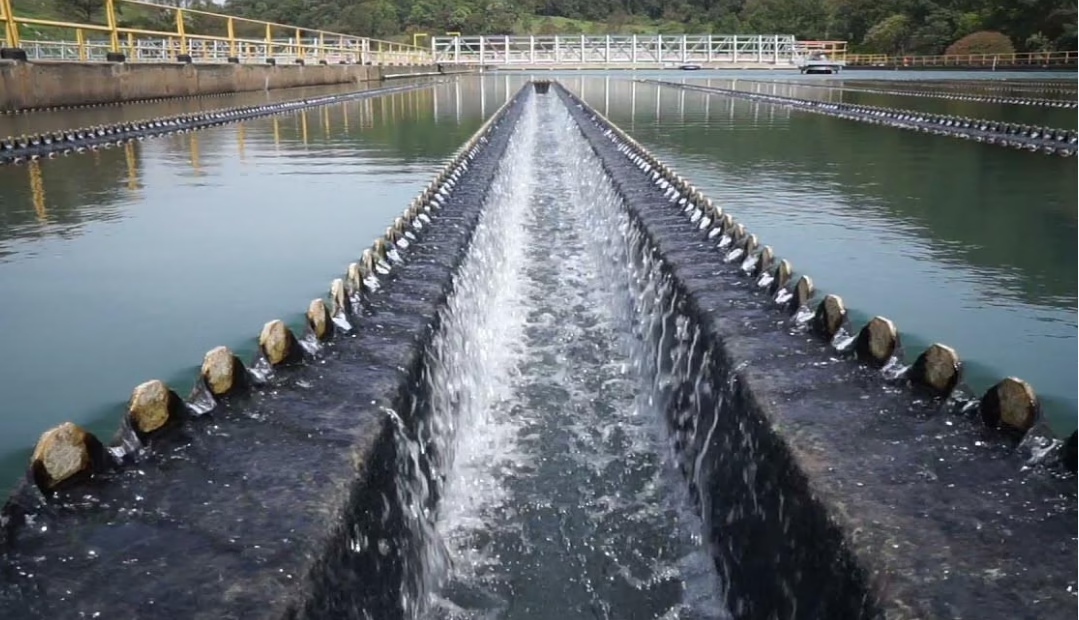
The global water treatment industry represents one of the most critical infrastructure sectors, serving both municipal drinking water systems and industrial wastewater processing facilities. According to the World Bank, approximately 2.2 billion people worldwide lack access to safely managed drinking water services, driving unprecedented investment in water treatment infrastructure. The U.S. Environmental Protection Agency (EPA) estimates that water utilities in the United States alone require over $470 billion in infrastructure investment over the next two decades.

Water Treatment Cables

H07RN-F rubber flexible cable, H07RN-8-F submersible pump cable, H05RR-F light duty cable, 318-TRS rubber cable, NTSCGECEWOU 3.6/6kV submersible cable, NTSCGECEWOU 6/10kV screened cable, NTSCGECEWOU 8.7/15kV medium voltage cable, NTSCGECEWOU 12/20kV deep well cable, NTSCGEWOU 3.6/6kV unscreened cable, NTSCGEWOU 6/10kV armoured cable, NTSCGEWOU 8.7/15kV submersible, NTSCGEWOU 12/20kV pump cable, Drincable 600 WRAS approved, Drincable 800 potable water cable, Drincable 600 Flat borehole cable
Solar cables, also known as photovoltaic (PV) cables, are specialized single-core cables specifically engineered for use in solar power generation systems. The SOLAR4 and SOLAR6 cables from Anhui Feichun Special Cable are designed to interconnect solar panels, junction boxes, and inverters in both residential and commercial photovoltaic installations. These cables must withstand the unique challenges of solar applications including continuous outdoor UV exposure, extreme temperature variations from freezing winters to scorching summers, and potential mechanical stress during installation and maintenance. Manufactured to EN 50618 standards, these cables feature tinned copper conductors that provide superior corrosion resistance and cross-linked insulation materials that ensure reliable performance throughout the typical 25+ year lifespan of solar installations.

Complete Guide to SOLAR4 & SOLAR6 Photovoltaic Cables

SOLAR4 cable, SOLAR6 cable, 4mm solar cable, 6mm solar cable, photovoltaic cable, PV cable, EN 50618, 1500V DC solar cable, 1000V AC solar cable, solar panel cable, rooftop solar cable, solar farm cable, UV resistant cable, weather resistant cable, tinned copper conductor, XLPE insulation, MC4 connector cable, string cable, combiner box cable, inverter cable, solar installation cable, TÜV certified, halogen free cable, flame retardant cable, -40°C to 90°C cable, 200°C short circuit, fine stranded cable, residential solar, commercial solar, utility scale solar, off-grid solar, ground mount solar, solar carport, BIPV cable, 55A solar cable, 70A solar cable, low voltage drop, high efficiency PV, 25 year lifespan, solar cable manufacturer, 光伏電纜, 太陽能電纜, 1500V直流電纜, 抗紫外線電纜, 安徽飛純電纜
(N)SSHOEU PUR 0.6/1KV is a halogen-free low voltage flexible cable designed for semi-flexible use and fixed installation in demanding environments. The polyurethane (PUR) sheath provides superior abrasion resistance compared to standard rubber cables. (N)SSHOEU PUR 0.6/1KV 是一款無鹵素低壓柔性電纜,專為惡劣環境中的半柔性使用和固定安裝而設計。聚氨酯(PUR)護套比標準橡膠電纜具有更優越的耐磨性。

(N)SSHOEU PUR 0.6/1KV Semi-Flexible Installation Cable

(N)SSHOEU PUR 0.6/1KV is a halogen-free low voltage flexible cable designed for semi-flexible use and fixed installation in demanding environments. The polyurethane (PUR) sheath provides superior abrasion resistance compared to standard rubber cables. (N)SSHOEU PUR 0.6/1KV 是一款無鹵素低壓柔性電纜,專為惡劣環境中的半柔性使用和固定安裝而設計。聚氨酯(PUR)護套比標準橡膠電纜具有更優越的耐磨性。
PROTOLON (SB-SAM) (N)TSCGEWOEU 6/10KV represents advanced medium voltage trailing cable technology with optimized wall-thickness design. This specialized cable serves as the primary power supply and connection solution for large material handling machines operating in demanding open-cast mining environments.

PROTOLON (SB-SAM) (N)TSCGEWOEU 6/10KV

PROTOLON (SB-SAM) (N)TSCGEWOEU 6/10KV represents advanced medium voltage trailing cable technology with optimized wall-thickness design. This specialized cable serves as the primary power supply and connection solution for large material handling machines operating in demanding open-cast mining environments.