
A practical engineering guide to understanding cable weight, calculating total cable mass for specific applications, and how weight affects equipment selection, drum capacity, installation logistics, and cost estimation for reeling cable systems in crane, hoist, and material handling equipment.
— 实用工程指南:理解电缆重量、计算具体应用的总质量、重量对卷筒容量和设备选型的影响。
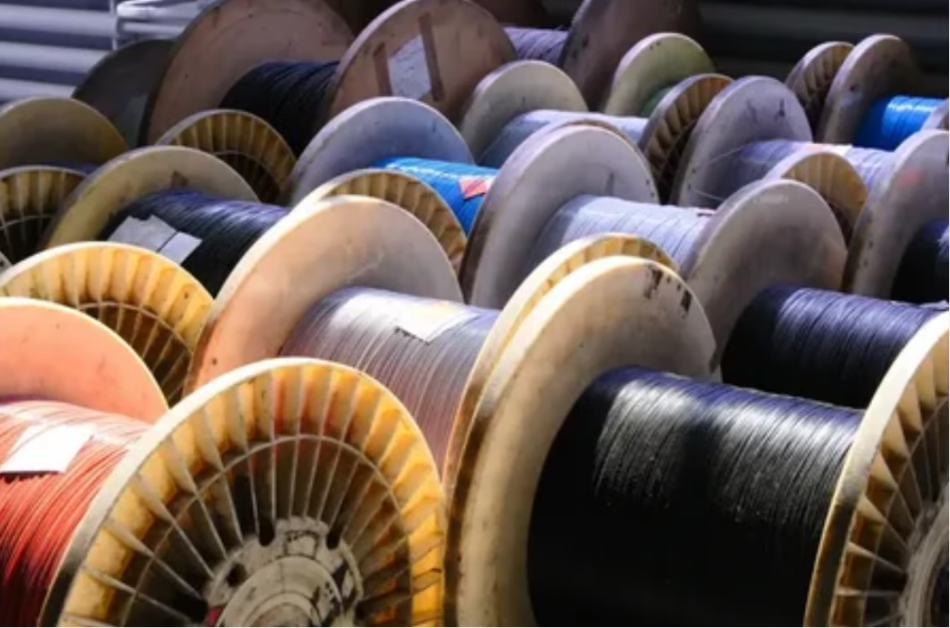
Weight Calculator: What is the Weight per Meter of NSHTÖU-J 4G16 0.6/1kV Flexible Rubber Cable?
A practical engineering guide to understanding cable weight, calculating total cable mass for specific applications, and how weight affects equipment selection, drum capacity, installation logistics, and cost estimation for reeling cable systems in crane, hoist, and material handling equipment. — 实用工程指南:理解电缆重量、计算具体应用的总质量、重量对卷筒容量和设备选型的影响。
1. The Quick Answer: Weight per Meter 快速答案:每米重量
The NSHTÖU-J 4G16 0.6/1kV flexible rubber cable weighs approximately 1.17 to 1.30 kilograms per meter, depending on the specific manufacturing tolerance and the composition of the outer sheath material used by your cable supplier. This means that a 100-meter length of cable would weigh roughly 117 to 130 kilograms — about the weight of a fully grown man for every 100 meters of cable. Understanding what this weight represents, where it comes from, and how it affects your equipment design and installation planning is far more valuable than simply knowing the number. NSHTÖU-J 4G16 电缆的每米重量约为 1.17 至 1.30 千克,具体取决于制造公差和外护套材料。
To put this in perspective, the copper conductors alone contribute about 614.4 kg/km (or 0.614 kg/m) to the total weight. The remaining weight — approximately 0.56 to 0.69 kg/m — comes from the insulation materials, protective layers, shielding (if any), and the outer sheath. This distribution of weight is not random. The engineer who designed this cable made deliberate choices about insulation thickness, sheath composition, and internal reinforcement layers, each contributing to the cable’s weight in proportion to its role in ensuring the cable’s safety, durability, and electrical performance. By understanding this composition, you gain insight into why this cable is suitable for heavy-duty applications and what trade-offs the manufacturer accepted when designing it.
Why This Matters 为什么很重要: Cable weight is not simply a curiosity — it is a critical design input that determines whether your reeling drum can support the installed cable without exceeding its structural limits, whether your crane hoist motor has enough pulling power to deploy and retrieve the cable, and whether the personnel deploying the cable in the field can handle it safely. An underestimation of cable weight can lead to equipment failure or safety incidents. An overestimation can lead to unnecessary equipment over-sizing and cost overruns. Getting the weight right is essential to sound engineering practice.
2. Understanding Why Cable Weight Matters 为什么电缆重量很重要
To understand why cable weight is so critical in equipment design, imagine a scenario that plays out thousands of times daily in mining operations, ports, and factories worldwide. A mobile crane equipped with a reeling drum and 500 meters of NSHTÖU-J cable is positioned at a new work site. The crane operator needs to spool the cable onto the drum, a process that requires the motor driving the drum to overcome not only the cable’s stiffness and friction, but also the weight of the cable already wrapped on the drum. At the beginning of the spooling process, the drum is nearly empty, and the motor load is manageable. But as more and more cable winds onto the drum, the total weight increases. After spooling 200 meters of cable (234 kg assuming 1.17 kg/m), the motor must now overcome this dead weight plus friction. At 400 meters (468 kg), the load is even greater. If the equipment designer underestimated the cable weight when sizing the motor, the motor may begin to stall or overheat as the load increases, ultimately failing to complete the spooling operation.
This is just one example. Cable weight also determines the maximum length of cable that can be spooled on a given drum without exceeding the drum’s structural weight limit. It affects the torque required from the spooling motor, which in turn affects the motor’s power consumption and the equipment’s operational cost. It influences the bending stress that the cable experiences as it wraps around the drum, which determines the minimum drum radius and thus the overall equipment footprint. It affects the force required to manually or mechanically deploy the cable in the field, the safety procedures required to prevent accidental cable drops, and the transportation costs to move the equipment and cable from one site to another. In short, cable weight touches nearly every aspect of equipment design and operation, making it a central consideration in any serious engineering analysis.
2.1 The Relationship Between Weight and Reliability 重量与可靠性的关系
There is a subtle but important relationship between cable weight and the cable’s inherent reliability and performance. A cable that weighs more per unit length, in general, has thicker insulation, a more robust outer sheath, and more internal reinforcement. These heavier components are not there by accident or for cosmetic reasons — they are engineered into the cable specifically to provide mechanical strength, electrical safety, and long service life. The NSHTÖU-J cable, at 1.17–1.30 kg/m, is heavier than a lighter-duty cable such as a simple unshielded 0.6/1kV cable might be, precisely because it is designed for heavy-duty reeling applications where the cable must endure thousands of spooling cycles without degrading. The weight you see is a reflection of engineering care and quality. Conversely, if you encounter a cable marketed for the same application but weighing significantly less, you should investigate carefully whether the lighter weight represents an actual engineering advantage (perhaps through use of advanced materials) or whether it is a sign of cost-cutting that compromises performance.
3. NSHTÖU-J Cable Overview and Design Philosophy NSHTÖU-J 电缆概况与设计理念
The designation NSHTÖU-J represents a specific type of heavy-duty, flexible rubber-insulated cable that adheres to German VDE 0250-814 and related standards. The letters break down as follows: NSHT refers to a cable with four conductors including a green-yellow earth wire, Ö indicates that the cable uses neoprene (chloroprene rubber) insulation and sheathing, U indicates it is unarmored (no steel braid or interlocked armor), and J signals that this is a variant with special reinforcement for torsion resistance. This cable is specifically designed for reeling applications — situations where the cable is repeatedly spooled onto and unreeled from a rotating drum. NSHTÖU-J 是德国 VDE 0250-814 标准的符合条件的重型卷筒电缆,具有抗扭设计。
The design philosophy underlying the NSHTÖU-J is that the cable must survive not just one deployment, but hundreds or thousands of deployment cycles in a service life that might span 10 to 20 years. Each time the cable is wrapped around the drum, it experiences torsional stress — a twisting force that tends to cause the cable to rotate helically rather than lay flat. If the cable is not carefully engineered to resist this torsion, it develops a “corkscrew” pattern, where the conductors inside the cable spiral relative to each other and the outer sheath becomes twisted. This corkscrew effect degrades the cable’s mechanical properties, reduces its ability to flexibly bend and unbend during reeling cycles, and can eventually lead to insulation cracking and electrical failure. The NSHTÖU-J addresses this through the incorporation of a polyester or polyamide anti-torsion braid embedded in the middle layers of the cable. This braid is woven in a specific pattern such that it resists the rotational forces that would otherwise cause corkscrew deformation. The inclusion of this anti-torsion braid adds to the cable’s weight, but it is a worthwhile trade-off for the extended reliability and service life it provides.
4. Material Composition and Weight Breakdown 材料组成和重量分解
To truly understand the 1.17–1.30 kg/m weight specification for NSHTÖU-J 4G16 cable, it is instructive to break down where this weight comes from. The cable has roughly ten distinct layers, each contributing differently to the overall mass and serving a specific function in the cable’s structure. Understanding this layering is important because it shows that the cable’s weight is not concentrated in any single component, but rather distributed across multiple materials, each chosen for its specific properties and contribution to the cable’s overall performance.
| Layer # 层数 | Layer Description 层描述 | Material 材料 | Approximate Weight Contribution 近似重量贡献 | Purpose 目的 |
|---|---|---|---|---|
| 1 | Power Conductors (3×16 mm²) 电力导体 | Tinned annealed copper, stranded | ~0.432 kg/m | Carry electrical current; main load-bearing element |
| 2 | Earth Conductor (1×16 mm²) 接地导体 | Tinned copper, stranded | ~0.144 kg/m | Grounding and fault current return path |
| 3 | Conductor Screen 导体屏蔽 | Semi-conductive rubber compound | ~0.050 kg/m | Equalize electric field around conductors |
| 4 | Insulation Layer (per core) 绝缘层 | Neoprene rubber (EPR-like compound) | ~0.180 kg/m | Electrical isolation between conductors and sheath |
| 5 | Insulation Screen 绝缘屏蔽 | Semi-conductive rubber, strippable | ~0.060 kg/m | Control electric field at insulation boundary |
| 6 | Inner Sheath (Bedding) 内护套 | Rubber compound (5GM3 type) | ~0.100 kg/m | Mechanical protection and layer separation |
| 7 | Anti-Torsion Braid 抗扭编织层 | Polyester or polyamide yarn | ~0.070 kg/m | Resist corkscrew deformation during reeling |
| 8 | Outer Sheath (Protection) 外护套 | Neoprene rubber (PCP) or polyurethane | ~0.200 kg/m | Abrasion, oil, UV, weather, and flame resistance |
| Subtotal (including minor components) | ~1.236 kg/m | |||
| Manufacturing tolerance range | ±0.05 kg/m | |||
| Reported specification range | 1.17–1.30 kg/m | |||
Notice from this breakdown that no single component dominates the cable’s weight. The copper conductors account for roughly 0.576 kg/m (49% of the total), while the insulation, sheathing, and reinforcement layers together account for the remaining 0.66 kg/m (51%). This relatively balanced distribution reflects sound engineering design. If the copper content were much higher, the cable would become difficult to bend and handle in the field. If the insulation and sheath were much thinner, the cable would be vulnerable to mechanical damage and environmental degradation. The NSHTÖU-J cable strikes a deliberate balance between these considerations, and the resulting 1.17–1.30 kg/m weight is the physical manifestation of that balance.
5. Complete Technical Specifications and Weight Data 完整技术规格和重量数据
To use the weight specification effectively, you need to understand how it relates to other cable parameters and to know the manufacturing tolerance range. The following table provides the complete technical data for the NSHTÖU-J 4G16 0.6/1kV cable, with particular attention to weight and how it varies with other specifications.
| Parameter 参数 | Specification 规格 | Unit 单位 |
|---|---|---|
| CONDUCTOR & SIZE 导体与尺寸 | ||
| Conductor Configuration 导体配置 | 4 cores (3 power + 1 earth, yellow-green) | — |
| Conductor Cross-Section per Core 每芯导体截面 | 16 mm² | mm² |
| Total Conductor Cross-Section 总导体截面 | 64 mm² (3×16 power + 1×16 earth) | mm² |
| Conductor Material 导体材料 | Tinned annealed copper, Class 5 (flexible) | — |
| Conductor Stranding 导体绞合 | Class C Flexible (typically 16/0.45 or similar) | — |
| Outer Diameter (Minimum) 外径(最小) | 25.1 mm | mm |
| Outer Diameter (Maximum) 外径(最大) | 29.1 mm | mm |
| Outer Diameter (Nominal) 外径(额定) | ~27.1 mm | mm |
| WEIGHT SPECIFICATIONS 重量规格 | ||
| Copper Weight 铜重 | 614.4 kg/km | kg/km |
| Copper Weight per Meter 每米铜重 | 0.614 kg/m | kg/m |
| Total Cable Weight (minimum) 总重量(最小) | 1,170 kg/km | kg/km |
| Total Cable Weight per Meter (min) 每米总重(最小) | 1.17 kg/m | kg/m |
| Total Cable Weight (maximum) 总重量(最大) | 1,300 kg/km | kg/km |
| Total Cable Weight per Meter (max) 每米总重(最大) | 1.30 kg/m | kg/m |
| Non-Copper Weight per Meter 非铜材料重量 | ~0.56–0.69 kg/m | kg/m |
| ELECTRICAL PROPERTIES 电气特性 | ||
| Voltage Rating (Uo/U) 额定电压 | 0.6/1 kV | — |
| Maximum System Voltage 最高系统电压 | 1.0 kV | — |
| Test Voltage 测试电压 | 2.5–3.0 kV AC | — |
| Current Capacity (30°C ambient, air) 载流量(30°C) | 98–105 A | A |
| Resistance @ 20°C (per core) 电阻(20°C) | ~1.15 Ω/km | Ω/km |
| MECHANICAL & THERMAL 机械与热学 | ||
| Insulation Material 绝缘材料 | Neoprene (CPE) or EPR-like rubber | — |
| Outer Sheath Material 外护套材料 | Neoprene (PCP) or polyurethane (TPU) | — |
| Tensile Strength (allowable) 拉伸强度 | 15 N/mm² (total conductor area) | — |
| Bending Radius (mobile, minimum) 弯曲半径(最小) | 6–10 × OD | — |
| Minimum Bend Diameter (approx.) 最小弯曲直径(约) | 150–290 mm | mm |
| Temperature Range (mobile) 温度范围(移动) | −25°C to +90°C | °C |
| Temperature Range (fixed) 温度范围(固定) | −40°C to +90°C | °C |
| Max Reeling Speed 最大卷绕速度 | 120 m/min | m/min |
| STANDARDS COMPLIANCE 标准合规 | ||
| Primary Standard 主要标准 | VDE 0250-814, IEC 60245-2 | — |
| Flame Test 阻燃测试 | Pass per IEC 60332-1 | — |
| Oil Resistance 耐油性 | Pass per DIN ISO 1419 (mineral oil) | — |
| UV Resistance 耐紫外线 | Good per ASTM G154 | — |
6. How to Calculate Total Cable Weight for Your Application 如何计算您应用的总电缆重量
Now that you understand what the 1.17–1.30 kg/m specification means, the practical question becomes: how do you calculate the total weight of cable needed for your specific project? The calculation is straightforward, but there are several important considerations that affect how accurately you can predict the weight and how you should account for uncertainty.
The simplest approach is to multiply the cable length required by the weight per meter. If you need 300 meters of NSHTÖU-J 4G16 cable, you would estimate the weight as 300 m × 1.235 kg/m (using a mid-point value of 1.235 kg/m) = 370.5 kg. To account for manufacturing tolerance, you should plan for a range: 300 m × 1.17 kg/m = 351 kg (minimum) to 300 m × 1.30 kg/m = 390 kg (maximum). This 39 kg spread might seem small, but it becomes significant when you are purchasing multiple reels of cable or when you are designing equipment that has tight weight limits.
However, in real-world applications, there are additional considerations that you should factor into your weight calculation. First, cables are typically supplied in spools or reels, and the spool itself adds weight. A wooden or metal cable spool holding 300 meters of cable might weigh an additional 50–150 kg depending on the spool size and construction. If you are calculating the total shipping weight or the load that your truck or container can carry, you must include the spool weight. Second, when the cable is installed and coiled on a drum at the job site, any water, mud, or other environmental contaminants that accumulate in the cable’s coils can add additional weight. This is typically a small effect (1–5% increase), but in harsh environments such as mines or coastal locations, it should not be ignored.
Calculation Consideration 计算考虑: Always use the maximum weight specification (1.30 kg/m) when designing the strength of supporting structures, calculating the load on reeling motors and drums, or determining the lifting capacity of hoists and handling equipment. Use the minimum specification (1.17 kg/m) only for cost estimation and budget planning. Conservative design using the maximum weight prevents unexpected overloads and failures in the field.
7. Drum Capacity Planning and Weight Limits 卷筒容量规划和重量限制
One of the most critical applications of cable weight data is in planning the capacity of the drum or reel on which the cable will be wound. A reeling drum is a cylindrical structure, typically made of steel, with flanges on both sides to contain the cable as it wraps in a spiral pattern. The drum has two fundamental limits: a length limit (how many meters of cable can fit between the flanges) and a weight limit (how much total mass the drum’s shaft bearings and the equipment’s supporting frame can safely support).
To understand the weight limit, consider a practical example. A reeling drum designed for a mobile crane might have a nominal capacity of 500 meters of cable. If the cable is NSHTÖU-J 4G16, the weight of cable alone would be approximately 500 m × 1.24 kg/m = 620 kg. Add to this the weight of the empty drum itself (which might be 400–600 kg depending on drum size), and the total weight of the loaded drum might be 1,000–1,200 kg. If the crane’s frame and bearings are not designed to support this load, the bearings will wear prematurely, the frame may flex excessively causing cable misalignment, and in extreme cases, the drum may fail catastrophically.
To prevent overloading, equipment designers use a formula to calculate the maximum cable length that can be safely wound on a given drum: Maximum Cable Length = (Allowable Load – Empty Drum Weight) / Cable Weight per Meter. If the crane has a maximum drum load capacity of 1,500 kg, the empty drum weighs 500 kg, and the cable weighs 1.24 kg/m, then Maximum Cable Length = (1,500 – 500) / 1.24 = 806 meters. This means that while the drum’s flanges might physically be capable of holding 1,000 meters of cable, the bearing load limit prevents loading more than 806 meters without exceeding the equipment’s design safety margin.
8. Weight Effects on Installation and Logistics 重量对安装和物流的影响
Beyond equipment design, cable weight has profound implications for how the cable is physically transported, deployed, and installed in the field. A 300-meter length of NSHTÖU-J 4G16 cable weighing roughly 370 kg cannot simply be carried by hand. It requires mechanical handling — a forklift to move the spool, a hoist to position the cable drum on the equipment, and careful planning to ensure that cable segments are not dropped or damaged during installation.
In mining operations, where large pieces of equipment may be located in pits far from road access, the weight of the cable becomes a limiting factor in deployment. If a rope shovel requires a 1,000-meter cable and each 500-meter spool weighs 620 kg (plus the spool itself at 100 kg), you now have a payload of 1,440 kg that must be transported to the shovel site. If the only access is via a temporary road through the pit that can support a maximum of 20 tons per vehicle, the logistics are manageable. But if the road has weight restrictions or is in poor condition, or if the cable must be carried by personnel over rough terrain, the cable’s weight becomes a practical constraint that might force you to split the cable into multiple shorter sections or to choose a smaller-gauge cable as a compromise.
In contrast, for overhead cranes in fixed facilities such as ports or manufacturing plants, weight is generally less of a constraint because the cables are installed once and remain in place. However, even in these scenarios, the weight affects the design of the cable trays and supports that carry the cable from the power source to the equipment.
9. Comparison with Alternative Cable Types 与替代电缆类型的比较
To provide context for the NSHTÖU-J weight specification, it is helpful to compare it with alternative cables that might be used in similar applications. Different cable types have different weight profiles depending on their conductor size, insulation thickness, and construction.
| Cable Type 电缆类型 | Conductor Size 导体规格 | Voltage 电压 | Weight/meter 每米重量 | Primary Application 主要应用 |
|---|---|---|---|---|
| NSHTÖU-J (Anhui Feichun) 重型卷筒 | 4G16 mm² | 0.6/1 kV | 1.17–1.30 kg/m | Reeling drum, heavy-duty hoist, crane |
| NSH (Standard variant) | 4G16 mm² | 0.6/1 kV | 1.08–1.18 kg/m | General industrial power distribution |
| NSHTÖU-J (Larger) 更大规格 | 4G25 mm² | 0.6/1 kV | 1.60–1.75 kg/m | Higher current, larger equipment |
| NSHTÖU-J (Smaller) 更小规格 | 4G10 mm² | 0.6/1 kV | 0.85–0.95 kg/m | Lighter-duty reeling, portable tools |
| NYTTÖY (Armored variant) | 4G16 mm² | 0.6/1 kV | 1.45–1.60 kg/m | Enhanced mechanical protection, fixed installation |
| Type SOOW (General industrial) | 4 AWG 10 mm² equiv. | 600 V | 1.20–1.35 kg/m | Portable power, North America |
As you can see from this comparison, the NSHTÖU-J 4G16 occupies a middle ground in terms of weight — heavier than the standard NSH cable (which lacks the anti-torsion reinforcement), but lighter than the armored NYTTÖY variant or larger-gauge cables. This positioning reflects the cable’s design purpose: suitable for demanding reeling applications without the excess weight of oversized conductors or armor that would be unnecessary for low-voltage installations.
10. Cost Estimation Based on Cable Weight 基于电缆重量的成本估算
While cable cost is primarily determined by the conductor cross-section, the voltage rating, and the manufacturing quality, weight provides a useful proxy for estimating cost when you do not have detailed pricing information. In general, cable cost scales roughly with the weight of copper content, since copper is the most expensive material in the cable. Additional materials (insulation, sheath, reinforcement) contribute to the total cost but typically represent a smaller fraction.
For the NSHTÖU-J 4G16 cable, the copper content of approximately 614.4 kg/km represents about 52% of the cable’s weight. This means that if the copper price on the commodity market is, for example, $8 per kilogram, the material cost of copper alone in a 300-meter length of cable would be approximately 300 m × 0.614 kg/m × $8/kg = $1,474. The total cable cost, including insulation, sheath materials, manufacturing overhead, and profit margin, might be 1.5 to 2.5 times this copper material cost, suggesting a retail price in the range of $2,200 to $3,700 for a 300-meter spool. Actual prices will vary based on supplier, market conditions, and order quantity, but this calculation gives you a reasonable ballpark estimate to use when budgeting a project.
11. Practical Examples: Crane and Hoist Applications 实际例子:起重机和提升设备应用
To ground this discussion in real-world scenarios, consider two practical examples that illustrate how cable weight considerations influence equipment design and procurement decisions.
11.1 Example 1: Overhead Bridge Crane with Integrated Power Reel 例子 1:集成电源卷筒的跨梁起重机
A manufacturing facility is installing a new overhead bridge crane with a 25-ton lifting capacity. The crane will move materials across a 100-meter-wide factory building. The building’s electrical infrastructure provides a 0.6/1kV three-phase supply, and the plant engineer decides to equip the crane with a motorized cable reel that feeds power to the lifting hoist as the crane moves. To avoid complex electrical infrastructure in the building, the engineer chooses to implement a “plug-and-play” system where the 0.6/1kV power cable routes from a fixed point on the building structure to the moving crane bridge via a mechanical slip ring or reel-mounted power connector.
Given the 100-meter span, the engineer initially plans to use a 150-meter spool of NSHTÖU-J 4G16 cable to provide adequate length with some slack for maneuvering. Using the weight specification, the cable alone would weigh 150 m × 1.24 kg/m = 186 kg. The spool adds another 80 kg, for a total of 266 kg. The crane’s reel drive motor is sized to handle the torque required to wind and unwind this load while simultaneously lifting the 25-ton load. If the engineer had underestimated the cable weight and sized the reel motor assuming only 100 kg of cable, the motor would be undersized by about 2.5× times the cable weight — a critical error that would cause the motor to overheat and fail during normal operation. By accounting properly for the cable weight upfront, the engineer ensures that the equipment will function reliably throughout its service life.
11.2 Example 2: Mobile Mining Shovel with Trailing Cable System 例子 2:带拖曳电缆系统的移动矿用铲车
A mining operation is upgrading its electric rope shovel fleet. The new shovel has a power requirement of approximately 1,500 kW at 8 kV. However, in preparation for a future transition to lower voltage systems (potentially 1 kV medium voltage), the equipment manufacturer designs the shovel to accept a 0.6/1kV power distribution system as well, with an option for customers to retrofit higher-voltage systems later. For this lower-voltage scenario, the shovel would require multiple parallel NSHTÖU-J cables to share the large current load.
At 1,500 kW and 0.6 kV (assuming an average of 0.65 kV for calculations), the current would be approximately 1,500 / (0.65 × 0.9 × √3) ≈ 1,500 A. A single NSHTÖU-J 4G16 cable can safely carry only about 100 A, so the shovel would require approximately 15 parallel cables. If each cable is 800 meters long, the total cable requirement is 15 cables × 800 m = 12,000 meters. The total weight would be 12,000 m × 1.24 kg/m = 14,880 kg ≈ 15 metric tons. This enormous weight of cable means that the equipment design must include robust cable management, heavy-duty reels, and carefully planned cable routing to prevent the cable mass from causing structural stress or installation difficulties. The engineering team must account for this weight when designing the cable trays, supports, and handling equipment. Without this analysis, the shovel’s cable system could easily become overloaded, leading to premature failure or safety hazards.
References & Sources 参考文献
- VDE 0250-814:2018 — “Cables, wires and flexible cords for power installations; Flexible cables for reeling applications (marine type).” Verband der Elektrotechnik Elektronik Informationstechnik e.V. (VDE), Berlin.
- IEC 60245-2:2015 — “Rubber insulated cables — Not oil resistant — Specification for 450/750 V cables with vulcanized rubber insulation for internal wiring.” International Electrotechnical Commission, Geneva.
- IEC 60332-1:2004 — “Tests on electric and optical fibre cables under fire conditions — Test 1: Propagation of flame along horisontal bunched wires or cables.” IEC, Geneva.
- DIN ISO 1419:2021 — “Elastomers — Materials for hoses and hose assemblies — Specification for elastomeric materials.” Deutsche Norm, International Organization for Standardization.
- ASTM G154:2016 — “Standard Practice for Operating Xenon Arc Light Apparatus for Exposure of Non-Metallic Materials.” ASTM International, West Conshohocken, PA.
- Anhui Feichun Special Cable Co., Ltd. — “NSHTÖU-J Flexible Reeling Cable: Technical Data Sheet and Weight Calculator.” Engineering reference, 2024. Available at: feichuncables.com
- Prysmian Group — “Flexible Cables for Industrial Applications: Weight and Specification Guide.” Technical documentation, 2023.
- Nexans Power Cables & Systems — “Low-Voltage Reeling Cables: Engineering Selection and Application Guide.” Product catalog, 2023.
- Caledonian Cables Ltd. — “NSHTÖU Drum Reeling Cable: Capacity Planning and Installation Guide.” Technical brochure, 2023.
- IEEE Std 1100:2019 — “IEEE Recommended Practice for Powering and Grounding Sensitive Electronic Equipment.” IEEE Standards Association.
- Mine Safety and Health Administration (MSHA) — “Cable Safety and Installation Requirements for Mining Operations.” 30 CFR Parts 56/57, U.S. Department of Labor.
- International Maritime Organization (IMO) — “International Safety Management Code (ISM Code) — Guidelines for Cable and Hose Management on Marine Vessels.” Published documentation, 2022.
Contact Anhui Feichun Special Cable 联系安徽飞纯特种电缆
For NSHTÖU-J cable weight calculations, drum capacity planning, spool selection, bulk quotations, or technical consultation on reeling cable specifications for your equipment design, contact our engineering team. 如需 NSHTÖU-J 电缆重量计算、卷筒容量规划、货盘选择或卷筒电缆规格的技术咨询,请与我们的工程团队联系。


