
Cordaflex SMK-V: The Ultimate Spreader Cable with 20kN Aramid Reinforcement. The RXG-8 Premium Round Reeling Cable for Extreme Vertical Applications.
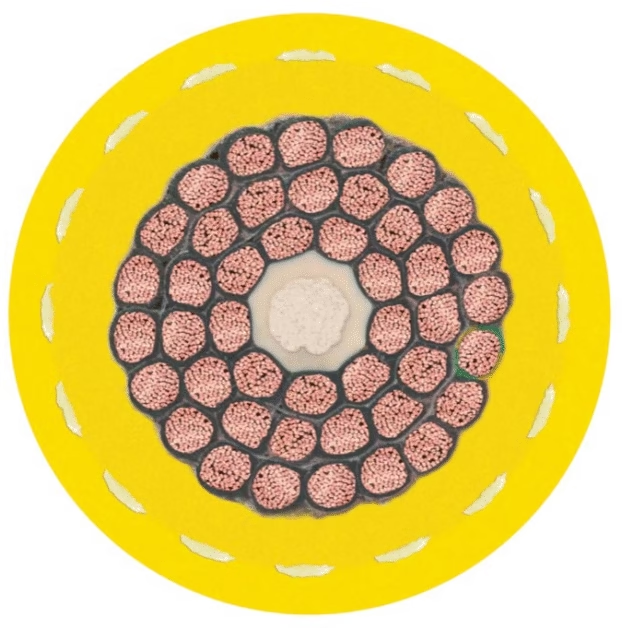
Understanding the (N)SHTÖU (SMK) Cable: RXG-8 Premium Round Reeling Cable for Extreme Vertical Applications

The (N)SHTÖU (SMK) cable, branded as Cordaflex SMK-V and designated as RXG-8, represents the pinnacle of engineering excellence for extreme vertical reeling applications. This premium cable features 20kN aramid reinforcement, polychloroprene (PCP) rubber sheathing, and a sophisticated protective braid constructed of polyester fibers vulcanized during manufacture to provide maximum torsional rigidity. Specifically designed for spreader operations on ship-to-shore container cranes where cables may be freely suspended up to 70 meters and subjected to extreme wind forces, high acceleration, and combined tensile and torsional stresses.
1. What is the (N)SHTÖU (SMK) Cable?
The (N)SHTÖU (SMK) is a highly resilient round cable with extraordinarily high tensile strength, specifically engineered for motorized cable reels in the most demanding vertical reeling applications. This cable is classified as more flexible than Category 5 according to DIN VDE 0295, providing exceptional flexibility combined with unparalleled mechanical strength.
Cable Designation Decoded: (N)SHTÖU
- (N) – Adapted to a VDE standard (national German standard)
- S – Heavy-duty cable
- H – Rubber insulation (EPR – Ethylene Propylene Rubber)
- T – 1 kV cable suitable for use on reels
- Ö – Oil-resistant outer sheath according to DIN VDE 0472 part 803
- U – Outer sheath of low flammability according to DIN VDE 0472 part 804
Brand Name: Cordaflex SMK-V – The “SMK” designation indicates special mechanical construction for extreme conditions, while “-V” denotes vertical reeling application capability.
The RXG-8 Specification
RXG-8 is the product family designation for this premium cable series, indicating:
- R – Round cable construction
- X – Extreme duty rating
- G – Ground conductor included
- 8 – Performance class 8 (highest mechanical specification)
What Makes This Cable Extraordinary
The (N)SHTÖU (SMK) cable incorporates several groundbreaking features that set it apart from standard reeling cables:
- 20,000 Newton break strength from central aramid reinforcement (equivalent to supporting 2 metric tons)
- Maximum torsional rigidity from polyester fibers vulcanized into the rubber compound during curing
- Two-layer “sandwich” structure with optimally interlinked inner and outer sheaths for extreme axial rigidity
- Waterproof construction suitable for use in water (splash zone and weather exposure)
- Very short stranding lay providing exceptional rigidity while maintaining flexibility
- Yellow PCP outer sheath for high visibility and excellent environmental resistance
What is a “Spreader”?
A spreader is the specialized lifting frame on a container crane that attaches to and lifts shipping containers. Modern ship-to-shore (STS) cranes operate at extreme speeds with spreaders moving vertically at up to 160 meters per minute while the cable may be suspended up to 70 meters in the air, exposed to wind forces. The cable must:
- Support its own weight plus electrical loads over long vertical distances
- Withstand high acceleration forces during rapid lifting and lowering
- Resist twisting forces from spreader rotation
- Maintain flexibility despite heavy mechanical loading
- Function reliably in marine environments with salt spray, UV exposure, and temperature extremes
2. Purpose and Applications
Primary Application: Vertical Reeling for Spreader Operations
The (N)SHTÖU (SMK) cable is purpose-engineered as a vertical reeling cable for spreader operations on modern container handling equipment. This represents one of the most demanding cable applications in industrial environments.
Why Spreader Cables Require Premium Specifications
Spreader operations subject cables to extreme conditions that standard reeling cables cannot withstand:
- Vertical Suspension: Up to 70 meters of cable suspended under its own weight
- Wind Loading: Freely suspended cable acts as a sail in coastal wind conditions
- High Acceleration: Rapid vertical movement with acceleration forces up to 1.5 g
- Combined Stresses: Simultaneous tensile, bending, and torsional forces
- Continuous Duty: 24/7 operation with thousands of cycles per day
- Marine Environment: Salt spray, UV radiation, temperature extremes, humidity
Typical Industrial Applications
Primary application for loading/unloading container vessels
Material handling with vertical reeling systems
Operations requiring speeds up to 160 m/min vertical
Applications with long vertical cable lengths exposed to wind
Container yard operations with vertical reeling
High-speed container stacking systems
⚠️ Not for Standard Reeling Applications
The (N)SHTÖU (SMK) cable is a premium specification cable designed for extreme-duty applications. It should be specified when:
- Very high combined tensile and bending loads occur during operation
- Extreme torsional forces exist requiring specially designed construction
- Very high acceleration forces need absorption by strain relief members, not conductors
- Cable operates through diversion rollers under high tension
- Application requires waterproof properties or marine environment resistance
- UL listing or international certification is required
For standard horizontal reeling or moderate-duty applications, consider the 12YRDT11Y11Y series as a more cost-effective solution.
Performance Specifications
| Parameter | Horizontal Reeling | Vertical Reeling |
|---|---|---|
| Maximum Travel Speed | Up to 180 m/min | Up to 160 m/min |
| Extended Speed (On Request) | >180 m/min with special engineering | |
| Aramid Reinforcement | 20 kN break strength | |
| Typical Suspended Length | N/A | Up to 70 meters free-hanging |
3. Key Characteristics and Features
20kN Aramid Reinforcement
Central aramid strength member with 20,000 Newton break strength provides maximum load-bearing capacity, absorbing acceleration forces and supporting cable weight over long vertical distances.
Maximum Torsional Rigidity
Supporting polyester fibers vulcanized into the sheath during manufacturing create exceptional resistance to twisting under torsional stress of ±50°/m.
Sandwich Structure Construction
Two-layer sheath system with optimally interlinked inner and outer PCP sheaths provides very high axial rigidity and prevents layer separation under extreme mechanical loading.
Extreme Flexibility
Conductor construction more flexible than Category 5 (approaching Category 6 performance) with very short stranding lay for superior flexibility despite high rigidity requirements.
Waterproof Design
Suitable for use in water with EPR insulation and PCP sheathing providing complete moisture protection for marine environment applications and weather exposure.
Extended Temperature Range
Operational from -35°C to +80°C during flexing (wider than PUR cables), with exceptional performance down to -50°C for fixed installations.
Robust PCP Sheathing
Wear-resistant polychloroprene (PCP) rubber outer sheath in high-visibility yellow provides exceptional abrasion resistance, oil resistance, and environmental protection.
Minimal Bending Radius
6× cable diameter for reeling applications (tighter than standard reeling cables) enables compact drum design for space-constrained installations.
Premium Specification Highlights
- Tensile Load Capacity: 30 N/mm² (50% higher than standard PUR reeling cables)
- Torsional Stress Rating: ±50°/m (among the highest in the industry)
- Conductor Performance: More flexible than Cat. 5, enabling 6× bending radius
- Environmental Resistance: Unlimited resistance to atmospheric corrosion
- Safety Features: Low flammability according to IEC 60332-1
- Chemical Resistance: LBS-free, silicone-free, oil-resistant
4. Material Structure and Design
Advanced Multi-Layer Construction
The (N)SHTÖU (SMK) cable employs a sophisticated multi-layer design optimized for extreme mechanical performance:
| Layer | Material | Critical Function |
|---|---|---|
| Central Reinforcement | Aramid fibers (20 kN break strength) | Primary tensile load bearing, acceleration force absorption |
| Conductor | Bare electrolytic copper, very flexible (>Cat 5) | Electrical transmission with exceptional flexibility |
| Core Insulation | Ethylene-Propylene Rubber (EPR) | Electrical insulation, moisture resistance, flexibility |
| Core Stranding | Layered construction, very short lay | Optimized flexibility with high rigidity |
| Inner Sheath | Polychloroprene (PCP) | Mechanical protection, layer bonding, first moisture barrier |
| Supportive Braid | Polyester fibers (vulcanized) | Torsional rigidity, twist prevention, structural integrity |
| Outer Sheath | Wear-resistant polychloroprene (PCP), yellow | Environmental protection, abrasion resistance, visibility |
The Aramid Reinforcement Advantage
Aramid fibers (such as Kevlar® or Technora®) provide exceptional properties for spreader cables:
- High Strength-to-Weight Ratio: Aramid is up to 6 times lighter than steel for equivalent tensile strength
- Low Elongation: Minimal stretch under load (1.5-4.5% elongation) maintains precise positioning
- Excellent Fatigue Resistance: Superior performance under repetitive loading cycles
- Non-Conductive: Avoids electromagnetic interference, unlike steel reinforcement
- Corrosion Proof: No degradation from saltwater or chemicals
- Temperature Stable: Maintains properties from -35°C to +80°C
The Critical Supportive Braid
The protective braid constructed of polyester fibers and incorporated during vulcanization is the defining feature of this cable design:
- Vulcanized Integration: Polyester fibers are bonded into the rubber compound during the curing process, creating permanent integration rather than a separate layer that could slip
- Torsional Stress Management: The braid structure provides exceptional resistance to twisting forces of ±50°/m
- Structural Support: Creates a rigid cylindrical structure that prevents buckling and maintains cable geometry
- Load Distribution: Distributes mechanical forces evenly across the cable structure
- Layer Bonding: Ensures inner and outer sheaths move as a unified structure, preventing telescoping
Conductor Construction and Stranding
The cable utilizes very flexible conductors (more flexible than Category 5) with specialized characteristics:
- Fine Stranding: Ultra-fine copper wire strands for maximum flexibility
- Very Short Lay Length: Tight stranding pitch provides high rigidity while maintaining flexibility
- Layered Stranding: Conductors stranded in concentric layers for balanced construction
- Bare Copper: No tinning required due to EPR insulation providing moisture protection
Polychloroprene (PCP) Sheathing
PCP rubber provides critical performance advantages for marine environments:
- Superior Environmental Resistance: Excellent resistance to ozone, UV, oils, and atmospheric corrosion
- Waterproof Properties: Complete moisture barrier suitable for water exposure
- Abrasion Resistance: Excellent wear characteristics for demanding applications
- Temperature Range: Maintains flexibility from -35°C to +80°C
- Oil and Chemical Resistance: Resistant to marine oils, hydraulic fluids, and industrial chemicals
- Low Flammability: Self-extinguishing properties per IEC 60332-1
Color Coding System
Conductor identification follows DIN VDE 0293 part 308:
- 6 or more conductors: Black cores with white numbering
- Protective conductor: Green/yellow striped
- Outer sheath: Yellow (standard for spreader cables – high visibility)
5. Standards Compliance
Primary Standards
The (N)SHTÖU (SMK) cable is manufactured adapted to DIN VDE 0250, with additional compliance to multiple international standards:
| Standard | Compliance Aspect |
|---|---|
| DIN VDE 0250 | Overall cable construction for heavy-duty reeling applications |
| DIN VDE 0295 | Very flexible conductor construction (exceeding Category 5) |
| DIN VDE 0293 Part 308 | Conductor color coding and identification |
| DIN VDE 0298 Part 4 | Current-carrying capacity calculation methods |
| DIN VDE 0472 Part 803 | Oil-resistant outer sheath (Ö designation) |
| DIN VDE 0472 Part 804 | Low flammability / “fire-proof” sheath (U designation) |
| DIN VDE 0482 / IEC 60332-1 | Combustion behavior – low flammability and self-extinguishing |
⚠️ Important: Not Halogen-Free
The (N)SHTÖU (SMK) cable uses polychloroprene (PCP) sheathing which contains chlorine, making it NOT halogen-free. This is an important consideration:
- Marine Applications: PCP is standard and preferred for marine environments due to superior environmental resistance
- Outdoor Applications: Excellent performance, PCP provides better UV and ozone resistance than many halogen-free compounds
- Indoor Applications: May not be suitable where halogen-free cables are mandated (public buildings, data centers, etc.)
- Fire Performance: Despite containing halogens, the cable is of low flammability and self-extinguishing
Alternative: For applications requiring halogen-free properties, consider PUR-sheathed spreader cables, though they may have lower environmental resistance than PCP versions.
Environmental and Performance Certifications
- Low Flammability: Self-extinguishing according to DIN VDE 0482 part 265-2-1 and IEC 60332-1
- Oil Resistant: Certified per DIN VDE 0472 part 803
- Ozone Resistant: Unlimited exposure to ozone and atmospheric oxidation
- UV Resistant: Suitable for outdoor installations with direct sunlight exposure
- Waterproof: Suitable for use in water (splash zones, weather exposure)
- LBS-Free / Silicone-Free: Prevents contamination in sensitive processes
6. Safety Thresholds and Technical Parameters
Electrical Safety Specifications
| Parameter | Value | Notes |
|---|---|---|
| Rated Voltage (Uo/U) | 600/1000V (0.6/1 kV) | Standard for all configurations |
| Maximum AC Operating Voltage | 700/1200V | Continuous operation limit |
| Maximum DC Operating Voltage | 900/1800V | Continuous operation limit |
| AC Test Voltage | 2.5 kV | Type testing requirement |
Thermal Operating Parameters
| Condition | Temperature Range | Application Context |
|---|---|---|
| Flexing Operation | -35°C to +80°C | Moving applications (wider range than PUR cables) |
| Fixed Installation | -50°C to +80°C | Stationary cable sections (extreme cold capability) |
| Spreader Application | -35°C to +60°C | Recommended operating range for vertical reeling |
| Maximum Conductor Temperature | 90°C | Continuous operation at rated ampacity |
| Short-Circuit Temperature | 200°C | Maximum 5 seconds duration |
✓ Superior Cold Weather Performance
The (N)SHTÖU (SMK) cable offers exceptional low-temperature performance:
- -35°C flexing capability (compared to -20°C for 12YRDT11Y11Y PUR cables)
- -50°C fixed installation for arctic or extreme cold climates
- PCP rubber maintains flexibility at low temperatures better than many PUR compounds
- Ideal for northern European ports, Alaska, Canada, Russia, and other cold regions
Mechanical Performance Limits
| Parameter | Specification | Significance |
|---|---|---|
| Minimum Bending Radius – Reeling | 6 × cable diameter | Tightest in class (enables compact drums) |
| Minimum Bending Radius – Diversion Rollers | 7.5 × cable diameter | For sheaves and guide rollers |
| Minimum Bending Radius – S-Shaped Curves | 20 × cable diameter | For complex routing with reverse bends |
| Torsional Stress Rating | ±50°/m | Among highest torsional ratings available |
| Tensile Load Capacity | 30 N/mm² | 50% higher than standard PUR reeling cables |
| Aramid Break Strength | 20,000 N (20 kN) | Equivalent to 2,000 kg tensile load |
| Travel Speed – Horizontal | Up to 180 m/min | >180 m/min available on request |
| Travel Speed – Vertical | Up to 160 m/min | Optimized for spreader operations |
Understanding the 20kN Reinforcement
The 20,000 Newton aramid reinforcement is extraordinary:
- Load Capacity: Can theoretically support 2,000 kg (2 metric tons) of tensile load
- Safety Factor: Provides substantial safety margin for actual operating loads
- Acceleration Handling: Absorbs shock loads from rapid starts/stops and high acceleration
- Weight Support: Carries cable self-weight over 70+ meter vertical spans
- Wind Loading: Resists lateral forces from wind on suspended cable
Typical Operating Load: Actual tensile loads in spreader applications are typically 3,000-8,000 N, providing a safety factor of 2.5-6.7×.
Ampacity Calculation Basis
Published ampacity values are calculated based on:
- Ambient temperature: 30°C
- Installation method: 1-layer winding on cylindrical reel
- Duty cycle: 100% (continuous operation)
⚠️ Ampacity Derating for Spreader Applications
Vertical reeling spreader applications require special ampacity considerations:
- Vertical Suspension: Better heat dissipation than wound cables; may allow higher ampacity
- Air Circulation: Free air movement enhances cooling compared to reel layers
- Marine Environment: Coastal wind provides additional cooling
- Duty Cycle: Intermittent operation (lifting cycles) allows higher peak currents
- Ambient Temperature: Outdoor installations may see ambient from -20°C to +50°C
Recommendation: Consult cable manufacturer for specific ampacity calculations based on actual operating conditions, duty cycle, and environmental factors.
7. Precautions for Use and Installation
Critical Installation Requirements
⚠️ Mandatory Safety Precautions
- Aramid Termination: Proper termination of aramid reinforcement is CRITICAL – consult manufacturer specifications
- Load Distribution: Ensure tensile loads are borne by aramid, NOT by conductors
- Minimum Bend Radius: Never exceed 6× diameter for reeling, 7.5× for diversion rollers
- Torsional Limits: Do not exceed ±50°/m torsional stress rating
- Waterproof Connections: All terminations must maintain waterproof integrity
- Regular Inspection: Suspended cables require weekly visual inspection
Motorized Reel Installation
- Reel Drum Sizing:
- Minimum drum diameter: 12× cable outer diameter (for 6× bending radius)
- Calculate capacity including aramid reinforcement and cable weight
- Ensure drum flanges prevent cable overrun
- Aramid Termination at Drum:
- Use specialized aramid termination hardware rated for 20 kN minimum
- Distribute load across aramid fibers, never clamp conductors for mechanical support
- Seal termination to maintain waterproof properties
- Allow adequate service loop for electrical connections
- Level-Wind System:
- Install precision level-wind mechanism for even spooling
- Ensure level-wind maintains proper cable entry angle
- Adjust for cable weight and aramid stiffness
- Motorized Drive System:
- Program motor controller for synchronous operation with crane motion
- Set torque limits to prevent cable damage (consider 20 kN aramid strength)
- Install encoder feedback for precise cable tracking
- Configure acceleration/deceleration ramps for smooth operation
Vertical Reeling / Spreader Installation
Spreader Cable Best Practices
- Cable Length Calculation:
- Maximum lifting height + safety margin (typically 10%)
- Account for reel winding layers and service loops
- Consider maximum container stack height plus vessel clearance
- Diversion Roller Installation:
- Use large-diameter rollers (minimum 7.5× cable diameter)
- Ensure rollers are free-rotating with quality bearings
- Position rollers to prevent sharp bends or kinking
- Install roller covers to prevent cable damage in exposed locations
- Spreader Connection:
- Terminate aramid reinforcement at spreader attachment point
- Use strain relief rated for full 20 kN capacity
- Weatherproof all electrical connections on spreader
- Ensure adequate cable protection where cable enters spreader housing
- Wind Load Considerations:
- Up to 70m of freely suspended cable acts as a wind sail
- Ensure reel brake can hold against wind-induced cable tension
- Consider wind speed limitations for crane operation
- Install wind speed monitoring at exposed sites
Diversion Roller and S-Shaped Routing
When cable routing requires diversion rollers or complex paths:
- Diversion Rollers: Minimum 7.5× cable diameter (larger than reeling radius)
- S-Shaped Curves: Minimum 20× cable diameter for reverse bends
- Roller Spacing: Support cable weight between rollers to prevent excessive sagging
- Roller Material: Use polyurethane or rubber-coated rollers to minimize PCP wear
Environmental Precautions
- Marine Environment: Regular fresh water washing to remove salt deposits
- UV Exposure: Yellow PCP sheath provides excellent UV resistance; no additional protection needed
- Temperature Monitoring: Monitor ambient and conductor temperatures in extreme conditions
- Chemical Exposure: While oil-resistant, avoid prolonged contact with aggressive solvents
Electrical Safety
⚡ Electrical Safety Requirements
- De-energize system and implement lockout/tagout before maintenance
- Verify proper grounding of spreader frame and crane structure
- Install ground fault protection for personnel safety
- Use weatherproof junction boxes and connectors rated for marine environments
- Ensure slip ring or cable reel collector assembly is properly maintained
- Test insulation resistance regularly (minimum 100 MΩ at 500V DC)
Handling and Storage
- Storage Conditions: Store in dry location at -10°C to +40°C
- Reel Storage: Keep on original reel; do not uncoil for storage
- UV Protection: Cover stored cable to prevent unnecessary UV exposure
- Shelf Life: Use within 2-3 years of manufacture for optimal performance
- Aramid Care: Protect from compression damage; aramid is strong in tension but weak in compression
8. Common Problems and Solutions
Problem 1: Aramid Reinforcement Failure
Symptoms: Cable elongation, conductor damage, complete cable failure under load
Causes:
- Improper aramid termination allowing load transfer to conductors
- Aramid damage from compression at termination points
- Exceeding 20 kN break strength (shock loads, improper use)
- UV degradation if aramid exposed (damaged sheath)
Solutions:
- CRITICAL: Use only manufacturer-approved aramid termination hardware
- Never clamp aramid; use potted terminations or proper grip assemblies
- Implement shock load protection in crane control system
- Inspect sheath integrity regularly; replace cable if aramid visible
- Ensure all tensile loads transfer through aramid, not conductors
Problem 2: Cable Twisting Despite Torsional Reinforcement
Symptoms: Cable develops rotational twist, uneven winding on reel, binding during operation
Causes:
- Spreader rotation causing torsional input exceeding ±50°/m rating
- Improper cable routing allowing free rotation
- Damaged supportive braid from mechanical impact or excessive bending
- Level-wind malfunction allowing uncontrolled spooling
Solutions:
- Install anti-rotation device on spreader connection
- Verify all attachment points prevent cable rotation
- Inspect cable for damage to polyester braid structure
- Repair or replace level-wind system
- Consider cable replacement if braid integrity compromised
- Evaluate spreader operation for excessive rotation
Problem 3: Excessive Wear on PCP Sheath
Symptoms: Abrasion of yellow outer sheath, sheath cracking, exposed inner layers
Causes:
- Cable rubbing against reel flange or drum surface
- Sharp edges on diversion rollers or cable guides
- Contamination with abrasive particles (sand, cement dust)
- Incorrect roller material causing excessive friction
Solutions:
- Adjust level-wind to prevent flange contact
- Install smooth polyurethane liners on drum and flanges
- Replace worn diversion rollers; use soft rubber-coated rollers
- Implement regular cleaning program for cable and equipment
- Inspect cable routing for any sharp edges or pinch points
- PCP has excellent abrasion resistance, but protection is still essential
Problem 4: Water Ingress at Terminations
Symptoms: Moisture inside cable, insulation resistance degradation, corrosion, electrical failures
Causes:
- Improper sealing of cable terminations and connections
- Damaged sheath allowing water entry along cable length
- Condensation in junction boxes from temperature cycling
- Failed seals on slip ring assembly or spreader connections
Solutions:
- Use only marine-grade, IP67 minimum rated junction boxes and connectors
- Apply proper cable sealing compounds at all terminations
- Install drip loops before cable enters junction boxes
- Inspect and replace damaged sheath sections immediately
- Test insulation resistance monthly; investigate any degradation
- Ensure slip ring compartment has proper drainage and ventilation
Problem 5: Cable Overheating Under Load
Symptoms: Hot cable sheath, insulation softening, premature aging, circuit breaker trips
Causes:
- Operating current exceeds ampacity rating
- Multiple layers on reel reducing heat dissipation
- High ambient temperature combined with solar heating
- Poor electrical connections creating resistance heating
Solutions:
- Measure actual operating current vs. rated ampacity
- Apply derating factors for multi-layer winding and ambient temperature
- Consider thermal imaging inspection to identify hot spots
- Upgrade to larger conductor size if consistently operating near capacity
- Ensure all connections are tight and properly terminated
- For vertical reeling, air circulation typically provides good cooling
Problem 6: Cable Damage from Wind Loading
Symptoms: Cable swinging excessively, damage from impact with structures, premature fatigue
Causes:
- High wind speeds affecting freely suspended cable (up to 70m length)
- Inadequate reel brake tension allowing cable movement
- Operating crane beyond wind speed limits
- Cable striking crane structure during wind events
Solutions:
- Install wind speed monitoring; establish operational limits
- Increase reel brake tension to dampen cable movement
- Install cable guides or restraints where cable may contact structures
- Consider operational procedures for high-wind conditions
- Ensure 20 kN aramid reinforcement provides adequate safety margin
- Many ports have crane operating limits at 15-20 m/s wind speed
Preventive Maintenance Schedule
| Interval | Inspection Items | Action |
|---|---|---|
| Daily | Visual inspection during operation | Observe cable condition, listen for unusual sounds, check for excessive swinging |
| Weekly | Detailed sheath inspection | Check for abrasion, cracks, damage; inspect terminations for water ingress |
| Monthly | Electrical testing | Insulation resistance test (>100 MΩ), continuity check, temperature monitoring |
| Quarterly | Mechanical system inspection | Check reel bearings, slip rings, diversion rollers, aramid terminations |
| Semi-Annually | Complete cable unspooling | Unspool entire cable length to inspect for damage, measure cable length for stretch |
| Annually | Comprehensive assessment | Full electrical/mechanical testing, thermal imaging, structural inspection of terminations |
9. Conclusion
The (N)SHTÖU (SMK) cable – Cordaflex SMK-V / RXG-8 represents the ultimate specification in vertical reeling cable technology. Manufactured by Anhui Feichun Special Cable Co., Ltd., this premium cable incorporates state-of-the-art materials and engineering principles specifically designed for the most demanding applications in container handling and material movement systems worldwide.
Premium Specification Summary
- 20kN Aramid Reinforcement: Unparalleled tensile strength for extreme load-bearing requirements
- Maximum Torsional Rigidity: Polyester fiber braid vulcanized into sheath prevents twisting (±50°/m rating)
- Waterproof Construction: EPR insulation and PCP sheathing for marine environment reliability
- Extreme Temperature Range: -35°C to +80°C flexing operation (superior to PUR cables)
- Ultra-Tight Bending: 6× cable diameter enables compact reel design
- High-Speed Capability: Up to 180 m/min horizontal, 160 m/min vertical
- Environmental Resilience: Oil, ozone, UV, and atmospheric corrosion resistant
This cable is the optimal choice for applications requiring:
- Vertical spreader operations with freely suspended cable up to 70+ meters
- Combined extreme stresses – simultaneous tensile, bending, and torsional loading
- High acceleration environments where standard cables would fail prematurely
- Marine installations requiring waterproof properties and environmental resistance
- Critical applications where cable failure could result in safety incidents or significant economic loss
- 24/7 operation with minimal maintenance windows and high reliability requirements
Ideal Applications
The (N)SHTÖU (SMK) cable excels in:
- Ship-to-shore (STS) container cranes at major ports worldwide
- Rubber-tired gantry (RTG) and rail-mounted gantry (RMG) cranes
- Grab cranes with vertical power supply requirements
- Any vertical reeling application with extreme mechanical demands
- Offshore and marine material handling systems
- High-speed automated container terminals
Important Considerations
- Premium Pricing: This is a premium specification cable; ensure application justifies the investment
- Not Halogen-Free: PCP sheathing contains chlorine; not suitable where halogen-free cables are mandated
- Proper Installation Critical: Aramid termination and cable handling require specialized knowledge
- Application-Specific: Optimized for vertical reeling; may be over-specified for standard horizontal applications
When properly specified, installed, and maintained according to manufacturer guidelines, the (N)SHTÖU (SMK) cable delivers decades of reliable service in the world’s most demanding material handling applications. The combination of 20kN aramid reinforcement, vulcanized polyester fiber torsional reinforcement, waterproof construction, and premium PCP sheathing makes this cable the ultimate solution for extreme-duty vertical reeling applications.
Contact Anhui Feichun Special Cable Co., Ltd.
For technical inquiries, application engineering support, or to order (N)SHTÖU (SMK) RXG-8 spreader cables:
Email: [email protected]
International Sales: +86 13855123218
Our engineering team can assist with cable selection, aramid termination design, and application-specific specifications for your vertical reeling projects.
References and Further Reading
- DIN VDE 0250 – Cables, wires and flexible cords for power installations
- DIN VDE 0295 – Conductors of cables and cords (flexibility classifications)
- DIN VDE 0472 Part 803 & 804 – Oil resistance and low flammability testing
- IEC 60332-1 – Tests on electric cables under fire conditions
- Prysmian Group. (September 2023). “Crane Cables – Cable Solutions for the Crane Industry.” Link
- Prysmian Group. “Cable Solutions for the Crane Industry – Product Families.” Link
- Hybird Resources. (May 2020). “Reeling, Festooning, Spreader Material Handling Cable Solutions.” Link
- Teijin Aramid. “Ropes and Cables Applications – Marine and Offshore.” Link
- DCI Sales. (January 2020). “Crane Cables for Seaports, Mining and Material Handling.” Link
- N-nergy. (July 2021). “Spreader Cable For Vertical Reeling.” Link


