Drag Chain Cable

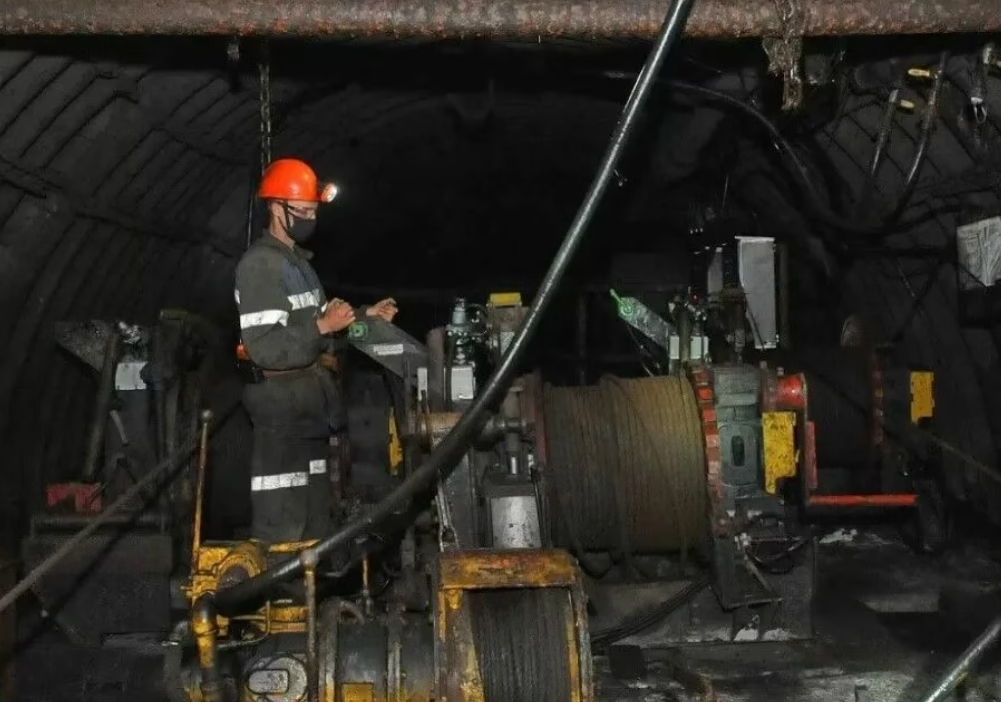
UNE 22511 Design Philosophy: Ultimate Flexibility for Underground Mobile Equipment Within the taxonomy of mining cables, the distinction between the UNE 22511 and UNE 22512 standards represents a fundamental divergence in design philosophy — not merely a difference in specification parameters. Understanding this divergence is essential for engineers procuring replacement cables for underground coal mines in Spain, Chile, Colombia, and other markets operating under the AENOR (Asociación Española de Normalización y Certificación) regulatory framework. The UNE 22511 standard governs cables for flexible connection of mobile underground mining machinery — the specific class of heavy-duty cable designed for equipment that moves continuously during operation: continuous miners, longwall shearers, shuttle cars, and cable reel systems. The engineering DNA of a UNE 22511 cable can be summarized in a single phrase: engineered for mechanical endurance, not for static installation security. This philosophy manifests in every structural element of the cable: the conductor class, the insulation compound, the earth core arrangement, the absence of metallic armor, and the sheath compound selection. Each element is chosen not to maximize any single parameter but to achieve an optimal balance of torsional resilience, bending flexibility, and sheath durability under the combined mechanical loading of continuous dragging, occasional running-over by shuttle car wheels, and periodic full-tension pulling by cable reel drum systems.

重型机械/卷筒专用:飞纯 FREP 耐磨拖链电缆通过俄罗斯 FSC 防火检测

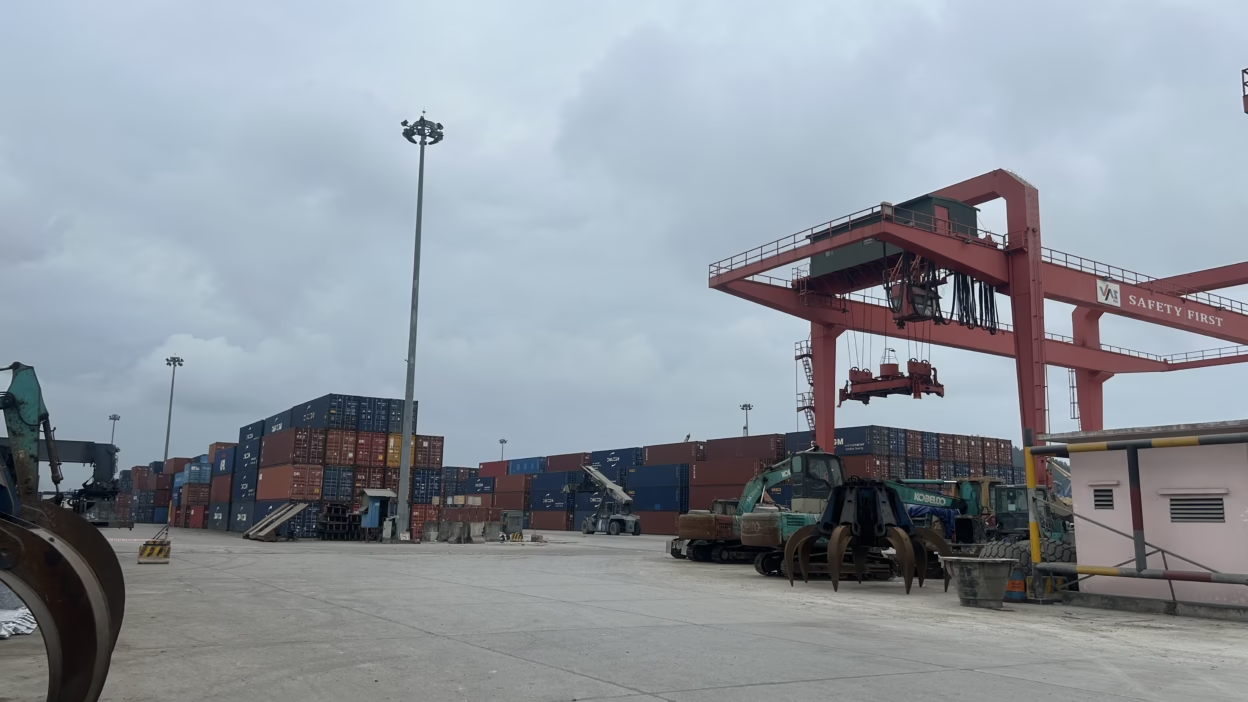
在港口机械、矿山装备、散料搬运系统、卷筒供电和拖链运动场景中,电缆承受的不只是电流负载,更是持续拖拽、反复弯曲、卷绕摩擦、冲击振动、油污粉尘和消防安全审查。飞纯 FREP 耐磨拖链电缆通过俄罗斯 FSC 防火检测,将耐磨移动供电能力与消防安全合规能力结合,为重型机械和卷筒系统提供“安全不停机”的电缆解决方案。
UNE 22511 — formally titled "Cables flexibles para minería subterránea con tensiones de 1,8/3 kV con aislamiento de caucho, sin armadura" (Flexible cables for underground mining, 1.8/3 kV, rubber-insulated, unarmoured) — is the definitive Spanish standard for heavy-duty power cables connecting underground mobile mining equipment to fixed electrical distribution networks. Published and maintained by AENOR (Asociación Española de Normalización y Certificación), it operates as a specialized overlay on IEC 60502-1, extending that base standard's electrical requirements with the stringent mechanical, safety, and flame-retardancy requirements specific to enclosed underground environments. Despite its Spanish origin, UNE 22511 enjoys a geographic reach far exceeding Iberia. The standard has been adopted — formally or by reference — across the major Spanish-speaking mining economies: Chile, Peru, Colombia, Bolivia, and Mexico, where AENOR-certified cables are accepted by national mining safety regulators as the primary qualification pathway for underground mobile equipment power supply cables. In Chile alone, UNE 22511 cables are installed across dozens of operations including major copper and coal mines. The standard's engineering DNA can be described in a single imperative: extreme dynamic flexibility combined with superior resistance to combined torsional and bending fatigue. This is not merely a performance aspiration — it is a structural requirement that shapes every material choice and geometric decision in the cable's construction. The logic proceeds as follows: Underground mobile equipment (continuous miners, shearers, shuttle cars) moves continuously and repeatedly during operation, dragging its power cable behind it or winding and unwinding it from a cable reel. This motion imposes cyclic bending, axial tension, and torsional loads on the cable simultaneously — a multi-axis fatigue regime of a severity not encountered in any other industrial cable application. Standard fixed-installation cables, even those classified as "flexible," are not designed for this loading regime and will fail in fatigue within weeks to months when installed in drag duty. Therefore, every structural element of a UNE 22511 cable — conductor wire diameter, insulation compound, earth core geometry, armour exclusion, sheath specification — is selected to maximize multi-axis fatigue endurance, not any single performance parameter. ⛏ The Founding Engineering Principle UNE 22511 is an unarmoured drag cable standard. The deliberate absence of any metallic armour — which might superficially seem to reduce robustness — is in fact the defining engineering choice that makes the standard viable. Steel wire or tape armour in a continuously torsionally-loaded cable acts as a progressive-failure torsional spring: each twist cycle accumulates irreversible plastic strain in the armour wires, leading to wire fractures within 10,000–30,000 cycles. For a shuttle car cable experiencing 80,000+ torsional cycles per year, armour represents not additional protection but a built-in scheduled failure mechanism. The UNE 22511 design eliminates this failure mode at source.

Гибкие шахтные, карьерные и тяжёлые резиновые кабели для trailing, reeling, drag chain, festoon, вертикальных стволов, насосов и подземных работ

Данная серия включает специальные гибкие кабели для тяжёлых условий эксплуатации: шахтные trailing cables, reeling cables, drag chain cables, festoon cables, водостойкие кабели для насосов, кабели для вертикальных стволов, туннельных и дноуглубительных работ, а также силовые, контрольные и коммуникационные конструкции. В линейке представлены решения с силовыми жилами, защитно-заземляющими проводниками, ground check, контрольными элементами, fiber optic module, экранами, полупроводящими слоями, полиамидным армированием и особо прочными оболочками из CR, CPE, TPU и специальных термореактивных компаундов.
FLEXIFESTOON® SEOOW YELLOW represents FeiChun's entry into the low-voltage festoon and temporary power market. The nomenclature requires careful explanation to distinguish this product from the high-voltage FLEXIDRUM series: FLEXIFESTOON Product Nomenclature: FLEXIFESTOON® = Product family name Flex = Flexible (emphasis on bending & handling) Festoon = Strung overhead in continuous runs (typical festoon lighting application) SEOOW = Industry-standard designation S = Service cord (temporary, not permanent installation) E = Elastomer jacket (flexible sheath) OO = Oil-resistant conductor insulation (TPE qualifies as oil-resistant) W = Weather-resistant sheath (water, ozone, UV resistant) SEOOW is defined in: UL 62 (Standard for Flexible Cords and Cables) CSA 22.2 No. 49 (Canadian equivalent) NFPA 70 National Electrical Code (NEC) Article 400 YELLOW designation: Color: RAL 1021 (traffic yellow, high visibility) Safety significance: Yellow cords attract attention in job sites Practical purpose: Easy to identify, prevent trips/entanglement Contrast with FLEXIDRUM series: FLEXIDRUM (High-Voltage MV Cable): Voltage: 3.6 kV to 20/35 kV (power distribution) Temperature: −40 to +80°C (standard industrial) Application: Mobile mining/tunneling equipment (capital-intensive) Size: Large diameter, heavy (3–12 kg/km) FLEXIFESTOON (Low-Voltage Service Cord): Voltage: 600V (light/power temporary use) Temperature: −60 to +105°C (extreme environmental range) Application: Festoon lighting, temporary site power, outdoor events Size: Small diameter, lightweight (0.05–0.3 kg/m) Cost: Consumer/contractor-grade (not specialty industrial)

RONDOFLEX CHAIN (N)GRDG(CG)OEU 0.6/1kV:面向高速、长行程与户外拖链系统的屏蔽型低压电缆深度解析

RONDOFLEX CHAIN (N)GRDG(CG)OEU 0.6/1kV 是一款用于 energy chains 的低压圆形电缆, 适用于 container cranes、stacking cranes、indoor cranes、material handling equipment 等所有 chain systems。 它特别适合户外安装、长行程和高运行速度工况,对电缆寿命、可靠性和耐磨性要求较高的场景。 结构上采用 EPR rubber PROTOLON MS 绝缘、GM1b 橡胶内护套、整体镀锡铜编织屏蔽以及 EVA rubber 5GM3 外护套, 具备 EMC compatibility,拖链速度最高 240m/min
UNE 22511 Design Philosophy: Ultimate Flexibility for Underground Mobile Equipment Within the taxonomy of mining cables, the distinction between the UNE 22511 and UNE 22512 standards represents a fundamental divergence in design philosophy — not merely a difference in specification parameters. Understanding this divergence is essential for engineers procuring replacement cables for underground coal mines in Spain, Chile, Colombia, and other markets operating under the AENOR (Asociación Española de Normalización y Certificación) regulatory framework. The UNE 22511 standard governs cables for flexible connection of mobile underground mining machinery — the specific class of heavy-duty cable designed for equipment that moves continuously during operation: continuous miners, longwall shearers, shuttle cars, and cable reel systems. The engineering DNA of a UNE 22511 cable can be summarized in a single phrase: engineered for mechanical endurance, not for static installation security. This philosophy manifests in every structural element of the cable: the conductor class, the insulation compound, the earth core arrangement, the absence of metallic armor, and the sheath compound selection. Each element is chosen not to maximize any single parameter but to achieve an optimal balance of torsional resilience, bending flexibility, and sheath durability under the combined mechanical loading of continuous dragging, occasional running-over by shuttle car wheels, and periodic full-tension pulling by cable reel drum systems.

FESTOONFLEX PUR-HF 0.6/1kV:兼顾悬挂、拖链、水中与中等卷筒应力的低压 PUR 电缆深度解析

FESTOONFLEX PUR-HF 0.6/1kV 是一款 PUR 护套低压圆形电缆, 用于严苛条件下的 festoon systems,可作为 energy and control cable 使用,并适合频繁弯曲。 资料同时说明它也适用于 drag chains、machine tools、materials handling systems, 可在非饮用水中长期使用至 50m 潜水深度,并且可作为 drum reeling cable under moderate mechanical stress。 与 C-PUR-HF 屏蔽型相比,本版本未列出编织屏蔽结构,重点更偏向通用动力/控制移动供电、无卤 PUR 护套、水中环境和中等机械应力卷筒应用
LIFT-2S (European) vs. LIFT-1S UL (North American): LIFT-2S characteristics: Voltage: 300/500V (European standard, lower voltage) Temperature: −40°C to +70°C (moderate range) Standards: VDE 0482 part 265-2-1, EN 50265-2-1, IEC 60332-1-2 Design philosophy: Safety by material redundancy (2 steel cores) Steel cores: 2× cores provide mechanical backup Conductor: Class 6 (European, ~150–200 wires per mm²) Cost: Lower (proven European manufacturing) Market: Europe, Asia-Pacific, most of world LIFT-1S UL characteristics: Voltage: 600V (North American standard, higher voltage) Temperature: −25°C to +105°C (extreme range, high-temp optimized) Standards: UL 2562, UL 62, CSA C22.2 No.210.2 Design philosophy: Safety by certification (single core + redundant control) Steel core: 1× core (sufficient with nylon covering) Conductor: Class M (UL, extra fine ~300+ wires per mm²) Cost: Higher (UL testing, certification documentation) Market: North America (USA, Canada), Mexico UL 2562 specialty certification: UL 2562 scope: Elevator and Dumbwaiter Cables Specific requirements: 1. Pendant cable design (cable hangs freely, no duct support) 2. Vertical orientation (designed for gravity-loaded suspension) 3. Repeated flex cycles (cable moves up/down frequently) 4. Safety-critical function (failure = personnel risk) Consequence: More stringent than general-purpose cables Testing includes: Bend cycle fatigue, heat aging, compression resistance Test procedures (unique to UL 2562): Bend cycle test: 1,000+ cycles at minimum bending radius Cable must pass insulation resistance after cycling Heat aging: 500+ hours at 105°C continuous Tensile strength retention minimum 70% Compression: 1,000+ hours under sustained compression Cable cross-section must not exceed 5% permanent deformation LIFT-2S (no UL 2562): Tests per VDE are less stringent on fatigue/cycling Assumes cable mostly static, not repeated flex Adequate for European elevator duty (lower speed, fewer cycles) LIFT-1S UL: All UL 2562 tests passed (proven for North American elevators) Faster cycle times, more frequent motion → more fatigue stress Extra testing ensures reliability under North American elevator duty Market requirement (regulatory): Europe/International: CE mark required (European conformity) VDE/EN/IEC standards sufficient No UL certification needed (not recognized in EU) LIFT-2S is sufficient North America (USA, Canada): UL certification mandatory for elevators UL 2562 specifically for elevator cables CSA dual certification required in Canada LIFT-2S NOT acceptable (lacks UL 2562) LIFT-1S UL mandatory Cost implication: UL certification: ~$5,000–15,000 per product per region Testing duration: 3–6 months per model Documentation: Comprehensive test reports, technical files Result: LIFT-1S UL 20–30% higher cost than equivalent European cable

FESTOONFLEX C-PUR-HF 0.6/1kV:严苛工况下的低压屏蔽 PUR 悬挂与拖链电缆深度解析

FESTOONFLEX C-PUR-HF 0.6/1kV 是一款用于 festoon systems 的低压屏蔽圆形 PUR 护套电缆, 可作为动力与控制电缆在严苛条件下使用,包括频繁弯曲、拖链、机床、物料搬运系统以及长期水中使用场景。 其产品定位非常鲜明:screened、PUR sheathed、halogen free、sea water resistant、suitable for permanent use in water up to 50m。 对深度使用者来说,这不是一条普通悬挂电缆,而是一条兼顾机械寿命、屏蔽保护、拖链适应、水下环境和无卤安全要求的移动供电系统电缆
Engineered for Robotic Drag Chains (E-Chains), Spring-Operated and Motorized Reels, Transfer Cars, CNC Machine Tools, Gantry Robots, AGVs/AMRs, Automated Warehouses, Packaging Lines, and Every High-Speed Industrial Automation System Where Conductor Fatigue and Jacket Abrasion Destroy Ordinary Cables

RHEYCORD®-PUR R

Engineered for Robotic Drag Chains (E-Chains), Spring-Operated and Motorized Reels, Transfer Cars, CNC Machine Tools, Gantry Robots, AGVs/AMRs, Automated Warehouses, Packaging Lines, and Every High-Speed Industrial Automation System Where Conductor Fatigue and Jacket Abrasion Destroy Ordinary Cables
Prysmian CORDAFLEX (SMK), Lapp ÖLFLEX CRANE NSHTÖU, Nexans RHEYFLAT-N, TKD TROMMELFLEX PUR-HF, Draka BUFLEX XTREME, and Aristoncavi PANZERLITE spreader cables — with honest engineering analysis and practical selection guidance.

NGFLGÖU-J,(N)TSCGEWÖU,(N)SSHÖU 3×95+3×16/3,(N)TSCGEWÖU,Prysmian CORDAFLEX (SMK),Lapp ÖLFLEX CRANE NSHTÖU,Nexans RHEYFLAT-N,TKD TROMMELFLEX PUR-HF,Draka BUFLEX XTREME, Reeling cable, Mining cable – Guide (2026)

Prysmian CORDAFLEX (SMK), Lapp ÖLFLEX CRANE NSHTÖU, Nexans RHEYFLAT-N, TKD TROMMELFLEX PUR-HF, Draka BUFLEX XTREME, and Aristoncavi PANZERLITE spreader cables — with honest engineering analysis and practical selection guidance.
Full equivalent to IGUS Chainflex CF310.UL.700.01 — single-core shielded (Cu braid >80%) ultra-flex power cable 600/1000 V for E-chains, heavy servo drives, and spindles. Igus part number decoding: CF=Chainflex, 310=family (PUR+TPE+Cu shield), UL=UL/CSA certified, 700=70 mm², 01=1 core, C=Copper shield. Specs: 1×70 mm² (2/0 AWG), bare Cu ultra-fine class 6/CF (≤0.15 mm wire), OD 17.5–18.0 mm, weight ~940 kg/km, Cu ~789 kg/km, current ~245 A (30°C), bend 7.5×OD ≈135 mm, speed 10 m/s, acceleration 100 m/s², -25/+80°C. TPE insulation, optimized-angle tinned Cu braid shield, pressure-extruded halogen-free PUR sheath. Why single-core: at >200 A, separate phase routing (3–4 single-core vs 1 multi-core 4G70) reduces heating 30–40%, tighter bend radius, 50–100% longer life. Pricing: Igus CF310.UL €25–50/m vs Feichun FC-SCP €10–22/m (50–60% savings). 5-year TCO. EAC, CE, UL (pending).

Аналог IGUS CF310.UL.700.01 1×70C: одножильный экранированный сверхгибкий кабель для E-Chain — расшифровка, характеристики, цена

Full equivalent to IGUS Chainflex CF310.UL.700.01 — single-core shielded (Cu braid >80%) ultra-flex power cable 600/1000 V for E-chains, heavy servo drives, and spindles. Igus part number decoding: CF=Chainflex, 310=family (PUR+TPE+Cu shield), UL=UL/CSA certified, 700=70 mm², 01=1 core, C=Copper shield. Specs: 1×70 mm² (2/0 AWG), bare Cu ultra-fine class 6/CF (≤0.15 mm wire), OD 17.5–18.0 mm, weight ~940 kg/km, Cu ~789 kg/km, current ~245 A (30°C), bend 7.5×OD ≈135 mm, speed 10 m/s, acceleration 100 m/s², -25/+80°C. TPE insulation, optimized-angle tinned Cu braid shield, pressure-extruded halogen-free PUR sheath. Why single-core: at >200 A, separate phase routing (3–4 single-core vs 1 multi-core 4G70) reduces heating 30–40%, tighter bend radius, 50–100% longer life. Pricing: Igus CF310.UL €25–50/m vs Feichun FC-SCP €10–22/m (50–60% savings). 5-year TCO. EAC, CE, UL (pending).
Full decoding of RTS (Robotic/Torsion Standard) conductor class for ultra-fine stranded copper: wire diameter ≤0.10–0.15 mm, 5–10M+ flex cycles, min bend radius 5×OD dynamic, travel speed up to 10 m/s in drag chains. Letter-by-letter decoding of (N)TSCGEWÖU (also searched as NTSCGEWOEU or NTSCGEWOU). Comparison Class 5 → Class 6 → RTS/special. Construction: short-pitch bunch-in-bunch stranding, pressure-extruded sheath, central tension member. Why Class 5 fails in energy chains: bird-caging, wire fracture, contact loss. Sample spec 4G1.5 mm² RTS (300/500 V). Pricing: Igus €8–14/m, Lapp €6–12/m vs Feichun FC-RTS €2.5–5.5/m (45–60% savings). 5-year TCO for 6-axis robot cells. EAC, GOST-R, CE, UL certified.

Проводник медный сверхтонкий многожильный, класс „RTS”: почему он лучше IEC 60228 / DIN VDE 0295 Класс 5

Full decoding of RTS (Robotic/Torsion Standard) conductor class for ultra-fine stranded copper: wire diameter ≤0.10–0.15 mm, 5–10M+ flex cycles, min bend radius 5×OD dynamic, travel speed up to 10 m/s in drag chains. Letter-by-letter decoding of (N)TSCGEWÖU (also searched as NTSCGEWOEU or NTSCGEWOU). Comparison Class 5 → Class 6 → RTS/special. Construction: short-pitch bunch-in-bunch stranding, pressure-extruded sheath, central tension member. Why Class 5 fails in energy chains: bird-caging, wire fracture, contact loss. Sample spec 4G1.5 mm² RTS (300/500 V). Pricing: Igus €8–14/m, Lapp €6–12/m vs Feichun FC-RTS €2.5–5.5/m (45–60% savings). 5-year TCO for 6-axis robot cells. EAC, GOST-R, CE, UL certified.
New Zealand's mining, quarrying, and port operations operate under a fundamentally different electrical paradigm than most of the global industrial market. While the international standard for general-purpose industrial flexible cables is 0.6/1kV (defined in IEC 60811 and IEC 60332), New Zealand's local standards—specifically AS/NZS 1802 (Underground Trailing Cables) and AS/NZS 2802 (Reeling and Trailing Cables)—mandate 1.1/1.1kV voltage rating for any cable subject to repeated mechanical stress, flexing, or dynamic operation. This voltage upgrade is not a marketing preference or a conservative over-specification. It is a regulatory requirement rooted in decades of practical experience managing cable failure rates in New Zealand's harsh mining and industrial environments. 新西兰的采矿、采石和港口运营在根本上遵循与全球工业市场不同的电气范式。虽然通用工业柔性电缆的国际标准是0.6/1kV(由IEC 60811和IEC 60332定义),但新西兰的本地标准——特别是AS/NZS 1802(地下拖曳电缆)和AS/NZS 2802(卷筒和拖曳电缆)——对任何受重复机械应力、弯曲或动态操作的电缆都要求1.1/1.1kV电压等级。这种电压升级不是营销偏好或保守的过度规格。这是一项监管要求,基于数十年管理新西兰恶劣采矿和工业环境中电缆失效率的实际经验。

1.1/1.1kV vs 0.6/1kV: The Crucial Voltage Difference for Reeling Cables in New Zealand

New Zealand’s mining, quarrying, and port operations operate under a fundamentally different electrical paradigm than most of the global industrial market. While the international standard for general-purpose industrial flexible cables is 0.6/1kV (defined in IEC 60811 and IEC 60332), New Zealand’s local standards—specifically AS/NZS 1802 (Underground Trailing Cables) and AS/NZS 2802 (Reeling and Trailing Cables)—mandate 1.1/1.1kV voltage rating for any cable subject to repeated mechanical stress, flexing, or dynamic operation. This voltage upgrade is not a marketing preference or a conservative over-specification. It is a regulatory requirement rooted in decades of practical experience managing cable failure rates in New Zealand’s harsh mining and industrial environments. 新西兰的采矿、采石和港口运营在根本上遵循与全球工业市场不同的电气范式。虽然通用工业柔性电缆的国际标准是0.6/1kV(由IEC 60811和IEC 60332定义),但新西兰的本地标准——特别是AS/NZS 1802(地下拖曳电缆)和AS/NZS 2802(卷筒和拖曳电缆)——对任何受重复机械应力、弯曲或动态操作的电缆都要求1.1/1.1kV电压等级。这种电压升级不是营销偏好或保守的过度规格。这是一项监管要求,基于数十年管理新西兰恶劣采矿和工业环境中电缆失效率的实际经验。
Cycle life testing is one of the most critical but least understood quality metrics in industrial cable specification, because understanding it requires integrating knowledge from polymer chemistry, mechanical engineering, and materials science. Let me build your understanding from first principles. When a cable is installed in a drag chain system on a CNC machine or automated assembly line, it experiences repeated mechanical stress: the cable bends when the chain moves in one direction, then straightens when the chain reverses. If the equipment operates continuously, the cable might experience tens of thousands of these bend-unbend cycles per day. Over weeks or months of continuous operation, the cable accumulates millions of stress cycles. Now here is the crucial insight: a cable might tolerate a single application of very high stress without visible damage, yet that same cable fails after just thousands of cycles of moderate stress. This phenomenon of fatigue failure is fundamentally different from static failure and requires understanding at a molecular level. When a polyurethane cable sheath is bent repeatedly, the polymer chains at the outer surface of the bend are stretched (tensioned). As the cable straightens, these chains relax back toward their original configuration. With each bend-straighten cycle, the chains experience stretching and relaxation. This cyclic deformation accumulates micro-scale damage: small tears appear at defects in the material, cracks begin forming at stress concentrations, and these cracks slowly grow with each successive cycle. Eventually, after millions of cycles, cracks that started microscopically become large enough to propagate rapidly and catastrophically fail the cable. Cycle life testing measures exactly this: how many complete bend-straighten cycles can the cable withstand before cracks form and grow to the point of failure. The ÖLFLEX CHAIN 896 P is rated for 10 million cycles, validated through rigorous laboratory testing. This rating means that cables have been tested by bending them to their minimum specified radius, fully straightening them, and repeating this sequence 10 million times while continuously monitoring for electrical opens (breaks in continuity), insulation resistance degradation, or mechanical failure. Only cables that survive this entire test sequence without failure receive the 10 million cycle rating. Generic polyurethane cables, by contrast, might fail this same test after only 1 to 3 million cycles because their polyurethane formulation lacks the specialized engineering that enables extended fatigue resistance. The difference between 3 million and 10 million cycles translates directly to equipment operating life and cable replacement frequency, making cycle life testing a fundamentally important quality metric.

Cycle Life Testing: Does Generic PUR Match 10-Million Cycles of LAPP ÖLFLEX CHAIN 896 P?

Cycle life testing is one of the most critical but least understood quality metrics in industrial cable specification, because understanding it requires integrating knowledge from polymer chemistry, mechanical engineering, and materials science. Let me build your understanding from first principles. When a cable is installed in a drag chain system on a CNC machine or automated assembly line, it experiences repeated mechanical stress: the cable bends when the chain moves in one direction, then straightens when the chain reverses. If the equipment operates continuously, the cable might experience tens of thousands of these bend-unbend cycles per day. Over weeks or months of continuous operation, the cable accumulates millions of stress cycles. Now here is the crucial insight: a cable might tolerate a single application of very high stress without visible damage, yet that same cable fails after just thousands of cycles of moderate stress. This phenomenon of fatigue failure is fundamentally different from static failure and requires understanding at a molecular level. When a polyurethane cable sheath is bent repeatedly, the polymer chains at the outer surface of the bend are stretched (tensioned). As the cable straightens, these chains relax back toward their original configuration. With each bend-straighten cycle, the chains experience stretching and relaxation. This cyclic deformation accumulates micro-scale damage: small tears appear at defects in the material, cracks begin forming at stress concentrations, and these cracks slowly grow with each successive cycle. Eventually, after millions of cycles, cracks that started microscopically become large enough to propagate rapidly and catastrophically fail the cable. Cycle life testing measures exactly this: how many complete bend-straighten cycles can the cable withstand before cracks form and grow to the point of failure. The ÖLFLEX CHAIN 896 P is rated for 10 million cycles, validated through rigorous laboratory testing. This rating means that cables have been tested by bending them to their minimum specified radius, fully straightening them, and repeating this sequence 10 million times while continuously monitoring for electrical opens (breaks in continuity), insulation resistance degradation, or mechanical failure. Only cables that survive this entire test sequence without failure receive the 10 million cycle rating. Generic polyurethane cables, by contrast, might fail this same test after only 1 to 3 million cycles because their polyurethane formulation lacks the specialized engineering that enables extended fatigue resistance. The difference between 3 million and 10 million cycles translates directly to equipment operating life and cable replacement frequency, making cycle life testing a fundamentally important quality metric.
To understand bending radius in the context of electrical cables, imagine a cable being bent around a curved path. The bending radius is the radius of curvature of that path—specifically, it measures the distance from the center point of the curve to the centerline of the cable as it follows the curve. For a cable being routed around a small pulley or through a tight corner in a power chain, the bending radius is the radius of the pulley or corner curve. The reason bending radius matters profoundly is that when a cable bends, the material on the inside of the curve is compressed and the material on the outside is stretched. This creates mechanical stress throughout the cable's cross-section. The conductors on the inside of the bend are under compressive stress, while those on the outside are under tensile stress. The insulation around the conductors experiences similar stress. If the bending is too tight—if the radius of curvature is too small—the mechanical stress exceeds what the conductor strands and insulation materials can tolerate, leading to permanent deformation, cracking of the insulation, or even breaking of individual conductor strands. Over time, repeated bending at excessive stress levels leads to progressive damage accumulation and eventual cable failure. The specified minimum bending radius is the tightest curve the cable can safely navigate repeatedly without suffering mechanical damage. Understanding this distinction is essential for mechanical and electrical engineers designing cable routing systems for moving equipment.

Bending Radius Guide: How Tight Can You Bend ÖLFLEX FD 855 P 18G1.5 Continuous Flex Cable?

To understand bending radius in the context of electrical cables, imagine a cable being bent around a curved path. The bending radius is the radius of curvature of that path—specifically, it measures the distance from the center point of the curve to the centerline of the cable as it follows the curve. For a cable being routed around a small pulley or through a tight corner in a power chain, the bending radius is the radius of the pulley or corner curve. The reason bending radius matters profoundly is that when a cable bends, the material on the inside of the curve is compressed and the material on the outside is stretched. This creates mechanical stress throughout the cable’s cross-section. The conductors on the inside of the bend are under compressive stress, while those on the outside are under tensile stress. The insulation around the conductors experiences similar stress. If the bending is too tight—if the radius of curvature is too small—the mechanical stress exceeds what the conductor strands and insulation materials can tolerate, leading to permanent deformation, cracking of the insulation, or even breaking of individual conductor strands. Over time, repeated bending at excessive stress levels leads to progressive damage accumulation and eventual cable failure. The specified minimum bending radius is the tightest curve the cable can safely navigate repeatedly without suffering mechanical damage. Understanding this distinction is essential for mechanical and electrical engineers designing cable routing systems for moving equipment.
RHEYFIRM® is Nexans' premium line of flexible medium-voltage reeling cables specifically engineered for the extreme mechanical and environmental stresses of port machinery (STS cranes, automated stacker-reclaimers) and mining equipment (continuous dragline cables, mobile crusher power systems). Unlike fixed installation cables that remain stationary throughout their service life, reeling cables experience constant dynamic stress—deploying and retracting hundreds to thousands of times over their operational life. This continuous reeling duty subjects the cable to millions of bending cycles, sustained tensile loads, electromagnetic stress, salt spray corrosion, intense ultraviolet radiation, and temperature extremes far exceeding what conventional industrial cables are designed to tolerate. The physical diameter of a reeling cable is not simply a matter of aesthetics or standardization—it directly affects how much cable can fit on a physical drum of fixed dimensions. Consider a stacker-reclaimer with an existing cable drum that has a fixed flange width (say, 1,200 millimeters) and a fixed core diameter (say, 400 millimeters). The amount of cable that can be wound onto this drum depends on how tightly the cable packs around the core. A cable with a 59-millimeter outer diameter will create a larger spiral as it is wound layer by layer, limiting the total cable length to perhaps 600 meters. That same physical drum, if fitted with a 55.8-millimeter diameter cable, creates a tighter spiral and accommodates perhaps 750 meters of cable—a 25 percent increase in usable length with zero change to the physical equipment. For equipment where travel distance requirements have increased due to terminal expansion or operational upgrades, this diameter optimization can mean the difference between being able to extend operations and being forced into an expensive drum replacement project costing hundreds of thousands of dollars.

RHEYFIRM® (RS) vs. RHEYFIRM® (RTS): When to Choose the “Reduced Diameter” Version for Space-Constrained Reels

RHEYFIRM® is Nexans’ premium line of flexible medium-voltage reeling cables specifically engineered for the extreme mechanical and environmental stresses of port machinery (STS cranes, automated stacker-reclaimers) and mining equipment (continuous dragline cables, mobile crusher power systems). Unlike fixed installation cables that remain stationary throughout their service life, reeling cables experience constant dynamic stress—deploying and retracting hundreds to thousands of times over their operational life. This continuous reeling duty subjects the cable to millions of bending cycles, sustained tensile loads, electromagnetic stress, salt spray corrosion, intense ultraviolet radiation, and temperature extremes far exceeding what conventional industrial cables are designed to tolerate. The physical diameter of a reeling cable is not simply a matter of aesthetics or standardization—it directly affects how much cable can fit on a physical drum of fixed dimensions. Consider a stacker-reclaimer with an existing cable drum that has a fixed flange width (say, 1,200 millimeters) and a fixed core diameter (say, 400 millimeters). The amount of cable that can be wound onto this drum depends on how tightly the cable packs around the core. A cable with a 59-millimeter outer diameter will create a larger spiral as it is wound layer by layer, limiting the total cable length to perhaps 600 meters. That same physical drum, if fitted with a 55.8-millimeter diameter cable, creates a tighter spiral and accommodates perhaps 750 meters of cable—a 25 percent increase in usable length with zero change to the physical equipment. For equipment where travel distance requirements have increased due to terminal expansion or operational upgrades, this diameter optimization can mean the difference between being able to extend operations and being forced into an expensive drum replacement project costing hundreds of thousands of dollars.
For fixed installation in petrochemical facility hydraulic oil leak zones, Type P (X110) radiation-cross-linked polyolefin cables are the superior choice and are mandated by international standards including IEEE 1580, NEK 606, and major chemical plant engineering codes. Type P cables are rated for continuous operation at 110°C conductor temperature (compared to 80°C for standard PUR), feature superior flame retardancy meeting IEEE 1202 and IEC 60332-3-22 standards with zero halogen emissions, maintain 80 to 90 percent property retention after 5 to 10 years of continuous chemical exposure compared to 40 to 60 percent for generic PUR, and provide exceptional compatibility with both mineral-based and synthetic fire-resistant hydraulic fluids including phosphate esters (Skydrol-type fluids) that cause significant swelling in standard polyurethane. Generic polyurethane (PUR) cables excel in mobile and continuously flexing applications where mechanical abrasion resistance is paramount and environmental temperatures remain moderate, but they are unsuitable for fixed installation in chemical plant hydraulic zones where thermal stability, chemical resistance, and fire safety are controlling factors. The critical distinction lies in understanding that PUR's unparalleled mechanical durability and flexibility come at the cost of reduced thermal stability, limited chemical compatibility with synthetic fluids, and combustion behavior that creates fire propagation hazards in leak-zone environments. For typical petrochemical facility power distributions, refinery hydraulic pump station cabling, and fixed deck-mounted power leads, Type P (X110) provides the material durability, regulatory compliance, and safety performance required by modern chemical plant standards. However, for mobile heavy machinery such as drag-chain robotic systems, floating platform equipment, or port machinery where the cable undergoes millions of bend cycles and mechanical stress is the primary degradation driver, high-flexibility PUR variants (or specialized hybrid formulations combining PUR's mechanical properties with enhanced chemical resistance) may provide better lifecycle economics despite shorter service life in static chemical exposure. Understanding which cable to specify depends on accurately identifying whether thermal stability and fire safety (favoring Type P) or mechanical durability and continuous flexing (favoring PUR) represent the controlling design constraint for your specific application.

Chemical Plants: Selecting Between Type P (X110) and Generic PUR Cables for Hydraulic Oil Leak Zones

For fixed installation in petrochemical facility hydraulic oil leak zones, Type P (X110) radiation-cross-linked polyolefin cables are the superior choice and are mandated by international standards including IEEE 1580, NEK 606, and major chemical plant engineering codes. Type P cables are rated for continuous operation at 110°C conductor temperature (compared to 80°C for standard PUR), feature superior flame retardancy meeting IEEE 1202 and IEC 60332-3-22 standards with zero halogen emissions, maintain 80 to 90 percent property retention after 5 to 10 years of continuous chemical exposure compared to 40 to 60 percent for generic PUR, and provide exceptional compatibility with both mineral-based and synthetic fire-resistant hydraulic fluids including phosphate esters (Skydrol-type fluids) that cause significant swelling in standard polyurethane. Generic polyurethane (PUR) cables excel in mobile and continuously flexing applications where mechanical abrasion resistance is paramount and environmental temperatures remain moderate, but they are unsuitable for fixed installation in chemical plant hydraulic zones where thermal stability, chemical resistance, and fire safety are controlling factors. The critical distinction lies in understanding that PUR’s unparalleled mechanical durability and flexibility come at the cost of reduced thermal stability, limited chemical compatibility with synthetic fluids, and combustion behavior that creates fire propagation hazards in leak-zone environments. For typical petrochemical facility power distributions, refinery hydraulic pump station cabling, and fixed deck-mounted power leads, Type P (X110) provides the material durability, regulatory compliance, and safety performance required by modern chemical plant standards. However, for mobile heavy machinery such as drag-chain robotic systems, floating platform equipment, or port machinery where the cable undergoes millions of bend cycles and mechanical stress is the primary degradation driver, high-flexibility PUR variants (or specialized hybrid formulations combining PUR’s mechanical properties with enhanced chemical resistance) may provide better lifecycle economics despite shorter service life in static chemical exposure. Understanding which cable to specify depends on accurately identifying whether thermal stability and fire safety (favoring Type P) or mechanical durability and continuous flexing (favoring PUR) represent the controlling design constraint for your specific application.
RHEYFIRM® cable series, developed by Nexans, represents the industry benchmark for high-voltage reeling cables in demanding crane and material handling applications. Within this series, the distinction between splittable earth configurations (designated with "S" variants) and standard configurations using the (N)TSKCGEWÖU designation has significant technical and operational implications. This analysis examines whether generic splittable earth reeling cables can serve as direct replacements for Nexans' proprietary "S" series cables.

RHEYFIRM® (S) Splittable vs. Standard (N)TSKCGEWÖU: Can Generic Splittable Earth Reeling Cables Replace Nexans “S” Series?

RHEYFIRM® cable series, developed by Nexans, represents the industry benchmark for high-voltage reeling cables in demanding crane and material handling applications. Within this series, the distinction between splittable earth configurations (designated with “S” variants) and standard configurations using the (N)TSKCGEWÖU designation has significant technical and operational implications. This analysis examines whether generic splittable earth reeling cables can serve as direct replacements for Nexans’ proprietary “S” series cables.
The maximum allowable pilot loop resistance for Type 450 mining cables operating with Ampcontrol earth continuity relays represents a critical electrical parameter that directly impacts mine safety and operational reliability. This comprehensive technical analysis examines the interaction between AS/NZS 2802:2000 Type 450 cable specifications and Ampcontrol relay requirements, providing mining engineers and electrical designers with authoritative guidance for proper system design and selection. 与Ampcontrol地电连续继电器配合使用的Type 450矿用电缆的最大允许导向回路电阻是一个直接影响矿山安全和运行可靠性的关键电气参数。本全面技术分析检查了AS/NZS 2802:2000 Type 450电缆规格与Ampcontrol继电器要求之间的相互作用,为矿业工程师和电气设计师提供了正确系统设计和选择的权威指导。

PROTOLON (SB) NTSCGEWOEU I 3 – 30 KV

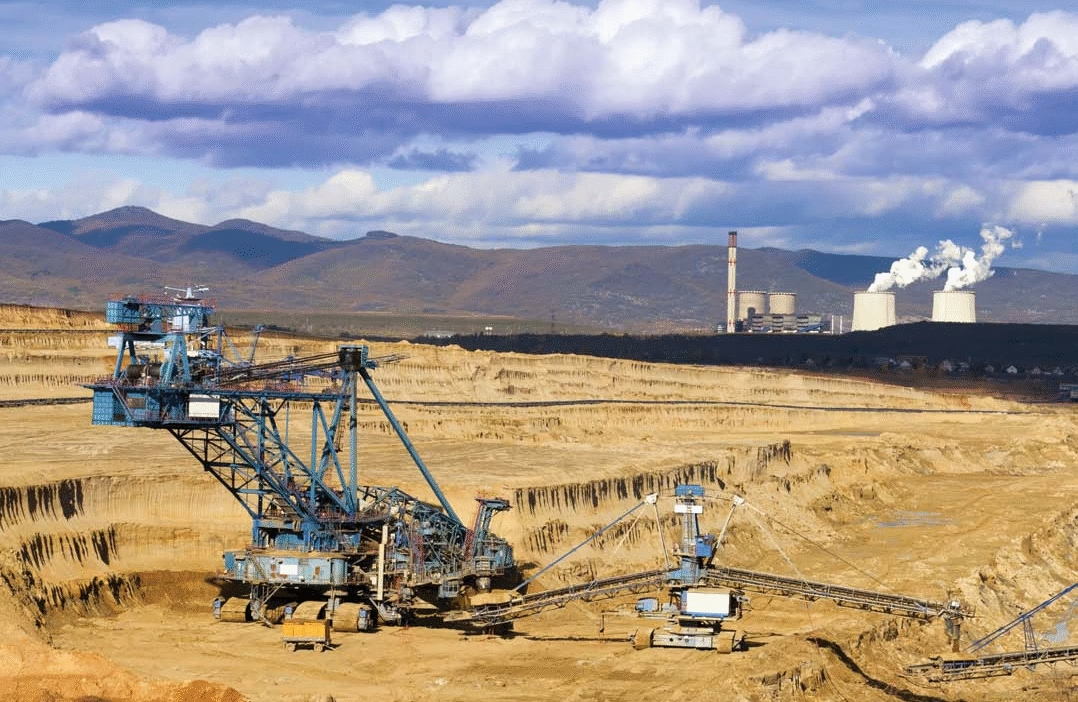
These cables serve as power supply or connection cables for large material handling machines, such as excavators in opencast mines, subjected to extremely high mechanical stresses where abrasion and chaffing stresses are expected in trailing operation. 这些电缆用作大型物料搬运机械(如露天矿山挖掘机)的电源或连接电缆,在拖曳作业中承受极高的机械应力、磨损和摩擦应力。
Festoon systems are critical components in industrial applications where power, control, and data cables must travel with moving equipment such as overhead cranes, gantry cranes, automated storage and retrieval systems (AS/RS), and material handling equipment. The selection of appropriate flat cables for these systems directly impacts operational reliability, maintenance costs, and system longevity.

Draka Buflex vs. (N)TSFLCGEWÖU: Which Flat Cable is Best for Festoon Systems?

Festoon systems are critical components in industrial applications where power, control, and data cables must travel with moving equipment such as overhead cranes, gantry cranes, automated storage and retrieval systems (AS/RS), and material handling equipment. The selection of appropriate flat cables for these systems directly impacts operational reliability, maintenance costs, and system longevity.
TSCGECEWÖU, NTSCGECEWÖU, TSKCGECWOEU, TSCGEWOEU, NSSHOEU, NTSCGEWOEU-CH, German mining cable, DIN cable, VDE cable, German cable standard, coal cutter cable CH, festoon cable FN, trailing cable W, screened cable designation, EPR mining cable

Joy Global (Komatsu) 7LS Longwall Shearer: (N)TSCGECEWÖU Drag Chain Cable Robustness Analysis

TSCGECEWÖU, NTSCGECEWÖU, TSKCGECWOEU, TSCGEWOEU, NSSHOEU, NTSCGEWOEU-CH, German mining cable, DIN cable, VDE cable, German cable standard, coal cutter cable CH, festoon cable FN, trailing cable W, screened cable designation, EPR mining cable
Longwall mining represents the most productive underground coal extraction method available to modern mining operations, with a single longwall face capable of producing over 5,000 tonnes of coal per hour in optimized installations. At the heart of this productivity lies the longwall shearer, a massive mobile machine that travels back and forth along the coal face, cutting coal with rotating drums while advancing through seam heights ranging from 1.6 to 7 meters. The power cables supplying electricity to these shearers operate in one of the most mechanically demanding cable applications in industrial engineering, subjected to continuous motion within cable chain systems (often referred to as "Bretby chains"), constant vibration from cutting operations, tight bending radii as the shearer traverses the face, and the harsh environmental conditions characteristic of underground coal mining.[1] (长壁开采代表了现代采矿作业可用的最具生产力的地下煤炭开采方法,单个长壁工作面在优化安装中每小时可生产超过5000吨煤炭)

Longwall Shearer: What are the advantages of using Type 241 over Type 275 for high-vibration longwall shearer power supplies?

Longwall mining represents the most productive underground coal extraction method available to modern mining operations, with a single longwall face capable of producing over 5,000 tonnes of coal per hour in optimized installations. At the heart of this productivity lies the longwall shearer, a massive mobile machine that travels back and forth along the coal face, cutting coal with rotating drums while advancing through seam heights ranging from 1.6 to 7 meters. The power cables supplying electricity to these shearers operate in one of the most mechanically demanding cable applications in industrial engineering, subjected to continuous motion within cable chain systems (often referred to as “Bretby chains”), constant vibration from cutting operations, tight bending radii as the shearer traverses the face, and the harsh environmental conditions characteristic of underground coal mining.[1] (长壁开采代表了现代采矿作业可用的最具生产力的地下煤炭开采方法,单个长壁工作面在优化安装中每小时可生产超过5000吨煤炭)
In the demanding world of port cranes, mining hoists, and heavy industrial material handling systems, the selection of reeling cables represents far more than a simple procurement decision. These specialized cables must survive hundreds of thousands of winding and unwinding cycles while suspended under their own considerable weight, sometimes extending hundreds of meters into vertical shafts or across vast horizontal spans. The difference between a standard reeling cable and one optimized for monospiral drum applications can determine whether equipment operates reliably for a decade or experiences premature failure requiring costly downtime and replacement.

(N)TSCGEWÖU vs. (N)TSKCGEWÖU: Why is the (N)TSKCGEWÖU Design Better for Monospiral Reeling Drums?

In the demanding world of port cranes, mining hoists, and heavy industrial material handling systems, the selection of reeling cables represents far more than a simple procurement decision. These specialized cables must survive hundreds of thousands of winding and unwinding cycles while suspended under their own considerable weight, sometimes extending hundreds of meters into vertical shafts or across vast horizontal spans. The difference between a standard reeling cable and one optimized for monospiral drum applications can determine whether equipment operates reliably for a decade or experiences premature failure requiring costly downtime and replacement.
RONDOFLEX CHAIN (N)GRDG(CG)OEU 0.6/1KV is a low voltage cable specifically engineered for energy chain systems, suitable for all chain applications including container cranes, stacking cranes, indoor cranes, and material handling equipment. Featuring finely stranded Class 5 copper conductors, EPR rubber insulation (PROTOLON MS), tinned copper braid shielding (coverage >80%), and EVA rubber outer sheath, this cable provides excellent EMC compatibility, oil resistance, UV resistance, and ozone resistance. Especially suitable for outdoor installations, long travel distances, or high travel speeds where high cable performance is demanded.

كابل RONDOFLEX CHAIN (N)GRDG(CG)OEU 0,6/1KVكابلات منخفضة الجهد لسلاسل الطاقة مع توافق EMC

Applicable in all chain systems (e.g., container cranes, stacking cranes, indoor cranes, material handling equipment). Especially suitable in applications where, due to outdoor installation, long travel distances or high travel speed, high performances are expected from the cable (such as long lifetime, full reliability, resistance to abrasion, etc.).
NSSHOEU cable, heavy duty rubber cable, flexible cable with earth conductor, DIN VDE 0250 cable, mining cable, rubber insulated flexible cable, EPR insulation cable, oil resistant cable, flame retardant flexible cable, explosion hazard area cable, construction site cable, mobile equipment cable, conveyor system cable, shielded power cable, tinned copper conductor cable, NSSHOEU 3x2.5, NSSHOEU 3x16, NSSHOEU 3x70, NSSHOEU 3x95, NSSHOEU 3x120, NSSHOEU 3x150, concentric earth conductor KON, 5GM5 sheath cable, GM1b inner sheath, 3GI3 insulation EPR, rubber cable for excavators, cable for loaders, cable for cranes, industrial rubber cable, quarry cable, open pit mining cable, underground mining cable, heavy duty flexible power cable, damp area cable, outdoor installation cable, earth screen cable, spiral earth conductor, chloroprene sheath cable, abrasion resistant cable, tear resistant cable, minimum bending radius 4D cable, temperature range -40°C +80°C cable, high mechanical load cable, provisional installation cable, mobile machinery cable, CIS region cable, China cable manufacturer, Anhui Feichun Special Cable, rubber cable 0.6/1 kV, VDE certified cable, German standard cable, trailing cable mining, reeling cable, festoon cable, drag chain cable, heavy flex cable, rubber sheathed cable, H07RN-F alternative, NSSHÖU cable, mining trailing cable specifications, rubber cable for harsh environments

NSSHOEU — Тяжелый Резиновый Гибкий Кабель с Заземляющим Проводником

NSSHOEU кабель, тяжелый резиновый кабель, гибкий кабель с заземлением, кабель DIN VDE 0250, кабель для горнодобычи, кабель для шахт, резиновый кабель 0.6/1 кВ, кабель с EPR изоляцией, маслостойкий кабель, огнестойкий гибкий кабель, кабель для взрывоопасных зон, кабель для строительных площадок, кабель для мобильного оборудования, кабель для конвейерных систем, экранированный силовой кабель, кабель с лужёной медью, кабель 3×2.5 NSSHOEU, кабель 3×16 NSSHOEU, кабель 3×70 NSSHOEU, кабель 3×95 NSSHOEU, кабель 3×120 NSSHOEU, кабель 3×150 NSSHOEU, кабель с концентрическим заземлением KON, кабель 5GM5 оболочка, кабель GM1b внутренняя оболочка, кабель 3GI3 изоляция, резиновый кабель для экскаваторов, кабель для погрузчиков, кабель для кранов, промышленный резиновый кабель, кабель для карьеров, кабель для открытых шахт, кабель для подземных работ, гибкий силовой кабель для тяжелых условий, кабель для влажных помещений, кабель для наружной прокладки, кабель с заземляющим экраном, спиральный заземляющий проводник, хлоропреновая оболочка кабеля, кабель устойчивый к истиранию, кабель устойчивый к разрыву, кабель минимальный радиус изгиба 4D, кабель температура -40°C +80°C, тяжелонагруженный кабель, кабель для временных установок, кабель для передвижных машин, кабель СНГ, кабель Россия, кабель Казахстан, кабель Беларусь, китайский производитель кабеля, Anhui Feichun кабель
Polyurethane cables, commonly abbreviated as PUR cables, represent a specialized category of industrial wiring solutions engineered with thermoplastic polyurethane sheathing materials. These cables are characterized by their halogen-free composition, exceptional flame resistance properties, and superior mechanical and chemical resistance capabilities, which collectively render them optimal for deployment in demanding industrial environments where conventional PVC or rubber-sheathed cables would experience premature degradation.

What is PUR Cable?

H05BQ-F cable, H07BQ-F cable, H05BZ5-F cable, H07BZ5-F cable, PUR-JZ cable, PUR-HF cable, Veriflex PUR cable, Powerchain PUR cable, PUR Ethernet cable, screened PUR cable, PUR trommel cable, PUR festoon cable, Mode 4 EV cable, DC EV charging cable
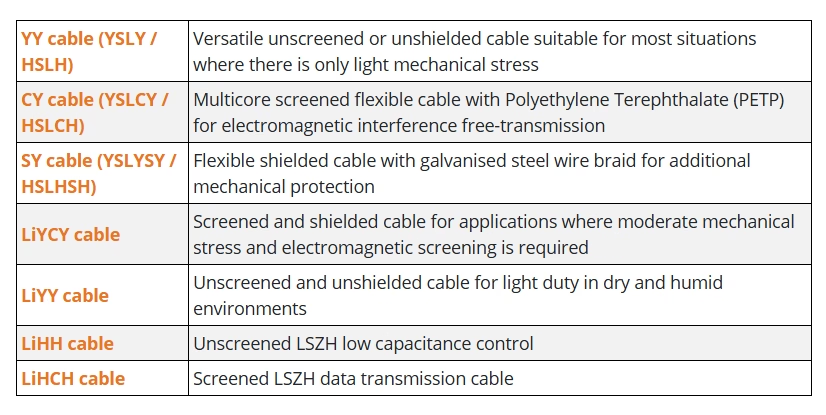
The Veriflex range encompasses control cables (SY, CY, YY series), fieldbus cables (Profibus DP/PA, DeviceNet), and Industrial Ethernet cables (Profinet, PUR Ethernet). Available in both PVC and LSZH (Low Smoke Zero Halogen) variants, the portfolio addresses diverse installation environments from standard industrial settings to fire-sensitive locations requiring enhanced safety performance.

What is Veriflex Cable?

Veriflex CY PVC YSLCY, Veriflex SY PVC YSLYSY, Veriflex YY PVC YSLY, Veriflex YY LSZH HSLH, Veriflex CY LSZH HSLCH, Veriflex Screened Bedded LSZH HSLHCH, Veriflex YSLYCY 1kV cable, Veriflex Control PUR-JZ, Veriflex 2XSL(st)CH LSZH, Veriflex DeviceNet Thick FRNC-LSZH, Veriflex DeviceNet Thin LSZH, Veriflex Profibus DP FC L2/FIP PVC, Veriflex Profibus DP FC L2/FIP LSZH, Veriflex Profibus PA PVC, Veriflex Profibus PA FRNC-LSZH, Veriflex Profinet Type A, Veriflex PUR Industrial Ethernet, Veriflex Interface BUS Cable
PANZERFLEX-ELX MV is a premium medium voltage flexible reeling power cable series available in four voltage ratings from 3.6/6 kV to 12/20 kV. These cables represent the state-of-the-art in high-voltage flexible cable technology, specifically designed for mining operations and bulk material handling applications where equipment requires reliable power supply during continuous movement. The symmetrical design combined with narrow production tolerances ensures very low electromagnetic interference, making these cables ideal for sensitive industrial environments.

What is PANZERFLEX-ELX MV 3.6/6 to 12/20 kV Cable?

PANZERFLEX-ELX MV cable, PANZERFLEX-ELX MV 3.6/6kV, PANZERFLEX-ELX MV 6/10kV, PANZERFLEX-ELX MV 8.7/15kV, PANZERFLEX-ELX MV 12/20kV, reeling cable, medium voltage reeling cable, stacker reclaimer cable, ship to shore crane cable, STS crane cable, container crane cable, RTG crane cable, excavator cable, festoon system cable, cable reel system, mining reeling cable, bulk material handling cable, IEC 60228 Class 5, VDE 0250 part 813, DIN VDE 0298, HEPR insulation, micro-filtered HEPR, 3GI3 classification, 5GM3 compound, tinned copper conductor, polychloroprene sheath, PCP sheath, textile braid, anti-twisting cable, red sheath cable, 180 m/min reeling, 120 m/min festoon, high speed reeling, 90°C conductor, -40°C fixed installation, -30°C flexible, 250°C short circuit, low EMI cable, symmetrical design, 3×25+3×25/3, 3×50+3×25/3, 3×95+3×50/3, 3×120+3×70/3, 3×185+3×95/3, 3×240+3×120/3, PANZERFLEX-ELX MV電纜, 中壓卷筒電纜, 卷筒電纜, 堆料機電纜, 取料機電纜, 岸橋電纜, 集裝箱起重機電纜, 挖掘機電纜, 滑觸線電纜, 採礦電纜, 物料處理電纜, 鍍錫銅導體電纜, 防扭電纜, 高速卷繞電纜, 港口起重機電纜, Anhui Feichun cable, Feichun Special Cable, 安徽飛純電纜
600V 3TC-RB (600V 3PNCT) Crane Cable Class 3 600V Ethylene Propylene Rubber-Insulated Polychloroprene Rubber Sheath Cable

600V 3TC-RB (600V 3PNCT) Crane Cable

The 600V 3TC-RB cable, also known as 600V 3PNCT, represents a specialized class of flexible power cables engineered specifically for demanding industrial applications. This cable system is designed for mobile machinery operations where continuous flexing, environmental resistance, and electrical reliability are paramount. The designation “3TC-RB” indicates a Class 3 stranded conductor configuration with ethylene propylene rubber insulation and polychloroprene rubber sheath construction.
Polish Mining Cable

What is YHKGXSekyn, YHKGXSekFtZnyn, YHKGXSekFtyn, YHKGXSekFitlyn, YHKGXSekFoyn, and YHKGXSekFpyn Polish Mining Cable ?

Polish Mining Cable Code Designation System represents a comprehensive nomenclature standard used extensively throughout European mining operations, particularly in Poland’s extensive coal, copper, and mineral extraction industries. This systematic coding methodology enables engineers and procurement specialists to precisely specify cable configurations through alphanumeric designations that encode critical construction parameters, material specifications, and performance characteristics.
CEI 20-27 CENELEC HD361 Cable

What is CEI 20-27 CENELEC HD361 Cable?

CEI 20-27 CENELEC HD361 represents a standardized cable designation system developed by the European Committee for Electrotechnical Standardisation (CENELEC) to provide uniform identification and classification of harmonized power cables and cords across European markets. This systematic coding methodology enables engineers, procurement specialists, and electrical contractors to precisely identify cable specifications including voltage ratings, insulation materials, conductor types, and sheathing compounds through a structured alphanumeric designation format.
DIN VDE 0250 German Standard Flexible Power Reeling Cable

What is DIN VDE 0250 Reeling Cables?

DIN VDE 0250 represents the globally recognized German standard for flexible electrical cables designed specifically for cranes, material handling equipment, and mobile machinery applications. As Germany remains the only country to have issued special design regulations for flexible electrical cables covering cranes and material handling equipment, this standard has achieved worldwide acceptance as the ultimate benchmark for tough rubber-sheathed flexible reeling cables.
(N)SSCHÖU-J Round Reeling Cable

What is a (N)SSCHÖU-J Round Reeling Cable?

The (N)SSCHÖU-J designation represents a specialized category of round reeling cables engineered for extreme durability in dynamic industrial applications. These highly flexible crane festoon cables, manufactured in accordance with DIN VDE 0250 Part 812 standards, are specifically designed to withstand the rigorous mechanical stresses encountered in cable reel systems, particularly in mining operations, heavy industry, port facilities, and mobile equipment installations.