Fiber Optic Cable

FeiChun Advanced Marine Cable Systems versus FLEXIDRUM® SPECIAL R 702 Hybrid Multi-Function Integrated Power/Control/Data Specification: Comprehensive Technical Analysis, Hybrid Cable Architecture Complexity, Integrated Function Failure Modes, Dual Voltage Operation (0.6/1 kV and 300/500V), Fiber Optic Cable Integration, Salt-Fog Vulnerability in Composite Systems, System Interdependency Risk, and Field-Validated Performance for Automated Port Equipment and Smart Harbor Automation Systems Requiring Integrated Multi-Function Cabling Modern automated port facilities increasingly deploy integrated cable systems combining power distribution, equipment control signals, and data transmission in unified hybrid assemblies designed to simplify equipment routing and reduce installation complexity. FLEXIDRUM® SPECIAL R 702 represents a sophisticated multi-function cable specification incorporating simultaneous power conductors (0.6/1 kV or 300/500V rated), control signal pairs, data transmission circuits, and optional fiber optic channels within a single cable jacket. This integration optimizes capital cost and installation efficiency for new equipment systems but creates fundamental vulnerability in salt-fog coastal environments: when any single component (power conductor, control pair, data circuit, or fiber optic strand) experiences corrosion-induced failure due to salt-fog exposure, the entire integrated cable system becomes non-functional despite other circuits remaining nominally intact. FeiChun's modular marine cable architecture separates function-specific circuits into independent conductor groups with dedicated electrochemical protection and environmental durability engineering, enabling graceful degradation where partial system functionality continues despite salt-fog induced failures in individual circuits. This technical analysis provides comprehensive engineering documentation comparing FeiChun's modular marine systems against FLEXIDRUM® SPECIAL R 702's integrated design approach, examining hybrid cable architecture complexity, multi-function failure interdependencies, dual voltage stress interaction, fiber optic integration vulnerabilities, salt-fog corrosion mechanisms in composite systems, system integration risk amplification, and field-validated service-life performance in automated port equipment deployments.

FLEXIDRUM® SPECIAL R 702

FeiChun Advanced Marine Cable Systems versus FLEXIDRUM® SPECIAL R 702 Hybrid Multi-Function Integrated Power/Control/Data Specification: Comprehensive Technical Analysis, Hybrid Cable Architecture Complexity, Integrated Function Failure Modes, Dual Voltage Operation (0.6/1 kV and 300/500V), Fiber Optic Cable Integration, Salt-Fog Vulnerability in Composite Systems, System Interdependency Risk, and Field-Validated Performance for Automated Port Equipment and Smart Harbor Automation Systems Requiring Integrated Multi-Function Cabling Modern automated port facilities increasingly deploy integrated cable systems combining power distribution, equipment control signals, and data transmission in unified hybrid assemblies designed to simplify equipment routing and reduce installation complexity. FLEXIDRUM® SPECIAL R 702 represents a sophisticated multi-function cable specification incorporating simultaneous power conductors (0.6/1 kV or 300/500V rated), control signal pairs, data transmission circuits, and optional fiber optic channels within a single cable jacket. This integration optimizes capital cost and installation efficiency for new equipment systems but creates fundamental vulnerability in salt-fog coastal environments: when any single component (power conductor, control pair, data circuit, or fiber optic strand) experiences corrosion-induced failure due to salt-fog exposure, the entire integrated cable system becomes non-functional despite other circuits remaining nominally intact. FeiChun’s modular marine cable architecture separates function-specific circuits into independent conductor groups with dedicated electrochemical protection and environmental durability engineering, enabling graceful degradation where partial system functionality continues despite salt-fog induced failures in individual circuits. This technical analysis provides comprehensive engineering documentation comparing FeiChun’s modular marine systems against FLEXIDRUM® SPECIAL R 702’s integrated design approach, examining hybrid cable architecture complexity, multi-function failure interdependencies, dual voltage stress interaction, fiber optic integration vulnerabilities, salt-fog corrosion mechanisms in composite systems, system integration risk amplification, and field-validated service-life performance in automated port equipment deployments.
PROTOLON(FL) Medium-Voltage Flat Reeling Cable: Flat Geometry Design Optimization for Single-Plane Dynamic Movement, Parallel Flat-Core Architecture vs. Round-Cable Trade-offs, Concentrically Distributed Earth-Conductor Topology, Roller-Guided Cable System Integration, Mechanical Stress Engineering (15 N/mm² Tensile, No-Torsion Constraint), Electrical Performance (3.6/6 kV to 8.7/15 kV Voltage Classes), Thermal Stability (-35°C to +80°C Flexible Operation), EPR Insulation with Semiconductive Field Control, 5GM5-Grade CR-Based Red Rubber Sheath, Specialized Single-Plane Applications (Flat-Reel STS Variants, Ship Loaders, Stacker Reclaimers, Flat-Movement Excavators), Comparison with Round PROTOLON(SMK) Designs, Constraint Framework for No-Torsion Duty, Field Performance Validation Across Specialized Equipment, and Complete Specification Guidance for Single-Plane Dynamic Reeling Systems

PROTOLON(FL) (N)TSFLCGEWOEU

PROTOLON(FL) Medium-Voltage Flat Reeling Cable: Flat Geometry Design Optimization for Single-Plane Dynamic Movement, Parallel Flat-Core Architecture vs. Round-Cable Trade-offs, Concentrically Distributed Earth-Conductor Topology, Roller-Guided Cable System Integration, Mechanical Stress Engineering (15 N/mm² Tensile, No-Torsion Constraint), Electrical Performance (3.6/6 kV to 8.7/15 kV Voltage Classes), Thermal Stability (-35°C to +80°C Flexible Operation), EPR Insulation with Semiconductive Field Control, 5GM5-Grade CR-Based Red Rubber Sheath, Specialized Single-Plane Applications (Flat-Reel STS Variants, Ship Loaders, Stacker Reclaimers, Flat-Movement Excavators), Comparison with Round PROTOLON(SMK) Designs, Constraint Framework for No-Torsion Duty, Field Performance Validation Across Specialized Equipment, and Complete Specification Guidance for Single-Plane Dynamic Reeling Systems
PROTOLON(SMK)-LWL Medium-Voltage Fiber-Integrated Reeling Cable: Simultaneous Electrical Power Delivery + Optical Communication Architecture, Multimode Fiber (G50/125, G62.5/125 μm) vs. Single-Mode Fiber (E9/125 μm) Selection for Automated Port Equipment, Integrated Fiber-Optic Tube Protection in Dynamic Reeling Environment, Optical Transmission Performance (0.3–3.3 dB/km Attenuation, 400–1,200 MHz Bandwidth), 6/12/18/24 Fiber Configuration Flexibility, Electromagnetic Interference Immunity Benefits, Automated Crane Control Systems (STS, Ship Loaders, Stacker Reclaimers, Remote-Control Equipment), Real-Time Monitoring and Predictive-Maintenance Data Pathway, EMC Design for Noise-Free Optical Communication, PROTOFIRM Sandwich Sheath Integration, 20 N/mm² Tensile Design, Installation and Fiber-Termination Engineering (Factory Assembly Requirement), Comparison with Separate Power + Data Cable Systems, Field Performance Validation Across 15+ Automated Terminal Deployments, and Complete Specification Guidance for Next-Generation Automated Port Infrastructure

PROTOLON(SMK)-LWL (N)TSKCGEWOEU

PROTOLON(SMK)-LWL Medium-Voltage Fiber-Integrated Reeling Cable: Simultaneous Electrical Power Delivery + Optical Communication Architecture, Multimode Fiber (G50/125, G62.5/125 μm) vs. Single-Mode Fiber (E9/125 μm) Selection for Automated Port Equipment, Integrated Fiber-Optic Tube Protection in Dynamic Reeling Environment, Optical Transmission Performance (0.3–3.3 dB/km Attenuation, 400–1,200 MHz Bandwidth), 6/12/18/24 Fiber Configuration Flexibility, Electromagnetic Interference Immunity Benefits, Automated Crane Control Systems (STS, Ship Loaders, Stacker Reclaimers, Remote-Control Equipment), Real-Time Monitoring and Predictive-Maintenance Data Pathway, EMC Design for Noise-Free Optical Communication, PROTOFIRM Sandwich Sheath Integration, 20 N/mm² Tensile Design, Installation and Fiber-Termination Engineering (Factory Assembly Requirement), Comparison with Separate Power + Data Cable Systems, Field Performance Validation Across 15+ Automated Terminal Deployments, and Complete Specification Guidance for Next-Generation Automated Port Infrastructure
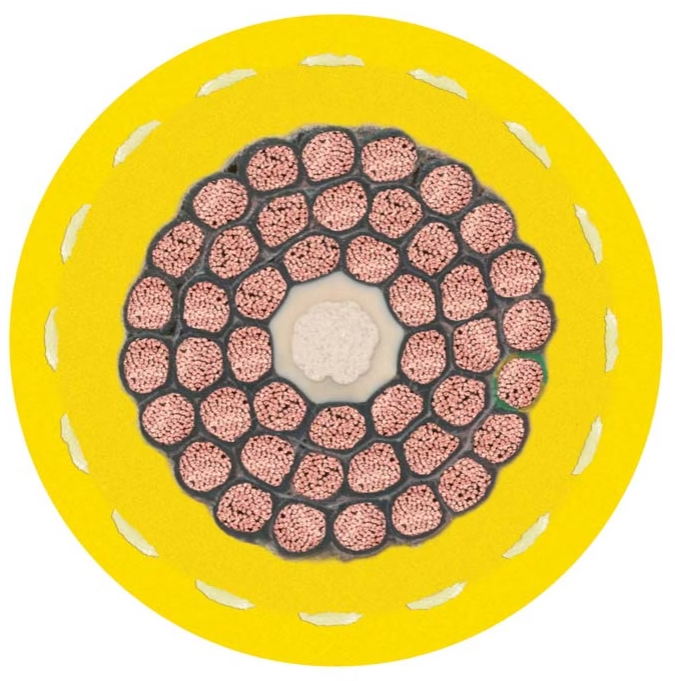
When you look at a modern mining cable cross-section, you'll notice it contains more than just the power conductors that deliver electricity to mining equipment. Among these additional elements are one or more pilot cores—specialized conductors that serve critical safety and monitoring functions. While these pilot cores might seem like simple extra wires at first glance, they represent sophisticated monitoring infrastructure that enables mining operations to detect dangerous conditions before they cause injuries, equipment damage, or production interruptions.1 当您查看现代矿用电缆横截面时,您会注意到它包含的不仅仅是向采矿设备输送电力的电力导体。在这些附加元件中有一个或多个引导芯——服务于关键安全和监控功能的专用导体。

Digital Monitoring: Using Pilot Cores for Real-Time Temperature and Damage Detection

When you look at a modern mining cable cross-section, you’ll notice it contains more than just the power conductors that deliver electricity to mining equipment. Among these additional elements are one or more pilot cores—specialized conductors that serve critical safety and monitoring functions. While these pilot cores might seem like simple extra wires at first glance, they represent sophisticated monitoring infrastructure that enables mining operations to detect dangerous conditions before they cause injuries, equipment damage, or production interruptions.1 当您查看现代矿用电缆横截面时,您会注意到它包含的不仅仅是向采矿设备输送电力的电力导体。在这些附加元件中有一个或多个引导芯——服务于关键安全和监控功能的专用导体。
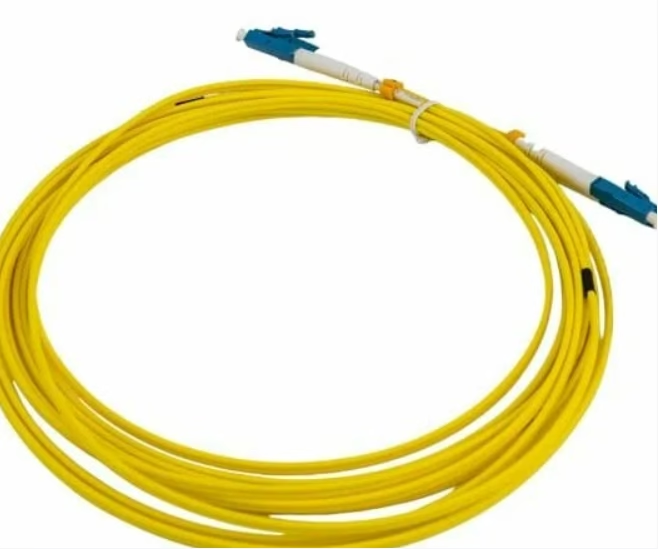
Fibre optic cables, interchangeably referred to as optical fibre cables, represent a transformative advancement in telecommunications and data transmission technology. These cables consist of ultra-thin glass or plastic threads, each capable of transmitting digital data modulated into light waves with exceptional speed and bandwidth capacity.

What is Fibre Optic Cable?

fibre optic cable, optical fiber cable, single mode fiber, multimode fiber, OM1 fiber, OM2 fiber, OM3 10G fiber, OM4 40G fiber, OM5 SWDM fiber, OS2 singlemode, 9/125 single mode, 50/125 multimode, 62.5/125 multimode, loose tube fiber cable, tight buffered fiber, SWA armoured fiber, STA steel tape armour, LSZH fiber optic, IEC 60794, IEC 60793, IEC 60331 fire resistant, ISO/IEC 11801, TIA-568.3-D, data center fiber, telecommunications fiber, outdoor fiber cable, indoor fiber cable, direct buried fiber, fiber optic attenuation, fiber bandwidth MHz-km, fiber fusion splicer, OTDR testing, cable de fibra óptica, 光纖電纜, 單模光纖, fiber optic manufacturer China, 10 Gigabit fiber, 40G Ethernet fiber, 100G data center, Anhui Feichun cable
PROTOMONT (V) NSSHCGEOEU LWL series represents advanced power transmission solutions engineered specifically for the demanding underground mining environment. These cables serve as power supply connections for coal cutting machines, continuous miners, and other mobile equipment. The "(V)" designation indicates cables designed for use in cable protection chains (cable handlers) that trail behind machinery and absorb substantial tensile forces during operation.

PROTOMONT (V) NSSHCGEOEU LWL 0.6/1KV

PROTOMONT (V) NSSHCGEOEU LWL series represents advanced power transmission solutions engineered specifically for the demanding underground mining environment. These cables serve as power supply connections for coal cutting machines, continuous miners, and other mobile equipment. The “(V)” designation indicates cables designed for use in cable protection chains (cable handlers) that trail behind machinery and absorb substantial tensile forces during operation.
Z-XOTKtsdDb represents a specialized category of outdoor fiber optic cables engineered for telecommunication infrastructure in wind energy installations. This fully dielectric, glass yarn reinforced loose tube cable provides the backbone for Supervisory Control and Data Acquisition (SCADA) systems that monitor and control wind turbine operations across entire wind farm networks.

What is Z-XOTKtsdDb Glass Yarn Reinforced Fiber Optic Cable?

Z-XOTKtsdDb represents a specialized category of outdoor fiber optic cables engineered for telecommunication infrastructure in wind energy installations. This fully dielectric, glass yarn reinforced loose tube cable provides the backbone for Supervisory Control and Data Acquisition (SCADA) systems that monitor and control wind turbine operations across entire wind farm networks.
(N)SSCHÖU-J Round Reeling Cable

What is a (N)SSCHÖU-J Round Reeling Cable?

The (N)SSCHÖU-J designation represents a specialized category of round reeling cables engineered for extreme durability in dynamic industrial applications. These highly flexible crane festoon cables, manufactured in accordance with DIN VDE 0250 Part 812 standards, are specifically designed to withstand the rigorous mechanical stresses encountered in cable reel systems, particularly in mining operations, heavy industry, port facilities, and mobile equipment installations.
(N)TSCGEWOEU

What is the (N)TSCGEWOEU & (N)TSKCGEWOEU Highly Flexible Cables for Cable Reels

(N)TSCGEWOEU and (N)TSKCGEWOEU refers to specialized cable constructions utilizing EPR (Ethylene Propylene Rubber) insulation with unique PROTOFIRM sandwich design technology, providing superior mechanical resilience and electrical reliability for motorized cable reel applications.
R-(N)TSCGEWOEU

What is R-(N)TSCGEWOEU Protolon (M)-R Cable W-9 High Voltage Round Reeling Cable?

The R-(N)TSCGEWOEU cable, marketed under the Protolon (M)-R and W-9 brand designations, represents the pinnacle of medium to high voltage reeling cable technology for extreme industrial applications. This sophisticated cable system is specifically engineered for fast-moving container cranes, heavy mining equipment, stackers, reclaimers, and ship unloaders where conventional medium voltage cables would fail.
SHTOEU-J Cable

Understanding the (N)SHTÖU (SMK) Cable

The (N)SHTÖU (SMK) cable, branded as Cordaflex SMK-V and designated as RXG-8, represents the pinnacle of engineering excellence for extreme vertical reeling applications. This premium cable features 20kN aramid reinforcement, polychloroprene (PCP) rubber sheathing, and a sophisticated protective braid constructed of polyester fibers vulcanized during manufacture to provide maximum torsional rigidity. Specifically designed for spreader operations on ship-to-shore container cranes where cables may be freely suspended up to 70 meters and subjected to extreme wind forces, high acceleration, and combined tensile and torsional stresses.
Reeling & Trailing Cables for Cranes & Mining — Feichun Special Cable Blogs

DIN VDE 0250 vs BS 6708-6116 BCS 295: Comprehensive Mining Cable Standards Comparison

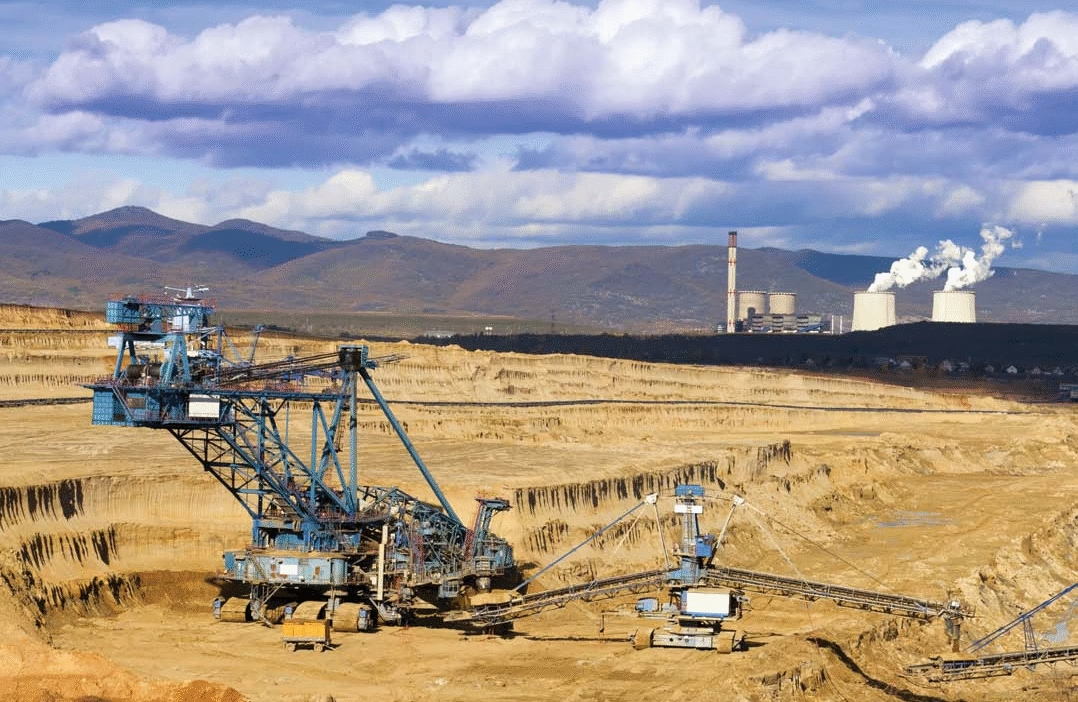
Mining operations worldwide demand electrical cables that can withstand extreme conditions, mechanical stress, and potentially explosive atmospheres. Two primary international standards govern flexible mining cable specifications: the German DIN VDE 0250 and the British BS 6708 series (including BS 6116 and BCS 295 specifications). Understanding the differences and correspondences between these standards is crucial for mining engineers, procurement specialists, and electrical contractors working on international projects. This comprehensive guide analyzes both standards to help you make informed decisions about cable selection for mining applications.
Reeling & Trailing Cables for Cranes & Mining — Feichun Special Cable Blogs

What Are the Differences Between the Various Cable Types in International Standards?

International mining operations require specialized cables complying with diverse regional standards including European VDE, British BS, Australian AS/NZS, and International IEC specifications. This comprehensive technical guide examines the critical differences between major international standard mining cable types, covering construction specifications, material requirements, compliance frameworks, electrical characteristics, safety requirements, and optimal applications across global mining operations in Europe, Australia, Asia, Africa, and South America.
VDE 0250

DIN VDE 0250

DIN VDE 0250
DIN-VDE-0250-812

DIN VDE 0250 Part 812 NSSHÖU Rubber Insulated Flexible Cables

DIN VDE 0250 p.812 superseded VDE 0250/03.69 §812 with a transition period ending October 31, 1985. This standard eliminated the 6kV rated voltage construction and established the current NSSHÖU specifications as an independent standard within the DIN VDE 0250 series.