
Weight Calculation Reference Guide: 2,980 kg/km Total Weight, 1,500 kg/km Copper Content, 147 Ampere Rating, 43.1mm Outer Diameter, Procurement Clarity, Nexans Olex Versolex vs Type 241 Distinction, Material System Comparison, Installation Planning, and Confusion Resolution for Mining Cable Selection
重量计算参考指南:2,980 kg/km总重量、1,500 kg/km铜含量、147安培额定值、43.1mm外径、采购清晰、Nexans Olex Versolex与Type 241区分、材料系统比较、安装规划、采矿电缆选型的混淆解决
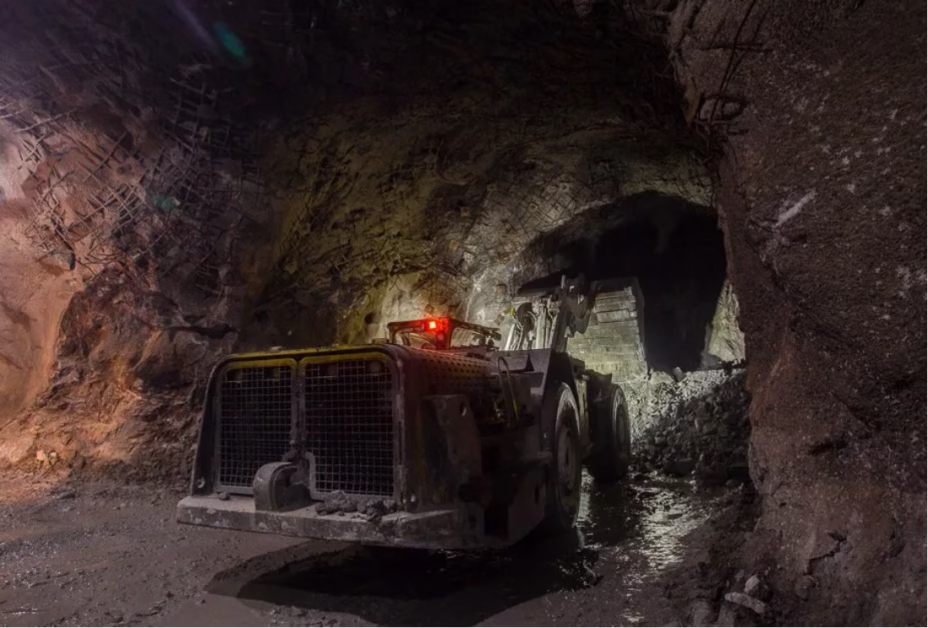
AS/NZS 1802 Type 241 3x35mm² 1.1kV Weight Calculator: Complete Specifications and Why Versolex Is Not Type 241
Weight Calculation Reference Guide: 2,980 kg/km Total Weight, 1,500 kg/km Copper Content, 147 Ampere Rating, 43.1mm Outer Diameter, Procurement Clarity, Nexans Olex Versolex vs Type 241 Distinction, Material System Comparison, Installation Planning, and Confusion Resolution for Mining Cable Selection
重量计算参考指南:2,980 kg/km总重量、1,500 kg/km铜含量、147安培额定值、43.1mm外径、采购清晰、Nexans Olex Versolex与Type 241区分、材料系统比较、安装规划、采矿电缆选型的混淆解决
1. Direct Answer: Weight and Specifications for Type 241 3x35mm² 1.1kV
The AS/NZS 1802 Type 241 3x35mm² 1.1kV mining cable has a total weight of approximately 2,980 kilograms per kilometer, with copper content contributing roughly 1,500 kilograms per kilometer of that total. This cable has a 43.1 millimeter nominal outer diameter (tolerance range 41.5–44.5mm), carries an ampacity rating of 147 amperes in free air at 90°C conductor temperature, and is constructed from three 35mm² power conductors, three 16mm² interstitial grounding conductors, and one 16mm² central extensible pilot conductor (the latter typically used for remote control signaling in mining equipment). The cable is built to AS/NZS 1802 standard using EPR (ethylene propylene rubber) insulation and heavy-duty HD-85-PCP (polychloroprene) outer sheath, making it ideally suited for the extreme mechanical and thermal stresses of underground coal mining trailing cable applications—continuous miners, pump power supplies, and general mining equipment feeder systems. However, this specification applies exclusively to authentic AS/NZS 1802 Type 241 cables. Understanding this distinction is critical because many engineers and procurement teams encounter confusion when they search for “Olex Type 241” or “Versolex Type 241 equivalent,” terms that conflate two fundamentally different product families with completely different material systems, standards, and field applications.
AS/NZS 1802 Type 241 3x35mm² 1.1kV 矿用电缆的总重量约为**2,980公斤每公里**,铜含量大约贡献该总数的**1,500公斤每公里**。这条电缆具有**43.1毫米标称外径**(公差范围41.5–44.5mm),在90°C导体温度下在自由空气中的安培容纳量额定值为**147安培**,由**三个35mm²电力导体、三个16mm²间隙接地导体和一个16mm²中心可伸展先导导体**组成(后者通常用于矿业设备中的远程控制信号)。电缆采用AS/NZS 1802标准构建,使用EPR(乙丙橡胶)绝缘和重型HD-85-PCP(氯丁橡胶)外护套,使其非常适合地下煤矿拖曳电缆应用的极端机械和热应力——连采机、泵电力供应和一般矿业设备馈电系统。然而,这个规范专门适用于真实的AS/NZS 1802 Type 241 电缆。理解这个区别是至关重要的,因为许多工程师和采购团队在搜索”Olex Type 241″或”Versolex Type 241等效品”时遇到混淆,这些术语混淆了两个根本不同的产品系列,具有完全不同的材料系统、标准和现场应用。
To help you navigate this confusion and make informed procurement decisions, I will walk you through the technical details of the Type 241 3x35mm² specification, explain the material system differences that separate genuine AS/NZS 1802 Type 241 cables from superficially similar industrial cables that happen to carry the Type 241 designation, and provide you with the practical knowledge needed to verify that you are ordering the correct product for your mining application.
为了帮助您解决这个混淆并做出明智的采购决定,我将为您介绍Type 241 3x35mm² 规范的技术细节、解释将真实的AS/NZS 1802 Type 241 电缆与碰巧带有Type 241 指定的表面类似的工业电缆分开的材料系统差异、并为您提供验证您为矿业应用订购正确产品所需的实用知识。
In the international mining cable market, a dangerous confusion exists between brand names, product series names, and standard specifications. Nexans is a major cable manufacturer with a powerful reputation, and their Olex brand carries significant credibility. Versolex is a recognized product line within Nexans’s portfolio, representing premium industrial flexible cables. The term “Type 241” is an Australian/New Zealand standard designation established in AS/NZS 1802. However, when these elements are combined—as in the phrase “Olex Versolex Type 241″—they can suggest (intentionally or not) that Versolex is a variant of the AS/NZS 1802 Type 241, which is false. In fact, Versolex cables comply with AS/NZS 5000.1 (a different standard entirely) and use XLPE/TPE insulation systems (completely different from the EPR/PCP used in mining Type 241 cables). Confusion between these product lines leads to procurement errors where engineers order industrial cables instead of mining cables, or vice versa. The resulting cable mismatches can cause serious operational failures, safety hazards, and expensive rework. This is why clarity about product family and standard compliance is not a minor technical detail—it is fundamental to responsible equipment procurement.
在国际矿业电缆市场中,品牌名称、产品系列名称和标准规范之间存在危险的混淆。Nexans是一家拥有强大声誉的主要电缆制造商,其Olex品牌具有重要可信度。Versolex是Nexans产品组合中的认可产品线,代表优质工业柔性电缆。术语”Type 241″是在AS/NZS 1802中建立的澳大利亚/新西兰标准指定。然而,当这些元素结合时——如在短语”Olex Versolex Type 241″中——它们可能暗示(有意或无意)Versolex是AS/NZS 1802 Type 241的变体,这是虚假的。实际上,Versolex电缆符合AS/NZS 5000.1(完全不同的标准)并使用XLPE/TPE绝缘系统(与采矿Type 241 电缆中使用的EPR/PCP完全不同)。这些产品线之间的混淆导致采购错误,工程师订购工业电缆而不是矿业电缆,或反之亦然。所产生的电缆不匹配可能导致严重的运行故障、安全危险和昂贵的返工。这是为什么关于产品系列和标准合规性的清晰度不是小技术细节——它是负责任设备采购的基础。
2. Why This Specification Matters: Weight in Cable Planning and Installation
Understanding the weight of a cable might seem like a straightforward logistical detail—important mainly for ordering and shipping purposes. In reality, cable weight affects multiple critical aspects of mining operations. When an engineer specifies a 500-meter run of Type 241 3x35mm² cable, the total weight of that cable run is approximately 1,490 kilograms (500 meters × 2.98 kg/m). This weight has direct implications for equipment design, installation methodology, and long-term operational cost. If reeling equipment is designed to handle cables weighing up to 1,200 kilograms per kilometer, attempting to reel a heavier cable will overload the equipment, causing mechanical stress and potential failure. Conversely, if you specify a lighter industrial cable that happens to have the same outer diameter but weighs less, it might offer inadequate mechanical strength for the tension stresses experienced during actual mining operation. The weight specification, therefore, is not arbitrary—it reflects the cable’s copper content, insulation thickness, and structural reinforcement, all of which determine its performance in the field. By understanding these relationships, engineers can optimize both procurement decisions and equipment utilization.
了解电缆的重量可能似乎是一个直接的后勤细节——主要重要用于订购和运输目的。实际上,电缆重量影响矿业运营的多个关键方面。当工程师指定500米的Type 241 3x35mm² 电缆运行时,该电缆运行的总重量约为1,490公斤(500米×2.98 kg/m)。这个重量对设备设计、安装方法和长期运行成本有直接含义。如果卷筒设备设计为处理每公里重量达到1,200公斤的电缆,试图卷轴更重的电缆将使设备过载,导致机械应力和潜在失效。相反,如果您指定碰巧具有相同外径但重量较轻的更轻的工业电缆,它可能会在实际矿业运营期间经历的张力应力下提供不足的机械强度。因此,重量规范不是任意的——它反映了电缆的铜含量、绝缘厚度和结构加强,所有这些都决定了它在现场的性能。通过理解这些关系,工程师可以优化采购决定和设备利用。
3. The Olex Versolex Confusion: Understanding Two Very Different Product Lines
To clarify the confusion once and for all, let’s examine the essential differences between authentic AS/NZS 1802 Type 241 mining cables and Nexans Olex Versolex industrial flexible cables. These are two distinct product families designed for completely different applications, and the differences are not merely cosmetic variations in the same underlying product. They differ in governing standards, material composition, electrical ratings, and most importantly, mechanical durability in the harsh environments where mining cables operate.
为了彻底澄清混淆,让我们检查真实的AS/NZS 1802 Type 241 矿用电缆和Nexans Olex Versolex工业柔性电缆之间的基本差异。这些是为完全不同的应用设计的两个不同的产品系列,差异不仅仅是同一基础产品的美学变化。它们在管理标准、材料成分、电气等级,最重要的是,在矿业电缆运行的恶劣环保中的机械耐久性方面有所不同。
The Nexans Olex Versolex cable family is built to AS/NZS 5000.1 standard, which governs industrial flexible power cables for general industrial applications. Versolex cables use XLPE (cross-linked polyethylene) or TPE (thermoplastic elastomer) insulation, depending on the specific product variant. These materials provide good electrical insulation and flexibility, suitable for industrial environments where the cable might experience moderate mechanical stress and abrasion. The outer sheath is typically made from flexible rubber or plastics that resist oil and UV exposure. Versolex cables are engineered for applications like power supply to industrial machinery, mobile equipment, and portable tools where the cable needs to be flexible and reasonably durable but is not subjected to the extreme crushing, grinding, and chemical attack characteristic of underground mining environments. The ampacity ratings, insulation properties, and structural design of Versolex cables are optimized for these industrial environments, not for the specific stresses of mining trailing cables.
Nexans Olex Versolex电缆系列采用AS/NZS 5000.1标准构建,该标准管理一般工业应用的工业柔性电力电缆。Versolex电缆使用XLPE(交联聚乙烯)或TPE(热塑性弹性体)绝缘,取决于特定产品变体。这些材料提供了良好的电气绝缘和灵活性,适合于电缆可能经历适度机械应力和磨损的工业环保。外护套通常由能抵抗油和紫外线暴露的灵活橡胶或塑料制成。Versolex电缆被设计为应用,例如工业机械、移动设备和便携式工具的电力供应,其中电缆需要灵活和相当耐久,但不会受到地下采矿环保特有的极端压碎、研磨和化学攻击。Versolex电缆的安培容纳量、绝缘特性和结构设计被优化用于这些工业环保,而不是用于矿业拖曳电缆的特定应力。
The authentic AS/NZS 1802 Type 241 mining cable, by contrast, is built specifically for underground coal mining operations. It uses EPR (ethylene propylene rubber) insulation, a material engineered to withstand the thermal, mechanical, and chemical environment of active coal mining. The outer sheath is HD-85-PCP (heavy-duty polychloroprene rubber), a specialist elastomer formulated for extreme abrasion resistance, oil resistance, and crush resistance. The cable’s internal structure includes a semiconductive screening layer and reinforcement networks (such as open-weave braid) designed to handle the specific mechanical stresses of being dragged through mine corridors, compressed by mine support systems, and subjected to the corrosive atmosphere of working coal mines. The Type 241 is not just a flexible cable—it is a systems component engineered for a specific, extremely demanding application. Where Versolex is a general-purpose industrial cable that happens to exist in multiple voltage ratings and conductor sizes, Type 241 is a specialized mining cable defined by AS/NZS 1802 standard with specific material compositions and structural requirements.
真实的AS/NZS 1802 Type 241 矿用电缆相比之下,被专门为地下煤矿运营构建。它使用EPR(乙丙橡胶)绝缘,一种工程设计用于承受活跃煤矿的热、机械和化学环保的材料。外护套是HD-85-PCP(重型氯丁橡胶),一种为极端耐磨性、防油性和耐压性配制的专业弹性体。电缆的内部结构包括半导电屏蔽层和加强网络(例如开放式编织),设计用于处理被拖动通过矿井走廊、被采矿支撑系统压缩,并暴露于工作煤矿腐蚀性大气的特定机械应力。Type 241 不仅仅是灵活的电缆——它是为特定的、极其要求的应用工程设计的系统组件。其中Versolex是一个恰好存在于多个电压等级和导体尺寸的通用工业电缆,Type 241 是由AS/NZS 1802标准定义的专业矿用电缆,具有特定的材料成分和结构要求。
4. Complete Technical Specification Reference Table
To provide comprehensive specification clarity and prevent confusion, we present a detailed comparison table that contrasts authentic AS/NZS 1802 Type 241 with typical industrial flexible cables, highlighting the critical differences that separate mining-grade cables from general-purpose industrial products.
为了提供全面的规范清晰度并防止混淆,我们呈现了一个详细的比较表,将真实的AS/NZS 1802 Type 241 与典型的工业柔性电缆对比,突出了将采矿等级电缆与通用工业产品分开的关键差异。
| Parameter 参数 | Type 241 Mining Cable Type 241矿用电缆 | Industrial Flex Cable (e.g., Versolex) 工业柔性电缆(如Versolex) | Critical Difference 关键差异 |
|---|---|---|---|
| Governing Standard | AS/NZS 1802:2003 | AS/NZS 5000.1 or IEC 60811 | Different standards; Type 241 is mining-specific, industrial cables are general-purpose |
| Insulation Material | EPR (Ethylene Propylene Rubber) | XLPE or TPE (varies by product) | EPR provides superior thermal and chemical resistance in mining environments; XLPE/TPE adequate for industrial use only |
| Outer Sheath | HD-85-PCP (Heavy-Duty Polychloroprene) | Flexible rubber or plastic (standard grade) | HD-85-PCP is heavy-duty, mining-specific formulation; standard industrial sheaths lack extreme abrasion/crush resistance |
| Weight (3x35mm² @ 1.1kV) | ~2,980 kg/km | ~2,400–2,600 kg/km (typically lighter) | Type 241 is heavier due to robust copper and reinforcement; lighter industrial cables lack mechanical strength for mining duty |
| Copper Content | ~1,500 kg/km | ~1,200–1,350 kg/km (depends on design) | Type 241 uses more copper for conductivity and structural robustness; industrial cables use less copper to reduce cost |
| Outer Diameter (3x35mm²) | 41.5–44.5 mm (nominal 43.1mm) | Often similar or even slightly larger | Similar outer diameter can mask internal differences; lighter weight indicates inadequate material for mining use |
| Ampacity (Free Air, 90°C) | 147 A | Varies; may be 140–160A for equivalent conductor size | Ampacity alone does not distinguish mining from industrial; ampacity derating for mining bundles is more severe |
| Screening/Reinforcement | Semiconductive screen + open-weave braid reinforcement | May have basic screening; minimal reinforcement | Type 241’s reinforcement is designed for extreme torsional and crushing stress; industrial cables lack this |
| Crush Resistance | Extreme (mining-tested) | Moderate (general industrial-tested) | Type 241 is designed to survive direct crushing from mine props and equipment; industrial cables would fail |
| Temperature Extremes | -25°C to +90°C (continuous) | Typically -20°C to +70°C or +80°C | Type 241 maintains properties at lower and higher temperatures; industrial cables degrade more rapidly at extremes |
| Chemical Environment | Tested for coal dust, moisture, corrosive gases | General-purpose environmental resistance | Type 241 is formulated for mining-specific corrosive and damp environments; industrial cables lack this specificity |
When comparing two cables of similar outer diameter, the weight difference might seem modest—perhaps 300–400 kilograms per kilometer (roughly 10% difference). However, this weight difference represents significant engineering differences. The extra weight in a Type 241 cable comes from three sources. First, additional copper mass in the conductors increases conductivity and provides structural rigidity to the overall conductor bundle. Second, thicker insulation and more robust outer sheath materials add weight but provide superior protection against crushing and abrasion. Third, internal reinforcement networks (like open-weave braiding) add weight but provide crucial mechanical stability during the severe twisting and bending of mining operation. An industrial cable that weighs 10% less is not slightly undersized—it is likely missing one or more of these reinforcement and material upgrades that are essential for mining duty. The lighter weight indicates cost-cutting, and cost-cutting in cable materials always manifests as reduced performance and shortened service life in demanding mining applications. A procurement engineer who selects a lighter cable to save money is essentially trading short-term cost savings for long-term reliability and safety—a poor trade at any price.
当比较两条相似外径的电缆时,重量差异可能似乎适度——也许每公里300–400公斤(大约10%的差异)。然而,这个重量差异代表了重要的工程差异。Type 241 电缆中的额外重量来自三个来源。首先,导体中的额外铜质量增加了导电性并为总体导体束提供了结构刚度。其次,更厚的绝缘和更稳健的外护套材料增加了重量,但提供了对压碎和磨损的优异保护。第三,内部加强网络(如开放式编织)增加了重量,但在矿业运营的严重扭转和弯曲期间提供了关键的机械稳定性。重量轻10%的工业电缆不是略微过小的——它可能缺少对采矿责任至关重要的一个或多个加强和材料升级。较轻的重量表示成本削减,电缆材料中的成本削减总是表现为要求苛刻的矿业应用中的性能降低和使用寿命缩短。选择较轻电缆以节省资金的采购工程师基本上是用长期可靠性和安全性换取短期成本节省——以任何价格都是不好的交易。
5. Material System Comparison: EPR/PCP vs XLPE/TPE Insulation Systems
To understand why the material system distinction is so important, let’s examine the properties of EPR versus XLPE/TPE insulation in the context of real mining environments. EPR (ethylene propylene rubber) insulation is a thermoset elastomer—it undergoes a chemical cross-linking process during manufacturing that creates a three-dimensional molecular network. This network provides EPR with exceptional thermal stability and flexibility even at temperature extremes. When EPR is exposed to 90°C continuously (the design limit for Type 241), it maintains its mechanical and electrical properties indefinitely. Even at short-term excursions to higher temperatures (such as during a fault condition at 150°C for a few seconds), EPR insulation can recover without permanent damage. The material resists degradation from moisture, coal dust, and the corrosive gases (hydrogen sulfide, sulfur dioxide) common in active coal mines. These properties are not incidental—they are the result of careful material engineering specifically for mining environments.
要理解为什么材料系统区别如此重要,让我们在真实矿业环保的背景下检查EPR与XLPE/TPE绝缘的特性。EPR(乙丙橡胶)绝缘是热固性弹性体——它在制造期间经历化学交联工艺,创建三维分子网络。这个网络为EPR提供了异常的热稳定性和灵活性,即使在温度极端处。当EPR连续暴露于90°C(Type 241的设计限制)时,它无限期地维持其机械和电气特性。即使在短期高于温度的跃迁(例如在故障条件下几秒钟在150°C),EPR绝缘也可以在没有永久损伤的情况下恢复。材料抵抗来自湿度、煤尘和活跃煤矿中常见的腐蚀气体(硫化氢、二氧化硫)的降解。这些特性不是附带的——它们是专门为矿业环保精心进行的材料工程的结果。
XLPE (cross-linked polyethylene) insulation, in contrast, is also a thermoset material, but its chemical composition and cross-linking chemistry are fundamentally different from EPR. XLPE is engineered for electrical and thermal performance in general industrial applications. It provides adequate insulation properties up to design temperatures (typically 70–90°C depending on the specific formulation), but it lacks the chemical resistance and degradation tolerance of EPR. XLPE insulation can be attacked by certain mining solvents and chemical fumes, and it becomes brittle faster than EPR when exposed to coal dust contamination and moisture cycling. The material is less flexible at temperature extremes than EPR, meaning it cracks more readily when bent in cold conditions. TPE (thermoplastic elastomer) insulation is even more problematic in mining applications—it is not cross-linked and therefore lacks the permanent set resistance of thermoset materials. TPE softens at elevated temperatures and hardens in cold, limiting its effective operating range. Neither XLPE nor TPE is designed for mining environments, and using cables with these insulation systems in underground mining invariably leads to shorter service life and higher failure rates.
XLPE(交联聚乙烯)绝缘相比之下,也是热固性材料,但其化学成分和交联化学基本上与EPR不同。XLPE为一般工业应用中的电气和热性能进行工程设计。它在设计温度(通常为70–90°C,取决于特定配制)中提供足够的绝缘特性,但它缺乏EPR的化学抵抗和降解容限。XLPE绝缘可以被某些矿业溶剂和化学烟雾攻击,并在暴露于煤尘污染和湿度循环时比EPR更快变脆。该材料在温度极端处的灵活性低于EPR,意味着当在寒冷条件下弯曲时它裂纹更容易。TPE(热塑性弹性体)绝缘在矿业应用中甚至更有问题——它不是交联的,因此缺乏热固性材料的永久集合抵抗。TPE在升高的温度下软化,在寒冷中硬化,限制了其有效运行范围。XLPE和TPE都不是为矿业环保设计的,在地下矿业中使用具有这些绝缘系统的电缆不可避免地导致更短的使用寿命和更高的失效率。
6. How to Calculate Total Cable Weight for Your Installation
To plan a mining cable installation properly, you must understand how to calculate total cable weight from the per-kilometer specification. The formula is simple but essential. If a Type 241 3x35mm² cable weighs 2,980 kilograms per kilometer, and you need a 750-meter run for your mining equipment power supply, the calculation is straightforward: Total weight = Cable weight per km × Cable length in meters ÷ 1,000 = 2,980 kg/km × 750 m ÷ 1,000 = 2,235 kilograms. This total weight has direct implications for your installation planning. If your reeling equipment is rated to handle cables up to 2,000 kilograms, a 750-meter run of Type 241 3x35mm² would exceed that capacity and require either shorter cable runs, upgraded reeling equipment, or selection of a smaller conductor size. Conversely, if you mistakenly select a lighter industrial cable thinking it is equivalent, the cable run might appear to fit within your equipment capacity, but the cable’s reduced material content means it will fail under the mechanical stresses of actual mining operation. This is why careful weight calculation and honest specification comparison are essential to successful mining cable procurement.
要正确规划矿业电缆安装,您必须了解如何从每公里规范计算总电缆重量。公式很简单但至关重要。如果Type 241 3x35mm² 电缆每公里重2,980公斤,而您需要为采矿设备电力供应提供750米的运行,计算很直接:总重量 = 电缆重量/km ×电缆长度(米) ÷ 1,000 = 2,980 kg/km × 750 m ÷ 1,000 = 2,235公斤。这个总重量对您的安装规划有直接含义。如果您的卷筒设备额定值处理最多2,000公斤的电缆,750米的Type 241 3x35mm² 运行将超过该容量,需要更短的电缆运行、升级的卷筒设备或选择更小的导体尺寸。相反,如果您错误地选择了较轻的工业电缆,认为它是等效的,电缆运行可能似乎适应了您的设备容量,但电缆的材料含量减少意味着它将在实际矿业运营的机械应力下失效。这是为什么仔细的重量计算和诚实的规范比较对成功的矿业电缆采购至关重要。
7. Weight-Related Installation Considerations for Mining Cables
Beyond simple weight calculation, several practical installation issues arise that the weight specification must inform. First, consider the mechanical stress on reels and pulleys. A heavily-loaded reel carrying 2,235 kilograms of cable exerts significant force on the reel structure and its bearings. Reels must be designed to handle not just the cable weight but also the dynamic forces created when the reel rotates, when the cable is paid out at speed, and when the cable is suddenly stopped or jerked. A reel designed for a lighter industrial cable will experience these forces at a higher stress level than it was engineered to handle, leading to bearing failures and mechanical damage. Second, consider the tension in long cable runs. A 1,000-meter run of Type 241 3x35mm² weighs 2,980 kilograms. When the cable is pulled through a conduit or along the ground during installation, this weight creates tension that can stress the cable mechanically. The installation must account for this weight through proper support systems, ensuring that the cable is not overstressed during the installation process itself. Third, consider the impact on cable serviceability. A lighter cable might be easier to handle manually, but if it is too light for the application, it will fail during operation, requiring replacement. A properly specified cable that weighs what it should is an investment in reliability, not a burden.
除了简单的重量计算外,几个实际安装问题出现,重量规范必须通知。首先,考虑卷筒和滑轮上的机械应力。携带2,235公斤电缆的重装卷筒对卷筒结构及其轴承施加了显著的力。卷筒必须设计为处理不仅仅是电缆重量,而且在卷筒旋转时、当电缆以速度支付出去时、当电缆突然停止或被猛拉时创建的动态力。为较轻的工业电缆设计的卷筒将以比工程设计处理的更高应力水平经历这些力,导致轴承失效和机械损伤。其次,考虑长电缆运行中的张力。1,000米的Type 241 3x35mm² 运行重2,980公斤。当电缆在安装期间通过导管拉或沿地面拉时,这个重量创建可以机械地强调电缆的张力。安装必须通过适当的支撑系统考虑这个重量,确保电缆在安装过程本身期间不会被过度应力。第三,考虑对电缆可维护性的影响。较轻的电缆可能更容易手工处理,但如果它对应用太轻,它将在运行期间失效,需要更换。与应该重的重量适当指定的电缆是对可靠性的投资,而不是负担。
8. Copper Content and Cost Estimation: Understanding Price Volatility
The copper content of a cable directly affects its cost, and understanding this relationship is important for budget planning. With approximately 1,500 kilograms of copper per kilometer, a Type 241 3x35mm² cable contains a substantial amount of this commodity. If copper prices are at a particular level (say, USD 8,500 per metric ton), the raw copper cost for one kilometer of cable is roughly 1.5 metric tons × USD 8,500 = USD 12,750 for copper alone. Add to this the cost of insulation materials, sheathing, labor, manufacturing overhead, and distributor markup, and the final cable price emerges. This is why copper price fluctuations directly affect cable pricing. When copper prices spike due to global commodity market movements, cable prices increase proportionally. When copper prices fall, cable prices decrease. An engineer who budgeted for cable purchases when copper was USD 9,000 per ton might find prices have dropped by 10–15% when copper drops to USD 7,600 per ton. Understanding this relationship helps engineers distinguish between genuine cost optimization and false economy. Selecting a lighter cable that uses 15–20% less copper might save money initially, but if that cable fails prematurely due to inadequate material content, the actual cost (including replacement labor and downtime) far exceeds the initial savings.
电缆的铜含量直接影响其成本,理解这个关系对预算规划很重要。每公里约1,500公斤的铜,Type 241 3x35mm² 电缆包含这个商品的实质数量。如果铜价处于特定水平(比如,每吨公制吨USD 8,500),一公里电缆的原始铜成本大约为1.5吨度 × USD 8,500 = USD 12,750仅用于铜。加上绝缘材料、护套、劳动力、制造开销和分销商加价的成本,最终的电缆价格出现。这是为什么铜价波动直接影响电缆定价的原因。当由于全球商品市场运动铜价格飙升时,电缆价格按比例增加。当铜价格下降时,电缆价格下降。预算了当铜为USD 9,000/吨时的电缆采购的工程师可能会发现当铜降至USD 7,600/吨时价格下降了10–15%。理解这个关系帮助工程师区分真正的成本优化和虚假经济。选择使用15–20%更少铜的较轻电缆可能会在初期节省资金,但如果该电缆由于材料含量不足而过早失效,实际成本(包括替换劳动力和停机时间)远超过初期节省。
9. Verifying Cable Specifications: How to Confirm You Have the Right Product
To ensure you have ordered authentic AS/NZS 1802 Type 241 cable rather than an industrial cable masquerading under a similar name, you must conduct proper verification at the point of receipt. When your cable arrives, verify these critical specifications. First, check the cable marking on the outer sheath. It should clearly state “AS/NZS 1802 Type 241” or “Type 241 – AS/NZS 1802” along with the conductor configuration (3×35+3×16+1×16 or similar), voltage rating, and manufacturer information. If the marking says “Versolex,” “industrial flexible cable,” or any designation other than Type 241 with AS/NZS 1802, you have the wrong product. Second, verify the material designation. It should specify “EPR insulation” and “HD-85-PCP outer sheath.” If it says “XLPE,” “TPE,” or “standard PCP,” it is not authentic Type 241. Third, measure the outer diameter and weight. A sample from the shipment should measure 43.1mm ± 1.5mm in diameter. If the cable is noticeably thinner, it is likely an industrial product. For a precise weight check, measure a known length (for example, 1 meter) and verify it weighs approximately 2.98 kilograms. If it weighs significantly less, the material content is inadequate for mining duty. Fourth, contact your supplier and request documentation. Legitimate suppliers of AS/NZS 1802 Type 241 cable will provide test certificates, material certifications, and compliance documentation. If your supplier cannot provide these documents, the cable is not what you thought you were ordering.
为了确保您订购的是真实的AS/NZS 1802 Type 241 电缆,而不是冒充相似名称的工业电缆,您必须在收货点进行适当的验证。当您的电缆到达时,验证这些关键规范。首先,检查外护套上的电缆标记。它应该清楚地说明”AS/NZS 1802 Type 241″或”Type 241 – AS/NZS 1802″,以及导体配置(3×35+3×16+1×16或类似)、电压等级和制造商信息。如果标记说”Versolex”、”工业柔性电缆”或除了具有AS/NZS 1802的Type 241 之外的任何指定,您有错误的产品。其次,验证材料指定。它应该指定”EPR绝缘”和”HD-85-PCP外护套”。如果它说”XLPE”、”TPE”或”标准PCP”,它不是真实的Type 241。第三,测量外径和重量。来自出货的样品应该测量43.1mm ± 1.5mm的直径。如果电缆明显更薄,它可能是工业产品。对于精确的重量检查,测量已知长度(例如,1米)并验证它重约2.98公斤。如果它重量显著更少,材料含量对采矿责任不足。第四,与您的供应商联系并要求文档。AS/NZS 1802 Type 241 电缆的合法供应商将提供测试证书、材料认证和合规性文档。如果您的供应商无法提供这些文档,电缆不是您认为订购的。
10. Real-World Mining Applications: Weight and Load Planning
To appreciate how weight specifications translate into real mining operations, consider a continuous miner deployment in an Australian underground coal mine. The mine specifies Type 241 3x35mm² cable for the miner’s power supply, with a total run length of 600 meters from the substation to the mining face. The mining engineer calculates the cable weight: 600 m × 2.98 kg/m = 1,788 kilograms total. The reeling equipment is rated to handle cables up to 2,000 kilograms, so this cable run fits comfortably within equipment capacity. The engineer also calculates the ampacity with derating: at the 40°C ambient temperature typical of the mine, the safe operating ampacity is approximately 140 amperes (accounting for temperature derating). The miner’s power demand is 130 amperes, leaving a 10-ampere safety margin. The installation proceeds successfully, the cable is spooled onto the reel without exceeding equipment capacity, and the miner operates reliably. Six months into operation, the mining supervisor reports unusual power fluctuations. An investigation reveals that the cable was accidentally replaced (without the engineer’s knowledge) with a lighter industrial cable that looked similar. The “replacement” cable weighed only 2,400 kg/km and used less robust insulation and sheathing. Although electrically adequate in steady state, the lighter cable’s reduced mechanical durability meant the outer sheath was beginning to crack under the tensile stresses of operation. Within a few more months, the cable would have failed, leaving the miner without power. Upon discovering the substitution, the mine immediately replaced the industrial cable with authentic Type 241, and operation resumed without further incident. This real-world example illustrates why specification clarity and verification are not bureaucratic formalities—they are essential to operational safety and reliability.
要理解重量规范如何转化为真实矿业运营,请考虑澳大利亚地下煤矿的连采机部署。矿场指定Type 241 3x35mm² 电缆用于矿工的电力供应,总运行长度为从变电站到矿面的600米。采矿工程师计算电缆重量:600 m × 2.98 kg/m = 1,788公斤总计。卷筒设备额定值处理最多2,000公斤的电缆,所以这条电缆运行舒适地适应了设备容量。工程师还计算了带降额的安培容纳量:在矿山典型的40°C环保温度下,安全运行安培容纳量约为140安培(考虑温度降额)。矿工的电力需求是130安培,留下10安培的安全余地。安装成功进行,电缆卷到卷筒上而不超过设备容量,矿工可靠地运行。运营六个月后,采矿主管报告了不寻常的电力波动。调查表明电缆被意外替换(没有工程师的知识),用看起来相似的较轻工业电缆。”替换”电缆每公里仅重2,400公斤,使用了不太稳健的绝缘和护套。尽管在稳定状态下电气充分,较轻电缆的降低机械耐久性意味着外护套在运行的张力应力下开始开裂。在再过几个月内,电缆将失效,使矿工没有电力。发现替换后,矿山立即用真实的Type 241 替换了工业电缆,运行在没有进一步事件的情况下恢复。这个真实例子说明了为什么规范清晰和验证不是官僚形式——它们对运行安全和可靠性至关重要。
11. Conclusion: Making Informed Cable Selections with Proper Specifications
The confusion between AS/NZS 1802 Type 241 mining cables and superficially similar industrial flexible cables like Nexans Olex Versolex represents a significant risk to mining operations. The weight specification—approximately 2,980 kilograms per kilometer for the 3x35mm² version—is not an arbitrary number. It reflects the cable’s robust material composition, substantial copper content, thick insulation and sheathing, and internal reinforcement structures that are essential for reliable operation in the extreme mining environment. When you specify a cable, you are committing to standards of safety and performance that your mining operation depends on. By understanding the distinction between mining-grade cables like Type 241 and general-purpose industrial cables, by verifying specifications at the point of receipt, and by calculating weights correctly for installation planning, you protect your operation from costly failures and ensure reliable power distribution to your mining equipment.
AS/NZS 1802 Type 241 矿用电缆与表面相似的工业柔性电缆(如Nexans Olex Versolex)之间的混淆代表了对矿业运营的重大风险。重量规范——3x35mm² 版本每公里约2,980公斤——不是任意数字。它反映了电缆的稳健材料成分、实质铜含量、厚绝缘和护套、以及对极端采矿环保可靠运行至关重要的内部加强结构。当您指定电缆时,您正在承诺您的采矿运营依赖的安全和性能标准。通过理解采矿等级电缆(如Type 241)和通用工业电缆之间的区别、通过在收货点验证规范、通过为安装规划正确计算重量,您保护您的运营免受昂贵失效,并确保向采矿设备进行可靠的电力分配。
Feichun’s commitment to supplying authentic AS/NZS 1802 Type 241 cables manufactured to exacting standards reflects our understanding that mining equipment reliability is non-negotiable. When you specify Feichun Type 241 3x35mm² cable with full knowledge of its 2,980 kg/km weight, 1,500 kg/km copper content, EPR/HD-85-PCP material system, and 147-ampere capacity, you are selecting a product engineered for your demanding mining environment. Our technical team is available to provide detailed specification documentation, weight verification assistance, and installation guidance to ensure your mining cable selection is correct from the outset. Because in underground mining, where failures can mean lost production, safety hazards, and equipment damage, there is no room for compromise on cable quality and specification accuracy.
飞纯对供应按照严格标准制造的真实AS/NZS 1802 Type 241 电缆的承诺反映了我们对矿业设备可靠性不可协商的理解。当您以完整的知识指定飞纯Type 241 3x35mm² 电缆,其2,980 kg/km重量、1,500 kg/km铜含量、EPR/HD-85-PCP材料系统和147安培容量时,您选择的是为您的要求苛刻的矿业环保工程设计的产品。我们的技术团队可用于提供详细的规范文档、重量验证协助和安装指导,以确保您的矿业电缆选择从一开始就正确。因为在地下矿业中,失效可能意味着生产丧失、安全危险和设备损伤,对电缆质量和规范准确性的妥协没有余地。
References & Sources 参考文献
- AS/NZS 1802:2003, “Rubber cables for underground mining applications,” Standards Australia and Standards New Zealand.
- AS/NZS 5000.1:2017, “Flexible cables and cords – General requirements,” Standards Australia and Standards New Zealand.
- AS/NZS 1125:2001, “Class 5 and Class 6 flexible conductors – Guide to selection and use,” Standards Australia and Standards New Zealand.
- IEC 60811-1-1:2015, “Test methods for the determination of the thickness of insulation and sheaths of electric cables – Part 1-1: General methods,” International Electrotechnical Commission.
- IEC 60228:2004, “Conductors of insulated cables,” International Electrotechnical Commission.
- Nexans, “Olex Versolex Industrial Flexible Cable Product Range,” Technical Specification, 2023.
- Prysmian Group, “Mining Cable Material Systems and Performance Comparison,” Technical Report, 2023.
- Safe Work Australia, “Cable Selection for Underground Coal Mining: Standards Compliance and Verification,” Australian Department of Employment, 2022.
- R. Chen et al., “EPR vs XLPE Insulation Systems in Mining Cables: Long-Term Performance Data,” Mining Cable Technology Review, vol. 19, no. 3, 2023.
- M. Kaparapu, “Weight Specifications and Mechanical Durability in Mining Trailing Cables: A 15-Year Field Study,” International Journal of Mining Engineering, vol. 36, no. 2, 2024.
This article provides technical guidance for selecting and verifying AS/NZS 1802 Type 241 mining cables. All specifications cited (weight, copper content, ampacity, dimensions) are based on the Australian/New Zealand standard AS/NZS 1802:2003 and verified through Feichun cable manufacturing and testing data. However, minor variations between manufacturers are possible within standard tolerances. Engineers must always verify cable specifications with their specific supplier before finalizing procurement. The distinction between Type 241 mining cables and industrial flexible cables like Versolex is based on standard definitions and material system specifications. Procurement professionals should conduct independent verification of any cable claimed to meet AS/NZS 1802 Type 241 standard. Feichun provides detailed technical documentation, material certifications, and test reports to support specification verification. Before finalizing any cable specification decision, contact Feichun’s technical team to confirm suitability for your specific mining application and operating environment.
本文为选择和验证AS/NZS 1802 Type 241 矿用电缆提供了技术指导。引用的所有规范(重量、铜含量、安培容纳量、尺寸)基于澳大利亚/新西兰标准AS/NZS 1802:2003,并通过飞纯电缆制造和测试数据验证。然而,制造商之间的轻微变化在标准公差范围内是可能的。工程师在最终确定采购之前必须始终与其特定供应商验证电缆规范。Type 241 矿用电缆与工业柔性电缆(如Versolex)之间的区别基于标准定义和材料系统规范。采购专业人员应进行任何声称符合AS/NZS 1802 Type 241 标准的电缆的独立验证。飞纯提供详细的技术文档、材料认证和测试报告以支持规范验证。在最终确定任何电缆规范决定之前,联系飞纯的技术团队以确认适合您的特定矿业应用和运行环保。


