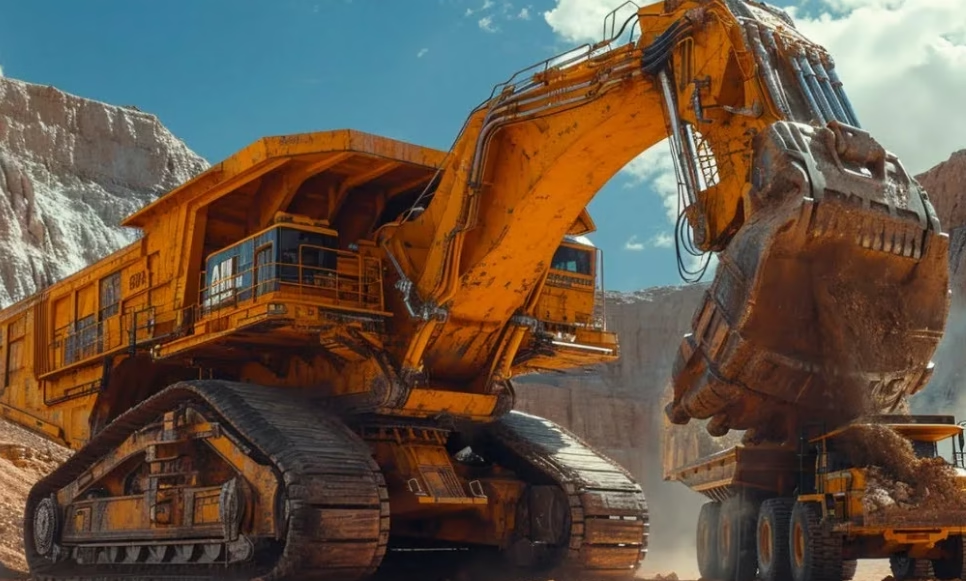
The Pilbara region of Western Australia hosts some of the world’s largest iron ore mines operated by BHP, Rio Tinto, and Fortescue. The mining environment is defined by extremes: surface temperatures regularly exceed 45–50°C during summer months, UV radiation intensity is among the highest in Australia, iron ore is extraordinarily hard and sharp-edged (causing accelerated cable abrasion), and equipment operates in remote locations with minimal maintenance infrastructure.
澳洲西部皮尔巴拉地区拥有世界上一些最大的铁矿,由必和必拓、力拓和富瑞斯经营。采矿环境由极端条件定义:夏季地表温度常超45–50°C,紫外线强度是澳洲最高的,铁矿石异常坚硬且边缘锋利(导致电缆加速磨损),设备在维护基础设施最少的偏远位置运行。
Bucket Wheel Excavator Operations: A bucket wheel excavator (BWE) is a massive rotating machine that mines iron ore by continuous removal of overburden and ore. A typical Pilbara BWE operates 24/7 during mine production, with bucket wheel rotation speeds creating enormous dynamic electrical loads. A single large BWE power demand can reach 5–8 megawatts, requiring 22kV or higher voltage transmission from the main mine substation to the mobile machine.
Cable Deployment Requirements: BWE power cables are deployed as trailing cables—the cable unrolls from a reeling drum as the BWE advances through the mine pit, accumulating 500+ meters of cable length during extended operation. When the excavator repositions, the cable must be rapidly re-wound under high tension. This extreme dynamic flexing (20,000–50,000 cycles per year) combined with harsh environmental exposure (temperature, UV, abrasion) creates unprecedented cable engineering challenges.
For New Zealand TBM (Tunnel Boring Machine) and underground infrastructure projects, specifying cables presents a critical engineering decision: use European VDE-standard cables (readily available from major suppliers like Prysmian, Nexans) or specify local AS/NZS-compliant equivalents. The (N)TSCGECEWÖU 3×50+3×25/3 6.6/6.6kV cable from German manufacturers represents excellent European engineering, but direct application in New Zealand requires technical translation to local regulatory standards.
对于新西兰盾构机(TBM)和地下基础设施项目,规范电缆规格呈现关键工程决策:使用欧洲VDE标准电缆(易从Prysmian、Nexans等主要供应商获得)或规范本地AS/NZS兼容等效品。德国制造商的(N)TSCGECEWÖU 3×50+3×25/3 6.6/6.6kV电缆代表卓越的欧洲工程,但在新西兰的直接应用需要技术转化为当地监管标准。
The central pilot core in an AS/NZS 1802 Type 241 6.6/6.6kV 3x120mm² cable should exhibit a measured DC resistance of approximately 0.350 to 1.050 ohms per kilometer at 20°C, depending on the pilot conductor’s specific cross-sectional area (typically 16mm² or 25mm² in this cable class). For a typical 1,000-meter installation cable segment, the measured resistance across the entire pilot conductor pair (measuring between one end and the remote end, or using a calculated pro-rata method for field acceptance) should not exceed 1.050 ohms for a 16mm² pilot, or approximately 0.690 ohms for a 25mm² pilot. These resistance values serve as acceptance criteria for cable deliveries and provide a baseline against which future field testing can detect degradation caused by moisture ingress, oxidation, mechanical damage, or other environmental stress. The pilot core must demonstrate electrical continuity (resistance approaching zero would indicate an open circuit) while remaining within the specified upper bound (excessive resistance would indicate partial failure or contamination). Testing is performed using a standard digital multimeter set to resistance/ohms mode or using a dedicated cable tester with DC ohmmeter functionality, applied across the pilot conductor terminals at each cable end.
The AS/NZS 1802 Type 241 3x35mm² 1.1kV mining cable has a total weight of approximately 2,980 kilograms per kilometer, with copper content contributing roughly 1,500 kilograms per kilometer of that total. This cable has a 43.1 millimeter nominal outer diameter (tolerance range 41.5–44.5mm), carries an ampacity rating of 147 amperes in free air at 90°C conductor temperature, and is constructed from three 35mm² power conductors, three 16mm² interstitial grounding conductors, and one 16mm² central extensible pilot conductor (the latter typically used for remote control signaling in mining equipment). The cable is built to AS/NZS 1802 standard using EPR (ethylene propylene rubber) insulation and heavy-duty HD-85-PCP (polychloroprene) outer sheath, making it ideally suited for the extreme mechanical and thermal stresses of underground coal mining trailing cable applications—continuous miners, pump power supplies, and general mining equipment feeder systems. However, this specification applies exclusively to authentic AS/NZS 1802 Type 241 cables. Understanding this distinction is critical because many engineers and procurement teams encounter confusion when they search for “Olex Type 241” or “Versolex Type 241 equivalent,” terms that conflate two fundamentally different product families with completely different material systems, standards, and field applications.
The primary difference between AS/NZS 1802 Type 241 and Type 245 mining cables lies in their internal core configuration and the resulting mechanical flexibility characteristics. Type 241 contains three power cores, three interstitial grounding cores, and one central extensible pilot core (total of seven conductors), while Type 245 contains three power cores, three interstitial grounding cores, and three central extensible pilot cores (total of nine conductors). This seemingly modest difference—replacing one central pilot with three parallel pilots—fundamentally changes how the cable bends, flexes, and responds to the mechanical stresses of underground mining operations. Type 241 is the standard general-purpose feeder cable designed for continuous miners, pump power supplies, and applications where the cable experiences moderate, repetitive flexing but does not encounter the extreme bending and twisting stresses of longwall operations. Type 245 is the high-flexibility shearer cable engineered specifically for longwall shearers and other equipment that demands superior resistance to severe, repetitive bending and the complex rotational stresses that characterize modern longwall mining systems.
The Type 241 1.1/1.1kV 3x95mm² underground mining trailing cable has a continuous ampacity rating of approximately 265 amperes per conductor when operating under the following standard reference conditions: an ambient (air or soil) temperature of 40°C, a maximum conductor temperature of 90°C, and typical installation methods for buried or bundled trailing cables in underground mining environments. This 265-ampere rating represents the maximum continuous current that each individual power conductor (the three 95mm² cores) can safely carry indefinitely without exceeding the insulation’s thermal limits or compromising the cable’s mechanical and electrical integrity. However, and this distinction is critically important, the 265A figure applies only when the cable operates under these precise reference conditions—when ambient temperature rises, when multiple cables are bundled together, or when installation methods change, the safe operating current must be reduced through the application of specific derating factors that reflect the real-world thermal environment.
The nominal outer diameter (OD) of an AS/NZS 1802 Type 241 3.3/3.3kV 3x50mm² mining cable is 57.6 millimeters, with an acceptable manufacturing tolerance range of 55.5 millimeters (minimum) to 59.5 millimeters (maximum). This specification represents approximately 2.27 inches nominal diameter, translating to a tolerance band of ±1.5 millimeters around the nominal value. The cable includes three 50mm² power-carrying cores, three 10mm² (or optionally 16mm²) interstitial grounding conductors, and one 16mm² central extensible pilot conductor, all protected by an outer sheath of heavy-duty polychloroprene (HD-85-PCP) elastomer. At this nominal diameter, the complete cable assembly weighs approximately 5,250 kilograms per kilometer, with the copper mass contributing roughly 1,850 kilograms per kilometer of that total weight.
RHEYFIRM® (XT) “Extreme” is a specialized arctic-grade flexible reeling cable engineered specifically for continuous dynamic operation in permafrost mining zones and open-pit operations where temperatures fall to -50°C (-58°F), whereas RHEYFIRM® (RS) standard versions are designed for conventional industrial and port environments operating down to approximately -25°C to -35°C maximum. The XT extreme variant differs from the RS standard version through four fundamental structural and chemical modifications. First, the outer jacket compound transitions from standard chlorinated rubber (5GM5 formulation) to an ultra-low-temperature advanced elastomer or specialized cold-resistant polyurethane (PUR) blend that remains flexible and resistant to crystallization and embrittlement even when exposed to -50°C arctic blasts. Second, the internal structure incorporates enhanced cold-adapted synthetic anti-torsion braids fabricated from Kevlar and Aramid fibers instead of conventional braid materials, which maintain their reinforcement properties at extreme temperatures where standard materials would lose rigidity. Third, the insulation material evolves from standard EPR (ethylene propylene rubber) to an optimized cold-flexible EPR formulation that prevents micro-cracking around copper conductors under severe thermal stress. Fourth, the cable incorporates specialized core lubrication systems and internal slip-layers designed to reduce friction between conductor wires at sub-zero temperatures, where natural friction increases dramatically and would otherwise cause internal conductor fatigue and snapping. The result is a cable system that remains mechanically robust and electrically reliable for continuous high-speed reeling (up to 190 meters per minute) on frozen ground and ice-covered surfaces in the harshest mining environments on Earth. The electrical specifications remain identical to RS standard cables (same voltage ratings, same current capacity), but the physical behavior and mechanical reliability at extreme cold are fundamentally different. You should specify RHEYFIRM® (XT) when your mining operation is located in permafrost regions, when winter operations regularly experience temperatures below -40°C, when continuous reeling stress is combined with sub-zero conditions, and when cable failure could result in equipment shutdown in a remote arctic location where emergency replacement is logistically impossible.
RHEYFIRM® is Nexans’ premium line of flexible medium-voltage reeling cables specifically engineered for the extreme mechanical and environmental stresses of port machinery (STS cranes, automated stacker-reclaimers) and mining equipment (continuous dragline cables, mobile crusher power systems). Unlike fixed installation cables that remain stationary throughout their service life, reeling cables experience constant dynamic stress—deploying and retracting hundreds to thousands of times over their operational life. This continuous reeling duty subjects the cable to millions of bending cycles, sustained tensile loads, electromagnetic stress, salt spray corrosion, intense ultraviolet radiation, and temperature extremes far exceeding what conventional industrial cables are designed to tolerate.
The physical diameter of a reeling cable is not simply a matter of aesthetics or standardization—it directly affects how much cable can fit on a physical drum of fixed dimensions. Consider a stacker-reclaimer with an existing cable drum that has a fixed flange width (say, 1,200 millimeters) and a fixed core diameter (say, 400 millimeters). The amount of cable that can be wound onto this drum depends on how tightly the cable packs around the core. A cable with a 59-millimeter outer diameter will create a larger spiral as it is wound layer by layer, limiting the total cable length to perhaps 600 meters. That same physical drum, if fitted with a 55.8-millimeter diameter cable, creates a tighter spiral and accommodates perhaps 750 meters of cable—a 25 percent increase in usable length with zero change to the physical equipment. For equipment where travel distance requirements have increased due to terminal expansion or operational upgrades, this diameter optimization can mean the difference between being able to extend operations and being forced into an expensive drum replacement project costing hundreds of thousands of dollars.
Type SHD-GC 3/C #1 AWG 8kV trailing cable has a DC resistance of approximately 0.161 ohms per kilometer measured at the reference temperature of 20°C (68°F). This DC resistance value represents the pure ohmic resistance of the copper conductor when direct current flows through it—a condition that occurs in short-circuit analysis and DC testing procedures. However, when this same cable carries the alternating current typical of mining equipment operations (at the standard operating temperature of 90°C), the AC resistance increases to approximately 0.363 ohms per kilometer due to the combined effects of temperature rise and skin effect phenomena. The substantial difference between 0.161 Ω/km (DC, 20°C) and 0.363 Ω/km (AC, 90°C)—more than a 2.25 times increase—demonstrates a critical principle that engineers must account for in real-world voltage drop calculations: laboratory DC resistance values are not directly applicable to field voltage drop analysis. The cable features three 107.2 mm² (1 AWG equivalent) phase conductors of Class 5 tinned copper, with an additional ground-check conductor for continuous monitoring of cable integrity during operation, an outer diameter of approximately 53–58 mm, and a total weight of approximately 6,200–6,800 kg/km. Understanding both the DC baseline resistance and the elevated AC resistance at operating temperature is essential for accurately predicting voltage drop over long cable runs in open-pit mining operations where power distribution distances frequently exceed 500 meters.
Type G-GC 3/C #2 AWG cable is a three-conductor power cable with an integrated pilot ground-check conductor designed specifically for underground mine power distribution and earth fault monitoring applications. The three main conductors each measure 33.3 mm² (2 AWG) cross-sectional area and carry three-phase power distribution. The pilot ground-check conductor measures 4 mm² (12 AWG equivalent) and serves as an independent monitoring channel for earth fault detection. The overall cable outer diameter (OD) is typically 18.5 mm to 20.0 mm (0.73 to 0.79 inches) depending on the specific insulation system. The overall weight is approximately 850 kg/km (570 lbs/1000ft). The cable outer sheath is typically XLPE (cross-linked polyethylene) rated for 600 volts continuous service with a safety protocol compliant with DIN VDE 0482-335-2 and IEEE 1202 standards for mine cables. The pilot conductor resistance is approximately 5.2 ohms per kilometer, which establishes the baseline sensitivity for ground fault detection circuits. The capacitance between main conductors and the pilot conductor is typically 120–140 pF/m, a critical parameter that determines the transient response characteristics of the earth fault detection relay.
Type SHD-GC 3/C 250 MCM 25kV cable has a specified minimum bending radius of 8 times the outer diameter (8 × D), which for this cable translates to approximately 880 millimeters (34.6 inches) based on the typical outer diameter range of 104–110 millimeters. This specification is the absolute minimum radius that the cable can tolerate during installation, reel configuration, and static deployment without incurring unacceptable insulation stress and mechanical damage. However, this 8× specification applies specifically to static installation conditions—situations where the cable is being wound onto a reel, routed through permanent guide equipment, or deployed at rest or under steady-state tension. When the cable enters active operational service on a shovel or dragline where it experiences dynamic motion, rapid acceleration and deceleration, shock loads from bucket impacts, and thermal cycling from solar heating and cooling cycles, the effective operational bending radius constraints become more restrictive. In these dynamic conditions, the safe operating bending radius should be treated as closer to 10–12 times the outer diameter depending on the severity of the mechanical duty, the magnitude of pulling tension applied simultaneously, and the ambient temperature extremes of the mining location.
Type SHD-GC 3/C #1 AWG 8kV trailing cable is approximately 0.410 Ohms/km at 20°C reference temperature for a single conductor, calculated from the copper’s material resistivity combined with the #1 AWG conductor cross-section (approximately 42.4 mm² or 53,486 circular mils). This resistance value increases to approximately 0.495 Ohms/km at 90°C operating temperature due to copper’s positive temperature coefficient of resistance. For a complete three-phase circuit using this cable type, the total circuit resistance including all three phase conductors but excluding the ground return path is approximately 0.410 Ohms/km at 20°C or 0.495 Ohms/km at 90°C. When operating a mine shovel or dragline drawing 150–160 amperes over a typical 1,000-meter (1 km) cable run from the mine substation to the equipment, the three-phase voltage drop across this cable is approximately 55–70 volts at the reference condition, representing a drop of roughly 0.75–1.0% from the 8,000-volt nominal supply. This voltage drop magnitude is acceptable for most mining equipment applications and remains within typical power system design standards that permit up to 2–3% voltage drop on secondary feeder circuits. The physical mechanism behind this resistance is the collision of free electrons within the copper lattice structure, where random thermal motion of atoms creates an effective “friction” that opposes electron flow, converting electrical energy into heat at a rate proportional to I²R.
(M)R-(N)TSCGEWOEU series represents a highly engineered family of medium voltage flexible reeling cables specifically designed for demanding applications in open-cast mining operations and heavy industrial environments. These cables are manufactured according to the stringent requirements of DIN VDE 0250-813 standard, which is recognized globally as the definitive specification for flexible trailing cables used in heavy industrial applications where extreme mechanical stresses are expected.
PROTOLON系列电缆专为露天矿山的大型物料搬运设备(如挖掘机、卸料车、移动式破碎机)设计,能够承受极高的机械应力,适用于单螺旋卷筒和圆柱形卷筒的灵活卷绕操作。
The Komatsu P&H 4100XPC is one of the world’s largest and most productive AC electric mining shovels, designed for large-scale open-pit mining operations. With a payload capacity of approximately 100+ metric tons (110+ short tons) and dipper sizes ranging from 40.5 m³ to 65.8 m³, this machine demands a highly reliable power supply system capable of delivering substantial electrical loads under extreme operating conditions.
P&H 4100XPC是全球最大、生产效率最高的交流电动挖掘机之一,专为大型露天采矿作业设计。其有效载荷能力超过100公吨,铲斗容量从40.5立方米到65.8立方米不等,需要高度可靠的电力供应系统。
Type 441 cables represent a critical category of mining power cables designed for demanding applications in surface and underground mining environments. These cables are specifically engineered to withstand extreme mechanical stress, including trailing, reeling, crushing forces, and environmental hazards encountered in heavy-duty industrial operations. The sheath hardness specification is a fundamental parameter that directly affects the cable’s mechanical performance, durability, and service life under harsh operational conditions.
441型电缆是专为地表和地下采矿环境中的苛刻应用而设计的关键矿用电力电缆类别。这些电缆经过专门设计,能够承受极端的机械应力,包括拖拽、卷筒、挤压力以及在重型工业作业中遇到的环境危害。护套硬度规范是直接影响电缆在苛刻操作条件下的机械性能、耐久性和使用寿命的基本参数。Type 441 cables represent a critical category of mining power cables designed for demanding applications in surface and underground mining environments. These cables are specifically engineered to withstand extreme mechanical stress, including trailing, reeling, crushing forces, and environmental hazards encountered in heavy-duty industrial operations. The sheath hardness specification is a fundamental parameter that directly affects the cable’s mechanical performance, durability, and service life under harsh operational conditions.
441型电缆是专为地表和地下采矿环境中的苛刻应用而设计的关键矿用电力电缆类别。这些电缆经过专门设计,能够承受极端的机械应力,包括拖拽、卷筒、挤压力以及在重型工业作业中遇到的环境危害。护套硬度规范是直接影响电缆在苛刻操作条件下的机械性能、耐久性和使用寿命的基本参数。
In surface mining and general underground mining operations excluding coal, heavy mobile equipment such as draglines, electric shovels, and drilling rigs rely on reeling cable systems to maintain continuous power delivery during movement and repositioning. These reeling drum applications subject cables to severe mechanical stresses including crushing forces as cable layers compress against each other during winding operations. The selection between Type 440 and Type 441 cables manufactured to AS/NZS 2802 standards represents a critical engineering decision that directly impacts equipment reliability, operational safety, and maintenance costs.
在不包括煤炭的露天采矿和一般地下采矿作业中,挖掘机、电铲和钻机等重型移动设备依赖卷取电缆系统在移动和重新定位期间保持连续供电。
The German national standard DIN VDE 0250 covers cables, wires, and flexible cords for power installations. This standard has achieved global recognition as the definitive benchmark for tough rubber-sheathed flexible cables. Germany remains the only country to have issued specialized design regulations for flexible electrical cables covering cranes, material handling equipment, and mining machinery, which explains why DIN VDE 0250 is widely accepted internationally for demanding industrial applications. (德国国家标准DIN VDE 0250涵盖电力设施用电缆、电线和软线。该标准已成为坚固橡胶护套柔性电缆的全球公认基准。德国是唯一一个为起重机、物料搬运设备和采矿机械的柔性电缆发布专门设计规范的国家,这解释了为什么DIN VDE 0250在要求苛刻的工业应用中被国际广泛接受。)
TYPE 412 1.1kV mining cable represents a specialized category of heavy-duty armoured power cable engineered specifically for demanding mining operations where maximum mechanical protection and high impact resistance are paramount. Manufactured in strict compliance with the AS/NZS 2802:2000 standard, these cables serve as feeder conductors in applications where equipment damage from external impacts, crushing forces, and severe environmental conditions poses significant operational risks.
MSHA mining cables represent a specialized category of industrial power cables specifically designed, tested, and approved for use in mining operations under regulations established by the United States Mine Safety and Health Administration (MSHA). These cables serve critical functions in both underground and surface mining environments, delivering electrical power to mobile equipment, continuous miners, draglines, shuttle cars, and various other mining machinery while maintaining the highest standards of safety in potentially hazardous atmospheres.