
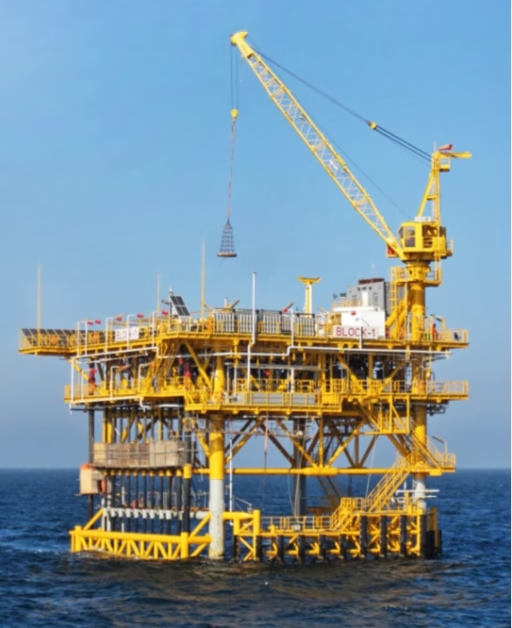
AmerCable 37-102 Equivalent: Sourcing High-Flexibility Type P Cables for Jack-Up Rigs
Anhui Feichun Special Cable Co., Ltd. | Technical Engineering Guide
Introduction and Commercial Context
When electrical engineers and procurement managers specify cables for self-elevating drilling rigs—commonly known as jack-up rigs (自升式钻井平台)—they frequently encounter AmerCable 37-102 designations in technical specifications. The primary concern when evaluating equivalent cable solutions centers on whether alternative suppliers can deliver the same IEEE 1580 Type P core standard and extreme high-flexibility characteristics while offering improved lead times and cost optimization.
This technical guide unpacks the core specifications, performance standards, and practical selection criteria that electrical engineers use when assessing 37-102 equivalent cables for mud pump systems, top drive installations, and auxiliary power distribution on jack-up drilling platforms. 为了方便您直接用于技术规格书或网站内容展示,以下为您整理了该替代方案的核心技术标准和详细数据表,特别涵盖了钻井平台泥浆泵和顶驱系统常用的大截面线规。
Core Technical Standards and Certification Requirements
To qualify as a legitimate functional equivalent to AmerCable 37-102, any cable must satisfy a defined set of non-negotiable technical parameters. 要成为 37-102 的合格平替,电缆必须满足以下硬性指标:
Foundational Standards and Regulatory Compliance
IEEE 1580 Type P represents the primary governing standard for marine shipboard and fixed/floating offshore facility cables in North American jurisdictions. 基础标准:IEEE 1580 Type P UL 1309 and CSA 245 Type X110 (加拿大标准) provide parallel dual certification pathways, particularly for cables intended for Gulf of Mexico installations where multiple classification society approvals are mandatory. All equivalent products must demonstrate compliance through third-party testing and type approval documentation from recognized marine authorities.
Type P cables are specifically engineered for installation in harsh offshore environments that may include severe cold, high heat, constant vibration, drilling mud exposure, mechanical stress, and salt corrosion. 绝缘材料:交联阻燃聚烯烃 Cross-linked Polyolefin,额定工作温度 110°C
Insulation Material Composition
The insulation system must consist of cross-linked flame-retardant polyolefin compounds with a continuous operating temperature rating of 110°C (220°F), with emergency overload capability extending to 130°C. IEEE 1580 Type P insulation undergoes rigorous testing including air oven aging at 121°C for 7 days with minimum 90 percent retention of tensile strength and elongation, oxygen bomb aging at 80°C and 300 PSI over 7 days, and air bomb aging at 127°C and 80 PSI for 42 hours. All equivalent products must achieve identical performance benchmarks to ensure thermal stability and chemical resistance across the cable’s service life.
Conductor Structure and Flexibility Requirements
The conductor must be constructed from soft-annealed, 软退火镀锡铜丝 stranded tinned copper wire conforming to ASTM B33 specifications, utilizing extremely fine individual strand diameters and high strand count configurations. 符合 ASTM B33,极度柔软的 Class I 或更细的绞合等级 This structural requirement directly addresses the demanding installation environment on jack-up rigs where cable must negotiate tight bends around mud pump motor terminals and navigate confined spaces within the top drive assembly.
High strand count conductors achieve extreme flexibility, easier installation, and superior vibration resistance compared to conventional cables. The finer the individual copper strands, the lower the installation labor costs when routing through congested equipment spaces.
Voltage Rating and Ampacity Characteristics
Standard 37-102 equivalent cables are rated for 600V / 1000V (1kV) AC or up to 2000V DC operation, providing flexibility for integration into rig electrical systems spanning auxiliary circuits through primary power distribution networks. 电压等级:600V / 2000V (2kV)
Ampacity ratings are calculated based on 45°C ambient temperature and 100°C rated temperature per IEEE 45 Table 25, with adjustments required for bundled cable installations on equipment bridges where ambient air circulation is restricted.
Marine Classification Approvals
海事认证:必须具备 ABS(美国船级社)或 DNV(挪威船级社)的型式认可 For offshore applications, cables must carry type approval from either the American Bureau of Shipping (ABS) or Det Norske Veritas (DNV). Offshore applicable standards include IEEE 1580 (Construction & Performance), UL 1309 (Construction & Performance), IEEE 45.8 (Installation on Shipboard), and API 14F/FZ (Installation on Floating Facilities).
High-Flexibility Type P Single-Conductor Cable Technical Parameter Table
注:以下数据为行业标准的典型设计值。钻井平台主要使用大截面单芯电缆进行动力传输,因此本表特别补充了动力级线规的参数。理论铜重基于高支数镀锡铜丝估算。 The following parameter table presents typical design specifications for single-conductor Type P equivalents suitable for power distribution on jack-up drilling platforms. These values represent industry-standard configurations; actual delivered specifications vary based on manufacturer design and third-party testing outcomes.
| Core Configuration 芯数 x 截面积 (mm²) | AWG / kcmil Gauge 线规 | Outer Diameter Range (mm) 外径 (mm) | Copper Weight (kg/km) 铜重 (kg/km) | Total Cable Weight (kg/km) 总重 (kg/km) | Ampacity @ 110°C 载流量 (A) |
|---|---|---|---|---|---|
| 1 × 8.4 mm² | 8 AWG | 6.50 – 6.80 | ~75 | ~95 | 77 |
| 1 × 13.3 mm² | 6 AWG | 7.20 – 7.60 | ~118 | ~155 | 102 |
| 1 × 33.6 mm² | 2 AWG | 10.50 – 11.20 | ~300 | ~385 | 179 |
| 1 × 53.5 mm² | 1/0 AWG | 13.50 – 14.20 | ~475 | ~580 | 243 |
| 1 × 107.0 mm² | 4/0 AWG | 18.50 – 19.50 | ~950 | ~1150 | 405 |
| 1 × 159.0 mm² | 313 kcmil | 22.00 – 23.50 | ~1410 | ~1680 | 510 |
| 1 × 271.0 mm² | 535 kcmil | 28.50 – 30.50 | ~2400 | ~2850 | 700 |
| 1 × 394.0 mm² | 777 kcmil | 34.00 – 36.50 | ~3500 | ~4100 | 885 |
*载流量说明:参考 IEEE 45/1580 标准,基于 110°C 额定温度、45°C 环境温度且在自由空气(Free Air)中单根敷设的理论最大值。在钻井平台桥架上成束敷设时,电气工程师需根据实际排布情况应用相应的折减系数 (Derating Factor)。
Important Ampacity Note: Ampacity ratings provided represent theoretical maximum values under free-air installation conditions with 45°C ambient temperature, per IEEE 45 Table 25 specifications. When cables are bundled together on equipment bridge trays aboard jack-up platforms, electrical engineers must apply derating factors that account for reduced cooling efficiency due to proximity-induced heat accumulation. Typical derating factors range from 0.70 to 0.85 depending on bundle configuration, number of circuits, and thermal environment analysis.
Key Engineering Considerations When Evaluating 37-102 Equivalents
Extreme Flexibility Verification and Installation Labor Economics
1. 极度柔软性 (Extreme Flexibility) 的验证:钻井平台的发电机房、泥浆泵 (Mud Pumps) 和顶驱系统 (Top Drives) 空间狭小,走线极其困难。工程师会严格审核导体的”单丝直径”和”绞合股数”。平替产品的单丝越细,敷设时的施工成本就越低。 Jack-up drilling platforms operate within severe spatial constraints. Mud pumps are integrated into the rig and equipped with compact top-mounted drive systems, reducing the overall length and strategically placed in the pump room for permanent installation. The generator compartment, mud pump motor terminals, and top drive assembly leave minimal clearance for power cable routing.
An engineer’s first technical verification involves examining individual conductor strand diameter and total strand count. Cables with finer individual copper strands achieve superior flexibility, enabling installation through tighter bend radius configurations with substantially lower labor costs. When comparing equivalent products, a 5 percent reduction in required installation labor across a 5,000-meter cable system can yield $40,000 to $60,000 in direct cost savings.
Mud and Oil Resistance Verification
2. 抗泥浆与耐油性 (Mud & Oil Resistance):尽管理论上 37-102 系列是非铠装标准版,但在自升式平台的泥浆处理区域,工程师通常会要求外护套具备优异的抗钻井液腐蚀能力。 While standard 37-102 cables are classified as unarmored solutions, jack-up rigs increasingly operate with three large mud pumps rated at 7,500 psi working pressure, representing a significant evolution from earlier two-pump systems. Cable installed within the mud pump room inevitably experiences exposure to drilling fluid aerosols, splash zones, and occasional direct contact with circulating drilling fluids.
The outer jacket must demonstrate exceptional resistance to synthetic drilling muds, water-based muds, and oil-based mud systems without volumetric swelling, hardening, or tensile strength degradation. Engineers typically specify accelerated chemical compatibility testing protocols to verify jacket performance with the specific mud formulation deployed on their installation.
Outer Diameter Compatibility and Physical Fit Verification
3. 电缆外径 (Outer-Ø) 兼容性:替代品的最大外径必须能够穿过平台现有的密封接头 (Cable Glands) 和桥架空间,表格中的 `min – max` 公差范围是工程师核对配件的关键。 The maximum outer diameter specification represents a critical fit parameter. Existing equipment must accommodate the alternative cable without modification. 替代品的最大外径必须能够穿过平台现有的密封接头 (Cable Glands) 和桥架空间 Cable glands, metallic conduit couplings, and cable tray supports are installed equipment with fixed internal dimensions. An equivalent cable that exceeds the maximum outer diameter specification by even 0.5 millimeters creates a fitting incompatibility that forces costly on-site modifications or rework.
Jack-Up Rig Electrical Environment and Application Context
Jack-up rigs consist of a hull, legs and footings, and specialized drilling equipment, with the ability to be towed to offshore sites and then lower legs into the seabed to lift the hull, providing a stable work deck. The electrical architecture of jack-up platforms differs fundamentally from drillship or semi-submersible configurations.
Mud Pump Power Requirements
Modern jack-up platforms typically employ three large mud pumps with hydraulic drive systems that offer precise control and high efficiency, making them suitable for complex drilling operations requiring high precision and variable speed control. Each mud pump motor represents a high-power load drawing 1,500 to 2,200 horsepower. The electrical feeders supplying power to these motors span substantial distances—from the main generator switchboard through cable trays across the rig floor to the pump room.
Type P cables serving mud pump motor circuits must tolerate continuous vibration from reciprocating piston pump mechanisms, thermal cycling as pump motors cycle on and off throughout drilling operations, and the corrosive environment created by mud aerosols and drilling fluid byproducts. The cable’s flexibility ensures that vibration-induced mechanical stress concentrations do not accumulate at sharp bend points, reducing the probability of insulation cracking and conductor fatigue failures.
Top Drive System Integration
The top drive system represents a rotating drilling power transmission unit mounted beneath the rig crown block, delivering rotational torque to the drill string while permitting axial movement for pipe trips. Power cables feeding top drive motor systems must accommodate rapid thermal transients as motor load switches from zero (standby) to full-rated power (drilling). Modern top drive systems employ advanced swivel and rotating equipment that demand cables capable of withstanding extreme mechanical stress and maintaining electrical continuity through continuous rotation cycles.
Flame Retardancy and Safety Compliance
Type P cables must be flame retardant and pass vertical tray flame test requirements of IEEE 1202-1991, with insulated conductors UL listed as Type X110 and Type P. Flame retardant systems pass heat distortion testing where samples sustain 1 hour at 200°C without dimensional change exceeding 20 percent, and cables pass cold bend requirements at 120 hours at -55°C.
The flame retardant system must function without releasing toxic chlorine gas upon combustion. This requirement distinguishes Type P cables from older neoprene-jacketed standards that release corrosive hydrogen chloride gas when burning—a hazardous byproduct in confined engine room environments.
Selection Matrix: When and Why to Specify 37-102 Equivalents
Electrical engineers and procurement managers evaluate 37-102 equivalent cables when one or more of the following conditions exist:
Lead Time Optimization: AmerCable 37-102 products from primary distributors typically require 8–12 week lead times. Alternative suppliers meeting identical IEEE 1580 Type P specifications may deliver equivalent products within 4–6 weeks, enabling schedule acceleration for rig mobilization or emergency cable replacements.
Cost Competitiveness: International Type P cable manufacturers in Asia and Europe can deliver functionally equivalent products at 15–25 percent cost savings compared to primary branded suppliers, while maintaining full certification compliance and quality assurance documentation.
Supply Chain Redundancy: Specifying two or three approved equivalent suppliers reduces supply chain risk. If primary suppliers experience manufacturing disruptions or allocation constraints, engineering teams can execute orders through secondary approved alternatives without design modification.
Regional Availability: Certain project sites in Southeast Asia, South America, and the Middle East have superior logistics access to Asian and European manufacturers, making 37-102 equivalents from these regions more economical than importing from North American suppliers.
Validation and Certification Process for Equivalent Cables
Accepting a 37-102 equivalent requires structured technical validation:
Documentation Verification: The supplier must provide complete technical documentation including third-party test reports confirming IEEE 1580 Type P compliance, UL 1309 listing (if required), ABS or DNV type approval certificates, and physical property test results matching or exceeding baseline specifications.
Sample Testing: Best practice requires obtaining physical cable samples from production batches, performing bend radius testing to confirm flexibility equivalence, tensile strength verification, and jacket chemical resistance testing using the specific mud formulation planned for the installation.
Classification Society Pre-Approval: For Gulf of Mexico and other ABS-jurisdictional installations, engineers should submit the proposed equivalent cable specification to the classification society for preliminary review before final procurement commitment. This pre-approval process typically requires 2–4 weeks and may identify compliance gaps that can be resolved before manufacturing commences.
Common Pitfalls in Equivalent Cable Specification
Several engineering errors commonly occur when specifying 37-102 equivalents:
Ampacity Derating Oversight: Engineers sometimes fail to apply appropriate derating factors when cables are bundled on equipment trays. Exceeding the true ampacity limit under actual installation conditions leads to premature insulation degradation and eventual electrical failure.
Insufficient Mud Resistance Verification: Accepting “general purpose” Type P cables without specific mud resistance testing creates risk when cables contact synthetic drilling muds or ester-based mud systems. Some jacket compounds exhibit unacceptable volumetric swelling when exposed to certain drilling fluids.
Outer Diameter Tolerance Mismanagement: Specifying an equivalent cable with maximum outer diameter at the upper tolerance limit may result in field fitting incompatibility. Best practice requires selecting equivalents with conservative outer diameter specifications, typically staying 0.3–0.5 millimeters below the existing equipment’s internal dimensions.
Conclusion and Procurement Recommendations
AmerCable 37-102 equivalent cables represent a viable and technically sound alternative when sourced from suppliers with demonstrated IEEE 1580 Type P certification, third-party test validation, and marine classification approval. The cost and lead-time advantages can be substantial, particularly when engineering teams implement rigorous validation and pre-approval processes with classification societies and end-users.
The key to successful equivalent cable selection lies in treating the procurement decision as a structured engineering exercise rather than a simple commodity substitution. Electrical engineers should require comprehensive technical documentation, perform physical sample validation, verify compliance with the specific installation environment (particularly regarding mud and thermal exposure), and obtain classification society pre-approval where applicable.
For jack-up drilling platforms operating in the Gulf of Mexico, Southeast Asia, or other demanding offshore environments, the flexibility advantage, compliance assurance, and cost optimization offered by carefully selected 37-102 equivalents can deliver measurable value to drilling contractors and platform operators.
Authoritative Sources and Technical References
- IEEE Standards Association: IEEE 1580 Recommended Practice for Marine Cable for Use on Shipboard and Fixed or Floating Platforms — Official standard specifications for marine shipboard and offshore cable construction and performance requirements.
- UL 1309: Standard for Unarmored or Armored Cables for Use on Ships — North American certification standard parallel to IEEE 1580 with additional fire safety and construction requirements.
- Houston Wire & Cable Co.: IEEE 1580 Type P Cable Specifications and Standards Compliance — Commercial cable manufacturer technical documentation covering Type P construction, testing, and applicable offshore standards.
- Hi-Sea Group: IEEE 1580 Type P 1kV Power Cable Manufacturing Standards and Performance Characteristics — International cable manufacturer specifications demonstrating Type P requirements for harsh offshore drilling environments.
- General Cable: MOR Polyrad XT-125 IEEE 1580 Type P Marine Cable Specification BR-782 — Comprehensive technical specification document including thermal testing, mechanical testing, and aging protocols.
- ICC Cable Corp: Type P Marine Cable Technical Data and Performance Standards — Cable manufacturer documentation covering multi-conductor Type P configurations with flame retardancy and mud resistance specifications.
- Okonite: FMR-P Okoseal Armored Shipboard Cable Specification for Offshore Drilling — Specialized armored Type P cable specifications meeting API, ABS, and IEEE requirements for oil rig and platform applications.
- ICC Cable: Type P Cable 0.6/1kV Flexible Unarmored Power Cable Technical Specification — Unarmored Type P power cable specifications covering ampacity tables and IEEE 45 compliance.
- JC Drilling: How Mud Pumps Work and Jack-Up Rig Mud Pump Requirements — Technical explanation of mud pump operation on jack-up drilling platforms, covering horsepower requirements and system pressures.
- Drilling Formulas: Introduction to Jack-Up Rig Structure, Components, and Equipment — Comprehensive overview of jack-up rig architecture including electrical system architecture and equipment layout.
- Offshore Magazine: Drilling Technology—Mud Pump Capacity Expansion and Jack-Up Rig Enhancement Economics — Industry analysis of mud pump specifications on modern jack-up platforms including horsepower and pressure ratings.
- SMKST Petro: Comprehensive Guide to Mud Pump Types, Specifications, and Offshore Applications — Detailed technical overview of mud pump classifications, hydraulic drive systems, and offshore platform requirements.
- Premium Oilfield Technologies: Top Drive Systems and Subsurface Equipment for Drilling Rigs — Specialized equipment documentation for top drive installations including electrical control systems and power transmission requirements.
Contact Information
Anhui Feichun Special Cable Co., Ltd.
Specialized Manufacturer of High-Flexibility IEEE 1580 Type P Marine and Offshore Cables for Drilling Platforms
WhatsApp: +86 138 5512 3218
Technical Email: [email protected]
Email: [email protected]
For technical consultation on AmerCable 37-102 equivalent specifications, IEEE 1580 Type P cable customization, jack-up rig electrical system design, and high-flexibility cable solutions for drilling platform applications, contact our engineering team directly.


