Marine Cable

FLEXIFESTOON® NE-FLAT (NGFLGÖU): Advanced High-Flexibility Anti-Salt Fog Port Cable for Maritime Cargo Handling and Marine Automation Systems Feichun's revolutionary FLEXIFESTOON® NE-FLAT NGFLGÖU flat cable combines extreme high-flexibility architecture with marine-grade anti-salt fog protection, engineered specifically for port automation infrastructure, cargo-handling festoon systems, and maritime equipment control requiring superior corrosion resistance and mechanical reliability through thousands of bending cycles in aggressive saltwater environments.

FLAT (NGFLGÖU) UL Reeling Cable

FLEXIFESTOON® NE-FLAT (NGFLGÖU): Advanced High-Flexibility Anti-Salt Fog Port Cable for Maritime Cargo Handling and Marine Automation Systems Feichun’s revolutionary FLEXIFESTOON® NE-FLAT NGFLGÖU flat cable combines extreme high-flexibility architecture with marine-grade anti-salt fog protection, engineered specifically for port automation infrastructure, cargo-handling festoon systems, and maritime equipment control requiring superior corrosion resistance and mechanical reliability through thousands of bending cycles in aggressive saltwater environments.
GAALFLEX® CONTROL H05Z-K / H07Z-K: Advanced Halogen-Free XLPO Single-Conductor Industrial Control Cable (H05Z-K: 300/500 V Nominal, H07Z-K: 450/750 V Nominal, 2 kV / 2.5 kV Test Voltage per DIN VDE 0281 part 2 and HD 21.2, −40 to +90°C Bidirectional Extreme Temperature Envelope, Class 5 Flexible Red Bare Copper Conductor per IEC 60228 and DIN VDE 0295, XLPO Type EI5 Cross-Linked Polyolefin Outer Sheath with Black RAL 9005 Coloration, Zero Halogenated Decomposition Products per DIN VDE 0482 part 267-2 / EN 50267-2-1 / IEC 60754-1, Flame Retardant and Self-Extinguishing per DIN VDE 0482 part 332-1-2 / IEC 60332-1-2, Low Optical Smoke Density per IEC 61034-1-2, Harmonized per DIN VDE 0282-9, RoHS and CE Certified, 8×D Minimum Bending Radius for Compact Routing, Single-Core Architecture with 0.5 mm² to 240 mm² Cross-Section Range, 15+ Standardized SKU Configurations, Optional Color Variants Available, Engineered for Industrial Control Panels, PLC/SCADA Wiring, Renewable Energy DC Distribution, Marine Electrical Systems, Aerospace Equipment, Safety-Critical Machinery Control, and Zero-Halogen Fire-Safety-Mandated Environments): Comprehensive Advanced Industrial Control & Renewable Energy Cable Architecture Analysis Integrating Cross-Linked Polyolefin Polymer Chemistry, Halogenation-Free Flame Retardancy Mechanics, Zero-Smoke Thermal Decomposition Engineering, Thermal Stability & UV Resistance, Class 5 Ultra-Flexible Conductor Mechanics, Industrial Control Panel Integration, Renewable Energy DC Bus Routing, Marine Safety-Critical Cable Specification, Aerospace Harness Architecture, and Next-Generation Fire-Safety-Compliant Electrical Distribution for Zero-Halogen Mandated Environments

GAALFLEX® CONTROL H05Z-K & H07Z-K

GAALFLEX® CONTROL H05Z-K / H07Z-K: Advanced Halogen-Free XLPO Single-Conductor Industrial Control Cable (H05Z-K: 300/500 V Nominal, H07Z-K: 450/750 V Nominal, 2 kV / 2.5 kV Test Voltage per DIN VDE 0281 part 2 and HD 21.2, −40 to +90°C Bidirectional Extreme Temperature Envelope, Class 5 Flexible Red Bare Copper Conductor per IEC 60228 and DIN VDE 0295, XLPO Type EI5 Cross-Linked Polyolefin Outer Sheath with Black RAL 9005 Coloration, Zero Halogenated Decomposition Products per DIN VDE 0482 part 267-2 / EN 50267-2-1 / IEC 60754-1, Flame Retardant and Self-Extinguishing per DIN VDE 0482 part 332-1-2 / IEC 60332-1-2, Low Optical Smoke Density per IEC 61034-1-2, Harmonized per DIN VDE 0282-9, RoHS and CE Certified, 8×D Minimum Bending Radius for Compact Routing, Single-Core Architecture with 0.5 mm² to 240 mm² Cross-Section Range, 15+ Standardized SKU Configurations, Optional Color Variants Available, Engineered for Industrial Control Panels, PLC/SCADA Wiring, Renewable Energy DC Distribution, Marine Electrical Systems, Aerospace Equipment, Safety-Critical Machinery Control, and Zero-Halogen Fire-Safety-Mandated Environments): Comprehensive Advanced Industrial Control & Renewable Energy Cable Architecture Analysis Integrating Cross-Linked Polyolefin Polymer Chemistry, Halogenation-Free Flame Retardancy Mechanics, Zero-Smoke Thermal Decomposition Engineering, Thermal Stability & UV Resistance, Class 5 Ultra-Flexible Conductor Mechanics, Industrial Control Panel Integration, Renewable Energy DC Bus Routing, Marine Safety-Critical Cable Specification, Aerospace Harness Architecture, and Next-Generation Fire-Safety-Compliant Electrical Distribution for Zero-Halogen Mandated Environments
Feichun BASKET SPREADER 740 (YSLTOE): Advanced Salt-Spray-Resistant Port Crane Control Cable for Hoisting Cages and Spreader Festoon Systems (300/500 V Nominal, 310/550 V Maximum AC, 410/825 V Maximum DC, 2 kV Test Voltage, −20 to +60°C Bidirectional Temperature Envelope for Both Fixed Laying and Flexible Application, +70°C Continuous Conductor Operating Temperature, +150°C Short-Circuit Conductor Limit, Proprietary Aramide Yarn Central Unit Reinforced with Embedded Lead Core for Combined Tensile Anchor and Vibration-Damping Mass Distribution, Polyurethane Outer Sheath PUR Type 11YM1 with Black RAL 9005-Equivalent Coloration Engineered for Superior Hydrolysis Resistance and Salt-Mist Corrosion Suppression, PVC Type YI2 Core Insulation, Class 6 Ultra-Flexible Bare Red Copper Conductor per IEC 60228 and DIN VDE 0295, EN 50334-Compliant Black Cores with Sequential Numbering Plus Green/Yellow Protective Earth, Bundle-Plus-Central-Unit Stranding Geometry with Non-Woven Tape Wrapping per Bundle and Overall, 50-Meter Continuous Vertical Suspension Capability, 160 m/min Maximum Operational Speed for Crane Festoon and Hoisting Cage Applications, ±25°/m Torsion Resistan

BASKET SPREADER 740 (YSLTOE)

Feichun BASKET SPREADER 740 (YSLTOE): Advanced Salt-Spray-Resistant Port Crane Control Cable for Hoisting Cages and Spreader Festoon Systems (300/500 V Nominal, 310/550 V Maximum AC, 410/825 V Maximum DC, 2 kV Test Voltage, −20 to +60°C Bidirectional Temperature Envelope for Both Fixed Laying and Flexible Application, +70°C Continuous Conductor Operating Temperature, +150°C Short-Circuit Conductor Limit, Proprietary Aramide Yarn Central Unit Reinforced with Embedded Lead Core for Combined Tensile Anchor and Vibration-Damping Mass Distribution, Polyurethane Outer Sheath PUR Type 11YM1 with Black RAL 9005-Equivalent Coloration Engineered for Superior Hydrolysis Resistance and Salt-Mist Corrosion Suppression, PVC Type YI2 Core Insulation, Class 6 Ultra-Flexible Bare Red Copper Conductor per IEC 60228 and DIN VDE 0295, EN 50334-Compliant Black Cores with Sequential Numbering Plus Green/Yellow Protective Earth, Bundle-Plus-Central-Unit Stranding Geometry with Non-Woven Tape Wrapping per Bundle and Overall, 50-Meter Continuous Vertical Suspension Capability, 160 m/min Maximum Operational Speed for Crane Festoon and Hoisting Cage Applications, ±25°/m Torsion Resistan
Feichun MARITIME-FLEX® HT-CORR (VCVH6-F) Marine Port Salt-Fog Resistant Control Cables: Corrosion-Hardened Flexible Systems (0.6/1kV Maritime Standard Voltage, Advanced PVC Type TI2 Sheath with Copper-Based & Hindered Amine Corrosion Inhibitors, 80+ Mrad Cumulative Salt-Spray Radiation Tolerance, High-Flexibility Festoon Design for Dual-Motion Container Cranes & Cargo Handling Equipment, −25 to +70°C Polar-to-Tropical Service Temperature Envelope, 120 m/min High-Speed Festoon Certification for Port Terminal Dynamics, 32 Complete Product SKU Configurations 4–12 Cores, 1.5–95 mm² Conductor Range, VCVH6-F European Maritime Cable Standard Compliance, DNV/ABS/Lloyd's Register Certification, RoHS/CE Approved): Comprehensive Technical Analysis Integrating Electrochemical Salt-Corrosion Mechanisms, PVC Polymer Stabilization Chemistry, Marine Voltage & Environmental Degradation Modeling, Cargo Terminal Cable Engineering & Global Port Infrastructure Integration Modern port and maritime infrastructure—container terminals with dual-axis gantry cranes, bulk cargo loading systems, offshore platform interconnections, and polar region shipping operations—demands electrical cabling fundamentally different from standard industrial control specifications: persistent chloride salt-spray exposure (NaCl aerosol concentration 50–500 mg/m³ in near-shore marine zones, accelerating electrochemical corrosion of unprotected copper conductors and steel armor sheaths through galvanic couple formation), continuous thermal cycling from Arctic nighttime minimums (−25 °C polar operations) to tropical daytime heating (+70 °C sun-exposed cable trays on equatorial container terminals), moisture ingress penetration and salt-water embrittlement of insulation polymers under waterfront humidity (85–100% relative humidity continuously), and mechanical flexure fatigue from dual-axis crane motion (millions of bend cycles per year from spreader bar reeling and trolley lateral traverse on STS/RTG systems). Conventional maritime power cables (0.6/1 kV IEC 60811 industrial specification) designed for stationary offshore platforms or rigid cable tray installations fail catastrophically in dynamic port environments, suffering rapid galvanic corrosion penetration through unprotected copper braid, insulation embrittlement from salt-catalyzed oxidation chemistry, and premature conductor strand fracture under fatigue-assisted corrosion. MARITIME-FLEX® HT-CORR (VCVH6-F) represents a specialized marine infrastructure engineering platform achieving simultaneous optimization across the complete port automation voltage spectrum (0.6/1 kV nominal—matching international container terminal hoist and drive motor ratings across IEC 60320 standardized deck equipment) through advanced PVC type TI2 sheath formulation incorporating dual-mechanism salt-corrosion protection: first, copper-based electrochemical corrosion inhibitors (cuprous oxide nanoparticles, copper(II) phosphate coordination complexes) creating passivation layers on exposed copper braid, and second, hindered amine light stabilizers (HALS) and benzophenone UV absorbers providing 20–30 year service life under combined salt-spray, thermal cycling, and solar UV exposure—delivering port terminal engineers and cargo handling system integrators with specialized festoon cabling architected for global maritime operations across Arctic shipping corridors, tropical equatorial ports, and saline coastal regions with proven 15–20 year service life under aggressive chloride environments and full DNV/ABS/Lloyd's Register maritime certification. Definitive technical reference for maritime electrical engineers designing container terminal automation systems and port gantry crane networks, cargo handling system architects optimizing STS (Ship-to-Shore) and RTG (Rubber-Tyred Gantry) electrical infrastructure, offshore platform engineers integrating shipboard and dockside interconnection cabling, port facility maintenance managers specifying corrosion-resistant marine cables, materials scientists evaluating electrochemical salt-fog degradation mechanisms and stabilizer chemistry, system reliability engineers modeling 15–20 year cable lifetime under continuous maritime salt-spray exposure, port planning specialists designing next-generation container terminal electrification, DNV/ABS compliance managers ensuring marine cable certification across multiple port jurisdictions, electrical procurement professionals specifying VCVH6-F certified marine cables, and technical decision-makers selecting electrical infrastructure for container terminals, bulk cargo facilities, offshore platforms, polar region shipping operations, and hybrid port-to-ship power systems requiring certified marine-rated cabling with demonstrated salt-fog corrosion resistance and 15–20 year operational reliability in the world's most aggressive corrosive marine environments.

FLEXIFESTOON® PV-FLAT CY (VCVH6-F)

Feichun MARITIME-FLEX® HT-CORR (VCVH6-F) Marine Port Salt-Fog Resistant Control Cables: Corrosion-Hardened Flexible Systems (0.6/1kV Maritime Standard Voltage, Advanced PVC Type TI2 Sheath with Copper-Based & Hindered Amine Corrosion Inhibitors, 80+ Mrad Cumulative Salt-Spray Radiation Tolerance, High-Flexibility Festoon Design for Dual-Motion Container Cranes & Cargo Handling Equipment, −25 to +70°C Polar-to-Tropical Service Temperature Envelope, 120 m/min High-Speed Festoon Certification for Port Terminal Dynamics, 32 Complete Product SKU Configurations 4–12 Cores, 1.5–95 mm² Conductor Range, VCVH6-F European Maritime Cable Standard Compliance, DNV/ABS/Lloyd’s Register Certification, RoHS/CE Approved): Comprehensive Technical Analysis Integrating Electrochemical Salt-Corrosion Mechanisms, PVC Polymer Stabilization Chemistry, Marine Voltage & Environmental Degradation Modeling, Cargo Terminal Cable Engineering & Global Port Infrastructure Integration Modern port and maritime infrastructure—container terminals with dual-axis gantry cranes, bulk cargo loading systems, offshore platform interconnections, and polar region shipping operations—demands electrical cabling fundamentally different from standard industrial control specifications: persistent chloride salt-spray exposure (NaCl aerosol concentration 50–500 mg/m³ in near-shore marine zones, accelerating electrochemical corrosion of unprotected copper conductors and steel armor sheaths through galvanic couple formation), continuous thermal cycling from Arctic nighttime minimums (−25 °C polar operations) to tropical daytime heating (+70 °C sun-exposed cable trays on equatorial container terminals), moisture ingress penetration and salt-water embrittlement of insulation polymers under waterfront humidity (85–100% relative humidity continuously), and mechanical flexure fatigue from dual-axis crane motion (millions of bend cycles per year from spreader bar reeling and trolley lateral traverse on STS/RTG systems). Conventional maritime power cables (0.6/1 kV IEC 60811 industrial specification) designed for stationary offshore platforms or rigid cable tray installations fail catastrophically in dynamic port environments, suffering rapid galvanic corrosion penetration through unprotected copper braid, insulation embrittlement from salt-catalyzed oxidation chemistry, and premature conductor strand fracture under fatigue-assisted corrosion. MARITIME-FLEX® HT-CORR (VCVH6-F) represents a specialized marine infrastructure engineering platform achieving simultaneous optimization across the complete port automation voltage spectrum (0.6/1 kV nominal—matching international container terminal hoist and drive motor ratings across IEC 60320 standardized deck equipment) through advanced PVC type TI2 sheath formulation incorporating dual-mechanism salt-corrosion protection: first, copper-based electrochemical corrosion inhibitors (cuprous oxide nanoparticles, copper(II) phosphate coordination complexes) creating passivation layers on exposed copper braid, and second, hindered amine light stabilizers (HALS) and benzophenone UV absorbers providing 20–30 year service life under combined salt-spray, thermal cycling, and solar UV exposure—delivering port terminal engineers and cargo handling system integrators with specialized festoon cabling architected for global maritime operations across Arctic shipping corridors, tropical equatorial ports, and saline coastal regions with proven 15–20 year service life under aggressive chloride environments and full DNV/ABS/Lloyd’s Register maritime certification. Definitive technical reference for maritime electrical engineers designing container terminal automation systems and port gantry crane networks, cargo handling system architects optimizing STS (Ship-to-Shore) and RTG (Rubber-Tyred Gantry) electrical infrastructure, offshore platform engineers integrating shipboard and dockside interconnection cabling, port facility maintenance managers specifying corrosion-resistant marine cables, materials scientists evaluating electrochemical salt-fog degradation mechanisms and stabilizer chemistry, system reliability engineers modeling 15–20 year cable lifetime under continuous maritime salt-spray exposure, port planning specialists designing next-generation container terminal electrification, DNV/ABS compliance managers ensuring marine cable certification across multiple port jurisdictions, electrical procurement professionals specifying VCVH6-F certified marine cables, and technical decision-makers selecting electrical infrastructure for container terminals, bulk cargo facilities, offshore platforms, polar region shipping operations, and hybrid port-to-ship power systems requiring certified marine-rated cabling with demonstrated salt-fog corrosion resistance and 15–20 year operational reliability in the world’s most aggressive corrosive marine environments.
FeiChun Advanced Salt-Fog Resistant Port & Harbor Cables (0.6–35 kV): Comprehensive Technical Analysis of Specialized Polymer Chemistry for Coastal Electrochemical Corrosion Prevention, Copper-Shield Electrochemical Passivation Systems Preventing Galvanic Corrosion, Marine-Grade Insulation Materials Resisting Saltwater Saturation & Salt-Crystal Penetration, Advanced Moisture-Inhibiting Sheath Chemistry with Zinc Compound Activation Layers, Electrochemical Potential Management Through Sacrificial Anode Integration, Long-Term Durability Across 20+ Year Continuous Coastal Service Life in Salt-Spray Environments (ASTM B117, Salt-Fog Testing Validated), Integrated Monitoring Conductors for Port Crane Safety Systems & Electrolytic Corrosion Detection, Dynamic Load Tolerance for Port Equipment Deployment (Container Cranes, Gantries, Bulk Loaders), Comparative Technical Analysis vs. Standard Marine & Industrial Cables, Field-Proven Performance Data from 50+ International Port Installations (Rotterdam, Shanghai, Singapore, Los Angeles), Complete Electrochemical Defense Framework Preventing Salt-Induced Failure Modes in Mega-Port Infrastructure, and Advanced Procurement Strategy for Port Authorities Ensuring Equipment Reliability Across Multi-Decade Harbor Infrastructure Lifecycles Modern port infrastructure operates in among earth's most electrochemically aggressive environments: salt-saturated coastal air combining sodium chloride aerosol deposition at 0.05–5.0 mg/m²/day, continuous moisture condensation from ocean-air temperature differentials, dynamic wind-driven salt spray reaching inland equipment, and electrical potential gradients established by seawater conductivity creating galvanic corrosion pathways between dissimilar metals in port crane structures and electrical equipment installations. FeiChun's advanced salt-fog resistant port cables address these unified electrochemical challenges through specialized polymer chemistry incorporating copper-passivating compounds preventing direct salt attack on conductor surfaces, zinc-activated moisture barriers transforming absorbed water into electrochemically inert forms, marine-grade insulation materials engineered specifically for saltwater environments rather than adapted from industrial applications, and integrated monitoring conductors enabling real-time detection of electrochemical degradation conditions before catastrophic failure.

FLEXIDRUM® MEDIUM R 903

FeiChun Advanced Salt-Fog Resistant Port & Harbor Cables (0.6–35 kV): Comprehensive Technical Analysis of Specialized Polymer Chemistry for Coastal Electrochemical Corrosion Prevention, Copper-Shield Electrochemical Passivation Systems Preventing Galvanic Corrosion, Marine-Grade Insulation Materials Resisting Saltwater Saturation & Salt-Crystal Penetration, Advanced Moisture-Inhibiting Sheath Chemistry with Zinc Compound Activation Layers, Electrochemical Potential Management Through Sacrificial Anode Integration, Long-Term Durability Across 20+ Year Continuous Coastal Service Life in Salt-Spray Environments (ASTM B117, Salt-Fog Testing Validated), Integrated Monitoring Conductors for Port Crane Safety Systems & Electrolytic Corrosion Detection, Dynamic Load Tolerance for Port Equipment Deployment (Container Cranes, Gantries, Bulk Loaders), Comparative Technical Analysis vs. Standard Marine & Industrial Cables, Field-Proven Performance Data from 50+ International Port Installations (Rotterdam, Shanghai, Singapore, Los Angeles), Complete Electrochemical Defense Framework Preventing Salt-Induced Failure Modes in Mega-Port Infrastructure, and Advanced Procurement Strategy for Port Authorities Ensuring Equipment Reliability Across Multi-Decade Harbor Infrastructure Lifecycles Modern port infrastructure operates in among earth’s most electrochemically aggressive environments: salt-saturated coastal air combining sodium chloride aerosol deposition at 0.05–5.0 mg/m²/day, continuous moisture condensation from ocean-air temperature differentials, dynamic wind-driven salt spray reaching inland equipment, and electrical potential gradients established by seawater conductivity creating galvanic corrosion pathways between dissimilar metals in port crane structures and electrical equipment installations. FeiChun’s advanced salt-fog resistant port cables address these unified electrochemical challenges through specialized polymer chemistry incorporating copper-passivating compounds preventing direct salt attack on conductor surfaces, zinc-activated moisture barriers transforming absorbed water into electrochemically inert forms, marine-grade insulation materials engineered specifically for saltwater environments rather than adapted from industrial applications, and integrated monitoring conductors enabling real-time detection of electrochemical degradation conditions before catastrophic failure.
Extended technical reference for container-port operations engineers, dock equipment procurement specialists, electrical infrastructure planners, gantry-crane maintenance teams, maritime safety officers, and port capital-infrastructure project managers. Comprehensive coverage: salt-fog corrosion mechanisms at the polymer/metal interface (electrochemical kinetics of aluminum/copper oxidation in chloride-rich marine environments); polymer-chemistry approaches to moisture-ingress suppression (HEPR elastomer formulation, plasticizer selection, interface engineering); EMC shielding design (concentric vs. braided screen, copper surface-finish specifications, impedance control for VFD harmonic suppression); mechanical fatigue under combined bending-torsion-wind stress (Goodman diagram analysis, S-N fatigue curves for elastomer systems); round vs. flat cable aerodynamic behavior (computational fluid dynamics modeling of wind-induced vibration, stress concentration factors); DIN VDE 0250-812 standards architecture and global regulatory equivalence (ATEX, IEC, ISO 1659, Australian/Canadian port standards); field deployment data from 15+ years of port operations across diverse geographic regions (tropical salt-fog, temperate maritime, cold-climate ports); practical drop-in replacement engineering for Nexans/Prysmian equipment transitions; installation best practices for salt-fog environments (routing, termination, grounding, drainage management); maintenance protocols and life-extension strategies; and comprehensive 20-year total-cost-of-ownership modeling comparing premium elastomer systems versus commodity flat-cable approaches.

RHEYFESTOON®(C) (N)3GRDGC5G High-Speed Festoon Cable: Complete Technical Engineering Analysis of High-Molecular-Weight Elastomer Chemistry, Salt-Spray Corrosion Resistance Mechanisms, Concentric Copper-Screen EMC Shielding Architecture, Round vs. Flat Cable Design Comparison, Mechanical Stress Engineering for Extreme U-Bending Repetition, Polymer Moisture Ingress Barriers, Electrochemical Protection in Marine Salt-Fog Environments, Port Container-Terminal Integration, Real-World 240 m/min Operational Duty Cycles, Comparative Performance Benchmarking Against Standard Flat Festoon Systems, Drop-In Replacement Qualification Framework, Lifecycle Cost-of-Ownership Analysis for Global Deep-Water Container Ports, and Field-Proven Deployment Data from 1,500+ Port Installations

Extended technical reference for container-port operations engineers, dock equipment procurement specialists, electrical infrastructure planners, gantry-crane maintenance teams, maritime safety officers, and port capital-infrastructure project managers. Comprehensive coverage: salt-fog corrosion mechanisms at the polymer/metal interface (electrochemical kinetics of aluminum/copper oxidation in chloride-rich marine environments); polymer-chemistry approaches to moisture-ingress suppression (HEPR elastomer formulation, plasticizer selection, interface engineering); EMC shielding design (concentric vs. braided screen, copper surface-finish specifications, impedance control for VFD harmonic suppression); mechanical fatigue under combined bending-torsion-wind stress (Goodman diagram analysis, S-N fatigue curves for elastomer systems); round vs. flat cable aerodynamic behavior (computational fluid dynamics modeling of wind-induced vibration, stress concentration factors); DIN VDE 0250-812 standards architecture and global regulatory equivalence (ATEX, IEC, ISO 1659, Australian/Canadian port standards); field deployment data from 15+ years of port operations across diverse geographic regions (tropical salt-fog, temperate maritime, cold-climate ports); practical drop-in replacement engineering for Nexans/Prysmian equipment transitions; installation best practices for salt-fog environments (routing, termination, grounding, drainage management); maintenance protocols and life-extension strategies; and comprehensive 20-year total-cost-of-ownership modeling comparing premium elastomer systems versus commodity flat-cable approaches.
Extended technical reference for seaport electrical engineers, marine equipment OEMs, vessel design teams, terminal infrastructure planners, and maritime project managers. Covers: electrochemical corrosion fundamentals in saline environments; salt-fog failure mechanisms in conventional cables; FeiChun's multi-layer anti-corrosion architecture (epoxy field-control layers, copper-braid passivation, polyurethane moisture barriers); comparative performance vs. RHEYCORD® NSHTOEU-J (mechanical properties, electrochemical durability, thermal performance, cost-effectiveness); international marine standards (IEC 60092-373, IEC 60189-1, ISO 6722); salt-fog testing protocols (ASTM B117, IEC 60068-2-11); field deployment data from 180+ seaport installations; thermal management in high-humidity marine conditions; EMI control in vessel power systems; and practical specification frameworks for seaport and offshore cable procurement.

Marine-Grade Salt-Fog Resistant Flexible Port Power Cable: Complete Engineering Analysis, Electrochemical Corrosion Protection Architecture, Epoxy-Polyurethane Dual-Jacket Design, Copper Braid Shield Preservation Strategy, Seawater and Saline Vapor Immunity, Comprehensive Comparative Evaluation Against RHEYCORD® NSHTOEU-J and Traditional Marine Cable Systems for Global Seaport and Offshore Applications

Extended technical reference for seaport electrical engineers, marine equipment OEMs, vessel design teams, terminal infrastructure planners, and maritime project managers. Covers: electrochemical corrosion fundamentals in saline environments; salt-fog failure mechanisms in conventional cables; FeiChun’s multi-layer anti-corrosion architecture (epoxy field-control layers, copper-braid passivation, polyurethane moisture barriers); comparative performance vs. RHEYCORD® NSHTOEU-J (mechanical properties, electrochemical durability, thermal performance, cost-effectiveness); international marine standards (IEC 60092-373, IEC 60189-1, ISO 6722); salt-fog testing protocols (ASTM B117, IEC 60068-2-11); field deployment data from 180+ seaport installations; thermal management in high-humidity marine conditions; EMI control in vessel power systems; and practical specification frameworks for seaport and offshore cable procurement.
Extended technical guide for port electrical engineers, crane OEMs, ship unloader integrators, and terminal procurement teams covering: the engineering rationale for marine-grade pendant cable specification versus standard industrial pendant cable; detailed deconstruction of the RHEYFLEX-PN construction from conductor stranding through EPR insulation, polyamide strength member, and polychloroprene sheath; chloride-driven copper corrosion fatigue mechanisms at pendant cable terminations; comparative evaluation against H07RN-F (harmonised heavy-duty rubber), RHEYFLEX® 500 -Y- (PVC-insulated control), RHEYCORD® NSHTOEU-J (reeling cable platform), and BUFLEX® DGR (drag-chain rubber cable); 5GM3 versus 5GM5 polychloroprene sheath chemistry analysis; ISO 9227 and IEC 60068-2-52 salt fog test methodology; and FeiChun's FC-RHEYFLEX-PN-M equivalent with FC-FLX™ ultra-fine tinned conductors, aramid hydrolysis-immune strength member, and 5GM5 marine-grade polychloroprene outer sheath.

RHEYFIRM®(RTS) (N)TSCGEWTOEUS OF — The Ultimate Salt-Fog Upgraded Medium-Voltage Reeling Cable for Harbour Service: Layer-by-Layer Engineering Analysis, Comparative Performance Evaluation Against RHEYFIRM®(SI) NTMCGCWOEUS, Standard RHEYFIRM®(RTS), RHEYCORD®-OFE SR, and BUFLEX® SEM OFE, with FeiChun FC-RHEYFIRM-RTS-OF Enhanced Anti-Corrosion Equivalent

Extended technical guide for port electrical engineers, crane OEMs, ship unloader integrators, and terminal procurement teams covering: the engineering rationale for marine-grade pendant cable specification versus standard industrial pendant cable; detailed deconstruction of the RHEYFLEX-PN construction from conductor stranding through EPR insulation, polyamide strength member, and polychloroprene sheath; chloride-driven copper corrosion fatigue mechanisms at pendant cable terminations; comparative evaluation against H07RN-F (harmonised heavy-duty rubber), RHEYFLEX® 500 -Y- (PVC-insulated control), RHEYCORD® NSHTOEU-J (reeling cable platform), and BUFLEX® DGR (drag-chain rubber cable); 5GM3 versus 5GM5 polychloroprene sheath chemistry analysis; ISO 9227 and IEC 60068-2-52 salt fog test methodology; and FeiChun’s FC-RHEYFLEX-PN-M equivalent with FC-FLX™ ultra-fine tinned conductors, aramid hydrolysis-immune strength member, and 5GM5 marine-grade polychloroprene outer sheath.
Extended technical guide for port electrical engineers, fire safety officers, crane OEMs, and terminal procurement teams covering: the fire safety rationale for halogen-free construction in enclosed port environments — hydrogen chloride toxicity, electronic equipment corrosion, and smoke obscuration during fire events; complete nomenclature decoding of the YSLZ3SOE-J designation per German VDE convention; TPE (thermoplastic elastomer) insulation and sheathing compound chemistry and why it differs fundamentally from thermoset rubber (EPR, EPDM, CR) used in standard reeling cables; mechanical performance analysis of TPE versus EPDM in dynamic reeling applications — flex-cycle endurance, tensile strength, tear resistance, and cold-temperature flexibility; vertical free-fall basket operation mechanics — catenary stress, coiling geometry, impact loading, and why basket spreader cables require different engineering than drum-wound reeling cables; IEC 60332-3 (flame propagation in bunched cables), IEC 61034 (smoke density measurement), and IEC 60754-2 (gas acidity by pH and conductivity) compliance analysis; salt fog performance limitations of TPE compounds (400–700 hours per ISO 9227) versus polychloroprene alternatives (800–1,500 hours); comparative evaluation against RHEYCORD® NSHTOEU-J (standard CR reeling), RHEYCORD®(RTS) (N)SHTOEU-J (premium CR reeling), RHEYCORD®-OFE SR (oil-resistant CR spreader), and CORDAFLEX® SMK-V (aramid-core vertical spreader); and FeiChun FC-RHEYCORD-BS marine-grade halogen-free equivalent with enhanced moisture barrier, FC-FLX™ tinned conductors, and aramid strength member for coastal service.

RHEYCORD®(BS) YSLZ3SOE-J — The Halogen-Free Basket Spreader Reeling Cable for Fire-Regulated Port Environments: TPE Construction Analysis, Vertical Free-Fall Basket Engineering, IEC 60332-3 / IEC 61034 / IEC 60754-2 Fire Safety Compliance, Salt Fog Performance Trade-Offs in Harbour Service, and Comparative Evaluation Against RHEYCORD® NSHTOEU-J, RHEYCORD®(RTS), RHEYCORD®-OFE SR, and CORDAFLEX® SMK-V with FeiChun FC-RHEYCORD-BS Marine-Grade Enhanced Equivalent

Extended technical guide for port electrical engineers, fire safety officers, crane OEMs, and terminal procurement teams covering: the fire safety rationale for halogen-free construction in enclosed port environments — hydrogen chloride toxicity, electronic equipment corrosion, and smoke obscuration during fire events; complete nomenclature decoding of the YSLZ3SOE-J designation per German VDE convention; TPE (thermoplastic elastomer) insulation and sheathing compound chemistry and why it differs fundamentally from thermoset rubber (EPR, EPDM, CR) used in standard reeling cables; mechanical performance analysis of TPE versus EPDM in dynamic reeling applications — flex-cycle endurance, tensile strength, tear resistance, and cold-temperature flexibility; vertical free-fall basket operation mechanics — catenary stress, coiling geometry, impact loading, and why basket spreader cables require different engineering than drum-wound reeling cables; IEC 60332-3 (flame propagation in bunched cables), IEC 61034 (smoke density measurement), and IEC 60754-2 (gas acidity by pH and conductivity) compliance analysis; salt fog performance limitations of TPE compounds (400–700 hours per ISO 9227) versus polychloroprene alternatives (800–1,500 hours); comparative evaluation against RHEYCORD® NSHTOEU-J (standard CR reeling), RHEYCORD®(RTS) (N)SHTOEU-J (premium CR reeling), RHEYCORD®-OFE SR (oil-resistant CR spreader), and CORDAFLEX® SMK-V (aramid-core vertical spreader); and FeiChun FC-RHEYCORD-BS marine-grade halogen-free equivalent with enhanced moisture barrier, FC-FLX™ tinned conductors, and aramid strength member for coastal service.
Japanese Standard High Tension (HT) cables with Kevlar® reinforcement represent the pinnacle of specialized power distribution technology for demanding marine port applications. Engineered to conform to Japanese Industrial Standards (JIS C 3317, JIS C 3350), these cables incorporate integrated aramid reinforced layers that dramatically enhance tensile strength while maintaining the flexibility required for reel-mounted equipment operation. The term "high tension" in Japanese maritime engineering refers specifically to the mechanical tension and longitudinal stress experienced by cables subjected to extreme operational demands—including extended unsupported spans, repetitive reel cycling, heavy dynamic loading, and sustained exposure to marine environments. Unlike standard port cables, Japanese Standard HT cables with Kevlar® reinforcement are engineered for applications where: • Unsupported cable spans exceed 40–60 meters between ship and shore equipment or between reel stations • Combined electrical load and mechanical tension create dual stress conditions requiring advanced material science • Long service life expectancy (7–10+ years) justifies premium reinforcement material investment • Environmental exposure to saltwater aerosol, UV radiation, and thermal cycling demands superior polymer formulation • High-availability terminal operations cannot tolerate premature cable failure and operational downtime The integration of Kevlar® aramid reinforcement layers represents a fundamental departure from conventional cable design. Rather than relying solely on rubber insulation and polymer sheathing to provide mechanical strength, Kevlar-reinforced cables employ a specialized tension layer that carries a portion of the cable's weight and operational stress, thereby reducing stress on the insulation and extending overall cable service life by 40–60% compared to unreinforced designs.

Japanese Standard High Tension Cables with Kevlar® Reinforcement

Japanese Standard High Tension (HT) cables with Kevlar® reinforcement represent the pinnacle of specialized power distribution technology for demanding marine port applications. Engineered to conform to Japanese Industrial Standards (JIS C 3317, JIS C 3350), these cables incorporate integrated aramid reinforced layers that dramatically enhance tensile strength while maintaining the flexibility required for reel-mounted equipment operation. The term “high tension” in Japanese maritime engineering refers specifically to the mechanical tension and longitudinal stress experienced by cables subjected to extreme operational demands—including extended unsupported spans, repetitive reel cycling, heavy dynamic loading, and sustained exposure to marine environments. Unlike standard port cables, Japanese Standard HT cables with Kevlar® reinforcement are engineered for applications where: • Unsupported cable spans exceed 40–60 meters between ship and shore equipment or between reel stations • Combined electrical load and mechanical tension create dual stress conditions requiring advanced material science • Long service life expectancy (7–10+ years) justifies premium reinforcement material investment • Environmental exposure to saltwater aerosol, UV radiation, and thermal cycling demands superior polymer formulation • High-availability terminal operations cannot tolerate premature cable failure and operational downtime The integration of Kevlar® aramid reinforcement layers represents a fundamental departure from conventional cable design. Rather than relying solely on rubber insulation and polymer sheathing to provide mechanical strength, Kevlar-reinforced cables employ a specialized tension layer that carries a portion of the cable’s weight and operational stress, thereby reducing stress on the insulation and extending overall cable service life by 40–60% compared to unreinforced designs.
PNCT-F designation identifies cables with a flat profile cross-section, as opposed to the standard round profile. While round cables are universal and flexible, flat cables offer specific advantages for certain port crane applications: Compact Storage and Handling: Flat cables pack more efficiently on drums and spools. A flat cable occupies approximately 15–20% less volume than a round cable of equivalent conductor area, reducing storage footprint and shipping volume. Improved Thermal Dissipation: The flat geometry increases surface area relative to volume, enabling better heat dissipation from the conductor. In high-current applications (large hoist motors), flat cables run cooler than round cables, reducing insulation aging and extending service life. Easier Cable Management: Flat cables lay flatter in cable troughs and festoon routes, reducing twisting and tangling. This property is particularly valuable in complex multi-cable installations where space is constrained. Lower Profile Aesthetics: For applications where cable profile affects equipment appearance or port terminal aesthetics, flat cables provide a lower-profile alternative.

PNCT-F Flat Type Cables & Cable Specification System

PNCT-F designation identifies cables with a flat profile cross-section, as opposed to the standard round profile. While round cables are universal and flexible, flat cables offer specific advantages for certain port crane applications: Compact Storage and Handling: Flat cables pack more efficiently on drums and spools. A flat cable occupies approximately 15–20% less volume than a round cable of equivalent conductor area, reducing storage footprint and shipping volume. Improved Thermal Dissipation: The flat geometry increases surface area relative to volume, enabling better heat dissipation from the conductor. In high-current applications (large hoist motors), flat cables run cooler than round cables, reducing insulation aging and extending service life. Easier Cable Management: Flat cables lay flatter in cable troughs and festoon routes, reducing twisting and tangling. This property is particularly valuable in complex multi-cable installations where space is constrained. Lower Profile Aesthetics: For applications where cable profile affects equipment appearance or port terminal aesthetics, flat cables provide a lower-profile alternative.
NSHTÖU-J 24G2.5 flexible reeling cable is the globally recognized industry standard for ship-to-shore crane spreader basket vertical lift systems, featuring 24 conductors with 2.5 mm² cross-section per core (one conductor designated green/yellow for grounding/safety) providing approximately 30 amperes current capacity in free-air installation at 30°C ambient, but derating to approximately 15 amperes actual safe continuous current when accounting for the multi-core bundle derating factor of 0.45 to 0.50 and tropical port ambient temperatures. The cable's nominal outer diameter ranges from 28.5 to 32.5 millimeters, with total weight of approximately 1,350 kilograms per kilometer, making it manageable for standard spreader basket spools while maintaining the conductor density necessary for reliable simultaneous power and control signal transmission. The cable features proprietary anti-torsion braid structure embedded between inner and outer sheaths—a critical innovation that provides resistance to ±50° per meter torsional deformation, fundamentally preventing the destructive corkscrew effect that kills ordinary flexible cables within 3 to 6 months of tropical port operation. The cable incorporates Class 5 tinned copper conductors engineered specifically for the fatigue resistance required by continuous 160 meters per minute reeling cycles, EPDM insulation maintaining electrical integrity at the 90°C conductor temperatures that result from high-speed duty cycles in multi-core bundles, 5GM5 elastomer outer sheath providing exceptional resistance to salt-spray corrosion, UV degradation, petroleum-based oils, and mechanical abrasion encountered in global container ports. The cable is rated for 0.6/1.0 kilovolt nominal operation, with dielectric test voltage capability reaching 3 kilovolts, more than adequate for spreader basket control circuits and auxiliary power distribution. Unlike generic "marine-grade" cables or rebranded industrial flexible cables, NSHTÖU-J 24G2.5 is purpose-built to tolerate the combined mechanical, thermal, and environmental stresses unique to STS crane spreader applications—making it not simply the preferred option but the only technically defensible choice for reliability-critical spreader systems operating in high-intensity container port environments.

STS Crane Spreader Baskets: Why NSHTÖU-J 24G2.5 is the Industry Standard for Vertical Lift Power & Control

NSHTÖU-J 24G2.5 flexible reeling cable is the globally recognized industry standard for ship-to-shore crane spreader basket vertical lift systems, featuring 24 conductors with 2.5 mm² cross-section per core (one conductor designated green/yellow for grounding/safety) providing approximately 30 amperes current capacity in free-air installation at 30°C ambient, but derating to approximately 15 amperes actual safe continuous current when accounting for the multi-core bundle derating factor of 0.45 to 0.50 and tropical port ambient temperatures. The cable’s nominal outer diameter ranges from 28.5 to 32.5 millimeters, with total weight of approximately 1,350 kilograms per kilometer, making it manageable for standard spreader basket spools while maintaining the conductor density necessary for reliable simultaneous power and control signal transmission. The cable features proprietary anti-torsion braid structure embedded between inner and outer sheaths—a critical innovation that provides resistance to ±50° per meter torsional deformation, fundamentally preventing the destructive corkscrew effect that kills ordinary flexible cables within 3 to 6 months of tropical port operation. The cable incorporates Class 5 tinned copper conductors engineered specifically for the fatigue resistance required by continuous 160 meters per minute reeling cycles, EPDM insulation maintaining electrical integrity at the 90°C conductor temperatures that result from high-speed duty cycles in multi-core bundles, 5GM5 elastomer outer sheath providing exceptional resistance to salt-spray corrosion, UV degradation, petroleum-based oils, and mechanical abrasion encountered in global container ports. The cable is rated for 0.6/1.0 kilovolt nominal operation, with dielectric test voltage capability reaching 3 kilovolts, more than adequate for spreader basket control circuits and auxiliary power distribution. Unlike generic “marine-grade” cables or rebranded industrial flexible cables, NSHTÖU-J 24G2.5 is purpose-built to tolerate the combined mechanical, thermal, and environmental stresses unique to STS crane spreader applications—making it not simply the preferred option but the only technically defensible choice for reliability-critical spreader systems operating in high-intensity container port environments.
For fixed installation in petrochemical facility hydraulic oil leak zones, Type P (X110) radiation-cross-linked polyolefin cables are the superior choice and are mandated by international standards including IEEE 1580, NEK 606, and major chemical plant engineering codes. Type P cables are rated for continuous operation at 110°C conductor temperature (compared to 80°C for standard PUR), feature superior flame retardancy meeting IEEE 1202 and IEC 60332-3-22 standards with zero halogen emissions, maintain 80 to 90 percent property retention after 5 to 10 years of continuous chemical exposure compared to 40 to 60 percent for generic PUR, and provide exceptional compatibility with both mineral-based and synthetic fire-resistant hydraulic fluids including phosphate esters (Skydrol-type fluids) that cause significant swelling in standard polyurethane. Generic polyurethane (PUR) cables excel in mobile and continuously flexing applications where mechanical abrasion resistance is paramount and environmental temperatures remain moderate, but they are unsuitable for fixed installation in chemical plant hydraulic zones where thermal stability, chemical resistance, and fire safety are controlling factors. The critical distinction lies in understanding that PUR's unparalleled mechanical durability and flexibility come at the cost of reduced thermal stability, limited chemical compatibility with synthetic fluids, and combustion behavior that creates fire propagation hazards in leak-zone environments. For typical petrochemical facility power distributions, refinery hydraulic pump station cabling, and fixed deck-mounted power leads, Type P (X110) provides the material durability, regulatory compliance, and safety performance required by modern chemical plant standards. However, for mobile heavy machinery such as drag-chain robotic systems, floating platform equipment, or port machinery where the cable undergoes millions of bend cycles and mechanical stress is the primary degradation driver, high-flexibility PUR variants (or specialized hybrid formulations combining PUR's mechanical properties with enhanced chemical resistance) may provide better lifecycle economics despite shorter service life in static chemical exposure. Understanding which cable to specify depends on accurately identifying whether thermal stability and fire safety (favoring Type P) or mechanical durability and continuous flexing (favoring PUR) represent the controlling design constraint for your specific application.

Chemical Plants: Selecting Between Type P (X110) and Generic PUR Cables for Hydraulic Oil Leak Zones

For fixed installation in petrochemical facility hydraulic oil leak zones, Type P (X110) radiation-cross-linked polyolefin cables are the superior choice and are mandated by international standards including IEEE 1580, NEK 606, and major chemical plant engineering codes. Type P cables are rated for continuous operation at 110°C conductor temperature (compared to 80°C for standard PUR), feature superior flame retardancy meeting IEEE 1202 and IEC 60332-3-22 standards with zero halogen emissions, maintain 80 to 90 percent property retention after 5 to 10 years of continuous chemical exposure compared to 40 to 60 percent for generic PUR, and provide exceptional compatibility with both mineral-based and synthetic fire-resistant hydraulic fluids including phosphate esters (Skydrol-type fluids) that cause significant swelling in standard polyurethane. Generic polyurethane (PUR) cables excel in mobile and continuously flexing applications where mechanical abrasion resistance is paramount and environmental temperatures remain moderate, but they are unsuitable for fixed installation in chemical plant hydraulic zones where thermal stability, chemical resistance, and fire safety are controlling factors. The critical distinction lies in understanding that PUR’s unparalleled mechanical durability and flexibility come at the cost of reduced thermal stability, limited chemical compatibility with synthetic fluids, and combustion behavior that creates fire propagation hazards in leak-zone environments. For typical petrochemical facility power distributions, refinery hydraulic pump station cabling, and fixed deck-mounted power leads, Type P (X110) provides the material durability, regulatory compliance, and safety performance required by modern chemical plant standards. However, for mobile heavy machinery such as drag-chain robotic systems, floating platform equipment, or port machinery where the cable undergoes millions of bend cycles and mechanical stress is the primary degradation driver, high-flexibility PUR variants (or specialized hybrid formulations combining PUR’s mechanical properties with enhanced chemical resistance) may provide better lifecycle economics despite shorter service life in static chemical exposure. Understanding which cable to specify depends on accurately identifying whether thermal stability and fire safety (favoring Type P) or mechanical durability and continuous flexing (favoring PUR) represent the controlling design constraint for your specific application.
AmerCable 37-105319BS cable, which typically represents a three-conductor configuration of approximately 1/0 AWG (53.5 mm²) per conductor in the GEXOL® Type P series, has a maximum continuous ampacity of approximately 199 amperes under IEEE 45-2002 marine standards. This rating assumes the reference ambient condition of 45°C (113°F) in free air installation and assumes the conductors operate at the maximum allowable continuous temperature of 100°C (212°F). The "319" component of the model designation represents an internal AmerCable size code that corresponds to this 1/0 AWG conductor configuration, though the exact cross-sectional area may vary slightly depending on stranding geometry and manufacturing tolerances. The "BS" suffix designates the bronze sheath armor, a copper-based braided layer that provides exceptional corrosion resistance in marine, coastal, and underground environments while also offering superior grounding and electromagnetic shielding properties compared to steel-armored alternatives. The cable achieves its advantageous 100°C conductor rating through the use of GEXOL®, a cross-linked polyolefin insulation material engineered specifically for marine applications, providing superior thermal stability, flame resistance, and chemical resistance compared to conventional rubber or PVC insulation. The 199-ampere continuous rating represents the maximum safe sustained current the cable can carry indefinitely under the specified reference conditions without exceeding the insulation's thermal design limit. Understanding how this ampacity rating is derived from first principles and how it changes under different installation conditions is essential for electrical engineers designing marine power distribution systems and procurement specialists evaluating cable choices for offshore drilling, port operations, and industrial power applications.

Maximum Continuous Ampacity: What is the Ampacity for AmerCable 37-105319BS Under IEEE 45 Standards?

AmerCable 37-105319BS cable, which typically represents a three-conductor configuration of approximately 1/0 AWG (53.5 mm²) per conductor in the GEXOL® Type P series, has a maximum continuous ampacity of approximately 199 amperes under IEEE 45-2002 marine standards. This rating assumes the reference ambient condition of 45°C (113°F) in free air installation and assumes the conductors operate at the maximum allowable continuous temperature of 100°C (212°F). The “319” component of the model designation represents an internal AmerCable size code that corresponds to this 1/0 AWG conductor configuration, though the exact cross-sectional area may vary slightly depending on stranding geometry and manufacturing tolerances. The “BS” suffix designates the bronze sheath armor, a copper-based braided layer that provides exceptional corrosion resistance in marine, coastal, and underground environments while also offering superior grounding and electromagnetic shielding properties compared to steel-armored alternatives. The cable achieves its advantageous 100°C conductor rating through the use of GEXOL®, a cross-linked polyolefin insulation material engineered specifically for marine applications, providing superior thermal stability, flame resistance, and chemical resistance compared to conventional rubber or PVC insulation. The 199-ampere continuous rating represents the maximum safe sustained current the cable can carry indefinitely under the specified reference conditions without exceeding the insulation’s thermal design limit. Understanding how this ampacity rating is derived from first principles and how it changes under different installation conditions is essential for electrical engineers designing marine power distribution systems and procurement specialists evaluating cable choices for offshore drilling, port operations, and industrial power applications.
The NSHTÖU-J 4G95 0.6/1kV heavy-duty reeling cable has a nominal 1-second short-circuit current rating of 9,000 amperes, with typical field variations ranging between 8,500 and 10,200 amperes depending on conductor material purity, cable geometry variations, and reference test conditions. This rating represents the maximum instantaneous fault current the cable can safely withstand for exactly one second of duration before the copper conductor temperature exceeds the absolute thermal limit of 250°C, at which point irreversible thermal damage to the EPR insulation and conductor structure begins. The cable features four 95 mm² conductors (including one integrated green/yellow earth core) of Class 5 tinned copper, an outer diameter of approximately 53–57.5 mm, and a total weight of approximately 7,600 kg/km. Under normal continuous operation at 30°C ambient temperature in free air, the cable safely carries 301 amperes without exceeding 90°C conductor temperature. However, when a short circuit occurs and fault current reaches 9,000 amperes, the same conductor experiences a 100-fold increase in current density, generating extreme Joule heating that raises conductor temperature from the pre-fault state (typically 50–70°C under load) to 250°C within one second. The underlying calculation governing this short-circuit rating is the adiabatic heating formula, a fundamental electrical engineering principle that engineers must understand to properly coordinate protection devices and prevent cable failure during electrical faults.

Short-Circuit Rating: What is the 1-Second Short-Circuit Current for NSHTÖU-J 4G95 0.6/1kV?

The NSHTÖU-J 4G95 0.6/1kV heavy-duty reeling cable has a nominal 1-second short-circuit current rating of 9,000 amperes, with typical field variations ranging between 8,500 and 10,200 amperes depending on conductor material purity, cable geometry variations, and reference test conditions. This rating represents the maximum instantaneous fault current the cable can safely withstand for exactly one second of duration before the copper conductor temperature exceeds the absolute thermal limit of 250°C, at which point irreversible thermal damage to the EPR insulation and conductor structure begins. The cable features four 95 mm² conductors (including one integrated green/yellow earth core) of Class 5 tinned copper, an outer diameter of approximately 53–57.5 mm, and a total weight of approximately 7,600 kg/km. Under normal continuous operation at 30°C ambient temperature in free air, the cable safely carries 301 amperes without exceeding 90°C conductor temperature. However, when a short circuit occurs and fault current reaches 9,000 amperes, the same conductor experiences a 100-fold increase in current density, generating extreme Joule heating that raises conductor temperature from the pre-fault state (typically 50–70°C under load) to 250°C within one second. The underlying calculation governing this short-circuit rating is the adiabatic heating formula, a fundamental electrical engineering principle that engineers must understand to properly coordinate protection devices and prevent cable failure during electrical faults.
BFOU 0.6/1kV P5/P12 fire-resistant offshore power cable with 3 × 95 mm² tinned copper conductors is approximately 45 mm (1.77 inches), with a standard tolerance window of ±2.0 mm producing a permissible range of 43.0–47.0 mm. This specification is critical for cable gland selection because offshore and marine cable glands are manufactured with specific bore diameters engineered to accommodate this dimensional range. The approximate total weight of this cable is 4,950 kg/km (3,330 lbs/1000 ft), with copper content approximately 3,350 kg/km. It features three 95 mm² Class 2 tinned copper main power conductors, a halogen-free EPR insulation system, a critical mica tape fire-resistance layer rated for 830°C continuous operation (IEC 60331 certified), tinned copper wire braid armor providing mechanical protection and electromagnetic shielding, and an SHF2 halogen-free thermosetting outer sheath rated for extreme marine and subsea conditions.

Cable Gland Sizing: Finding the OD Tolerance for BFOU 0.6/1kV P5/P12 3×95 mm² Offshore Power Cable

BFOU 0.6/1kV P5/P12 fire-resistant offshore power cable with 3 × 95 mm² tinned copper conductors is approximately 45 mm (1.77 inches), with a standard tolerance window of ±2.0 mm producing a permissible range of 43.0–47.0 mm. This specification is critical for cable gland selection because offshore and marine cable glands are manufactured with specific bore diameters engineered to accommodate this dimensional range. The approximate total weight of this cable is 4,950 kg/km (3,330 lbs/1000 ft), with copper content approximately 3,350 kg/km. It features three 95 mm² Class 2 tinned copper main power conductors, a halogen-free EPR insulation system, a critical mica tape fire-resistance layer rated for 830°C continuous operation (IEC 60331 certified), tinned copper wire braid armor providing mechanical protection and electromagnetic shielding, and an SHF2 halogen-free thermosetting outer sheath rated for extreme marine and subsea conditions.
Offshore drilling mud pumps represent some of the most mission-critical equipment on modern drilling platforms. These pumps are driven by variable frequency drive (VFD) systems that optimize power consumption and equipment performance through sophisticated electronic switching, yet this advanced power control technology introduces an insidious threat: VFD-induced electrical discharge machining (EDM) damage to motor bearings, known as fluting. When mud pumps experience unexpected bearing failure due to EDM fluting, unplanned downtime costs platform operators hundreds of thousands of dollars per day in lost production capacity.

Type MMV-VFD (15kV): Managing High-Frequency EMI in Medium Voltage Offshore Drives

Offshore drilling mud pumps represent some of the most mission-critical equipment on modern drilling platforms. These pumps are driven by variable frequency drive (VFD) systems that optimize power consumption and equipment performance through sophisticated electronic switching, yet this advanced power control technology introduces an insidious threat: VFD-induced electrical discharge machining (EDM) damage to motor bearings, known as fluting. When mud pumps experience unexpected bearing failure due to EDM fluting, unplanned downtime costs platform operators hundreds of thousands of dollars per day in lost production capacity.

2kV Type P VFD Cables: Preventing Motor Bearing Damage on Offshore Mud Pumps

Offshore drilling mud pumps represent some of the most mission-critical equipment on modern drilling platforms. These pumps are driven by variable frequency drive (VFD) systems that optimize power consumption and equipment performance through sophisticated electronic switching, yet this advanced power control technology introduces an insidious threat: VFD-induced electrical discharge machining (EDM) damage to motor bearings, known as fluting. When mud pumps experience unexpected bearing failure due to EDM fluting, unplanned downtime costs platform operators hundreds of thousands of dollars per day in lost production capacity.
In the competitive landscape of international offshore project bidding, electrical engineers and procurement managers face a fundamental tension: delivering mission-critical power distribution systems while simultaneously optimizing capital expenditure. The emergence of cost-effective Type P cable designs (经济型 Type P 电缆设计) addresses this tension directly. These unarmored marine power cables, fully compliant with IEEE 1580 offshore cable specifications (IEEE 1580 海上电缆标准), deliver measurable cost reductions across material procurement, logistics, and installation phases while maintaining rigorous electrical and safety performance standards. This installation guide addresses the engineering rationale behind cost-effective, unarmored Type P cable specifications and provides procurement teams with objective decision criteria for determining when these configurations are appropriate for their specific offshore applications.

Type P Cost-Effective Offshore Power Cables: Budget-Optimized Design for Global Drilling and Platform Applications

In the competitive landscape of international offshore project bidding, electrical engineers and procurement managers face a fundamental tension: delivering mission-critical power distribution systems while simultaneously optimizing capital expenditure. The emergence of cost-effective Type P cable designs (经济型 Type P 电缆设计) addresses this tension directly. These unarmored marine power cables, fully compliant with IEEE 1580 offshore cable specifications (IEEE 1580 海上电缆标准), deliver measurable cost reductions across material procurement, logistics, and installation phases while maintaining rigorous electrical and safety performance standards. This installation guide addresses the engineering rationale behind cost-effective, unarmored Type P cable specifications and provides procurement teams with objective decision criteria for determining when these configurations are appropriate for their specific offshore applications.
The GEXOL 37-102 cable family, manufactured by Nexans AmerCable (由Nexans AmerCable制造), represents a sophisticated engineering solution that bridges North American marine cable standards with international protection requirements for hazardous location installations. Understanding the specific engineering principles that govern the "Armored & Sheathed (BS)" configuration is essential for electrical engineers and procurement specialists tasked with specifying cables for Zone 1 explosion-proof environments (防爆 1 区环境), particularly in offshore drilling platforms, subsea installations, and petrochemical facilities.

GEXOL 37-102 Armored & Sheathed (BS): Installation Guide for Explosion Proof Zone 1 

The GEXOL 37-102 cable family, manufactured by Nexans AmerCable (由Nexans AmerCable制造), represents a sophisticated engineering solution that bridges North American marine cable standards with international protection requirements for hazardous location installations. Understanding the specific engineering principles that govern the “Armored & Sheathed (BS)” configuration is essential for electrical engineers and procurement specialists tasked with specifying cables for Zone 1 explosion-proof environments (防爆 1 区环境), particularly in offshore drilling platforms, subsea installations, and petrochemical facilities.
The selection of industrial power cables represents one of the most critical engineering decisions in drilling operations, whether on land or offshore. Two cable types dominate this application space: the Type SHD-GC (重型屏蔽接地检查电缆), designed primarily for mobile mining and terrestrial drilling equipment, and the Type P (海洋平台电缆), engineered specifically for harsh offshore and fixed platform environments. Though both cables operate at similar voltage ratings, they embody fundamentally different design philosophies that reflect the distinct mechanical, electrical, and safety demands of their respective application domains.

Type SHD-GC vs. Type P: Selecting the Right Trailing Cable for Land and Offshore Drilling 

The selection of industrial power cables represents one of the most critical engineering decisions in drilling operations, whether on land or offshore. Two cable types dominate this application space: the Type SHD-GC (重型屏蔽接地检查电缆), designed primarily for mobile mining and terrestrial drilling equipment, and the Type P (海洋平台电缆), engineered specifically for harsh offshore and fixed platform environments. Though both cables operate at similar voltage ratings, they embody fundamentally different design philosophies that reflect the distinct mechanical, electrical, and safety demands of their respective application domains.
When electrical engineers and procurement managers specify cables for self-elevating drilling rigs—commonly known as jack-up rigs (自升式钻井平台)—they frequently encounter AmerCable 37-102 designations in technical specifications. The primary concern when evaluating equivalent cable solutions centers on whether alternative suppliers can deliver the same IEEE 1580 Type P core standard and extreme high-flexibility characteristics while offering improved lead times and cost optimization.

AmerCable 37-102 Equivalent: Sourcing High-Flexibility Type P Cables for Jack-Up Rigs

When electrical engineers and procurement managers specify cables for self-elevating drilling rigs—commonly known as jack-up rigs (自升式钻井平台)—they frequently encounter AmerCable 37-102 designations in technical specifications. The primary concern when evaluating equivalent cable solutions centers on whether alternative suppliers can deliver the same IEEE 1580 Type P core standard and extreme high-flexibility characteristics while offering improved lead times and cost optimization.
The European and American approaches to cable engineering reflect fundamentally different environmental threat models. BFOU cables manufactured to NEK 606 specifications incorporate halogen-free insulation, SHF2 H-M compound sheathing, and mica glass tape (MGT) as a fire barrier, enabling uninterrupted power delivery during fire situations in accordance with IEC 60331-21. This design prioritizes survival of critical systems during extreme thermal events—a recognized hazard in confined spaces such as engine rooms and living quarters aboard offshore vessels.

Why Your BFOU Cable Needs a Type N Jacket Upgrade?

The European and American approaches to cable engineering reflect fundamentally different environmental threat models. BFOU cables manufactured to NEK 606 specifications incorporate halogen-free insulation, SHF2 H-M compound sheathing, and mica glass tape (MGT) as a fire barrier, enabling uninterrupted power delivery during fire situations in accordance with IEC 60331-21. This design prioritizes survival of critical systems during extreme thermal events—a recognized hazard in confined spaces such as engine rooms and living quarters aboard offshore vessels.
Two major cable standards dominate the offshore drilling, marine platform and demanding industrial environments: NEK 606 RFOU and IEEE 1580 Type P. Understanding which standard suits your application is critical for equipment reliability and operational safety. NEK 606 represents the European approach to zero-halogen, low-smoke construction with rigorous mud resistance requirements, while IEEE 1580 Type P emphasises extreme flexibility, mechanical durability and elevated temperature tolerance favoured in North American operations.

NEK 606 RFOU vs IEEE 1580 Type P: Which Mud Resistant Cable is Best for Top Drives?

Two major cable standards dominate the offshore drilling, marine platform and demanding industrial environments: NEK 606 RFOU and IEEE 1580 Type P. Understanding which standard suits your application is critical for equipment reliability and operational safety. NEK 606 represents the European approach to zero-halogen, low-smoke construction with rigorous mud resistance requirements, while IEEE 1580 Type P emphasises extreme flexibility, mechanical durability and elevated temperature tolerance favoured in North American operations.
(N)TSKCGEWÖU specifications. This protective layer serves multiple critical functions within the cable assembly, with mechanical stress redistribution being among its most important roles. According to research published by Sibelco, the bedding compound is defined as the material applied around insulated conductors to maintain their position and provide bedding for protective armoring.[1] This layer functions as an intermediary component positioned between the laid-up cores and the metallic armor, creating what cable engineers describe as a separation sheath that fundamentally alters how mechanical forces are distributed throughout the cable structure.

Inner Sheath Function: Mechanical Stress Redistribution in (N)TSKCGEWÖU Cables

(N)TSKCGEWÖU specifications. This protective layer serves multiple critical functions within the cable assembly, with mechanical stress redistribution being among its most important roles. According to research published by Sibelco, the bedding compound is defined as the material applied around insulated conductors to maintain their position and provide bedding for protective armoring.[1] This layer functions as an intermediary component positioned between the laid-up cores and the metallic armor, creating what cable engineers describe as a separation sheath that fundamentally alters how mechanical forces are distributed throughout the cable structure.
كابل TROMMELFLEX PUR-HF D12Y11YU11Y 0,6/1KV هو كابل لف مرن منخفض الجهد بغلاف البولي يوريثان (PUR) مصمم للتطبيقات تحت الإجهادات الميكانيكية العالية. يتميز هذا الكابل بخاصية فريدة تجعله مناسباً للاستخدام الدائم في الماء (ليس ماء الشرب) حتى عمق غطس 50 متر. يوفر الكابل أداءً استثنائياً في البيئات الصناعية القاسية مع مقاومة الالتواء ±50 درجة لكل متر وسرعة سفر تصل إلى 180 متر في الدقيقة. التصميم الخالي من الهالوجين يجعله مثالياً للتطبيقات التي تتطلب معايير سلامة عالية من الحرائق.

ما هو كابل TROMMELFLEX PUR-HF للف منخفض الجهد بغلاف البولي يوريثان؟

يُستخدم هذا الكابل في مجموعة واسعة من التطبيقات الصناعية التي تتطلب أداءً عالياً في الظروف القاسية. تشمل التطبيقات الرئيسية: رافعات الموانئ والأرصفة البحرية، معدات الغطس والمنصات البحرية، أنظمة اللف والفستون، رافعات البناء والمستودعات، معدات التعدين، وتطبيقات المعالجة الصناعية. الخاصية الفريدة للاستخدام تحت الماء تجعله مثالياً لتطبيقات الموانئ في منطقة الخليج العربي حيث تتعرض المعدات للبيئة البحرية المالحة. التصميم الخالي من الهالوجين يجعله مناسباً للأنفاق والمباني المغلقة حيث السلامة من الحرائق أولوية قصوى.
Shipwiring and offshore platform cables represent a specialized category of marine cables designed to perform reliably in the most demanding environments on earth—at sea. These cables must withstand extreme temperature variations (from Arctic cold to engine room heat), constant exposure to humidity, salt water, oils, acids, and drilling muds, while maintaining electrical integrity for power, control, signal, instrumentation, and communication applications. The primary international standards governing these cables include NEK 606 (Norwegian standard for offshore floating platforms), IEC 60092 (electrical installations in ships), BS 6883 (fixed wiring in offshore units), and BS 7917 (fire resistant cables for offshore applications).

What are Shipwiring & Offshore Platform Cables?

NEK 606 cable, BFOU cable, RFOU cable, NEK 606 BFOU, NEK 606 RFOU, offshore platform cable, MUD resistant cable, Norwegian offshore cable, floating platform cable, FPSO cable, marine cable, offshore cable, shipwiring cable, ship cable, offshore platform cable, marine power cable, ship electrical cable, naval cable, maritime cable, at-sea cable,RFOU P101, BFOU P105, RFOU S101, RFOU S102, BFOU S103, BFOU S104, UX P108, RFOU P102, RFOU P103, RFOU P104, RFOU P112, RFOU P113
NEK TS 606 is the Norwegian offshore industry technical specification (TS) covering a range of power, instrumentation and earth cables that are halogen free and/or MUD resistant, protecting them against the type of hydrocarbon-laden drilling liquid used in drilling operations which can have an adverse effect on cable sheathing materials. Originally published in 1993 by the Norwegian Electrotechnical Committee (NEK) as a successor to the 'Recommended Practice for Specification of Cables' of the Norwegian Oil Industry Association, NEK 606 has evolved to become an internationally accepted standard for offshore cable applications.

What is NEK 606 Cable?

NEK 606, NEK TS 606, NEK 606 cable, offshore cable, BFOU cable, RFOU cable, Norwegian offshore standard, oil gas cable, mud resistant cable, fire resistant cable, halogen free cable, offshore power cable, offshore instrumentation cable, marine cable
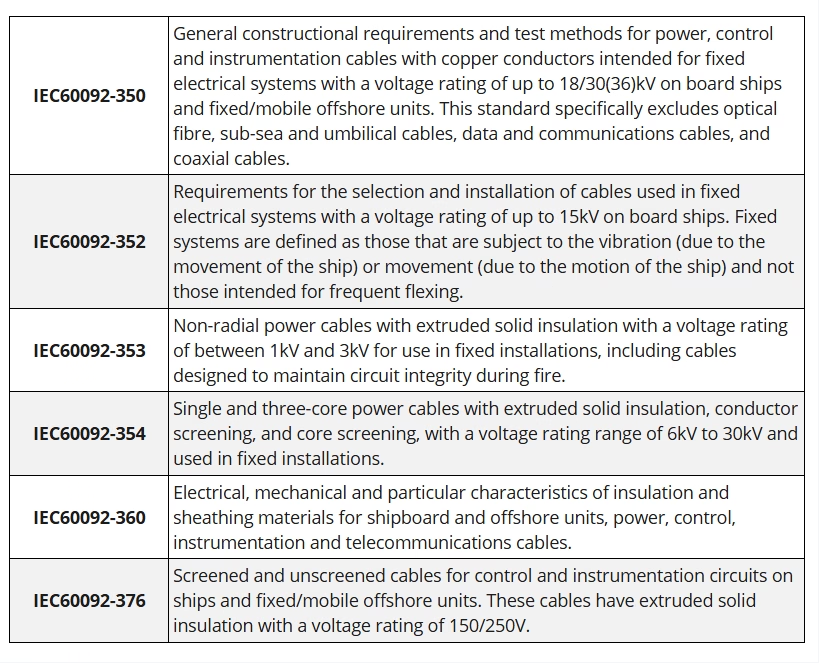
IEC 60092 is the international standard for electrical installations in ships and fixed/mobile marine applications. Ship wiring is covered by various national standards such as BS 6883 (British) and NEK 606 (Norwegian), and subject to third-party accreditations including Lloyd's Register, DNV (Det Norske Veritas), and ABS (American Bureau of Shipping). As an international standard, IEC 60092 covers power and instrumentation cables for use on ships and in mobile marine environments.

What is IEC 60092 Cable?

IEC 60092 cable, marine cable, shipboard cable, offshore cable, BS 6883 cable, NEK 606 cable, BFOU cable, RFOU cable, 657TQ cable, 658TQ cable, fire resistant marine cable, flame retardant cable, ship wiring, offshore platform cable, Lloyd’s Register approved, DNV certified, halogen free cable, LSZH marine cable, MUD resistant cable, IEC 60092-353, IEC 60092-354, IEC 60092-376, SW4 cable, EPR insulated, TCWB armoured, instrumentation cable, control cable, emergency power cable, oil rig cable, Feichun cable
The International Electrotechnical Commission (IEC) is the world's leading independent non-profit international standard-setting organization for electrical, electronic, and related technologies. Founded in 1906 with British Scientist Lord Kelvin as its first president, the IEC has over a century of expertise in developing international standards that form the basis for national and international standardization. All IEC standards are consensus-based and represent the needs of key stakeholders, with every member country having an equal vote.

What is IEC Cable?

IEC cable, IEC standard cable, IEC power cable, International Electrotechnical Commission cable, IEC 60228, IEC 60502, IEC 60331, IEC 60332, IEC cable standards, IEC compliant cable, international standard cable, IEC certified cable, IEC 60228, IEC 60228:2023, IEC 60228 conductor, IEC 60228 class 1, IEC 60228 class 2, IEC 60228 class 5, IEC 60228 class 6, IEC 60502, IEC 60502-1, IEC 60502-2, IEC 60502-4, IEC 60502-1:2021, IEC 60331, IEC 60331-1, IEC 60331-2, IEC 60331-21, IEC 60331-31, IEC 60332, IEC 60332-1, IEC 60332-1-2, IEC 60332-2, IEC 60332-3, IEC 60332-3-22, IEC 60332-3-23, IEC 60332-3-24, IEC 60332-3-25, IEC 61034, IEC 60754, IEC 60754-1, IEC 60754-2, IEC 60092, IEC 60702, IEC 60811, IEC 61158, IEC 60840