offshore cable

For fixed installation in petrochemical facility hydraulic oil leak zones, Type P (X110) radiation-cross-linked polyolefin cables are the superior choice and are mandated by international standards including IEEE 1580, NEK 606, and major chemical plant engineering codes. Type P cables are rated for continuous operation at 110°C conductor temperature (compared to 80°C for standard PUR), feature superior flame retardancy meeting IEEE 1202 and IEC 60332-3-22 standards with zero halogen emissions, maintain 80 to 90 percent property retention after 5 to 10 years of continuous chemical exposure compared to 40 to 60 percent for generic PUR, and provide exceptional compatibility with both mineral-based and synthetic fire-resistant hydraulic fluids including phosphate esters (Skydrol-type fluids) that cause significant swelling in standard polyurethane. Generic polyurethane (PUR) cables excel in mobile and continuously flexing applications where mechanical abrasion resistance is paramount and environmental temperatures remain moderate, but they are unsuitable for fixed installation in chemical plant hydraulic zones where thermal stability, chemical resistance, and fire safety are controlling factors. The critical distinction lies in understanding that PUR's unparalleled mechanical durability and flexibility come at the cost of reduced thermal stability, limited chemical compatibility with synthetic fluids, and combustion behavior that creates fire propagation hazards in leak-zone environments. For typical petrochemical facility power distributions, refinery hydraulic pump station cabling, and fixed deck-mounted power leads, Type P (X110) provides the material durability, regulatory compliance, and safety performance required by modern chemical plant standards. However, for mobile heavy machinery such as drag-chain robotic systems, floating platform equipment, or port machinery where the cable undergoes millions of bend cycles and mechanical stress is the primary degradation driver, high-flexibility PUR variants (or specialized hybrid formulations combining PUR's mechanical properties with enhanced chemical resistance) may provide better lifecycle economics despite shorter service life in static chemical exposure. Understanding which cable to specify depends on accurately identifying whether thermal stability and fire safety (favoring Type P) or mechanical durability and continuous flexing (favoring PUR) represent the controlling design constraint for your specific application.

Chemical Plants: Selecting Between Type P (X110) and Generic PUR Cables for Hydraulic Oil Leak Zones

For fixed installation in petrochemical facility hydraulic oil leak zones, Type P (X110) radiation-cross-linked polyolefin cables are the superior choice and are mandated by international standards including IEEE 1580, NEK 606, and major chemical plant engineering codes. Type P cables are rated for continuous operation at 110°C conductor temperature (compared to 80°C for standard PUR), feature superior flame retardancy meeting IEEE 1202 and IEC 60332-3-22 standards with zero halogen emissions, maintain 80 to 90 percent property retention after 5 to 10 years of continuous chemical exposure compared to 40 to 60 percent for generic PUR, and provide exceptional compatibility with both mineral-based and synthetic fire-resistant hydraulic fluids including phosphate esters (Skydrol-type fluids) that cause significant swelling in standard polyurethane. Generic polyurethane (PUR) cables excel in mobile and continuously flexing applications where mechanical abrasion resistance is paramount and environmental temperatures remain moderate, but they are unsuitable for fixed installation in chemical plant hydraulic zones where thermal stability, chemical resistance, and fire safety are controlling factors. The critical distinction lies in understanding that PUR’s unparalleled mechanical durability and flexibility come at the cost of reduced thermal stability, limited chemical compatibility with synthetic fluids, and combustion behavior that creates fire propagation hazards in leak-zone environments. For typical petrochemical facility power distributions, refinery hydraulic pump station cabling, and fixed deck-mounted power leads, Type P (X110) provides the material durability, regulatory compliance, and safety performance required by modern chemical plant standards. However, for mobile heavy machinery such as drag-chain robotic systems, floating platform equipment, or port machinery where the cable undergoes millions of bend cycles and mechanical stress is the primary degradation driver, high-flexibility PUR variants (or specialized hybrid formulations combining PUR’s mechanical properties with enhanced chemical resistance) may provide better lifecycle economics despite shorter service life in static chemical exposure. Understanding which cable to specify depends on accurately identifying whether thermal stability and fire safety (favoring Type P) or mechanical durability and continuous flexing (favoring PUR) represent the controlling design constraint for your specific application.
NEK 606 RFOU 0.6/1kV P1/P8 cable is specifically designed with mud-resistant SHF2 MUD heat-set thermoset outer sheath and is rated to withstand prolonged exposure to ester-based drilling mud, making it suitable for continuous mud-zone service typically lasting 5 to 7 years before material property degradation requires cable replacement or service assessment. The cable's heat-set thermoset formulation provides superior resistance to synthetic ester drilling fluids compared to standard elastomeric jackets, as the cross-linked polymer structure exhibits swelling rates of approximately 20 to 35 percent in typical ester-based drilling muds, compared to 50 to 80 percent swelling in non-resistant elastomers. However, the term "mud resistant" represents a carefully defined performance envelope, not unlimited exposure—the cable is qualified for service in drilling mud zones where the cable may be splashed, partially immersed, or in periodic contact with mud over operational periods measured in years, but not for continuous full immersion in mud-filled drilling riser pipes or mud tanks where exposure conditions exceed the design assumptions underlying the material formulation. In such extreme immersion scenarios, service life may be reduced to 2 to 4 years depending on temperature, pressure, and the specific chemical composition of the drilling mud system. Understanding the distinction between standard mud-zone service (where the cable experiences periodic mud contact in the operational envelope for which P1/P8 is certified) and extreme continuous immersion scenarios (where cable selection must be upgraded or enhanced) is critical to avoiding premature field failures. For typical offshore drilling platforms, FPSO systems, and subsea support vessel applications operating in the North Sea, Southeast Asia, or West African waters, the NEK 606 RFOU P1/P8 provides reliable, field-proven performance that meets or exceeds the mud-zone cable specifications of major offshore operators including DNV GL, Lloyds Register, and the American Petroleum Institute.

Mud Resistance of NEK 606 RFOU 0.6/1kV P1/P8: Can This Offshore Cable Withstand Prolonged Exposure to Ester-Based Drilling Mud?

NEK 606 RFOU 0.6/1kV P1/P8 cable is specifically designed with mud-resistant SHF2 MUD heat-set thermoset outer sheath and is rated to withstand prolonged exposure to ester-based drilling mud, making it suitable for continuous mud-zone service typically lasting 5 to 7 years before material property degradation requires cable replacement or service assessment. The cable’s heat-set thermoset formulation provides superior resistance to synthetic ester drilling fluids compared to standard elastomeric jackets, as the cross-linked polymer structure exhibits swelling rates of approximately 20 to 35 percent in typical ester-based drilling muds, compared to 50 to 80 percent swelling in non-resistant elastomers. However, the term “mud resistant” represents a carefully defined performance envelope, not unlimited exposure—the cable is qualified for service in drilling mud zones where the cable may be splashed, partially immersed, or in periodic contact with mud over operational periods measured in years, but not for continuous full immersion in mud-filled drilling riser pipes or mud tanks where exposure conditions exceed the design assumptions underlying the material formulation. In such extreme immersion scenarios, service life may be reduced to 2 to 4 years depending on temperature, pressure, and the specific chemical composition of the drilling mud system. Understanding the distinction between standard mud-zone service (where the cable experiences periodic mud contact in the operational envelope for which P1/P8 is certified) and extreme continuous immersion scenarios (where cable selection must be upgraded or enhanced) is critical to avoiding premature field failures. For typical offshore drilling platforms, FPSO systems, and subsea support vessel applications operating in the North Sea, Southeast Asia, or West African waters, the NEK 606 RFOU P1/P8 provides reliable, field-proven performance that meets or exceeds the mud-zone cable specifications of major offshore operators including DNV GL, Lloyds Register, and the American Petroleum Institute.
AmerCable 37-105319BS cable, which typically represents a three-conductor configuration of approximately 1/0 AWG (53.5 mm²) per conductor in the GEXOL® Type P series, has a maximum continuous ampacity of approximately 199 amperes under IEEE 45-2002 marine standards. This rating assumes the reference ambient condition of 45°C (113°F) in free air installation and assumes the conductors operate at the maximum allowable continuous temperature of 100°C (212°F). The "319" component of the model designation represents an internal AmerCable size code that corresponds to this 1/0 AWG conductor configuration, though the exact cross-sectional area may vary slightly depending on stranding geometry and manufacturing tolerances. The "BS" suffix designates the bronze sheath armor, a copper-based braided layer that provides exceptional corrosion resistance in marine, coastal, and underground environments while also offering superior grounding and electromagnetic shielding properties compared to steel-armored alternatives. The cable achieves its advantageous 100°C conductor rating through the use of GEXOL®, a cross-linked polyolefin insulation material engineered specifically for marine applications, providing superior thermal stability, flame resistance, and chemical resistance compared to conventional rubber or PVC insulation. The 199-ampere continuous rating represents the maximum safe sustained current the cable can carry indefinitely under the specified reference conditions without exceeding the insulation's thermal design limit. Understanding how this ampacity rating is derived from first principles and how it changes under different installation conditions is essential for electrical engineers designing marine power distribution systems and procurement specialists evaluating cable choices for offshore drilling, port operations, and industrial power applications.

Maximum Continuous Ampacity: What is the Ampacity for AmerCable 37-105319BS Under IEEE 45 Standards?

AmerCable 37-105319BS cable, which typically represents a three-conductor configuration of approximately 1/0 AWG (53.5 mm²) per conductor in the GEXOL® Type P series, has a maximum continuous ampacity of approximately 199 amperes under IEEE 45-2002 marine standards. This rating assumes the reference ambient condition of 45°C (113°F) in free air installation and assumes the conductors operate at the maximum allowable continuous temperature of 100°C (212°F). The “319” component of the model designation represents an internal AmerCable size code that corresponds to this 1/0 AWG conductor configuration, though the exact cross-sectional area may vary slightly depending on stranding geometry and manufacturing tolerances. The “BS” suffix designates the bronze sheath armor, a copper-based braided layer that provides exceptional corrosion resistance in marine, coastal, and underground environments while also offering superior grounding and electromagnetic shielding properties compared to steel-armored alternatives. The cable achieves its advantageous 100°C conductor rating through the use of GEXOL®, a cross-linked polyolefin insulation material engineered specifically for marine applications, providing superior thermal stability, flame resistance, and chemical resistance compared to conventional rubber or PVC insulation. The 199-ampere continuous rating represents the maximum safe sustained current the cable can carry indefinitely under the specified reference conditions without exceeding the insulation’s thermal design limit. Understanding how this ampacity rating is derived from first principles and how it changes under different installation conditions is essential for electrical engineers designing marine power distribution systems and procurement specialists evaluating cable choices for offshore drilling, port operations, and industrial power applications.
The NSHTÖU-J 4G95 0.6/1kV heavy-duty reeling cable has a nominal 1-second short-circuit current rating of 9,000 amperes, with typical field variations ranging between 8,500 and 10,200 amperes depending on conductor material purity, cable geometry variations, and reference test conditions. This rating represents the maximum instantaneous fault current the cable can safely withstand for exactly one second of duration before the copper conductor temperature exceeds the absolute thermal limit of 250°C, at which point irreversible thermal damage to the EPR insulation and conductor structure begins. The cable features four 95 mm² conductors (including one integrated green/yellow earth core) of Class 5 tinned copper, an outer diameter of approximately 53–57.5 mm, and a total weight of approximately 7,600 kg/km. Under normal continuous operation at 30°C ambient temperature in free air, the cable safely carries 301 amperes without exceeding 90°C conductor temperature. However, when a short circuit occurs and fault current reaches 9,000 amperes, the same conductor experiences a 100-fold increase in current density, generating extreme Joule heating that raises conductor temperature from the pre-fault state (typically 50–70°C under load) to 250°C within one second. The underlying calculation governing this short-circuit rating is the adiabatic heating formula, a fundamental electrical engineering principle that engineers must understand to properly coordinate protection devices and prevent cable failure during electrical faults.

Short-Circuit Rating: What is the 1-Second Short-Circuit Current for NSHTÖU-J 4G95 0.6/1kV?

The NSHTÖU-J 4G95 0.6/1kV heavy-duty reeling cable has a nominal 1-second short-circuit current rating of 9,000 amperes, with typical field variations ranging between 8,500 and 10,200 amperes depending on conductor material purity, cable geometry variations, and reference test conditions. This rating represents the maximum instantaneous fault current the cable can safely withstand for exactly one second of duration before the copper conductor temperature exceeds the absolute thermal limit of 250°C, at which point irreversible thermal damage to the EPR insulation and conductor structure begins. The cable features four 95 mm² conductors (including one integrated green/yellow earth core) of Class 5 tinned copper, an outer diameter of approximately 53–57.5 mm, and a total weight of approximately 7,600 kg/km. Under normal continuous operation at 30°C ambient temperature in free air, the cable safely carries 301 amperes without exceeding 90°C conductor temperature. However, when a short circuit occurs and fault current reaches 9,000 amperes, the same conductor experiences a 100-fold increase in current density, generating extreme Joule heating that raises conductor temperature from the pre-fault state (typically 50–70°C under load) to 250°C within one second. The underlying calculation governing this short-circuit rating is the adiabatic heating formula, a fundamental electrical engineering principle that engineers must understand to properly coordinate protection devices and prevent cable failure during electrical faults.
The (N)TSCGEWÖU 3x50+3x25/3 12/20kV reeling cable has a base ampacity of approximately 210 amperes when installed in free air with standard ambient conditions of 30°C (86°F) and conductor temperature not exceeding 90°C. However, when this same cable is wound in a 3-layer configuration on a cylindrical motorized reel drum—a typical arrangement for port cranes, ship-to-shore gantries, mining equipment, and mobile cargo handling systems—the effective ampacity is dramatically reduced through application of the DIN VDE 0298-4 thermal derating factor of 0.49. This produces a practical continuous ampacity of approximately 102.9 amperes (calculated as 210 A × 0.49), representing less than half the free-air capacity. The cable features three 50 mm² main phase conductors and three 25 mm² grounding conductors arranged in a compact helical geometry, with an outer diameter of approximately 52–58 mm and total weight of approximately 4,300–4,600 kg/km. The derating factor reflects the fundamental thermal reality that cable layers wound inside the drum cannot radiate heat to the surrounding air, trapping thermal energy and forcing the cable to operate at temperatures significantly above the ambient reference condition.

Derating Factors: Current Carrying Capacity of (N)TSCGEWÖU 3×50+3×25/3 12/20kV Wound in 3 Layers on a Reel

The (N)TSCGEWÖU 3×50+3×25/3 12/20kV reeling cable has a base ampacity of approximately 210 amperes when installed in free air with standard ambient conditions of 30°C (86°F) and conductor temperature not exceeding 90°C. However, when this same cable is wound in a 3-layer configuration on a cylindrical motorized reel drum—a typical arrangement for port cranes, ship-to-shore gantries, mining equipment, and mobile cargo handling systems—the effective ampacity is dramatically reduced through application of the DIN VDE 0298-4 thermal derating factor of 0.49. This produces a practical continuous ampacity of approximately 102.9 amperes (calculated as 210 A × 0.49), representing less than half the free-air capacity. The cable features three 50 mm² main phase conductors and three 25 mm² grounding conductors arranged in a compact helical geometry, with an outer diameter of approximately 52–58 mm and total weight of approximately 4,300–4,600 kg/km. The derating factor reflects the fundamental thermal reality that cable layers wound inside the drum cannot radiate heat to the surrounding air, trapping thermal energy and forcing the cable to operate at temperatures significantly above the ambient reference condition.
BFOU 0.6/1kV P5/P12 fire-resistant offshore power cable with 3 × 95 mm² tinned copper conductors is approximately 45 mm (1.77 inches), with a standard tolerance window of ±2.0 mm producing a permissible range of 43.0–47.0 mm. This specification is critical for cable gland selection because offshore and marine cable glands are manufactured with specific bore diameters engineered to accommodate this dimensional range. The approximate total weight of this cable is 4,950 kg/km (3,330 lbs/1000 ft), with copper content approximately 3,350 kg/km. It features three 95 mm² Class 2 tinned copper main power conductors, a halogen-free EPR insulation system, a critical mica tape fire-resistance layer rated for 830°C continuous operation (IEC 60331 certified), tinned copper wire braid armor providing mechanical protection and electromagnetic shielding, and an SHF2 halogen-free thermosetting outer sheath rated for extreme marine and subsea conditions.

Cable Gland Sizing: Finding the OD Tolerance for BFOU 0.6/1kV P5/P12 3×95 mm² Offshore Power Cable

BFOU 0.6/1kV P5/P12 fire-resistant offshore power cable with 3 × 95 mm² tinned copper conductors is approximately 45 mm (1.77 inches), with a standard tolerance window of ±2.0 mm producing a permissible range of 43.0–47.0 mm. This specification is critical for cable gland selection because offshore and marine cable glands are manufactured with specific bore diameters engineered to accommodate this dimensional range. The approximate total weight of this cable is 4,950 kg/km (3,330 lbs/1000 ft), with copper content approximately 3,350 kg/km. It features three 95 mm² Class 2 tinned copper main power conductors, a halogen-free EPR insulation system, a critical mica tape fire-resistance layer rated for 830°C continuous operation (IEC 60331 certified), tinned copper wire braid armor providing mechanical protection and electromagnetic shielding, and an SHF2 halogen-free thermosetting outer sheath rated for extreme marine and subsea conditions.
AmerCable 37-102594BS, part of the Nexans AmerCable Gexol® premium marine cable family, represents a highly engineered solution for extreme environments—drilling rigs, floating production platforms, heavy-duty ship systems, and industrial facilities where cable failure is not an option. However, procurement teams worldwide face recurring supply challenges: extended lead times, regional availability constraints, price volatility tied to raw material markets, and the need for local certification or supplier support within specific geographic jurisdictions.

Looking for an Alternative to AmerCable 37-102594BS? Marine & Offshore Power Cable Solutions Guide

AmerCable 37-102594BS, part of the Nexans AmerCable Gexol® premium marine cable family, represents a highly engineered solution for extreme environments—drilling rigs, floating production platforms, heavy-duty ship systems, and industrial facilities where cable failure is not an option. However, procurement teams worldwide face recurring supply challenges: extended lead times, regional availability constraints, price volatility tied to raw material markets, and the need for local certification or supplier support within specific geographic jurisdictions.
The designation BFOU(c) is not arbitrary—it is a highly structured labeling system derived from the NEK 606 Norwegian marine standard that encodes critical information about the cable's construction, safety properties, and intended application. By understanding what each letter represents, you gain immediate insight into the cable's fundamental characteristics and whether it is suitable for your specific marine environment. BFOU(c) 代号是从 NEK 606 挪威海洋标准派生的高度结构化标签系统,编码了电缆的关键安全特性和预期应用。

Datasheet & Specs: Technical Specifications for BFOU(c) 150/250V S4/S8 4x2x1.5 mm² Marine Instrumentation Cable

The designation BFOU(c) is not arbitrary—it is a highly structured labeling system derived from the NEK 606 Norwegian marine standard that encodes critical information about the cable’s construction, safety properties, and intended application. By understanding what each letter represents, you gain immediate insight into the cable’s fundamental characteristics and whether it is suitable for your specific marine environment. BFOU(c) 代号是从 NEK 606 挪威海洋标准派生的高度结构化标签系统,编码了电缆的关键安全特性和预期应用。
Offshore drilling mud pumps represent some of the most mission-critical equipment on modern drilling platforms. These pumps are driven by variable frequency drive (VFD) systems that optimize power consumption and equipment performance through sophisticated electronic switching, yet this advanced power control technology introduces an insidious threat: VFD-induced electrical discharge machining (EDM) damage to motor bearings, known as fluting. When mud pumps experience unexpected bearing failure due to EDM fluting, unplanned downtime costs platform operators hundreds of thousands of dollars per day in lost production capacity.

Type MMV-VFD (15kV): Managing High-Frequency EMI in Medium Voltage Offshore Drives

Offshore drilling mud pumps represent some of the most mission-critical equipment on modern drilling platforms. These pumps are driven by variable frequency drive (VFD) systems that optimize power consumption and equipment performance through sophisticated electronic switching, yet this advanced power control technology introduces an insidious threat: VFD-induced electrical discharge machining (EDM) damage to motor bearings, known as fluting. When mud pumps experience unexpected bearing failure due to EDM fluting, unplanned downtime costs platform operators hundreds of thousands of dollars per day in lost production capacity.

2kV Type P VFD Cables: Preventing Motor Bearing Damage on Offshore Mud Pumps

Offshore drilling mud pumps represent some of the most mission-critical equipment on modern drilling platforms. These pumps are driven by variable frequency drive (VFD) systems that optimize power consumption and equipment performance through sophisticated electronic switching, yet this advanced power control technology introduces an insidious threat: VFD-induced electrical discharge machining (EDM) damage to motor bearings, known as fluting. When mud pumps experience unexpected bearing failure due to EDM fluting, unplanned downtime costs platform operators hundreds of thousands of dollars per day in lost production capacity.
In the competitive landscape of international offshore project bidding, electrical engineers and procurement managers face a fundamental tension: delivering mission-critical power distribution systems while simultaneously optimizing capital expenditure. The emergence of cost-effective Type P cable designs (经济型 Type P 电缆设计) addresses this tension directly. These unarmored marine power cables, fully compliant with IEEE 1580 offshore cable specifications (IEEE 1580 海上电缆标准), deliver measurable cost reductions across material procurement, logistics, and installation phases while maintaining rigorous electrical and safety performance standards. This installation guide addresses the engineering rationale behind cost-effective, unarmored Type P cable specifications and provides procurement teams with objective decision criteria for determining when these configurations are appropriate for their specific offshore applications.

Type P Cost-Effective Offshore Power Cables: Budget-Optimized Design for Global Drilling and Platform Applications

In the competitive landscape of international offshore project bidding, electrical engineers and procurement managers face a fundamental tension: delivering mission-critical power distribution systems while simultaneously optimizing capital expenditure. The emergence of cost-effective Type P cable designs (经济型 Type P 电缆设计) addresses this tension directly. These unarmored marine power cables, fully compliant with IEEE 1580 offshore cable specifications (IEEE 1580 海上电缆标准), deliver measurable cost reductions across material procurement, logistics, and installation phases while maintaining rigorous electrical and safety performance standards. This installation guide addresses the engineering rationale behind cost-effective, unarmored Type P cable specifications and provides procurement teams with objective decision criteria for determining when these configurations are appropriate for their specific offshore applications.
The GEXOL 37-102 cable family, manufactured by Nexans AmerCable (由Nexans AmerCable制造), represents a sophisticated engineering solution that bridges North American marine cable standards with international protection requirements for hazardous location installations. Understanding the specific engineering principles that govern the "Armored & Sheathed (BS)" configuration is essential for electrical engineers and procurement specialists tasked with specifying cables for Zone 1 explosion-proof environments (防爆 1 区环境), particularly in offshore drilling platforms, subsea installations, and petrochemical facilities.

GEXOL 37-102 Armored & Sheathed (BS): Installation Guide for Explosion Proof Zone 1 

The GEXOL 37-102 cable family, manufactured by Nexans AmerCable (由Nexans AmerCable制造), represents a sophisticated engineering solution that bridges North American marine cable standards with international protection requirements for hazardous location installations. Understanding the specific engineering principles that govern the “Armored & Sheathed (BS)” configuration is essential for electrical engineers and procurement specialists tasked with specifying cables for Zone 1 explosion-proof environments (防爆 1 区环境), particularly in offshore drilling platforms, subsea installations, and petrochemical facilities.
The selection of industrial power cables represents one of the most critical engineering decisions in drilling operations, whether on land or offshore. Two cable types dominate this application space: the Type SHD-GC (重型屏蔽接地检查电缆), designed primarily for mobile mining and terrestrial drilling equipment, and the Type P (海洋平台电缆), engineered specifically for harsh offshore and fixed platform environments. Though both cables operate at similar voltage ratings, they embody fundamentally different design philosophies that reflect the distinct mechanical, electrical, and safety demands of their respective application domains.

Type SHD-GC vs. Type P: Selecting the Right Trailing Cable for Land and Offshore Drilling 

The selection of industrial power cables represents one of the most critical engineering decisions in drilling operations, whether on land or offshore. Two cable types dominate this application space: the Type SHD-GC (重型屏蔽接地检查电缆), designed primarily for mobile mining and terrestrial drilling equipment, and the Type P (海洋平台电缆), engineered specifically for harsh offshore and fixed platform environments. Though both cables operate at similar voltage ratings, they embody fundamentally different design philosophies that reflect the distinct mechanical, electrical, and safety demands of their respective application domains.
When electrical engineers and procurement managers specify cables for self-elevating drilling rigs—commonly known as jack-up rigs (自升式钻井平台)—they frequently encounter AmerCable 37-102 designations in technical specifications. The primary concern when evaluating equivalent cable solutions centers on whether alternative suppliers can deliver the same IEEE 1580 Type P core standard and extreme high-flexibility characteristics while offering improved lead times and cost optimization.

AmerCable 37-102 Equivalent: Sourcing High-Flexibility Type P Cables for Jack-Up Rigs

When electrical engineers and procurement managers specify cables for self-elevating drilling rigs—commonly known as jack-up rigs (自升式钻井平台)—they frequently encounter AmerCable 37-102 designations in technical specifications. The primary concern when evaluating equivalent cable solutions centers on whether alternative suppliers can deliver the same IEEE 1580 Type P core standard and extreme high-flexibility characteristics while offering improved lead times and cost optimization.
The European and American approaches to cable engineering reflect fundamentally different environmental threat models. BFOU cables manufactured to NEK 606 specifications incorporate halogen-free insulation, SHF2 H-M compound sheathing, and mica glass tape (MGT) as a fire barrier, enabling uninterrupted power delivery during fire situations in accordance with IEC 60331-21. This design prioritizes survival of critical systems during extreme thermal events—a recognized hazard in confined spaces such as engine rooms and living quarters aboard offshore vessels.

Why Your BFOU Cable Needs a Type N Jacket Upgrade?

The European and American approaches to cable engineering reflect fundamentally different environmental threat models. BFOU cables manufactured to NEK 606 specifications incorporate halogen-free insulation, SHF2 H-M compound sheathing, and mica glass tape (MGT) as a fire barrier, enabling uninterrupted power delivery during fire situations in accordance with IEC 60331-21. This design prioritizes survival of critical systems during extreme thermal events—a recognized hazard in confined spaces such as engine rooms and living quarters aboard offshore vessels.
The question of whether a Type 450 33kV cable requires a bending radius of twelve times or fifteen times its overall diameter when installed on a monospiral reel is not merely an academic exercise but a critical consideration that directly impacts cable longevity, system reliability, and operational safety in medium-voltage power distribution networks. Understanding the correct specification requires examining the interplay between international standards, cable construction characteristics, and the specific mechanical conditions imposed by monospiral reel systems. Type 450 33kV电缆在单螺旋卷筒上安装时,其弯曲半径是需要12倍还是15倍外径,这不仅仅是一个学术问题,而是直接影响电缆寿命、系统可靠性和中压配电网络运行安全的关键考虑因素。理解正确的规范需要研究国际标准、电缆结构特性以及单螺旋卷筒系统施加的特定机械条件之间的相互作用。

Bending Radius for Type 450 33kV Cables on Monospiral Reels: 12xOD or 15xOD?

The question of whether a Type 450 33kV cable requires a bending radius of twelve times or fifteen times its overall diameter when installed on a monospiral reel is not merely an academic exercise but a critical consideration that directly impacts cable longevity, system reliability, and operational safety in medium-voltage power distribution networks. Understanding the correct specification requires examining the interplay between international standards, cable construction characteristics, and the specific mechanical conditions imposed by monospiral reel systems. Type 450 33kV电缆在单螺旋卷筒上安装时,其弯曲半径是需要12倍还是15倍外径,这不仅仅是一个学术问题,而是直接影响电缆寿命、系统可靠性和中压配电网络运行安全的关键考虑因素。理解正确的规范需要研究国际标准、电缆结构特性以及单螺旋卷筒系统施加的特定机械条件之间的相互作用。
The VDE (Verband der Elektrotechnik) designation system is widely adopted across Europe for identifying cable properties and specifications. According to the DIN VDE 0292 standard, type designation codes provide systematic identification of cable characteristics including conductor material, insulation type, and structural features. (VDE命名系统在欧洲广泛采用,用于标识电缆特性和规格。根据DIN VDE 0292标准,型号代码系统性地标识电缆特性,包括导体材料、绝缘类型和结构特征。)

VDE Cable Designation: Understanding “G”, “2G”, and “3G” Insulation Material Codes

The VDE (Verband der Elektrotechnik) designation system is widely adopted across Europe for identifying cable properties and specifications. According to the DIN VDE 0292 standard, type designation codes provide systematic identification of cable characteristics including conductor material, insulation type, and structural features. (VDE命名系统在欧洲广泛采用,用于标识电缆特性和规格。根据DIN VDE 0292标准,型号代码系统性地标识电缆特性,包括导体材料、绝缘类型和结构特征。)
كابل TROMMELFLEX PUR-HF D12Y11YU11Y 0,6/1KV هو كابل لف مرن منخفض الجهد بغلاف البولي يوريثان (PUR) مصمم للتطبيقات تحت الإجهادات الميكانيكية العالية. يتميز هذا الكابل بخاصية فريدة تجعله مناسباً للاستخدام الدائم في الماء (ليس ماء الشرب) حتى عمق غطس 50 متر. يوفر الكابل أداءً استثنائياً في البيئات الصناعية القاسية مع مقاومة الالتواء ±50 درجة لكل متر وسرعة سفر تصل إلى 180 متر في الدقيقة. التصميم الخالي من الهالوجين يجعله مثالياً للتطبيقات التي تتطلب معايير سلامة عالية من الحرائق.

ما هو كابل TROMMELFLEX PUR-HF للف منخفض الجهد بغلاف البولي يوريثان؟

يُستخدم هذا الكابل في مجموعة واسعة من التطبيقات الصناعية التي تتطلب أداءً عالياً في الظروف القاسية. تشمل التطبيقات الرئيسية: رافعات الموانئ والأرصفة البحرية، معدات الغطس والمنصات البحرية، أنظمة اللف والفستون، رافعات البناء والمستودعات، معدات التعدين، وتطبيقات المعالجة الصناعية. الخاصية الفريدة للاستخدام تحت الماء تجعله مثالياً لتطبيقات الموانئ في منطقة الخليج العربي حيث تتعرض المعدات للبيئة البحرية المالحة. التصميم الخالي من الهالوجين يجعله مناسباً للأنفاق والمباني المغلقة حيث السلامة من الحرائق أولوية قصوى.
Shipwiring and offshore platform cables represent a specialized category of marine cables designed to perform reliably in the most demanding environments on earth—at sea. These cables must withstand extreme temperature variations (from Arctic cold to engine room heat), constant exposure to humidity, salt water, oils, acids, and drilling muds, while maintaining electrical integrity for power, control, signal, instrumentation, and communication applications. The primary international standards governing these cables include NEK 606 (Norwegian standard for offshore floating platforms), IEC 60092 (electrical installations in ships), BS 6883 (fixed wiring in offshore units), and BS 7917 (fire resistant cables for offshore applications).

What are Shipwiring & Offshore Platform Cables?

NEK 606 cable, BFOU cable, RFOU cable, NEK 606 BFOU, NEK 606 RFOU, offshore platform cable, MUD resistant cable, Norwegian offshore cable, floating platform cable, FPSO cable, marine cable, offshore cable, shipwiring cable, ship cable, offshore platform cable, marine power cable, ship electrical cable, naval cable, maritime cable, at-sea cable,RFOU P101, BFOU P105, RFOU S101, RFOU S102, BFOU S103, BFOU S104, UX P108, RFOU P102, RFOU P103, RFOU P104, RFOU P112, RFOU P113
NEK TS 606 is the Norwegian offshore industry technical specification (TS) covering a range of power, instrumentation and earth cables that are halogen free and/or MUD resistant, protecting them against the type of hydrocarbon-laden drilling liquid used in drilling operations which can have an adverse effect on cable sheathing materials. Originally published in 1993 by the Norwegian Electrotechnical Committee (NEK) as a successor to the 'Recommended Practice for Specification of Cables' of the Norwegian Oil Industry Association, NEK 606 has evolved to become an internationally accepted standard for offshore cable applications.

What is NEK 606 Cable?

NEK 606, NEK TS 606, NEK 606 cable, offshore cable, BFOU cable, RFOU cable, Norwegian offshore standard, oil gas cable, mud resistant cable, fire resistant cable, halogen free cable, offshore power cable, offshore instrumentation cable, marine cable
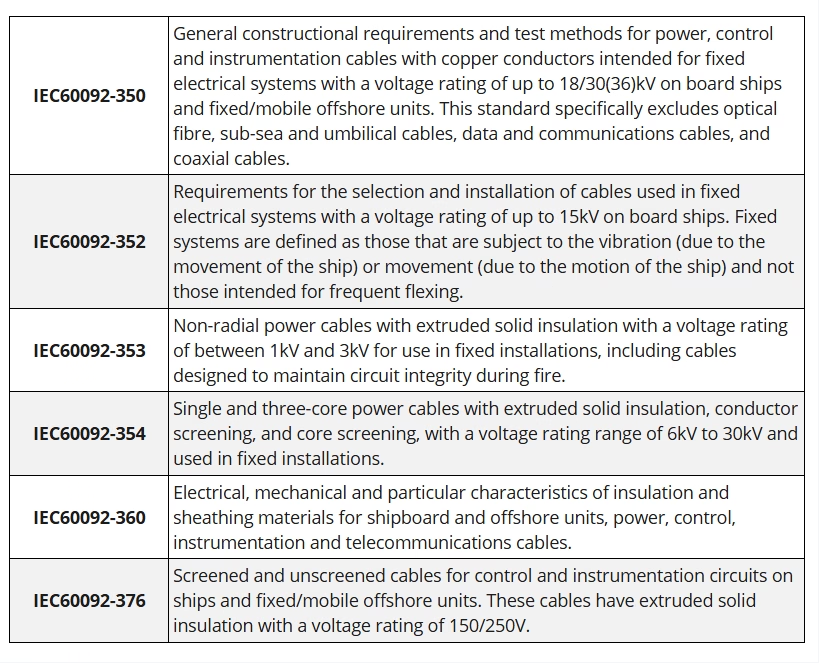
IEC 60092 is the international standard for electrical installations in ships and fixed/mobile marine applications. Ship wiring is covered by various national standards such as BS 6883 (British) and NEK 606 (Norwegian), and subject to third-party accreditations including Lloyd's Register, DNV (Det Norske Veritas), and ABS (American Bureau of Shipping). As an international standard, IEC 60092 covers power and instrumentation cables for use on ships and in mobile marine environments.

What is IEC 60092 Cable?

IEC 60092 cable, marine cable, shipboard cable, offshore cable, BS 6883 cable, NEK 606 cable, BFOU cable, RFOU cable, 657TQ cable, 658TQ cable, fire resistant marine cable, flame retardant cable, ship wiring, offshore platform cable, Lloyd’s Register approved, DNV certified, halogen free cable, LSZH marine cable, MUD resistant cable, IEC 60092-353, IEC 60092-354, IEC 60092-376, SW4 cable, EPR insulated, TCWB armoured, instrumentation cable, control cable, emergency power cable, oil rig cable, Feichun cable
The International Electrotechnical Commission (IEC) is the world's leading independent non-profit international standard-setting organization for electrical, electronic, and related technologies. Founded in 1906 with British Scientist Lord Kelvin as its first president, the IEC has over a century of expertise in developing international standards that form the basis for national and international standardization. All IEC standards are consensus-based and represent the needs of key stakeholders, with every member country having an equal vote.

What is IEC Cable?

IEC cable, IEC standard cable, IEC power cable, International Electrotechnical Commission cable, IEC 60228, IEC 60502, IEC 60331, IEC 60332, IEC cable standards, IEC compliant cable, international standard cable, IEC certified cable, IEC 60228, IEC 60228:2023, IEC 60228 conductor, IEC 60228 class 1, IEC 60228 class 2, IEC 60228 class 5, IEC 60228 class 6, IEC 60502, IEC 60502-1, IEC 60502-2, IEC 60502-4, IEC 60502-1:2021, IEC 60331, IEC 60331-1, IEC 60331-2, IEC 60331-21, IEC 60331-31, IEC 60332, IEC 60332-1, IEC 60332-1-2, IEC 60332-2, IEC 60332-3, IEC 60332-3-22, IEC 60332-3-23, IEC 60332-3-24, IEC 60332-3-25, IEC 61034, IEC 60754, IEC 60754-1, IEC 60754-2, IEC 60092, IEC 60702, IEC 60811, IEC 61158, IEC 60840
EN 50525 cable, H07V-K cable, H07RN-F cable, H05VV-F cable, 6491X cable, 6491B cable, tri-rated cable, H07V2-K, H05V2-K, 318Y cable, 2491X cable, 2192Y cable, H07Z1-K LSZH cable, H03VV-F cable, H05RR-F cable, H07BN4-F 6381TQ, H01N2-D welding cable, H05S-K silicone cable, EN 50525-2-11, EN 50525-2-21, EN 50525-2-31, EN 50525-3-31, BS6500 replacement, CENELEC harmonized cable, low voltage cable 450/750V, European cable standard, PVC insulated cable, LSZH cable specification, elastomeric cable industrial, flexible thermoplastic cable, cable para instalación fija, cable libre de halógenos, cable de silicona alta temperatura, cable soldadura EN 50525, norma europea cables, cable armonizado CENELEC, cable baja tensión 750V, especificación cable EN 50525, cable industrial pesado H07RN-F, cable doméstico H05VV-F, cable tri-rated automotriz, EN 50525電纜, 歐洲統一電纜標準, 低壓電纜450/750V, LSZH無鹵電纜, 矽膠高溫電纜, 工業用橡膠電纜

¿Qué es el Cable EN 50525?

EN 50525 cable, H07V-K cable, H07RN-F cable, H05VV-F cable, 6491X cable, 6491B cable, tri-rated cable, H07V2-K, H05V2-K, 318Y cable, 2491X cable, 2192Y cable, H07Z1-K LSZH cable, H03VV-F cable, H05RR-F cable, H07BN4-F 6381TQ, H01N2-D welding cable, H05S-K silicone cable, EN 50525-2-11, EN 50525-2-21, EN 50525-2-31, EN 50525-3-31, BS6500 replacement, CENELEC harmonized cable, low voltage cable 450/750V, European cable standard, PVC insulated cable, LSZH cable specification, elastomeric cable industrial, flexible thermoplastic cable, cable para instalación fija, cable libre de halógenos, cable de silicona alta temperatura, cable soldadura EN 50525, norma europea cables, cable armonizado CENELEC, cable baja tensión 750V, especificación cable EN 50525, cable industrial pesado H07RN-F, cable doméstico H05VV-F, cable tri-rated automotriz, EN 50525電纜, 歐洲統一電纜標準, 低壓電纜450/750V, LSZH無鹵電纜, 矽膠高溫電纜, 工業用橡膠電纜
GEXOL®-331HF Five Conductor Power Cable represents the most comprehensive multi-conductor solution in the GEXOL fire-resistant cable family, engineered specifically for complex five-phase power applications and advanced electrical systems in demanding offshore and marine environments worldwide. This five-conductor design maintains circuit integrity during fire conditions while providing maximum flexibility for sophisticated power distribution requirements. The cable features a Black-White-Red-Green-Orange color coding system for easy phase identification, with sizes 1/0 AWG and larger utilizing printed phase identification on the insulation. Available in 13 conductor sizes from 18 AWG to 4/0 AWG, this cable delivers complete five-conductor power solutions for emergency lighting, fire detection/suppression systems, alarm networks, and critical process control applications.

GEXOL®-331HF Power Cable

GEXOL-331HF, GEXOL-331HF five conductor, GEXOL 331HF 5 conductor cable, GEXOL-331HF fire resistant cable, GEXOL-331HF 0.6/1kV cable, GEXOL-331HF five core cable, GEXOL-331HF power cable, AmerCable GEXOL-331HF, Nexans AmerCable GEXOL, GEXOL-HF insulation, 耐火電纜, 五芯電纜, 五芯電力電纜, 五相電纜, 低煙無鹵電纜, 低煙無鹵五芯電纜, 船用電纜, 船用五芯電纜, 離岸電纜, 海洋電纜, 0.6/1kV電纜, 600V/1000V電纜, 90度額定電纜, 阻燃電纜, 鎧裝電纜, 青銅鎧裝, 鍍錫銅導體, 交聯聚烯烴, 緊急照明電纜, 消防系統電纜, 消防泵電纜, 多芯電機電纜, 危險區域電纜, 船級社認證, DNV認證電纜, ABS認證電纜, IEEE 1580標準, IEC 60331標準, 黑白紅綠橙色碼, 相位識別, 三相加中性線加接地, 變頻驅動器電纜, 過程控制電纜, 安徽飛純特種電纜
GEXOL®-331HF Three Conductor Power Cable represents the most versatile configuration in the GEXOL fire-resistant cable family, engineered specifically for three-phase power distribution in demanding offshore and marine environments worldwide. This three-conductor design maintains circuit integrity during fire conditions while providing an efficient solution for critical safety circuits. The cable features a Black-White-Red color coding system for easy phase identification, with sizes 1/0 AWG and larger utilizing printed phase identification on the insulation. With optional uninsulated grounding conductor available from 6 AWG upward, this cable delivers complete three-phase power solutions for emergency lighting, fire detection/suppression systems, alarm networks, and personnel egress pathways.

GEXOL®-331HF Power Cable

GEXOL-331HF, GEXOL-331HF three conductor, fire resistant cable, low smoke halogen-free cable, LSZH cable, LSOH cable, IEEE 1580, IEC 60331, IEC 332-3 Category A, IEEE 1202, 0.6/1kV power cable, three conductor marine cable, 3-phase cable, three phase with ground, ABS approved, DNV-GL certified, Lloyd’s Register, UL 1309, CSA 245, 90°C rated cable, cross-linked polyolefin, XLPO insulation, tinned copper conductor, bronze armor cable, Class I Division 1, Class I Zone 1, hazardous location cable, emergency lighting cable, fire pump cable, fire detection system, offshore platform, oil and gas cable, Hawke cable gland, EExe gland, EExd gland, black-white-red color code, phase identification, equipment grounding conductor, 耐火電纜, 三芯電纜, 三相電纜, 帶接地電纜, 低煙無鹵, 船用電纜, 離岸電纜, 0.6/1kV額定, Anhui Feichun Cable, 安徽飛純特種電纜, 37-104-320
GEXOL®-331HF is a premium fire-resistant single conductor power cable engineered for the most demanding offshore and marine environments worldwide. This cable is specifically designed and constructed to maintain circuit integrity during fire conditions, making it the ideal choice for critical safety circuits including emergency lighting systems, fire detection and suppression equipment, alarm systems, and personnel egress pathways. Manufactured with advanced cross-linked polyolefin insulation technology, the GEXOL®-331HF delivers exceptional performance characteristics: fire resistance per IEC 60331, flame retardancy meeting both IEC 332-3 Category A and IEEE 1202 standards, and complete halogen-free construction for minimal smoke generation during combustion events.

GEXOL®-331HF Single Conductor Power Cable

GEXOL-331HF, GEXOL 331HF cable, GEXOL-331HF fire resistant cable, GEXOL-331HF 2kV cable, GEXOL-331HF single conductor, GEXOL-331HF power cable, AmerCable GEXOL-331HF, Nexans AmerCable GEXOL, GEXOL-HF insulation, 37-104 series cable耐火電纜, 低煙無鹵電纜, 船用電纜, 離岸電纜, 海洋電纜, 單芯電力電纜, 2kV電纜, 90度額定電纜, 阻燃電纜, 鎧裝電纜, 青銅鎧裝, 鍍錫銅導體, 交聯聚烯烴, 緊急照明電纜, 消防系統電纜, 危險區域電纜, 船級社認證, DNV認證電纜, ABS認證電纜, IEEE 1580標準, IEC 60331標準
H07RN-F cable, H05RR-F cable, H07ZZ-F cable, H07BN4-F cable, H07RN8-F cable, H05BB-F cable, H05BQ-F cable, H07BB-F cable, H07BQ-F cable, H05GG-F cable, H05SS-F cable

What is BS7919 Cable?

BS7919 cable, BS7919 flexible cable, BS EN 50525 cable, industrial flexible cable, rubber flexible cable, heavy duty cable 450/750V,H07RN-F cable, H05RR-F cable, H07ZZ-F cable, H07BN4-F cable, H07RN8-F cable, H05BB-F cable, H05BQ-F cable, H07BB-F cable, H07BQ-F cable, H05GG-F cable, H05SS-F cable,BS7919電纜, 柔性橡膠電纜, 工業柔性電纜, 重型橡膠電纜, 耐油電纜, 阻燃柔性電纜, 港口機械電纜, 起重機電纜, 移動電源電纜, H07RN-F橡膠電纜, 450/750V柔性電纜, 氯丁橡膠護套電纜, EPR絕緣電纜, 多芯柔性電纜, 拖曳電纜, 卷筒電纜
British Standard BS6883 covers the specifications for elastomer insulated cables for fixed wiring in ships (shipwiring) and on mobile and fixed offshore marine units. This standard specifies the requirements and test methods for shipboard fixed wiring of lighting, power, control, instrumentation and propulsion circuits with a voltage rating of up to 8.7/15kV.

What is BS6883 Cable?

BS6883電纜, BS6883船用電纜, 船用電纜, 海上電纜, 船用佈線電纜, 船舶電纜, LSZH電纜, LSHF電纜, 低煙無鹵電纜, EPR船用電纜, 海上電力電纜, 船用電纜, 657TQ電纜, 658TQ電纜, SW4型電纜, SW3型電纜, SW2型電纜, 鎧裝船用電纜, 非鎧裝船用電纜, 鋼絲編織電纜, HOFR電纜, 無鹵電纜, 阻燃船用電纜, 勞氏船級社電纜, DNV電纜, UKOOA電纜, 600/1000V船用電纜, 船用儀表電纜, 海上平台電纜, 鑽井平台電纜, 石油平台電纜, FPSO電纜, 耐火電纜, BS7917電纜, 彈性體絕緣電纜, EPR絕緣電纜, 鍍錫銅船用電纜,BS6883, BS6883 cable, marine cable, offshore cable, shipwiring cable, ship cable, LSZH cable, LSHF cable, low smoke halogen free cable, EPR marine cable, offshore power cable, shipboard cable, 657TQ cable, 658TQ cable, Type SW4 cable, Type SW3 cable, Type SW2 cable, armoured marine cable, unarmoured marine cable, GSWB cable, steel wire braid cable, HOFR cable, halogen free cable, flame retardant marine cable