Deep Materials Engineering Analysis: Adapting AS/NZS 1802 Standard Mining Cables for -40°C Gobi Desert Cold Operation. Cold Bend Performance Physics, Arctic Grade Elastomer Material Modification, Anti-Friction Slip Layer Design, EPR Insulation Cold-Impact Formulation, IEC 60811 Cold-Bend Testing Standards, Corkscrewing Prevention Strategy, Pilot Core Thermal Stress Management, Comprehensive Modification Roadmap.
深度材料工程分析:将AS/NZS 1802标准矿用电缆改进以适应-40°C戈壁沙漠冷操作。冷弯性能物理学、北极级弹性体材料改进、防摩擦滑移层设计、EPR绝缘冷冲击配方、IEC 60811冷弯测试标准、扭结防护策略、导引线热应力管理、综合改进路线图。
Cold Bend Performance: Modifying AS/NZS Mining Cables for -40°C Operation in Mongolia
Deep Materials Engineering Analysis: Adapting AS/NZS 1802 Standard Mining Cables for -40°C Gobi Desert Cold Operation. Cold Bend Performance Physics, Arctic Grade Elastomer Material Modification, Anti-Friction Slip Layer Design, EPR Insulation Cold-Impact Formulation, IEC 60811 Cold-Bend Testing Standards, Corkscrewing Prevention Strategy, Pilot Core Thermal Stress Management, Comprehensive Modification Roadmap.
深度材料工程分析:将AS/NZS 1802标准矿用电缆改进以适应-40°C戈壁沙漠冷操作。冷弯性能物理学、北极级弹性体材料改进、防摩擦滑移层设计、EPR绝缘冷冲击配方、IEC 60811冷弯测试标准、扭结防护策略、导引线热应力管理、综合改进路线图。
1. The Problem: AS/NZS Standards Were NOT Designed for -40°C Operation
The Design Temperature Assumption: AS/NZS 1802 mining cable standards were developed for Australian and New Zealand mining conditions, where minimum ambient temperatures rarely drop below -10°C to -15°C. The standard’s base material specifications (PCP chloroprene jacket, standard EPR insulation) were formulated for this relatively temperate range. A cable certified to AS/NZS 1802 specifications is guaranteed to function correctly from 0°C to 60°C (typical service range), with an operating floor around -20°C at absolute minimum.
AS/NZS 1802矿用电缆标准是为澳大利亚和新西兰矿业条件而开发的,最低环境温度很少低于-10°C至-15°C。该标准的基础材料规范(PCP氯丁橡胶护套、标准EPR绝缘)针对这个相对温暖的范围而配制。根据AS/NZS 1802规范认证的电缆保证在0°C至60°C范围内正确工作,绝对最低工作温度约为-20°C。
Mongolia’s Extreme Demand: Oyu Tolgoi operations demand continuous cable function at -40°C and below. This is a 15–25°C excursion below the standard’s design floor, placing the cable into a completely different materials-science domain where elastomeric polymers undergo profound changes in physical properties.
Why Direct Application Fails: A standard AS/NZS 1802 cable deployed in -40°C conditions will experience: (1) Jacket embrittlement (transition to glass-like state), (2) Dramatic loss of elongation-to-break (from >200% at room temperature to <30% at -40°C), (3) Catastrophic cracking under dynamic bending stress, (4) Internal stress concentration from differential thermal contraction of cable layers.
2. Cold Bend Performance Physics: Why Cables Become Glass-Like at -40°C
Glass Transition Temperature (Tg) and Mechanical Behavior: Every elastomer has a characteristic temperature (Tg) below which it transitions from flexible rubber to brittle glass-like solid. Standard PCP (polychloroprene, used in AS/NZS 1802 cables) has Tg ≈ -20°C. This means:
At +20°C: Material is 40°C above Tg → highly flexible, elongation-to-break >250%, can bend repeatedly without damage.
At -20°C: Material is AT Tg → borderline between flexible and brittle, elongation-to-break ~100%, stress-cracking begins at sharp edges.
At -40°C: Material is 20°C BELOW Tg → brittle glass-like state, elongation-to-break <30%, any bending or tensile stress initiates catastrophic fracture within seconds.
Mathematical Relationship: The properties don’t degrade linearly. Using a simplified Arrhenius-type relationship, elastomer brittleness increases exponentially as temperature drops below Tg. For every 5°C below Tg, the material becomes roughly 2–3 times more brittle and less flexible.
Dynamic Bending at -40°C: When a standard PCP-jacketed cable is bent around a reel or guide at -40°C, the outer jacket fibers experience tensile stress at the bend location. The material’s inability to stretch (elongation-to-break <30%) means it cannot accommodate this stress through elastic deformation—instead, stress concentrates locally, initiating micro-cracks. These cracks propagate instantly at -40°C (unlike room-temperature slow creep propagation) and split the jacket catastrophically.
3. Material Modification Strategy #1: Arctic Grade Elastomer Jackets (PUR vs CPE)
Standard PCP Limitation: PCP is convenient and cost-effective for temperate regions, but has Tg ≈ -20°C. At Mongolia’s -40°C conditions, it is unusable.
Option A—Arctic Grade PUR (Polyurethane Elastomer): Polyurethane has intrinsic glass transition temperature of -55°C to -65°C. This means at -40°C, PUR is still 15–25°C above its Tg, maintaining significant flexibility and elongation-to-break (>150% even at -40°C). PUR advantages: (1) Superior cold flexibility without formulation modification, (2) Exceptional abrasion and tear resistance (ideal for sharp Gobi rock), (3) Natural oil and chemical resistance. Disadvantages: (1) Higher cost (20–30% premium), (2) Moisture sensitivity (absorbs water, can undergo hydrolysis), (3) Limited field repair compatibility (standard heat-shrink kits not rated for PUR).
Option B—Arctic Grade CPE with Plasticizer Optimization: CPE (chlorinated polyethylene) normally has Tg ≈ -25°C. By carefully selecting and dosing plasticizer additives (typically phthalate esters or polyesters), manufacturers can depress Tg to -45°C to -50°C while maintaining other material properties. CPE advantages: (1) Much lower cost (5–10% premium vs standard), (2) Excellent chemical resistance, (3) Full compatibility with standard termination systems. Disadvantages: (1) Requires custom formulation (not off-the-shelf), (2) Plasticizer selection affects long-term aging behavior, (3) Still somewhat more brittle than PUR at extreme cold.
Rio Tinto Typical Specification: For Mongolia operations, Rio Tinto typically specifies Arctic Grade PUR as the primary choice, with Arctic Grade CPE as an approved alternative. Both require third-party testing certification of Tg and cold-bend performance.
4. Material Modification Strategy #2: Anti-Friction Slip Layers (PTFE/Fabric)
The Internal Friction Problem: In a standard cable, the insulation layer is bonded or pressed tightly against the outer jacket. At room temperature, this bond is fine—it provides mechanical coupling and protects the insulation. However, at -40°C, all cable materials contract, but at different rates. Copper conductors contract at ~17 ppm/K, EPR insulation at ~200 ppm/K, and PCP jacket at ~200–300 ppm/K. These mismatches create differential contraction stresses and increase friction between layers.
Corkscrewing Mechanism: When a cable is coiled on an equipment reel and subjected to tensile load at -40°C, the friction between insulation and jacket becomes so high that the insulation cannot slide freely relative to the jacket. This creates a “locking” effect. As the cable is bent (as part of the reeling motion), the locked layers create torsional (twisting) stress within the cable. The central pilot core, which is supposed to be flexible and independent, gets twisted along with the outer jacket and insulation. The pilot core wires (thin tinned copper strands) cannot tolerate this torsion and snap.
PTFE Slip Layer Solution: By inserting a thin layer of PTFE (polytetrafluoroethylene) wrap tape or low-friction fabric between the insulation and the outer jacket, manufacturers create a frictionless interface. This allows the insulation to slide freely relative to the jacket during coiling and bending, regardless of temperature. The PTFE layer maintains its extreme low-friction properties even at -40°C (coefficient of friction <0.1).
Application Method: A 0.05–0.1 mm thickness PTFE tape is helically wrapped around the insulation assembly before the outer jacket is extruded. This adds minimal weight (~1–2% total cable weight) but dramatically improves cold-bending performance.
5. Material Modification Strategy #3: Cold-Impact EPR Insulation Formulation
Standard EPR Limitations at -40°C: EPR (ethylene-propylene rubber) insulation is excellent at room temperature, with Tg ≈ -50°C (naturally lower than PCP). However, standard EPR formulation optimizes for electrical properties and UV resistance, not cold-impact toughness. At -40°C, standard EPR can develop micro-cracks when subjected to shock or vibration.
Plasticizer Optimization for Cold Impact: Arctic Grade EPR uses modified plasticizer packages (typically ester-type plasticizers with low crystallization temperature) and incorporates impact-resistance modifiers (rubber toughening agents like EPDM co-polymers or thermoplastic elastomer blends). These modifications ensure the insulation maintains >10% elongation-to-break even at -40°C, sufficient to absorb shock loads without micro-cracking.
Test Requirement: IEC 60811-505 specifies cold-impact testing where insulation samples are immersed in liquid nitrogen (-196°C—even colder than operational) and then subjected to impact. Arctic Grade insulation must pass this extreme test, confirming toughness far beyond -40°C requirements.
6. Internal Stress Distribution: Preventing Corkscrewing and Pilot Core Breakage
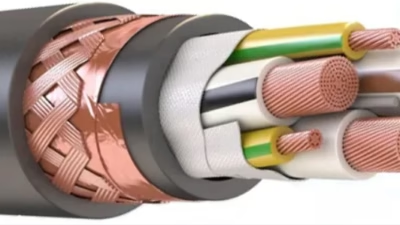
Pilot Core Vulnerability: The central 16 mm² tinned copper pilot core is supported by a semiconductive cradle (about 1.0 mm radial thickness). At room temperature, this cradle is flexible and provides cushioning. At -40°C, the cradle material becomes stiff, and torsional stresses applied to the outer cable (from corkscrewing) transmit directly to the pilot core.
Enhanced Pilot Core Cradle Design: For Arctic Grade cables, the semiconductive cradle is formulated from the same low-temperature elastomer material as the outer jacket, ensuring identical thermal expansion characteristics and flexibility across the -40°C to +60°C range. Additionally, the cradle thickness is increased from ~1.0 mm to ~1.5 mm, providing greater torsional compliance.
Anti-Rotation Feature: Some Arctic Grade designs incorporate a helical directional wrap within the pilot core cradle—oriented opposite to the cable’s overall twist. When external torsional stress is applied, this internal counter-helix partially cancels the torsion, reducing stress on the pilot core wires.
7. Cold-Bend Testing: IEC 60811-504/505 and Equivalent Standards
IEC 60811-504 (Cold-Bend Test): This procedure requires: (1) Condition cable samples at -40°C for 16 hours minimum in a cold chamber, (2) Immediately bend samples around a mandrel with radius = 5× outer diameter, (3) Perform 4 complete bend cycles (wrap around, unwrap). Acceptance criterion: Zero visible cracks on jacket or insulation surface after completion.
IEC 60811-505 (Cold-Impact Test): Insulation samples are clamped in an impact test apparatus, subjected to impact while at -40°C. Energy levels are specified per cable type. For mining cables, impact energy is typically 2–5 J per test (equivalent to a 1 kg weight dropping 0.2–0.5 meters). Acceptance: No cracks, no delamination of insulation from jacket.
Rio Tinto’s Additional Requirement: Rio Tinto adds a custom “cold-reel test” where a 10-meter sample of the cable is actually wound on a 300 mm diameter reel at -40°C under 500 N tensile load, cycled 10 times (wind-unwind). The cable must show zero damage. This simulates actual equipment deployment.
Any Arctic Grade cable supplied to Mongolia operations must include third-party test reports for: (1) IEC 60811-504 cold-bend at -40°C, (2) IEC 60811-505 cold-impact, (3) Glass transition temperature (Tg) measurement, (4) Tensile strength and elongation-to-break at -40°C, (5) Rio Tinto’s custom cold-reel test, (6) Pilot core torsion tolerance test.
8. Pilot Core Thermal Stress: Design Changes for -40°C Cycling
Thermal Cycling Mechanism: When an underground cable transitions from -40°C (deployed in winter) to +30°C (underground geothermal) and back to -40°C, the pilot core experiences severe stress. The copper pilot wire core has thermal expansion coefficient ~17 ppm/K, while the semiconductive cradle (elastomer) has ~200+ ppm/K. Over just a 70°C temperature swing, the differential contraction/expansion between pilot core and cradle can create internal stresses approaching the material’s yield point.
Stress Accumulation Over Thermal Cycles: After 50–100 thermal cycles (typical over one mining season), micro-voids form at the copper-cradle interface. These voids create weak points where the pilot core begins to separate from its support cradle. Once separation begins, mechanical shock or vibration during equipment operation can cause the pilot core to suddenly break.
Arctic Grade Design Solution: Modified pilot core cradles incorporate: (1) Controlled-compliance design allowing the cradle to deform slightly during thermal cycling without transmitting excessive stress to the pilot core, (2) Helical wrapping of the pilot core wires (slight spiral pattern) rather than parallel bundling, providing mechanical flexibility, (3) Elastomer formulation matching the outer jacket (identical Tg and thermal expansion), ensuring synchronized contraction.
9. Complete Modification Specification: Type 241 3.3/3.3kV Arctic Grade
| Parameter | Standard Type 241 | Arctic Grade Modified | Unit |
|---|---|---|---|
| Jacket Material | Standard PCP (Tg -20°C) | Arctic Grade PUR or CPE (Tg <-45°C) | — |
| Jacket Thickness | 2.5–3.0 | 3.5–4.0 (thicker for damage tolerance) | mm |
| Anti-Friction Layer | None | PTFE wrap (0.05–0.1 mm) between insulation and jacket | — |
| Insulation (EPR) | Standard EPR (Tg -50°C) | Cold-Impact EPR with modified plasticizers (Tg <-55°C) | — |
| Pilot Core Cradle | Standard semiconductive (1.0 mm) | Arctic Grade elastomer, enhanced thickness (1.5 mm), counter-helix design | — |
| Cold-Bend Test (-40°C) | Not performed (not required by AS/NZS) | IEC 60811-504 mandatory (5× OD radius, 4 cycles, zero cracks) | — |
| Cold-Impact Test (-40°C) | Not performed | IEC 60811-505 mandatory | — |
| Tg Measurement | Typically -20°C (jacket) / -50°C (insulation) | Required: <-45°C (jacket) / <-55°C (insulation), third-party tested | — |
10. Density and Weight Trade-Off: PUR’s Unexpected Advantage
Material Density Comparison: Standard PCP has density ~1.25–1.30 g/cm³. Arctic Grade PUR has density ~1.10–1.18 g/cm³ (slightly less dense). Additionally, PUR’s superior tensile strength allows thinner jacket walls while maintaining mechanical protection. Consequently, Arctic Grade PUR cables often weigh 5–10% LESS than equivalent standard PCP cables.
Operational Benefit: At Oyu Tolgoi, where cables are deployed on equipment reels and dragged across terrain at high altitude (cold air is less dense, equipment works harder), the weight reduction is a hidden advantage. Lighter cables reduce motor load on LHD equipment, slightly improving fuel efficiency and equipment uptime.
Outer Diameter Consideration: Because PUR allows thinner protective jacketing, Arctic Grade cables are often slightly smaller in outer diameter than equivalent standard cables. This is advantageous for equipment with reel diameter constraints.
11. Manufacturing Process Changes Required for Arctic Grade Cables
Material Sourcing: Arctic Grade elastomers (PUR, CPE with custom plasticizers, cold-impact EPR) are not stocked by standard material suppliers. Manufacturers must establish relationships with specialty material providers (like DuPont for Kraton thermoplastic elastomers, or Japanese suppliers for ultra-low-Tg CPE formulations).
Extrusion Parameter Changes: PUR has different extrusion temperature windows than PCP. Extrusion temperatures must be precisely controlled (typically 15–30°C lower than for PCP) to prevent material degradation. This requires retooling extrusion equipment and developing new processing recipes.
Cooling and Vulcanization: Cold-Impact EPR requires longer vulcanization times and specific temperature profiles during cooling to achieve optimal cross-link density. Standard cable manufacturing equipment may not accommodate these requirements—some manufacturers must commission new curing ovens.
Quality Control Burden: Each batch of Arctic Grade cable must undergo the full cold-bend and cold-impact testing suite. This is not required for standard cables. Testing adds 2–4 weeks to manufacturing timeline and significant cost (test laboratory fees ~$5,000–8,000 per cable batch).
12. Conclusion: Comprehensive AS/NZS Arctic Modification Strategy
Summary—The Four Critical Modifications for -40°C Operation: (1) Arctic Grade elastomer jacket (PUR or CPE with depressed Tg <-45°C), (2) Anti-friction PTFE slip layer preventing corkscrewing and pilot core breakage, (3) Cold-impact EPR insulation formulation withstanding shock at extreme cold, (4) Enhanced pilot core cradle design with thermal compatibility and torsion tolerance.
Testing and Certification Requirements: Arctic Grade cables must be verified through IEC 60811-504/505 cold-bend and cold-impact testing, glass transition temperature measurement, tensile strength/elongation-to-break at -40°C, and Rio Tinto’s custom cold-reel simulation test. These certifications ensure the cable will function reliably in Mongolia’s extreme environment.
Timeline and Cost Implications: Complete development and certification of a custom Arctic Grade cable typically requires 6–8 months and costs $50,000–100,000 USD in engineering, material development, and testing. However, for operations like Oyu Tolgoi where cable failures directly impact production (cost of downtime ~$500,000+ per day), the investment in purpose-designed Arctic Grade cables is economically justified.
Feichun Special Cable provides complete Arctic Grade modification engineering for AS/NZS 1802 mining cables, including: materials science consultation, prototype development, IEC 60811 testing coordination, Rio Tinto certification, and manufacturing scale-up for bulk supply to Mongolia mining operations.
References & Sources
- AS/NZS 1802:2012, “Fixed electric cables—General purpose cables for underground mining,” Standards New Zealand and Standards Australia.
- IEC 60811-2-1:2012, “Test methods for non-metallic materials of cables—Mechanical properties—Part 2-1: Tensile and elongation properties,” International Electrotechnical Commission.
- IEC 60811-504:2012, “Mechanical tests for cables under special conditions—Cold-bend test,” International Electrotechnical Commission.
- IEC 60811-505:2012, “Mechanical tests for cables under special conditions—Cold-impact test,” International Electrotechnical Commission.
- Feichun Special Cable Research & Development Team, “Arctic Grade Modification Engineering for AS/NZS 1802 Mining Cables—Mongolia Operations,” Technical Report, 2025.