arctic grade mining cable

Казахстанские открытые медные рудники (особенно Bozshakol с глубокими карьерами и Aktogay в степной зоне) испытывают зимние температуры −35…−45°C регулярно. Снег и лёд покрывают оборудование и кабельные линии. Электросварочные экскаваторы (Shovel) и буровые установки продолжают работать 24/7, потому что остановка добычи неприемлема. Это означает, что кабели подвергаются динамической нагрузке (вытягивание и наматывание на барабан) при температурах, при которых их оболочка находится в хрупком состоянии. Опасность в том, что отказ не виден визуально до того, как произойдёт электрический пробой. Микротрещины образуются в первые часы эксплуатации, но вода и электрический ток попадают в них только через 12–48 часов. Затем наступает внезапный отказ: слышен треск электрической дуги, видна вспышка, оборудование отключается, и вся подстанция теряет питание.

Glass Transition Trap: Why Standard VDE 0250 Cables Shatter at −40°C in Kazakhstan Copper MinesArctic-Grade (N)TSCGEWÖU Polymer Engineering Deep Dive

Казахстанские открытые медные рудники (особенно Bozshakol с глубокими карьерами и Aktogay в степной зоне) испытывают зимние температуры −35…−45°C регулярно. Снег и лёд покрывают оборудование и кабельные линии. Электросварочные экскаваторы (Shovel) и буровые установки продолжают работать 24/7, потому что остановка добычи неприемлема. Это означает, что кабели подвергаются динамической нагрузке (вытягивание и наматывание на барабан) при температурах, при которых их оболочка находится в хрупком состоянии. Опасность в том, что отказ не виден визуально до того, как произойдёт электрический пробой. Микротрещины образуются в первые часы эксплуатации, но вода и электрический ток попадают в них только через 12–48 часов. Затем наступает внезапный отказ: слышен треск электрической дуги, видна вспышка, оборудование отключается, и вся подстанция теряет питание.
Project Magnitude: Rio Tinto's Oyu Tolgoi underground expansion is one of the world's largest block caving mine projects. The underground mine currently extends 1,300+ meters below surface, with expansion workings reaching 1,500+ meters depth. The power distribution network includes underground substations feeding: (1) Electric load-haul-dump (LHD) fleets, (2) Continuous mining equipment and drill jumbos, (3) Conveyor systems and material handling, (4) Dewatering pumps, (5) Ventilation systems. 力拓奥尤陶勒盖地下扩建是全球最大的自然崩落法矿井项目之一。地下矿山目前已延伸地表下1300多米,扩建工作延伸到1500多米深度。配电网络包括为以下系统供电的地下变电站:(1)电动铲运机(LHD)队,(2)连续采矿设备和凿岩台车,(3)传送带系统和物料处理,(4)排水泵,(5)通风系统。 11kV Primary Distribution Role: The 11kV distribution tier is the primary feeder for underground mobile substations, which then step voltage down to 3.3kV for equipment power circuits. Multiple 11kV feeders distribute power across different mining levels (extraction level, haulage level, ventilation shafts). Each feeder may be 500–2,000 meters long, running through risky terrain where cables experience mechanical stress from falling rock, ground movement, and environmental extremes.

Oyu Tolgoi Expansion: Ampacity and Mechanical Suitability of 11kV AS/NZS Mining Cables

Project Magnitude: Rio Tinto’s Oyu Tolgoi underground expansion is one of the world’s largest block caving mine projects. The underground mine currently extends 1,300+ meters below surface, with expansion workings reaching 1,500+ meters depth. The power distribution network includes underground substations feeding: (1) Electric load-haul-dump (LHD) fleets, (2) Continuous mining equipment and drill jumbos, (3) Conveyor systems and material handling, (4) Dewatering pumps, (5) Ventilation systems. 力拓奥尤陶勒盖地下扩建是全球最大的自然崩落法矿井项目之一。地下矿山目前已延伸地表下1300多米,扩建工作延伸到1500多米深度。配电网络包括为以下系统供电的地下变电站:(1)电动铲运机(LHD)队,(2)连续采矿设备和凿岩台车,(3)传送带系统和物料处理,(4)排水泵,(5)通风系统。 11kV Primary Distribution Role: The 11kV distribution tier is the primary feeder for underground mobile substations, which then step voltage down to 3.3kV for equipment power circuits. Multiple 11kV feeders distribute power across different mining levels (extraction level, haulage level, ventilation shafts). Each feeder may be 500–2,000 meters long, running through risky terrain where cables experience mechanical stress from falling rock, ground movement, and environmental extremes.
The Design Temperature Assumption: AS/NZS 1802 mining cable standards were developed for Australian and New Zealand mining conditions, where minimum ambient temperatures rarely drop below -10°C to -15°C. The standard's base material specifications (PCP chloroprene jacket, standard EPR insulation) were formulated for this relatively temperate range. A cable certified to AS/NZS 1802 specifications is guaranteed to function correctly from 0°C to 60°C (typical service range), with an operating floor around -20°C at absolute minimum. AS/NZS 1802矿用电缆标准是为澳大利亚和新西兰矿业条件而开发的,最低环境温度很少低于-10°C至-15°C。该标准的基础材料规范(PCP氯丁橡胶护套、标准EPR绝缘)针对这个相对温暖的范围而配制。根据AS/NZS 1802规范认证的电缆保证在0°C至60°C范围内正确工作,绝对最低工作温度约为-20°C。

Cold Bend Performance: Modifying AS/NZS Mining Cables for -40°C Operation in Mongolia

The Design Temperature Assumption: AS/NZS 1802 mining cable standards were developed for Australian and New Zealand mining conditions, where minimum ambient temperatures rarely drop below -10°C to -15°C. The standard’s base material specifications (PCP chloroprene jacket, standard EPR insulation) were formulated for this relatively temperate range. A cable certified to AS/NZS 1802 specifications is guaranteed to function correctly from 0°C to 60°C (typical service range), with an operating floor around -20°C at absolute minimum. AS/NZS 1802矿用电缆标准是为澳大利亚和新西兰矿业条件而开发的,最低环境温度很少低于-10°C至-15°C。该标准的基础材料规范(PCP氯丁橡胶护套、标准EPR绝缘)针对这个相对温暖的范围而配制。根据AS/NZS 1802规范认证的电缆保证在0°C至60°C范围内正确工作,绝对最低工作温度约为-20°C。
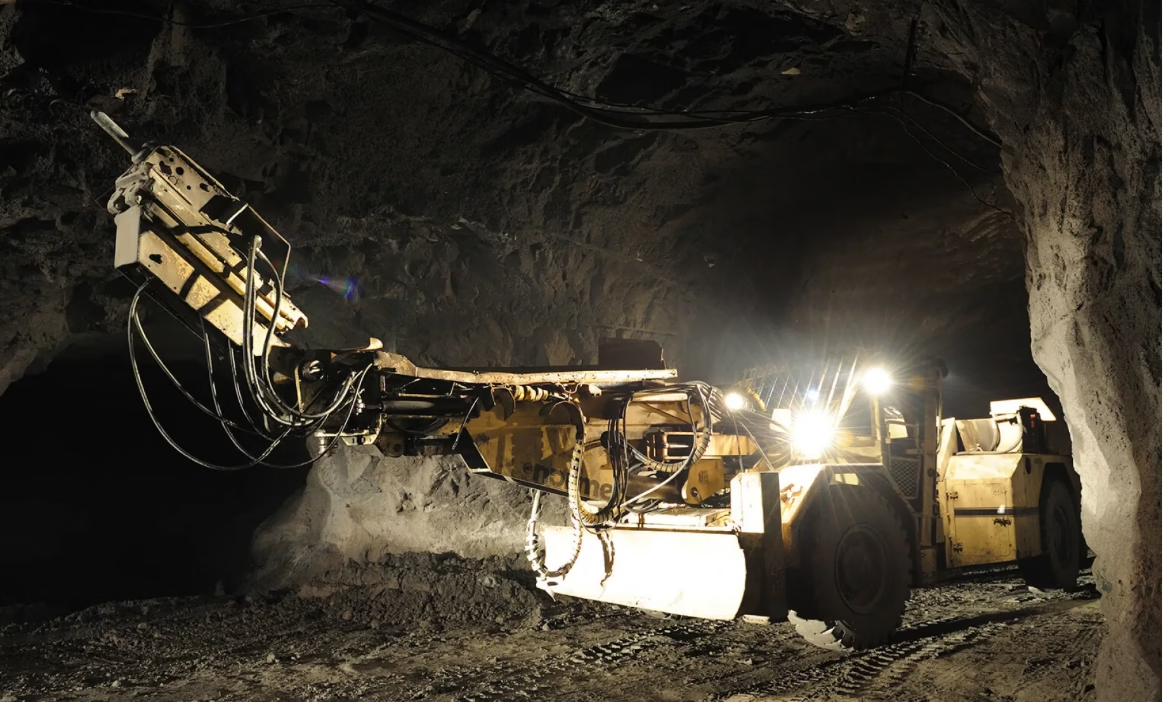
The surface of the Oyu Tolgoi site in southern Mongolia regularly experiences winter temperatures dropping to -35°C to -45°C. Underground development workings in ventilation shafts and transition zones between the deep underground operations (where temperatures warm to 15–20°C due to geothermal gradient) and surface facilities experience the worst of both worlds: temperatures fluctuating between -40°C and +10°C within hours as equipment movements create temporary temperature swings. 奥尤陶勒盖位于蒙古南部,地表冬季温度经常降至-35°C至-45°C。通风竖井和地下作业(深部地温升至15-20°C)与地面设施之间过渡区域的地下开发工作经历最坏的情况:数小时内温度在-40°C和+10°C之间波动,因为设备移动产生临时温度波动。 Cable Deployment Locations: Arctic Grade Type 241 11/11kV 3x50mm² cables are deployed in four primary locations: (1) Surface cable runs feeding portable substations in the open pit winter environment (-40°C sustained), (2) Ventilation shaft risers where cables experience extreme temperature gradients, (3) Underground main feeder connections to load-haul-dump (LHD) equipment in transition zones (fluctuating -20°C to +15°C), (4) Mobile substation interconnects requiring frequent reeling and repositioning in arctic conditions.

Oyu Tolgoi Extreme Conditions: Arctic Grade Type 241 11/11kV 3x50mm² Field Operations, Failure Prevention, and Emergency Protocols

The surface of the Oyu Tolgoi site in southern Mongolia regularly experiences winter temperatures dropping to -35°C to -45°C. Underground development workings in ventilation shafts and transition zones between the deep underground operations (where temperatures warm to 15–20°C due to geothermal gradient) and surface facilities experience the worst of both worlds: temperatures fluctuating between -40°C and +10°C within hours as equipment movements create temporary temperature swings. 奥尤陶勒盖位于蒙古南部,地表冬季温度经常降至-35°C至-45°C。通风竖井和地下作业(深部地温升至15-20°C)与地面设施之间过渡区域的地下开发工作经历最坏的情况:数小时内温度在-40°C和+10°C之间波动,因为设备移动产生临时温度波动。 Cable Deployment Locations: Arctic Grade Type 241 11/11kV 3x50mm² cables are deployed in four primary locations: (1) Surface cable runs feeding portable substations in the open pit winter environment (-40°C sustained), (2) Ventilation shaft risers where cables experience extreme temperature gradients, (3) Underground main feeder connections to load-haul-dump (LHD) equipment in transition zones (fluctuating -20°C to +15°C), (4) Mobile substation interconnects requiring frequent reeling and repositioning in arctic conditions.
The safest way to write this page is not to pretend that Rio Tinto has publicly released a project call-off for this exact cable. The stronger and more credible angle is this: under Oyu Tolgoi Underground-style conditions, Arctic-grade Type 241 11/11kV 3x50mm² is a rational engineering specification direction. That distinction matters. A serious mining page should never fake project-specific approval language that has not been published. What it should do is explain the logic clearly. Oyu Tolgoi Underground is a world-class block-caving copper-gold project in Mongolia’s South Gobi. The site sees a harsh thermal range, with hot summers and deep winter exposure. Standard Type 241 mining cable is designed to AS/NZS 1802 and is publicly described for applications such as continuous miners, pump feeders, monorails supplying DCBs and longwalls. Electrically and structurally, that makes it a very credible candidate architecture for underground mining distribution circuits. But when winter ambient moves below the standard low-temperature threshold, the correct engineering response is not to abandon Type 241 altogether. The correct response is to specify an Arctic-grade low-temperature sheath and insulation system built on the Type 241 platform.

Oyu Tolgoi Underground: Specifying Arctic-Grade Type 241 11/11kV 3x50mm² for Mongolian Winters

The safest way to write this page is not to pretend that Rio Tinto has publicly released a project call-off for this exact cable. The stronger and more credible angle is this: under Oyu Tolgoi Underground-style conditions, Arctic-grade Type 241 11/11kV 3x50mm² is a rational engineering specification direction. That distinction matters. A serious mining page should never fake project-specific approval language that has not been published. What it should do is explain the logic clearly. Oyu Tolgoi Underground is a world-class block-caving copper-gold project in Mongolia’s South Gobi. The site sees a harsh thermal range, with hot summers and deep winter exposure. Standard Type 241 mining cable is designed to AS/NZS 1802 and is publicly described for applications such as continuous miners, pump feeders, monorails supplying DCBs and longwalls. Electrically and structurally, that makes it a very credible candidate architecture for underground mining distribution circuits. But when winter ambient moves below the standard low-temperature threshold, the correct engineering response is not to abandon Type 241 altogether. The correct response is to specify an Arctic-grade low-temperature sheath and insulation system built on the Type 241 platform.
If you are procuring Type 275 3.3kV 3x95mm² mining cables for Mongolian operations and relying on standard AS/NZS 1802 formulations without Arctic Grade modification, you will experience outer sheath cracking within days to weeks of deployment during Mongolian winter. The answer to your question is unambiguous: yes, standard cables will fail, and the failure is not marginal—it is catastrophic. The cracking will progress from hairline fissures to complete jacket failure within a timeframe measured in operational shifts, not months. This is not a theoretical risk or a worst-case scenario. It is an engineering certainty rooted in fundamental material science physics. 如果您正在为蒙古国运营采购 Type 275 3.3kV 3x95mm² 矿用电缆,并依赖于标准 AS/NZS 1802 配方而没有极地级修改,您将在蒙古冬季部署后的几天到几周内经历外护套开裂。答案是明确的:是的,标准电缆会失效,且失效不是边际的—这是灾难性的。开裂将在以运营班次而不是月份衡量的时间框架内从细微裂纹发展为完全护套失效。这不是理论风险或最坏情况场景。它是根植于基本材料科学物理的工程必然。

Cold Weather Reeling: Does Type 275 3.3kV 3x95mm² Outer Sheath Crack in Mongolian Winters?

If you are procuring Type 275 3.3kV 3x95mm² mining cables for Mongolian operations and relying on standard AS/NZS 1802 formulations without Arctic Grade modification, you will experience outer sheath cracking within days to weeks of deployment during Mongolian winter. The answer to your question is unambiguous: yes, standard cables will fail, and the failure is not marginal—it is catastrophic. The cracking will progress from hairline fissures to complete jacket failure within a timeframe measured in operational shifts, not months. This is not a theoretical risk or a worst-case scenario. It is an engineering certainty rooted in fundamental material science physics. 如果您正在为蒙古国运营采购 Type 275 3.3kV 3x95mm² 矿用电缆,并依赖于标准 AS/NZS 1802 配方而没有极地级修改,您将在蒙古冬季部署后的几天到几周内经历外护套开裂。答案是明确的:是的,标准电缆会失效,且失效不是边际的—这是灾难性的。开裂将在以运营班次而不是月份衡量的时间框架内从细微裂纹发展为完全护套失效。这不是理论风险或最坏情况场景。它是根植于基本材料科学物理的工程必然。
To understand why the Oyu Tolgoi copper mining project—operated by Rio Tinto in the Gobi Desert of southern Mongolia—demands a specialized Arctic Grade version of AS/NZS 1802 Type 241 cable, you must first grasp the fundamental reality of extreme cold mining: the same materials that remain pliable and safe at temperate conditions can transform into brittle, dangerous substances when subjected to temperatures dropping to minus forty degrees Celsius. A standard Type 241 trailing cable, engineered for operational environments of minus twenty or minus twenty-five degrees, becomes not merely less effective but actively hazardous when deployed in Oyu Tolgoi's winter conditions. 要理解为什么力拓在蒙古戈壁南部运营的奥尤陶勒盖铜矿项目需要专门的极地级版本AS/NZS 1802 Type 241电缆,您必须首先掌握极端严寒采矿的基本现实:在温和条件下保持柔韧和安全的相同材料,当温度下降到负四十摄氏度时,可能转变为脆性、危险的物质。标准的Type 241拖曳电缆在负二十或负二十五度的运行环境中设计,但当在奥尤陶勒盖的冬季条件下使用时,不仅效能下降,而且变得主动危险。

Oyu Tolgoi Standard: Sourcing -40°C Arctic Grade AS/NZS 1802 Type 241 11kV for Mongolian Copper Mines

To understand why the Oyu Tolgoi copper mining project—operated by Rio Tinto in the Gobi Desert of southern Mongolia—demands a specialized Arctic Grade version of AS/NZS 1802 Type 241 cable, you must first grasp the fundamental reality of extreme cold mining: the same materials that remain pliable and safe at temperate conditions can transform into brittle, dangerous substances when subjected to temperatures dropping to minus forty degrees Celsius. A standard Type 241 trailing cable, engineered for operational environments of minus twenty or minus twenty-five degrees, becomes not merely less effective but actively hazardous when deployed in Oyu Tolgoi’s winter conditions. 要理解为什么力拓在蒙古戈壁南部运营的奥尤陶勒盖铜矿项目需要专门的极地级版本AS/NZS 1802 Type 241电缆,您必须首先掌握极端严寒采矿的基本现实:在温和条件下保持柔韧和安全的相同材料,当温度下降到负四十摄氏度时,可能转变为脆性、危险的物质。标准的Type 241拖曳电缆在负二十或负二十五度的运行环境中设计,但当在奥尤陶勒盖的冬季条件下使用时,不仅效能下降,而且变得主动危险。
Electrical cables deployed in polar regions, northern mining sites, and cryogenic industrial facilities must retain mechanical flexibility at temperatures far below the freezing point of water. While standard Chlorinated Polyethylene (CPE) jacketing provides excellent flame retardance, oil resistance, and UV stability, it becomes increasingly stiff as ambient temperatures drop below approximately −25 °C. This presents a serious engineering challenge: a rigid cable jacket cannot be routed, bent around pulleys, or connected to moving machinery without risking cracks, insulation damage, or total conductor exposure. (在极地、北方矿区及低温工业环境中运行的电缆必须在远低于 0 °C 的温度下保持机械柔性。标准 CPE 护套虽具有优异的阻燃、耐油和耐紫外线性能,但在约 −25 °C 以下会变得僵硬,给布线、弯曲和动态连接带来开裂风险。)

Cold Flex Technology: AmerCable Arctic Brand vs. Standard CPE — What Plasticizer Is Used for −60 °C Flexibility?

Electrical cables deployed in polar regions, northern mining sites, and cryogenic industrial facilities must retain mechanical flexibility at temperatures far below the freezing point of water. While standard Chlorinated Polyethylene (CPE) jacketing provides excellent flame retardance, oil resistance, and UV stability, it becomes increasingly stiff as ambient temperatures drop below approximately −25 °C. This presents a serious engineering challenge: a rigid cable jacket cannot be routed, bent around pulleys, or connected to moving machinery without risking cracks, insulation damage, or total conductor exposure. (在极地、北方矿区及低温工业环境中运行的电缆必须在远低于 0 °C 的温度下保持机械柔性。标准 CPE 护套虽具有优异的阻燃、耐油和耐紫外线性能,但在约 −25 °C 以下会变得僵硬,给布线、弯曲和动态连接带来开裂风险。)
To understand why cable sheaths in underground coal mines must be electrically conductive, we need to first explore the fundamental physics of static electricity and why it poses such an extraordinary danger in mining environments. This requirement, mandated by AS/NZS 1802:2018, is not merely a technical specification but rather a critical safety measure that has evolved from decades of mining experience and, unfortunately, from lessons learned through tragic accidents. 要理解为什么地下煤矿中的电缆护套必须具有导电性,我们首先需要探讨静电的基本物理原理,以及为什么它在采矿环境中构成如此巨大的危险。AS/NZS 1802:2018要求的这一规定不仅仅是一个技术规范,而是一项从数十年的采矿经验以及不幸的事故教训中演变而来的关键安全措施。

TENAX-SAS (N)TSCGEWOEU I 6 – 35 KV

As power supply cable to large mobile equipment in mines, specifically designed for trailing cable applications with shovels and draglines. The outer sheath is extremely robust and tough against abrasion and tearing, maintaining full flexibility in operation down to -50°C. 用作矿山大型移动设备的电源电缆,专为挖掘机和拉铲的拖曳电缆应用而设计。外护套极其坚固耐磨损和撕裂,在低至-50°C的温度下保持完全的柔韧性。
TYPE 240 1.1 to 11kV AS/NZS 1802:2003, AS/NZS 2802:2000 Australia Mining Cable

What is Type 240 Mining Cable ?

TYPE 240 cables serve as essential power supply conductors for critical mining equipment in underground coal mining operations. The cable’s robust construction and electrical characteristics make it particularly suitable for powering continuous miners, longwall shearer systems, hydraulic pump stations, shuttle cars, and various mobile mining machinery that operate in challenging underground environments.