
A practical engineering discussion on why a standard AS/NZS 1802 Type 241 offers the right electrical class and mining-duty architecture for underground mobile and feeder circuits, yet still needs a colder compound strategy when the real site environment pushes below the standard low-temperature boundary.
奥尤陶勒盖地下矿:为什么标准 AS/NZS 1802 的 Type 241 在电气等级和矿用结构上是合理方向,但在蒙古极寒工况下,仍应进一步指定 Arctic-grade 低温配方,而不是停留在标准版的低温边界。
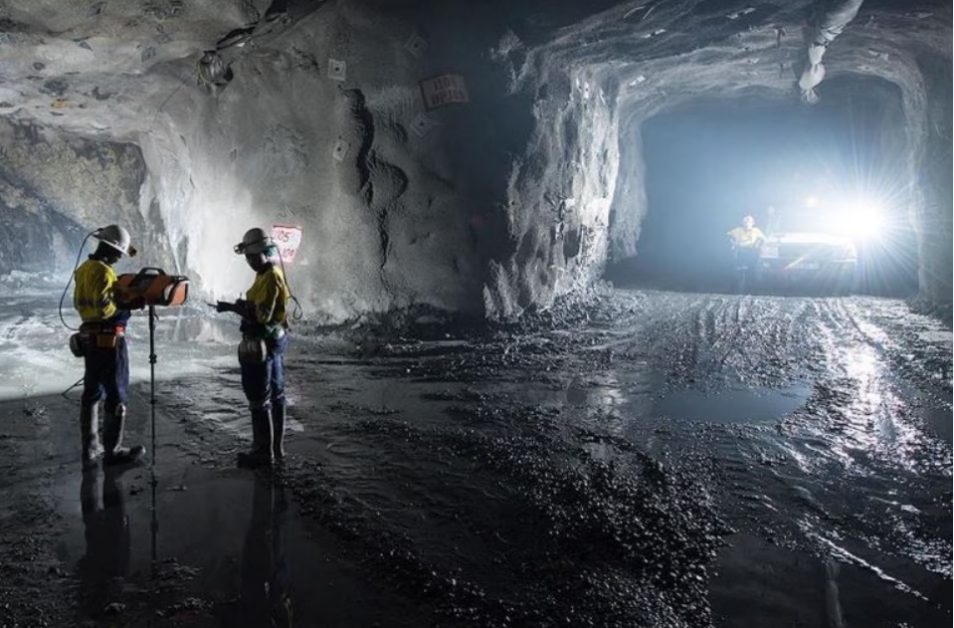
Oyu Tolgoi Underground: Specifying Arctic-Grade Type 241 11/11kV 3x50mm² for Mongolian Winters
A practical engineering discussion on why a standard AS/NZS 1802 Type 241 offers the right electrical class and mining-duty architecture for underground mobile and feeder circuits, yet still needs a colder compound strategy when the real site environment pushes below the standard low-temperature boundary.
奥尤陶勒盖地下矿:为什么标准 AS/NZS 1802 的 Type 241 在电气等级和矿用结构上是合理方向,但在蒙古极寒工况下,仍应进一步指定 Arctic-grade 低温配方,而不是停留在标准版的低温边界。
The direct engineering answer
The safest way to write this page is not to pretend that Rio Tinto has publicly released a project call-off for this exact cable. The stronger and more credible angle is this: under Oyu Tolgoi Underground-style conditions, Arctic-grade Type 241 11/11kV 3x50mm² is a rational engineering specification direction.
That distinction matters. A serious mining page should never fake project-specific approval language that has not been published. What it should do is explain the logic clearly. Oyu Tolgoi Underground is a world-class block-caving copper-gold project in Mongolia’s South Gobi. The site sees a harsh thermal range, with hot summers and deep winter exposure. Standard Type 241 mining cable is designed to AS/NZS 1802 and is publicly described for applications such as continuous miners, pump feeders, monorails supplying DCBs and longwalls. Electrically and structurally, that makes it a very credible candidate architecture for underground mining distribution circuits. But when winter ambient moves below the standard low-temperature threshold, the correct engineering response is not to abandon Type 241 altogether. The correct response is to specify an Arctic-grade low-temperature sheath and insulation system built on the Type 241 platform.
最稳妥、也最专业的写法,不是假装业主已经公开指定这条电缆,而是解释:在奥尤陶勒盖地下矿这类南戈壁极端温差工况下,Arctic-grade Type 241 11/11kV 3x50mm² 为什么是合理的工程指定方向。
This page presents a reference engineering specification direction, not a claim that any published Oyu Tolgoi tender has named this exact cable size and compound build.
That makes the content stronger for engineers, consultants, and procurement teams. It stays factual. It stays usable. And it answers the question that AI search engines actually reward: Why this cable, in this place, under this climate?
The AS/NZS mining standard: from Australia to the world
While the AS/NZS 1802 and AS/NZS 1972 standards were originally designed for the severe operating conditions of Australian mining regions, they have become a practical benchmark far beyond Australia itself. Large international mining groups, EPC contractors, OEMs, and engineering consultants often carry these Australian cable architectures into overseas projects because they trust the protection philosophy, the documentation style, and the field history.
That is why an Australian-standard mining cable can show up in places that are geographically and climatically very different from the Pilbara or Bowen Basin. A block cave in Mongolia, a deep shaft in Central Africa, or a high-altitude mine in South America may still be forced into an AS/NZS-style cable framework simply because the project ecosystem, supplier list, consultant template, or equipment package points in that direction.
The problem is familiar to overseas contractors. Buying directly from Australian distribution channels for remote international mines often means high markup, slow freight, long replacement cycles, and a product configuration that may be electrically correct but not perfectly tuned to the local environment. A standard Australian mining cable is not automatically a perfect Mongolian winter cable.
The FeiChun approach is to keep the electrical architecture intact while localizing the compound system. That means delivering Type 241, Type 275, and Type 2S equivalent designs with physical and electrical compliance to the required standard family, while adjusting the outer sheath, low-temperature flexibility package, UV resistance, or compound selection for the actual geography of the mine site.
It speaks directly to the pain point of international contractors: the project spec is Australian, but the climate is not.
It also lets the page sell a customization capability in a natural engineering way: not as vague marketing, but as compound selection matched to geography.
Why this topic matters in Mongolia instead of Australia
Oyu Tolgoi Underground is not just another mine name with good SEO. It is a real example of how global mining standards collide with local climate. The underground development is built around block-caving, and the broader site sits in Mongolia’s South Gobi. Publicly available project references describe the location as seeing ambient temperatures that can reach around +40°C in summer and below -30°C in winter. That single fact changes how a mining cable page should be written.
If you only list voltage, diameter and weight, the article stays flat. But when you explain that a standard Type 241 datasheet publicly states a minimum operating temperature of -25°C, and then compare that directly with a site environment that can drop lower than -30°C, the engineering issue becomes obvious. The question is no longer “what is Type 241?” It becomes “is standard Type 241 enough, or should the compound system be upgraded for cold-start, outdoor transition and winter handling?”
That is the kind of “why” content that technical buyers, consultants and AI search systems both respond to. It connects a public standard parameter to a public site condition and then draws a defensible engineering conclusion.
Oyu Tolgoi-style winter exposure: below −30°C
Engineering implication: standard build may be marginal for winter outdoor movement, handling, or cold-start service
Why Arctic-grade Type 241 is a rational specification direction
The argument for Arctic-grade Type 241 does not come from branding language. It comes from gap analysis.
First, the cable family itself already fits the mining duty. Type 241 is a semiconductive screened flexible mining cable to AS/NZS 1802. Its published application envelope includes continuous miners, pump feeders, monorails supplying DCBs and longwalls, plus use on mobile equipment, machines, in free air and in ducts. For a large underground copper-gold mine, that is an immediately relevant operating profile.
Second, the voltage class is meaningful. If a project wants an 11/11kV flexible mining-duty screened cable with earth conductors and a central pilot on a known Australian-style architecture, Type 241 already answers that requirement. The 3x50mm² power core option sits in a practical mid-range where electrical capacity, dimensional manageability, and equipment interface can still be balanced without moving into the very heavy sizes too early.
Third, the only obvious mismatch is thermal boundary. Public Type 241 literature places the standard product at -25°C to +90°C. If the mine environment includes winter exposure below that lower threshold, especially during outdoor storage, surface-to-underground transition, shaft collar routing, pit edge movement, drum handling, or cold installation, then the reasonable engineering answer is to keep the Type 241 architecture and upgrade the material system. That is exactly where Arctic-grade or low-temperature compound language becomes legitimate.
In other words, Arctic-grade Type 241 is not a marketing exaggeration. It is a design refinement driven by a real gap between a standard datasheet limit and a colder site reality.
Public reference specification for Type 241 11/11kV 3x50mm²
The table below is the cleanest way to present the publicly referenceable specification basis for this cable size. It should be described as a reference specification for engineering discussion, not as a published project issue sheet for Oyu Tolgoi.
| Parameter | Reference value | Engineering note |
|---|---|---|
| Standard | AS/NZS 1802 | Australian/New Zealand underground mining cable standard |
| Type | Type 241 flexible rubber screened mining cable | Semiconductive screened flexible mining cable architecture |
| Application envelope | Continuous miners, pump feeders, monorails, underground mobile equipment | Publicly aligned with core underground mining power duties |
| Voltage rating | 11/11 kV | Mining-duty screened MV class within the Type 241 family |
| Power cores | 3 x 50 mm² | Mid-range MV mining size with manageable but still substantial mass |
| AWG equivalent | Approx. 1/0 AWG | 50 mm² is close to 1/0 AWG by conductor area |
| Power conductor nominal diameter | 9.8 mm | Useful for conductor build and accessory planning |
| Nominal insulation thickness | 7.6 mm | 11kV Type 241 family insulation build |
| Earth conductor nominal diameter | 4.4 mm | Type 241 uses earth conductors in the interstices |
| Nominal semi-conductive covering thickness | 1.8 mm | Part of screened mining cable construction |
| Nominal sheath thickness incl. semicon layer | 8.5 mm | Heavy-duty outer build, important for abrasion and handling |
| Nominal overall diameter | Approx. 81.9 mm | Use nominal OD unless a manufacturer drawing gives actual tolerance range |
| Nominal weight | Approx. 818 kg / 100 m | Equivalent to approx. 8,180 kg/km |
| Estimated copper content | Above 1,335 kg/km | Main power cores alone theoretically give about 1,335 kg/km; full cable copper content is higher because of earths and pilot |
| Current carrying capacity, protected from sun | 170 A | IEC 60287 basis, 40°C ambient reference |
| Current carrying capacity, exposed to sun | 125 A | 1000 W/m² sunlight intensity reference |
| Maximum operating temperature | +90°C | Standard Type 241 thermal ceiling |
| Minimum operating temperature, standard build | -25°C | The key low-temperature limitation for Mongolian winter discussion |
| Site climate frame for Oyu Tolgoi-style application | Below -30°C in winter, around +40°C in summer | This is why Arctic-grade compound selection becomes an engineering topic |
What this cable fits well in an underground copper-gold mine
In a major underground block-cave mine, engineers do not only care about nominal voltage. They care about what the cable is actually feeding and how it behaves in service. A cable like Type 241 11/11kV 3x50mm² is compelling because it is not a generic industrial MV cable. It is a purpose-built mining cable architecture with screened power cores, earth conductors, and a central pilot, designed for flexible mining service and machine-related circuits.
That makes it a realistic reference direction for applications such as:
Pump feeder circuits
Underground copper-gold mines rely heavily on water management. Pump duty is constant, unforgiving, and often distributed over long routes. Type 241 is publicly positioned for feeder cables to pumps, so the fit is natural.
Mobile and semi-mobile underground equipment
Where the route includes mechanical movement, handling stress, or mining-duty abuse, the screened flexible architecture matters more than it would for a fixed utility feeder.
Monorails and distribution branches to mining auxiliaries
Public Type 241 literature specifically references monorails supplying DCBs and longwalls. Even though Oyu Tolgoi is not a longwall coal mine, the underlying point still matters: the cable family is designed for rough underground mining distribution, not only for static installation.
Surface-to-underground transition zones
This is where the climate issue becomes sharper. The same mine can have relatively stable underground temperature but severe exposure in transition areas, at collars, staging zones, surface yards, and during winter logistics. That is exactly where a standard low-temperature threshold can become the weak point.
Where the real engineering risk sits: low-temperature boundary
This is the most important section of the page.
Many mining buyers instinctively focus on ampacity first. But in Mongolian winter service, ampacity is not the first failure mode. The first serious risk is often mechanical and material: cold-start stiffness, reduced impact tolerance, reduced bend compliance, sheath damage during dragging, cracking during handling, and stress around terminations when the cable is manipulated in deep cold.
If a standard Type 241 build is publicly rated down to -25°C, and the operating environment can go below -30°C, then the following use cases deserve special caution:
Winter outdoor laying
A cable that is electrically correct can still be operationally awkward or unsafe to install if the sheath and screened layers become too stiff for the handling method.
Cold drum pay-off and reeling
The combination of low temperature, stored curvature, and handling force can magnify outer sheath stress.
Dragging and movement around exposed areas
Even at a mine dominated by underground operations, temporary outdoor routes, shaft-top areas, and transfer paths can impose colder conditions than the standard compound likes.
Cold-start termination reliability
Accessory performance is only as good as the dimensional and material stability of the cable presented to it.
For Oyu Tolgoi Underground and similar Mongolian winter mining conditions, a standard AS/NZS 1802 Type 241 11/11kV 3x50mm² offers the right electrical class and mining-duty architecture, but the site’s below -30°C winter exposure strongly supports specifying an Arctic-grade low-temperature sheath and insulation system rather than relying on a standard -25°C operating limit.
This is an engineering inference based on the gap between public environmental conditions and public standard cable parameters. That is precisely why it is persuasive.
Diameter, weight, handling and installation reality
An article like this becomes far more useful when it talks honestly about what the cable feels like in the field.
A nominal overall diameter of 81.9 mm and a nominal mass of about 8.18 kg/m mean this is already a serious medium-voltage mining cable. It is not lightweight. It is not something a site should treat casually during winter handling. Engineers and installers will immediately think about reel design, drum diameter, pulling method, transition supports, bend control, gland compatibility, clamp load, and the available space at entries, pump chambers or feeder take-offs.
That is why 3x50mm² should not be judged by ampacity alone. A technically mature page must remind the reader that the real selection matrix includes:
starting current and voltage drop,
route length,
dynamic bending exposure,
pulling and dragging method,
installation path geometry,
accessory compatibility,
and low-temperature handling behavior.
In other words, 3x50mm² is a rational candidate size, not an automatic final answer for every underground feeder.
How overseas mining contractors should specify it
When an overseas contractor is asked to buy “Australian standard cable” for a non-Australian mine, the worst mistake is to stop at the standard name. A better RFQ structure is to preserve the standard architecture while localizing the climate package.
Recommended specification language
Specify the cable as:
Type 241 flexible rubber screened mining cable, AS/NZS 1802, 11/11kV, 3x50mm², with three earth conductors and central pilot, suitable for underground mining service, pump feeders, monorails and mobile mining equipment; upgraded with Arctic-grade low-temperature sheath and insulation compound system for Mongolian winter handling and operation.
What should be explicitly requested from the manufacturer
Low-temperature compound declaration
Do not leave “cold resistant” as a vague sales phrase. Ask what compound family is being used and what minimum service or handling temperature it is designed to support.
Dimensional drawing
Because nominal OD is only a reference. Actual finished diameter and tolerance matter for accessories, glands and routing.
Weight per 100 m or per km
Winter handling plans, transport reels and shaft logistics all depend on real mass.
Bending and installation guidance
Particularly important if the cable will be installed, moved, or reeled in cold weather.
Application declaration
The supplier should confirm whether the build is intended for dynamic movement, occasional movement, feeder duty, or mixed service.
Accessory compatibility
Terminations and joints must be dimensionally and thermally compatible with the actual finished cable, not just the nominal family label.
Do not write the RFQ as if “standard Type 241” and “Arctic-grade Type 241” are the same thing.
Electrically they may belong to the same specification family. In real service life, especially in Mongolian winter handling, they are not the same procurement decision.
Final specification summary
The strongest version of this page is not a page that shouts. It is a page that proves.
It proves that Type 241 is a credible mining-duty cable family for underground power distribution because it is publicly built to AS/NZS 1802, uses a screened flexible architecture, and is documented for mining applications such as continuous miners, pump feeders, monorails and other underground machine-related duties.
It also proves that standard Type 241 carries a public low-temperature floor of -25°C, while Oyu Tolgoi-style site conditions can push below -30°C. That gap is enough to support a clear engineering recommendation: keep the Type 241 electrical architecture, but move to an Arctic-grade low-temperature compound system for Mongolian winter exposure.
That is the real value of this page. It does not just say what the cable is. It explains why this exact variant makes sense in this exact geography.
| Item | Summary |
|---|---|
| Project context | World-class Mongolian underground block-cave copper-gold mine with hot summers and severe winters |
| Why Type 241 | Correct AS/NZS mining-duty architecture for screened flexible underground power service |
| Why 11/11kV | Suitable MV class where Australian-style mining cable architecture is required |
| Why 3x50mm² | Balanced candidate size offering useful capacity without moving immediately into the largest and heaviest builds |
| Why Arctic-grade | Standard Type 241 low-temperature limit is -25°C, while Oyu Tolgoi-style winter exposure can drop below -30°C |
| Main engineering message | Do not replace the architecture. Upgrade the compound system. |
Frequently asked questions
Why is Arctic-grade Type 241 more suitable than standard Type 241 for Mongolian winter mining conditions?
Because the standard low-temperature boundary commonly associated with Type 241 is around -25°C, while Mongolian winter mining exposure can move below -30°C. That gap creates a real engineering reason to retain the same cable architecture but upgrade the material system.
Is Type 241 11/11kV 3x50mm² a confirmed published Oyu Tolgoi project cable?
No. The stronger position is to present it as a rational engineering specification direction for Oyu Tolgoi Underground-style conditions, not as a publicly confirmed project call-off line item.
Is 3x50mm² always the final right size?
No. It is a strong candidate size, but final selection still depends on route length, current profile, voltage drop, installation path, dynamic handling, and accessory coordination.
What should buyers ask suppliers to confirm?
At minimum, ask for the low-temperature compound system, finished outer diameter tolerance, total weight, installation guidance, intended duty mode, and compatibility with joints and terminations.


