rubber insulated mining cable

Role in Mining Distribution Hierarchy: Type 241 11/11kV serves as primary feeder distribution (second level below 22 kV transmission) in Andes copper mining: (1) 22 kV transmission line from surface substation → 22 kV/11 kV step-down transformer at pit rim or mine entrance, (2) 11 kV distributed to secondary substations throughout mining area (underground or surface), (3) 11 kV/3.3 kV or 11 kV/6.6 kV transformers supply individual equipment (shovels, draglines, mobile crushers). Type 241 3×120mm² is selected for routes requiring high current (>400 A nominal), allowing dual cables instead of 4–5 smaller cables. At 11 kV, current = P/(√3 × V × PF); a 5 MW load = 5,000 kW / (1.73 × 11 kV × 0.95) ≈ 278 A per phase. Using Type 241 3×120 (nominal 350–400 A capacity at sea level), single cable adequate, reducing installation complexity vs multiple smaller cables. Type 241 11/11kV充当采矿配电层级中一级馈电分配(低于22 kV传输):(1)22 kV传输线从地表变电站 → 坑边或矿口22 kV/11 kV降压变压器、(2)11 kV配电至整个采矿区的二级变电站(地下或地表)、(3)11 kV/3.3 kV或11 kV/6.6 kV变压器供单个设备(电铲、索斗铲、移动破碎机)。Type 241 3×120mm²选用于需要高电流(>400A额定)的线路,允许2根电缆代替4-5根小截面电缆。在11 kV下,电流 = P/(√3 × V × 功率因数);5 MW负载 = 5,000 kW/(1.73×11 kV×0.95) ≈ 278A每相。使用Type 241 3×120(海平面额定350-400A)、单根电缆足够、vs多根小截面电缆减少安装复杂性。

AS/NZS 1802 Type 241 11/11kV 3x120mm² High-Altitude Mining Cable for Chilean Copper Mines

Role in Mining Distribution Hierarchy: Type 241 11/11kV serves as primary feeder distribution (second level below 22 kV transmission) in Andes copper mining: (1) 22 kV transmission line from surface substation → 22 kV/11 kV step-down transformer at pit rim or mine entrance, (2) 11 kV distributed to secondary substations throughout mining area (underground or surface), (3) 11 kV/3.3 kV or 11 kV/6.6 kV transformers supply individual equipment (shovels, draglines, mobile crushers). Type 241 3×120mm² is selected for routes requiring high current (>400 A nominal), allowing dual cables instead of 4–5 smaller cables. At 11 kV, current = P/(√3 × V × PF); a 5 MW load = 5,000 kW / (1.73 × 11 kV × 0.95) ≈ 278 A per phase. Using Type 241 3×120 (nominal 350–400 A capacity at sea level), single cable adequate, reducing installation complexity vs multiple smaller cables. Type 241 11/11kV充当采矿配电层级中一级馈电分配(低于22 kV传输):(1)22 kV传输线从地表变电站 → 坑边或矿口22 kV/11 kV降压变压器、(2)11 kV配电至整个采矿区的二级变电站(地下或地表)、(3)11 kV/3.3 kV或11 kV/6.6 kV变压器供单个设备(电铲、索斗铲、移动破碎机)。Type 241 3×120mm²选用于需要高电流(>400A额定)的线路,允许2根电缆代替4-5根小截面电缆。在11 kV下,电流 = P/(√3 × V × 功率因数);5 MW负载 = 5,000 kW/(1.73×11 kV×0.95) ≈ 278A每相。使用Type 241 3×120(海平面额定350-400A)、单根电缆足够、vs多根小截面电缆减少安装复杂性。
Chile Copper Mining Geographic Context: Chile is the world's largest copper producer (~28% global share). Major operations: (1) Collahuasi (joint BHP-Teck), 4,300 m elevation, 570,000+ tonnes copper/year, (2) Escondida (BHP), 3,200–3,800 m elevation, 1.4 million tonnes copper/year (world's largest mine by volume), (3) La Coipa (joint Codelco-Sumitomo), 4,380 m elevation, 140,000 tonnes copper/year. All Andes mines share extreme climate: high elevation + intense solar UV + low humidity (0–20% annual average) + large day-night temperature extremes (-15°C to +40°C surface). The combination creates uniquely harsh conditions for cable insulation and terminations. 智利是全球最大铜生产国(~28%全球份额)。主要运营:(1)Collahuasi(BHP-Teck联合),4,300m海拔,年产>570,000吨铜,(2)Escondida(BHP),3,200-3,800m海拔,年产140万吨铜(全球最大矿山),(3)La Coipa(Codelco-Sumitomo联合),4,380m海拔,年产140,000吨铜。所有安第斯矿山共享极端气候:高海拔+强烈太阳UV+低湿度(年均0-20%) + 大日夜温度冲击(-15°C至+40°C地表)。这个组合为电缆绝缘和接头创造独特的恶劣条件。

Type 241 6.6/6.6kV 3x95mm² High-Altitude Ampacity Engineering: Chile Andes Copper Mines >3,500m

Chile Copper Mining Geographic Context: Chile is the world’s largest copper producer (~28% global share). Major operations: (1) Collahuasi (joint BHP-Teck), 4,300 m elevation, 570,000+ tonnes copper/year, (2) Escondida (BHP), 3,200–3,800 m elevation, 1.4 million tonnes copper/year (world’s largest mine by volume), (3) La Coipa (joint Codelco-Sumitomo), 4,380 m elevation, 140,000 tonnes copper/year. All Andes mines share extreme climate: high elevation + intense solar UV + low humidity (0–20% annual average) + large day-night temperature extremes (-15°C to +40°C surface). The combination creates uniquely harsh conditions for cable insulation and terminations. 智利是全球最大铜生产国(~28%全球份额)。主要运营:(1)Collahuasi(BHP-Teck联合),4,300m海拔,年产>570,000吨铜,(2)Escondida(BHP),3,200-3,800m海拔,年产140万吨铜(全球最大矿山),(3)La Coipa(Codelco-Sumitomo联合),4,380m海拔,年产140,000吨铜。所有安第斯矿山共享极端气候:高海拔+强烈太阳UV+低湿度(年均0-20%) + 大日夜温度冲击(-15°C至+40°C地表)。这个组合为电缆绝缘和接头创造独特的恶劣条件。
The КГЭ-ХЛ 3×95+1×25+1×10 6kV is a cold-resistant heavy-duty flexible trailing cable designed for electric mining excavators and draglines operating in climates where ambient temperature drops below −20°C. The Russian designation КГЭ stands for Кабель Гибкий Экскаваторный (Flexible Excavator Cable), and the suffix ХЛ stands for Холодостойкий (Cold-Resistant), indicating that all polymer materials—insulation, bedding, and outer sheath—are formulated to retain dynamic flexibility at temperatures down to −40°C (or −50°C in extreme-grade variants). The configuration "3×95+1×25+1×10" specifies three 95mm² power conductors, one 25mm² earth conductor, and one 10mm² pilot/monitoring conductor—the standard architecture for 6kV electric mining excavators of the ЭКГ series that dominate Kazakhstan's open-pit copper and coal mines. Feichun Cable manufactures a direct drop-in equivalent that matches the ГОСТ conductor configuration, voltage rating, outer diameter, cold-flex performance, and reel compatibility, enabling Kazakhstan mines to procure this cable without modifying existing excavator cable-handling equipment.

Cold Cracking: Why Standard КГЭ (KGE) Fails Below −20°C and КГЭ-ХЛ (KGE-HL) Is Required. Drop-In Equivalent for Kazakhstan Copper Mines — 3×95+1×25+1×10 6kV

The КГЭ-ХЛ 3×95+1×25+1×10 6kV is a cold-resistant heavy-duty flexible trailing cable designed for electric mining excavators and draglines operating in climates where ambient temperature drops below −20°C. The Russian designation КГЭ stands for Кабель Гибкий Экскаваторный (Flexible Excavator Cable), and the suffix ХЛ stands for Холодостойкий (Cold-Resistant), indicating that all polymer materials—insulation, bedding, and outer sheath—are formulated to retain dynamic flexibility at temperatures down to −40°C (or −50°C in extreme-grade variants). The configuration “3×95+1×25+1×10” specifies three 95mm² power conductors, one 25mm² earth conductor, and one 10mm² pilot/monitoring conductor—the standard architecture for 6kV electric mining excavators of the ЭКГ series that dominate Kazakhstan’s open-pit copper and coal mines. Feichun Cable manufactures a direct drop-in equivalent that matches the ГОСТ conductor configuration, voltage rating, outer diameter, cold-flex performance, and reel compatibility, enabling Kazakhstan mines to procure this cable without modifying existing excavator cable-handling equipment.
The safest way to write this page is not to pretend that Rio Tinto has publicly released a project call-off for this exact cable. The stronger and more credible angle is this: under Oyu Tolgoi Underground-style conditions, Arctic-grade Type 241 11/11kV 3x50mm² is a rational engineering specification direction. That distinction matters. A serious mining page should never fake project-specific approval language that has not been published. What it should do is explain the logic clearly. Oyu Tolgoi Underground is a world-class block-caving copper-gold project in Mongolia’s South Gobi. The site sees a harsh thermal range, with hot summers and deep winter exposure. Standard Type 241 mining cable is designed to AS/NZS 1802 and is publicly described for applications such as continuous miners, pump feeders, monorails supplying DCBs and longwalls. Electrically and structurally, that makes it a very credible candidate architecture for underground mining distribution circuits. But when winter ambient moves below the standard low-temperature threshold, the correct engineering response is not to abandon Type 241 altogether. The correct response is to specify an Arctic-grade low-temperature sheath and insulation system built on the Type 241 platform.

Oyu Tolgoi Underground: Specifying Arctic-Grade Type 241 11/11kV 3x50mm² for Mongolian Winters

The safest way to write this page is not to pretend that Rio Tinto has publicly released a project call-off for this exact cable. The stronger and more credible angle is this: under Oyu Tolgoi Underground-style conditions, Arctic-grade Type 241 11/11kV 3x50mm² is a rational engineering specification direction. That distinction matters. A serious mining page should never fake project-specific approval language that has not been published. What it should do is explain the logic clearly. Oyu Tolgoi Underground is a world-class block-caving copper-gold project in Mongolia’s South Gobi. The site sees a harsh thermal range, with hot summers and deep winter exposure. Standard Type 241 mining cable is designed to AS/NZS 1802 and is publicly described for applications such as continuous miners, pump feeders, monorails supplying DCBs and longwalls. Electrically and structurally, that makes it a very credible candidate architecture for underground mining distribution circuits. But when winter ambient moves below the standard low-temperature threshold, the correct engineering response is not to abandon Type 241 altogether. The correct response is to specify an Arctic-grade low-temperature sheath and insulation system built on the Type 241 platform.
If your Central Asian underground coal mining project operates within an engineering and procurement ecosystem dominated by Australian consulting firms, English-language design specifications, AS/NZS standards documentation, and requires compatibility with continuous mining equipment protected by pilot-core-dependent relays, then Type 241 (AS/NZS 1802) is your correct choice. Type 241 provides the electrical architecture, pilot conductor continuity, and protective logic integration that Australian mining engineers expect. If your project operates in Kazakhstan, Mongolia, Uzbekistan, or Kyrgyzstan with Russian or Russian-influenced technical standards, local certification bodies that recognize GOST compliance, local maintenance teams trained on GOST equipment, Russian-language technical documentation, and primary focus on cost-effective 6kV power delivery in extreme cold environments, then КГЭ-ХЛ (GOST 31945-2012) is likely the more practical choice. КГЭ-ХЛ integrates seamlessly into Russian-standard electrical systems and is purpose-engineered for the minus forty to minus sixty degree Celsius temperatures endemic to Central Asian winters. 如果您的中亚地下煤矿项目由澳洲咨询公司主导、英文设计规范、AS/NZS标准文件和对连续采煤机保护逻辑兼容性有特殊要求,那么 Type 241(AS/NZS 1802)是正确选择。如果您的项目在哈萨克斯坦、蒙古、乌兹别克斯坦或吉尔吉斯斯坦,采用俄标或俄标影响的技术体系,本地认证机构认可GOST合规,本地维护团队熟悉GOST设备,主要关注极寒下的成本有效6kV供电,那么КГЭ-ХЛ(ГОСТ 31945-2012)是更实用的选择。

AS/NZS Type 241 vs. GOST КГЭ-ХЛ: Choosing the Right Standard for Underground Coal Mines in Central Asia

If your Central Asian underground coal mining project operates within an engineering and procurement ecosystem dominated by Australian consulting firms, English-language design specifications, AS/NZS standards documentation, and requires compatibility with continuous mining equipment protected by pilot-core-dependent relays, then Type 241 (AS/NZS 1802) is your correct choice. Type 241 provides the electrical architecture, pilot conductor continuity, and protective logic integration that Australian mining engineers expect. If your project operates in Kazakhstan, Mongolia, Uzbekistan, or Kyrgyzstan with Russian or Russian-influenced technical standards, local certification bodies that recognize GOST compliance, local maintenance teams trained on GOST equipment, Russian-language technical documentation, and primary focus on cost-effective 6kV power delivery in extreme cold environments, then КГЭ-ХЛ (GOST 31945-2012) is likely the more practical choice. КГЭ-ХЛ integrates seamlessly into Russian-standard electrical systems and is purpose-engineered for the minus forty to minus sixty degree Celsius temperatures endemic to Central Asian winters. 如果您的中亚地下煤矿项目由澳洲咨询公司主导、英文设计规范、AS/NZS标准文件和对连续采煤机保护逻辑兼容性有特殊要求,那么 Type 241(AS/NZS 1802)是正确选择。如果您的项目在哈萨克斯坦、蒙古、乌兹别克斯坦或吉尔吉斯斯坦,采用俄标或俄标影响的技术体系,本地认证机构认可GOST合规,本地维护团队熟悉GOST设备,主要关注极寒下的成本有效6kV供电,那么КГЭ-ХЛ(ГОСТ 31945-2012)是更实用的选择。
The concept dates back to the 1980s and was first deployed commercially at the Chino Mine in New Mexico in 1967 using earlier-generation systems. Modern trolley assist has seen major renewed interest since the mid-2010s as mining companies pursue decarbonization targets. Caterpillar completed a two-year pilot at Boliden's Aitik copper mine in Sweden, and Komatsu — partnering with Wabtec — deployed trolley-equipped 830E-5 trucks at Copper Mountain Mine in British Columbia, Canada. 这一概念可追溯至20世纪80年代,于1967年在美国新墨西哥州奇诺矿首次商业部署。随着矿业公司推进脱碳目标,现代架线助力技术自2010年代中期以来重新受到广泛关注。卡特彼勒在瑞典博利登Aitik铜矿完成了为期两年的试点,小松与Wabtec合作在加拿大不列颠哥伦比亚省铜山矿部署了配备架线系统的830E-5卡车。

Pantograph Cables: What Cable Type Is Required for Komatsu/CAT Trolley Assist Trucks Connecting to Overhead Lines?

The concept dates back to the 1980s and was first deployed commercially at the Chino Mine in New Mexico in 1967 using earlier-generation systems. Modern trolley assist has seen major renewed interest since the mid-2010s as mining companies pursue decarbonization targets. Caterpillar completed a two-year pilot at Boliden’s Aitik copper mine in Sweden, and Komatsu — partnering with Wabtec — deployed trolley-equipped 830E-5 trucks at Copper Mountain Mine in British Columbia, Canada. 这一概念可追溯至20世纪80年代,于1967年在美国新墨西哥州奇诺矿首次商业部署。随着矿业公司推进脱碳目标,现代架线助力技术自2010年代中期以来重新受到广泛关注。卡特彼勒在瑞典博利登Aitik铜矿完成了为期两年的试点,小松与Wabtec合作在加拿大不列颠哥伦比亚省铜山矿部署了配备架线系统的830E-5卡车。
Executive Summary: As global resource extraction expands into Arctic and subarctic regions, electrical infrastructure must withstand temperatures that regularly plunge below -40°C. The (N)TSCGEWÖU cable family represents specialized medium-voltage flexible cables engineered specifically for extreme mechanical and environmental stresses in mining, drilling, and tunneling operations. Understanding cold impact ratings and temperature performance specifications is critical for project engineers, procurement specialists, and operations managers working on Siberian oil and gas projects, Arctic mining operations, and other extreme cold installations. This comprehensive guide examines the technical requirements, testing standards, and material considerations essential for cable selection in environments where standard cables would fail catastrophically. 执行摘要:随着全球资源开采扩展到北极和亚北极地区,电气基础设施必须承受经常低于-40°C的温度。(N)TSCGEWÖU电缆系列代表专门为采矿、钻探和隧道作业中的极端机械和环境应力而设计的中压柔性电缆。了解冷冲击等级和温度性能规格对于从事西伯利亚油气项目、北极采矿作业和其他极冷装置的项目工程师、采购专家和运营管理人员至关重要。

Understanding “Cold Impact” Ratings: (N)TSCGEWÖU Cables for -40°C Siberian Projects

Executive Summary: As global resource extraction expands into Arctic and subarctic regions, electrical infrastructure must withstand temperatures that regularly plunge below -40°C. The (N)TSCGEWÖU cable family represents specialized medium-voltage flexible cables engineered specifically for extreme mechanical and environmental stresses in mining, drilling, and tunneling operations. Understanding cold impact ratings and temperature performance specifications is critical for project engineers, procurement specialists, and operations managers working on Siberian oil and gas projects, Arctic mining operations, and other extreme cold installations. This comprehensive guide examines the technical requirements, testing standards, and material considerations essential for cable selection in environments where standard cables would fail catastrophically. 执行摘要:随着全球资源开采扩展到北极和亚北极地区,电气基础设施必须承受经常低于-40°C的温度。(N)TSCGEWÖU电缆系列代表专门为采矿、钻探和隧道作业中的极端机械和环境应力而设计的中压柔性电缆。了解冷冲击等级和温度性能规格对于从事西伯利亚油气项目、北极采矿作业和其他极冷装置的项目工程师、采购专家和运营管理人员至关重要。
Variable frequency drives (VFDs) have revolutionized industrial motor control by enabling precise speed regulation and significant energy savings. However, these benefits come with a serious technical challenge that many facilities overlook until catastrophic failure occurs. When VFDs control AC motors through pulse width modulation (PWM), they create high-frequency electrical disturbances that can destroy motor bearings in a matter of months or even weeks, rather than the expected operational lifetime of years.

VFD Motor Bearing Damage: Why You Need (N)3GHSSYCY Screened Mining Cables?

Variable frequency drives (VFDs) have revolutionized industrial motor control by enabling precise speed regulation and significant energy savings. However, these benefits come with a serious technical challenge that many facilities overlook until catastrophic failure occurs. When VFDs control AC motors through pulse width modulation (PWM), they create high-frequency electrical disturbances that can destroy motor bearings in a matter of months or even weeks, rather than the expected operational lifetime of years.
N3GHSSYCY cable designation represents a sophisticated medium voltage mining cable specifically engineered for hazardous underground environments. This nomenclature follows the German VDE (Verband der Elektrotechnik) standardization system, where each letter and number conveys critical information about the cable's construction and intended application. Understanding this designation system is essential for engineers, procurement specialists, and safety officers working in mining and tunneling operations. N3GHSSYCY电缆名称代表专门为危险地下环境设计的复杂中压矿用电缆。该命名法遵循德国VDE(电气工程协会)标准化系统,其中每个字母和数字都传达有关电缆结构和预期应用的关键信息。了解该命名系统对于从事采矿和隧道作业的工程师、采购专家和安全官员至关重要。

N3GHSSYCY Cable Datasheet: Technical Specification Downloads & Resources

N3GHSSYCY cable designation represents a sophisticated medium voltage mining cable specifically engineered for hazardous underground environments. This nomenclature follows the German VDE (Verband der Elektrotechnik) standardization system, where each letter and number conveys critical information about the cable’s construction and intended application. Understanding this designation system is essential for engineers, procurement specialists, and safety officers working in mining and tunneling operations. N3GHSSYCY电缆名称代表专门为危险地下环境设计的复杂中压矿用电缆。该命名法遵循德国VDE(电气工程协会)标准化系统,其中每个字母和数字都传达有关电缆结构和预期应用的关键信息。了解该命名系统对于从事采矿和隧道作业的工程师、采购专家和安全官员至关重要。
VDE vertical cable installation, NTSCGEWÖU cable specifications, DIN VDE 0250 mining cable, sheath creepage prevention, vertical shaft cable support, cable clamping distance standards, NEC 300.19 vertical conductor support, polychloprene rubber cable, heavy duty mining cable, submersible cable installation, vertical cable support spacing, cable support clamp design, mining cable installation guide, flexible reeling cable, DIN VDE 0298 cable application, rubber insulated mining cable, steel wire armored cable support, vertical raceway cable installation, creepage distance electrical safety, IEC 60664-1 clearance standards, cable sheath migration, gravitational cable stress, elevator shaft cable installation, power cable vertical mounting, cable support intervals, mining cable standards, armored cable vertical installation, cable pulling techniques vertical, flexible cable vertical support, industrial cable installation best practices, heavy cable weight distribution, cable thermal expansion vertical, mining cable VDE compliance, vertical cable strain relief, cable installation torque specifications, rubber sheath cable properties, chloroprene cable sheath, EPR insulated cable, vertical cable inspection procedures, cable support safety devices, mining cable manufacturer China, special cable Anhui, custom mining cables, vertical cable engineering, cable installation planning, high voltage vertical cable, medium voltage mining cable, cable mechanical support design, cable snaking vertical installation, anti-creepage cable support

VDE Recommendations for Vertical Shaft Cable Installation: Preventing Sheath Creepage in (N)TSCGEWÖU Cables

VDE vertical cable installation, NTSCGEWÖU cable specifications, DIN VDE 0250 mining cable, sheath creepage prevention, vertical shaft cable support, cable clamping distance standards, NEC 300.19 vertical conductor support, polychloprene rubber cable, heavy duty mining cable, submersible cable installation, vertical cable support spacing, cable support clamp design, mining cable installation guide, flexible reeling cable, DIN VDE 0298 cable application, rubber insulated mining cable, steel wire armored cable support, vertical raceway cable installation, creepage distance electrical safety, IEC 60664-1 clearance standards, cable sheath migration, gravitational cable stress, elevator shaft cable installation, power cable vertical mounting, cable support intervals, mining cable standards, armored cable vertical installation, cable pulling techniques vertical, flexible cable vertical support, industrial cable installation best practices, heavy cable weight distribution, cable thermal expansion vertical, mining cable VDE compliance, vertical cable strain relief, cable installation torque specifications, rubber sheath cable properties, chloroprene cable sheath, EPR insulated cable, vertical cable inspection procedures, cable support safety devices, mining cable manufacturer China, special cable Anhui, custom mining cables, vertical cable engineering, cable installation planning, high voltage vertical cable, medium voltage mining cable, cable mechanical support design, cable snaking vertical installation, anti-creepage cable support
The (N)TSCGEWÖU cable, designed specifically for demanding reeling and unreeling operations in mining and heavy industry, must demonstrate exceptional flex endurance to ensure reliable power transmission throughout its service life. This technical document examines how the standardized two-pulley flexing test according to BS EN 50396 and IEC 60245 standards accurately simulates real-world cable life cycles and validates the mechanical durability of these critical power transmission components.

Flexing Test: How the “Two-Pulley Flexing Test” Simulates the Life Cycle of a (N)TSCGEWÖU Reeling Cable

The (N)TSCGEWÖU cable, designed specifically for demanding reeling and unreeling operations in mining and heavy industry, must demonstrate exceptional flex endurance to ensure reliable power transmission throughout its service life. This technical document examines how the standardized two-pulley flexing test according to BS EN 50396 and IEC 60245 standards accurately simulates real-world cable life cycles and validates the mechanical durability of these critical power transmission components.
(N)TSCGEWÖU cable designation follows VDE naming conventions, where each letter represents specific cable characteristics. These medium-voltage cables are specifically engineered for power distribution to heavy-duty equipment in mining and industrial applications, available in voltage ratings of 3.6/6kV, 6/10kV, 8.7/15kV, and 12/20kV. The cable features tinned copper conductors (Class 5 according to DIN VDE 0295), rubber insulation (3GI3 compound per DIN VDE 0207 Part 20), and a heavy-duty elastomer outer sheath (5GM5 compound per DIN VDE 0207 Part 21).

Cold Impact Test: How (N)TSCGEWÖU Cables Are Certified as “Cold Resistant” at -40°C Under VDE Guidelines

(N)TSCGEWÖU cable designation follows VDE naming conventions, where each letter represents specific cable characteristics. These medium-voltage cables are specifically engineered for power distribution to heavy-duty equipment in mining and industrial applications, available in voltage ratings of 3.6/6kV, 6/10kV, 8.7/15kV, and 12/20kV. The cable features tinned copper conductors (Class 5 according to DIN VDE 0295), rubber insulation (3GI3 compound per DIN VDE 0207 Part 20), and a heavy-duty elastomer outer sheath (5GM5 compound per DIN VDE 0207 Part 21).
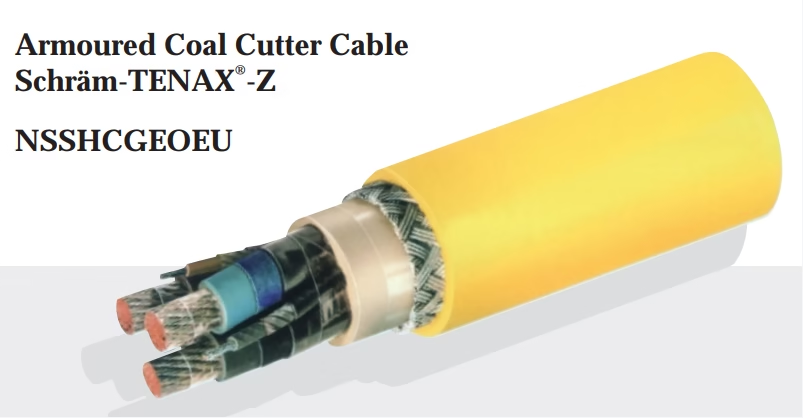
NSSHCGEOEU — это специализированный бронированный гибкий кабель, предназначенный для подключения мобильных машин, эксплуатируемых в условиях экстремальных механических нагрузок, преимущественно в горнодобывающей промышленности. Кабель разработан в соответствии с международным стандартом DIN VDE 0250, часть 812, который устанавливает требования к конструкции, электрическим характеристикам и механической прочности кабелей для угольных комбайнов.

Schräm-TENAX® -Z NSSHCGEOEU

бронированный кабель для угольных комбайнов, кабель NSSHCGEOEU, кабель для горнодобывающего оборудования, кабель для угольных шахт, гибкий шахтный кабель, кабель для комбайна, резиновый кабель для шахт, кабель EPR изоляция, кабель 0.6/1 kV горный, кабель для LHD погрузчика, кабель медно-стальная броня, кабель концентрический экран, силовой кабель для шахт
PROTOLON (M) R-(N)TSCGEWOEU LWL 6/10KV is a highly specialized medium voltage (MV) reeling cable engineered for the demanding conditions of open-cast mining and tunneling operations. This cable integrates fiber-optic elements for simultaneous power transmission and high-speed data communication, making it essential for modern automated mining equipment including excavators, dumpers, and mobile crushers.

What is PROTOLON (M) R-(N)TSCGEWOEU LWL 6/10KV Mining & Tunneling MV Reeling Cable?

PROTOLON (M) R-(N)TSCGEWOEU LWL 6/10KV is a highly specialized medium voltage (MV) reeling cable engineered for the demanding conditions of open-cast mining and tunneling operations. This cable integrates fiber-optic elements for simultaneous power transmission and high-speed data communication, making it essential for modern automated mining equipment including excavators, dumpers, and mobile crushers.