
PROTOLON(M) R-(N)TSCGEWOEU represents a highly engineered family of medium voltage flexible reeling cables specifically designed for demanding applications in open-cast mining, heavy industrial operations, and material handling equipment. Manufactured according to DIN VDE 0250-813 standards and certified by multiple international regulatory bodies including GOST-R and Fire Certificates of Russian Federation, these cables deliver exceptional performance under extreme mechanical stresses characteristic of mining environments.
Anhui Feichun Special Cable Co., Ltd.
安徽飞纯特种电缆有限公司
Professional Manufacturer of Mining and Industrial Cables
What is PROTOLON(M) R-(N)TSCGEWOEU 6 kV – 35 kV Reeling Cable?
The PROTOLON(M) R-(N)TSCGEWOEU represents a highly engineered family of medium voltage flexible reeling cables specifically designed for demanding applications in open-cast mining, heavy industrial operations, and material handling equipment. Manufactured according to DIN VDE 0250-813 standards and certified by multiple international regulatory bodies including GOST-R and Fire Certificates of Russian Federation, these cables deliver exceptional performance under extreme mechanical stresses characteristic of mining environments.
These cables are engineered for connection of large material handling machines such as excavators, dumpers, and mobile crushers in open-cast mines, where equipment must maintain continuous power supply while subjected to high mechanical stresses, extreme temperature variations, and harsh environmental conditions. The cable construction features a three-core design with split earth conductors positioned in the interstices, providing enhanced safety and grounding performance critical for mining operations.
Primary Applications and Purpose
PROTOLON(M) R-(N)TSCGEWOEU cables serve as the electrical lifeline for some of the most demanding mobile equipment in industrial operations. According to industry standards for reeling cable applications, these cables are specifically designed to accommodate the unique challenges of equipment that requires both high voltage power transmission and exceptional mechanical durability.
Key Application Environments
Open-Cast Mining Operations: Power supply for excavators, bucket-wheel excavators, draglines, and mobile crushers operating in surface mining environments where cables must withstand continuous flexing, dragging, and exposure to abrasive materials.
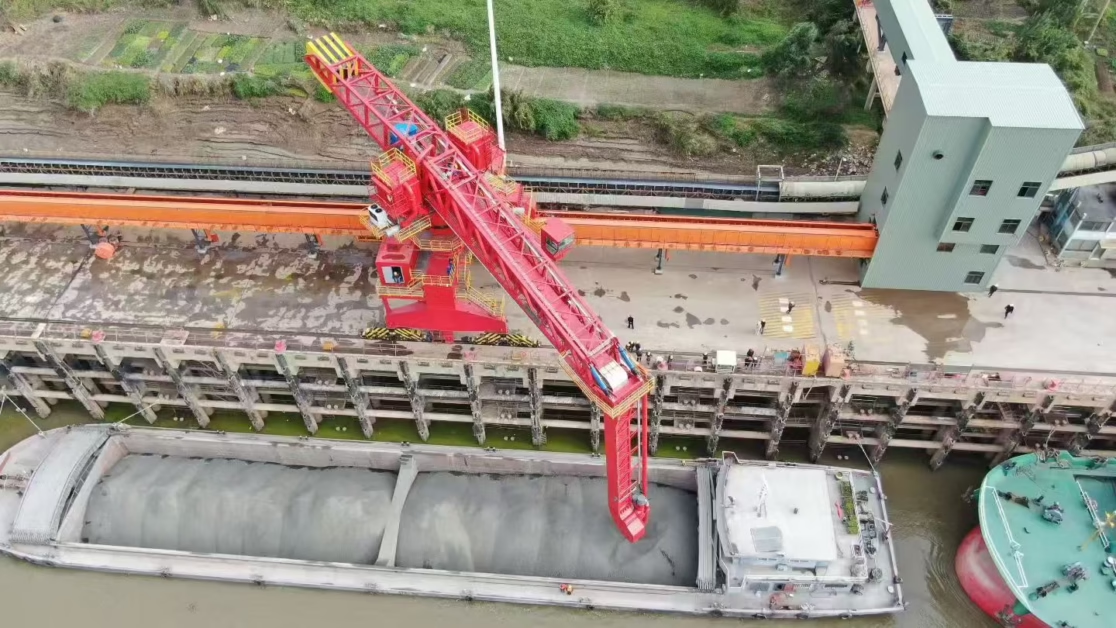
Material Handling Equipment: Essential for stackers, reclaimers, and conveyor systems in ports, bulk material terminals, and industrial facilities as detailed by specialized cable manufacturers serving the mining industry.
Mobile Heavy Equipment: Suitable for supplying power to mobile transformers, high-capacity pumps, and other equipment requiring flexible reeling cable systems with mono spiral and cylindrical reels as specified in Australian mining operations.
The cable design philosophy incorporates decades of experience from international mining operations, particularly in challenging environments such as Chilean copper mines and Australian iron ore operations, where equipment reliability directly impacts operational continuity and safety.
Technical Specifications and Voltage Ratings
The PROTOLON(M) R-(N)TSCGEWOEU series encompasses a comprehensive range of voltage ratings, each optimized for specific power transmission requirements in mining and industrial applications:
Available Voltage Ratings
3.6/6 kV 6/10 kV 8.7/15 kV 12/20 kV 14/25 kV 18/30 kV 20/35 kV| Voltage Rating | Nominal Current Capacity (A)* | Conductor Temperature (Max) | Typical Applications |
|---|---|---|---|
| 3.6/6 kV | 131 – 540 A | 90°C | Small to medium excavators, mobile equipment |
| 6/10 kV | 131 – 540 A | 90°C | Standard mining excavators, material handlers |
| 8.7/15 kV | 139 – 574 A | 90°C | Large excavators, draglines, bucket-wheel excavators |
| 12/20 kV | 139 – 660 A | 90°C | Heavy-duty mining equipment, large mobile crushers |
| 14/25 kV | 139 – 660 A | 90°C | Ultra-large excavators, walking draglines |
| 18/30 kV | 139 – 660 A | 90°C | Highest power requirements, extreme-duty applications |
| 20/35 kV | 139 – 660 A | 90°C | Maximum voltage applications, specialized equipment |
*Current carrying capacity values are for cables laid on surface at 30°C ambient temperature. For detailed derating factors, consult VDE 0298-4 or manufacturer specifications.
Design Features and Material Structure
The exceptional performance characteristics of PROTOLON(M) R-(N)TSCGEWOEU cables stem from their sophisticated multi-layer construction, where each component is engineered to address specific mechanical, electrical, and environmental challenges encountered in mining operations.
Conductor System
At the core of the cable lies the conductor system, manufactured from bare electrolytic copper with very fine stranding conforming to Class FS specifications (finely stranded). This construction philosophy balances electrical conductivity with mechanical flexibility, allowing the cable to withstand millions of flexing cycles during reeling operations. The copper conductors are arranged in a three-core design with lengths of lay optimized at seven times the core diameter, a critical parameter that distributes mechanical stress evenly during cable flexing.
The earth conductor system employs a split-earth configuration divided into three parts positioned within the interstices between the main conductors. This arrangement provides enhanced grounding performance and structural support while maintaining cable flexibility, a design feature particularly valued in crane and material handling applications where torsional resistance is critical.
Insulation System
PROTOLON HS Insulation Technology
The insulation system represents one of the most critical innovations in this cable family. PROTOLON HS (High Standard) insulation utilizes a high-grade special compound based on superior quality EPR (Ethylene Propylene Rubber) rated at minimum 3GI3 classification. This advanced elastomeric insulation provides exceptional dielectric strength, flexibility across extreme temperature ranges, and superior resistance to electrical tracking and partial discharge phenomena.
For cables rated from 3.6/6 kV through 35 kV, the insulation system incorporates semiconductive layers forming a triple-layer extrusion design. The inner semiconductive layer, manufactured from EPR compound, ensures uniform electric field distribution at the conductor interface. The outer semiconductive layer utilizes modified NBR (Nitrile Butadiene Rubber) compound engineered with Easy-Strip technology, allowing cold stripping during field termination without specialized heating equipment. This feature significantly reduces installation time and complexity, particularly valuable in remote mining locations where specialized termination equipment may not be readily available.
Field Control and Shielding
Electrical field control in medium voltage cables represents a critical safety parameter. Each insulated core receives individual shielding through a semiconductive layer system that prevents voltage stress concentration at the insulation boundary. This design philosophy aligns with recommendations from IEC standards for medium voltage cables, ensuring long-term electrical stability even under demanding operating conditions.
Protective Sheath System (PROTOFIRM Sandwich Construction)
The outer protection system employs the proprietary PROTOFIRM sandwich construction, representing a sophisticated approach to cable protection that addresses multiple environmental and mechanical challenges simultaneously. This multi-layer system consists of three primary components working in concert to provide comprehensive cable protection.
Inner Sheath Layer: A double-layer inner sheath manufactured from special compound based on EPR, meeting quality grade 5GM3 specifications. This layer serves multiple critical functions including acting as a water barrier preventing moisture ingress that could compromise electrical performance, providing a smooth surface for the intermediate braiding layer, and contributing to the overall mechanical strength of the cable assembly.
Anti-Torsion Braiding: The intermediate layer features reinforced braiding constructed from polyester threads in a vulcanized bond configuration. This critical component provides torsional resistance essential for reeling applications where cables experience twisting forces, distributes tensile loads evenly across the cable cross-section, and prevents cable elongation under dynamic loading conditions that could lead to conductor damage.
Outer Sheath: The final protective layer utilizes high-grade chloroprene compound (Polychloroprene – PCP) based on quality 5GM5 specifications, with characteristic red coloration (other colors available on request). This robust elastomer provides exceptional resistance to abrasion from contact with rough surfaces common in mining environments, excellent oil and grease resistance critical for equipment operating in industrial environments, superior weathering resistance including UV radiation, ozone, and temperature extremes, and flame retardancy meeting stringent international safety standards.
Compliance with International Standards
The PROTOLON(M) R-(N)TSCGEWOEU cable series achieves compliance with multiple international standards and certifications, reflecting its engineering rigor and suitability for global mining operations. Primary compliance is established with DIN VDE 0250-813, the German standard specifically addressing flexible cables for mining applications. This standard establishes comprehensive requirements for conductor construction, insulation materials, mechanical testing protocols, and fire performance characteristics.
Regulatory Certifications
GOST-R Certification: Approval from the Russian Federation certification system, particularly important for mining operations in Eastern Europe and Central Asia where equipment must meet specific regulatory requirements.
Fire Certificates of Russian Federation: Specific fire performance certification addressing flame propagation, smoke generation, and toxic gas emission characteristics critical for underground and confined space applications.
DIN VDE 0118 and 0168 Compliance: Meeting requirements for cables in open-cast and underground mining applications, establishing parameters for mechanical durability, electrical safety, and environmental resistance as recognized by international mining safety authorities.
Mechanical and Environmental Performance Parameters
The operational envelope of PROTOLON(M) R-(N)TSCGEWOEU cables extends across extreme conditions that would rapidly degrade conventional industrial cables. Understanding these parameters proves essential for proper application engineering and ensuring optimal service life.
Temperature Performance
| Operating Condition | Temperature Range | Duration/Application |
|---|---|---|
| Maximum Operating Temperature (Conductor) | 90°C | Continuous operation |
| Maximum Short Circuit Temperature | 250°C | 5 seconds maximum duration |
| Fixed Installation (Minimum) | -40°C to +80°C | Stationary applications |
| Fully Flexible Operation (Minimum) | -35°C to +80°C | Reeling and mobile applications |
| Ambient Temperature (Installation) | min -5°C, max +35°C | During cable installation |
Mechanical Stress Parameters
The mechanical performance envelope reflects engineering specifically optimized for reeling applications where cables experience complex stress patterns including tension, compression, flexing, and torsion simultaneously. Maximum tensile load on the conductor reaches 20 N/mm² for permanent static applications, with dynamic acceleration conditions allowing up to 30 N/mm² according to DIN VDE 0298 part 3 (standard specification allows 15 N/mm², representing conservative design margins).
Torsional stress resistance extends to ±25 degrees per meter of cable length, accommodating the twisting forces encountered during equipment operation and cable reeling. Minimum bending radius follows DIN VDE 0298 part 3 specifications, with practical applications typically maintaining 20 times the cable diameter for optimal service life. The cable withstands directional changes in S-type configurations with minimum spacing of 20 times cable diameter between direction changes.
Travel speed capabilities for gantry and reeling operations face no restriction under standard conditions, though speeds exceeding 240 meters per minute warrant consultation with the cable manufacturer for specific application engineering to ensure optimal performance, as recommended by leading reeling system manufacturers.
Chemical and Environmental Resistance
Durability in Harsh Environments
The cable demonstrates exceptional resistance to environmental challenges common in mining operations. Performance against fire meets IEC 60332-1-2 standards for flame retardancy, while resistance to oil satisfies IEC 60811-404 requirements. Weather resistance encompasses unrestricted use both outdoors and indoors, with specific resistance to ozone, UV radiation, and moisture according to EN 50525-2-21 (HD 22.16) specifications. Water resistance extends to immersion conditions, critical for mining operations where equipment may encounter water accumulation or operate in wet conditions.
Safety Thresholds and Operating Parameters
Understanding and respecting safety thresholds represents a critical aspect of cable system engineering and operational safety. The PROTOLON(M) R-(N)TSCGEWOEU cable family incorporates multiple safety features and operational limits designed to prevent equipment damage and ensure personnel safety.
Electrical Safety Parameters
The cable system maintains electrical integrity through several key design features and operational limits. The AC test voltage for control cores reaches 2 kV, ensuring adequate insulation performance for auxiliary circuits. Voltage ratings follow the U₀/U designation system where U₀ represents voltage between conductor and earth, and U represents voltage between conductors. For example, in a 6/10 kV cable, 6 kV represents the maximum voltage to earth while 10 kV represents the maximum voltage between phase conductors.
The triple-layer insulation system with semiconductive layers prevents partial discharge phenomena that could lead to premature insulation failure. Regular testing and monitoring prove essential for maintaining electrical safety, with industry standards recommending periodic insulation resistance testing and high-potential (hi-pot) testing following procedures established by IEEE standards for cable testing.
Mechanical Safety Considerations
Critical Safety Limits
Exceeding Tensile Limits: Operating beyond the specified 20 N/mm² permanent tensile load (or 30 N/mm² during acceleration) can cause conductor elongation, insulation damage, or complete cable failure. Installation must include proper strain relief and tensile load monitoring systems.
Minimum Bending Radius: Violating minimum bending radius specifications causes excessive stress concentration in the insulation and conductor system, potentially leading to premature failure. Cable routing must maintain proper bend radii throughout the installation, particularly at critical points such as drum connections and equipment entries.
Torsional Limits: Exceeding ±25 degrees per meter torsional stress can cause conductor stranding to unravel or the cable structure to deform permanently. Proper cable design and installation practices must account for equipment rotation and twisting forces during operation.
Temperature Monitoring and Protection
Continuous operation at or near maximum conductor temperature (90°C) accelerates insulation aging and reduces cable service life. While the cable can withstand these temperatures, optimal longevity results from operation below 80°C under normal conditions. Short-circuit conditions require immediate protection system response to prevent conductor temperatures from exceeding 250°C, which could cause irreversible insulation damage or create fire hazards.
Mining operations should implement temperature monitoring systems, particularly for high-capacity installations or applications operating in elevated ambient temperatures. Modern cable monitoring systems can provide early warning of thermal anomalies, allowing preventive action before critical failures occur, as detailed by specialized mining cable system integrators.
Installation Precautions and Best Practices
Proper installation represents the foundation for achieving optimal cable performance and service life. PROTOLON(M) R-(N)TSCGEWOEU cables require careful handling during installation to prevent damage that could compromise electrical and mechanical performance.
Pre-Installation Considerations
Prior to installation, conduct thorough inspection of the cable for any shipping damage, paying particular attention to the outer sheath integrity and ensuring no crushing or kinking has occurred during transport. Verify that the cable specification matches the application requirements, including voltage rating, conductor size, and length. Store the cable properly prior to installation, maintaining minimum ambient temperature requirements and protecting from direct sunlight, moisture, and mechanical damage.
Installation should occur only when ambient temperatures exceed -5°C and remain below +35°C, as installation outside this range may cause temporary stiffening of the rubber compounds, making the cable difficult to handle and potentially causing damage during bending operations, according to Australian mining installation guidelines.
Cable Routing and Support
Design cable routing to minimize the number of directional changes and maintain minimum bending radii throughout the installation. Pay particular attention to the cable entry point at mobile equipment, where mechanical stress concentrations often prove highest. Install adequate strain relief systems at all termination points and equipment connections to prevent tensile loads from being transferred to the cable terminations.
For reeling applications, ensure drum diameter provides adequate bending radius, typically maintaining drum diameter of at least 40 times the cable diameter for optimal service life. The cable should wind onto the drum in neat, even layers to prevent crushing of lower layers and ensure smooth unreeling during equipment operation. Implement cable tracking systems to prevent cable walk-off during reeling operations, which can cause severe mechanical damage.
Termination and Splicing
Professional Termination Requirements
Cable termination and splicing should be performed only by trained personnel familiar with medium voltage cable techniques and following manufacturer specifications. The Easy-Strip semiconductive layer design simplifies field termination, but proper procedures must be followed to ensure electrical integrity. Clean and prepare conductor ends following specified procedures, removing oxidation and ensuring proper contact area. Install termination components in accordance with manufacturer instructions, paying particular attention to stress cone installation and conductor compression connections. Test completed terminations using appropriate hi-pot testing equipment before placing the cable into service.
For permanent splicing applications, consider using factory-manufactured splice kits designed specifically for PROTOLON cables. Field splicing should be avoided when possible, particularly for applications involving continuous flexing or harsh environmental conditions.
Common Problems and Troubleshooting
Understanding common failure modes and their prevention represents essential knowledge for mining operations dependent on continuous equipment operation. While PROTOLON(M) R-(N)TSCGEWOEU cables demonstrate exceptional durability, certain operational conditions or installation errors can lead to premature failure.
Mechanical Damage Issues
Outer Sheath Damage: The most common mechanical failure mode involves abrasion or cutting of the outer PCP sheath through contact with sharp objects, rough surfaces, or equipment operation over the cable. While the robust sheath provides excellent abrasion resistance, extended exposure to severe conditions can eventually compromise the protective layer. Prevention requires proper cable routing to avoid known hazard areas, regular visual inspection to identify early-stage damage before it progresses to inner cable components, and implementation of protective measures such as cable trays, covers, or sacrificial protection layers in high-risk areas.
Cable Crushing: Occurs when heavy equipment runs over the cable or when excessive compressive forces are applied during reeling operations with improper drum winding. Crushing can deform the cable cross-section, potentially causing conductor displacement, insulation damage, or complete structural failure. Prevention strategies include clearly marking cable routes and implementing exclusion zones, utilizing proper cable support systems that distribute loads appropriately, and training equipment operators to recognize and avoid cable hazards, as emphasized in Chilean mining safety protocols.
Electrical Failure Modes
Insulation Breakdown: Can result from multiple factors including moisture ingress through damaged outer sheath, excessive electrical stress from overvoltage conditions, thermal degradation from prolonged operation at elevated temperatures, or mechanical damage to insulation during installation or operation. Early detection through regular insulation resistance testing proves essential for preventing catastrophic failures.
Tracking and Partial Discharge: Contamination of insulation surfaces or damage to semiconductive layers can lead to electrical tracking and partial discharge phenomena that progressively degrade insulation. These failures often develop slowly, making them difficult to detect without specialized testing equipment. Maintaining clean, dry cable surfaces and protecting terminations from contamination helps prevent these failure modes.
Connection and Termination Problems
Termination Failure Prevention
Improper termination represents a significant percentage of cable system failures in mining applications. Common issues include insufficient conductor connection leading to high resistance and overheating, improper stress cone installation causing electrical stress concentration, contamination of insulation surfaces during termination, and inadequate strain relief resulting in mechanical stress at termination points. All terminations should be performed following manufacturer specifications by trained personnel, with proper testing verification before placing into service.
Environmental Degradation
While PROTOLON cables demonstrate excellent environmental resistance, certain extreme conditions can accelerate aging. Prolonged exposure to concentrated acids or strong alkalis beyond the cable’s resistance specifications can degrade the outer sheath material. Extended operation in high ambient temperatures combined with high electrical loading accelerates insulation aging. Excessive UV exposure in high-altitude or tropical environments, though the PCP sheath includes UV stabilizers, may cause surface chalking over extended periods. Regular inspection programs should monitor for early signs of environmental degradation, allowing preventive replacement before functional failure occurs.
Maintenance and Service Life Extension
Implementing a comprehensive maintenance program significantly extends cable service life and prevents costly unplanned downtime. Effective maintenance combines regular inspections, proactive repair, and systematic documentation to identify trends and predict potential failures.
Inspection Programs
Establish regular visual inspection schedules based on operating conditions and application severity. For continuously operating equipment in harsh environments, weekly visual inspections of accessible cable sections prove appropriate. Less severe applications may extend inspection intervals to monthly or quarterly schedules. Inspections should document outer sheath condition, looking for cuts, abrasions, or signs of crushing; cable routing, verifying maintenance of proper bending radii and absence of kinking; termination conditions, checking for signs of overheating, moisture ingress, or mechanical stress; and support system integrity, ensuring cable supports, strain relief systems, and protective coverings remain functional.
Implement annual or semi-annual electrical testing programs including insulation resistance measurements between conductors and earth, and between phase conductors; high-potential testing following appropriate standards and manufacturer guidelines; earth continuity verification ensuring proper grounding system integrity; and thermal imaging surveys to identify developing hot spots or connection problems before they lead to failure, as recommended by port and mining equipment specialists.
Preventive Maintenance Actions
Clean cable surfaces regularly to remove accumulated dirt, oils, and conductive contaminants that could contribute to electrical tracking or accelerate chemical degradation. Verify and adjust cable support systems to maintain proper alignment and prevent developing stress concentrations. Inspect and service drum winding systems to ensure even, proper cable winding without overlapping or crushing. Maintain lubrication on reeling drums and support rollers to minimize friction and mechanical wear.
Implement proactive repair programs addressing minor sheath damage before it progresses to affect inner cable components. Small cuts or abrasions in the outer sheath can often be repaired using appropriate vulcanized repair materials, preventing moisture ingress and extending cable life. Repair should be performed following manufacturer specifications by trained personnel.
Technical Support and Ordering Information
Anhui Feichun Special Cable Co., Ltd. (安徽飞纯特种电缆有限公司) maintains comprehensive technical support capabilities to assist with cable selection, application engineering, and troubleshooting for PROTOLON(M) R-(N)TSCGEWOEU cables and related products. The engineering team provides consultation on proper cable specification for specific applications, installation guidance and technical training, failure analysis and root cause investigation, and custom cable design for specialized requirements.
Contact Information
For detailed technical specifications, engineering drawings, or custom cable solutions, please contact our engineering team. We provide comprehensive support including application analysis, installation guidance, and after-sales technical assistance for all mining and industrial cable applications.
Industry Resources and References
For additional information on reeling cables and mining applications, the following industry resources provide valuable technical guidance and application examples:
- Reeling Cable: Comprehensive Guide to Reeling Cable Technologies – Industry resource covering reeling cable selection, installation, and maintenance best practices for port and industrial applications
- Amplex Mining: Australian Mining Cable Solutions – Specialized information on AS/NZS standards and applications in Australian mining operations, including technical specifications for Type 440 and Type 450 mining cables
- Mining Cable Chile: South American Mining Applications – Technical resources addressing cable requirements for Chilean and South American mining operations, including specialized SHD-GC and trailing cable applications
- Crane Cable: Port and Material Handling Cable Systems – Detailed information on crane cable selection, spreader cables, and automated material handling system requirements
- Feichun Cable: Manufacturer Technical Library – Comprehensive technical documentation, application guides, and product specifications for industrial cable systems
Conclusion
The PROTOLON(M) R-(N)TSCGEWOEU cable series represents a sophisticated engineering solution addressing the complex demands of modern mining and heavy industrial operations. Through advanced material science, rigorous testing protocols, and continuous refinement based on field experience, these cables deliver exceptional performance in environments that would rapidly degrade conventional industrial cables.
Success in deploying PROTOLON cables depends on proper application engineering, following installation best practices, implementing comprehensive maintenance programs, and partnering with knowledgeable suppliers who can provide ongoing technical support. When properly specified and maintained, these cables provide reliable service spanning many years, even under the most demanding operating conditions encountered in global mining and industrial applications.
The ongoing evolution of mining equipment toward higher power densities, increased automation, and larger scale operations continues to drive cable technology development. PROTOLON(M) R-(N)TSCGEWOEU cables remain at the forefront of this evolution, incorporating the latest advances in materials science and manufacturing technology to meet the ever-increasing demands of modern industrial operations.
Document Information: This technical article provides general guidance on PROTOLON(M) R-(N)TSCGEWOEU reeling cables. Specific applications should be evaluated by qualified engineers considering actual operating conditions, equipment requirements, and applicable safety standards. All technical specifications subject to change without notice. For current specifications and detailed engineering support, contact Anhui Feichun Special Cable Co., Ltd.
Copyright Notice: © 2025 Anhui Feichun Special Cable Co., Ltd. All rights reserved. Technical content may be referenced with proper attribution.


