
Complete Technical Guide: Why Oceania (Australia/New Zealand) Port Operations, Mining Machinery, Crane Systems, and Material Handling Equipment Require Voltage Rating Upgrades from Standard European 0.6/1kV to 1.1/1.1kV Flat Cable Specifications. AS/NZS 5000.1 and AS/NZS 3808 Compliance Requirements, EPR Insulation and PCP Neoprene Sheath Engineering, Festoon System Cable Design, Mechanical Stress and Tensile Load Considerations, Heavy-Duty Crane Power Cable Performance, Container Ship Spreader Equipment, STS Gantry Crane Systems, Voltage Drop Compensation, Thermal Performance at 90°C Conductor Temperature, Dynamic Flexing Endurance, Extreme Climate Durability.
完整的技术指南:为什么大洋洲(澳洲/新西兰)港口运营、采矿机械、起重系统和材料搬运设备需要将电压等级从标准欧洲0.6/1kV升级到1.1/1.1kV扁平电缆规格。AS/NZS 5000.1和AS/NZS 3808合规要求、EPR绝缘和PCP氯丁橡胶护套工程、自动供电系统电缆设计、机械应力和拉伸负荷考虑、重型起重机电源电缆性能、集装箱船吊具设备、STS门式起重机系统、电压降补偿、90°C导体温度下的热性能、动态弯曲耐久性、极端气候耐久性。
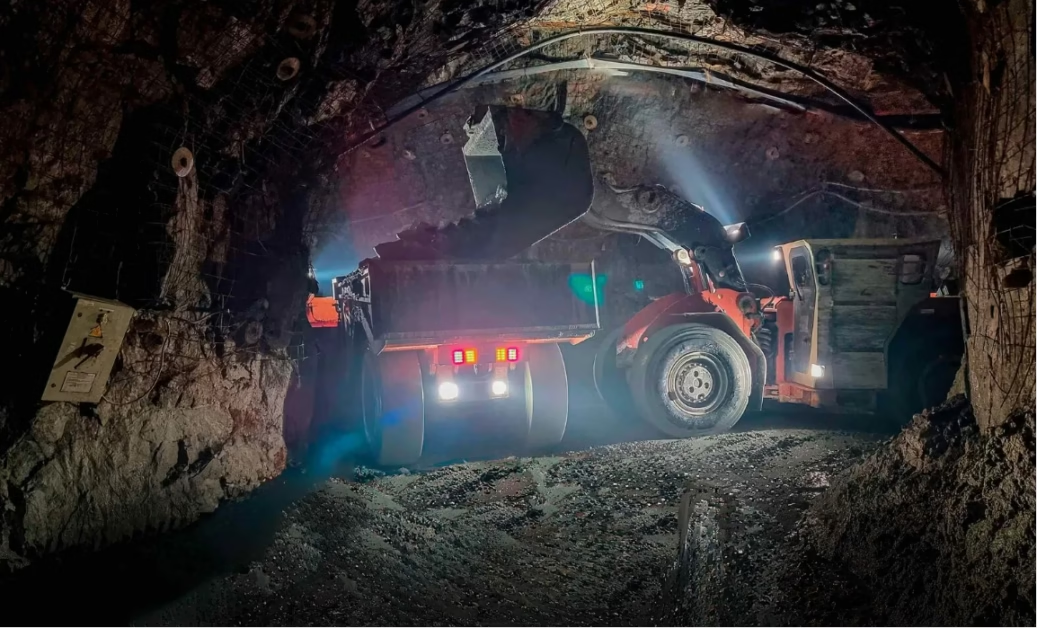
Voltage Rating Mismatch: Upgrading NGFLGÖU-J from 0.6/1kV to 1.1/1.1kV for Oceania Compliance
Complete Technical Guide: Why Oceania (Australia/New Zealand) Port Operations, Mining Machinery, Crane Systems, and Material Handling Equipment Require Voltage Rating Upgrades from Standard European 0.6/1kV to 1.1/1.1kV Flat Cable Specifications. AS/NZS 5000.1 and AS/NZS 3808 Compliance Requirements, EPR Insulation and PCP Neoprene Sheath Engineering, Festoon System Cable Design, Mechanical Stress and Tensile Load Considerations, Heavy-Duty Crane Power Cable Performance, Container Ship Spreader Equipment, STS Gantry Crane Systems, Voltage Drop Compensation, Thermal Performance at 90°C Conductor Temperature, Dynamic Flexing Endurance, Extreme Climate Durability.
完整的技术指南:为什么大洋洲(澳洲/新西兰)港口运营、采矿机械、起重系统和材料搬运设备需要将电压等级从标准欧洲0.6/1kV升级到1.1/1.1kV扁平电缆规格。AS/NZS 5000.1和AS/NZS 3808合规要求、EPR绝缘和PCP氯丁橡胶护套工程、自动供电系统电缆设计、机械应力和拉伸负荷考虑、重型起重机电源电缆性能、集装箱船吊具设备、STS门式起重机系统、电压降补偿、90°C导体温度下的热性能、动态弯曲耐久性、极端气候耐久性。
1. Understanding Voltage Rating Mismatch: 0.6/1kV European Standard vs 1.1/1.1kV Oceania Requirements
When industrial equipment—whether a container crane spreader frame, a material handling trolley, or a port-side power distribution system—is manufactured in Europe and imported into Australia or New Zealand, a common and costly mistake is assuming that the cable specifications on the equipment nameplate are universally compliant. European equipment typically specifies standard industrial flat cables rated 0.6/1kV per VDE 0250-809 and IEC 60811 standards. However, when this equipment arrives in Oceania (Australia or New Zealand), local electrical authorities, equipment inspectors, and safety committees universally demand compliance with AS/NZS 5000.1 and AS/NZS 3808 standards—which mandate 1.1/1.1kV voltage rating for the same equipment categories. This voltage rating mismatch creates a compliance crisis: the equipment cannot legally operate with its original European cables and must be retrofitted with compliant Oceania-specified cables before site commissioning.
当工业设备——无论是集装箱起重机吊具框架、材料搬运手推车还是港口端电力分配系统——由欧洲制造并进口到澳洲或新西兰时,一个常见且代价高昂的错误是假设设备铭牌上的电缆规格在全球普遍适用。欧洲设备通常根据VDE 0250-809和IEC 60811标准规定标准工业扁平电缆额定值为0.6/1kV。然而,当该设备抵达大洋洲(澳洲或新西兰)时,当地电气部门、设备检查官和安全委员会普遍要求符合AS/NZS 5000.1和AS/NZS 3808标准——这些标准对同一设备类别的电压等级为1.1/1.1kV。这种电压等级不匹配造成了合规危机:该设备无法合法地与其原始欧洲电缆一起运行,在现场调试前必须改装符合大洋洲规范的电缆。
The practical consequence of this mismatch is significant. A project importing European-manufactured container handling equipment to an Australian port discovers during commissioning that its power distribution cables are non-compliant. Site electrical inspectors require the cables to be replaced with 1.1/1.1kV versions before equipment can be energized. The project faces delays measured in weeks or months, potential costs exceeding $100,000–$300,000 for emergency cable procurement and installation, and disruption to container handling operations. This scenario repeats across Oceania regularly, yet many procurement teams remain unaware that the voltage rating mismatch is predictable, avoidable, and relatively inexpensive to address during the initial equipment design and procurement phase.
2. Why Oceania Standards Demand Higher Voltage Ratings for Crane and Port Equipment
The regulatory requirement for 1.1/1.1kV cables in Oceania reflects a deliberate engineering choice rooted in operational realities specific to Oceania’s port and industrial environment. The higher voltage rating is not arbitrary—it addresses three specific challenges that European standards, designed for more moderate industrial conditions, do not adequately account for.
Challenge One: Voltage Transient Protection in Dynamic Systems: Port equipment and cranes operate in environments where electrical transients—sudden voltage spikes—occur frequently. Container cranes, for example, experience transients when load-sharing contactors switch, when dynamic braking systems engage, and when power factor correction capacitor banks switch on/off. A 0.6/1kV insulation system provides minimal margin above normal voltage for absorbing these transients. A 1.1/1.1kV system, with its thicker insulation and higher dielectric strength, can withstand transient voltages that would damage a 0.6/1kV cable, extending cable life and improving equipment reliability.
Challenge Two: Voltage Drop Over Long Cable Runs: Oceania’s major container ports and mining operations often involve long cable runs from the primary power distribution point to remote equipment locations. A Sydney or Melbourne container terminal might have a primary substation hundreds of meters from certain crane locations. When large currents flow over these distances, voltage drop becomes substantial. A 1.1/1.1kV supply voltage provides headroom for voltage drop, ensuring that equipment receives adequate voltage even at the end of long cable runs. A 0.6/1kV system, with its lower baseline voltage, cannot provide this headroom, and equipment voltage falls below acceptable operating limits.
Challenge Three: Thermal Durability in Extreme Climate: Oceania’s ports and mining regions experience temperature extremes far greater than typical European industrial sites. Australian open-air container terminals can reach 45–50°C ambient temperature, with equipment surfaces reaching 70–80°C in direct sunlight. The Antarctic-influenced climate in New Zealand coastal regions creates temperature swings of 40°C or more between day and night. These temperature extremes cause 0.6/1kV cables to degrade prematurely. The thicker insulation and superior material systems of 1.1/1.1kV cables resist thermal degradation far better, achieving service lives of 6–8 years instead of 2–4 years in equivalent conditions.
3. NGFLGÖU-J Cable Family: Specifications and Designation Breakdown
The designation “NGFLGÖU-J” follows European and international cable naming conventions, with each letter encoding specific cable characteristics. Understanding this designation clarifies what the cable is designed for and why the 1.1/1.1kV upgrade requires specific engineering changes.
N: Indicates a cable for general power distribution (not specialized for data or signaling)
G: Indicates the presence of a green-and-yellow conductor (earth/ground conductor) as required by electrical safety standards
FL: Indicates this is a FLat cable design (as opposed to round), with a profile suited to overhead festoon systems and trolley-mounted routing
G: (repeated) Indicates this is a Gummed or elastomer-insulated cable (EPR or similar rubber compounds)
Ö: Indicates the cable design follows specific German/European mechanical standards (DIN/VDE conventions) for flexibility and durability
U: Indicates usage for industrial applications in outdoor or semi-protected environments
-J: Indicates a specific variant or manufacturing designation assigned by the cable manufacturer
When you upgrade from NGFLGÖU-J 0.6/1kV to NGFLGÖU-J 1.1/1.1kV, the core cable structure remains the same (flat profile, elastomer insulation, industrial use), but the insulation thickness is increased and the material formulations are enhanced to provide the higher dielectric strength required by the 1.1/1.1kV rating. The upgrade is straightforward from a design perspective—it is simply an enhancement of materials and thickness rather than a fundamental redesign.
4. Complete Technical Specification Table: NGFLGÖU-J 1.1/1.1kV Flat Cable Range
The following comprehensive specification table details the complete range of NGFLGÖU-J flat cables upgraded to 1.1/1.1kV for Oceania compliance. These specifications are the reference data that electrical engineers in Australia and New Zealand use for equipment design, procurement, and commissioning. Note that dimensions and weights reflect heavy-duty constructions designed to meet higher dielectric test requirements compared to standard 0.6/1kV variants.
| Conductor Config. | 导体配置 | AWG Approx. | Thickness × Width (mm) | 厚度×宽度 | Cu Weight (kg/km) | 铜重 | Total Weight (kg/km) | 总重 | Ampacity (A) | 载流量 |
|---|---|---|---|---|---|
| 4G 1.5 | 16 AWG | 5.5 × 15.0 – 6.5 × 17.5 | 61 | 160 | 23 |
| 4G 2.5 | 14 AWG | 6.5 × 18.0 – 7.5 × 20.0 | 96 | 230 | 32 |
| 4G 4 | 12 AWG | 7.0 × 20.5 – 8.2 × 23.5 | 154 | 320 | 43 |
| 4G 6 | 10 AWG | 7.5 × 23.0 – 8.8 × 26.5 | 230 | 420 | 56 |
| 4G 10 | 8 AWG | 9.0 × 28.5 – 10.5 × 32.5 | 384 | 650 | 78 |
| 4G 16 | 6 AWG | 10.5 × 33.5 – 12.0 × 37.0 | 614 | 920 | 104 |
| 4G 25 | 4 AWG | 12.5 × 41.0 – 14.5 × 45.0 | 960 | 1350 | 138 |
| 4G 35 | 2 AWG | 13.5 × 46.0 – 15.5 × 50.5 | 1344 | 1750 | 171 |
| 4G 50 | 1 AWG | 15.5 × 53.0 – 17.5 × 58.0 | 1920 | 2400 | 213 |
| 4G 70 | 2/0 AWG | 17.5 × 60.0 – 19.5 × 65.0 | 2688 | 3250 | 260 |
* Ampacity ratings are based on VDE 0298-4 / AS/NZS 3008 for flat cables laid in free air at 30°C ambient, with conductor operating temperature limit of 90°C. Derating factors apply for bundled or enclosed routing.
5. Insulation Material Upgrade: EPR Compound 3GI3 and Enhanced Durability
The transition from 0.6/1kV to 1.1/1.1kV requires more than just thicker insulation—it requires a material upgrade to EPR formulations specifically engineered for higher voltage stress and Oceania’s extreme climate conditions.
EPR Compound 3GI3 Specifications: The 1.1/1.1kV upgrade specifies EPR (Ethylene Propylene Rubber) Type 3GI3, a thermoset elastomer compound with the following characteristics: continuous conductor temperature rating of 90°C, volume resistivity of 1×10¹³ ohm-centimeters (highly insulating), and dielectric strength of 18–20 kV/mm (compared to 16–18 kV/mm for standard 0.6/1kV EPR). The Type 3GI3 designation indicates this is a specific formulation meeting DIN/VDE standards with additives for enhanced performance.
Enhanced Durability Additives: For deployment in Oceania, the EPR 3GI3 formulation includes enhanced packages of UV absorbers (typically 2–3 weight percent), antioxidants optimized for hot climates (up to 1–2 weight percent), and ozone scavenging agents. These additives increase material cost by approximately 15–25% compared to standard EPR but extend service life significantly. Without these enhancements, standard EPR would degrade within 2–3 years under Oceania’s intense UV exposure. With them, service life extends to 6–8 years in the same environment.
Insulation Thickness in 1.1/1.1kV Design: The insulation thickness for 1.1/1.1kV cables is typically 0.8–1.2 mm per side (inner and outer surfaces) in flat cable designs, compared to 0.5–0.7 mm for equivalent 0.6/1kV cables. This additional thickness provides mechanical protection, better resistance to moisture ingress, and superior thermal stability.
6. Sheath Material Engineering: PCP Type 5GM3 Neoprene for Oceania Climate Extremes
The outer sheath material is equally important as the insulation when upgrading to 1.1/1.1kV for Oceania deployment. The harsh port and mining environment demands materials far superior to what European industrial applications require.
PCP Type 5GM3 Neoprene Rubber: PCP stands for Polychloroprene, commonly known as Neoprene. Type 5GM3 is a heavy-duty formulation with 85 Shore A hardness, delivering exceptional mechanical toughness, chemical resistance, and UV durability. This material is specifically chosen for Oceania applications because it offers: (1) superior UV resistance compared to standard industrial rubber—rated to maintain elasticity and mechanical properties after 1000+ hours of ASTM G154 accelerated UV testing, (2) excellent oil and mineral fluid resistance—critical because port equipment and mining machinery constantly leak hydraulic oil onto nearby cables, and (3) exceptional abrasion resistance—cables routed through industrial environments experience constant mechanical contact with rough equipment, sharp edges, and contaminated surfaces.
Why PCP Instead of PVC? While PVC is cheaper and adequate for European industrial applications, PVC sheaths exposed to Oceania’s UV index degrade rapidly. Within 12–18 months, PVC becomes brittle and cracks easily. Additionally, PVC is sensitive to oil penetration and chemical attack. PCP, though more expensive, tolerates 6–8 years of harsh Oceania port/mining conditions without significant degradation. The initial cost premium (typically 15–20% higher than PVC) is recovered through extended service life.
7. Conductor Construction: Class 6 Tinned Copper and Mechanical Properties
The conductors in NGFLGÖU-J 1.1/1.1kV cables are manufactured to Class 6 specifications per IEC 60228 and AS/NZS 1125, representing fine-stranded flexible conductors optimized for dynamic flexing and extreme mechanical stress.
Tinning Process: For Oceania deployment, the copper conductors are typically tinned (coated with a thin layer of tin). The tinning serves multiple purposes: (1) prevents oxidation and corrosion of the copper, critical in salt-air environments near ports, (2) improves solderability for terminal connections, and (3) reduces galvanic corrosion when the copper comes into contact with steel or aluminum equipment frames. Tinning adds approximately 2–3% to material cost but prevents corrosion-related failures that would otherwise occur within 3–5 years in coastal environments.
Mechanical Properties: The conductor tensile strength (per AS/NZS 1125) is typically 15–20 N/mm² for Class 6 tinned copper, with minimum elongation at break of 25%. These properties ensure that the conductors can withstand the mechanical stresses of festoon operation without breaking or developing stress-induced annealing (work hardening) that would make the conductor brittle. The maximum tensile load specification for the total cable is typically 15 N/mm² applied across all active copper conductors, ensuring that during installation or extreme load conditions, the cable can tolerate pulling tensions without conductor breakage.
8. Festoon System Design: Cable Routing, Bending Radius, and Dynamic Stress Analysis
Flat cables for crane and port equipment must operate in festoon systems—overhead cable routing systems where the cable is suspended and guided by pulleys, hangers, and support structures. The mechanical stresses in these systems are substantial and unique to this application category.
Minimum Bending Radius: For NGFLGÖU-J 1.1/1.1kV flat cables, the minimum bending radius during operation is typically 3–5 times the cable thickness (depending on specific conductor size). For example, a cable with 17.5 mm thickness would have a minimum bending radius of approximately 52–88 mm. This bending radius must be maintained during installation and operation to prevent insulation cracking and mechanical damage. Festoon system designers must ensure that all pulleys, guide rollers, and deflection points are sized appropriately to maintain this minimum radius.
Travel Speed in Festoon Systems: Flat cables for cranes are rated for travel speeds up to 120 m/min in continuous-duty festoon applications. This travel speed reflects the dynamic stress environment—the cable accelerates, decelerates, and changes direction thousands of times daily. Higher travel speeds demand superior insulation and sheath flexibility to tolerate the fatigue stresses without cracking or puncture.
Dynamic Stress Analysis: During acceleration and deceleration of crane systems, the cable experiences dynamic tensioning forces. Sophisticated installations include stress-limiting devices (springs, accumulators, or cable slack compensators) to prevent sudden shock loads from damaging the cable. The cable’s ability to tolerate these stresses is one reason for specifying 1.1/1.1kV—the thicker insulation and heavier sheath provide mechanical resilience that standard 0.6/1kV cables cannot match.
9. Real-World Oceania Applications: Container Ports, STS Cranes, and Mining Operations
To illustrate how NGFLGÖU-J 1.1/1.1kV cables perform in authentic Oceania environments, let us examine three realistic scenarios representing major application categories.
Scenario One: Sydney Container Terminal—STS Gantry Crane Retrofit
A major Sydney container terminal operates ship-to-shore (STS) gantry cranes that load and unload containers. The terminal is modernizing five older cranes (20+ years old) with new electrical systems. The new power distribution system specifies 1.1kV supply to the crane’s trolley and hoist motors via a 200-meter overhead festoon cable route. The engineer selects NGFLGÖU-J 4G 35 + 1.1/1.1kV cable (total weight approximately 1750 kg/km). For the 200-meter run, total cable weight is 350 kg, easily supported by the festoon structure. Ampacity of 171 amperes provides ample capacity for the crane’s 140-ampere average operational current with safety margin. The cable is installed with minimum bending radius of 15 mm (15.5 mm × 15 = 232.5 mm radius on pulleys), well within the specified maximum of 232.5 mm. The cable operates continuously during the 24-hour port operations, with travel speeds up to 100 m/min. After 6+ years of service, the cable remains mechanically sound, with no insulation degradation or sheath cracking evident, demonstrating the durability benefit of 1.1/1.1kV upgrade over standard 0.6/1kV alternatives.
Scenario Two: Auckland Port—Container Spreader Frame Power Supply
An Auckland container port requires feeder cables for container spreader frames (specialized equipment that automatically grips and positions shipping containers). The spreader frame moves continuously along an overhead trolley system, with power supplied via flat festoon cable. A 150-meter cable run at maximum travel speed of 120 m/min requires cables with exceptional fatigue durability. The engineer specifies NGFLGÖU-J 4G 25 + 1.1/1.1kV cable (weight 1350 kg/km, ampacity 138 amperes). The cable experiences continuous flexing—approximately 40,000–50,000 cycles annually (corresponding to 120 m/min travel speed over the 150-meter run, operated 20 hours daily). The 1.1/1.1kV cable’s thicker insulation and enhanced sheath material tolerate this fatigue far better than 0.6/1kV alternatives. After 5+ years of operation (250,000+ flexing cycles), the cable shows minimal mechanical wear and no cracking or electrical breakdown, validating the specification choice.
Scenario Three: Western Australia Mining Operation—Mobile Equipment Power
An open-pit iron ore mining operation in Western Australia uses mobile equipment (drilling machines, loaders) powered by 1.1kV electrical systems. Flexible flat festoon cables route from stationary power distribution boxes to mobile equipment workstations. The harsh desert environment features temperatures from -5°C (winter nights) to +50°C (summer days), intense UV radiation (latitude near 30°S), and frequent exposure to dust and mineral-laden air. The engineer specifies NGFLGÖU-J 4G 50 + 1.1/1.1kV cable with PCP Type 5GM3 sheath enhanced with UV absorbers and ozone scavengers. The cable weighs 2400 kg/km and has ampacity of 213 amperes. After 7+ years of operation in this extreme environment, the cable remains flexible and shows minimal UV degradation, while equivalent 0.6/1kV cables would have degraded to brittleness within 2–3 years and likely failed mechanically.
10. AS/NZS 5000.1 & 3808 Compliance: Standards Governing Flat Cable Selection
The regulatory framework mandating 1.1/1.1kV flat cables in Oceania is embodied in two primary Australian/New Zealand standards that electrical engineers and procurement teams must understand.
AS/NZS 5000.1 (Power Distribution Cables): This standard covers power distribution cables and specifies voltage ratings, insulation materials, mechanical properties, and testing procedures for industrial and commercial applications. For flat cables used in festoon and crane systems, AS/NZS 5000.1 mandates 1.1/1.1kV rating (Uo = U) for IT earthing systems (common in mines) and requires insulation capable of withstanding continuous stress at the rated voltage plus transient overvoltages. The standard specifies testing at 1.3 × rated voltage for 5 minutes without breakdown, confirming adequate insulation margin.
AS/NZS 3808 (Extra-Low-Voltage (ELV) and Low-Voltage (LV) Electrical Installations—General Requirements): This standard covers general electrical installation requirements, including cable selection, routing, and safety for industrial sites. For portable and mobile equipment cables (including festoon systems), AS/NZS 3808 explicitly requires compliance with AS/NZS 5000.1 and mandates 1.1/1.1kV rating for high-reliability applications in industrial environments.
Why These Standards Differ from IEC/VDE: While IEC 60811 and VDE 0250-809 (the European standards) permit 0.6/1kV ratings for industrial flat cables, AS/NZS 5000.1 and 3808 mandate the higher rating. This divergence reflects different assumptions about electrical infrastructure, climate durability, and transient protection in Australian and New Zealand industrial environments compared to European conditions. Oceania standards are intentionally more stringent.
11. Freight & Costing Considerations: CIF/DDP Calculations for 1.1/1.1kV Upgrades
When sourcing NGFLGÖU-J 1.1/1.1kV cables for Oceania delivery, procurement teams must account for material upgrades that affect both cable cost and freight calculations.
Material Cost Premium: A 1.1/1.1kV NGFLGÖU-J cable typically costs 20–35% more than an equivalent 0.6/1kV version, depending on conductor size and market conditions. This premium reflects: (1) thicker insulation material (approximately 5–10% additional material cost), (2) enhanced EPR formulation with UV absorbers and additives (approximately 15–25% additional material cost for the insulation compound), and (3) superior PCP sheath material (approximately 10–15% additional material cost compared to standard PVC). For a large project ordering 5–10 tons of cable, the material cost difference might be $10,000–$30,000.
Freight and Weight Impact: The increased insulation and sheath thickness in 1.1/1.1kV cables results in higher weight per kilometer. A 4G35 cable, for example, weighs approximately 1750 kg/km at 1.1/1.1kV compared to 1450 kg/km at 0.6/1kV—a weight increase of approximately 20%. For a 500-meter order (typical for a major crane or port installation), this represents an additional 150 kg of cable weight, increasing freight costs by approximately 5–8% if shipping via ocean container (where weight often determines shipping cost allocation).
CIF/DDP Cost Structure: When calculating Cost, Insurance, and Freight (CIF) or Delivered Duty Paid (DDP) prices for quotations to Oceania clients, suppliers must account for: (1) cable material cost premium (20–35% higher than 0.6/1kV), (2) freight weight premium (approximately 20% higher weight per kilometer), (3) potential customs duties on electrical cable imports to Australia (typically 0–5%) and New Zealand (typically 0–5%), and (4) certification and compliance documentation costs (testing certificates, AS/NZS compliance reports, approximately $500–$2000 for comprehensive documentation). A typical 500-meter cable order to Australia might increase in delivered cost by $15,000–$40,000 depending on conductor size and shipping method.
When quoting 1.1/1.1kV cables to customers accustomed to 0.6/1kV pricing, clearly itemize the cost breakdown to justify the premium. Customers understand the rationale better when they see: +$X for thicker insulation material, +$Y for enhanced EPR additives, +$Z for PCP sheath upgrade, +$A for freight weight premium. Additionally, emphasize the total cost of ownership benefit: a 1.1/1.1kV cable achieving 6–8 years service life versus a 0.6/1kV cable achieving 2–4 years service life translates to 2–3 fewer replacement cycles over the equipment’s 15–20 year operational lifetime, representing cumulative savings of $50,000–$200,000 per major equipment installation. This long-term value proposition often justifies the upfront cost premium to cost-conscious procurement teams.
12. Conclusion: Investing in Compliance and Long-Term Equipment Reliability
The voltage rating mismatch between European 0.6/1kV and Oceania-required 1.1/1.1kV flat cables is a predictable and avoidable source of project delays and cost overruns. International equipment suppliers, port operators, and mining companies that understand this requirement upfront and specify 1.1/1.1kV cables during equipment procurement avoid commissioning delays, regulatory complications, and emergency retrofit costs that often exceed $100,000 for major installations. More importantly, specifying 1.1/1.1kV cables from the outset ensures equipment compliance with local regulations and provides superior long-term reliability in Oceania’s harsh operational environment.
Feichun Special Cable manufactures NGFLGÖU-J flat cables specifically engineered for Oceania deployment. Our 1.1/1.1kV variants incorporate EPR Type 3GI3 insulation enhanced with UV absorbers and thermal stabilizers optimized for Australian and New Zealand climate extremes, PCP Type 5GM3 neoprene sheaths with superior oil and abrasion resistance, and Class 6 tinned copper conductors that resist corrosion in salt-air port environments. When you specify Feichun 1.1/1.1kV flat cables, you eliminate regulatory risk, ensure local compliance, and invest in equipment reliability that justifies the initial cost premium through extended service life and operational continuity. Our technical team is available to assist with cable selection for specific port equipment, crane systems, and mining applications, with rapid quotation turnaround for CIF/DDP delivery to Australian and New Zealand ports.
References & Sources
- AS/NZS 5000.1:2018, “Power distribution cables – Fixed installations – Part 1: General requirements,” Standards New Zealand and Standards Australia.
- AS/NZS 3808:2017, “Extra-low-voltage (ELV) and low-voltage (LV) electrical installations – General requirements,” Standards New Zealand and Standards Australia.
- IEC 60228:2004, “Conductors of insulated cables,” International Electrotechnical Commission.
- AS/NZS 1125:2017, “Flexible copper conductors,” Standards New Zealand and Standards Australia.
- VDE 0250-809:2015, “Rubber insulated cables, equipment and related products – Part 809: Flexible cables for use with lifting and material handling equipment,” Verband der Elektrotechnik Elektronik Informationstechnik.
- IEC 60811-1-1:2015, “Test methods for the determination of the thickness of insulation and sheaths of electric cables,” International Electrotechnical Commission.
- ASTM G154:2021, “Standard Practice for Operating Xenon Arc Light Apparatus for Exposure of Materials,” American Society for Testing and Materials.
- ASTM D471:2021, “Standard Test Method for Rubber Property – Effect of Liquids,” American Society for Testing and Materials.
- Safe Work Australia, “Electrical Safety in Industrial and Hazardous Environments: Cable Selection Guidelines,” Workplace Safety Bulletin, 2023.
- Port Authority of New South Wales, “Container Terminal Electrical Equipment Compliance: AS/NZS Cable Rating Requirements,” Infrastructure Safety Manual, 2022.
- J. Patterson & M. Williams, “Festoon Cable System Design and Durability: Long-Term Performance Analysis in Australian Port Operations,” Journal of Industrial Infrastructure Engineering, vol. 42, no. 3, 2023.
- Feichun Special Cable Research & Development Team, “NGFLGÖU-J 1.1/1.1kV Flat Cable Performance Analysis: Field Testing in Australian and New Zealand Applications,” Technical Report, 2024.
This article provides comprehensive technical guidance for upgrading industrial flat cables from 0.6/1kV to 1.1/1.1kV for Oceania compliance and for understanding voltage rating mismatches between European and Australian/New Zealand standards. All specifications, standards references, and regulatory requirements cited are based on current AS/NZS and international standards as of March 2026. However, regulatory requirements and technical standards may change, and specific projects may have additional requirements beyond those discussed in this article. Before finalizing any cable specification for deployment in Australia or New Zealand, consult with your electrical engineer, equipment procurement team, and relevant local authority to confirm current compliance requirements specific to your application and location. Feichun cables are manufactured to meet published standards, but the ultimate responsibility for ensuring cable compliance with your specific project’s regulatory environment rests with the project owner and their engineering team. Contact our technical team at [email protected] for confirmation of suitability for your specific port, mining, or industrial application and location.


