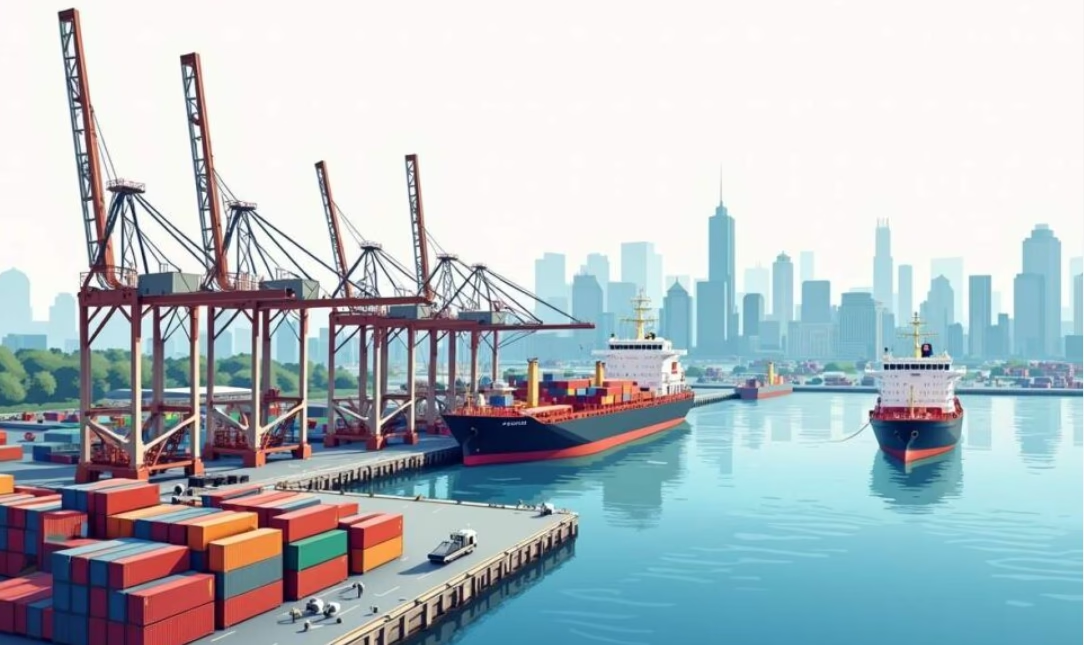
STS crane power cable

If there is one cable designation that every port electrical engineer recognises globally, it is NSHTÖU. The TROMMELFLEX® (K) (N)SHTOEU-J is the definitive embodiment of this designation — a DIN VDE 0250-814 standard drum reeling cable with EPR 3GI3 insulation, 5GM3 neoprene construction, and the broadest configuration range of any single cable family in the Klaus Faber portfolio: 24 configurations spanning 8 cross-sections from 1.5 mm² to 150 mm², with core counts from 4 to 30, ampacities from 23 A to 404 A, and weights from 372 kg/km to 8,706 kg/km

TROMMELFLEX® (K) (N)SHTOEU

If there is one cable designation that every port electrical engineer recognises globally, it is NSHTÖU. The TROMMELFLEX® (K) (N)SHTOEU-J is the definitive embodiment of this designation — a DIN VDE 0250-814 standard drum reeling cable with EPR 3GI3 insulation, 5GM3 neoprene construction, and the broadest configuration range of any single cable family in the Klaus Faber portfolio: 24 configurations spanning 8 cross-sections from 1.5 mm² to 150 mm², with core counts from 4 to 30, ampacities from 23 A to 404 A, and weights from 372 kg/km to 8,706 kg/km
URSUS VS replacement, Aristoncavi URSUS alternative, NSHTOU cable, NSHTOU-O, NSHTOU-J, URSUS reeling cable, heavy duty rubber reeling cable, 0.6/1kV reeling cable, vertical reeling cable, container crane power cable, tinned copper class 5, 30 N/mm2 tensile cable, anti torsion rubber cable, 5GM5 rubber sheath, yellow elastomer cable, dynamic load crane cable, Feichun reeling cable, Feichun crane cable, Chinese premium crane cable, import substitution cable, 180 m/min crane cable, continuous flexing rubber cable, UV resistant reeling cable, ozone resistant crane cable, flame retardant rubber cable, harbour crane electrification, material handling cable, heavy machinery wiring, robust industrial rubber cable, flexible power transmission, torsional stress cable, high tensile strength crane cable, port terminal electrification, mechanical stress reeling, offshore crane power cable, motorized drum cable, European standard equivalent, Prysmian reeling alternative, Draka crane equivalent, Lapp cable alternative, TF Kable reeling equivalent, sanction free crane cable, direct factory reeling cable, custom crane cable, heavy duty hoist cable, extreme tension crane cable, VDE standard reeling cable, underground tunneling cable, high speed winding cable, STS crane power cable

URSUS® VS 0.6/1 kV

URSUS VS replacement, Aristoncavi URSUS alternative, NSHTOU cable, NSHTOU-O, NSHTOU-J, URSUS reeling cable, heavy duty rubber reeling cable, 0.6/1kV reeling cable, vertical reeling cable, container crane power cable, tinned copper class 5, 30 N/mm2 tensile cable, anti torsion rubber cable, 5GM5 rubber sheath, yellow elastomer cable, dynamic load crane cable, Feichun reeling cable, Feichun crane cable, Chinese premium crane cable, import substitution cable, 180 m/min crane cable, continuous flexing rubber cable, UV resistant reeling cable, ozone resistant crane cable, flame retardant rubber cable, harbour crane electrification, material handling cable, heavy machinery wiring, robust industrial rubber cable, flexible power transmission, torsional stress cable, high tensile strength crane cable, port terminal electrification, mechanical stress reeling, offshore crane power cable, motorized drum cable, European standard equivalent, Prysmian reeling alternative, Draka crane equivalent, Lapp cable alternative, TF Kable reeling equivalent, sanction free crane cable, direct factory reeling cable, custom crane cable, heavy duty hoist cable, extreme tension crane cable, VDE standard reeling cable, underground tunneling cable, high speed winding cable, STS crane power cable
Complete Technical Guide to Heavy-Duty Reeling Cables for Ship-to-Shore (STS) Container Cranes, Rubber-Tired Gantry (RTG/RMG) Systems, and Mining Bucket Wheel Excavators. VDE 0250-813/814 Standards, Anti-Torsion Engineering Strategy, EPR 3GI3 Insulation, 5GM5 Neoprene Heavy-Duty Sheath, Tensile Strength Analysis, High-Speed Reeling Operation, Dynamic Load Management, Global Supply Chain Procurement, and Factory-Direct Equivalence to Premium European Brands. 港口集装箱起重机、轮胎式门式起重机(RTG/RMG)系统和采矿铲斗轮挖掘机重型卷筒电缆的完整技术指南。VDE 0250-813/814标准、防扭转工程策略、EPR 3GI3绝缘、5GM5氯丁橡胶重型护套、拉伸强度分析、高速卷筒操作、动态负荷管理、全球供应链采购和与高端欧洲品牌的工厂直接等效。

Crane Reeling Cables for Port and Mining Equipment: VDE Engineering, Mechanical Stress Performance, and Supply Chain Optimization

Complete Technical Guide to Heavy-Duty Reeling Cables for Ship-to-Shore (STS) Container Cranes, Rubber-Tired Gantry (RTG/RMG) Systems, and Mining Bucket Wheel Excavators. VDE 0250-813/814 Standards, Anti-Torsion Engineering Strategy, EPR 3GI3 Insulation, 5GM5 Neoprene Heavy-Duty Sheath, Tensile Strength Analysis, High-Speed Reeling Operation, Dynamic Load Management, Global Supply Chain Procurement, and Factory-Direct Equivalence to Premium European Brands. 港口集装箱起重机、轮胎式门式起重机(RTG/RMG)系统和采矿铲斗轮挖掘机重型卷筒电缆的完整技术指南。VDE 0250-813/814标准、防扭转工程策略、EPR 3GI3绝缘、5GM5氯丁橡胶重型护套、拉伸强度分析、高速卷筒操作、动态负荷管理、全球供应链采购和与高端欧洲品牌的工厂直接等效。
Complete technical analysis of Prysmian CORDAFLEX SMK 6/10kV motorized reeling cable for port cranes (STS, RTG, RMG), stacker-reclaimers, and bucket wheel excavators: anti-torsion Kevlar/polyester braid prevents helical conductor collapse under 120–160 m/min drum rotation, EPR 3GI3 semi-conductive insulation resists corona discharge during high-frequency transient pulsing, 5GM5 neoprene sheath maintains flex and abrasion resistance at ±40°C, split earth cores (3×16/3) enable selective over-current relay operation. FeiChun NTSCGEWÖU-Reeling Cable — certified equivalent with DIN VDE 0250-813, triple-extrusion CCV process, 30–35% cost savings, 45–60 day lead time. Replaces CORDAFLEX SMK for port terminals, maritime bulk handling, and open-pit mining operations globally under import substitution programs.

CORDAFLEX SMK Equivalent Crane Reeling Cable: Complete Technical Analysis and Direct Drop-In Replacement Solution for STS Cranes, Stacker-Reclaimers, and Mining Bucket Wheel Excavators

Complete technical analysis of Prysmian CORDAFLEX SMK 6/10kV motorized reeling cable for port cranes (STS, RTG, RMG), stacker-reclaimers, and bucket wheel excavators: anti-torsion Kevlar/polyester braid prevents helical conductor collapse under 120–160 m/min drum rotation, EPR 3GI3 semi-conductive insulation resists corona discharge during high-frequency transient pulsing, 5GM5 neoprene sheath maintains flex and abrasion resistance at ±40°C, split earth cores (3×16/3) enable selective over-current relay operation. FeiChun NTSCGEWÖU-Reeling Cable — certified equivalent with DIN VDE 0250-813, triple-extrusion CCV process, 30–35% cost savings, 45–60 day lead time. Replaces CORDAFLEX SMK for port terminals, maritime bulk handling, and open-pit mining operations globally under import substitution programs.
Full technical breakdown Prysmian (Draka) CORDAFLEX SMK series — the "gold standard" for motorized cable reels on portal cranes, stacker-reclaimers, and excavators. Marking (N)TSCGEWÖU, cross-section 3×150+3×25/3, voltage 6/10 kV (max operating 7.2/12 kV). Weight 6.5+ tons/km, OD 58–64 mm, current rating ~425 A (30°C open air), short-circuit ~21.4 kA (1s). Key SMK distinction: built-in anti-torsion guard — reinforced inner sheath with high-strength synthetic braid (aramid/Kevlar) compensating torque from guide rollers and multi-layer winding at speeds up to 120–160 m/min. Without this, standard cables corkscrew and fail on motor drums. Construction: 3×150 mm² tinned copper class 5, split earth 3×(25/3)=3×8.33 mm², EPR insulation type 3GI3, extruded semiconducting screens, polychloroprene (5GM5) or special elastomer outer sheath. Temp -25°C to +80°C standard, Arctic to -40°C. Russian market: GOST КГЭ/КГЭ-ХЛ cables are trailing-only (no anti-torsion) and fail on motor drums. Anhui Feichun offers certified drop-in replacement FC-CORDAFLEX-SMK with integrated aramid anti-torsion braid per VDE, CCV vulcanization, and OD adaptation for existing drums and cable-layers.

Аналог CORDAFLEX (SMK): барабанный кабель (N)TSCGEWÖU 3×150+3×25/3 6/10kV в России — антиторсионная защита, 425 А, замена FeiChun Cable

Full technical breakdown Prysmian (Draka) CORDAFLEX SMK series — the “gold standard” for motorized cable reels on portal cranes, stacker-reclaimers, and excavators. Marking (N)TSCGEWÖU, cross-section 3×150+3×25/3, voltage 6/10 kV (max operating 7.2/12 kV). Weight 6.5+ tons/km, OD 58–64 mm, current rating ~425 A (30°C open air), short-circuit ~21.4 kA (1s). Key SMK distinction: built-in anti-torsion guard — reinforced inner sheath with high-strength synthetic braid (aramid/Kevlar) compensating torque from guide rollers and multi-layer winding at speeds up to 120–160 m/min. Without this, standard cables corkscrew and fail on motor drums. Construction: 3×150 mm² tinned copper class 5, split earth 3×(25/3)=3×8.33 mm², EPR insulation type 3GI3, extruded semiconducting screens, polychloroprene (5GM5) or special elastomer outer sheath. Temp -25°C to +80°C standard, Arctic to -40°C. Russian market: GOST КГЭ/КГЭ-ХЛ cables are trailing-only (no anti-torsion) and fail on motor drums. Anhui Feichun offers certified drop-in replacement FC-CORDAFLEX-SMK with integrated aramid anti-torsion braid per VDE, CCV vulcanization, and OD adaptation for existing drums and cable-layers.
Воздействие санкционного режима на поставки Prysmian — геополитическая реальность (2022–2026): Кабели для высокоскоростной намотки Prysmian PROTOLON исторически поставлялись для: (1) портовой инфраструктуры (кары STS для контейнеров, системы автоматической обработки), (2) горнодобывающих операций (экскаваторы с ковшом, подъёмные системы), (3) возобновляемой энергетики (подводное распределение электроэнергии). До 2022 года: заводы Prysmian (Италия, Германия, Бельгия) поставляли по 350–450 €/метр, 12–16 недель доставка, надёжное выполнение контрактов. После 2022 года санкционная экосистема: (1) Ограничения ЕС на экспорт (кабели PROTOLON классифицированы как "двойного назначения", правительство Италии систематически отклоняет экспортные лицензии для не-НАТО регионов), (2) Срыв банковских каналов (система SWIFT альтернативы медленные, расчёты 4–8 месяцев vs 2 недели pre-sanctions), (3) Нехватка производственной мощности в Европе (приоритизируются заказчики ЕС/НАТО, запросы из не-западных регионов ждут 18+ месяцев), (4) Переоценка корпоративной политики (Prysmian: новые контракты не рассматриваются для России/Центральной Азии/Среднего Востока, существующие контракты приостановлены). Результат: PROTOLON фактически недоступна после 2022 года для развивающихся рынков/регионов, подверженных санкциям. Если каким-то образом получена: 24–36 месяцев доставки, стоимость 3–5× выше pre-sanctions из-за серых посредников.

Prysmian PROTOLON Санкционно-свободный эквивалент: Китайский кабель для высокоскоростной намотки DIN VDE 0250-813 6/10кВ

Воздействие санкционного режима на поставки Prysmian — геополитическая реальность (2022–2026): Кабели для высокоскоростной намотки Prysmian PROTOLON исторически поставлялись для: (1) портовой инфраструктуры (кары STS для контейнеров, системы автоматической обработки), (2) горнодобывающих операций (экскаваторы с ковшом, подъёмные системы), (3) возобновляемой энергетики (подводное распределение электроэнергии). До 2022 года: заводы Prysmian (Италия, Германия, Бельгия) поставляли по 350–450 €/метр, 12–16 недель доставка, надёжное выполнение контрактов. После 2022 года санкционная экосистема: (1) Ограничения ЕС на экспорт (кабели PROTOLON классифицированы как “двойного назначения”, правительство Италии систематически отклоняет экспортные лицензии для не-НАТО регионов), (2) Срыв банковских каналов (система SWIFT альтернативы медленные, расчёты 4–8 месяцев vs 2 недели pre-sanctions), (3) Нехватка производственной мощности в Европе (приоритизируются заказчики ЕС/НАТО, запросы из не-западных регионов ждут 18+ месяцев), (4) Переоценка корпоративной политики (Prysmian: новые контракты не рассматриваются для России/Центральной Азии/Среднего Востока, существующие контракты приостановлены). Результат: PROTOLON фактически недоступна после 2022 года для развивающихся рынков/регионов, подверженных санкциям. Если каким-то образом получена: 24–36 месяцев доставки, стоимость 3–5× выше pre-sanctions из-за серых посредников.
Sanctions Regime Impact on Prysmian Supply—Geopolitical Reality (2022–2026): Prysmian S.p.A. (Italian conglomerate, Tier-1 global cable manufacturer) flagship PROTOLON reeling cable historically supplied to: (1) Port infrastructure (STS cranes, RTG straddle carriers, automated container handling systems worldwide), (2) Mining operations (bucket-wheel excavators, dragline hoists, continuous mobile equipment), (3) Offshore renewable energy (subsea power distribution reels). Geographic sourcing pre-2022: Prysmian factories (Italy, Germany, Belgium), standard delivery 12–16 weeks, cost €350–450 per meter 6/10 kV. Post-2022 sanctions ecosystem: (1) EU export licensing restrictions (PROTOLON classified "dual-use" infrastructure-relevant product, Italian government export permits now routinely denied for non-NATO regions), (2) Banking channel disruption (SWIFT alternative payment systems slow/unreliable, transaction completion 4–8 months vs 2-week pre-sanctions settlement), (3) Italian/European factory capacity shortage (prioritizes EU/NATO/allied customers, non-Western demand indefinitely backlisted), (4) Geopolitical reassessment (Prysmian corporate policy: no new Russian/Central Asian/Middle Eastern contracts post-sanctions initiation, existing contracts suspended). Net result: PROTOLON effectively unavailable post-2022 for emerging markets/sanctions-exposed regions (Russia, Central Asia, parts of Africa, Iran, Venezuela). Delivery timeline if somehow obtained: 24–36 months, cost 3–5× pre-sanctions pricing due to gray-market intermediaries + financing premiums.

Prysmian PROTOLON Sanction-Free Equivalent: DIN VDE 0250-813 Chinese Anti-Torsion Reeling Cable 6/10kV

Sanctions Regime Impact on Prysmian Supply—Geopolitical Reality (2022–2026): Prysmian S.p.A. (Italian conglomerate, Tier-1 global cable manufacturer) flagship PROTOLON reeling cable historically supplied to: (1) Port infrastructure (STS cranes, RTG straddle carriers, automated container handling systems worldwide), (2) Mining operations (bucket-wheel excavators, dragline hoists, continuous mobile equipment), (3) Offshore renewable energy (subsea power distribution reels). Geographic sourcing pre-2022: Prysmian factories (Italy, Germany, Belgium), standard delivery 12–16 weeks, cost €350–450 per meter 6/10 kV. Post-2022 sanctions ecosystem: (1) EU export licensing restrictions (PROTOLON classified “dual-use” infrastructure-relevant product, Italian government export permits now routinely denied for non-NATO regions), (2) Banking channel disruption (SWIFT alternative payment systems slow/unreliable, transaction completion 4–8 months vs 2-week pre-sanctions settlement), (3) Italian/European factory capacity shortage (prioritizes EU/NATO/allied customers, non-Western demand indefinitely backlisted), (4) Geopolitical reassessment (Prysmian corporate policy: no new Russian/Central Asian/Middle Eastern contracts post-sanctions initiation, existing contracts suspended). Net result: PROTOLON effectively unavailable post-2022 for emerging markets/sanctions-exposed regions (Russia, Central Asia, parts of Africa, Iran, Venezuela). Delivery timeline if somehow obtained: 24–36 months, cost 3–5× pre-sanctions pricing due to gray-market intermediaries + financing premiums.
Liebherr manufactures some of the world's largest and most sophisticated cranes, including Ship-to-Shore (STS) gantry cranes, Rubber Tyred Gantry (RTG) cranes, mobile harbor cranes, and specialized lifting equipment for ports, mining, and heavy industry. These cranes represent the pinnacle of engineering sophistication—and their electrical power systems reflect this advanced design. Most Liebherr cranes operating in Australia specify 1.1kV nominal systems, reflecting Australian IT earthing system philosophy and mining industry requirements. 利勃海尔制造世界上一些最大和最复杂的起重机,包括船对岸(STS)门式起重机、橡胶轮胎门式(RTG)起重机、移动港口起重机和港口、采矿和重工业专用提升设备。这些起重机代表工程精进的最高境界——其电气动力系统反映了这种先进设计。澳洲运营的大多数利勃海尔起重机规范为1.1kV额定值系统,反映了澳洲IT接地系统理念和采矿工业要求。 STS Gantry Cranes: Liebherr STS cranes for container ports (e.g., Sydney, Melbourne, Brisbane) operate at 1.1kV nominal, with power demands up to 500+ kW for hoist and trolley motors. The reeling drum cables must deliver reliable power across frequent 150–200 meter spans with minimal voltage drop. RTG Cranes: Liebherr RTGs for container terminals use 1.1kV systems with 300–400 kW power demand. These mobile cranes require high flexibility—cables are deployed and retracted thousands of times annually during equipment repositioning and container handling operations. Mining Cranes: Liebherr also manufactures specialized mining cranes for ore handling and excavator support. These systems operate at 1.1kV with continuous duty requirements and demanding environmental exposure (dust, temperature extremes, moisture).

Liebherr Crane Cables: Finding AS/NZS Compliant 1.1/1.1kV Replacements for German Reeling Drums

Liebherr manufactures some of the world’s largest and most sophisticated cranes, including Ship-to-Shore (STS) gantry cranes, Rubber Tyred Gantry (RTG) cranes, mobile harbor cranes, and specialized lifting equipment for ports, mining, and heavy industry. These cranes represent the pinnacle of engineering sophistication—and their electrical power systems reflect this advanced design. Most Liebherr cranes operating in Australia specify 1.1kV nominal systems, reflecting Australian IT earthing system philosophy and mining industry requirements. 利勃海尔制造世界上一些最大和最复杂的起重机,包括船对岸(STS)门式起重机、橡胶轮胎门式(RTG)起重机、移动港口起重机和港口、采矿和重工业专用提升设备。这些起重机代表工程精进的最高境界——其电气动力系统反映了这种先进设计。澳洲运营的大多数利勃海尔起重机规范为1.1kV额定值系统,反映了澳洲IT接地系统理念和采矿工业要求。 STS Gantry Cranes: Liebherr STS cranes for container ports (e.g., Sydney, Melbourne, Brisbane) operate at 1.1kV nominal, with power demands up to 500+ kW for hoist and trolley motors. The reeling drum cables must deliver reliable power across frequent 150–200 meter spans with minimal voltage drop. RTG Cranes: Liebherr RTGs for container terminals use 1.1kV systems with 300–400 kW power demand. These mobile cranes require high flexibility—cables are deployed and retracted thousands of times annually during equipment repositioning and container handling operations. Mining Cranes: Liebherr also manufactures specialized mining cranes for ore handling and excavator support. These systems operate at 1.1kV with continuous duty requirements and demanding environmental exposure (dust, temperature extremes, moisture).
When industrial equipment—whether a container crane spreader frame, a material handling trolley, or a port-side power distribution system—is manufactured in Europe and imported into Australia or New Zealand, a common and costly mistake is assuming that the cable specifications on the equipment nameplate are universally compliant. European equipment typically specifies standard industrial flat cables rated 0.6/1kV per VDE 0250-809 and IEC 60811 standards. However, when this equipment arrives in Oceania (Australia or New Zealand), local electrical authorities, equipment inspectors, and safety committees universally demand compliance with AS/NZS 5000.1 and AS/NZS 3808 standards—which mandate 1.1/1.1kV voltage rating for the same equipment categories. This voltage rating mismatch creates a compliance crisis: the equipment cannot legally operate with its original European cables and must be retrofitted with compliant Oceania-specified cables before site commissioning.

Voltage Rating Mismatch: Upgrading NGFLGÖU-J from 0.6/1kV to 1.1/1.1kV for Oceania Compliance

When industrial equipment—whether a container crane spreader frame, a material handling trolley, or a port-side power distribution system—is manufactured in Europe and imported into Australia or New Zealand, a common and costly mistake is assuming that the cable specifications on the equipment nameplate are universally compliant. European equipment typically specifies standard industrial flat cables rated 0.6/1kV per VDE 0250-809 and IEC 60811 standards. However, when this equipment arrives in Oceania (Australia or New Zealand), local electrical authorities, equipment inspectors, and safety committees universally demand compliance with AS/NZS 5000.1 and AS/NZS 3808 standards—which mandate 1.1/1.1kV voltage rating for the same equipment categories. This voltage rating mismatch creates a compliance crisis: the equipment cannot legally operate with its original European cables and must be retrofitted with compliant Oceania-specified cables before site commissioning.
Why European 0.6/1kV cables must be upgraded to 1.1/1.1kV in Australian and New Zealand markets. IT earthing system insulation requirements, 4G95 conductor specification, 5600–6470 kg/km total weight, 3648 kg/km copper content, 260–295A ampacity, 50.8–58.0mm outer diameter, port crane and mining reeling applications, VDE 0250 and AS/NZS standard compliance, procurement verification guide.

NSHTÖU-J 4G95 1.1/1.1kV 卷筒电缆:澳洲/新西兰标准完整规格指南与采购实践

Why European 0.6/1kV cables must be upgraded to 1.1/1.1kV in Australian and New Zealand markets. IT earthing system insulation requirements, 4G95 conductor specification, 5600–6470 kg/km total weight, 3648 kg/km copper content, 260–295A ampacity, 50.8–58.0mm outer diameter, port crane and mining reeling applications, VDE 0250 and AS/NZS standard compliance, procurement verification guide.
The shield transfer impedance (STI) for (N)TSCGECEWÖU 12/20kV cables with individual concentric copper screens is approximately 0.005–0.012 Ω/m at 50/60 Hz power frequency, representing the electrical impedance that coupling currents encounter as they attempt to penetrate the copper screen and reach the main conductor. At higher frequencies relevant to VFD variable switching (around 10 kHz), the STI increases slightly to approximately 0.008–0.015 Ω/m due to skin-effect limitations in the copper conductors. At even higher frequencies extending into the megahertz range (1–10 MHz) where harmonic emissions and EMI are most problematic, the STI rises further to approximately 0.02–0.08 Ω/m depending on the copper screen material properties and frequency-dependent conductor resistance. The shielding effectiveness, measured as the attenuation in decibels (dB) of external electromagnetic fields trying to couple energy into the cable conductors, is typically 60–80 dB at 100 kHz and remains above 40 dB even at 1 MHz, demonstrating excellent EMI rejection across the industrial frequency range. These metrics establish that individual concentric copper screens provide substantially superior EMC performance compared to traditional overall braided screens, particularly in reducing conducted emissions in VFD-driven machinery where rapid voltage switching and harmonic currents create severe electromagnetic stress on nearby control cables and sensitive electronic systems.

Shield Transfer Impedance: What are the exact EMC performance parameters and screening effectiveness metrics for (N)TSCGECEWÖU 12/20kV individually screened medium-voltage flexible cables in industrial and VFD applications? 

The shield transfer impedance (STI) for (N)TSCGECEWÖU 12/20kV cables with individual concentric copper screens is approximately 0.005–0.012 Ω/m at 50/60 Hz power frequency, representing the electrical impedance that coupling currents encounter as they attempt to penetrate the copper screen and reach the main conductor. At higher frequencies relevant to VFD variable switching (around 10 kHz), the STI increases slightly to approximately 0.008–0.015 Ω/m due to skin-effect limitations in the copper conductors. At even higher frequencies extending into the megahertz range (1–10 MHz) where harmonic emissions and EMI are most problematic, the STI rises further to approximately 0.02–0.08 Ω/m depending on the copper screen material properties and frequency-dependent conductor resistance. The shielding effectiveness, measured as the attenuation in decibels (dB) of external electromagnetic fields trying to couple energy into the cable conductors, is typically 60–80 dB at 100 kHz and remains above 40 dB even at 1 MHz, demonstrating excellent EMI rejection across the industrial frequency range. These metrics establish that individual concentric copper screens provide substantially superior EMC performance compared to traditional overall braided screens, particularly in reducing conducted emissions in VFD-driven machinery where rapid voltage switching and harmonic currents create severe electromagnetic stress on nearby control cables and sensitive electronic systems.
The nominal outer diameter of NSHTÖU-J 4G50 (four 50 mm² power conductors plus one integrated green/yellow earth conductor, five total) is approximately 42.0–48.0 mm, whereas the equivalent 4x50 configuration (four 50 mm² power conductors only, four total, no dedicated earth conductor) is nominally approximately 38.5–44.5 mm, representing an outer diameter differential of roughly 3.5–4.0 mm in nominal specification ranges. This diameter increase in the 4G50 configuration reflects the spatial and mechanical requirements necessary to integrate the additional green/yellow earth conductor into the cable cross-section while maintaining proper insulation distances between all conductors, adequate mechanical spacing to distribute stress during high-speed reeling operations, and structural integrity under the extreme tensile loads encountered in port cranes, mining draglines, and industrial lifting applications. The 4G50 configuration typically exhibits copper content of approximately 1,920 kg/km (including the earth conductor), while 4x50 exhibits approximately 1,680–1,750 kg/km (earth conductor copper excluded), and total cable weight differs by approximately 300–400 kg/km, reflecting the substantial additional material required to safely integrate the fifth conductor. Both configurations comply with DIN VDE 0250-814 requirements for heavy-duty rubber reeling cables, but they serve different grounding architecture philosophies: the 4G50 is integrated-earth design (ground circuit built into the cable cross-section), while the 4x50 typically requires external earth/ground conductors or relies on external armor or cable tray grounding, making it more suitable for installations where ground paths can be established through equipment frames or external conductors.

What is the Outer Diameter Difference Between 4G50 and 4×50 in NSHTÖU-J 0.6/1kV Cable Specifications?

The nominal outer diameter of NSHTÖU-J 4G50 (four 50 mm² power conductors plus one integrated green/yellow earth conductor, five total) is approximately 42.0–48.0 mm, whereas the equivalent 4×50 configuration (four 50 mm² power conductors only, four total, no dedicated earth conductor) is nominally approximately 38.5–44.5 mm, representing an outer diameter differential of roughly 3.5–4.0 mm in nominal specification ranges. This diameter increase in the 4G50 configuration reflects the spatial and mechanical requirements necessary to integrate the additional green/yellow earth conductor into the cable cross-section while maintaining proper insulation distances between all conductors, adequate mechanical spacing to distribute stress during high-speed reeling operations, and structural integrity under the extreme tensile loads encountered in port cranes, mining draglines, and industrial lifting applications. The 4G50 configuration typically exhibits copper content of approximately 1,920 kg/km (including the earth conductor), while 4×50 exhibits approximately 1,680–1,750 kg/km (earth conductor copper excluded), and total cable weight differs by approximately 300–400 kg/km, reflecting the substantial additional material required to safely integrate the fifth conductor. Both configurations comply with DIN VDE 0250-814 requirements for heavy-duty rubber reeling cables, but they serve different grounding architecture philosophies: the 4G50 is integrated-earth design (ground circuit built into the cable cross-section), while the 4×50 typically requires external earth/ground conductors or relies on external armor or cable tray grounding, making it more suitable for installations where ground paths can be established through equipment frames or external conductors.
In the VDE (Verband der Elektrotechnik) cable designation system, the letter "F" within the code (N)TSFLCGEWÖU stands for the German word "Flach", which translates directly to "Flat". It specifies the geometric construction of the cable, indicating that the cores are arranged parallel to each other rather than twisted into a round assembly. 在VDE(德国电气工程师协会)电缆型号系统中,代码 (N)TSFLCGEWÖU 中的字母 "F" 代表德语单词 "Flach",直译为“扁平”。它规定了电缆的几何结构,表明缆芯是平行排列的,而不是像圆形电缆那样绞合在一起。

Technical Analysis: What does the code “F” stand for in (N)TSFLCGEWÖU?

In the VDE (Verband der Elektrotechnik) cable designation system, the letter “F” within the code (N)TSFLCGEWÖU stands for the German word “Flach”, which translates directly to “Flat”. It specifies the geometric construction of the cable, indicating that the cores are arranged parallel to each other rather than twisted into a round assembly. 在VDE(德国电气工程师协会)电缆型号系统中,代码 (N)TSFLCGEWÖU 中的字母 “F” 代表德语单词 “Flach”,直译为“扁平”。它规定了电缆的几何结构,表明缆芯是平行排列的,而不是像圆形电缆那样绞合在一起。
(N)TSCGEWOEU es un cable de enrollado de media tensión especializado, diseñado para equipos móviles que operan bajo estrés mecánico alto a extremo. Este cable está diseñado para soportar las exigentes condiciones operativas encontradas en maquinaria portuaria, equipos de minería y aplicaciones industriales a gran escala.

Reelkab MS (N)TSCGEWOEU

Reelkab MS NTSCGEWOEU, Reelkab MS (N)TSCGEWOEU cable, NTSCGEWOEU medium voltage cable, Reelkab reeling cable, MS NTSCGEWOEU specifications, Reelkab cable datasheet, Reelkab 6/10 kV cable, Reelkab 12/20 kV cable
PROTOLON (M) F-(N)TSCGEWOEU 6/10KV is a medium voltage flexible cable engineered for semi-flexible installation in demanding mining and tunneling applications. This cable represents the pinnacle of German engineering excellence, designed specifically for environments where mechanical stress, chemical exposure, and continuous operation are standard operating conditions.

What is PROTOLON (M) F-(N)TSCGEWOEU 6/10KV Mining & Tunneling Semi-flexible Cable?

PROTOLON (M) F-(N)TSCGEWOEU 6/10KV is a medium voltage flexible cable engineered for semi-flexible installation in demanding mining and tunneling applications. This cable represents the pinnacle of German engineering excellence, designed specifically for environments where mechanical stress, chemical exposure, and continuous operation are standard operating conditions.
Feichun_Reeling_Cables_for_Reeling_Systems

RELCT (LV) JIS C 3327 Reeling Cables for Container Cranes

RELCT (LV) cable represents a specialized category of low-voltage flexible power cables engineered specifically for dynamic reeling applications in container handling operations within international port facilities. Operating under standard designation JIS C 3327, these cables serve as the critical power delivery conduits for automated rubber-tired gantry cranes (RTGs), ship-to-shore cranes (STS), and other containerized cargo handling equipment that operate continuously in demanding maritime environments.
FEICHUN Reeling cable

What is RELCT (MV) Reeling Cables for Container Cranes?

RELCT (MV) reeling cables serve a critical function in container crane electrification systems. Specifically, these cables are deployed to deliver electrical power from fixed power supply systems to the rotating reel mechanisms and traveling components of container handling cranes. The cable must accommodate continuous mechanical stressing from repetitive coiling and uncoiling operations while maintaining electrical integrity and safety performance.