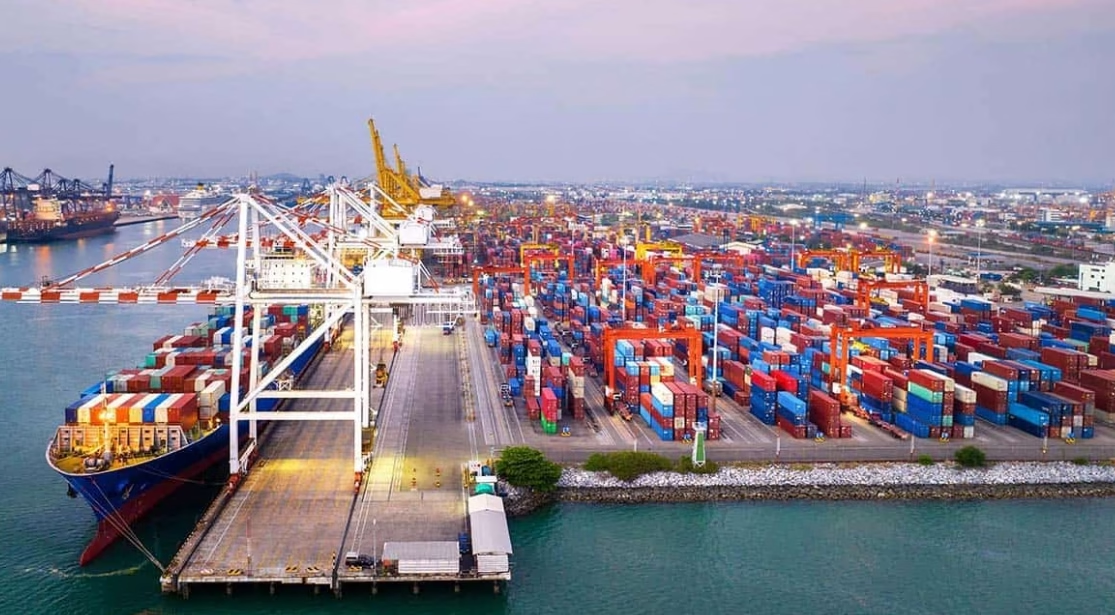
gantry crane power cable

BiTcrane® (N)3GRD5G is not one cable—it is an entire festoon cable system. With over 40 standard configurations spanning four distinct product families—single-core power, multi-core control, three-phase motor power, and paired signal cables—BiTcrane provides every cable type needed to build a complete crane festoon electrical system from a single manufacturer, a single specification, a single rubber compound system, and a single 240 m/min speed rating.

BiTcrane® (N)3GRD5G

BiTcrane® (N)3GRD5G is not one cable—it is an entire festoon cable system. With over 40 standard configurations spanning four distinct product families—single-core power, multi-core control, three-phase motor power, and paired signal cables—BiTcrane provides every cable type needed to build a complete crane festoon electrical system from a single manufacturer, a single specification, a single rubber compound system, and a single 240 m/min speed rating.
Engineered for Ship-to-Shore Cranes, RTG/RMG Gantry Cranes, Grab Unloaders, Tunnel Boring Machines, and Smart Port Electrification Systems Demanding Maximum Power and Data Density in the Smallest Possible Cable Diameter

RONDOFLEX® (C)-FC(N)GRDGCGOEU

RONDOFLEX® (C)-FC (N)GRDGCGOEU-J Technical Specifications (DIN VDE 0250-814) Parameter Specification Standard DIN VDE 0250-814 (with ref. to). Feichun equivalent: PROTOLON® (FL) FEST-PWR Series. Voltage Rating (U₀/U) 0.6/1 kV. Max operating: 1.2 kV. Test voltage: 5 kV. Peak voltage: 2,400 V. VFD Umax: 690 V. Conductor Material FC-FLX™ Tongling bare copper, 99.97%+. Class 5 = flexible. PE conductor: Class FS = exceptionally fine stranded, tinned. Insulation Rubber 3GI3 (EPR with semi-conductive stress-control layer). 90°C continuous / 250°C short-circuit. Inner Sheath Rubber GM1b. High-grade flexible rubber for intermediate protection. Screen Tinned copper braid, 80% optical coverage. EMC/EMI shielding for VFD output containment. Outer Sheath Gummi (Rubber) 5GM3. Black. Flame-retardant (IEC 60332-1-2). UV-resistant. Oil-resistant (EN 60811-404). Ozone-resistant. Temperature Range Fixed: −50°C to +80°C. Moving: −35°C to +80°C. Bending Radius Fixed: 4 × OD. Moving: 5 × OD. Tensile Strength 15 N/mm² × total Cu cross-section. Operating Speed (Festoon) 240 m/min. Bending Direction Unidirectional — optimised for festoon trolley systems. Core Identification Green-yellow + numbers. REACH Note Contains MCCP (Medium-chain chlorinated paraffins) > 0.1% per REACH candidate list.
The BiTcrane® (N)3GRD5G-J/O is a premium industrial festoon power cable manufactured by Klaus Faber AG (Germany) and now available as a direct equivalent through Anhui Feichun Special Cable Co., Ltd. This cable is engineered for high-stress mechanical applications requiring constant unidirectional bending, particularly in trolley systems, motorized drag chain installations, and continuous conveyor facilities. Designed to DIN VDE 0250-812 specifications with class 5 flexible copper conductors and HEPR insulation, the BiTcrane (N)3GRD5G-J/O delivers exceptional durability across dry, humid, wet, and outdoor operational environments. Maximum operating speed of 240 m/min makes this cable ideal for high-speed festoon applications on moving machinery platforms.

BiTcrane® (N)3GRD5G-J/O

The BiTcrane® (N)3GRD5G-J/O is a premium industrial festoon power cable manufactured by Klaus Faber AG (Germany) and now available as a direct equivalent through Anhui Feichun Special Cable Co., Ltd. This cable is engineered for high-stress mechanical applications requiring constant unidirectional bending, particularly in trolley systems, motorized drag chain installations, and continuous conveyor facilities. Designed to DIN VDE 0250-812 specifications with class 5 flexible copper conductors and HEPR insulation, the BiTcrane (N)3GRD5G-J/O delivers exceptional durability across dry, humid, wet, and outdoor operational environments. Maximum operating speed of 240 m/min makes this cable ideal for high-speed festoon applications on moving machinery platforms.
Nexans Rheyfestoon® (N)3GRDCG5G is the cable that exists because modern cranes are too fast and too electrically noisy for standard festoon cables. It is a 0.6/1 kV EMC-screened power and control festoon cable engineered by Anhui Feichun Special Cable Co., Ltd. per VDE 0250-812 that achieves two specifications no other festoon cable in production can match simultaneously: 240 m/min festoon operating speed—50% faster than the 160 m/min typical for premium festoon cables—and 80% tinned copper braid screen coverage for complete electromagnetic compatibility in the VFD-saturated electrical environments of modern automated cranes.

Nexans Rheyfestoon®(N)3GRDCG5G

Nexans Rheyfestoon® (N)3GRDCG5G is the cable that exists because modern cranes are too fast and too electrically noisy for standard festoon cables. It is a 0.6/1 kV EMC-screened power and control festoon cable engineered by Anhui Feichun Special Cable Co., Ltd. per VDE 0250-812 that achieves two specifications no other festoon cable in production can match simultaneously: 240 m/min festoon operating speed—50% faster than the 160 m/min typical for premium festoon cables—and 80% tinned copper braid screen coverage for complete electromagnetic compatibility in the VFD-saturated electrical environments of modern automated cranes.
Full technical breakdown Tele-Fonika NSHTÖU-J 4G95 0.6/1kV: heavy-duty reeling cable for gantry cranes (RMG/RTG), ship unloaders, stacker-reclaimers, port terminals. Four cores × 95mm² (380mm² total), weighing ~6 kg/m, designed for continuous drum winding under 5–7 kN tension at speeds to 120 m/min. Class 5 copper stranding (~0.20 mm wire) enables bending radius 10–12× OD. Built-in anti-torsion reinforcement (synthetic high-strength fibers between inner and outer sheaths) prevents corkscrew effect—uncontrolled strand migration during winding that tears sheath. EPR 3GI3 insulation handles thermal/mechanical stress in maritime environment. Neoprene 5GM5 sheath (3.5–4.5 mm thick, black) resists abrasion, tearing, ozone, UV, oil. FeiChun NSHTÖU-J Reeling Cable 4G95 — full functional equivalent using identical anti-torsion architecture, kevlar-fiber or polyester anti-pull braiding, EPR insulation, thick-wall neoprene extrusion. Compatible with European port equipment connectors (Konecranes, Liebherr, ABB, Siemens).

Аналог барабанного кабеля TF Kable NSHTÖU-J 4G95: Замена польского провода для портальных кранов и портовых терминалов РФ — FeiChun Reeling Cable

Full technical breakdown Tele-Fonika NSHTÖU-J 4G95 0.6/1kV: heavy-duty reeling cable for gantry cranes (RMG/RTG), ship unloaders, stacker-reclaimers, port terminals. Four cores × 95mm² (380mm² total), weighing ~6 kg/m, designed for continuous drum winding under 5–7 kN tension at speeds to 120 m/min. Class 5 copper stranding (~0.20 mm wire) enables bending radius 10–12× OD. Built-in anti-torsion reinforcement (synthetic high-strength fibers between inner and outer sheaths) prevents corkscrew effect—uncontrolled strand migration during winding that tears sheath. EPR 3GI3 insulation handles thermal/mechanical stress in maritime environment. Neoprene 5GM5 sheath (3.5–4.5 mm thick, black) resists abrasion, tearing, ozone, UV, oil. FeiChun NSHTÖU-J Reeling Cable 4G95 — full functional equivalent using identical anti-torsion architecture, kevlar-fiber or polyester anti-pull braiding, EPR insulation, thick-wall neoprene extrusion. Compatible with European port equipment connectors (Konecranes, Liebherr, ABB, Siemens).
Full technical breakdown Lapp ÖLFLEX CRANE NSHTÖU 0.6/1 kV (max 1.2 kV): specialized motorized drum cable for cranes (gantry, bridge, portal, jib) with extreme cold capability -25°C to -40°C dynamic. NSHTÖU per VDE 0250-814: N (normalized), S (hose-type), H (special elastomer), T (trommel/drum), Ö (oil-resistant), U (reinforced). Works at spool speeds up to 120 m/min in repeated flex. Core problem: standard neoprene outers become brittle below -25°C and crack during drum bending. Arctic version uses modified elastomer compound (5GM5-Arctic) with plasticizers that don't crystallize at sub-zero, ensures -40°C operation. Configuration 4G50: tinned Cu Cl.5, special EPR 3GI3 insulation, internal anti-skewing rubber extrusion, outer Arctic-grade neoprene or PUR. OD ~18–22 mm, weight ~0.85–1.1 kg/m, current ~250–280 A. Alternatives: (1) FeiChun NSHTÖU-Cold — Lapp equivalent with Arctic compound, -40°C dynamic, better price; (2) FeiChun PUR Reeling Cable — PUR sheath, -50°C capable, 15–20% lighter, preferred for Arctic/Siberia. Russian GOST alternatives (КГРПУ, КГЭЖ-ХЛ) require TU modification for drum application.

ÖLFLEX CRANE NSHTÖU Морозостойкий кабель для крановых барабанов: инженерия холода — FeiChun NSHTÖU-Cold и PUR Reeling Cable, аналог Lapp

Full technical breakdown Lapp ÖLFLEX CRANE NSHTÖU 0.6/1 kV (max 1.2 kV): specialized motorized drum cable for cranes (gantry, bridge, portal, jib) with extreme cold capability -25°C to -40°C dynamic. NSHTÖU per VDE 0250-814: N (normalized), S (hose-type), H (special elastomer), T (trommel/drum), Ö (oil-resistant), U (reinforced). Works at spool speeds up to 120 m/min in repeated flex. Core problem: standard neoprene outers become brittle below -25°C and crack during drum bending. Arctic version uses modified elastomer compound (5GM5-Arctic) with plasticizers that don’t crystallize at sub-zero, ensures -40°C operation. Configuration 4G50: tinned Cu Cl.5, special EPR 3GI3 insulation, internal anti-skewing rubber extrusion, outer Arctic-grade neoprene or PUR. OD ~18–22 mm, weight ~0.85–1.1 kg/m, current ~250–280 A. Alternatives: (1) FeiChun NSHTÖU-Cold — Lapp equivalent with Arctic compound, -40°C dynamic, better price; (2) FeiChun PUR Reeling Cable — PUR sheath, -50°C capable, 15–20% lighter, preferred for Arctic/Siberia. Russian GOST alternatives (КГРПУ, КГЭЖ-ХЛ) require TU modification for drum application.
КГ-ХЛ (Кабель Гибкий, исполнение ХЛ — flexible cable, cold-rated variant) per GOST 24334-80 is Russia's ubiquitous heavy-duty flexible rubber-sheathed cable, deployed across every sector of Russian heavy industry from mining to oil & gas to port operations. The ХЛ suffix designates the cold-rated compound formulation, enabling dynamic operation down to −60°C — a specification born from the operational reality of Murmansk, Norilsk, Dudinka, and Vladivostok. In its intended application — powering portable industrial equipment via manual cable handling or simple festoon systems — КГ-ХЛ performs admirably. But on the motorized reeling drums of portal cranes, ship-to-shore (STS) cranes, rail-mounted gantry (RMG) cranes, and rubber-tyred gantry (RTG) cranes, КГ-ХЛ fails prematurely and catastrophically through a specific mechanism: corkscrewing — the progressive helical deformation of the cable caused by core migration under combined axial tension and cyclic bending. Typical service life of КГ-ХЛ on a portal crane drum: 4–8 months. Typical service life of NSHTÖU-J on the same drum: 18–36 months. The difference is the anti-torsion braid — a single structural layer that КГ-ХЛ does not have and cannot be retrofitted with.

Reeling Cable Upgrade: Swapping КГ-ХЛ (KG-HL) for VDE 0250 NSHTÖU-J on Russian Portal CranesComplete Engineering & Procurement Guide

КГ-ХЛ (Кабель Гибкий, исполнение ХЛ — flexible cable, cold-rated variant) per GOST 24334-80 is Russia’s ubiquitous heavy-duty flexible rubber-sheathed cable, deployed across every sector of Russian heavy industry from mining to oil & gas to port operations. The ХЛ suffix designates the cold-rated compound formulation, enabling dynamic operation down to −60°C — a specification born from the operational reality of Murmansk, Norilsk, Dudinka, and Vladivostok. In its intended application — powering portable industrial equipment via manual cable handling or simple festoon systems — КГ-ХЛ performs admirably. But on the motorized reeling drums of portal cranes, ship-to-shore (STS) cranes, rail-mounted gantry (RMG) cranes, and rubber-tyred gantry (RTG) cranes, КГ-ХЛ fails prematurely and catastrophically through a specific mechanism: corkscrewing — the progressive helical deformation of the cable caused by core migration under combined axial tension and cyclic bending. Typical service life of КГ-ХЛ on a portal crane drum: 4–8 months. Typical service life of NSHTÖU-J on the same drum: 18–36 months. The difference is the anti-torsion braid — a single structural layer that КГ-ХЛ does not have and cannot be retrofitted with.
Liebherr manufactures some of the world's largest and most sophisticated cranes, including Ship-to-Shore (STS) gantry cranes, Rubber Tyred Gantry (RTG) cranes, mobile harbor cranes, and specialized lifting equipment for ports, mining, and heavy industry. These cranes represent the pinnacle of engineering sophistication—and their electrical power systems reflect this advanced design. Most Liebherr cranes operating in Australia specify 1.1kV nominal systems, reflecting Australian IT earthing system philosophy and mining industry requirements. 利勃海尔制造世界上一些最大和最复杂的起重机,包括船对岸(STS)门式起重机、橡胶轮胎门式(RTG)起重机、移动港口起重机和港口、采矿和重工业专用提升设备。这些起重机代表工程精进的最高境界——其电气动力系统反映了这种先进设计。澳洲运营的大多数利勃海尔起重机规范为1.1kV额定值系统,反映了澳洲IT接地系统理念和采矿工业要求。 STS Gantry Cranes: Liebherr STS cranes for container ports (e.g., Sydney, Melbourne, Brisbane) operate at 1.1kV nominal, with power demands up to 500+ kW for hoist and trolley motors. The reeling drum cables must deliver reliable power across frequent 150–200 meter spans with minimal voltage drop. RTG Cranes: Liebherr RTGs for container terminals use 1.1kV systems with 300–400 kW power demand. These mobile cranes require high flexibility—cables are deployed and retracted thousands of times annually during equipment repositioning and container handling operations. Mining Cranes: Liebherr also manufactures specialized mining cranes for ore handling and excavator support. These systems operate at 1.1kV with continuous duty requirements and demanding environmental exposure (dust, temperature extremes, moisture).

Liebherr Crane Cables: Finding AS/NZS Compliant 1.1/1.1kV Replacements for German Reeling Drums

Liebherr manufactures some of the world’s largest and most sophisticated cranes, including Ship-to-Shore (STS) gantry cranes, Rubber Tyred Gantry (RTG) cranes, mobile harbor cranes, and specialized lifting equipment for ports, mining, and heavy industry. These cranes represent the pinnacle of engineering sophistication—and their electrical power systems reflect this advanced design. Most Liebherr cranes operating in Australia specify 1.1kV nominal systems, reflecting Australian IT earthing system philosophy and mining industry requirements. 利勃海尔制造世界上一些最大和最复杂的起重机,包括船对岸(STS)门式起重机、橡胶轮胎门式(RTG)起重机、移动港口起重机和港口、采矿和重工业专用提升设备。这些起重机代表工程精进的最高境界——其电气动力系统反映了这种先进设计。澳洲运营的大多数利勃海尔起重机规范为1.1kV额定值系统,反映了澳洲IT接地系统理念和采矿工业要求。 STS Gantry Cranes: Liebherr STS cranes for container ports (e.g., Sydney, Melbourne, Brisbane) operate at 1.1kV nominal, with power demands up to 500+ kW for hoist and trolley motors. The reeling drum cables must deliver reliable power across frequent 150–200 meter spans with minimal voltage drop. RTG Cranes: Liebherr RTGs for container terminals use 1.1kV systems with 300–400 kW power demand. These mobile cranes require high flexibility—cables are deployed and retracted thousands of times annually during equipment repositioning and container handling operations. Mining Cranes: Liebherr also manufactures specialized mining cranes for ore handling and excavator support. These systems operate at 1.1kV with continuous duty requirements and demanding environmental exposure (dust, temperature extremes, moisture).
The NSHTÖU-J designation represents a European family of flexible, unshielded, multi-core rubber-insulated cables specifically engineered for crane and lifting equipment applications. The "J" suffix indicates compliance with German industrial standards (DIN VDE 0250-814) and denotes cables optimized for continuous dynamic flexing environments. These cables are ubiquitous in European shipyards, containerports, and material handling facilities—and are widely deployed throughout Australian maritime infrastructure despite different environmental challenges. NSHTÖU-J标识代表专为起重和提升设备应用而设计的欧洲柔性、无屏蔽、多芯橡胶绝缘电缆系列。"J"后缀表示符合德国工业标准(DIN VDE 0250-814),表示为连续动态弯曲环境优化的电缆。这些电缆在欧洲造船厂、集装箱港口和物料搬运设施中随处可见——尽管存在不同的环保挑战,仍然在澳洲海事基础设施中广泛应用。 Core Design Principles: NSHTÖU-J cables are engineered for: (1) extreme flexibility—fine-stranded Class 5 copper conductors enable thousands of bend cycles without conductor fatigue, (2) continuous reeling operation—cable must flex repeatedly without insulation cracking or conductor breakage, (3) industrial duty—heavy PCP outer sheath resists abrasion from cable guides and mechanical equipment, (4) voltage flexibility—standard European specification of 0.6/1kV, with higher ratings (1.1/1.1kV) available for specific markets including Australia.

Australian Shipyards: Drop-in Replacement for NSHTÖU-J 4G50 1.1/1.1kV Crane Festoon Cable

The NSHTÖU-J designation represents a European family of flexible, unshielded, multi-core rubber-insulated cables specifically engineered for crane and lifting equipment applications. The “J” suffix indicates compliance with German industrial standards (DIN VDE 0250-814) and denotes cables optimized for continuous dynamic flexing environments. These cables are ubiquitous in European shipyards, containerports, and material handling facilities—and are widely deployed throughout Australian maritime infrastructure despite different environmental challenges. NSHTÖU-J标识代表专为起重和提升设备应用而设计的欧洲柔性、无屏蔽、多芯橡胶绝缘电缆系列。”J”后缀表示符合德国工业标准(DIN VDE 0250-814),表示为连续动态弯曲环境优化的电缆。这些电缆在欧洲造船厂、集装箱港口和物料搬运设施中随处可见——尽管存在不同的环保挑战,仍然在澳洲海事基础设施中广泛应用。 Core Design Principles: NSHTÖU-J cables are engineered for: (1) extreme flexibility—fine-stranded Class 5 copper conductors enable thousands of bend cycles without conductor fatigue, (2) continuous reeling operation—cable must flex repeatedly without insulation cracking or conductor breakage, (3) industrial duty—heavy PCP outer sheath resists abrasion from cable guides and mechanical equipment, (4) voltage flexibility—standard European specification of 0.6/1kV, with higher ratings (1.1/1.1kV) available for specific markets including Australia.
When industrial equipment—whether a container crane spreader frame, a material handling trolley, or a port-side power distribution system—is manufactured in Europe and imported into Australia or New Zealand, a common and costly mistake is assuming that the cable specifications on the equipment nameplate are universally compliant. European equipment typically specifies standard industrial flat cables rated 0.6/1kV per VDE 0250-809 and IEC 60811 standards. However, when this equipment arrives in Oceania (Australia or New Zealand), local electrical authorities, equipment inspectors, and safety committees universally demand compliance with AS/NZS 5000.1 and AS/NZS 3808 standards—which mandate 1.1/1.1kV voltage rating for the same equipment categories. This voltage rating mismatch creates a compliance crisis: the equipment cannot legally operate with its original European cables and must be retrofitted with compliant Oceania-specified cables before site commissioning.

Voltage Rating Mismatch: Upgrading NGFLGÖU-J from 0.6/1kV to 1.1/1.1kV for Oceania Compliance

When industrial equipment—whether a container crane spreader frame, a material handling trolley, or a port-side power distribution system—is manufactured in Europe and imported into Australia or New Zealand, a common and costly mistake is assuming that the cable specifications on the equipment nameplate are universally compliant. European equipment typically specifies standard industrial flat cables rated 0.6/1kV per VDE 0250-809 and IEC 60811 standards. However, when this equipment arrives in Oceania (Australia or New Zealand), local electrical authorities, equipment inspectors, and safety committees universally demand compliance with AS/NZS 5000.1 and AS/NZS 3808 standards—which mandate 1.1/1.1kV voltage rating for the same equipment categories. This voltage rating mismatch creates a compliance crisis: the equipment cannot legally operate with its original European cables and must be retrofitted with compliant Oceania-specified cables before site commissioning.
To understand tensile strength and why it matters for industrial crane cables, imagine the experience of hanging from a rope. Your body weight creates a downward pulling force—tension—that the rope must support without breaking. If the rope is strong enough, it successfully supports your weight. If the rope is too weak or has internal flaws, it snaps under the load. This pulling force is tensile stress, and it creates mechanical stress fundamentally different from bending stress. When a cable bends, as in drag chain applications, the stress is distributed through the cable's cross-section with the outer surface experiencing tension and the inner surface experiencing compression. Tensile stress, by contrast, is uniform throughout the entire cable cross-section—every fiber of every conductor, every layer of insulation, and every section of the outer sheath must collectively resist the pulling force. Now imagine a cable that has never been designed for sustained vertical loading. A standard flexible control cable like many ÖLFLEX variants is engineered for signal transmission and moderate power delivery in fixed or gently bending installations where the cable's weight and the connected equipment weight are supported by external structures (mounting points, cable trays, junction boxes). Such a cable experiences minimal tensile stress because the infrastructure—not the cable itself—supports the load. However, when that same cable is attached to a crane hook or reeling drum, the situation changes dramatically. The cable must now support the weight of equipment hanging below it, the weight of the cable itself accumulating as the cable extends downward, and dynamic shock loads when equipment is suddenly engaged or when the cable experiences jerking motions from crane acceleration. The cable is subjected to sustained tension for hours during a working day, and it experiences repeated tension cycles as equipment is lifted, held at elevated height, and lowered. This sustained and repetitive tensile loading creates stress states that standard flexible cables cannot safely tolerate. The ÖLFLEX CRANE 4G2.5 is specifically engineered to handle this sustained tensile loading through a special central supporting element (strain relief core), optimized rubber compound formulation, and carefully engineered conductor geometry that will be the focus of this technical guide.

Rubber Reeling Specs: Equivalent Tensile Strength for ÖLFLEX CRANE 4G2.5 0.5kV

To understand tensile strength and why it matters for industrial crane cables, imagine the experience of hanging from a rope. Your body weight creates a downward pulling force—tension—that the rope must support without breaking. If the rope is strong enough, it successfully supports your weight. If the rope is too weak or has internal flaws, it snaps under the load. This pulling force is tensile stress, and it creates mechanical stress fundamentally different from bending stress. When a cable bends, as in drag chain applications, the stress is distributed through the cable’s cross-section with the outer surface experiencing tension and the inner surface experiencing compression. Tensile stress, by contrast, is uniform throughout the entire cable cross-section—every fiber of every conductor, every layer of insulation, and every section of the outer sheath must collectively resist the pulling force. Now imagine a cable that has never been designed for sustained vertical loading. A standard flexible control cable like many ÖLFLEX variants is engineered for signal transmission and moderate power delivery in fixed or gently bending installations where the cable’s weight and the connected equipment weight are supported by external structures (mounting points, cable trays, junction boxes). Such a cable experiences minimal tensile stress because the infrastructure—not the cable itself—supports the load. However, when that same cable is attached to a crane hook or reeling drum, the situation changes dramatically. The cable must now support the weight of equipment hanging below it, the weight of the cable itself accumulating as the cable extends downward, and dynamic shock loads when equipment is suddenly engaged or when the cable experiences jerking motions from crane acceleration. The cable is subjected to sustained tension for hours during a working day, and it experiences repeated tension cycles as equipment is lifted, held at elevated height, and lowered. This sustained and repetitive tensile loading creates stress states that standard flexible cables cannot safely tolerate. The ÖLFLEX CRANE 4G2.5 is specifically engineered to handle this sustained tensile loading through a special central supporting element (strain relief core), optimized rubber compound formulation, and carefully engineered conductor geometry that will be the focus of this technical guide.
The maximum pulling tension for NSHTÖU-J 5G16 0.6/1kV cable is absolutely limited to 1,200 newtons of axial tensile load under the VDE 0250-814 standard specification. This maximum is calculated as 15 N/mm² tensile stress multiplied by the total cross-sectional area of the five main copper conductors (five cores × 16 mm² = 80 mm² total), yielding 15 × 80 = 1,200 newtons. This is not a casual guideline or general recommendation—it is the absolute mechanical failure point beyond which the copper conductors begin plastic deformation and eventual rupture. For practical field deployment, however, the safe operating pulling tension should be substantially lower, typically in the range of 600–900 newtons depending on the specific installation scenario, representing a safety factor of 1.3–2.0 applied against the 1,200 newton absolute maximum. The reasoning is straightforward: you never want to operate consistently at the edge of mechanical failure, where even small unanticipated additional loads could cause catastrophic failure. Instead, you design systems to operate comfortably within safe margins where occasional transient overloads can be tolerated without damage.

Maximum Pulling Tension: What is the exact maximum safe pulling load and tensile strength specification for NSHTÖU-J 5G16 0.6/1kV low-voltage reeling cables in heavy machinery and port crane applications?

The maximum pulling tension for NSHTÖU-J 5G16 0.6/1kV cable is absolutely limited to 1,200 newtons of axial tensile load under the VDE 0250-814 standard specification. This maximum is calculated as 15 N/mm² tensile stress multiplied by the total cross-sectional area of the five main copper conductors (five cores × 16 mm² = 80 mm² total), yielding 15 × 80 = 1,200 newtons. This is not a casual guideline or general recommendation—it is the absolute mechanical failure point beyond which the copper conductors begin plastic deformation and eventual rupture. For practical field deployment, however, the safe operating pulling tension should be substantially lower, typically in the range of 600–900 newtons depending on the specific installation scenario, representing a safety factor of 1.3–2.0 applied against the 1,200 newton absolute maximum. The reasoning is straightforward: you never want to operate consistently at the edge of mechanical failure, where even small unanticipated additional loads could cause catastrophic failure. Instead, you design systems to operate comfortably within safe margins where occasional transient overloads can be tolerated without damage.
Walk into the procurement office of any major container port or container handling facility, and you will almost certainly encounter discussions about reeling cables for cranes. The conversation often centers around one particular product family: Draka's Buflex XTREME series. Since its introduction in the early 2000s, Buflex XTREME has become the de facto standard for high-speed, space-constrained applications across port machinery—rubber tyred gantry cranes (RTG), ship-to-shore cranes (STS), and mobile harbor equipment. The cable family has earned this reputation through genuine technical excellence: an exceptionally compact outer diameter, remarkable flexibility, and proven durability under continuous flexing stress. Yet despite—or perhaps because of—this market dominance, Buflex XTREME presents a formidable procurement challenge for port operators, especially those managing budgets across multiple facilities in different regions.

Draka Buflex XTREME Replacement Guide: High-Performance Reeling Cables for Port Cranes with Superior Cost-Effectiveness and Fast Delivery

Walk into the procurement office of any major container port or container handling facility, and you will almost certainly encounter discussions about reeling cables for cranes. The conversation often centers around one particular product family: Draka’s Buflex XTREME series. Since its introduction in the early 2000s, Buflex XTREME has become the de facto standard for high-speed, space-constrained applications across port machinery—rubber tyred gantry cranes (RTG), ship-to-shore cranes (STS), and mobile harbor equipment. The cable family has earned this reputation through genuine technical excellence: an exceptionally compact outer diameter, remarkable flexibility, and proven durability under continuous flexing stress. Yet despite—or perhaps because of—this market dominance, Buflex XTREME presents a formidable procurement challenge for port operators, especially those managing budgets across multiple facilities in different regions.
(N)SHTÖU cable specifications, VDE 0250-814 standard, spreader cable definition, vertical reeling cable, STS crane basket cable, heavy duty rubber drum cable, Anhui Feichun Special Cable, central aramid strain relief, anti-torsion braid

What is the specific application of (N)SHTÖU cable, and why is it often called a “Spreader” or “Basket” cable?

(N)SHTÖU cable specifications, VDE 0250-814 standard, spreader cable definition, vertical reeling cable, STS crane basket cable, heavy duty rubber drum cable, Anhui Feichun Special Cable, central aramid strain relief, anti-torsion braid
كابل PROTOLON SMRT-LWL(N)TSCGEWOEU 8,7/15KV هو كابل لف مرن متوسط الجهد مصمم للتطبيقات تحت الإجهادات الميكانيكية المتوسطة. يشمل ذلك سرعات السفر المعتدلة، وأحمال الشد الديناميكية، والتغييرات المتعددة في الاتجاه إلى مستويات مختلفة، والتموج عند المرور فوق البكرات، وإجهادات الالتواء. يُعد هذا الكابل الخيار الأمثل للتطبيقات التي لا تتطلب الأداء القصوى لسلسلة XPRT ولكنها تحتاج إلى موثوقية أعلى من الكابلات القياسية. تتميز سلسلة SMRT بموصلات نحاسية عارية (غير معلبة) من الفئة 5 والتي توفر توازناً ممتازاً بين المرونة والتكلفة.

ما هو كابل PROTOLON SMRT-LWL متوسط الجهد للف؟

الكلمات المفتاحية الأساسية كابل متوسط الجهد, كابل الألياف البصرية, كابل لف الرافعات, كابل رافعة الحاويات, كابل صناعي متوسط الأداء, كابل مقاوم للالتواء, كابل مقاوم لمياه البحر, كابل موانئ, كابل مرن, كابل EPR, كابل 8.7/15 كيلو فولت, كابل PROTOLON SMRT, كابل سلسلة SMRT, كابل الإجهاد الميكانيكي المتوسط, كابل موصل نحاسي عاري
كابل PROTOLON (FL)-LWL(N)TSFLCGEWOEU 8,7/15KV هو كابل لف مسطح مرن متوسط الجهد مع ألياف بصرية مدمجة للنقل المشترك للطاقة والبيانات. صُمم هذا الكابل للتطبيقات التي تتعرض لإجهادات ميكانيكية عالية مثل أحمال الشد الديناميكية، والتغييرات المتعددة في الاتجاه ضمن مستوى واحد، والمرور فوق البكرات. يُستخدم بشكل رئيسي للمعدات المتحركة مثل رافعات الحاويات سريعة الحركة والمعدات المتحركة الكبيرة.

ما هو كابل PROTOLON (FL)-LWL المسطح متوسط الجهد مع الألياف البصرية؟

PROTOLON FL-LWL cable, PROTOLON (FL)-LWL(N)TSFLCGEWOEU 8.7/15KV, medium voltage flat reeling cable, fiber optic reeling cable, 15KV cable with fiber optics, DIN VDE 0250-813 cable, IEC 60228 conductor, container crane cable, STS crane cable, RTG crane power cable, gantry crane cable, port equipment cable, harbor crane cable, rail mounted gantry cable, EPR insulated cable, PROTOLON HS insulation, polychloroprene cable, PCP sheath cable, Class 5 copper conductor, oil resistant MV cable, ozone resistant cable, UV resistant industrial cable, flame retardant cable IEC 60332-1-2, multimode fiber cable, single-mode fiber cable, G62.5/125 optical fiber, G50/125 fiber optic, E9/125 single mode, hybrid power data cable, 3x35mm2 cable, 3x50mm2 cable, 3x70mm2 cable, Anhui Feichun cable, China cable manufacturer, special cable supplier, reeling drum cable, cable reel system, high tensile strength cable, dynamic load cable, roller operation cable, extreme temperature cable -50°C to +80°C, كابل متوسط الجهد مع الألياف البصرية, كابل رافعة الحاويات, كابل صناعي مقاوم للحرارة, 中壓扁平卷繞電纜, 光纖複合電力電纜, 起重機專用電纜, 港口自動化電纜, Industry 4.0 cable, smart port automation, automated storage retrieval cable, mining equipment cable, mobile equipment power cable, VDE 0298-4 current rating, CENELEC HD 22.16, ITU-T fiber standard, CIGRE cable guidelines, professional cable installation, factory assembled fiber optic cable
(N)TSCGEWOEU es un cable de enrollado de media tensión especializado, diseñado para equipos móviles que operan bajo estrés mecánico alto a extremo. Este cable está diseñado para soportar las exigentes condiciones operativas encontradas en maquinaria portuaria, equipos de minería y aplicaciones industriales a gran escala.

Reelkab MS (N)TSCGEWOEU

Reelkab MS NTSCGEWOEU, Reelkab MS (N)TSCGEWOEU cable, NTSCGEWOEU medium voltage cable, Reelkab reeling cable, MS NTSCGEWOEU specifications, Reelkab cable datasheet, Reelkab 6/10 kV cable, Reelkab 12/20 kV cable
VERSOLEX® 90°C Multicore is a premium-grade flexible power cable engineered for demanding commercial and industrial applications. Featuring multicore flexible copper conductors rated at 0.6/1kV, this cable utilizes X-90 (cross-linked polyethylene) insulation combined with TPE-90 (thermoplastic elastomer) sheathing, manufactured in compliance with AS/NZS 3191 and AS/NZS 5000.1 standards where applicable.

What is VERSOLEX® 90°C MULTICORE Cable?

VERSOLEX® cable series represents a specialized category of flexible power cables specifically designed to withstand the mechanical stresses inherent in commercial and industrial installations. As documented in technical specifications from major cable manufacturers, this cable family delivers robust performance characteristics that make it suitable for applications requiring frequent flexing, resistance to environmental stressors, and reliable power transmission at elevated operating temperatures up to 90°C.