
Advanced Procurement Engineering: Understanding Why Standard Type 241 Fails at Extreme Cold Temperatures. Material Science Adaptations for Arctic Environments. Rio Tinto AVL Certification Requirements. 11kV High-Voltage Arctic Design. Supplier Qualification and Testing Standards.
高级采购工程:理解为什么标准Type 241在极端低温失效。极地环境的材料科学适应。力拓AVL认证要求。11kV高压极地设计。供应商资格认证和测试标准。
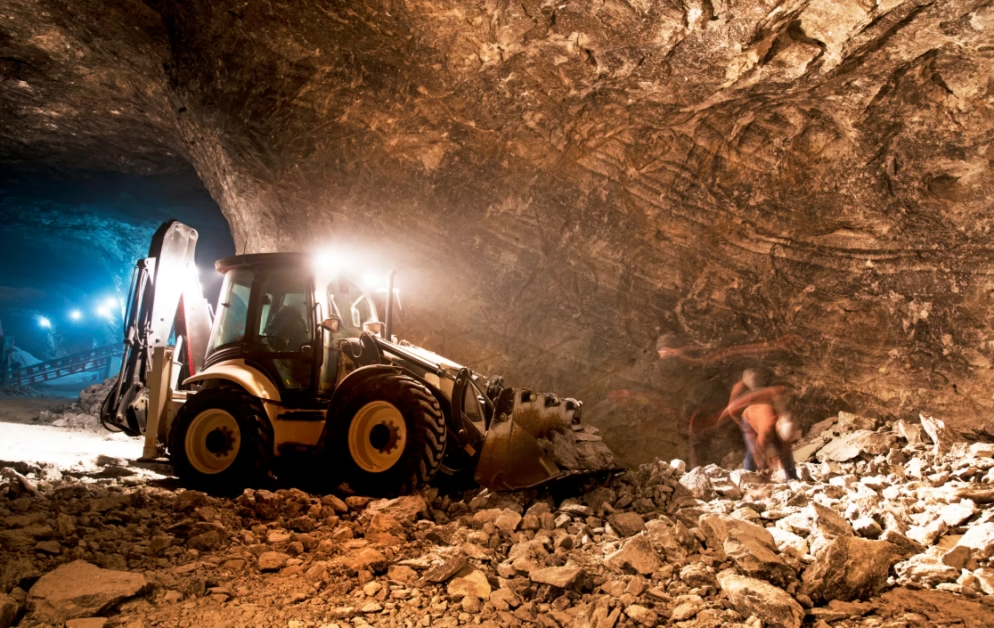
Oyu Tolgoi Standard: Sourcing -40°C Arctic Grade AS/NZS 1802 Type 241 11kV for Mongolian Copper Mines
Advanced Procurement Engineering: Understanding Why Standard Type 241 Fails at Extreme Cold Temperatures. Material Science Adaptations for Arctic Environments. Rio Tinto AVL Certification Requirements. 11kV High-Voltage Arctic Design. Supplier Qualification and Testing Standards.
高级采购工程:理解为什么标准Type 241在极端低温失效。极地环境的材料科学适应。力拓AVL认证要求。11kV高压极地设计。供应商资格认证和测试标准。
1. The Oyu Tolgoi Challenge: Why Standard Cables Become Dangerous at -40°C
To understand why the Oyu Tolgoi copper mining project—operated by Rio Tinto in the Gobi Desert of southern Mongolia—demands a specialized Arctic Grade version of AS/NZS 1802 Type 241 cable, you must first grasp the fundamental reality of extreme cold mining: the same materials that remain pliable and safe at temperate conditions can transform into brittle, dangerous substances when subjected to temperatures dropping to minus forty degrees Celsius. A standard Type 241 trailing cable, engineered for operational environments of minus twenty or minus twenty-five degrees, becomes not merely less effective but actively hazardous when deployed in Oyu Tolgoi’s winter conditions.
要理解为什么力拓在蒙古戈壁南部运营的奥尤陶勒盖铜矿项目需要专门的极地级版本AS/NZS 1802 Type 241电缆,您必须首先掌握极端严寒采矿的基本现实:在温和条件下保持柔韧和安全的相同材料,当温度下降到负四十摄氏度时,可能转变为脆性、危险的物质。标准的Type 241拖曳电缆在负二十或负二十五度的运行环境中设计,但当在奥尤陶勒盖的冬季条件下使用时,不仅效能下降,而且变得主动危险。
Picture the scenario: a large rope shovel operating in the open pit during a Mongolian winter, with ambient temperatures reaching minus thirty-eight degrees Celsius. The shovel’s electric cable, which powers the bucket hoist motor and control systems, must be dynamically dragged across the pit floor as the shovel repositions. If this cable uses standard Type 241 materials—outer sheath formulated for temperate-zone cold, insulation designed for minus twenty-five degree minimum performance—what happens when the cable is pulled tight at minus forty degrees? The outer jacket, which relies on elastomeric properties (flexibility, tensile strength) that are temperature-dependent, begins to lose its elasticity. The material becomes stiff, brittle, and prone to cracking. Where cracks form, the underlying insulation is exposed. More critically, if the cable is bent sharply during reeling or repositioning, the rigid sheath cracks completely, exposing the semiconductive layers beneath. The semiconductive cradle and pilot wire screen, which rely on stable electrical properties to maintain earth continuity monitoring, are now exposed to moisture and contamination. The earth continuity circuit fails. The monitoring relay, designed to detect cable damage within milliseconds by sensing changes in pilot core resistance, can no longer function. A fault in the cable or connected equipment goes undetected. An arc initiates, and there is no immediate protection to shut down the equipment. Personnel exposure to electrical hazard is uncontrolled.
This is why Oyu Tolgoi, as a world-class Rio Tinto operation with strict engineering standards, mandates Arctic Grade cables specifically qualified for minus forty degree operation. It is not an optional upgrade; it is a compliance requirement embedded in the project’s electrical engineering specifications and procurement standards.
2. The Physics of Cold Brittleness: Understanding Polymer Transition Temperature
To truly understand why Arctic Grade cables are essential, you need to understand the underlying physics of how polymeric materials behave as temperature changes. This concept, called the polymer transition temperature or glass transition point, is fundamental to material science and directly determines cable safety at extreme cold.
Polymer Behavior Across Temperature Ranges: Most elastomeric materials used in cable sheaths and insulation—such as polyvinyl chloride (PVC), chloroprene rubber (Neoprene), and ethylene propylene rubber (EPR)—exhibit temperature-dependent mechanical properties. At normal operating temperatures (around twenty degrees Celsius), these materials are in what is called their “rubbery” state: they are flexible, can absorb mechanical stress without tearing, and have excellent tensile strength. As temperature decreases, molecular motion within the polymer slows down. The polymer becomes progressively less flexible. At a specific temperature threshold called the glass transition temperature (Tg), the material undergoes a dramatic change. Below this temperature, the polymer enters what is called the “glassy” state: it loses its elasticity, becomes brittle, and behaves more like glass than rubber. Flexing the material causes permanent deformation or fracture rather than elastic recovery.
Glass Transition Points for Common Cable Materials: For standard PVC formulations used in temperate-zone cables, the glass transition temperature is approximately minus fifteen to minus twenty degrees Celsius. This means that a standard PVC outer sheath, which has moderate cold-weather properties at minus twenty degrees, becomes increasingly brittle as temperature drops further. At minus thirty degrees, the material is noticeably stiff. At minus forty degrees, the material is so brittle that manual bending (such as coiling the cable for storage or uncoiling for deployment) causes permanent cracking in the sheath. The cracks are not surface damage; they penetrate through the full thickness of the sheath, exposing the underlying insulation and protective layers.
Arctic Grade Material Reformulation: Arctic Grade cables address this transition temperature problem by using specially formulated elastomeric compounds with glass transition temperatures depressed to approximately minus fifty to minus fifty-five degrees Celsius. This is achieved by incorporating specialized plasticizers and molecular modifiers into the base polymer. The trade-off is that these formulations are more expensive to manufacture and require tighter quality control during extrusion. However, the benefit is that the material remains genuinely elastic (not brittle) at minus forty degrees, allowing the cable to be flexed, coiled, and deployed without sheath cracking.
3. Standard Type 241 vs Arctic Grade Type 241: The Material Science Divergence
To help you understand the full scope of differences between a standard Type 241 cable and an Arctic Grade variant, consider how they differ not just in material composition but in the entire design philosophy underlying each version.
Standard Type 241 Design Philosophy: Standard Type 241 cables are optimized for dynamic reeling and trailing applications in temperate to moderately cold mining environments. They are designed for efficient manufacturing at reasonable cost, with adequate performance margins for environments as cold as minus twenty-five degrees Celsius. The material selections balance cost, performance, and manufacturability. The outer sheath is typically formulated PVC or standard chloroprene rubber, chosen because these materials offer good abrasion resistance, moderate cold flexibility down to minus twenty-five degrees, and economical production. The insulation is standard EPR (ethylene propylene rubber), which provides excellent electrical properties and reasonable low-temperature performance. The semiconductive layers (cradle and outer screen) use standard carbon-filled elastomer formulations that are well-established in industry practice.
Arctic Grade Design Philosophy: Arctic Grade Type 241 cables, by contrast, are optimized specifically for extreme cold operation, with cost being a secondary consideration. Every material component is selected or reformulated to maintain its critical properties at minus forty degrees Celsius. The outer sheath uses specially formulated Arctic-grade chloroprene rubber (designated HD-85-PCP Arctic or equivalent) that incorporates low-temperature plasticizers and molecular modifiers to extend the glass transition point to minus fifty degrees or lower. The insulation is cold-resistant EPR (R-EP-90), a premium formulation that maintains dielectric strength and absence of treeing even at extreme cold. The semiconductive cradle and screen use low-temperature formulations that maintain conductivity (typically less than 1.0 Ω·m volume resistivity) even at minus forty-five degrees, ensuring that the earth continuity monitoring system can detect faults instantly as required by the pilot wire monitoring protocol.
Practical Performance Difference Under Extreme Cold: The difference manifests vividly in the field. A standard Type 241 cable, when subjected to dynamic flexing at minus forty degrees, exhibits progressive sheath cracking that compromises the cable’s integrity within days to weeks of operation. An Arctic Grade Type 241 cable, under identical conditions, maintains sheath integrity and all protective properties indefinitely. The Arctic Grade cable costs twenty to forty percent more to manufacture, but it eliminates the operational hazard and the cost of premature cable replacement or failure-induced downtime.
4. Arctic Grade Outer Sheath: HD-85-PCP and Extreme Cold Elasticity
The outer sheath of an Arctic Grade Type 241 cable is where the most visible and critical material science adaptation occurs. To help you understand how engineers achieve extreme-cold elasticity, let’s examine the specific formulation of Arctic Grade sheath material and how it differs from standard sheath compounds.
HD-85-PCP Arctic Formulation: The designation “HD-85-PCP Arctic” refers to a specialized chloroprene-based (neoprene) compound with advanced low-temperature properties. The “HD” indicates “high durability,” the “85” refers to a specific durometer hardness rating (Shore A 85, which is relatively soft and flexible even at low temperature), and the “PCP” designation indicates it is a polychloroprene formulation. The critical difference from standard PVC or neoprene compounds is the addition of proprietary plasticizers—molecules that separate polymer chains and allow them to move more freely even at low temperatures. These plasticizers are typically phthalate-based (such as di-isodecyl phthalate, DIDP) or more advanced alternatives that provide enhanced low-temperature performance without creating environmental or health concerns.
Testing for Low-Temperature Performance: To certify that a material truly meets Arctic Grade specifications, manufacturers subject the sheath material to rigorous cold-bend testing (sometimes called Frazer or Martens tests). In these tests, a sample of the sheath material is cooled to minus forty degrees Celsius and then repeatedly flexed or bent around a mandrel of specified radius. Standard PVC sheaths fail these tests at minus forty degrees—they crack within a few cycles. Arctic Grade HD-85-PCP materials pass these tests with significant margin, completing hundreds of bend cycles without cracking. This testing is mandatory for Rio Tinto approval and must be performed by recognized testing laboratories (such as TÜV, NATA, or equivalent).
Impact on Cable Deployment: In practical terms, the Arctic Grade outer sheath allows the cable to be coiled on reels, stored in open pits at minus forty degrees, uncoiled during equipment deployment, and dynamically flexed during shovel repositioning without sheath degradation. A standard Type 241 cable, under identical treatment, would develop cracks within the first few deployment cycles, exposing the insulation and semiconductive layers to contamination and moisture. This leads to insulation failure, pilot wire circuit failure, and ultimately electrical hazard.
5. Cold-Resistant EPR Insulation: Maintaining Electrical Integrity Below -40°C
While the outer sheath receives the most visible attention, the insulation layer is equally critical to Arctic Grade performance. To understand why standard EPR insulation is insufficient at extreme cold and how cold-resistant formulations solve this problem, consider the electrical and mechanical challenges that insulation faces at minus forty degrees.
Insulation Challenges at Extreme Cold: Electrical insulation must satisfy two competing demands at extreme cold. First, it must maintain dielectric strength—the voltage at which breakdown occurs—even at low temperature. Most insulating polymers, as temperature drops, experience a slight increase in dielectric strength. However, if the insulation material becomes brittle due to glass transition, it develops internal micro-voids (tiny air spaces) through thermal stress as the cable experiences temperature cycling. These voids become stress-concentration points where electrical breakdown initiates at voltages lower than would be expected from the bulk material properties. Second, the insulation must not develop small cracks or separations due to the mechanical flexing that occurs during cable reeling and deployment. Standard EPR, with its standard glass transition temperature around minus twenty to minus thirty degrees, begins to exhibit brittle behavior at minus forty degrees, risking both electrical breakdown and mechanical cracking.
Cold-Resistant EPR (R-EP-90) Formulation: Cold-resistant EPR, designated R-EP-90 in specialized cable standards, is an enhanced EPR formulation that incorporates low-temperature additives and modified polymer chains to extend its useful operational range to minus fifty degrees or beyond. The “90” in the designation typically refers to the maximum conductor temperature (90°C) that the insulation can withstand during normal operation. The critical innovation in R-EP-90 is the addition of molecular flexibility enhancers—compounds that prevent the polymer from reaching the brittle glassy state even at extreme cold. This is achieved without sacrificing the electrical properties that make EPR superior to PVC for high-voltage applications: excellent resistance to ozone, superior mechanical recovery after flexing, and consistent dielectric properties across temperature ranges.
Absence of Treeing and Void Growth: One of the most insidious failure modes in power cables is a phenomenon called electrical treeing: when even small voids exist in insulation, electrical field enhancement occurs at the void edges, causing progressive ionization of gases within the void and oxidative degradation of insulation surrounding the void. This process, called treeing because the resulting damage pattern resembles tree branches under magnification, is accelerated at low temperature because the insulation becomes more brittle and prone to void initiation. R-EP-90 formulations, through careful void control during manufacturing and through molecular stabilization of the polymer chains, achieve void content less than one percent, ensuring that treeing is extremely unlikely even under the high electrical stress of 11kV operation at minus forty degrees.
6. Flexible Semiconductive Structures: Pilot Core and Cradle Design for Extreme Cold
The semiconductive layers in an Arctic Grade Type 241 cable—specifically the cradle that surrounds the conductor bundle and the screen layers—must themselves maintain electrical and mechanical functionality at extreme cold. This is where many standard cables fail catastrophically, because the semiconductive materials, while electrically conductive at room temperature, become brittle at low temperature and lose their electrical properties.
The Role of the Semiconductive Cradle: The cradle is a shaped, semi-conductive elastomeric component that fits snugly around the twisted conductor bundle, serving two functions. Electrically, it provides a distributed conductive path that helps equalize the voltage stress around the conductor bundle, preventing voltage concentration at any single point. Mechanically, it provides mechanical protection and support to the individual conductors, preventing sharp bends or kinks that could damage insulation. At room temperature, a standard carbon-filled elastomer cradle performs these functions reliably. At minus forty degrees, a standard cradle becomes too rigid to conform properly to the conductor bundle, potentially causing pressure stress on the insulation. More critically, the electrical conductivity of standard carbon-filled elastomers decreases significantly at low temperature, potentially reaching 10–100 Ω·m or higher. For earth continuity monitoring, which relies on pilot core resistance changing from, say, 10 Ω at normal condition to 1,000 Ω or higher upon cable damage, an increase in baseline cradle resistance caused by cold temperature creates monitoring uncertainty and potential false alarms.
Arctic Grade Semiconductive Formulations: Arctic Grade type 241 cables use enhanced carbon-filled elastomer compounds that maintain volume resistivity below 1.0 Ω·m even at minus fifty degrees Celsius. This is achieved by using optimized carbon filler types (such as acetylene black at specific particle size distributions) and low-temperature plasticizers that prevent the elastomer matrix from crystallizing and losing conductivity. The cradle material is also formulated to remain somewhat flexible at extreme cold, allowing it to accommodate mechanical stress without becoming rigid. The individual conductors are also protected with a complementary low-temperature semiconductor layer that surrounds each conductor before the overall bundle cradle is applied, providing dual-layer protection against insulation stress.
Pilot Core Integrity at Extreme Cold: The pilot core, typically a small (0.75–1.5 mm) copper wire running through the center of the cable, must also remain robust at extreme cold. Its insulation (if it has any) must not become brittle, and its electrical connection to the monitoring equipment must not degrade. Arctic Grade cables use specialized low-temperature insulation, if any, on the pilot core, and ensure that the pilot core is mechanically supported throughout its length so that the extreme cold does not cause the copper wire to fracture due to brittleness of the surrounding materials or movement within the cable.
7. 11kV Voltage Class Considerations: Why Higher Voltage Demands Thicker Insulation
An important detail that distinguishes the Oyu Tolgoi Arctic Grade specification is that the cable operates at 11kV, not the more common 3.3kV or 6.6kV found in many mining operations. This higher voltage creates additional design requirements that interact critically with the extreme cold environment. To help you appreciate this complexity, let’s examine why 11kV demands thicker insulation and why this thickness becomes mechanically challenging at extreme cold.
Voltage Stress and Insulation Thickness: Electrical insulation thickness must be sufficient to prevent breakdown under the voltage stress applied across it. The voltage stress E (electric field) is defined as the voltage divided by the insulation thickness: E = V / d, where V is voltage and d is insulation thickness. For a given insulation material with a known breakdown field strength (typically around 30–40 kV/mm for modern extruded polymers), the required insulation thickness is simply: d = V / E_breakdown. For a 3.3kV phase-to-earth voltage (in an IT-grounded system), a reasonable insulation thickness is about 2.5–3.0 mm. For 11kV, the requirement roughly triples: insulation thickness must be approximately 4.0–5.0 mm (accounting for voltage safety factors and the specific electrical properties of the insulation material). This much thicker insulation translates directly to larger cable outer diameter and increased weight.
Mechanical Stress from Thick Insulation at Cold Temperature: A thicker insulation layer creates a larger diameter core over which the outer sheath must conform. When this larger core is subjected to the bending, flexing, and reeling stresses that occur during cable deployment, the outer sheath must flex over a much larger bending diameter. If the sheath material becomes brittle due to cold temperature, the increased flexing stress causes more rapid cracking. Arctic Grade sheaths, with their enhanced flexibility even at minus forty degrees, handle this larger bending diameter without cracking. Standard sheaths cannot.
Thermal Stress from Thick Insulation: A thicker insulation layer also means greater internal thermal gradients when the cable is carrying current. The innermost insulation layer (touching the conductor) reaches the highest temperature, while the outer insulation layer (touching the cooler outer sheath) is cooler. During the Mongolian winter, when ambient temperature is minus forty degrees Celsius and the cable is carrying full load current, the internal temperature gradient can exceed 10–15 degrees Celsius across the insulation thickness. This thermal gradient causes thermal stress and potential micro-void formation at the insulation boundaries. Cold-resistant EPR formulations, through their molecular stabilization, better resist this thermal stress-induced micro-voiding.
8. AS/NZS 1802 Type 241 11kV Arctic Grade: Complete Technical Specifications
| Specification | Value | Unit | Critical Arctic Grade Notes |
|---|---|---|---|
| Voltage Rating (Uo/U) | 6.35 / 11 | kV | Phase-to-earth/phase-to-phase; IT earthing system |
| Temperature Range (Operating) | -40 to +50 | °C | Minimum operating temp; standard Type 241 is -25°C minimum |
| Phase Conductor Size (typical) | 3 × 95 | mm² | Class 5 stranding (40–60 filaments per conductor) |
| Phase Conductor Stranding | Class 5 (0.67 mm filaments, approx. 50 filaments) | — | Fine stranding for maximum flexibility at cold temp |
| Interstitial Earth Cores | 3 × 16 mm² | mm² | Larger than standard Type 241 due to 11kV voltage stress |
| Central Pilot Core | 1.0 | mm | Copper, for earth continuity monitoring; mandatory for Arctic |
| Semiconductive Cradle | Low-temperature formulation, <1.0 Ω·m @ -40°C | — | Maintains conductivity and flexibility at extreme cold |
| Individual Conductor Screen | Semi-conducting layer, 0.5–0.8 mm | — | Per conductor, low-temperature formulation |
| Insulation Material | R-EP-90 (cold-resistant EPR) | — | NOT standard EPR; enhanced formulation required for -40°C |
| Insulation Thickness | 4.5–5.0 | mm | Per phase conductor; 11kV requires thick insulation |
| Insulation Void Content | < 1% | % | Rigorous void control to prevent treeing at 11kV |
| Overall Composite Screen | Copper braid + tin-plated copper wire + nylon sheath | ~8 mm² | Composite construction for mechanical robustness under tension |
| Inner Sheath Material | PVC LSF or Arctic-grade EPR | 2.5–3.5 | mm; thermally resilient at -40°C |
| Outer Sheath Material | HD-85-PCP Arctic | — | Specialized chloroprene compound; NOT standard PVC |
| Outer Sheath Thickness | 6.0–8.0 | mm | Robust protection for pit environment |
| Glass Transition Temperature (Tg) | -50 to -55 | °C | Depressed Tg ensures flexibility at -40°C operation |
| Cold Bend Test (Frazer) | Pass @ -40°C, 100+ cycles | — | Mandatory Rio Tinto test; standard cable fails |
| Outer Diameter (OD) | ~64–70 | mm | Thicker insulation and sheath increase OD vs standard |
| Cable Weight | ~2,800–3,200 | kg/km | Heavier than 3.3kV due to 11kV insulation thickness |
| Weight Per Meter | ~2.8–3.2 | kg/m | — |
| Ampacity (50°C ambient, standard conditions) | ~385 | A | Per AS/NZS 3008; actual Mongolian winter is much colder, allowing higher current |
| DC Resistance (per phase @ 20°C) | ~0.193 | Ω/km | Copper conductors only; 95 mm² per phase |
| Reactance (per phase) | ~0.10–0.15 | Ω/km | Depends on armor/screen configuration |
| Operating Temperature (max conductor) | 90 | °C | Continuous; R-EP-90 formulation rated to this |
| Short-Circuit Temperature (max) | 250 | °C | For 5 seconds or less; Arctic materials tolerate sustained heat |
| Minimum Bending Radius (dynamic cold) | 8–10 × OD | — | More generous than standard Type 241 due to 11kV insulation thickness |
| Dynamic Torsion Test | Pass @ -40°C, ±45° twist, 100+ cycles | — | Critical test for reeling; validates materials under twisting stress |
| Tensile Load (max dynamic) | ~15 | N/mm² | Based on 3 × 95 mm² conductor cross-section |
| Pilot Core Resistance (new, dry) | ~20–30 | Ω @ 20°C | Per 1 km length; monitoring alarm typically at 100+ Ω |
| Pilot Core Resistance (@ -40°C) | ~25–35 | Ω @ -40°C | Slight increase due to copper temperature coefficient; within spec |
| Flame Retardancy | LSOH / LSF | — | AS/NZS 3660.1 compliance |
| Rio Tinto AVL Status | Approved Vendor List, category A | — | Requires ongoing compliance and third-party testing |
9. Rio Tinto AVL Certification: Approved Vendor List Requirements
Oyu Tolgoi is a Rio Tinto-operated mine, and Rio Tinto maintains one of the world’s most rigorous supplier quality management systems. Every cable supplier must be listed on the Approved Vendor List (AVL) before their products can be used in any Rio Tinto mining operation, regardless of country or project. Understanding these requirements is essential for procurement engineers evaluating Arctic Grade Type 241 cable sources.
The Rio Tinto AVL process for cable suppliers involves initial qualification through submission of comprehensive technical documentation, manufacturing capability assessments, and third-party testing certificates. For Arctic Grade cables, Rio Tinto specifically requires cold bend testing at minus forty degrees Celsius (meeting or exceeding 100 cycles without sheath cracking), dynamic torsion testing at minus forty degrees Celsius (±45 degree twist, 100+ cycles), and pilot core continuity testing across the full temperature range minus forty to plus fifty degrees Celsius. The testing must be performed by laboratories that are independent from the cable manufacturer and hold accreditation from recognized bodies such as NATA (National Association of Testing Authorities, Australia) or TÜV (German Testing Organization). Once a supplier is AVL-approved, ongoing compliance is maintained through periodic audits, continued testing of production samples, and failure investigation if any cable-related incidents occur in the field.
For Feichun or any other cable manufacturer seeking to supply Arctic Grade Type 241 to Oyu Tolgoi, the investment in AVL qualification includes initial testing costs (typically USD 15,000–25,000 for the full test matrix), third-party laboratory fees, documentation preparation, and Rio Tinto audit participation. The process typically requires six to twelve months from initial application to final approval. However, once approved, the supplier becomes the preferred source for that cable specification across all Rio Tinto operations globally, creating substantial long-term revenue opportunity.
10. Testing and Validation: Cold Bend Testing and Dynamic Torsion at Extreme Temperature
To truly appreciate what separates Arctic Grade cables from standard cables, consider the specific tests that Rio Tinto mandates and understand what each test reveals about cable material performance at extreme cold.
Cold Bend Test (Frazer Test): This test, formally described in IEC 60811 and adopted by Rio Tinto as mandatory for Arctic Grade qualification, subjects a sample of the sheath material to repeated bending at minus forty degrees Celsius. The sample is cooled to the test temperature and then bent around a mandrel of specified diameter (typically 4–6 times the outer diameter of the cable) and then straightened. This cycle is repeated 100, 200, or more times depending on the severity level required. After completing the cycles, the sample is examined for visible cracks, tears, or permanent deformation. Standard PVC or neoprene sheath materials typically fail this test within 10–30 cycles at minus forty degrees, exhibiting visible cracking or tears. Arctic Grade HD-85-PCP materials pass this test with significant margin, completing well over 100 cycles without visible damage. This test directly validates that the material maintains physical integrity during the dynamic reeling and uncoiling operations that are routine in the pit environment.
Dynamic Torsion Test: This test subjects the entire cable (not just the sheath material) to combined mechanical stress: simultaneous bending (around a 10 × OD radius) and twisting (typically ±45 degrees from center) at minus forty degrees Celsius. This simulates the real-world stresses that occur when a cable is dragged around obstacles in the pit, twisted as it unwinds from a reel, and flexed sharply around shovel boom structures. The test is performed for 100 or more complete rotation cycles while maintaining the cable at minus forty degrees. During the test, technicians monitor the pilot core resistance electrically; if the resistance changes significantly, it indicates that the semiconductive layers or insulation have been damaged and that internal electrical paths have been compromised. A passing test shows pilot core resistance remaining stable throughout the test cycle, confirming that mechanical stress has not damaged internal electrical structures. Standard Type 241 cables typically fail this test at minus forty degrees; the semiconductive layers become brittle under the combined mechanical stress and lose electrical continuity. Arctic Grade cables pass this test reliably.
Pilot Core Continuity Testing Across Temperature Range: Because the pilot core is the critical element for fault detection, Rio Tinto mandates detailed measurement of pilot core resistance at multiple temperatures: minus forty, minus twenty, zero, plus twenty, and plus fifty degrees Celsius. The pilot core resistance should vary only slightly across this entire temperature range (copper has a temperature coefficient of approximately 0.4 percent per degree Celsius, so the resistance change across a 90-degree range would be approximately 36 percent, which is acceptable). If pilot core resistance shows anomalous changes (such as a sudden jump at certain temperatures indicating internal fracturing or connection loss), the cable fails this test. This test ensures that the pilot core circuit will function reliably for earth continuity monitoring regardless of ambient temperature fluctuations during Mongolian seasonal changes.
11. Installation and Deployment in Mongolian Operations
Understanding how Arctic Grade cables are installed and deployed in the Oyu Tolgoi environment provides practical insight into why the extreme cold specifications are essential and how the cables’ advantages manifest in the field.
Cable Storage and Environmental Exposure: Arctic Grade cables are received at Oyu Tolgoi’s onsite equipment warehouse, often during the Mongolian winter when ambient temperature is minus thirty to minus forty degrees Celsius. Unlike standard cables, which would become brittle during such storage, Arctic Grade cables can be handled safely at these temperatures. The cables are laid out on reels in open storage areas, where they are exposed to full ambient cold. When equipment requires deployment (such as a new shovel being commissioned in the pit), the cables are uncoiled from these cold-storage reels and connected to the equipment. If standard cable were used, the sheath would crack during uncoiling due to brittleness at minus forty degrees. Arctic Grade cables uncoil smoothly without sheath damage.
Dynamic Deployment and Reeling: As the shovel repositions in the pit (a routine operation that occurs multiple times during each work shift), the cable is paid out from the reel mounted on the equipment frame and coiled back in as the shovel moves. The cable must flex, bend around obstacles, and endure traction as it is pulled across rough pit bottom. An Arctic Grade cable handles this repeated stress cycle without sheath degradation. The pilot core monitoring system functions continuously throughout these maneuvers, detecting any developing faults in real-time.
Thermal Cycling and Long-Term Durability: Mongolian seasons create extreme thermal cycling: winter temperatures drop to minus forty-five degrees Celsius, while summer temperatures may reach plus forty-five degrees Celsius. Over months of operation, a single cable experiences temperature swings of nearly 90 degrees Celsius. Standard materials, after many such cycles, develop micro-cracks and internal stress concentrations. Arctic Grade materials, through their molecular formulation, tolerate these extreme thermal cycles without degradation. This translates to a multi-year operational life for Arctic Grade cables in the Oyu Tolgoi environment, compared to months or just over a year for standard cables.
12. Procurement Checklist and Risk Mitigation Strategy
Step 1 – Verify Cable Specification: Request detailed technical documentation from the supplier specifying cable type (AS/NZS 1802 Type 241 11kV), outer sheath material (HD-85-PCP Arctic specifically, not standard PVC or regular neoprene), insulation material (R-EP-90 cold-resistant EPR, not standard EPR), and operating temperature range (minus forty to plus fifty degrees Celsius explicitly stated). Do not accept nominal equivalencies; require exact material designations.
Step 2 – Request Third-Party Test Certificates: Request copies of independent laboratory test reports for cold bend testing (Frazer test, 100+ cycles @ -40°C), dynamic torsion testing (±45° twist, 100+ cycles @ -40°C), and pilot core resistance testing across the full temperature range. These certificates must be issued by a recognized testing laboratory (NATA-accredited or equivalent). Do not accept manufacturer’s in-house testing; Rio Tinto specifically requires third-party validation.
Step 3 – Verify Rio Tinto AVL Status: Contact Rio Tinto’s AVL administrative office to confirm that the supplier is on the Approved Vendor List for Arctic Grade Type 241 cable supply. Obtain the specific AVL reference number and confirmation of the approved cable specification code. Some suppliers may claim “Rio Tinto approval” without actually being on the official AVL; verification through Rio Tinto is the only way to be certain.
Step 4 – Assess Supplier Quality System: Request evidence of ISO 9001 certification and, preferably, ISO 16001 environmental management system certification. For Arctic Grade cable manufacturing, request detailed descriptions of the extrusion process controls, material testing procedures, and quality assurance sampling rates. Arctic Grade cables are more manufacturing-sensitive than standard cables; inadequate process control during extrusion can result in poor glass transition temperature performance.
Step 5 – Confirm Pilot Core Specification and Monitoring Compatibility: Request the supplier’s complete technical documentation for the pilot core, including copper gauge, insulation type, and electrical properties. Verify that the pilot core is compatible with the earth continuity monitoring relay system installed at Oyu Tolgoi. Different monitoring systems have different impedance requirements; confirm that the cable’s pilot core electrical characteristics align with the monitoring system’s design parameters.
Step 6 – Establish Procurement Timeline: Arctic Grade cables are not commodity items with stock availability. Most reputable manufacturers require lead times of twelve to twenty-four weeks after order placement. Factor this lead time into project schedules. Do not attempt to shorten lead times by requesting expedited manufacturing; Arctic Grade cables cannot be rushed without risking quality compromises.
Step 7 – Plan Incoming Inspection and Testing: Upon cable delivery to Oyu Tolgoi, plan for basic incoming inspection: measurement of cable outer diameter at multiple points, visual inspection of the outer sheath for manufacturing defects or damage in transit, and measurement of pilot core resistance at ambient temperature. These spot checks take one to two hours per cable drum and provide confidence that the delivered product matches the specification.
Step 8 – Train Deployment Personnel: Brief the equipment operators and field installation crews on the specific requirements for Arctic Grade cable handling. Unlike standard cables, Arctic Grade cables should be handled with care to avoid sharp bends or kinks even though they are more cold-tolerant than standard cables. Improper handling can still cause damage. Provide training on how to monitor the pilot core system and interpret monitoring alerts.
Conclusion: Procuring Arctic Grade Type 241 11kV cables for Oyu Tolgoi is a specialized engineering task that demands deep understanding of material science, testing standards, and Rio Tinto’s stringent supplier requirements. The investment in correct cable selection eliminates operational risk, prevents premature cable failure, and ensures that the mine’s electrical systems remain reliable throughout extreme Mongolian seasonal cycles. Feichun Special Cable has invested in Rio Tinto AVL qualification for Arctic Grade cables and maintains compliance with all required testing and documentation. Our Arctic Grade Type 241 cables are manufactured under rigorous process controls and are third-party tested to exceed Rio Tinto’s specifications. For Oyu Tolgoi procurement inquiries or for other Rio Tinto operations worldwide, contact our technical team to discuss your specific cable requirements and project timeline.
References & Sources
- AS/NZS 1802:2012, “Flexible cables with copper conductors—General purpose cables for underground mines,” Standards New Zealand and Standards Australia.
- AS/NZS 3008.1.1:2017, “Electrical installations—Selection of cables,” Standards New Zealand and Standards Australia.
- IEC 60811-4-1:2012, “Tests for non-metallic materials of cables—Part 4-1: Mechanical properties tests—Cold bend test,” International Electrotechnical Commission.
- Rio Tinto, “Approved Vendor List—Electrical Cable Supply,” Corporate Engineering Standards (internal document; details available upon AVL application).
- NATA (National Association of Testing Authorities Australia), “Accreditation Schedule—High Voltage Cable Testing,” available at nata.asn.au
- Feichun Special Cable Research Team, “Arctic Grade Type 241 11kV Cable Design and Oyu Tolgoi Compliance,” Technical Document, 2026.


