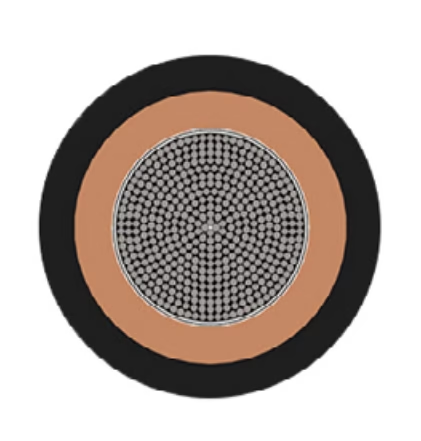
high voltage flexible cable

FeiChun Advanced Anti-Twisting Salt-Fog Resistant Port Cable Systems versus FLEXIDRUM® MEDIUM (N)TSCGEWÖU (3.6/6 kV to 20/35 kV): Comprehensive Technical Analysis, Tinned Copper Conductor Corrosion Resistance in Salt-Fog Environments, Synthetic Fiber Anti-Twisting Protection Architecture & Coastal Durability, Reel-Deployment Mechanical Stress Management & Fatigue Mechanisms, High-Speed Unspooling Effects (180 m/min Maximum Deployment Velocity), Torsional Stress Distribution (±25°/m Continuous Twist Capability), Low-Temperature Extension Operation (-45°C Cold Version), Dynamic Bending & Twist-Fatigue Cyclic Loading, Integrated Electrochemical-Mechanical Protection for Mobile Equipment, Field-Validated Performance from Mining Excavators & Coastal Mobile Cranes in C4-C5M Environments, and Complete Technical Framework for Port Equipment Requiring Simultaneous Dynamic Mechanical Reliability & Salt-Fog Environmental Durability Across 15–25 Year Service Life in Continuous Reel-Deployment Applications Modern port and coastal heavy-equipment systems increasingly employ anti-twisting reel-deployment cables for mobile cranes, mining excavators, tunneling machinery, and dynamic equipment requiring simultaneous high-voltage power delivery and flexible mechanical deployment. FLEXIDRUM® MEDIUM (N)TSCGEWÖU represents advanced industrial anti-twisting cable design combining 3-phase flexible power conductors (red copper Class 5) with specialized tinned-copper earth conductors, synthetic-fiber anti-twisting reinforcement, and optimized construction for reel and festoon applications supporting equipment with 180 m/min maximum deployment velocity and ±25°/m torsional capability. Specification encompasses voltage ratings from 3.6/6 kV through 20/35 kV, temperature operation from -40°C fixed laying to -30°C flexible installation (-45°C optional cold version), reduced weight and diameter optimization for reel deployment efficiency, and specialized construction supporting high-speed unspooling and dynamic mechanical stress typical of mobile equipment in industrial port environments. However, standard industrial anti-twisting cable design optimizes mechanical anti-twist performance (synthetic fiber reinforcement, stranded conductor arrangement) assuming moderate environmental exposure where salt-water moisture penetration and electrochemical corrosion remain secondary concerns. C4-C5M coastal salt-fog environments present fundamental challenge to standard anti-twist architecture: synthetic fiber anti-twisting reinforcement absorbs moisture and experiences degradation mechanisms distinct from traditional metal stranding, tinned-copper earth conductors oxidize and lose mechanical properties in marine environments, and high-speed unspooling combined with moisture-saturated conditions accelerates insulation fatigue leading to premature failure. FeiChun's anti-twisting salt-fog resistant systems address these challenges through: advanced tinned-copper formulations with enhanced corrosion resistance, specialized synthetic-fiber anti-twist reinforcement employing marine-grade polymers and moisture barriers, optimized reel-deployment mechanical architecture managing torsional stress while integrating electrochemical protection, and integrated low-temperature performance maintaining mechanical properties across -50°C to +80°C operating extremes. This comprehensive technical analysis documents dynamic mobile-equipment cable challenges specific to coastal deployment, examines mechanical degradation mechanisms in salt-fog environments, details synthetic-fiber anti-twist durability optimization, compares FeiChun anti-twist salt-fog systems against FLEXIDRUM® MEDIUM (N)TSCGEWÖU specifications, and provides engineering guidance for mobile equipment infrastructure requiring extended service life in aggressive C4-C5M coastal conditions.

FLEXIDRUM® MEDIUM (N)TSCGEWÖU

FeiChun Advanced Anti-Twisting Salt-Fog Resistant Port Cable Systems versus FLEXIDRUM® MEDIUM (N)TSCGEWÖU (3.6/6 kV to 20/35 kV): Comprehensive Technical Analysis, Tinned Copper Conductor Corrosion Resistance in Salt-Fog Environments, Synthetic Fiber Anti-Twisting Protection Architecture & Coastal Durability, Reel-Deployment Mechanical Stress Management & Fatigue Mechanisms, High-Speed Unspooling Effects (180 m/min Maximum Deployment Velocity), Torsional Stress Distribution (±25°/m Continuous Twist Capability), Low-Temperature Extension Operation (-45°C Cold Version), Dynamic Bending & Twist-Fatigue Cyclic Loading, Integrated Electrochemical-Mechanical Protection for Mobile Equipment, Field-Validated Performance from Mining Excavators & Coastal Mobile Cranes in C4-C5M Environments, and Complete Technical Framework for Port Equipment Requiring Simultaneous Dynamic Mechanical Reliability & Salt-Fog Environmental Durability Across 15–25 Year Service Life in Continuous Reel-Deployment Applications Modern port and coastal heavy-equipment systems increasingly employ anti-twisting reel-deployment cables for mobile cranes, mining excavators, tunneling machinery, and dynamic equipment requiring simultaneous high-voltage power delivery and flexible mechanical deployment. FLEXIDRUM® MEDIUM (N)TSCGEWÖU represents advanced industrial anti-twisting cable design combining 3-phase flexible power conductors (red copper Class 5) with specialized tinned-copper earth conductors, synthetic-fiber anti-twisting reinforcement, and optimized construction for reel and festoon applications supporting equipment with 180 m/min maximum deployment velocity and ±25°/m torsional capability. Specification encompasses voltage ratings from 3.6/6 kV through 20/35 kV, temperature operation from -40°C fixed laying to -30°C flexible installation (-45°C optional cold version), reduced weight and diameter optimization for reel deployment efficiency, and specialized construction supporting high-speed unspooling and dynamic mechanical stress typical of mobile equipment in industrial port environments. However, standard industrial anti-twisting cable design optimizes mechanical anti-twist performance (synthetic fiber reinforcement, stranded conductor arrangement) assuming moderate environmental exposure where salt-water moisture penetration and electrochemical corrosion remain secondary concerns. C4-C5M coastal salt-fog environments present fundamental challenge to standard anti-twist architecture: synthetic fiber anti-twisting reinforcement absorbs moisture and experiences degradation mechanisms distinct from traditional metal stranding, tinned-copper earth conductors oxidize and lose mechanical properties in marine environments, and high-speed unspooling combined with moisture-saturated conditions accelerates insulation fatigue leading to premature failure. FeiChun’s anti-twisting salt-fog resistant systems address these challenges through: advanced tinned-copper formulations with enhanced corrosion resistance, specialized synthetic-fiber anti-twist reinforcement employing marine-grade polymers and moisture barriers, optimized reel-deployment mechanical architecture managing torsional stress while integrating electrochemical protection, and integrated low-temperature performance maintaining mechanical properties across -50°C to +80°C operating extremes. This comprehensive technical analysis documents dynamic mobile-equipment cable challenges specific to coastal deployment, examines mechanical degradation mechanisms in salt-fog environments, details synthetic-fiber anti-twist durability optimization, compares FeiChun anti-twist salt-fog systems against FLEXIDRUM® MEDIUM (N)TSCGEWÖU specifications, and provides engineering guidance for mobile equipment infrastructure requiring extended service life in aggressive C4-C5M coastal conditions.
To understand why the Oyu Tolgoi copper mining project—operated by Rio Tinto in the Gobi Desert of southern Mongolia—demands a specialized Arctic Grade version of AS/NZS 1802 Type 241 cable, you must first grasp the fundamental reality of extreme cold mining: the same materials that remain pliable and safe at temperate conditions can transform into brittle, dangerous substances when subjected to temperatures dropping to minus forty degrees Celsius. A standard Type 241 trailing cable, engineered for operational environments of minus twenty or minus twenty-five degrees, becomes not merely less effective but actively hazardous when deployed in Oyu Tolgoi's winter conditions. 要理解为什么力拓在蒙古戈壁南部运营的奥尤陶勒盖铜矿项目需要专门的极地级版本AS/NZS 1802 Type 241电缆,您必须首先掌握极端严寒采矿的基本现实:在温和条件下保持柔韧和安全的相同材料,当温度下降到负四十摄氏度时,可能转变为脆性、危险的物质。标准的Type 241拖曳电缆在负二十或负二十五度的运行环境中设计,但当在奥尤陶勒盖的冬季条件下使用时,不仅效能下降,而且变得主动危险。

Oyu Tolgoi Standard: Sourcing -40°C Arctic Grade AS/NZS 1802 Type 241 11kV for Mongolian Copper Mines

To understand why the Oyu Tolgoi copper mining project—operated by Rio Tinto in the Gobi Desert of southern Mongolia—demands a specialized Arctic Grade version of AS/NZS 1802 Type 241 cable, you must first grasp the fundamental reality of extreme cold mining: the same materials that remain pliable and safe at temperate conditions can transform into brittle, dangerous substances when subjected to temperatures dropping to minus forty degrees Celsius. A standard Type 241 trailing cable, engineered for operational environments of minus twenty or minus twenty-five degrees, becomes not merely less effective but actively hazardous when deployed in Oyu Tolgoi’s winter conditions. 要理解为什么力拓在蒙古戈壁南部运营的奥尤陶勒盖铜矿项目需要专门的极地级版本AS/NZS 1802 Type 241电缆,您必须首先掌握极端严寒采矿的基本现实:在温和条件下保持柔韧和安全的相同材料,当温度下降到负四十摄氏度时,可能转变为脆性、危险的物质。标准的Type 241拖曳电缆在负二十或负二十五度的运行环境中设计,但当在奥尤陶勒盖的冬季条件下使用时,不仅效能下降,而且变得主动危险。
3.3kV mining cable, 3.6/6kV trailing cable, (N)TSCGEWOU cable, AS/NZS 1802, AS/NZS 2802, Type 241 cable, Type 275 mining cable, Type 409 cable, Australian mining cable standards, flexible rubber cable, ECM pilot core, earth continuity monitoring, underground coal mining cable, VDE 0250-813, DIN VDE mining cable, reeling and trailing cable, 3.3/3.3kV vs 3.6/6kV, mining equipment cable, SHD-GC alternative, European vs Australian cable standards, heavy duty PCP sheath, EPR insulation mining cable, Cu-weight mining cable, current carrying capacity mining cable, high voltage flexible cable, mining cable specifications, electrical engineer mining standard, AS/NZS certification, Simtars approved cable, MDA approval cable, phase-to-earth fault protection, symmetrical earth mining cable, central extensible pilot, semiconductive elastomer screen, dragline cable, longwall mining cable, continuous miner cable, shuttle car cable, mining feeder cable, robust trailing cable, AS1125 tinned copper conductor, mining cable outer diameter, cable AWG to mm2 cross-section, CPE sheath mining cable, polyurethane mining cable, mining machinery power supply, IEC to AS/NZS cable comparison, mining cable Australia import, trailing cable failure analysis, industrial heavy duty cable

3.3/3.3kV vs 3.6/6kV: Why Australian Mines Reject European (N)TSCGEWÖU Cables

When international mining equipment manufacturers—such as Liebherr for draglines, Caterpillar for longwall systems, or Sandvik for continuous miners—design equipment with power cable specifications, they typically reference European standards. The de facto standard for heavy-duty mining cables across Europe is the 3.6/6kV (U0/U) specification, which appears on virtually every major mining equipment nameplate manufactured in Germany, Switzerland, or Scandinavia. Equipment arrives in Australian ports with factory-supplied 3.6/6kV cables or with rigid specifications demanding 3.6/6kV replacement cables. Yet when Australian mining engineers and electrical inspectors evaluate these specifications against local regulatory requirements, they universally reject them. The cables must be replaced with 3.3/3.3kV hybrid specifications, creating costly project delays, adding unexpected procurement cycles, and forcing equipment owners to source custom cables.
Single core cables are engineered for distribution of electrical power with nominal voltages ranging from 1.8/3kV to 36kV and beyond. From a design point of view, medium-voltage cables are of three types: single-core cable, three single-core cables laid-up, and three-core cable. This technical guide examines two prominent cable solutions for demanding industrial applications requiring high flexibility and electrical performance. 单芯电缆专为输配电系统设计,额定电压从1.8/3kV至36kV及以上。本技术指南对比分析两种适用于高柔性工业应用的电缆方案。

Single Core Cables: Nexans RHEYCLEAN® (MV) vs. (N)TSCGEWÖU Single Core

Single core cables are engineered for distribution of electrical power with nominal voltages ranging from 1.8/3kV to 36kV and beyond. From a design point of view, medium-voltage cables are of three types: single-core cable, three single-core cables laid-up, and three-core cable. This technical guide examines two prominent cable solutions for demanding industrial applications requiring high flexibility and electrical performance. 单芯电缆专为输配电系统设计,额定电压从1.8/3kV至36kV及以上。本技术指南对比分析两种适用于高柔性工业应用的电缆方案。
The RHEYFIRM(RTS) R-(N)TSCGEWTOEUS represents the pinnacle of medium-voltage reeling cable technology, engineered specifically for demanding industrial applications where power transmission, control signals, and fiber optic communication must be integrated into a single, highly flexible cable assembly. Manufactured in strict compliance with DIN VDE 0250 Part 813, this cable series delivers reliable performance at voltage ratings from 8.7/15 kV up to 18/30 kV, with travel speeds reaching 180 m/min on modern cable reeling systems. The designation follows the German VDE nomenclature where "RHEYFIRM" indicates the manufacturer's product line, "(RTS)" denotes the reinforced tensile system, and the alphanumeric string describes the complete cable construction including screening, insulation type, and special features.

What is RHEYFIRM(RTS) R-(N)TSCGEWTOEUS Cable?

The RHEYFIRM(RTS) R-(N)TSCGEWTOEUS represents the pinnacle of medium-voltage reeling cable technology, engineered specifically for demanding industrial applications where power transmission, control signals, and fiber optic communication must be integrated into a single, highly flexible cable assembly. Manufactured in strict compliance with DIN VDE 0250 Part 813, this cable series delivers reliable performance at voltage ratings from 8.7/15 kV up to 18/30 kV, with travel speeds reaching 180 m/min on modern cable reeling systems. The designation follows the German VDE nomenclature where “RHEYFIRM” indicates the manufacturer’s product line, “(RTS)” denotes the reinforced tensile system, and the alphanumeric string describes the complete cable construction including screening, insulation type, and special features.
BS6195 Standard covers the requirements for insulated flexible cables and cords typically known as coil end leads. These specialized cables are engineered for permanent and direct connection to coil windings or other electrical equipment, providing the essential flexibility and durability required in demanding industrial environments where motors, generators, transformers, and circuit breakers operate.

What is BS6195 Cable?

BS6195 Standard covers the requirements for insulated flexible cables and cords typically known as coil end leads. These specialized cables are engineered for permanent and direct connection to coil windings or other electrical equipment such as motors, generators, transformers, and circuit breakers.
PROTOLON(M) R-(N)TSCGEWOEU FO represents a sophisticated engineering solution that combines medium voltage power transmission with integrated fiber-optic communication capabilities in a single cable design. This innovative reeling cable is specifically engineered for demanding industrial applications where large mobile equipment requires simultaneous electrical power supply and high-speed data transmission under extreme mechanical stress conditions. The cable is manufactured according to the stringent requirements of DIN VDE 0250-813 standard, which is recognized globally as the definitive specification for flexible trailing cables used in heavy industrial applications.

What is PROTOLON(M) R-(N)TSCGEWOEU FO 6 kV – 35 kV Medium Voltage Reeling Cable with Integrated Fiber-Optics?

PROTOLON(M) R-(N)TSCGEWOEU FO represents a sophisticated engineering solution that combines medium voltage power transmission with integrated fiber-optic communication capabilities in a single cable design. This innovative reeling cable is specifically engineered for demanding industrial applications where large mobile equipment requires simultaneous electrical power supply and high-speed data transmission under extreme mechanical stress conditions. The cable is manufactured according to the stringent requirements of DIN VDE 0250-813 standard, which is recognized globally as the definitive specification for flexible trailing cables used in heavy industrial applications.