
VDE 0250-814 Certified. FC-CVD™ Capacitive Voltage Divider Harvesting. Cold Flexible to −40 °C. For Container Crane Spreaders, Festoon Systems, Motor-Driven Reels & High-Speed Vertical Reeling Applications.
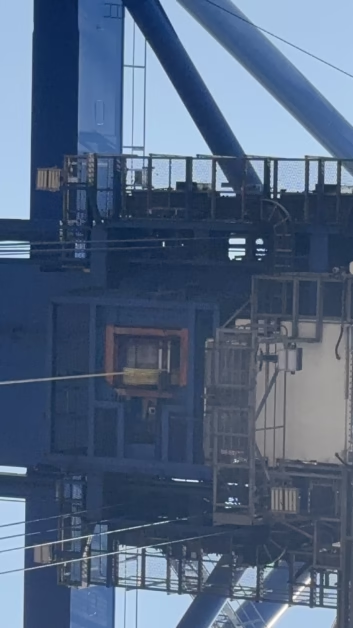
TENAX-CORD (RTS) NSHTOEU-LED 0,6/1 kV: Self-Powered LED Spreader Reeling Cable for High-Speed Container Crane Systems
VDE 0250-814 Certified. FC-CVD™ Capacitive Voltage Divider Harvesting. Cold Flexible to −40 °C. For Container Crane Spreaders, Festoon Systems, Motor-Driven Reels & High-Speed Vertical Reeling Applications.
TENAX-CORD (RTS) NSHTOEU-LED | 0,6/1 kV | FC-TPU™ P-Series Translucent Sheath | 7 Constructions 36×2.5–72×2.5 mm | Up to 3,300 A (44×2.5 core) | Port, Container Terminal, Automated Handling Applications | 240 m/min Vertical Reeling Speed
Introduction: Industry’s First Self-Powered LED Spreader Cable
The TENAX-CORD (RTS) NSHTOEU-LED represents a revolutionary advancement in low-voltage cable technology, introducing integrated self-powered LED illumination to spreader reeling cables for the first time. FeiChun’s proprietary design transforms spreader visibility and safety at the world’s busiest container terminals by combining control and power distribution with continuous visual cable route identification—without requiring external inverters, switchgear modifications, or additional power infrastructure.
Spreader bars are the electromechanical devices that grip and position shipping containers during loading and unloading operations at modern container ports. The spreader is connected to the ship-to-shore (STS) crane, rubber-tired gantry (RTG), or rail-mounted gantry (RMG) system through a reeling cable that carries both control signals and operational power as the spreader extends and retracts vertically at speeds reaching 240 meters per minute. In conditions of fog, rain, darkness, and the chaotic activity of a busy terminal, personnel need immediate visual confirmation of the spreader cable’s position and energization status. The TENAX-CORD (RTS) LED cable’s continuous warning red glow (620–630 nm wavelength) provides exactly that assurance, enhancing safety during day shifts, night operations, and extreme weather conditions.
What distinguishes this cable is its self-powered architecture. The FC-CVD™ (capacitive voltage divider) module taps energy from the low-voltage field—between 0.6 kV and 1 kV—through capacitive coupling, requiring zero external DC supply. Installation is straightforward: disconnect the standard spreader cable, connect the LED cable to the existing terminals, energize the system, and the red LEDs begin glowing immediately. No control panel changes. No external power sources. No additional engineering work.
The TENAX-CORD (RTS) LED is the first and only self-powered LED spreader reeling cable certified to VDE 0250-814. It operates across the full 0.6/1 kV voltage range and maintains full performance through 100,000+ reeling cycles at maximum speed (240 m/min).
Cable Design & FC-CVD™ Technology Overview
Understanding Capacitive Voltage Divider Technology
Unlike the electromagnetic induction harvesting used in medium-voltage and trailing cables, the TENAX-CORD (RTS) LED employs FC-CVD™ technology, which is fundamentally different in both operation and application. To understand why this approach is ideal for low-voltage spreader cables, we need to consider the physical principles involved. A capacitor consists of two conductive plates separated by an insulating material; when a voltage difference is applied across these plates, an electric field develops between them, and energy can be extracted from changes in this field.
In a low-voltage power cable carrying alternating current (AC), the voltage continuously oscillates between positive and negative peaks—typically 50 or 60 Hz in industrial power systems. This oscillating field creates an ideal environment for capacitive coupling. FeiChun’s proprietary FC-CVD™ module consists of a series of capacitive elements strategically positioned within the cable’s center, optimized to couple with the AC field surrounding the current-carrying conductors. As the voltage oscillates, the capacitive network generates small but consistent AC currents, which are then rectified (converted to direct current) and regulated to power the LED circuit and protective electronics.
The advantage of capacitive harvesting for low-voltage cables is that it requires no direct magnetic coupling between the pickup element and the conductors. In medium-voltage cables, the strong magnetic field allows for effective induction harvesting using coil-based modules. In low-voltage cables, where magnetic fields are weaker, capacitive coupling proves more efficient because it exploits the electric field directly. This is why FC-CVD™ technology is specifically designed for the 0.6/1 kV voltage range where it shines, while electromagnetic induction (FC-EMH™) is reserved for higher voltages.
Six-Layer Cable Construction for Spreader Duty
The TENAX-CORD (RTS) LED cable features a carefully engineered six-layer construction optimized for the extreme mechanical demands of spreader reeling—where the cable must withstand not only tensile loads as the spreader descends under full container weight, but also concurrent torsional stresses as the spreader twists during alignment and positioning maneuvers. The construction, from innermost to outermost, is as follows.
The bare copper conductors are extra-fine stranded—finer than IEC Class 5—providing exceptional flexibility for repeated reeling and unreeling cycles. Each conductor is identified by a numbering system, allowing operators and maintenance personnel to quickly trace individual circuits. Above this lies the EPDM rubber insulation (compound RHEYCLEAN equivalent), chosen specifically for its excellent thermal stability and flexibility across the operating temperature range. EPDM resists heat buildup during high-speed reeling, when friction between the cable and drum guides generates mechanical stress and thermal energy.
The inner sheath of CR (chloroprene) rubber compound GM1b provides mechanical cushioning between the conductor bundle and the outer protective layers. This is critical for spreader cables because it absorbs impact stresses from the rapid acceleration and deceleration of the reeling mechanism and the shock loads that occur when the spreader contacts the container frame during engagement.
Next comes the polyester braid torsion protection layer, engineered to resist ±25 degrees per meter of torsion. This braid is essential for spreader applications because the spreader rotates as it maneuvers containers, imparting torsional stress to the trailing cable. Without this braid, the internal conductors would twist excessively, leading to insulation cracking and eventual failure. The polyester material provides excellent fatigue resistance over the thousands of torsion cycles the cable experiences in its lifetime.
The FC-CVD™ capacitive voltage divider module is mounted at the cable’s center, positioned to achieve optimal coupling with the electric field created by the current-carrying conductors. This location also provides mechanical protection—nestled in the center, the module is shielded from direct contact with the cable drums and guide rollers that the cable encounters during operation. The LED strip consists of surface-mount red LEDs (620–630 nm warning wavelength) with silicone encapsulation, providing protection against moisture ingress and mechanical abrasion during the high-speed reeling that defines spreader operation. An aramid stress braid (FC-ASB™) surrounds the LED assembly, absorbing additional mechanical stress during the dynamic loading cycles.
Finally, the outer sheath of translucent FR-TPU (flame-retardant thermoplastic polyurethane, FeiChun’s proprietary FC-TPU™ P-Series formula) completes the assembly. The “P” designation indicates this is the Power supply variant, specifically formulated for low-voltage spreader and festoon applications where the cable experiences constant reeling, festoon roller contact, and exposure to port environments. The standard color is yellow—the international safety color for control and power circuits—though custom colors are available for terminals with specific equipment color-coding requirements. The sheath is translucent, allowing the red LED to shine through clearly even under the challenging lighting conditions of a container terminal at dusk or during night operations.
FC-TPU™ P-Series: Premium Spreader Sheath Material
The outer sheath material is where premium spreader cables distinguish themselves from commodity products. In a container terminal, spreader cables are reeled at high speed—up to 240 meters per minute vertically—across drum surfaces, through guide rollers, and in festoon suspension systems. Over the course of a year, a busy terminal might put a spreader cable through 100,000 or more complete reeling cycles (full extension and full retraction). Standard rubber sheaths—CR (chloroprene) compounds commonly used in general industrial cables—would degrade within weeks under these conditions, becoming brittle, losing flexibility, and eventually cracking.
FeiChun’s FC-TPU™ P-Series (proprietary formula FC-2026-TPU-P4) is a purpose-engineered elastomer developed specifically for spreader and festoon applications. It provides three critical properties that extend cable life and maintain safety throughout the spreader cable’s operational lifetime. First, it offers exceptional abrasion resistance—3 to 5 times better than standard CR rubber—meaning the sheath maintains its integrity even after contact with rough drum surfaces and guide roller material. Second, it maintains optical clarity after 100,000 reeling cycles at full speed, ensuring the red LED remains visible and bright throughout the cable’s service life. Third, it resists the chemical environment of modern ports: oil residue from hydraulic systems, ozone generated by high-voltage electrical equipment, ultraviolet radiation from the sun, and the salt spray that permeates maritime terminals.
Additionally, the FC-TPU™ P-Series sheath is certified as flame-retardant per IEC 60332-1-2, meaning it will not propagate flame if ignited. A halogen-free formulation is available on request for terminals with strict environmental or safety regulations. The sheath remains fully flexible down to −40 °C, making the cable suitable for operations at refrigerated terminals or in high-latitude ports where sub-zero temperatures are common.
FC-SPM™ Four-Layer Surge Protection
Spreader motors and control systems frequently experience voltage transients—brief spikes in voltage that occur when the motor starting contactors close, when the reeling motor accelerates or decelerates rapidly, or when load switching occurs in the power distribution system. These transients can reach several times the normal operating voltage and can damage sensitive electronics if not properly managed. The TENAX-CORD (RTS) LED cable integrates FeiChun’s proprietary FC-SPM™ (surge protection module) to defend the FC-CVD™ module and the LED circuit against these transient events.
The four protective layers work in concert. The first layer uses magnetic saturation—a ferrite core that absorbs transient energy at the source, capping the voltage spike before it can propagate further into the circuit. The second layer employs TVS (transient voltage suppressor) diodes, which respond in picoseconds (trillionths of a second) to clamp the voltage during a motor inrush current event. The third layer is a Zener diode and low-dropout voltage regulator that maintains stable 12 V or 24 V DC output, with a cold rating to −40 °C for operation in cold port environments. The fourth and final layer is a PTC (positive temperature coefficient) resettable fuse, which automatically resets when the transient condition clears, requiring zero maintenance intervention over the cable’s operational life.
Technical Specifications & Operating Parameters
Voltage Ratings & Safety Certifications
| Parameter | Value / Specification | Standard / Context |
|---|---|---|
| Rated Voltage | U₀/U 0,6/1 kV | Standard LV spreader operating range |
| Test Voltage | 3 kV (AC, 1 minute) | VDE 0250-814 certified |
| Maximum Operating Capacitance | 115 nF/km | CPR Performance class Eca |
| Conductor Temperature (Max) | 90 °C (continuous operation) | During maximum load conditions |
| Ambient (Fixed Installation) | −50 °C to +90 °C | Storage & non-mobile use |
| Ambient (Flexible/Reeling) | −40 °C to +90 °C | Spreader reeling applications |
| Vertical Reeling Speed (Maximum) | 240 m/min | Fastest spreader reeling systems |
| Tensile Strength | 30 N/mm² | Extra heavy duty rating |
| Torsion Rating | ±25 °/m | Spreader rotation tolerance |
| Flame Retardant | VDE 0482-332-1-2 / IEC 60332-1-2 | Self-extinguishing certification |
| Chemical Resistance | Oil / Ozone / UV | Resistant to all three |
| Cold Flexibility | −40 °C | Full flexibility maintained |
Physical Dimensions, Weight & Current Capacity
| Part Number | Configuration | Outer Ø (approx.) | Copper Weight | Total Weight | Current Capacity | DC Resistance |
|---|---|---|---|---|---|---|
| FC-TCRL-036 | 36×2,5 | 35 mm | 864 kg/km | 2,050 kg/km | 1,350 A | 7.98 Ω/km |
| FC-TCRL-044 | 44×2,5 | 38 mm | 1,056 kg/km | 2,120 kg/km | 1,650 A | 7.98 Ω/km |
| FC-TCRL-044C | 44×2,5 + (6×0,5)C | 41 mm | 1,132 kg/km | 2,310 kg/km | 1,650 A | 7.98 Ω/km |
| FC-TCRL-056 | 56×2,5 | 43 mm | 1,344 kg/km | 2,560 kg/km | 2,100 A | 7.98 Ω/km |
| FC-TCRL-056C | 56×2,5 + (6×0,5)C | 46 mm | 1,420 kg/km | 2,750 kg/km | 2,100 A | 7.98 Ω/km |
| FC-TCRL-072 | 72×2,5 | 49 mm | 1,728 kg/km | 3,150 kg/km | 2,700 A | 7.98 Ω/km |
| FC-TCRL-072C | 72×2,5 + (6×0,5)C | 52 mm | 1,804 kg/km | 3,350 kg/km | 2,700 A | 7.98 Ω/km |
All TENAX-CORD (RTS) configurations include numbered core identification for easy circuit tracing. The “(C)” suffix indicates availability of a CAN BUS pilot core (6×0,5 mm) for integrated diagnostic and control networking. Cable diameters and weights include the FeiChun LED system and are approximately 10–15 % heavier than equivalent standard (N)SHTOEU-J spreader cables without LED.
Primary Applications & Container Terminal Use Cases
Ship-to-Shore (STS) Crane Spreader Systems
The largest container cranes at modern ports are ship-to-shore gantries, which can tower 30 stories above the dock and extend 200 meters across a vessel’s width. These cranes lower a spreader bar to grip containers on the ship’s deck, lift them to the dock level, and position them on waiting vehicles. The spreader is controlled through a reeling cable that carries both low-voltage control signals (for motor starting, load limiters, and positioning sensors) and moderate power circuits (for spreader motor operation and locking mechanisms). A typical STS crane’s spreader cable must extend and retract thousands of times per day, maintaining absolute reliability because any cable failure immediately halts container handling operations, causing expensive downtime.
The TENAX-CORD (RTS) LED cable’s continuous red glow serves critical safety functions in this environment. STS cranes operate 24/7, including night shifts when visibility is minimal. The spreader cable’s position is often difficult to discern in darkness or poor weather. The red LED provides immediate visual confirmation that the spreader is powered and ready for operation, and alerts personnel on the dock that a live cable is overhead. For crane operators in the cabin high above the deck, the glowing cable confirms correct positioning during final lowering approaches.
Rubber-Tired Gantry (RTG) Crane Spreader Cables
RTG cranes are mobile gantries operating on rubber tires, providing flexibility for terminal operators to reposition equipment based on vessel scheduling and container placement needs. RTGs typically operate in the gate areas and container storage yards of the terminal. Their spreader cables experience different stress profiles than STS cables—more frequent starts and stops, more torsional loading as spreaders engage and disengage containers in tight stacking arrangements, and more exposure to ground-level weather including wind, rain, and salt spray. The TENAX-CORD (RTS) LED cable, with its torsion rating of ±25 °/m and its chemical resistance to salt spray and hydraulic oil leakage, is optimized for RTG duty. The translucent yellow LED sheath helps gate operators see the cable in the chaotic yard environment.
Rail-Mounted Gantry (RMG) and Automated Container Handling Systems
Modern large container ports increasingly employ automated or semi-automated spreader systems on rail-mounted gantries, where computer-controlled systems handle positioning with minimal human intervention. These systems depend on precise sensor feedback and control signal transmission through the reeling cable. The TENAX-CORD (RTS) cable’s support for CAN BUS pilot cores (the “(C)” variant) enables integrated digital communication between the spreader’s sensors and the port’s automation system, while the LED system provides a backup visual status indicator for maintenance and safety personnel. The high-speed reeling capability (240 m/min) is essential for automated systems, which optimize container handling efficiency by moving spreaders as quickly as possible.
Motor-Driven & Spring-Operated Reel Systems
Beyond cranes, the TENAX-CORD (RTS) LED cable is suitable for any spreader-style reeling application using motor-driven reels or spring-operated reels. Festoon systems—overhead cable suspension and power distribution systems used in heavy manufacturing and material handling—benefit from the cable’s integrated visibility. The cable’s ability to handle ±25 °/m torsion and simultaneous tensile stress makes it ideal for applications where the cable twists as it unwinds from the reel.
Key Advantages & Operational Benefits
1. Industry’s First Self-Powered LED Spreader Cable
The TENAX-CORD (RTS) NSHTOEU-LED is the first and only self-powered LED spreader reeling cable available to the global container terminal industry. FeiChun’s proprietary FC-CVD™ technology is uniquely adapted to the low-voltage environment, delivering reliable energy harvesting across the full 0.6/1 kV range that defines spreader cable applications.
2. Plug-and-Play Installation with No Infrastructure Changes
Installation requires no modifications to existing electrical infrastructure. Disconnect the old spreader cable from the crane’s terminal box, connect the new TENAX-CORD (RTS) LED cable using the same connectors, restore power, and the LED illuminates immediately. No external power supplies. No control panel modifications. No wiring changes. This means even a terminal with dozens of spreaders can upgrade to LED visibility without engaging electrical engineers or incurring infrastructure costs.
3. Continuous Cable Visibility During Critical Operations
The warning red glow (620–630 nm) provides immediate visual feedback of cable position and energization status in conditions where visibility is otherwise compromised. This is critical during:
Night shift operations, where darkness conceals the cable position. Fog and rain common at coastal terminals, where traditional visual landmarks disappear. Dust storms in dry-climate ports, where visibility drops to near-zero. Emergency situations where rapid identification of the cable location could prevent injury. Personnel training, where newcomers need to understand cable routing and safe work zones.
4. Full DIN VDE 0250-814 Compliance for Spreader Duty
The cable meets all requirements of DIN VDE 0250-814, the German and European standard specifically for flexible reeling cables in industrial applications. This certification ensures the cable handles the simultaneous tensile and torsional stresses that define spreader operation, including reeling at up to 240 m/min vertical speed.
5. Exceptional Durability: 100,000+ Reeling Cycles at Full Speed
The proprietary FC-TPU™ P-Series sheath is validated for 100,000 or more complete reeling cycles at maximum speed (240 m/min), representing 5–10 years of continuous spreader operation in a busy container terminal. Abrasion resistance is 3–5 times better than standard CR rubber, extending service life and reducing replacement frequency. This translates directly to lower total cost of ownership for the terminal.
6. Maintenance-Free FC-SPM™ Surge Protection
The four-layer surge protection system uses PTC resettable fuses that automatically reset when transient conditions clear. There are no sacrificial fuses to replace, no thermal cutouts to reset, and no technician calls required for surge protection maintenance over the cable’s entire operational life.
7. LOTO Safety: Live Cable Visual Indication
Lockout/Tagout procedures require positive visual confirmation that equipment is de-energized before work begins. The TENAX-CORD (RTS) LED provides this confirmation: if the LED is glowing, the spreader cable is energized. If the LED is dark, the circuit is de-energized. This simple visual indicator supports compliance with OSHA, HSE, and equivalent international safety regulations.
8. Optimized for Vietnam Port & International Terminal Applications
FeiChun’s manufacturing and technical support network ensures availability of the TENAX-CORD (RTS) LED for terminal upgrades at Hai Phong, Ho Chi Minh City Cat Lai, Da Nang Tien Sa, and Vung Tau (Ba Ria) terminals in Vietnam, as well as ports throughout the Asia-Pacific region and globally. The cable is compatible with all major crane and spreader OEM systems and integrates seamlessly into existing STS, RTG, and RMG installations.
Installation & Mechanical Considerations
Spreader Reel & Guide Roller Specifications
The TENAX-CORD (RTS) LED cable is engineered for use with motor-driven reels, spring-operated reels, and drum-spreader systems designed for standard industrial reeling cables. The cable diameter ranges from approximately 35 mm (36×2.5 configuration) to 52 mm (72×2.5 with CAN BUS pilot core), fitting within the specifications of commercial spreader reeling equipment. The cable’s flexibility—rated for full operation at −40 °C and full function at 240 m/min reeling speed—ensures compatibility with high-performance spreader systems.
Vertical Reeling Speed & Acceleration Stress
The cable is rated for continuous vertical reeling at speeds up to 240 meters per minute. This is the maximum speed for modern container crane spreader systems. The cable’s tensile strength of 30 N/mm² (extra heavy duty rating) accommodates the rapid acceleration and deceleration cycles that occur when spreading containers—especially when engaging the positioning locks or during emergency stop situations.
Torsion Tolerance in Spreader Operation
As the spreader descends and engages a container, the cable naturally twists as the spreader locks onto the twistlocks (corner fittings) of the container box. The polyester braid torsion protection layer is engineered to resist ±25 degrees per meter of torsion, absorbing this mechanical stress without damaging the internal conductors or the FC-CVD™ module. This torsion rating ensures the cable maintains electrical integrity and LED functionality even during the rapid engagement maneuvers that characterize busy terminal operations.
Temperature Extremes & Cold-Climate Terminal Operations
The TENAX-CORD (RTS) LED cable remains fully flexible and functional at −40 °C, suitable for operation at refrigerated container terminals (where ambient temperatures are deliberately maintained below normal) and at high-latitude ports experiencing sub-zero winter temperatures. The FC-TPU™ P-Series sheath does not become brittle in extreme cold, and the LDO voltage regulator in the FC-SPM™ surge protection module is cold-rated to −40 °C, ensuring stable LED operation even in harsh climates.
Environmental Exposure in Port Settings
Container terminals expose cables to multiple environmental stressors: hydraulic oil residue from spreader motors and lifting mechanisms, ozone generated by welding equipment and high-voltage switching systems, ultraviolet radiation from the sun (particularly intense in tropical ports), and saltwater spray in marine terminals. The FC-TPU™ P-Series sheath resists all three: oil (EN 60811-2-1 compliant), ozone, and UV radiation. This chemical resistance ensures the cable’s structural integrity and the translucency of the sheath for LED visibility throughout the cable’s operational life.
Compliance & Applicable Standards
The TENAX-CORD (RTS) NSHTOEU-LED is designed and tested in compliance with the following international standards:
DIN VDE 0250-814 — Flexible Reeling Cables: The primary standard for spreader and other flexible reeling cables in industrial applications. The cable is tested for simultaneous tensile and torsional stress, rapid acceleration/deceleration cycles, and high-speed reeling.
DIN EN 60228 / IEC 60228 — Conductor Classes: Specifies the stranding and flexibility classes of copper conductors. The TENAX-CORD (RTS) uses extra-fine stranding (better than Class 5) for maximum flexibility in spreader duty.
VDE 0482-332-1-2 / IEC 60332-1-2 — Flame Retardance: Certifies the cable as self-extinguishing, meaning it will not propagate flame if ignited. The FC-TPU™ P-Series sheath meets this requirement inherently; halogen-free formulations are available on request.
EN 60811-2-1 — Oil Resistance Testing: Verifies that the cable sheath resists degradation by petroleum-based oils and hydraulic fluids, common in port terminal environments.
DIN VDE 0298-4 — Current Carrying Capacity: The current capacity ratings are calculated and verified per this standard, assuming the cable is reeled in a standard reeling configuration at a 30 °C ambient reference temperature.
CPR Regulation (EU 2016/426) — Construction Products Regulation: The cable meets CPR Performance class Eca, indicating it is suitable for use in construction applications with low smoke and flame spread characteristics (though primarily used for industrial spreader duty).
References & Further Documentation
- Anhui FeiChun Special Cable Co., Ltd., “TENAX-CORD (RTS) NSHTOEU-LED 0,6/1 kV Self-Powered LED Extra Heavy Duty Spreader Reeling Cable — Technical Data Sheet FC-TDS-TENAXCORD-LED-2026-13A9A09D, Rev. A1,” Hefei, April 2026. Available from [email protected]
- Deutsches Institut für Normung (DIN) and Verband der Elektrotechnik Elektronik Informationstechnik (VDE), “DIN VDE 0250-814: Flexible Cables — Particular Requirements for Extra Heavy Duty Spreader Reeling Cables,” Berlin, 2018.
- International Electrotechnical Commission (IEC), “IEC 60228: Conductors of Insulated Cables — Rated Voltages Not Exceeding 450/750 V,” Geneva, 2015.
- International Organization for Standardization (ISO) and European Committee for Standardization (CEN), “EN 60811-2-1: Insulating and Sheathing Materials of Electric Cables — Common Test Methods — Part 2-1: Oil Resistance Test,” Brussels, 2012.
- European Union, “REGULATION (EU) 2016/426 of the European Parliament and of the Council of 9 March 2016 on a harmonised approach to the marketability of construction products,” Official Journal of the European Union, L 92, 8 April 2016.
- FeiChun Proprietary Engineering Documentation: “FC-CVD™ Capacitive Voltage Divider Module Validation & Field Trial Results — Container Terminal Spreader Integration (Hai Phong Port Authority, HCMC Cat Lai Terminal, Da Nang Port Authority, Vung Tau Container Terminal),” Hefei, 2025–2026. Available from [email protected]
- Anhui FeiChun Special Cable Co., Ltd., “FC-TPU™ P-Series Material Specification & 100,000+ Cycle Durability Validation at 240 m/min Vertical Reeling Speed,” Hefei, 2026. Available from [email protected]
Contact Anhui FeiChun Special Cable Co., Ltd. — Port Terminal Division
Document: FC-TDS-TENAXCORD-LED-2026-13A9A09D | Rev. A1 | April 2026 | © Anhui FeiChun Special Cable Co., Ltd. All rights reserved.
TENAX-CORD (RTS)® is a registered trademark of Anhui FeiChun Special Cable Co., Ltd. FC-CVD™, FC-TPU™, FC-SPM™, and FC-ASB™ are proprietary technologies and trademarks of FeiChun. Unauthorized reproduction is prohibited under international intellectual property law.


