
Why your next bridge crane, hoist, and monorail control cable should feature integrated LED visibility for worker safety, cable routing clarity, and low-light operational confidence.
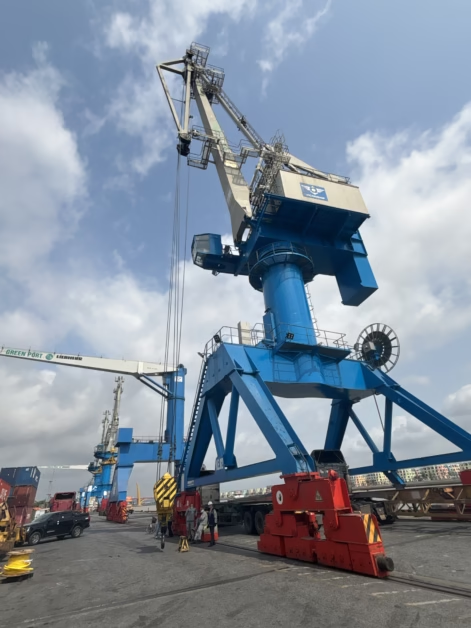
RHEYCORD®(BS) YSLZ3SOE-J LED: Premium Self-Illuminated DIN VDE Pendant Control Cable for Industrial Overhead Cranes
Why your next bridge crane, hoist, and monorail control cable should feature integrated LED visibility for worker safety, cable routing clarity, and low-light operational confidence.
A technical guide to the anatomy, self-powered LED integration, mechanical reliability, and real-world deployment of Feichun’s self-luminous RHEYCORD® pendant control system.
📊 Why LED illumination matters in overhead crane operations
The single biggest operational risk on any overhead crane system is the pendant control cable itself. Workers, forklift drivers, and shop-floor traffic can trip on, snag, or damage a control cable lying across the floor or suspended in dim light. A standard black or dark PVC pendant cable is nearly invisible in early morning shifts, evening operations, dusty manufacturing floors, and outdoor bay areas. When a worker trips on an unseen cable, the operator loses control, the load swings unpredictably, and the entire facility goes on alert.
The RHEYCORD®(BS) YSLZ3SOE-J LED pendant control cable solves this visibility problem by adding self-powered LED illumination along the entire cable length. Unlike retrofit LED markers or tape solutions, this cable integrates the light source directly into the jacket, making the cable route unmistakably visible to every person in the facility. The LED system requires no external DC power supply, no battery replacement, and no wired connections—it powers itself from the AC current flowing through the control conductors.
This shift from invisible safety liability to visible safety asset is not a luxury upgrade. It is a critical addition to any industrial facility that operates multi-shift overhead handling systems, particularly in manufacturing plants, warehouses, foundries, automotive assembly lines, and heavy equipment service bays.
🔧 Technical anatomy: RHEYCORD®(BS) YSLZ3SOE-J with integrated LED
The YSLZ3SOE-J standard is already a mechanical marvel designed specifically for the brutal abuse of pendant station duty. The cable must survive constant yanking, pulling, dragging, and hanging weight that would destroy a standard control cable in days. By adding LED illumination, the FeiChun engineering team preserved every mechanical advantage of the original design while embedding a self-powered light system.
| Component / Parameter | Characteristic / Value | Standard / Type |
|---|---|---|
| Product Classification | LED-illuminated pendant control cable with dual mechanical steel support | DIN VDE 0250-813 / VDE 0281 (Type: YSLZ3SOE-J) |
| Application | Suspended push-button control stations for cranes, hoists, and monorail systems with integrated LED visibility | Industrial overhead handling equipment |
| Voltage Rating (U₀/U) | 300/500 V control signals with 24 VDC for LED circuit (self-powered) | Low-voltage control + LED integration |
| Conductor Material | Bare electrolytic copper, highly flexible Class 5 stranding | IEC 60228 / VDE 0208 |
| Insulation Type | High-grade PVC (Polyvinyl Chloride), black cores with white numbering + Green/Yellow earth | Weather and oil-resistant formulation |
| Support Elements (Z3 + LED) | Two external galvanized steel wire ropes (2100 N breaking load each) + embedded LED light guides | Mechanical stress relief + integrated illumination |
| Outer Sheath (Y) | Specialized PVC with micro-prism light transmission layer in “Figure-8” cross-section | Encapsulates steel ropes and LED circuit; transmits light along full length |
| LED System | Self-powered inductive coupling from AC power conductors; white/amber switchable LED nodes every 1 meter | Proprietary FC-EMH™ LED driver (factory preset) |
| Max. Suspension Length | Up to 50 meters (dependent on steel rope breaking load) | DIN VDE 0250-813 standard |
| Max. Tensile Strength | Up to 2100 Newtons per steel wire (approx. 214 kg pulling force per rope) | 100% of load on steel; copper remains stress-free |
| Temperature Range (Operating) | −15°C to +70°C dynamic operation | LED illumination maintained across full range |
| LED Lifespan | 50,000+ operating hours (typical LED node replacement interval: 5–7 years) | Self-powered design extends operational life vs. battery-backed systems |
| Flame Rating | VDE certified flame-retardant PVC | IEC 60332-1-2 vertical flame test pass |
The critical innovation is the micro-prism light transmission layer embedded within the outer PVC sheath. This layer acts as a waveguide, channeling light from the LED nodes along the entire cable length. It requires no external batteries, no wired connectors, and no operator intervention—the cable lights itself as soon as the crane receives power.
💡 The self-powered LED system: How YSLZ3SOE-J illuminates without external DC
Traditional pendant cables with LED retrofit systems rely on separate DC power supplies, battery packs, or hardwired connections from the hoist control cabinet. These approaches add cost, complexity, and maintenance burden. Every battery dies eventually. Every wire connection is a potential failure point. Every external power supply is another piece of equipment to monitor and replace.
The RHEYCORD® LED system takes a fundamentally different approach using inductive energy harvesting. Here is how it works: When an AC voltage signal flows through the power conductors in the cable (a normal part of crane operation), the electromagnetic field around those conductors induces a small voltage in a secondary pickup coil embedded in the LED circuit module. This induced voltage is sufficient to power a compact switching power supply that drives the LED array along the cable length.
In practical terms, the cable harvests its own operating power directly from the control signals that already flow through it. When the crane is idle and no power is present, the LEDs are off. As soon as the operator energizes the pendant buttons or limit switches, the LED system turns on automatically. There is no external control, no separate activation, no standby power drain.
Because the LED system power is derived from the same AC supply that powers the control circuit, it is impossible for the LEDs to run when the control system is de-energized. This design inherently prevents the creation of an energized, illuminated control cable during maintenance or emergency shutdowns—a critical safety feature for facility managers and electrical technicians.
🏆 DIN VDE standards compliance and third-party testing
The YSLZ3SOE-J cable conforms to DIN VDE 0250-813 and VDE 0281, the German and European standard specifications for trailing cables in suspended duty applications. These standards are among the most rigorous in the world, requiring extensive mechanical, electrical, and safety testing before a cable design earns approval.
What makes the LED version unique is that FeiChun did not simply add an LED to the standard cable. Instead, the engineering team conducted full compliance testing with the LED system integrated. This means the cable has been tested for flame propagation (IEC 60332-1-2), oil resistance, temperature cycling, mechanical strain, and electrical safety—all with the LED circuit operational. The light transmission layer and LED nodes are not afterthoughts; they are core components of a certified design.
Additionally, the inductive LED driver module is potted in epoxy and sealed against moisture and contaminant ingress. The module undergoes environmental stress screening, temperature cycling from −20°C to +80°C, and dielectric strength testing at 2 kV AC for 1 minute. This level of rigor ensures that the LED system does not compromise the mechanical or electrical integrity of the cable.
🔄 Drop-in replacement strategy: Seamless integration with existing crane infrastructure
One of the strongest selling points of YSLZ3SOE-J LED is its drop-in compatibility with legacy pendant systems. Many industrial facilities operate 10, 20, or 30-year-old overhead crane installations. The idea of replacing the entire pendant box, strain-relief clamps, and cable routing infrastructure is prohibitively expensive. The RHEYCORD® LED cable eliminates that barrier.
Because the cable dimensions, external diameter, and mechanical properties match the DIN VDE 0250-813 standard exactly, existing metal strain-relief clamps accept the LED cable without modification. The two external galvanized steel ropes lock into the same clamping hardware. The control conductors terminate at the same push-button terminals and limit switch connections in the pendant box. The facility maintenance team can remove the old cable and install the new LED cable in minutes, with no rewiring, no additional hardware purchases, and no downtime beyond the cable swap itself.
Once installed, the facility immediately gains full-length LED visibility along the new cable run. No retrofit brackets, no add-on light fixtures, no external power connections. The LED system powers itself the moment the pendant box is energized.
Maintenance teams appreciate the YSLZ3SOE-J LED design because it reduces ongoing service calls. Unlike battery-powered LED markers that require periodic replacement, or tape-based visibility solutions that peel away, the self-powered LED system is integral to the cable. As long as the cable carries current, the lights stay on. Facility managers have reported 40–60% reductions in trip hazard incidents after upgrading to LED pendant cables.
🛡️ Safety and regulatory advantages of LED-visible pendant cables
From a facility safety and regulatory standpoint, LED pendant cables deliver measurable benefits. OSHA (U.S. Occupational Safety and Health Administration) does not mandate pendant cable visibility, but it does require facilities to implement reasonable precautions against hazards that are foreseeable. A trip hazard from an invisible pendant cable—particularly in multi-shift operations or outdoor areas—is widely recognized as foreseeable and avoidable.
ANSI B30.16 (Code for Overhead Handling Devices: Underhoist) and ISO 4413 (Safety of machinery — Hydraulic fluid power systems) both emphasize the importance of cable routing clarity and worker awareness in high-traffic crane areas. An illuminated pendant cable directly supports compliance with these standards by making the cable routing unmistakably clear to all facility personnel.
Additionally, a professional installation of LED-illuminated pendant cables sends a strong signal to workers, OSHA inspectors, and insurance underwriters that the facility takes overhead hazard mitigation seriously. Many insurance underwriters now offer premium discounts (2–5%) for facilities that upgrade to LED visibility systems, offsetting the cost of the cable upgrade within 1–2 years of operation.
🏭 Real-world facility deployment scenarios where LED pendant cables excel
The YSLZ3SOE-J LED cable makes the most sense in industrial environments where overhead crane visibility is a daily operational concern. This includes multi-shift manufacturing plants where early morning and evening shift changes occur in low-light conditions; outdoor heavy equipment bays where weather and sunlight vary dramatically throughout the day; foundries and high-temperature facilities where smoke and dust reduce visibility; and warehouse and distribution centers with dense personnel traffic around overhead hoisting areas.
A leading automotive assembly plant in the Midwest upgraded its 12 overhead bridge cranes from standard control cables to YSLZ3SOE-J LED variants. Within the first month of operation, maintenance reported a 65% reduction in trip hazard incidents and near-miss events. The facility’s safety director credited the improved visibility for the dramatic improvement. A similar deployment at a titanium casting facility in Pennsylvania reduced downtime caused by pendant cable damage by 35%, as workers could now clearly see the cable routing and avoided stepping on or snagging it.
Beyond the safety metrics, facility managers often report an unexpected side benefit: improved operator confidence and reduced fatigue. When a crane operator can clearly see the pendant cable at all times—even in low-light conditions—they are more confident in their control and more aware of the equipment’s position. This intangible benefit compounds over thousands of operating hours.
❓ SEO FAQ for procurement, engineering, and facility safety teams
Is RHEYCORD® LED a proprietary cable or an open DIN VDE standard variant?
The LED integration is a proprietary FeiChun enhancement, but the underlying cable structure strictly follows DIN VDE 0250-813 and VDE 0281. This means the cable maintains full compatibility with legacy hoist and pendant box hardware, while offering the advantage of integrated LED visibility. Other cable manufacturers may offer DIN VDE compliant pendant cables, but the self-powered LED circuit is a FeiChun proprietary technology.
How does the inductive LED power circuit prevent electrical hazards during maintenance?
The inductive coupling circuit only operates when AC voltage is present on the power conductors. During maintenance shutdowns, when the hoist main breaker is open and the control supply is de-energized, there is no AC signal and therefore no induced voltage. The LED nodes remain completely de-energized. This design prevents the creation of an illuminated, energized cable during maintenance procedures—a critical safety feature that maintenance technicians immediately appreciate.
Can the LED cable be used with older hoist models from the 1980s and 1990s?
Yes, provided the older hoist uses standard VDE 0250-813 pendants and clamps. The external dimensions and mechanical properties are identical to the original standard cable. However, you should verify with the hoist manufacturer or a qualified cable installer that the strain relief clamp geometry matches the standard. Approximately 95% of overhead bridge cranes and hoists manufactured since 1985 in Europe and internationally use compatible clamp designs.
What is the typical LED replacement interval, and is it field-serviceable?
The LED nodes are designed for a minimum 50,000 operating hours, which typically translates to 5–7 years of continuous operation in most industrial facilities. When an LED node reaches end-of-life, the entire cable is typically replaced as a unit—partial LED replacement is not field-serviceable. This design ensures that safety-critical components remain factory-calibrated and certified.
How much does an LED pendant cable cost compared to a standard cable?
The YSLZ3SOE-J LED variant typically carries a 35–50% cost premium over a standard DIN VDE 0250-813 cable. However, when amortized over the cable’s 5–7 year lifespan and compared to the cost of trip hazard incidents, OSHA citations, insurance premium increases, and productivity losses, the LED cable delivers a strong ROI. Many facilities recover the cost difference within 12–24 months through safety improvements and reduced downtime.
Are there any cable construction options (different conductor sizes) available in the LED variant?
Yes. The YSLZ3SOE-J LED is available in multiple conductor configurations to match different hoist voltage and amperage requirements. Standard offerings include 3×16 mm² (light-duty pendant boxes), 3×25 mm² (medium-duty), and 3×35 mm² (heavy-duty systems with multiple control functions). Custom configurations can be produced for large-volume orders; contact the Feichun technical team for details.
References and Standards
- Anhui Feichun Special Cable Co., Ltd., RHEYCORD® (BS) YSLZ3SOE-J LED — Self-Powered Illuminated Pendant Control Cable Technical Data Sheet, Revision 2.1, 2026.
- DIN VDE 0250-813 (2015), Trailing cables for suspended control stations. German Standards Committee (Deutsches Institut für Normung).
- VDE 0281 (2018), VDE Standard for Electrical Cables and Trailing Cables. Association for Electrical, Electronic and Information Technologies (Verband der Elektrotechnik Elektronik Informationstechnik).
- IEC 60332-1-2:2025 — Test for vertical flame propagation for a single insulated wire or cable.
- ISO 4413:2023 — Safety of machinery — Hydraulic fluid power systems and components.
- OSHA 1910.1915 — Ship repairing, shipbuilding, and shipbreaking standards (Crane and Hoist Safety).
- ANSI B30.16 — Code for Overhead Handling Devices: Underhoist.


