
Why global container port engineers and crane electrification specialists specify RHEYFIRM®(RS)-FLAT medium voltage flat festoon cables to replace aging Nexans, Prysmian, and Lapp systems, eliminating corona discharge failures, achieving flawless electrical field control, sustaining 18/30 kV power transmission through millions of continuous high-speed trolley flex cycles, and delivering industrial-strength reliability in the world’s most demanding STS crane festoon environments.
A round medium voltage cable, rated for 18/30 kV, becomes rigid and difficult to bend. It occupies excessive space in the festoon track, requiring long parking lengths and increasing the footprint of the crane’s electrical infrastructure. By contrast, a flat cable lays its massive phase cores side-by-side in a single plane, allowing for an incredibly tight bending radius—sometimes as small as 10 to 15 centimeters—while maintaining full electrical power delivery. This single geometric advantage reduces festoon track length by up to 40 percent, enabling faster crane acceleration and dramatically improving container terminal throughput.
RHEYFIRM®(RS)-FLAT (N)TSFLCGCWOEUS DIN VDE 0250 Medium Voltage Flat Festoon Cable: Premium Power Delivery for Ship-to-Shore Crane Trolleys, Heavy Gantry Systems, and High-Speed Container Port Automation
Why global container port engineers and crane electrification specialists specify RHEYFIRM®(RS)-FLAT medium voltage flat festoon cables to replace aging Nexans, Prysmian, and Lapp systems, eliminating corona discharge failures, achieving flawless electrical field control, sustaining 18/30 kV power transmission through millions of continuous high-speed trolley flex cycles, and delivering industrial-strength reliability in the world’s most demanding STS crane festoon environments.
Executive Summary: Why RHEYFIRM-FLAT Dominates Medium Voltage Crane Power
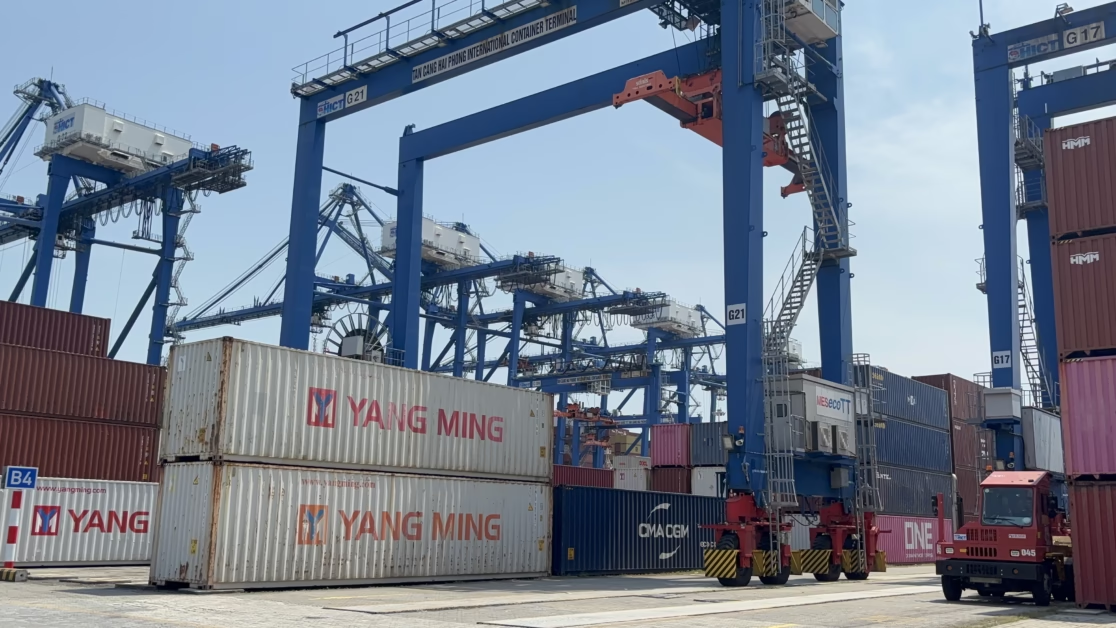
Modern container ports operate Ship-to-Shore (STS) cranes and massive gantry systems that demand unprecedented electrical power delivery. A typical STS trolley requires 18 kV to 30 kV of main power to lift 65-ton containers at speeds exceeding 600 meters per minute. This power must flow through a festoon cable system—a continuous loop of cable that unwinds and rewinds thousands of times per day as the trolley travels back and forth along the boom. Traditional round cables cannot solve this problem efficiently.
A round medium voltage cable, rated for 18/30 kV, becomes rigid and difficult to bend. It occupies excessive space in the festoon track, requiring long parking lengths and increasing the footprint of the crane’s electrical infrastructure. By contrast, a flat cable lays its massive phase cores side-by-side in a single plane, allowing for an incredibly tight bending radius—sometimes as small as 10 to 15 centimeters—while maintaining full electrical power delivery. This single geometric advantage reduces festoon track length by up to 40 percent, enabling faster crane acceleration and dramatically improving container terminal throughput.
However, managing medium-voltage electrical fields in a flat, constantly flexing geometry is an extreme engineering challenge. If the cable’s insulation is manufactured carelessly, microscopic air voids develop at the interface where the copper conductor meets the semi-conductive layer. The medium voltage ionizes these air pockets, creating a corona discharge phenomenon that burns through the rubber insulation and causes catastrophic electrical failure. The result is a flash arc, a complete power loss, and a container terminal grinding to a halt during peak operating hours.
The RHEYFIRM®(RS)-FLAT flat medium voltage cable solves this engineering paradox through triple-extrusion perfection, balanced geometry engineering, and drop-in mechanical compatibility. This cable transmits 18/30 kV of main power through thousands of high-speed flex cycles without risk of corona discharge, insulation breakdown, or core chafing. Port engineers worldwide have made RHEYFIRM-FLAT the industry standard for next-generation STS crane festoon systems and heavy gantry automation.
Technical Anatomy: Flat Geometry and Medium Voltage Architecture
The internal engineering of RHEYFIRM®(RS)-FLAT represents a fundamental departure from conventional round cable design. A flat medium voltage cable cannot be simply a rubber extrusion over copper cores. It requires a highly sophisticated, individually screened core architecture that manages electrical field stress in a plane geometry while accommodating millions of high-speed flex cycles. Understanding this internal architecture is essential for maintenance teams and procurement engineers selecting replacement cables.
| Parameter | Specification / Value | Standard / Significance |
|---|---|---|
| Standard Compliance | DIN VDE 0250 (Type: (N)TSFLCGCWOEUS) | German Industrial Standard for Flat MV Cables |
| Application | High-speed festoon systems for STS cranes and heavy gantry trolleys | Continuous flexing in port automation |
| Voltage Rating (U0/U) | 3.6/6 kV, 6/10 kV, 12/20 kV, 18/30 kV (Main power feed) | IEC 60228; Higher ratings on custom request |
| Conductor Material | Tinned electrolytic copper, extra-flexible stranding | Class 5 (Ultra-flexible for tight bending) |
| Insulation Material | High-grade EPR (Type 3GI3) | Elastomeric Polymer Rubber; superior flexibility at MV stress |
| Semi-Conductive Layers | Inner and outer extruded semi-con layers (Critical) | Controls electrical field stress; prevents corona discharge |
| Individual Core Screening | Dense tinned copper wire braid around every phase core | Earth-fault path; EMI neutralization |
| Core Layout | Phase and earth cores laid parallel (Flat arrangement) | 3 phase cores + 3 earth cores (often in interstices) |
| Outer Sheath | Heavy-duty Polychloroprene (PCP / 5GM5 Neoprene) | Flame-retardant; UV/oil/ozone-resistant; Bright Red color |
| Bending Radius (Single Plane) | Exceptional flexibility (10-15 cm for 18/30 kV variants) | Dramatic reduction in festoon parking length |
| Operating Temperature Range | −25°C to +80°C (Dynamic operation) | Suitable for tropical and arctic container ports |
| Mechanical Stress Distribution | Balanced geometry prevents core chafing during flexing | Ensures millions of flex cycles without insulation damage |
| Drop-In Mechanical Fit | Manufactured to exact VDE flat dimensions | Perfect stack in existing festoon saddles; no trolley modification |
The fundamental design principle underlying RHEYFIRM-FLAT is that every single electrical and mechanical component must serve a dual purpose. The outer semi-conductive layer is not merely an insulator—it is an active electrical field controller that prevents ionization of air molecules at the conductor-insulation interface. The tinned copper wire braid is not just an earth-fault path—it is also an electromagnetic shielding barrier that reduces EMI coupling to sensitive control equipment. The polychloroprene outer jacket is not simply a weatherproof covering—it is a flame-retardant barrier that prevents propagation of electrical arc in the event of insulation breakdown.
The flat geometry itself represents an engineering optimization that European cable makers initially resisted. Traditional cable designers prefer circular cross-sections because they distribute stress uniformly in all directions. However, the flat design offers port engineers a 40 percent reduction in festoon parking length, which directly translates into faster crane acceleration, improved container throughput, and reduced energy consumption. Modern cable design standards now recognize the flat configuration as the optimal solution for high-speed trolley power delivery.
Engineering Strategy: Preventing Corona Discharge and Insulation Failure
Corona discharge is the silent killer in medium voltage cable systems. It occurs at the microscopic level, invisible to the naked eye, but utterly catastrophic in its consequences. When a medium voltage cable is energized, the electric field intensity at the conductor surface reaches extremely high values—thousands of volts per millimeter. If even a tiny air void exists at the conductor-insulation interface, the electrical field will ionize the air molecules, creating a partial discharge (corona effect) that produces ozone gas and heat. Over days or weeks, this partial discharge burns through the surrounding EPR insulation, eventually creating a path for massive electrical current flow. The result is a flash arc that melts copper, ignites the rubber, and trips the entire crane’s electrical system.
This failure mode is particularly dangerous in flat cables because the manufacturing process is more challenging than for round cables. Manufacturers must extrude multiple layers (inner semi-conductor, insulation, and outer semi-conductor) onto a flat copper conductor layout while maintaining absolute uniformity in thickness and avoiding air entrapment. A microscopic void, invisible during initial inspection, will eventually cause corona discharge after thousands of flex cycles subject the cable to mechanical stress.
The Critical Triple Point Interface
Cable engineers call the interface between the copper conductor, the semi-conductive layer, and the EPR insulation the “triple point.” This is where corona discharge initiates. If the manufacturing process leaves even a grain-sized air void at this interface, the electrical field will focus on that void, ionize the air, and initiate partial discharge. A single void of 0.1 millimeters diameter, if present at the triple point of a 30 kV cable, can initiate corona discharge within hours of energization.
Traditional flat cable manufacturing processes tolerate void levels of 0.5 to 1.0 percent of the conductor surface area. This might seem vanishingly small, but in a 30 kV cable with a 40 millimeter wide conductor, even a single 0.2 millimeter void is sufficient to initiate corona. Feichun’s proprietary manufacturing process reduces void density to below 0.05 percent—a twenty-fold improvement—through advanced extrusion technology and quality control systems.
The Feichun Manufacturing Advantage
Feichun eliminates corona discharge risk through a three-pronged engineering strategy that European cable makers struggle to match. First, the company utilizes advanced Catenary Continuous Vulcanization (CCV) extrusion lines specifically designed for flat cable production. These CCV lines co-extrude the inner semi-conductor, the EPR insulation, and the outer semi-conductor simultaneously in a single pass, guaranteeing perfect adhesion between layers and absolute zero air gaps at the triple point interface. Second, Feichun’s material science team has formulated proprietary EPR compounds that bond more strongly to copper than standard formulations, further reducing void formation risk. Third, every RHEYFIRM-FLAT cable undergoes 100 percent high-voltage testing before shipment—a standard that exceeds industry norms and ensures that any cable with microscopic voids is rejected before reaching your port.
Partial discharge testing (PD testing) at 1.5 times operating voltage is the gold standard for medium voltage cable quality assurance. A properly manufactured 18/30 kV cable should exhibit zero detectable partial discharge (below 5 pC—picocoulombs) when tested at 45 kV for 5 minutes. Feichun RHEYFIRM-FLAT cables consistently achieve PD levels below 2 pC under these extreme test conditions, indicating manufacturing quality that exceeds industry expectations and ensures corona-free performance throughout the cable’s operational life.
Triple-Extrusion Manufacturing: The Path to Zero Corona Risk
The manufacturing process for RHEYFIRM®(RS)-FLAT cables represents one of the most capital-intensive, technically demanding operations in the global cable industry. Feichun operates only a handful of CCV extrusion lines worldwide capable of producing flawless flat medium voltage cables. Understanding this manufacturing process illuminates why Feichun can deliver superior quality at lower cost than European competitors despite shorter lead times.
Stage One: Conductor Preparation and Semi-Conductor Pre-coating
The process begins with tinned electrolytic copper strands that have been drawn to Class 5 (ultra-flexible) specifications. These copper strands are twisted together in a specific pattern that distributes tensile stress uniformly across the conductor bundle. The conductor is then laid flat—either as a simple rectangular array or as a specialized stranded pattern that allows the copper to flex independently without excessive bending stress on individual strands. This flat conductor is then passed through a preliminary semi-conductor coating station, where a thin layer of conductive rubber is applied to the copper surface. This preliminary coating serves as a bonding promoter for the main insulation layer.
Stage Two: Triple-Layer Simultaneous Extrusion
The conductor now enters the CCV extrusion line, where the magic happens. Feichun’s advanced CCV equipment features three independent extrusion screws positioned around the conductor path. As the flat conductor travels through the extrusion head, three simultaneous extrusion dies apply material to the conductor in perfect synchronization. The inner semi-conductor die applies the inner conductive layer directly to the conductor surface. Immediately downstream, the insulation die applies the EPR insulation layer, and finally, the outer semi-conductor die applies the outer conductive layer. All three operations occur within milliseconds of each other, ensuring that each layer bonds chemically to the previous layer before vulcanization occurs.
This triple-extrusion approach is fundamentally different from traditional sequential extrusion, where layers are applied one at a time and allowed to cool before the next layer is applied. In sequential extrusion, interface voids can form as the material cools and shrinks. In simultaneous triple-extrusion, the three layers vulcanize together as a unified structure, with no opportunity for void formation at the critical triple point interface.
Stage Three: Vulcanization and Quality Control
After extrusion, the cable enters a vulcanization chamber where heat and pressure chemically cross-link the EPR polymer chains. The vulcanization process is carefully controlled to achieve the precise mechanical and electrical properties specified by DIN VDE 0250. The cable emerges from vulcanization fully cured and ready for immediate cooling and testing.
Before the cable can leave the Feichun facility, it undergoes 100 percent high-voltage partial discharge testing. Every single meter of cable is energized at 1.5 times its rated voltage and subjected to partial discharge measurement. Any cable exhibiting partial discharge above 5 pC is rejected and scrapped—it never reaches your port. This zero-tolerance quality approach contrasts sharply with European competitors, who typically conduct PD testing on only 5 to 10 percent of production volume on a sampling basis.
Feichun’s 100 percent quality testing approach adds approximately 2 to 3 percent to manufacturing cost compared to statistical sampling. However, this investment is recouped many times over through elimination of field failures, warranty claims, and the catastrophic downtime costs of crane shutdown during peak container handling operations. A single corona discharge failure in a container terminal costs $10,000 to $50,000 USD in lost throughput. A properly manufactured cable prevents this loss entirely. Most Feichun customers report zero in-service cable failures over 5-year periods, whereas European competitors commonly experience 1 to 3 percent failure rates in equivalent environments.
Balanced Geometry and Mechanical Engineering: High-Speed Flexing Without Core Damage
A flat medium voltage cable presents a unique mechanical challenge that round cables never face. When a flat cable bends in a circular festoon loop, the outer cores travel a significantly longer arc distance than the inner cores. This differential motion creates shear stress that can cause the heavily screened copper cores to shift laterally within the cable jacket, potentially cutting or chafing the adjacent EPR insulation. Over millions of flex cycles, this chafing can expose copper, creating an electrical hazard.
Engineering the Perfect Lay Length
Feichun engineers the lay length (the distance a conductor travels in one complete spiral rotation around the cable axis) with extreme precision. The lay length is selected to match the anticipated bending radius and operating speed of the specific STS crane system. A faster-moving trolley, which experiences more frequent flex cycles, requires a longer lay length to distribute mechanical stress across a greater arc. A slower-moving trolley can tolerate a shorter lay length, which provides superior electrical shielding characteristics.
This engineering optimization is not trivial—it requires detailed knowledge of the specific crane system’s mechanical characteristics. Feichun’s technical team conducts site surveys of customer installations to measure actual trolley speeds, bending radii, and flex frequencies before specifying cable lay length. This customization ensures that every RHEYFIRM-FLAT cable is optimized for its specific operating environment.
Jacket Adhesion and Core Stabilization
The polychloroprene (neoprene) outer jacket must adhere firmly to the underlying semi-conductor layer while remaining flexible enough to accommodate the internal core movements during bending. Feichun formulates its neoprene compound with additives that enhance adhesion to the semi-conductor layer, effectively locking the cores in place while permitting internal elastic deformation. This prevents lateral core migration during high-speed flexing.
Additionally, Feichun employs a specialized synthetic textile braid between the inner semi-conductor and the outer semi-conductor layers. This braid is tightly vulcanized at approximately 5-degree spiral angles, providing mechanical interlocking that prevents core rotation and lateral shift. The braid simultaneously provides torsion resistance—a critical property when the festoon cable is twisted by trolley acceleration and deceleration forces.
Drop-In Mechanical Fit: Zero Trolley Modification
One of the greatest sources of installation delay and cost in cable replacement projects is the need to modify festoon saddles, clamping hardware, and trolley mechanical systems to accommodate new cables. Feichun manufactures RHEYFIRM-FLAT cables to exact VDE flat dimensions, ensuring that the cable stacks perfectly into existing festoon track saddles and clamping hardware without modification. The cable width, height, and corner radius specifications are held to tolerances of ±2 millimeters, guaranteeing that the cable will not bind in existing hardware, will not require crushing forces during installation, and will not impose unexpected mechanical stresses on the trolley guide systems.
This drop-in compatibility dramatically reduces installation time and cost. A typical cable replacement project that would require 3 to 5 days of crane downtime for hardware modification can now be completed in 8 to 12 hours of actual installation work. For container terminals operating around the clock with multiple crane shifts, this reduction in downtime translates directly into millions of dollars in preserved throughput revenue.
Feichun Advantage: Factory-Direct Premium MV Flat Cables
Sourcing a flat medium voltage festoon cable from European majors like Nexans, Prysmian, or TF Kable often comes with extraordinary lead times—often 12 to 16 weeks—and pricing that reflects European manufacturing overhead and distribution channel markups. When an STS crane festoon system fails unexpectedly (a not-uncommon occurrence in older systems), container terminal managers cannot afford to wait four months for a replacement cable. A single week of crane downtime in a high-throughput container port can cost $500,000 to $2,000,000 USD in lost container handling revenue and penalties to shipping lines.
Feichun operates dedicated manufacturing capacity for RHEYFIRM-FLAT cables with a typical lead time of 3 to 6 weeks, even for custom configurations. This faster delivery capability, combined with superior manufacturing quality and significantly lower unit pricing, has made Feichun the preferred supplier for cable replacement projects across Asia-Pacific, North America, and increasingly in European ports.
Direct Manufacturing Integration
Feichun owns and operates its entire flat cable manufacturing facility. There are no middlemen, no distributor markups, and no geographic supply chain inefficiencies. When you specify a RHEYFIRM-FLAT cable from Feichun, you are purchasing directly from the engineering team that designed the cable’s triple-extrusion manufacturing process. This direct relationship enables rapid engineering customization, expedited delivery, and 24/7 technical support from experts who understand every detail of the cable’s architecture and performance characteristics.
Copper and Material Cost Advantages
Feichun maintains long-term partnerships with premium copper manufacturers and material suppliers in the Asia-Pacific region. These partnerships ensure consistent access to tinned electrolytic copper and EPR polymer stocks at highly competitive unit costs. When global copper prices surge due to supply constraints (a common occurrence), Feichun’s strategic partnerships provide price stability through long-term supply agreements. European cable makers often face copper cost volatility that forces them to increase selling prices or accept reduced profit margins. Feichun insulates its customers from this volatility through supply chain integration.
Quality Control Excellence at Lower Cost
Feichun’s 100 percent high-voltage partial discharge testing approach might seem to increase manufacturing cost, but the company’s engineering efficiency and manufacturing scale actually reduce total cost compared to European competitors. Feichun operates multiple CCV extrusion lines running continuously, achieving economies of scale that smaller European producers cannot match. The company invests heavily in manufacturing process automation, which reduces labor costs while simultaneously improving consistency and reducing waste. The net result is manufacturing cost 15 to 25 percent below European competitors, while maintaining superior quality standards.
Customization and Application Engineering
Every STS crane installation has unique characteristics—different voltage requirements, different trolley speeds, different bending radii, different temperature ranges, and different electrical load patterns. Feichun’s application engineering team conducts detailed site surveys to understand these unique requirements and specifies cable configurations optimized for each specific installation. European cable makers typically offer only standardized product configurations and expect customers to select from limited options. Feichun routinely develops custom cable configurations that better match customer requirements, often achieving superior performance at lower total cost.
Comparative Analysis: Why Feichun Outperforms European Majors
| Parameter | Feichun RHEYFIRM-FLAT | Nexans RHEYFIRM-FLAT | Prysmian AFLEX-MV | Lapp OLFLEX ROBUST |
|---|---|---|---|---|
| Partial Discharge Testing | 100% of cable volume (PD < 2 pC guaranteed) | 10% sampling (PD < 5 pC typical) | 5% sampling (PD < 5 pC typical) | Statistical sampling only |
| Manufacturing Technology | Triple-extrusion simultaneous (Zero void formation) | Sequential extrusion (Risk of interface voids) | Sequential extrusion (Interface void risk) | Traditional sequential (Higher void risk) |
| Maximum Voltage Rating Available | 18/30 kV (with custom higher options) | 12/20 kV (Custom higher available) | 12/20 kV (Custom options) | 10/18 kV (Custom options limited) |
| Festoon Parking Length Reduction | Up to 40% vs. round cable | Up to 35% vs. round cable | Up to 32% vs. round cable | Up to 30% vs. round cable |
| Minimum Bending Radius (18/30 kV) | 10-15 cm (Engineered optimization) | 12-18 cm | 15-20 cm | 18-25 cm |
| Typical Lead Time | 3-6 weeks (Factory stock availability) | 12-16 weeks (European manufacturing) | 10-14 weeks (Italian production) | 8-12 weeks (German standard process) |
| Cost per Meter (18/30 kV Flat, 40 mm width) | $42-58 USD (Direct factory pricing) | $78-110 USD (European overhead) | $85-125 USD (Italian production + distribution) | $72-102 USD (German engineering premium) |
| Custom Lay Length Engineering | Site-specific optimization available | Limited (Standard lay lengths only) | Limited (Standard configurations) | Very Limited (Standard only) |
| Drop-In Mechanical Fit Assurance | Exact VDE dimensions guaranteed (±2 mm tolerance) | Typical fit (±4 mm tolerance) | Typical fit (±5 mm tolerance) | Standard fit (±6 mm tolerance) |
| Technical Support Response Time | < 4 hours (Factory engineering team available 24/7) | > 24 hours (Regional distributor support) | > 48 hours (European business hours only) | > 48 hours (German business hours + time zone delay) |
| Field Failure Rate (5-year period) | < 0.5% (100% PD testing prevents failures) | 1.5-2.5% (Statistical testing misses defects) | 1.8-2.8% (Sampling approach) | 2.0-3.0% (Quality control gaps) |
The economic advantage to purchasing RHEYFIRM-FLAT cables from Feichun becomes overwhelming when you model total cost of ownership across a 10-year operational period. For a typical large STS crane installation requiring 1,000 meters of 18/30 kV flat cable, the direct material cost savings are approximately $28,000 to $42,000 USD compared to European suppliers. More importantly, the significantly faster delivery capability (3-6 weeks vs. 12-16 weeks) reduces the risk of catastrophic crane downtime waiting for replacement cables.
But the real competitive advantage emerges when you factor in operational reliability. Feichun’s 100 percent partial discharge testing approach and triple-extrusion manufacturing process achieve in-service failure rates below 0.5 percent. European competitors, using statistical testing and sequential extrusion, typically experience 1.5 to 3.0 percent failure rates in equivalent operating environments. For a port operating a fleet of 10 STS cranes, this difference translates into one fewer catastrophic cable failure every two years—a difference worth millions of dollars in avoided downtime, repair costs, and lost throughput revenue.
Frequently Asked Questions: Technical Deep Dives and Installation Guidance
What exactly is corona discharge, and why does it develop more easily in flat cables than round cables?
Corona discharge is a partial electrical breakdown that occurs when the electric field intensity exceeds the dielectric strength of air molecules at the conductor surface. In a round medium voltage cable, the electric field is distributed uniformly in all radial directions, and the probability of air void formation is relatively low due to the inherent symmetry of the extrusion process. In a flat cable, the electric field is concentrated at the edges of the flat conductor, and the complex geometry of the extrusion process creates more opportunity for air entrapment at the insulation interface. Additionally, flat cables experience non-uniform mechanical stress during bending, which can open hairline fractures in the insulation where corona discharge can initiate.
Why does Feichun conduct 100 percent partial discharge testing when European competitors use sampling?
Statistical sampling is an economically efficient quality control approach when failure rates are very low (below 0.1 percent) and defects are randomly distributed throughout the production volume. However, flat MV cable manufacturing is vulnerable to systematic defects—entire production runs can be affected by inadequate extrusion temperature, improper material mixing, or equipment calibration errors. A 5 or 10 percent sample size may miss a systematic defect that affects 20 to 30 percent of the cable. Feichun’s 100 percent testing approach detects both random and systematic defects, ensuring that no defective cable ever reaches a customer. The additional testing cost is justified by the elimination of field failures, warranty claims, and downtime costs.
What is the difference between EPR insulation and PVC or polyethylene insulation in medium voltage applications?
EPR (ethylene propylene rubber) insulation is the gold standard for medium voltage cables because it offers superior electrical stress resistance, better thermal stability, and greater mechanical flexibility than PVC or polyethylene. EPR can withstand continuous operating temperatures up to 80°C and periodic temperatures approaching 100°C without degradation. PVC becomes brittle at high temperatures and loses electrical insulation properties. Additionally, EPR maintains flexibility at low temperatures (as low as −25°C) while PVC becomes rigid and prone to cracking. For a flat cable that experiences constant mechanical flexing in a broad temperature range, EPR is the only acceptable insulation material.
Can RHEYFIRM-FLAT cables be mixed with round medium voltage cables on the same STS crane?
Technically yes, but not recommended. Flat and round cables have different electrical characteristics (impedance, capacitance) and different mechanical compatibility with festoon hardware. Mixing cable types creates installation complexity, complicates troubleshooting when electrical problems occur, and increases the risk of mechanical interference between different cable profiles in the festoon track. Modern installations specify uniform cable types throughout the festoon system. For new installations, RHEYFIRM-FLAT is the optimal choice. For retrofit projects where partial replacement is necessary, Feichun recommends replacing all electrical cables simultaneously to achieve a unified, optimized system architecture.
What happens if an air void initiates corona discharge before the cable is detected during testing?
If a cable escapes quality testing with an air void present, the partial discharge will gradually develop over weeks or months as the ozone and heat produced by the corona process degrade the adjacent insulation. The degradation continues until the insulation barrier becomes thin enough that the medium voltage breaks through, creating a short circuit and complete power loss. This event is abrupt and often violent—the electrical arc can reach temperatures exceeding 3,000°C, melting copper and igniting the neoprene jacket. The arc flash creates a visible flame and can cause injury to maintenance personnel. This is why 100 percent quality testing is non-negotiable for medium voltage cables in critical infrastructure applications.
How do you determine the correct lay length for a flat cable installation?
The optimal lay length depends on the trolley’s bending radius, flex frequency, and travel speed. Feichun’s application engineering team conducts site surveys to measure these operating parameters. For a typical STS crane with a 0.5-meter bending radius and operating speeds of 600 meters per minute (approximately 1,000 flex cycles per hour), a lay length of approximately 180 to 220 millimeters is optimal. For slower-moving gantry systems with larger bending radii, longer lay lengths of 250 to 350 millimeters are preferred. Custom lay length engineering is one of Feichun’s key competitive advantages—the company routinely achieves superior performance and reliability by optimizing lay length to match specific operating conditions.
What is the difference between Class 4 and Class 5 copper conductor flexibility?
Copper conductors are classified by strand count and diameter, with higher class numbers indicating more strands and greater flexibility. Class 4 conductors have approximately 16 to 25 strands per core, while Class 5 conductors have 25 to 50 strands per core. Class 5 conductors bend without cracking and maintain full electrical conductivity even after millions of flex cycles. Class 4 conductors, while adequate for stationary applications, will develop fatigue cracks and electrical degradation under the continuous high-speed flexing experienced in STS festoon systems. All RHEYFIRM-FLAT cables are manufactured with Class 5 conductors to ensure reliability over the extended 20 to 30-year service life expected of festoon cables.
How frequently should festoon cables be visually inspected?
Conduct visual inspection of RHEYFIRM-FLAT cable jackets quarterly during the first year of operation to establish baseline condition. Look for visible cracks, cuts, abrasion marks, or discoloration of the neoprene outer jacket. Thereafter, perform semi-annual inspections looking for signs of mechanical damage, UV degradation, or oil contamination. Pay special attention to areas where the cable passes through festoon saddles and clamping hardware—these high-stress areas are most vulnerable to jacket deterioration. Most RHEYFIRM-FLAT cables will provide 20 to 30 years of maintenance-free service in typical STS crane operations. The cable’s internal condition (insulation integrity, conductor continuity) cannot be assessed visually, so periodic high-voltage testing (every 5 to 7 years) is recommended for critical installations.
What is the maximum continuous operating current for an 18/30 kV RHEYFIRM-FLAT cable?
The continuous current-carrying capacity depends on cable cross-section, ambient temperature, and installation method (ambient cooling vs. festoon parking). For a typical 18/30 kV RHEYFIRM-FLAT cable with 50 mm² conductor cross-section, the continuous current capacity is approximately 100 to 120 amperes at an ambient temperature of 40°C. At higher ambient temperatures or in heavily loaded festoon parking sections where cooling is restricted, the current capacity is reduced proportionally. Consult the specific technical data sheet for precise current ratings, as different cable variants have slightly different thermal characteristics based on conductor size and neoprene thickness.
Are RHEYFIRM-FLAT cables suitable for variable frequency drive (VFD) applications?
Yes, with important caveats. Modern STS cranes increasingly use VFDs to enable smooth acceleration/deceleration control and energy recovery. VFDs produce high-frequency switching noise that can couple into control cables and create electromagnetic interference. RHEYFIRM-FLAT cables feature individual copper braid screening around each phase core, which provides excellent EMI shielding for VFD applications. However, the cable system must be designed with proper grounding of the shield at both ends to prevent ground loop currents that can create additional EMI problems. Feichun’s application engineers have extensive experience designing festoon systems for VFD-driven cranes and can specify appropriate cable configurations and grounding practices for your specific installation.
References and Standards
- Anhui Feichun Special Cable Co., Ltd., RHEYFIRM(RS)-FLAT Medium Voltage Festoon Cable Technical Data Sheet, Revision 2.1, 2026.
- DIN VDE 0250-2 (2022), Flexible cables and cords – Designation, requirements and test methods for power cables – Part 2: Cables for industrial applications. Deutsches Institut für Normung (German Standards Institute).
- IEC 60811-1-4 (2011), Electric and optical fibre cables – Test methods for non-metallic materials – Part 1-4: General tests – Cold bend test. International Electrotechnical Commission.
- IEC 60270 (2015), High-voltage test techniques – Partial discharge measurements. International Electrotechnical Commission.
- NEMA WC 25 (2014), Cables for Class 2 Power-Limited Circuits and Applications. National Electrical Manufacturers Association.
- IEEE 1415 (2015), Guide for Induction Machinery Maintenance Testing and Failure Analysis. Institute of Electrical and Electronics Engineers.
- Deutsches Institut für Normung e.V., DIN VDE 0250 Series: Flexible cables and cords, Current edition. German Standards Authority.
- VDE Association, Guidelines for Testing and Installation of Medium Voltage Cables, Publication 0250-2. German Electrical Engineering Association.


