screened flat cable

FLEXIFESTOON® NE FLAT M(StD)HÖU-J/O UL: Advanced UL-Certified Screened Flat Cable for Medical Devices, Industrial Control, and Radiation-Hardened Applications Feichun's FLEXIFESTOON® NE FLAT M(StD)HÖU-J/O UL represents the highest standard in certified industrial control cables: comprehensive electromagnetic shielding (tinned copper + aluminum tape), UL-listed safety certification (AWM Style 4540, FT-1 600V), radiation hardening to 50 Mrad, and dual-pair twisted-core architecture engineered for medical equipment, aerospace systems, and mission-critical industrial control applications requiring uncompromising reliability standards. 1. Executive Overview: UL-Certified Reliability Standards for Mission-Critical Applications Global medical device manufacturers, aerospace system integrators, and industrial automation specialists face unprecedented reliability requirements. Patient safety regulations (FDA 510(k), CE-Mark MDR), aerospace qualification standards (AS9100, MIL-DTL specifications), and nuclear facility protocols mandate cable systems meeting multiple independent certification frameworks: electrical safety (UL 1581 listing), electromagnetic compatibility (EMI shielding effectiveness), radiation immunity (up to 50 Mrad exposure), and mechanical reliability across extreme environmental conditions (-40°C to +90°C operational bandwidth). FLEXIFESTOON® NE FLAT M(StD)HÖU-J/O UL consolidates these demanding requirements into a single optimized platform combining UL safety approval, comprehensive electromagnetic shielding architecture, demonstrated 50 Mrad radiation hardening, and mechanical flexibility enabling deployment in compact aerospace/medical equipment installations requiring minimal installation footprint.

M(StD)HÖU-J/O

FLEXIFESTOON® NE FLAT M(StD)HÖU-J/O UL: Advanced UL-Certified Screened Flat Cable for Medical Devices, Industrial Control, and Radiation-Hardened Applications Feichun’s FLEXIFESTOON® NE FLAT M(StD)HÖU-J/O UL represents the highest standard in certified industrial control cables: comprehensive electromagnetic shielding (tinned copper + aluminum tape), UL-listed safety certification (AWM Style 4540, FT-1 600V), radiation hardening to 50 Mrad, and dual-pair twisted-core architecture engineered for medical equipment, aerospace systems, and mission-critical industrial control applications requiring uncompromising reliability standards. 1. Executive Overview: UL-Certified Reliability Standards for Mission-Critical Applications Global medical device manufacturers, aerospace system integrators, and industrial automation specialists face unprecedented reliability requirements. Patient safety regulations (FDA 510(k), CE-Mark MDR), aerospace qualification standards (AS9100, MIL-DTL specifications), and nuclear facility protocols mandate cable systems meeting multiple independent certification frameworks: electrical safety (UL 1581 listing), electromagnetic compatibility (EMI shielding effectiveness), radiation immunity (up to 50 Mrad exposure), and mechanical reliability across extreme environmental conditions (-40°C to +90°C operational bandwidth). FLEXIFESTOON® NE FLAT M(StD)HÖU-J/O UL consolidates these demanding requirements into a single optimized platform combining UL safety approval, comprehensive electromagnetic shielding architecture, demonstrated 50 Mrad radiation hardening, and mechanical flexibility enabling deployment in compact aerospace/medical equipment installations requiring minimal installation footprint.
FLEXIFESTOON® NE-FLAT CY (N)GFLCGÖU: Advanced Screened EMI-Protected Flat Cable for Industrial Automation, Festoon Systems, and Electromagnetic Noise Immunity Applications 0.6/1 kV Screened Control Cable | Tinned Copper Braid EMI/RFI Shielding | EPR Rubber Insulation | Parallel Core Stranding | 180 m/min Festoon Deployment | High-Flexibility Architecture

FLEXIFESTOON® NE-FLAT CY (N)GFLCGÖU

FLEXIFESTOON® NE-FLAT CY (N)GFLCGÖU: Advanced Screened EMI-Protected Flat Cable for Industrial Automation, Festoon Systems, and Electromagnetic Noise Immunity Applications 0.6/1 kV Screened Control Cable | Tinned Copper Braid EMI/RFI Shielding | EPR Rubber Insulation | Parallel Core Stranding | 180 m/min Festoon Deployment | High-Flexibility Architecture
Modern container ports operate Ship-to-Shore (STS) cranes and massive gantry systems that demand unprecedented electrical power delivery. A typical STS trolley requires 18 kV to 30 kV of main power to lift 65-ton containers at speeds exceeding 600 meters per minute. This power must flow through a festoon cable system—a continuous loop of cable that unwinds and rewinds thousands of times per day as the trolley travels back and forth along the boom. Traditional round cables cannot solve this problem efficiently. A round medium voltage cable, rated for 18/30 kV, becomes rigid and difficult to bend. It occupies excessive space in the festoon track, requiring long parking lengths and increasing the footprint of the crane's electrical infrastructure. By contrast, a flat cable lays its massive phase cores side-by-side in a single plane, allowing for an incredibly tight bending radius—sometimes as small as 10 to 15 centimeters—while maintaining full electrical power delivery. This single geometric advantage reduces festoon track length by up to 40 percent, enabling faster crane acceleration and dramatically improving container terminal throughput.

RHEYFIRM®(RS)-FLAT (N)TSFLCGCWOEUS DIN VDE 0250 Medium Voltage Flat Festoon Cable: Premium Power Delivery for Ship-to-Shore Crane Trolleys, Heavy Gantry Systems, and High-Speed Container Port Automation

Modern container ports operate Ship-to-Shore (STS) cranes and massive gantry systems that demand unprecedented electrical power delivery. A typical STS trolley requires 18 kV to 30 kV of main power to lift 65-ton containers at speeds exceeding 600 meters per minute. This power must flow through a festoon cable system—a continuous loop of cable that unwinds and rewinds thousands of times per day as the trolley travels back and forth along the boom. Traditional round cables cannot solve this problem efficiently. A round medium voltage cable, rated for 18/30 kV, becomes rigid and difficult to bend. It occupies excessive space in the festoon track, requiring long parking lengths and increasing the footprint of the crane’s electrical infrastructure. By contrast, a flat cable lays its massive phase cores side-by-side in a single plane, allowing for an incredibly tight bending radius—sometimes as small as 10 to 15 centimeters—while maintaining full electrical power delivery. This single geometric advantage reduces festoon track length by up to 40 percent, enabling faster crane acceleration and dramatically improving container terminal throughput.
Variable Frequency Drives (VFDs) have become the standard method for controlling hoist and crane motors in modern industrial environments, replacing older two-speed winding and contactor-based systems. VFD-controlled motors deliver smoother acceleration and deceleration, precise multi-speed operation, and significant energy savings — but they also impose unique electrical stresses on the cables connecting the drive to the motor. High-frequency switching transients, voltage spikes caused by IGBT commutation, and elevated electromagnetic interference (EMI) all demand cables specifically engineered for the environment. (变频器已成为现代工业起重电机控制的标准方式,取代了传统的双速绕组和接触器系统。变频电机带来更平稳的启停控制,但也对连接电缆提出了独特的电气要求。)

Screened Flat Cables: Equivalent Alternatives to Nexans RHEYFLAT®-CP (Shielded) for VFD-Driven Hoist Motors

Variable Frequency Drives (VFDs) have become the standard method for controlling hoist and crane motors in modern industrial environments, replacing older two-speed winding and contactor-based systems. VFD-controlled motors deliver smoother acceleration and deceleration, precise multi-speed operation, and significant energy savings — but they also impose unique electrical stresses on the cables connecting the drive to the motor. High-frequency switching transients, voltage spikes caused by IGBT commutation, and elevated electromagnetic interference (EMI) all demand cables specifically engineered for the environment. (变频器已成为现代工业起重电机控制的标准方式,取代了传统的双速绕组和接触器系统。变频电机带来更平稳的启停控制,但也对连接电缆提出了独特的电气要求。)
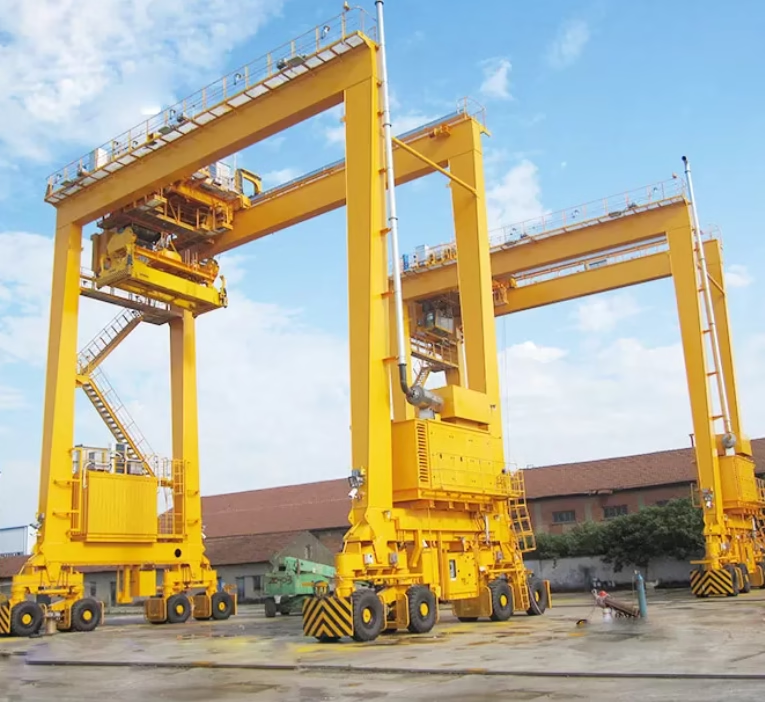
Indoor overhead cranes, gantry cranes, and material handling systems require specialized flat cables that can withstand constant flexing, bending, and mechanical stress while delivering reliable power and control signals. Unlike round cables, flat cables offer distinct advantages in space-constrained festoon systems: they allow for smaller bending radii, enable more compact stacking in cable carriers, and reduce wind resistance in moving applications. The choice between branded products like Lapp ÖLFLEX CRANE and VDE-designated generic alternatives such as (N)TSFLCGEWÖU or NGFLGÖU cables significantly impacts both initial costs and long-term operational reliability. (室内桥式起重机、龙门起重机和物料搬运系统需要专用扁平电缆,能够承受持续的弯曲、曲折和机械应力,同时提供可靠的电力和控制信号。与圆形电缆不同,扁平电缆在空间受限的滑触线系统中具有明显优势:它们允许更小的弯曲半径,能够在电缆拖链中更紧凑地堆叠,并减少移动应用中的风阻。在Lapp ÖLFLEX CRANE等品牌产品和(N)TSFLCGEWÖU或NGFLGÖU电缆等VDE指定的通用替代品之间进行选择,会显著影响初始成本和长期运营可靠性。) The German VDE (Verband der Elektrotechnik) standards provide a comprehensive framework for cable designation and performance requirements. Cables manufactured according to VDE 0250 standards for festoon and crane applications must meet stringent mechanical, electrical, and environmental specifications. Understanding the designation codes and how they compare to proprietary products is essential for making informed purchasing decisions. (德国VDE(德国电气工程师协会)标准为电缆指定和性能要求提供了全面的框架。根据VDE 0250标准制造的滑触线和起重机应用电缆必须满足严格的机械、电气和环境规格。了解指定代码以及它们与专有产品的比较对于做出明智的采购决策至关重要。)

Lapp ÖLFLEX CRANE vs. (N)TSFLCGEWÖU 

Indoor overhead cranes, gantry cranes, and material handling systems require specialized flat cables that can withstand constant flexing, bending, and mechanical stress while delivering reliable power and control signals. Unlike round cables, flat cables offer distinct advantages in space-constrained festoon systems: they allow for smaller bending radii, enable more compact stacking in cable carriers, and reduce wind resistance in moving applications. The choice between branded products like Lapp ÖLFLEX CRANE and VDE-designated generic alternatives such as (N)TSFLCGEWÖU or NGFLGÖU cables significantly impacts both initial costs and long-term operational reliability. (室内桥式起重机、龙门起重机和物料搬运系统需要专用扁平电缆,能够承受持续的弯曲、曲折和机械应力,同时提供可靠的电力和控制信号。与圆形电缆不同,扁平电缆在空间受限的滑触线系统中具有明显优势:它们允许更小的弯曲半径,能够在电缆拖链中更紧凑地堆叠,并减少移动应用中的风阻。在Lapp ÖLFLEX CRANE等品牌产品和(N)TSFLCGEWÖU或NGFLGÖU电缆等VDE指定的通用替代品之间进行选择,会显著影响初始成本和长期运营可靠性。) The German VDE (Verband der Elektrotechnik) standards provide a comprehensive framework for cable designation and performance requirements. Cables manufactured according to VDE 0250 standards for festoon and crane applications must meet stringent mechanical, electrical, and environmental specifications. Understanding the designation codes and how they compare to proprietary products is essential for making informed purchasing decisions. (德国VDE(德国电气工程师协会)标准为电缆指定和性能要求提供了全面的框架。根据VDE 0250标准制造的滑触线和起重机应用电缆必须满足严格的机械、电气和环境规格。了解指定代码以及它们与专有产品的比较对于做出明智的采购决策至关重要。)