
绝缘厚度:VDE 0250第812部分(移动型)和第813部分(矿用型)电缆的3GI3绝缘壁厚要求有何不同?
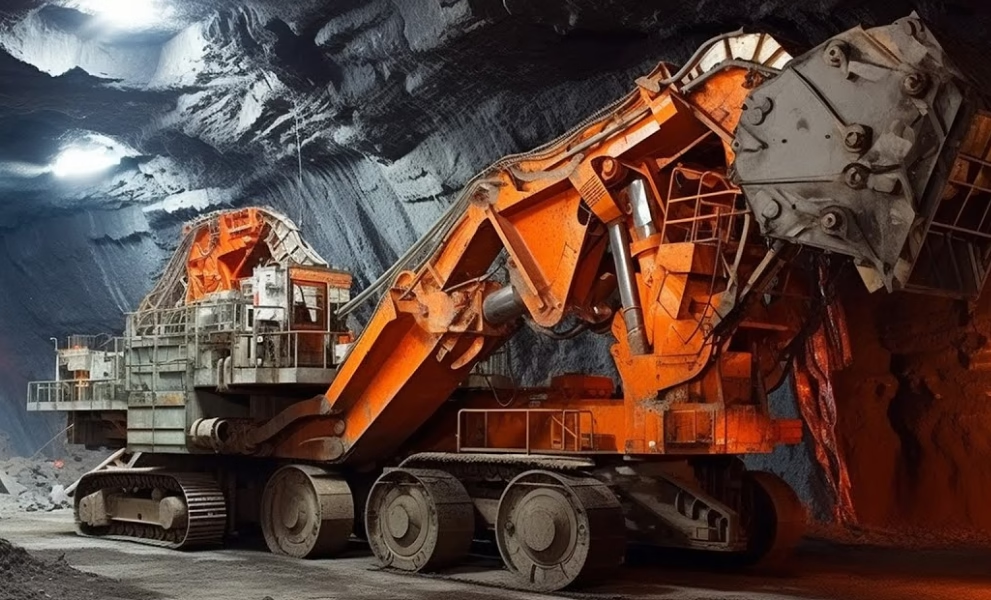
Insulation Thickness: What is the Difference in Wall Thickness Requirements for 3GI3 Insulation Between VDE 0250 Part 812 (Mobile) and Part 813 (Mining) Cables?
绝缘厚度:VDE 0250第812部分(移动型)和第813部分(矿用型)电缆的3GI3绝缘壁厚要求有何不同?
Technical Analysis by Anhui Feichun Special Cable Co., Ltd.
安徽飞纯特种电缆有限公司技术分析
1. Introduction 引言
The DIN VDE 0250 standard series defines the technical requirements for rubber-insulated flexible cables used in demanding industrial environments. Within this framework, Part 812 and Part 813 address distinctly different application domains with correspondingly different insulation thickness requirements for the 3GI3 EPR (Ethylene Propylene Rubber) compound specified in DIN VDE 0207 Part 20.
DIN VDE 0250标准系列定义了用于苛刻工业环境的橡胶绝缘柔性电缆的技术要求。在此框架内,第812部分和第813部分针对截然不同的应用领域,对DIN VDE 0207第20部分规定的3GI3 EPR(乙丙橡胶)化合物具有相应不同的绝缘厚度要求。
Understanding these differences is critical for engineers specifying cables for mobile equipment versus underground mining operations. The wall thickness requirements directly impact the cable’s dielectric strength, mechanical durability, and long-term reliability under the specific stresses encountered in each application environment.
了解这些差异对于为移动设备和地下采矿作业指定电缆的工程师至关重要。壁厚要求直接影响电缆的介电强度、机械耐久性以及在每种应用环境中遇到的特定应力下的长期可靠性。
Sources:
2. Standard Overview: VDE 0250-812 vs VDE 0250-813 标准概述
The fundamental distinction between these two standards lies in their voltage ratings and intended application environments. VDE 0250-812 addresses low voltage flexible cables for general industrial mobile applications, while VDE 0250-813 covers medium voltage trailing cables specifically designed for the extreme conditions encountered in mining operations.
这两个标准之间的根本区别在于它们的电压等级和预期应用环境。VDE 0250-812针对一般工业移动应用的低压柔性电缆,而VDE 0250-813则涵盖专门为采矿作业中遇到的极端条件设计的中压拖曳电缆。
| Parameter 参数 | VDE 0250-812 VDE 0250-812 | VDE 0250-813 VDE 0250-813 |
|---|---|---|
| Full Title 完整标题 | Rubber insulated flexible cable NSSHÖU | Medium voltage trailing cables for mining |
| Voltage Rating U₀/U 额定电压 | 450/750V (up to 0.6/1kV) | 3.6/6kV to 18/30kV |
| Cable Designation 电缆名称 | NSSHÖU, (N)SHÖU | (N)TSCGEWÖU, (N)TSCGECEWÖU |
| Primary Application 主要应用 | Mobile equipment, construction, industrial | Underground mining, open-pit mining, tunnelling |
| Insulation Compound 绝缘化合物 | 3GI3 EPR per DIN VDE 0207-20 | 3GI3 EPR per DIN VDE 0207-20 |
| Conductor Class 导体等级 | Class 5 (flexible) | Class 5/6 (highly flexible) |
| Operating Temperature 工作温度 | -25°C to +90°C | -25°C to +90°C |
| Semiconductive Screening 半导电屏蔽 | Not required (LV) | Required (conductor and insulation screen) |
Sources:
3. Understanding 3GI3 EPR Insulation Compound 了解3GI3 EPR绝缘化合物
The 3GI3 designation refers to a specific grade of ethylene propylene rubber (EPR) compound defined in DIN VDE 0207 Part 20. This compound is specified for both Part 812 and Part 813 cables, but the wall thickness requirements differ significantly due to the vastly different voltage stresses and mechanical demands of each application.
3GI3名称指的是DIN VDE 0207第20部分中定义的特定等级乙丙橡胶(EPR)化合物。该化合物同时适用于第812部分和第813部分电缆,但由于每种应用的电压应力和机械要求截然不同,壁厚要求存在显著差异。
| Property 性能 | Requirement 要求 | Test Method 测试方法 |
|---|---|---|
| Tensile Strength (min.) 拉伸强度(最小) | ≥5 N/mm² | DIN VDE 0472 |
| Elongation at Break (min.) 断裂伸长率(最小) | ≥200% | DIN VDE 0472 |
| Maximum Operating Temperature 最高工作温度 | 90°C | DIN VDE 0207-20 |
| Short-Circuit Temperature 短路温度 | 250°C | DIN VDE 0207-20 |
| Volume Resistivity (min.) 体积电阻率(最小) | ≥10¹² Ω·cm | DIN VDE 0472 |
| Ozone Resistance 耐臭氧性 | No cracking after 72h | DIN EN 60811-403 |
| Oil Resistance 耐油性 | Per DIN VDE 0473-811-2-1 | DIN EN 60811-404 |
The 3GI3 compound designation follows the VDE nomenclature where “3” indicates a rubber-based compound, “G” denotes general purpose application, “I” signifies insulation compound, and the final “3” represents the specific formulation grade with enhanced mechanical and electrical characteristics suitable for flexible cable applications.
3GI3化合物名称遵循VDE命名法,其中”3″表示基于橡胶的化合物,”G”表示通用应用,”I”表示绝缘化合物,最后的”3″代表具有增强机械和电气特性的特定配方等级,适用于柔性电缆应用。
Sources:
4. VDE 0250-812: Low Voltage Mobile Cable Requirements 低压移动电缆要求
DIN VDE 0250-812 specifies requirements for EPR insulated and EPR or polychloroprene sheathed flexible cables with rated voltages up to and including 450/750V. The typical cable designation under this standard is NSSHÖU (Neopren-Schlauchleitung Schwer Höchste Ölfestigkeit Ummantelung), indicating a heavy-duty, oil-resistant, rubber-sheathed cable.
DIN VDE 0250-812规定了额定电压不超过450/750V的EPR绝缘和EPR或聚氯丁二烯护套柔性电缆的要求。该标准下的典型电缆名称为NSSHÖU(Neopren-Schlauchleitung Schwer Höchste Ölfestigkeit Ummantelung),表示重型、耐油、橡胶护套电缆。
4.1 Insulation Thickness Requirements for VDE 0250-812 VDE 0250-812的绝缘厚度要求
| Conductor Size (mm²) 导体尺寸 | Nominal Insulation Thickness (mm) 标称绝缘厚度 | Minimum Insulation Thickness (mm) 最小绝缘厚度 |
|---|---|---|
| 1.5 | 1.0 | 0.9 |
| 2.5 | 1.0 | 0.9 |
| 4 | 1.0 | 0.9 |
| 6 | 1.0 | 0.9 |
| 10 | 1.0 | 0.9 |
| 16 | 1.0 | 0.9 |
| 25 | 1.2 | 1.1 |
| 35 | 1.2 | 1.1 |
| 50 | 1.4 | 1.3 |
| 70 | 1.4 | 1.3 |
| 95 | 1.6 | 1.4 |
| 120 | 1.6 | 1.4 |
| 150 | 1.8 | 1.6 |
| 185 | 2.0 | 1.8 |
| 240 | 2.2 | 2.0 |
The insulation thickness values for VDE 0250-812 are designed to provide adequate dielectric strength for 450/750V operation while maintaining the flexibility required for mobile applications. The relatively thin insulation walls (1.0-2.2mm nominal) reflect the lower voltage stress compared to medium voltage applications.
VDE 0250-812的绝缘厚度值旨在为450/750V运行提供足够的介电强度,同时保持移动应用所需的柔韧性。相对较薄的绝缘壁(标称1.0-2.2mm)反映了与中压应用相比较低的电压应力。
Sources:
5. VDE 0250-813: Medium Voltage Mining Cable Requirements 中压矿用电缆要求
DIN VDE 0250-813 specifies requirements for medium voltage trailing cables with rated voltages from 3.6/6kV to 18/30kV, specifically designed for the demanding conditions of open-pit mining, underground mining, and tunnelling operations. These cables must withstand significantly higher voltage stress, requiring substantially thicker insulation walls compared to Part 812 cables.
DIN VDE 0250-813规定了额定电压从3.6/6kV到18/30kV的中压拖曳电缆的要求,专门为露天采矿、地下采矿和隧道作业的苛刻条件设计。这些电缆必须承受显著更高的电压应力,与第812部分电缆相比需要明显更厚的绝缘壁。
5.1 Insulation Thickness Requirements for VDE 0250-813 VDE 0250-813的绝缘厚度要求
| Voltage Rating U₀/U (kV) 额定电压 | Nominal Insulation Thickness (mm) 标称绝缘厚度 | Minimum Insulation Thickness (mm) 最小绝缘厚度 |
|---|---|---|
| 1.8/3 kV | 3.4 | 3.1 |
| 3.6/6 kV | 3.4 | 3.1 |
| 6/10 kV | 4.5 | 4.1 |
| 8.7/15 kV | 5.5 | 5.0 |
| 12/20 kV | 6.6 | 6.0 |
| 18/30 kV | 8.0 | 7.2 |
5.2 Additional Construction Requirements 附加结构要求
Unlike Part 812 low voltage cables, VDE 0250-813 medium voltage cables require additional semiconductive layers for electric field control. These layers are critical for preventing electrical stress concentrations that could lead to premature insulation failure.
与第812部分低压电缆不同,VDE 0250-813中压电缆需要额外的半导电层进行电场控制。这些层对于防止可能导致绝缘过早失效的电应力集中至关重要。
| Layer 层 | Specification 规格 | Function 功能 |
|---|---|---|
| Conductor Screen 导体屏蔽 | Extruded semiconductive EPR, max. resistivity 200 Ω×m | Uniform electric field at conductor surface |
| Insulation Screen 绝缘屏蔽 | Modified NBR, cold strippable (Easy Strip) | Uniform electric field at insulation surface |
| Metallic Screen 金属屏蔽 | Tinned copper wire braid or tape | Earth fault current path, EMC shielding |
Sources:
6. Insulation Thickness Comparison Tables 绝缘厚度对比表
The following comprehensive comparison illustrates the significant differences in insulation wall thickness requirements between VDE 0250-812 (low voltage mobile) and VDE 0250-813 (medium voltage mining) cables. These differences reflect the fundamentally different electrical and mechanical requirements of each application.
以下综合比较说明了VDE 0250-812(低压移动型)和VDE 0250-813(中压矿用型)电缆之间绝缘壁厚要求的显著差异。这些差异反映了每种应用在电气和机械方面根本不同的要求。
| Conductor Size (mm²) 导体尺寸 | VDE 0250-812 (450/750V) VDE 0250-812 | VDE 0250-813 (6/10kV) VDE 0250-813 | Thickness Ratio 厚度比 | ||
|---|---|---|---|---|---|
| Nominal (mm) | Min. (mm) | Nominal (mm) | Min. (mm) | ||
| 25 | 1.2 | 1.1 | 4.5 | 4.1 | 3.75× |
| 35 | 1.2 | 1.1 | 4.5 | 4.1 | 3.75× |
| 50 | 1.4 | 1.3 | 4.5 | 4.1 | 3.21× |
| 70 | 1.4 | 1.3 | 4.5 | 4.1 | 3.21× |
| 95 | 1.6 | 1.4 | 4.5 | 4.1 | 2.81× |
| 120 | 1.6 | 1.4 | 4.5 | 4.1 | 2.81× |
| 150 | 1.8 | 1.6 | 4.5 | 4.1 | 2.50× |
6.1 Key Observations 主要观察
The comparison reveals several critical insights regarding insulation thickness requirements between the two standards. First, the VDE 0250-813 medium voltage mining cables require approximately 2.5 to 3.75 times thicker insulation compared to VDE 0250-812 low voltage mobile cables for the same conductor cross-section. Second, VDE 0250-813 insulation thickness is constant across all conductor sizes for a given voltage rating, as the dielectric stress is voltage-dependent rather than current-dependent. Third, VDE 0250-812 insulation thickness increases progressively with conductor size to maintain adequate mechanical protection during handling.
比较揭示了关于两个标准之间绝缘厚度要求的几个关键见解。首先,对于相同导体横截面,VDE 0250-813中压矿用电缆需要比VDE 0250-812低压移动电缆厚约2.5至3.75倍的绝缘。其次,对于给定的电压等级,VDE 0250-813的绝缘厚度在所有导体尺寸上保持恒定,因为介电应力取决于电压而非电流。第三,VDE 0250-812的绝缘厚度随导体尺寸逐渐增加,以在处理过程中保持足够的机械保护。
| Voltage Rating 电压等级 | Nominal Thickness (mm) 标称厚度 | Increase from Previous 比前一级增加 | Voltage Increase 电压增加 |
|---|---|---|---|
| 3.6/6 kV | 3.4 | Baseline | Baseline |
| 6/10 kV | 4.5 | +1.1 mm (+32%) | +67% |
| 8.7/15 kV | 5.5 | +1.0 mm (+22%) | +50% |
| 12/20 kV | 6.6 | +1.1 mm (+20%) | +33% |
| 18/30 kV | 8.0 | +1.4 mm (+21%) | +50% |
7. Factors Influencing Insulation Thickness Design 影响绝缘厚度设计的因素
The significant differences in insulation thickness requirements between VDE 0250-812 and VDE 0250-813 are driven by multiple technical factors that directly relate to the intended operating conditions of each cable type.
VDE 0250-812和VDE 0250-813之间绝缘厚度要求的显著差异是由多个技术因素驱动的,这些因素直接与每种电缆类型的预期运行条件相关。
| Factor 因素 | VDE 0250-812 (Low Voltage) VDE 0250-812(低压) | VDE 0250-813 (Medium Voltage) VDE 0250-813(中压) |
|---|---|---|
| Dielectric Stress 介电应力 | Low (≤1 kV/mm) | High (2-4 kV/mm) |
| Partial Discharge Risk 局部放电风险 | Minimal at LV levels | Critical – requires semiconductive screening |
| Test Voltage 测试电压 | 3 kV AC (5 min) | 2.5×U₀ + 2 kV AC (medium voltage) |
| Mechanical Stress 机械应力 | Moderate (general industrial) | Severe (mining environment) |
| Abrasion Exposure 磨损暴露 | Moderate | Extreme (rock, ore, equipment) |
| Tensile Load 拉伸负载 | Up to 15 N/mm² | Up to 30 N/mm² (reeling operations) |
| Bending Cycles 弯曲循环 | Moderate frequency | High frequency (>50,000 cycles) |
| Environmental Conditions 环境条件 | Industrial, construction | Water immersion, chemicals, extreme temperatures |
7.1 Dielectric Design Considerations 介电设计考虑因素
For medium voltage cables per VDE 0250-813, the insulation thickness must be sufficient to maintain the electric field strength within safe limits under all operating conditions, including voltage surges and transient overvoltages. The design stress for EPR insulation is typically limited to 2-4 kV/mm to provide adequate safety margins against electrical breakdown.
对于符合VDE 0250-813的中压电缆,绝缘厚度必须足以在所有运行条件下(包括电压浪涌和瞬态过电压)将电场强度保持在安全限度内。EPR绝缘的设计应力通常限制在2-4 kV/mm,以提供足够的安全裕度防止电击穿。
7.2 Mechanical Design Considerations 机械设计考虑因素
The increased insulation thickness in VDE 0250-813 cables also provides additional mechanical protection against the severe stresses encountered in mining environments. The thicker insulation wall helps distribute impact and crushing loads, reducing the risk of insulation damage that could lead to electrical failure.
VDE 0250-813电缆中增加的绝缘厚度还提供了额外的机械保护,以抵御采矿环境中遇到的严重应力。更厚的绝缘壁有助于分散冲击和压碎负载,降低可能导致电气故障的绝缘损坏风险。
Sources:
8. Application Selection Guide 应用选择指南
Selecting the appropriate cable standard depends on the specific application requirements, including voltage level, mechanical stress environment, and regulatory compliance needs.
选择适当的电缆标准取决于具体的应用要求,包括电压等级、机械应力环境和监管合规需求。
| Application 应用 | Recommended Standard 推荐标准 | Typical Cable Type 典型电缆类型 | Insulation Range 绝缘范围 |
|---|---|---|---|
| Construction equipment (LV) 建筑设备(低压) | VDE 0250-812 | NSSHÖU | 1.0-2.2 mm |
| Industrial mobile machinery 工业移动机械 | VDE 0250-812 | (N)SHÖU | 1.0-2.2 mm |
| Quarry equipment (LV) 采石场设备(低压) | VDE 0250-812 | NSSHÖU | 1.0-2.2 mm |
| Open-pit mining excavators 露天采矿挖掘机 | VDE 0250-813 | (N)TSCGEWÖU | 3.4-8.0 mm |
| Underground coal cutters 地下采煤机 | VDE 0250-813 | (N)TSCGECEWÖU | 3.4-4.5 mm |
| Tunnel boring machines 隧道掘进机 | VDE 0250-813 | (N)TSCGECECWÖU | 4.5-6.6 mm |
| Ship-to-shore cranes 岸桥起重机 | VDE 0250-813 | (N)TSCGEWÖU | 3.4-4.5 mm |
| RTG cranes 轮胎式龙门起重机 | VDE 0250-813 | (N)TSCGEWÖU | 3.4-4.5 mm |
| Dragline excavators 拉铲挖掘机 | VDE 0250-813 | (N)TSCGEWÖU | 4.5-8.0 mm |
9. Testing Requirements 测试要求
Both standards specify rigorous testing requirements to verify insulation integrity, with more stringent requirements for the higher voltage Part 813 cables.
两个标准都规定了严格的测试要求以验证绝缘完整性,对于更高电压的第813部分电缆有更严格的要求。
| Test 测试 | VDE 0250-812 VDE 0250-812 | VDE 0250-813 VDE 0250-813 |
|---|---|---|
| Routine Voltage Test 例行电压测试 | 3 kV AC, 5 min | 2.5×U₀ + 2 kV AC, 5 min |
| Type Test Voltage 型式试验电压 | 4 kV AC, 5 min | 3×U₀ + 3 kV AC, 5 min |
| Insulation Resistance 绝缘电阻 | ≥20 MΩ×km | ≥100 MΩ×km |
| Partial Discharge Test 局部放电测试 | Not required | ≤10 pC at 1.5×U₀ |
| Water Immersion Test 水浸测试 | 5m, 2h, at test voltage | 5m, 2h min, at test voltage |
| Thickness Measurement 厚度测量 | DIN VDE 0472 Part 402 | DIN VDE 0472 Part 402 |
Sources:
10. Conclusion 结论
The insulation thickness requirements for 3GI3 EPR insulation differ substantially between VDE 0250 Part 812 (Mobile) and Part 813 (Mining) cables, reflecting the fundamentally different voltage levels and application environments addressed by each standard.
3GI3 EPR绝缘的绝缘厚度要求在VDE 0250第812部分(移动型)和第813部分(矿用型)电缆之间存在显著差异,反映了每个标准所针对的根本不同的电压等级和应用环境。
Key summary points regarding the insulation thickness differences include the following considerations. VDE 0250-812 cables require insulation thickness ranging from 1.0mm to 2.2mm for conductor sizes 1.5mm² to 240mm² at 450/750V rating. VDE 0250-813 cables require insulation thickness ranging from 3.4mm to 8.0mm depending on voltage rating from 3.6/6kV to 18/30kV. The ratio of Part 813 to Part 812 insulation thickness ranges from approximately 2.5× to 3.75× for equivalent conductor sizes. Part 813 cables require additional semiconductive screening layers not present in Part 812 cables. Both standards specify 3GI3 EPR compound per DIN VDE 0207 Part 20, but apply it in different thicknesses appropriate to the voltage stress level.
关于绝缘厚度差异的主要总结要点包括以下考虑因素。VDE 0250-812电缆在450/750V额定电压下,导体尺寸1.5mm²至240mm²需要1.0mm至2.2mm的绝缘厚度。VDE 0250-813电缆根据3.6/6kV至18/30kV的电压等级需要3.4mm至8.0mm的绝缘厚度。第813部分与第812部分的绝缘厚度比在等效导体尺寸下约为2.5×至3.75×。第813部分电缆需要第812部分电缆中不存在的额外半导电屏蔽层。两个标准都规定按DIN VDE 0207第20部分使用3GI3 EPR化合物,但根据电压应力水平应用不同的厚度。
Engineers must carefully consider these differences when specifying cables for their intended application to ensure adequate electrical safety, mechanical durability, and compliance with applicable regulations.
工程师在为预期应用指定电缆时必须仔细考虑这些差异,以确保足够的电气安全、机械耐久性和符合适用法规。
11. Contact Information 联系方式
Anhui Feichun Special Cable Co., Ltd.
安徽飞纯特种电缆有限公司
| Technical Inquiries 技术咨询 | [email protected] |
| Sales (Zihao Yang) 销售(杨子豪) | [email protected] |
| Sales (Ziyu Huang) 销售(黄子煜) | [email protected] |
| +86 138 5512 3218 |
Our engineering team provides comprehensive technical support for cable selection, insulation thickness verification, and custom cable design for mining, tunnelling, crane, and heavy industrial applications.
我们的工程团队为采矿、隧道、起重机和重工业应用提供电缆选择、绝缘厚度验证和定制电缆设计的全面技术支持。


