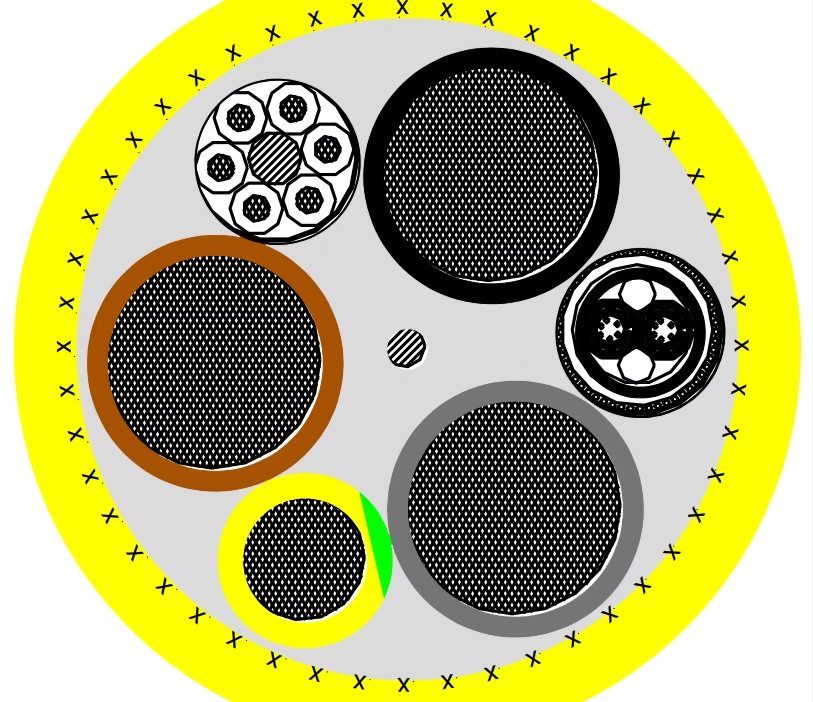
-40C mining cable

Full technical breakdown Prysmian (Draka) CORDAFLEX SME — Arctic modification of (N)TSCGEWÖU 6/10 kV motorized drum cable, designed for reeling at extreme cold to -40°C. Standard rubber/PUR at such temperatures becomes brittle as glass and cracks on first guide roller bend. SME solves this with three engineering innovations: (1) cold-resistant polychloroprene outer sheath "5GM5 Arctic blend" with non-freezing plasticizers maintaining elasticity at -40°C; (2) reinforced tensile strength 20 N/mm² (vs standard 15), compensating lubricant thickening in drum gearboxes and jerks during winter starts; (3) micro-filtered EPR compound 3GI3 maintaining dielectric properties at -40°C without cracking. Temp range -40°C to +80°C (flexing), -50°C to +80°C (fixed). Winding speed up to 120 m/min. VDE 0250-813 (SME modification). Two import substitution paths: (1) FeiChun NTSCGEWÖU-Cold — certified equivalent with Arctic additives for Siberia/Canada; (2) КГЭ-ХЛ 6 kV — Russian GOST to -60°C, but mechanically weaker than SME and lower winding speeds.

Характеристики CORDAFLEX (SME): экскаваторный кабель (N)TSCGEWÖU 6/10kV для наматывания при -40°C — арктическая серия и аналог FeiChun

Full technical breakdown Prysmian (Draka) CORDAFLEX SME — Arctic modification of (N)TSCGEWÖU 6/10 kV motorized drum cable, designed for reeling at extreme cold to -40°C. Standard rubber/PUR at such temperatures becomes brittle as glass and cracks on first guide roller bend. SME solves this with three engineering innovations: (1) cold-resistant polychloroprene outer sheath “5GM5 Arctic blend” with non-freezing plasticizers maintaining elasticity at -40°C; (2) reinforced tensile strength 20 N/mm² (vs standard 15), compensating lubricant thickening in drum gearboxes and jerks during winter starts; (3) micro-filtered EPR compound 3GI3 maintaining dielectric properties at -40°C without cracking. Temp range -40°C to +80°C (flexing), -50°C to +80°C (fixed). Winding speed up to 120 m/min. VDE 0250-813 (SME modification). Two import substitution paths: (1) FeiChun NTSCGEWÖU-Cold — certified equivalent with Arctic additives for Siberia/Canada; (2) КГЭ-ХЛ 6 kV — Russian GOST to -60°C, but mechanically weaker than SME and lower winding speeds.
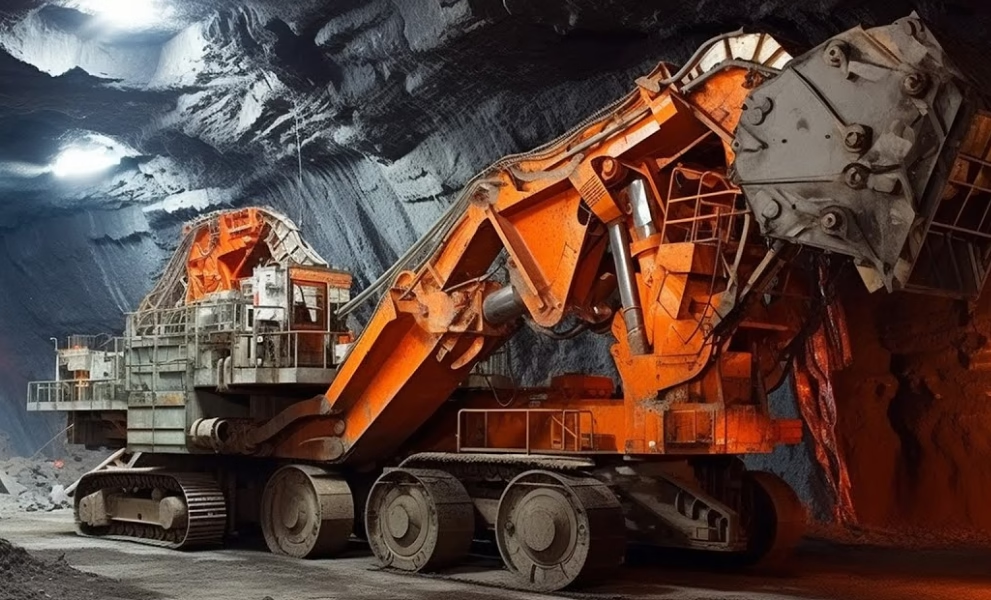
The Gobi Desert in southern Mongolia, where Oyu Tolgoi and other mining operations are located, experiences one of the most thermally extreme climates on Earth. Winter temperatures regularly drop to -35°C to -45°C, with recorded extremes approaching -50°C. Conversely, summer surface temperatures exceed +45°C, and cables exposed to direct solar radiation can reach +55°C to +65°C. This represents a temperature differential of 95–115°C between winter lows and summer highs—far exceeding the thermal cycling experienced in most mining regions globally. 蒙古南部戈壁沙漠,奥尤陶勒盖等矿区所在地,经历全球最极端的热气候之一。冬季温度经常降至-35°C至-45°C,记录低温接近-50°C。反之,夏季地表温度超过+45°C,直接暴露在太阳辐射下的电缆可达+55°C至+65°C。这代表冬季低温和夏季高温之间温度差异95-115°C,远远超过全球大多数矿区经历的热循环。 The Cable Deployment Context: Rio Tinto's 6.6kV trailing cables at Oyu Tolgoi power large electric shovels, electric drill jumbos, and load-haul-dump (LHD) equipment. These cables experience: (1) Winter deployment at -40°C where equipment must operate continuously despite extreme cold, (2) Coiling on equipment reels in -40°C conditions with high mechanical tension, (3) Summer storage in surface conditions where cables experience +50°C+ heat exposure, (4) Repeated thermal cycling as equipment moves between underground (warmer) and surface (colder or hotter) locations.

Rio Tinto Mongolia Cable Specs: Preventing Jacket Cracking on 6.6kV Mining Cables in Gobi Desert Extreme Climate

The Gobi Desert in southern Mongolia, where Oyu Tolgoi and other mining operations are located, experiences one of the most thermally extreme climates on Earth. Winter temperatures regularly drop to -35°C to -45°C, with recorded extremes approaching -50°C. Conversely, summer surface temperatures exceed +45°C, and cables exposed to direct solar radiation can reach +55°C to +65°C. This represents a temperature differential of 95–115°C between winter lows and summer highs—far exceeding the thermal cycling experienced in most mining regions globally. 蒙古南部戈壁沙漠,奥尤陶勒盖等矿区所在地,经历全球最极端的热气候之一。冬季温度经常降至-35°C至-45°C,记录低温接近-50°C。反之,夏季地表温度超过+45°C,直接暴露在太阳辐射下的电缆可达+55°C至+65°C。这代表冬季低温和夏季高温之间温度差异95-115°C,远远超过全球大多数矿区经历的热循环。 The Cable Deployment Context: Rio Tinto’s 6.6kV trailing cables at Oyu Tolgoi power large electric shovels, electric drill jumbos, and load-haul-dump (LHD) equipment. These cables experience: (1) Winter deployment at -40°C where equipment must operate continuously despite extreme cold, (2) Coiling on equipment reels in -40°C conditions with high mechanical tension, (3) Summer storage in surface conditions where cables experience +50°C+ heat exposure, (4) Repeated thermal cycling as equipment moves between underground (warmer) and surface (colder or hotter) locations.
Fermel is a recognized manufacturer of underground utility vehicles designed for mining, tunneling, and construction applications. Their utility vehicle lineup includes personnel carriers, material transporters, and multi-purpose service units that operate in confined underground environments where electrical power delivery via trailing cables is essential for safe and efficient operation. 费尔梅尔(Fermel)是地下多功能车的知名制造商,产品专为采矿、隧道和建筑应用设计。其多功能车系列包括人员运输车、物料运输车和多功能服务单元,在封闭的地下环境中运行,通过拖曳电缆供电对于安全高效运行至关重要。

Fermel Utility Vehicles: Type 241 Cable Flexibility for Cable Reels

Fermel is a recognized manufacturer of underground utility vehicles designed for mining, tunneling, and construction applications. Their utility vehicle lineup includes personnel carriers, material transporters, and multi-purpose service units that operate in confined underground environments where electrical power delivery via trailing cables is essential for safe and efficient operation. 费尔梅尔(Fermel)是地下多功能车的知名制造商,产品专为采矿、隧道和建筑应用设计。其多功能车系列包括人员运输车、物料运输车和多功能服务单元,在封闭的地下环境中运行,通过拖曳电缆供电对于安全高效运行至关重要。
The DIN VDE 0250 standard series defines the technical requirements for rubber-insulated flexible cables used in demanding industrial environments. Within this framework, Part 812 and Part 813 address distinctly different application domains with correspondingly different insulation thickness requirements for the 3GI3 EPR (Ethylene Propylene Rubber) compound specified in DIN VDE 0207 Part 20. DIN VDE 0250标准系列定义了用于苛刻工业环境的橡胶绝缘柔性电缆的技术要求。在此框架内,第812部分和第813部分针对截然不同的应用领域,对DIN VDE 0207第20部分规定的3GI3 EPR(乙丙橡胶)化合物具有相应不同的绝缘厚度要求。

Insulation Thickness: What is the Difference in Wall Thickness Requirements for 3GI3 Insulation Between VDE 0250 Part 812 (Mobile) and Part 813 (Mining) Cables?

The DIN VDE 0250 standard series defines the technical requirements for rubber-insulated flexible cables used in demanding industrial environments. Within this framework, Part 812 and Part 813 address distinctly different application domains with correspondingly different insulation thickness requirements for the 3GI3 EPR (Ethylene Propylene Rubber) compound specified in DIN VDE 0207 Part 20. DIN VDE 0250标准系列定义了用于苛刻工业环境的橡胶绝缘柔性电缆的技术要求。在此框架内,第812部分和第813部分针对截然不同的应用领域,对DIN VDE 0207第20部分规定的3GI3 EPR(乙丙橡胶)化合物具有相应不同的绝缘厚度要求。