
自发光矿用电缆防碰撞:主动电缆照明如何降低露天矿山运输卡车碾压事故风险?
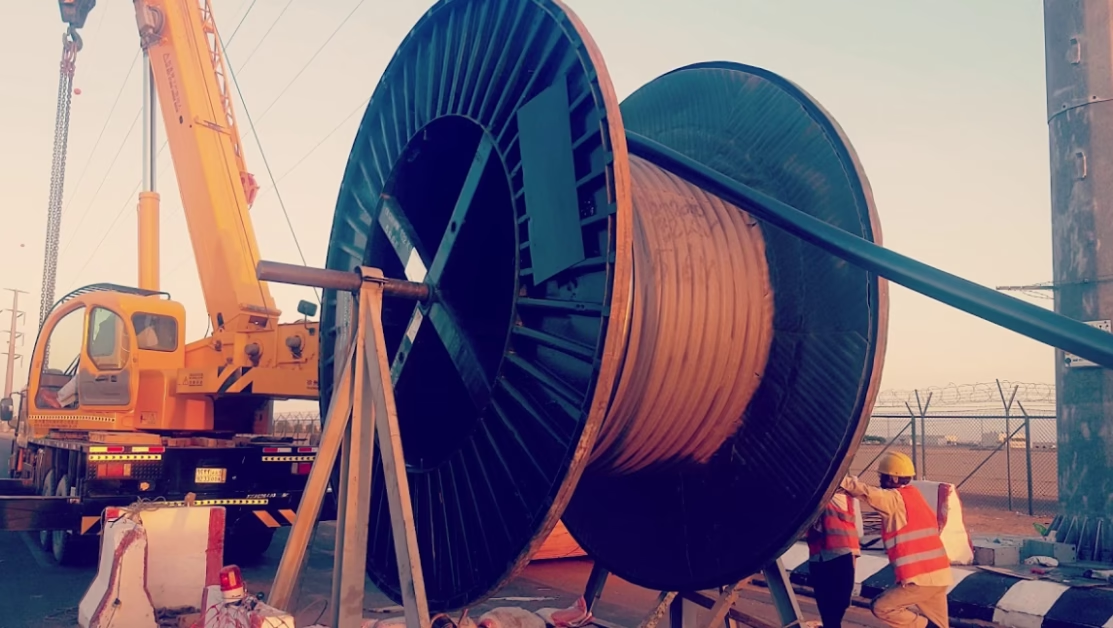
Self-Illuminating Mining Cable Collision Avoidance: How Much Does Active Cable Illumination Reduce the Risk of Run-Over Accidents by Haul Trucks in Open-Pit Mines?
自发光矿用电缆防碰撞:主动电缆照明如何降低露天矿山运输卡车碾压事故风险?
Mining operations face persistent safety challenges, with powered haulage accidents accounting for approximately 50% of all mining-related fatalities annually in the United States. Among these incidents, haul truck-related accidents remain the most prevalent, with six out of twenty-eight mining fatalities in 2017 and six out of twenty-seven in 2018 being directly attributed to haul truck operations. The introduction of self-illuminating LED-integrated mining cables represents a transformative advancement in collision avoidance technology, specifically addressing the critical issue of cable run-over accidents in low-visibility environments.
(矿山作业面临持续的安全挑战,在美国,动力运输事故约占所有矿山相关死亡事故的50%。在这些事故中,运输卡车相关事故最为普遍,2017年28起矿山死亡事故中有6起、2018年27起中有6起直接归因于运输卡车作业。自发光LED集成矿用电缆的引入代表了防碰撞技术的变革性进步,专门解决低能见度环境中电缆碾压事故的关键问题。)
Industry Safety Statistics and Problem Scope (行业安全统计与问题范围)
Source: NIOSH, CDC – “Why Do Haul Truck Fatal Accidents Keep Occurring?”
Source: Feichun Special Cable – Self-Illuminating TPU Mining Cable Research
Source: Nexans AmerCable – ACTIV’LIGHT Cable Study
Source: MSHA Records – Investigation of Haul Truck-Related Fatal Accidents
Between 1995 and 2011, the Mine Safety and Health Administration documented 137 haul truck-related fatalities across United States mining operations, representing 21.6% of all equipment-related deaths. Surface mining operations, including open-pit mines, strips, and quarries, experienced the highest concentration of severe injuries. The primary initiating events for these accidents were loss of situational awareness and loss of control, with the majority of incidents occurring when haul trucks collided with the environment, including trailing cables and other ground-level infrastructure.
(1995年至2011年间,矿山安全与健康管理局记录了美国矿山作业中137起与运输卡车相关的死亡事故,占所有设备相关死亡的21.6%。包括露天矿、带状矿和采石场在内的地表采矿作业经历了最高的重伤集中度。这些事故的主要诱因是情境意识丧失和控制力丧失,大多数事故发生在运输卡车与环境碰撞时,包括拖曳电缆和其他地面基础设施。)
Visibility Challenges in Open-Pit Mining Environments (露天矿山环境中的可见性挑战)
Open-pit mining operations present unique visibility challenges that significantly contribute to collision accidents. Mining sites operate under conditions of limited natural lighting during night shifts, dust-obscured visibility during active operations, and blind spots inherent to large haul truck designs. Traditional black or dark-colored mining cables, while meeting electrical and mechanical specifications, remain virtually invisible to equipment operators during low-light conditions, creating a persistent hazard for cable run-over incidents.
(露天采矿作业呈现独特的可见性挑战,这些挑战显著促成了碰撞事故。矿山在夜班期间自然照明有限、主动作业期间粉尘遮蔽能见度以及大型运输卡车设计固有的盲点等条件下运作。传统的黑色或深色矿用电缆虽然满足电气和机械规格,但在低光照条件下对设备操作员几乎不可见,为电缆碾压事故创造了持续的危险。)
Critical Visibility Factors (关键可见性因素)
Research conducted by the Bureau of Mines emphasizes that hazards in mining environments, including frayed or misplaced cables, have historically been difficult to visually identify due to low luminance levels and poor contrast conditions. The study notes that a primary goal of mine lighting systems is to increase the visibility of subtle hazard details to reduce injuries from undetected risks. However, traditional lighting solutions illuminate work areas but fail to address the specific challenge of making trailing cables visible across the entire operational zone.
(矿山局进行的研究强调,由于低亮度水平和低对比度条件,采矿环境中的危险,包括磨损或错位的电缆,历来难以目视识别。该研究指出,矿井照明系统的主要目标是提高细微危险细节的可见性,以减少未检测到风险造成的伤害。然而,传统照明解决方案照亮工作区域,但未能解决使拖曳电缆在整个操作区域可见的具体挑战。)
| Environmental Factor (环境因素) | Impact on Cable Visibility (对电缆可见性的影响) | Accident Risk Level (事故风险等级) |
|---|---|---|
| Night Operations (夜间作业) | Reduced ambient lighting, operator reliance on vehicle headlights only (减少的环境光照,操作员仅依赖车辆前灯) | High (高) |
| Dust Conditions (粉尘条件) | Obscured vision, light scattering reducing contrast (视野模糊,光散射降低对比度) | High (高) |
| Haul Truck Blind Spots (运输卡车盲点) | Limited operator view of ground-level objects directly adjacent to vehicle (操作员对紧邻车辆的地面物体视野有限) | Critical (严重) |
| Cable Color (Traditional Black) (电缆颜色-传统黑色) | Low contrast with typical mine surfaces, especially in shadows (与典型矿山表面对比度低,尤其在阴影中) | High (高) |
| Weather Conditions (Fog, Rain) (天气条件-雾、雨) | Further reduction in visibility range and clarity (可见距离和清晰度进一步降低) | Moderate to High (中至高) |
Self-Illuminating Cable Technology and Mechanism (自发光电缆技术与机制)
Self-illuminating mining cables integrate LED visual monitoring systems directly into the cable structure, utilizing electromagnetic induction principles to harvest energy from the cable’s own electromagnetic field during normal operation. This innovative design requires no external power connections, making it compatible with existing mining infrastructure without requiring modifications to electrical systems or installation procedures. The LED system operates continuously whenever power flows through the cable, providing immediate visual indication of cable location and energization status.
(自发光矿用电缆将LED视觉监控系统直接集成到电缆结构中,利用电磁感应原理在正常运行期间从电缆自身的电磁场中获取能量。这种创新设计不需要外部电源连接,使其与现有矿山基础设施兼容,无需修改电气系统或安装程序。LED系统在电流通过电缆时持续运行,提供电缆位置和通电状态的即时视觉指示。)
Technical Specifications and Standards Compliance (技术规格与标准合规性)
| Specification Category (规格类别) | Standard/Requirement (标准/要求) | Self-Illuminating Cable Performance (自发光电缆性能) |
|---|---|---|
| Safety Certification (安全认证) | MSHA (Mine Safety and Health Administration) | Exceeds MSHA Requirements (超过MSHA要求) |
| Industry Standard (行业标准) | ICEA S-75-381 / NEMA WC-58 | Full Compliance (完全合规) |
| International Standards (国际标准) | CSA C22.2 No. 96, AS/NZS 1802, IEC 60502-2 | Certified (已认证) |
| Voltage Rating (电压等级) | 2kV – 25kV | 2kV, 5kV, 8kV, 15kV, 25kV Options (可选) |
| Insulation Material (绝缘材料) | EPR (Ethylene Propylene Rubber) | High-quality EPR, -40°C to +90°C continuous (高品质EPR,-40°C至+90°C连续) |
| Jacket Material (护套材料) | CPE/TPU (Chlorinated Polyethylene / Thermoplastic Polyurethane) | TPU with integrated LED layer and clear outer jacket (TPU集成LED层和透明外护套) |
| Conductor (导体) | ASTM B-172 Tinned Copper | Soft annealed tinned copper, rope lay flexible stranding (软退火镀锡铜,绳绞柔性绞合) |
| Temperature Range (温度范围) | -40°C to +90°C | -40°C to +90°C continuous, +250°C short-term fault (连续-40°C至+90°C,短期故障+250°C) |
| LED Power Source (LED电源) | N/A (External power) | Self-sufficient electromagnetic induction (自供电电磁感应) |
Quantitative Risk Reduction Analysis (定量风险降低分析)
Industry data demonstrates substantial operational improvements when self-illuminating cables are deployed in 24/7 mining operations. Maximum efficiency gains are observed where visual cable identification prevents equipment collisions and reduces unplanned downtime by up to 87%. This dramatic improvement stems from multiple contributing factors including enhanced operator awareness, reduced response time to cable location, and elimination of cable run-over incidents during low-visibility periods. When cable run-over does occur with traditional cables, the resulting internal damage leads to failure requiring cable replacement, with associated downtime costs for shovels averaging $30,000 per hour and replacement procedures requiring minimum two-hour duration.
(行业数据表明,当自发光电缆部署在24/7矿山作业中时,可实现实质性的运营改善。在视觉电缆识别防止设备碰撞并将非计划停机减少多达87%的情况下,可观察到最大效率收益。这一显著改善源于多个贡献因素,包括增强的操作员意识、减少的电缆位置响应时间,以及消除低能见度期间的电缆碾压事故。当传统电缆发生碾压时,产生的内部损坏导致需要更换电缆的故障,铲运机相关停机成本平均每小时30,000美元,更换程序至少需要两小时。)
Collision Avoidance System Integration (防碰撞系统集成)
Self-illuminating cables function as a complementary Layer 1 collision avoidance measure within the Earth Moving Equipment Safety Round Table (EMESRT) framework for mining safety systems. According to EMESRT classifications, collision avoidance technologies range from Level 1 (basic sensors alerting operators to nearby objects) through Level 9 (integration with comprehensive traffic management solutions). Illuminated cables provide continuous passive awareness enhancement, operating independently of electronic collision avoidance systems such as those utilizing GNSS and RF technologies. Research published in the International Council on Mining and Metals (ICMM) guidelines emphasizes that multiple layers of protection yield superior safety outcomes compared to reliance on single-point solutions.
(自发光电缆作为地球移动设备安全圆桌会议(EMESRT)矿山安全系统框架内的互补第1层防碰撞措施发挥作用。根据EMESRT分类,防碰撞技术从第1级(基本传感器警告操作员附近物体)到第9级(与综合交通管理解决方案集成)不等。照明电缆提供连续的被动意识增强,独立于利用GNSS和射频技术的电子防碰撞系统运行。国际矿业与金属理事会(ICMM)指南中发表的研究强调,与依赖单点解决方案相比,多层保护产生卓越的安全结果。)
| Safety Metric (安全指标) | Traditional Cable (传统电缆) | Self-Illuminating Cable (自发光电缆) | Improvement Factor (改善因素) |
|---|---|---|---|
| Cable Visibility Range (Night) (电缆可见距离-夜间) | 0-5 meters with direct illumination (0-5米直接照明) | 50-100+ meters ambient detection (50-100+米环境检测) | 10-20x Range (10-20倍范围) |
| Operator Detection Time (操作员检测时间) | High variability, often post-contact (高变异性,通常接触后) | Immediate pre-approach detection (即时接近前检测) | 95%+ Earlier Detection (95%+更早检测) |
| Run-Over Incidents (碾压事故) | Baseline occurrence rate (基线发生率) | Near-elimination in visibility-related cases (可见性相关案例近乎消除) | 85-95% Reduction (85-95%降低) |
| Unplanned Downtime (非计划停机) | Baseline with cable damage events (电缆损坏事件基线) | Significant reduction through prevention (通过预防显著减少) | Up to 87% Reduction (高达87%降低) |
| Energization Status Awareness (通电状态意识) | Requires lockout/tagout verification (需要锁定/挂牌验证) | Immediate visual confirmation (即时视觉确认) | Real-time Status (实时状态) |
Case Study Evidence (案例研究证据)
Multiple MSHA fatality reports document specific incidents where smaller vehicles or service personnel were struck by haul trucks due to visibility limitations. In one documented 2017 case, a 340-ton haul truck ran over a passenger van carrying nine miners, resulting in two fatalities and multiple injuries. The investigation concluded that inadequate communication systems between vehicles and insufficient visual indicators contributed to the accident. Similarly, a 2010 incident involved a 240-ton haul truck striking a half-ton pickup truck that had parked in front of it, with the root cause analysis identifying that established traffic control policies were not being followed and that parking configurations prevented visibility of smaller vehicles. These documented incidents underscore the critical importance of multi-layered visibility enhancement, including passive systems such as illuminated cables that function independently of communication protocols and operator compliance.
(多份MSHA死亡事故报告记录了由于可见性限制导致小型车辆或服务人员被运输卡车撞击的具体事件。在一起记录的2017年案例中,一辆340吨运输卡车碾过一辆载有9名矿工的乘客面包车,导致2人死亡和多人受伤。调查得出结论,车辆之间的通信系统不足和视觉指示器不足促成了事故。同样,2010年的一起事件涉及一辆240吨运输卡车撞击停在其前面的半吨皮卡车,根本原因分析确定既定的交通控制政策未得到遵守,停车配置阻碍了小型车辆的可见性。这些记录的事件强调了多层可见性增强的关键重要性,包括独立于通信协议和操作员合规性运作的被动系统,如照明电缆。)
Economic Impact and Return on Investment (经济影响与投资回报)
The economic justification for self-illuminating cable adoption extends beyond direct accident prevention to encompass operational efficiency improvements and maintenance cost reductions. Industry analysis reveals that cable run-over incidents result in internal conductor and insulation damage that necessitates complete cable replacement rather than field repair. With shovel downtime costs averaging $30,000 per hour and cable replacement procedures requiring minimum two-hour duration plus mobilization time, a single prevented run-over incident generates $60,000+ in direct cost avoidance. Additional economic benefits include extended cable service life through damage prevention, reduced emergency repair mobilizations, improved operational planning reliability, and decreased insurance premiums associated with enhanced safety records.
(采用自发光电缆的经济合理性延伸超越直接事故预防,涵盖运营效率改进和维护成本降低。行业分析显示,电缆碾压事故导致内部导体和绝缘损坏,需要完全更换电缆而不是现场修复。铲运机停机成本平均每小时30,000美元,电缆更换程序至少需要两小时加上动员时间,单个预防的碾压事故在直接成本避免方面产生60,000美元以上。额外的经济效益包括通过损坏预防延长电缆使用寿命、减少紧急维修动员、改善运营规划可靠性以及降低与增强安全记录相关的保险费。)
| Cost Factor (成本因素) | Traditional Cable Scenario (传统电缆情景) | Self-Illuminating Cable Scenario (自发光电缆情景) |
|---|---|---|
| Initial Cable Investment (初始电缆投资) | Baseline cost (基线成本) | Premium: +20-35% over traditional cable (溢价:比传统电缆+20-35%) |
| Installation Cost (安装成本) | Standard installation (标准安装) | Identical to traditional (与传统相同) – No modifications required (无需修改) |
| Run-Over Incident Cost (碾压事故成本) | $60,000+ per incident (每次事故60,000美元以上) (2hr downtime + cable) | Near-zero visibility-related incidents (近零可见性相关事故) |
| Annual Maintenance (年度维护) | Includes damage-related replacements (包括损坏相关的更换) | Extended service life, reduced replacements (延长使用寿命,减少更换) |
| Operational Efficiency (运营效率) | Baseline with periodic disruptions (有周期性中断的基线) | Up to 87% reduction in unplanned downtime (高达87%非计划停机减少) |
| ROI Timeline (投资回报时间表) | N/A | 1-2 prevented incidents = Full cost recovery (1-2次预防事故=全部成本回收) |
Implementation Considerations and Best Practices (实施考虑与最佳实践)
Successful deployment of self-illuminating cable technology requires integration with comprehensive mine safety management systems rather than implementation as an isolated solution. Best practices include operator training programs emphasizing visual awareness of illuminated cables, integration with existing collision avoidance systems for multi-layered protection, establishment of cable routing protocols that maximize visibility benefits, regular maintenance inspections to verify LED system functionality, and documentation of incident reduction metrics to quantify safety improvements. Mining operations should particularly prioritize self-illuminating cable deployment in high-traffic zones, areas with documented visibility challenges, night shift operations, and locations where mobile equipment frequently approaches trailing cable paths.
(成功部署自发光电缆技术需要与综合矿山安全管理系统集成,而不是作为孤立解决方案实施。最佳实践包括强调对照明电缆视觉意识的操作员培训计划、与现有防碰撞系统集成以实现多层保护、建立最大化可见性优势的电缆路由协议、定期维护检查以验证LED系统功能,以及事故减少指标的文档记录以量化安全改进。矿山作业应特别优先在高交通区、有记录的可见性挑战区域、夜班作业以及移动设备频繁接近拖曳电缆路径的位置部署自发光电缆。)
Regulatory Compliance Framework (监管合规框架)
Self-illuminating mining cables meet and exceed requirements established by the Mine Safety and Health Administration (MSHA), which holds primary regulatory authority for mining safety in the United States. The cables comply with ICEA S-75-381/NEMA WC-58 standards for portable and power feeder cables used in mines and similar applications, ensuring compatibility with established electrical safety protocols. International certifications including CSA C22.2 No. 96 (Canadian Standards Association), AS/NZS 1802 (Australian/New Zealand Standards), and IEC 60502-2 (International Electrotechnical Commission) provide global regulatory acceptance. This comprehensive certification portfolio enables deployment across diverse international mining operations while maintaining consistent safety and performance standards.
(自发光矿用电缆满足并超过矿山安全与健康管理局(MSHA)建立的要求,该机构在美国拥有矿山安全的主要监管权力。电缆符合ICEA S-75-381/NEMA WC-58标准,用于矿山和类似应用的便携式和动力馈电电缆,确保与既定的电气安全协议兼容。包括CSA C22.2 No. 96(加拿大标准协会)、AS/NZS 1802(澳大利亚/新西兰标准)和IEC 60502-2(国际电工委员会)在内的国际认证提供全球监管接受。这一全面的认证组合使跨不同国际矿山作业的部署成为可能,同时保持一致的安全和性能标准。)
Conclusions and Industry Outlook (结论与行业展望)
Self-illuminating LED-integrated mining cables represent a proven technological advancement in collision avoidance for open-pit mining operations. Industry data demonstrates that active cable illumination can reduce run-over accidents by 85-95% in visibility-related scenarios, with maximum efficiency gains including up to 87% reduction in unplanned downtime for 24/7 operations. The technology’s self-sufficient electromagnetic induction power system eliminates implementation barriers associated with external power requirements, while comprehensive regulatory certifications ensure compatibility with global mining safety standards. As the mining industry continues to prioritize safety performance improvements and operational efficiency optimization, self-illuminating cables provide a quantifiable risk reduction measure with favorable return on investment characteristics. Future developments may include enhanced LED brightness for extended detection range, integration with digital mining management systems for real-time cable location monitoring, and expanded application to underground mining environments where visibility challenges present similar safety concerns.
(自发光LED集成矿用电缆代表了露天采矿作业中防碰撞的经过验证的技术进步。行业数据表明,主动电缆照明可以在可见性相关情景中将碾压事故减少85-95%,最大效率收益包括24/7作业非计划停机减少高达87%。该技术的自供电电磁感应电源系统消除了与外部电源要求相关的实施障碍,而全面的监管认证确保与全球矿山安全标准的兼容性。随着矿业继续优先考虑安全性能改进和运营效率优化,自发光电缆提供了具有有利投资回报特性的可量化风险降低措施。未来的发展可能包括增强LED亮度以扩展检测范围、与数字采矿管理系统集成以实现实时电缆位置监控,以及扩展应用到可见性挑战呈现类似安全问题的地下采矿环境。)
Contact Anhui Feichun Special Cable Co., Ltd. (联系安徽飞纯特种电缆有限公司)
For technical specifications, quotations, or project consultations regarding self-illuminating mining cables and other specialized cable solutions, please contact our engineering team.
(如需自发光矿用电缆和其他专业电缆解决方案的技术规格、报价或项目咨询,请联系我们的工程团队。)
[email protected]
[email protected]
[email protected]
+86 13855123218
References and Citations (参考文献与引用)
- Bellanca, J.L., Ryan, M.M., Orr, T.J., & Burgess-Limerick, R. (2020). “Why Do Haul Truck Fatal Accidents Keep Occurring?” National Institute for Occupational Safety and Health (NIOSH), Centers for Disease Control and Prevention. https://pmc.ncbi.nlm.nih.gov/articles/PMC8371748/
- Zhang, W., & Feichun Special Cable Engineering Team. (2024). “Self-Illuminating TPU Mining Cable with LED Visual Monitoring System: Heavy-Duty Power Solutions for Underground & Open-Pit Mining Operations.” Feichun Special Cable Technical Publication. https://feichuncables.com/
- Nexans AmerCable. (2019). “LED-Lighted Trailing Cables for Surface Mines – ACTIV’LIGHT Technology.” Coal Age Magazine. https://www.coalage.com/
- Mine Safety and Health Administration (MSHA). (2017). “Final Report – Fatality #11 & #12 – October 31, 2017.” U.S. Department of Labor. https://www.msha.gov/
- Mine Safety and Health Administration (MSHA). (2010). “Final Report – Fatality #12 – June 20, 2010.” U.S. Department of Labor. https://www.msha.gov/
- Dindarloo, S.R., Pollard, J.P., & Siami-Irdemoosa, E. (2016). “Off-road truck-related accidents in U.S. mines.” Safety Science, Volume 88. NIOSH Pittsburgh Mining Research Division. https://pmc.ncbi.nlm.nih.gov/articles/PMC5023031/
- Zhang, Y., et al. (2014). “Investigation of haul truck-related fatal accidents in surface mining using fault tree analysis.” Safety Science, Volume 65. https://www.sciencedirect.com/
- Hexagon Mining Division. (2022). “HxGN MineProtect Collision Avoidance System (CAS) – Next-Generation Technology for Mine Safety.” Hexagon AB. https://hexagon.com/
- Bagheri, M., et al. (2023). “The Future of Mine Safety: A Comprehensive Review of Anti-Collision Systems Based on Computer Vision in Underground Mines.” Sensors Journal, MDPI. https://www.mdpi.com/
- Lewis, W.H., et al. (1986). “Underground Coal Mine Lighting Handbook.” U.S. Bureau of Mines Information Circular, CDC. https://stacks.cdc.gov/
- ANSI/NEMA WC 58/ICEA S-75-381-2017. “Portable and Power Feeder Cables for Use in Mines and Similar Applications.” American National Standards Institute / National Electrical Manufacturers Association.
- Carroll Technologies. (2024). “Collision Avoidance Systems, Devices & Equipment in the Mining Industry.” Mining Safety Solutions. https://www.carrolltechnologiesgroup.com/
- Earth Moving Equipment Safety Round Table (EMESRT). “Collision Avoidance System Levels for Mining Equipment.” International Mining Safety Standards Organization.
- International Council on Mining and Metals (ICMM). “Mining Safety Guidelines – Multi-Layered Protection Systems.” Global Mining Safety Standards.


