Portable Power Cable

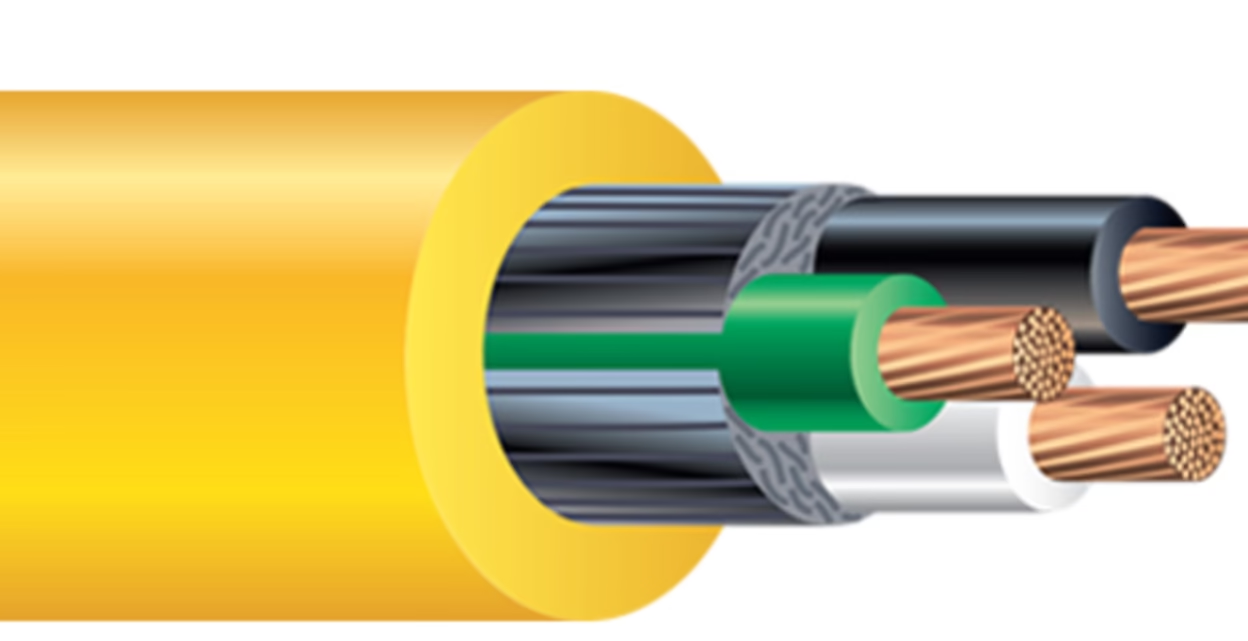
FeiChun FLEXIDRUM® MEDIUM SHD GC Industrial Cable Reel & Festoon System Power Transmission Cables: Comprehensive Safety Architecture for Material Handling Equipment (2–15 kV, -50°C Extreme Cold Capability, 750 feet/minute Deployment, Dual Ground Conductors, Integrated Health Monitoring): Advanced Technical Analysis of Specialized Festoon Cable Engineering Providing Dual Redundant Ground Conductors Ensuring Equipment Safety, Integrated Monitoring Conductor Enabling Cable Health Diagnostics, Tinned Copper Architecture Resisting Water & Corrosion in Industrial Environments, Extreme Cold Operating Capability (-50°C) Supporting Arctic & Cold-Climate Material Handling Operations, Broadest North American Regulatory Compliance (MSHA, CSA, ASTM B-172, ICEA S-75-381) Ensuring Safety Across Continental Infrastructure, Power Screen Design (Conducting vs Non-Conducting by Voltage) Optimizing for Specific Voltage Class Requirements, Industrial Festoon Mechanical Architecture Supporting Continuous Cable Reel Deployment, Color-Coded Conductor System (Black, White, Red Power + Yellow Monitoring) Preventing Installation Errors, and Comprehensive Safety System Integration Ensuring Equipment Reliability Across Demanding Material Handling & Industrial Gantry Infrastructure Industrial material handling equipment (gantry cranes, stacker/reclaimers, cable reels, festoon systems) operates continuously across demanding conditions requiring simultaneous safety, reliability, and extreme cold tolerance: dual ground conductor architecture providing redundant safety pathways preventing single-point electrical hazard, integrated monitoring conductors enabling real-time cable health diagnostics detecting degradation before catastrophic failure, tinned copper construction resisting water ingress and corrosion in industrial environments, extreme cold capability (-50°C) enabling arctic facility operations, comprehensive North American regulatory compliance (MSHA mining safety, CSA electrical safety, ASTM material standards, ICEA conductor specifications) ensuring legal compliance across continental infrastructure. FeiChun's FLEXIDRUM® MEDIUM SHD GC industrial cables represent specialized engineering addressing dual-ground safety architecture providing redundant protection, integrated monitoring enabling predictive diagnostics, tinned copper preventing electrochemical degradation, extreme cold tolerance supporting arctic operations, power screen optimization by voltage class, industrial festoon mechanical durability, color-coded conductors preventing installation errors, and comprehensive North American regulatory integration.

FLEXIDRUM® MEDIUM SHD GC

FeiChun FLEXIDRUM® MEDIUM SHD GC Industrial Cable Reel & Festoon System Power Transmission Cables: Comprehensive Safety Architecture for Material Handling Equipment (2–15 kV, -50°C Extreme Cold Capability, 750 feet/minute Deployment, Dual Ground Conductors, Integrated Health Monitoring): Advanced Technical Analysis of Specialized Festoon Cable Engineering Providing Dual Redundant Ground Conductors Ensuring Equipment Safety, Integrated Monitoring Conductor Enabling Cable Health Diagnostics, Tinned Copper Architecture Resisting Water & Corrosion in Industrial Environments, Extreme Cold Operating Capability (-50°C) Supporting Arctic & Cold-Climate Material Handling Operations, Broadest North American Regulatory Compliance (MSHA, CSA, ASTM B-172, ICEA S-75-381) Ensuring Safety Across Continental Infrastructure, Power Screen Design (Conducting vs Non-Conducting by Voltage) Optimizing for Specific Voltage Class Requirements, Industrial Festoon Mechanical Architecture Supporting Continuous Cable Reel Deployment, Color-Coded Conductor System (Black, White, Red Power + Yellow Monitoring) Preventing Installation Errors, and Comprehensive Safety System Integration Ensuring Equipment Reliability Across Demanding Material Handling & Industrial Gantry Infrastructure Industrial material handling equipment (gantry cranes, stacker/reclaimers, cable reels, festoon systems) operates continuously across demanding conditions requiring simultaneous safety, reliability, and extreme cold tolerance: dual ground conductor architecture providing redundant safety pathways preventing single-point electrical hazard, integrated monitoring conductors enabling real-time cable health diagnostics detecting degradation before catastrophic failure, tinned copper construction resisting water ingress and corrosion in industrial environments, extreme cold capability (-50°C) enabling arctic facility operations, comprehensive North American regulatory compliance (MSHA mining safety, CSA electrical safety, ASTM material standards, ICEA conductor specifications) ensuring legal compliance across continental infrastructure. FeiChun’s FLEXIDRUM® MEDIUM SHD GC industrial cables represent specialized engineering addressing dual-ground safety architecture providing redundant protection, integrated monitoring enabling predictive diagnostics, tinned copper preventing electrochemical degradation, extreme cold tolerance supporting arctic operations, power screen optimization by voltage class, industrial festoon mechanical durability, color-coded conductors preventing installation errors, and comprehensive North American regulatory integration.
PNCT-R high-voltage reel cables represent an advanced evolution in portable power distribution—engineered specifically for container cranes, ship unloaders, cargo handling systems, and bulk terminal equipment where electrical power must be delivered dynamically through mechanically spooled cable reels. Unlike stationary cable installations with fixed routing and stress patterns, reel-deployed cables experience continuous repetitive flex-cycling, abrupt acceleration/deceleration forces, and environmental exposure across multiple geographic locations and climate conditions. Fundamental Design Challenge: Traditional high-voltage cables designed for fixed installations fail catastrophically when deployed on mechanical reels. The repetitive flex-cycling—where individual cable cross-sections bend and straighten thousands of times per shift—creates progressive internal stress concentration and insulation degradation. External mechanical stresses from reel spooling, retraction, equipment vibration, and wind loading accelerate conductor separation and sheath cracking. Standard copper braiding provides insufficient tensile support for repeated dynamic loads. Engineering Solution — Kevlar-Reinforced Architecture: PNCT-R cables integrate specialized Kevlar aramid fiber reinforcement layers—a material system engineered to absorb mechanical stress and prevent internal conductor displacement during dynamic cycling. Rather than relying solely on copper or aluminum tensile components, Kevlar fibers provide sustained tensile support through tens of thousands of flex cycles, maintaining conductor geometry integrity and preventing the progressive insulation failure characteristic of standard high-voltage cables deployed on reels. Feichun engineers have developed proprietary Kevlar weaving methodologies that integrate the reinforcement material within the cable architecture—not as external wrapping (which adds excessive weight), but as strategically positioned internal tensile layers coordinated with specialized sheath formulations. This integrated architecture enables PNCT-R cables to withstand 2+ million repetitive flex cycles at full operational stress without performance degradation.

PNCT-R High-Voltage Reel Cable Family

PNCT-R high-voltage reel cables represent an advanced evolution in portable power distribution—engineered specifically for container cranes, ship unloaders, cargo handling systems, and bulk terminal equipment where electrical power must be delivered dynamically through mechanically spooled cable reels. Unlike stationary cable installations with fixed routing and stress patterns, reel-deployed cables experience continuous repetitive flex-cycling, abrupt acceleration/deceleration forces, and environmental exposure across multiple geographic locations and climate conditions. Fundamental Design Challenge: Traditional high-voltage cables designed for fixed installations fail catastrophically when deployed on mechanical reels. The repetitive flex-cycling—where individual cable cross-sections bend and straighten thousands of times per shift—creates progressive internal stress concentration and insulation degradation. External mechanical stresses from reel spooling, retraction, equipment vibration, and wind loading accelerate conductor separation and sheath cracking. Standard copper braiding provides insufficient tensile support for repeated dynamic loads. Engineering Solution — Kevlar-Reinforced Architecture: PNCT-R cables integrate specialized Kevlar aramid fiber reinforcement layers—a material system engineered to absorb mechanical stress and prevent internal conductor displacement during dynamic cycling. Rather than relying solely on copper or aluminum tensile components, Kevlar fibers provide sustained tensile support through tens of thousands of flex cycles, maintaining conductor geometry integrity and preventing the progressive insulation failure characteristic of standard high-voltage cables deployed on reels. Feichun engineers have developed proprietary Kevlar weaving methodologies that integrate the reinforcement material within the cable architecture—not as external wrapping (which adds excessive weight), but as strategically positioned internal tensile layers coordinated with specialized sheath formulations. This integrated architecture enables PNCT-R cables to withstand 2+ million repetitive flex cycles at full operational stress without performance degradation.
Dragline Scale and Power Demand: Modern electric draglines (such as Bucyrus-Erie, Komatsu, or Hitachi models) are among the largest mobile equipment ever built—some models weighing 13,000+ tonnes with buckets exceeding 200+ cubic meters. A typical dragline requires continuous 6 or 10 kV three-phase power supply delivering 1–3 megawatts. This power is distributed from mobile substations positioned near the dragline, connected via flexible trailing cables spanning 500–1,500 meters. 现代电动拉铲(如Bucyrus-Erie、小松或日立型号)是世界上最大的移动设备之一——某些型号重达13000多吨,斗容超过200立方米。典型拉铲需要持续的6或10 kV三相电源供应,功率为1-3兆瓦。此电源由位于拉铲附近的移动变电站分配,通过跨越500-1500米的柔性拖曳电缆连接。 Arctic Mining Geography: Draglines operate in extreme environments: Siberian Russia (winter temperatures -40°C to -60°C), Canadian Arctic (similar extremes), Mongolia (up to -50°C), and high-altitude operations in Peru or Tibet where thin air and cold combine to degrade cable performance. Standard European or North American cable designs are inadequate for these conditions.

Dragline Power Specs: Ampacity and Weight for КГЭ-ХЛ 3×150+1×50+1×10 6/10kV Heavy-Duty Trailing Cable

Dragline Scale and Power Demand: Modern electric draglines (such as Bucyrus-Erie, Komatsu, or Hitachi models) are among the largest mobile equipment ever built—some models weighing 13,000+ tonnes with buckets exceeding 200+ cubic meters. A typical dragline requires continuous 6 or 10 kV three-phase power supply delivering 1–3 megawatts. This power is distributed from mobile substations positioned near the dragline, connected via flexible trailing cables spanning 500–1,500 meters. 现代电动拉铲(如Bucyrus-Erie、小松或日立型号)是世界上最大的移动设备之一——某些型号重达13000多吨,斗容超过200立方米。典型拉铲需要持续的6或10 kV三相电源供应,功率为1-3兆瓦。此电源由位于拉铲附近的移动变电站分配,通过跨越500-1500米的柔性拖曳电缆连接。 Arctic Mining Geography: Draglines operate in extreme environments: Siberian Russia (winter temperatures -40°C to -60°C), Canadian Arctic (similar extremes), Mongolia (up to -50°C), and high-altitude operations in Peru or Tibet where thin air and cold combine to degrade cable performance. Standard European or North American cable designs are inadequate for these conditions.
The (N)SSHÖU designation represents a family of European rubber-insulated cables designed and manufactured to German VDE standards, specifically VDE 0250-812. The designation encodes the cable's fundamental characteristics: flexible power transmission cable suitable for mining and industrial applications. The baseline European design is optimized for 0.6/1kV operation, representing the standard voltage rating for TN earthing systems prevalent throughout Europe and North America. (N)SSHÖU代表一系列欧洲橡胶绝缘电缆,按照德国VDE标准(特别是VDE 0250-812)设计和制造。该名称编码了电缆的基本特征:适合采矿和工业应用的灵活电力传输电缆。欧洲基线设计针对0.6/1kV运行进行了优化,代表了欧洲和北美普遍存在的TN接地系统的标准电压额定值。

Insulation Thickness Differences: How AS/NZS 1.1/1.1kV Modifies (N)SSHÖU Cable Structure

The (N)SSHÖU designation represents a family of European rubber-insulated cables designed and manufactured to German VDE standards, specifically VDE 0250-812. The designation encodes the cable’s fundamental characteristics: flexible power transmission cable suitable for mining and industrial applications. The baseline European design is optimized for 0.6/1kV operation, representing the standard voltage rating for TN earthing systems prevalent throughout Europe and North America. (N)SSHÖU代表一系列欧洲橡胶绝缘电缆,按照德国VDE标准(特别是VDE 0250-812)设计和制造。该名称编码了电缆的基本特征:适合采矿和工业应用的灵活电力传输电缆。欧洲基线设计针对0.6/1kV运行进行了优化,代表了欧洲和北美普遍存在的TN接地系统的标准电压额定值。
The fundamental difference between mold-cured and continuous vulcanization processes lies in the physical pressure and thermal constraints applied to the rubber jacket during the cross-linking (vulcanization) phase. In continuous vulcanization, the extruded cable jacket enters a pressurized tube where steam or nitrogen provides only ambient fluid pressure (typically 20 to 100 psi), allowing microscopic air voids to persist within the rubber matrix—a manufacturing-efficient but mechanically compromising approach. In contrast, Nexans AmerCable's proprietary lead-mold curing process encloses the entire extruded cable within a continuous solid lead sheath that subjects the expanding rubber to extreme physical confinement pressure (1,000 to 3,000 psi or higher), forcing virtually all microscopic air voids out of the rubber and enabling optimal cross-linking of polymer chains. The resulting mold-cured jacket exhibits tensile strength 15 to 25 percent higher, tear resistance 20 to 40 percent superior, and abrasion resistance 25 to 50 percent greater than equivalent continuous vulcanization designs—advantages that justify the Tiger Brand's premium positioning and explain its dominant market share in high-altitude Chilean and Peruvian copper mining where cables endure continuous abrasion on jagged rocks, mechanical crushing from heavy loads, and environmental stress from sulfide ore compounds.

Mold-Cured Jacket: AmerCable Tiger Brand vs. Continuous Vulcanization – Why Is Mold-Cured Considered Tougher?

The fundamental difference between mold-cured and continuous vulcanization processes lies in the physical pressure and thermal constraints applied to the rubber jacket during the cross-linking (vulcanization) phase. In continuous vulcanization, the extruded cable jacket enters a pressurized tube where steam or nitrogen provides only ambient fluid pressure (typically 20 to 100 psi), allowing microscopic air voids to persist within the rubber matrix—a manufacturing-efficient but mechanically compromising approach. In contrast, Nexans AmerCable’s proprietary lead-mold curing process encloses the entire extruded cable within a continuous solid lead sheath that subjects the expanding rubber to extreme physical confinement pressure (1,000 to 3,000 psi or higher), forcing virtually all microscopic air voids out of the rubber and enabling optimal cross-linking of polymer chains. The resulting mold-cured jacket exhibits tensile strength 15 to 25 percent higher, tear resistance 20 to 40 percent superior, and abrasion resistance 25 to 50 percent greater than equivalent continuous vulcanization designs—advantages that justify the Tiger Brand’s premium positioning and explain its dominant market share in high-altitude Chilean and Peruvian copper mining where cables endure continuous abrasion on jagged rocks, mechanical crushing from heavy loads, and environmental stress from sulfide ore compounds.
The Type W 4/C 2/0 AWG 2000V portable power cable features a heavy-duty CPE (chlorinated polyethylene) outer jacket that demonstrates exceptional resistance to both ozone and ultraviolet radiation across the typical operating life of outdoor industrial equipment. The cable meets MSHA requirements and passes ASTM D1149 ozone resistance testing, demonstrating no cracking or surface crazing when exposed to 50 parts-per-hundred-million (pphm) of ozone concentration for extended periods. The cable's UV resistance performance, when evaluated according to ASTM G154 accelerated UV aging procedures using UVA-340 lamps at 60°C for 1,000 hours of exposure, results in retention of approximately 80–90% of original tensile strength and maintains mechanical flexibility adequate for normal cable handling and deployment. This performance level, combined with the inherent flame retardant properties of the CPE compound formulation, means that Type W cable can remain in outdoor service for extended periods—typically 5 to 10 years of continuous or frequent outdoor exposure—without experiencing the surface cracking, brittleness, or loss of mechanical properties that would render the cable unsafe or unsuitable for reeling operations. The black color of the CPE formulation, while primarily selected for aesthetic reasons in industrial equipment, also serves a secondary protective function by absorbing and dissipating ultraviolet radiation rather than transmitting it to the inner EPR insulation layers. Understanding how the CPE jacket maintains its protective properties under outdoor exposure requires appreciation for both the chemistry of weathering processes and the engineering of additive packages that extend the cable's useful service life far beyond what conventional rubber compounds could achieve.

Ozone and UV Resistance: Weathering Parameters for Outer Sheath of Type W 4/C 2/0 AWG 2000V Cable

The Type W 4/C 2/0 AWG 2000V portable power cable features a heavy-duty CPE (chlorinated polyethylene) outer jacket that demonstrates exceptional resistance to both ozone and ultraviolet radiation across the typical operating life of outdoor industrial equipment. The cable meets MSHA requirements and passes ASTM D1149 ozone resistance testing, demonstrating no cracking or surface crazing when exposed to 50 parts-per-hundred-million (pphm) of ozone concentration for extended periods. The cable’s UV resistance performance, when evaluated according to ASTM G154 accelerated UV aging procedures using UVA-340 lamps at 60°C for 1,000 hours of exposure, results in retention of approximately 80–90% of original tensile strength and maintains mechanical flexibility adequate for normal cable handling and deployment. This performance level, combined with the inherent flame retardant properties of the CPE compound formulation, means that Type W cable can remain in outdoor service for extended periods—typically 5 to 10 years of continuous or frequent outdoor exposure—without experiencing the surface cracking, brittleness, or loss of mechanical properties that would render the cable unsafe or unsuitable for reeling operations. The black color of the CPE formulation, while primarily selected for aesthetic reasons in industrial equipment, also serves a secondary protective function by absorbing and dissipating ultraviolet radiation rather than transmitting it to the inner EPR insulation layers. Understanding how the CPE jacket maintains its protective properties under outdoor exposure requires appreciation for both the chemistry of weathering processes and the engineering of additive packages that extend the cable’s useful service life far beyond what conventional rubber compounds could achieve.
Type SHD-GC 3/C #1 AWG 8kV trailing cable has a DC resistance of approximately 0.161 ohms per kilometer measured at the reference temperature of 20°C (68°F). This DC resistance value represents the pure ohmic resistance of the copper conductor when direct current flows through it—a condition that occurs in short-circuit analysis and DC testing procedures. However, when this same cable carries the alternating current typical of mining equipment operations (at the standard operating temperature of 90°C), the AC resistance increases to approximately 0.363 ohms per kilometer due to the combined effects of temperature rise and skin effect phenomena. The substantial difference between 0.161 Ω/km (DC, 20°C) and 0.363 Ω/km (AC, 90°C)—more than a 2.25 times increase—demonstrates a critical principle that engineers must account for in real-world voltage drop calculations: laboratory DC resistance values are not directly applicable to field voltage drop analysis. The cable features three 107.2 mm² (1 AWG equivalent) phase conductors of Class 5 tinned copper, with an additional ground-check conductor for continuous monitoring of cable integrity during operation, an outer diameter of approximately 53–58 mm, and a total weight of approximately 6,200–6,800 kg/km. Understanding both the DC baseline resistance and the elevated AC resistance at operating temperature is essential for accurately predicting voltage drop over long cable runs in open-pit mining operations where power distribution distances frequently exceed 500 meters.

Voltage Drop Calculation: Resistance (Ohms/km) for Type SHD-GC 3/C #1 AWG 8kV Trailing Cable

Type SHD-GC 3/C #1 AWG 8kV trailing cable has a DC resistance of approximately 0.161 ohms per kilometer measured at the reference temperature of 20°C (68°F). This DC resistance value represents the pure ohmic resistance of the copper conductor when direct current flows through it—a condition that occurs in short-circuit analysis and DC testing procedures. However, when this same cable carries the alternating current typical of mining equipment operations (at the standard operating temperature of 90°C), the AC resistance increases to approximately 0.363 ohms per kilometer due to the combined effects of temperature rise and skin effect phenomena. The substantial difference between 0.161 Ω/km (DC, 20°C) and 0.363 Ω/km (AC, 90°C)—more than a 2.25 times increase—demonstrates a critical principle that engineers must account for in real-world voltage drop calculations: laboratory DC resistance values are not directly applicable to field voltage drop analysis. The cable features three 107.2 mm² (1 AWG equivalent) phase conductors of Class 5 tinned copper, with an additional ground-check conductor for continuous monitoring of cable integrity during operation, an outer diameter of approximately 53–58 mm, and a total weight of approximately 6,200–6,800 kg/km. Understanding both the DC baseline resistance and the elevated AC resistance at operating temperature is essential for accurately predicting voltage drop over long cable runs in open-pit mining operations where power distribution distances frequently exceed 500 meters.
Type G-GC 3/C #2 AWG cable is a three-conductor power cable with an integrated pilot ground-check conductor designed specifically for underground mine power distribution and earth fault monitoring applications. The three main conductors each measure 33.3 mm² (2 AWG) cross-sectional area and carry three-phase power distribution. The pilot ground-check conductor measures 4 mm² (12 AWG equivalent) and serves as an independent monitoring channel for earth fault detection. The overall cable outer diameter (OD) is typically 18.5 mm to 20.0 mm (0.73 to 0.79 inches) depending on the specific insulation system. The overall weight is approximately 850 kg/km (570 lbs/1000ft). The cable outer sheath is typically XLPE (cross-linked polyethylene) rated for 600 volts continuous service with a safety protocol compliant with DIN VDE 0482-335-2 and IEEE 1202 standards for mine cables. The pilot conductor resistance is approximately 5.2 ohms per kilometer, which establishes the baseline sensitivity for ground fault detection circuits. The capacitance between main conductors and the pilot conductor is typically 120–140 pF/m, a critical parameter that determines the transient response characteristics of the earth fault detection relay.

Earth Fault Monitoring: How does the pilot ground-check conductor in Type G-GC 3/C #2 AWG integrate with mine safety relays? Understanding dual-channel earth fault detection and safety-critical relay logic

Type G-GC 3/C #2 AWG cable is a three-conductor power cable with an integrated pilot ground-check conductor designed specifically for underground mine power distribution and earth fault monitoring applications. The three main conductors each measure 33.3 mm² (2 AWG) cross-sectional area and carry three-phase power distribution. The pilot ground-check conductor measures 4 mm² (12 AWG equivalent) and serves as an independent monitoring channel for earth fault detection. The overall cable outer diameter (OD) is typically 18.5 mm to 20.0 mm (0.73 to 0.79 inches) depending on the specific insulation system. The overall weight is approximately 850 kg/km (570 lbs/1000ft). The cable outer sheath is typically XLPE (cross-linked polyethylene) rated for 600 volts continuous service with a safety protocol compliant with DIN VDE 0482-335-2 and IEEE 1202 standards for mine cables. The pilot conductor resistance is approximately 5.2 ohms per kilometer, which establishes the baseline sensitivity for ground fault detection circuits. The capacitance between main conductors and the pilot conductor is typically 120–140 pF/m, a critical parameter that determines the transient response characteristics of the earth fault detection relay.
Type SHD-GC 3/C 250 MCM 25kV cable has a specified minimum bending radius of 8 times the outer diameter (8 × D), which for this cable translates to approximately 880 millimeters (34.6 inches) based on the typical outer diameter range of 104–110 millimeters. This specification is the absolute minimum radius that the cable can tolerate during installation, reel configuration, and static deployment without incurring unacceptable insulation stress and mechanical damage. However, this 8× specification applies specifically to static installation conditions—situations where the cable is being wound onto a reel, routed through permanent guide equipment, or deployed at rest or under steady-state tension. When the cable enters active operational service on a shovel or dragline where it experiences dynamic motion, rapid acceleration and deceleration, shock loads from bucket impacts, and thermal cycling from solar heating and cooling cycles, the effective operational bending radius constraints become more restrictive. In these dynamic conditions, the safe operating bending radius should be treated as closer to 10–12 times the outer diameter depending on the severity of the mechanical duty, the magnitude of pulling tension applied simultaneously, and the ambient temperature extremes of the mining location.

Static vs. Dynamic Bending Radius: What is the correct minimum bending radius for Type SHD-GC 3/C 250 MCM 25kV shovel cables during installation and operational deployment in open-pit mining?

Type SHD-GC 3/C 250 MCM 25kV cable has a specified minimum bending radius of 8 times the outer diameter (8 × D), which for this cable translates to approximately 880 millimeters (34.6 inches) based on the typical outer diameter range of 104–110 millimeters. This specification is the absolute minimum radius that the cable can tolerate during installation, reel configuration, and static deployment without incurring unacceptable insulation stress and mechanical damage. However, this 8× specification applies specifically to static installation conditions—situations where the cable is being wound onto a reel, routed through permanent guide equipment, or deployed at rest or under steady-state tension. When the cable enters active operational service on a shovel or dragline where it experiences dynamic motion, rapid acceleration and deceleration, shock loads from bucket impacts, and thermal cycling from solar heating and cooling cycles, the effective operational bending radius constraints become more restrictive. In these dynamic conditions, the safe operating bending radius should be treated as closer to 10–12 times the outer diameter depending on the severity of the mechanical duty, the magnitude of pulling tension applied simultaneously, and the ambient temperature extremes of the mining location.
The nominal outer diameter of a Type SHD-GC 3/C 350 MCM 15kV flexible mining trailing cable is approximately 73 mm (2.87 inches), with a maximum permissible outer diameter of approximately 74.9 mm (2.95 inches) per ICEA S-75-381 and NEMA WC-58 standards. The approximate weight of this specific cable geometry is 10,900 kg/km (7,300 lbs/1000 ft). It features three 350 MCM (177 mm² equivalent) main power conductors rated for 435 amperes continuous operation, supplemented by two 2/0 AWG earth conductors and one 6 AWG ground-check monitoring conductor for enhanced mining safety systems. The distinction between nominal (design target) and maximum (allowable limit) outer diameter is critical for mining operations because reel systems, conduit systems, and terminal connectors are engineered based on these dimensional constraints. A cable that exceeds the maximum outer diameter will not fit into equipment designed for the nominal specification, creating logistics delays and operational disruptions that cost far more than any cable savings.

What is the Maximum Outer Diameter of Type SHD-GC 3/C 350 MCM 15kV Mining Cable?

The nominal outer diameter of a Type SHD-GC 3/C 350 MCM 15kV flexible mining trailing cable is approximately 73 mm (2.87 inches), with a maximum permissible outer diameter of approximately 74.9 mm (2.95 inches) per ICEA S-75-381 and NEMA WC-58 standards. The approximate weight of this specific cable geometry is 10,900 kg/km (7,300 lbs/1000 ft). It features three 350 MCM (177 mm² equivalent) main power conductors rated for 435 amperes continuous operation, supplemented by two 2/0 AWG earth conductors and one 6 AWG ground-check monitoring conductor for enhanced mining safety systems. The distinction between nominal (design target) and maximum (allowable limit) outer diameter is critical for mining operations because reel systems, conduit systems, and terminal connectors are engineered based on these dimensional constraints. A cable that exceeds the maximum outer diameter will not fit into equipment designed for the nominal specification, creating logistics delays and operational disruptions that cost far more than any cable savings.
Ampacity is the maximum electric current that a conductor can safely carry continuously without exceeding a specified temperature limit, usually 90°C for power cables used in mining and industrial applications. The word itself is a contraction of "ampere" and "capacity," and it represents a fundamental constraint imposed by the physics of electrical resistance and heat dissipation. Understanding ampacity is not an academic exercise — it is the critical foundation for ensuring that your mining equipment receives reliable power, that cables do not overheat and fail prematurely, and that your operation avoids unplanned downtime due to cable damage or failure. 载流量是导体在不超过指定温度限值(通常为90°C)的条件下能连续安全承载的最大电流。

Ampacity Rating Guide: How Much Current Can a Type SHD-GC 3/C 4/0 AWG 8kV Cable Handle?

Ampacity is the maximum electric current that a conductor can safely carry continuously without exceeding a specified temperature limit, usually 90°C for power cables used in mining and industrial applications. The word itself is a contraction of “ampere” and “capacity,” and it represents a fundamental constraint imposed by the physics of electrical resistance and heat dissipation. Understanding ampacity is not an academic exercise — it is the critical foundation for ensuring that your mining equipment receives reliable power, that cables do not overheat and fail prematurely, and that your operation avoids unplanned downtime due to cable damage or failure. 载流量是导体在不超过指定温度限值(通常为90°C)的条件下能连续安全承载的最大电流。
When electrical engineers and equipment operators discuss the capacity of a dragline or shovel reeling cable, they often refer to a specification that seems disconnected from the typical electrical characteristics — the maximum permissible tensile load, expressed in units of pounds per thousand circular mills (lbs/mcm). This specification is fundamentally different from ampacity (which measures the cable's ability to safely carry electrical current) or voltage rating (which specifies the insulation quality). Instead, tensile load capacity describes the maximum mechanical force that the cable can withstand before the metallic conductors themselves begin to yield, stretch, or break. For a reeling cable used on heavy dragline or shovel equipment, this mechanical specification is often more critical to equipment safety and service life than the electrical specifications, because the cable is typically exposed to enormous pulling forces that can exceed the weight of the equipment being supported.

Type SHD-GC (Reeling): Maximum Permissible Tensile Load for Heavy-Duty Dragline Cable Reels

When electrical engineers and equipment operators discuss the capacity of a dragline or shovel reeling cable, they often refer to a specification that seems disconnected from the typical electrical characteristics — the maximum permissible tensile load, expressed in units of pounds per thousand circular mills (lbs/mcm). This specification is fundamentally different from ampacity (which measures the cable’s ability to safely carry electrical current) or voltage rating (which specifies the insulation quality). Instead, tensile load capacity describes the maximum mechanical force that the cable can withstand before the metallic conductors themselves begin to yield, stretch, or break. For a reeling cable used on heavy dragline or shovel equipment, this mechanical specification is often more critical to equipment safety and service life than the electrical specifications, because the cable is typically exposed to enormous pulling forces that can exceed the weight of the equipment being supported.
Mining operations face persistent safety challenges, with powered haulage accidents accounting for approximately 50% of all mining-related fatalities annually in the United States. Among these incidents, haul truck-related accidents remain the most prevalent, with six out of twenty-eight mining fatalities in 2017 and six out of twenty-seven in 2018 being directly attributed to haul truck operations. The introduction of self-illuminating LED-integrated mining cables represents a transformative advancement in collision avoidance technology, specifically addressing the critical issue of cable run-over accidents in low-visibility environments. (矿山作业面临持续的安全挑战,在美国,动力运输事故约占所有矿山相关死亡事故的50%。在这些事故中,运输卡车相关事故最为普遍,2017年28起矿山死亡事故中有6起、2018年27起中有6起直接归因于运输卡车作业。自发光LED集成矿用电缆的引入代表了防碰撞技术的变革性进步,专门解决低能见度环境中电缆碾压事故的关键问题。)

How Much Does Active Cable Illumination Reduce the Risk of Run-Over Accidents by Haul Trucks in Open-Pit Mines?

Mining operations face persistent safety challenges, with powered haulage accidents accounting for approximately 50% of all mining-related fatalities annually in the United States. Among these incidents, haul truck-related accidents remain the most prevalent, with six out of twenty-eight mining fatalities in 2017 and six out of twenty-seven in 2018 being directly attributed to haul truck operations. The introduction of self-illuminating LED-integrated mining cables represents a transformative advancement in collision avoidance technology, specifically addressing the critical issue of cable run-over accidents in low-visibility environments. (矿山作业面临持续的安全挑战,在美国,动力运输事故约占所有矿山相关死亡事故的50%。在这些事故中,运输卡车相关事故最为普遍,2017年28起矿山死亡事故中有6起、2018年27起中有6起直接归因于运输卡车作业。自发光LED集成矿用电缆的引入代表了防碰撞技术的变革性进步,专门解决低能见度环境中电缆碾压事故的关键问题。)
how does LED mining cable work, self-illuminating cable electromagnetic induction, 360 degree visibility trailing cable for draglines, transparent TPU jacket vs CPE jacket mining cable, MSHA approved LED visibility cable, helical wound LED strip mining cable, cable runover prevention technology, ground check monitoring system mining, induction powered self-illuminating cable, best mining cable for night operations, visible cable for underground mining, high voltage trailing cable with LED, shovel trailing cable downtime reduction, mining cable visibility in low light conditions, electromagnetic field powered LED, self-sufficient LED visual monitoring system, cable damage cost reduction mining, how to prevent trailing cable runovers

Self-Illuminating Mining Cable: 360° Visibility Through Helical Stranding of LED Light Elements

how does LED mining cable work, self-illuminating cable electromagnetic induction, 360 degree visibility trailing cable for draglines, transparent TPU jacket vs CPE jacket mining cable, MSHA approved LED visibility cable, helical wound LED strip mining cable, cable runover prevention technology, ground check monitoring system mining, induction powered self-illuminating cable, best mining cable for night operations, visible cable for underground mining, high voltage trailing cable with LED, shovel trailing cable downtime reduction, mining cable visibility in low light conditions, electromagnetic field powered LED, self-sufficient LED visual monitoring system, cable damage cost reduction mining, how to prevent trailing cable runovers
AmerCable's Tiger® Brand Type SHD-GC mining cables have established themselves as industry benchmarks for portable power applications in surface and underground mining operations. A frequently asked question among mining equipment managers and procurement specialists is whether generic alternatives exist that can match the exact specifications mandated by ICEA S-75-381/NEMA WC-58 standards. This technical analysis examines the standard requirements, construction specifications, and critical parameters that define true equivalency, providing procurement teams with the knowledge needed to evaluate alternative suppliers confidently. AmerCable的Tiger®品牌Type SHD-GC矿用电缆已确立为地表和地下采矿作业便携式电力应用的行业基准。采矿设备管理者和采购专家经常询问的一个问题是,是否存在能够匹配ICEA S-75-381/NEMA WC-58标准规定的精确规格的通用替代品。本技术分析研究了定义真正等效性的标准要求、结构规格和关键参数,为采购团队提供评估替代供应商所需的知识。

Tiger Brand Type SHD-GC: Is There a Generic Alternative That Meets the Exact ICEA S-75-381 Specs of AmerCable?

AmerCable’s Tiger® Brand Type SHD-GC mining cables have established themselves as industry benchmarks for portable power applications in surface and underground mining operations. A frequently asked question among mining equipment managers and procurement specialists is whether generic alternatives exist that can match the exact specifications mandated by ICEA S-75-381/NEMA WC-58 standards. This technical analysis examines the standard requirements, construction specifications, and critical parameters that define true equivalency, providing procurement teams with the knowledge needed to evaluate alternative suppliers confidently. AmerCable的Tiger®品牌Type SHD-GC矿用电缆已确立为地表和地下采矿作业便携式电力应用的行业基准。采矿设备管理者和采购专家经常询问的一个问题是,是否存在能够匹配ICEA S-75-381/NEMA WC-58标准规定的精确规格的通用替代品。本技术分析研究了定义真正等效性的标准要求、结构规格和关键参数,为采购团队提供评估替代供应商所需的知识。
Proper cable sizing is critical for safe and efficient operation of medium voltage mining equipment. When connecting Type SHD-GC cables to Patton & Cooke 15kV cable couplers, precise matching of conductor size to termination grommet specifications ensures optimal electrical performance, mechanical reliability, and long-term safety in demanding mining environments. 正确的电缆尺寸选择对于中压采矿设备的安全高效运行至关重要。将SHD-GC型电缆连接到帕顿与库克15kV电缆耦合器时,精确匹配导体尺寸与终端护套规格可确保在苛刻的采矿环境中实现最佳电气性能、机械可靠性和长期安全性。

Patton & Cooke Cable Sizing: Matching Type SHD-GC to 15kV Coupler Grommets

Proper cable sizing is critical for safe and efficient operation of medium voltage mining equipment. When connecting Type SHD-GC cables to Patton & Cooke 15kV cable couplers, precise matching of conductor size to termination grommet specifications ensures optimal electrical performance, mechanical reliability, and long-term safety in demanding mining environments. 正确的电缆尺寸选择对于中压采矿设备的安全高效运行至关重要。将SHD-GC型电缆连接到帕顿与库克15kV电缆耦合器时,精确匹配导体尺寸与终端护套规格可确保在苛刻的采矿环境中实现最佳电气性能、机械可靠性和长期安全性。
Type W and Type G-GC cables represent two of the most critical portable power cable designs for mining and heavy industrial applications. Both cable types are engineered to withstand extreme mechanical stress, chemical exposure, and demanding electrical requirements while maintaining safety compliance with the Mine Safety and Health Administration (MSHA) regulations under 30 CFR Part 75 and Part 77. Type W和Type G-GC电缆是矿业和重工业应用中最关键的两种便携式电力电缆设计。这两种电缆均经过工程设计,能够承受极端的机械应力、化学暴露和苛刻的电气要求,同时保持符合美国矿山安全与健康管理局(MSHA)根据30 CFR第75和77部分制定的安全合规要求。

Type W vs. Type G-GC: The Definitive Guide to Ground Check Conductors for MSHA Compliance

Type W and Type G-GC cables represent two of the most critical portable power cable designs for mining and heavy industrial applications. Both cable types are engineered to withstand extreme mechanical stress, chemical exposure, and demanding electrical requirements while maintaining safety compliance with the Mine Safety and Health Administration (MSHA) regulations under 30 CFR Part 75 and Part 77. Type W和Type G-GC电缆是矿业和重工业应用中最关键的两种便携式电力电缆设计。这两种电缆均经过工程设计,能够承受极端的机械应力、化学暴露和苛刻的电气要求,同时保持符合美国矿山安全与健康管理局(MSHA)根据30 CFR第75和77部分制定的安全合规要求。
TSCGECEWÖU, NTSCGECEWÖU, TSKCGECWOEU, TSCGEWOEU, NSSHOEU, NTSCGEWOEU-CH, German mining cable, DIN cable, VDE cable, German cable standard, coal cutter cable CH, festoon cable FN, trailing cable W, screened cable designation, EPR mining cable

Joy Global (Komatsu) 7LS Longwall Shearer: (N)TSCGECEWÖU Drag Chain Cable Robustness Analysis

TSCGECEWÖU, NTSCGECEWÖU, TSKCGECWOEU, TSCGEWOEU, NSSHOEU, NTSCGEWOEU-CH, German mining cable, DIN cable, VDE cable, German cable standard, coal cutter cable CH, festoon cable FN, trailing cable W, screened cable designation, EPR mining cable
The Caterpillar 7495 Electric Rope Shovel represents one of the largest and most productive loading machines in modern surface mining operations. This massive machine combines a dipper payload capacity of up to 109 metric tonnes (120 US tons) with advanced AC IGBT (Insulated Gate Bipolar Transistor) electric drive technology to deliver exceptional productivity in overburden removal and ore loading applications. The 7495 is available in three primary configurations: the standard 7495 with Rope Crowd featuring traditional wire rope crowd mechanism, the 7495 with HydraCrowd utilizing hydraulic cylinder crowd technology for enhanced digging performance, and the 7495 HF (High Flotation) variant specifically designed for oil sands operations with specialized undercarriage systems that distribute weight across larger track surfaces to prevent sinking in soft ground conditions. 卡特彼勒7495电铲是现代露天采矿作业中最大、最高效的装载机械之一。这台巨型机器将高达109公吨(120美吨)的铲斗有效载荷容量与先进的AC IGBT(绝缘栅双极晶体管)电驱动技术相结合,在覆盖层剥离和矿石装载应用中提供卓越的生产率。

Caterpillar 7495 Electric Rope Shovel: Type SHD-GC Trailing Cable Voltage Selection

The Caterpillar 7495 Electric Rope Shovel represents one of the largest and most productive loading machines in modern surface mining operations. This massive machine combines a dipper payload capacity of up to 109 metric tonnes (120 US tons) with advanced AC IGBT (Insulated Gate Bipolar Transistor) electric drive technology to deliver exceptional productivity in overburden removal and ore loading applications. The 7495 is available in three primary configurations: the standard 7495 with Rope Crowd featuring traditional wire rope crowd mechanism, the 7495 with HydraCrowd utilizing hydraulic cylinder crowd technology for enhanced digging performance, and the 7495 HF (High Flotation) variant specifically designed for oil sands operations with specialized undercarriage systems that distribute weight across larger track surfaces to prevent sinking in soft ground conditions. 卡特彼勒7495电铲是现代露天采矿作业中最大、最高效的装载机械之一。这台巨型机器将高达109公吨(120美吨)的铲斗有效载荷容量与先进的AC IGBT(绝缘栅双极晶体管)电驱动技术相结合,在覆盖层剥离和矿石装载应用中提供卓越的生产率。
The Australian and New Zealand electrical cable markets have been historically dominated by two major premium brands that established strong reputations over decades of operation. Olex Versolex, manufactured by Nexans Australia (formerly Olex Cables), represents a flagship line of flexible single-core and multicore power cables that comply fully with AS/NZS 5000.1 standards. These cables feature Class 5 flexible copper conductors, X-90 XLPE (Cross-Linked Polyethylene) insulation rated for 90 degrees Celsius continuous operation, and TPE-90 or PVC sheathing suitable for a wide range of commercial, industrial, and mining applications. The Versolex range has earned recognition for its robustness, durability, and suitability for submersible applications up to 500 meters depth, making it a preferred choice for demanding installations where reliability is paramount. 澳大利亚和新西兰电缆市场历来由两个在数十年运营中建立了强大声誉的主要高端品牌主导。由Nexans澳大利亚(前身为Olex电缆)制造的Olex Versolex代表了一系列旗舰柔性单芯和多芯电力电缆,完全符合AS/NZS 5000.1标准。这些电缆采用5类柔性铜导体、额定90摄氏度连续运行的X-90 XLPE(交联聚乙烯)绝缘以及适用于各种商业、工业和采矿应用的TPE-90或PVC护套。

Cost-Effective Generic Alternatives to Olex Versolex and Prysmian Cables

The Australian and New Zealand electrical cable markets have been historically dominated by two major premium brands that established strong reputations over decades of operation. Olex Versolex, manufactured by Nexans Australia (formerly Olex Cables), represents a flagship line of flexible single-core and multicore power cables that comply fully with AS/NZS 5000.1 standards. These cables feature Class 5 flexible copper conductors, X-90 XLPE (Cross-Linked Polyethylene) insulation rated for 90 degrees Celsius continuous operation, and TPE-90 or PVC sheathing suitable for a wide range of commercial, industrial, and mining applications. The Versolex range has earned recognition for its robustness, durability, and suitability for submersible applications up to 500 meters depth, making it a preferred choice for demanding installations where reliability is paramount. 澳大利亚和新西兰电缆市场历来由两个在数十年运营中建立了强大声誉的主要高端品牌主导。由Nexans澳大利亚(前身为Olex电缆)制造的Olex Versolex代表了一系列旗舰柔性单芯和多芯电力电缆,完全符合AS/NZS 5000.1标准。这些电缆采用5类柔性铜导体、额定90摄氏度连续运行的X-90 XLPE(交联聚乙烯)绝缘以及适用于各种商业、工业和采矿应用的TPE-90或PVC护套。
Proper cable gland selection for Type W mining cables requires precise understanding of outer diameter tolerances and dimensional specifications. The outer diameter of a cable is subject to manufacturing variations that must be accounted for when selecting cable glands to ensure proper sealing, strain relief, and mechanical protection. For Type W 4/0 AWG cables, which are commonly used in mining and heavy industrial applications, understanding these tolerances is critical for reliable installation and long-term performance. Type W矿用电缆的正确电缆接头选型需要精确了解外径公差和尺寸规格。电缆的外径受制造变化的影响,在选择电缆接头时必须考虑这些因素,以确保正确的密封、应变释放和机械保护。对于Type W 4/0 AWG电缆(通常用于采矿和重工业应用),了解这些公差对于可靠安装和长期性能至关重要。

Type W 4/0 AWG Cable: Diameter Tolerance & Gland Selection Technical Guide

Proper cable gland selection for Type W mining cables requires precise understanding of outer diameter tolerances and dimensional specifications. The outer diameter of a cable is subject to manufacturing variations that must be accounted for when selecting cable glands to ensure proper sealing, strain relief, and mechanical protection. For Type W 4/0 AWG cables, which are commonly used in mining and heavy industrial applications, understanding these tolerances is critical for reliable installation and long-term performance. Type W矿用电缆的正确电缆接头选型需要精确了解外径公差和尺寸规格。电缆的外径受制造变化的影响,在选择电缆接头时必须考虑这些因素,以确保正确的密封、应变释放和机械保护。对于Type W 4/0 AWG电缆(通常用于采矿和重工业应用),了解这些公差对于可靠安装和长期性能至关重要。
When working with Type G-GC portable power cables, one of the most frequently asked questions by installers and maintenance technicians concerns the proper connection of the ground check conductor, often called the pilot wire. This seemingly simple question touches on one of the most critical safety systems in mining and heavy industrial electrical installations. Understanding not just where this wire connects, but why it exists and how it functions as part of a comprehensive ground fault protection system, is essential for anyone working with mining equipment electrical systems. 在使用Type G-GC便携式电源电缆时,安装人员和维护技术人员最常问的问题之一是关于接地检查导体(通常称为导线)的正确连接。这个看似简单的问题涉及到采矿和重工业电气安装中最关键的安全系统之一。

Connection Guide: Wiring a Type G-GC Plug – Where Does the Ground Check Wire Go?

When working with Type G-GC portable power cables, one of the most frequently asked questions by installers and maintenance technicians concerns the proper connection of the ground check conductor, often called the pilot wire. This seemingly simple question touches on one of the most critical safety systems in mining and heavy industrial electrical installations. Understanding not just where this wire connects, but why it exists and how it functions as part of a comprehensive ground fault protection system, is essential for anyone working with mining equipment electrical systems. 在使用Type G-GC便携式电源电缆时,安装人员和维护技术人员最常问的问题之一是关于接地检查导体(通常称为导线)的正确连接。这个看似简单的问题涉及到采矿和重工业电气安装中最关键的安全系统之一。
Hard-rock mining operations present some of the most severe mechanical challenges for cable materials in any industrial environment. Unlike coal mining where the surrounding geology consists of relatively softer sedimentary rock formations, hard-rock mining for metals such as gold, copper, platinum, iron ore, and other valuable minerals involves working with extremely abrasive geological materials. Granite, basalt, quartzite, and metamorphic rocks create an environment where cables are constantly subjected to cutting, gouging, and grinding forces that can rapidly destroy inadequately protected cable sheaths.1 硬岩采矿作业对电缆材料在任何工业环境中都提出了一些最严峻的机械挑战。与煤矿开采周围地质由相对较软的沉积岩层组成不同,开采金、铜、铂、铁矿石和其他贵重矿物的硬岩采矿涉及与极具磨蚀性的地质材料一起工作。

PUR/Polyurethane Sheath vs 5GM3 Rubber: Material Comparison for Abrasive Hard-Rock Mining

Hard-rock mining operations present some of the most severe mechanical challenges for cable materials in any industrial environment. Unlike coal mining where the surrounding geology consists of relatively softer sedimentary rock formations, hard-rock mining for metals such as gold, copper, platinum, iron ore, and other valuable minerals involves working with extremely abrasive geological materials. Granite, basalt, quartzite, and metamorphic rocks create an environment where cables are constantly subjected to cutting, gouging, and grinding forces that can rapidly destroy inadequately protected cable sheaths.1 硬岩采矿作业对电缆材料在任何工业环境中都提出了一些最严峻的机械挑战。与煤矿开采周围地质由相对较软的沉积岩层组成不同,开采金、铜、铂、铁矿石和其他贵重矿物的硬岩采矿涉及与极具磨蚀性的地质材料一起工作。
DLO TORSIONFLEX RHH/RHW-2 represents an advanced category of portable power cables specifically engineered for demanding industrial applications, including wind turbine installations where torsional flexibility and multi-environment performance are critical requirements. This cable type combines the proven durability of Diesel Locomotive (DLO) construction with enhanced torsion resistance, making it uniquely suited for wind energy systems where cables must accommodate continuous nacelle rotation while maintaining electrical integrity.

What is DLO TORSIONFLEX RHH/RHW-2 2000V Wind Turbine Cable?

DLO TORSIONFLEX RHH/RHW-2 represents an advanced category of portable power cables specifically engineered for demanding industrial applications, including wind turbine installations where torsional flexibility and multi-environment performance are critical requirements. This cable type combines the proven durability of Diesel Locomotive (DLO) construction with enhanced torsion resistance, making it uniquely suited for wind energy systems where cables must accommodate continuous nacelle rotation while maintaining electrical integrity.
heavy-duty rubber cables represent a critical category for applications requiring exceptional mechanical strength, flexibility, and environmental resistance. This comprehensive technical guide examines three closely related cable types that dominate international markets for portable power transmission: the Chinese standard GB/T 5013 YC (Heavy-Duty General Rubber Cable) rated at 450/750V, the enhanced YCW variant with oil and weather resistance, and the European harmonized H07RN-F cable that serves as the international equivalent.

GB/T 5013 YC & YCW Heavy-Duty Rubber Cables and H07RN-F: Comprehensive Technical Analysis

heavy-duty rubber cables represent a critical category for applications requiring exceptional mechanical strength, flexibility, and environmental resistance. This comprehensive technical guide examines three closely related cable types that dominate international markets for portable power transmission: the Chinese standard GB/T 5013 YC (Heavy-Duty General Rubber Cable) rated at 450/750V, the enhanced YCW variant with oil and weather resistance, and the European harmonized H07RN-F cable that serves as the international equivalent.
Complete Guide to UL 1650:2025 Portable Power Cable Type G, Type G-GC, Type W, MP-GC & SHD-GC Mining Cables — Technical Specifications, Compliance Standards, Safety Guidelines and Applications

Complete Guide to UL 1650:2025 Portable Power Cable

UL 1650, UL 1650:2025, portable power cable, mining cable, Type G cable, Type G-GC cable, Type W cable, MP-GC cable, SHD-GC cable, MSHA approved cable, EPR insulation, CPE jacket, trailing cable, mining equipment cable UL 1650 is the primary safety standard for portable power cables used in industrial and mining applications across North America. The UL 1650:2025 edition, published by Underwriters Laboratories and ANSI approved in November 2025, establishes comprehensive requirements for portable power cables designed for use in accordance with the National Electrical Code (NFPA 70).[1] This standard covers various types of portable power cables including Type G, Type G-GC, Type W, MP-GC, and SHD-GC cables that are essential for powering mobile and stationary mining equipment in both surface and underground operations. The cables manufactured under UL 1650 must undergo rigorous testing per UL 2556 (Wire and Cable Test Methods) to ensure safety and reliability in demanding industrial environments.[2]
What is Electrical Cables for Container Cranes?

What is Electrical Cables for Container Cranes?

Container cranes represent the backbone of modern port operations, handling millions of containers annually at ports worldwide. The reliable operation of these massive machines depends fundamentally on their electrical cable systems, which must endure extreme mechanical stresses, environmental challenges, and continuous operation cycles. According to industry data compiled by PEMA (Port Equipment Manufacturers Association), electrical cable failures account for approximately 15-20% of container crane downtime, representing significant operational and financial costs to port operators.
NEC Article 400, Table 400.4 Cable

Understanding NEC Article 400, Table 400.4: Complete Technical Guide to Flexible Cord and Cable Specifications

National Electrical Code (NEC) Article 400 establishes comprehensive requirements for flexible cords and flexible cables used in electrical installations throughout North America. According to the National Fire Protection Association (NFPA), Article 400 specifically covers general requirements, applications, and construction specifications for flexible cords and flexible cables rated up to 600 volts maximum, with special provisions for electric vehicle cables rated up to 1000 volts maximum.
CEI 20-27 CENELEC HD361 Cable

What is CEI 20-27 CENELEC HD361 Cable?

CEI 20-27 CENELEC HD361 represents a standardized cable designation system developed by the European Committee for Electrotechnical Standardisation (CENELEC) to provide uniform identification and classification of harmonized power cables and cords across European markets. This systematic coding methodology enables engineers, procurement specialists, and electrical contractors to precisely identify cable specifications including voltage ratings, insulation materials, conductor types, and sheathing compounds through a structured alphanumeric designation format.
DIN VDE 0250 German Standard Flexible Power Reeling Cable

What is DIN VDE 0250 Reeling Cables?

DIN VDE 0250 represents the globally recognized German standard for flexible electrical cables designed specifically for cranes, material handling equipment, and mobile machinery applications. As Germany remains the only country to have issued special design regulations for flexible electrical cables covering cranes and material handling equipment, this standard has achieved worldwide acceptance as the ultimate benchmark for tough rubber-sheathed flexible reeling cables.
R-(N)TSCGEWOEU

What is R-(N)TSCGEWOEU Protolon (M)-R Cable W-9 High Voltage Round Reeling Cable?

The R-(N)TSCGEWOEU cable, marketed under the Protolon (M)-R and W-9 brand designations, represents the pinnacle of medium to high voltage reeling cable technology for extreme industrial applications. This sophisticated cable system is specifically engineered for fast-moving container cranes, heavy mining equipment, stackers, reclaimers, and ship unloaders where conventional medium voltage cables would fail.
Reeling & Trailing Cables for Cranes & Mining — Feichun Special Cable Blogs

DIN VDE 0250 vs BS 6708-6116 BCS 295: Comprehensive Mining Cable Standards Comparison

Mining operations worldwide demand electrical cables that can withstand extreme conditions, mechanical stress, and potentially explosive atmospheres. Two primary international standards govern flexible mining cable specifications: the German DIN VDE 0250 and the British BS 6708 series (including BS 6116 and BCS 295 specifications). Understanding the differences and correspondences between these standards is crucial for mining engineers, procurement specialists, and electrical contractors working on international projects. This comprehensive guide analyzes both standards to help you make informed decisions about cable selection for mining applications.