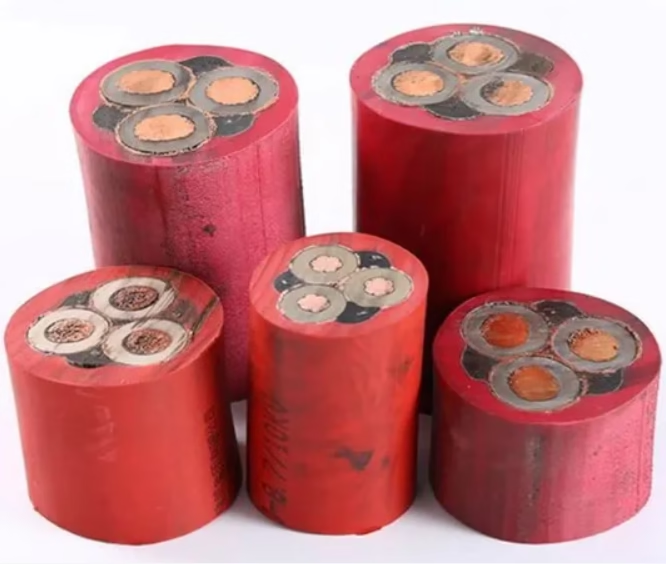
electric shovel cable

RHEYFIRM® is Nexans' premium line of flexible medium-voltage reeling cables specifically engineered for the extreme mechanical and environmental stresses of port machinery (STS cranes, automated stacker-reclaimers) and mining equipment (continuous dragline cables, mobile crusher power systems). Unlike fixed installation cables that remain stationary throughout their service life, reeling cables experience constant dynamic stress—deploying and retracting hundreds to thousands of times over their operational life. This continuous reeling duty subjects the cable to millions of bending cycles, sustained tensile loads, electromagnetic stress, salt spray corrosion, intense ultraviolet radiation, and temperature extremes far exceeding what conventional industrial cables are designed to tolerate. The physical diameter of a reeling cable is not simply a matter of aesthetics or standardization—it directly affects how much cable can fit on a physical drum of fixed dimensions. Consider a stacker-reclaimer with an existing cable drum that has a fixed flange width (say, 1,200 millimeters) and a fixed core diameter (say, 400 millimeters). The amount of cable that can be wound onto this drum depends on how tightly the cable packs around the core. A cable with a 59-millimeter outer diameter will create a larger spiral as it is wound layer by layer, limiting the total cable length to perhaps 600 meters. That same physical drum, if fitted with a 55.8-millimeter diameter cable, creates a tighter spiral and accommodates perhaps 750 meters of cable—a 25 percent increase in usable length with zero change to the physical equipment. For equipment where travel distance requirements have increased due to terminal expansion or operational upgrades, this diameter optimization can mean the difference between being able to extend operations and being forced into an expensive drum replacement project costing hundreds of thousands of dollars.

RHEYFIRM® (RS) vs. RHEYFIRM® (RTS): When to Choose the “Reduced Diameter” Version for Space-Constrained Reels

RHEYFIRM® is Nexans’ premium line of flexible medium-voltage reeling cables specifically engineered for the extreme mechanical and environmental stresses of port machinery (STS cranes, automated stacker-reclaimers) and mining equipment (continuous dragline cables, mobile crusher power systems). Unlike fixed installation cables that remain stationary throughout their service life, reeling cables experience constant dynamic stress—deploying and retracting hundreds to thousands of times over their operational life. This continuous reeling duty subjects the cable to millions of bending cycles, sustained tensile loads, electromagnetic stress, salt spray corrosion, intense ultraviolet radiation, and temperature extremes far exceeding what conventional industrial cables are designed to tolerate. The physical diameter of a reeling cable is not simply a matter of aesthetics or standardization—it directly affects how much cable can fit on a physical drum of fixed dimensions. Consider a stacker-reclaimer with an existing cable drum that has a fixed flange width (say, 1,200 millimeters) and a fixed core diameter (say, 400 millimeters). The amount of cable that can be wound onto this drum depends on how tightly the cable packs around the core. A cable with a 59-millimeter outer diameter will create a larger spiral as it is wound layer by layer, limiting the total cable length to perhaps 600 meters. That same physical drum, if fitted with a 55.8-millimeter diameter cable, creates a tighter spiral and accommodates perhaps 750 meters of cable—a 25 percent increase in usable length with zero change to the physical equipment. For equipment where travel distance requirements have increased due to terminal expansion or operational upgrades, this diameter optimization can mean the difference between being able to extend operations and being forced into an expensive drum replacement project costing hundreds of thousands of dollars.
(N)TSCGEWÖU 3x185+3x35/3 6/10kV cables in large-scale mining operations, the outer diameter is not merely a specification number—it is a critical interface parameter determining whether the cable fits your reel system, passes through underground shaft collars, mates with terminal connectors, and allows proper tension management during deployment and retrieval.

What is the Exact Outer Diameter of (N)TSCGEWÖU 3×185+3×35/3 6/10kV Reeling Cable?

(N)TSCGEWÖU 3×185+3×35/3 6/10kV cables in large-scale mining operations, the outer diameter is not merely a specification number—it is a critical interface parameter determining whether the cable fits your reel system, passes through underground shaft collars, mates with terminal connectors, and allows proper tension management during deployment and retrieval.
Mining operations face persistent safety challenges, with powered haulage accidents accounting for approximately 50% of all mining-related fatalities annually in the United States. Among these incidents, haul truck-related accidents remain the most prevalent, with six out of twenty-eight mining fatalities in 2017 and six out of twenty-seven in 2018 being directly attributed to haul truck operations. The introduction of self-illuminating LED-integrated mining cables represents a transformative advancement in collision avoidance technology, specifically addressing the critical issue of cable run-over accidents in low-visibility environments. (矿山作业面临持续的安全挑战,在美国,动力运输事故约占所有矿山相关死亡事故的50%。在这些事故中,运输卡车相关事故最为普遍,2017年28起矿山死亡事故中有6起、2018年27起中有6起直接归因于运输卡车作业。自发光LED集成矿用电缆的引入代表了防碰撞技术的变革性进步,专门解决低能见度环境中电缆碾压事故的关键问题。)

How Much Does Active Cable Illumination Reduce the Risk of Run-Over Accidents by Haul Trucks in Open-Pit Mines?

Mining operations face persistent safety challenges, with powered haulage accidents accounting for approximately 50% of all mining-related fatalities annually in the United States. Among these incidents, haul truck-related accidents remain the most prevalent, with six out of twenty-eight mining fatalities in 2017 and six out of twenty-seven in 2018 being directly attributed to haul truck operations. The introduction of self-illuminating LED-integrated mining cables represents a transformative advancement in collision avoidance technology, specifically addressing the critical issue of cable run-over accidents in low-visibility environments. (矿山作业面临持续的安全挑战,在美国,动力运输事故约占所有矿山相关死亡事故的50%。在这些事故中,运输卡车相关事故最为普遍,2017年28起矿山死亡事故中有6起、2018年27起中有6起直接归因于运输卡车作业。自发光LED集成矿用电缆的引入代表了防碰撞技术的变革性进步,专门解决低能见度环境中电缆碾压事故的关键问题。)
how does LED mining cable work, self-illuminating cable electromagnetic induction, 360 degree visibility trailing cable for draglines, transparent TPU jacket vs CPE jacket mining cable, MSHA approved LED visibility cable, helical wound LED strip mining cable, cable runover prevention technology, ground check monitoring system mining, induction powered self-illuminating cable, best mining cable for night operations, visible cable for underground mining, high voltage trailing cable with LED, shovel trailing cable downtime reduction, mining cable visibility in low light conditions, electromagnetic field powered LED, self-sufficient LED visual monitoring system, cable damage cost reduction mining, how to prevent trailing cable runovers

Self-Illuminating Mining Cable: 360° Visibility Through Helical Stranding of LED Light Elements

how does LED mining cable work, self-illuminating cable electromagnetic induction, 360 degree visibility trailing cable for draglines, transparent TPU jacket vs CPE jacket mining cable, MSHA approved LED visibility cable, helical wound LED strip mining cable, cable runover prevention technology, ground check monitoring system mining, induction powered self-illuminating cable, best mining cable for night operations, visible cable for underground mining, high voltage trailing cable with LED, shovel trailing cable downtime reduction, mining cable visibility in low light conditions, electromagnetic field powered LED, self-sufficient LED visual monitoring system, cable damage cost reduction mining, how to prevent trailing cable runovers
Proper cable sizing is critical for safe and efficient operation of medium voltage mining equipment. When connecting Type SHD-GC cables to Patton & Cooke 15kV cable couplers, precise matching of conductor size to termination grommet specifications ensures optimal electrical performance, mechanical reliability, and long-term safety in demanding mining environments. 正确的电缆尺寸选择对于中压采矿设备的安全高效运行至关重要。将SHD-GC型电缆连接到帕顿与库克15kV电缆耦合器时,精确匹配导体尺寸与终端护套规格可确保在苛刻的采矿环境中实现最佳电气性能、机械可靠性和长期安全性。

Patton & Cooke Cable Sizing: Matching Type SHD-GC to 15kV Coupler Grommets

Proper cable sizing is critical for safe and efficient operation of medium voltage mining equipment. When connecting Type SHD-GC cables to Patton & Cooke 15kV cable couplers, precise matching of conductor size to termination grommet specifications ensures optimal electrical performance, mechanical reliability, and long-term safety in demanding mining environments. 正确的电缆尺寸选择对于中压采矿设备的安全高效运行至关重要。将SHD-GC型电缆连接到帕顿与库克15kV电缆耦合器时,精确匹配导体尺寸与终端护套规格可确保在苛刻的采矿环境中实现最佳电气性能、机械可靠性和长期安全性。
Type SHD-GC (Shielded, High-voltage, with a Grounding Conductor) cables represent the industry standard for high-voltage portable power distribution in surface and underground mining operations. These cables are manufactured according to ICEA S-75-381/NEMA WC 58 standards and must comply with MSHA 30 CFR Part 7 flame resistance requirements for use in mining environments. SHD-GC型(带接地导体的屏蔽高压)电缆代表了露天和地下采矿作业中高压便携式配电的行业标准。这些电缆根据ICEA S-75-381/NEMA WC 58标准制造,并必须符合MSHA 30 CFR第7部分的阻燃要求,方可用于采矿环境。

Coupler Compatibility: Matching Type SHD-GC Cables with Patton & Cooke 15kV Connectors

Type SHD-GC (Shielded, High-voltage, with a Grounding Conductor) cables represent the industry standard for high-voltage portable power distribution in surface and underground mining operations. These cables are manufactured according to ICEA S-75-381/NEMA WC 58 standards and must comply with MSHA 30 CFR Part 7 flame resistance requirements for use in mining environments. SHD-GC型(带接地导体的屏蔽高压)电缆代表了露天和地下采矿作业中高压便携式配电的行业标准。这些电缆根据ICEA S-75-381/NEMA WC 58标准制造,并必须符合MSHA 30 CFR第7部分的阻燃要求,方可用于采矿环境。
Type 450 cables are Australian-standard reeling and trailing cables designed specifically for mining applications. Defined under AS/NZS 1802 (formerly AS 1802), these cables feature robust construction capable of withstanding the harsh conditions of underground and surface mining environments. The "Type 450" designation indicates cables rated for 450/750V operation in mining applications.

Ampcontrol Protection Relays: Required Pilot Core Resistance for Type 450 Cables

Type 450 cables are Australian-standard reeling and trailing cables designed specifically for mining applications. Defined under AS/NZS 1802 (formerly AS 1802), these cables feature robust construction capable of withstanding the harsh conditions of underground and surface mining environments. The “Type 450” designation indicates cables rated for 450/750V operation in mining applications.
AmerCable, now part of the Prysmian Group following the 2016 acquisition of General Cable (which had acquired AmerCable in 2011), has manufactured the Tiger Brand line since the 1970s. Tiger Brand cables have earned their reputation through consistent performance in the harshest mining environments, including underground coal mines, surface mining operations, and heavy industrial facilities. AmerCable自1970年代开始生产虎牌系列电缆,现已成为普睿司曼集团的一部分(2016年普睿司曼收购了通用电缆公司,后者于2011年收购了AmerCable)。虎牌电缆因在最恶劣的采矿环境中表现出色而赢得声誉,包括地下煤矿、露天采矿作业和重型工业设施。

AmerCable Tiger Brand: Can I Interchange AmerCable Tiger Brand Type W with Standard Type W Portable Power Cable?

AmerCable, now part of the Prysmian Group following the 2016 acquisition of General Cable (which had acquired AmerCable in 2011), has manufactured the Tiger Brand line since the 1970s. Tiger Brand cables have earned their reputation through consistent performance in the harshest mining environments, including underground coal mines, surface mining operations, and heavy industrial facilities. AmerCable自1970年代开始生产虎牌系列电缆,现已成为普睿司曼集团的一部分(2016年普睿司曼收购了通用电缆公司,后者于2011年收购了AmerCable)。虎牌电缆因在最恶劣的采矿环境中表现出色而赢得声誉,包括地下煤矿、露天采矿作业和重型工业设施。
The Caterpillar 7495 Electric Rope Shovel represents one of the largest and most productive loading machines in modern surface mining operations. This massive machine combines a dipper payload capacity of up to 109 metric tonnes (120 US tons) with advanced AC IGBT (Insulated Gate Bipolar Transistor) electric drive technology to deliver exceptional productivity in overburden removal and ore loading applications. The 7495 is available in three primary configurations: the standard 7495 with Rope Crowd featuring traditional wire rope crowd mechanism, the 7495 with HydraCrowd utilizing hydraulic cylinder crowd technology for enhanced digging performance, and the 7495 HF (High Flotation) variant specifically designed for oil sands operations with specialized undercarriage systems that distribute weight across larger track surfaces to prevent sinking in soft ground conditions. 卡特彼勒7495电铲是现代露天采矿作业中最大、最高效的装载机械之一。这台巨型机器将高达109公吨(120美吨)的铲斗有效载荷容量与先进的AC IGBT(绝缘栅双极晶体管)电驱动技术相结合,在覆盖层剥离和矿石装载应用中提供卓越的生产率。

Caterpillar 7495 Electric Rope Shovel: Type SHD-GC Trailing Cable Voltage Selection

The Caterpillar 7495 Electric Rope Shovel represents one of the largest and most productive loading machines in modern surface mining operations. This massive machine combines a dipper payload capacity of up to 109 metric tonnes (120 US tons) with advanced AC IGBT (Insulated Gate Bipolar Transistor) electric drive technology to deliver exceptional productivity in overburden removal and ore loading applications. The 7495 is available in three primary configurations: the standard 7495 with Rope Crowd featuring traditional wire rope crowd mechanism, the 7495 with HydraCrowd utilizing hydraulic cylinder crowd technology for enhanced digging performance, and the 7495 HF (High Flotation) variant specifically designed for oil sands operations with specialized undercarriage systems that distribute weight across larger track surfaces to prevent sinking in soft ground conditions. 卡特彼勒7495电铲是现代露天采矿作业中最大、最高效的装载机械之一。这台巨型机器将高达109公吨(120美吨)的铲斗有效载荷容量与先进的AC IGBT(绝缘栅双极晶体管)电驱动技术相结合,在覆盖层剥离和矿石装载应用中提供卓越的生产率。
Type 441 cables represent a critical category of mining power cables designed for demanding applications in surface and underground mining environments. These cables are specifically engineered to withstand extreme mechanical stress, including trailing, reeling, crushing forces, and environmental hazards encountered in heavy-duty industrial operations. The sheath hardness specification is a fundamental parameter that directly affects the cable's mechanical performance, durability, and service life under harsh operational conditions. 441型电缆是专为地表和地下采矿环境中的苛刻应用而设计的关键矿用电力电缆类别。这些电缆经过专门设计,能够承受极端的机械应力,包括拖拽、卷筒、挤压力以及在重型工业作业中遇到的环境危害。护套硬度规范是直接影响电缆在苛刻操作条件下的机械性能、耐久性和使用寿命的基本参数。

Type 441 Cable Sheath Hardness Standards

Type 441 cables represent a critical category of mining power cables designed for demanding applications in surface and underground mining environments. These cables are specifically engineered to withstand extreme mechanical stress, including trailing, reeling, crushing forces, and environmental hazards encountered in heavy-duty industrial operations. The sheath hardness specification is a fundamental parameter that directly affects the cable’s mechanical performance, durability, and service life under harsh operational conditions. 441型电缆是专为地表和地下采矿环境中的苛刻应用而设计的关键矿用电力电缆类别。这些电缆经过专门设计,能够承受极端的机械应力,包括拖拽、卷筒、挤压力以及在重型工业作业中遇到的环境危害。护套硬度规范是直接影响电缆在苛刻操作条件下的机械性能、耐久性和使用寿命的基本参数。Type 441 cables represent a critical category of mining power cables designed for demanding applications in surface and underground mining environments. These cables are specifically engineered to withstand extreme mechanical stress, including trailing, reeling, crushing forces, and environmental hazards encountered in heavy-duty industrial operations. The sheath hardness specification is a fundamental parameter that directly affects the cable’s mechanical performance, durability, and service life under harsh operational conditions. 441型电缆是专为地表和地下采矿环境中的苛刻应用而设计的关键矿用电力电缆类别。这些电缆经过专门设计,能够承受极端的机械应力,包括拖拽、卷筒、挤压力以及在重型工业作业中遇到的环境危害。护套硬度规范是直接影响电缆在苛刻操作条件下的机械性能、耐久性和使用寿命的基本参数。
Comprehensive Technical Analysis of Chlorinated Polyethylene (CPE) vs Chlorosulphonated Polyethylene (CSP) Sheath Performance Under Extreme UV Radiation in Pilbara Region Mining Operations 氯化聚乙烯(CPE)与氯磺化聚乙烯(CSP)护套在皮尔巴拉地区采矿作业极端紫外线辐射下性能的综合技术分析

UV Resistance in Type 441 Mining Cables: Does CPE Sheath Meet “Extremely High UV” Requirements of Australian Surface Mines?

Comprehensive Technical Analysis of Chlorinated Polyethylene (CPE) vs Chlorosulphonated Polyethylene (CSP) Sheath Performance Under Extreme UV Radiation in Pilbara Region Mining Operations 氯化聚乙烯(CPE)与氯磺化聚乙烯(CSP)护套在皮尔巴拉地区采矿作业极端紫外线辐射下性能的综合技术分析
In the demanding world of surface mining operations, dragline excavators and mobile material handling equipment rely on high-voltage flexible cables to deliver continuous electrical power as these massive machines traverse mining sites. The choice between Type 450 and Type 455 cables manufactured to AS/NZS 2802:2000 standards represents a critical engineering decision that directly impacts equipment reliability, operational costs, and cable service life. Both cable types are designed for voltage ratings from 3.3 kilovolts to 33 kilovolts, with operational temperatures spanning from negative 25 degrees Celsius to positive 90 degrees Celsius, making them suitable for the diverse environmental conditions encountered in Australian mining operations

Dragline Cables 22kV/33kV: Type 450 vs Type 455 — Which Design Delivers Superior Longevity for Reeling and Trailing Applications?

In the demanding world of surface mining operations, dragline excavators and mobile material handling equipment rely on high-voltage flexible cables to deliver continuous electrical power as these massive machines traverse mining sites. The choice between Type 450 and Type 455 cables manufactured to AS/NZS 2802:2000 standards represents a critical engineering decision that directly impacts equipment reliability, operational costs, and cable service life. Both cable types are designed for voltage ratings from 3.3 kilovolts to 33 kilovolts, with operational temperatures spanning from negative 25 degrees Celsius to positive 90 degrees Celsius, making them suitable for the diverse environmental conditions encountered in Australian mining operations
In surface mining and general underground mining operations excluding coal, heavy mobile equipment such as draglines, electric shovels, and drilling rigs rely on reeling cable systems to maintain continuous power delivery during movement and repositioning. These reeling drum applications subject cables to severe mechanical stresses including crushing forces as cable layers compress against each other during winding operations. The selection between Type 440 and Type 441 cables manufactured to AS/NZS 2802 standards represents a critical engineering decision that directly impacts equipment reliability, operational safety, and maintenance costs. 在不包括煤炭的露天采矿和一般地下采矿作业中,挖掘机、电铲和钻机等重型移动设备依赖卷取电缆系统在移动和重新定位期间保持连续供电。

Mining Reeling Cables: Why Type 441 with Interstitial Earth Outperforms Type 440 Under High Crushing Forces

In surface mining and general underground mining operations excluding coal, heavy mobile equipment such as draglines, electric shovels, and drilling rigs rely on reeling cable systems to maintain continuous power delivery during movement and repositioning. These reeling drum applications subject cables to severe mechanical stresses including crushing forces as cable layers compress against each other during winding operations. The selection between Type 440 and Type 441 cables manufactured to AS/NZS 2802 standards represents a critical engineering decision that directly impacts equipment reliability, operational safety, and maintenance costs. 在不包括煤炭的露天采矿和一般地下采矿作业中,挖掘机、电铲和钻机等重型移动设备依赖卷取电缆系统在移动和重新定位期间保持连续供电。
Underground coal mining operations in Australia present unique electrical safety challenges that require specialized cable systems and protection strategies. The presence of methane gas, coal dust, confined spaces, and high humidity creates an environment where electrical faults can potentially trigger catastrophic explosions. To mitigate these risks, Australian coal mines employ earth fault limitation systems that restrict fault currents to very low levels, typically 5 amperes (5A) for systems below 4,000 volts. 澳大利亚地下煤矿作业面临独特的电气安全挑战,需要专门的电缆系统和保护策略。甲烷气体、煤尘、狭窄空间和高湿度的存在造就了一个电气故障可能引发灾难性爆炸的环境。为降低这些风险,澳大利亚煤矿采用接地故障限制系统,将故障电流限制在非常低的水平,对于4000伏以下的系统,通常为5安培(5A)。

Earth Fault Limitation: How Does the 5A Earth Fault Limit in Australian Coal Mines Affect the Sizing of Earth Conductors in Type 241 Cables?

Underground coal mining operations in Australia present unique electrical safety challenges that require specialized cable systems and protection strategies. The presence of methane gas, coal dust, confined spaces, and high humidity creates an environment where electrical faults can potentially trigger catastrophic explosions. To mitigate these risks, Australian coal mines employ earth fault limitation systems that restrict fault currents to very low levels, typically 5 amperes (5A) for systems below 4,000 volts. 澳大利亚地下煤矿作业面临独特的电气安全挑战,需要专门的电缆系统和保护策略。甲烷气体、煤尘、狭窄空间和高湿度的存在造就了一个电气故障可能引发灾难性爆炸的环境。为降低这些风险,澳大利亚煤矿采用接地故障限制系统,将故障电流限制在非常低的水平,对于4000伏以下的系统,通常为5安培(5A)。
The short answer is yes, damaged Type 441 reeling cables can be spliced underground using resin joint kits that comply with AS/NZS 1747 standards, provided specific conditions are met and proper procedures are followed. However, understanding when, why, and how such repairs should be performed requires examining the cable construction, applicable standards, and field repair methodologies that govern mining cable maintenance practices across Australia, New Zealand, and similar international mining operations.

Can you splice a damaged Type 441 reeling cable underground using a Resin Joint Kit (AS/NZS 1747)?

The short answer is yes, damaged Type 441 reeling cables can be spliced underground using resin joint kits that comply with AS/NZS 1747 standards, provided specific conditions are met and proper procedures are followed. However, understanding when, why, and how such repairs should be performed requires examining the cable construction, applicable standards, and field repair methodologies that govern mining cable maintenance practices across Australia, New Zealand, and similar international mining operations.
Hard-rock mining operations present some of the most severe mechanical challenges for cable materials in any industrial environment. Unlike coal mining where the surrounding geology consists of relatively softer sedimentary rock formations, hard-rock mining for metals such as gold, copper, platinum, iron ore, and other valuable minerals involves working with extremely abrasive geological materials. Granite, basalt, quartzite, and metamorphic rocks create an environment where cables are constantly subjected to cutting, gouging, and grinding forces that can rapidly destroy inadequately protected cable sheaths.1 硬岩采矿作业对电缆材料在任何工业环境中都提出了一些最严峻的机械挑战。与煤矿开采周围地质由相对较软的沉积岩层组成不同,开采金、铜、铂、铁矿石和其他贵重矿物的硬岩采矿涉及与极具磨蚀性的地质材料一起工作。

PUR/Polyurethane Sheath vs 5GM3 Rubber: Material Comparison for Abrasive Hard-Rock Mining

Hard-rock mining operations present some of the most severe mechanical challenges for cable materials in any industrial environment. Unlike coal mining where the surrounding geology consists of relatively softer sedimentary rock formations, hard-rock mining for metals such as gold, copper, platinum, iron ore, and other valuable minerals involves working with extremely abrasive geological materials. Granite, basalt, quartzite, and metamorphic rocks create an environment where cables are constantly subjected to cutting, gouging, and grinding forces that can rapidly destroy inadequately protected cable sheaths.1 硬岩采矿作业对电缆材料在任何工业环境中都提出了一些最严峻的机械挑战。与煤矿开采周围地质由相对较软的沉积岩层组成不同,开采金、铜、铂、铁矿石和其他贵重矿物的硬岩采矿涉及与极具磨蚀性的地质材料一起工作。
Ozone resistance represents one of the most critical yet frequently overlooked material performance requirements for elastomeric power cables operating in demanding outdoor environments. This characteristic becomes particularly important for mining cables manufactured with rubber insulation and sheathing compounds, where exposure to atmospheric ozone can initiate premature degradation mechanisms that compromise both electrical performance and mechanical integrity. The DIN VDE 0472-805 standard, titled "Testing of cables, wires and flexible cords; Ozone resistance," establishes comprehensive test procedures for evaluating whether cable materials can withstand ozone exposure without developing the characteristic surface cracking that signals material breakdown.

What is the “Ozone Resistance” test procedure defined in VDE 0472, and why is it critical for (N)TSCGEWÖU cables in open-pit mines?

Ozone resistance represents one of the most critical yet frequently overlooked material performance requirements for elastomeric power cables operating in demanding outdoor environments. This characteristic becomes particularly important for mining cables manufactured with rubber insulation and sheathing compounds, where exposure to atmospheric ozone can initiate premature degradation mechanisms that compromise both electrical performance and mechanical integrity. The DIN VDE 0472-805 standard, titled “Testing of cables, wires and flexible cords; Ozone resistance,” establishes comprehensive test procedures for evaluating whether cable materials can withstand ozone exposure without developing the characteristic surface cracking that signals material breakdown.
Mining, drilling, and tunnelling cables are specialized heavy-duty electrical cables engineered specifically for the harsh conditions found in underground mining operations, drilling sites, and tunnel construction facilities. These industrial-grade cables are designed to withstand extreme mechanical stress, chemical exposure, moisture, and temperature variations while maintaining reliable power transmission and ensuring safety in demanding underground environments. According to international standards including IEC 60502 and MSHA regulations, these cables form the electrical backbone of modern mining and underground construction operations.

ما هي كابلات التعدين والحفر والأنفاق؟ وأين تُستخدم تحت الأرض؟

Mining, drilling, and tunnelling cables are specialized heavy-duty electrical cables engineered specifically for the harsh conditions found in underground mining operations, drilling sites, and tunnel construction facilities. These industrial-grade cables are designed to withstand extreme mechanical stress, chemical exposure, moisture, and temperature variations while maintaining reliable power transmission and ensuring safety in demanding underground environments. According to international standards including IEC 60502 and MSHA regulations, these cables form the electrical backbone of modern mining and underground construction operations.
Кабель силовой шахтный и экскаваторный необходим для подключения горнодобывающего оборудования, экскаваторов и другого землеройного оборудования, электроинструментов, а также для проведения горных взрывных работ. Шахтные кабели используют для всех типов шахт: угольные, соляные, сланцевые, а также подходят для открытых карьерных разработок. Кабели эксплуатируются на напряжении переменного тока 660, 1140, 6000 В.

What is Кабель для шахт?

КГЭШ, КГЭШ-1140, КГЭ, КГЭ-6, КГЭ-Т, КГЭ-ХЛ, КГЭ-ХЛ-6, КГЭС, КГЭТ, КГВШ, КГРШ, КШВГТ, ЭВБВ, ЭВБВ-6, ЭВТ-1140, ЭВТ-6000, кабель КГЭШ, кабель КГЭ, кабель ЭВБВ, шахтный кабель КГЭШ, экскаваторный кабель, mining cable KGESH, excavator cable KGE, KGESH cable, KGE cable, EVBV cable
Crane cables represent a specialized category of heavy-duty flexible cables designed to power and control cranes, hoists, festoons, conveyors, and gantries. Used extensively across heavy industry including mining, marine ports, steel mills, and container terminals, these cables must be exceptionally robust and capable of handling both torsional (twisting) and tensile (pulling) stresses simultaneously. Unlike standard industrial cables, crane cables experience constant reeling, unreeling, and multi-directional movement, requiring specialized constructions with reinforced components and premium materials.

What are Crane Cables?

NTSCGEWÖU cable, TSCGEWÖU cable, TSKCGEWÖU cable, medium voltage crane, MV reeling cable, 6kV crane cable, 10kV crane cable, 20kV crane cable, anti-torsion cable, ATB cable, crane cable, crane power cable, hoist cable, gantry cable, lifting cable, overhead crane cable, tower crane cable, port crane cable, material handling cable, heavy duty crane cable
Mining, drilling, and tunnelling cables represent the most demanding category of industrial cables, designed to operate in some of the harshest environments on earth. These heavy-duty power, control, and instrumentation cables serve mine operators worldwide for both static infrastructure and dynamic equipment applications. Manufactured in accordance with international standards including IEC 60502, BS EN 60332, BS EN 60811, BS EN 60754, and VDE 0295, mining cables must withstand mechanical stress, oil and grease exposure, water immersion, and in underground applications, provide critical fire safety through reduced smoke and fume emissions.

What are Mining, Drilling & Tunnelling Cables?

NSSHÖU cable, NSSHOU cable, NSHÖU cable, NSHOU cable, NSSCHOU cable, NSHTÖU cable, NTSCGEWÖU cable, NTSCGEWOU cable, NTMCGEWÖU cable, N3GHSSYCY cable, N3GHSSHCH cable,Type 61 cable, Type 63 cable, Type 611 cable, Type 622 cable, Type 633 cable, Type 66 cable,Type 240 cable, Type 241 cable, Type 245 cable, Type 450 cable, Type 455 cable, Type 260 cable, Type 275 cable, Type 409 cable, Type 440 cable, Type 441 cable,
VERSOLEX® 90°C Multicore is a premium-grade flexible power cable engineered for demanding commercial and industrial applications. Featuring multicore flexible copper conductors rated at 0.6/1kV, this cable utilizes X-90 (cross-linked polyethylene) insulation combined with TPE-90 (thermoplastic elastomer) sheathing, manufactured in compliance with AS/NZS 3191 and AS/NZS 5000.1 standards where applicable.

What is VERSOLEX® 90°C MULTICORE Cable?

VERSOLEX® cable series represents a specialized category of flexible power cables specifically designed to withstand the mechanical stresses inherent in commercial and industrial installations. As documented in technical specifications from major cable manufacturers, this cable family delivers robust performance characteristics that make it suitable for applications requiring frequent flexing, resistance to environmental stressors, and reliable power transmission at elevated operating temperatures up to 90°C.
PROTOLON(M) R-(N)TSCGEWOEU represents a sophisticated class of medium voltage flexible reeling cables specifically engineered for the most demanding applications in open-cast mining and material handling operations. These cables are designed to power large mobile equipment including excavators, dumpers, mobile crushers, and bucket-wheel excavators under extreme mechanical stresses. This comprehensive technical guide examines the construction, specifications, standards compliance, applications, and operational characteristics of this specialized cable system manufactured by Anhui Feichun Special Cable Co., Ltd.

PROTOLON(M) R-(N)TSCGEWOEU 6 kV – 35 kV: The Ultimate Flexible MV Reeling Cable for Heavy Mining Equipment

ROTOLON(M) R-(N)TSCGEWOEU cable designation follows the standardized German nomenclature system established under DIN VDE 0250 Part 813, which specifically addresses medium voltage reeling cables for mining and heavy industrial applications. The designation breaks down as follows: (N) – Indicates the presence of a concentric conductor arrangement with integrated earth conductors T – Tinned copper conductors for enhanced corrosion resistance S – Semiconductive screening layers for electric field control C – Cradle separator core arrangement for structural integrity G – EPR (Ethylene Propylene Rubber) insulation compound E – EPR-based inner sheath W – Anti-torsion woven braid reinforcement O – Oil-resistant outer sheath E – Enhanced elastomer outer sheath material U – Reinforced construction for extreme mechanical loads According to industry specifications from Reeling Cable, these cables are rated for voltage ranges from 3.6/6 kV up to 18/30 kV (with some variants reaching 20/35 kV), making them suitable for a comprehensive range of mining equipment power requirements.
NTMCGCWOEU 1x240_25 KON, 12_20kV

What is PROTOLON(SB) NTSCGEWOEU 6 kV – 20 kV Cable for Excavators in Open-Cast Mining?

PROTOLON(SB) NTSCGEWOEU cable represents a specialized category of medium voltage trailing cables engineered specifically for the most demanding mining applications. As power supply and connection cables for large material handling machines such as excavators in open-cast mines, these cables must withstand extremely high mechanical stresses where abrasion and chaffing stresses are expected in trailing operation.
BS 6708 Type 21 Trailing Cable

What is BS 6708 Type 21 Trailing Cable?

BS 6708 Type 21 mining cable represents an advanced variant of galvanized steel pliable wire armoured flexible cables specifically engineered for demanding mining and quarrying applications requiring a dedicated fourth earth conductor. This four-core configuration distinguishes Type 21 from the three-core Type 20, providing enhanced safety features and compliance with electrical regulations that mandate separate protective earth conductors in mining installations. Key Identification: Type 21 cables feature four unscreened cores (three phase conductors plus one earth conductor) laid up around an elastomeric cradle without contacting each other, protected by galvanized steel pliable armour between inner and outer sheaths. Rated at 640/1100V with a 3kV test voltage, these cables are designed for use in deep mines where explosive gases and dust can accumulate, as well as surface operations supplying excavating, crushing machines and equipment.
Type 20 BS 6708 Mining Cable

What is Type 20 BS 6708 Mining Cable?

BS 6708 Type 20 mining cable represents a specialized category of galvanized steel pliable wire armoured flexible cables engineered for the most demanding mining and quarrying applications. This cable type is characterized by its robust construction featuring three unscreened cores laid up around an elastomeric cradle without contacting each other, protected by galvanized steel pliable armour that provides exceptional mechanical protection while maintaining the flexibility essential for mobile mining equipment applications. Key Identification: Type 20 mining cables are classified within BS 6708 as cables with galvanized steel pliable wire armouring, featuring unscreened cores and a rated voltage of 640/1100V. These cables are specifically designated for use in deep mines where explosive gases and dust can accumulate, as well as surface operations for supplying excavating, crushing machines, and equipment requiring robust mechanical protection.
TYPE 441 mining cables represent a specialized category of heavy-duty elastomer sheathed power cables engineered specifically for the demanding environments of surface and underground mining operations. Compliant with the rigorous AS/NZS 2802:2000 standard, these cables deliver reliable electrical power at voltage ratings from 1.1 kilovolts through 11 kilovolts to mobile mining equipment such as draglines, drilling rigs, excavators, and other heavy machinery requiring continuous power during trailing and reeling operations.

TYPE 441 1.1 to 11KV Mining Cables to AS/NZS 2802:2000

TYPE 441 mining cables represent a specialized category of heavy-duty elastomer sheathed power cables engineered specifically for the demanding environments of surface and underground mining operations. Compliant with the rigorous AS/NZS 2802:2000 standard, these cables deliver reliable electrical power at voltage ratings from 1.1 kilovolts through 11 kilovolts to mobile mining equipment such as draglines, drilling rigs, excavators, and other heavy machinery requiring continuous power during trailing and reeling operations.
MSHA Mining Cable: Comprehensive Technical Guide Professional Mining Power Cables Complying with US Mine Safety & Health Administration Standards

MSHA Mining Cable: Comprehensive Technical Guide

MSHA mining cables represent a specialized category of industrial power cables specifically designed, tested, and approved for use in mining operations under regulations established by the United States Mine Safety and Health Administration (MSHA). These cables serve critical functions in both underground and surface mining environments, delivering electrical power to mobile equipment, continuous miners, draglines, shuttle cars, and various other mining machinery while maintaining the highest standards of safety in potentially hazardous atmospheres.