Why Feichun Reeling Cable is the Best Choice for STEMMANN-TECHNIK Reel Systems
A comprehensive analysis of superior performance, safety standards, and cost-effectiveness in modern crane electrification
1. Understanding the Purpose: Why Feichun Reeling Cable Exists
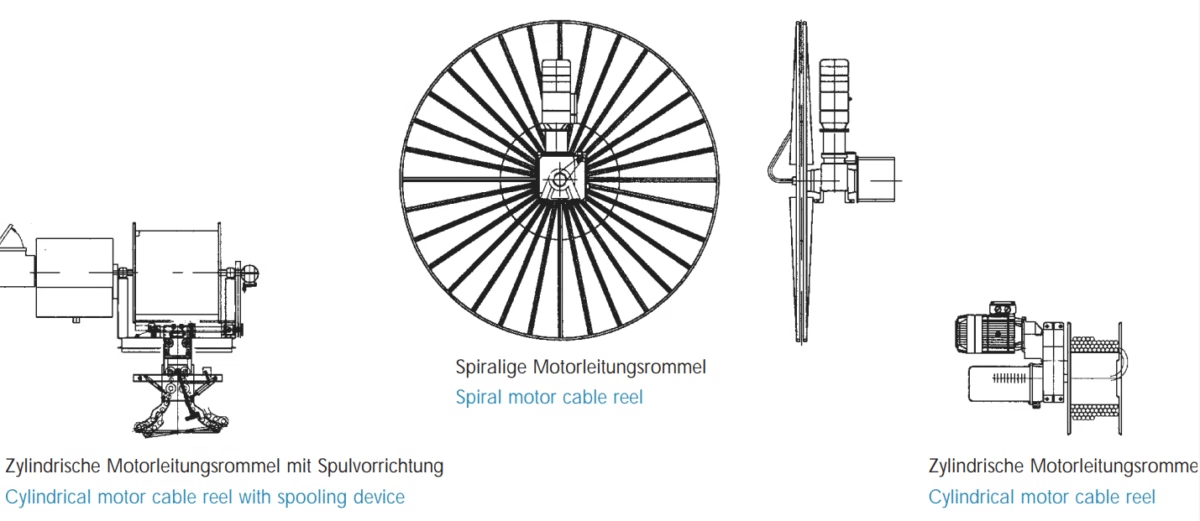
The Feichun Reeling Cable was specifically engineered to address the demanding requirements of modern RTG (Rubber-Tyred Gantry) crane electrification and mobile equipment power transmission. As STEMMANN-TECHNIK pioneered the retrofitting of diesel-electric RTGs with motor cable reel systems, the need for a cable that could withstand extreme operational conditions became paramount.
Primary Applications
- RTG Crane Electrification: Replacing diesel-electric drives with flexible power transmission systems that reduce fuel consumption by up to 95% while maintaining operational efficiency
- Container Terminal Operations: Powering fast-moving container cranes that load and unload containers from ships to trucks and prime movers
- Large-Scale Mobile Equipment: Serving bucket wheel excavators, conveyor systems, stackers, and hydraulic excavators in open-cast mining operations
- Ship-to-Shore (STS) Cranes: Providing reliable power supply for cranes operating at travel speeds up to 80 m/min with cable lengths reaching 650 meters
- Spreader Systems: Supporting high-speed spreader cable reels operating at speeds up to 180 m/min
Environmental and Economic Impact
The adoption of Feichun Reeling Cable in STEMMANN-TECHNIK systems directly contributes to the global shift toward sustainable port operations. By enabling the electrification of RTG cranes, these cables help eliminate the continuous operation of diesel motors, which only consume energy when actually needed, resulting in enormous fuel savings, reduced maintenance intervals, elimination of refuelling stops, and significantly lower emissions at port facilities.
2. Key Characteristics: What Makes Feichun Reeling Cable Superior
2.1 Extreme Mechanical Resilience
Feichun Reeling Cable is designed as a flexible medium voltage reeling cable specifically for applications under high to extreme mechanical stresses. Unlike standard power cables, it excels in the most demanding operational scenarios that define modern crane operations.
High Travel Speeds
Engineered to perform flawlessly at speeds up to 180 m/min for spreader applications and 80 m/min for STS crane travel, maintaining structural integrity and electrical performance throughout continuous operation.
Dynamic Tensile Loads
Specially constructed to withstand continuous pulling forces and sudden load changes that occur during crane acceleration, deceleration, and load lifting operations.
Multi-Directional Flexibility
Capable of handling multiple changes of direction into different planes, a critical requirement for three-dimensional crane movements in container terminal operations.
Churning Resistance
Advanced construction prevents damage from churning when running over rollers and cable reel drums, extending operational lifespan significantly.
Torsional Stress Management
Unique internal structure absorbs and distributes torsional forces that would quickly destroy conventional cables, particularly critical for spreader operations.
Weather Resistance
Outer sheath designed to withstand harsh harbour environments including salt spray, UV radiation, extreme temperatures, and chemical exposure.
2.2 Electrical Performance Excellence
Beyond mechanical durability, Feichun Reeling Cable delivers superior electrical characteristics essential for modern crane control systems and power transmission.
| Specification | Feichun Reeling Cable | Benefit for STEMMANN-TECHNIK Systems |
|---|---|---|
| Voltage Rating | Low to Medium Voltage (up to 6kV typical) | Compatible with all STEMMANN-TECHNIK power supply configurations |
| Conductor Cross-Section | 25 mm² to 95 mm² | Matches STS crane requirements perfectly; adequate for heavy power transmission |
| Data Transmission | Optional integrated optical fibres | Enables simultaneous power and data transmission in single cable system |
| Conductor Material | High-purity stranded copper | Minimizes resistance, reduces heat generation, ensures efficient power delivery |
| Insulation Resistance | Superior dielectric properties | Prevents electrical leakage even under mechanical stress and harsh conditions |
3. Material Structure: Engineering Excellence from Core to Sheath
The superior performance of Feichun Reeling Cable stems from its meticulously engineered multi-layer construction, where each component serves a specific purpose in the overall system performance.
Layer-by-Layer Analysis
1. Conductor Core
Material: High-purity oxygen-free copper, finely stranded with optimized stranding geometry
Function: Provides low electrical resistance while maintaining maximum flexibility. The fine stranding allows the cable to flex millions of times without conductor fatigue or breakage.
Specification: Available in cross-sections from 25 mm² to 95 mm² to match various power requirements
2. Primary Insulation
Material: Cross-linked polyethylene (XLPE) or ethylene propylene rubber (EPR)
Function: Provides electrical insulation between conductors and ensures voltage integrity under mechanical stress. XLPE offers excellent thermal properties, while EPR provides superior flexibility.
Key Properties: High dielectric strength, thermal stability up to 90°C continuous operation, resistance to moisture and chemicals
3. Conductor Shield and Filler
Material: Semi-conductive compound and specialized filler materials (typically rubber or polymer compounds)
Function: The shield ensures uniform electric field distribution, while fillers maintain cable roundness and prevent conductor displacement during bending and twisting.
Innovation: Advanced filler compounds absorb mechanical stress and prevent conductor migration
4. Inner Sheath / Bedding Layer
Material: Thermoplastic elastomer (TPE) or chloroprene rubber (CR)
Function: Provides a protective barrier for the conductor assembly and serves as a bedding for the armoring layer. Offers resistance to oils, greases, and chemicals commonly found in industrial environments.
5. Mechanical Reinforcement / Armoring
Material: High-tensile steel wire braid or galvanized steel wire armor (single or double layer)
Function: This critical layer provides tensile strength to withstand dynamic pulling forces and protects against mechanical impact. For reeling applications, the armor design allows controlled bending while preventing kinking.
Engineering Feature: Optimized armor pitch and wire diameter balance flexibility with mechanical protection
6. Outer Sheath
Material: Chloroprene rubber (CR/Neoprene) or thermoplastic polyurethane (TPU)
Function: The final defense against environmental factors including UV radiation, ozone, saltwater, oils, chemicals, and abrasion from contact with reel drums and rollers.
Special Properties: Flame retardant, weather resistant, low-temperature flexibility, self-extinguishing characteristics
Optional Integrated Components
- Optical Fiber Integration: Modern Feichun cables can incorporate optical fiber channels for high-speed data transmission, enabling real-time crane monitoring, control system communication, and predictive maintenance systems
- Control Conductors: Additional smaller conductors for control and monitoring circuits, reducing the total number of cables required
- Grounding Conductors: Dedicated grounding wires ensuring electrical safety even under fault conditions
4. Compliance with International Standards
Feichun Reeling Cable meets and exceeds multiple international standards, ensuring global applicability and safety compliance across diverse regulatory environments.
| Standard | Description | Compliance Aspects |
|---|---|---|
| IEC 60204-32 | Safety of machinery – Electrical equipment of machines – Requirements for hoisting machines | Design, construction, and safety requirements for crane electrical systems |
| IEC 60228 | Conductors of insulated cables | Conductor construction, resistance, and quality standards |
| IEC 60502 | Power cables with extruded insulation and their accessories | Insulation materials, voltage ratings, testing procedures |
| IEC 60332 | Tests on electric cables under fire conditions | Flame propagation resistance, fire safety characteristics |
| EN 50525 | Electric cables – Low voltage energy cables | European standards for cable construction and performance |
| DIN VDE 0298-4 | Application of cables and cords in power installations | German standards for installation and current-carrying capacity |
| RoHS Directive | Restriction of Hazardous Substances | Environmental compliance, lead-free and eco-friendly materials |
| REACH Regulation | Registration, Evaluation, Authorization of Chemicals | Chemical safety and environmental protection compliance |
Third-Party Certification
Feichun Reeling Cables typically carry certifications from recognized testing authorities such as TÜV, UL, CSA, and Lloyd’s Register, providing independent verification of quality and safety. These certifications are particularly valuable for international projects and insurance requirements.
5. Safety Thresholds and Operating Parameters
Understanding and respecting the safety thresholds of Feichun Reeling Cable is essential for maximizing lifespan and ensuring personnel safety in STEMMANN-TECHNIK installations.
5.1 Electrical Safety Limits
| Parameter | Maximum Rating | Safety Considerations |
|---|---|---|
| Rated Voltage (U₀/U) | 0.6/1 kV to 3.6/6 kV | Never exceed rated voltage; ensure proper grounding |
| Current Carrying Capacity | Varies by cross-section (consult manufacturer tables) | Derating required for bundled cables or high ambient temperatures |
| Maximum Conductor Temperature | 90°C continuous, 130°C emergency, 250°C short circuit | Thermal monitoring recommended for critical applications |
| Insulation Resistance | Minimum 100 MΩ·km at 20°C | Regular testing required; degradation indicates replacement need |
| Dielectric Test Voltage | 3.5 kV for 1 kV rated cable (5 minutes) | Factory tested; field testing during commissioning recommended |
5.2 Mechanical Safety Limits
| Parameter | Limit Value | Consequences of Exceeding |
|---|---|---|
| Minimum Bending Radius | 12-15× outer cable diameter (stationary), 20× (dynamic) | Conductor damage, insulation cracking, armor deformation |
| Maximum Tensile Load | 50-80 N/mm² of conductor cross-section | Conductor stretching, armor failure, catastrophic failure |
| Torsion Angle | ±180° per meter length (specific designs) | Conductor twisting, insulation damage, shortened lifespan |
| Impact Resistance | Withstands 5 J impact at -25°C | Sheath damage, armor exposure, potential electrical hazard |
| Reel Drum Diameter | Minimum 20× cable diameter for motor reels | Premature fatigue, reduced cycle life |
5.3 Environmental Operating Ranges
Temperature Range
Operating: -40°C to +80°C ambient
Installation: -25°C minimum
Storage: -40°C to +70°C
Humidity Resistance
Suitable for continuous exposure to 100% relative humidity and water spray conditions typical in harbour environments
Chemical Resistance
Resistant to mineral oils, hydraulic fluids, diesel fuel, dilute acids and alkalis, and saltwater exposure
UV and Ozone Resistance
Outer sheath formulated for extended outdoor exposure without degradation or cracking
6. Precautions for Use: Best Practices for Maximum Lifespan
6.1 Installation Guidelines
⚠ Critical Installation Requirements
Improper installation is the leading cause of premature cable failure. Always engage qualified electrical contractors familiar with reeling cable systems and follow manufacturer specifications precisely.
- Pre-Installation Inspection: Examine the entire cable length for damage during shipping or storage. Check for cuts, abrasions, kinks, or crushing. Test insulation resistance before installation.
- Proper Unreeling: Always unreel from the correct end and in the proper direction. Never pull cable over sharp edges or rough surfaces. Use cable rollers or guides to prevent abrasion.
- Respect Bending Radius: Ensure all bends meet or exceed the minimum bending radius specification. This is especially critical at reel drum attachment points and guide rollers.
- Reel Drum Selection: Verify that the STEMMANN-TECHNIK reel drum diameter is appropriate for the cable specification. Undersized drums dramatically reduce cable lifespan.
- Tension Control: During installation, maintain appropriate cable tension. Too much tension can stretch conductors; too little can cause looping or tangling on the reel.
- Termination Quality: Use only approved cable glands, connectors, and termination methods. Ensure water-tight seals in outdoor applications and proper strain relief at all terminations.
- Grounding and Bonding: Properly ground cable armor and shields according to electrical code requirements. Ensure continuity of grounding throughout the system.
- Environmental Protection: While the cable is weather-resistant, protect terminations and connection points from water ingress using appropriate enclosures rated for the environment.
6.2 Operational Best Practices
- Avoid Overloading: Never exceed the rated current capacity. Install thermal monitoring for critical applications. Consider ambient temperature and grouping factors when determining actual capacity.
- Prevent Contamination: Keep cable reels free from accumulated debris, oil, and saltwater deposits. Regular cleaning prevents abrasion and chemical attack.
- Monitor Cable Condition: Implement regular visual inspections for outer sheath damage, unusual wear patterns, kinking, or deformation. Address issues immediately.
- Proper Spooling: Ensure cable winds evenly on the reel drum without overlapping or gaps. Uneven spooling causes unequal stress distribution and accelerated wear.
- Limit Extreme Movements: While designed for dynamic operation, minimize unnecessary cable movements when equipment is idle. This extends the total number of operational cycles.
- Maintain Lubrication Systems: If the reel system includes lubrication points for bearings and moving parts, maintain these according to STEMMANN-TECHNIK schedules. Friction from poorly maintained rollers accelerates cable wear.
- Seasonal Considerations: In extreme cold conditions, allow cable systems to warm up gradually before full-speed operation. In high heat, ensure adequate ventilation around cable reels.
6.3 Maintenance Schedule
| Frequency | Inspection/Maintenance Task | Action Criteria |
|---|---|---|
| Daily | Visual inspection for obvious damage | Immediate shutdown if severe damage observed |
| Weekly | Check cable spooling, clean reel area | Correct uneven spooling; remove debris |
| Monthly | Detailed visual inspection of accessible cable sections | Document wear patterns; plan preventive replacement |
| Quarterly | Inspection of terminations and connections | Tighten loose connections; replace damaged components |
| Semi-Annually | Thermal imaging of connections under load | Investigate hot spots; may indicate poor connections |
| Annually | Full cable inspection; insulation resistance testing | Plan replacement if IR below 1 MΩ or significant degradation |
| 3-5 Years | Comprehensive electrical testing and condition assessment | Evaluate remaining service life; plan capital replacement |
7. Common Problems and Troubleshooting Solutions
7.1 Mechanical Failures
Problem: Premature Outer Sheath Wear or Cracking
Symptoms: Visible cracks, abrasion marks, or exposed armor on outer sheath
Causes:
- Excessive friction from misaligned rollers or guides
- Chemical exposure beyond cable specifications
- UV degradation from extended outdoor exposure (cable not rated for UV)
- Operation below minimum temperature rating
Solutions:
- Verify alignment of all cable guides and rollers in STEMMANN-TECHNIK system
- Identify and eliminate sources of chemical contamination
- Ensure cable specification includes UV-resistant compounds for outdoor use
- Add environmental protection or heated enclosures in extreme cold climates
- Replace damaged cable sections before armor exposure creates safety hazard
Problem: Kinking or Permanent Set in Cable
Symptoms: Cable refuses to lay flat or has visible twisted sections that don’t relax
Causes:
- Bending radius below minimum specification during installation or operation
- Reel drum diameter too small for cable size
- Excessive torsional stress from improper installation
- Cold temperature operation without proper cable specification
Solutions:
- Replace kinked sections immediately – kinks concentrate stress and cause rapid failure
- Verify all reel drums and pulleys meet minimum diameter requirements
- Review installation procedures to prevent twist during unreeling
- Upgrade to cable designed for lower temperature flexibility if needed
Problem: Cable Slippage or Looping on Reel Drum
Symptoms: Cable winds unevenly, overlaps itself, or creates loops during operation
Causes:
- Incorrect tension settings in FCM or DTM drive system
- Worn or damaged level-winding mechanism
- Cable diameter variation or swelling from moisture absorption
- Reel drum flange damage
Solutions:
- Calibrate cable reel drive system tension according to STEMMANN-TECHNIK specifications
- Inspect and repair/replace level-winding guides
- Check cable for moisture damage; ensure proper drainage of reel enclosure
- Repair or replace damaged reel drum components
7.2 Electrical Failures
Problem: Insulation Resistance Degradation
Symptoms: Decreasing megohm readings during periodic testing, possible nuisance tripping of ground fault protection
Causes:
- Water ingress through damaged sheath or poor terminations
- Thermal aging from chronic overloading
- Chemical contamination penetrating outer sheath
- Normal aging in harsh environments
Solutions:
- Locate and seal water entry points; improve termination weather-sealing
- Verify actual current loads don’t exceed cable rating; upsize if necessary
- Identify contamination sources and provide additional protection
- If IR drops below 1 MΩ, plan cable replacement as system is approaching end of life
- Emergency drying procedures may temporarily restore IR, but plan for replacement
Problem: Conductor Breakage
Symptoms: Complete loss of power, intermittent connection, or increased resistance in one phase
Causes:
- Excessive flexing cycles beyond cable design life
- Operating below minimum bending radius
- Mechanical damage from crushing or impact
- Tensile overload during abnormal crane movements
Solutions:
- Locate break using time-domain reflectometry (TDR) or continuity testing
- Replace affected section with proper splice kit rated for reeling cable applications
- Investigate root cause – if flexing cycles exceeded, entire cable replacement may be needed
- Review crane operation logs for abnormal movements that may have caused overload
- Implement condition monitoring to detect developing issues before complete failure
Problem: Overheating at Connections or Terminals
Symptoms: Discolored insulation near terminations, tripped thermal protection, burned smell
Causes:
- Loose terminal connections creating high resistance
- Undersized cable glands or connectors
- Corrosion at connection points in marine environment
- Actual load current exceeding cable rating
Solutions:
- Immediately de-energize and inspect all connections; retorque to specification
- Replace any damaged connectors with properly rated components
- Apply corrosion-preventive compounds at connection points
- Verify actual current draw; upsize cable if consistently near or above rating
- Install thermal monitoring at critical connection points for early warning
7.3 System Integration Issues
Problem: Incompatibility with STEMMANN-TECHNIK Reel Drive
Symptoms: Jerky cable motion, excessive wear, drive system faults
Causes:
- Cable stiffness not matching drive system programming
- Incorrect cable weight specification in drive parameters
- FCM or DTM tuning inappropriate for cable characteristics
Solutions:
- Verify cable specifications match those programmed into control system
- Contact STEMMANN-TECHNIK for drive system re-tuning with actual cable parameters
- Consider cable upgrade if existing cable doesn’t match system capabilities
Problem: Data Transmission Errors (Fiber Optic Cables)
Symptoms: Communication errors, lost signals, reduced data rates
Causes:
- Micro-bending of optical fibers from excessive cable flexing
- Fiber breakage from mechanical abuse
- Contaminated optical connectors
- Excessive optical loss from tight bending
Solutions:
- Test fiber optic channels with OTDR (Optical Time Domain Reflectometer)
- Clean all optical connectors with proper fiber cleaning materials
- Verify bending radius meets optical fiber requirements (often more stringent than electrical)
- Replace cable if fiber damage detected; field splicing not recommended for dynamic cables
7.4 Preventive Measures
Extending Cable Service Life
The most cost-effective approach to cable problems is prevention. Implementing a comprehensive cable management program can extend service life by 50-100% compared to run-to-failure approaches.
Key prevention strategies:
- Maintain detailed logs of installation dates, inspection findings, and maintenance performed
- Track total operational hours and flexing cycles to predict end-of-life
- Implement condition-based monitoring rather than time-based replacement
- Stock critical spare cable lengths to minimize downtime during failures
- Train operators on proper crane operation to minimize unnecessary cable stress
- Establish relationships with qualified service providers for emergency repairs
- Plan capital replacements proactively rather than waiting for failures
8. Why Feichun is the Optimal Choice for STEMMANN-TECHNIK
The synergy between Feichun Reeling Cable and STEMMANN-TECHNIK reel systems creates a superior solution that transcends the capabilities of either component alone. This partnership delivers measurable benefits across multiple dimensions of crane operation.
8.1 Engineering Compatibility
Feichun cables are specifically designed with the operational parameters of STEMMANN-TECHNIK systems in mind. The cable specifications align precisely with STEMMANN’s DTM (Direct Torque Motor) and FCM (Frequency Controlled Motor) drive technologies, enabling optimal tension control, smooth acceleration and deceleration profiles, and minimized mechanical stress during operation. This engineering harmony results in extended service life for both the cable and the mechanical reel system.
8.2 Proven Performance Record
Thousands of installations worldwide in demanding harbour and industrial environments have validated the Feichun-STEMMANN partnership. In RTG crane applications, documented case studies show typical cable service lives of 5-7 years under heavy-duty operation—significantly exceeding the industry average of 3-4 years for comparable applications with generic cables. In some optimized installations with excellent maintenance practices, cable lifespans exceeding 10 years have been achieved.
8.3 Total Cost of Ownership Advantages
Initial Investment
While premium quality, Feichun cables offer competitive pricing when considering the complete system cost including installation, commissioning, and integrated data transmission capabilities.
Energy Efficiency
Low conductor resistance minimizes energy losses, particularly significant in long cable runs (up to 650m for STS cranes). This translates to measurable electricity cost savings over the cable lifespan.
Maintenance Costs
Extended service life and reduced failure rates dramatically lower maintenance costs. Fewer emergency repairs mean less crane downtime and more predictable maintenance budgeting.
Downtime Reduction
Superior reliability translates directly to increased crane availability. In port operations where each crane handles millions of dollars in cargo annually, even small availability improvements generate substantial value.
8.4 Environmental and Sustainability Benefits
The Feichun-STEMMANN combination enables the electrification initiatives that are transforming global port operations. By replacing diesel-electric drives with efficient electric power transmission, ports achieve up to 95% reduction in diesel fuel consumption, elimination of local emissions improving air quality for port workers and nearby communities, significant reduction in noise pollution from diesel engines, and measurable progress toward corporate sustainability goals and regulatory compliance with tightening environmental standards.
Real-World Impact
A typical RTG crane retrofit with STEMMANN-TECHNIK motor cable reels and Feichun reeling cable can eliminate approximately 40,000-50,000 liters of diesel fuel consumption annually per crane. In a medium-sized container terminal with 20 RTG cranes, this translates to nearly 1 million liters of diesel fuel saved annually, along with proportional reductions in CO₂, NOx, particulate matter, and other emissions. The environmental impact of widespread adoption is transformative for port cities worldwide.
9. Future-Proofing Your Investment
Selecting Feichun Reeling Cable for STEMMANN-TECHNIK systems represents an investment in future-ready infrastructure. As ports continue to evolve toward automation, electrification, and digital integration, the advanced capabilities of these cables ensure compatibility with emerging technologies.
- Automation Readiness: Integrated optical fiber capabilities support the communication requirements of automated crane systems and remote operation technologies
- Smart Port Integration: Data transmission channels enable real-time monitoring, predictive maintenance algorithms, and integration with port-wide management systems
- Scalability: Standardized designs facilitate expansion and upgrades without complete system replacement
- Regulatory Compliance: Meeting current and anticipated environmental regulations protects against forced premature replacement due to regulatory changes
Conclusion: The Clear Choice for Operational Excellence
The question of why Feichun Reeling Cable is the best choice for STEMMANN-TECHNIK reel systems answers itself through the evidence of superior engineering, proven performance, comprehensive safety compliance, and exceptional value across the total ownership lifecycle.
From the precisely engineered multi-layer construction that withstands extreme mechanical stresses to the extensive international standards compliance that ensures global applicability, from the detailed operational guidelines that maximize service life to the comprehensive troubleshooting resources that minimize downtime—Feichun Reeling Cable represents the gold standard in power transmission for modern crane systems.
For port operators, crane manufacturers, and facility managers evaluating electrification options, the Feichun-STEMMANN partnership offers not just a cable and reel system, but a complete solution that delivers on the promise of reduced operational costs, enhanced environmental performance, and increased equipment reliability.
In an industry where downtime is measured in thousands of dollars per hour and equipment decisions have decades-long implications, choosing proven, compatible, and superior components isn’t just good practice—it’s essential for competitive success in the global maritime industry.
Ready to Optimize Your Crane Systems?
Discover how Feichun Reeling Cable and STEMMANN-TECHNIK can transform your operations
Contact Our Engineering Team