Complete Professional Guide: Transform Diesel Cranes into Efficient Electric Systems with Feichun Cable & Cavotec Technologies
How to Perform a Crane Electrification Retrofit
Complete Professional Guide: Transform Diesel Cranes into Efficient Electric Systems with Feichun Cable & Cavotec Technologies
1. Understanding Crane Electrification Retrofit: Purpose and Business Case
1.1 What is a Crane Electrification Retrofit?
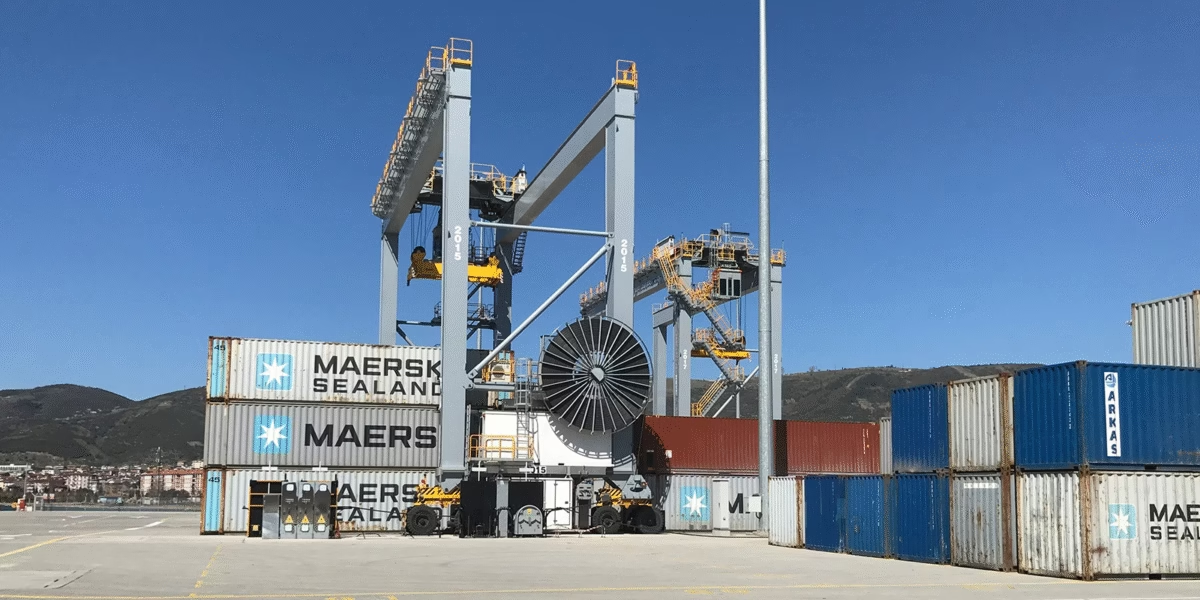
A crane electrification retrofit is the systematic conversion of diesel-powered or diesel-electric hybrid crane systems to fully electric operations powered by external grid electricity. This transformation replaces traditional diesel generators with sophisticated power transmission systems, including motorised cable reels, cable protection systems, and power connection infrastructure.
Applicable Crane Types
The retrofit process applies to multiple crane categories used in modern port operations:
- STS Cranes (Ship-to-Shore): Large container gantry cranes that load and unload vessels, typically moving along extensive quayside rails requiring cable runs of hundreds of metres
- RTG Cranes (Rubber-Tyred Gantry): Mobile container handling cranes operating in storage yards, offering maximum flexibility in positioning and movement
- ASC Cranes (Automated Stacking Cranes): Rail-mounted automated systems for container yard operations, ideal candidates for electrification due to predictable movement patterns
- RMG Cranes (Rail-Mounted Gantry): Fixed-path cranes for container stacking and retrieval with high throughput requirements
- Mobile Harbour Cranes: Versatile cranes for general cargo handling requiring flexible power solutions
1.2 The Compelling Business Case for Electrification
💰 Operational Cost Reduction
Fuel Savings: Eliminate 90-95% of diesel consumption. A typical RTG crane consumes 40,000-50,000 litres annually; electrification can save over $30,000 per crane per year at current fuel prices.
Maintenance Savings: Electric systems require 60-70% less maintenance than diesel engines, eliminating oil changes, filter replacements, and engine overhauls.
🌍 Environmental Compliance
Emission Reduction: Zero on-site emissions eliminating hundreds of tonnes of CO₂ annually per crane, plus complete elimination of NOx, particulates, and other pollutants.
Regulatory Alignment: Meet increasingly stringent environmental regulations including IMO 2030 targets and local air quality standards.
⚡ Enhanced Efficiency
Energy Utilization: Electric systems use only the energy actually required, versus diesel engines that run continuously regardless of load.
Performance Optimization: Frequency-controlled drives enable precise control, faster acceleration, and smoother operation.
📈 Operational Reliability
Reduced Downtime: Elimination of refuelling stops increases crane availability by 5-8%.
Predictable Performance: Electric systems provide consistent power regardless of engine condition or fuel quality.
🔇 Workplace Improvement
Noise Reduction: 70-80% reduction in operational noise improving working conditions and community relations.
Air Quality: Elimination of diesel exhaust creates healthier environment for operators and ground personnel.
🏆 Competitive Advantage
Market Positioning: Green credentials increasingly important for cargo owners and shipping lines selecting ports.
Corporate Sustainability: Demonstrate commitment to ESG (Environmental, Social, Governance) principles.
1.3 Return on Investment Analysis
| Crane Type | Typical Retrofit Cost | Annual Savings | Payback Period | 20-Year NPV |
|---|---|---|---|---|
| RTG Crane | $150,000 – $250,000 | $35,000 – $50,000 | 3-5 years | $400,000 – $600,000 |
| STS Crane | $300,000 – $500,000 | $60,000 – $90,000 | 4-6 years | $700,000 – $1,200,000 |
| ASC/RMG Crane | $200,000 – $350,000 | $45,000 – $70,000 | 3-6 years | $500,000 – $900,000 |
| Mobile Harbour Crane | $100,000 – $200,000 | $25,000 – $40,000 | 3-5 years | $300,000 – $500,000 |
2. The Complete Retrofit Process: Step-by-Step Implementation
Phase 1: Assessment & Planning (4-8 weeks)
Foundation phase establishing project scope, requirements, and success criteria
Phase 2: Design & Engineering (8-12 weeks)
Detailed system design, component selection, and integration planning
Phase 3: Procurement & Fabrication (10-16 weeks)
Equipment ordering, custom fabrication, and pre-installation preparation
Phase 4: Installation & Integration (6-10 weeks)
Physical installation, electrical integration, and mechanical commissioning
Phase 5: Testing & Commissioning (3-6 weeks)
Comprehensive testing, operator training, and performance validation
Phase 6: Handover & Optimization (2-4 weeks)
Final acceptance, documentation delivery, and performance tuning
2.1 Phase 1: Initial Assessment and Planning
Conduct Comprehensive Site Survey
The foundation of any successful retrofit begins with thorough understanding of existing conditions and requirements.
- Crane Documentation Review: Collect all technical manuals, electrical drawings, mechanical specifications, and maintenance histories for target cranes
- Physical Inspection: Document current condition including structural integrity, electrical systems, control cabinets, and available mounting spaces
- Operational Analysis: Study crane duty cycles, travel patterns, peak power demands, and operational speeds through monitoring and operator interviews
- Infrastructure Assessment: Evaluate existing electrical distribution capacity, available power connection points, cable routing paths, and environmental conditions
- Safety Evaluation: Identify existing safety systems, emergency procedures, and regulatory compliance requirements
Define Technical Requirements
Translate operational needs into detailed technical specifications that will guide system design.
| Requirement Category | Key Parameters to Define | Typical Values |
|---|---|---|
| Power Requirements | Voltage, current, power factor, peak demand | 400-690V, 200-800A, 0.85-0.95 PF |
| Travel Parameters | Maximum speed, acceleration, travel distance | 40-180 m/min, 0.3-0.8 m/s², 50-650m |
| Cable Specifications | Length, cross-section, flexibility class | Up to 700m, 25-95mm², Class 5-6 |
| Environmental Conditions | Temperature range, humidity, salt exposure | -25°C to +50°C, up to 100% RH |
| Operational Availability | Duty cycle, maintenance windows, uptime target | 24/7, <2 hours weekly, >98% availability |
Select Partner and Technology Platform
Choose the right technology partner and system architecture for your specific application.
Why Feichun Cable + Cavotec = Optimal Solution
The strategic partnership between Feichun Cable and Cavotec delivers comprehensive turnkey solutions combining:
- Integrated Design Approach: Cavotec’s motorised cable reels, Panzerbelt® protection systems, and power connectors perfectly matched with Feichun’s high-performance reeling cables
- Application-Centric Innovation: Technologies specifically developed for crane electrification rather than adapted from other applications
- Proven Track Record: Thousands of successful installations worldwide across all crane types and operational conditions
- Global Support Network: Local service capabilities backed by global engineering expertise ensuring rapid response
- Lifecycle Cost Optimization: Durable equipment designed for harsh environments with frequency-controlled drives reducing total ownership costs
- System Integration Expertise: Seamless integration with existing crane control systems and terminal management software
Develop Project Timeline and Budget
Create realistic schedule and financial plan accounting for all project phases and potential contingencies.
Budget Components
- Equipment costs (40-50%)
- Installation labour (20-25%)
- Engineering & design (10-15%)
- Testing & commissioning (8-12%)
- Project management (5-8%)
- Contingency (10-15%)
Schedule Considerations
- Equipment lead times (12-20 weeks)
- Crane downtime windows
- Weather constraints
- Regulatory approvals
- Resource availability
- Testing and validation periods
2.2 Phase 2: Detailed Design and Engineering
System Architecture Design
Develop comprehensive electrical and mechanical design for the complete electrification system.
Key Design Elements for Different Crane Types:
STS Crane Electrification
Cavotec’s STS-specific solutions integrated with Feichun crane cables:
- High-Speed Motorised Cable Reels: Handle extended horizontal travel distances up to hundreds of metres with rapid crane movement capabilities
- Panzerbelt® Cable Protection: Enhanced safety for mobile crane operations protecting cables from mechanical damage during extreme movements
- Access Covers with Turnover Anchors: Secure cable routing through crane structure with quick-access maintenance points
- Junction Boxes and Power Connectors: Weather-sealed connection points designed for high-current, high-reliability applications
- Spreader Cable Reels: Quick coupling and decoupling systems for efficient container handling operations
RTG/ASC/RMG Crane Systems
Optimized for automated and high-speed yard crane operations:
- Frequency-Controlled Cable Reels: Precise tension control for rapid acceleration and deceleration cycles
- Feichun High-Flex Cables: Designed specifically for continuous dynamic movements with extended service life
- Automated Monitoring Systems: Real-time cable condition monitoring and predictive maintenance alerts
- Redundancy Options: Dual-cable systems for critical operations requiring maximum uptime
Feichun Cable Selection and Specification
Select appropriate Feichun cable specifications based on application requirements and Cavotec system design.
Feichun Crane Cable Characteristics
Purpose-engineered for the extreme demands of crane electrification retrofits:
Material Structure – Optimized Layer Design:
- Conductor Core: Ultra-fine stranded oxygen-free copper (Class 5 or 6) for maximum flexibility with minimal resistance. Cross-sections from 1.5mm² to 300mm² depending on power requirements
- Primary Insulation: XLPE (Cross-Linked Polyethylene) or EPR (Ethylene Propylene Rubber) providing superior electrical performance, thermal stability to 90°C continuous, and resistance to moisture and chemicals
- Conductor Assembly: Specialized laying configurations (parallel, twisted, or segmental) optimized for specific crane motion profiles. Non-hygroscopic fillers maintain cable roundness under flexing
- Inner Sheath: TPE (Thermoplastic Elastomer) bedding layer providing smooth surface for armor layer and protecting conductors from mechanical stress
- Mechanical Armor: Galvanized steel wire braid or double-layer steel tape armor providing tensile strength (50-100 N/mm²), crush protection, and controlled bending characteristics. Armor design optimized for reeling applications
- Outer Sheath: Chloroprene (Neoprene) or TPU compound with exceptional properties: UV resistance for outdoor exposure, ozone resistance, salt water and chemical resistance, oil and fuel resistance, abrasion resistance from roller contact, flame retardant to IEC 60332-3, temperature range -40°C to +80°C
- Optional Components: Integrated optical fibers for data transmission (PROFIBUS, Ethernet, etc.), dedicated control conductors for auxiliary systems, enhanced grounding conductors for EMC compliance
Performance Characteristics:
Mechanical Excellence
Flex Life: >5 million bending cycles at minimum radius
Bending Radius: 15-20× cable diameter (dynamic)
Tensile Strength: 50-80 N/mm² conductor area
Torsion Resistance: ±360° per meter
Electrical Performance
Voltage Rating: 0.6/1 kV to 3.6/6 kV
Current Capacity: Optimized for specific cross-sections
Conductor Resistance: ≤18.1 Ω/km @ 20°C (1mm²)
Insulation Resistance: >100 MΩ·km
Compliance and Standards Verification
Ensure all components and system design meet applicable international standards and local regulations.
| Standard Category | Applicable Standards | Compliance Requirements |
|---|---|---|
| Crane Safety | IEC 60204-32, FEM 1.001, ISO 8686 | Safety of machinery, electrical equipment for cranes, emergency stops, overload protection |
| Cable Standards | IEC 60228, IEC 60502, EN 50525, HD 22 | Conductor specifications, insulation requirements, voltage ratings, construction standards |
| Fire Safety | IEC 60332-1/3, IEC 61034, IEC 60754 | Flame propagation resistance, smoke density, halogen content limits |
| Environmental | RoHS, REACH, IEC 60721 | Hazardous substance restrictions, chemical compliance, environmental classification |
| Electrical Installation | IEC 60364, IEEE 45, Local codes | Wiring practices, protection devices, grounding systems, inspection requirements |
| EMC | IEC 61000 series, EN 50081/50082 | Electromagnetic compatibility, emission limits, immunity requirements |
✓ Feichun Cable Certifications
Feichun crane cables carry comprehensive third-party certifications including:
- TÜV (Technischer Überwachungsverein) approval for safety and performance
- UL (Underwriters Laboratories) listing for North American markets
- CSA (Canadian Standards Association) certification
- Lloyd’s Register type approval for marine/harbour applications
- CE marking for European compliance
- CCC (China Compulsory Certification) for Asian markets
2.3 Phase 3: Procurement and Pre-Installation Preparation
Equipment Procurement Strategy
Coordinate timing of equipment delivery to optimize project schedule and minimize storage requirements.
Long Lead Items (Order First)
- Motorised cable reel systems (14-20 weeks)
- Custom Feichun cables (12-18 weeks)
- Main power distribution equipment (10-16 weeks)
- Control panels and drives (10-14 weeks)
Standard Components (Order Later)
- Cable glands and connectors (4-8 weeks)
- Junction boxes and enclosures (4-6 weeks)
- Mounting hardware and brackets (2-4 weeks)
- Testing and commissioning equipment (2-4 weeks)
Site Preparation and Infrastructure Works
Complete all preparatory work while equipment is being manufactured to accelerate installation phase.
- Electrical Infrastructure: Install power distribution feeders, transformers (if required), circuit breakers, and metering equipment. Ensure adequate capacity for peak loads with appropriate safety margins
- Cable Routing Preparation: Install cable trays, support structures, access covers, and protection conduits. Ensure proper drainage to prevent water accumulation
- Mounting Structures: Fabricate and install mounting frames for cable reels, control cabinets, and junction boxes. Verify structural adequacy for dynamic loads
- Grounding System: Install comprehensive grounding grid meeting electrical codes. Ensure low-resistance earth connections at all equipment locations
- Testing Facilities: Set up temporary power supplies and testing equipment for commissioning activities
2.4 Phase 4: Installation and Integration
Mechanical Installation Sequence
Systematic installation following proven procedures to ensure quality and safety.
Critical Safety Requirements During Installation
- Crane must be completely de-energized with lockout/tagout procedures in place
- Load test all lifting equipment before use
- Maintain exclusion zones during overhead work
- Verify structural integrity before mounting heavy equipment
- Use appropriate fall protection for elevated work
- Coordinate with terminal operations to minimize disruption
Installation Steps:
- Step 1 – Diesel System Removal: Systematically remove diesel generator, fuel tanks, exhaust systems, and associated equipment. Document all removed components and preserve any items requiring future reference
- Step 2 – Cable Reel Mounting: Install Cavotec motorised cable reel assemblies on prepared mounting structures. Align precisely according to manufacturer specifications. Verify smooth rotation and proper clearances
- Step 3 – Feichun Cable Installation: Carefully unreel and route cables following the designed path. Respect minimum bending radius at all points. Install cable supports at specified intervals. Protect against sharp edges and abrasion points
- Step 4 – Cable Termination: Install cable glands and terminations using approved methods. Ensure proper strain relief and environmental sealing. Verify conductor connections with torque specifications
- Step 5 – Protection Systems: Install Panzerbelt® or other cable protection systems as specified. Ensure complete coverage of vulnerable cable sections
- Step 6 – Control Integration: Mount control panels and frequency drives. Connect to existing crane control system using specified interface protocols
Electrical Integration and Connection
Connect the electrification system to power sources and crane electrical systems.
| Connection Type | Key Requirements | Testing/Verification |
|---|---|---|
| Main Power Feed | Proper sizing, overcurrent protection, disconnect means, grounding | Insulation resistance, continuity, phase rotation, voltage verification |
| Cable Reel Drive | Motor connections, encoder feedback, limit switches, emergency stops | Direction verification, speed control, position feedback accuracy |
| Crane Motors | Proper phasing, torque ratings, thermal protection | Rotation direction, load testing, thermal imaging under load |
| Control Circuits | Signal integrity, proper isolation, emergency functions | Logic verification, interlock testing, emergency stop validation |
| Data/Communication | Fiber optic or control cable connections, network configuration | Signal quality, data transmission rates, error checking |
2.5 Phase 5: Testing, Commissioning, and Validation
Comprehensive Testing Protocol
Systematic verification of all systems before operational release.
Pre-Energization Checks:
- Visual Inspection: Complete walkthrough verifying all installations against drawings. Check for loose connections, proper cable support, adequate clearances, and correct labeling
- Insulation Resistance: Megohm testing of all power circuits to ground and between phases. Minimum 1 MΩ at operating voltage. Document all readings
- Continuity Testing: Verify all grounding connections, protective earth continuity, and bonding connections. Maximum resistance 0.1Ω for protective conductors
- Mechanical Function: Manually operate cable reels through full travel range. Verify smooth operation, proper spooling, and absence of binding or excessive friction
Energization and Functional Testing:
- Initial Power-Up: Energize system in stages starting with control circuits. Verify correct voltages at all points. Check phase sequence and balance
- Cable Reel Drive Testing: Test Cavotec motorised reel operation at increasing speeds. Verify frequency drive control response, position feedback accuracy, and tension control system performance
- Crane Motion Testing: Operate crane through all movements (travel, hoist, trolley, spreader). Start with no-load conditions, gradually increasing to rated loads. Monitor power quality and system response
- Safety System Verification: Test all emergency stops, overload protection, limit switches, and interlocks. Verify proper fault response and alarm functions
- Performance Validation: Measure actual vs. designed performance parameters including speeds, accelerations, power consumption, and efficiency
Safety Threshold Validation
Confirm all safety systems operate within specified parameters.
| Safety Parameter | Threshold/Limit | Action on Exceedance | Test Method |
|---|---|---|---|
| Cable Tension | Max: 80% of rated breaking strength | Reel drive automatically adjusts tension | Load cell measurement during operation |
| Cable Temperature | Max: 90°C conductor temperature | Thermal alarm; load reduction if sustained | IR thermography under maximum load |
| Insulation Resistance | Min: 1 MΩ during operation | Ground fault protection trip | Online monitoring system |
| Overcurrent | 125% of rated current for >1 minute | Circuit breaker trip | Protective device coordination study |
| Ground Fault Current | >30mA sustained | Immediate disconnect | Ground fault injection testing |
| Cable Bending Radius | Min: 20× cable diameter (dynamic) | Physical stops prevent over-bending | Visual verification through travel range |
Operator Training and Documentation
Ensure operational personnel fully understand the new system before handover.
Training Program Components
- System overview and theory of operation
- Normal operating procedures
- Startup and shutdown sequences
- Emergency procedures and fault response
- Basic troubleshooting techniques
- Maintenance requirements and schedules
- Safety protocols and lockout/tagout
Documentation Deliverables
- As-built electrical and mechanical drawings
- Equipment manuals and specifications
- Maintenance procedures and schedules
- Spare parts lists and suppliers
- Test reports and certifications
- Warranty information
- Emergency contact information
3. Precautions for Use: Operational Best Practices
3.1 Daily Operational Procedures
Pre-Shift Inspection Checklist
Operators must complete before beginning crane operations:
- Visual inspection of cable condition – check for damage, abrasion, or kinking
- Verify cable reel spooling is even without overlaps or gaps
- Check for unusual sounds from cable reel drive motors
- Verify all emergency stop functions are operational
- Confirm no alarms or fault indications on control panel
- Ensure cable routing path is clear of obstructions
- Check for any fluid leaks from cable reel or drive systems
3.2 Operational Limitations and Boundaries
- Speed Limits: Respect programmed maximum speeds for crane travel and cable reel operation. Excessive speed can cause cable damage and system faults
- Environmental Conditions: Suspend operations during extreme weather (lightning, winds >20 m/s, temperature below -25°C unless system is rated for lower)
- Load Restrictions: Never exceed electrical system ratings even if crane mechanical capacity allows. Monitor power demand displays
- Acceleration Control: Use smooth acceleration and deceleration. Avoid abrupt starts and stops that stress cables and connections
- Cable Protection: Immediately report any cable damage or unusual resistance during crane movement
3.3 Maintenance Protocols
| Frequency | Maintenance Activity | Critical Focus Areas |
|---|---|---|
| Daily | Visual inspection, cleaning of cable reel area | Cable condition, spooling quality, unusual wear |
| Weekly | Cable routing inspection, connection tightness check | Termination boxes, power connectors, grounding |
| Monthly | Lubrication of cable reel bearings, detailed cable inspection | Bearing condition, cable sheath integrity, wear patterns |
| Quarterly | Thermal imaging, insulation resistance testing | Connection temperatures, cable IR values, ground continuity |
| Semi-Annual | Complete system inspection, cable reel drive service | Motor brushes, drive parameters, tension control calibration |
| Annual | Comprehensive electrical testing, safety system verification | Full insulation testing, protection device calibration, emergency function tests |
4. Common Problems and Troubleshooting Solutions
4.1 Cable-Related Issues
Problem: Uneven Cable Spooling on Reel
Symptoms: Cable bunches on one side of reel, gaps between wraps, or overlapping layers
Causes:
- Level winding mechanism misalignment or malfunction
- Incorrect cable reel drive tension settings
- Cable diameter variation or swelling
- Worn or damaged reel drum flanges
Solutions:
- Inspect and adjust level winding guide mechanism
- Recalibrate Cavotec frequency drive tension control parameters
- Verify Feichun cable diameter within specification; check for moisture damage
- Repair or replace damaged reel components
- Manually re-spool cable under controlled tension if severely misaligned
Problem: Cable Overheating
Symptoms: High cable temperature, thermal alarms, insulation softening
Causes:
- Current load exceeding cable ampacity rating
- Poor connections creating high resistance
- Inadequate ventilation around cable reel
- Multiple cables bundled without derating consideration
Solutions:
- Verify actual current draw vs. Feichun cable rating; upsize if necessary
- Inspect and retorque all cable terminations to specification
- Improve airflow around cable reel area; remove obstructions
- Apply appropriate derating factors or separate cable runs
- Install thermal monitoring for early warning of developing issues
Problem: Premature Cable Wear or Damage
Symptoms: Outer sheath abrasion, cracks, or exposed armor
Causes:
- Cable running over sharp edges or rough surfaces
- Insufficient Panzerbelt® or cable protection
- Bending radius below minimum specification
- Chemical or environmental attack on cable sheath
Solutions:
- Identify and eliminate sharp contact points; install edge protection
- Install additional Cavotec Panzerbelt® sections in wear areas
- Verify all cable bends meet minimum radius; adjust routing if necessary
- Identify chemical exposure source; upgrade to resistant cable type or add protection
- Replace damaged cable sections before armor failure creates electrical hazard
4.2 Electrical System Issues
Problem: Ground Fault Trips
Symptoms: Frequent or intermittent ground fault protection activation
Causes:
- Moisture ingress through damaged cable sheath or poor terminations
- Insulation degradation from age or thermal stress
- Mechanical damage to cable creating ground path
- Protection device sensitivity set too low for application
Solutions:
- Perform insulation resistance testing to locate fault section
- Improve environmental sealing of termination boxes and connectors
- Dry out cables if moisture detected; plan replacement if IR remains low
- Inspect cable for mechanical damage; replace if armor is compromised
- Verify protection settings appropriate for cable length and system capacitance
Problem: Voltage Drop or Power Quality Issues
Symptoms: Reduced crane performance, motor torque loss, control system malfunctions
Causes:
- Cable cross-section undersized for cable length and load
- Poor connections creating high resistance points
- Feeder supply voltage fluctuations
- Harmonic distortion from frequency drives
Solutions:
- Measure voltage at crane under full load; compare to minimum requirement
- Calculate voltage drop; upsize Feichun cable if exceeds 3-5%
- Inspect and clean all connection points; replace corroded terminals
- Install voltage regulation equipment if supply is unstable
- Add harmonic filters if drives are causing power quality issues
4.3 Cable Reel Drive Problems
Problem: Cable Reel Speed Synchronization Errors
Symptoms: Cable slack or excessive tension, jerky cable motion, drive fault alarms
Causes:
- Frequency drive parameters not properly tuned for cable characteristics
- Encoder feedback errors or signal loss
- Mechanical binding in cable reel or guide system
- PLC communication issues between crane and reel controls
Solutions:
- Recalibrate Cavotec frequency drive using cable weight and stiffness data
- Verify encoder operation; check wiring and signal quality
- Lubricate cable reel bearings and inspect for mechanical obstructions
- Test communication links; replace damaged cables or connectors
- Contact Cavotec technical support for advanced drive tuning
Problem: Excessive Cable Reel Motor Current
Symptoms: High motor current, thermal overload trips, reduced system efficiency
Causes:
- Cable reel bearings worn or inadequately lubricated
- Cable friction higher than design (wrong cable type or damaged)
- Misalignment of reel drum or mounting structure
- Motor or drive degradation
Solutions:
- Inspect and service all cable reel bearings; replace if worn
- Verify correct Feichun cable specification installed; check for damage
- Check reel drum alignment and structural mounting integrity
- Test motor insulation and winding resistance; service or replace if degraded
- Monitor current over time to identify developing trends
4.4 System Integration Challenges
Problem: Communication Errors with Crane PLC
Symptoms: Lost signals, erratic behavior, inability to control cable reel from crane
Causes:
- Fiber optic cable damaged or contaminated connectors
- Control cable signal degradation or interference
- Protocol mismatch or configuration errors
- Network timing or bandwidth issues
Solutions:
- Test fiber optic channels with OTDR; clean or replace connectors
- Verify control cable shielding integrity; check grounding
- Review PLC program and network configuration parameters
- Install network monitoring tools to identify intermittent issues
- Ensure cable routing separates power and control cables adequately
5. Advanced Topics: Optimization and Future-Proofing
5.1 Energy Efficiency Optimization
Maximizing Efficiency with Cavotec Frequency Control
The Cavotec frequency-controlled cable reel drive system offers significant advantages:
- Energy Savings: Precise motor speed control eliminates energy waste from constant-speed systems. Typical savings of 15-25% compared to conventional drives
- Improved Process Control: Variable speed operation allows optimization for different crane speeds and load conditions
- Extended Equipment Life: Soft starting and controlled acceleration reduce mechanical stress on cable reels, cables, and crane structure
- Reduced Maintenance: Lower mechanical stress and precise control reduce wear on all system components
- Regenerative Capability: Some systems can return energy to the grid during crane deceleration
5.2 Predictive Maintenance Integration
Condition Monitoring Systems
Modern retrofits should include monitoring capabilities:
- Real-time cable temperature monitoring
- Continuous insulation resistance measurement
- Cable reel vibration analysis
- Power quality monitoring
- Motor current signature analysis
- Cycle counting for cable flex life prediction
Data Analytics Benefits
Leveraging collected data provides:
- Early fault detection before failures occur
- Optimized maintenance scheduling
- Reduced unplanned downtime
- Extended equipment lifespan
- Performance benchmarking and optimization
- Historical trending for capital planning
5.3 Automation and Remote Operation Readiness
- Communication Infrastructure: Feichun cables with integrated fiber optics support high-bandwidth data transmission required for automated crane systems
- Position Feedback: Precise cable reel position sensing enables accurate crane positioning for automated operations
- Fail-Safe Design: Multiple redundancy levels ensure safe operation even with component failures
- Remote Monitoring: Enable operations center visibility into crane electrical system status
- Integration APIs: Modern systems provide interfaces for terminal operating systems (TOS) integration
6. Case Study: Successful RTG Crane Fleet Electrification
✓ Project Overview: Major Asian Container Terminal
Scope: Retrofit of 24 RTG cranes from diesel-electric to full electric operation
Timeline: 18 months total; 2-3 cranes retrofitted per month
Technology: Feichun crane cables + Cavotec motorised cable reel systems
| Performance Metric | Before Retrofit | After Retrofit | Improvement |
|---|---|---|---|
| Fuel Consumption | 1,200,000 L/year (fleet) | 60,000 L/year (emergency gen only) | 95% reduction |
| CO₂ Emissions | 3,200 tonnes/year | 160 tonnes/year | 95% reduction |
| Maintenance Costs | $480,000/year | $180,000/year | $300,000 savings |
| Crane Availability | 89% | 96% | +7 percentage points |
| Noise Level | 85-90 dBA | 65-70 dBA | 20 dBA reduction |
| Energy Cost | $840,000/year (diesel) | $320,000/year (electric) | $520,000 savings |
Key Success Factors
- Comprehensive Planning: Detailed assessment phase identified all requirements and potential challenges before equipment procurement
- Phased Implementation: Sequential retrofit approach minimized operational disruption while building team expertise
- Technology Partnership: Close collaboration between terminal, Feichun, and Cavotec ensured optimized system design
- Training Investment: Extensive operator and maintenance training prevented operational issues during transition
- Continuous Improvement: Lessons from early retrofits applied to later units, improving efficiency and reducing costs
- Performance Monitoring: Detailed tracking of metrics validated business case and identified optimization opportunities
7. Financial Considerations and Funding Options
7.1 Total Investment Analysis
Capital Costs
- Cavotec motorised cable reel systems
- Feichun crane cables (custom lengths)
- Power distribution equipment
- Control systems and drives
- Cable protection systems
- Installation labor and engineering
- Testing and commissioning
- Project management
Operating Savings
- Diesel fuel elimination (90-95%)
- Maintenance cost reduction (60-70%)
- Reduced downtime costs
- Lower insurance premiums
- Reduced environmental compliance costs
- Improved throughput capacity
- Extended crane service life
7.2 Funding and Incentive Programs
- Environmental Grants: Many governments offer grants for emission reduction projects. Research available programs in your jurisdiction
- Green Financing: Preferential loan rates available for sustainability projects from development banks and commercial lenders
- Carbon Credits: Emission reductions may qualify for carbon credit programs providing ongoing revenue
- Utility Incentives: Some power companies offer rebates for converting from diesel to electric equipment
- Port Development Funds: Maritime authorities sometimes provide funding for terminal modernization projects
- Energy Service Companies (ESCOs): Performance-based financing where savings fund the investment
8. Selecting the Right Partners for Success
Why Choose Feichun Cable + Cavotec Partnership
Comprehensive Turnkey Solutions
The integrated approach maximizes efficiency through single-source accountability, coordinated design optimization, streamlined procurement and logistics, unified warranty and support, and simplified project management.
Innovative Application-Centric Technologies
Both partners focus specifically on crane electrification rather than adapting general-purpose products:
- Feichun Crane Cables: Purpose-engineered for extreme flexing, dynamic loads, and harsh harbour environments. Optimized construction for cable reel applications
- Cavotec Cable Reels: Advanced motorised systems with frequency drive control, precise tension management, and high-speed capability
- Panzerbelt® Protection: Proprietary cable protection system providing superior mechanical safeguarding
- Quick Coupling Systems: Efficient spreader connections minimizing container handling time
Proven Durability for Harshest Environments
Equipment designed and tested for extreme conditions including salt spray and marine atmospheres, extreme temperatures (-40°C to +80°C), high humidity (up to 100% RH), dust and contaminant exposure, mechanical shock and vibration, and UV and ozone exposure.
Global Footprint with Local Service
Worldwide support network ensures rapid response: local service engineers and technicians, regional spare parts inventory, 24/7 technical support hotlines, on-site training and commissioning support, and remote diagnostic capabilities.
Effective System Integration
Seamless integration with existing infrastructure through compatibility with major crane manufacturers, flexible control system interfaces, scalable solutions for fleet retrofits, and coordination with terminal operating systems.
9. Future Trends in Crane Electrification
🔋 Hybrid Energy Systems
Combining grid power with battery storage for:
- Peak demand shaving
- Energy cost optimization
- Grid independence capability
- Renewable energy integration
🤖 Full Automation Integration
Electric systems enabling autonomous operation:
- Automated container handling
- Remote crane operation centers
- AI-driven optimization
- Predictive maintenance
📡 IoT and Digital Twins
Advanced monitoring and simulation:
- Real-time system modeling
- Performance optimization
- Scenario planning
- Virtual commissioning
♻️ Circular Economy
Sustainable lifecycle management:
- Cable recycling programs
- Remanufactured components
- Extended service life design
- Reduced environmental impact
10. Conclusion: Taking the Next Step
Crane electrification retrofits represent a proven path to operational excellence, environmental responsibility, and long-term cost savings. The technology has matured to the point where the question is no longer “if” but “when” to implement electrification.
The combination of Feichun crane cables and Cavotec electrification systems provides a comprehensive solution backed by extensive global experience, proven reliability, and ongoing innovation. Whether retrofitting a single crane or an entire fleet, following the systematic approach outlined in this guide will help ensure project success.
✓ Key Takeaways for Successful Implementation
- Start with thorough assessment: Understanding your specific requirements and constraints is essential for optimal system design
- Choose proven technology: Select partners with demonstrated experience in crane electrification, not general electrical equipment
- Plan comprehensively: Account for all phases from engineering through commissioning to ensure realistic schedules and budgets
- Invest in training: Operator and maintenance personnel competency is critical for long-term success
- Implement robust maintenance: Proactive care of cables, reels, and electrical systems maximizes lifespan and reliability
- Monitor and optimize: Continuous performance tracking enables ongoing improvement and validates business case
- Think long-term: Design systems with future automation and digitalization in mind
The maritime industry’s sustainability transformation is accelerating, and crane electrification is a cornerstone of this evolution. By taking action now, port operators and terminal owners can secure competitive advantages while contributing to global emission reduction goals.
The technology is proven, the business case is compelling, and the environmental imperative is clear. The time to electrify is now.
Ready to Transform Your Crane Operations?
Connect with Feichun Cable and Cavotec experts to discuss your specific electrification requirements
Schedule a ConsultationJoin thousands of satisfied customers worldwide who have already made the switch to efficient, sustainable crane operations