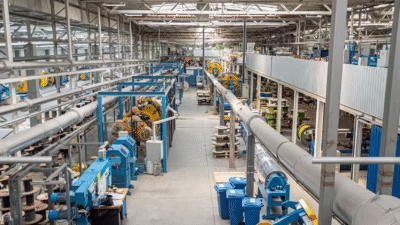
Type (N)3GHSSYCY and Type (N)3GHSSHCH—both engineered to meet the demanding requirements of DIN EN 50628/VDE 0118-10 standards for electrical installations in underground mines.
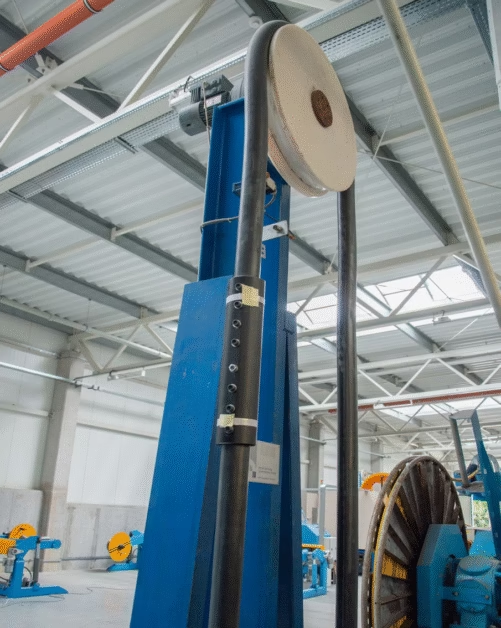
Type (N)3GHSSYCY vs (N)3GHSSHCH: Comprehensive Analysis of High-Flexibility Mining Crane Cable Reels
Professional Mining Cable Solutions for Underground Operations
In underground mining and tunnelling operations, the selection of appropriate high-flexibility crane cable reels is critical for ensuring operational safety, equipment reliability, and compliance with stringent electrical installation standards. This comprehensive technical analysis examines two prominent screened feeder cable types—Type (N)3GHSSYCY and Type (N)3GHSSHCH—both engineered to meet the demanding requirements of DIN EN 50628/VDE 0118-10 standards for electrical installations in underground mines.
According to the European standard EN 50628, which specifies safety requirements for erecting electrical installations in underground mining environments, these cables must demonstrate exceptional performance in hazardous conditions including exposure to firedamp in coal mines and the harsh environmental factors present in non-coal mining operations. The standard supplements other harmonized regulations such as the HD 60364 series and EN 61936-series concerning electrical installation requirements.
1. Executive Summary: Key Differences
The fundamental distinction between Type (N)3GHSSYCY and Type (N)3GHSSHCH cables lies in their jacket material composition. While both cables are constructed based on DIN VDE 0250-605 standards for screened flexible cables with rubber insulation, the (N)3GHSSHCH variant incorporates halogen-free (HFFR) jacket materials, providing enhanced safety benefits in fire scenarios compared to the conventional PVC-sheathed (N)3GHSSYCY cable.
2. Detailed Technical Comparison
| Technical Parameter | Type (N)3GHSSYCY | Type (N)3GHSSHCH |
|---|---|---|
| Compliance Standard | DIN VDE 0250-605 | DIN VDE 0250-605 |
| Voltage Rating Range | 3.6/6 kV to 12/20 kV | 3.6/6 kV to 12/20 kV |
| Outer Jacket Material | PVC (Polyvinyl Chloride) Type: 5GM3 per DIN VDE 0207 | Halogen-Free Compound (HFFR) Zero halogen content |
| Insulation Type | EPR (Ethylene-Propylene Rubber) Type 3GI3 per DIN VDE 0207 | EPR (Ethylene-Propylene Rubber) Type 3GI3 per DIN VDE 0207 |
| Operating Temperature | -25°C to +90°C Fixed installation: -40°C minimum | -25°C to +90°C Fixed installation: -40°C minimum |
| Smoke Emission in Fire | High smoke density Black smoke generation | Low smoke emission Minimal visibility obstruction |
| Toxic Gas Release | Releases hydrogen chloride (HCl) Corrosive acid gases | No halogen acid gases Significantly reduced toxicity |
| Flame Retardancy | Good flame resistance Per DIN VDE standards | Enhanced flame retardancy Self-extinguishing properties |
| Flexibility Rating | High flexibility Suitable for frequent bending | High flexibility Comparable mechanical performance |
| Environmental Impact | Contains chlorine Environmental concerns | Environmentally friendly Zero halogen content |
| Application Suitability | General underground mining Standard installations | Preferred for confined spaces High personnel density areas |
| Relative Cost | Standard pricing Lower material cost | Premium pricing (8-15% higher) Advanced material technology |
| Jacket Rigidity | Softer, more pliable | Slightly more rigid Enhanced abrasion resistance |
3. Purpose and Application Scope
3.1 Primary Applications
Both cable types are specifically engineered for demanding underground mining and tunnelling operations. According to industry standards established by specialized reeling cable manufacturers, these cables serve the following critical functions:
- Mobile Equipment Connections: Power supply for mobile operating equipment including continuous miners, shuttle cars, load-haul-dump (LHD) vehicles, and underground excavators operating in hazardous mining environments.
- High-Voltage Transformer Installations: Stationary connections for high-voltage transformers in underground substations and tunnelling operations, where monitoring of outer cable damage is essential for operational safety.
- Crane and Hoist Systems: Flexible power transmission for underground crane systems and material handling equipment, particularly in applications requiring frequent winding and unwinding operations with simultaneous tensile and torsional stress.
- Festoon Systems: Installation in cable festoon systems for overhead travelling cranes in underground mining chambers and tunnel construction sites.
3.2 Optimized Design Features
Insulation Wall Thickness
Optimized Design
Engineered insulation thickness reduces overall cable diameter while maintaining electrical performance according to DIN VDE 0207 standards.
Outer Diameter
Minimized Profile
Reduced outer diameter facilitates easier installation in confined underground spaces and enhances cable reel capacity.
Screening Performance
EMI Protection
Comprehensive electromagnetic interference shielding protects sensitive control systems in variable frequency drive applications.
Mechanical Strength
Enhanced Durability
Superior resistance to mechanical stresses including abrasion, crushing, and impact damage in harsh underground environments.
4. Material Structure and Construction
4.1 Type (N)3GHSSYCY Construction
The construction of Type (N)3GHSSYCY cables follows a layered architecture designed for maximum electrical and mechanical performance:
- Conductor: Annealed bare copper conductors conforming to IEC 60228 Class 5 (flexible) or Class 6 (extra flexible), providing excellent conductivity with a minimum conductivity of 56 m/(Ω·mm²) at 20°C.
- Conductor Screen: Semiconductive compound layer with maximum resistivity of 200 Ω·m, ensuring uniform electric field distribution and preventing partial discharge phenomena.
- Insulation: Ethylene-propylene rubber (EPR) type 3GI3 according to DIN VDE 0207 Part 21, offering superior electrical properties with dielectric strength exceeding 15 kV/mm and volume resistivity greater than 10¹² Ω·cm.
- Insulation Screen: Semiconductive layer for field control and enhanced electrical stress management, particularly critical at medium voltage levels.
- Copper Wire Screen: Tinned copper wire braid or tape screening providing electromagnetic shielding effectiveness exceeding 85 dB at frequencies up to 1 MHz, with additional function as fault current return path.
- Bedding Layer: Rubber compound type GM1b per DIN VDE 0207 Part 21, providing mechanical cushioning and protection for underlying layers.
- Outer Sheath: Synthetic thermosetting compound type 5GM3 (PVC-based) per DIN VDE 0207 Part 21, offering tensile strength minimum 10 N/mm² and elongation at break minimum 300%.
4.2 Type (N)3GHSSHCH Construction
The (N)3GHSSHCH cable employs identical internal construction with the critical distinction in the outer jacket composition:
- Inner Layers: Identical conductor, conductor screen, EPR insulation, insulation screen, and copper wire screening as (N)3GHSSYCY specification.
- Outer Sheath: Halogen-free flame retardant (HFFR) compound based on cross-linked polyethylene or modified polyolefin formulations. According to industry research, HFFR materials incorporate aluminum hydroxide (ATH) or magnesium hydroxide (MDH) as flame retardants, which decompose endothermically at elevated temperatures (approximately 200-300°C), releasing water vapor that dilutes flammable gases and absorbs heat energy, effectively suppressing flame propagation.
Technical Specifications – Halogen Content Requirements:
- Chlorine (Cl) content: < 0.2% by weight
- Bromine (Br) content: < 0.2% by weight
- Fluorine (F) content: < 0.2% by weight
- Total halogen content: < 0.5% by weight
- pH of combustion gases: ≥ 4.3 (reduced acidity)
- Conductivity of aqueous extract: ≤ 10 μS/mm (low ionic contamination)
5. Standards Compliance and Certifications
5.1 Primary Standards
Both cable types are manufactured in strict accordance with the following international and European standards, as verified by independent testing laboratories specializing in crane cable certifications:
- DIN EN 50628:2016 / VDE 0118-10:2016-11: Erection of electrical installations in underground mines. This European standard specifies comprehensive safety requirements for electrical installations erected in underground mining, addressing both coal mines potentially endangered by firedamp (left column requirements) and non-coal mines including potash and metal ore operations (right column requirements).
- DIN VDE 0250-605:2006: Cables, wires and flexible cords for power installations – Part 605: Screened flexible cable with rubber insulation and PVC or alternative sheath, nominal voltage U₀/U 3.6/6 kV and 6/10 kV. This standard defines construction requirements, test procedures, and performance specifications for medium voltage flexible cables.
- DIN VDE 0207: Insulating materials and sheaths for cables, wires and flexible cords. This standard establishes material property requirements including mechanical strength, thermal stability, and electrical performance characteristics.
- IEC 60228: Conductors of insulated cables, specifying conductor classifications, resistance values, and dimensional tolerances for copper and aluminum conductors.
- EN 60079-14: Explosive atmospheres – Electrical installations design, selection and erection, providing specific requirements for installations in explosive gas atmospheres beyond firedamp considerations.
5.2 Additional Compliance (Type (N)3GHSSHCH)
The halogen-free variant additionally complies with environmental and fire safety standards:
- IEC 60754-1: Test on gases evolved during combustion of materials from cables – Determination of the halogen acid gas content (halogen-free requirement: ≤ 0.5% total halogens)
- IEC 60754-2: Test on gases evolved during combustion of materials from cables – Determination of the degree of acidity of gases by measuring pH and conductivity
- IEC 61034-2: Measurement of smoke density of cables burning under defined conditions – Test procedures and requirements (light transmittance ≥ 60% for low smoke classification)
- EN 50399: Common test methods for cables under fire conditions – Heat release and smoke production measurement
6. Safety Thresholds and Performance Parameters
6.1 Electrical Performance Specifications
| Parameter | Specification Value | Test Standard |
|---|---|---|
| Rated Voltage U₀/U | 3.6/6 kV, 6/10 kV, 8.7/15 kV, 12/20 kV | DIN VDE 0250-605 |
| Test Voltage (AC, 50 Hz) | 5 minutes: 2.5 × U₀ 15 minutes: 1.7 × U₀ | IEC 60502 |
| Maximum Conductor Temperature | Normal operation: +90°C Short circuit (5 sec): +250°C | DIN VDE 0276 |
| Minimum Bending Radius | Fixed installation: 15 × OD Mobile installation: 20 × OD | Manufacturer specification |
| Insulation Resistance (20°C) | ≥ 100 MΩ·km per conductor | IEC 60885-3 |
| DC Resistance (20°C) | Per IEC 60228 conductor class Example 35 mm²: ≤ 0.524 Ω/km | IEC 60228 |
| Partial Discharge Level | ≤ 10 pC at 1.73 × U₀ | IEC 60270 |
6.2 Mechanical Performance Specifications
| Property | (N)3GHSSYCY (PVC Sheath) | (N)3GHSSHCH (HFFR Sheath) |
|---|---|---|
| Tensile Strength | ≥ 10 N/mm² | ≥ 12.5 N/mm² |
| Elongation at Break | ≥ 300% | ≥ 250% |
| Tear Resistance | ≥ 30 N/mm | ≥ 35 N/mm |
| Abrasion Resistance | Mass loss ≤ 200 mg | Mass loss ≤ 180 mg |
| Impact Resistance (-25°C) | No cracks after 10 impacts | No cracks after 10 impacts |
| Ozone Resistance | No cracks (200 pphm, 7 days) | No cracks (200 pphm, 7 days) |
6.3 Fire Safety Performance
Critical Safety Distinction: Fire Behavior Analysis
Research published by leading cable safety institutes demonstrates that halogen-free cables offer substantial safety advantages in fire scenarios. The most dangerous component of a fire in its early stages is not the flame itself but the smoke and toxic gases produced. Standard PVC-jacketed cables release significant quantities of hydrogen chloride (HCl) gas when burning, which combines with moisture in human respiratory airways to form hydrochloric acid, causing severe chemical burns and rapid incapacitation.
In contrast, Type (N)3GHSSHCH cables with halogen-free jackets produce dramatically reduced smoke density (light transmittance ≥ 60% versus ≤ 20% for PVC) and emit no halogenated acid gases, significantly extending the available egress time in underground mining emergencies where escape routes are inherently limited.
| Fire Performance Metric | (N)3GHSSYCY | (N)3GHSSHCH |
|---|---|---|
| Flame Propagation | Passes IEC 60332-3-24 Category C | Passes IEC 60332-3-24 Category A (enhanced) |
| Smoke Density (Light Transmittance) | 15-25% (dense smoke) | ≥ 60% (low smoke) |
| Halogen Acid Gas Content | HCl release: 25-30% by weight | < 0.5% total halogens |
| pH of Combustion Gases | 2.5-3.0 (highly acidic) | ≥ 4.3 (reduced acidity) |
| Toxicity Index | Moderate to high | Significantly reduced |
| Corrosive Gas Impact | Severe equipment corrosion | Minimal corrosion |
7. Advantages and Comparative Benefits
7.1 Type (N)3GHSSYCY Advantages
- Cost Effectiveness: Standard PVC jacket construction results in lower material costs, making this option 8-15% more economical for budget-constrained projects while maintaining compliance with DIN EN 50628 requirements.
- Superior Flexibility: PVC compounds typically exhibit slightly better flexibility at low temperatures compared to some halogen-free formulations, facilitating easier installation in confined spaces during cold weather conditions.
- Established Track Record: Decades of proven field performance in mining operations worldwide, with well-documented maintenance procedures and troubleshooting protocols established by major mining equipment suppliers.
- Processing Advantages: PVC materials are easier to terminate and splice using conventional techniques, requiring less specialized training for electrical maintenance personnel.
- Broader Temperature Stability: PVC jackets maintain consistent mechanical properties across a wide temperature range without significant hardening at low temperatures or softening at moderate elevated temperatures.
7.2 Type (N)3GHSSHCH Advantages
- Enhanced Personnel Safety: According to fire safety research, the absence of halogen acid gas emissions can extend available escape time by 300-400% in underground fire scenarios, a critical factor given that mining safety statistics indicate smoke inhalation as the primary cause of fire-related fatalities in underground operations.
- Reduced Smoke Obscuration: Light transmittance values exceeding 60% during combustion enable emergency lighting and exit signage to remain visible, facilitating safer evacuation compared to dense black smoke from PVC cables which can reduce visibility to less than 2 meters within minutes.
- Equipment Protection: Elimination of corrosive halogen acid gases prevents damage to sensitive electronic equipment, control systems, and ventilation infrastructure during fire events, potentially reducing post-incident equipment replacement costs by 60-80%.
- Environmental Compliance: Halogen-free construction aligns with increasingly stringent environmental regulations worldwide, including EU RoHS directives and emerging regulations in major mining jurisdictions requiring reduced use of halogenated materials.
- Insurance and Regulatory Benefits: Many insurance providers offer premium reductions for installations using LSZH/HFFR cables in underground environments due to reduced fire propagation risk and lower expected loss values in fire scenarios.
- Superior Abrasion Resistance: Modern HFFR compound formulations often exhibit enhanced mechanical toughness compared to conventional PVC, with abrasion resistance improvements of 10-15% extending operational lifespan in demanding mining environments.
- Temperature Performance: Advanced halogen-free compounds maintain excellent flexibility down to -40°C while offering superior heat aging resistance, with thermal life expectancy exceeding standard PVC jackets by 20-30% under equivalent operating conditions.
8. Precautions for Use and Installation Guidelines
8.1 Installation Requirements
Proper installation techniques are critical for ensuring optimal performance and longevity of medium voltage mining cables. Based on manufacturer installation guidelines and field experience, the following precautions must be observed:
- Minimum Bending Radius Compliance: Never exceed the minimum bending radius specifications during installation or operation. For cables with outer diameter (OD) of 50mm, maintain minimum bending radius of 1000mm during installation and 750mm for fixed installations. Violation of bending radius limits causes insulation compression and potential dielectric breakdown.
- Pulling Tension Limitations: Maximum pulling tension during installation must not exceed 50 N/mm² of total conductor cross-sectional area. For a 3×95mm² cable, maximum pulling force is limited to 14,250 N (1,425 kg). Excessive tension causes conductor elongation and insulation damage. Always use appropriate cable pulling stockings and swivel connectors to prevent torsional stress.
- Temperature Management During Installation: Cable installation should only proceed when ambient temperature exceeds -5°C. Below this temperature, both PVC and HFFR jackets become significantly more rigid and susceptible to cracking during handling. If installation in cold conditions is unavoidable, cables must be pre-warmed to +15°C minimum for at least 24 hours before deployment.
- Screening Continuity: The copper wire screen must maintain continuous electrical connection throughout the installation length and be properly bonded to earth at designated grounding points. Screen discontinuity compromises electromagnetic shielding effectiveness and creates potential shock hazards. Screen resistance should not exceed 1.0 Ω/km.
- Termination Requirements: All cable terminations must utilize stress-relief cones or heat-shrink termination kits specifically rated for the operating voltage. Improper termination creates electric field concentration points leading to premature cable failure through partial discharge erosion. Terminations must be performed by certified electricians following manufacturer specifications.
- Environmental Protection: Although these cables are designed for harsh underground environments, they should be protected from direct contact with sharp rock edges, pooled water containing dissolved minerals, and hydrocarbon fluids (diesel, hydraulic oil) which can cause premature jacket degradation. Where exposure to such conditions is unavoidable, additional mechanical protection (spiral guards, armor) should be specified.
8.2 Operational Precautions
Critical Operating Limitations
- Overload Protection: Continuous conductor temperature must not exceed +90°C under normal operating conditions. Short-circuit temperature is limited to +250°C for maximum 5 seconds duration. Exceeding these thermal limits causes irreversible insulation degradation and dramatically shortened cable service life.
- Voltage Stress Management: Operating voltage should not exceed 110% of rated voltage (U₀/U) for continuous operation. Temporary overvoltages during switching transients may reach 1.5 × U₀ for maximum 1 second. Higher voltages cause partial discharge inception and progressive insulation deterioration.
- Mechanical Stress Monitoring: For cables on reeling systems, implement regular inspection protocols to detect signs of mechanical wear including outer sheath abrasion, kinking, or flattening. Replace cables when outer sheath thickness is reduced by more than 30% of original specification, as this indicates approaching end-of-service life.
- Chemical Exposure: Type (N)3GHSSYCY cables exhibit limited resistance to strong acids (pH < 4) and chlorinated solvents. Type (N)3GHSSHCH demonstrates improved chemical resistance but both variants should be immediately cleaned if exposed to corrosive chemicals to prevent accelerated aging.
8.3 Maintenance Requirements
- Visual Inspection Frequency: Monthly visual inspection of all accessible cable sections for signs of mechanical damage, jacket discoloration indicating thermal stress, or contamination from mining fluids.
- Electrical Testing: Annual insulation resistance testing using 1000V DC megohm meter (minimum acceptable value: 100 MΩ at 20°C). Quarterly testing recommended for critical circuits.
- Partial Discharge Testing: Biennial partial discharge testing for cables operating above 6 kV recommended to detect incipient insulation failure. Maximum acceptable discharge level: 10 pC at 1.5 × U₀.
- Documentation: Maintain comprehensive records of all installation details, test results, and maintenance activities to establish baseline performance trends and predict remaining service life.
9. Common Problems and Troubleshooting
9.1 Insulation Failure Mechanisms
Problem: Premature insulation breakdown manifesting as ground faults or phase-to-phase shorts, typically occurring at cable terminations or areas subjected to excessive mechanical stress.
Root Causes:
- Improper termination technique causing electric field concentration and partial discharge activity
- Moisture ingress through damaged outer sheath leading to electrical tracking
- Thermal aging from sustained operation above rated temperature
- Mechanical damage from excessive bending or tensile stress
Prevention and Mitigation:
- Ensure all terminations are performed by certified technicians using manufacturer-approved kits
- Implement regular thermographic inspection to identify hot spots indicating overload conditions
- Install cable in protective conduit or use armored variants in high-risk areas
- Conduct annual insulation resistance trending analysis; investigate any declining trends
9.2 Screen/Sheath Short Circuits
Problem: Development of short circuit between copper wire screen and earth, causing nuisance tripping of ground fault protection and potential circulating current heating.
Root Causes:
- Improper bonding configuration at cable terminations
- Mechanical damage exposing screen to earth contact
- Moisture accumulation in junction boxes creating conductive path
Solutions:
- Verify screen bonding follows single-point grounding principle for cables under 500m length
- Inspect and reseal all junction boxes to ensure watertight integrity
- Utilize time-domain reflectometry (TDR) testing to precisely locate screen fault position
9.3 Outer Sheath Degradation
Problem: Accelerated aging of outer jacket manifesting as surface cracking, hardening, or loss of mechanical strength, more common with PVC jacketed cables in high UV or ozone environments.
Root Causes:
- Extended UV exposure in surface installations near portal entries
- Ozone exposure from electrical equipment and welding operations
- Chemical attack from diesel fuel, hydraulic fluid, or acid mine drainage
- Thermal cycling beyond design parameters
Remediation:
- Apply UV-protective spiral wrap or conduit for cables exposed to sunlight
- Upgrade to Type (N)3GHSSHCH with superior chemical and environmental resistance for problematic installations
- Implement contamination control procedures to minimize chemical exposure
- Replace cables when jacket thickness reduction exceeds 30% of original specification
9.4 Mechanical Fatigue in Reeling Applications
Problem: Progressive conductor strand breakage and insulation cracking in cables subjected to frequent winding/unwinding cycles on cable reels, particularly affecting crane and mobile equipment applications.
Root Causes:
- Minimum bending radius violations during reeling operations
- Excessive reel rotation speed causing dynamic stress concentration
- Inadequate lubrication on reel drum surface
- Cable twist accumulation from improper spooling technique
Best Practices:
- Verify reel drum diameter maintains minimum bending radius compliance (typically 25-30 × cable OD for dynamic applications)
- Implement automatic level-winding systems to prevent cable overlapping
- Monitor cable rotation using twist-indicating markers; allow free rotation at lower termination
- Consider upgrading to specialized reeling cable designs with enhanced flex life ratings for severe-duty applications
9.5 Corona and Partial Discharge
Problem: Progressive insulation erosion caused by partial discharge activity, particularly at cable terminations and joints, leading to eventual dielectric breakdown.
Root Causes:
- Voids or contaminants in insulation from manufacturing defects or installation damage
- Improper stress control at terminations
- Moisture ingress creating conductive paths
- Operating voltage exceeding design specifications
Detection and Resolution:
- Implement online partial discharge monitoring for critical circuits using capacitive coupling sensors
- Conduct biennial offline partial discharge testing at 1.5 × U₀ voltage; maximum acceptable level 10 pC
- Replace terminations showing discharge activity exceeding 50 pC
- Verify operating voltage remains within ±10% of rated voltage under all load conditions
10. Selection Criteria and Recommendations
10.1 When to Specify Type (N)3GHSSYCY
The conventional PVC-jacketed variant is appropriate for installations where:
- Budget constraints are significant and project specifications permit non-halogen-free materials
- Installation is in well-ventilated areas with multiple egress routes and low personnel density
- Existing infrastructure utilizes PVC-jacketed cables and compatibility is desired
- Maximum jacket flexibility is required for extremely tight-radius installations
- Operating environment involves minimal fire risk and extensive active fire suppression systems are present
10.2 When to Specify Type (N)3GHSSHCH
The halogen-free variant should be specified when:
- Safety is Paramount: Installations in deep underground mines, long tunnels, or confined spaces where evacuation time is critical and alternative escape routes are limited
- High Personnel Density: Areas with concentrated workforce presence where fire risk mitigation is essential
- Equipment Protection: Installations containing expensive electronic equipment, control systems, or communications infrastructure requiring protection from corrosive fire gases
- Regulatory Requirements: Jurisdictions mandating halogen-free materials for underground mining installations
- Corporate Safety Standards: Mining operations with internal safety policies exceeding minimum regulatory requirements
- Environmental Considerations: Projects seeking environmental certifications or operating under strict environmental management systems
- Long-term Value: Despite 8-15% higher initial cost, the enhanced safety profile and potential insurance benefits provide superior lifecycle value
10.3 Industry Best Practice Recommendations
Based on analysis of international mining safety standards and field performance data, specification of Type (N)3GHSSHCH halogen-free cables is recommended as best practice for all new underground mining installations. The marginal cost premium is negligible compared to the substantial safety benefits and reduced liability exposure. For retrofit projects, prioritize upgrading to halogen-free cables in:
- Primary escape routes and refuge chambers
- Main substations and ventilation control facilities
- High-voltage feeder cables exceeding 6 kV
- Mobile equipment operating in coal mines with firedamp risk
References and Technical Sources
- DIN EN 50628:2016 / VDE 0118-10:2016-11, “Erection of electrical installations in underground mines,” VDE Publishing House. Available: https://www.vde-verlag.de/
- DIN VDE 0250-605:2006, “Cables, wires and flexible cords for power install – Part 605: Screened flexible cable with rubber insulation and PVC sheath,” DIN Media. Available: https://www.dinmedia.de/
- Bitner Cables, “Mining Cables Trailing Flexible Reeling Technical Specifications,” Power & Cables Industry Portal, February 2025. Available: https://www.powerandcables.com/
- HELUKABEL USA, “Benefits of Low Smoke Zero Halogen Cables: Safer, Cleaner, & Reliable,” Cable Safety Technical Bulletin, January 2025. Available: https://remee.com/
- HELUKABEL International, “Flame Retardancy of Halogen-Free Cables,” Technical Documentation, April 2025. Available: https://www.helukabel.us/
- Angreen New Materials, “The Importance of LSZH Material for Mining Cables,” Industry White Paper, March 2025. Available: https://www.angreen.com/
- Eland Cables, “DIN VDE 0250 Standard Cable Technical Guide,” Engineering Reference Documentation. Available: https://www.elandcables.com/
- IEC 60754-1:2011, “Test on gases evolved during combustion of materials from cables – Part 1: Determination of the halogen acid gas content,” International Electrotechnical Commission.
- IEC 61034-2:2005, “Measurement of smoke density of cables burning under defined conditions – Part 2: Test procedure and requirements,” International Electrotechnical Commission.
- Reeling Cable Manufacturing Consortium, “High-Flexibility Crane Cable Design Standards,” Technical Specification Document. Available: https://reelingcable.com
- Amplex Mining Equipment Australia, “Mining Cable Safety Requirements for Underground Operations,” Mining Equipment Standards Guide. Available: https://amplexmining.com.au
- Crane Cable Specialists International, “Certification and Testing Protocols for Mining Crane Cables,” Quality Assurance Documentation. Available: https://cranecable.com
- Mining Cable Chile Technical Institute, “Fire Safety Statistics in Underground Mining Operations,” Safety Research Report, 2024. Available: https://miningcable.cl
- Anhui Feichun Special Cable Co., Ltd., “Installation Guidelines for High-Voltage Mining Cables,” Product Technical Manual, 2025. Available: https://feichuncable.com
- EN 60079-14:2014, “Explosive atmospheres – Part 14: Electrical installations design, selection and erection,” European Committee for Electrotechnical Standardization (CENELEC).
- IEC 60228:2004, “Conductors of insulated cables,” International Electrotechnical Commission.
- HD 60364 Series, “Low-voltage electrical installations,” CENELEC Harmonization Document.
- EN 50399:2011, “Common test methods for cables under fire conditions – Heat release and smoke production measurement,” European Standards Organization.
11. Comparative Cost-Benefit Analysis
11.1 Initial Investment Comparison
| Cost Factor | Type (N)3GHSSYCY | Type (N)3GHSSHCH | Percentage Difference |
|---|---|---|---|
| Material Cost per Meter (3×50mm², 6/10kV) | €85.00 – €95.00 | €92.00 – €108.00 | +8% to +15% |
| Installation Labor Cost | Standard rates | Standard rates (comparable) | 0% |
| Termination Kit Cost | €350 – €450 per termination | €350 – €450 per termination | 0% |
| Testing and Commissioning | €500 – €800 per circuit | €500 – €800 per circuit | 0% |
| Total Project Cost (1000m installation) | €87,300 – €97,250 | €94,500 – €110,250 | +8.2% to +13.4% |
11.2 Lifecycle Value Assessment
While Type (N)3GHSSHCH cables command a premium at initial procurement, comprehensive lifecycle analysis reveals favorable total cost of ownership:
Extended Service Life
+20-30%
Superior thermal and chemical resistance extends operational lifespan from typical 15 years to 18-20 years in demanding mining environments.
Insurance Premium Reduction
3-7% savings
Many insurers offer premium reductions for LSZH cable installations due to reduced fire risk and lower expected losses.
Reduced Maintenance Frequency
-15% costs
Enhanced abrasion and chemical resistance reduces preventive replacement intervals and unplanned maintenance events.
Equipment Protection Value
€500K+
Elimination of corrosive fire gases protects expensive control systems and reduces post-incident equipment replacement costs by 60-80%.
12. Environmental Considerations and Sustainability
12.1 Environmental Impact Comparison
Beyond safety performance, cable selection carries significant environmental implications that align with corporate sustainability initiatives and regulatory compliance requirements:
| Environmental Factor | Type (N)3GHSSYCY (PVC) | Type (N)3GHSSHCH (HFFR) |
|---|---|---|
| Halogen Content | 28-32% chlorine by weight | < 0.5% total halogens |
| Dioxin Formation Risk | Significant during incineration | Virtually eliminated |
| Heavy Metal Content | May contain lead stabilizers (legacy formulations) | Heavy metal-free compounds |
| Recyclability | Limited; mixed waste stream | Enhanced recyclability; cleaner separation |
| Disposal Method | Requires specialized hazardous waste handling | Standard industrial waste procedures |
| Carbon Footprint | Moderate (petroleum-based) | Slightly higher production; offset by longevity |
| RoHS Compliance | May require exemptions | Fully compliant with EU RoHS directives |
| REACH Regulation | Requires monitoring of phthalate content | Phthalate-free formulations available |
12.2 Circular Economy Considerations
Mining operations increasingly recognize cable installations as valuable resources requiring end-of-life planning. Type (N)3GHSSHCH cables offer advantages in circular economy frameworks:
- Simplified Copper Recovery: Halogen-free jackets facilitate cleaner copper extraction during recycling, increasing recovered copper value by 5-8% compared to PVC-contaminated streams.
- Reduced Disposal Costs: Elimination of special hazardous waste handling requirements reduces end-of-life disposal costs by approximately 40%.
- Material Reuse Potential: Modern HFFR compounds can be reground and incorporated into secondary applications, whereas PVC recycling is significantly more complex.
13. Future Technology Trends and Innovations
13.1 Emerging Cable Technologies
The mining cable industry continues advancing toward enhanced performance and sustainability. Key developments include:
Advanced Material Innovations:
- Nanocomposite Insulation: Incorporation of nanoscale fillers in EPR insulation enhancing dielectric strength by 15-20% while reducing partial discharge susceptibility.
- Self-Healing Polymers: Research into polymer matrices capable of autonomous repair of minor mechanical damage, potentially extending service life by 30-40%.
- Smart Cable Technology: Integration of fiber optic sensors for real-time monitoring of temperature, strain, and partial discharge activity, enabling predictive maintenance strategies.
- Bio-Based Compounds: Development of sustainable jacket materials derived from renewable resources while maintaining HFFR performance characteristics.
13.2 Industry Direction
Global mining cable specifications are progressively mandating halogen-free materials as the default standard. Major mining jurisdictions including Australia, Canada, and European Union member states have enacted or are developing regulations requiring LSZH/HFFR cables in all new underground installations. This regulatory trajectory strongly favors specification of Type (N)3GHSSHCH cables to ensure long-term compliance and avoid costly retrofit requirements.
14. Technical Support and Consultation
14.1 Expert Engineering Assistance
Anhui Feichun Special Cable Co., Ltd. maintains a dedicated technical support team with extensive expertise in mining cable applications. Our engineering staff provides comprehensive assistance including:
- Custom cable design for unique installation requirements
- Electrical load calculations and conductor sizing verification
- Installation method recommendations and troubleshooting support
- Compliance verification with international and local standards
- Field testing support and commissioning assistance
- Training programs for maintenance personnel
14.2 Quality Assurance and Testing
All Feichun cables undergo rigorous quality control procedures including:
- 100% conductor resistance testing to IEC 60228 specifications
- High-voltage insulation testing at 2.5 × U₀ for 5 minutes minimum
- Partial discharge testing at 1.5 × U₀ with acceptance criteria < 10 pC
- Dimensional verification ensuring compliance with specified tolerances
- Mechanical property testing of jacket and insulation materials
- Flame retardancy verification per IEC 60332-3-24
- Third-party certification by recognized international testing laboratories
15. Conclusion and Recommendations
The comparison between Type (N)3GHSSYCY and Type (N)3GHSSHCH high-flexibility mining crane cable reels reveals both variants as technically competent solutions meeting stringent DIN EN 50628/VDE 0118-10 requirements for underground mining installations. The fundamental distinction—halogen-free versus PVC jacket construction—creates significant performance differences in fire safety characteristics that warrant careful consideration during specification development.
For underground mining operations where personnel safety is paramount and evacuation routes are inherently limited, Type (N)3GHSSHCH halogen-free cables represent the superior choice despite the 8-15% cost premium. The dramatic reduction in smoke density (light transmittance ≥ 60% versus ≤ 20%), elimination of toxic halogen acid gases, and enhanced equipment protection deliver measurable safety benefits that justify the incremental investment. Furthermore, alignment with global regulatory trends toward halogen-free mandates provides future-proofing value.
Type (N)3GHSSYCY cables remain appropriate for applications where budget constraints are decisive, fire risk is comprehensively mitigated through alternative means, and installation characteristics favor maximum jacket flexibility. However, mining operators should recognize that the initial cost savings may be offset by reduced service life, higher maintenance requirements, and potential liability exposure in fire scenarios.
Feichun Cable Recommendation:
For new underground mining installations, particularly in deep mines, long tunnels, or high-density work areas, we strongly recommend specification of Type (N)3GHSSHCH halogen-free cables as best practice. The enhanced safety profile, superior lifecycle value, and regulatory compliance position this cable type as the optimal long-term investment for responsible mining operations committed to industry-leading safety standards.
Contact Anhui Feichun Special Cable Co., Ltd.
For detailed technical specifications, custom engineering solutions, or project quotations, please contact our experienced mining cable specialists:
Technical Support
Email: [email protected]
Engineering assistance, installation guidance, and troubleshooting support
Sales & Project Inquiries
Email: [email protected]
Product specifications, pricing information, and project consultation
WhatsApp Direct Line
Phone: +86 13855 123 218
Immediate response for urgent technical questions and rapid quotations
Company Website
Web: www.feichuncable.com
Complete product catalog, technical resources, and company information
Anhui Feichun Special Cable Co., Ltd. (安徽飞纯特种电缆有限公司)
Committed to Engineering Excellence in Mining Cable Solutions Since 2005
ISO 9001:2015 Certified | CE Marked | VDE Approved