renewable energy cable

Spreader Bar Cable Application: What is a spreader bar? Container crane context: Gantry crane positioned at dock Overhead hoist mechanism: Winch + trolley system Spreader bar: Attachment point below hoist Function: Grips container corners, distributes load, tilts container for placement Spreader bar structure: Framework: Steel tubes/beams forming rectangular frame Lifting points: 4 corner attachment rings (one per container corner) Electrical system: Motor-driven locks, position sensors, lighting Cables: Power supply for motors + control signals for locking mechanism Cable location (spreader bar): Vertical run (primary): From crane hoist (top) down 20–40 m to spreader bar (bottom) Function: Supply power for: - Corner lock solenoids (release container locks) - Position feedback sensors (confirm locks engaged) - Optional: Spreader bar lighting (visibility during operation) Simultaneous function: Act as partial mechanical support (share load with main hoist cable) Horizontal distribution (on spreader bar): From entry point distributed across spreader frame Supply all four corner lock motors Branching: May split into smaller branches (4× circuits to corners) Mechanical load: Cable must withstand: Static tension: Weight of container payload (20–40 tons distributed) Dynamic loads: Jerking during load acceleration, swinging in wind Thermal: Tropical port environment, direct sun, saltwater spray Abrasion: Rubbing against spreader frame during operation Cable design philosophy: Dual function (unique): Electrical function: Deliver 300/500V power for locking system Mechanical function: Share load-bearing (not primary structure, but support role) Different from: Pure electrical cables (festoon, lifting): Electrical function only Pure mechanical ropes: Mechanical function only BASKET SPREADER 730: Both functions integrated Speed specification rationale: 160 m/min (relatively slow): Container crane cycle time: ~45–60 seconds per lift Descent distance: 20–40 m Descent speed: 20–40 m ÷ 45–60 sec = 0.33–0.9 m/s = 20–54 m/min Average speed: ~30 m/min (loading) + 20 m/min (discharge) = 25 m/min 160 m/min specification: 6–8× safety margin on speed Design: Allows for fast emergency ascent if needed Why not higher speed? Mechanical load constraint: Heavy cable (4000 N = ~400 kg equivalent) Inertia: Accelerating 400 kg + spreader bar + container inertia takes time Structural: Crane frame limits acceleration rates (safety interlocks) Result: 160 m/min is practical maximum for loaded spreader bar

从欧盟到俄罗斯:飞纯风电电缆斩获 ATEX、IECEx 防爆与俄罗斯 FSC 消防双重硬核认证!

全球风电项目正在进入更严苛的安全合规时代。风机大型化、应用区域国际化、能源场景复合化,使风电电缆承担的责任远不止电力传输。它既要承受塔筒扭转、机舱振动、偏航运动、低温、潮湿、盐雾和油污等复杂环境,也要满足不同市场对防爆、防火、清关、验收和项目归档的高标准要求。飞纯风电电缆斩获 ATEX、IECEx 防爆认证与俄罗斯 FSC 消防认证,以“防爆 + 防火 + 国际合规”的硬核组合,为欧盟、国际工程和俄罗斯风电项目提供高安全等级电缆解决方案。
H07BN4-F HAR Nomenclature Breakdown (per CEI 20-20/20-19): H = Harmonized standard designation (IEC 60227 compliance) Indicates cable meets international safety standards Full compatibility with European electrical regulations 07 = Voltage designation (Uo/U = 450/750V) 07 = 450/750V nominal voltage class (other classes: 03 = 300/500V, 04 = 400/690V) Testing: 3 kV test voltage (10 times nominal) B = Special feature (Flexible/Benign environment) B typically indicates bare or flexible conductor design (Standard = no letter designation) N = Rubber type designation N = Normally-proportioned sheath thickness (S = Slim/reduced, T = Thick/reinforced) For H07BN4-F: N = Standard thickness for 450/750V industrial use Insulation thickness: 1.2 mm per DIN VDE 0282 Sheath thickness: 1.0–1.5 mm per DIN VDE 0293 4 = Number of principal tests/features Typically indicates: (1) Temperature range, (2) Insulation type, (3) Sheath composition, (4) Mechanical properties certification F = Flexibility designation F = Fully flexible (can be wound on reels) (Other: S = Service-cord, C = Cable) H07BN4-F can be: Coiled on reel: Yes (reelable) Bent radius: Down to 4×D (normal use) to 2×D (close to terminal) Repeated winding: Yes (drum rating available) Continuous flexing: Yes (up to 50+ million cycles per EN 50266) HAR = Harmonics-compatible technology designation HAR = High-frequency harmonic and transient rated Specifically designed for: - VFD (variable frequency drive) motor circuits (up to 20 kHz switching) - Welding equipment (high current transients, multi-frequency content) - Industrial power electronics environments (distorted waveforms) HAR testing per EN 50334: Transient overvoltage withstand: 3× nominal voltage, sustained Harmonic content up to 50th harmonic: Fully rated Dv/dt immunity: >3 kV/µs (fast switching events) Comparison: Standard vs. HAR designation Standard H07BN4-F (without HAR): Frequency: Single 50/60 Hz only Total harmonic distortion (THD) limit: 20% acceptable (VFD typical) Transient immunity: Enhanced (3+ kV nominal test) Suitable for: VFD motors, welding, power electronics Cost: +8–12% premium over standard Application advantage: Single cable type serves both conventional and VFD circuits

集齐 VDE、CE、UKCA、EAC!飞纯 H07BN4-F 欧标风电扭缆开启全球通关模式

风电项目正在从单一区域交付走向全球化配套。对风机制造商、EPC、设备集成商和出口项目来说,电缆不仅要能承受塔筒扭转、机舱振动、低温环境和长期运行,更要具备清晰的认证文件与市场准入能力。飞纯 H07BN4-F 欧标风电扭缆集齐 VDE、CE、UKCA、EAC 多重认证,为风电设备出口、海外项目投标和多区域交付提供更高效的合规支撑。
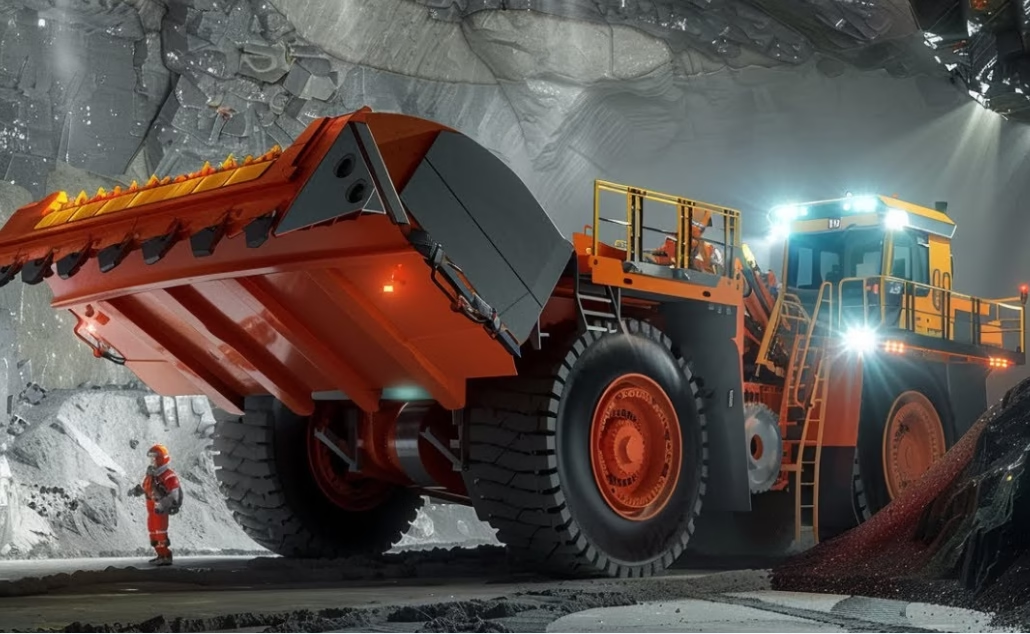
Large three-phase AC motors drove continuous-duty equipment (conveyor systems, pump stations, ventilation fans) with straightforward on/off control via contactor switches. The control circuits were simple, the equipment was robust and forgiving of electrical noise, and cable specifications focused purely on mechanical durability and basic electrical protection. Modern underground mining operations operate in a fundamentally different electrical environment. Variable frequency drives (VFDs) regulate motor speeds to match load requirements, reducing energy consumption and extending equipment life. Programmable logic controllers (PLCs) and distributed control systems (DCS) automate equipment sequencing and mine ventilation. Wireless monitoring systems track equipment health, environmental conditions, and safety parameters. The mine's electrical environment has become as electrically complex as an industrial manufacturing facility, except that everything must operate underground in the presence of conductive dust, moisture, and metallic ore particles that create unintended current paths and electromagnetic noise sources.

零下40℃也能高效防火?飞纯风力发电专用电缆通过俄罗斯 FSC 安全认证

严寒地区的风力发电项目通常位于高纬度、高海拔、草原、山地、海岸或开阔荒漠。风机长期暴露在低温、强风、冰雪、紫外线和温差循环中,塔筒内部还存在扭转、振动、摆动和持续运行带来的电缆疲劳。对于风电电缆而言,零下 40℃ 环境下仍能保持稳定运行,需要的不只是材料“不会冻裂”,而是电气、机械和消防性能在低温条件下保持协同。 飞纯风力发电专用电缆面向这种严苛工况,通过俄罗斯 FSC 安全认证,形成“低温可靠 + 防火合规 + 风机动态适配”的产品价值。对于寒区风电场、俄罗斯风电项目、北方高寒区域和出口风机配套项目,这种认证和性能组合具有很强的工程意义。
PV-FLAT H05VVH6-F/LIFT is engineered for one of the most demanding electrical environments on Earth: nuclear power plants and high-radiation medical imaging facilities. Unlike standard cables, which degrade rapidly when exposed to ionizing radiation, this cable withstands 80 mrad (80 million rads) of cumulative radiation dose—equivalent to 20+ years in a high-radiation zone. Nuclear and medical facility elevators operate in harsh radiation environments where: Gamma radiation (¹³⁷Cs, ⁶⁰Co sources)—degrades polymer chains in cable insulation, causing brittleness and electrical breakdown Neutron radiation (from reactor cores)—causes atomic transmutation in copper conductors, increasing electrical resistance X-ray radiation (medical imaging rooms, CT scanners)—accelerates polymer cross-linking, reducing mechanical flexibility Extreme temperature cycling (−40°C cryogenic zones to +80°C during equipment failure scenarios) Hydrogen generation (from reactor cooling water radiolysis)—corrosive to standard insulation compounds The PV-FLAT's parallel-core flat architecture is specifically designed for confined elevator cable routing in nuclear containment buildings and medical facility basements, where space is extremely limited and cable management is critical for safety systems.

(N)TSCGEWÖU-FO High Voltage & Data Composite Cable | VDE 0250 | EAC Ex & GOST Fire | Russia Energy

An engineering-grade technical reference for Russian Federation energy infrastructure, electrical power transmission and distribution systems, oil and gas operational control networks, renewable energy installations, and SCADA (Supervisory Control and Data Acquisition) telemetry systems requiring simultaneous high-voltage power delivery and real-time monitoring data transmission across extended geographic distances. This document explains the hybrid high-voltage copper-conductor and single-mode optical-fiber composite architecture that enables simultaneous delivery of multi-megawatt electrical power through primary high-voltage cores while transmitting continuous streams of remote monitoring, metering, and safety-critical control data through integrated optical fibers that are completely immune to the electromagnetic noise present in high-voltage utility environments. The document establishes performance specifications and certification compliance for 6–35 kV rated voltage operation across Russian Federation energy sector infrastructure, and provides field integration guidance for seamless deployment into utility-scale power systems and distributed energy networks.
FLEXIFESTOON® SPECIAL NE-FLAT: Advanced High-Temperature Flat Cable for Steel Mills, Petrochemical Plants, Renewable Energy Systems, and Extreme-Environment Industrial Control Feichun's revolutionary FLEXIFESTOON® SPECIAL NE-FLAT high-temperature cable platform delivers extreme thermal resilience (+135°C continuous flexible application with GAALTHERM® 533 insulation, or +90°C with XLPE), combined with halogen-free environmental compliance, 50 Mrad radiation hardening, and ultra-flexible parallel-core architecture enabling deployment in the world's most thermally demanding industrial environments—steel production, petrochemical processing, renewable energy infrastructure, and advanced thermal management systems.

FLEXIFESTOON® SPECIAL NE-FLAT

FLEXIFESTOON® SPECIAL NE-FLAT: Advanced High-Temperature Flat Cable for Steel Mills, Petrochemical Plants, Renewable Energy Systems, and Extreme-Environment Industrial Control Feichun’s revolutionary FLEXIFESTOON® SPECIAL NE-FLAT high-temperature cable platform delivers extreme thermal resilience (+135°C continuous flexible application with GAALTHERM® 533 insulation, or +90°C with XLPE), combined with halogen-free environmental compliance, 50 Mrad radiation hardening, and ultra-flexible parallel-core architecture enabling deployment in the world’s most thermally demanding industrial environments—steel production, petrochemical processing, renewable energy infrastructure, and advanced thermal management systems.
GAALFLEX® CONTROL H05Z-K / H07Z-K: Advanced Halogen-Free XLPO Single-Conductor Industrial Control Cable (H05Z-K: 300/500 V Nominal, H07Z-K: 450/750 V Nominal, 2 kV / 2.5 kV Test Voltage per DIN VDE 0281 part 2 and HD 21.2, −40 to +90°C Bidirectional Extreme Temperature Envelope, Class 5 Flexible Red Bare Copper Conductor per IEC 60228 and DIN VDE 0295, XLPO Type EI5 Cross-Linked Polyolefin Outer Sheath with Black RAL 9005 Coloration, Zero Halogenated Decomposition Products per DIN VDE 0482 part 267-2 / EN 50267-2-1 / IEC 60754-1, Flame Retardant and Self-Extinguishing per DIN VDE 0482 part 332-1-2 / IEC 60332-1-2, Low Optical Smoke Density per IEC 61034-1-2, Harmonized per DIN VDE 0282-9, RoHS and CE Certified, 8×D Minimum Bending Radius for Compact Routing, Single-Core Architecture with 0.5 mm² to 240 mm² Cross-Section Range, 15+ Standardized SKU Configurations, Optional Color Variants Available, Engineered for Industrial Control Panels, PLC/SCADA Wiring, Renewable Energy DC Distribution, Marine Electrical Systems, Aerospace Equipment, Safety-Critical Machinery Control, and Zero-Halogen Fire-Safety-Mandated Environments): Comprehensive Advanced Industrial Control & Renewable Energy Cable Architecture Analysis Integrating Cross-Linked Polyolefin Polymer Chemistry, Halogenation-Free Flame Retardancy Mechanics, Zero-Smoke Thermal Decomposition Engineering, Thermal Stability & UV Resistance, Class 5 Ultra-Flexible Conductor Mechanics, Industrial Control Panel Integration, Renewable Energy DC Bus Routing, Marine Safety-Critical Cable Specification, Aerospace Harness Architecture, and Next-Generation Fire-Safety-Compliant Electrical Distribution for Zero-Halogen Mandated Environments

GAALFLEX® CONTROL H05Z-K & H07Z-K

GAALFLEX® CONTROL H05Z-K / H07Z-K: Advanced Halogen-Free XLPO Single-Conductor Industrial Control Cable (H05Z-K: 300/500 V Nominal, H07Z-K: 450/750 V Nominal, 2 kV / 2.5 kV Test Voltage per DIN VDE 0281 part 2 and HD 21.2, −40 to +90°C Bidirectional Extreme Temperature Envelope, Class 5 Flexible Red Bare Copper Conductor per IEC 60228 and DIN VDE 0295, XLPO Type EI5 Cross-Linked Polyolefin Outer Sheath with Black RAL 9005 Coloration, Zero Halogenated Decomposition Products per DIN VDE 0482 part 267-2 / EN 50267-2-1 / IEC 60754-1, Flame Retardant and Self-Extinguishing per DIN VDE 0482 part 332-1-2 / IEC 60332-1-2, Low Optical Smoke Density per IEC 61034-1-2, Harmonized per DIN VDE 0282-9, RoHS and CE Certified, 8×D Minimum Bending Radius for Compact Routing, Single-Core Architecture with 0.5 mm² to 240 mm² Cross-Section Range, 15+ Standardized SKU Configurations, Optional Color Variants Available, Engineered for Industrial Control Panels, PLC/SCADA Wiring, Renewable Energy DC Distribution, Marine Electrical Systems, Aerospace Equipment, Safety-Critical Machinery Control, and Zero-Halogen Fire-Safety-Mandated Environments): Comprehensive Advanced Industrial Control & Renewable Energy Cable Architecture Analysis Integrating Cross-Linked Polyolefin Polymer Chemistry, Halogenation-Free Flame Retardancy Mechanics, Zero-Smoke Thermal Decomposition Engineering, Thermal Stability & UV Resistance, Class 5 Ultra-Flexible Conductor Mechanics, Industrial Control Panel Integration, Renewable Energy DC Bus Routing, Marine Safety-Critical Cable Specification, Aerospace Harness Architecture, and Next-Generation Fire-Safety-Compliant Electrical Distribution for Zero-Halogen Mandated Environments
Feichun FLEXIFESTOON® PV-FLAT UL (600V, UL VW-1/CSA FT4 Certified) North American Industrial Festoon Control Cables: Extended Temperature 105°C PVC Compound Formulation for High-Flexibility Automation Systems (600V Rated Voltage, 2000V Dielectric Test, UL VW-1 Vertical Flame Test & CSA FT4 Compliance, −40°C to +105°C Arctic-to-Thermal Service Temperature Envelope, High-Flexibility Dynamic Dual-Axis Motion Architecture, 120 m/min Certified Speed Rating for Solar Tracking & Industrial Robotic Systems, 18 Complete Product SKU Configurations 4–12 Cores, AWG 2–16 Conductor Range, UL Festoon/AWM 105°C & CSA Festoon 105°C Dual Certification, Yellow/Black PVC Sheath Options, Oil-Resistant & Cold-Resistant Formulation, RoHS/CE Compliance): Comprehensive Technical Analysis Integrating Polymer Thermal Stability Chemistry, Extended Temperature PVC Insulation Science, North American UL/CSA Certification Standards, Industrial Automation System Integration, & Comparative Performance Benchmarking Against European & Asian Festoon Cable Specifications Industrial automation infrastructure across North America—Variable Frequency Drive (VFD) control systems, robotic manufacturing environments, solar tracking platforms, material handling systems, and Arctic region installations—demands electrical cabling fundamentally different from standard commodity industrial specifications: sustained elevated conductor temperatures (up to +90°C continuous, +105°C short-duration thermal transients) from high-power motor control electronics and concentrated solar heating on exposed cable trays, extreme thermal cycling from sub-arctic nighttime minimums (−40 °C arctic installations, −20 °C extended winter operations) to +105 °C daytime peak heating, inducing expansion-contraction stress on PVC insulation polymer chains and accelerating mechanical fatigue at conductor-insulation interfaces, mandatory UL/CSA dual certification requirements across North American electrical codes (National Electrical Code NEC, Canadian Electrical Code CEC, plant-level requirements from IEEE/NFPA standards), and continuous mechanical flexure from dual-axis motion systems (5–20 million bending cycles per year from solar tracker repositioning, robotic arm cycling, and conveyor system reeling). Conventional industrial control cables (600V commodity PVC, 60–70 °C temperature rating) fail catastrophically under sustained 90–105 °C thermal stress, suffering rapid insulation embrittlement through free-radical oxidation at elevated temperature, accelerated plasticizer migration (DHF—dioctyl hexanedioate, diisononyl cyclohexane-1,2-dicarboxylate) leading to tensile strength collapse, and premature conductor strand fracture under fatigue-assisted creep failure mechanisms. FLEXIFESTOON® PV-FLAT UL (600V, 105°C) represents a specialized North American industrial engineering platform achieving simultaneous optimization across the complete UL/CSA certified voltage spectrum (600V nominal—matching standard North American three-phase motor control and solar inverter voltage ratings across IEEE 1547 distributed generation systems) through proprietary extended-temperature PVC formulation chemistry incorporating hindered amine light stabilizers (HALS), hindered phenolic antioxidants, and advanced thermal stabilization package (4.5–6.0 wt% premium additive loading vs. commodity 0.5–1.0 wt%) delivering sustained mechanical integrity across −40 to +105 °C continuous operational envelope, UL VW-1 vertical flame propagation certification and CSA FT4 flame retardancy rating ensuring fire safety across hazardous industrial zones, high-flexibility festoon architecture (5× outer diameter minimum bending radius per DIN VDE 0298) enabling integrated motion control for dual-axis solar trackers and 6-axis robotic arm systems, yellow and black sheath options optimizing electrical safety visibility and thermal properties, and comprehensive 18-SKU product portfolio spanning 4–12 core configurations and AWG 2–16 conductor range—providing industrial automation engineers and renewable energy system integrators with specialized festoon cabling optimized for North American UL/CSA regulated markets across Arctic mining operations, tropical solar farms, temperate manufacturing facilities, and global deployment requiring extended-temperature performance and dual North American certification across 10–15 year system operational lives.

FLEXIFESTOON® PV-FLAT UL

Feichun FLEXIFESTOON® PV-FLAT UL (600V, UL VW-1/CSA FT4 Certified) North American Industrial Festoon Control Cables: Extended Temperature 105°C PVC Compound Formulation for High-Flexibility Automation Systems (600V Rated Voltage, 2000V Dielectric Test, UL VW-1 Vertical Flame Test & CSA FT4 Compliance, −40°C to +105°C Arctic-to-Thermal Service Temperature Envelope, High-Flexibility Dynamic Dual-Axis Motion Architecture, 120 m/min Certified Speed Rating for Solar Tracking & Industrial Robotic Systems, 18 Complete Product SKU Configurations 4–12 Cores, AWG 2–16 Conductor Range, UL Festoon/AWM 105°C & CSA Festoon 105°C Dual Certification, Yellow/Black PVC Sheath Options, Oil-Resistant & Cold-Resistant Formulation, RoHS/CE Compliance): Comprehensive Technical Analysis Integrating Polymer Thermal Stability Chemistry, Extended Temperature PVC Insulation Science, North American UL/CSA Certification Standards, Industrial Automation System Integration, & Comparative Performance Benchmarking Against European & Asian Festoon Cable Specifications Industrial automation infrastructure across North America—Variable Frequency Drive (VFD) control systems, robotic manufacturing environments, solar tracking platforms, material handling systems, and Arctic region installations—demands electrical cabling fundamentally different from standard commodity industrial specifications: sustained elevated conductor temperatures (up to +90°C continuous, +105°C short-duration thermal transients) from high-power motor control electronics and concentrated solar heating on exposed cable trays, extreme thermal cycling from sub-arctic nighttime minimums (−40 °C arctic installations, −20 °C extended winter operations) to +105 °C daytime peak heating, inducing expansion-contraction stress on PVC insulation polymer chains and accelerating mechanical fatigue at conductor-insulation interfaces, mandatory UL/CSA dual certification requirements across North American electrical codes (National Electrical Code NEC, Canadian Electrical Code CEC, plant-level requirements from IEEE/NFPA standards), and continuous mechanical flexure from dual-axis motion systems (5–20 million bending cycles per year from solar tracker repositioning, robotic arm cycling, and conveyor system reeling). Conventional industrial control cables (600V commodity PVC, 60–70 °C temperature rating) fail catastrophically under sustained 90–105 °C thermal stress, suffering rapid insulation embrittlement through free-radical oxidation at elevated temperature, accelerated plasticizer migration (DHF—dioctyl hexanedioate, diisononyl cyclohexane-1,2-dicarboxylate) leading to tensile strength collapse, and premature conductor strand fracture under fatigue-assisted creep failure mechanisms. FLEXIFESTOON® PV-FLAT UL (600V, 105°C) represents a specialized North American industrial engineering platform achieving simultaneous optimization across the complete UL/CSA certified voltage spectrum (600V nominal—matching standard North American three-phase motor control and solar inverter voltage ratings across IEEE 1547 distributed generation systems) through proprietary extended-temperature PVC formulation chemistry incorporating hindered amine light stabilizers (HALS), hindered phenolic antioxidants, and advanced thermal stabilization package (4.5–6.0 wt% premium additive loading vs. commodity 0.5–1.0 wt%) delivering sustained mechanical integrity across −40 to +105 °C continuous operational envelope, UL VW-1 vertical flame propagation certification and CSA FT4 flame retardancy rating ensuring fire safety across hazardous industrial zones, high-flexibility festoon architecture (5× outer diameter minimum bending radius per DIN VDE 0298) enabling integrated motion control for dual-axis solar trackers and 6-axis robotic arm systems, yellow and black sheath options optimizing electrical safety visibility and thermal properties, and comprehensive 18-SKU product portfolio spanning 4–12 core configurations and AWG 2–16 conductor range—providing industrial automation engineers and renewable energy system integrators with specialized festoon cabling optimized for North American UL/CSA regulated markets across Arctic mining operations, tropical solar farms, temperate manufacturing facilities, and global deployment requiring extended-temperature performance and dual North American certification across 10–15 year system operational lives.
Feichun FLEXIFESTOON® PV-FLAT (H07VVH6-F) Photovoltaic Festoon Control Cables: Solar-Rated Flexible Systems (450/750V Photovoltaic Standard Voltage, PVC Type TI2 Insulation Optimized for Outdoor UV Exposure, 80 Mrad Cumulative Solar Radiation Tolerance, High-Flexibility Festoon Design for Dual-Axis Solar Tracking Systems, −25 to +70°C Global Climate Service Temperature Envelope, 120 m/min High-Speed Festoon Certification, 38 Complete Product SKU Configurations 4–24 Cores, 1.5–95 mm² Conductor Range, H07VVH6-F European Photovoltaic Cable Standard Compliance, RoHS/CE Certified): Comprehensive Technical Analysis Integrating Solar Radiation Degradation Mechanisms, PV System Architecture Optimization, Distributed Generation Cable Engineering & Renewable Energy Infrastructure Integration Distributed photovoltaic (PV) systems—rooftop residential installations, utility-scale solar farms, concentrated photovoltaic (CPV) concentrator arrays, and hybrid thermal-electric systems—impose distinctive material requirements fundamentally different from conventional industrial control cables: prolonged outdoor UV exposure (dosage accumulation 10–20 GJ/m²/year in tropical latitudes, 5–10 GJ/m²/year in temperate zones) causing polymerization and oxidative chain scission in polymer insulation, thermal cycling from sub-zero nighttime temperatures (−25 °C minimum arctic installations) to +70 °C daytime panel surface heating, moisture ingress and salt-spray corrosion in coastal/marine PV installations, and mechanical stress accumulation during dual-axis solar tracking motion (continuous micro-flexure cycles induced by sun-following mirror/panel repositioning mechanisms). Conventional power cables (0.6/1 kV industrial specification, PVC TI formulation optimized for fixed indoor service) fail prematurely in PV duty cycles, suffering embrittlement from UV photodegradation, moisture-induced insulation breakdown, and accelerated conductor corrosion under outdoor salt-spray exposure. FLEXIFESTOON® PV-FLAT (H07VVH6-F) represents a specialized renewable-energy platform engineering synthesis achieving simultaneous optimization across the complete PV system voltage spectrum (450/750V nominal—matching standard distributed inverter and microinverter voltage ratings across global PV infrastructure) through PVC type TI2 insulation formulation incorporating UV-stabilizing additives (hindered amine light stabilizers, benzophenone absorbers) delivering proven performance across 20–25 year PV system design lives, 80 Mrad cumulative solar radiation tolerance (quantifying exposure to combined UV/visible/infrared photons from continuous daytime solar flux), high-flexibility festoon architecture enabling integrated motion control for dual-axis solar trackers, and comprehensive 38-SKU product portfolio spanning 4–24 core configurations and 1.5–95 mm² conductor range—providing renewable-energy system designers and distributed generation integrators with specialized festoon cabling optimized for global photovoltaic infrastructure across tropical, temperate, and arctic climate zones.

FLEXIFESTOON® PV-FLAT (H07VVH6-F)

Feichun FLEXIFESTOON® PV-FLAT (H07VVH6-F) Photovoltaic Festoon Control Cables: Solar-Rated Flexible Systems (450/750V Photovoltaic Standard Voltage, PVC Type TI2 Insulation Optimized for Outdoor UV Exposure, 80 Mrad Cumulative Solar Radiation Tolerance, High-Flexibility Festoon Design for Dual-Axis Solar Tracking Systems, −25 to +70°C Global Climate Service Temperature Envelope, 120 m/min High-Speed Festoon Certification, 38 Complete Product SKU Configurations 4–24 Cores, 1.5–95 mm² Conductor Range, H07VVH6-F European Photovoltaic Cable Standard Compliance, RoHS/CE Certified): Comprehensive Technical Analysis Integrating Solar Radiation Degradation Mechanisms, PV System Architecture Optimization, Distributed Generation Cable Engineering & Renewable Energy Infrastructure Integration Distributed photovoltaic (PV) systems—rooftop residential installations, utility-scale solar farms, concentrated photovoltaic (CPV) concentrator arrays, and hybrid thermal-electric systems—impose distinctive material requirements fundamentally different from conventional industrial control cables: prolonged outdoor UV exposure (dosage accumulation 10–20 GJ/m²/year in tropical latitudes, 5–10 GJ/m²/year in temperate zones) causing polymerization and oxidative chain scission in polymer insulation, thermal cycling from sub-zero nighttime temperatures (−25 °C minimum arctic installations) to +70 °C daytime panel surface heating, moisture ingress and salt-spray corrosion in coastal/marine PV installations, and mechanical stress accumulation during dual-axis solar tracking motion (continuous micro-flexure cycles induced by sun-following mirror/panel repositioning mechanisms). Conventional power cables (0.6/1 kV industrial specification, PVC TI formulation optimized for fixed indoor service) fail prematurely in PV duty cycles, suffering embrittlement from UV photodegradation, moisture-induced insulation breakdown, and accelerated conductor corrosion under outdoor salt-spray exposure. FLEXIFESTOON® PV-FLAT (H07VVH6-F) represents a specialized renewable-energy platform engineering synthesis achieving simultaneous optimization across the complete PV system voltage spectrum (450/750V nominal—matching standard distributed inverter and microinverter voltage ratings across global PV infrastructure) through PVC type TI2 insulation formulation incorporating UV-stabilizing additives (hindered amine light stabilizers, benzophenone absorbers) delivering proven performance across 20–25 year PV system design lives, 80 Mrad cumulative solar radiation tolerance (quantifying exposure to combined UV/visible/infrared photons from continuous daytime solar flux), high-flexibility festoon architecture enabling integrated motion control for dual-axis solar trackers, and comprehensive 38-SKU product portfolio spanning 4–24 core configurations and 1.5–95 mm² conductor range—providing renewable-energy system designers and distributed generation integrators with specialized festoon cabling optimized for global photovoltaic infrastructure across tropical, temperate, and arctic climate zones.
The electrification of heavy-duty vehicles — particularly mining haul trucks, long-haul freight vehicles, and electric buses — demands charging infrastructure capable of delivering power levels far beyond those required by passenger electric vehicles. While a typical passenger EV charger operates at 50–350 kW, a battery-electric mining truck with a 600+ kWh battery pack may require charging power in the range of 600 kW to over 7.5 MW to minimize downtime and maintain mine productivity. (重型车辆的电气化——特别是矿用自卸卡车、长途货运车辆和电动公交车——需要能够提供远超乘用电动车所需功率水平的充电基础设施。典型的乘用车充电器功率为50–350 kW,而电池电动矿用卡车可能需要600 kW至超过7.5 MW的充电功率。)

Liquid Cooled Charging Cables: MCS vs. CCS2

The electrification of heavy-duty vehicles — particularly mining haul trucks, long-haul freight vehicles, and electric buses — demands charging infrastructure capable of delivering power levels far beyond those required by passenger electric vehicles. While a typical passenger EV charger operates at 50–350 kW, a battery-electric mining truck with a 600+ kWh battery pack may require charging power in the range of 600 kW to over 7.5 MW to minimize downtime and maintain mine productivity. (重型车辆的电气化——特别是矿用自卸卡车、长途货运车辆和电动公交车——需要能够提供远超乘用电动车所需功率水平的充电基础设施。典型的乘用车充电器功率为50–350 kW,而电池电动矿用卡车可能需要600 kW至超过7.5 MW的充电功率。)
The cable selection debate between premium branded products like Nexans Olex Versolex and generic alternatives such as Type 441 cables represents a critical decision point for electrical contractors, mining operators, and industrial facility managers. This technical analysis examines whether the higher initial investment in Versolex flexible cables delivers measurable value through extended service life, reduced maintenance costs, and superior operational reliability. Both cable types serve different primary markets—Versolex targets commercial and industrial flexible power applications compliant with AS/NZS 5000.1, while Type 441 cables are specifically engineered for harsh mining environments under AS/NZS 2802 standards. 在Nexans Olex Versolex等高端品牌产品与Type 441等通用电缆之间的选择,对电气承包商、矿业运营商和工业设施管理人员来说是一个关键决策点。本技术分析探讨了对Versolex柔性电缆的更高初始投资是否通过延长使用寿命、降低维护成本和卓越的运行可靠性提供可衡量的价值。两种电缆类型服务于不同的主要市场——Versolex针对符合AS/NZS 5000.1标准的商业和工业柔性电力应用,而Type 441电缆专门为AS/NZS 2802标准下的恶劣矿业环境设计。

Nexans Olex Versolex vs. Generic Type 441: Is the Premium Price Justified by Longer Service Life?

The cable selection debate between premium branded products like Nexans Olex Versolex and generic alternatives such as Type 441 cables represents a critical decision point for electrical contractors, mining operators, and industrial facility managers. This technical analysis examines whether the higher initial investment in Versolex flexible cables delivers measurable value through extended service life, reduced maintenance costs, and superior operational reliability. Both cable types serve different primary markets—Versolex targets commercial and industrial flexible power applications compliant with AS/NZS 5000.1, while Type 441 cables are specifically engineered for harsh mining environments under AS/NZS 2802 standards. 在Nexans Olex Versolex等高端品牌产品与Type 441等通用电缆之间的选择,对电气承包商、矿业运营商和工业设施管理人员来说是一个关键决策点。本技术分析探讨了对Versolex柔性电缆的更高初始投资是否通过延长使用寿命、降低维护成本和卓越的运行可靠性提供可衡量的价值。两种电缆类型服务于不同的主要市场——Versolex针对符合AS/NZS 5000.1标准的商业和工业柔性电力应用,而Type 441电缆专门为AS/NZS 2802标准下的恶劣矿业环境设计。
Gantry cranes represent essential material handling equipment in ports, shipyards, industrial facilities, and construction sites worldwide. These towering structures facilitate the movement of heavy containers, steel components, machinery, and bulk materials with remarkable efficiency. The electrical cables that power these massive machines must endure some of the most demanding operating conditions in industrial applications, including continuous flexing, high tensile loads, environmental exposure, and millions of bending cycles over their operational lifetime.

What is the Expected Service Life of (N)TSCGEWÖU Cables on a High-Tension Gantry Crane Reel?

Gantry cranes represent essential material handling equipment in ports, shipyards, industrial facilities, and construction sites worldwide. These towering structures facilitate the movement of heavy containers, steel components, machinery, and bulk materials with remarkable efficiency. The electrical cables that power these massive machines must endure some of the most demanding operating conditions in industrial applications, including continuous flexing, high tensile loads, environmental exposure, and millions of bending cycles over their operational lifetime.
(N)TSKCGEWÖU specifications. This protective layer serves multiple critical functions within the cable assembly, with mechanical stress redistribution being among its most important roles. According to research published by Sibelco, the bedding compound is defined as the material applied around insulated conductors to maintain their position and provide bedding for protective armoring.[1] This layer functions as an intermediary component positioned between the laid-up cores and the metallic armor, creating what cable engineers describe as a separation sheath that fundamentally alters how mechanical forces are distributed throughout the cable structure.

Inner Sheath Function: Mechanical Stress Redistribution in (N)TSKCGEWÖU Cables

(N)TSKCGEWÖU specifications. This protective layer serves multiple critical functions within the cable assembly, with mechanical stress redistribution being among its most important roles. According to research published by Sibelco, the bedding compound is defined as the material applied around insulated conductors to maintain their position and provide bedding for protective armoring.[1] This layer functions as an intermediary component positioned between the laid-up cores and the metallic armor, creating what cable engineers describe as a separation sheath that fundamentally alters how mechanical forces are distributed throughout the cable structure.
In industrial cable applications involving continuous reeling and unreeling operations, cable integrity under mechanical stress is paramount. One critical structural element that ensures operational reliability is the anti-torsion braid, also known as an embedded textile mesh, positioned within the cable sheath. This technical component plays a vital role in maintaining cable performance in demanding environments such as crane systems, hoists, conveyor belts, and mobile machinery. 在涉及连续收卷和放卷操作的工业电缆应用中,机械应力下的电缆完整性至关重要。确保操作可靠性的一个关键结构元件是反扭转编织层,也称为嵌入式纺织网,位于电缆护套内。该技术组件在起重机系统、提升机、传送带和移动机械等苛刻环境中维护电缆性能方面起着至关重要的作用。

How Does the Anti-Torsion Braid Prevent Cable Twisting During Reeling?

In industrial cable applications involving continuous reeling and unreeling operations, cable integrity under mechanical stress is paramount. One critical structural element that ensures operational reliability is the anti-torsion braid, also known as an embedded textile mesh, positioned within the cable sheath. This technical component plays a vital role in maintaining cable performance in demanding environments such as crane systems, hoists, conveyor belts, and mobile machinery. 在涉及连续收卷和放卷操作的工业电缆应用中,机械应力下的电缆完整性至关重要。确保操作可靠性的一个关键结构元件是反扭转编织层,也称为嵌入式纺织网,位于电缆护套内。该技术组件在起重机系统、提升机、传送带和移动机械等苛刻环境中维护电缆性能方面起着至关重要的作用。
The VDE (Verband der Elektrotechnik) designation system is widely adopted across Europe for identifying cable properties and specifications. According to the DIN VDE 0292 standard, type designation codes provide systematic identification of cable characteristics including conductor material, insulation type, and structural features. (VDE命名系统在欧洲广泛采用,用于标识电缆特性和规格。根据DIN VDE 0292标准,型号代码系统性地标识电缆特性,包括导体材料、绝缘类型和结构特征。)

VDE Cable Designation: Understanding “G”, “2G”, and “3G” Insulation Material Codes

The VDE (Verband der Elektrotechnik) designation system is widely adopted across Europe for identifying cable properties and specifications. According to the DIN VDE 0292 standard, type designation codes provide systematic identification of cable characteristics including conductor material, insulation type, and structural features. (VDE命名系统在欧洲广泛采用,用于标识电缆特性和规格。根据DIN VDE 0292标准,型号代码系统性地标识电缆特性,包括导体材料、绝缘类型和结构特征。)
The international nature of power infrastructure means that MV cables are specified using various national nomenclatures and standards. While the German DIN VDE nomenclature (such as N2XSY, NA2XSH) has become widely recognized across Europe, British Standards (BS6622, BS7835, BS7870), French (NF C 33-226), Spanish (RHZ1), Portuguese (XHIOE, LXHIOV), and other national specifications remain essential for projects in their respective regions.

What is Medium Voltage Cable?

(N)TSCGEWÖU cable, (N)TMCGEWÖU cable, (N)TSCGECECWÖU cable, (N)3GHSSHCH cable, (N)3GHSSYCY cable, N2XSY cable, N2XSH cable, NA2XSY cable, NA2XSH cable, N2XS2Y cable, N2XS(F)2Y cable, N2XS(FL)2Y cable, NA2XS2Y cable, NA2XS(F)2Y cable, NA2XS(FL)2Y cable, N2XSEY cable, NA2XSEY cable, N2XS(F)H cable, N2XS(FL)H cable, NA2XS(F)H cable, NA2XS(FL)H cable
Wind turbines stand tall on the landscape both onshore and offshore, harnessing natural resources to generate renewable energy. The cables used in these installations must be specifically engineered to handle unique mechanical and environmental challenges. Unlike standard industrial cables, wind turbine cables must withstand continuous torsional stress caused by the rotation of the nacelle and rotor blades, which can apply twisting forces up to ±180° per meter over millions of cycles during the turbine's 20-25 year operational lifespan. Our comprehensive range includes power cables rated from 600V to 6kV for tower, nacelle, and rotor applications, as well as control and automation cables essential for safe operation and real-time monitoring of energy production systems.

What is Wind Farm and Wind Turbine Cables?

NTSCGEWÖW 6kV cable, NTSCGEWOW 6kV torsion cable, torsion LSZH 3kV cable, torsion loop screened 1kV cable, torsion resistant LSZH cable, torsion PVC 600V cable, NA2XH 0.6/1kV cable, NA2XH 1.8/3kV cable, aluminum EPR XLEVA cable, aluminum HEPR PO cable, LiYY cable, LiHH cable, LiHCH cable, Veriflex SY cable, Veriflex CY cable, Veriflex YY cable, YSLYSY control cable, YSLCY control cable, YSLY control cable, HSLH cable, HSLCH cable, HSLHCH cable
Solar cables (also known as photovoltaic or PV cables) are specialized cables designed to interconnect the various components of photovoltaic power generation systems. These cables cover the full range of connections from solar panels to combiner boxes, inverters, transformers, and ultimately to local grid substations. Manufactured in accordance with EN 50618 (the current European harmonised standard, designated H1Z2Z2-K), modern solar cables are engineered to withstand severe environmental conditions including extreme UV exposure, wide temperature variations, moisture, and mechanical stress over an anticipated service life of approximately 25 years.

What are Solar Cables?

solar cable、PV cable、H1Z2Z2-K、EN 50618、NAYY cable、photovoltaic cable、TUV solar cable、aluminium solar cable、N2XY cable、N2XH cable、NA2XY cable、RZ1-K cable、NA2XH cable、NA2X2Y cable、NA2XSY cable、RZ1-K AS cable
The NF C 33-226 standard cables, designated as FR-N20XA8E (12/20kV) and FR-N30XA8E (18/30kV), represent the French reference specification for medium voltage (MV) power distribution cables. These cables are commonly referred to as "HTA cables" (Haute Tension A) in France and are engineered for critical power infrastructure applications requiring exceptional reliability and performance.

What is NF C 33-226 Cables FR-N20XA8E & FR-N30XA8E -R/AR?

NF C 33-226, FR-N20XA8E, FR-N30XA8E, FR-N20XA8E-R, FR-N20XA8E-AR, FR-N30XA8E-R, FR-N30XA8E-AR, 12/20kV cable, 18/30kV cable, IEC 60502-2, medium voltage cable, XLPE insulation cable, MV cable, HTA cable, copper conductor cable, aluminium conductor cable, direct burial cable, underground power cable, French standard cable, NF C 33-226 cable specification, XLPE medium voltage cable, Class 2 stranded conductor, semi-conductive screen, water blocking tape, MDPE sheath, primary distribution cable, secondary distribution cable, power cable China manufacturer, 中压电缆, 中壓電纜, cable media tensión, cable de distribución, NF C33-226, 24kV cable, 36kV cable, industrial power cable, substation cable, ring main unit cable, trefoil cable, triplex cable, single core MV cable, cable current rating, cable ampacity, halogen free cable, AD7 water resistant, European MV cable, utility power cable, renewable energy cable, XLPE 90°C rating, cable datasheet, MV cable price, special cable manufacturer
IEC 60502 is an international standard published by the International Electrotechnical Commission (IEC) that sets out the specification for power cables with extruded insulation. The standard covers cables with voltage ratings from 1 kV (Um = 1.2 kV) up to 30 kV (Um = 36 kV), designed for fixed installations such as distribution networks and industrial installations. This widely recognized standard serves as a primary reference for cable manufacturers worldwide and forms the basis for numerous national and regional cable standards.

What is IEC 60502 Cable?

IEC 60502 對導體類型、絕緣材料和護套化合物提供了詳細規格。絕緣材料包括 PVC(最高溫度 70°C)、XLPE、EPR 和 HEPR(均為最高 90°C)。導體類別包括第 1 類(實心)、第 2 類(絞合)和第 5 類(柔性),尺寸範圍從 1.5 mm² 到 1600 mm²。護套化合物包括 PVC、PE 和用於防火敏感區域的無鹵素材料。XLPE 絕緣的標稱厚度從 0.6/1 kV 的 1.0 mm 到 18/30 kV 的 8.0 mm 不等。
DIN VDE 0276 is the widely used German standard for cables with extruded insulation used in power distribution systems. Developed by the VDE (Verband der Elektrotechnik, Elektronik und Informationstechnik e.V.), this comprehensive standard covers a significant percentage of power cables used across the European continent, establishing construction requirements, dimensional specifications, and test methods for both low voltage (0.6/1 kV) and medium voltage (up to 18/30 kV) power cables.

What is DIN VDE 0276 Cable?

VDE 0276 電纜的技術規格對於正確選擇和安裝至關重要。XLPE 絕緣電纜允許的連續工作溫度高達 90°C,短路溫度可達 250°C,優於 PVC 絕緣電纜的 70°C 和 160°C。導體採用符合 IEC 60228 第 2 類標準的絞合壓縮圓形銅或鋁導體。導體屏蔽層為擠出的半導電材料,最小厚度 0.3mm,在 90°C 時體積電阻率不超過 500 Ω·m。彎曲半徑要求根據電纜類型不同而變化:無金屬護套電纜為 15 倍外徑,帶鋁護套電纜為 30 倍外徑。
Solar cables, also known as photovoltaic (PV) cables, are specialized single-core cables specifically engineered for use in solar power generation systems. The SOLAR4 and SOLAR6 cables from Anhui Feichun Special Cable are designed to interconnect solar panels, junction boxes, and inverters in both residential and commercial photovoltaic installations. These cables must withstand the unique challenges of solar applications including continuous outdoor UV exposure, extreme temperature variations from freezing winters to scorching summers, and potential mechanical stress during installation and maintenance. Manufactured to EN 50618 standards, these cables feature tinned copper conductors that provide superior corrosion resistance and cross-linked insulation materials that ensure reliable performance throughout the typical 25+ year lifespan of solar installations.

Complete Guide to SOLAR4 & SOLAR6 Photovoltaic Cables

SOLAR4 cable, SOLAR6 cable, 4mm solar cable, 6mm solar cable, photovoltaic cable, PV cable, EN 50618, 1500V DC solar cable, 1000V AC solar cable, solar panel cable, rooftop solar cable, solar farm cable, UV resistant cable, weather resistant cable, tinned copper conductor, XLPE insulation, MC4 connector cable, string cable, combiner box cable, inverter cable, solar installation cable, TÜV certified, halogen free cable, flame retardant cable, -40°C to 90°C cable, 200°C short circuit, fine stranded cable, residential solar, commercial solar, utility scale solar, off-grid solar, ground mount solar, solar carport, BIPV cable, 55A solar cable, 70A solar cable, low voltage drop, high efficiency PV, 25 year lifespan, solar cable manufacturer, 光伏電纜, 太陽能電纜, 1500V直流電纜, 抗紫外線電纜, 安徽飛純電纜
BS6622 is the British Standard specification for single-core and multicore cables with extruded cross-linked polyethylene (XLPE) insulation for rated voltages from 6.35/11kV up to 19/33kV. These medium voltage (MV) cables are specifically designed for power distribution networks, underground installations, and cable ducting applications. The standard ensures consistent quality, safety, and performance across all compliant products.

What is BS6622 Cable?

BS6622 cable specification, BS6622 cable datasheet, BS6622 cable price, BS6622 cable manufacturer, BS6622 cable supplier China, 19/33kV XLPE cable, 33kV armoured cable, medium voltage cable for underground, BS6622 three core cable, BS6622 single core cable, XLPE/PVC/SWA/PVC cable, BS6622 cable dimensions, BS6622 cable weight per meter, BS6622 cable current carrying capacity,BS6622電纜, 中壓電纜, 交聯聚乙烯電纜, XLPE電纜, 鎧裝電纜, 鋼絲鎧裝電纜, 鋁絲鎧裝電纜, 地下電纜, 直埋電纜, 配電電纜, 11kV電纜, 33kV電纜, 中壓配電電纜, 特種電纜, 電力電纜
British Standard BS7870-4.10 specifies requirements for medium voltage (MV) polymeric insulated cables manufactured specifically for use by distribution and generation utility industry sectors. These single core cables are designed for primary power distribution, connecting sub-mains to local networks where the final connection occurs. They form the foundation of electricity supply from distribution mains worldwide.

What is BS7870-4.10 Cable?

BS7870-4.10電纜, BS7870電纜, 中壓電纜, MV電纜, 11kV電纜, 33kV電纜, 22kV電纜, XLPE電纜, 配電電纜, 公用事業電纜, DNO電纜, 一次配電電纜, 單芯中壓電纜, 聚合物絕緣電纜, 電力配電電纜, 電網電纜, 地下電纜, MDPE護套電纜, LSZH中壓電纜, 銅中壓電纜, 鋁中壓電纜, 三芯絞合電纜, 無鎧裝中壓電纜, 屏蔽中壓電纜 BS7870-4.10, BS7870 cable, medium voltage cable, MV cable, 11kV cable, 33kV cable, 22kV cable, XLPE cable, distribution cable, utility cable, DNO cable, primary distribution cable, single core MV cable, polymeric insulated cable, power distribution cable, grid cable, underground cable, MDPE sheath cable
BS6195 Standard covers the requirements for insulated flexible cables and cords typically known as coil end leads. These specialized cables are engineered for permanent and direct connection to coil windings or other electrical equipment, providing the essential flexibility and durability required in demanding industrial environments where motors, generators, transformers, and circuit breakers operate.

What is BS6195 Cable?

BS6195 Standard covers the requirements for insulated flexible cables and cords typically known as coil end leads. These specialized cables are engineered for permanent and direct connection to coil windings or other electrical equipment such as motors, generators, transformers, and circuit breakers.
NSHXAFÖ represents a specialized category of single conductor halogen-free flexible power cables engineered for demanding industrial applications, including wind turbine installations where exceptional flexibility, fire safety, and multi-voltage capability are critical requirements. This cable series spans three voltage classes from 0.6/1 kV through 3.6/6 kV, providing comprehensive solutions for both low and medium voltage power distribution within wind energy systems.

What is NSHXAFÖ 0.6/1 to 3.6/6 kV Wind Turbine Cable?

NSHXAFÖ represents a specialized category of single conductor halogen-free flexible power cables engineered for demanding industrial applications, including wind turbine installations where exceptional flexibility, fire safety, and multi-voltage capability are critical requirements. This cable series spans three voltage classes from 0.6/1 kV through 3.6/6 kV, providing comprehensive solutions for both low and medium voltage power distribution within wind energy systems.
DLO TORSIONFLEX RHH/RHW-2 represents an advanced category of portable power cables specifically engineered for demanding industrial applications, including wind turbine installations where torsional flexibility and multi-environment performance are critical requirements. This cable type combines the proven durability of Diesel Locomotive (DLO) construction with enhanced torsion resistance, making it uniquely suited for wind energy systems where cables must accommodate continuous nacelle rotation while maintaining electrical integrity.

What is DLO TORSIONFLEX RHH/RHW-2 2000V Wind Turbine Cable?

DLO TORSIONFLEX RHH/RHW-2 represents an advanced category of portable power cables specifically engineered for demanding industrial applications, including wind turbine installations where torsional flexibility and multi-environment performance are critical requirements. This cable type combines the proven durability of Diesel Locomotive (DLO) construction with enhanced torsion resistance, making it uniquely suited for wind energy systems where cables must accommodate continuous nacelle rotation while maintaining electrical integrity.
Comprehensive Technical Guide to Halogen-Free Rubber Cables for Wind Energy Applications — Standards, Parameters, and Engineering Specifications

What is H07ZZ-F WIND 450/750V Wind Turbine Cable?

H07ZZ-F WIND represents a specialized category of flexible power cables engineered explicitly for wind turbine installations and renewable energy infrastructure. This cable type combines cross-linked halogen-free compound technology with enhanced torsion resistance, making it indispensable for modern wind energy systems where both electrical performance and fire safety are paramount considerations.
High-voltage XLPE (Cross-Linked Polyethylene) insulated power cables rated at 36/60÷69(72.5) kV represent the backbone of modern power transmission infrastructure. These cables are specifically engineered for applications requiring exceptional electrical performance, thermal stability, and mechanical durability under demanding operational conditions.

HIGH-VOLTAGE XLPE POWER CABLE S36/60÷69(72.5) kV

The cable designations XRUHKXS, 2XS(FL)2Y, and N2XS(FL)2Y indicate specific construction standards and regional compliance requirements. According to the International Electrotechnical Commission, IEC 60840 defines test methods and performance requirements for high-voltage power cable systems with extruded insulation, covering systems designed for rated voltages above 30 kV (Um = 36 kV) up to and including 150 kV (Um = 170 kV).
Wind turbine medium voltage cables serve as the critical power transmission lifeline connecting wind turbine generators to step-up transformers and grid infrastructure. These cables must withstand extreme operational conditions including continuous mechanical stress from nacelle rotation, temperature fluctuations from -40°C to +90°C, and exposure to moisture in both onshore and offshore environments.

Wind Turbine Medium Voltage XLPE Power Cables12/20 (24) kV — Longitudinally & Radially Sealed

12/20 (24) kV XLPE-insulated cables manufactured by Anhui Feichun Special Cable Co., Ltd. feature longitudinal and radial water-blocking technology, ensuring reliable performance throughout the cable’s 30+ year design life. The cross-linked polyethylene (XLPE) insulation provides superior dielectric properties compared to traditional PVC, enabling higher operating temperatures and improved current-carrying capacity.